Home Blog Page 5730

Whiskey Business: A masterclass in malt and digital transformation

Globe Business ornately decorated its exclusive Whiskey Business event for CIOs to dine, unwind, and have fun.

In the fast-paced world of information technology and digital transformation, it pays for all the leaders behind tech-led enterprises to take it slow after a long, tiring day. And what better way to wind down than savoring the finest whiskeys in existence?

For these tech moguls, Globe Business hosted its first-ever ‘Whiskey Business,’ a masterclass in malt, laced with a grand prix in ICT solutions. A speakeasy-themed social event, sponsored by Zoom, Whiskey Business raised a toast to CIOs and innovation enablers to empower them with the best of ICT solutions as they propel their enterprises forward.

Tania Gil-Padilla, Globe Business Vice President for Enterprise Sales, gave a warm welcome to the guests.

The whiskey tasting segment was opened by Tania Gil-Padilla, Vice President for Enterprise Sales for Globe Business, who shared, “The pandemic has driven digital transformation in the past couple of years, and CIOs have become instrumental in leading their organizations through those times. But this night is a celebration of the successes amidst the challenging times, and a chance to take a break from online platforms and make more meaningful connections in person.”

Whiskey connoisseur, Francis Hasegawa, entertains CIOs with a Whiskey 101 session.

It was all fun, laughter, and a bit of friendly competition done through a quick round of games where Globe Business introduced their ICT solutions as they dove deeper into tasting whiskey notes.  Mr. Francis Hasegawa, one of Manila’s best whiskey connoisseurs, showcased the unique taste of the whiskey flights with that of the distinctive attributes of Globe’s partners, Zoom, Cascadeo, Genesys, and Third Pillar.

The first to be mentioned was the similarities between a Suntory Kakubin Yellow Label and Cascadeo—Globe’s cloud services delivery arm, which partners with the biggest players in the cloud business. Cascadeo pairs well with companies, no matter where they are on their cloud journey, and is the best choice for enterprises when it comes to building, migrating, and optimizing their cloud initiatives.

From there, the next topic transitioned to what makes a whiskey perfect. Likened to the Kirin Fuji Sanroku Signature Blend’s symphony of flavors, another partnership highlighted that night was Genesys, a leader in cloud customer experience and contact center solutions; and Zoom, the mainstay platform for video communications and meeting solutions that can integrate over a thousand applications for seamless workflows.

Then, the last stop was a discussion on the parallel attributes between Mars Iwai Tradition and Third Pillar, a supportive partner with strengths in customer relationship management, particularly in Salesforce Service, Sales, and Marketing cloud.

“The demands of businesses and their customers have shifted so much that we constantly need to innovate and introduce best-in-class ICT solutions where they are needed. Our objective remains clear—to be the top provider and best partner in bringing companies to the future by going beyond transactional conversations, seeking stronger partnerships, and accompanying them in their digital transformation journey,” shared Raymond Policarpio, Vice President for Product Management and Marketing at Globe Business, Enterprise Group.

CIOs across different industries made connections and shared some laughs as they were entertained throughout the event.

Indeed, like the finest whiskeys that offer malt enthusiasts some genuine delight, Globe Business helps enterprises drive their companies towards a better future.

Globe strongly supports the United Nations Sustainable Development Goals, particularly UN SDG No. 9, which highlights the roles of infrastructure and innovation as crucial drivers of economic growth and development. Globe is committed to upholding the 10 United Nations Global Compact principles and 10 UN SDGs.


Spotlight is BusinessWorld’s sponsored section that allows advertisers to amplify their brand and connect with BusinessWorld’s audience by enabling them to publish their stories directly on the BusinessWorld Web site. For more information, send an email to online@bworldonline.com.

Join us on Viber to get more updates from BusinessWorld: https://bit.ly/3hv6bLA.

Proper attire for the job

KAI PILGER-UNSPLASH

THE MILITARY and the Church have the edge in determining the proper attire for the job, especially for formal occasions. Their designated uniforms are unique and have a long tradition. Colors, coats, capes, stripes, accessories, and medals indicate status, including how to address the wearer properly.

Uniforms require subjects in a particular group to look the same in their attire. In sports like basketball, players wear uniforms made up of undershirts and shorts with numbers on them, and a predetermined color. This look identifies teammates and allows peripheral vision to determine ball movement. The job of putting a ball through the hoop, or preventing it from getting there, entails large salaries, considering a television audience in the millions around the world.

Three referees too have their own uniforms of shirts with short sleeves paired with long pants and whistles to keep the game under control. They are definitely paid much less than the burly guys in shorts.

In the office, the prescribed uniform is giving way to a less formal dress code.

The dot-com companies and their newly minted billionaires (after their IPOs and before a declared interest in buying them fizzles out) have made casual attire indicative of a 10-figure net worth.

Even bankers now sport casual wear, especially when they’re pivoting to the digital space, beyond ATMs and online banking. Financial technology (fintech) encompasses startups that don’t even pretend to be in banking but in payment systems. They are entitled to their own casual dress code — black turtlenecks are passé.

“Smart casual,” even at evening parties of moguls, is now acceptable office attire, even in large companies. Long-sleeved shirts, whether plain or with tiny checks (and no brand logos of scooters or pizzas) paired with denim pants are considered office-appropriate, even if it’s not a Friday.

Thick denim jackets, when trimmed with fake fur and patches of stars and stripes, send a different message. The all-denim look is associated with overseas workers coming home for a visit with long hair and accompanied by three big cartons at the airport. The swagger is inversely proportional to the strength of the peso.

Even denim pants with ripped thighs sections (but not where the zipper is) are making the scene, although mostly for social occasions. This ripped look can go with pointed boots and motorized skateboards. This attire is a declaration of radical chic, especially when accessorized with a key chain dangling from the belt strap for keys to the warehouse. What jobs are associated with this attire? Maybe BPOs in the night shift, boutique studios, bloggers and troll farm hands, and consultants for digital transformation — today we’ll talk about firewalls.

The casual look projects nonchalance and liberates the wearer from concerns about matching colors. (Am I on the right floor?) Even TV news anchors have dispensed with ties. Still, casual attire should provide clues to status. The chairman in short sleeves should be distinguishable from a collection clerk wearing fake signature brands. (Take a look at the watch.)

Showing up at a business lunch looking like a journalist or advertising copywriter (Were they ahead of their time?) should not raise eyebrows. The moment is saved from being awkward when bankers in charge of loan restructuring show up wearing magenta pants.

Casual wear does not cover all fields of social interaction.

There are still old-fashioned rules applied to those running a country. Proper attire is a declaration of how seriously one is taken by peers from the region. Will other heads of state recognize the presence of a sloppy gatecrasher? Is the waiter serving drinks skipping one head of state nobody is talking to?

It escapes no one’s notice that in terms of attire, the present leader is a vast improvement over his predecessor. There are no more rolled up sleeves, open first or second buttonholes for the traditional formal attire.

Always natty in a jusi barong (long or short sleeves) the incumbent leader exudes confidence and invites respect. And for a man of a few words, this properly attired presence is a refreshing change.

What about his casual attire for intimate social gatherings? Are there Hawaiian shirts in his closet? Maybe, these bring some unpleasant associations? Like formal attire, clothes for this leader may not be too colorful, loose fitting, and carefree.

For sure, proper attire for the job must be cut… and cut cleanly.


Tony Samson is chairman and CEO of TOUCH xda

ar.samson@yahoo.com

MPIF’s Bayan Tanim! named LCF’s Outstanding CSR Project in Disaster Resilience

MPIF President Melody del Rosario (2nd from left) and her team accept the LCF CSR Guild Award for Outstanding CSR Project in Disaster Resilience for Bayan Tanim!.

Bayan Tanim!, Metro Pacific Investments Foundation, Inc. (MPIF)’s community gardening initiative for sustainable living and food security, was recognized by the League of Corporate Foundations (LCF) as the Outstanding Corporate Social Responsibility (CSR) Project in Disaster Resilience during its LCF CSR Guild Awards last July 7, 2022.

The program, initially developed and mobilized to address food scarcity resulting from the pandemic, provided beneficiaries with the means to start their own backyard and community gardens. Planting kits containing basic cultivation essentials such as seeds, seedlings, fertilizer, soilless potting mix, were distributed along with freshly harvested vegetables.

Being well-received by communities as it promoted the values of Bayanihan, Bayan Tanim! was one of eight programs lauded among entries from 20 member organizations of the LCF. With the initial target to distribute 1,000 planting kits, the program largely surpassed its goal due to donations received by the MPIF, totaling to 2,905 planting kits provided to benefit 3,004 families from 31 communities.

With the idea of recovery in mind, MPIF President Melody del Rosario said, “We at MPIF decided to move past relief assistance and pivot towards a more sustainable program for our beneficiaries, even after the pandemic. Bayan Tanim! is a program that not only focuses on resilience and recovery, but also centers on reigniting the spirit of Bayanihan, while contributing to the community’s health, well-being and self-sufficiency.”

As of this year, Bayan Tanim! has benefitted approximately 4,014 families in 43 communities in Manila, Quezon City, Caloocan, Pasay, Taguig, Cavite, Mandaluyong, Muntinlupa, Parañaque, Pampanga, and Tarlac, raising a total of P1.392 million in donations.

A True Community Effort

The LCF CSR Guild Awards is a recognition program that bestows a seal of excellence in corporate citizenship to the most reputable and premier organizations implementing initiatives for social good with meaningful and sustainable impact to the communities and institutions. The accolade also acknowledges the importance of collaboration in achieving greater positive change for the benefit of more people.

Partnerships were key in ensuring Bayan Tanim!’s success, generating interest primarily from MPIF’s kapatid companies under the MVP Group of Companies, the conglomerate chaired by Mr. Pangilinan. Fundamental to the program’s mobilization and resulting impact is the support from Alagang Kapatid Foundation, Inc. (AKFI), who provided the needed resources to reach even the most far-flung communities.

First Pacific Co. Ltd. and Light Rail Manila Corp. provided the initial donations for the program, with Maynilad Water Services, Inc. and CAVITEX, a Metro Pacific Tollways Corp. subsidiary, providing constant financial support until this year.

MPIF signed a tri-partite agreement with the Department of Agriculture and Agrea Agricultural System International, Inc. to further strengthen their shared advocacy for food sustainability in the Philippines. Throughout its one-year run, MPIF sourced all planting kits, including fresh produce, from Agrea and Duran Farms — concurrently supporting local farmers’ cooperatives in their networks whose livelihoods were jeopardized by the strict lockdowns.

Individual donors were also integral in achieving Bayan Tanim!’s initial goals. Aside from MPIC group executives and employees, MPIF also launched a Department of Social Welfare and Development-credited public fund raising via its social media platforms.

Bayan Tanim! is aligned with Gabay Komunidad, one of the MVP Group’s Gabay Advocacies for a Sustainable Philippines. It is also in line with MPIC’s efforts to contribute to the United Nations Sustainable Development Goals (SDGs), particularly SDG 2 for Zero Hunger, SDG 3 for Good Health and Well-being, and SDG 17 for Partnerships for the Goals.

The recognition of this program bolsters MPIF’s role alongside MPIC, as the largest catalyst for a Sustainable Philippines, aimed to improve the lives in the country through providing essential services and mobilizing advocacies that uplift the quality of life of all Filipinos.


Spotlight is BusinessWorld’s sponsored section that allows advertisers to amplify their brand and connect with BusinessWorld’s audience by enabling them to publish their stories directly on the BusinessWorld Web site. For more information, send an email to online@bworldonline.com.

Join us on Viber to get more updates from BusinessWorld: https://bit.ly/3hv6bLA.

IMF sees slower growth for PHL in 2023

PHILIPPINE STAR/ MICHAEL VARCAS

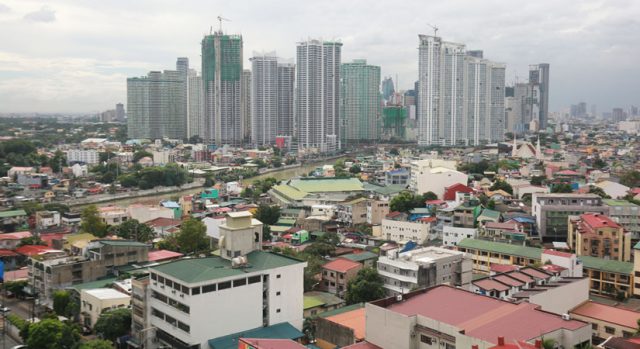
The International Monetary Fund (IMF) raised its gross domestic product (GDP) forecast for the Philippines to 6.7% this year, but expects slower growth in 2023 amid global uncertainties.

IMF Representative to the Philippines Ragnar Gudmundsson said the GDP projection for the Philippines was hiked to 6.7% from 6.5% previously. This is within the government’s revised 6.5-7.5% target band for this year. 

At the same time, the IMF lowered the Philippine GDP forecast to 5% for 2023, from 6.3% previously, due to global shocks.

In its latest World Economic Outlook (WEO) released on Tuesday, the multilateral lender maintained its 5.3% growth outlook for the five Association of Southeast Asian Nations (ASEAN) member countries this year.

The IMF downgraded the GDP growth for the ASEAN-5 to 5.1% next year, from the 5.9%  forecast given in April.  

In a press conference announcing the release of WEO on Tuesday evening, Division Chief of the IMF Research Department Daniel Leigh said the region’s outlook for 2022 reflects a big recovery from only 3.4% in 2021. 

“And that owes to the success of the vaccination campaigns and strong labor markets in a number of these countries,” Mr. Leigh said. “But the slowdown in 2023 is a sharper one than what we had expected in April, we marked down 2023 by 0.8 percentage points.”

Mr. Leigh said growth outlook remains clouded by uncertainties caused by the slowdown in major economies such as the United States and China, and tightening monetary policy to fight rising inflation.

“Inflation is also rising in these economies as in many countries. For 2022 we have a 3% to 7% forecast depending on the country due to the various external shocks including the currency depreciation which is passing through in the cost of many items,” Mr. Leigh said. 

Inflation rose by 6.1% year on year in June, the fastest in nearly four years and exceeded the central bank’s 2-4% target band for a third straight month. The average inflation rate in the first six months is 4.4%, still below the BSP’s full-year forecast of 5%.

The Bangko Sentral ng Pilipinas has raised benchmark interest rates by a total of 125 bps so far this year to tame inflation. On Tuesday, BSP Governor Felipe M. Medalla signaled an interest rate hike of less than 75 basis points (bps) at its next meeting in August 18.

Meanwhile, the IMF slashed the global GDP growth outlook to 3.2%, from 3.6% for this year and to 2.9%, from 3.6% for 2023.

“We know all ASEAN economies are very dependent on the external sector and in an environment in which the global economy is slowing down, this is going to have an impact on all ASEAN economies,” IMF Chief Economist Pierre-Olivier Gourinchas said. — K.B.Ta-asan

During the holiday season, majority of Filipinos shopped on social platforms

PIXABAY

Almost 7 out of 10 Filipino shoppers discovered and shopped on social platforms during the holiday season, according to a survey commissioned by global tech firm Meta. 

Personalized ads were a huge driver for sales, with 80% of Filipino respondents saying they purchased products after seeing them in ads.  

“Brands need to start building for discovery and being part of the consideration well ahead of Mega Sale Days,” said John Rubio, Meta Philippines’ country director, in a statement. 

YouGov, the market research firm that conducted the survey, gathered insights from nearly 2,000 shoppers in the Philippines aged 18 and up from December 1 to 24, 2021. 

Released in July 2022, the survey also found that 92% of Filipino shoppers made a spontaneous discovery while shopping online. 

The main social media discovery drivers were personal connections and recommendations (78%), sponsored content (68%), and video content (64%).  

Mr. Rubio said that Filipinos’ online shopping habits continue even as they return to physical stores for Mega Sale Days: 67% of shoppers surveyed made purchases in-store, but 79% did online purchases.  

“Brands need to be social and mobile-first and deliver personalized ads experiences,” he said.  

Other findings include:    

  • Ninety-four percent of year-end shoppers surveyed are likely to try new brands in the food, apparel and fashion, and electronics categories.
  • Around 90% bought something during 12.12 and 11.11 Mega Sale Days, each of which respectively had 24% and 44% of the surveyed shoppers participate.
  • Of those who shopped on social platforms, 76% were Gen Z and Millennials.
  • Entertaining and immersive experiences are a huge influence, with 81% of social shoppers surveyed saying they’ve watched or are open to a live shopping event online. Of these, 88% believe augmented reality (AR) technology can influence their decisions.

“Brands need to create immersive experiences through AR, live shopping, and trusted creators,” Mr. Rubio said. “They need to find creative ways to communicate your brand values and purpose.” — Brontë H. Lacsamana

Magnitude 7 quake hits northern Philippines

Screenshot via earthquake.usgs.gov

A magnitude 7 earthquake rocked the northwestern part of the main island of Luzon in the Philippines early Wednesday morning, according to the US Geolological Survey, damaging buildings and halting train operations in Manila, the capital where the tremors were also felt.  

There were no immediate reports of injuries or deaths from the quake, which struck about 13 kilometers southeast of the town of Dolores in Abra province at a depth of 10 km, the US agency said on its website.  

The Philippine Institute of Volcanology and Seismology (Phivolcs) reported at least six aftershocks ranging from magnitude 2.1 to 4 in Abra and Ilocos Sur.  

Several ancient bell towers, churches and heritage houses, as well as cars and other properties got damaged by the quake, Senator Imee R. Marcos, who is from Ilocos Norte, said in a statement, citing unnamed sources.  

Several main roads including Kennon, Paraiso, Pagudpud, Ilocos Norte and Apayao were also damaged, while much of the area did not have power after electrical transformers and transmission lines were hit, she added.  

She urged police and the local disaster agency “to remain vigilant as aftershocks and storm surges or tsunamis are expected to follow.” “If necessary, preventive evacuation of coastal villages and landslide-prone zones should be undertaken swifly.”  

Since 1970, 11 other earthquakes of magnitude 6.5 or larger have occurred within 250 km of Wednesday’s earthquake, the USGS said.  

The largest of these earthquakes was a magnitude 7.7 earthquake on July 16, 1990 in Baguio City in Benguet province, where at least 1,600 people died and more than 3,000 were hurt, it added. 

The 1990 earthquake also caused landslides in the Baguio-Cabanatuan-Dagupan area. 

The Wednesday quake was also felt in the capital region, where several buildings were evacuated and the rail system was halted during rush hour. 

“Any earthquake at magnitude 7 is considered a major earthquake,” Renato Solidum, head of the state seismology agency, told a news briefing streamed live on Facebook. 

More aftershocks are expected in the next two days, he said. “Strong intensities are still possible.” 

“I urge everyone to stay alert and to prioritize safety in light of the possibilities of aftershocks that might be felt after that strong earthquake,” Abra Rep. Ching B. Bernos said in a statement. “We are monitoring the situation on the ground and gathering information on the  extent of the damage to the province.”

President Ferdinand R. Marcos, Jr. will only visit areas “where his presence is necessary,” Press Secretary Trixie Cruz-Angeles told a news briefing. “Let’s make an assessment first.” 

The Philippines lies in the so-called Pacific “Ring of Fire,” a belt of volcanoes around the Pacific Ocean where most of the world’s earthquakes strike. — Norman P. Aquino, Kyle Aristophere T. Atienza, Alyssa Nicole O. Tan and Matthew Carl L. Montecillo

IMF cuts global growth outlook, warns high inflation threatens recession

A participant stands near a logo of the International Monetary Fund at the annual meeting in Nusa Dua, Bali, Indonesia, Oct. 12, 2018. — REUTERS/JOHANNES P. CHRISTO/FILE PHOTO

WASHINGTON – The International Monetary Fund cut global growth forecasts again on Tuesday, warning that downside risks from high inflation and the Ukraine war were materializing and could push the world economy to the brink of recession if left unchecked.

Global real GDP growth will slow to 3.2% in 2022 from a forecast of 3.6% issued in April, the IMF said in an update of its World Economic Outlook. It added that world GDP actually contracted in the second quarter due to downturns in China and Russia.

The fund cut its 2023 growth forecast to 2.9% from the April estimate of 3.6%, citing the impact of tighter monetary policy.

World growth had rebounded in 2021 to 6.1% after the COVID-19 pandemic crushed global output in 2020 with a 3.1% contraction.

“The outlook has darkened significantly since April. The world may soon be teetering on the edge of a global recession, only two years after the last one,” IMF Chief Economist Pierre-Olivier Gourinchas told a news conference.

“The world’s three largest economies, the United States, China and the euro area, are stalling, with important consequences for the global outlook,” he added.

‘PLAUSIBLE’ RUSSIAN GAS EMBARGO

The fund said its latest forecasts were “extraordinarily uncertain” and subject to downside risks from Russia’s war in Ukraine pushing energy and food prices higher. This would exacerbate inflation and embed longer-term inflationary expectations that would prompt further monetary policy tightening.

Under a “plausible” alternative scenario that includes a complete cut-off of Russian gas supplies to Europe by year-end and a further 30% drop in Russian oil exports, the IMF said global growth would slow to 2.6% in 2022 and 2% in 2023, with growth virtually zero in Europe and the United States next year.

Global growth has fallen below 2% only five times since 1970, Gourinchas said – recessions in 1973, 1981 and 1982, 2009 and the 2020 COVID-19 pandemic.

The IMF said it now expects the 2022 inflation rate in advanced economies to reach 6.6%, up from 5.7% in the April forecasts, adding that it would remain elevated for longer than previously anticipated. Inflation in emerging market and developing countries is now expected to reach 9.5% in 2022, up from 8.7% in April.

“Inflation at current levels represents a clear risk for current and future macroeconomic stability and bringing it back to central bank targets should be the top priority for policymakers,” Gourinchas said.

An unprecedented synchronized global monetary policy tightening by central banks will “bite” next year, slowing growth and pressuring emerging market countries, but delaying this process “will only exacerbate the hardship,” he said, adding that central banks “should stay the course until inflation is tamed.”

US, CHINA DOWNGRADES

For the United States, the IMF confirmed its July 12 forecasts of 2.3% growth in 2022 and an anemic 1.0% for 2023, which it previously cut twice since April on slowing demand. Read full story

The Fund deeply cut China’s 2022 GDP growth forecast to 3.3% from 4.4% in April, citing COVID-19 outbreaks and widespread lockdowns in major cities that have curtailed production and worsened global supply chain disruptions.

The IMF also said the worsening crisis in China’s property sector was dragging down sales and investment in real estate. It said additional fiscal support from Beijing could improve the growth outlook, but a sustained slowdown in China driven by larger-scale virus outbreaks and lockdowns would have strong spillovers.

The IMF cut its eurozone growth outlook for 2022 to 2.6% from 2.8% in April, reflecting inflationary spillovers from the war in Ukraine. But forecasts were cut more deeply for some countries with more exposure to the war, including Germany, which saw its 2022 growth outlook cut to 1.2% from 2.1% in April.

Italy, meanwhile saw an upgrade in its 2022 growth outlook due to improved prospects for tourism and industrial activity. But the IMF said last week that Italy could suffer a deep recession under a Russian gas embargo. Read full story

Russia’s economy is expected to contract by 6.0% in 2022 due to tightening Western financial and energy sanctions – a “fairly severe recession,” Gourinchas said. But that is an improvement over the April forecast of an 8.5% contraction, due to Moscow’s measures to stabilize its financial sector, which is helping to support the domestic economy.

The IMF estimates that Ukraine’s economy will shrink by some 45% due to the war, but the estimate comes with extreme uncertainty. — Reuters

Australia sets sights on clean energy jobs created by ‘climate emergency’

STOCK PHOTO | Image from Pixabay

 – Australia sees the world’s climate emergency as an opportunity to create jobs, the new Labor government said on Wednesday, introducing legislation to enshrine an emissions reduction target.

Minister for Climate and Energy Chris Bowen said a decade of political in-fighting had seen Australia go backwards on climate change, and the legislation would send a message that Australia was “open for business” and “back as a good international citizen”.

“The world’s climate emergency is Australia‘s jobs opportunity,” he said, adding the resource-rich nation could become a renewable energy powerhouse.

Iron ore sent to China, coal and liquefied natural gas are Australia‘s top exports.

Bowen said clean energy jobs would be created in battery manufacturing, and commodities such as aluminum, lithium, copper, cobalt and nickel.

“There is a significant export market waiting for us if we get the levers right,” he said.

Legislation setting a 43% emissions reduction target by 2030 and net-zero by 2050 was a beginning, and its implementation would be monitored by an independent climate change authority.

“We see 43% as a floor on what our country can achieve,” he said, a stance backed on Wednesday by business groups.

The conservative Liberal and Nations coalition, swept out of office in a May election where Greens and independents pushing for climate change action won record seats amid a backdrop of worsening fires and floods, is opposing the bill.

The government is negotiating with the Greens, which hold the balance of power in the upper house and want more ambitious climate action. Read full story

The president of the UN’s Climate Change Conference, Alok Sharma, said the Australian government “had a fresh mandate from their voters to tackle climate change” and he was struck by protesters in Australia who held placards saying “2050 is too late” as he visited this week.

“Our populations know that the world is running out of time, and we also know if we act now we will reap an economic as well as environmental dividend – jobs, growth and a boost for all of our economies,” he said in a speech in Fiji on Wednesday.

He added that unless governments act now, the goal of containing warming to 1.5 degrees would “slip irreversibly out of reach”.

The government has said it cannot support a Greens call to stop new coal and gas projects.

Prime Minister Anthony Albanese said in a TV interview on Tuesday it also wouldn’t end coal exports, because Australia‘s customers would substitute it from other sources.

“What you would see is a lot of jobs lost, you would see a significant loss to our economy, significant less taxation revenue for education, health and other services, and that coal wouldn’t lead to a reduction in global emissions,” he told the ABC. – Reuters

Digital nomads seek sun, sea and sustainability as remote work booms

 – Sitting on the terrace of a cafe in the heart of Lisbon one morning in June, sales specialist Victor Soto was busy at work communicating with colleagues across Europe and the Americas.

The COVID-19 pandemic is what drove the British-Peruvian 33-year-old to become a so-called “digital nomad”.

“The lifestyle gives me a lot of choice and freedom,” he told the Thomson Reuters Foundation. Soto made the decision to work only for companies that offer fully remote working in order to fulfil his passion for travel, he explained.

Soto is now also part of a growing trend among digital nomads who are looking for a less frenetic pace of life.

These new “slomads” still travel around the globe taking their work with them, but are choosing to spend longer in one location – some to enjoy a richer cultural experience while others are driven by the desire to be more eco-conscious.

Remote and flexible working has boomed since coronavirus lockdowns lifted globally, backed by major companies from AirBnB to Twitter and a rising number of nations issuing digital nomad visas which allow people to stay and work for up to two years.

The typical profile of a digital nomad is shifting, as island-hopping 20-somethings are joined by online workers in their 30s and 40s travelling with partners and children, experts and researchers say.

But concerns are growing over their environmental impact.

While data is scarce on the carbon footprint of digital nomads, “slomads” are striving to fly less, stay in sustainable accommodation, and invest in, or contribute to, green projects.

However, climate campaigners are not convinced, saying the social phenomenon still depends on air travel, which produces up to 3% of global greenhouse gas emissions.

“I think we feel a bit guilty, because the main issue with this lifestyle is the flying,” said Emmanuel Guisset, a former digital nomad who is now chief executive of Outsite, which offers co-living spaces for people including remote workers.


SLOWING DOWN

Pre-pandemic, the stereotype of a digital nomad was a freelancer in their 20s bouncing between sunny locales and sporting little more than shorts, flip-flops and a laptop.

Now, more people are combining work with travel later in life – often staying longer in one place to benefit from cheaper rents and better appreciating and contributing to local culture.

poll published in May by freelancer marketplace Fiverr and travel guide publisher Lonely Planet showed one-third of nomads surveyed moving every one to three months, while 55% enjoyed working in one location and moving after three months or more.

Americans make up the majority of digital nomads. A 2021 study from Upwork on the habits of hiring managers estimated that 36.2 million U.S. citizens would work remotely by 2025, an 87% increase from pre-pandemic levels.

Tourist hot-spots have been quick to embrace digital nomads, and view the growing trend of remaining longer in one location as a way to recoup losses from pandemic lockdowns.

Destinations such as Aruba, Barbados, Cape Verde, Croatia, Estonia, Indonesia, Malta and Norway have created digital nomad visas, allowing people to stay put and work for up to two years.

Accommodation rental company AirBnB saw a 90% rise in long-term bookings in Portugal last year compared to 2019, which it said reflected how more people are taking advantage of the ability to work and live from anywhere.

Yet digital nomads admit there is still a lot of flying involved, especially since the easing of COVID-19 restrictions, although experts say it is difficult to identify nomads‘ share of flights compared with tourism and business passengers.

Denise Auclair, corporate aviation expert at European clean transport campaign group, Transport and Environment (T&E), said there was “a golden opportunity” to continue with the reduced level of business travel seen during the pandemic, and to cut down on unnecessary flying.

But she queried whether companies are factoring the carbon footprint of employees working as digital nomads into their annual emissions reports.

Guisset of Outside said nomads are increasingly turning to carbon offsets, whereby people seek to compensate their climate impact by funding projects that reduce emissions through activities such as planting trees.

Some environmental groups, however, have dismissed such carbon-credit schemes as “window dressing”.

“It gives people a false sense of flying green, when there are so many problems with it,” said Dewi Zloch, aviation expert at Greenpeace Netherlands.

She pointed to research done for the European Commission in 2017 which said carbon-offsetting schemes are not providing real and measurable emissions reductions.


GREEN LIVING

The pandemic-driven remote work boom, meanwhile, has encouraged the creation of co-living and co-working spaces, some of which are trying to put green ideas into practice.

When Outside first started with its California co-living property, the company planted a tree for each booking made in locations from the Andes mountains to Indonesia.

Traditional Dream Factory, a co-living space in Portugal’s vast rural Alentejo region which plans to launch in summer 2023, is trying something more ambitious.

Co-founder Samuel Delesque said the aim is to set up a community of like-minded digital nomads, engineers, artists and crypto entrepreneurs who will also regenerate the land.

The organization has already started covering deforested areas with nitrogen-fixing crops and planted hundreds of trees.

It also plans to insulate its living quarters and create natural pools and showers to save water and become self-sufficient.

A former software engineer and digital nomad, Delesque plans to expand in countries like South Africa and the United States.

Caring for the environment is at the heart of his project, the Franco-Danish entrepreneur said.

“If we don’t manage to align economic values with (the) ecological, then we’re really doomed as a species,” he added. – Reuters

El Salvador to buy back some debt in surprise move

 – El Salvador‘s president announced on Tuesday a plan for a voluntary repurchase offer to holders of bonds maturing between 2023 and 2025.

The operation would be partially funded by reserves allocated last year by the International Monetary Fund and a loan from a Central American multilateral lender, the finance minister said later on Tuesday.

President Nayib Bukele has been under pressure to demonstrate healthy public finances as the country’s options dwindle ahead of an $800 million bond maturity in January.

His bet on bitcoin, which operates in El Salvador as a legal tender alongside the U.S. dollar, narrowed El Salvador‘s financing options as the International Monetary Fund closed the door to a loan of over $1 billion after the cryptocurrency move.

In a post on Twitter, Mr. Bukele said the country has enough cash not only to pay debt commitments at maturity, but to purchase the debt even before it matures.

The bond maturing in January was trading at 74 cents on the dollar on a 82% yield, while the remaining issues traded in distressed territory hovering in the low 30 cents.

Prices had started to spike last week, partly boosted by a Morgan Stanley note that said Salvadoran debt was too cheap and prices were below most restructuring scenarios.


MARKET PRICE BUYBACK

The buyback process would likely cost around $1.7 billion, according to a Citi Research note on Tuesday that said the estimate is expected to rise based on early market reaction.

“Today we are sending 2 bills to Congress to ensure that we have the available funds to make a transparent, public and voluntary purchase offer to all the holders of Salvadoran sovereign debt bonds from 2023 to 2025 at whatever the market price is at the time of each transaction,” Mr. Bukele tweeted, adding that “the market price will probably move upwards once we start buying all the available bonds.”

El Salvador‘s unicameral Congress approved both billsone requesting to use $360 million in funds from special drawing rights allocated by the IMF to repurchase the bonds, and another to request a $200 million loan from the Central American Bank for Economic Integration (BCIE), in majority votes Tuesday evening.

The Central American country’s total public debt was about $24 billion in March, according to central bank data.

The debt buyback offer, which was unexpected, will likely cause the price of short-end bonds to rise, Citi analysts added.

“Risks are high and the situation remains very fluid,” they wrote.

Mr. Bukele added that the buyback will start in six weeks.

It was unclear where the more than $1 billion remaining to complete the operation would come from. – Reuters

From burgers to gadgets, stressed consumers buy cheap

 – Some global consumers are showing signs of cracking, as shoppers stressed by record inflation stick to buying basics like food, bleach and cheap burgers, while those with bigger bank accounts are snapping up $3,000 Louis Vuitton handbags.

Investors are closely watching second quarter corporate results for signs economies are headed toward recession. But so far consumers are sending mixed signals. There is weakness seen in those that have been hit hardest by record fuel and food prices. Meanwhile, credit card and other data shows some are still spending on travel and other high-end pursuits. Read full story

Walmart sounded a warning shot on Monday, issuing a rare profit warning. Its US customers, who tend to come from lower-income households, are buying food and other essentials while skipping aisles filled with clothes and sporting goods. Read full story

“The results overnight indicate that the US consumer is now much more focused on the staples element of shopping where we’ve got double-digit food inflation coming through in some of these retailers,” said Nicola Morgan-Brownsell, fund manager at Legal & General Investment Management.

US consumer confidence fell for a third straight month in July amid persistent worries about higher inflation and rising interest rates. Read full story

Sales at luxury group LVMH Moet Hennessy Louis Vuitton SE climbed 19% in the second quarter, slightly lower than earlier this year. Handbag and high-end liquor sales in Europe and the United States helped offset slowdowns stemming from COVID-19 lockdowns in China. Read full story

And payment processor Visa said cross-border volume jumped 40% reflecting a summer travel boom and some consumer resilience. Read full story

But softer consumer demand hit video gaming revenue at Xbox maker Microsoft MSFT.O, which posted a 7% drop in Xbox-related revenue and expects a further contraction this quarter. Microchip maker Texas Instruments TXN.O saw weaker demand from consumers for personal electronics.


BUYING, BUT FOR HOW LONG?

Consumer giants Coca Cola Co., McDonald’s Corp. and Unilever Plc all said on Tuesday that their products are still selling, even at higher prices.

Unilever, which has 400 brands including Hellmann’s mayonnaise, Knorr stock cubes and Domestos bleach, raised its full-year sales guidance after beating first-half underlying sales forecasts as it hiked prices. Read full story

So far consumers are buying, but there is a question around how long that can last.

“We see price increases when we go out to do a weekly shop. The question is: how much more accepting can the consumer be on those price increases?” said Ashish Sinha, portfolio manager at Unilever and Reckitt RKT.L shareholder Gabelli.

McDonald’s which operates nearly 40,000 restaurants, said its global same-store sales jumped almost 10%, much better than the expectation for an increase of 6.5%. Read full story

Even so, the Chicago-based company said it is considering whether to add more discounted menu options because soaring inflation, particularly in Europe, is leading some lower-income consumers to “trade-down” to cheaper items and to buy fewer big combination meals, Chief Financial Officer Kevin Ozan said.

Coke’s global sales volumes rose 8% in the second quarter, the company said, powered by growth in both developed and emerging markets, while average selling prices increased about 12%. Read full story

“Coke’s results are testament to its brand value because consumers are unwilling to trade down to other colas, despite increasing prices,” CFRA analyst Garrett Nelson said.


SLOWDOWN AHEAD?

Germany-based footwear maker Adidas AG cut its earnings target for the year due to a slow recovery for its business in China. Read full story

General Motors Co. on Tuesday reaffirmed its full-year profit outlook on an expected surge in demand and said it was curbing spending and hiring ahead of a potential economic slowdown, but a 40% drop in its quarterly net income disappointed, sending shares lower. Read full story

The Detroit automaker’s reduced net income reflected supply-chain snarls, including a global semiconductor chip shortage that hit hardest in June. The company’s shares fell 3.4%.

Nevertheless, GM sees a lot of pent-up demand.

Chief Financial Officer Paul Jacobson said GM still sees strong pricing and demand for its vehicles.

A GM pickup truck starts around $31,500 for a base Chevrolet model, while a loaded GMC Sierra can top $100,000. Most models come in the $50,000 to $70,000 range.

“We feel good about making up all that (lost) volume in the back half of the year,” he said. – Reuters

Marcos orders rescue, relief operations in quake-hit Abra province

PHILIPPINE STAR/KRIZ JOHN ROSALES

MANILA – Philippines President Ferdinand Marcos Jr has ordered the immediate dispatch of rescue and relief teams to the earthquake-affected province of Abra, his press secretary said on Wednesday.Marcos will also fly to Abra, the epicentre of a powerful 7.1 magnitude earthquake, Press Secretary Trixie Cruz-Angeles told a news conference.  — Reuters