Home Blog Page 5703

FIRST IN MANILA: A 3D Whale Shark billboard, Space Tunnel, Golden Gateway and Dazzling Light shows—all immersive experiences lead to SM

Mega Space Odyssey (left photo) and 3D Whale Shark (right photo), SM Megamall

LOOK: A 3D Whale Shark Billboard, Space Tunnel, Golden Gateway and Dazzling Light shows take over the Holidays in Manila.

SM Supermalls celebrates not just joyful, but also fun, immersive and experiential holidays. This year, we take you to the deep oceans with SM Megamall’s first-ever 3D Whale Shark LED billboard, see the Northern lights at the Aurora Trail of SM City North Edsa, Sparkle at the Light show and Holiday fireworks at SM Mall of Asia, enter the Golden gateway of SM Aura Premier and explore the outer space at the Mega Space Odyssey.

NORTH EDSA’S AURORA TRAIL
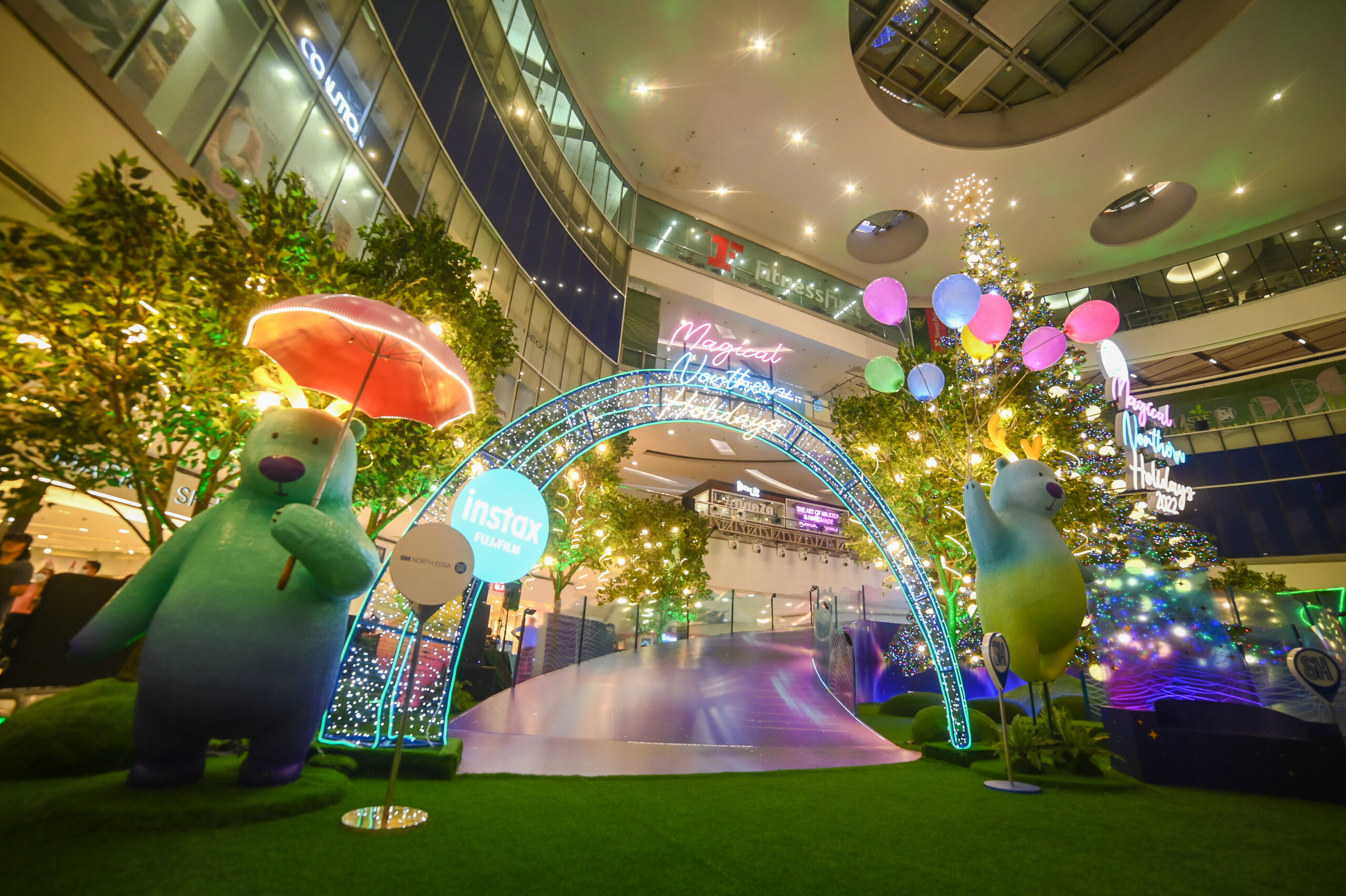
Aurora Walk, SM North Edsa

The illuminating lights of the Aurora Borealis is at the North this Christmas. Walk and indulge in a family friendly immersive experience at the Aurora trail ascending the giant holiday tree with a magical array of lights, forestry, rein-bears & holiday polar express.

MEGA SPACE ODYSSEY & 3D WHALE SHARK

Travel to majestic galaxies in outer space and take photos and videos with your space explorer friends. Experience the first-ever immersive 3D LED tunnel in Manila on October 21 to December 25 at the ground level Mega Fashion Hall (at the back of the Giant Christmas Tree).

SM Supermalls introduces the new 3D technology along EDSA by screening a hyper-realistic 3D Whale Shark at SM Megamall’s LED billboard. Bringing you the first in the Philippines, High-Definition Immersive content at the heart of the bustling metropolis. Netizens are awestruck of a larger-than-life Whale Shark peeking out of a digital billboard spanning over 2,000 square foot. The Mega Whale Shark was first teased on April 27 but customers, tourists and motorists can catch the short preview every 15 minutes starting April 28 at peak hours from 12nn to 10pm daily. Watch out for the new 3D content this Christmas. The Philippines has the 2nd largest population of whale shark in the world at over 1,950.

MOA SPARKLE OF LIGHT SHOW AND HOLIDAY FIREWORKS

Sparkle of Light Show, Mall of Asia

Feel the Christmas spirit as you watch the brightest and merriest indoor Christmas tree music and lights show. Be in awe as you watch over one hundred thousand lights set to music. Catch the show DAILY, every hour from 10am to 10pm until end of December at the Central Atrium.

Holiday Fireworks, Mall of Asia

Enjoy the most awaited and better than ever fireworks display at the MOA Complex every Friday and Saturday from November to December 2022. Make sure to experience this magical moment with your families and loved ones.

AURA’s GOLDEN GATEWAY and NIGHTS OF DAZZLING LIGHTS

Golden Gateway, SM Aura Premier

Tucked behind the giant Christmas tree is a golden gemstone-shaped immersive experience. In partnership with global smartphone brand TECNO Mobile, technology and art meet to transport all who enter this enclosure into scenes of an opulent holiday palace and fantastical golden worlds. Simply present PHP 1,000 in single or collected receipts and enter a whole new world filled with glitz and glamour.

The theatrical room isn’t the only technological experience the mall has. Equally spectacular is a choreographed light and sound display at SM Aura Premier’s Skypark at Level 5. Visitors of the Skypark enter a space with tall tree-like sculptures made of strings of lights. As they go through a forest of lights, a jaw-dropping musical show will entrance and excite them. Visitors can stop and enjoy the choreographed audio and visual performance at 7pm on all Sunday nights of December, including December 25th itself.


Spotlight is BusinessWorld’s sponsored section that allows advertisers to amplify their brand and connect with BusinessWorld’s audience by enabling them to publish their stories directly on the BusinessWorld Web site. For more information, send an email to online@bworldonline.com.

Join us on Viber to get more updates from BusinessWorld: https://bit.ly/3hv6bLA.

SEA suffers from digitalization skills gap, cybersecurity still top concern — IDC

UNSPLASH

Digitalization in Southeast Asia (SEA) is hampered by a shortage of talent and a skills gap, according to a market intelligence provider for technology vendors and investors.

“Just because we have automation doesn’t mean you don’t invest in talent,” said James Sivalingam, senior program manager at International Data Corporation (IDC) Asia/Pacific, at a cybersecurity webinar on Oct. 27. “Talent is ultimately your critical differentiator.”  

While talent shortage is a global problem, it is “more pronounced” in SEA, he added.

“A lot of deals are closed based on the kind of analysts and consultants you bring to the table,” he added. “This is probably the most expensive investment you make in the company.” 

He advised creating a consistent learning platform and providing a career pathway for employees.

In 2021, investments in cybersecurity (services, software, and appliance) for SEA organizations reached $3.2 billion. This figure is expected to increase at a five-year compound annual growth rate (CAGR) of 13.6% to reach $6.1 billion by 2026. 

Organizations want more control of the technology that runs their operations and now prefer local or national vendors because of digital sovereignty concerns, Mr. Sivalingam said. They have also moved away from implementing controls for compliance’s sake and are looking to manage security holistically. 

According to IDC Asia/Pacific’s Security Sourcing Survey 2022, organizations believe that the top three cyberthreats they are most vulnerable to are data loss and privacy, the cloud environment, and network security. This, Mr. Sivalingam noted, correlates with the top three areas of security spending in 2022: information and data security, network security, and cloud security operations. 

To become the preferred security provider among clients, Mr. Sivalingam told vendors to nurture their thought leaders by providing guidance and sharing expertise; templatize their workflows to help speed up the time to onboard new technologies and applications; showcase their human talent and make them the face of the company; and contextualize marketing campaigns to the end-user. 

“A lot of vendors miss this,” he said, on the fourth point. “Sometimes it’s not contextualized to SEA, or to the size of the business they’re going for. … Not everyone understands technical language.” — Patricia B. Mirasol


IMF cuts Asia’s economic forecasts as China’s slowdown bites

TOKYO — The International Monetary Fund (IMF) cut Asia’s economic forecasts on Friday as global monetary tightening, rising inflation blamed on the war in Ukraine, and China’s sharp slowdown dampened the region’s recovery prospects.

While inflation in Asia remains subdued compared with other regions, most central banks must continue raising interest rates to ensure inflation expectations do not become de-anchored, the IMF said in its Asia-Pacific regional economic outlook report.

“Asia’s strong economic rebound early this year is losing momentum, with a weaker-than expected second quarter,” said Krishna Srinivasan, director of the IMF’s Asia and Pacific Department.

“Further tightening of monetary policy will be required to ensure that inflation returns to target and inflation expectations remain well anchored.”

The IMF cut Asia’s growth forecast to 4.0% this year and 4.3% next year, down 0.9% point and 0.8 point from April, respectively. The slowdown follows a 6.5% expansion in 2021.

“As the effects of the pandemic wane, the region faces new headwinds from global financial tightening and an expected slowdown of external demand,” the report said.

Among the biggest headwinds is China’s rapid and broad-based economic slowdown blamed on strict coronavirus disease 2019 (COVID-19) lockdowns and its worsening property woes, the IMF said.

“With a growing number of property developers defaulting on their debt over the past year, the sector’s access to market financing has become increasingly challenging,” the report said.

“Risks to the banking system from the real estate sector are rising because of substantial exposure.”

The IMF expects China’s growth to slow to 3.2% this year, a 1.2-point downgrade from its April projection, after an 8.1% rise in 2021. The world’s second-largest economy is seen growing 4.4% next year and 4.5% in 2024, the IMF said.

While it expects China to gradually lift strict COVID-19 curbs next year, the IMF does not see a speedy resolution to Beijing’s real estate crisis, which it said needed to be addressed in a comprehensive way to support growth.

“One would hope that with the party congress behind us, there would be further attention being paid to policy response to these,” Mr. Srinivasan said.

“But we don’t see a quick resolution of the real estate sector (crisis) because that could take longer,” he added

As Asian emerging economies are forced to raise rates to avoid rapid capital outflows, a “judicious” use of foreign exchange intervention could help ease the burden on monetary policy in some countries, the IMF said.

“This tool could be particularly useful among Asia’s shallower foreign exchange markets” like the Philippines, or where currency mismatches on bank or corporate balance sheets heighten exchange-rate volatility risks such as in Indonesia, the IMF said.

“Foreign exchange intervention should be temporary to avoid side effects from sustained use, which may include increased risk-taking in the private sector,” it said. — Reuters

Smart leads in mobile network experience in the PHL — Opensignal

Smart Communications, Inc., the wireless arm of PLDT, Inc., remained the leader in Opensignal’s third-quarter ranking of mobile network experience among the Philippines’ three largest mobile operators.

Smart dominated in terms of download speed experience and fifth-generation (5G) download speed, with scores of 22.5 megabits per second (Mbps) and 134.8 Mbps, respectively, said Opensignal senior analyst Sam Fenwick in his report.

Smart outperformed DITO Telecommunity Corp. by 5.3 Mbps in terms of download speed and Globe Telecom, Inc. by 17.3 Mbps in terms of 5G download speed.

The report also found that Smart 5G users spent the most time with an active 5G connection and found a 5G signal in the most locations.

Rob Lerner, Opensignal vice president for Asia-Pacific, told BusinessWorld that despite heavy investment from telcos, 5G adoption in the Philippines is still at an early stage.

“Outside of Metro Manila it’s probably lower in terms of adoption rate,” Mr. Lerner said. “It’s not necessarily about adding more network, it’s about getting the handset into the customer’s pocket based on the cost-benefit tradeoff of using 5G.”

Smart’s score for 5G availability is 16.5%, with a lead of 6.7 percentage points over Globe’s 9.8%. Smart is also on top for 5G reach, given a score of 4.6 points, with Globe coming in second with 4.1 points, the report said.

While Smart won the award for overall games experience, Globe gained ground since the last Opensignal report.

Globe’s score of 46.7 was higher than its first-quarter score by nine points, while DITO’s increased by 4.7 points. Smart’s was statistically unchanged, moving Globe into second place and cutting Smart’s lead down to 7.8 from 12.9 points.

The report reflects the dynamic market in the Philippines, Mr. Lerner said.

“In recent history, Smart has dominated the awards table and raced ahead in 5G, but this report sees Globe making real gains in 5G, winning upload speed alongside video experience and getting joint wins with Smart on games and voice experience,” he said.

Globe also won for core consistent quality with a half percentage point over DITO. In excellent consistent quality, it was Smart that beat DITO by 3.8 percentage points.

Opensignal’s measures of “core consistent quality” quantify how often user experience was sufficient to support basic applications like messaging, uploading, and browsing.

Meanwhile, “excellent consistent quality” analyzes the percentage of users’ tests that met the minimum recommended thresholds for watching high-definition video, completing group video conference calls, and playing games.

DITO dominated the upload speed experience category, with its users seeing the fastest average upload speeds in the country at 4.4 Mbps. Smart came second with 3.9 Mbps.

Hastings Holdings, Inc., a unit of PLDT Beneficial Trust Fund subsidiary MediaQuest Holdings, Inc., has a majority stake in BusinessWorld through Philippine Star Group. — Brontë H. Lacsamana

Tech wreck shows US megacaps not immune to corrosive Fed tightening

Image via Huzaifa Abedeen/CC BY-SA 4.0/Wikimedia Commons

NEW YORK — Disappointing earnings from the megacap companies that led markets higher for years are cratering their shares and sending a disconcerting message about a US economy that until recently had appeared to be weathering a barrage of interest rate hikes.

Amazon was the latest corporate giant to deliver bad news, saying on Thursday that costs might eviscerate profits in the current quarter. Its shares fell 17% in extended trading, wiping $190 billion from its market capitalization.

Amazon’s report was the latest worrying announcement from the big tech-focused companies that command outsized weightings in stock indexes and are nearly ubiquitous in investor portfolios.

“From a markets perspective, you have to be cautious going forward,” said Michael O’Rourke, chief market strategist at JonesTrading. “They’re the biggest stocks in the market, and we really haven’t had much of anything good come out of any of them.”

Facebook parent Meta Platforms’ shares were pummeled Thursday after its costly metaverse bets disappointed investors. Earlier in the week, Google-parent Alphabet missed Wall Street’s target for revenue growth in the third quarter as ad sales remained weak, while inflation and a strong dollar led Microsoft to report its slowest topline growth in five years.

Even Apple, whose revenues and profits topped Wall Street targets, on Thursday reported weaker iPhone sales than some analysts had expected.

As of Thursday’s close, only Apple’s shares — which are down around 18% for the year — have outperformed the 20% year-to-date loss in the S&P 500. Meta leads the declines with a fall of some 70%.

Many view the growth giants as bellwethers for how corporate America is faring during a year in which inflation has soared, pushing the Federal Reserve to enact a series of jumbo-sized rate hikes that have bruised markets and raised fears of a looming recession.

Their disappointing results suggest that even the strongest US companies are feeling the effects of tighter Fed policy, a soaring dollar and persistent inflation.

The selloff in megacap shares “indicates that the Fed’s restrictive policy is beginning to be felt in the real economy, with growth slowing meaningfully,” said Daniel Krieter, a strategist at BMO Capital Markets. “Now we wait to find out if the Fed can achieve a soft landing. It will be very difficult.”

The Fed has already raised rates by 300 basis points this year as it fights the worst inflation in decades. Investors are bracing for another 75 basis point increase at next week’s monetary policy meeting, though hopes that Fed officials may soon slow the pace of tightening have buoyed stocks in October.

“Big tech companies are not impervious to slowdowns in the economy, particularly if they are consumer driven,” said Rick Meckler, a partner at Cherry Lane Investments, a family investment office in New Vernon, New Jersey.

“As the Fed embarks on this planned slowdown, it is eating away at some of their consumer-faced businesses and given their high multiples it is causing big contractions in their stock prices,” he said.

ERODING PROFITS

Resilient corporate profits have been one bright spot in an otherwise gloomy year, although the recent disappointing results are fueling doubts over how long this can last.

Based on results from 227 of the S&P 500 companies as of Thursday morning and estimates for the remainder, third-quarter earnings are now projected to have risen just 2.5% compared with an estimated gain of 4.5% on Oct. 1, according to IBES data from Refinitiv.

“The big technology companies like Amazon continued hiring to support a business that looks like the year 2021, and it’s not 2021. It’s 2022,” said Kim Forrest, Chief Investment Officer At Bokeh Capital Partners. “Layer on top of this inflation. People are buying less stuff.”

Despite the big stock price drops, some investors see more pain for the big tech-focused names.

In a Thursday morning report, analysts at UBS Global Wealth Management gave a litany of reasons for caution, including still-high earnings estimates given elevated inflation and the stronger dollar.

“Even after a significant underperformance by tech stocks so far this year … we don’t believe the continuing headwinds for the sector are yet fully priced into the market,” they wrote. — Reuters

Tuberculosis deaths rose during pandemic, reversing years of decline — WHO

Scanning electron micrograph of Mycobacterium tuberculosis bacteria, which cause TB. — National Institute of Allergy and Infectious Diseases/NIAID/Flickr

Global deaths from tuberculosis (TB) are estimated to have increased between 2019 and 2021, reversing years of decline as the coronavirus disease 2019 (COVID-19) pandemic severely derailed efforts to tackle the disease, the World Health Organization (WHO) said on Thursday.

Global efforts to tackle deadly diseases such as AIDS, tuberculosis and malaria have suffered during the COVID-19 pandemic. The health crisis has particularly hit the response to TB and led countries to fall behind in meeting targets to curb the infectious disease.

WHO urged the world to apply lessons learned from the pandemic to tuberculosis, which severely affects countries such as India, Indonesia, the Philippines, and Pakistan.

“If the pandemic has taught us anything, it’s that with solidarity, determination, innovation and the equitable use of tools, we can overcome severe health threats,” WHO Director-General Tedros Adhanom Ghebreyesus said.

WHO’s annual TB report estimates that tuberculosis killed 1.6 million people in 2021, above the estimated 1.5 million deaths in 2020, and 1.4 million deaths in 2019. Deaths related to tuberculosis had fallen between 2005 and 2019.

The report also warns that in the near future TB could replace COVID-19 to become the leading cause of death worldwide from a single infectious agent.

A recent report from Global Fund to Fight AIDS, Tuberculosis and Malaria shows that while the number of people reached with treatment and prevention efforts rebounded last year, the world is still not on track to defeat these killer diseases.

About 10.6 million people were infected with tuberculosis in 2021, an increase of 4.5% from 2020, according to the WHO report.

Under its “End TB Strategy,” the WHO set a target of reducing TB deaths by 35% from 2015 to 2020, but the net reduction was 5.9% between 2015 and 2021. — Reuters

For Twitter boss Elon Musk, now comes the hard part

S7AKTI-PIXABAY

Overspending on Twitter Inc. for $44 billion was the easy part.

Now, Tesla Inc. Chief Executive Elon Musk must prove why he believes that Twitter is worth 10 times that amount and turn around a social media platform that he has spent months ridiculing.

Earlier this month, the outspoken billionaire said: “Myself and the other investors are obviously overpaying for Twitter right now. The long-term potential for Twitter in my view is an order of magnitude greater than its current value.”

Mr. Musk has provided few concrete details about his plans, and what he has shared appears far-fetched or contradictory.

Here is what lies ahead for Mr. Musk, the self-proclaimed “Chief Twit,” according to current and former Twitter employees, analysts and investors who considered funding the deal.

X SUPER APP

Mr. Musk’s biggest bet borrows from China’s greatest hits of the 2010s. “Buying Twitter is an accelerant to creating X, the everything app,” Mr. Musk tweeted earlier this month.

The idea of an everything app, also referred to as a super app, originated in Asia with companies like WeChat, which lets users not only send messages but also make payments, shop online or hail a taxi. The all-in-one service appealed to users who had fewer choices in a region where Google, Facebook, and others were blocked.

Mr. Musk has told investors he plans to build one that will sell premium subscriptions to reduce reliance on ads, allow content creators to make money and enable payments, according to a source briefed on the matter.

There are no super-apps in the United States because the barrier is high and there are app choices aplenty, said Scott Galloway, co-host of tech podcast Pivot and a professor of marketing at New York University.

Apple Inc. and Alphabet Inc.’s Google, which control the app stores on iPhones and Android phones, see themselves as super apps and would be unlikely to allow other super apps to develop, Mr. Galloway said. Consider Apple’s recent rejection of Spotify’s plan to sell audiobooks as one example of barriers to entry.

Adding payments, which generally require identity verification, could complicate a service which has allowed anonymity to flourish, making Twitter a powerful tool for political activism in hostile environments, said Jason Goldman, a former Twitter board member.

“It’s not possible at this point in the evolution of the mobile internet,” Mr. Goldman added.

CUTTING CONTENT MODERATION

Current and former employees who spoke with Reuters said Mr. Musk’s plans to lower the guard rails that are common across all social media platforms would lead to a deluge of hateful, harmful and potentially illegal content on Twitter. Already, it has struggled with identifying and removing child porn.

Members of Twitter’s trust and safety team, which includes content moderators, are expected to be among Mr. Musk’s deepest job cuts, employees fear.

“Imagine a world where all those people are gone,” one employee said. “It’s going to be a hellscape.”

PREVENT ADVERTISERS FROM FLEEING

In 2019, Musk tweeted “I hate advertising.”

On the eve of the deal’s expected closing, he appealed directly to advertisers in an open-letter tweet: “Twitter obviously cannot become a free-for-all hellscape, where anything can be said with no consequences!… Twitter aspires to be the most respected advertising platform in the world that strengthens your brand and grows your enterprise.”

Advertisers are not buying it.

They point to Mr. Musk’s plan to reinstate the account of former US President Donald Trump as a major impediment to spending money on Twitter. Twitter permanently suspended Trump for risk of further incitement of violence after the Jan. 6, 2021, attack on the US Capitol.

Welcoming back Mr. Trump could alienate moderate and liberal-leaning users, and as a result push away major household brands who aim to market products and appeal to people across the political spectrum, said Mark DiMassimo, founder of ad agency DiMassimo Goldstein.

Until Mr. Musk finds new sources of revenue, he can’t afford to trigger a backlash from a group that contributes 90% of Twitter’s revenue.

OBEYING THE LAWS

Mr. Musk has promised to preserve free speech of all kinds, but has also struck a more conciliatory tone with global leaders who aim to rein in Big Tech.

In May, Mr. Musk said in a Twitter video that he agreed with the European Union’s new digital media regulation, which will force Big Tech to do more to tackle illegal content or risk fines of up to 6% of global revenue, in one of the world’s most severe approaches to regulating content online.

Regulators across Asia are also toughening legal stances against social media platforms and ordering the removal of content they deem illegal, which includes speech by political dissidents.

In India, Twitter has waged a “sophisticated battle” with the government to protect free speech online, and this battle would be at risk with Musk in charge, Mr. Goldman said.

Tesla’s expanding business in China, where it generated $14 billion last year, could also put Twitter at risk, Mr. Goldman, the former Twitter board member, said.

“The idea that he’s going to be the one liaising with the Chinese government and potentially turning over information on users, that’s very scary,” Mr. Goldman said.

Twitter is staffed with experts who review data requests from governments, but Mr. Musk has shown his contempt of these experts, he said.

“Whether or not Trump is going to come back on, I think that’s a parlor game,” Mr. Goldman said. “But what’s actually going to happen is a dissident’s IP address will be dropped on the floor.” — Reuters

Elon Musk taps tycoon Sy for satellite internet

Philippine tycoon Henry Sy Jr. will partner with Elon Musk to launch a satellite broadband service in the Southeast Asian nation.

Data Lake Inc. signed an agreement with Space Exploration Technologies Corp., making it the first Starlink integrator in the country and in Southeast Asia, the Sy-owned company said in a statement.

“With 7,640 islands, connecting the Philippine archipelago to the rest of the world often requires extensive infrastructure,” Data Lake Chairman Anthony Almeda said. Starlink, with its constellation of satellites in orbit, provides high bandwidth and reliable internet that’s crucial especially during natural calamities, he said.

Starlink targets to make its service available in the Philippines in the coming months, Jonathan Hofeller, vice president of Starlink commercial sales at SpaceX, said. — Bloomberg

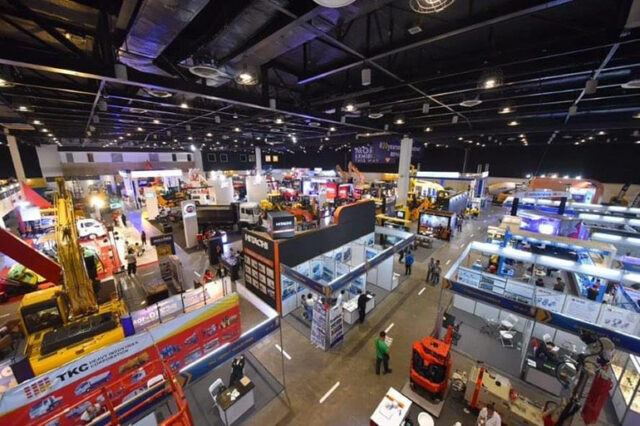
PHILCONSTRUCT Manila mounts biggest hybrid trade show of the year this November at SMX Manila and World Trade Center Metro Manila

The biggest and most anticipated construction tradeshow series in the country is culminating the year in the capital city. This time, it is also adopting the hybrid format to reach out to more consumers and stakeholders on-site and online.

PHILCONSTRUCT Manila 2022 Hybrid Edition is set from Nov. 3 to 6, 2022 simultaneously at two locations (from 10:30 a.m. to 6:00 p.m. daily) — the SMX Convention Center Manila within the SM Mall of Asia Complex and the World Trade Center Manila. Virtually, it can be accessed through the VX Events platform.

PHILCONSTRUCT has completed this year’s three regional rounds prior to its Manila leg. PHILCONSTRUCT Luzon was staged in Clark, Pampanga last June; PHILCONSTRUCT Visayas in Cebu last July; and PHILCONSTRUCT Mindanao in Davao last September — all in hybrid editions for the first time.

“Through the years, PHILCONSTRUCT Manila has opened different opportunities for the construction sector and has led to several successful projects within the country and abroad,” said Engr. Ronaldo “Junn” Elepano, chairman of Philconstruct 2022 Hybrid Series, the organizing team of the Philippines Constructors Association (PCA) and the main organizer of PHILCONSTRUCT Manila 2022 Hybrid Edition.

“Our goal is to connect people in the building and construction industry, making this an annual gathering for new discoveries, learnings, and opportunities,” he added. Entrance to PHILCONSTRUCT 2022 is Free.

Keeping up to its tradition, the PHILCONSTRUCT Manila 2022 Hybrid Edition is showcasing the biggest assembly of brands and products on display at both its physical venues. The widest showcase of products include construction materials, air-conditioning systems, heavy equipment and software, home appliances and kitchenware, refrigerants, powertools, water pumps, and electric wirings, among many others.

PHILCONSTRUCT Manila 2022 Hybrid Edition will facilitate opportunities to meet and network with the industry’s best brands and suppliers in the vast construction industry such as Pacific Paint (Boysen) Philippines, Holcim Philippines, Wilcon Depot, Inframachineries Corp., Samsung Electronics Philippines, Ingco Philippines, Procore and many more!

The four-day trade show will also feature several learning sessions and seminars. Technical Symposium by Philippines Society of Master Plumbers and Plumbing Engineers (PSMPE), Inc., Pilipinas Shell Petroleum Corp. will hold Shell Construction and Road Integrated Solutions for the Decarbonization of the Construction Sector, Bentley Education will facilitate Digital [R]Evolution in infrastructure Industry Product Presentation, Association of Carriers and Equipment Lessors (ACEL) will hold Basic Principles of Formwork and Falsework and many more activities.

Estilo De Vida, the annual inter-school interior design competition, will also be staged at PHILCONSTRUCT Manila. The competition has grown into an industry staple, gathering the most
promising student designers into a show of creativity, passion and ingenuity.

The PHILCONSTRUCT Manila 2022 Hybrid Edition is supported by the organizers’ other partner organizations, including the Philippine Society of Ventilating, Airconditioning, and Refrigerating
Engineers (PSVARE) and the Association of Carriers & Equipment Lessors (ACEL). “The show has over 1,000 booths and 500 equipment on display. The most massive event we have to date”
added Mr. Elepano.

To register for free for the PHILCONSTRUCT Manila 2022 Hybrid Edition, visit its website at event.philconstructevents.com. For inquiries, send an email to info@philconstructevents.com or
call/text 0917-706-8167.


Spotlight is BusinessWorld’s sponsored section that allows advertisers to amplify their brand and connect with BusinessWorld’s audience by enabling them to publish their stories directly on the BusinessWorld Web site. For more information, send an email to online@bworldonline.com.

Join us on Viber to get more updates from BusinessWorld: https://bit.ly/3hv6bLA.
Fitch Ratings keeps ‘negative’ PHL outlook

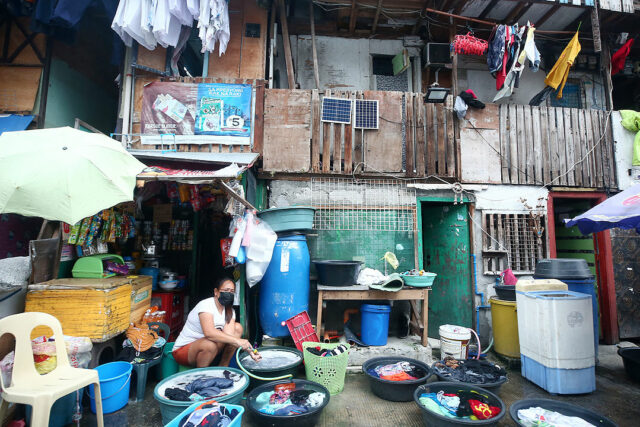
Families do their chores in front of their shanties along a road in Tondo, Manila, Aug. 21, 2022. — PHILIPPINE STAR/ MIGUEL ANTONIO DE GUZMAN

FITCH RATINGS affirmed the Philippines’ investment grade rating and kept the “negative” outlook, amid concerns over the impact of rising interest rates, soaring inflation and slowing global demand on the economy’s recovery.

Fitch on Thursday said it maintained the Philippines’ long-term foreign currency issuer default rating at “BBB,” as this “balances strong growth, external finances and a credible economic policy framework against lagging structural indicators… relative to peers.”

A “BBB” rating indicates low default risk and adequate capacity to pay, although some unfavorable economic conditions could impede said capacity.

“The ‘negative’ outlook reflects risks to Philippines’ medium-term growth prospects, fiscal adjustment path and external buffers in an environment of higher interest rates, weaker external demand and higher commodity prices,” it said in a rating action commentary released on Thursday.

A “negative” outlook means Fitch may downgrade the Philippines’ credit rating in the next 12 to 18 months. The outlook was revised to “negative” from “stable” in July 2021 due to the pandemic’s impact on the economy.

Fitch trimmed its Philippine gross domestic product (GDP) forecast to 6.8% this year, from the 6.9% estimate it gave in February. This is within the government’s 6.5-7.5% full-year target.

“(O)ur forecast assumes a slowdown from (second half of 2022) amid monetary tightening, high imported inflation and weaker global demand. Output will exceed pre-pandemic levels in (second half of 2022) and is close to potential,” the credit rater said.

Fitch noted the uncertain medium-term prospects of the Philippines, as it slashed its 2023 GDP forecast to 5.5%, from 7% previously.

“Downside risks include global growth falling below Fitch’s forecasts of 1.7% in 2023 and 2.8% in 2024, or the Philippine central bank raising policy rates beyond our assumption of 5.25%. Further growth risks stem from potential economic scarring from the pandemic, in particular, due to learning losses,” it said.   

The credit rater also flagged lower public investment, although this may be offset by a rise in private sector investment that the government is targeting.

INFLATION, RATES
Fitch expects inflation to average 5.5% this year, driven by higher commodity prices and the peso’s depreciation.

“The medium-term inflation outlook is subject to considerable risk, with September consumer prices up 6.9% year on year, well above the central bank’s 4% target, and core inflation up 4.5% year on year,” it added.

For the first nine months, headline inflation averaged 5.1%, faster than the 4% seen in the same period last year but still below the Bangko Sentral ng Pilipinas’ (BSP) 5.6% forecast for 2022.

“The central bank has been focused on the second-round effects of imported inflation and exchange-rate depreciation… We think its inflation-targeting framework remains credible and we expect rates to rise further, potentially beyond our assumption of 5.25% by end-2022, if domestic inflationary pressure continues to build,” Fitch said.

The BSP has hiked interest rates by a total of 225 basis points (bps) so far since May, bringing the benchmark policy rate to 4.25% to tame inflation and slow the peso’s decline.

The peso finished trading at P58.22 per dollar on Thursday, gaining 22 centavos from its previous close, Bankers Association of the Philippines data showed. Year to date, the peso has weakened by P7.22 or 12.4% from its Dec. 31 close of P51.

Fitch said the Philippines’ current account deficit is expected to widen to 5% of GDP this year, from 1.5% last year due to higher commodity imports and strong demand.

“The (current account deficits) have put pressure on foreign-exchange reserves, although we expect ample reserve coverage at about six months of current external payments. The country’s net external creditor position is likely to remain somewhat stronger than the ‘BBB’ median,” Fitch said. 

BSP data showed that the Philippines’ gross international reserves (GIR) stood at $95 billion at end-September, from $97.4 billion as of end-August.

DEBT
Fitch said the Philippines’ debt, projected at 56% of GDP, is “broadly in line with the current ‘BBB’ median, but the (general government) debt/revenue ratio (275%) and the interest payment/revenue ratio (10%) are higher than ‘BBB’ category peers’ due to relatively weak revenue mobilization.”

On the other hand, the central government’s debt-to-GDP ratio is seen at 64% by end-2022, before going down to 60% in 2024, Fitch said.

As of the second quarter, the debt-to-GDP ratio stood at 62.1%, lower than 63.5% ratio as of end-March. This exceeded the 60% threshold considered manageable by multilateral lenders for developing economies.

According to Fitch, risks that could lead to a credit rating downgrade include reduced confidence in returning to strong medium-term growth and the failure to cut the debt-to-GDP ratio.

The credit rating could be upgraded if there is sustained reduction in debt-to-GDP and debt-to-revenue ratios “due to reforms to broaden the revenue base or gains in spending efficiency that do not undermine the growth outlook.”

ING Bank N.V. Manila Senior Economist Nicholas Antonio T. Mapa said Fitch continues to keep an eye on the country’s relatively high debt levels, but gave the new administration more time “to get their fiscal house in order.”

“The free pass has been handed out for this round but for how much longer will Fitch look past the higher debt-to-GDP levels is the big question we’ll need to answer in the coming months,” Mr. Mapa said in an e-mail. “We’ve sidestepped a downgrade this time so we’ll need to double our efforts to bolster growth and improve collections.”

UnionBank of the Philippines, Inc. Chief Economist Ruben Carlo O. Asuncion said current credit rating is “accurate and representative of the Philippines’ economic situation.”

“Everything seems to be holding up despite of the continuing risks to economic growth prospects. We may see a growth slowdown in the next 12 months, but we expect economic activity to continue acceptable and decent growth,” Mr. Asuncion said.

Third-quarter GDP data is set to be released on Nov. 10. — Keisha B. Ta-asan

‘Hot money’ outflows hit 17-month high

REUTERS
“Hot money” outflows hit a 17-month high in September, the central bank said. — REUTERS

THE PHILIPPINES saw the biggest net outflow of short-term foreign investments in 17 months in September, reflecting the impact of the US Federal Reserve’s aggressive monetary tightening.

Data from the Bangko Sentral ng Pilipinas (BSP) showed transactions on foreign investments registered with the central bank through authorized agent banks (AABs) posted a net outflow of $367 million in September, the biggest net outflow since the $374 million in April 2021.

September marked the fifth straight month of net outflow of foreign investments.

The net outflow during the month was significantly higher than the $86.29-million net outflow in August, and the $24.6- million net outflow in September 2021.

These foreign investments are also known as “hot money” — called as such due to the ease by which these funds enter and exit an economy.

“Hot money continues to flow out of the country as investors took on risk off attitudes against emerging markets like the Philippines,” China Banking Corp. Chief Economist Domini S. Velasquez said in a Viber message.

“Relatively high interest rates in advanced economies and perception that economies such as the US are ‘safer’ were behind the outflows,” she said.

The US Federal Reserve has raised rates by 300 basis points (bps) since March, including its three straight 75-bp increases in June, July, and September, as it sought to cool red-hot inflation.

The BSP started its tightening cycle in May. So far, the Monetary Board raised the benchmark policy rate to 225 bps this year, including its surprise 75-bp hike in July and back-to-back 50-bp increases in August and September. Its next meeting is on Nov. 17.

BSP data showed gross inflows of hot money fell by 25% to $891.9 million in September from $1.19 billion a year earlier.

The top five investor economies during the month included Singapore, the United Kingdom, United States, Luxembourg, and British Virgin Islands which accounted for 79.9% of foreign portfolio investment inflow.

Most of the investments went into Philippine Stock Exchange-listed securities of companies involved in energy, property, banks, and food. The rest were invested in peso government securities.

Meanwhile, gross outflows rose by 3.8% to $1.26 billion in September from $1.21 billion a year ago.

For the nine months to September, BSP-registered foreign investments yielded a net inflow of $222 million, a turnaround from the $495-million net outflows in the same period last year.

“Aside from this, in periods of high interest rates, stock markets generally go down,” Ms. Velasquez said. “Hence, we also see some outflow as the local bourse continues to weaken.”

Asian Institute of Management economist John Paolo R. Rivera said high inflation and the weak peso may have been factors why investors fled in September.

“The peso is weak… Inflation is also a consideration. Cost of doing business is relatively higher now with a weaker purchasing power for consumers. Hot money will improve as soon as economic fundamentals improve

The local unit closed at P58.625 against the US dollar on Sept. 30. Month on month, the peso has weakened by P2.48 or 4.23% from its Aug. 31 close of P56.145.

Headline inflation rose to 6.9% in September, marking the sixth straight month that inflation breached the central bank’s 2-4% target for the year.

“Moving forward, we expect continuous outflows until early next year as the Fed continues its monetary tightening path,” Ms. Velasquez said.

The US central bank is widely expected to deliver another 75-bp rate hike at its Nov. 1-2 policy meeting.

The Philippine central bank expects hot money to yield a net inflow of $4.5 billion in 2022. — Keisha B. Ta-asan

NG sets P215-billion borrowing plan for Nov.

BW FILE PHOTO

By Luisa Maria Jacinta C. Jocson, Reporter

THE NATIONAL Government (NG) plans to borrow P215 billion from the domestic market in November, the Bureau of the Treasury (BTr) said.

The BTr released its borrowing plan for November, which is 7.5% higher than the P200-billion plan this month. The government raised only P118.738 billion from domestic borrowings in October.

The BTr said it will borrow P75 billion in Treasury bills (T-bills) and P140 billion in Treasury bonds (T-bonds) next month.

For T-bills, the Treasury will offer P5 billion worth of 91-day, 182-day, and 364-day T-bills on Nov. 2, 7, 14, 21, and 28.

For the long-term tenors, the BTr is looking to raise P35 billion in three-year T-bonds on Nov. 2; P35 billion in five-year debt papers on Nov. 8; P35 billion in 12-year instruments on Nov. 15; and P35 billion in 20-year bonds on Nov. 22.

National Treasurer Rosalia V. de Leon told reporters in a Viber message that the November borrowing program was bigger since it has five weeks, compared with the four weeks in October.

A trader said that next month’s borrowing plan was “nothing out of the ordinary.”

“We have seen the volume and frequency hover around those levels this year, but uncertainties remain as to how high the yield premium will investors ask for, and if the government will be able to absorb these foreseen elevated yields in the month ahead,” the trader said in a text message.

Rizal Commercial Banking Corp. Chief Economist Michael L. Ricafort said this is consistent with the government’s preference for more local borrowings in the overall borrowing mix.

“The higher borrowings programmed may be due to the rejections in some government securities auctions in recent weeks,” he said in a text message.

In October, the government raised just P10.624 billion in T-bills, as half of the auctions resulted in full rejections while the rest was partially awarded.

At the same time, only P108.114 billion was raised via T-bonds against the initial P140-billion program, as only one out of the four auctions were fully awarded.

The trader said sentiment on local bonds this month “somewhat improved” as market participants digested implications of aggressive rate hikes made by the US Federal Reserve.

“The prospect for higher interest rates in November is still there given that the Fed and the Bangko Sentral ng Pilipinas are both expected to continue to hike aggressively,” the trader added.

The Fed has raised key rates by 300 basis points (bps) since March and is expected to deliver another large rate hike at its Nov. 1-2 policy meeting.

BSP Governor Felipe M. Medalla this week said that the local central bank may need to push for further tightening to keep in step with the Fed.

The BSP is increasingly likely to raise rates by 75 bps at its Nov. 17 meeting. The central bank has raised rates by 225 bps.

The gross domestic borrowing program is at P1.91 trillion this year, composed of P52 billion in T-bills and P1.86 trillion in fixed-rate T-bonds.

The government borrows from local and external sources to help fund a budget deficit capped at 7.6% of GDP this year.