Home Blog Page 57

World Bank slashes PHL growth forecast to 3.7%

Only a few jeepneys are seen along España Boulevard in Manila. — PHILIPPINE STAR/RYAN BALDEMOR

By Justine Irish D. Tabile, Senior Reporter

THE WORLD BANK slashed its growth forecast for the Philippines to 3.7% this year, well below the government’s target, as the war in the Middle East weighs on economic activity.

The World Bank on Wednesday said it sees Philippine gross domestic product (GDP) growth at 3.7% for 2026, significantly slower than the previous projection of 5.3%

If realized, it will also be slower than the post-pandemic low of 4.4% in 2025 and below the Philippine government’s 5-6% GDP target range for 2026.

“Our main projection is that overall growth in the East Asia and Pacific region is going to decline in 2026,” Aaditya Mattoo, director of research of the World Bank Group, said in an online briefing on the World Bank’s East Asia and Pacific Economic Update.

“Most countries in the region are going to see slower growth in 2026 than they have in 2025. That is our projection,” he added, citing the impact of the conflict in the Middle East as well as trade disruptions.

“The good news is we are likely to see a bounce back in 2027,” Mr. Mattoo said.

The World Bank raised its GDP growth projection for the Philippines to 5.6% in 2027 from 5.4% previously. It is within the government’s 5.5-6.5% target for 2027.

However, Mr. Mattoo said the Middle East war will have an impact on remittances in the East Asia and Pacific region, particularly the Philippines.

“Countries like the Philippines, which depend strongly on remittances, will see remittances from the Gulf… diminish,” he said.

Ergys Islamaj, a senior economist at the World Bank, said the Philippine economy is mainly exposed to the Middle East conflict through remittances as well as energy and fertilizer imports.

“Eighteen percent of remittances to the Philippines in 2025 came from the Gulf. Longer conflict will hurt the economy further,” he said.

In 2025, cash remittances soared to an all-time high of $35.634 billion, accounting for 7.3% of the country’s GDP. Remittances from Saudi Arabia accounted for 6.6% of the total, while the United Arab Emirates made up 4.6% and Qatar made up 2.9%.

The Philippines is a net importer of crude oil and sources most of its supply from the Middle East, making the country vulnerable to global crude price swings.

Mr. Mattoo said that global oil prices are expected to be as much as $20 higher even a year from now compared to the prices before the war broke out.

“(The) geopolitical risk has risen dramatically as well as natural gas and oil prices,” he said.

“And this oil price shock will hit the poor most because they spend a larger proportion of their income on oil,” he added.

Mr. Mattoo said that the impact of the war will be seen in higher production costs, supply chain disruptions, and tighter financing conditions.

“All of which, the uncertainty, the weak business sentiment, and the lower investment, will hurt global growth,” he said.

US TARIFFS, AI
The war in the Middle East comes as countries in the region grapple with significantly higher US tariffs.

“The problem is that countries still face higher tariffs today than they did before 2025. And the difference in tariff that a country faced and that which China has narrowed significantly. The combination…  means a negative impact on real income in a country like Vietnam, which depends a lot on its exports,” Mr. Mattoo said.

Since August 2025, the Trump administration has imposed a 19% reciprocal tariff on most goods from the Philippines, as well as Cambodia, Malaysia, Thailand and Indonesia. However, the US Supreme Court earlier this year ruled that US President Donald J. Trump had exceeded his authority when he imposed his previous tariff regime. This prompted Mr. Trump to impose a 15% tariff on all imports.

“The problem is uncertainty. You don’t know what trade policy will be, you don’t know what the world will look like,” he said.

On the other hand, Mr. Mattoo said the artificial intelligence (AI) boom has helped lift the region’s AI-related exports.

“One positive development globally has been the AI boom, and our concern is that just as the region is more exposed to the negative shocks, it might today be less equipped to take advantage of the positive benefits,” he added.

He warned that the weakness in the skills of the region’s workforce and lack of infrastructure may limit the ability of the region to take advantage of productivity gains that could come from AI.


Infrastructure spending slumps in December

A road in Caloocan City is undergoing rehabilitation in this file photo. — PHILIPPINE STAR/MIGUEL DE GUZMAN

INFRASTRUCTURE SPENDING slumped by an annual 28% in December as tighter controls remained in place amid the corruption scandal, the Department of Budget and Management (DBM) said.

Latest data from the DBM showed that spending on infrastructure and other capital outlays fell by 27.9%, or P40.9 billion, to P105.8 billion in December 2025 from P146.7 billion in the same month in 2024.

Month on month, infrastructure spending surged by 120.3% from P48 billion in November.

The DBM attributed the annual decline to the “delays and slowdown in payments caused by tighter controls in the wake of flood control corruption issues.” It also cited adverse weather conditions that affected the implementation of some projects of the Department of Public Works and Highways (DPWH).

Infrastructure spending fell for a sixth consecutive month in December, a decline that began in July after President Ferdinand R. Marcos, Jr. first flagged anomalous flood control projects.

However, the DBM said that the decrease was tempered by the Department of National Defense’s disbursements for its revised Armed Forces of the Philippines Modernization Program, as well as payments made for building construction.

“Similarly, direct payments made by development partners for foreign-assisted projects… helped temper the decline in capital expenditures,” it added.

These projects include the Manggahan Floodway Bridges Construction Project and the Laguna Lakeshore Road Network of the DPWH and the North-South Commuter Railway Project of the Department of Transportation (DoTr).

Ateneo Center for Economic Research and Development Director Ser Percival K. Peña-Reyes said that the decline in infrastructure spending is “part of a broader pattern seen in late 2025.”

“Multiple DBM reports and related coverage point to a combination of governance issues, administrative delays, and policy adjustments as the main causes,” he told BusinessWorld via Facebook Messenger.

“This decline is largely a policy-driven, temporary slowdown, not a permanent cut in infrastructure priorities,” he added.

Mr. Peña-Reyes said a rebound in infrastructure spending will depend on how quickly governance reforms restore confidence and speed up project approvals.

“So, the rebound may be uneven throughout the year,” he added.

FULL-YEAR PERIOD
Data from DBM showed overall infrastructure and capital outlay disbursements declined by 17.3% to P1.1 trillion in 2025 from P1.33 trillion a year ago. This was 18.8% short of the P1.35-trillion program for the year.

DBM said that the decline in the full-year infrastructure spending reflects the spending slump in the second half amid the probe on anomalous flood control projects.

In the fourth quarter alone, disbursements dropped by 36.2% to P219.8 billion from P344.3 billion in the same period in 2024. This was P127.3 billion lower than the P347.1‑billion program for the October-to-December period.

Meanwhile, overall infrastructure disbursements slid by 15.1% to P1.35 trillion in the end-December period from P1.59 trillion in 2024.

This includes infrastructure components of subsidy and equity to government corporations and transfers to local government units.

The Budget department said that the decline in infrastructure spending was among the reasons for the slower economic expansion in 2025.

The economy grew by 4.4% in 2025, a post-pandemic low and well below the government’s 5.5%-6.5% target.

“The slower performance was attributed to several converging factors, including severe weather conditions and climate-related disruptions, persistent global economic uncertainties largely driven by protectionist trade policies and weaker demand from advanced economies, as well as the flood control corruption issues, which weighed on business and consumer confidence,” the DBM said.

John Paolo R. Rivera, a senior research fellow at the Philippine Institute for Development Studies, attributed the decline in infrastructure spending to delays in implementation rather than a lack of funding.

“This suggests a timing issue, so spending could rebound once these are resolved,” he said in a Viber message.

“However, if delays persist, there is a risk of spillover into 2026, which could weigh on growth given the importance of infrastructure to economic activity,” he added.

OUTLOOK
Meanwhile, the DBM said that it expects muted spending in the first half of 2026.

“Spending growth for the first semester of 2026 is expected to be tempered given the base effect of sizable capital outlays in the same period last year due to the settlement of accounts payables and the frontloading of some expenditures ahead of the election ban,” it said.

The DBM said it expects disbursements to be mainly driven by “human capital development and agriculture expenditures, particularly under the education, health, and social services sectors, given their higher budgets this year.”

The Philippine government approved a P6.79-trillion national budget for 2026, 7.4% higher than the P6.326 trillion in 2025.

Programs to help cushion the impact of the Middle East conflict will also help lift spending this year, the Budget department said.

These programs include the fuel subsidies of the DoTr and the Department of Agriculture, as well as the release of P20 billion to the Department of Energy for the procurement of fuel products to augment the country’s supply.

“Meanwhile, efforts are also being undertaken to strengthen infrastructure spending this year, with particular focus on the completion of flagship foreign-assisted projects,” it said.

The DBM recently released P44.2 billion to fast-track the implementation of the Metro Manila Subway Project Phase I and the North-South Commuter Railway System. — Justine Irish D. Tabile

ACEN sees ‘silver lining’ in excess RE supply

STOCK PHOTO | Image by acenrenewables.com

ACEN CORP. said it sees a “silver lining” in having excess power to sell to customers, as energy market volatility linked to the Middle East conflict creates opportunities for renewable energy (RE) providers, its chief executive said.

“The silver lining is we have excess power to sell to customers. So, this is a good time to offer our renewable energy product to customers because we do have inventory,” ACEN President and Chief Executive Officer Eric T. Francia told reporters on the sidelines of the 2026 Philippine Energy Forum on Wednesday.

He said the company expects its overall financial performance this year to improve from last year. “What I can say is this year, of course, is expected to be stronger than last year from an overall financial performance perspective.”

He added that the company is looking to boost renewable energy output through the restoration of damaged wind farms in Ilocos Norte, as well as the continued contribution of large power plants that began operations last year.

ACEN operates in several markets, including the Philippines, Australia, Vietnam, India, Indonesia, Laos, and the United States.

Amid risks linked to the Middle East conflict, Mr. Francia said the company’s operations outside the Philippines and Australia have seen minimal impact on existing power plants.

“It’s not that impacted because we don’t rely on fuel and the tariff is fixed,” he said.

Global markets, particularly those reliant on imported oil, continue to face volatility in supply and prices amid disruptions in the Middle East.

Mr. Francia said the situation highlights the need to invest in indigenous energy sources such as renewable energy and energy storage to reduce dependence on fossil fuels.

At the same time, he said rising inflation and interest rates linked to the conflict may temper investment and spending decisions.

“You have to consider that there will be some cost pressure on renewables as well because of supply chain issues, delay issues, cost of capital increase and so forth,” Mr. Francia said.

In 2025, ACEN’s net income fell 60% to P3.8 billion due to lower spot market prices and operational challenges.

Revenues declined by 14% to P32 billion, reflecting lower spot market prices and reduced power generation in its core markets. — Sheldeen Joy Talavera

Why has Mary Grace opened in Singapore? Family.

MARY GRACE CAFE SINGAPORE

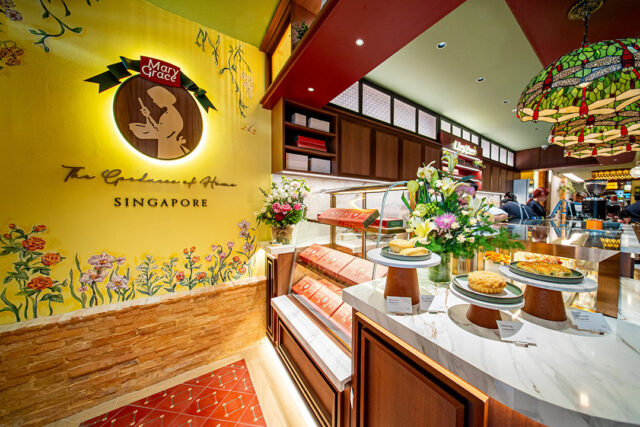
MARY GRACE CAFE, a well-loved fixture in the Manila dining scene, has opened its first international branch at 52 Tras Street, Tanjong Pagar in Singapore.

While planning took over a year and there were a series of pop-ups held in the city-state in preparation, the branch officially opened on March 13.

Seating 28 people, the first Singapore Mary Grace Cafe also comes with a central bakery. “In Mary Grace, everything has to be freshly baked. We can’t ship the ensaymadas and cheese rolls to Singapore from Manila. It won’t be freshly baked, so we had to bake them in Singapore,” explained Chiara Dimacali-Hugo, executive director of Mary Grace International, and daughter of Mary Grace’s founder, Mary Grace Dimacali, during a press conference at its branch in Rockwell on March 26.

Singapore also gets a few exclusives not found in the Philippines, such as Salted Egg Ensaymadas, Kaya-Pandan Cheese Rolls, and a Crab Cake Brioche, spinning off the city state’s most famed dishes and ingredients.

Mary Grace Cafe first opened in Serendra, Bonifacio Global City, in 2006, but had already been a home-based bakery in Parañaque 10 years prior. The company is thus celebrating being around 30 years in the business. Locally, she plans to open four more branches this year.

Founder Mrs. Dimacali talked about her feelings about expanding from her home kitchen to another country. “Victorious,” she said in a Q&A session. “Every step of the way — setting up the store, polishing the recipes… was a struggle.

“Everything fell into place,” she said, responding to a question about why they decided to open abroad after 30 years. “It was time.”

Why she hasn’t opened any branches outside Luzon but has in Singapore? The answer is simple — family. “‘Di ba Mary Grace is all about family?” she said. “I have a daughter, her husband, and two children, who live in Singapore.” She said that if she had family in Cebu or Davao, she would have opened there too.

On a serious note, she said, “It’s the doorway to Asia. If we can make it in Singapore, we think we can make it anywhere else in Asia.”

First a homemaker, then a home baker, then at the head of a cozy chain, she talked to BusinessWorld how she did it. “Take your time. Life is an ensaymada.” That meant that an ensaymada takes a longer time to bake than a cake, and she relates that to how she lived and worked. “If you happen to be a mother at a certain point, and you have children: raise your children well. Then everything will be opened unto you — in God’s time.”

“I could not be a businesswoman, and skip my role as a mother. It had to be them first,” she said during the Q&A. “I think it was a family effort. It’s not only me. It’s family.”

In light of the ongoing conflict in the Middle East between the US, Israel, and Iran, which has driven fuel prices up, she explained to BusinessWorld how she plans to navigate around the crisis. “Truthfully, we’re looking at rising prices and the availability of ingredients. Just like COVID, we don’t know what’s out there. But certainly, we’re vigilant; we’re alert. We’ll just cross the bridge when that time comes.” — Joseph L. Garcia

Airlines adjust Middle East flights after ceasefire

PHILIPPINE STAR/ WALTER BOLLOZOS

BUDGET CARRIER Cebu Pacific (CEB) has extended the suspension of its Manila-Dubai flights until the end of the month, while Philippine Airlines (PAL) will resume Manila-Riyadh flights starting April 10, as airlines adjust schedules following easing conditions after a two-week ceasefire in the Middle East conflict involving the United States, Israel, and Iran.

“CEB continues to assess its flight operations to and from the Middle East amid the ongoing security situation in the region. As this remains a developing situation, further schedule adjustments may take place,” CEB said in an advisory on Wednesday.

CEB said it had initially planned to cancel its Dubai flights only until April 20 but extended the suspension to prioritize the safety of its crew and passengers.

The airline said affected passengers may avail of flexible options, including free rebooking and conversion to travel funds.

Separately, PAL said it will resume Manila-Riyadh flights starting April 10.

“As Riyadh operations resume, PAL will temporarily operate via an alternate flight route to ensure the highest safety standards are maintained during this period,” PAL said in a separate advisory on Wednesday.

PAL said select Manila-Riyadh flights will include a brief technical stop in Bangkok for refueling. Passengers will remain on board during the stop.

“We continue to closely monitor the situation and will restore normal routing and full capacity as conditions allow. Updates will be communicated to affected passengers accordingly,” PAL said.

On Tuesday, PAL said it would extend the suspension of its Manila-Doha and Manila-Dubai flights until May 31 due to the conflict in the Middle East, citing risks to airspace safety and critical infrastructure. — Ashley Erika O. Jose

Offshoring trend to cushion office slowdown — Leechiu

STOCK PHOTO | Image by Dit26978 from Freepik

THE Philippine office market may slow down slightly, but demand is expected to be supported by continued offshoring by global firms, according to Leechiu Property Consultants (LPC) Chief Executive Officer David Leechiu.

“I think office will probably slow down a little bit, but it will be the best performing of the asset class because now more than ever, companies are going to offshore to the Philippines even more,” he told reporters on the sidelines of LPC’s first-quarter market briefing on Tuesday.

He said demand may soften alongside broader economic pressures, but offices are expected to remain the most resilient asset class even as some firms adopt flexible or hybrid work arrangements.

“They still need the office. Now more than ever, COVID has taught people that we need the office,” Mr. Leechiu noted.

The country’s office market started 2026 with stronger net demand, as net absorption rose 77% to 133,000 square meters (sq.m.) in the first quarter.

Traditional occupiers drove demand, accounting for 143,000 sq.m., or 61% of total take-up. Information technology and business process management (IT-BPM) firms contributed 79,000 sq.m., or 34%.

Expansion deals dominated both segments, with 112,000 sq.m. recorded for traditional tenants and 51,000 sq.m. for IT-BPM firms.

Mr. Leechiu said property demand is beginning to soften as global geopolitical developments push inflation higher and dampen consumer spending.

“I think we’re feeling it now. Ever since this war started, the inflation numbers are going to be so high,” he said. “It’s going to be higher, and so it’s really hitting the middle class and the lower class, which is why this corruption issue has to be managed quickly.”

Oil price shocks linked to the Middle East conflict pushed Philippine headline inflation to a 20-month high of 4.1% in March, from 2.4% in February and 1.8% a year earlier. This exceeded the central bank’s 3.1%-3.9% forecast for the month.

Some property markets are showing early signs of pressure as rising costs and economic uncertainty weigh on demand.

Tourism-driven Palawan may be among the hardest hit, as limited flights, high airfares, and elevated logistics costs increase travel and goods expenses.

In Metro Manila, areas with large existing supply such as the Bay Area, Ortigas, Mandaluyong, and Quezon City may face pressure due to a mismatch between supply and demand across residential, office, and retail segments.

“The most balanced market is still Makati, Bonifacio, and Alabang,” Mr. Leechiu said.

“I think Bonifacio Global City (BGC) is the safest market in every asset class, followed by Makati, Cebu, and Iloilo,” he added.

In the first quarter, Makati City led office transactions in Metro Manila with 76,800 sq.m., equivalent to 54% of its total demand in 2025. Bonifacio Global City recorded the lowest vacancy rate at 8%, compared with the Metro Manila average of 18%.

Outside Metro Manila, office demand reached 34,000 sq.m., led by Cebu with 11,700 sq.m., followed by Iloilo with 11,000 sq.m. and Clark with 6,600 sq.m.

Residential demand is expected to slow, while retail activity may also weaken. However, Mr. Leechiu said malls could prove relatively resilient as consumers continue to visit them, partly due to amenities such as free air conditioning.

“So I think yes, there will be a slowdown in malls, but not as bad as what people think it will be,” he said.

He added that if geopolitical pressures persist and lead to further price increases, consumer behavior inside malls could shift. Foot traffic may decline slightly, but purchasing power could weaken more significantly.

“People will still be in the mall, but they will not be spending the same way as pre-March 2, when the war started.” — Alexandria Grace C. Magno

A no-nonsense guide to Tokyo’s sushi scene

FREEPIK/TIMOLINA

THERE may be no sport more gruesome in the realm of travel than scoring a reservation at Tokyo’s most famous sushi establishments. With just six to eight seats — and one or two rounds of service per night — they’re the ultimate get on a holiday in Japan.

Their desirability has only skyrocketed as international tourism to Japan has grown to an all-time high of over 42 million arrivals in 2025 (a 15.8% increase from the year before). As a result, a set menu meal in Tokyo that was ¥20,000 ($130) in 2024 is now over ¥35,000 ($220).

And it’s not just because high-paying Americans are happy to spend less than the $500 omakases they’ll find in New York, either. Rising ocean temperatures have made it more difficult for Japanese fishermen to access fecund waters; petrol costs are driving up wholesale seafood prices; the closure of generational rice farms is making quality rice harder to come by and global demand is dispersing top talent to more profitable culinary capitals.

None of this makes it easier to find open seats at the sushi counter. Japanese sushiyas prioritize regulars — even at a time when fewer of them can afford to come as frequently. The most dedicated of these diners build long-term relationships with sushi chefs, often making their next reservation at the end of their meal. Many restaurants even hold empty seats and deny first-time guests if it means they’d be able host a cherished regular.

So how do you break in? This is the most frequent question I get about Tokyo, as someone who has spent more than two decades living, working, or making frequent trips there.

First, know that the math works in your favor: There are over 5,000 sushi restaurants in the city, from cheap conveyor-belt eats to $1,000 meals showcasing the rarest, most premium ingredients. Here’s how to navigate them, based on my years of experience and recent conversations with esteemed sushi masters, restaurant jurors for World’s 50 Best and top contributors to Opinionated About Dining, a user-generated global dining guide that factors experience into its ranking algorithm.

HOW MUCH SHOULD I SPEND?
To determine your budget, learn the vocabulary. Kaitenzushi — conveyor belt sushi restaurants — are the most affordable. A meal at Sushiro, the largest such chain in Japan, will only set you back around ¥2,500 ($15) per person.

“I take my children to Sushiro at least once a month,” says Hiroyuki Sato, the acclaimed sushi master at Hakkoku in Ginza. Even the cucumber roll here is a hit, he says, proving the importance of rice quality to the sushi experience.

Up next: tachigui (stand-and-eat establishments) offer some of the best price-value correlation around. They keep real estate and staffing costs low, so (nearly) all your yen go directly to your food. Standouts like Tachiguizushi Akira, tucked into a basement in the business-centric Shinbashi district, will run you around ¥8,000 ($50) for an a la carte meal. That buys you a noticeable upgrade in fish quality; fresh catches get carted into the restaurant from a market that’s only a mile away.

For great value, try higher-end restaurants at lunch, when a meal can cost half as much as dinner — figure around ¥6,000 ($28) to ¥12,000 ($75). The cost difference usually accounts for fewer courses; lunch is also a place for chefs to minimize food waste by using any leftover ingredients from the night before. A recent favorite is Sushi Komari, a relative newcomer decorated in blonde wood; while it excels with the classics, it also offers some playful creations like nori-wrapped charred octopus with wasabi and a dab of cream cheese.

If you aren’t a sushi fanatic, this is where you should cap your spending, as the aforementioned options will still yield better quality than what you can get at home. Go anywhere fancier and you’ll have less agency over what you eat, as fine-dining establishments are chef’s choice to accentuate the seasonal delicacies — which in Japan often means more challenging textures to the Western palate, like raw abalone and shirako (google it.)

These high-end dinners and omakases start around ¥30,000 ($188) and climb to ¥60,000 ($375) — at which point, you’re largely paying for prestige and bragging rights. Quality rarely degrades at critical darlings like Sushi Arai, Sushi Nanba Hibiya, and Sawada — the problem is the relative impossibility of getting into any them without knowing a few tricks.

HOW TO CHOOSE A HIGH-END RESTAURANT
Very few people have the knowledge it takes to understand the diminutive differences that make sushi go from great to exceptional. Even professional critics struggle here, which is why fish fanatics ignore Michelin and World’s 50 Best. Tabelog, Japan’s version of Yelp, is seen by Japanese diners as a better authority: Any restaurant with four or more stars (out of five) is regarded as excellent. Its top 10 sushi restaurants set the gold standard for sushi across the world, but you’d do well with most spots in the top 100.

Much like other aspects of Japanese culture and tradition, sushi has clearly delineated rules, with a mission to prioritize the same seasonal ingredients and time-honored techniques. So if you’re interested in how a chef asserts their creativity, look at their otsumami — the smattering of small courses that precedes the nigiri portion of the meal. These steamed, seared, and sauced plates are often how chefs earn acclaim.

When it comes to sushi itself, the differences can be so minute that I find vibes to matter at least as much as food, especially when you’re seeking a full experience. Many masters operate their establishments with such seriousness that they can often feel like sushi mausoleums, which zaps the fun out of the experience. Some don’t like foreigners, full stop. And since most top sushi chefs speak only Japanese, you can find spots with affable, English-speaking staff by Googling a particular restaurant and adding “English” or “foreigner” to your search term; it’ll give you surprisingly good insight into how comfortable you’re likely to feel.

Another hack: Choose a sushi restaurant within a hotel or on the restaurant level of a department store. It often feels more relaxed and geared toward an international palate, though prices can be inflated by around 30% as a result.

Wherever you go, avoid the dreaded sub-counter, where apprentices prepare your meal instead of the master (and often for the same price!). Many pro diners I spoke with say these experiences can range from fine to completely lackluster. But they’re easy to spot: Only once in my experience did a booking website not clearly indicate which counter I was reserving.

And finally, if your heart isn’t set on a particular restaurant, concentrate your energy on places run by rising stars — young masters who’ve completed their grueling, decade-long apprenticeships at legendary restaurants and have recently struck out on their own. (The booking site TableAll is your go-to source here, as its restaurant listings contain chef bios.) Sushi Akira is my current favorite: The chef is laidback and friendly, plus the place doesn’t have a sub-counter and you can still score an online reservation with a month’s notice. Sushi Ryujiro is another worthy choice.

MAKING THE BOOKING
Even when you know where you want to go, booking is complex: Every establishment has its own idiosyncratic system and even five-star hotel concierges have limited power. The main reservation-making portals are TableCheck, the aforementioned TableAll, Omakase, and Pocket Concierge, and most high-end spots use some but not all of them. If there’s an option to sign up for alerts, do — you’ll get pinged when seats open up at your preferred spot. But be warned, each booking site uses its own algorithm to either prioritize frequent users or those with Japanese phone numbers. (You can invest in the latter with one of the many eSIM services like Mobal or Ubugi if you’re planning a serious food trip to Tokyo.) They can also charge exorbitant fees, sometimes adding 30% to the cost of the meal.

Trip timing can be everything. If you want to increase your odds of success, summer travel makes for easier reservations; the seasonal fish selection is less compelling to Japanese diners than in November or December, when crab, pufferfish, and mollusks steal the show.

Don’t write off secondhand bookings, which could look scammy but are an entire cottage industry in Japan. Known resellers like Jad Ibrahim are frequent sushi-hounds who leverage their connections with chefs to scalp counter seats like they’re tickets for a sold-out concert. Oftentimes they’ll book dinner with “friends,” then sell all but one seat over Instagram and ask you (the buyer) to join them and pay for their meal.

It’s not as much of a racket as it sounds (though do your homework on the original price of your intended meal, as some of these dealers like to pay themselves handsomely for their time as well). The scalpers often speak fluent Japanese and can help elucidate the more arcane aspects of a meal such as highlighting the knife technique used on different cuts of fish, understanding the provenance of various ingredients, or helping you pair your sake with the evening’s courses.

They can also help you with some of the rules of engagement ahead of your night out, of which there are many. But I can help you there, too: Never wear cologne or perfume, avoid over-photographing your food, plan to wait outside for 10 minutes before your reservation and always greet the chef. Saying “oishii desu” (it’s delicious) is a nice way to express your appreciation, but complimenting every course can make you look disingenuous. For best results, save it for your favorite dish or the end of the meal. — Bloomberg

Real-time payments growth poses new cybersecurity risks

STOCK PHOTO | Image by jannoon028 from Freepik

GROWING ADOPTION of emerging instant payments technologies in the Philippines will mean new kinds of cybersecurity threats as bad actors adapt, financial technology firm Global Payments, Inc. said.

“The challenge is that faster, frictionless payments leave less time to assess risk. Without adequate safeguards, fraud such as account takeovers or social engineering scams can increase,” Global Payments Senior Vice-President for the South and Southeast Asia Krishnaraj Tantri said in an e-mail interview.

As real-time transactions grow, consumers will see more cybersecurity threats such as account takeovers, scams that trick users into authorizing payments, and refund abuse, he said.

“As payments become more automated, the focus must shift from merely blocking unauthorized users to preventing bad actors from abusing legitimate tools.”

Enterprises’ cybersecurity systems must also be able to assess fraud faster as the phasing out of one-time pin (OTPs) in the Philippines will likely lead to the adoption of new authentication technologies like biometrics-based authentication and passkeys.

The Bangko Sentral ng Pilipinas (BSP) has given financial institutions up to the middle of this year to comply with new fraud management system requirements and improve their customer authentication measures as part of the implementation of a law against financial scams.

A draft circular released last month showed that the BSP wants to require banks to enforce server-side biometric authentication to verify users and secure customer-initiated transactions amid rising financial fraud risks.

Once implemented, institutions are expected to phase out interceptable methods like OTPs via text or e-mail, though OTPs may still verify a registered mobile number linked to transactions.

“The transition away from OTPs is manageable, but only if replaced with strong security layers like biometrics and tokenized credentials. Where those protections are incomplete, the changeover period may create opportunities for fraud, so careful implementation is critical,” Mr. Tantri said.

He added that having more modern security foundations will also allow for the adoption of other emerging payments technologies.

“Adoption will depend on whether markets have modern security foundations in place, such as tokenized credentials and biometric authentication, to clearly identify who, or what, is making a purchase and ensure actions can be traced back to a real person.”

Based on the BSP’s cyberthreat surveillance in the first half of 2025, social engineering, account takeover, and identity theft accounted for 76% of the total amount lost to financial fraud in the period. — A.M.C. Sy

The future is electric: Radar EV Pickup debuts at MIAS 2026

Driving a bold shift towards electric power, comfortable drive and real-world wavings

Radar EV Pickup makes its highly anticipated debut at the Manila International Auto Show (MIAS) 2026, marking its inaugural appearance at a Philippine motorshow. Officially launched in October 2025, RADAR is poised to redefine the pickup truck segment with its compelling blend of electric power, unibody comfort, and versatile utility.

UAAGI Auto Group, the official distributor of RADAR EV Pickup in the Philippines, spearheads this landmark public exhibition at MIAS 2026, from April 9-12, 2026 at the World Trade Center in Pasay City, offering Filipino consumers an immersive experience with the future of electric pickup mobility.

Redefining the Modern Pickup: The Radar RD6

The Radar RD6 stands out as a trailblazer in the Philippine market, featuring  a groundbreaking unibody construction which is a first for the local pickup segment. This architectural shift provides significantly enhanced ride comfort, offering a more refined driving experience than traditional body-on-frame pickups. To cater to diverse consumer needs, the RD6 is available in two distinct powertrains: the pure electric (BEV) RD6 ECON and the plug-in hybrid (PHEV) RD6 EM-P 4WD.

The RD6 ECON is engineered for efficient everyday utility, delivering 245 PS and up to 485Nm Torque and a pure electric driving range of up to 443 km through its 63kWh and 73kWh battery options. For those requiring peak capability, the RD6 EM-P 4WD produces an impressive 463 PS and 659 Nm of torque. This PHEV variant offers a pure EV range of up to 82 km for short commutes and an expansive combined hybrid range exceeding 1,000+ km, ensuring long-distance reliability without range anxiety.

Built to handle the demands of both work and adventure, the RD6 is engineered for uncompromising real-world performance. It supports a substantial 1-ton payload capacity and features a 225mm ground clearance paired with an 815mm wading depth, ensuring confidence across varied terrains. Furthermore, its class-leading 1,765mm bed length of the ECON 73kWh 2WD provides unmatched cargo versatility for SMEs and outdoor enthusiasts alike.

Beyond its mechanical prowess, the RD6 integrates future-ready features designed for the modern driver, such as Vehicle-to-Load (V2L) capability which allows the vehicle to serve as a mobile power source. Using its GB/T fast-charging system, the battery can be replenished in as little as 30 minutes. Inside, the cabin is anchored by a 14.6-inch touchscreen with wireless Apple CarPlay for EM-P variants, while thoughtful additions like ventilated rear seats elevate the comfort of every journey. Designed for fleet businesses and modern adventurers, the RD6 redefines the pickup as a powerful, practical, and fully electrified mobility solution.

A New Era of Sustainable and Versatile Pickups

“The Radar EV Pickup’s first motorshow appearance at MIAS 2026 marks a meaningful step forward for pickup truck customers. The cost efficiencies of the PHEVs and BEVs matters now more than ever,” said Franz Decloedt.

“We’re proud to present a vehicle designed around what drivers truly need — strong performance, dependable utility, and everyday comfort — while using less fuel, for as low as Php 2.64/km/day with the RD6 ECON (BEV). With advanced technology and the capability to go further, it’s built to help Filipino motorists do more while spending less,” Decloedt added.

Strategically positioned within the UAAGI Auto Group’s expansive “UAAGI West Wing” display, the Radar EV Pickup transforms the booth into a dynamic automotive showcase. Visitors are invited to experience the RD6 firsthand, engage with product specialists, and discover how this innovative vehicle will revolutionize their driving and lifestyle needs.

Exclusive MIAS 2026 Opportunities for EV Pickup Enthusiasts

UAAGI Auto Group has curated a comprehensive and value-laden experience for MIAS attendees. At the UAAGI West Wing, prospective buyers can take advantage of:

  • Test drive Offers at the UAAGI Performance Center
  • On-site Trade-ins: Professional appraisals with immediate trade-in value application towards a new RADAR EV Pickup
  • Same-day Bank Approvals: Partner bank BPI offers easy financing deals and quick credit approvals
  • Exclusive Lucky Draw: Reserve a vehicle with RADAR for a chance to win cash discounts of up to Php 100,000.

These exclusive offerings underscore UAAGI Auto Group’s commitment to streamlining ownership and providing an unparalleled visitor experience at MIAS 2026.

Standard Retail Price (SRP) for the RD6 ECON base model starts at Php 1,398,000 and for the RD6 EM-P 4WD at Php 1,698,000.

For those who wish to explore the Radar RD6 beyond MIAS, customers may also visit authorized Radar dealerships nationwide to see the models up close and schedule a test drive. Showrooms are currently located in Alabang, Cagayan de Oro, Cebu, Quezon Avenue, Las Piñas, Marilao, Marikina, North EDSA, and coming soon in Bacolod, San Fernando Pampanga, Butuan and General Santos, making it easier for more Filipino drivers to experience Radar’s electrified pickup lineup firsthand.

Connect Online:
Follow Radar EV Pickup on Facebook (@RADARPhils), Instagram (@radarphils), TikTok (@radarautoph), and visit radarauto.ph for more on RD6 models.


Spotlight is BusinessWorld’s sponsored section that allows advertisers to amplify their brand and connect with BusinessWorld’s audience by publishing their stories on the BusinessWorld Web site. For more information, send an email to online@bworldonline.com.

Join us on Viber at https://bit.ly/3hv6bLA to get more updates and subscribe to BusinessWorld’s titles and get exclusive content through www.bworld-x.com.

How a star chef drinks beer

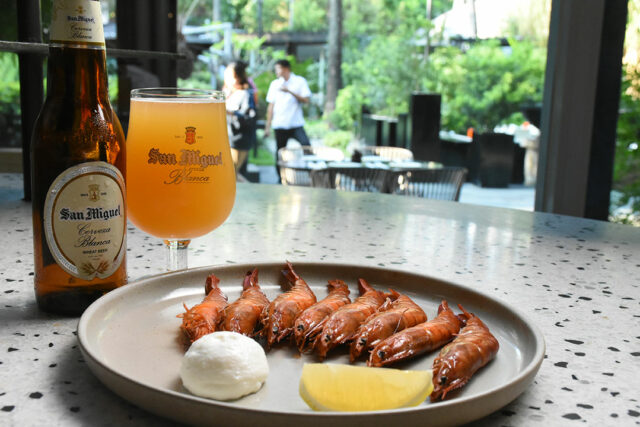
SMOKED SHRIMPS with a side of Garlic Aioli and Lemon, paired with San Miguel Cerveza Blanca.

Guests can now try a San Miguel Premium Beers pairing dinner at Boutwood’s Ember

BACK in the days when ad agencies were laser-focused on coming up with just the right tag line for their customers, they would have stumbled over themselves to hire chef Josh Boutwood if they had heard the one-liners he spouted about San Miguel over a special beer pairing dinner on March 25.

San Miguel Premium Beers held a pairing at the chef’s Michelin-selected restaurant Ember on March 25. Ember is one of the outlets under Mr. Boutwood, whose restaurants were very well-represented at the Michelin Guide for Manila, Cebu, and its environs launch last year: his restaurant Helm was the country’s first two-starred restaurant under the guide. Calling him a star chef, then, was no stretch.

BEER PAIRINGS
The meal started with Smoked Shrimps with a side of Garlic Aioli and Lemon, paired with San Miguel Cerveza Blanca. Smoked over applewood, one could smell the shrimps from a foot away. By themselves, they were robust and bold, with a hint of natural sweetness in their flesh. Cerveza Blanca served to emphasize this sweetness, providing a contrast to the otherwise smoke-forward flavors while the beer’s own wheaty notes were expressed further.

The next dish, a Baked Chicken Thigh Fillet with Sage Butter with Cauliflower Puree, was served with San Miguel Premium All-Malt. The beer’s maltiness added the suggestion of crispness in the chicken’s skin, bringing out a cleanliness in both the chicken and its pairing. Next came Marinated Grilled Pork Skewers with Jaew Sauce, Cilantro Mint Salad, and Lime Wedge, matched with San Miguel Super Dry. The strong flavors of spices and herbs brought out the beer’s complexity and fragrance.

The meal ended with a Walnut Date Cake, served with San Miguel Cerveza Negra. The cake was creamy and rich, and the cocoa notes in Cerveza Negra complement the burnt sugar notes in the cake. All the other elements in the cake and beer combined, and somehow, the beer began to taste like a glass of milk served before bed (albeit with a little snap).

FAVORITE BEER
One got an idea that Mr. Boutwood liked beer from his reaction last year after his restaurants were honored at the Michelin awards. He said then: “I can’t wait to leave, go to my restaurant, celebrate, open a bottle of champagne, and drink a shitload of beer, and just really have a nice night with my team.”

During the San Miguel pairing dinner, we asked how he liked his beer: “I’m a true purist,” he said.

“My favorite San Miguel beer is the original San Miguel Pale Pilsen,” he said, though after the release of San Miguel’s Cerveza Blanca wheat beer in 2024 in the Philippines, he has had a hankering for it. “That’s really become my go-to beer. It’s a lot more mature; it’s a lot more rounded. It has a lot more nuances,” he said.

“It’s less of the beer (for) ‘I’m going on a night out.’ It’s more of a beer to enjoy the night out,” he said, then joked about San Miguel paying him royalties for the great tagline.

What food does beer best go with? “Anything. Beer goes with everything. There’s not a thing in the world that beer doesn’t go with. It sounds like I’m endorsing them. But the selection of beers that San Miguel has can go with practically anything that’s going to be on the table.

“There’s a beer for every time and every moment,” he said. “There’s another slogan,” he joked.

These pairings of San Miguel Premium Beers with the intimate dishes at Ember by Josh Boutwood are available starting March 27. — Joseph L. Garcia

The entrepreneurial playbook as a guide for times of crisis

RJ LEDESMA PODCAST sits down with Archie Chiang (left), founder of Second Skin Industries. — THE RJ LEDESMA PODCAST

How do we survive the oil crisis? How can businesses continue to thrive when confronted with the unprecedented challenges we face today? These questions have been weighing on my mind lately, as they have likewise been with many Filipino entrepreneurs.

For business owners, it can be easy to lose hope, scale down on projections, or even call it quits as the peso plummets and inflation soars. And yet, as I regularly speak to entrepreneurs in the RJ Ledesma Podcast, I remain bullish about our prospects for the future. The reason is the entrepreneurial skillset — sometimes called the entrepreneurial playbook.

With this skillset, successful entrepreneurs are uniquely equipped to build something from nothing, rally people to a common purpose, and together, achieve the impossible. And I believe it is this entrepreneurial skillset that can help guide us through the rough seas of economic upheaval to emerge stronger with blue skies ahead.

Recently, I spoke to Archie Chiang, founder and CEO of Second Skin Industries, who reminded me that every successful entrepreneur is armed with this exceptional skillset. I chose Archie Chiang as the subject of this week’s column not because he is resilient or crisis-proof, but because he is an entrepreneurial every-man. He started business with a small cellphone and laptop vinyl wrapping service and grew it to become a wildly successful car wrapping service with two premium showrooms in Alabang and Katipunan, a supercar clientele, and more than a hundred employees. But in many ways, he could be you or me.

I’ve summarized our conversation from the podcast here with three important points that can help entrepreneurs through today’s crisis:

1. Stay agile. Almost every entrepreneurial story begins with a great opportunity. Successful founders are able to spot this opportunity and just run with it. Sometimes, they start small and gradually expand the business until they reach scale. Other times, they may start with another business completely and pivot their business model towards the opportunity they discovered. It’s called entrepreneurial agility.

For Mr. Chiang, Second Skin Industries began when he was still in college. A hobby, which began when he wanted to change the color of his MacBook laptop, turned into a small business.

“I came across this material,” he recounts. “It’s called vinyl, which you can use to wrap the laptop. So being a DIY guy, I borrowed my mom’s hair dryer. I borrowed the laptop. And then, [an] X-Acto knife. And then the laptop became black.”

Later this would lead him to automotive wrapping until, after working with a partner for nine years, Mr. Chiang decided to put up his own shop in a 25-square-meter space in a carwash along White Plains.

He said, “Initially, I started with just three people. So, it was two staff and me. And then, of course, through the demand, it had to grow, grow, grow. And now we’re over 100 employees already. So, it’s no joke. My operational expense is in the millions already.”

His plans don’t stop there. He sees the business expanding significantly, saying “Now my vision is: let’s grow that 100 to 1,000. And maybe more eventually after that.”

Today, prices may balloon beyond our control, but at the same time, new opportunities will be revealed. Clearly, electric vehicles are one area that is ready to boom, as is solar energy. And we need entrepreneurs like Archie Chiang to find these opportunities and have the courage and passion to doggedly pursue them.

2. Stay positive. We’ve been through crises before. Almost every entrepreneur has a pandemic story. Depending on when you founded your business, by now, you’ve probably survived the COVID-19 pandemic, the subprime mortgage financial crisis, the Asian financial crisis, or all of the above.

Mr. Chiang decided to grow Second Skin at the worst possible time: during the pandemic.

“In my 25-square-meter space,” he tells us, “I can only fit two cars, right? But at that time, in the area, I already had 10 [cars to service]. So, that’s when I saw that it’s time to grow.”

Placing a hefty deposit on a space that was over 40 times larger, he prepared to move the business. And then the lockdown happened. Travel was restricted, retail plummeted, and no one could predict what the future of Second Skin would be.

As luck would have it, the pandemic turned out to be an advantage for Second Skin as they served a premium market.

“Everyone started buying cars,” he remembers. “Everyone started taking care of their houses and their cars, right? So, my 1,000-square-meter warehouse, at that time, only had four or five cars. We filled it up. There were already 30 cars coming in every time.”

He had the good fortune of serving a market that was happy to spend money during the crisis. But the lesson for entrepreneurs is that sometimes we just have to continue moving forward when the future is uncertain.

He took a big risk by expanding during the pandemic, and it paid off. But it’s hard to overstate how he had to keep going out of necessity. For him, as it is with many entrepreneurs, failure is not an option. We need to survive crises for our shareholders, our business partners, our employees, and our families.

He explains, “I have to start professionalizing the business. Because if I don’t grow this well, I’ll feel sorry for the people I feed. Because 100 families is no joke.”

3. Never lose focus on your customer. The oil crisis has many deep-reaching effects on prices of goods, consumer behavior, and more. Some businesses will be affected more than others, but, regardless, focusing on your customers’ needs and solving their problems is always the answer.

Mr. Chiang shares advice from his first mentor, the owner of the wrap shop he worked with before striking out on his own. He says, “The way he did business is, he always tries to make the client happy. My greatest lesson from him was that. Because I used to think, why do we always have to please the client even though it’s already outside of our boundary? Outside of our scope. Why are you going that extra step? And then he said, that’s how you get them to keep coming back.”

Archie Chiang gives this advice to other entrepreneurs who may just be starting out.

“Always take care of your client,” he tells them. “Even if you’re losing money because of this certain client, take care of him because it will come back 10 times, all the time… If you make that client happy, it’s going to turn into two. That two will turn into two, four, six, eight. And that’s how it will spread naturally.”


RJ Ledesma (www.rjledesma.com) is a Hall of Fame Awardee for Best Male Host at the Aliw Awards, a multi-awarded serial entrepreneur, motivational speaker, and business mentor, podcaster, an Honorary Consul, and editor-in-chief of The Business Manual. Mr. Ledesma can be found on LinkedIn, Facebook and Instagram. The RJ Ledesma Podcast is available on Facebook, Spotify, Google and Apple Podcasts. Are there entrepreneurs you want Mr. Ledesma to interview? Let him know at ledesma.rj@gmail.com.

TDF yields move sideways on robust demand

BW FILE PHOTO

YIELDS on the Bangko Sentral ng Pilipinas’ (BSP) term deposits moved sideways on Wednesday as a recent bond maturity boosted market demand, with sentiment also improving amid hopes for a resolution to the Middle East conflict.

The seven-day term deposit facility (TDF) attracted P121.664 billion in tenders, more than double the P60-billion offer and above the P102.793 billion in bids for the same volume auctioned off last week.

This translated to a higher bid-to-cover ratio of 2.0277 times from the 1.7132 ratio recorded a week ago.

As a result, the BSP made a full P60-billion award of its offering as the TDF rate remained “broadly stable,” it said in a statement.

Accepted yields for the one-week papers narrowed to 4% to 4.2238% on Wednesday from the 4% to 4.2395% margin in the previous auction. This resulted in a weighted average accepted rate of 4.2082%, 0.04 basis point higher than the 4.2078% a week prior.

The average yield was marginally higher but still below the BSP’s policy rate of 4.25% amid strong appetite for the offering, which reflects ample liquidity in the financial system, Rizal Commercial Banking Corp. Chief Economist Michael L. Ricafort said in a Viber message.

He said this was partly due to a P282-billion five-year bond maturity on Wednesday that freed up some cash, which players are likely to reinvest in instruments like the TDF for returns.

Demand was also supported by improved sentiment as global oil prices fell below $100 a barrel after US President Donald J. Trump agreed to hold fire for two weeks, provided Iran would reopen the Strait of Hormuz for oil trade.

Oil prices slid as a two-week Middle East ceasefire brought some relief to markets on hopes for a resumption of oil and gas flows through the Strait of Hormuz, Reuters reported.

The news capped weeks of market volatility and geopolitical upheaval after US and Israeli strikes on Iran at the end of February pushed tensions to the brink, with Tehran effectively choking off the strategic waterway that typically carries about 20% of the world’s energy supplies.

Mr. Trump on Tuesday agreed to the ceasefire less than two hours before his deadline for Iran to reopen the strait or face devastating attacks on its civilian infrastructure.

Market reaction was swift and dramatic, with US crude futures down around 15% to $96.31 a barrel, while Brent futures also slid 13% to $94.71 per barrel.

The six-week conflict had sent oil prices soaring, reignited inflation fears and thrown the global rates outlook into disarray, forcing governments and companies to scramble for cover against a sudden energy shock.

Mr. Trump’s social media announcement on the ceasefire marked an abrupt reversal from hours earlier, when he issued an extraordinary warning that “a whole civilization will die tonight” unless his demands were met.

Beyond the immediate relief, investors remain keen to see whether the ceasefire leads to a broader resolution before placing major bets.

Some analysts are also skeptical that the ceasefire will translate into lasting peace, warning of likely twists and turns ahead.

The central bank uses the TDF and BSP bills to mop up excess liquidity in the financial system and better guide market rates towards the policy rate.

The BSP last auctioned off both the seven-day and 14-day deposits on Oct. 29. It has not offered 28-day term deposits for over five years to give way to its weekly offerings of securities with the same tenor.

In its latest Monetary Policy Report, the central bank said it limited its TDF offerings to a single tenor to rationalize liquidity operations and focus on tenors that would boost monetary policy transmission.

As of mid-February, the BSP’s market operations have absorbed P1.2 trillion in excess liquidity from the market, with 9% of this being siphoned off via the TDF. — Katherine K. Chan