Home Blog Page 5631

National U vs Adamson, FEU vs La Salle in all-UAAP semifinals in Preseason Cup

LA SALLE against FEU in Preseason Cup semifinals — PBA MEDIA

Games today
(Filoil EcoOil Centre)
3 p.m. — NU vs Adamson
5 p.m. — FEU vs La Salle

NATIONAL U faces Adamson while fellow La Salle duels with Far Eastern U in an all-UAAP semifinals of the 2022 Filoil EcoOil Preseason Cup today at the Filoil EcoOil Centre in San Juan.

NU and La Salle sport perfect slates so far since the elimination round, making them the heavy favorites over their separate opponents at 3 p.m. and 5 p.m., respectively.

The Bulldogs extended that unblemished campaign in the playoffs with a 75-64 win over San Sebastian College-Recoletos as the Green Archers followed suit by besting College of St. Benilde, 83-74, to advance in the Final Four.

Up against gritty and equally formidable UAAP foes this time however, both squads brace for heavy resistances.

NU coach Jeff Napa said ace guard Steve Nash Enriquez has been ruled out of the rest of the Filoil tilt due to a hamstring injury.

“We can’t be complacent even though we’re undefeated. We have to be prepared at all times,” noted La Salle’s Derrick Pumaren, whose wards are thriving so far despite a juggling act in the PBA D-League finals.

Adamson and Far Eastern U, for their parts, are keen on springing upsets to arrange a final battle of their own instead as part of their UAAP preparations. — John Bryan Ulanday

Vietnam routs young South Korean in three sets

VIETNAM less team captain Tran Thi Thanh Thuy defeats South Korea in straight sets. — ASIAN VOLLEYBALL CONFEDERATION

Games Today
(PhilSports Arena)
1 p.m. — Japan vs Australia
4 p.m. — China vs Iran
7 p.m. — South Korea vs Philippines

VIETNAM rested team captain Tran Thi Thanh Thuy but still routed a young and inexperienced South Korea, 25-13, 25-13, 25-16, yesterday to seize the momentary Pool A lead in the Asian Volleyball Confederation Cup at the PhilSports Arena.

Minus Tran, nicknamed 4T but popularly called T4 by Filipino fans, the Vietnamese went to Nguyen Thi Uyen, who paced all hitters with 13 points including a couple of kill blocks that sealed the win.

The Hanoi Southeast Asian Games silver medalist finished with a 3-1 record but had 10 points, a point ahead of mighty China, which is unbeaten in three starts but has only eight points.

The Great Wall of China though could retake the top seeding with a win over Iran today.

The Vietnamese have been playing impressively despite entering the 11-day tournament as wild cards following straight set victories over the host Filipinas and the Iranians.

Vietnam also came close to shocking China before ending up dropping a five-set defeat.

The Vietnamese enter the quarterfinals oozing with confidence, knowing they have a legitimate chance of surpassing, if not replicating, their fourth-place performance in Almaty, Kazakhstan exactly a decade ago.

The Koreans, composed of high school players of mostly 15 to 16 years old, sputtered to their third straight defeat.

But they have a chance to fight for a spot to the quarters in a do-or-die duel with the Philippines at 7 p.m. tonight.

“Our goal for tomorrow (today) is to at least to win against the Philippine team,” said South Korea skipper Hwang Jimin through an interpreter. — Joey Villar

La Salle forces a winner-take-all Game 3 in D-League Aspirants’ Cup

Games On Wednesday
(Smart-Araneta Coliseum)
12 p.m. — Marinerong Pilipino
vs EcoOil-La Salle

EcoOil-La Salle hung on to a 70-63 win over Marinerong Pilipino and forced a winner-take-all Game 3 in the PBA D-League Aspirants’ Cup finals yesterday at the Smart Araneta Coliseum.

Michael Phillips imposed his will on both ends of the floor while Evan Nelle and Kevin Quiambao provided the dagger baskets as the Green Archers recovered just in time to avoid a sweep and salvage a must-win Game 2.

Mr. Phillips, the UAAP Season 84 Mythical Five member, hauled down 18 points, 14 rebounds and four blocks, to pace La Salle that avenged its narrow 72-67 loss in Game 1 of the short race-to-two title showdown.

Schonny Winston (15) and CJ Austria (11) backstopped him for the Green Archers, who still needed the late-game heroics of Evan Nelle (8) and Kevin Quiambao (6) after nearly wasting a 10-point lead in the fourth quarter.

With the game hanging in the balance at 63-62 in the last minute, Mr. Nelle fished a foul from Kemark Cariño and converted all his three charities before Kevin Quiambao sealed it with a tough turnaround jumper in the next possession at 68-62.

“I’m proud of the way the boys kept their poise under pressure. We were playing not to lose after a big lead but we’re able to correct that and make big plays,” said coach Derrick Pumaren as La Salle takes the series to the do-or-die Game 3 next Wednesday at the same venue.

“We just came out with a strong start. We played our game unlike in the first game where we played tentative,” he added.

Motivated after falling short in the opener, La Salle started strong and took command until a 51-41 lead early in the payoff period only to allow a Marinero uprising highlighted by MVP winner Juan Gomez de Liaño’s triple in the 1:21 mark.

The triple of Mr. De Liaño, who won the Aspirants’ Cup best player award behind averages of 18.4 points, 8.4 rebounds, 6.3 assists and 1.2 steals, was the Skippers’ last hurrah to fall short in clinching the D-League crown. — John Bryan Ulanday


The Scores:

EcoOil-La Salle 70 — M. Phillips 18, Winston 15, Austria 11, Nelle 8, Nwankwo 7, Quiambao 6, Manuel 5, B. Phillips 0, Nonoy 0.

Marinerong Pilipino 63 — Go 21, Gomez de Liaño 14, Carino 14, Pido 5, Soberano 3, Nocum 2, Manlangit 2, Agustin 2, Gamboa 0, Bonifacio 0, Hernandez 0, Bonsubre 0, Lacap 0, Garcia 0.

Quarterscores: 20-10, 34-26, 49-41, 70-63.

Brooklyn Nets, Durant agree to ‘move forward’ together

KEVIN DURANT — REUTERS

THE BROOKLYN Nets and Kevin Durant will “move forward” together.

The superstar’s repeated trade demands this offseason are officially old news, according to a statement released Tuesday by Brooklyn general manager Sean Marks.

“We have agreed to move forward with our partnership,” Mr. Marks said. “We are focusing on basketball, with one collective goal in mind: build a lasting franchise to bring a championship to Brooklyn.”

Mr. Marks said that he and head coach Steve Nash and owners Joe Tsai and Clara Wu Tsai met with Mr. Durant and agent Rich Kleiman in Los Angeles on Monday.

The statement did not specifically explain what made the 33-year-old forward have a change of heart.

Mr. Durant initially asked for a trade on June 30 and doubled down this month with a request to ownership that the Nets make a change at general manager and head coach or set him free.

It now appears that Mr. Nash and Mr. Marks will keep their jobs and that Durant will remain in Brooklyn as he enters the first season of a four-year, $198 million extension he signed in August 2021.

A two-time NBA Finals MVP and four-time scoring champion, Mr. Durant joined the Nets as a free agent in 2019 alongside Kyrie Irving. Mr. Durant averaged 29.9 points, 7.4 rebounds and 6.4 assists in 55 games this past season with the Nets, who traded fellow All-Star James Harden to the Philadelphia 76ers in a blockbuster deal involving Ben Simmons.

The Nets were swept by the Boston Celtics in the first round of the 2022 NBA Playoffs.

Mr. Durant, the 2013-14 league MVP, has career averages of 27.2 points, 7.1 rebounds and 4.3 assists in 939 games with the Seattle SuperSonics/Oklahoma City Thunder (2007-16), Warriors (2016-19) and Nets.

Mr. Irving, a seven-time All-Star, picked up his $36.5 million option, though the Nets are said to be willing to listen to trade offers. He played in just 29 games last season after electing not to get vaccinated against COVID-19. — Reuters

Los Angeles Angels owner Arte Moreno to explore selling team

LOS ANGELES Angels two-way player Shohei Ohtani (L) poses for a photo with Angels owner Arte Moreno during a pregame ceremony to honor his 2021 American League MVP award at Angel Stadium in Anaheim, California, on May 10, 2022. — REUTERS

LOS ANGELES — Los Angeles Angels owner Arte Moreno on Tuesday said he has begun exploring the possibility of selling the Anaheim-based team he has owned for 20 seasons.

“Although this difficult decision was entirely our choice and deserved a great deal of thoughtful consideration, my family and I have ultimately come to the conclusion that now is the time,” Moreno said in a statement.

“Throughout this process, we will continue to run the franchise in the best interest of our fans, employees, players, and business partners.”

Moreno bought the Angels from the Walt Disney Company for $180 million in 2003, making the billionaire businessman the first Mexican American to own a major pro sports team in the United States.

The Angels won its lone World Series in 2002, shortly before Moreno purchased it, and the team has struggled in recent years with its last postseason appearance coming in 2014.

The team currently boasts two of the best players in baseball – pitching and hitting sensation and reigning AL MVP Shohei Ohtani and 10-time All-Star and three-time AL MVP slugger Mike Trout.

The Angels Organization said it had retained Galatioto Sports Partners as financial advisors for the possible sale process. — Reuters

Korea shatters its own record for world’s lowest fertility rate

REUTERS

SOUTH KOREA has once again shattered its own record for the world’s lowest fertility rate as it faces the prospect of its population of 51 million people more than halving by the end of this century.

Korean women were estimated, based on 2021 data, to have an average of just 0.81 children over their lifetimes, down from 0.84 a year earlier, the statistics office said Wednesday. The number of newborns declined last year to 260,600, which equates to about 0.5% of the population.

Korea is the world’s fastest-aging nation among economies with per capita GDP of at least $30,000, according to United Nations global population projections and World Bank data. By 2100, its population will fall by 53% to 24 million, up from a 43% decline forecast in 2019.

The forecast is a sobering reminder of the demographic threat and associated economic challenges confronting Bank of Korea Governor Rhee Chang-yong and President Yoon Suk Yeol, who both took office earlier this year.

Mr. Rhee warned in April that South Korea’s economy faces the risk of secular stagnation as the population ages and productivity slows. He said rising welfare spending would take away from the finance needed to boost economic growth, a key goal set out by Mr. Yoon in his inauguration pledges.

A shrinking workforce is a major factor in the decline of Korea’s potential growth rate. The working-age population peaked at 37.3 million in 2020 and is set to fall by almost half by 2070, according to Statistics Korea.

While seeking to slow the decline in the birth rate, Korea is also enacting a series of measures to live with the new reality, enhancing living conditions for retirees and introducing more robots. Inviting more women, elderly people and foreigners into the workforce is another goal.

The number of women of child-bearing age fell 2% to 11,620,000 last year, signaling the fertility rate is only likely to deteriorate further. A typical Korean woman gave birth to her first child at age 32.6, up from 30.2 a decade earlier, according to the stats office. Her partner on average would be 35.1, compared with 33 a decade earlier.

By region, the capital Seoul showed the lowest fertility rate at 0.63, while Sejong, home to government headquarters, had the highest at 1.28, according to the stats office. The most populous province, Gyeonggi, recorded 0.85, closer to the average.

In the decades following the 1950-53 Korean War, the population at least doubled and in an effort to curb the baby boom in the early years of economic development, the government encouraged couples to have only one child.

That policy was scrapped around the turn of the century as births started to sharply fall, prompting the government to spend tens of billion of dollars each year to encourage more children, but with little success so far. — Bloomberg

Japan to waive pre-departure COVID tests for some travelers

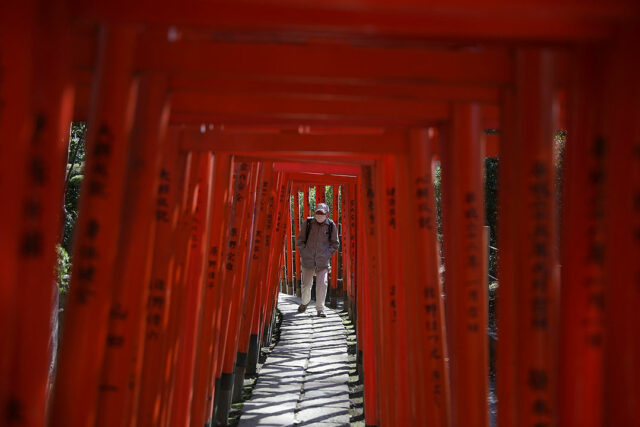
A MAN wearing protective face mask walks through red-colored wooden torii gates at the Nezu shrine in Tokyo, Japan, March 5, 2020. — REUTERS

TOKYO — Japan will waive pre-departure COVID-19 tests for vaccinated travellers to the country, but daily caps on entrants will remain in place, Prime Minister Fumio Kishida said on Wednesday.

The requirement for tests will be lifted from Sept. 7, Mr. Kishida said. No decision has been made yet on a reported plan to raise a daily cap on inbound travellers from 20,000 to 50,000, he added.

“We will continue relaxing these measures gradually,” said Mr. Kishida, who addressed reporters online as he is recuperating from COVID at his official residence.

Japan has maintained some of the strictest pandemic border measures among major economies, requiring travellers to present a negative coronavirus test taken within 72 hours of departure.

Mr. Kishida said in May that he wanted to bring Japan’s border measures more in line with those of other Group of Seven nations.

Japan in June opened up to tourists for the first time in two years, but requirements that they apply for visas and stick to guided, package tours have kept actual numbers of inbound visitors small.  Reuters

Singapore to drop most indoor mask requirements next week

FREEPIK

SINGAPORE — Singapore will do away with requirements to wear masks indoors starting Aug. 29, as the country sees its coronavirus disease 2019 (COVID-19) situation stabilize further, the health minister said on Wednesday.

For the first time in more than two years, people in the Southeast Asian city-state will no longer be required to wear masks indoors except on public transport and in high-risk settings like healthcare facilities.

The health ministry also updated rules for non-vaccinated travelers, dropping a 7-day quarantine requirement starting next week.

Singapore, which is a major Asian financial and travel hub, lifted most pandemic curbs, including travel restrictions, earlier this year.

About 70% of the city-state’s 5.5 million population has already contracted COVID-19, Ong Ye Kung, the health minister said in a news conference, adding that the re-infection rate is so far “very low”.

Singapore has vaccinated more than 90% of its population and has among the lowest COVID-19 mortality rates in the world. — Reuters

China expected to face more climate havoc despite cool-off in some regions

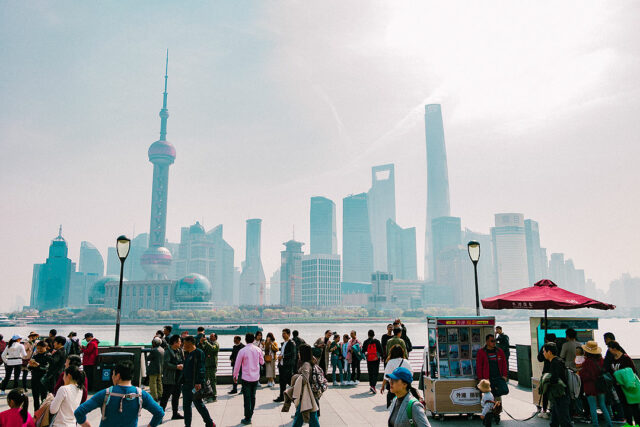
JAVIER QUIROGA-UNSPLASH

SHANGHAI — Extreme heat in China played havoc with crops and power supplies on Wednesday despite lower temperatures in some regions, with authorities across the Yangtze river basin scrambling to limit the damage from climate change on crops and livestock.

The southwestern region of Chongqing has been hit especially hard by weeks of hot, dry weather. One resident, Zhang Ronghai, told Reuters that both his water and his power had been cut after a four-day mountain fire in the district of Jiangjin.

“People need to go to a power center over 10 kilometers (6 miles) away to charge their phones,” Mr. Zhang said.

Chongqing’s agriculture bureau drew up emergency measures to protect livestock at more than 5,000 large-scale pig farms, which have faced “severe challenges” as a result of the heat, state media said.

Damage to crops and water scarcity could “spread to other food-related sectors, resulting in a substantial price increase or a food crisis in the most severe case”, said Lin Zhong, a professor at City University of Hong Kong who has studied the impact of climate change on agriculture in China.

China’s National Meteorological Center downgraded its national heat warning to “orange” on Wednesday after 12 consecutive days of “red alerts”, but temperatures are still expected to exceed 40 Celsius (104 Fahrenheit) in Chongqing, Sichuan and other parts of the Yangtze basin.

China has warned it is especially vulnerable to climate change and natural disasters are expected to proliferate in coming years as a result of more volatile weather.

As the drought drags on, state media have been turning their attention to the impact of climate change in other countries.

“Climate change is once again a wake-up call for the world,” said the official newspaper of China’s corruption watchdog on Tuesday, adding that damaging heatwaves and droughts have hit Europe, Africa and North America in recent weeks.

China, the world’s largest source of climate-warming greenhouse gas emissions, is committed to bringing CO2 to a peak before 2030 and to become “carbon neutral” by 2060, and it is also racing ahead in renewable energy development.

But the drought has eroded hydropower generation and coal-fired power is again on the rise, with plants in Anhui province raising output by 12% compared with normal years.

Prospects for international cooperation to tackle the problem dimmed following the visit of US House of Representatives speaker Nancy Pelosi to Taiwan this month.

In response, an angry China canceled climate talks with the United States, ending an important channel that has helped drive greener policies.

China has said the climate cannot be separated from wider diplomatic issues. The foreign ministry told the United States last week that it should end a boycott of solar power products from the Xinjiang region and provide funds to help developing countries adapt.

The United States has banned imports from Xinjiang in an effort to safeguard the US market from products potentially tainted by human rights abuses. China denies that abuses are taking place.

“If recent events don’t focus minds, it’s hard to know what will,” Mark Beeson, a professor at the University of Technology, Sydney, who studies global climate politics, said of prospects for international cooperation. — Reuters

Mexico, Cuba report rare deaths of two patients with monkeypox

A SECTION of skin tissue, harvested from a lesion on the skin of a monkey, that had been infected with monkeypox virus. — CENTERS FOR DISEASE CONTROL AND PREVENTION

MEXICO CITY — Mexico and Cuba have reported the deaths of two people who had tested positive for monkeypox, although neither country attributed the fatalities to the viral disease.

The reports follow monkeypox-related deaths reported in Brazil and Ecuador in the past month, but fatalities remain extremely rare in the current outbreak.

The Pan-American Health Organization has reported at least 21,200 confirmed cases of monkeypox in the Americas, and over 80 countries worldwide have reported new cases of the illness, which is endemic in parts of Africa.

Mexico’s health ministry on Tuesday said experts were investigating the death of an HIV-positive patient who had died from septic shock and pneumonia after testing positive for monkeypox.

Mexico has reported 386 confirmed and 862 probable cases of monkeypox infection.

Cuban authorities said a 50-year-old Italian man died on Sunday after being diagnosed with monkeypox on Saturday.

The public health ministry said the tourist, who had arrived on Aug. 15, had been in an unstable condition since Thursday and rapidly deteriorated.

The ministry pointed to an autopsy report that reported the cause of death as sepsis linked to pneumonia and organ damage.

The World Health Organization has warned that people with underlying immune deficiencies could be at risk of more serious symptoms and death after contracting monkeypox. Nearly 42,000 monkeypox infections have been reported worldwide since May. — Reuters

Traffic enforcement technology

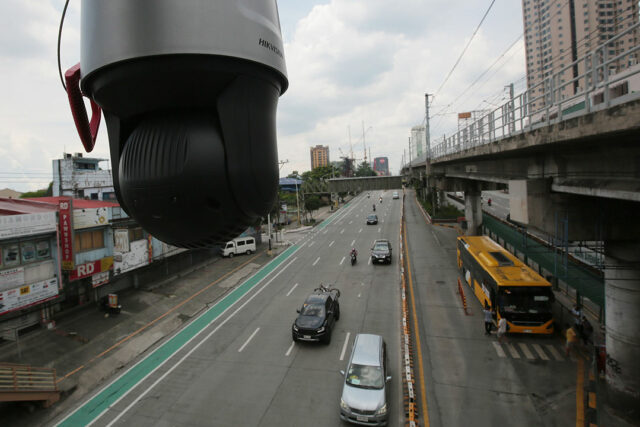
A CLOSED-CIRCUIT TELEVISION (CCTV) at Main Avenue in Cubao, Quezon City. — PHILIPPINE STAR/ MICHAEL VARCAS

No-contact or non-contact apprehension is nothing new. In other countries, cameras have been used for contactless traffic enforcement since the 1960s. What is relatively new to the Philippines, however, is that more erring motorists are now being caught — and fined — for violating traffic regulations in Metro Manila even while traffic enforcement personnel are not around to personally accost them.

The Dutch company Gatsometer BV was said to have introduced the first red-light camera (film-based) in 1965; the first radar for use with road traffic in 1971; and, the first mobile speed traffic camera in 1982. Incidentally, the Dutch company was founded by rally driver Maurice “Maus” Gatsonides in 1958. His first “Gatsometer” was meant to monitor his average speed on a race track, to help him improve his lap times.

With today’s networking technology as well as new camera devices that take digital pictures and process and transmit them electronically almost instantaneously, regulators can determine and penalize violations based simply on “captured” images or videos. But procedures are also in place for review as well as for adjudication in case of questionable apprehensions.

Despite their shortcomings, I remain supportive of the non-contact apprehension programs (NCAP) being implemented in Metro Manila today. I base this on my experience, as early as 2004, with traffic cameras while driving around Germany; and, several years back, with the NCAP in Parañaque City. In fact, NCAP has been in place in Parañaque since 2018, but no one has legally questioned it until now, and only after Manila and Quezon City implemented their own programs.

I support the use of technology for traffic enforcement, and to complement traffic enforcement personnel. Technology is dispassionate, and does not exercise any discretion in determining a violation. While it cannot be held accountable, it cannot be corrupted as well. As opposed to traffic enforcers, who, at a moment of weakness, can exercise poor judgment.

But while local law may suffice for now to put NCAP in place, perhaps a national law may be required in the future to set national standards for traffic enforcement and to align NCAP systems with existing laws on traffic regulation and enforcement. Moreover, there should be a scientific, data-based standard for setting fines for NCAP.

In my opinion, the setting of traffic fines has always been arbitrary. While they may find basis in law, they are rarely set based on scientific data and study, and the use of algorithms. The simple test to prove this is that traffic fines are usually static, not dynamic. They rarely change over time, despite changes in traffic systems and motorist behavior. Traffic fines are not even indexed to inflation.

The argument is that if monetary penalties intend to correct misbehavior and prevent wrongdoing in traffic enforcement, then shouldn’t they also change along with changes in behavior over time? If a particular violation persists and continues to grow in number as time passes, then shouldn’t its penalty be raised as well? Fines are currently set by statutes without regard for that statute’s effectiveness over time.

Moreover, it will be difficult to impose different regulations and fines for each and every jurisdiction when most motorists traverse different territories in the course of their travel within Metro Manila. In this line, there should be consistency, streamlining, and alignment of regulations, list of violations, and values of fines or penalties among different territories in the metropolis. And fines should be reviewed periodically, based on a study and assessment of the effectiveness of regulation or policy.

The objective is enforcement, not entrapment. It should be a city’s intention to improve traffic enforcement, to improve the movement of people and goods, and to ensure the safety of everyone on the road. NCAP should not be a money-making tool. The collection of fines is simply a consequence of effective enforcement. If fines do not result in effective enforcement and improvement of traffic flow, then there is obviously something wrong in the NCAP process.

So far, one can be left with the misimpression that entrapment is the real objective. A fine should be commensurate to the misbehavior. A standard fine, across the board for most violations, and a hefty one at that, is obviously a fund-raising tool more than anything. Especially if it doesn’t address misbehavior effectively. Traffic violations vary in seriousness and gravity, and their fines should be set accordingly.

Moreover, an NCAP system that is not supported or complemented with improvements in road conditions and markings, and traffic signage and signals, becomes a trap that simply takes advantage and profits from motorists’ ignorance particularly of local traffic laws. Traffic enforcement aims to ensure public safety, first and foremost. But how is safety served and ensured by bad roads, dilapidated signage, and busted signals?

The process should start with improving road conditions. The second step is the rationalization of road use, especially with new regulations regarding public utility vehicles, motorcycles, bicycles, and other personal transport or personal mobility devices all sharing the road. Motoring conditions should then be improved by clear markings and signage and working signals. Then, complement this with effective driver education programs.

Once these are all in place, then the “ignorance” of motorists and everybody else on the road can be exploited by NCAP systems, to the financial gain of cities implementing them. NCAP can probably prioritize yellow box, red light, no-parking/no-waiting/obstruction, and jaywalking violations, followed by speeding and disregarding lane markings. Prioritize monitoring of violations on disregarding public safety and obstructing or impeding flow of traffic.

Again, the objective is enforcement, not entrapment. And enforcement aims to ensure public safety and the faster flow of vehicles, goods, and people. The collection of fines is incidental. Behavior is determined by system or structure. But system or structure should be designed to meet objectives that improve the human condition, and to actually improve behavior rather than just penalize misbehavior. If the NCAP fails in this regard, then what good does it promote?


Marvin Tort is a former managing editor of BusinessWorld, and a former chairman of the Philippine Press Council

matort@yahoo.com

The COVID-19 financial crisis that wasn’t

AUSTIN DISTEL-UNSPLASH

THE SUDDEN REALIZATION in mid-March 2020 that COVID-19 was going to be a once-in-a-century pandemic created the kind of disruption that financial crises are made of. Pundits predicted an unprecedented triple shock: lockdowns would decimate demand, travel bans would devastate supply, and the “dash for cash” would freeze financial activity. Stock markets plunged and bond yields jumped.

But despite the disastrous human toll and the inevitable economic downturn, the financial crisis didn’t happen. To understand what went right, our research team at the Yale Program on Financial Stability compiled a database of some 9,000 government actions in 180 countries. The lessons: Go big, go early, and prepare for next time.

Fiscal, monetary, and other authorities across the world acted swiftly amidst extreme uncertainty. They used tools employed during the 2008 financial crisis, adapted for the deeper and faster events of the pandemic. They pledged extraordinary sums and took risks on new programs. Even as some of the worst fears came to pass — in just one quarter, US annualized economic output fell by a third and unemployment tripled — there was no global depression or credit crunch.

Four lessons stand out.

• The same tools can be useful in different crises. Financial disasters share some common elements: liquidity dries up, depositors and creditors run, asset prices plummet. For that reason, many of the tools implemented during the 2008 financial crisis proved readily adaptable in 2020. The Bank of England, for example, revived its Contingent Term Repo Facility to allow distressed counterparties to exchange hard-to-sell assets for central bank cash.

Authorities also retrofitted interventions, applying their experience from crises past. For instance, the Bank of Japan revived its Special Funds-Supplying Operations, through which it provided interest-free, collateralized loans to creditworthy financial cooperatives. The purpose of the COVID-era program, however, shifted to private-sector financing and financial market stability, rather than supporting the corporate bond and commercial paper markets.

• Be willing to innovate and experiment. New problems called for new solutions. For example, many COVID-19 actions focused on bolstering vulnerable industries in the real economy, such as airlines and healthcare, as opposed to financial institutions. After the initial round of interest-rate cuts and emergency liquidity programs, many countries launched market interventions not seen during the 2008 financial crisis, including fiscal measures such as payment moratoria, tax deferrals and grants (albeit not without some unintended consequences).

• Go big and the market will do your job for you. When governments and central banks pledged trillions of dollars to purchase everything from municipal bonds to exchange-traded funds, they often didn’t need to spend even a small fraction of the money. In cases such as the Swedish Riksbank’s corporate bond purchase program and the US Federal Reserve’s Term Asset-Backed Securities Loan Facility, the mere announcements restored the confidence required for private investors to go back into action.

• Prepare during calm times. Reforms instituted in the years following the 2008 financial crisis made a crucial difference in 2020. Most importantly, banks operated with substantially more equity capital, which absorbed losses and allowed them to act as a source of strength rather than contagion (although central bank efforts to provide liquidity and prop up asset prices helped a lot, too). A dozen countries had also required banks to have a countercyclical capital buffer, which provided extra resilience as lockdowns began.

Meanwhile, the pandemic revealed gaps in countries’ crisis-management toolkits — gaps they are addressing now that markets have calmed. For example, central banks are considering how to redesign liquidity buffers, which require banks to hold extra cash to cover their obligations in difficult times. During the pandemic, banks proved reluctant to deploy the cash, fearing stigma or regulatory backlash. So, regulators are pondering how to make the buffers more usable.

Financial regulators are often accused of “fighting the last war” — that is, reacting to crises with burdensome reforms that won’t help next time around. Yet the experience of the pandemic demonstrates that many lessons and tools are perennial, that preparation is possible and useful, and that officials can adjust and innovate in the midst of battle. The global financial system survived COVID thanks to years of evaluating the previous crisis, and authorities can build on that experience to prepare for the next.

BLOOMBERG OPINION