Home Blog Page 5624

Congo officials investigating possible Ebola case — WHO

DAKAR — Health authorities in the Democratic Republic of Congo are investigating a suspected case of Ebola in the country’s east, the World Health Organization (WHO) said on Saturday.

A 46-year-old woman died on Monday in the city of Beni, one of the centers of an Ebola outbreak from 2018 to 2020 that killed nearly 2,300 people.

She was initially treated for other ailments but then developed symptoms consistent with Ebola, WHO said in a statement.

Congo’s dense tropical forests are a natural reservoir for the virus, which causes fever, body aches, and diarrhea.

The country has recorded 14 outbreaks since 1976. It declared an end last month to its latest outbreak, in northwestern Congo, which caused five deaths. — Reuters

Somali forces end  30-hour hotel siege

MOGADISHU — Somali forces have ended a siege at a hotel in Somalia’s capital Mogadishu, an army officer told Reuters on Sunday, adding that they were still clearing explosives scattered around the building.

At least 12 people, mostly civilians, were killed as Somalia’s elite armed forces battled al Qaeda-linked militants for 30 hours after they blasted and shot their way into the Hayat Hotel on Friday evening.

“We are still investigating the explosions of many plastic bags that have been scattered around the hotel,” said Mohamed Ali, a military officer at the scene.

The French news agency Agence France-Presse earlier reported that all the gunmen had been killed, citing a security commander.

Friday’s attack was the first such major incident since President Hassan Sheikh Mohamud took office in May.

The al Qaeda-linked al Shabaab group claimed responsibility for the attack.

Al Shabaab has been fighting to topple the Somali government for more than 10 years. It wants to establish its own rule based on a strict interpretation of Islamic law.

The Hayat is a hotel popular with lawmakers and other government officials. — Reuters

vivo brings vivo Y02s, a powerful smartphone with a slimmer body, to the Philippines

vivo Y02s in Vibrant Blue

vivo officially unveiled yet again a powerful and affordable smartphone that is sure to deliver Filipinos plenty of time to enjoy uninterrupted hours of contact and entertainment with friends and loved ones. An upgrade from the vivo Y01, the vivo Y02s now comes in a very thin 8.19-mm body — vivo’s thinnest design in this price range. But don’t let its slim body fool you because the vivo Y02s is an all-around smartphone that is feature-packed and has a huge 5,000 mAh battery capacity.

Launched on Aug. 13 via vivo website, Lazada, Shopee and TikTok shop, the vivo Y02s will also be available through offline stores (experience stores and kiosk) nationwide starting Aug. 20, 2022 for only P6,499. Consumers who will purchase online are eligible to receive a FOOMEE Q4A05 as freebies! *limited stocks only.

Power-packed and dependable

Vivo Y02s in Fluorite Black and Vibrant Blue

With the vivo Y02s’s large 5,000 mAh battery, you can keep your battery anxiety at bay and enjoy many hours of browsing (and online shopping!), binge-watching your favorite Netflix Series with the fam, and more gameplay with the siblings. A single full charge allows you to stream Youtube in HD for up to 18 hours, 20 hours of music playback on Spotify, and 7 hours of resource-intensive gaming like PUBG, or Mobile Legends. The vivo Y02s also supports a C-type port and 5V/1A reverse charging, ensuring long battery life even for your other devices.

For gamers and video streamers, a wide and immersive screen is necessary and the 6.51-inch HD+ Halo FullView Display with 1600*720 (HD+) resolution of the vivo Y02s is just perfect for that. The display also automatically adjusts brightness level depending on ambient light conditions and filters out harmful blue light so users can surf, stream, and play without worrying about eye strain. The device’s Multi-Turbo 5.5 and Ultra Game Modes also help deliver a smooth, lag-free performance which gamers will surely enjoy.

The vivo Y02s is powered by a Mediatek Helio P35 chipset and has 3GB of RAM and 32GB memory to ensure sufficient phone storage and a smooth performance despite having many applications running in the background.

Slim and stylish

This newest Y-series device from vivo screams comfort and elegance. With just 8.15mm thickness and weighing just 182g, the vivo Y02s can easily fit in your pocket or small handy bag. The sophistically designed 2.5D curvature and frame of its body not only adds aesthetic touches but also makes the device more comfortable to the grip.

The vivo Y02s comes in two colorways — Flourite Black and Vibrant Blue. The Flourite Black colorway gives off a classy shine and a touch of sophistication while the Vibrant Blue comes alive with a pattern of dancing waves, rejuvenating you with passion and vitality.

In the camera department, the vivo Y02s also has much to offer. Its 5MP Front Camera + Aura Screen Light can capture beautiful selfies even in low light conditions. Its 8MP main camera complemented by vivo’s AI editing software ensures great photographs every single time.

The vivo Y02s is now available at vivo’s official website, official Shopee and Lazada stores, and Tiktok account for only P6,499.

For more information on vivo’s latest news and updates, please head to vivo’s official Facebook, Instagram, Twitter and YouTube channels.


Spotlight is BusinessWorld’s sponsored section that allows advertisers to amplify their brand and connect with BusinessWorld’s audience by enabling them to publish their stories directly on the BusinessWorld Web site. For more information, send an email to online@bworldonline.com.

Join us on Viber to get more updates from BusinessWorld: https://bit.ly/3hv6bLA.

BIR to pursue rightsizing

BW FILE PHOTO

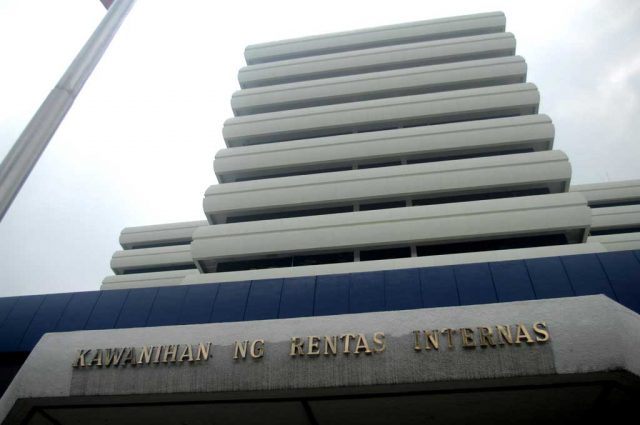
The Bureau of Internal Revenue (BIR) said that it will “rightsize” some of its offices as it ramps up its digitalization efforts, while also noting insufficiencies in the implementation of its electronic invoicing platform.

“[Rightsizing] is what we will do. We will scrap and build some items in the Bureau of Internal Revenue, and introduce cybersecurity experts [and] data scientists … as well as a data governance office; it is very important that we have such positions to make this digital transformation happen and be successful,” BIR Commissioner Lilia C. Guillermo said during the 1st SyCip Gorres Velayo & Co. (SGV) Tax Symposium on Friday.

The revenue collecting agency adheres to four pillars for its digitalization efforts: strengthening of the BIR organization; modernizing the digital backbone of the BIR; enhancing policies, governance, and standards; and elevating taxpayer experience and innovating BIR services.

In his first State of the Nation Address, President Ferdinand R. Marcos, Jr., cited the National Government Rightsizing Program as a legislative priority.

Budget Secretary Amenah F. Pangandaman also previously said that her department is finalizing a proposed measure to rightsize the bureaucracy, which will be submitted to Congress.

Meanwhile, Ms. Guillermo said that only 15 out of 100 large taxpayers have responded to the BIR’s invitation for digitalization through its e-receipts and e-invoicing system.

“Hindi lang po BIR dapat ang mag-digital transformation (The BIR shouldn’t be the only undergoing digital transformation)… [for] audits to be done very conveniently,” Ms. Guillermo said, citing how some firms still prefer a manual system. “Those who are prepared, please volunteer already.” — Diego Gabriel C. Robles

BoP deficit hits $1.82 billion in July

GIORGIO TROVATO-UNSPLASH

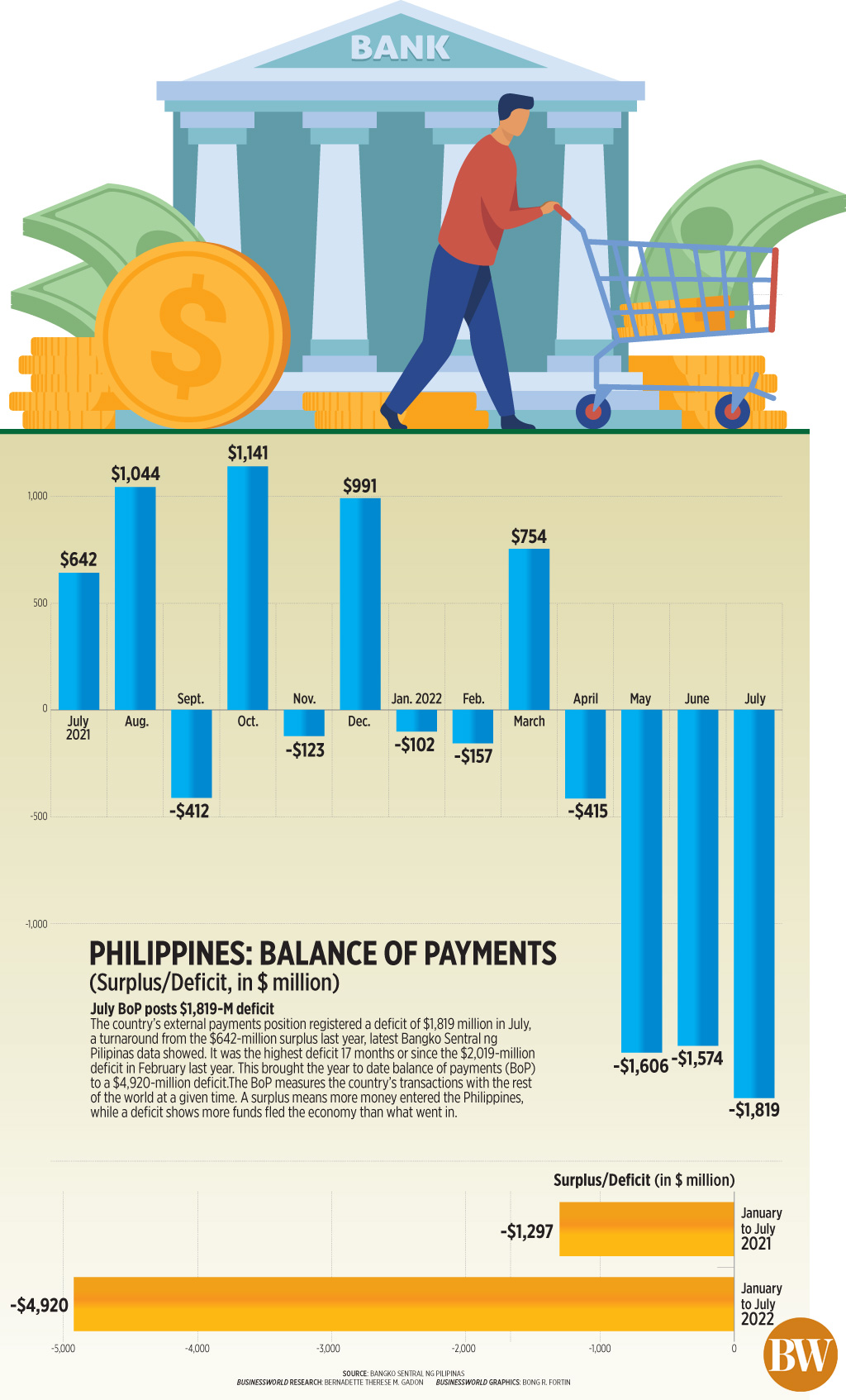
The country’s balance of payments (BoP) position remained in a deficit for a fourth straight month in July, as more dollars flowed out of the country to pay for the government’s foreign debt.

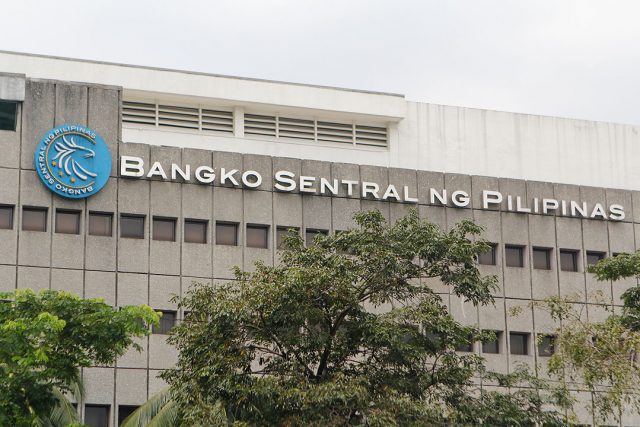
Data released by the Bangko Sentral ng Pilipinas (BSP) on Friday showed the BoP deficit widened to $1.819 billion in July, a turnaround from the $642 million surplus in the same month last year.

This is also the widest deficit posted in 17 months or since $2.019 billion in February 2021. The July deficit is also higher than the $1.574 billion gap in June.

Philippines: Balance of payments“The BoP deficit in July 2022 reflected outflows arising mainly from the National Government’s (NG) foreign currency withdrawals from its deposits with the BSP to settle its foreign currency debt obligations and pay for its various expenditures,” the BSP said in a statement.

The BoP measures the country’s transactions with the rest of the world at a given time. A deficit means more funds fled the economy than what went in, while a surplus shows that more money entered the Philippines.

In the first seven months of the year, the BoP deficit widened to $4.920 billion, from the $1.297 billion deficit in the same period in 2021.

“Based on preliminary data, this cumulative BoP deficit reflected the widening trade in goods deficit,” the central bank said.

The trade deficit for January-June 2022 reached $29.793 billion, up from the $17.953 billion deficit posted in the same period last year, preliminary data from the Philippine Statistics Authority’s (PSA) showed.

The central bank also noted that this BoP position reflects the final gross international reserves (GIR) level of $99.8 billion as of end-July, 1.09% lower than the $100.9 billion as of end-June.

“Nonetheless, the latest GIR level represents a more than adequate external liquidity buffer equivalent to 8.3 months’ worth of imports of goods and payments of services and primary income,” the BSP said.

“Specifically, it ensures availability of foreign exchange to meet balance of payments financing needs, such as for payment of imports and debt service, in extreme conditions when there are no export earnings or foreign loans.”

The GIR can also cover up to 7.2 times the country’s short-term external debt based on original maturity and 4.6 times based on residual maturity.

“Short-term debt based on residual maturity refers to outstanding external debt with original maturity of one year or less, plus principal payments on medium- and long-term loans of the public and private sectors falling due within the next 12 months,” the central bank said.

China Banking Corp. Chief Economist Domini S. Velasquez said the BoP deficit may narrow slightly in the next few months, as global commodity prices subside.

“Downside risks to BoP is that lower import prices will be challenged by anemic growth in exports as global growth slows. Additionally, as the national government pays off its foreign currency debt and shifts to domestic sources, additional withdrawals are likely,” Ms. Velasquez said.

Earlier, the Monetary Board revised its BoP deficit forecast to $6.3 billion, or equivalent to -1.5% of gross domestic product (GDP), higher than the previous projection of a $4.3 billion gap (-1% of GDP).

The BSP also projected a wider current account deficit at $19.1 billion (-4.6% of GDP) this year, from $16.3 billion (-3.8% of GDP) previously.

The country’s GIR is expected to hit $105 billion by end-2022 and $106 billion by end-2023, lower than the March projections of $108 billion and $109 billion, respectively. – Keisha B. Ta-asan

PDP preliminary framework unveiled

PHILIPPINE STAR/ MICHAEL VARCAS

The National Economic and Development Authority (NEDA) unveiled an updated preliminary framework for the Philippine Development Plan (PDP) for 2023 to 2028, focusing on human capital and income development, as well as revitalizing the major sectors of agriculture, industry, and services.

“It has to be about developing and protecting the capabilities of individuals and families. We want them to have the capabilities to be able to earn more and to be able to protect those earnings,” NEDA Undersecretary Rosemarie G. Edillon said during the 1st SyCip Gorres Velayo & Co. (SGV) Tax Symposium on Friday.

In an email to BusinessWorld, Ms. Edillon clarified that the framework she presented during the forum was updated just the previous day (Aug. 18).

As outlined in the presentation, promoting human capital and social development will entail boosting health and nutrition; improving education and lifelong learning; and establishing livable communities.

“We need to address these learning losses, pre-pandemic and then during the pandemic, so we can grow much faster going forward,” Ms. Edillon said in her presentation.

On the other hand, the goal of increasing income earning ability will require expanding training and skills development and intensifying employment facilitation.

At the same time, the protection of purchasing power is envisioned by ensuring food security and rationalizing social protection by targeting help to the most needy.

Meanwhile, another aspect of the framework concerns itself with transforming production sectors to generate more quality jobs and competitive products.

The modernization of agriculture and agri-business, the revitalization of industry, and the reinvigoration of the services sector will be achieved through advanced research and development, technology, and innovation; enhanced inter-industry linkages; and promoted trade and investments.

The framework also mentions appropriate government interventions, namely: to ensure macroeconomic stability; expand and upgrade infrastructure; promote competition and regulatory efficiency; attain peace and security; good governance and bureaucratic efficiency; and accelerate climate action and strengthen disaster resilience.

The framework will be finalized by next week, Ms. Edillon said.

“If ever, [there will be] very minimal changes and perhaps [it] will just need to be reflected in the long [and] more detailed PDP. If the latter, then there is no need to revise the PDP strategy framework,” she said in the email.

During the forum, Ms. Edillon acknowledged the risks to growth, which include inflation, high input costs, the fiscal deficit, and the slowdown in global demand.

“If this one actually factors into inflationary expectations, then it will have an impact on consumption, and that’s easily three-fourths of our GDP (gross domestic product), of our demand,” she said. “The slowdown on global demand would have an impact on our exports [and] manufacturing as well.”

Global commodity prices have surged in recent months due to the ongoing Russia-Ukraine war and supply chain disruptions. Prices of wheat and fertilizer have soared amid tight global supply, putting pressure on the domestic agriculture industry.

Inflation stood at 6.4% in July, bringing the seven-month average to 4.7%.

The government set its inflation rate assumption to 4.5-5.5% for 2022, reflecting the impact of soaring transport, fuel, and food expenses.

The debt-to-GDP also stood at 62.1% at the end of the second quarter, above the threshold prescribed by multilateral lenders for developing markets.

Earlier this week, Ms. Edillon told reporters that the NEDA is working to fast-track the submission of the new PDP before its deadline in December.

The PDP serves as the government’s overall guide in development planning. The new PDP being created by the NEDA is also anchored in an eight-point socioeconomic agenda that also mentions ensuring food security, reducing transportation and logistics costs, and bringing down the high cost of power.

The near-term agenda also includes mitigating the scarring impact of the pandemic by addressing learning losses and strengthening social protection, as well as ensuring sound macroeconomic fundamentals by improving bureaucratic efficiency.

The PDP coincides with the government’s medium-term fiscal strategy which aims to attain 6.5-7.5% GDP growth this year, and 6.5-8% next year until 2028.


BSP to respond, but not match Fed rate hikes

BW FILE PHOTO

The Philippine central bank will respond to the US Federal Reserve’s policy tightening, but does not have to match the magnitude of its rate hikes, its governor said on Friday.

“We will not match them (the Fed) point by point,” said Bangko Sentral ng Pilipinas (BSP) Governor Felipe M. Medalla, in an ambush interview with reporters.

The Southeast Asian nation’s monetary policy remains accommodative and supportive of growth, Mr. Medalla told a business forum.

BSP increased its benchmark interest rates by half a percentage point to 3.75% on Thursday, as expected, ahead of a widely anticipated 50 or 75 basis points rate hike by the Fed next month.

“If they do (raise rates by 75 basis points) … that needs a reaction,” Mr. Medalla said.

BSP will consider a pause in rate hikes if the Fed “has very mild increases” or if the US goes into a “fairly deep recession,” he added.

“One scenario is the pause starts next meeting. The other scenario the pause starts two meetings from now. The other one, the pause comes next year. All of these are possible at this point,” Mr. Medalla said. — Keisha B. Ta-asan with Reuters

Big data to expedite PHL post-pandemic recovery — ADB

Pixabay, CC0, via Wikimedia Commons

Big data holds “immense promise” for expediting the region’s post-pandemic recovery, the Asian Development Bank said.

According to a 2022 report on the potential of big data in Southeast Asia (SEA), there are vast amounts of information that can be used to optimize public health, education, and social protection.

“Public institutions have turned to big data because of its analytical power to turn voluminous datasets into actionable insights that can help them respond swiftly to crises, improve their services, and enhance resilience to future shocks,” it said.

In the Philippines, where there are 17 health care workers (four doctors, nine nurses, and four midwives) for every 10,000 persons, big data can be leveraged through remote monitoring systems to reduce patient hospitalization and emergency room visits, the report said.

It can likewise be used to analyze job portals to understand skill trends and develop courses that respond to industry needs.

In the social welfare and protection sector, big data can provide an alternative source of poverty estimates to complement traditional statistics such as household-based surveys.

A challenge the Philippine Identification System (PhilSys) encountered when it extended social assistance this pandemic was the lack of identification cards (IDs) among Filipinos, said Emily R. Pagador, an assistant national statistician at PhilSys, in a webinar organized by the ADB on Aug. 17.

The current system, Ms. Pagador said, has multiple records and beneficiary registries, which are siloed.

“PhilSys can connect these different registries,” she said. “With the digital IDs we provide, we can ensure the uniqueness of each beneficiary.”

“The [Philippines’] main challenge is readiness in terms of interoperability — especially in the government sector, where some of our systems are still legacy systems,” she added.

Governments need to calibrate their policies and programs with aggregated data because people’s needs are diverse and ever-changing, said Elaine Tan, advisor and head of the statistics and data innovation unit of ADB’s economic research and regional cooperation department.

“Governments … need timely and future information from which to aggregate and apply algorithms on raw insights with high frequency. Governments can use it to track changes,” she said at the same event.

“We don’t want data insights and policies that are based on data a few years old — especially when we have such fast-moving disasters and global environments,” she added. “We need to take the perspective that data is an asset, and therefore, the costs related to getting these data systems up is an investment.”

In Cambodia, PPP projects seen as key to capitalizing on big data

In Cambodia, public-private partnerships are encouraged to develop big data applications.

“[We don’t have] the human resources able to capitalize that big data into its full potential,” said Nguonly Taing, executive director of Techo Startup Center, a public administrative institution under the guardianship of Cambodia’s Ministry of Economy and Finance.

“That’s why we need entrepreneurs and the private sector to help the government,” he added.

The Cambodia Data eXchange (CamDX), patterned after Estonia’s X-Road, builds an infrastructure that allows for secure data access across government databases, with minimal technical changes in existing information systems.

“We allow each line ministry to have their own system to create and manage data by themselves, with one condition: that they open up their data and share it with others,” Mr. Taing said. “We thought that we could try Estonia’s model, [to be an] information highway for data to flow from one to another … We are providing the experimentation to support this concept.”

The country’s Ministry of Health has also recently partnered with Metfone, a local telecommunications company, to provide digital services for Cambodia’s medical sector. This includes the utilization of a Picture Archiving and Communication System (PACS) to store and share images created by medical equipment such as ultrasounds and X-rays. – Patricia B. Mirasol

Globe bags UN SDG Award for ‘People’ in 1st SDG Awards in the Philippines

Globe, the country’s digital solutions provider, leveraged its strength in technology to keep its 8,000 employees safe, connected, and engaged during the pandemic. With this, Globe took home the first-ever United Nations Sustainable Development Goal (UN SDG) Awards under the People Category hosted by the UN Global Compact Network Philippines (UNGCP).

The Awards, which recognize companies that have showcased best practices in implementing the UN SDGs in their operations, recognized Globe for its outstanding contributions to people’s overall wellness.

The recognition affirms Globe’s commitment to the United Nations Sustainable Development Goals, particularly UN SDG No. 3, which promotes healthy lives and well-being for all, and SDG No. 9 on fostering innovation.

“It is with deep gratitude and thanks that we receive this award. The pandemic has taught us to maximize the power of technology to bridge connections and keep our employees together. This award inspires us to stay true to our commitment,” said Nico Bambao, Globe’s People Experience Director, during the virtual awards ceremonies held recently.

Globe immediately saw the need to support and enhance the physical and mental well-being of its workforce, especially during the lockdowns when people were forced to juggle responsibilities at home and at work.

With technology within its reach, Globe used the opportunity to develop internal digital solutions for employee communication and connection such as:

  • DUDE Bot – Digital Usher for Disaster and Emergencies, a Workplace chatbot designed to perform automated daily health checks and direct employees to relevant sources of information, links to healthcare partners, and direct contacts to the company’s COVID-19 Response Team for immediate support.
  • HopeChat – a 24/7 counseling platform co-developed with Australia-based Virtual Psychologist (VP) in July 2020 to help employees cope with the psychological impact of COVID-19.
  • GCheck – a self-assessment tool that determines if an employee is allowed to enter Globe premises for the day. Fit-to-work unlocks GAccess space features, while the latter triggers the HR COVID-19 team for support.
  • Wanda – a recognition chatbot that enables employees to send special e-Cards to one another to nurture Globe’s culture of recognition even while working apart.

By implementing these technologies, Globe was able to manage employees’ health remotely and when they needed to visit the office.

“Our employees and workforce are major factors in delivering uninterrupted services to Filipinos, especially during the pandemic so we had to keep them safe and healthy. We value our connections at work the way we value our customers,” said Bambao.

To learn more about Globe’s sustainability initiatives, visit https://www.globe.com.ph/about-us/sustainability.html.


Spotlight is BusinessWorld’s sponsored section that allows advertisers to amplify their brand and connect with BusinessWorld’s audience by enabling them to publish their stories directly on the BusinessWorld Web site. For more information, send an email to online@bworldonline.com.

Join us on Viber to get more updates from BusinessWorld: https://bit.ly/3hv6bLA.

7 Kitchen products to make your space more comfortable and organized

If you plan to build a space for a countertop in your kitchen, this is your sign to do it because it is versatile and space-efficient. Consider these bar chairs, trays, jar canisters, mugs, mug tree holders, charger plates, and fruit baskets from Heim decors and organizational products, which Wilcon Depot exclusively offers for an opulent-looking bar that your family will enjoy. 

Comfortable Bar Chairs 

A bar or breakfast countertop setup will never be complete without bar chairs for comfortable seating while waiting for breakfast or eating snacks. These sleek bar chairs are designed with adjustable height to fit your kitchen’s size and make you comfortable while unwinding. In addition, these bar chairs have a variety of colors and designs to choose from that can add texture and style depending on your home themes.


Modern Trays

From being a tool to serve food quickly, these trays can also be decorations on countertops or a place for the powdered beverages jar to organize your bar or coffee table. The aesthetic patterns and opulent style colors can add elegance to your breakfast countertops or coffee table. Make your kitchen tidy and aesthetically pleasing to the eyes with these trays.

NEW: Organize Your Countertops With These Jar Canister

Start organizing your countertops with these jar canisters that are reusable and sustainable. Jar canisters are made of glass, which is an excellent choice for your minimalist coffee table and countertops. These are also easy to clean and sanitize. In addition, the transparent design of these jars allows you to check the content inside without a hassle.


NEW: Your New Coffee Or Tea Partner

One of the essentials that we must not forget in creating breakfast countertops is the mug. These bright color mugs will be your new favorite tea or coffee partner because it is made in porcelain which is heat resistant and durable. These mugs are a must-purchase to add aesthetics to your breakfast countertops or coffee table. 


Versatile Mug Tree Holders

For convenience, these mug tree holders are perfect for those who want a quick coffee time. A mug tree holder is an energy-efficient item that can be used for your mug collections because its job is to organize your favorite mugs in one place by hanging the handle on the hook of the tree holder. In addition, it has versatile designs and colors suitable for any kitchen theme. Decorate your kitchen by placing it on your breakfast countertops and coffee table to make your kitchen stylish.


Classy Charger Plate

Charger plates are typically used in catering businesses for a casual dining setup because they are smaller in size than regular plates and can hold appetizers, hors d’oeuvres, or desserts. On the other hand, you can use these charger plates in your home as decorative elements because they come in various designs and colors that add elegance to a kitchen. These plates make breakfast countertops and coffee tables ideal for a much more inviting morning breakfast or snacks.


Functional Fruit Basket

These sleek fruit baskets are functional, especially if you want a tidy, organized fruit section for your kitchen countertops. These are made of metal, which makes these items durable and easy to sanitize for you to set fruits, vegetables, or snacks. Make your countertops ideal by using these fruit baskets as your centerpiece in your countertops.


It is imperative to consider what you purchase for your house because creating a pleasing ambiance in every angle of your home is the right choice for your well-being. These items from Heim decors provide an aesthetically alluring appearance that feels welcoming.

Explore the limitless product selections that Wilcon offers, ranging from Tiles, Sanitarywares, Plumbing, Furniture, Home Interior, Building Materials, Hardware, Electrical, Appliances, and other DIY items.

For more information about Wilcon, you can log on to www.wilcon.com.ph or follow their social media accounts on Facebook, Instagram, and Tiktok and subscribe and connect with them on Viber Community, LinkedIn, and YouTube.


Spotlight is BusinessWorld’s sponsored section that allows advertisers to amplify their brand and connect with BusinessWorld’s audience by enabling them to publish their stories directly on the BusinessWorld Web site. For more information, send an email to online@bworldonline.com.

Join us on Viber to get more updates from BusinessWorld: https://bit.ly/3hv6bLA.

Jan.-April births, deaths fall

FILE PHOTO

The number of registered births, deaths, and marriages fell in the first four months of the year versus the same period in 2021, preliminary data from the Philippine Statistics Authority (PSA) showed.

Preliminary vital statistics data from the PSA said births registered in the January to April period this year fell 34.7% to 250,866 from 384,154 last year.

The Calabarzon (Cavite-Laguna-Batangas-Rizal-Quezon) Region accounted for 15.9% of the total births in the first four months of the year at 39,872. This was down 10.5% from the 44,549 recorded in 2021.

It was followed by National Capital Region (NCR) with 13.2% share of the total births at 33,135, Central Luzon (10.6% at 26,630), Bicol Region (6.8% at 17,126), and Central Visayas (6.3% at 15,726).

NCR registered the biggest drop in births at 72.2%.

By sex, male births were tallied at 52% of the total, or 130,462. While female births were registered at 48% or 120,404 of the total.

Meanwhile, deaths were tallied at 157,507, 34.4% down from 240,240 in the same period in 2021.

Calabarzon likewise had the largest share of registered deceased at 15.5% (24,417). This was down 35.6% from the 37,934 tallied deaths in 2021.

Metro Manila is second at 13.1% (20,687), followed by Central Luzon at 12.3% (19,417), Western Visayas 9.2% (14,436), and Central Visayas at 6.8% (10,702).

In terms of assigned sex, male deaths stood at 56% or 88,484 of the total. Female deaths tallied 69,023 or 44% of the total deaths in January to April this year.

Similarly, marriages registered dropped 13.9% to 100,171 registered unions from 116,373 last year.

Calabarzon also had the most share in nuptials accumulated for January to April this year at 15.9% (15,926). This was 25.8% more than the registered marriages last year at 12,660.

Second to that was Central Luzon with 13% (13,030) share of the total marriages in January to April, followed by Metro Manila at 11.7% (11,690), Western Visayas at 7.6% (7,641), and Ilocos Region at 6.4% (6,360).

The information in the vital statistics report was compiled from tallies generated by city or municipal Civil Registrars during the period, consolidated by the PSA’s Provincial Statistical Offices and then submitted to the Office of the Civil Registrar General as of May 31.

The PSA also noted that vital events by sex, region, province, and highly urbanized city for Filipinos abroad are not included in the preliminary dataset. — Ana Olivia A. Tirona

Indonesia president wants Tesla to make electric cars in country — Bloomberg News

Courtesy of Tesla, Inc.

JAKARTA — Indonesian President Joko Widodo has urged electric vehicle (EV) maker Tesla to manufacture its cars, as well as batteries, in the country, in comments made to Bloomberg News on Thursday.

Jokowi, as the president is popularly known, said in an interview that Indonesia wants a “huge ecosystem of electric cars,” rather than simply draw on its natural resources to make batteries.

He also said Indonesia was considering imposing a tax on nickel exports this year to boost revenue. Officials have previously said this could come as soon as the third quarter.

The president and senior government officials held meetings earlier this year with Tesla’s founder Elon Musk, during which they said they had asked him to consider the Southeast Asian country as a car manufacturing hub, on top of making batteries.

Tesla representatives did not immediately respond to a request for comment. Indonesia’s investment ministry did not respond to questions regarding progress on the potential deal with Tesla.

Luhut Pandjaitan, a senior Indonesian minister overseeing talks with Tesla, earlier this month told media the US firm has struck deals worth about $5 billion to buy nickel products from nickel processing companies operating out of Indonesia’s Morowali in Sulawesi island. The nickel materials will be used in Tesla’s lithium batteries.

Mr. Luhut added his ministry was still negotiating with Tesla, but that Musk was “busy with domestic matters, regarding Twitter.”

Social media company Twitter Inc. and Mr. Musk are currently suing each other over Mr. Musk’s attempt to walk away from his deal to acquire Twitter for $44 billion.

During their meeting in May, Jokowi invited Mr. Musk to visit Indonesia in November, when the country will host a leaders summit for the Group of 20 major economies.

Companies that have invested or have announced their planned investment in EV manufacturing in Indonesia include Japanese firms Toyota Motor Corp and Mitsubishi Motors Corp and South Korea’s Hyundai Motor Group.

SGMW Motor Indonesia, part of a joint venture of SAIC Motor

Corp Ltd., General Motors Co and Wuling Motors, has an EV assembly factory in the resource-rich country. — Reuters