Home Blog Page 5621

Senate bill seeks to speed up upgrade, increase of health facilities 

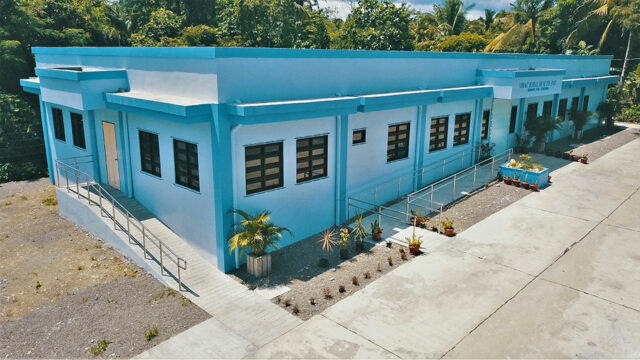
A RURAL health center built in 2019 in Virac, Catanduanes. — DPWH.GOV.PH

A SENATOR has refiled a bill that seeks to expedite the implementation of a development plan for improving existing health facilities and building new ones in unserved and underserved areas.   

Senator Ramon B. Revilla, Jr. filed Senate Bill 26 or the Kaayusan sa Adhikaing Pagamutan Act, which calls for an initial P50-billion budget to address the lack of medical infrastructure in the country.  

“If we are able to adjust and expand our health care facilities and build more accessible hospitals, we will be able to provide more people with medical services while decreasing the number of people who lose their lives,” Mr. Revilla said in a mix of English and Filipino in a statement on Tuesday.  

The Department of Health has reported that facilities in most regions exceeded the ideal hospital bed-to-population ratio of 1:800 by five times at 1:4,000. Only the National Capital Region and Northern Mindanao meet the model ratio.   

If our proposal becomes a full law, actions to increase hospitals and other health care facilities must be swift so that we can better prepare for any flurry of disease cases, especially since we are still in the time of a pandemic,he said. Alyssa Nicole O. Tan

FVR laid to rest at heroes’ cemetery

THE CASKET carrying the urn of the late President Fidel V. Ramos is accompanied by military officials during his state funeral at the Libingan ng mga Bayani on Aug. 9. — PHILIPPINE STAR/KRIZ JOHN ROSALES

FORMER President Fidel V. Ramos, who passed away at age 94 on July 31, was laid to rest Tuesday at the national heroescemetery, where he was accorded a state funeral with full military honors.  

His wife, former First Lady Amelita “Ming” M. Ramos, recalled the difficulties of family life in the military and how her late husband rallied them with his favorite battlecry, we can do this.  

It’s hard to adjust. He was at home for two years, in the province for two years, then he volunteered for two years in Vietnam. So, thank you very much for your help and as he said, we can do this, Ms. Ramos said at the interment ceremony.  

Mr. Ramos was a career military officer and elected as the 12th Philippine President from 1992 to 1998.  

He served as chief of the Philippine Constabulary under the Marcos martial rule, and played a vital role in toppling the late dictator during a popular street uprising in 1986.  

His presidency has been recognized for economic reforms, initiatives on good governance, the peace process in the south, and foreign policies grounded on economic diplomacy. Alyssa Nicole O. Tan

Issey Miyake, Japan’s prince of pleats, dies of cancer aged 84 — media

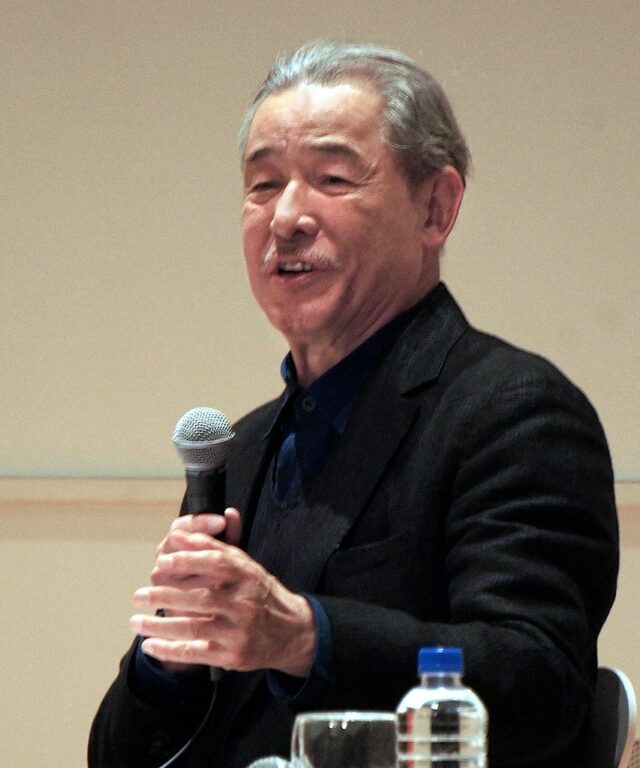
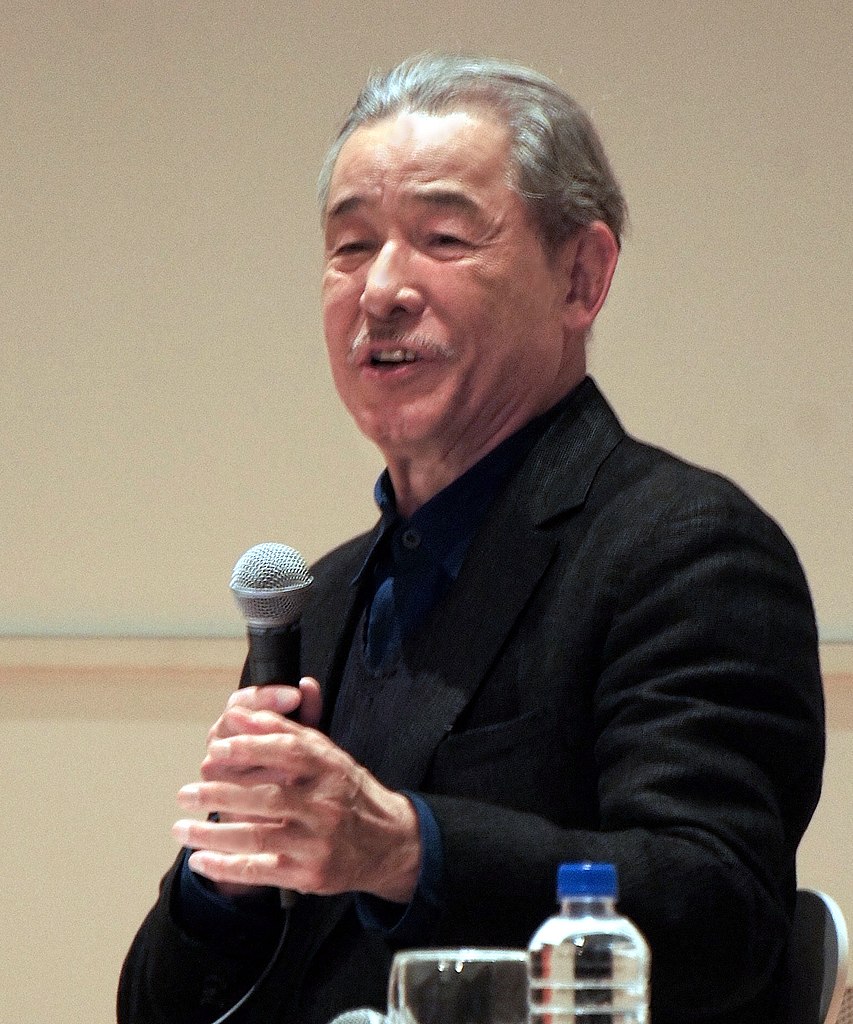
Japanese designer Issey Miyake at a press conference in 2016. — WIKIMEDIA COMMONS

TOKYO — Japanese designer Issey Miyake, famed for his pleated style of clothing that never wrinkles and who produced the signature black turtleneck of friend and Apple Inc. founder Steve Jobs, has died, media said on Tuesday. He was 84. 

Miyake, whose name became a byword for Japan’s economic and fashion prowess in the 1980s, died on Aug. 5 of liver cancer, Kyodo news agency said. No further details were immediately available. 

Known for his practicality, Miyake is said to have wanted to become either a dancer or an athlete before reading his sister’s fashion magazines inspired him to change direction — with those original interests believed to be behind the freedom of movement his clothing permits. 

Miyake was born in Hiroshima and was seven years old when the atomic bomb was dropped on the city while he was in a classroom. He was reluctant to speak of the event in later life. In 2009, writing in the New York Times as part of a campaign to get then-US President Barack Obama to visit the city, he said he did not want to be labelled as “the designer who survived” the bomb. 

“When I close my eyes, I still see things no one should ever experience,” he wrote, adding that within three years, his mother died of radiation exposure. 

“I have tried, albeit unsuccessfully, to put them behind me, preferring to think of things that can be created, not destroyed, and that bring beauty and joy. I gravitated toward the field of clothing design, partly because it is a creative format that is modern and optimistic.” 

After studying graphic design at a Tokyo art university, he learnt clothing design in Paris, where he worked with famed fashion designers Guy Laroche and Hubert de Givenchy, before heading to New York. In 1970 he returned to Tokyo and founded the Miyake Design Studio. 

In the late 1980s, he developed a new way of pleating by wrapping fabrics between layers of paper and putting them into a heat press, with the garments holding their pleated shape. Tested for their freedom of movement on dancers, this led to the development of his signature “Pleats, Please” line. 

Eventually he developed more than a dozen fashion lines ranging from his main Issey Miyake for men and women to bags, watches and fragrances before essentially retiring in 1997 to devote himself to research. 

In 2016, when asked what he thought were the challenges facing future designers, he indicated to the UK’s Guardian newspaper that people were likely to be consuming less. 

“We may have to go through a thinning process. This is important,” he was quoted as saying. 

“In Paris, we call the people who make clothing couturiers — they develop new clothing items — but actually the work of designing is to make something that works in real life.” — Reuters

China drills part of game plan for invasion — Taiwan Foreign chief

REUTERS

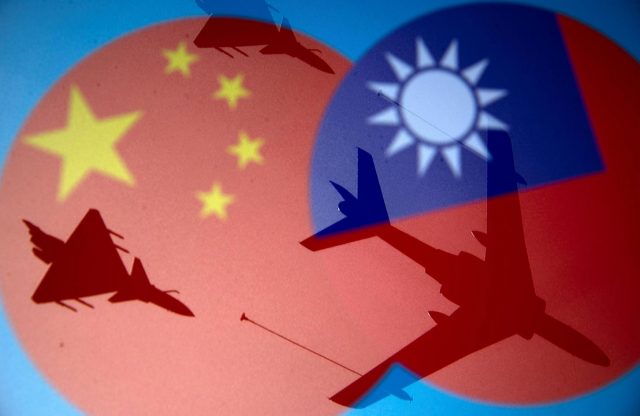
TAIPEI — Taiwan’s foreign minister said on Tuesday that China was using the military drills it launched in protest against US House Speaker Nancy Pelosi’s visit as a game-plan to prepare for an invasion of the self-ruled island.

Joseph Wu, speaking at a press conference in Taipei, offered no time-table for a possible invasion of Taiwan, which is claimed by China as its own.

He said Taiwan would not be intimidated even as the drills continued with China often breaching the unofficial median line down the Taiwan Strait. “China has used the drills in its military play-book to prepare for the invasion of Taiwan,” Mr. Wu said.

“It is conducting large-scale military exercises and missile launches, as well as cyberattacks, disinformation, and economic coercion, in an attempt to weaken public morale in Taiwan.

“After the drills conclude, China may try to routinize its action in an attempt to wreck the long-term status quo across the Taiwan Strait,” Mr. Wu said.

Such moves threatened regional security and provided “a clear image of China’s geostrategic ambitions beyond Taiwan,” Mr. Wu said, urging greater international support to stop China effectively controlling the strait.

A Pentagon official said on Monday that Washington was sticking to its assessment that China would not try to invade Taiwan for the next two years.

Mr. Wu spoke as military tensions simmer after the scheduled end on Sunday of four days of the largest-ever Chinese exercises surrounding the island — drills that included ballistic missile launches and simulated sea and air attacks in the skies and seas surrounding Taiwan.

China’s Eastern Theatre Command announced on Monday that it would conduct fresh joint drills focusing on anti-submarine and sea assault operations — confirming the fears of some security analysts and diplomats that Beijing would keep up the pressure on Taiwan’s defenses.

A person familiar with security planning in the areas around Taiwan described to Reuters on Tuesday a continuing “standoff” around the median line involving about 10 warships each from China and Taiwan.

“China continued to try to press in to the median line,” the person said. “Taiwan forces there have been trying to keep the international waterways open.”

As Ms. Pelosi left the region last Friday, China also ditched some lines of communication with the United States, including theater level military talks and discussions on climate change.

Taiwan started its own long-scheduled drills on Tuesday, firing howitzer artillery out to sea in the southern county of Pingtung.

US President Joseph R. Biden, in his first public comments on the issue since Ms. Pelosi’s visit, said on Monday he was concerned about China’s actions in the region but he was not worried about Taiwan.

“I’m concerned they are moving as much as they are,” Mr. Biden told reporters in Delaware, referring to China. “But I don’t think they’re going to do anything more than they are.”

Under Secretary of Defense for Policy Colin Kahl also said the US military would continue to carry out voyages through the Taiwan Strait in the coming weeks.

China has never ruled out taking Taiwan by force and on Monday Chinese foreign ministry spokesman Wang Wenbin said that China was conducting normal military exercises “in our waters” in an open, transparent and professional way, adding Taiwan was part of China.

Taiwan rejects China’s sovereignty claims, saying only the Taiwanese people can decide the island’s future. — Reuters

Trump says FBI agents raided Mar-a-Lago home

U.S. President Donald Trump — REUTERS/LEAH MILLIS/FILE PHOTO

PALM BEACH, Fla. — Former President Donald Trump said FBI agents raided his Mar-a-Lago estate on Monday and broke into his safe in what his son acknowledged was part of an investigation into Mr. Trump’s removal of official presidential records from the White House to his Florida resort.

The unprecedented search of a former president’s home would mark a significant escalation into the records investigation, which is one of several probes Mr. Trump is facing from his time in office and in private business.

The US Justice Department declined to comment on the search, which Mr. Trump in a statement called a raid and said involved a “large group of FBI agents.” The FBI’s headquarters in Washington and its field office in Miami both declined comment.

Eric Trump, one of the former president’s adult children, told Fox News the search concerned boxes of documents that Mr. Trump brought with him from the White House, and that his father has been cooperating with the National Archives on the matter for months.

A source familiar with the matter also confirmed to Reuters the raid appeared to be tied to Mr. Trump’s removal of classified records from the White House.

Mr. Trump said the estate “is currently under siege, raided, and occupied.” He did not say why the raid took place.

“After working and cooperating with the relevant Government agencies, this unannounced raid on my home was not necessary or appropriate,” Mr. Trump said, adding: “They even broke into my safe!”

Mr. Trump was not present at the time as he was in New York on Monday, Fox News Digital reported, publishing a photo of Trump that a Fox reporter said showed him leaving Trump Tower.

Mr. Trump, who has made his club in Palm Beach his home since leaving the White House in January 2021, has generally spent summers at his golf club in Bedminster, New Jersey, because Mar-a-Lago typically closes for the summer.

A federal law called the US Presidential Records Act requires the preservation of memos, letters, notes, emails, faxes and other written communications related to a president’s official duties.

Any search of a private residence would have to be approved by a judge, after the investigating law-enforcement agency demonstrated probable cause that a search was justified.

It almost certainly would also be approved by FBI Director Christopher Wray, a Trump appointee, and his boss, Attorney General Merrick Garland, who was appointed by Mr. Trump’s successor and political rival, President Joseph R. Biden.

Democratic supporters of Biden have criticized Garland for being overly cautious in investigating Mr. Trump over his attempts to overturn his 2020 election loss to Mr. Biden. A White House official said Mr. Biden was not given advance notice of the search and referred queries to the Justice Department.

“Make no mistake, the attorney general had to authorize this,” said Phillip Halpern, a former federal prosecutor who specialized in public corruption cases, adding that Mr. Wray and a host of prosecutors would also be involved.

“This is as big a deal as you can have, and … every single person in the chain would have had to sign off on this,” Mr. Halpern said.

Trump supporters have accused the Democrats of weaponizing the federal bureaucracy to target Mr. Trump, even as Mr. Biden has attempted to distance himself from the Justice Department.

MISSING RECORDS
In February, Archivist David Ferriero told US House lawmakers that the National Archives and Records Administration had been in communication with Mr. Trump throughout 2021 about the return of 15 boxes of records. He eventually returned them in January 2022.

At the time, the National Archives was still conducting an inventory, but noted some of the boxes contained items “marked as classified national security information.”

Mr. Trump previously confirmed that he had agreed to return certain records to the Archives, calling it “an ordinary and routine process.” He also claimed the Archives “did not ‘find’ anything.”

The Justice Department launched an early-stage investigation into Mr. Trump’s removal of records to the Florida estate, a source familiar with the matter said in April.

Lara Trump, the former president’s daughter-in-law, said he only removed mementos that he was legally authorized to take.

“Look, my father-in-law as anybody knows who’s been around him a lot loves to save things like newspaper clippings, magazine clippings, photographs, documents that he had every authority to take from the White House,” Lara Trump told Fox News.

Several dozen Trump supporters gathered near Mar-a-Lago, which is steps from the ocean, and where several men stood guard next to a dark sport utility vehicle. Police cars parked in the street, lights flashing, as officers directed traffic and kept onlookers from the gates.

Trump supporters honked their horns and played music from their cars as some waved Trump flags or American flags.

“It’s another unjust thing like the made up impeachment hoaxes,” said Jim Whelan, 59, who works in advertising. He held a large sign reading, “Fake News is CNN.”

Trump supporters apparently were expecting him to arrive, as one officer announced on a megaphone: “Trump is not returning to Mar-a-Lago tonight. His trip has been canceled.” — Reuters

Summertime blues? UK shoppers splash out as heat-wave hits

The London Eye wheel and Shard skyscraper are seen from Hyde Park in London, Britain, May 11, 2018. — REUTERS/TOBY MELVILLE

LONDON — A heat-wave prompted British shoppers to spend more on summer clothes, food for picnics and air conditioning units in July but they also cut back on foreign travel and dining out as the cost-of-living squeeze tightened, surveys showed on Tuesday.

The British Retail Consortium (BRC) said the value of total sales at its members — mostly large chains and major supermarkets — was 2.3% higher than in July 2021, a contrast with falls in each of the previous three months.

Like-for-like sales, which adjust for changes in floor space and shops closed due to lockdown restrictions, rose 1.6% after falling for four months.

However, the figures are not adjusted for inflation and the BRC said they represented a fall in volume terms.

“Consumer confidence remains weak, and the rise in interest rates coupled with talk of recession will do little to improve the situation,” BRC chief executive Helen Dickinson said.

The two remaining contenders to become Britain’s next prime minister — foreign minister Liz Truss and ex-finance minister Rishi Sunak — are both promising to help households either via tax cuts or direct support to help meeting surging power bills.

Last week the Bank of England said Britain’s economy was on course to fall into recession at the end of this year and only emerge from it in early 2024.

Figures from payments processor Barclaycard also contrasted with the prevailing gloom over the economy.

Consumer spending in July was 7.7% higher than a year earlier, pushed up by sales of clothing, beauty products and staycations as well as a 44% leap in utilities and a 30% leap on fuel, Barclaycard showed.

Consumers were starting to cut back on overseas travel and eating and drinking out to compensate for inflation’s hit.

But Barclaycard said a survey it conducted showed consumers were feeling a bit more confident about their household finances — 66% vs 59% in June — albeit at levels lower than a year ago.

“This shows that, faced with difficult circumstances, many are finding ways to budget and manage their finances successfully, to cope with ongoing inflationary pressures,” Jose Carvalho, Head of Consumer Products at Barclaycard, said. — Reuters

Ocean warmth, seaweed scarcity threaten Fiji’s fisherwomen’s livelihoods

SUVA, Fiji — Karen Vusisa has been struggling to find a decent catch of a favorite Fijian edible seaweed, amid concerns that ocean temperatures have hit harvests and are threatening livelihoods of fisherwomen like her.

Like many others, Ms. Vusisa, 52, is managing to collect only about half as much of the seaweed, nama, as she once did. She must hunt for it over wider areas, spending more time at sea.

“We are struggling to find some spot for a lot of nama,” Sera Baleisasa, another Fijian fisherwoman, told Reuters.

Nama, found mostly in the waters off Fiji, resembles small green grapes. It is part of the Pacific island nation’s daily diet and usually served soaked in coconut milk and added to salads.

It is also crucial for the livelihoods of hundreds of fisherwomen, who earn about $10 to $20 for a bag weighing 10 kg (22 lb.).

When harvesting, they leave the seaweed’s roots intact to help with regrowth, then move on to collect at a regenerated patch. But for the past several years, they say, nama has been taking longer to grow back.

Marine biologist Alani Tuivucilevu blames warmer oceans for impairing growth of nama, which she says is “very sensitive to heat.”

“It’s saddening, really; it’s saddening, because this has been their way of life,” said Tuivucilevu, who works with research group Women in Fisheries Network Fiji. “Depletion of nama supply means eroding of a way of life and, to a certain degree, of culture and traditions.”

Reports by the US Environmental Protection Agency showed that 2021 was the warmest year for the world’s oceans since records began in the late 1800s.

Climate scientists have been warning that Pacific island countries are more vulnerable to climate change due to their reliance on the ocean for resources. Reuters

Closer economic ties with Taiwan – 2

VERNON RAINEIL CENZON-UNSPLASH

(Second of two parts)

An interesting opportunity arises for young Filipino workers in the countryside (they need not be children of farmers) to partner with highly skilled Taiwanese fruit farmers in developing fruit orchards, using Taiwanese varieties grafted into Philippine rootstocks.

The Philippine private sector, with the appropriate assistance from the Department of Agriculture, should capitalize on the avowed New Southbound Policy of the Taiwanese Government to link up fruit farmers associations in Taiwan and their appropriate counterparts among Filipino farmers and other business associations. These initiatives can arise among enlightened LGU heads in key agricultural regions of the Philippines, especially in those areas where there are already significant fruit growing enterprises such in Negros Occidental, Zambales, Pangasinan, in numerous provinces in Mindanao, in the Calabarzon area, in the Bicol region, etc. With a population of some 112 million people transitioning to an upper-middle income economy any time soon, and the expected strong recovery of both domestic and foreign tourism, there will be ready markets for high quality fruits.

Harbest Agribusiness Corp.’s Arsenio Barcelona suggests confidence building activities such as exchange visits of Filipino and Taiwanese farmers to existing farms and farmers associations. These can be associations of friends seriously interested in developing opportunities in the growing of orchards. Small batches of five to 10 farmers from each side can be invited for educational tours of existing farms. Social media can be used to put focal persons from each side in contact with one another, with pictures of individual farms posted on Messenger and Facebook groups. This type of exchange can be started in the mango industry. Taiwanese mango farmers can visit Filipino mango farms, markets, processors, and even restaurants. Likewise, selected Filipino farmers can make reciprocal visits to Taiwanese mango farms and see for themselves the big difference and understand why Taiwanese farms are a lot better in many ways.

Coming from the province of Negros Occidental himself, Mr. Barcelona suggests that his home province could spearhead this initiative. He cites the fact that Bacolod City has a good number of Filipino-Chinese families, with many of their members involved as influential leaders of the business community. There are three prestigious schools owned and operated by Filipino Chinese, i.e., Tay Tung, St. John’s, and Trinity. Taiwanese and Filipino-Chinese have established Buddhist and Taoist temples readily available for the visitors to attend. Fookien speakers in Negros Occidental are numerous enough for the Taiwanese farmers to feel at home, also facilitated by readily accessible internet, smart phones lines, and cable TV showing Chinese channels.

It is up to the local government, working closely with the business community, to make the Taiwanese farmer investors welcome the moment they decide to come. Preparation of travel papers and local contacts should be facilitated. Information on schools, temples, food sources, Chinese channels on cable, home rentals, investment policies, banking facilities, and household personnel can already be provided through the internet. A local person can handle the social media preparation. Likewise, a Taiwanese counterpart can be assigned. A group of Taiwanese farmers already visited the province of Negros Occidental to pursue this initiative in 2019, just before the pandemic. For obvious reasons, negotiations failed to prosper in the last two years. Resumption of contacts is expected as the whole region recovers from the impact of the pandemic. Hopefully, the Negros Occidental model can be quickly replicated in other fruit-growing provinces of the Philippines.

It is also in the province of Negros Occidental where the training of young farmers, using Taiwanese agribusiness technology, is being piloted for possible replication in many other provinces.

The Ming Yuan Catholic Agricultural College is situated in the upland town of Murcia, Negros Occidental. The Montelibano family donated some 14 hectares of land for a school campus and training farm. During the last 15 years, a half blind Benedictine monk from Taiwan established a school to train children of poor farmers in the growing of high-value crops using Taiwanese technology. The founder, Fr. Su, has been succeeded by a younger priest, Fr. Wang, who has brought enrollment up to 1,000 students. They are being trained to produce quality vegetables, short-gestating fruits like papayas, chicken for eggs and meat, hogs for meat, goats and carabaos for milk and meat, and animal feeds crops for livestock growing.

Harbest Agribusiness Corp. has decided to partner with the Min Yuan College by introducing the famous dualvoc system, perfected in some European countries, in which skills training is undertaken through a curriculum combining classroom teaching with hands-on, on-the-job training in cooperating enterprises. Expert gardeners from Harbest will assist assigned trainors from Ming Yuan to evaluate and plan out the training field into a one-semester on-the-job classroom. The trainors will first be trained, then the young farmers-to-be. Next will be the parents of the young farmers. The goal is always to ensure that each small farm will turn out to be profitable.

A two-hectare training field will be utilized. This will be subdivided into lots of 200 sq.m. each. Each trainee will be assigned a plot on which to apply whatever is learned in the classroom. The training will last for one season, with 12 weekly training sessions. Farm mechanization will be introduced, with equipment to be provided by Harbest. Each season will be long enough to cover seed sowing to harvest. The farm inputs will be non-toxic, and natural farming technology will be used. There will be a centralized water transport system from a solar deep-well pump. There will be 80 training plots for commercial farming of leafy vegetables, fruiting vegetables, melons, papayas, bananas, culinary and medical herbs, root crops, beans, azolla (duckweed), and other crops for the feed of chickens, pigs, ducks, goats, and cattle.

The Office of Agriculture of the Local Government Units (LGUs) will be invited to send trainors who will be incorporated into the one-semester training module. The appointed trainors of Ming Yuan, as well as those of the participating LGUs, will be required to manage their own assigned plots and designated crops. All the trainees will have an opportunity to be exposed to all the crops planted in the fields. Ming Yuan, with the assistance of the other participating agencies, will document all the training procedures so that they can have permanent teaching materials for future training programs which they can sustain for their own farming communities. At the appropriate time, Ming Yuan should endeavor to have the training program accredited with TESDA (Technical Education and Skills Development Authority) and the Department of Agriculture so that these two government agencies can be the source of funding for the expansion and improvement of the training program to other farming communities.

The Ming Yuan Catholic College initiative is yet another example of a partnership between Taiwan and the Philippines at the grass roots level. As President Ferdinand Marcos, Jr. has committed his government to continue to focus on building farm-to-market roads, irrigation systems, post-harvest facilities, and other hard infrastructures to improve the productivity of small farmers, there is a distinct role of both business and civil society (as represented here by Harbest and Ming Yuan College) to provide the software of technology and training to make sure that the farmers will have the know-how and the necessary values to take full advantage of the improved infrastructure.


Bernardo M. Villegas has a Ph.D. in Economics from Harvard, is professor emeritus at the University of Asia and the Pacific, and a visiting professor at the IESE Business School in Barcelona, Spain. He was a member of the 1986 Constitutional Commission.

bernardo.villegas@uap.asia

Seize the opportunity to be a digital economic power

HEADWAY-UNSPLASH

Moving beyond the crisis entails a wide range of development challenges and opportunities for the Philippines under the President Ferdinand Marcos, Jr. administration.

While the investment-led, export-oriented, manufacturing, and agricultural approaches offer viable and effective solutions to economic problems, digitalization is the critical enabler for recovery and sustainable growth. The use of digital technology offers much more in terms of speed, efficiency, and reach.

Cognizant of the unlimited opportunities at hand, President Marcos Jr., in three of his 19 priority bills, emphasize the need for digital transformation, i.e., the E-Government Act, E-Governance Law, and the Internet Transactions Act.

For Department of Information and Communications Technology (DICT) Secretary Ivan John Uy, recovery and competitiveness can be accomplished through digitalization. In his goal of achieving e-governance, avoiding and minimizing opportunities for corruption, connecting remote communities, providing e-commerce platforms for MSMEs, the accelerated implementation of the National Broadband Plan, robust cybersecurity, and implementing a harmonized policy and digital transformation strategy are key objectives in the DICT’s agenda.

In the administration’s 2022-2028 Medium-Term Fiscal Framework (MTFF), the headline goals in terms of real gross domestic product, single-digit poverty rate, national government deficit, national government debt-to-GDP ratio, and gross national income can be realized in a digital economy.

Doing business through online platforms and undertaking commercial transactions have expanded the retail and business landscape of the country beyond imagination. To a large extent as well, social interactions have gone online. Differences in time and space have been negotiated through digital platforms.

However, the responsiveness of the digital program of the Marcos Jr. administration will be the defining indicator of whether digitalization can lead to the creation of a strong digital economy.

Seemingly, the current government spells out the use of digital technology to help the government achieve its headline goals and implement the socioeconomic agenda. In the area of social protection, enhancing public services, and financial inclusion, the rollout of the National ID System (PhilSys) and the targeting of the marginalized population as beneficiaries will undoubtedly be hastened.

In education, the use of digital learning platforms improves both the competencies of teachers and students. Through blended modes of delivering education to varying environments of schools, there will be more resilience to disruptive events.

With regard to enhancing bureaucratic efficiency, digitalizing governance will streamline government processes and open sharing of the country’s information and data systems will greatly improve efficiency of front-line public services and disaster response.

As to the creation of more quality jobs, the MTFF pronounces that technology will be used to “expand physical and digital connectivity” by improving both physical and digital infrastructure. These are perceived to “improve access of the poor to basic services including water supply and sanitation, public transportation, affordable energy and flood protection infrastructure, and improve climate resilience.”

As recovery cannot be attained without digitalization, there must be more investments from government in financing the expansion and improvement of network infrastructure aligning with ongoing private sector builds to expand internet services.

And while the basic demand of the population is having access to affordable broadband services, the government and telecommunications companies should collaborate in speeding up the construction of sufficient telco towers. In turn, the policy environment must be conducive for domestic and foreign investments to be poured into strategic telecommunications infrastructure.

Nevertheless, harnessing the full power of digital technology relies on the development of the country’s workforce potential. Optimizing the appropriate technology will need the constant upgrading of information technology skillsets to enable Filipinos to thrive in the digital world.

On May 20, the Stratbase Albert del Rosario Institute published the book Beyond the Crisis: A Strategic Agenda for the Next President to highlight the digital challenges for the new government.

In its third section, themed “Governance, Health and Environment Agenda,” the chapter entitled “Digitalization Agenda 2022: Towards a Resilient Philippines Through Digital Transformation and Inclusion,” authored by Sherwin E. Ona, Non-Resident Fellow of the institute, put forward key recommendations.

We must first craft a Philippine digitalization strategy and roadmap so that “goals, phases and milestones in achieving digital transformation, addressing the digital divide and securing digital infrastructure” could be set.

Second, government must support the creation of communities of practice which will support the research and development and the creation of innovation hubs.

Third, a Digitalization Summit of the private sector, civil society, and the academe, among others, needs to be convened “to determine the priority areas of the digitalization strategy.”

Fourth, new laws on digital governance for service integration, interoperability, and data governance in the public sector; and cyber defense posture to address current and future threats, should be crafted.

Hence, the Marcos Jr. administration and the DICT must see to it that the digitalization pronouncements will be implemented and achieved.

For digitalization to succeed, the critical factor is the participation of and collaboration with the private sector and civil society.

In this manner, the challenges borne by the digitalization thrust could be converted into inclusive development opportunities as the Philippines endeavors to become a new power player in the global digital economy.


Victor Andres “Dindo” C. Manhit is the president of the Stratbase ADR Institute.

The future of travel is less exotic

SIKH TEMPLE in the center of Delhi. — FREE WALKING TOUR SALZBURG-UNSPLASH

I AM WRITING THIS from Amritsar, India, in the state of Punjab. The Sikh Golden Temple here is one of India’s leading attractions, and last night I shared space with thousands of people over the course of four or five hours. In that time, I saw only two people who might qualify as White Westerners.

That simple observation — and my travels over the past year to Denmark, Switzerland, Ireland, Portugal, Mexico, England, Argentina, and Colombia — have led me to a theory about the future of travel: The world is entering a new era in which exotic journeys are for more of a travel elite than a moneyed elite.

International travel is rebounding in comfortable “core” locations (for Americans, at least) such as Mexico, London, or Dublin. But people are less keen on going farther afield. “Comfort travel” — by which I mean not just nice hotels but familiar surroundings — will be OK. “Challenge travel” — involving not only faraway places but also unaccustomed experiences — faces a more uncertain future.

It’s not just my own experience. A colleague who is currently visiting Rajasthan relates that his guide says he hasn’t worked with any foreign tourists for more than two years. The Chinese, the world’s most frequent travelers, reduced their international travel by 95% in 2021. Or consider the island of Bali, which is admittedly luxurious but still, to many Westerners, exotic. It was formerly a major tourist destination for North Americans, Europeans, and Asians, with 6.3 million foreign visitors at its pre-pandemic peak. In all of 2021, it recorded just 45 foreign visitors — and estimates are that the island will need 10 years to recover to previous levels.

One possibility is that international tourism will soon return to its 2019 composition, as people overcome their inhibitions and worry less about COVID risk. I am doubtful.

For one thing, domestic US travel has already rebounded. Reservations for US national parks are difficult to get, and West Virginia and Maine are enjoying a newfound prosperity. Most people are flying and walking through airports without masks, a sign of some comfort with baseline COVID risk. And London, Dublin, and Oaxaca had plenty of North American visitors. People seem to be able to satisfy their travel itch without going too far or taking too many chances.

Another problem is that significant parts of Asia have yet to return to normal. China is pursuing a “Zero COVID” policy, and the quarantines discourage foreign visitors. Japan still is not open to unescorted foreign visitors, with outdoor masks required. While those restrictions will eventually pass, people are getting out of the habit of thinking of Asia as a major tourist destination. I am even reluctant to take connecting flights through Tokyo, like I used to, for fear that if my connection were canceled, I couldn’t stay the night in Narita and enjoy some sushi.

When people are forced to adjust, as happened during peak pandemic times, they learn new things. What many Americans and Westerners have learned is that they enjoy “comfort travel” as much if not more than “challenge travel.” A lot of the new habits are going to stick. Especially with group travel, the preferences of comfort travelers will tend to win out in choosing a destination.

One slightly sorry truth is that many people do not very much enjoy challenge travel, which can be stressful and almost like work. When the social and group pressures to do it are removed or lessened, challenge travel is likely to decline, although the hardcore challenge travelers will remain and perhaps even expand their ambitions.

The future for challenge travel, then, may be that it becomes both less popular and more intense. In this sense it may harken back to an earlier era of travel, where risk and difficulty were ever present and surprises were frequent. It was a time when there was not a Starbucks on every corner — or, as the case may be, a Subway sandwich shop. (There is one in the pedestrian district of Amritsar, but I don’t think it is the future of dining here.)

In this re-emerging world of exotic travel, there will be less incentive to make everything comfortable and easy. Travelers who seek out the truly exotic will find new opportunities, and prices will stay low or perhaps fall further. The surrounding tourist infrastructure will be less likely to evolve toward familiarity. If you are a challenge traveler, maybe your favorite spot is less likely to get ruined.

This growing bifurcation of travel between comfort and challenge won’t benefit everyone.  Many people will play it safe, opting for Cabo rather than the wild Pacific coast of Colombia. They won’t experience the world of challenge travel at all. I, for one, will not miss them.

BLOOMBERG OPINION

Unregistered drugs during health emergencies

KATERYNA HLIZNITSOVA-UNSPLASH

As the coronavirus (COVID-19) pandemic continues to impact the daily lives of Filipinos, threats of other highly infectious diseases spreading to the Philippines loom on the horizon. The threat seemed imminent when the Department of Health (DoH) confirmed the first case of monkeypox in the country in July.

Access to treatment by the public is essential in addressing any public health emergency. While it may seem like a hurdle, a regulatory measure is important to ensure that any publicly available treatment is safe and efficacious.

The governing law is Republic Act No. 3720 (RA 3720) or the “Food, Drug and Cosmetic Act,” as amended. Under RA 3720, any new drug should have an authorization from the Philippine Food and Drug Administration (FDA) prior to the manufacture, sale, importation, exportation, distribution, or transfer thereof in the Philippines. Because it could take months, or even years, before a drug can be made available in the country, Philippine regulations provide two ways for patients to gain access to unregistered drugs prior to their registration in the Philippines.

COMPASSIONATE SPECIAL PERMIT
Under Department of Health Administrative Order No. 4 s. 1992 (AO), a Compassionate Special Permit (CSP) provides qualified medical specialists and institutions a period of one year to utilize drugs and devices, not yet registered or which are in the process of registration in the Philippines, on specific kind or type of patients and volume. The issuance of a CSP was previously limited to patients who were suffering from Acquired Immune Deficiency Syndrome, cancer, and other life-threatening conditions.

The AO was amended in 2020 to include emerging or re-emerging infectious diseases considered as Public Health Emergencies or Public Health Threats to address the gaps in the policy made evident by the COVID-19 Pandemic. As a result of this amendment, hospitals and medical institutions were issued CSPs for the use of COVID-19 drugs such as Remdesivir and Molnupiravir.

EMERGENCY USE AUTHORIZATION
Another regulatory remedy is the Emergency Use Authorization (EUA), an authorization issued for unregistered drugs and vaccines in a public health emergency. Unlike CSPs which are issued to medical specialists or institutions, EUAs cover the pharmaceutical industry and government entities such as the national procurer or health program implementors.

In general, EUAs may be issued based on the following:

1. There is reasonable belief that the drug or vaccine may be effective to prevent, diagnose, or treat the disease based on the totality of evidence available, including data from adequate and well-known controlled trials;

2. The known and potential benefits of the drug or vaccine, when used to diagnose, prevent, treat disease, outweigh the known and potential risks of the drug or vaccine, if any; and,

3. There is no adequate, approved, and available alternative.

An EUA shall be valid until expressly withdrawn by the FDA Director General or upon issuance of full market authorization/Certificate of Product Registration. For example, in response to COVID-19, Executive Order No. 121 was enacted to grant authority to the Director General of the FDA to issue EUAs for the use of unregistered COVID-19 drugs and vaccines outside clinical trials.

WEIGHING THE RISK OF THE USE OF UNREGISTERED DRUGS
Despite the existing regulations allowing immediate but limited access to unregistered drugs, the illicit distribution and sale of unregistered drugs still became rampant during the height of the pandemic. Not only are these drugs sold at a steep price, but their genuineness and efficacy are uncertain. Yet some individuals have accepted these risks, possibly due to panic and misinformation.

The governmental policy of drug registration prior to its use is for the protection of the people. It is sound policy that drugs should not be immediately made available to the public without the supporting studies on efficacy, effectivity, and safety of treatment. Necessary amendments have been introduced, such as the regulations on CSPs and EUAs to allow compassionate and emergency use of these needed treatments.

This article is for general informational and educational purposes only and not offered as and does not constitute legal advice or legal opinion.


Zyra Frances P. Aquilizan is an Associate of the Corporate & Special Projects Department of the Angara Abello Concepcion Regala & Cruz Law Offices (ACCRALAW).

zpaquilizan@accralaw.com

(632) 8830 8000

InMobi, Inquiro partner to boost data-driven mobile marketing

UNSPLASH

Marketing and monetization technology provider InMobi has partnered with consumer insights company Inquiro to help local brands with their data-driven mobile marketing efforts.    

Inquiro, under AdSpark Holdings, Inc., and Globe Telecom, Inc.’s corporate venture builder 917Ventures, said in an Aug. 8 press release that the partnership “can provide an understanding of customers by leveraging first-party data of over millions of Filipino users.”  

“More than that, we focus on being champions of data privacy and security for all our solutions and clients,” said Jose Alfonso C. Reyna., chief operating officer of Inquiro.   

“The Philippines stands as among the truly mobile-first markets in Southeast Asia with more than five hours of daily time on mobile and more than 60% of consumers shopping online,” said Rishi Bedi, managing director of Asia Pacific at InMobi. 

Through the partnership, brands will be able to reach Inquiro audiences on InMobi’s mobile exchange or through their preferred ad-buying platforms. 

“Brands will be able to drive better reach, make use of innovative creative formats from our creative gallery, and improve end-to-end attribution using InMobi solutions,” said Mr. Bedi.  

A March 2022 SouthEast Asia (SEA) study conducted by Forrester Consulting and commissioned by InMobi found that increasing consumer concerns and awareness (83%) and the need to comply with data privacy regulations (81%) are the key drivers for most organizations to adopt consumer data practices.  

The top challenges for businesses in the Southeast Asia region, Forrester Consulting found, are steeped in the after-effects of data and identity deprecation, which refers to the difficulty of bringing together data types to create a unified customer profile. To tackle this, “businesses should build a first-party data repository, the cost of investment for which is huge.” — Patricia B. Mirasol