Home Blog Page 5602

China ODA best option for 3 railway projects, DoTr says

STOCK PHOTO

THE Department of Transportation (DoTr) considers China’s official development assistance (ODA) to be the “best option” for funding three major railway projects, an official said on Tuesday.

“We are not closing our doors (to) other funders; but right now, the DoTr is thinking that the China ODA is the best option,” Transportation Undersecretary Cesar B. Chavez said in an appearance on One News PH’s Agenda program on Tuesday.

He said that some of the contracts have already been awarded to Chinese contractors.

“China ang magsu-supervise ng Calamba to Daraga, usually hindi sila nagsasama (China will supervise the Calamba to Daraga segment [of the PNR South Long Haul Project], and they typically do not work with contractors from other funders),” he said.

He noted that Japan and the Asian Development Bank (ADB) are currently committed to their own railway projects in the Philippines.

The ADB supports the North–South Commuter Railway project while Japan oversees the Metro Manila Subway project, he said.

The Philippines and China have agreed to resume negotiations on the PNR South Long Haul (PNR Bicol), Subic-Clark Railway, and Mindanao Railway (Tagum-Davao-Digos) projects.

The government recently canceled its loan applications for the three projects because the Chinese government was “unresponsive,” Mr. Chavez said in July.

President Ferdinand R. Marcos, Jr. has directed the DoTr to go back to the negotiating table to secure loan agreements for the three railway projects.

“China is very interested. In our meeting last Thursday (Aug. 11) with the Chinese Ambassador (Huang Xilian), China expressed excitement and interest with regard to pursuing the projects, especially those mentioned by the President,” Mr. Chavez said.

He said the Mindanao Railway project remains a priority.

“The feasibility study has been done. The government has already allotted around P6.5 billion for the acquisition of the right of way,” Mr. Chavez said.

“What we need now is the funding for the construction… There were some concerns before the end of the last administration, and therefore we leave it to the Department of Finance to guide us because they are the ones in charge of applying for the loan, negotiating for the loan, and signing the loan for this project,” he said.

Separately, a senior legislator from the Bicol Region said China remains willing to fund the P142-billion rail link connecting Manila to Bicol.

The government of President Ferdinand R. Marcos, Jr. has also committed to completing the Philippine National Railway South Long Haul Project before 2028, Albay Rep. Jose Ma. Clemente S. Salceda said in a statement.

“Given how much progress has already been made on the Bicol rail, it appears that the best way forward is to just keep the arrangement with China, subject to some changes in interest rates,” he said.

Mr. Salceda said P14 billion in project management consultancy fees have been paid out and could go to waste if the project is scrapped, adding that the government still needs funding for civil works, trains and electromechanical equipment.

“If the Department of Finance decides to (reopen loan negotiations), construction can start very soon after,” he added.

Mr. Salceda, who chairs the House ways and means committee, said Transportation Secretary Jaime J. Bautista had affirmed the Marcos government’s commitment to complete the railway. — Arjay L. Balinbin and Matthew Carl L. Montecillo

DBM procurement service focusing on common-use items after laptop episode

Philstar

THE Procurement Service of the Department of Budget and Management (DBM) said it has suspended the procurement of non-common use supplies and equipment (NCSE) until further notice, and is currently focusing on common-use supplies and equipment (CSE).

The service had come under scrutiny after P2.4 billion worth of laptops acquired for the Department of Education (DepEd) were allegedly overpriced. The laptops were procured to enable teachers to conduct distance learning at the height of the pandemic.

The DepEd laptops, classified as NCSEs, were procured in 2021 and were intended for distribution to 68,500 teachers. The Procurement Service has sought the assistance of the National Bureau of Investigation to investigate the purchase.

“I issued a directive suspending the procurement of non-common use supplies and equipment, effective immediately,” Procurement Service Executive Director Dennis S. Santiago said in a statement issued on Tuesday by the DBM.

“During the suspension, the Procurement Service shall not accept new requests for NCSE procurement until further notice. This will allow us to focus on the fulfillment of our primary mandate, which is to procure CSEs.”

According to the Commission on Audit, NCSEs are goods, materials, and equipment that are required by a procuring entity for a specific project. These are neither common-use supplies nor inventory items.

On the other hand, “CSEs include the procurement of items essential to the day-to-day operations of government agencies such as, but not limited to, ballpens, papers, stapler, paper clips, folders, and the like,” the DBM said.

Mr. Santiago said the Procurement Service will fulfill its outstanding obligations in obtaining NCSEs processed before the suspension.

Tatapusin na lamang po ’yung procurement ng mga non-CSE na ongoing o nasa pipeline na hanggang sa sila’y makumpleto. Pero hanggang doon na lang po iyon. Pagkatapos noon, wala na. Lahat ng procurement, CSE na lang (We will complete the non-CSE transactions in the pipeline, but that will be all. After that, all transactions will be CSE only),” Mr. Santiago said.

The Procurement Service is the central procurement office for CSE items on behalf of the entire government. — Diego Gabriel C. Robles

Post-Mandanas devolution under review for compliance with Local Government Code

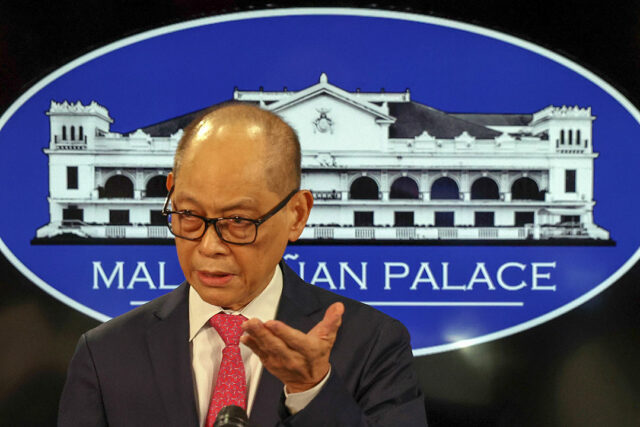
Finance Secretary Benjamin E. Diokno — PHILIPPINE STAR/KRIZ JOHN ROSALES

By Diego Gabriel C. Robles

THE National Government is reviewing plans to devolve some of its functions to local government units (LGUs) amid questions about the exact mandate of LGUs under the Local Government Code, Finance Secretary Benjamin E. Diokno said, while warning that local governments can expect a smaller share of national taxes next year because of the pandemic.

“(The review will prevent the assignment) to LGUs responsibilities that were not originally assigned as a result of the Local Government Code of 1991. For example, research and development (R&D); that should not be assigned to LGUs, right? Maybe some cities can afford it, but a great majority of LGUs cannot afford R&D. Also, education. Education is not assigned to LGUs under the Local Government Code. So why assign them some responsibilities on that?” Mr. Diokno told the Senate committee on local government on Tuesday.

The devolution plan was outlined in Executive Order (EO) 138, issued in June 2021 in response to the Supreme Court’s Mandanas ruling. The Court had ruled that LGUs are entitled to a 40% share of all “national taxes,” over-turning the National Government’s previous interpretation of the Code, which was that LGUs were entitled to a 40% cut of “internal revenue” — effectively, the Bureau of Internal Revenue’s collections only.

The previous administration, facing the prospect of losing access to a significant amount of funds as a result of the ruling, decided to offload P234.4 billion worth of functions to local governments, with EO 138 setting a 2024 terminal date for the devolution exercise.

The 40% share of national taxes, a subsidy to local governments now known as the National Tax Allotment (NTA), is based on the collections of the National Government from three years prior, according to the Local Govern-ment Code. That means the 2023 NTA will be 40% of collections in 2020, the first year of the pandemic, when government revenue took a hit from the lockdowns.

“LGUs… got a bonus or a windfall as a result of the (Mandanas) ruling; they will get a lot of money this year. I think if my recollections (are) correct, an additional hundred billion for this year. However, they will face some prob-lems next year because the formula is based on the collection three years prior, which means, because of the pandemic, collections were down,” Mr. Diokno said at the hearing.

Also at the hearing, Local Government Undersecretary Marlo L. Iringan estimated the impact of the ruling in 2022 as a 37.89% increase in LGU allocations to P959 billion.

“However, given the decrease in revenue collections of the National Government in fiscal year 2020, in view of the impact of the COVID-19 pandemic, the projected total share of LGUs from the national taxes for 2023 will significantly decrease (by) an estimated P138 billion, or equivalent to (a) 14.47% (decline),” Mr. Iringan said in projecting a P820-billion NTA for LGUs next year.

In 2020, the government collected P2.86 trillion in revenue, down 8.97%, as the economy contracted by a record 9.6% due to the lockdowns associated with the pandemic.

Mr. Diokno added that the Madanas ruling “poses a lot of challenges both to the National Government and the local governments. On the part of the National Government, we must recognize that, as a result of the pandemic, public debt has actually increased,” Mr. Diokno said.

The ratio of debt-to-gross domestic product was 62.1% as of the second quarter, above the 60% threshold considered manageable by developing economies. The ratio eased from 63.5% at the end of the first quarter.

“Realistically, because you are giving LGUs more money, the problem pointed out by the World Bank, and I agree, is that many LGUs won’t be able to spend the money. It’s because of the lack of capacity. In fact, even before the crisis, local governments already had a surplus position. They usually have large surplus because they are not able to spend their money,” Mr. Diokno said.

Aside from advocating for LGU digitalization and capacity building, Mr. Diokno said some of the administration’s priority legislation items will “help local government units attain fiscal sustainability.”

These include measures calling for real property valuation and assessment reform, LGU property insurance, and amendments to the Local Government Code of 1991 on local finance.

The amendments for the latter “include simplifying the rate structure of local business tax, revisiting the situs provision, and assigning more revenue productive taxes to LGUs, and providing a mechanism for administrative re-course in case of dispute related to LGU taxing power, among others,” Mr. Diokno said.

Airline fuel surcharge to decline in Sept.

PHILIPPINE AIRLINES (PAL), Cebu Pacific, and AirAsia Philippines said on Tuesday that they will lower their fuel surcharges next month.

The three airlines issued statements following a Civil Aeronautics Board’s (CAB) announcement that it is altering the applicable passenger and cargo fuel surcharge for domestic and international flights to Level 9 from Level 12 in September.

The CAB cited the lower average price of jet fuel (P46.73 per liter) between July 10 and Aug. 9, against the P54.73 average between June 10 and July 9.

“Airlines wishing to impose or collect fuel surcharge (next month) must file their application with this office on or before the effectivity period, with fuel surcharge rates not exceeding (Level 9),” CAB Executive Director Carmelo C. Arcilla said in an advisory issued on Aug. 15.

Level 9 on the CAB matrix permits a fuel surcharge per passenger of between P287 and P839 for domestic flights and between P947.39 and P7,044.27 for international flights.

Currently, the fuel surcharge per passenger runs between P389 and P1,137 for domestic flights and P1,284.40 and P9,550.13 for international flights.

“We welcome this positive development, and we will carry out the corresponding adjustments in our fuel surcharges,” PAL Spokesperson Cielo C. Villaluna said in a phone message.

“The new fuel surcharge rate will be applicable to tickets that will be purchased in September,” she added.

Cebu Pacific Chief Commercial Officer Xander Lao said separately that the budget carrier also welcomes the adjustment in the fuel surcharge policy.

“We look forward to the lower fuel surcharge which should help make fares more affordable and stimulate air travel,” he said in a statement.

Low-cost carrier AirAsia Philippines said: “This will benefit many of our guests who are now planning their travels in time for the ‘Ber’ months.”

“(We) will reflect the adjustments in our ticket prices accordingly,” it added. — Arjay L. Balinbin

Kegel exercises can tame bladder problems

UNSPLASH

MAKING CHANGES in everyday behavior is the first line of therapy for an overactive bladder (OAB), said Dr. Victor Federico B. Acepcion, a urologist and chair of the department of surgery of Capiz Emmanuel Hospital.

You may need to modify what you drink and eat, lose extra weight, or stop smoking, he said at an Aug. 11 session organized by UP Med Webinars.

OAB is the frequent and urgent need to empty one’s bladder. The symptoms of OAB are urinary urgency (a sudden and overwhelming urge to urinate immediately); urinary frequency (urinating more than eight times a day); urge incontinence (urine leakage or wetting accidents that follow a sudden urge to urinate); and nocturia (waking up two or more times at night to urinate).

People with OAB practice bathroom mapping so they know where to go when they feel the symptoms of voiding. They also tend to feel reluctant to travel by car or use public transport — even for short distances.

Many individuals with OAB limit their fluid intake in the hope of alleviating their symptoms, Dr. Acepcion said. Not drinking enough fluids, however, can make one’s urine concentrated, thereby irritating the bladder and causing urinary urgency, urinary frequency, urinary tract infections, dehydration, and constipation.

Dr. Acepcion advised avoiding drinking large amounts at one time — such as with meals — and drinking the majority of one’s fluid intake during the first half of the day, while cutting back as evening approaches.

“During the evening, I advise patients to drink just one glass, maybe for their maintenance medications,” he said.

Also to be avoided are food and beverages that contain bladder irritants, the most common of which is caffeine.

Dr. Acepcion recommended consuming fiber-rich fare, like whole grain bread and fresh fruits, instead of OAB contributors like carbonated drinks, tomato-based products, and alcohol.

BLADDER RETRAINING

Bladder retraining, or the gradual conditioning of the bladder to hold urine for longer periods, is another prescribed therapy, according to Dr. Acepcion.

Because the bladder is controlled by muscles, it can be trained, the National Association for Continence (NAFC) said.

The NAFC advised using a bladder diary to keep a log of details such as one’s fluid intake, the number of times one urinates, the number of wetting accidents and what happens when they occur (e.g., while laughing or sneezing), and diet information.

Specific bladder retraining techniques include visiting the bathroom later than your scheduled time (e.g., going to the bathroom every hour and fifteen minutes instead of every hour) and performing Kegel exercises (which strengthen the pelvic muscles that support the bladder).

A technique for patients to locate their pelvic muscles is by pretending to avoid passing gas, per Harvard Health Publishing. Patients can start doing Kegel exercises by contracting their pelvic muscles for three to five seconds, and then relaxing them for three to five seconds, before repeating the cycle for a total of 10 times.

Harvard Health recommends gradually increasing the length of contractions and relaxations to 10 seconds.

Do not tighten your abdominal muscles at the same time, Dr. Acepcion added, noting that abdominal muscles push urine out rather than hold it in. “When done correctly, all other muscles should relax,” he said. — Patricia B. Mirasol

BTr fully awards T-bonds amid strong demand

BW FILE PHOTO

THE GOVERNMENT fully awarded the reissued 10-year Treasury bonds (T-bonds) it auctioned off on Tuesday at a lower average rate despite expectations of another hike by the central bank.

The Bureau of the Treasury (BTr) on Tuesday raised P35 billion as planned from its offer of reissued 10-year bonds that have a remaining life of nine years and 10 months. Total bids reached P128.83 billion or more than thrice the amount on the auction block.

Rates awarded on Tuesday ranged from 5.785% to 5.87%, bringing the average yield on the bond to 5.813%, lower by 143.70 basis points (bps) than the 7.25% coupon fetched for the series when it was first offered on June 21.

The average rate was also 15.08 bps below the 5.9638% quoted for the 10-year bonds at the secondary market before Tuesday’s auction, based on PHP Bloomberg Valuation Reference Rates data provided by the BTr.

To accommodate the strong demand seen for Tuesday’s offering, the Treasury opened its tap facility to raise P15 billion more via the bonds for a yield-to-maturity of 5.813%.

National Treasurer Rosalia V. de Leon told reporters in a Viber message that it was another “impressive” auction as the market’s preference for long tenors caused the offer to fetch rates lower than second-ary market levels, even with the Bangko Sentral ng Pilipinas (BSP) expected to raise borrowing costs anew at their Thursday meeting.

“Expectations continue to be defied auction after auction. This one was a strong one and that is ahead of a projected 50-bp BSP hike this Thursday,” the first trader said.

“Sentiment has indeed improved for local bonds given the decline in global oil prices, which in turn alleviates inflation fears,” the trader added.

The second trader said the bond’s average yield dropped amid strong demand for the offer despite the looming rate increase from the central bank, with investors likely looking to put their cash in higher-yielding instru-ments amid lingering global uncertainties.

“Investors in this space might be looking beyond this year already as the global growth outlook weakens,” the trader added.

The BSP is widely expected to raise its benchmark rates anew on Thursday, with most analysts forecasting a 50-bp increase as inflation remains elevated.

A BusinessWorld poll held last week showed 16 out of 18 analysts expect the Monetary Board to hike rates at its Aug. 18 meeting.

For 13 analysts, the central bank may deliver a hike of 50 bps, while three analysts see a 25-bp increase. Only two analysts expect the BSP to keep borrowing costs unchanged.

BSP Governor Felipe M. Medalla earlier said that the central bank’s policy-setting Monetary Board may hike rates by 50 bps at their meeting this week as inflation quickened to 6.4% in July, a near four-year high. This was also faster than the 6.1% in June and 3.7% a year ago.

For the first seven months, headline inflation averaged 4.7%, higher than the 4% seen in the same period in 2021 and the central bank’s 2-4% target for the year but lower than its 5% forecast.

The Monetary Board has raised rates by a total of 125 bps since May, including a 75-bp off-cycle hike last month.

Faster inflation continues to cloud the global economic outlook, as Russia’s war in Ukraine, along with supply chain issues, has caused commodity and energy prices to rise and a tightening in financial conditions.

Amid rising prices, most central banks have moved to reverse the ultra-loose monetary policy they adopted during the coronavirus pandemic to support growth, raising fears of a global slowdown.

In particular, the US Federal Reserve has been extra aggressive in raising its benchmark rate from near zero, stoking recession concerns in the world’s largest economy and causing policy spillovers to emerging markets like the Philippines.

The BTr wants to raise P215 billion from the domestic market this month, or P75 billion through Treasury bills and P140 billion via T-bonds.

The government borrows from local and external sources to help fund a budget deficit capped at 7.6% of gross domestic product this year. — D.G.C. Robles

Ty-led GT Capital’s profit up 51%; bank unit leads

By Justine Irish D. Tabile

TY-LED GT Capital Holdings, Inc. posted a 51.3% increase in its attributable net income to P3.94 billion in the second quarter from P2.60 billion last year, with its banking segment driving the growth.

The latest profit figure is also 0.5% better than its recorded pre-pandemic second-quarter income of P3.92 billion.

“Given the gradual return to normalcy, greater mobility, resurgent consumption, and the new administration’s pronouncements in support of sustained economic growth policies, we are confident that our Group will fare very well for the rest of the year,” GT Capital President Carmelo Maria Luza Bautista said in a media release on Tuesday.

GT Capital’s topline rose by 42.6% to P57.5 billion in the second quarter from P40.31 billion in the previous year.

In the first half, the holding firm’s attributable net income rose to P8.30 billion, 24.4% higher than the P6.67 billion registered last year. Total revenues grew to P112.79 billion, a 31.7% increase from last year’s P85.66 billion.

Banking arm Metropolitan Bank & Trust Co. (Metrobank) posted a 33% higher income at P15.6 billion in the first half. Its gross loans rose by 9% year on year to P1.3 trillion, driven by a 12% growth in corporate and commercial lending and a 16% increase in gross credit card receivables.

“The continued improvement in the bank’s performance cements our strategy as we enable various customers and businesses as economic activities accelerate. This also validates the recent recognitions we received from pres-tigious publications, naming us the country’s best bank,” Metrobank President Fabian S. Dee said in the press release.

Metrobank’s asset quality was said to have improved, which allowed trimming of its provisions by 46% while its non-performing loan (NPL) cover was at 196%.

AP Securities, Inc. Equity Research Analyst Carlos Angelo O. Temporal said in a Viber message that GT Capital’s second-quarter earnings had outperformed expectations on the back of Metrobank’s stronger-than-expected per-formance after its robust loan growth and lower provisions.

“Significant drop in NPL ratio has allowed the company to reduce provisions to nearly half of [last year’s first semester] figure,” Mr. Temporal said.

Separately, Unicapital Securities, Inc. Equity Research Analyst Ralph Jonathan B. Fausto said in a Viber message that GT Capital “delivered very robust results in the first half of 2022 with its cyclical core segments benefitting from the general economic reopening in the second quarter due to the eased Alert Level 1 restrictions.”

“[Metrobank] registered a 9% [year-on-year] increase in its gross loans and NPL ratio improvement, both reflecting improving business and consumer confidence,” Mr. Fausto said.

Mr. Temporal said the bank was able to make up for the “muted performance of its auto segment, which endured a sharp decline in margins quarter on quarter due to a weaker peso and additional costs incurred during recent launches of new car models.

Automobile segment Toyota Motor Philippines Corp. (TMP) posted a 2.9% decrease in its consolidated net income in the first half to P3.4 billion from P3.5 billion last year.

Its topline showed a 33.4% growth in the first semester to P85 billion from the P63.7 billion recorded in the previous year.

GT Capital Auto and Mobility Holdings, Inc. Chairman Vince S. Socco said: “Despite the higher inflation and foreign exchange volatility, TMP delivered strong results in the first half and has continued to outpace the industry.”

“With the continuing economic recovery, higher mobility, and the return to normalcy, we are on track to achieve our sales volume targets for 2022,” he added.

TMP’s retail vehicle sales went up by 25.6% to 80,090 units for the January-to-June period from 63,758 units sold in the previous year.

Unicapital’s Mr. Fausto said TMP saw a huge jump in its sales of retail vehicle units “consistent that more of the population is going out.”

Metro Pacific Investments Corp. (MPIC), in which GT Capital has shareholdings, reported a 24% year-on-year increase in its consolidated core net income to P7.5 billion in the first half.

The 15% increase in the contribution of its operations was “mainly driven by a strong recovery in toll road traffic and growth in power consumption, as more industries ramped up operating capacity.”

The power segment accounted for 60% or P5.9 billion of MPIC’s net operating income; toll roads contributed 26% or P2.5 billion; and water made up 15% or P1.4 billion.

GT Capital’s property subsidiary, Federal Land, Inc., posted a 15% growth in its consolidated net income in the first half to P676 million.

First-semester revenues totaled P5.7 billion, 11% higher than last year’s, driven by a 31% growth in reservation sales amounting to P8.4 billion.

Federal Land is expected to launch two more new projects within the year.

Regina Capital Development Corp. Head of Sales Luis A. Limlingan said that “the conglomerate’s performance during the period was relatively in line with our expectations.”

He said that for the rest of the year, “assuming that the current mobility curbs remain lenient,” TMP, Metrobank, and the potential rebound in Federal Land could buoy GT Capital’s 2022 financial year profitability by dou-ble-digits.

Meanwhile, AP Securities’ Mr. Temporal said that TMP’s margins are likely to remain dampened as the local currency is expected to remain weaker in the second half.

“However, with auto sales on track to achieve management’s guidance of double-digit growth towards the yearend, we expect this to partially offset the impact of margin pressures,” he added.

Mr. Temporal also said that with TMP’s resilience coupled with Metrobank’s sustained earnings growth, GT Capital “is poised to have a much better bottom line.”

On Tuesday, shares in GT Capital went up by 3.22% or P16.50 to P529.50 apiece.

New SRP list reflects price increases of 3.29%-10%, DTI says

PHILIPPINE STAR/ MICHAEL VARCAS

THE latest suggested retail price (SRP) bulletin for basic necessities and prime commodities (BNPCs) reflects price increases of between 3.29% and 10%, the Department of Trade and Industry (DTI) said.

It said in a statement on Tuesday that price increases were approved for 67 stock keeping units (SKUs) in the wake of higher raw material and packaging costs. The SRPs for the remainder of the 218 SKUs the DTI tracks remain unchanged.

The new SRP bulletin was issued on Aug. 12.

“Those that increased by 10% were SKUs that have not raised their prices since last year,” the DTI said.

According to the DTI, the price of canned sardines in tomato sauce increased by 6% while the price of processed milk rose between 3% and 10%.

The price of coffee refills rose between 5.81% and 9% while the price of coffee 3-in-1 mixes rose between 8% and 10%.

The DTI said the price of noodles was adjusted upwards by 3.70% while the price of detergent soap rose by 6%.

Bottled water prices rose between 3.53% and 10% while candle prices rose by 6%. Condiment prices increased between 5% and 6%.

“Amid these adjustments, the DTI remains steadfast in its commitment in ensuring that consumers have access to reasonably priced goods in the market, hence increases were kept to a minimum,” Trade Undersecretary Ruth B. Castelo said.

“The DTI is regularly monitoring the price movements of raw materials of these BNPCs, and continuously monitors retailers to make sure that prices of BNPCs are reasonable,” she added.

The Philippine Baking Industry Group has said that it will propose a P4 price increase for bread product categories known as “Pinoy Tasty” (white sandwich bread) and pan de sal products amid rising production costs.

Currently, pan de sal carries an SRP of P23.50 while Pinoy Tasty sells for P38.50.

No price increases were approved for these breads in the latest SRP bulletin. — Revin Mikhael D. Ochave

ABS-CBN second-quarter losses down to P39 million

PHILIPPINE STAR/ MICHAEL VARCAS

ABS-CBN Corp. significantly reduced its attributable net loss for the second quarter to P39.11 million from P1.42 billion previously.

Total revenues for the quarter reached P4.83 billion, up 13.9% from P4.24 billion in the same period a year ago, ABS-CBN’s second-quarter financial performance results showed.

Expenses declined 1% to P5.68 billion from P5.73 billion in the previous year, while non-operating income surged 152.2% to P1.04 billion from P413.6 million previously.

For the first six months, ABS-CBN saw its attributable net loss narrow to P1.42 billion from P3.37 billion.

The company generated revenues of P9.48 billion for the first half, up 16.2% from P8.16 billion previously.

Expenses declined 0.5% to P11.44 billion from P11.50 billion, while non-operating income surged to P1.1 billion from P608.08 million in the same period in 2021.

The company saw advertising revenues increase by P1.1 billion, or 47.3% higher, attributable to “both political placements and growth in regular advertising” as it continues to expand its coverage through partnerships.

ABS-CBN President and Chief Executive Officer Carlo L. Katigbak said during the company’s annual stockholders’ meeting in July that the “improvements and the continuing upward trajectory in our financial performance are indicators that a return to profitability is possible.”

“We… continue to find ways to reduce debt. We started 2020 with P26 billion in interest-bearing loans, and we have reduced that to P21.5 billion in 2021,” he said.

“For this year, we are currently already (down to) P18.4 billion, and we hope to reduce debt further to P14 billion or less,” he added.

GMA NETWORK

Meanwhile, broadcast company GMA Network, Inc. saw its attributable net income for the second quarter rise 14.6% to P1.88 billion from P1.64 billion in the same period in 2021.

Total revenues for the period rose 19% to P6.08 billion from P5.11 billion previously.

Attributable net income for the first half reached P4 billion, up 10.2% from P3.63 billion in the same period a year earlier, as revenues increased 13% to P11.94 billion from P10.57 billion previously.

“The influx of political advocacies and advertisements for this year’s national and local elections during most part of the first semester propelled GMA’s topline to reach yet another milestone,” the company said.

ABS-CBN shares closed 5.41% lower at P12.60 apiece on Tuesday, while GMA Network shares closed 0.91% higher at P11.12 apiece. — Arjay L. Balinbin

Why has polio been found in London, New York and Jerusalem, and how dangerous is it?

FREEPIK

LONDON — Polio, a deadly disease that used to paralyze tens of thousands of children every year, is spreading in London, New York and Jerusalem for the first time in decades, spurring catch-up vaccination campaigns.

DREADED DISEASE

Polio terrified parents around the world for the first half of the 20th century. Affecting mainly children under five, it is often asymptomatic but can also cause symptoms including fever and vomiting. Around one in 200 infections leads to irreversible paralysis, and among those patients, up to 10% die.

There is no cure, but since a vaccine was found in the 1950s, polio is entirely preventable. Globally, the wild form of the disease has almost disappeared.

Afghanistan and Pakistan are now the only countries where the highly infectious disease, spread mainly through contact with fecal matter, remains endemic. But this year, imported cases were also found in Malawi and Mozambique, the first in those countries since the 1990s.

DIFFERENT STRAINS

There are two main forms of poliovirus. Alongside the wild-type outlined above, there are also rare cases of what is known as vaccine-derived polio.

It is this second form detected in wastewater in the British capital, London, and in New York in the United States, with one case of paralysis reported in New York state. Genetically similar virus has also been found in Jerusalem, Israel, and scientists are working to understand the link, the Global Polio Eradication Initiative said.

While vaccine-derived polio is almost unheard of in the above locations, it is a known — albeit rare — threat in other countries, causing outbreaks every year, including 415 cases in Nigeria in 2021.

It stems from the use of an oral polio vaccine containing weakened live virus. After children are vaccinated, they shed virus in their feces for a few weeks. In under-vaccinated communities, this can then spread and mutate back to a harmful version of the virus.

While countries including Britain and the United States no longer use this live vaccine, others do — particularly to stop outbreaks — which allows for global spread, particularly as people began to travel again after coronavirus disease 2019 (COVID-19), experts said.

WHY NOW

But experts agree that the major driver behind both vaccine-derived and wild polio outbreaks remains under-vaccinated populations, said Derek Ehrhardt, global polio lead at the United States Centers for Disease Control and Prevention.

Vaccine hesitancy was a growing problem before the pandemic, then COVID-19 caused the worst disruption to routine immunization in a generation, according to the United Nations.

In 2020, there were 1,081 vaccine-derived polio cases, around three times as many as the previous year. In 2022 so far, there have been 177 cases, after major efforts to get polio vaccination campaigns back on track.

But the wastewater findings are still a wake-up call for parents with one key message, according to scientists around the world, including David Heymann, epidemiologist at London School of Hygiene and Tropical Medicine: Protect children by getting them vaccinated. — Reuters

DITO CME net loss balloons to P4.6 billion

FACEBOOK.COM/DITOPHOFFICIAL

DITO CME Holdings Corp. saw its attributable net loss for the second quarter of the year balloon to P4.63 billion from a loss of P1.18 billion previously, mainly due to higher expenses.

Total revenues for the period surged to P1.70 billion from P278.58 million in the same period a year ago, the company’s second-quarter financial performance results showed.

Total expenses for the second quarter climbed 98.4% to P5.10 billion from P2.57 billion in the same period in 2021.

Attributable net loss for the first half widened to P8.30 billion, from a loss of P2.05 billion previously.

“This was mainly due to higher operating expenses and other charges offset by gross revenue generated from the start of DITO Telecommunity Corp.’s commercial operations on March 8, 2021,” the company said.

The company’s total revenues for the first six months increased to P3.03 billion from P286.39 million in the same period a year earlier.

This was “mainly due to revenues generated by DITO Telecommunity,” DITO CME said.

Expenses for the period surged 135.5% to P9.82 billion from P4.17 billion in the previous year.

“The group derives its revenue mainly from the transfer of goods and services over time and at a point in time by providing mobile services to subscribers such as data and internet, voice and SMS,” the company said.

“As of June 30, 2022, DITO Telecommunity has 9.64 million gross mobile subscribers, a 614% year-on-year increase. Average revenue per unit for the first six months of the year was at P81,” DITO CME noted.

DITO CME shares closed 0.53% lower at P3.76 apiece on Tuesday. — Arjay L. Balinbin

Philex expects ‘another good year’ on positive metal price outlook

PHILEX Mining Corp. is optimistic about its performance for the rest of the year amid the start of the development of its Silangan copper-gold project, according to its top officials.

“The net income year 2022 will be another good year for Philex as we start the development of the Silangan project,” Chief Finance Officer Romeo B. Bachoco said during a virtual press conference on Tuesday.

“We are optimistic that 2022 will be another good year for Philex and the mining industry in general. The global outlook for metal prices continues to be positive,” he added.

The Silangan copper-gold project in Surigao del Norte is expected to commence commercial operations by 2025. It will require an initial $244 million to develop.

“The company’s main focus right now is Silangan. Philex has started the execution plan of the project to be funded by proceeds from the stock rights offering, debt syndication and additional cash infusion from internal funds,” President and Chief Executive Eulalio B. Austin, Jr. said.

The project comprises the Boyongan and Bayugo ore deposits. Phase 1 or the Boyongan deposit has a 28-year projected mine life.

“We are currently completing front-end engineering work. As of today, we have started the earth-moving works necessary for the commencement of underground tunneling work,” Mr. Bachoco said.

Meanwhile, Phase 2 or the Bayugo deposit has undergone a definitive feasibility study. It will launch in a later year after the commercial operations of the first phase.

“At the right economic conditions, the potential to increase the reserve of Bayugo is there. Our Padcal mine was able to grow from a starter mine to one of the biggest mines,” Mr. Bachoco said.

Mr. Austin said that the Philippines is one of the most endowed countries when it comes to mineral resources.

“We are the fifth most mineral-rich country in the world when it comes to gold, copper, nickel, and chromite. We have an estimated $840 billion in untapped mineral wealth,” he said.

“The new government also regarded the mining industry as one of the major contributors to accelerate economic recovery. With government policies supported by the mining industry, we are confident investor interest for the Silangan project will be given a boost,” Mr. Bachoco added.

In the second quarter, Philex’s net income increased by 18.2% to P708.85 million from P599.53 million in 2021. Revenues climbed by 4.6% to P2.49 billion from P2.38 billion the year before.

Philex is one of three Philippine units of Hong Kong-based First Pacific Co. Ltd., the others being Metro Pacific Investments Corp. and PLDT, Inc.

Hastings Holdings, Inc., a unit of PLDT Beneficial Trust Fund subsidiary MediaQuest Holdings, Inc., has an interest in BusinessWorld through the Philippine Star Group, which it controls.

Philex shares on Tuesday rose by 0.63% or P0.02 to close at P3.20 per share. — Luisa Maria Jacinta C. Jocson