Home Blog Page 5601

Satellite broadband: Accessible solution for disaster recovery and business continuity
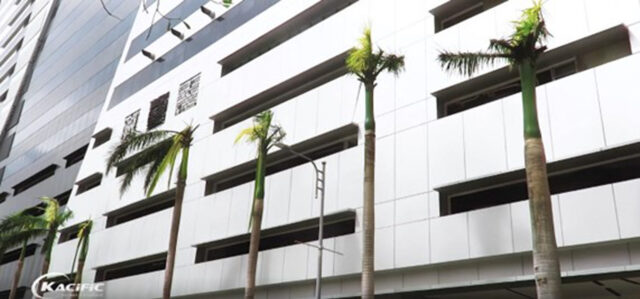
Public infrastructures were damaged by typhoon Odette (international name: Rai), which swept through southern
and central parts of the country in mid-December.

Super Typhoon Odette (Rai) struck the Philippines in December 2021. Due to the torrential rains, violent winds, landslides, and storm surges, utility infrastructure was severely damaged. It left 269 cities and municipalities without energy and 348 areas with network outages. The complete restoration of service took several weeks.

Kacific restored BPO company’s operations in Odette’s aftermath
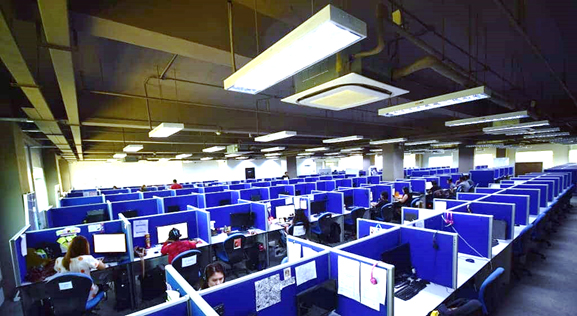
Ameeratel provides outsourcing of BPO, consulting, solutions, and other services. The company has 700 seats and almost 500 employees at present.

Roland Del Rosario, the Manager of AmeeraTel, an outsourcing firm in Cebu City, was one of several Filipino business executives who discovered themselves without internet connectivity at their workplace after the typhoon. AmeeraTel manages tasks such as technical support, customer care, and virtual assistance for clients from the UK, Australia, and the US.

“Without the internet, our operation will not work. We’re dependent on internet connectivity,” Rosario remarked. AmeeraTel and its 500 staff members needed the internet quickly; however, the repair job was not yet possible at that time. To guarantee fast internet from space, Rosario contacted satellite operator, Kacific.
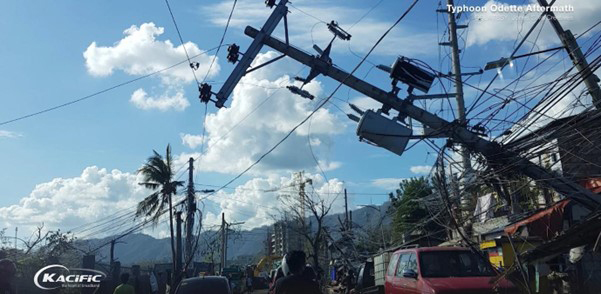
The typhoon’s intense winds overturned utility poles, knocking down electric lines and causing outages across the province of Cebu.

Kacific utilizes the latest in satellite technology: Ka-band and high-throughput satellite (HTS) technology with its Kacific1 satellite. Compared to legacy C-band and Ku-band satellites, Ka-band satellites offer higher bandwidth throughput while utilizing smaller antenna diameters, which increases internet user upload and download speeds.

The terminals are small and easily deployable that can be mounted in just a few hours and can be powered by solar panels. It only requires a clear line of sight to connect many users quickly.

Ameeratel, Inc. was the first call center in Cebu City to get back online with help of the VSAT from TBGI, powered by Kacific.

Advantages of Ka-band Technology for emergency, backup, and remote business communication

  • Higher capacity

The reuse of Ka-band spectrum over spot beams with high-throughput satellite technology allows for high bandwidth efficiency as compared to traditional, wide coverage area satellites.

  • Faster speeds

The combination of a high data transfer rate and small diameter antenna allows Kacific to offer speeds of up to 50 Mbps download and 5 Mbps upload via CommsBox, which helps enterprises to keep their backup safe and secure, even during fiber cuts, especially for companies who have their data backed up solutions on the cloud.

  • High link availability

The concentrated spot beams are high power, resulting in availabilities between 99.5% and 99.9%. Kacific also has two local teleports located in Subic Bay and Clark as its backup sites to ensure that connectivity remains available even in inclement weather.

  • Simple installation

Kacific-1 signal has circular polarization, meaning there is no need to adjust the polarization like with many other satellite systems. This greatly simplifies the installation process and enhances the system’s stability over long periods.

Businesses needing a high-speed fiber backup system can get Kacific satellite services from a local operator, Transpacific Broadband Group International (TBGI). The solution is intended for large corporations and organizations that require constant access to broadband internet for vital communications and web-based software. The service is always active and available as a “hot backup,” allowing a company to transition from fiber to satellite for connectivity.

Satellite Technology can help during natural disasters through CommsBox

Businesses need to be prepared for natural disasters that damage fiber cables and destroy mobile towers, leaving whole regions without communication. Kacific can ensure that they can keep communicating, use cloud-based systems, and access databases in the event of a failure.

Kacific CommsBox is a transportable, all-in-one satellite communications product that can be rapidly deployed in disaster zones when other communication channels fail. The turnkey solution is designed to meet the particular disaster response requirements of territories in Southeast Asia and the Pacific.

The first-of-its-kind in disaster recovery solutions, Kacific CommsBox consists of pre-configured, solar-powered units which, with minimal setup, provide instant internet access to assist relief operations and connect users.

CommsBox units can be stored in remote locations or can be transported directly into disaster zones.

Each Kacific CommsBox includes:

  • A small auto-pointing satellite antenna
  • Preconfigured and connected modem and satellite electronics
  • Solar-power energy pack
  • WiFi access point
  • A user-tablet
  • A sealed, shock-resistant, fire-resistant, water-resistant, and transportable all-inclusive container
  • Unlimited high-speed data with first priority speeds of up to 50 Mbps download and 5 Mbps upload

The satellite antenna connects to the Kacific1 satellite, which offers widespread coverage across the Asia Pacific, including islands, mountainous regions, and remote areas.

Kacific’s local Internet Service Provider, TBGI, helped AmeeraTel connect almost immediately to reliable Ka-band services. Thanks to satellite internet, the call center was one of the first in the area to get back online and be able to continue operations.

Due to these disaster risks, organizations should make solid resilience plans. Businesses must be ready so that their essential systems can quickly resume operations after extreme natural occurrences.

In catastrophic situations, ground-based technology is frequently destroyed or left without power, as Rosario discovered first-hand during Typhoon Odette (Rai). Businesses are increasingly searching for cutting-edge solutions, like satellite services, to ensure they can keep communicating, use cloud-based systems, and access databases in the event of a failure.

As we rely so heavily on energy, backup generators are crucial tools frequently utilized in places like hospitals. However, voice and internet services are equally important to the modern economy. Satellite connectivity is therefore essential to disaster recovery, emergency, and business continuity planning.

To learn more about using satellite internet as an affordable, high-speed backup service, contact TBGI at 0917 583 7971 or learn more on www.tbgi.net.ph.

For more information on Kacific’s satellite technology, visit www.kacific.com or contact sales@kacific.com.

Apply to be a Kacific Authorized Distributor today, visit https://kacific.com/distributor-network to know more.


Spotlight is BusinessWorld’s sponsored section that allows advertisers to amplify their brand and connect with BusinessWorld’s audience by enabling them to publish their stories directly on the BusinessWorld Web site. For more information, send an email to online@bworldonline.com.

Join us on Viber to get more updates from BusinessWorld: https://bit.ly/3hv6bLA.
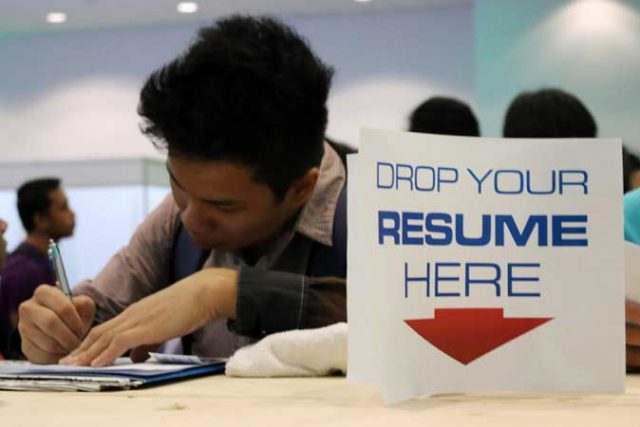
Jobs rise, unions dip in 2020 — PSA

Employment in enterprises employing at least 20 workers rose as of June 2020, while unionized establishments decreased, the Philippine Statistics Authority reported on Friday.

Data from the 2019/2020 Integrated Survey on Labor and Employment (ISLE) released on Friday showed total jobs went up by 4.8% to 5.322 million in establishments with 20 or more employees in end-June 2020 from 5.077 million in end-June 2018.

These enterprises with at least 20 workers reached 34,543 as of June 2020.

By sector, the bulk (70.6%) or a total of 3.755 million was employed under the services sector during the period, 9.5% higher than 3.428 million previously.

Total employment in the industry sector dipped by 5.5% to 1.412 million as of June 2020 from 1.495 million in June 2018, while agriculture, forestry, and fishing logged 153,761 workers, down by 0.4% from 154,421.

By industry-specific sectors, administrative and support services employed the most (1.451 million), accounting for 27.3% of the total. It was followed by manufacturing (19% share or 1.010 million) and wholesale and retail trade (14.4% share or 763,765).

Nearly nine out 10 (86.6%) of employed persons as of June 2020 were rank-and-file workers. Supervisors/foremen accounted for 7.9%, while managers/executives comprised 4.7% of the total. Owners working for their own companies and unpaid family members, meanwhile, took 0.6% share.

About 44% of the total employed during the period were female.

Meanwhile, more than a fourth (27.4%) of the total workers as of June 2020 were paid the exact minimum wage. The share of workers under alternative work arrangements was at 10.9%, while evening or graveyard shift workers accounted for 7.4%. Persons with disabilities contributed a 0.3% share.

Almost half (42.6%) of the total establishments outsourced the jobs from manpower agencies.

Electricity, gas, steam, air-conditioning supply topped the sectors with the highest proportion of establishments with agency hired workers. Manufacturing followed with 57.3%, while activities of human health and social work as well as mining and quarrying both accounted for 47.9% each.

Across all industries, a total of 315,134 vacant positions were available from July 2019 to June 2020.

Services sectors logged the highest number of job openings at 65.6%, while industry reported 34% share of total vacancies. Agriculture accounted for 0.4% of the total.

“Majority or 69.4% of the job vacancies were easy-to-fill meaning that establishments had no difficulties during recruitment/filling-up the positions,” the PSA said.

The PSA added that 30.6% vacancies were considered hard to fill due to lack of or few applicants; lack of years of experience, skills or license; applicants’ expectation of high salary and other reasons.

UNIONIZED ESTABLISHMENTS DECREASE

The PSA’s ISLE results showed only 4.2% (1,464) of establishments with 20 or more workers had registered unions in 2020.

This was 2.1 percentage points lower than 6.3% share in 2018 and the lowest since the 5.8% share in 2014, the PSA said.

Electricity, gas, steam, and air-conditioning supply recorded the highest share of unionized establishments at 26.9%, followed by water supply; sewerage, waste management and remediation activities (14.9%) and manufacturing (11.2%).

“By employment size, large establishments employing 200 and more workers were more unionized with 12.6% compared to establishments with smaller employment sizes,” the PSA said.

Union density rate — the share of union membership to total paid employees — slowed to 6% in 2020 from 7% in 2018. This translated to 316,458 unionized workers from the 5.292 million total paid employees.

A union is any registered group or employees’ association that exists for the purpose of collective bargaining or dealing with employers concerning terms and conditions of employment.

High union density rates were recorded in the following industries: electricity, gas, steam, and air-conditioning supply (24.9%); mining and quarrying (24.4%); water supply; sewerage, waste management and remediation activities (22%); and arts, entertainment, and recreation (20.1%).

Meanwhile, the collective bargaining agreement (CBA) coverage rate — share of CBA-covered employees to total paid employees — eased to 6.3% from 7.1% in 2018. This was equivalent to 333,776 CBA-covered employees of the total 5.292 million total paid employees in 2020.

CBA refers to a negotiated contract between a legitimate labor organization and the employer concerning wages, hours of work, and other terms and conditions of employment in a bargaining unit, including mandatory provisions for grievance and arbitration machinery.

LABOR COST RISES

A separate press release showed total annual labor cost surged by 55.9% to P1.661 trillion in 2019 from P1.066 trillion in 2013 in establishments employing at least 20 workers.

Administrative and support service activities recorded the highest share of total labor cost at 21.4% or P356.374 billion in 2019. It was followed by manufacturing (18.5% or P306.942 billion) and financial and insurance activities (15.7% or P260.847 billion).

A major component of the total labor cost was direct wages and salaries, which accounted for 77.6% of the total. Direct wages and salaries amounted to P1.289 trillion in 2019.

Social security expenditures meanwhile accounted for 10.6% or P176.273 billion. Bonuses and gratuities accounted for 9.5% or P157.902 billion, while remuneration for time not worked got 0.6% share or P10.322 billion.

Other components were other labor costs (0.5% or P8.969 billion); workers’ housing shouldered by employers (0.4% or P7.182 billion); cost or training (0.3% or P5.122 billion); and cost of welfare services (0.3% or P4.381 billion).

Average share of labor cost to the total cost of establishments in operating their businesses was estimated at 26.9%.

On a per-employee basis, total labor cost was estimated to amount to P304,691 in 2019.

Financial and insurance activities recorded the highest labor cost per employee with P763,561. It was followed by electricity, gas, steam, and air-conditioning supply (P526,401), water supply; sewerage waste management and remediation activities (P435,457); information and communication (P410,285); and repair of computers and personal and household goods; other personal service activities (P407,027).

Transportation and storage logged the lowest annual labor cost at P197,588.

Formerly Bureau of Labor and Employment Statistics Integrated Survey, ISLE is a nationwide survey of establishments employing at least 20 workers. It consists of at least three modules covering employment, work conditions, and industrial relations. — A. O. A. Tirona

Light battery for fisherfolk has potential to treat wastewater

A battery made from recycled materials, originally used to power lights in Philippine fishing communities, has been repurposed to treat wastewater.

Created in 2016 for remote fishing areas with limited energy sources, iLAWA draws power from pollutants in the water, namely phosphates, which originate from residential runoffs. Six years later, another application for the technology came to light when researchers found it can be used for wastewater treatment.

“It was really based on the notion of iLAWA drawing power from wastewater,” said Dr. Drandreb Earl O. Juanico, the project’s research head, in an interview with BusinessWorld.

Submerged in water, the battery technology from the recycled aluminum cans both lit the path of fisherfolk and cleaned the lake when it was first used in Laguna de Bay.

“If phosphates are considered pollutants in that lake water, then technically speaking, the lake water itself can be considered as wastewater since it has waste components, so why not use iLAWA for wastewater treatment facilities?” said Dr. Juanico.

The Department of Science and Technology’s (DoST) program Balik Scientist also led Dr. DJ Donn Matienzo, a Filipino industrial electrochemist in Europe, to join the team and help them develop the new idea.

Testing began this May at a major wastewater treatment facility in Luzon. If results, which are scheduled to come in this year, are promising, iLAWA plans to connect with companies that want to try their technology.

“Our target is industrial scale facilities. Once we’re done with this pilot test, we’ll be able to answer bigger operators’ questions of how to scale this up,” Dr. Juanico said.

DIFFERENT PROTOTYPES

Despite this pivot, the team will continue to  pursue its original goal of helping fishing communities.

The designs of the prototypes for the fisherfolk, for example, are geared for lighting and portability since they have to be brought onto small boats and attached to fish lures. Meanwhile, the iLAWA prototypes meant for wastewater treatment facilities can be as heavy as possible but with a more maximized cleaning effect.

The original team of engineers from the Technological Institute of the Philippines (TIP) — Niel Jon Carl Aguel, Ana Luz Callao, Paul Vincent Nonat, and Rowel Facunla — were recognized in 2017, when their project received initial funding from DoST.

Dr. Juanico added that the evolution of their technology is far from over, with ideas for more prototypes up ahead.

“We’re now figuring out a way for the waste treatment facility to make use of the electricity generated by iLAWA. It doesn’t necessarily have to go to a lighting implement. We can charge the battery and it will store the energy for later use,” he said.

By connecting the battery with other TIP projects related to energy storage, possibilities include harnessing the energy to drive pumps or generate electricity within the vicinity.

Whether it’s for local fishing communities or major wastewater treatment facilities, the adoption of iLAWA will promote aluminum recycling and help clean polluted waters, showing sustainability is achievable in the country, according to Dr. Juanico.

“If we get the data out there and convince policymakers that we can do this right here in the Philippines without foreign technology, by just making the most of the resources we have, then maybe we can address our problems in the local landscape,” he said. — Brontë H. Lacsamana

MPIC CFO joins WBA Allies’ Assembly 2022

L-R: WBA Executive Director Gerbrand Haverkamp; WBA Engagement Director Pauliina Murphy; Consul General of the Kingdom of the Netherlands in South Africa Sebastiaan Messerschmidt; MPIC Chief Finance, Risk, and Sustainability Officer Chaye Cabal-Revilla; African Monitor Senior Programmes Coordinator Joseph Eliabson; Western Cape Education Department Deputy Director General Haroon Mohamed.

Metro Pacific Investments Corporation (MPIC), the country’s leading infrastructure investments company, represented by its Chief Finance, Risk, and Sustainability Officer Chaye A. Cabal-Revilla, joined the World Benchmarking Alliance’s (WBA) Allies’ Assembly 2022 as a speaker and panelist in Cape Town, South Africa.

At this global and multi-stakeholder panel discussion, as the representative from the business side, Cabal-Revilla shared MPIC’s sustainability journey of integrating a holistic approach to its core business strategies and its sustainability-linked advocacies to a multi-stakeholder group of over 100 delegates from local, regional, and international organizations.

With our businesses providing essential services to the Filipinos, we recognize our responsibility to drive positive change and collective action to create pervasive impact. We are committed to bolster our sustainability efforts and be an instrument to our country’s sustainable development,” Cabal-Revilla emphasized.

MPIC was included early this year as part of the WBA’s SDG2000, the 2000 most influential companies that shape the future in relation to their contributions to the UN Sustainable Development Goals (SDGs).

SDG-Led Transformation: Closing the Accountability Gap

The World Benchmarking Alliance (WBA) is an international not-for-profit organization working to build a movement to measure and incentivize business impact towards a sustainable future that works for everyone. They do so by developing free and publicly available benchmarks that compare the private sector’s contribution to the UN Sustainable Development Goals (SDGs). These benchmarks inform and empower business leaders and investors, as well as governments, civil society, and other key stakeholders. Every January since 2020, the WBA publishes the SDG2000 list, which outlines the 2000 companies that have the most influence in contributing to the achievement of the SDGs. Through this, WBA’s insights and data serve as an accountability mechanism, incentivizing companies to become a successful driver of change and deliver on the SDGs. Together with their 300+ global and multi-stakeholder Alliance, they are building a movement that enables transparent dialogue, and ultimately action towards a more inclusive, fair, and sustainable world.

The Allies Assembly is their annual gathering to bring this international community together to reflect on learnings and challenges; engage multi-stakeholders within and beyond the network to raise ambition and create impact on the ground for the evolution of this movement for business action towards the global goals. The 2022 Assembly was built on the theme of “Community Building”, with an aim to inspire global and diverse partnerships to drive collective action on sustainable development.

At the plenary, with four other notable speakers including Western Cape Education Department Deputy Director General Haroon Mohamed, Consul General of the Kingdom of the Netherlands in South Africa Sebastiaan Messerschmidt, Senior Programmes Coordinator Joseph Eliabson from African Monitor, and WBA’s Executive Director Gerbrand Haverkamp, Cabal-Revilla delved into how MPIC is fulfilling its key role in contributing to collective action aligned with global benchmarks.

The plenary session highlighted dialogue between speakers from various backgrounds on how to shape and influence corporate accountability for the SDGs, answering the key learning question on how to use the power of collective action and data to close the accountability gap urgently on the global agenda with business, financial institutions, civil society, NGOs, industry associations, government, academia, and all other stakeholders.

“We were delighted to have MPIC represent the business voice in the panel, and to hear how the company has embraced ‘EESG’ and are encouraging other companies to adopt a similar holistic approach. This was a wonderful illustration of the capacity of an SDG2000 company to really enable systems transformation. It was clear to our audience that through making sustainability the centre of MPIC’s core business models, the company is making a concrete difference locally in the Philippines, but also elsewhere. The leadership and actions taken by MPIC really showed us that business can be such a powerful lever for change” said Pauliina Murphy, Engagement Director at the World Benchmarking Alliance.

The Urban System Transformation Benchmark

Beyond the speakership, she also attended a session on the development of a framework and methodology for the WBA’s urban system transformation benchmark, which is intended to measure the progress of the world’s keystone companies working in the field of urban development in terms of their contribution to SDG 11 Sustainable Cities and Communities.

With MPIC and the entire Manuel V. Pangilinan (MVP) Group of Companies pivoting towards being the largest catalyst for sustainability in the country, the company’s involvement in shaping the urban system transformation benchmark solidifies its role as a key driver of ESG in the Philippines. It also emphasizes MPIC’s role in making the country resilient and sustainable – aligned with its mission to contribute to national progress and uplift the lives of all Filipinos.

We at MPIC are driven by our objective of creating a better future for our entire country. Championing sustainability is a major factor to achieve that goal. Our involvement in integral conversations with like-minded global organizations ensures that our work is guided by a worldwide perspective that envisions transformative and positive change for all,” said MPIC Chairman, President, and CEO Manuel V. Pangilinan.

MPIC’s participation in the WBA is aligned with the Group’s efforts to contribute to the achievement of the United Nations Sustainable Development goals (SDGs), particularly SDG 11 Sustainable Cities and Communities and 17 Partnerships for the Goals.


Spotlight is BusinessWorld’s sponsored section that allows advertisers to amplify their brand and connect with BusinessWorld’s audience by enabling them to publish their stories directly on the BusinessWorld Web site. For more information, send an email to online@bworldonline.com.

Join us on Viber to get more updates from BusinessWorld: https://bit.ly/3hv6bLA.
S.Korea’s Yoon pardons Samsung’s Jay Y. Lee to counter ‘economic crisis’

SEOUL — South Korea’s President Yoon Suk-yeol pardoned Samsung Electronics Vice Chairman Jay Y. Lee on Friday, with South Korea’s Justice Ministry saying the business leader was needed to help overcome a “national economic crisis.”

The pardon is largely symbolic, with Mr. Lee already out on parole after serving 18 months in jail for bribery relating to his time leading the world’s biggest smartphone and memory-chip maker.

However, the pardon should mean Mr. Lee will be able to carry out business activities more freely and could herald some big investments from Samsung, analysts said.

“With urgent needs to overcome the national economic crisis, we carefully selected economic leaders who lead the national growth engine through active technology investment and job creation to be pardoned,” Justice Minister Han Dong Hoon told a briefing.

Mr. Lee, a scion of Samsung’s founding family, welcomed the decision and vowed to work hard for the national economy.

“I will contribute to the economy with continuous investment and job creation and give back the people and government’s regards,” Samsung said in a statement, citing Mr. Lee.

Also pardoned by pro-business President Yoon was Lotte Group chairman Shin Dong-bin, who was sentenced to a two-and-a-half-year prison sentence on charges of bribery.

“We sincerely thank the government’s and people’s decision to grant pardon, and Chairman Shin Dong-bin and staff members at Lotte will contribute to overcoming the complex global crisis,” Lotte said in a statement.

BACK IN BUSINESS

Tech- and export-dependent South Korea is grappling with soaring inflation and signs that Asia’s fourth-largest economy is struggling with weakening demand, poor sentiment and slowing spending.

Analysts have long expected decisions on major M&A projects and investments once Lee was reinstated, with company sources saying such decisions should only be made by Mr. Lee.

“This removes the employment restriction Lee was technically under,” said Park Ju-gun, head of research firm Leaders Index.

“And projects that were being pursued by Samsung, such as major M&A or investments, these could be tied to the pardon. There’s a high chance that announcements will be made going forward.”

Even before receiving the presidential pardon, Mr. Lee had returned to the limelight, appearing in May with President Yoon and US President Joseph R. Biden, Jr., when they visited Samsung’s Pyeongtaek chip production facilities.

He has also visited Europe in June to meet ASML Holding NV CEO Peter Wennink, discussing the adoption of key high-end chip equipment.

Last November, Samsung decided on Taylor, Texas as the site of a new $17 billion chip plant.

While experts say Lee could now more freely participate in management, his legal risks still persist due to an ongoing trial where he faces charges of fraud and stock manipulation.

“With his trial, Lee could face a fresh jail term if convicted. However, the presidential pardon gives him some flexibility to handle big management issues for now,” said Lee Kyungmook, a professor at Seoul National University’s Graduate School of Business.

Top Samsung executives have hinted earlier this year at potential upcoming acquisition activity. Samsung Electronics has not conducted a high-profile deal since it completed its purchase of audio electronics maker Harman for $8 billion in 2017.

Although macroeconomic factors such as a demand downturn may weigh on investment decisions, Samsung has a huge war chest.

Samsung Electronics’ cash balance increased slightly to 125 trillion won ($95.13 billion) as of end-June, from 111 trillion a year earlier.

Shares in Samsung Electronics were trading up 1% versus benchmark KOSPI’s 0.1% rise. Lotte Corp shares were down 0.8%. — Reuters

Twitter plan to fight midterm misinformation falls short, voting rights experts say

JOSHUA HOEHNE/UNSPLASH

Twitter Inc. on Thursday set out a plan to combat the spread of election misinformation that revives previous strategies, but civil and voting rights experts said it would fall short of what is needed to prepare for the upcoming US midterm elections.

The social media company said it will apply its civic integrity policy, introduced in 2018, to the Nov. 8 midterms, when numerous US Senate and House of Representatives seats will be up for election. The policy relies on labeling or removing posts with misleading content, focused on messages intended to stop voting or claims intended to undermine public confidence in an election.

In a statement, Twitter said it has taken numerous steps in recent months to “elevate reliable resources” about primaries and voting processes. Applying a label to a tweet also means the content is not recommended or distributed to more users.

The San Francisco-based company is currently in a legal battle with billionaire Elon Musk over his attempt to walk away from his $44-billion deal to acquire Twitter.

Mr. Musk has called himself a “free speech absolutist,” and has said Twitter posts should only be removed if there is illegal content, a view supported by many in the tech industry.

But civil rights and online misinformation experts have long accused social media and tech platforms of not doing enough to prevent the spread of false content, including the idea that President Joseph R. Biden, Jr., did not win the 2020 election.

They warn that misinformation could be an even greater challenge this year, as candidates who question the 2020 election are running for office, and divisive rhetoric is spreading following an FBI search of former President Donald Trump’s Florida home earlier this week.

“We’re seeing the same patterns playing out,” said Evan Feeney, deputy senior campaign director at Color of Change, which advocates for the rights of Black Americans.

In the blog post, Twitter said a test of redesigned labels saw a decline in users’ retweeting, liking and replying to misleading content.

Researchers say Twitter and other platforms have a spotty record in consistently labeling such content.

In a paper published last month, Stanford University researchers examined a sample of posts on Twitter and Meta Platforms’ Facebook that altogether contained 78 misleading claims about the 2020 election. They found that Twitter and Facebook both consistently applied labels to only about 70% of the claims.

In a statement, Twitter said it has taken numerous steps in recent months to “elevate reliable resources” about primaries and voting processes.

Twitter’s efforts to fight misinformation during the midterms will include information prompts to debunk falsehoods before they spread widely online.

More emphasis should be placed on removing false and misleading posts, said Yosef Getachew, media and democracy program director at nonpartisan group Common Cause.

“Pointing them to other sources isn’t enough,” he said.

Experts also questioned Twitter’s practice of leaving up some tweets from world leaders in the name of public interest.

“Twitter has a responsibility and ability to stop misinformation at the source,” Mr. Feeney said, saying that world leaders and politicians should face a higher standard for what they tweet.

Twitter leads the industry in releasing data on how its efforts to intervene against misinformation are working, said Evelyn Douek, an assistant professor at Stanford Law School who studies online speech regulation.

Yet more than a year after soliciting public input on what the company should do when a world leader violates its rules, Twitter has not provided an update, she said. — Reuters

US CDC no longer recommends students quarantine for COVID-19 exposure

BLOOMBERG

The US Centers for Disease Control and Prevention (CDC) will no longer recommend quarantines or test-to-stay programs at schools or daycare centers for people exposed to coronavirus disease 2019 (COVID-19), the agency said in updated guidelines on Thursday.

The agency also said it was no longer recommending unvaccinated people quarantine after exposure as around 95% of the US population has either been vaccinated, had COVID-19 already, or both.

“This guidance acknowledges that the pandemic is not over, but also helps us move to a point where COVID-19 no longer severely disrupts our daily lives,” CDC scientist Dr. Greta Massetti said in a statement.

The CDC said it had updated its recommendations that people exposed to COVID-19 should wear a high quality mask for 10 days and test on the fifth day after exposure, regardless of vaccination status.

“Both prior infection and vaccination confer some protection against severe illness, and so it really makes the most sense to not differentiate with our guidance or our recommendations based on vaccination status at this time,” Dr. Massetti told reporters.

The CDC’s school guidance also removed recommendations to keep children in cohorts in order to reduce the likelihood of COVID-19 exposure.

While the agency removed its test-to-stay recommendations for schools, it did say schools could consider implementing screening for COVID-19 for high-risk activities like close contact sports or at key times of the year. — Reuters

PHL tycoon Uy’s business may face $700 million debt bill

The business empire of Philippine tycoon Dennis A. Uy, which recently made headlines with a notice of default, may face nearly $700 million worth of loans maturing this year.

The most recent financial report of Uy-backed DITO CME Holdings Corp., covering the quarter through end March and published in late May, lists subsidiary DITO Telecommunity Corporation — a venture with China Telecommunications Corp. — as having taken out the money with three different Bank of China Ltd. (BOC) branches.

An estimated $47 million of dual-currency debt with BOC’s Manila branch set to come due on Aug. 20. A chunk of two other loans — for $199.7 million and $449.9 million — taken out with the lender’s units in Singapore and Hong Kong may also mature then, according to the document. It lists Oct. 12 as another maturity date.

Leo Venezuela spokesman for parent Udenna Corp. said he couldn’t answer questions regarding DITO CME’s finances citing a blackout period before the release of the second-quarter financial report on Monday.

That publication is likely to give a more recent snapshot of its finances, including whether the BOC loans were rolled over, renegotiated or paid back. But the liabilities add to the picture of a debt-fueled expansion of the business empire of Mr. Uy, who counts former president Rodrigo R. Duterte as a family friend.

The Uy and China Telecommunications’ venture is the newest telecoms provider in the Philippines.

Already last month, a DITO CME affiliate received default notice from a consortium of banks. Udenna later said it had “settled the matter.”

The quarterly filing also states that the group’s liabilities exceeded its assets by 126.4 billion pesos at the end of March, which it conceded might cast “significant doubt” on its viability.

“Albeit these conditions, management believes that the group will be able to meet all its outstanding obligations and continue to operate as a going concern,” DITO CME said.

An external spokesperson for DITO Telecom didn’t respond to Bloomberg’s emailed requests for comment. A call to DITO CME’s general number went unanswered.

Bank of China and China Minsheng Banking Corp. did not immediately respond to emailed requests for comment. — Bloomberg

Years of COVID school closures leave Philippines with deep scars

PHILIPPINE STAR/ WALTER BOLLOZOS
PHILIPPINE STAR/WALTER BOLLOZOS

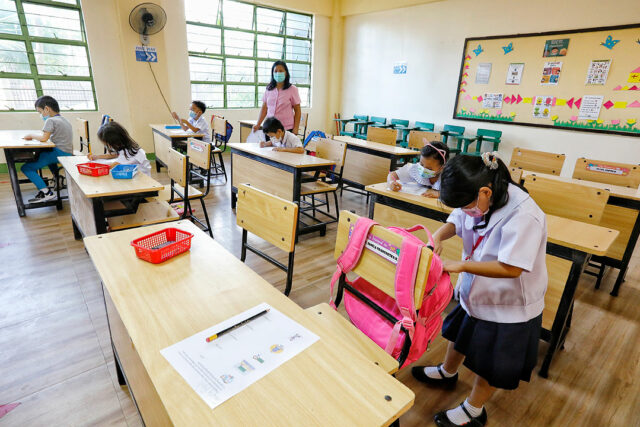
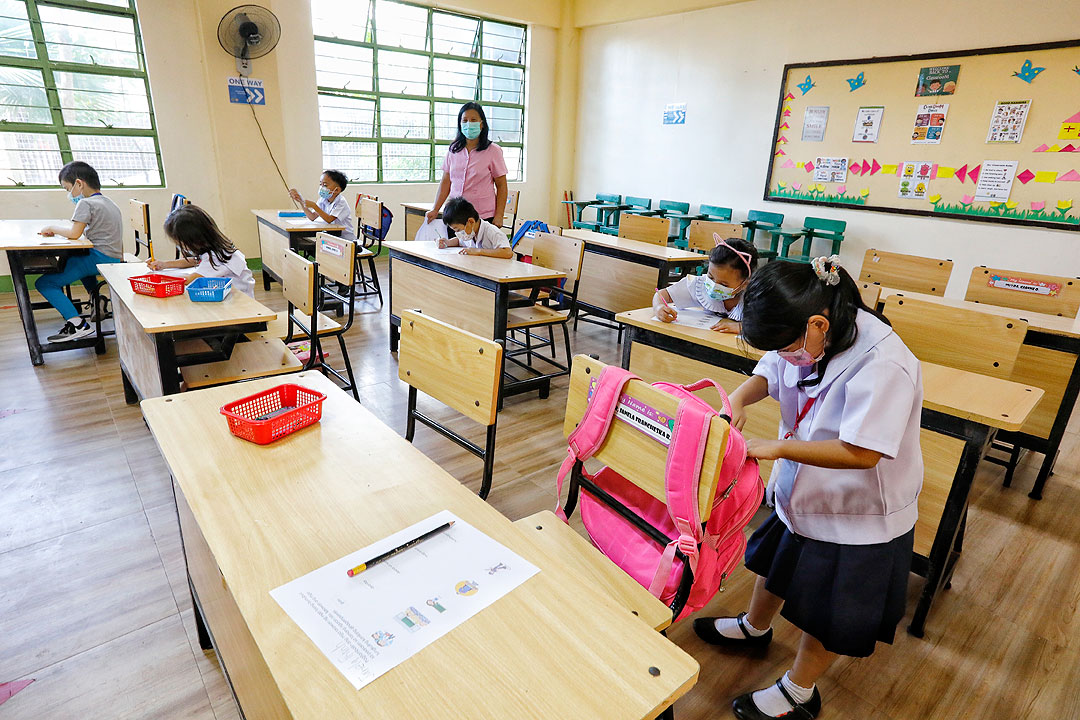
On Aug. 22, schools in the Philippines will finally reopen their doors to students after two and a half years — one of the longest pandemic-induced school closures in the world. As well as devastating the individual prospects of countless children, the extended hiatus is threatening to leave long-term scars on an economy historically reliant on sending high-skilled workers abroad.

Protracted school closures worsen basic literacy standards and will likely reduce the productivity and earnings of children once they enter the workforce, the World Bank warned in a recent report.

About 10% of Filipinos work abroad and the economy is dependent on remittances sent back by its overseas nurses, teachers and engineers, among other workers. A steady flow of graduates is also essential to the country’s push to establish itself as an outsourcing center for international corporations and to increasing the number of decent jobs closer to home.

“The impact is huge,” the country’s economic planning chief Arsenio M. Balisacan said in an interview. “The quality of graduates we produce affects the competitiveness of our labor force.”

While protracted school closures have bedeviled many countries — particularly poorer ones — the problem is particularly acute in the Philippines, where the shutdown has been one of the longest in the world according to data from the United Nations Children’s Fund. Even now, full in-person teaching isn’t planned until November.

One reason for the tardiness in reopening is the country’s social structure. Households are mostly composed of extended families so many children live with grandparents who are vulnerable to the virus because of old age, or with other relatives who may have underlying health conditions.

Exacerbating fears of the virus are long-standing logistical issues in poorly funded schools including overcrowding. Prior to the virus, classes in public schools of more than 60 students were common, necessitating textbook sharing and preventing any meaningful social distancing.

So while parents are dismayed at their children’s lack of progress, fear of the virus has kept criticism of the government in check. Cristina Martinez, a 31-year-old vegetable seller in the coastal town of Hagonoy and mother of four children, says her 10-year-old “can barely read sentences,” particularly in English, the language used in science and math textbooks. “The situation is hard for us, but I think there’s not much we can do.”

Compensating for two years of inadequate learning requires a program that includes make-up classes for younger pupils and training for college students to prevent irreversible human capital losses, Balisacan said.

Success is crucial if the next generation of Filipinos are to access good quality jobs — and new president Ferdinand R. Marcos, Jr., is to keep his pledge to bring the poverty rate to 9% by the end of his term in 2028 from 23.7% as of the first half of last year.

A failing education system means the nation’s future labor force could have a much more limited skill set, said Nicholas T. Mapa, economist at ING Groep in Manila. “This is one of the many scarring effects on the economy.”

The proportion of children who cannot read a simple text by the age of 10 has increased notably over the pandemic without a good education, migrant Filipinos will be looking at roles in vulnerable occupations such as cleaning and domestic work, Department of Migrant Workers Secretary Susan V. Ople said.

These typically attract both poorer pay and conditions. In his inauguration speech, Mr. Marcos said pushing more money into education and reforms such as revamping the curricula is a top priority. Entry-level teachers in public elementary and secondary schools receive monthly salaries of just over $400 and primary education expenditure per child in the country is 30% below the average for lower middle-income countries, according to development agency data.

“We are condemning the future of our race to menial occupations abroad,” Mr. Marcos said, making his case for reform. “Once we had an education system that prepared coming generations for more and better jobs, there is hope for a comeback.” — Bloomberg

Honoring Fidel V. Ramos: the legacy of the Philippines’ 12th President

Photo shows former Philippine President Fidel V. Ramos during the Arangkada anniversary economic forum in Makati in February 2013. — BW File Photo

The wheel of history forever turns. As the years go on, new leaders, heroes, and visionaries become a part of national history. Yet, we must not forget the names of those who have dreamed and labored hard to create the present we enjoy today.

Former President Fidel V. Ramos, who passed away at 94 last July 31, was one such man to be remembered. He had been instrumental in toppling the Marcos dictatorship, and his presidency from 1992 to 1997 came right at that critical point in Philippine history, just four years after the ratification of the 1987 Constitution, following Corazon C. Aquino’s historic term.

According to the Management Association of the Philippines, which released a statement mourning his death, the Ramos administration was known for sweeping reforms on energy, economic liberalization, infrastructure, and social reform among others, which “fueled an engine for national progress built on his twin themes of people empowerment and global competitiveness.”

“His good governance program is unparalleled. He has undoubtedly served the country with the highest standards of professionalism, integrity, and transparency,” the organization said.

Among the most notable of these reforms was his initiative to solve the ongoing power crisis of the time. In his first year, his government reformed the Department of Energy and led the construction of numerous power plants around the country. These efforts were seen to be the some of the first instances of the Build-Operate-Transfer (BOT) model, where private investors are invited to fund certain government infrastructure projects like power plants and railways, make money by charging users, and then transfer operation to the government after a set period.

Senate President Pro-Tempore Loren B. Legarda recognized Mr. Ramos’ work in promoting people empowerment and global competitiveness, saying that he “left a legacy that demonstrated resolute courage, excellent leadership and unwavering allegiance.”

“He led various economic reform initiatives which pushed for the deregulation of key industries and the liberalization of the economy and encouraged the privatization of public entities, to include the modernization of public infrastructure through an expanded Build-Operate-Transfer law,” she said.

Under these reforms, and aided by the economic policies begun by his predecessor, then President Ramos succeeded in opening up the once-closed national economy, encouraging private enterprise as well as inviting foreign and domestic investments into the country. Mr. Ramos saw many of these investment deals himself, as he became known as the most-traveled Philippine President compared to his predecessors, bringing home an estimated $20 billion worth of foreign investments from abroad. He also led the 4th Asia Pacific Economic Cooperation (APEC) Leaders’ Summit in the Philippines in November 1996.

In a statement honoring former President Ramos’ legacy, Senate President Juan Miguel F. Zubiri noted that it was particularly the Philippines 2000 program that turned the nation into one that was dubbed as the Sick Man of Asia into Asia’s Next Tiger Economy. The Philippine Stock Exchange in the mid-1990s was one of the best-performing in the world, through his vision of industrializing the economy by the turn of the century.

Senator Risa Hontiveros-Baraquel, for her part, said that Mr. Ramos’ vision of Philippines 2000 gave the Philippines “a chance to stand tall beside other Asian economies.”

Meanwhile, the Department of Foreign Affairs (DFA) said that President Ramos was widely considered as a ‘foreign policy’ President who “shaped the evolution of the DFA by instituting economic diplomacy and the protection of overseas Filipinos as pillars of Philippine foreign policy”.

“His contributions to our foreign policy will continue to benefit future generations of Filipinos. The DFA community extends its support and prayers to the Ramos family at this difficult time,” Foreign Affairs Secretary Enrique A. Manalo said.

Mr. Ramos also had a hand in the creation of the Southern Philippines Council for Peace and Development in 1996, which ultimately led to the final peace agreement with the Moro National Liberation Front.

After his presidency, he continued to espouse the same ideals he sought to instill in the government. Mr. Ramos pushed for the country to become economically competitive on the global market. He represented the Philippines in the ASEAN Eminent Persons Group, tasked to draft the Charter of the Association of South East Asian Nations (ASEAN), and he also served as a member of numerous international groups and fora, including serving as chairman and co-founder of the Board of Directors of the Boao Forum for Asia and co-chairman of the Global Meeting of the Emerging Markets Forum (EMF). He was also heavily recommended for the position of the United Nations envoy to Myanmar (formerly known as Burma) in June 2006.

More recently, Mr. Ramos as a private citizen served various private sector advocacies including chairman for the Ramos Peace and Development Foundation; chairman, Boao Forum for Asia; trustee, International Crisis Group (ICG); member, Advisory Group, UN University for Peace; honorary director, General Douglas MacArthur Foundation; founding member, Policy Advisory Commission, World Intellectual Property Organization (PAC-WIPO); honorary member, World Commission on Water for the 21st century; member, International Advisory Council, Asia House; Patron, Opportunity International (Philippines); global advisor, University of Winnipeg; honorary chairman, Yuchengco Center, De La Salle University; member, Advisory Board, Metrobank; honorary president, Human Development Network (HDN) Philippines; lifetime honorary president, Christian Democrats International (CDI); and chairman emeritus, Lakas-Christian Muslim Democrats (CMD) Party.

The former President was also a member of the Global Leadership Foundation, an organization which works to support democratic leadership, prevent and resolve conflict through mediation and promote good governance in the form of democratic institutions, open markets, human rights and the rule of law.

Hailing from Lingayen, Pangasinan, Mr. Ramos was born to lawyer and congressman Narciso Ramos and educator Angela Valdez on March 18, 1928 in Lingayen, Pangasinan. He studied at the National University where he received his civil engineering degree. He also graduated with a Bachelor of Science in Military Engineering degree from the US Military Academy, after which he earned his masters in civil engineering at the University of Illinois.

He is survived by Amelita Martinez, whom he married in 1954, as do their daughters, Angelita Ramos-Jones, Carolina Ramos-Sembrano, Cristina Ramos-Jalasco, and Gloria Ramos. A fifth daughter, Josephine Ramos-Samartino, died in 2011. — Bjorn Biel M. Beltran

FVR’s vision for the economy

Fidel V. Ramos — BW File Photo

Among the tributes that poured in for former President Fidel V. Ramos, one of the well-remembered is his contribution to the Philippine economy, especially his endeavor to shift the country from being called the Sick Man of Asia. After all, in his inauguration address back in 1992, he said, “To this work of empowering the people, not only in their political rights but also in economic opportunities, I dedicate my Presidency.”

Among those who honored Mr. Ramos on his passing were Budget and Management Secretary Amenah Pangandaman and Socioeconomic Planning Secretary Arsenio M. Balisacan, who, in separate statements, both recognized how the country became a “tiger cub economy” through the late President.

“It was during his administration that the Philippines, under his vision ‘Philippines 2000’, became the ‘tiger cub economy in Asia’, as he was widely credited for spearheading economic reforms in the country,” Sec. Pangandaman said in a statement.

“He was also a visionary,” said Sec. Balisacan. “His foresight and steadfastness enabled the Philippines to weather the 1997 Asian Financial Crisis and be among the continent’s ‘Tiger Cub Economies’.”

Mr. Ramos, also known for his initials FVR, served as the country’s 12th President from 1992-1998. During his inauguration, he noted that one of their priorities was to “nurse the economy back to health and propel it to growth.”

A World Bank working paper from 2008 noted that the country’s economic growth record showed a ‘boom-bust’ picture. The economy could not maintain growth of more than 5% for over six years and although growth managed to stay over 5% for six years from 1975 to 1980, amid the Marcos dictatorship, this economic expansion was paid for by large foreign borrowings that “paved the way for a deep external payments crisis in the early 1980s.” 

The country’s economic situation deteriorated in the 1980s, according to an International Monetary Fund (IMF) paper from 2000. From 1986 to 1989, economic growth was able to rebound under a new government that was led by former President Corazon C. Aquino, though the economy faltered in 1990 to 1991 due to a string of natural disasters, external shocks, and renewed political instability. The economy was still on a “rocky path” in the last years of the 1980s, according to the IMF. Nonetheless, those years saw “important changes that paved the way for fundamental improvement” in the decade that followed.

“The 1990s have witnessed impressive economic progress in the Philippines, reflecting sound economic policies in a more favorable external environment and greater political stability,” IMF said.

Led by FVR, the new government embraced what IMF regarded as a “comprehensive reform strategy,” which targeted “further opening up the economy, reducing macroeconomic imbalances, and addressing other structural rigidities.”

In his 1993 State of the Nation Address, FVR expounded on his socio-economic program Philippines 2000, a vision for the country to be newly industrialized by the year 2000.

“The Philippine State, in the past, had been unable to act consistently in the national interest because it could not resist the importunings of oligarchic groups. And the economy had been governed largely by politics instead of markets,” Mr. Ramos said.

“Because of this experience, we now know that development cannot take place in our country unless we put our house in order. And this — to me — means accomplishing three things: One, restoring political and civic stability. Two, opening the economy: dismantling monopolies and cartels injurious to the public interest, and leveling the playing field of enterprise. Three, addressing the problem of corruption and criminality.”

He laid out the two components of the Philippines 2000, the first of which is the Medium-Term Philippine Development Plan for 1993-1998. The other component sought to address the larger environment, covering the political, social, and cultural climate, in which economic growth must transpire.

The paper published by the World Bank likewise noted that FVR’s reform agenda was broad. Because apart from economic liberalization measures, also involved are institutional, redistributive, and political reforms.

“At the end of the day, he had been most successful where the reform effort entailed liberalization and deregulation, that is, getting government out of the way to foster market efficiency,” the World Bank paper said. “The success record of his programs for institutional reform is less evident, partly because these are by nature more intractable and complex and require sustained action over a long period, perhaps longer than a President’s term.” — Chelsey Keith P. Ignacio

Move-in ready perks await with Homepossible: Next Best Home Deals in Avida this August

Finding a property to settle in after years of being in the pandemic may leave home seekers and smart investors wary of whether their investment will be worthy of value. Nonetheless, the past 2 years have made home seekers and investors more discerning in their real-estate investment. Now that the economy is slowly regaining its foothold in business and investment, it is crucial for home seekers to choose a property that is not only primed for growth but also designed to curate a holistic lifestyle.

Given the array of property options springing from the market, home seekers are expanding their investment choices. Beyond looking into prime locations, they are searching for a community that is ready to fulfill their lifestyle needs and aspirations. Avida Land makes this aspiration Homepossible with investment options from its expansive portfolio of move-in-ready properties offering a convenient and modern living experience, affordable amortization, and exclusive move-in deals that every homeowner and investor can take advantage of.

Avida Land, Ayala Land’s mid-segment brand, has remained steadfast in its mission to make affordable dream communities a reality for middle-income Filipinos through its sensible home investments and sustainable mixed-use developments that are sure towards limitless growth and possibilities, and secure in its commitment to enriching lives with its proven track record for over 30 years.

Move-in Ready is Investment Ready

Investing in an Avida ready-for-occupancy (RFO) property goes with value-for-money ‘rewards’ when you are able to move ahead and fulfill your aspirations in the new normal. Avida Land is ready to achieve those aspirations when home buyers move to a ready community.

“Moving to a ready community allows you to have the immediate experience of your investment. Hence, you do not need to wait for its completion since all move-in ready properties are fully-constructed with standard unit provisions and sensible amenities. Home buyers will also get the privilege of being near modern living conveniences with its strategic location,” says Tess A. Tatco, AVP for Corporate Marketing.

Since all Avida properties are within key locations, your home investment is sure to appreciate over time with the continuous infrastructure developments and local government activations that will attract further growth and progress. With this, you can take advantage of securing a passive income generation when you lease your unit.

Most Avida RFO properties are mixed-use developments where you will get to live a life with ease as your lifestyle essentials are within reach. Having a dedicated retail space within the community and being nearby commercial and institutional establishments, this allows you to experience hassle-free living and to give you an opportunity to spend time on what truly matters.

Homepossible: Next Best Home Deals

Invest in Avida Move-in Ready properties nationwide and experience what Avida living and ‘rewards’ on investment is. Join the grand open house event this August 13!

There are exclusive move-in ready perks that await as Avida launches its grand open house event, Homepossible: Next Best Home Deals, featuring its ready-for-occupancy properties nationwide. Home seekers will enjoy as high as PHP 1.5 M discount with flexible early move-in payment terms. Plus, a tropical vacation of a 3-day and 2-night stay at El Nido Resort for two (2) is in store for home buyers ready to reserve an Avida unit.

Discover more about their move-in ready properties and take advantage of the one-day move-in offers from Abenson Home, Tefal Philippines, and Bank of the Philippine Islands (BPI).

These showrooms are open for viewing from 10 AM – 5 PM:

  • Glorietta Showroom, Makati City
  • Avida Towers Ardane Showroom, Alabang
  • Avida Towers Verge Showroom, Mandaluyong City
  • Avida Towers Cloverleaf Showroom, Quezon City
  • Avdia Towers Sucat, Paranaque City
  • Serin Tagaytay Project Pavilion, Tagaytay City
  • Nuvali Info Center, Sta. Rosa, Laguna
  • Avida Towers Aspira Showroom, Cagayan De Oro City
  • Avida Towers Riala Showroom, Cebu City
  • Avida Towers Abreeza Showroom, Davao City
  • Avida Towers Atria Showroom, Iloilo City
  • Avida Village Iloilo Project Pavilion, Iloilo City
  • Avida Village Northpoint Project Pavilion, Bacolod City

Be in a community that is ready for you. Be on the move for what’s next and unravel limitless opportunities with Avida!

Make your next best move and register at https://bit.ly/avidahomepossible2022

For more information on Avida Land and its move-in deals this August 13, visit their website www.avidaland.com, like and follow @AvidaLandPH on Facebook and Instagram, and @avidaofficial on YouTube.


Spotlight is BusinessWorld’s sponsored section that allows advertisers to amplify their brand and connect with BusinessWorld’s audience by enabling them to publish their stories directly on the BusinessWorld Web site. For more information, send an email to online@bworldonline.com.

Join us on Viber to get more updates from BusinessWorld: https://bit.ly/3hv6bLA.