Home Blog Page 5601

Airlines reboot as COVID sparks a revolution in one-day business trips

STOCK PHOTO

SYDNEY/CHICAGO — Airlines around the world are ripping up schedules and bringing in new flights to cope with a COVID-triggered trend in corporate travel for executives like Jerome Harris — the scrapping of one-day business trips in favor of longer stays.

For Sydney-based Mr. Harris, exhausting one-day treks to Melbourne or Brisbane — meaning four taxi rides, two flights, extended waits and the risk of delays — are no more after a pandemic-driven reassessment of his travel habits. 

Industry data show business travelers are taking longer trips than before coronavirus disease 2019 (COVID-19), leaving airlines adjusting flight plans. Environmental concerns, rising ticket prices, increased flight cancellations amid staff shortages and a boom in online videoconferencing are all undermining the single-day trip option as an industry standard. 

“I’m happier to save the effort and the carbon and do a few days in a location and have time to meet up with multiple people and visit multiple projects,” said Mr. Harris, who works for an infrastructure company. 

Corporate travel agency CWT said in global terms, the proportion of one-day domestic trips has fallen by more than 25% compared with 2019 levels as online meetings grow in popularity. 

In markets from Australia to the United States, airlines are having to adapt to maximize revenue. US carriers, for example, are adding more midweek flights as travelers take more trips that blend business with leisure, with many capitalizing on greater flexibility to work remotely. 

“Tuesdays and Wednesdays are not as much of a trough as they used to be in a traditional week,” according to United Airlines Chief Commercial Officer Andrew Nocella, speaking on an earnings call last month. 

For corporate travel agency CWT’s head of Asia Pacific sales, Akshay Kapoor, the shift is long term for both airlines and hotels. 

“I think the trend away from one-day trips in favor of longer stays is here to stay as travelers become more environmentally and fiscally conscious,” said Mr. Kapoor. “This could translate into a higher revenue per available room for hotels in the long run.” 

PAY MORE, STAY LONGER 

At a time when airfares have skyrocketed, the average length of a domestic business trip in Australia increased to nearly four days in the third quarter this year, up from three in 2019, according to Flight Centre Travel Group Ltd. 

“I think probably because people are paying more they are taking advantage of staying longer,” Flight Centre Corporate’s head of Australia and New Zealand Melissa Elf said. 

Qantas Airways Ltd. and Virgin Australia say higher airfares have so far offset any revenue impact from fewer business trips. But the shifting travel patterns are becoming apparent in airline schedules, where flights on popular business routes have been falling, reflecting declining same-day demand, in proportion to ones preferred by leisure travelers. 

Sydney-Melbourne is the fifth-busiest domestic route in the world at present, according to travel data firm OAG, down from second in 2019. 

In North America, business-heavy Los Angeles-San Francisco, the busiest domestic route in 2019 according to OAG, is down to eighth. It has been replaced at the top by leisure-dominated Las Vegas-Los Angeles and Honolulu-Maui. 

Ajit Chouhan, a Texas-based human resources executive, used to go on one-day business trips to San Francisco at least once a month before the pandemic. But now he uses Zoom or Microsoft Teams for shorter meetings, describing the online options as “convenient and more productive.” 

To be sure, the one-day trip is far from dead, particularly when companies are keen to sign up new customers face to face, said American Express Global Business Travel Chief Operating Officer Drew Crawley. 

“If I’m on a business trip, do I want to stay an extra day if my partner’s at home?” he said. 

But the proportion varies by industry and is declining. One-day journeys accounted for around 4% of domestic business trips globally in 2019, according to CWT data, versus 3% now. 

For Sydney-based Harris, avoiding same-day trips has also helped him avoid some of the frustrations from travel chaos as airlines have ramped up capacity while being short of staff. 

“Losing a few hours on a three-day trip isn’t the end of the world, but disruption on a one-day (trip) is very stressful,” he said. — Reuters

 

South American fans bite their nails over World Cup chances — and inflation

Argentine footballer Lionel Messi in the national team's away jersey designed by Adidas. -- ADIDAS.COM

SAO PAULO — In South America, home to some of the world’s starriest soccer players from Argentina’s Lionel Messi to Brazil’s Neymar, avid fans are starting to get jitters about their countries’ World Cup chances — and the rising cost of supporting them.

The region of about 650 million people is battling some of the world’s worst inflation, including in Argentina where prices are set to climb 100% this year. That is pushing up costs from soccer stickers and jerseys to game time snacks and beer. 

“Prices are just too inflated,” said 20-year-old Brazilian Breno Nery, who was buying popular collectible soccer stickers in a Sao Paulo mall. A pack of five stickers has doubled to 4 reais ($0.79) since the 2018 Russia World Cup. 

It is even worse in Argentina, where the suggested price of a pack has jumped 900% to 150 pesos ($0.95) after years of sky-high inflation. But a shortage has also led to prices doubling or tripling on the internet or alternative markets. 

Prices have been surging for all sorts of goods from merchandise and collectibles to the food and beverages fans are likely to buy once the competition starts this month in Qatar. Brazil and Argentina are among the favorites. 

In Buenos Aires, if fans want to buy a soccer jersey, they will also have to reckon with even higher prices thanks to a skewed foreign exchange rate linked to strict capital controls and supply chain disruptions. 

In Argentina the new Adidas national team shirt will cost 28,999 pesos, a whopping 1,658% rise from the last World Cup, while in Brazil, Nike Inc. launched the latest “Selecao” shirt at 349.99 reais, a 40% jump. 

“This time Brazilian fans will bite their nails not only when cheering for the national team, but also when paying their bills,” brokerage XP said in a recent report. 

Despite the price rises, sales of Brazil’s kit have leapt 40% from 2018 by volume, said Nike distributor Grupo SBF. Not everyone is convinced, though. 

“I think I’ll just wear a random shirt with ‘Brazil’ written on it,” said Daniel Santos, 20, speaking at a shopping mall in Sao Paulo. 

STICKER SHOCK 

The World Cup will be played from Nov. 20 to Dec. 18 — late spring in the southern hemisphere, a change from the normal dates that fall in the region’s winter. 

The balmier weather has companies such as meatpacker BRF and brewer Ambev expecting sales to get a bump as South Americans gather with family and friends to watch matches with a cold brew or celebrate with a barbecue. 

But fans will be in for some sticker shock. 

Meat is now almost 80% more expensive in Brazil than four years ago, according to XP, a rise almost three times steeper than overall inflation. Soda and beer prices have surged 20%. 

Argentina’s traditional asado beef prices rose more than 600% from June 2018 to August 2022, data from local industry group IPCVA showed. A liter of beer has nearly quintupled in cost. 

The World Cup even led Argentina to launch capital controls of overseas travel and spending dubbed as the “Qatar” FX rate, making travel to the Middle East nation even more expensive in local currency. — Reuters

Pag-IBIG Calamity Loan ready for members affected by Typhoon Paeng

Top executives of Pag-IBIG Fund announced on Friday, Nov. 4, that the agency has allocated P5 billion in calamity loan funds to help members affected by Typhoon Paeng.

“We are ready to help our members affected by Typhoon Paeng with our Calamity Loan program. We have initially identified a total of 344,000 affected members in Regions IV-A (CALABARZON), V (Bicol Region), VI (Western Visayas), the Bangsamoro Autonomous Region in Muslim Mindanao (BARMM) and other areas where a state of a calamity has been declared by the local government unit, who are eligible to borrow under the program. That is why we have set aside P5 billion in calamity loan funds to help them recover from the damages caused by the typhoon. This is in line with the directive of President Ferdinand Marcos, Jr. to provide Filipinos in affected areas with immediate relief and all the necessary assistance,” said Secretary Jose Rizalino L. Acuzar of the Department of Human Settlements and Urban Development and Chairperson of the 11-member Pag-IBIG Fund Board of Trustees.

Under the Pag-IBIG Calamity Loan, eligible members may borrow up to 80% of their total Pag-IBIG Savings, which consist of their monthly contributions, the counterpart employer’s contributions, and accumulated dividends earned. And in consideration of the plight of the members, the loan is offered at a rate of 5.95% per annum which is the lowest rate in the market. The loan is payable over a period of up to three years, with a grace period of three months so that initial payment is due only on the fourth month after the loan is released. Qualified borrowers may apply for the calamity loan within 90 days from the date when an area has been declared under a state of calamity.

Pag-IBIG Fund Chief Executive Officer Marilene C. Acosta, meanwhile, stated that the agency has already released P2.03 billion in calamity loans to help 149,773 members in calamity-hit areas as of September this year. She also added that Pag-IBIG branches are now in coordination with local government units who have declared a state of calamity in their respective areas for the deployment of the agency’s mobile branch, the Lingkod Pag-IBIG On-Wheels, to receive applications for calamity loans from members as well as insurance claims from current Pag-IBIG Housing Loan borrowers whose properties have been damaged due to the typhoon.

“When calamities strike, we at Pag-IBIG understand that our members in affected areas need immediate financial assistance. For this reason, we make sure that all our services and benefits remain accessible to our members. Even while our offices and personnel in calamity-hit areas have also been affected by the typhoon, our branches remain open and are ready to receive loan applications and housing loan insurance claims. We have also deployed our Lingkod Pag-IBIG on Wheels to initially go around typhoon-stricken areas in Cavite, Aklan, Capiz, Cotabato and Maguindanao to further bring our services closer to our members who are most in need. And, for members who have internet access, the Virtual Pag-IBIG is ready to accept their calamity loan applications online. During these trying times, our members can count on Lingkod Pag-IBIG,” said Acosta.


Spotlight is BusinessWorld’s sponsored section that allows advertisers to amplify their brand and connect with BusinessWorld’s audience by enabling them to publish their stories directly on the BusinessWorld Web site. For more information, send an email to online@bworldonline.com.

Join us on Viber to get more updates from BusinessWorld: https://bit.ly/3hv6bLA.

Q3 GDP growth likely slowed — poll

COMMUTERS pass through a walkway in Recto, Manila, Aug. 25. — PHILIPPINE STAR/ MIGUEL DE GUZMAN

THE PHILIPPINE ECONOMY likely expanded at a slower pace in the third quarter, as high inflation, monetary policy tightening, and the peso depreciation dampened consumer spending.

Gross domestic product (GDP) grew by 6.1% in the July-September period from a year ago, according to the median forecast of 16 analysts in a BusinessWorld poll last week.

If realized, this would be slower than the 7.4% GDP growth in the second quarter and 7% seen in the same quarter of 2021.

Analysts’ Q3 2022 GDP estimates

This would bring the nine-month average GDP expansion to 7.2%, still within the Development Budget Coordination Committee’s (DBCC) 6.5%-7.5% full-year target.

Third-quarter GDP data is scheduled to be released by the Philippine Statistics Authority (PSA) on Nov. 10.   

Economic growth may have been hurt by accelerating inflation, the peso’s depreciation against the US dollar, and rising interest rates, according to analysts.

Security Bank Corp. Chief Economist Robert Dan J. Roces, who penciled in a 5.2% GDP for the third quarter, said slower growth was “mostly due to headwinds posed by inflation and the peso’s weakness.”

“These dampened the potential growth of private consumption which is around 72% of the GDP. Nonetheless, the government did not impose new mobility restrictions, allowing economic activities to continue despite the challenges, underscoring a still sustained recovery for the economy and likely still decent growth figures,” Mr. Roces said in an e-mail. 

Inflation quickened to 6.9% in September, bringing the third-quarter average to 6.5% — well above the Bangko Sentral ng Pilipinas’ (BSP) 2-4% target band.

For the January to September period, headline inflation stood at 5.1%, below the BSP’s full-year projection of 5.6%.

Quarter on quarter, the peso depreciated by 6.64% or P3.65 to P58.62 from June 30’s finish of P54.98.

China Banking Corp. Chief Economist Domini S. Velasquez sees third-quarter GDP at 6.2%, weighed down by a dimmer external outlook, and a high inflation and interest rate environment.

The BSP raised its overnight borrowing rate by 50 basis points (bps) at its September meeting. Since May, the central bank raised key rates by 225 bps to tame inflation.

“On a positive note, tourist arrivals improved in the third quarter, contributing to the consumption of services such as air transport, accommodation, and the like. We also saw that big-ticket items such as auto sales continue to defy a high interest rate environment,” Ms. Velasquez said in an e-mail, adding that real estate will not be “shockproof.”

Rising prices may have also prompted consumers to cut spending on non-essential goods and services, she added.

Bank of the Philippine Islands Lead Economist Emilio S. Neri, Jr. said elevated inflation may have contributed to a “noticeable slowdown” in household consumption despite the resumption of face-to-face classes. He also noted slower remittances may have dragged overall consumer spending.

On the other hand, Mr. Neri said upside risks to the forecast included sustained growth in the S&P Global Philippines Manufacturing Purchasing Managers’ Index (PMI), strong vehicle sales, low unemployment rate and rising growth in bank credit.

However, Pantheon Chief Emerging Asia Economist Miguel Chanco, who sees 4.6% GDP growth in the third quarter, said this sharp slowdown is partially because of the “unfavorable base effect as the third quarter last year was quite punchy.”

“Fundamentally, though, the report will reveal more starkly the weakness in household spending, which, if you can recall, fell sharply quarter on quarter on a seasonally adjusted basis in the second quarter,” Mr. Chanco said in an e-mail. 

In the second quarter, household final consumption was smaller at 68.2% of the GDP, versus the previous quarter’s 75.3% and third quarter 2021’s 73.3%.

Economist Makoto Tsuchiya of Oxford Economics said monetary policy rate hikes most likely weighed down domestic demand.

“While we expect sequential rebound in household spending after a contraction in Q2, high commodity prices, supply chain stress, and weaker peso contributed to keeping imports prices elevated, which reduced consumers’ real purchasing power,” Mr. Tsuchiya said in an e-mail.

Meanwhile, analysts expect a further slowdown in the fourth quarter, bringing their full-year GDP estimates to between 5% and 7.6%.

Maybank Investment Bank Chief Economist Suhaimi Bin Ilias said GDP growth is seen to slow to 5% in the fourth quarter. He expects full-year GDP expansion to settle at 6.5%, the low end of the government’s target.

“Nevertheless, easing of mobility restrictions and resumption of face-to-face school session in August 2022 (in stages and fully implemented by November 2022) are expected to further induce pickup in domestic demand and may push growth in the fourth quarter higher than expected,” Mr. Ilias said in an e-mail.

Pantheon’s Mr. Chanco said he is keeping its 2.8% year-on-year fourth quarter forecast for now, “implying full-year growth of just 5.6%.”

De La Salle University economist Mitzie Irene P. Conchada said 2022 growth may settle between 5-6% “despite starting strong at the beginning of the year.”

“Moving forward, we expect growth to further slow down in the coming quarters and for GDP growth next year to fall short of the government’s target. A global slowdown, aggressive monetary tightening, and reduced government spending will temper GDP growth in 2023,” China Bank’s Ms. Velasquez said.

The government is targeting 6.5-8% GDP growth for 2023. — Ana Olivia A. Tirona

Senate starts plenary debates on nat’l budget

PHILIPPINE STAR/EDD GUMBAN

By Alyssa Nicole O. Tan, Reporter

CONGRESS IS ON TRACK to ratify next year’s proposed P5.268-trillion national budget before the Christmas break, according to officials.

Senate President Juan Miguel F. Zubiri said he does not expect prolonged plenary debates on the budget at the Senate, since “there is really very small elbow room” to make adjustments.

The P5.268-trillion budget is 4.9% higher than this year’s budget, and equivalent to 22.2% of gross domestic product (GDP).

“I think it will be easy to prioritize and agree on the urgent matters that will immediately need funding next year. As such, I am hopeful that consensus will be arrived at on the proposed amendments to swiftly approve the budget as scheduled,” he said in a Viber message to BusinessWorld.

Congress resumes session today, with the Senate starting plenary debates on the proposed budget. The Senate expects to approve the proposed 2023 General Appropriations Act on third reading before the end of November.

A Bicameral Conference Committee will then be formed to harmonize the House and Senate version of the budget, which is expected to be sent to Malacañang for the President’s signature by mid-December.

“One of our main priorities is the ratification of next year’s national budget to provide social safety nets for the people and help them recover from the economic displacement caused by COVID-19 (coronavirus disease 2019),” House Speaker Martin G. Romualdez said in a statement.

The House of Representatives approved the budget bill in September.

Mr. Zubiri said senators will be scrutinizing the budgets for infrastructure, education, health and agriculture, since these are the government’s priority areas.

The education sector, as mandated by the Constitution, has a proposed budget of P852.8 billion, up 8.2% year on year. The agriculture sector’s proposed budget is at P184.1 billion, while infrastructure spending is set at P1.196 trillion.

Senate Majority Leader Emmanuel Joel J. Villanueva said there should be some fine-tuning for the Department of Migrant Workers’ budget because 2023 would be its first year of full operations.

“We also look forward to how the national budget would work towards giving Filipinos employment opportunities and job security, which will include a review of DoLE’s and the budget of other agencies that will be involved in job generation and workers welfare,” Mr. Villanueva said in a Viber message to BusinessWorld.

The Senate majority leader said he will move to increase funding for additional social pension for indigent senior citizens to help them cope with rising inflation.

Mr. Villanueva also seeks to fund “forward-looking projects” such as the modernization of the Professional Regulation Commission and the Doktor Para sa Bayan program, noting that the Philippines’ current doctor to population ratio is at 3.7 doctors per 10,000 Filipinos, far from the ideal ratio of 10 per 10,000.

Senator Jose “Jinggoy” E. Estrada told BusinessWorld in a Viber message that there should be more funding for agencies supporting the film industry.

“I think it is necessary also to provide additional funding for a number of very important programs of the FDCP (Film Development Council of the Philippines) such as the CreatePH Film Funding Program which will encourage the production of quality films,” he said.

Meanwhile, Mr. Zubiri also reiterated his openness to raise the calamity fund and quick response fund for 2023, especially in light of recent natural disasters.

“We will review and adjust, if necessary, the budget of our line departments to be able to respond to the immediate needs of the affected communities… and rehabilitation… We should strengthen the capacity of the NDRRMC (National Disaster Risk Reduction and Management Council) and related agencies and local governments in disaster preparedness and response,” he added.

HOUSE PRIORITIES
Meanwhile, the House of Representatives said it hopes to approve as many as 18 of the Marcos administration’s 30 priority bills before session adjourns for the holidays.

“We will also speed up the passage of (Legislative-Executive Development Advisory Council) LEDAC-priority bills, including bills, including the E-Governance Act and E-Government Act,” Mr. Romualdez said.

He said the House will also approve legislation for Medical Reserve Corps, Virology Institute of the Philippines, National Disease Prevention Management, Mandatory Reserve Officers’ Training Corps (ROTC), and National Service Training Program, Amendments to the Build-Operate-Transfer Law, Condonation of Unpaid Amortization and Interests of Loans of Agrarian Reform Beneficiaries and Valuation Reform.

The House is also looking to pass the Passive Income and Financial Intermediary Taxation Act (PIFITA), Internet Transaction Act, Government Financial Institutions Unified Initiatives to Distressed Enterprises for Economic Recovery (GUIDE), the creation of the Department of Water Resources, New Philippine Passport Act, Waste-to-Energy, Magna Carta of Barangay Health Work, and the National Government Rightsizing Program.

Mr. Romualdez said the House will also try to approve the Magna Carta of Filipino Seafarers and the Budget Modernization bill before the holiday break. — with M.C.L. Montecillo

Coronavirus pandemic gives Philippine ukay-ukay fresh appeal

PHILIPPINE STAR/EDD GUMBAN

By John Victor D. Ordoñez, Reporter

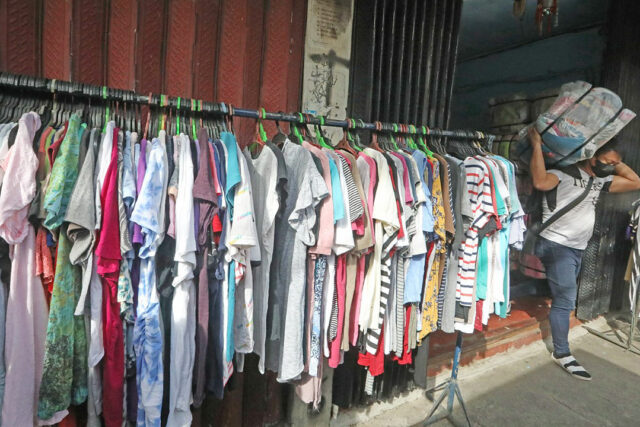
ANINA A. MIGUEL, 23, spends her weekends scouring secondhand clothing stores — “ukay-ukay” in the Filipino vernacular — for unique pieces you won’t find in your everyday retail stores.

Her obsession with thrift shopping began while growing up in Baguio City, widely considered as the thrift shopping capital of the Philippines.

“Thrift stores can be more inclusive compared with regular retail shops because they cater to a wide array of styles, sizes and budgets,” she told BusinessWorld. “They have one-of-a-kind pieces that make every trip feel like a treasure hunt.”

Reselling “pre-loved” clothing online has become more common amid a coronavirus pandemic, with some vintage items going for double their original retail price, Hazel T. Biana, a philosophy professor at De La Salle University, said in a 2020 study.

These pieces were being sold on online selling platforms such as Carousell and social media platforms like Facebook and Instagram.

“I get that there’s a target market for those items and platforms, but I would personally stick to going to thrift shops in person,” Ms. Miguel said.

While many global fashion brands and retailers struggled during the pandemic, consumers’ secondhand fashion consumption accelerated as an alternative to new clothing purchases, according to a March 2022 study by Naeun Lauren Kim and Terry Haekyung Kim, who did an online survey of South Koreans in 2021.

“Consumers are motivated to engage in secondhand fashion consumption for different reasons depending on the impact of the pandemic on their daily lives,” they said. “While cost-saving and social motivations were significant drivers for the high-impact group, the attitudes of the low-impact group were mainly influenced by sustainability and variety-seeking motivations.”

In August, Senator Rafael “Raffy” T. Tulfo proposed to legalize commercial imports of secondhand garments and tax small vendors in the process.

Commercially imported used clothing is outlawed in the Philippines and violators face a fine of as much as P200,000 and a jail term of up to five years. But even before the pandemic, ukay-ukay has been popular among Filipinos.

Senator Sherwin T. Gatchalian, who heads the Senate Ways and Means Committee, said lawmakers should review the law on used clothing.

“We cannot fault the retailers for selling used clothing because I don’t think they know it’s illegal,” he told a Senate committee hearing in August. “Many of the retailers pay business permits but they sell secondhand clothing.”

Shortly after, Albay Rep. Jose Ma. Clemente S. Salceda filed a bill seeking to legalize used clothing imports — an P18-billion industry, according to his estimates — allowing these to become formally part of the economy.

The global secondhand clothing market was estimated to be worth $71.23 million (P4.2 billion) this year and is expected to increase to $282.75 million by 2032, according to Future Market Insights.

FASHIONABLE
House Bill 3845 seeks to repeal the more than 50-year-old Republic Act 4653, which bans bringing secondhand clothing into the country to safeguard public health and the nation’s dignity.

In 2014, Cagayan de Oro Rep. Rufus B. Rodriguez and his brother, former Party-list Rep. Maximo B. Rodriguez, proposed a similar measure, saying the government could earn as much as P700 million by taxing imported used clothing.

The congressmen argued in their proposal that the used clothing industry has created jobs for many Filipinos.

Bienvenido S. Oplas, Jr., founder of free market think tank Minimal Government Thinkers, agrees with the proposal, saying all sectors should be taxed.

“If Congress must amend the tax law to include secondhand clothes, they should also amend the tax rate downward,” he said in a Viber message.  “The law applies equally to unequal people and sectors. No one is exempted.”

Access to secondhand clothing grew in Southeast Asia after World War II, mainly through donations from nongovernment groups, according to a 2015 study by anthropologist Lynne Milgram.

The United Nations donated a billion dollars in relief items to Asian countries after the war, she said.

Ging Antonio, who works as a saleslady at a secondhand clothing store at the Makati Cinema Square near the Philippine capital, fell on hard times during the global pandemic.

“Our business has been going sideways after pandemic lockdowns caused our operations to be on and off,” she told BusinessWorld in Filipino. The store still struggles to earn a steady income even in the absence of lockdowns, she said.

Jairus D. Espiritu, a philosophy lecturer at Mapua University, said thrift shopping for Filipinos could be seen as a resistance and an alternative to fast-fashion — inexpensive clothing produced rapidly by mass-market retailers in response to the latest trends.

“We can go around what is supposed to be a capitalist trap by enjoying its by-products instead of what is supposed to be its products,” he said in a Facebook Messenger chat.

Prominent clothing chains such as H&M and Zara use business models that rely on the speedy production of cheap clothing to meet the latest fashion trends, Hong Kong-based environmental group Earth.org said on its website.

The rapid turnover of pieces within these stores encourages customers to buy in large quantities and get rid of old clothing after a while, Ms. Biana said.

Filipinos are fascinated with shopping for secondhand clothes since it is embedded in their culture to avoid putting things to waste, Mr. Espiritu said.

“It doesn’t just imply waste but its pejorative connotation wants us to make the most out of what we have, and that includes secondhand clothes,” he pointed out.

Ms. Milgram said secondhand clothing appeals to a wide range of people regardless of social status.

“The meaning of secondhand clothing worldwide has shifted from its humble origin as an inexpensive functional product fulfilling the clothing needs of the poor to a useful yet fashionable commodity pursued across class and space,” she said.

“My decision to go to a thrift store really depends on my mood on a particular day,” said Ms. Miguel, the ukay-ukay shopper. “There are days when I go with a wish list in mind, but usually I prioritize the sale section to get more of my money’s worth.”

Breaking through in beauty

The Entrepreneur Of The Year Philippines 2022 has concluded its search for the country’s most undaunted and unstoppable entrepreneurs. Entrepreneur Of The Year Philippines is a program of the SGV Foundation, Inc., with the participation of co-presenters the Asian Institute of Management, the Department of Trade and Industry, the Philippine Business for Social Progress, and the Philippine Stock Exchange. BusinessWorld will feature each finalist for the Entrepreneur Of The Year Philippines 2022 in the next few weeks.

Jacqueline “Jacqe” Gutierrez
Co-founder and Chief Executive Officer
Beauty Refinery, Inc.

JACQUELINE “JACQE” GUTIERREZ thought she was destined to be a corporate employee. Now, she sees that corporate experience gave her invaluable insights that helped her as the co-founder and chief executive officer of BLK Cosmetics.

Ms. Gutierrez first worked as a management trainee in a global consumer goods company before moving to a permanent position in marketing. She eventually became the head of the company’s skincare division, handling several internationally renowned brands.

With an entrepreneur mother and corporate businessman father, she always imagined her life to be like her father’s — until she got married in 2012. She was based in Singapore while her husband was assigned to Myanmar, which meant the newlyweds would only see each other for a week out of every month.

The challenging work schedules led to her decision to start her own business, with her husband’s support. Her friend and eventual business partner, Erickson Farillas, who owned Plains and Prints and Ramen Nagi, also supported her, leading to her first full-time business: Happy Skin.

Ms. Gutierrez initially conceptualized Happy Skin as a premium Philippine cosmetic brand whose products also had skincare benefits. After four years, however, she realized that Happy Skin’s price point made it inaccessible to many Filipinos.

It was during this time that she met actress Anne Curtis. Ms. Curtis wanted to launch her own brand, and Ms. Gutierrez shared her goal of creating a wide-reaching and more accessible makeup brand. Together, they created BLK Cosmetics under Beauty Refinery, Inc. in 2017.

Ms. Gutierrez knew BLK must be available in Watsons to tap a broader market. She made sure that once Ms. Curtis officially announced BLK, the products were already available in 20 Watsons branches nationwide.

“Expansion was the name of the game. Next to having the right product at the right price. Distribution was key,” she said.

Her industry knowledge, Ms. Curtis’ high-level celebrity status, and the company’s operational strength paid off. In less than a year, BLK was awarded the Most Promising Brand in Watsons, among many others.

The company faced challenges, such as building a brand from scratch and convincing Filipinos to patronize a local cosmetic brand over international names.

BLK did this by purposefully communicating its quality and versatility through pioneering multi-use products such as tints that can be used for the eyes, cheeks, and lips; giving customers more value for money; and opportunities to apply makeup more creatively.

Then the coronavirus disease 2019 (COVID-19) pandemic hit. Despite having zero sales, Ms. Gutierrez insisted on launching new products as innovation is necessary to maintain consumer interest. She acknowledged the risk involved in launching new products amid the pandemic and had to make contingency plans.

BLK was the first brand to launch a new collection in April 2020, with an emotional campaign about the importance of feeling good while looking good. Avoiding talk about the pandemic, BLK focused instead on the importance of self-care and self-love.

The company’s collection was number one in sales in an online shopping platform during that month. BLK continued introducing products and remained a top seller in the two biggest online selling platforms even as stores reopened. While growing its online business, Ms. Gutierrez resumed making plans with Watsons in anticipation of post-pandemic recovery.

Ms. Gutierrez noted many customers and friends told her how using BLK cosmetics helped lift their mood during the pandemic. People still needed and wanted to feel beautiful even if they were just at home. She takes immense pride in how BLK products offered customers these moments of joy.

BLK partnered with nonprofit organization 1% for the Planet, particularly to support Waves for Water, which provides clean water through filter installations in underserved communities. BLK products are also recyclable, and offers lipstick refills to reduce waste.

Also, the company firmly believes in diversity and inclusivity, launching a unisex cosmetics line called BLK Universal. “Half of our users are men,” Ms. Gutierrez said.

Today, BLK is present in 13 boutiques and over 80 Watsons stores nationwide. BLK is consistently in the top five for cosmetics brands on the two biggest online platforms, and is ranked the 7th biggest brand in the cosmetics division for Watsons Beauty.

For her entrepreneurial vision, Ms. Gutierrez received the PCCI Injap Sia Young Entrepreneur Award in 2020, the Asia CEO Excellence Awards Circle of Excellence Young Leader of the Year in 2018, and the 12th Mansmith Young Market Masters Award for Entrepreneurial Marketing in 2017.

When asked about the future, Ms. Gutierrez said she wants to continue developing the makeup industry and expanding globally.

“BLK is already present in China,” she said. “We also have resellers all over the world — UK, Australia, and the US. Now that the pandemic is more under control, we’re already moving forward with plans to enter the online retail space in various Asian countries.”

Ms. Gutierrez is confident in the potential of the local cosmetics market. A homegrown brand like BLK that is competing successfully against international names creates value in the industry and proves the quality, ingenuity, and appeal of Filipino products, she added.

“The more people who enter the space with their own brands, the more customers we all reach,” she said. “If it’s a local brand, the more the merrier.”

Given BLK’s continuing growth despite market challenges, it’s clear that there’s nowhere to go but up for Filipino makeup.

The media sponsors of the Entrepreneur of the Year Philippines 2022 are BusinessWorld and the ABS-CBN News Channel. Gold Sponsors are SteelAsia Manufacturing Corp., Uratex, and Navegar. Silver Sponsors are Intellicare, OneWorld Alliance Logistics Corp., and Regan Industrial Sales, Inc. Banquet Sponsors are Uratex and MerryMart Consumer Corp.

The winners of the Entrepreneur Of The Year Philippines 2022 will be announced on Nov. 21 in an awards banquet at the Grand Hyatt Manila. The Entrepreneur Of The Year Philippines will represent the country in the World Entrepreneur Of The Year 2023 in Monte Carlo, Monaco in June 2023. The Entrepreneur Of The Year program is produced globally by Ernst & Young (EY).

San Miguel’s beer unit posts 15% profit increase to P16B

SAN MIGUEL Corp. (SMC) said on Sunday that its beer business recorded a 15% increase in net income to P16.2 billion for the nine months to September due to the easing of mobility restrictions and reopening of its local and foreign markets.

“With our economy back in full swing and our major markets reopened, we’re even more upbeat and positive about our full-year prospects, heading into the holidays,” SMC President and Chief Executive Officer Ramon S. Ang said in a press release.

The listed conglomerate did not disclose the beer unit’s financial performance specifically for the third quarter.

For the nine-month period, consolidated revenues for San Miguel Brewery, Inc. (SMB) went up by 21% to P99 billion, which the company attributed to higher domestic and international sales volumes.

The company’s operating income reached P22.2 billion, higher by 22% than the recorded level in the same nine-month period in 2021.

Locally, the company said that it had “robust” results as eased restrictions prompted the reopening of its on-premise outlets.

“This was supported by effective volume-generating efforts and marketing programs across traditional and modern trade channels executed by the San Miguel Pale Pilsen, Red Horse Beer, and San Mig Light brands, among others,” the company said.

Total domestic revenues climbed by 19% to P88.4 billion versus last year. Operating income amounted to P20.3 billion, 20% higher than the level recorded a year ago.

SMB said that its international operations sustained its performance as of September on volume gains despite some of its markets remaining under pandemic restrictions.

The company cited “consistent volume gains” in its Thailand, Indonesia, and export operations.

San Miguel Food and Beverage, Inc. operates its beverage business through SMB and Ginebra San Miguel, Inc.

SMB subsidiaries include Iconic Beverages, Inc.; Brewery Properties Inc.; San Miguel Brewing International Ltd.; San Miguel Brewery Hong Kong Ltd.; San Miguel (Baoding) Brewery Co., Ltd.; San Miguel Beer (Thailand) Ltd. and San Miguel Marketing (Thailand) Ltd.; and PT. Delta Djakarta Tbk. — Justine Irish D. Tabile

‘Good chance’ for Voyager to be profitable by 2024

PLDT, Inc. Chairman Manuel V. Pangilinan said the group remains hopeful that Voyager Innovations, Inc. will turn a profit by 2024.

“I think there’s a good chance that they can cover their EBITDA (earnings before interest, taxes, depreciation, and amortization) where the full P&L (profit and loss statement) will be positive,” Mr. Pangilinan said in a chance interview last week.

PLDT group’s telco core income, excluding the impact of asset sales and Voyager Innovations, grew 10% to P25.4 billion as of September this year.

Through Voyager Innovation’s financial services and digital payments company Maya, the group is “spearheading the growth of the Philippine digital ecosystem,” Mr. Pangilinan said during a briefing.

According to Maya, it registered “record-breaking growth” with one million bank customers and over P10 billion in deposit balances, just five months after its launch in April this year.

The application integrates the features of an e-wallet, savings, credit, and crypto in one platform.

“Maya continues to be the leading payment processor for enterprises through Maya Business, with over 810,000 registered merchant touchpoints nationwide as of end-September 2022,” PLDT said in a statement.

According to Mr. Pangilinan, Maya’s growth validates the preference of Filipino consumers for an all-in-one digital banking and payments experience.

“In parallel with government initiatives such as the National ID and SIM registration, we are propelling the digital adoption of financial services like payments, savings, and credit. Our goal is to bring these services to more people, especially those who need them most,” he said.

Hastings Holdings, Inc., a unit of PLDT Beneficial Trust Fund subsidiary MediaQuest Holdings, Inc., has a majority stake in BusinessWorld through the Philippine Star Group, which it controls. — Arjay L. Balinbin

Hai, Japan’s now open

After what seemed like an eternity, Japan now takes in visitors — even those not opting for package tours. — PHOTO BY KAP MACEDA AGUILA

‘Revenge travelers’ are welcome, and it’s largely still the country you know and love

GINZA, JAPAN. A Mercedes-Maybach S-Class gently pulls up to the curb and an elderly man toting a simple reusable bag alights after his uniformed driver opens the rear door for him. Clad in a non-descript, almost drab-colored sweater, the man disappears into the bowels of a multi-brand watch shop. The rest of us are left shivering in a queue for a hard-to-secure (in Manila, at least) watch. “He’s probably going to buy something very expensive,” I whisper to my wife, who faintly nods in assent.

Truly, one of the happy consequences of the pandemic has been an uptick (ha-ha) of interest in old-school wristwatches — outside of ubiquitous smartwatch/activity trackers which had previously dominated that patch of human real estate. Cooped up at home and bereft of the joys and expenses of travel, many of us turned to all sorts of toys, watches among them. That doesn’t mean that we’ve forgotten our love for traveling; it’s just that we’ve learned to channel our passion elsewhere while being sheltered in place.

And now that the world has started to open up, we’re seeing the rise of so-called “revenge travel.” Indeed, judging from Facebook alone, a lot of people took the chance to pack their bags and go on vacation, whether here or abroad. My wife and I were among the latter — venturing out to Japan, which just fairly recently reopened its borders to the world. We were last there in 2019, primarily for the biennial Tokyo Motor Show, (she met me in the city, and I extended my trip so we could go out for ramen and more).

Traveling in the “next normal” is not exactly a shock to the system, but I guess you can put up with more things just to savor what has been denied you for the longest time.

Please indulge me with this piece which I hope will turn out to be useful for anyone wondering how it is like to travel to Japan these days — or travel out of the country, period.

First off, what do you need before you even board that plane bound for Japan?

Make sure you have a visa, of course. Or if you have one, that it’s still valid. There’s no timeout to account for the pandemic; that multiple visa kept ticking while you weren’t looking, and had your passport locked away.

My visa was thankfully still valid; my wife had to renew hers. We used a travel agency for the job, and it took six days for us to hear back from them. That accomplished, it was time to get to the other musts. There are a handful of pandemic changes that pad your list of to-dos. First, download and accomplish the MySOS app. This allows Japanese officials to vet you as a visitor. The most notable thing about this app is that it asks you to upload your vaccination details. If you don’t satisfy the vaccination requirements, you’ll be asked to upload a negative COVID test result (taken less than 72 hours before your flight).

After completion of the requirements, the app will tell you that your information is being reviewed. The app should turn to blue if everything is up to snuff. If there’s a problem with your application, it will be red. But that doesn’t mean you can’t enter Japan. Visitors with a red-hued app will be shepherded into a separate area where their credentials and vaccination status will be examined. So, it’s best to bring your actual vaccination certificate. You’ll be handed a pink piece of paper which means you’re cleared to proceed to the immigration officer.

The first thing we noticed about traveling to Japan is that Philippine Airlines now uses a smaller plane from the usual. I guess the carrier is on a wait-and-see mode on the volume of travelers. Our flight last week to Haneda was full; the flight back to Manila was not.

Those of you whose memories of Japan involve throngs of tourists everywhere will be surprised. Although the couple of days close to Halloween saw a surge in people; we suspected they were largely comprised of local travelers going to traditional convergence points such as Shibuya.

Outside of these days, many of the locals obviously went to work, and we saw some smaller groups of foreign tourists — among them some Filipinos, of course. But not once did we spy groups arriving in rented buses.

The onset of autumn in Japan brought a change in color in some of the trees, which had begun to flaunt their leaves in red, yellow, and orange.

A day after Korea’s tragic crowd crush incident in which more than 150 Halloween revelers perished in Itaewon, the police were in full force in Shibuya, the country’s (and the world’s) most famous pedestrian crossing. The police were on the bullhorn and public address system — ostensibly to keep people moving and to warn them against congregating in greater numbers. That was perhaps the greatest damper on an otherwise almost-back-to-normal Shibuya (at least as far as warm bodies were concerned).

We noted with not a bit of relief that many of our favorite shops and restaurants were still open (though quite a few establishments in Haneda airport’s pre-departure area had been shuttered), but now equipped with infrared thermometers and alcohol dispensers at the entrance, and as well as plastic dividers in some dining places. Mask compliance is pretty good — comparable to the Philippines, actually. All of the restrooms that we visited also had their hand dryers off ostensibly to help curb the spread of the virus.

Rarely did the highly efficient trains here get uncomfortably crowded, and people were masked up. The common practice of keeping quiet while aboard the train also appeared to be alive and well, save for a handful of noisy foreign tourists.

All said, while COVID has certainly done some forceful renovations here and there, the Japan you remember awaits you. The food is still excellent, and the people are mostly still patient and accommodating to people like us who occasionally get blissfully lost and don’t remember which platform to get on.

So, what are you waiting for?

Feeling good while  looking good

MIRAGE CORLEE TERRA COTA

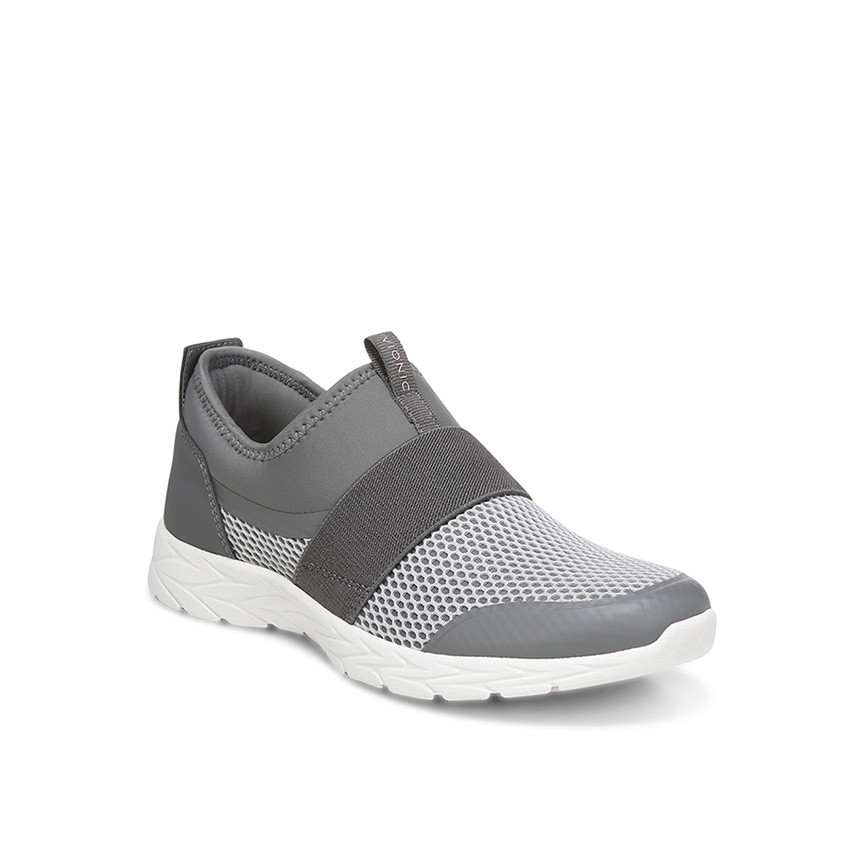
IS it better to look good than to feel good? A shoe brand makes a case for having it both ways.

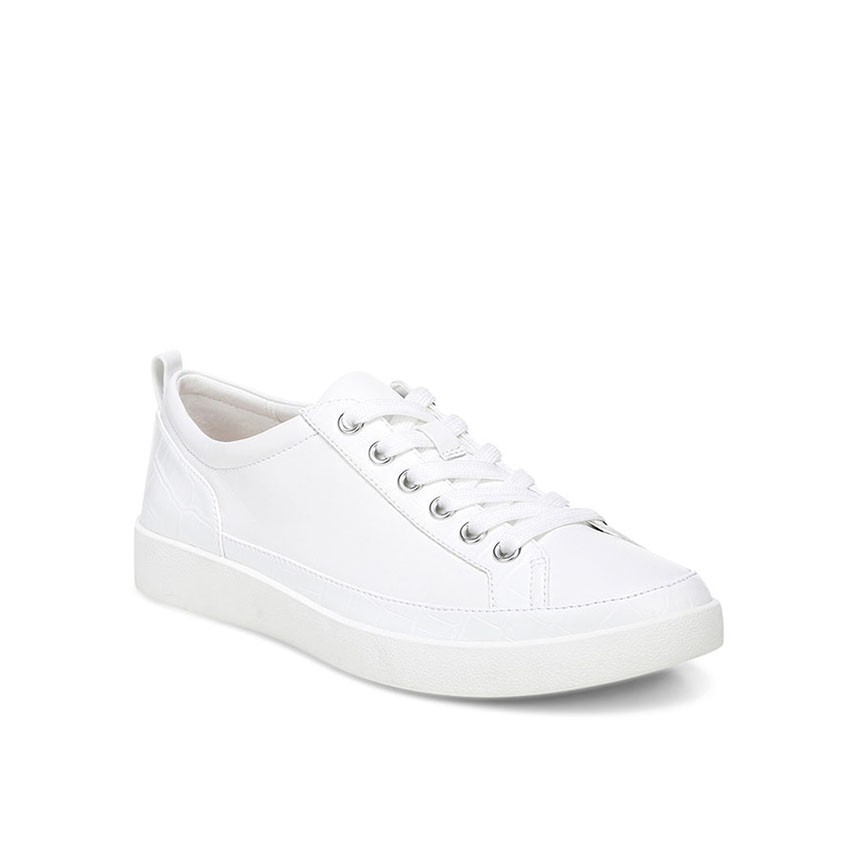
On Oct. 20, Vionic held a foot-pampering day at a BGC spa and made the ladies present pick a pair of Vionic shoes. The pairs come built in with orthotic supports, which are claimed to prevent future foot pain. This is based on a peer-reviewed clinical study partially funded by Vionic on people experiencing moderate, non-traumatic heel pain.

“Vionic contoured sandals were shown to be comparable in effectiveness to Vionic Insoles (Orthotics),” says the brand’s website. A number of Vionic products carry the American Podiatric Medical Association Seal of Acceptance.

The brand was founded in 1979 by the late Sydney podiatrist Phillip Vasyli. In 2018, footwear company Caleres acquired the company. Caleres owns Famous Footwear, Naturalizer, and Dr. Scholl’s, among others.

In the Philippines, Vionic is distributed by Easy Street Footwear Corp. The company also distributes Hush Puppies, Sebago, KSwiss, Palladium, and G.H. Bass.

“No other footwear offers orthotic support plus the style. It’s either you have good orthotic support, but the shoes don’t look good [or vice versa],” said Easy Street Footwear President Gifford Chu in an interview with BusinessWorld.

The shoes come with a heel cup, an arch support, and cushioning. “The designer explained that they have to build the shoe from the ground up,” he said.

Why is offering style and comfort so important? Mr. Chu thought hard. “It’s a philosophical question. Why do people want to look good? It used to be taken for granted that if you wear something that’s medical, it looks like it came from a clinic or a hospital. There’s an unmet need. People who want the support and the comfort also want to look good,” he said.

“We’d assume the grandmas would be happy wearing frumpy comfortable shoes. That’s not the case. As our market ages… the way we dress also gets mature. Old people now are more stylish than they were [in the past].”

Mr. Chu says that they distribute their shoes through 15 stores and kiosks and plan to open four more next year. These are dotted around the city, but also from north to south in the country, from Baguio to Davao. Asked about this optimism, he said about his customers, “They come back. They don’t return it,” he said, joking that they even offer a 30-day return policy, but no one seemed to take it. “The proof of the pudding is in the eating. They come back; they buy a second pair.”

His brother, Easy Street Footwear Managing Director Gilson Chu, does not offer medical claims, though citing the study by Vionic says, “It alleviates heel pain. That’s the only claim we can make.”

Gifford Chu, however, told us that at that very moment, he was wearing Vionic orthotic inserts in his shoes. “I know that I’m going to stand for more than an hour, so I’m wearing Vionic now,” he said.

“Right now, I feel better than if I wore my soft sneakers.” — JL Garcia

URC’s food business seen to sustain its growth on seasonal consumer spending

ANALYSTS expect the food business of Universal Robina Corp. (URC) to further pick up in the last quarter of the year as they await higher consumer spending due to seasonal demand.

“In the remaining months of the year, we see URC’s business segments to continue flourishing amid the Christmastide as consumers will open up their wallets for the holiday shopping spree,” Regina Capital Development Corp. Head of Sales Luis A. Limlingan said in a Viber message.

Separately, Rizal Commercial Banking Corp. Chief Economist Michael L. Ricafort said “the typical peak in sales for many businesses is in the fourth quarter, especially during the holiday season towards the end of the year.”

“So, overall business [is expected] to further improve as there are no more lockdowns so far in 2022,” he added.

Their comments come after URC on Friday released its third-quarter financial report. Recovery of consumer spending and strategic cost-cutting measures have boosted URC’s sales, according to analysts.

“URC’s third-quarter results beat consensus estimates. Sales were strong as consumer spending patterns normalized,” AB Capital Securities, Inc. Vice-President Jovis A. Vistan said in a Viber message.

He added: “Profits were also strong as sales growth was accompanied by saving measures.”

Mr. Limlingan said “the food manufacturer logged impressive earnings in the third quarter and was well above our estimates.”

“The robust growth in its sales was mainly driven by the upbeat performance of its branded consumer foods business line, and the firm’s management was able to weather the storm by their strategic cost adjustments as well as its cost-cutting measures,” Mr. Limlingan said.

Mr. Ricafort noted that more consumers have better incomes or livelihoods compared with a year or two years ago — factors which he said support “the further pickup in consumer spending, which accounts for nearly 70% of the economy.”

In the third quarter, URC’s attributable income amounted to P3.15 billion, up by 27.4% from P2.47 billion in the same period last year.

Its topline grew by 31.7% to P36.77 billion in the third quarter from the P27.92 billion recorded in the same period in 2021.

URC manufactures and distributes branded consumer foods. It is also into hogs and poultry production, animal feeds and veterinary products, flour milling, and sugar milling and refining.

On Friday, its shares jumped by 5.68% or P6.80 to close at P126.60 apiece. — Justine Irish D. Tabile