Home Blog Page 56

Lorenzo Shipping Corp. hikes authorized capital stock to P2B

LORENZOSHIPPING.COM

LORENZO SHIPPING CORP. said it has received approval from the Securities and Exchange Commission (SEC) to increase its authorized capital stock to P2 billion.

In a disclosure to the stock exchange on Thursday, the company said the SEC approved its application to raise its authorized capital stock from P991.18 million, divided into 991.18 million common shares with a par value of P1 each, to two billion common shares with a par value of P1 each.

It added that 252.2 million common shares with a par value of P1 each, or a total of P252.2 million, have been subscribed by National Marine Corp. (NMC) Of this amount, P211.82 million has been paid.

“The transaction pertains to the subscription of NMC to the increase in authorized capital stock of the Company, subject to the approval of the Securities and Exchange Commission to the increase,” it said.

The company said proceeds from the subscription will be used to settle obligations to port operators, dry-docking shipyards, vessel and container repair service providers, suppliers of vessel parts and maintenance materials, trucking companies, container yard rentals, voyage service fees, vessel insurance premiums, and redundancy pay for employees.

The remaining balance will fund vessel repairs, payments to shipyards, port operators, and trucking service providers.

Lorenzo Shipping, established in 1972 to handle domestic inter-island cargo, shifted from break-bulk to containerized shipping.

It operates a fleet serving major ports in the Philippines and manages equipment, container yards, and warehouses. — Ashley Erika O. Jose

BSP’s market operations mop up P1.2T in liquidity

THE BANGKO SENTRAL ng Pilipinas (BSP) has mopped up over P1 trillion in excess money supply from the market through its monetary operations as of early this year, a report showed.

In its February 2026 Monetary Policy Report, the central bank said its monetary operations have absorbed P1.2 trillion in liquidity as of Feb. 11.

“The BSP’s monetary operations effectively kept the overnight reverse repurchase rate aligned with the target reverse repurchase rate,” the BSP said.

The central bank uses facilities such as the overnight reverse repurchase (RRP) facility, term deposit facility (TDF) and BSP securities to siphon off excess liquidity from the financial system and better guide market rates towards its policy rate.

Based on BSP data, its overnight RRP facility absorbed most of the market’s liquidity at 44.4% of the total. This was followed by the BSP bills with 28.5%, overnight deposit facility with 18.2%, and the TDF with 9%.

On Monday, the weighted average interest rate (WAIR) for the 28-day BSP bills climbed to 4.4856% from 4.4464% on March 13. Meanwhile, the seven-day term deposits posted a 4.2308% WAIR on Wednesday, down from 4.2331% a week ago.

The central bank has not auctioned off the 14-day TDF and the 56-day BSP bills since November last year. It is now only offering a single tenor for each facility, namely, the one-week paper for the TDF and the one-month security for the BSP bills.

“Beginning November 3, 2025, the BSP shifted to a single-tenor offering for its term facilities to rationalize liquidity operations and concentrate on tenors that would enhance monetary policy transmission, retaining the 7-day TDF and 28-day BSP bill,” the BSP said in its report.

BSP Deputy Governor Zeno Ronald R. Abenoja earlier told BusinessWorld that the central bank initially decided to limit its monetary operations amid the anticipated high demand for liquidity during the holiday season.

The central bank also noted that interest rates in the overnight RRP facility and TDF have  already reflected 200 basis points (bps) out of the 225 bps in cuts delivered since its easing cycle started in August 2024.

The Monetary Board last slashed benchmark borrowing costs by 25 bps for a sixth straight time at its Feb. 19 policy review, bringing the policy rate to 4.25%, the lowest in over three years. It likewise lowered the rates on the overnight deposit and lending facilities by 25 bps each to 3.75% and 4.75%, respectively.

BSP Governor Eli M. Remolona, Jr. has said that policy rate adjustments typically take one-and-a-half to two years to make their way through the financial system. — Katherine K. Chan

Colbert to co‑write new Lord of the Rings film after late-night show ends

STEPHEN COLBERT (bottom) joins Peter Jackson to announce his involvement in a new Lord of the Rings movie. — SCREENGRAB FROM THE WARNER BROS YOUTUBE CHANNEL

LOS ANGELES — Stephen Colbert is heading to Middle‑earth.

The comedian announced in a video posted on Tuesday that following the end of his 11‑year run as host of CBS’s The Late Show in May, he will co‑write and develop a new film in the Lord of the Rings franchise.

It marks a new chapter for Mr. Colbert, a noted devotee of J.R.R. Tolkien’s fictional world of Middle-earth. Mr. Colbert appears in the video alongside Peter Jackson, the New Zealand-born filmmaker who directed the original Lord of the Rings trilogy that was a critical and commercial smash.

The film’s current working title is Lord of the Rings: Shadow of the Past, according to a press release. A director has not been announced.

“I’m pretty happy about it,” Mr. Colbert says to Mr. Jackson in the clip. “You know what the books mean to me and what your films mean to me.”

Mr. Colbert will develop the film with his son, screenwriter Peter McGee, and Philippa Boyens, one of the original trilogy’s screenwriters.

The project will be the second of two upcoming Lord of the Rings films currently in development at Warner Bros. Discovery and New Line Cinema. The first, The Lord of the Rings: The Hunt for Gollum, is currently in pre-production.

Mr. Tolkein’s epic fantasy was published in three parts in 1954 and 1955 in the UK. It remains one of fantasy’s most popular stories and one of the best-selling novels ever written.

Mr. Jackson’s trilogy grossed more than $2.9 billion worldwide and 2003’s third installment, The Lord of the Rings: The Return of the King, won numerous accolades, including the Academy Award for best picture. He followed a decade later with a trilogy of prequels based on Mr. Tolkien’s 1937 novel, The Hobbit.

CBS announced in July 2025 that it would cancel the Emmy‑winning The Late Show with Stephen Colbert, the most-watched late-night program on US broadcast television and a frequent platform for satire aimed at President Donald Trump, who has criticized the network and other late-night hosts for their humor targeting him.

On Feb. 27, Paramount Skydance, the parent of CBS, signed a $110-billion deal to buy Warner Bros Discovery that will bring together numerous studio assets and Warner Bros.’ library of film franchises including Harry Potter, Lord of the Rings and Superman. — Reuters

Credit scores: From trade ledgers to consumers’ financial power

Benzoix | FREEPIK

While debt is still widely considered as a negative in the country, recent data shows that Filipinos are slowly warming up to the idea of credit cards and increasing their credit scores. According to the data analytics firm GlobalData’s Payment Cards Analytics, total card payment value in the Philippines rose by 18.8% to reach P4.2 trillion in 2025 from P3.5 trillion in 2024. Additionally, reports from the Credit Card Association of the Philippines reveal that there are over 18 million outstanding credit cards as of the fourth quarter of 2025.

For these nearly 20 million Filipinos, one statistic that accompanies them in their credit card journey is their credit score. Understanding the concept of the credit score may seem complicated at the onset. However, at its core, a credit score is simply a reflection of the user’s financial behavior.

These three-digit numbers are usually based on the credit card owner’s credit report. These reports are summaries of one’s financial transactions submitted to the Credit Information Corp. (CIC), containing an individual’s basic information as well as their loan contracts with lending institutions, utility subscriptions, and other obligations which the CIC is authorized to collect.

Derived from these reports is one’s credit score, which is calculated by accredited credit bureaus that receive data from the CIC. These bureaus use proprietary scoring models, which vary depending on the bureau, to analyze an individual’s financial behavior and then generate a three-digit score that represents overall creditworthiness.

To better understand how today’s credit score came to be, it is important to look back at the origins of credit evaluation itself. Long before algorithms and centralized databases, systems of assessing creditworthiness were far more manual, subjective, and rooted in commercial trade.

Before there was credit scoring, there was commercial credit reporting. The commercial reports were calculated and worked similarly to how modern-day credit reports work, with the only difference being that they focused on evaluating businesses rather than individual consumers.

Mercantile agencies, or what used to be credit bureaus, relied on correspondents to gather detailed, and often subjective, information about borrowers, which was then compiled into centralized records that were then utilized as the basis for commercial reports.

Over time, as mass retail and installment-based purchasing grew in the late 19th century, the need to evaluate individual consumers led to the rise of consumer credit reporting. From these early, decentralized and subjective practices, the system gradually evolved into the more standardized and data-driven credit bureaus we recognize today.

Likewise, the shift toward modern credit scoring accelerated in the 1960s, when credit reporting became computerized, and thousands of local bureaus began consolidating into a few major players. Much like most industries since the invention of the computer, records moved from paper files to digital systems, and data became easier to standardize, share, and analyze at scale.

While lenders were initially hesitant to replace subjective evaluations, the introduction of standardized scoring models helped transform credit assessment into a more consistent and widely adopted system. By the 1990s, trusted institutions began requiring these scores for mortgage applications, and ever since, credit scoring has become a necessity for credit card owners in financial decision-making.

In the Philippines today, credit bureaus calculate credit scores based on five distinct criteria: credit payment history, the amount owed or credit utilization ratio, length of credit history, types of credit used, and new credit. These factors impact the scores in their own ways but collectively dictate one’s creditworthiness in the eyes of financial institutions.

Credit payment history is often considered the most influential factor. It reflects how consistently a borrower meets their payment obligations, whether it be paying bills on time, how frequently they pay their amount due, or even missed or delayed payments. In simple terms, it is a track record of payments that signals reliability or unreliability.

The amount owed, commonly referred to as the credit utilization ratio, measures how much of a person’s available credit is being used. Keeping utilization at a manageable level shows that a borrower is using credit responsibly without overextending.

The length of credit history includes the age of the oldest account, the newest account, and the average age across all accounts. This criterion can provide more data for lenders to assess behavior, often resulting in a more thorough evaluation.

Types of credit used, or credit mix, considers the variety of financial products a borrower has handled and demonstrates financial flexibility and discipline, which can positively impact a score.

Finally, new credit reflects how frequently a person applies for or opens new credit accounts. While taking on new credit is not inherently negative, multiple applications within a short period may signal higher risk to lenders.

As credit becomes more embedded in everyday financial life, understanding how credit scores work empowers Filipinos to make smarter, more informed decisions about borrowing and spending. Ultimately, knowing what credit scores are is one step closer to a tool that, when managed well, can open doors to greater financial opportunities and stability. — Jomarc Angelo M. Corpuz

Progenies of Dissonance

STOCK PHOTO | Image by Macrovector from Freepik

There is no doubt that what has come to fore in the wake of this crisis are the persistent structural weaknesses of our economy: the heavy dependence of our transport and power systems on fuel importation, and the dissonance embedded in the legal and regulatory frameworks governing these energy downstream industries. Time and again we have seen how these weaknesses can translate to policies that promise short-term relief but have adverse long-term consequences, some unintended for sure, borne by the small consumers who are precisely those whom these policies intend to protect.

SPOT MARKET SUSPENSION
As this article is being finalized, the Energy Regulatory Commission (ERC) has just ordered the immediate suspension of operation of the electricity spot market as of 0005H on March 26, “in recognition [of] the potential impacts of limitation in fuel supply and price increase to the energy prices.” The suspension, according to the ERC, “shall remain in effect until the recommendation of the [Department of Energy (DoE)] to the Commission.”

The suspension itself raised some questions which, hopefully, the ERC will get to address during the scheduled public consultations on the draft Resolution setting the pricing methodology that will govern the suspension period:

a.) Does Executive Order No. 110 issued by the President declaring a State of National Energy Emergency authorize suspension of spot market operations? If so, can market suspension take effect prior to the issuance of the rules governing such suspension?

b.) Were there already increases in spot market prices over the last few days or weeks that merit the suspension?

c.) Are these price increases determined to result from fuel shortages on the part of fossil fuel-powered generation facilities? If they are not (considering reports from generators that they still have sufficient fuel) and the recorded price increases are deemed unreasonable, should there not be an investigation for anti-competitive behavior or abuse of market power instead of a suspension of the market?

d.) If there are no price increases recorded yet or if there is no shortage of fuel (as reported also by the DoE in recent news reports), can market operations be suspended as an anticipatory measure, before any such shortage or price increases are recorded? And if so, how long will such anticipatory suspension last?

e.) Finally, considering that only around 20% of supply to consumers is priced based on the market, with around 80% priced under bilateral contracts or power supply agreements (PSAs) which are settled outside of the market, how will the suspension cushion the impact of increased fuel costs on consumers, particularly if the PSAs have fuel pass-through components?

BUILT-IN STRESS IN OUR SYSTEMS AND POLICIES
This last question, to my mind, is the most critical one if we are truly to find solutions that will give effective relief to consumers. There is no question about the noble intention behind the issuance: what I think the situation illustrates quite clearly is the complexity in governance that we have seen over the last few decades. Whenever the economic system is tested mainly by stress coming from global markets, we witness the strain and the conflict brought about by policies that appear to want to have its cake and eat it, too.

On one hand, the Government (over several Administrations) has benefited from the policy of deregulation (as the twin of privatization) in the form of reduced administrative and financial burdens of providing certain public goods and services, such as power and public transport. On the other hand, it also needs to perennially confront the political costs of having transferred fully the financial burden of paying for these goods and services on the shoulders of the consumers. And so here we are, living in this chasm growing bigger and deeper with the strain between a deregulated supply market and a tariff-regulated service segment.

DEREGULATION IN THE FUEL SECTOR
In 1998, the Philippines passed Republic Act No. 8479 or the Downstream Oil Industry Deregulation Act. It was enacted to address the strain on public funds created by the subsidy program through the Oil Price Stabilization Fund by liberalizing the downstream oil industry, providing for incentives for new players to come in and deregulating the retail price of petroleum products. It also gave the DoE additional powers to realize and enforce safeguards to promote and protect fair competition in the industry as the law prohibits cartelization and predatory pricing, among others.

Over the years, we have seen an increase in the number of players in the industry. According to a study published by the Philippine Competition Commission (PCC) in 2021, the new players in industry accounted for 43% of the total product market as of 2019, while the three major players held 50.6% market share. The study found that the industry “has indeed become less concentrated,” as per preliminary screening, in most areas in the country. As to pricing, however, the study noted that “[t]he ‘synchronized’ weekly price adjustment… acts as a coordination mechanism for changing prices. The synchronized part (most if not all players notifying on Monday) of the current practice should be benign… Since the industry has been deregulated, the oil companies have been free to set their price. If they have been following the price adjustment above, it is not because the government has been imposing on them. It is conceivable that a firm may be tempted to take market share from the others by pricing below the price resulting from the formula or adjustment mechanism. Nevertheless, it may still not do so for fear of provoking retaliation from the rival and starting a price war. Since firms can predict the (common) price adjustment following the formula, it might be tempting for a firm to follow that price, rather than risk a price war.”

Apart from the issues in pricing identified in the 2021 PCC study, the common pricing practice still prevalent among oil industry players today also indicates that the competition among retail players may not solve the underlying issue of lack of or limited product sources globally. While there could be an increased number of players who sell domestically, if they procure supply from the same sources, there is a high likelihood that they will be selling at the same or similar price.

More importantly, what the deregulation policy has failed to address is the fact that tariffs or fares in the public transport sector — for jeepney drivers, taxi drivers, bus drivers or operators — remain regulated. Government approval for any tariff adjustment is needed and can only be issued after the conduct of notice and hearing, in the exercise of the rate-making function of the regulatory agency. Thus, every time there are increases in pump prices for petroleum products, the public sector is expected to bear the cost of such increases, under the theory that it can also keep the gains should there be any reduction in price, until the passenger tariffs or rates are adjusted accordingly. When the weight of this burden becomes too much to bear and public sentiment turns for the worse, Government goes back to where it started, that is, providing subsidies, when this was in fact the practice that has proved unsustainable and prompted the adoption of deregulation in the first place.

DEREGULATION IN THE POWER SECTOR
Almost 25 years ago, Congress passed Republic Act No. 9136 or the EPIRA (Electric Power Industry Reform Act), adopting the policies of privatization in the power industry and the deregulation of the generation and supply sectors. While there were less than 50 generation companies prior to EPIRA, mostly contracted as independent power producers (IPPs) selling directly to the National Power Corp., this number has more than doubled over the last 20 years and has significantly increased with the number of new players in the renewable energy (RE) space. Based on the ERC’s records, however, as of 2025, there are only five dominant players controlling, cumulatively, around 65% of the generation sector.

Despite the adoption of Retail Competition and Open Access (RCOA) and the licensing of more than 20 retail electricity suppliers (RES) nationwide, more than 70% of the demand remains “captive,” that is, supplied by their respective distribution utilities (DUs) and mainly from bilateral PSAs with prices approved by the ERC. With the onset of increased RE adoption, primarily from rooftop solar home or commercial/industrial (C&I) installations, and direct contracting through RES via the RCOA and Retail Aggregation Program or the Green Energy Option Program, more consumers are expected to migrate from the captive to the contestable market, thereby being liberated, so to speak, from regulation.

Until such time, however, that we get to the tipping point of such migration to contestability, consumers and generation companies are also caught in the same realm of dissonance that prevails in the transport sector. In the power sector, however, the dynamics can be a bit different considering the long-term nature of PSAs and the pass-through fuel price provisions of coal, diesel, and natural gas-fueled contracts which shield the DUs and the generators from pricing risks. While the financial strain of fuel price increases in the public transport sector is borne by the jeepney drivers, taxi drivers, and bus operators, such strain in the power sector is borne directly by consumers (including the same jeepney drivers, taxi drivers, and bus operators).


Monalisa C. Dimalanta is a senior partner at Puyat Jacinto & Santos Law (PJS Law). She was the chairperson and CEO of the Energy Regulatory Commission from 2022 to 2025, and chairperson of the National Renewable Energy Board from 2019 to 2021.


ATI secures PSE approval for April 3 delisting

ASIANTERMINALS.COM.PH

LISTED PORT OPERATOR Asian Terminals, Inc. (ATI) said it has secured approval from the Philippine Stock Exchange (PSE) to delist from the local bourse on April 3.

In a media release on Thursday, ATI said it received notice from the PSE approving its petition for voluntary delisting.

The approval followed the completion of a tender offer and the subsequent share crossing of tendered shares conducted jointly with Maharlika Investment Corp. (MIC).

ATI and MIC, as proponents of the tender offer, acquired at least 95% of ATI’s outstanding shares, in line with the PSE’s ownership requirement for voluntary delisting.

The company’s public shareholding has fallen below the minimum public float required under PSE rules. Trading of ATI shares has also been suspended as part of the process.

“With MIC’s participation, ATI is poised to embark on a new chapter of sustained growth as it further expands its role in facilitating efficient and sustainable trade in support of industries, communities, and the broader Philippine economy,” ATI said.

ATI said port and terminal operations will continue without changes.

Last week, MIC said it completed the acquisition of shares in ATI from Seawood Resources, Inc., Kayak Holdings, Inc., and Asiasec Equities, Inc., among others.

The tender offer resulted in the acquisition of 177.61 million ATI common shares, of which 101.19 million were allocated to MIC and 76.42 million to ATI under its share buyback program.

ATI operates several terminals in the country, including the Manila South Harbor, the Port of Batangas, Batangas Container Terminal, and off-dock yards in Sta. Mesa, Manila, and Calamba, Laguna. — Ashley Erika O. Jose

New research paper charts path toward smaller Fed balance sheet

REUTERS

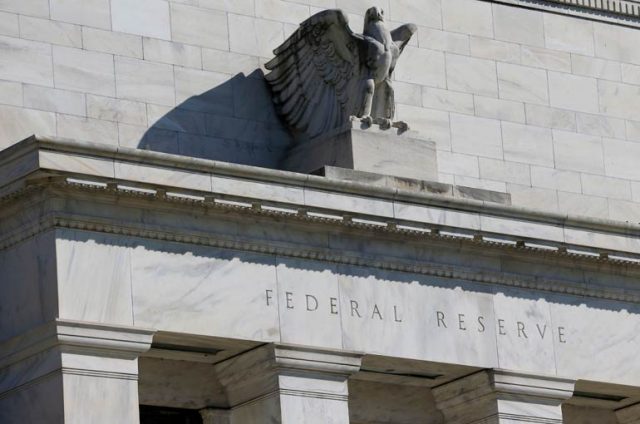
IF THE US Federal Reserve truly wants a smaller balance sheet, it can get there with regulatory changes, tweaks to the payment system and more frequent market interventions by the ​central bank, new research published by the Brookings Institution said on Wednesday.

In a paper written by Darrell Duffie, professor of management and professor of finance at the Stanford University Graduate School of Business, the academic sketched out a complex path that would take some time to achieve. Mr. Duffie wrote that the key focus of any move to reduce the overall size of the Fed balance sheet comes down to reducing the market’s still very strong appetite for reserves.

To temper that appetite, Mr. Duffie wrote liquidity rules could be relaxed ​to make financial firms more comfortable with keeping less liquidity on hand. The central bank’s Fedwire payment system could be changed to more closely ​link firms’ incoming and outgoing payments, further reducing the need to keep excess cash on hand.

The Fed could also change the rate it pays to financial firms and lower it for reserves beyond a given level. And finally, the Fed could use temporary liquidity injections, called temporary open market ​operations, more frequently, as opposed to the current system that puts that type of liquidity management largely on autopilot.

“I’m not taking a stand on whether the Fed should ​reduce its balance sheet,” Duffie told reporters in a virtual meeting. “That’s a big cost-benefit analysis that I’m leaving up to the Fed.”

But he noted “the benefits of a large balance sheet are quite tangible” and having a system flush with liquidity brings financial stability benefits and has worked well for the Fed’s monetary policy mission.

“The costs are more intangible and sometimes verge into politics,” as some worry about how large Fed holdings can affect Fed independence, among other concerns, Mr. Duffie said.

REGIME CHANGE
Mr. Duffie’s work to map out a path toward smaller Fed holdings ​comes as Kevin Warsh, a staunch critic of a large Fed balance sheet, has been tapped to succeed current Fed Chair Jerome H. Powell when his leadership term ends in May. Treasury Secretary Scott Bessent has also been critical of a large Fed footprint in asset markets.

Big Fed holdings are the product of economic crisis and the Fed’s response to those events.

The size of the Fed’s balance sheet has risen from just under $1 trillion just before the onset of the financial crisis in 2008 to a current level of $6.6 trillion, which is down from the $9 trillion peak hit in 2022.

Fed holdings swelled over several episodes in which the Fed aggressively bought Treasury and mortgage bonds to smooth dysfunctional markets and to provide economic stimulus beyond what could be delivered by the Fed’s traditional tool to achieve its goal, which is changes in short-term rates.

The side effect of bond buying has been a massive increase in bank reserves, as firms that sold bonds to the central bank were credited with Fed-generated cash. At the same time, post-crisis regulatory systems have driven banks to hold reserves.

To manage short-term interest rate levels, the Fed has developed a suite of tools that have delivered strong control of the federal funds rate, the Fed’s main monetary policy tool.

The challenge for the Fed is that if too much liquidity is taken out of the system, the Fed loses control of short-term interest rates. That happened in 2019 when the Fed was allowing bonds it owned to mature and not be replaced, in a bid to cut the size of holdings, and was about to happen late last year.

After drawing down the balance sheet from 2022 onward, since December the Fed has been aggressively buying Treasury bills to rebuild liquidity through the tax season, in what it billed as a purely technical operation.

It is widely expected to slow those purchases once May rolls around. — Reuters

Stuff to Do (03/27/26)


Join the 1st Southeast Asian Congress of Hispanists

THE Embassy of Spain is presenting the first Southeast Asian Congress of Hispanists this week. The event brings together scholars, researchers, and practitioners dedicated to the study of the Spanish language, literature, and culture. Participants from across Southeast Asia, along with invited experts from Europe and the United States, will come together at the Instituto Cervantes in Intramuros from March 26 to 27 to foster dialogue on the role of Hispanic studies in a global and multicultural context. The event is being held through the Instituto Cervantes and its Cultural Section and in collaboration with the Academia Filipina de la Lengua Española and the Fundación Duques de Soria. Further information may be found at https://www.hispanismosea.org/.


Watch the OPM Friends at Newport World Resorts

FOR A NIGHT of classic hits and feel-good nostalgia, Groovin’ The Greatest Hits will be staged on March 27, 8 p.m., at the Newport Performing Arts Theater in Newport World Resorts, Pasay City. Known for their lively, dance-filled concerts, OPM Friends is an all-star lineup of veteran Filipino performers composed of Celeste Legaspi, Leah Navarro, Mitch Valdes, Nanette Inventor, Pat Castillo, Pinky Marquez, Bo Cerrudo, and Ding Mercado. The supergroup first came together in 2024 through the OPM Friends Carol for a Cause initiative to raise funds for colleagues in the music industry facing serious medical and financial challenges. They now occasionally bring together legendary voices of the era to perform enduring classics such as “Isang Mundo, Isang Awit” and “Umagang Kay Ganda.” Tickets are available at all Ticketworld outlets and Newport World Resorts Box Office, ranging in price from P1,800 to P7,800.


Join NCCA’s Pakudos cultural recollection

THE National Commission for Culture and the Arts (NCCA) will be staging its first Lenten cultural recollection, titled Pakudos. The activity will kick off with a Holy Mass and be followed by a cultural performance by MB Rosie Sula, Sinukwan Kapampangan, Powerdance, Manunubli ng Sinala, and JM Yosures, who are all respected cultural performers from their regions. The Lenten presentation will be held on March 27, 5 p.m., at the Rizal Park Open-air Auditorium in Manila.


Catch a concert at City of Dreams

THIS MONTH’s concerts at City of Dreams Centerplay continue with The Golden Sound of the Platters at the Grand Ballroom on March 27 and 28. Staged by Steve O’Neal Productions, tickets are priced at P3,000, P5,000 and P7,000 available via TicketWorld: https://premier.ticketworld.com.ph/shows/show.aspx?sh=TGSOTP26.


Immerse in BTS and Huntrix experiences

GH MALL and Estancia are offering BTS Comeback and Huntrix Energy experiences in their spaces for Earth Hour. On March 28, both Ortigas Malls will banner K-pop. The Armyverse is invited to GH Mall to celebrate BTS’ comeback while Huntrix is invited to Estancia Mall for the “Golden” fans of K-Pop Demon Hunters. There will be music, activities, and a chance to meet fellow K-pop fans. Everyone is welcome to bring their light sticks and dress up in their best outfits to celebrate with the K-pop community, while also supporting a great environmental cause. Shoppers can join either event with a single or accumulated receipt worth P1,000.


Go to an Earth Hour concert

WWF-PHILIPPINES, in partnership with Megaworld Lifestyle Malls, will lead the main Earth Hour 2026 switch-off this weekend. It will be held at Arcovia City in Pasig on March 28. The event will feature sustainability-focused activities, including a youth fair, a local hour bank initiative, and an Earth Hour virtual run, culminating in a symbolic lights-off ceremony followed by an “unplugged” concert with The Ridleys, Clara Benin, and Lola Amour. Simultaneous switch-off activities will also take place across Megaworld Lifestyle Malls nationwide, reinforcing the call for collective climate action.


Join art workshops at Gateway Gallery

THE 2026 edition of Art in the City, with the theme “Visual Composition Made Easy: Still Life in Oil Pastel,” is set to take place at the Gateway Gallery Studio on March 28, 2 to 5 p.m. This initiative is made up of eight art workshops for aspiring artists and creators. The first will be led by Jasmin Lacay of Grupo Kwadro. The workshop and art materials are free, but donations are encouraged. Interested participants may sign up here:

https://forms.gle/omyYtv2s7hzb4XPs9. Meanwhile, Araneta City itself will have all its malls participate in Earth Hour, with lights going off that day from 8:30 to 9:30 p.m.


Watch a musical homage to National Artists

HONORING the enduring legacy of the country’s National Artists for Music, the University of the Philippines Manila Chorale (UPMC), in partnership with the National Commission for Culture and the Arts (NCCA), is restaging the concert Tanglaw: Pamana ng Himig with the special collaboration of National Artist for Music Dr. Ramon P. Santos, at the Metropolitan Theater Manila on March 29. The concert seeks to illuminate and celebrate the richness of Philippine cultural heritage by bringing to life the timeless works of the country’s National Artists for Music, offering audiences a deeper appreciation of their lasting contributions to Filipino artistry. The concert will feature a repertoire including Dinggin Mo. O Yahweh, Kaslonon, Tuksuban by Ramon Santos; Digdiwi, Ay Kalisud, and Kaming Magmamani arrangement by Antonio Buenaventura; Purihin si Yahweh by Lucrecia Kasilag; Umawit Kang Masaya by Lucio San Pedro; Ang Pagpapala by Francisco Feliciano; Buligi and O Bayan Ko by Ryan Cayabyab; Lagi Kitang Naalala by Leopoldo Silos with arrangement by Noel Velasco; Gaano Ko Ikaw Kamahal by Ernani Cuenco and Levi Celerio with arrangement by Mark Anthony Carpio; Kenkoy by Nicanor Abelardo with arrangement by Ruben Federizon; Galawgaw by Levi Celerio with arrangement by Fidel Calalang, Jr.; and lastly, Payapang Daigdig by Felipe de Leon with arrangement by Lucio San Pedro.


Celebrate Binondo Day at Lucky Chinatown

LUCKY CHINATOWN will be taking center stage in the celebration of Binondo’s 432nd founding anniversary on March 29, bringing together culture, heritage, and festive experiences in the heart of the world’s oldest Chinatown. Binondo will be coming alive with parades and cultural activities, and the mall will offer experiences that explore the district’s rich Filipino-Chinese history. At the core is the Chinatown Museum, where 18 immersive galleries trace Binondo’s past, from early Chinese settlements and religious traditions to trade, art, and the rise of Filipino-Chinese identity. Beyond the museum, the Imperial Wing extends the journey through authentic dining and heritage-inspired retail. For more details, visit Lucky Chinatown’s social media pages.


Listen to Haydn’s The Seven Last Words of Jesus Christ

FAR EASTERN UNIVERSITY (FEU), through the FEU Center for the Arts, is presenting the Pundaquit Virtuosi from Zambales in Haydn’s The Seven Last Words of Jesus Christ on March 31 at the FEU Chapel. A Holy Week presentation, it will include reflections between musical passages while surrounded by the chapel’s Stations of the Cross, a National Cultural Treasure created by National Artist Carlos “Botong” Francisco. This special Lenten event is presented in partnership with the FEU Campus Ministry. It is free to all visitors on March 31, 5 p.m., at the FEU Chapel. Limited seats are available so pre-registration is needed via https://forms.office.com/r/Tb3m5a9W49.

Gold becomes more useful as a piggy bank than a haven

STOCK PHOTO | Image by Mamewmy from Freepik

By Marcus Ashworth

GOLD’s reputation as the ultimate store of value has been tarnished by its 15% decline since the Iran conflict began. It’s failed to act as a haven or a geopolitical hedge. However, that’s not unusual — the pattern seen this month mirrors similar price corrections during the 2008 global financial crisis and when COVID struck in March 2020. After all, gold is easy to sell and many holders will be able to reap large profits: Despite the recent drop, it’s still up by more than 50% in the past year.

One new market dynamic, though, is that central banks, the biggest gold buyers over the past four years, are starting to contemplate using some of their holdings to pay for vastly increased energy and defense expenditure. The sharp rise in energy prices has certainly hit some resource-poor countries hard and, with petrol rationing already becoming a feature in several countries, it must be tempting to raid the piggy bank. Central bankers are the custodians of national wealth, with reserves management one of their principal tasks; taking some of the profit from gold’s better than 150% gain during the past five years to meet emergency needs makes sense.

According to the World Gold Council (WGC), an industry body, central banks hold more than $4.3 trillion of gold reserves. They now represent about a fifth of the market, roughly double their prior long-term presence, and this appears to be a persistent trend — the world isn’t getting any more stable. China has led the accumulation since the 2022 Russian invasion of Ukraine. This diversification away from conventional dollar assets was spurred by the US Treasury’s Office of Foreign Assets Control leading the West in seizing as much as $330 billion of Russia’s reserves, according to the Brookings Institute. Moscow has been the largest seller of gold this year, the WGC says, perhaps to defend the weakening ruble.

Earlier this month, the governor of the National Bank of Poland — the biggest buyer last year, according to the WGC — raised the prospect of selling some of its stash in a meeting with the Polish president. Turkey’s central bank may use gold held at the Bank of England as collateral to prop up the lira rather than outright currency market intervention, Bloomberg News reported this week. They’re unlikely to be the only countries seeking to tap their reserves of the yellow metal to meet current financial needs; several major Middle Eastern and Asian countries are cited by industry website mining.com as potential sellers. This year had already seen a notable slowdown of purchases; the WGC estimates central banks bought just five net metric tons of gold in January, versus a monthly average of 27 tons last year.

Even if liquidity-driven selling pressure diminishes, it’s unlikely gold will return to the speculative fervor of last year, with a shift into more of a balanced two-way market looking more probable. Some countries may resume their buying at modestly reduced prices; others may sell to pay bills. After all, that’s what central bank reserves are meant to be there for.

BLOOMBERG OPINION

Monde Nissin income slips to P9.72 billion

BW FILE PHOTO

MONDE NISSIN Corp. reported a 0.76% decline in attributable net income to P9.72 billion in 2025 from P9.79 billion in 2024.

Consolidated revenue rose 4% to P86.5 billion in 2025, the company said in a disclosure on Thursday.

Reported net income reached P8.6 billion, up from P450 million in 2024.

The listed food and beverage manufacturer said its fourth-quarter results showed increases in net income and revenue.

Fourth-quarter revenue rose 5.7% to P23.2 billion, while core net income attributable to shareholders increased 8.1% to P2.5 billion, supported by higher gross profit.

During the same period, the company posted net income of P1.9 billion, reflecting a smaller impairment reversal in the meat alternative business compared with the prior year. This was partly offset by a P501-million non-cash loss from fair value adjustments on the guaranty asset.

The Asia-Pacific branded food and beverage (APAC BFB) segment reported a 4.7% increase in full-year net sales to P72.8 billion. Fourth-quarter net sales rose 5.8%, driven by volume growth in biscuits and other categories.

Domestic business sales rose 5.4% for the full year and 5.7% in the fourth quarter.

Gross profit declined 1.8% to P25.3 billion for the full year but increased 2.9% to P6.8 billion in the fourth quarter.

“Our APAC BFB business delivered steady topline growth in the fourth quarter, supported by volume growth in biscuits and other categories, while noodle revenue improved by 3.4% sequentially in Q4,” Monde Nissin Chief Executive Officer Henry Soesanto said.

“Although higher edible oil costs continued to put pressure on gross margins, our pricing actions and cost-saving initiatives, including reformulation, contributed to a modest, incremental sequential margin improvement. We anticipate mid to high-single-digit revenue growth in our domestic business for Q1,” he added.

Revenue from meat alternatives under Quorn Foods declined 2.9% for the full year on a constant currency basis but increased 0.3% in the fourth quarter.

Gross profit for the segment rose 20% to P3.5 billion for the full year and increased 33.8% to P1 billion in the fourth quarter.

Gross margin expanded by 417 basis points (bps) to 25.6% for the full year and by 584 bps to 27.4% in the fourth quarter, driven by transformation initiatives, lower input costs, and price increases, partly offset by lower production volumes.

“Constant currency sales declines eased further and stabilized in Q4, with gross margin expanding over 500 bps year on year. Despite a challenging category, we met full-year EBITDA guidance, with a modest reversal of prior impairment losses, reflecting steady progress in our ongoing transformation,” Mr. Soesanto said.

He said the company continues to manage potential impacts from macroeconomic and geopolitical developments.

Monde Nissin reported cash and cash equivalents of P15.4 billion and a net debt-to-equity ratio of 0.13 as of Dec. 31, 2025. Outstanding debt stood at P1.6 billion, while operating cash flow reached P11.3 billion for the year.

Monde Nissin shares rose 3.02% to P6.49 apiece on Thursday. — Alexandria Grace C. Magno

Peso sinks further as market eyes Iran deal

PHILIPPINE STAR/WALTER BOLLOZOS

THE PESO slid further against the dollar on Thursday due to lingering uncertainty over the war in the Middle East as markets awaited clearer signs of a potential de-escalation or ceasefire.

The local unit declined by 13 centavos to close at P60.23 against the greenback from its P60.10 finish on Wednesday, data from the Bankers Association of the Philippines showed.

The peso opened Thursday’s trading session sharply weaker at P60.20 per dollar. It traded lower than Wednesday’s close the entire day, with its intraday best at just P60.15 and its weakest showing at P60.275 against the greenback.

Dollars traded went down to $1.17 billion from $1.71 billion on Wednesday.

“The dollar-peso closed higher, still due to uncertainties between the US and Iran and a lack of clear terms for the resolution of the war,” a trader said in a phone interview.

The trader added that the Bangko Sentral ng Pilipinas (BSP) off-cycle meeting did not materially affect trading on Thursday, although its impact could be felt on Friday once the market digests signals from officials.

“The market also expected an off-cycle meeting, mainly just signaling assurance that they are monitoring,” the trader said.

The Monetary Board was scheduled to have its next policy review on April 23, but BSP Governor Eli M. Remolona, Jr. said they decided to hold a meeting on Thursday as the economic situation has shifted drastically since they last met on Feb. 19.

At its review, the BSP kept the policy rate at 4.25%, with Mr. Remolona saying that adjusting their monetary settings would have limited effectiveness as current inflation risks due to the war in the Middle East are largely supply-driven.

The central bank now expects headline inflation to average 5.1% this year — well above its 2%-4% tolerance band. Annual inflation last breached its target in 2023.

“At the same time, the BSP sees continued weak economic growth in 2026. To raise the policy rate at this time would delay the recovery,” the central bank said in a statement.

“Looking ahead, mounting risks to inflation will require sustained vigilance. Monetary policy will focus on addressing likely second-round effects that may arise.”

For Thursday, the trader sees the peso moving between P60 and P60.40 per dollar.

Meanwhile, MUFG Global Markets Research Senior Currency Analyst Lloyd Chan said in a report that the peso is among the weakest performing currencies in Asia, “reflecting sensitivity to oil prices and risk sentiment.”

For Mr. Chan, oil prices must go down or the US-Israel war on Iran has to ease for the peso to recover.

Mr. Remolona said on Thursday that the peso, at its current level, has not warranted heavy intervention from the central bank.

The BSP chief added that they have internal thresholds showing at what level they expect the peso’s weakness to become inflationary, which help guide their inflation forecasts, policy decisions, and the extent of their activity in the foreign exchange market.

“So far, we don’t intervene to maintain a level for the peso. We intervene largely to dampen the swings in the peso that are inflationary,” Mr. Remolona said. — Aaron Michael C. Sy with a report from Katherine K. Chan

Woman pleads not guilty to attempted murder of singer Rihanna

RIHANNA in a promotional video for Fenty Beauty in 2018. — COMMONS.WIKIMEDIA.ORG

LOS ANGELES — A Florida woman pleaded not guilty on Wednesday to the attempted murder of singer Rihanna after authorities said she fired gunshots at the Grammy-winning musician’s Los Angeles mansion this month.

The woman, Ivana Lisette Ortiz, appeared briefly in Los Angeles Superior Court wearing yellow prison attire. Her attorney entered a plea of not guilty to the 14 charges she faces, which include one count of attempted murder and 10 felony counts of assault with a semiautomatic firearm.

Judge Theresa McGonigle rejected a request to reduce Ms. Ortiz’s bail, which is set at $1.875 million. The judge also said Ms. Ortiz, 35, cannot work as a licensed speech therapist in California while the case is pending.

Ms. Ortiz, who is from Orlando, faces a maximum sentence of life in prison if convicted.

Prosecutors accused Ms. Ortiz of driving up to the front of Rihanna’s home in the Beverly Crest neighborhood of Los Angeles on a Sunday afternoon and firing approximately 20 gunshots. Rihanna, her partner A$AP Rocky, and their three young children were home at the time, according to prosecutors. No one was struck by gunfire.

“This is the kind of conduct that easily could have resulted in numerous homicides,” Deputy District Attorney Alexander Bott told the court.

Ms. Ortiz fled the scene but was arrested a short time later in Los Angeles. Mr. Bott said she was found in a car with a rifle and a wig for a disguise.

Rihanna, singer of “We Found Love” and “Umbrella,” has won nine Grammy Awards. — Reuters