Home Blog Page 5592

A new Darna takes flight

A SCENE from the new adaptation of Darna played by Jane De Leon.

AFTER the decision was finally made over whether to produce the new adaptation as a film or TV series (television won out), and who the actress to don the famous costume would be, the Pinoy superheroine Darna flies again beginning Aug. 15.

The character of Darna was created by writer Mars Ravelo and artist Nestor Redondo, with her first appearance in Pilipino Komiks in 1950. The story follows a girl called Narda who sees a falling star one evening and sets out to find where it landed. She finds the meteor and swallows the white stone which has “Darna” inscribed on it. She transforms into a superheroine upon yelling “Darna.” By shouting “Narda,” she changes back into her old self.

Very soon, Darna was flying through film and the small screen.

Darna was first adapted into a movie in 1951, starring Rosa del Rosario in the lead role. Since then, it has been adapted into multiple films and television series, with a long roster of actresses playing the role including Vilma Santos, Rio Locsin, Sharon Cuneta, Nanette Medved, Angel Locsin, and Marian Rivera.

“A lot of people don’t know na my father grew up very poor,” Mars Ravelo’s son, Rex Ravelo, said at the press conference at the Dolphy theater in Quezon City on Aug. 8. “Kaya nagkaroon ng Darna was because na-inspire siya ng nanay niya. Single mother yung nanay niya. (The inspiration for Darna’s creation was his mother. She was a single mother.) Watching the mother raise kids, with the inspiration of Superman, he created [Darna].”

ABS-CBN’s new adaptation follows young Narda, an emergency medical technician (EMT) in this iteration. She is a loving breadwinner to the Custodio family, and is destined to become the next protector of the powerful stone that enables her to help those in danger.

The new Darna/Narda is played by the very promising Jane De Leon.

Sobrang nakaka-overwhelm. Ito na yung pagkakataon namin para ipakita sa buong mundo yung pinaghirapan ng production (It’s very overwhelming. This is our chance to show the world the production we worked hard on….),” she said.

Ms. De Leon noted that this adaptation shows Narda’s relationship with her mother, Leonor (played by the wonderful Iza Calzado), who was the first Darna. The white stone is passed down to Narda to continue the superheroine’s mission of helping others.

“If may kakayahan kang tumulong, tumulong ka. Malaki o maliit na bagay, malaking bagay na ’yun para sa mga taong nangangailangan. Hindi naman natin maipagdadamot iyon (If you have the capacity to help, do so. May it be a big or small, it is a huge help for those in need. We will not resent it),” Ms. De Leon said of what she learned from playing the role.

Meanwhile, Janella Salvador plays vlogger and lawyer Regina who is also Darna’s enemy Valentina, the goddess of snakes.

“We all know how iconic the role of Valentina is. Aside from the fact that it is physically draining, it’s actually a very complex character. It’s quite difficult to act, it’s emotionally draining as well,” Ms. Salvador said, giving credit the previous actors who played the role.

“I want to make it my own but at the same time, gusto ko siyembre tumatak siya (I want it to make a mark too),” she added.

DELIBERATE WEAKNESS
Darna’s stone/amulet has changed through the years.

“Originally, ang bato ay hindi nailuluwa kasi walang weakness si Darna. ‘Pag nilunok niya ‘yung bato, yung power niya has no limits. Sisigaw lang siya ng ‘Narda’ para bumalik sa dati, pero yung bato hindi lumalabas, pumunta sa puso (Originally, the while stone was not spit out because Darna has no weakness. When she swallowed the stone, her powers had no limits. She’d just shout ‘Narda’ to change into her old self, but the stone would not come out, it went to her heart),” Mr. Ravelo said.

Unable to recall when and in which adaptation the detail was altered, Mr. Ravelo said that previous directors and writers found it unrealistic for Darna to not have a weakness.

Hindi maganda na walang weakness si Darna, so ginawa nila na lumalabas yung bato para meron siyang weakness (It is not good that Darna has no weakness, so what they did was to have the stone spit out so she would have a weakness),” Mr. Ravelo said, adding that the tweak was an exciting change to the story which now sees Darna challenged or sometimes defeated.

Joining the cast are Zaijian Jaranilla as Narda’s geeky younger brother Ding, and Joshua Garcia as a police officer. Also in the cast are Paolo Gumabao, Rio Locsin, Richard Quan, Simon Ibarra, Jeffrey Santos, Eric Fructuoso, and Levy Ignacio.

The series is directed by Chito S. Roño, Avel Sunpongco, and Benedict Mique.

“I’m very pleased not only that she [Jane De Leon] focused, not only that she concentrated, she has done very well as an actress for ‘Darna,’” Mr. Roño said on Ms. De Leon’s portrayal.

P-pop boy group BGYO performs the series’ official title song, “Patuloy Lang Ang Lipad.”

Darna premieres on Aug. 15, 8 p.m., and will then air at the same time from Monday to Friday on the Kapamilya Channel, A2Z, Jeepney TV, and TV5. It will also be available on Kapamilya Online Live, iWantTFC, and The Filipino Channel. — Michelle Anne P. Soliman

Increased activities helped 2GO return to profit

2GO Group, Inc. returned to a net attributable profit in the second quarter of the year after losing P308.73 million a year earlier.

The company reported an attributable net income of P108.14 million for the second quarter of 2022.

Revenues for the period reached P4.71 billion, up 23.9% from P3.8 billion previously, 2GO Group’s second-quarter financial performance results showed.

“The strong performance was driven by increased activities in the second quarter across major business lines, boosted by shipping and passenger volumes as the economy opened up,” the company said in an e-mailed statement.

“Shipping saw increased volumes of goods shipped to the Visayas and Mindanao regions in particular, while passenger numbers also increased significantly as movement restrictions were lifted,” it added.

It also reported an attributable net income of P73.24 million for the first six months of 2022, after losing P615.93 million in the same period last year.

Revenues for the first half rose 11.7% to P8.7 billion from P7.79 billion previously.

“Increased economic activity and demand for transportation nationwide helped drive our financial turnaround,” 2GO President and Chief Executive Frederic C. DyBuncio said.

“Our focus on customer experience and serving high-growth sectors ensures that 2GO is leading in logistics sector growth,” he added.

According to the company, it also benefited from “operational efficiencies and higher service levels” due to recent investments in IT and systems and two ROPAX ships — MV 2GO Maligaya and MV 2GO Masagana.

“More fuel-efficient ships and vehicle routing systems helped offset the effects of higher fuel costs, among other initiatives,” it said.

2GO Group shares closed 4.1% higher at P6.60 apiece on Thursday. — Arjay L. Balinbin

Marcos, revisited

SCREENGRAB from the trailer of Isang Salaysay ng Karahasang Pilipino (A Tale of Filipino Violence) by Lav Diaz

Movie Review
Isang Salaysay ng Karahasang Pilipino
(A Tale of Filipino Violence)

Directed by Lav Diaz

HOW many ways can Lav Diaz take on the Marcos dictatorship? As early as Batang West Side (West Side Avenue, 2001) where a lead character admits to a dark relationship with the regime, he’s presented that period in Philippine history as a kind of collective trauma, a recurring nightmare we struggle to wake from.

Through Ebolusyon ng Isang Pamilyang Pilipino (Evolution of a Filipino Family, 2004), featuring archival footage of the 1986 EDSA revolt that toppled Marcos, into Death in the Land of Encantos (Kagadanan sa Banwaan Ning Mga Enkanto, 2007), where a former tormentor and his former tormented replay their parts, into Melancholia (2008), where survivors of military torture undergo radical role-playing therapy, into Norte, The End of History (Norte, Hangganan ng Kasaysayan, 2013), where a Raskolnikov figure re-enacts the young Marcos’ rise as law student and murderer (Ferdinand Marcos, Sr. was first convicted of murdering Julio Nalundasan, then acquitted by the Supreme Court.), into From What is Before (Mula sa Kung Ano ang Noon, 2014), which traces the regimes’ strategies to justify Martial Law, into Season of the Devil (Panahon ng Halimaw, 2018), where Marcos and just-departed president Duterte are mashed into a single monster figure, Marcos has been Diaz’s persistent bete noir, the shadow looming over his onscreen landscapes — this not including mentions or allusions made in his other films, shorts, documentaries, omnibus entries.

In Isang Salaysay ng Karahasang Pilipino (A Tale of Filipino Violence) Diaz expands Ricky Lee’s short story “Servando Magdamag” into a feature. Servando Tres (Bart Guingona) is dying; his son Servando Monzon (John Lloyd Cruz) will soon be taking over the family hacienda. But Servando Jr. Won’t hold it for long — Captain Andres (Earl Ignacio) of the Armed Forces of the Philippines tells Servando that troops are setting up camp on Monzon grounds and establishing checkpoints along the streets. Later Lieutenant Villaronte (Topper Fabregas) informs Servando that the government will be taking over his properties at an agreed-upon price (the government’s) — Servando himself can go free if he publicly admits to being a communist supporter and apologizes for certain words he said against the president.

These are just some of the stories Diaz collected, not entirely fiction — people remember and will verify crucial details. More to the point is the feeling of claustrophobia, of escalating paranoia, particularly among the educated and intellectuals, who had to watch their actions and even words (maybe the biggest and only laugh Servando manages to enjoy is when he learns he’s being prosecuted not because he’s a threat but because he hurt the president’s feelings).

As for the proletariat — they don’t raise their voice or respond in public, they simply know the score: oppression by the upper class is bad, but oppression well-coordinated and on this scale by a single controlling entity is worse. Better to just shut up, fade into the jungle, join the opposition. Diaz shows us exactly that: a major character without a word of explanation suddenly appears onscreen in NPA (New People’s Army) fatigues, squatting in a bush with assault rifle in hand.

Servando Tres lying in bed wracked with pain is Diaz’s devastating portrait of the upper classes. Tres has a history not just of cozying up to established powers — he’s contributed generously to the military — but of sexually abusing the young women of his hacienda, a sort of side hobby. And he comes from a long line: the original Servando fled from Spain to the Philippines after killing his unfaithful lover, to be granted property that he and his descendants developed and farmed through the centuries, until the bigger predator came along.

Extending the line into the next generation is Servando’s brother Hector Maniquiz who was handed quietly over to the member of a religious cult, shut in a cave and abused for 21 years, emerging an impassive killer. Hector’s crimes (walling up his father alive, shooting churchgoers) are flashy but small-scale, more crimes of impulse than planned acts of social and political violence. And Hector, for all his considerable flaws, is refreshingly up-front: he knows what he wants, knows what he’s doing and how wrong it is, knows what’s in store for him in the near future. As played by Lloyd Cruz in a second role he possesses an irresistible roughneck appeal, and it’s Diaz’s conceit that, yes, even a wanton killer is more charming than Marcos.

Caught between a violent past and a violent present, Servando finds himself in an unenviable position. He feels guilt over the previous Servandos’ crimes, guilt over his brother’s killing spree, guilt over his own relative powerlessness to do anything about anyone; he feels sneaking sympathy for his wife and brother-in-law’s cause and for the workers that he manages on his hacienda (one is reminded of Alfredo in Bernardo Bertolucci’s 1900 – call this Diaz’ microbudget take on the Bertolucci epic). All these forces serve to keep him in a state of suspension, an unstable one: he’s compelled to move, but in which direction?

Lloyd Cruz is superb as Servando, suggesting without excessive emoting (the curse of many Filipino actors) the anguish of a man under all kinds of pressure, including a government that seems to know everything about him and watches his every move — but he’s hardly alone. Bart Guingona suggests the outsized presence of Servando Tres, despite spending most of his onscreen time on his back; Agot Isidro as Servando’s crazed Tiya Dencia suggests an even more forlorn Blanche Dubois than Tennessee Williams’; Hazel Orencio’s Belinda serves as both Servando’s wife and Dencia’s heroically patient caregiver; Nanding Josef plays a quietly thoughtful street philosopher. Diaz even manages to give time to supporting performers — Ignacio’s menacing Captain Andres, Fabregas’ sinister Lieutenant Villaronte, a trio of funny blind kibitzers: Loloy (Glendel Dacumos), Trumpo (Jo-Ann Requiestas), and Auring (Lhorvie Nuevo).

Diaz continues to grow as a filmmaker: his black and white cinematography is a thing of beauty now, the often-complex range of inky shadow and charcoal shade suggesting Japanese sumi-e, the framing constantly thoughtful and precise. Dencia and Belinda rest a moment under a tree’s shade, and the image has an unearthly Gustave Dore radiance; Hector walks into a residence hall with a pair of pistols and Diaz cuts the resulting sequence to suggest the unstoppable horror of a man on rampage without catering to the cliches of Hollywood gun violence (slow motion, spurting blood, so forth) — if anything Diaz’s disruptive editing and cool arm’s-length camerawork recall Lynne Ramsay’s unsettling You Were Never Really Here.

Another film (or novel) that comes to mind watching this picture is Gerardo de Leon’s El Filibusterismo (The Subversive) where Simoun plots to sow chaos and overthrow the Spanish; both De Leon (and Jose Rizal in his source novel) show Simoun’s ambivalence: must he create so much evil to obtain an all-important good — Philippine independence? The answer in the book is a clear “no!,” less so in the film adaptation, but both Rizal and De Leon just as clearly show Simoun’s despair at anything ever really changing.

Diaz too — if you follow this film or, better yet, follow the course of his films, you can see how his attitude has changed over the years. From the quiet hope for redemption in Kriminal ng Baryo Concepcion (Criminal of Barrio Concepcion) to the retreat into contemplation at the conclusion of Hesus Rebolusyonaryo (Jesus Revolutionary) to the breathlessly staged final image of Panahon ng Halimaw that dares us with the question: “What do you want to do about it?” Diaz seems to hold out the possibility of change, perhaps not now but later. Now he — or his avatar Servando — seems to look to the past in the form of Servando Tres and Servando the original and their narrative of almost unrelenting cruelty, looks to the future as incarnated by his wild-animal brother Hector, and his shoulders appear to sag in resignation. It’s not just Marcos, or the thug-dictators he doesn’t know (but is certain) will follow; Servando/Diaz apparently manages to take a step further back and look beyond the former president. His single most hopeful moment — the birth of his son through Belinda — is followed by the film’s single most painful scene; he seems defeated not by this dictator or that line of dictators, but by life itself — by God if you like which, watching this film, you wonder if Diaz (sorry, Servando) believes in anymore.

Meanwhile there’s this film, whose existence is as hopeful a sign as any (despite its pessimism) that Philippine cinema is ready and willing to rise to the challenge, take on this son of a former dictator the way it took on (simultaneously and most powerfully in Diaz’s Panahon ng Halimaw) the dictator just departed. Best of the year, perhaps best of several years.

Robinsons Retail’s income doubles to P1.6B

ROBINSONS Retail Holdings, Inc. (RRHI) reported an attributable net income of P1.56 billion in the second quarter, more than double the P723.89 million earned in the same period last year.

In its financial report filed to the exchange on Thursday, the company said revenues for the April-June period reached P43.23 billion, up nearly 20% from P36.04 billion in the same period last year.

In the first semester, RRHI’s attributable net income increased by 64.1% to P2.74 billion from P1.67 billion in the same period last year.

Year-to-date revenues increased by 15.4% to P82.94 billion from P71.86 billion in the same period last year.

RRHI reported net sales of P82.37 billion in the first half, up 15.3% compared with the P71.45 billion recorded in the period last year.

The supermarket division’s sales were recorded at P46.71 billion, accounting for 57% of the company’s net sales for the period, followed by the drug store division, with sales at P13.99 billion.

On Thursday, shares in the company inched up by 3.52% or P2.10 to finish at P61.70 apiece on the stock exchange.

Stuff to do (08/12/22)

PHOTO FROM FACEBOOK.COM/NHCP1933

History books for sale

THE NATIONAL Quincentennial Committee has released books about the Philippines’ participation in the first circumnavigation of the world. The books are Pigafetta’s Philippine Picnic (P200), 1521 Revisited (P300), and Fernando Oliveira’s The Voyage of Ferdinand Magellan (P250). These books are available at the National Historical Commission of the Philippines (NHCP) Central Office with a 10% discount. In Cebu City, there is an ongoing NHCP Book Sale at the Cebu City’s Rizal Memorial Library and Museum. For more information, visit the National Historical Commission of the Philippines’ Facebook page. 


Tan-aw Mindanaw film fest at Cinematheque Centers

KNOW MORE about the places, culture, and stories of Mindanao through films by award-winning directors Brilliante Mendoza, National Artist for Film Kidlat Tahimik, and Mindanaoan filmmaker Arbi Barbarona. Featured films in the Tan-aw Mindanaw festival, also called the Kadayawan Film Festival, are Ang Lakaran ni Kabunyan, Thy Womb, Mindanao, and The Highest Peak. The films will be screened at the Film Development Council of the Philippines’ Cinematheque Centre, 855 Kalaw Ave., Ermita, Manila. For the complete schedule and to reserve slots for the screenings, visit https://bit.ly/CCMTanAwMindanaw.


Araneta City holds 3-day sale

BEAT THE rainy-day blues with shopping discounts of up to 70% and a chance to see one of the most popular P-pop groups in the country live during Araneta City’s Three-Day Sale from Aug. 12 to 14. P-Pop boy group 1st. One  will perform live during a meet-and-greet with fans on Aug. 13. To join the meet-and-greet, present a same-day, single-receipt purchase worth P500 from any establishment within Araneta City during the registration period, which is from noon to 4 p.m. Admission is given on a first-come, first-served basis. For more information, visit www.aranetacity.com


Exhibits, talks at Cinemalaya 18

FIVE exhibitions are part of the ongoing Cinemalaya Philippine Independent Film Festival at the Cultural Center of the Philippines (CCP). They are: theCinemalaya 18 Competition Films Exhibit” (at the Little Theater Lobby) which showcases memorabilia and behind-the-scenes’ images from the 11 full-length films and 12 short films in this year’s competition; “Cinemalaya 18 Festival Posters Exhibit” (2nd Floor Hallway Gallery), which displays the film posters for the Cinemalaya 18 Main Competition, Retrospective Shorts section, Tribute, and “34th Gawad Alternatibo”; an exhibit highlighting the recently conferred National Artists for Film and Broadcast Arts Nora Aunor, Marilou Diaz-Abaya, and Ricardo “Ricky” Lee (3rd Floor Hallway Gallery) featuring images from films they were involved with including Himala (1982), Brutal (1980), Moral (1982), and Karnal (1983); theCinemalaya Filmmakers’ Images Exhibit” (Main Gallery) which presents portraits of filmmakers who have joined the competition since 2005; and, “Cinemalaya 18 Filmmakers’ Portraits” (Main Theater Lobby), featuring portraits taken by Idan Cruz, better known as actor John Lloyd Cruz. Meanwhile, to be held on Aug. 12 and 13 is Cinemalaya Konek, a venue for filmmakers to interact, network and connect with film industry players. There are three activities: Interaction/Panel Discussion, Networking + Filmmakers Night, and Business Matching. The first activity, has two parts, Konek 1: Film Producing in Cinema and Streaming Platform where film producers Alemberg Ang, Ida Del Mundo, and Daphne Chiu will discuss their process, inspirations, and motivations in producing films, and Konek 2: Filmmaking and Film Programming for International Festivals where Cinemalaya jury members Frederic Auburtin, Makiko Wakai, and Madonna Tarrayo will share their experiences in filmmaking, programming, and participation in international festivals. Business Matching will take place on Aug. 12, from 10 a.m. to 5 p.m. and on Aug. 13, from 10 a.m. to 1:30 p.m. at CCP Cinemalaya Tent. Cinemalaya Konek is a fringe activity of the 18th Cinemalaya Philippine Independent Film Festival which is ongoing at the CCP until Aug. 14.

Phoenix reports P201-M net income

PHOENIXFUELS.PH

PHOENIX Petroleum Philippines, Inc. announced on Thursday a net income of P201 million in the second quarter, describing the gains as “its highest since the onset of the pandemic.”

“We had a difficult start this year, but we’ve gained some traction, and are seeing favorable results from our strategies. Improved margins and our sustained prudence are paying off, and we are in a better position to cultivate growth as the market further recovers,” said Phoenix President Henry Albert R. Fadullon in a press release.

The oil company did not include a comparative income figure from last year but it previously reported a net income after tax of P131.84 million for the second quarter of 2021.

Phoenix said it returned to profitability during the second quarter after recording gains from its overseas businesses and continued operating expense discipline.

In the first quarter, it reported a net loss of P262.68 million.

The company said it benefited from streamlining its operations and maximizing efficiency across the business as its operating expenses were lower by 10% quarter on quarter.

“We are glad to emerge from the second quarter stronger and are more determined to stay on the path to recovery. With the economy opening up, we are focused on improved inventory strategies and continued cost discipline to sustain our upward momentum,”  Mr. Fadullon said.

The company also said that it continues to benefit “from its diversified portfolio of offers and markets.”

“The weakness on the domestic front has been made up for by its overseas business, which accounted for about 69% of consolidated volume in the second quarter,” it said in the media release.

Phoenix said that it continued to advance resource management initiatives and operational improvements while developing a new supply model “to navigate through the persistent volatility in the markets and foreign exchange.”

However, increases in the inventory costs and working capital limitations affected domestic fuels, it said, adding that rising selling prices in liquefied petroleum gas as well as higher inflation have resulted in soft demand for the product.

On Thursday, shares in the company slipped by P0.19 or 2.02% to finish at P9.20 each. — Ashley Erika O. Jose

Peso climbs vs dollar on slower US CPI in July, stock index’s rise

BW FILE PHOTO

THE PESO rebounded versus the greenback on Thursday on slower-than-expected US inflation and as the local stock market posted gains.

The local unit closed at P55.30 per dollar on Thursday, appreciating by 36.5 centavos from its P55.665 finish on Wednesday, data from the Bankers Association of the Philippines showed.

The peso opened Thursday’s session at P55.45 versus the dollar. Its weakest showing was at P55.58, while its intraday best was its close of P55.30 versus the greenback.

The peso appreciated following the release of US inflation data, Rizal Commercial Banking Corp. Chief Economist Michael L. Ricafort said in a Viber message.

“The dollar index fell by 1.0% yesterday as a cooler US CPI print led markets to pare back expectations of policy tightening by the Fed at the 20-21 September meeting,” MUFG Bank analyst Sophia Ng said in a research note.

“As a result, the Fed funds futures market is now pricing in a higher probability of a 50-basis-point (bp) hike in September rather than 75 bps and US equity markets rallied,” she added. “However, a softer inflation print does not necessarily mean a 75 bps is off the table as inflation remains elevated and well above the Fed’s 2% inflation target.”

Consumer prices in the United States decelerated last month as gasoline prices dropped sharply, raising market sentiment that the US Federal Reserve may dial back its aggressive interest rate hikes.

The US consumer price index (CPI) climbed 8.5% year on year in July, slower than the 9.1% rise in June.

The Fed has raised its key rates by 225 bps since March in a bid to keep rising prices under control.

The local currency was also stronger after the local stock market posted hefty gains on Thursday, Mr. Ricafort said.

The Philippine Stock Exchange index gained 208.84 points or 3.23% to close at 6,680.68, while the wider all shares index increased by 89.06 points or 2.57% to 3,550.57.

“The peso and local stock market also gained after continued better corporate earnings or results such as for Jollibee, Shell, among others, that could help fundamentally boost valuations,” Mr. Ricafort said.

“M&A activities between ABS-CBN and PLDT/TV5 Group also boosted local stock market confidence lately,” he added.

Under the deal signed on Thursday, ABS-CBN will acquire 6,459,353 primary shares, or roughly 34.99%, in TV5 for P2.16 billion. There is also an option for ABS-CBN to increase its stake to up to 49.92%.

The deal also includes Cignal Cable acquiring a minority 38.88% stake in SkyCable for P2.862 billion.

For Friday, Mr. Ricafort expects the peso to move between P55.20 to P55.40 per dollar.

Hastings Holdings, Inc., a unit of PLDT Beneficial Trust Fund subsidiary MediaQuest Holdings, Inc., has a majority stake in BusinessWorld through the Philippine Star Group, which it controls. — K.B. Ta-asan

What to see This Week (08/12/22)

Brad Pitt in Bullet Train (2022)

Bullet Train 

BASED upon the book Maria Beetle by Kotaro Isaka, Bullet Train follows Ladybug (played by Brad Pitt), an unlucky assassin determined to do his job peacefully after one too many gigs having gone off the rails. Fate, however, may have other plans, as his latest mission puts him on a collision course with lethal adversaries from around the globe — all with connected, yet conflicting, objectives — on the world’s fastest train. Directed by David Leitch, the film stars Brad Pitt, Joey King, Aaron Taylor-Johnson, Brian Tyree Henry, Andrew Koji, Hiroyuki Sanada, Michael Shannon, and Benito A. Martínez Ocasio. Matt Zoller Seitz of www.rogerebert.com writes, “It seems to want to have it both ways, telling us ‘this is all light and silly and none of it is of any consequence’ and at the same time trying to whack us across the throat with a moment of dramatic power so that we cry for the characters.” Film review aggregate site Rotten Tomatoes’ Tomatometer gives it a score of 53% and an audience score of 78%.

MTRCB Rating: R-13

Romualdez inducts officers of publishers’ trade group UPMG

HOUSE SPEAKER Martin G. Romualdez (left) led the oath taking of the newly elected United Print and Multimedia Group (UPMG) officers and board of directors at the House of Representatives on Aug. 10. Present during the induction ceremony were (second from left) UPMG President Barbie L. Atienza of Manila Bulletin, Vice-President Jay R. Sarmiento of PhilSTAR Media Group, secretary Angel V. Guerrero of Adobo Magazine, treasurer Sherly O. Baula of Chinese Commercial News, PRO Jong R. Arcano of Philippine Daily Inquirer, Director Vivienne A. Motomal of the Journal Group of Publications, Director Annie F. Grefal of Manila Standard, and Director Jeanette F. Dominguez of BusinessWorld. — PHILIPPINE STAR/ MICHAEL VARCAS

SPEAKER Ferdinand Martin G. Romualdez swore in the newly elected officers and board of the United Print and Multimedia Group (UPMG) and urged the industry to continue serving the national interest.

Mr. Romualdez administered the oath of office to the UPMG officers at the House of Representatives recently, the UPMG said in a statement.

“For the past years, the UPMG has proven itself to be the premier association of the biggest publishing companies in the Philippines. As a giant of the media industry, your contributions in nation-building truly deserve the highest commendation,” Mr. Romualdez said.

He called the media a partner in nation-building and not an adversary describing it as “the invisible fourth branch of government” with a mission to provide factual information via newspapers, magazines, and online channels.

“Media reports — be they positive or negative — give us, government officials, relevant and timely feedback from the public with regard to our official acts. They also provide us with a platform on the issues that need discussed with the bigger public.”

He asked the UPMG to help get across the new administration’s message to a larger audience.

“Our message is unity for a bigger purpose and our vision is a Filipino nation with its people living comfortable and secure in their environment. The task ahead may be full of challenges, but there is nothing we cannot achieve in unity with our people,” the House Speaker said.

Serving another term as UPMG President is Barbie L. Atienza, head of external affairs and human resources development at Manila Bulletin. PhilSTAR Media Group Sales and Marketing Director Jay R. Sarmiento was also re-elected as vice-president of UPMG. Angel V. Guerrero, Adobo Magazine’s president and editor-in-chief, takes up the UPMG secretary position. Sherly O. Baula, credit and collection manager of Chinese Commercial News, is the new treasurer. Elected auditor is Manila Times Vice-President for Sales and Marketing Roda Alonzo- Zabat. Jong R. Arcano, AVP/Key Relationship Officer at the Philippine Daily Inquirer, was sworn in as public relations officer.

Meanwhile, the newly elected directors of UPMG are Viviene A. Motomal, AVP-Sales & Marketing of Journal Group of Publications; Annie F. Grefal, OIC-Sales & Operations of Manila Standard; and Jeanette F. Dominguez, advertising manager of BusinessWorld.

Rowena D. Dote of ABS-CBN Publishing’s Admin & General Services takes on the role of Credit & Review Board Head. Manila Bulletin’s Public Relations/Corporate Social Responsibility Manager Badette M. Cunanan will continue serving as UPMG’s chief of staff.

The organization has over 30 members: Abante, ABS- CBN Publishing, Inc., Adobo Magazine, Balita, Bandera, Bulgar, BusinessMirror, BusinessWorld, Chinese Commercial News, Daily Tribune, Diyaryo Pinoy, Gadgets Magazine, Hinge Inquirer Publications, Inc., Malaya Business Insight, Manila Bulletin Publishing Corp., Manila Standard, Mediawise Comm / MUSE Books, Mindanao Daily News, One Mega Group, Inc., Opinyon, Panay News, People’s Journal, Pilipino Mirror, Philippine Daily Inquirer, The Philippine Star, Philippine Star Ngayon, SunStar Philippines, Tempo, The Freeman, The Manila Times, and United Daily News.

Philippines places 63rd in M&A Attractiveness Index

The Philippines slipped a spot to 63rd out of 148 countries in the 2021 edition of the M&A Attractiveness Index by Mergers and Acquisitions Research Center (MARC) at the Bayes Business School in London. The index ranks countries on their capacity to attract and sustain mergers and acquisitions activity based on six factor groups.* The Philippines placed the fifth least attractive in M&A activity in the East and Southeast Asia region with an overall score of 48%, ahead only of Brunei (72nd overall), Mongolia (86th), Cambodia (107th), and Laos (110th). It received the highest ranked score in the economic and financial factor group with 73%, while scoring lowest in regulatory and political factor with 30%.

Philippines places 63<sup>rd</sup> in M&A Attractiveness Index

PNOC role expansion sought amid oil price increases

To mitigate the effect of oil price increases, a director at state-led Philippine National Oil Co. (PNOC) on Thursday proposed an expansion of the business role of the company and its subsidiary by entering into consignment marketing and business agreements with a privately owned refinery.

Rex V. Tantiangco, board director in PNOC and former chairman of the Energy Regulatory Board (ERB), said through Viber that he suggested the re-entry of PNOC into oil marketing and trading as an alternative proposal instead of reviving the oil price stabilization fund (OPSF).

The ERB is the precursor of the present Energy Regulatory Commission.

According to Mr. Tantiangco, due to the volatility of crude oil and refined petroleum products, the government should adopt measures that would stabilize the prices of petroleum products to lessen the impact to end users, particularly, on the transport sector.

His suggestion includes PNOC selling petroleum products to participants in the transport sector such as jeepneys, buses, taxis, and technology- and app-based transport network vehicle service, at a calibrated amount of cash rebates without indulging in predatory pricing.

The privilege should be limited to franchise holders and should be properly coordinated with the Department of Transportation and the Land Transportation Franchising and Regulatory Board, he said.

Mr. Tantiangco said that such adjustable cash rebates can only be availed by the drivers upon gas purchase.

He said the scheme will not only result in less red tape but can also minimize corruption since “it would benefit only the daily gas consumptions of the legitimate PUV (public utility vehicle) drivers directly, not passing through channels.”

“Some oil companies are already making use of cash rebates, discounts, or sales incentives to their card holders’ customers,” he said.

Mr. Tantiangco also said that the importation of crude oil should be a government-to-government arrangement, especially during global oil crises.

To ensure steady inflow and delivery of crude oil, the government should arrange a one-year supply agreement with crude oil producers and suppliers, he said.

“PNOC shall be the industry price leader. As an independent oil player, PNOC will be engaged in marketing petroleum products, thus, will have the data/info of [the products’] price components. It will definitely sell its products at reasonable prices,” he said.

He also proposed that through a tolling agreement with a local refinery, PNOC should process the imported crude oil into finished petroleum products for a “tolling fee.”

“Incorporated in the agreement is the swapping of products: PNOC to swap the unneeded finished products with needed products, or sell to local dealers/bulk users the surplus products at prevailing international price postings,” Mr. Tantiangco added. — Ashley Erika O. Jose

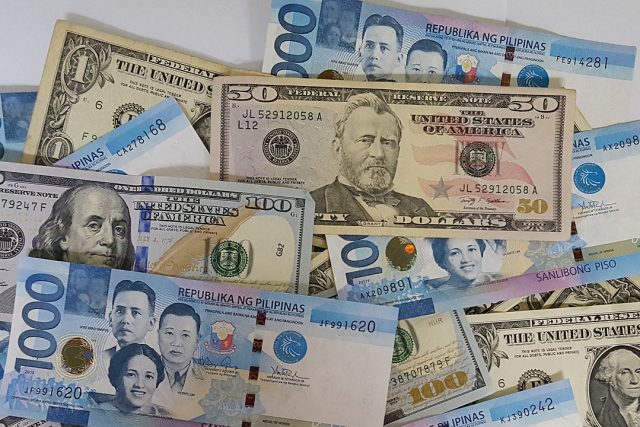
BSP, PNP arrest currency counterfeiter, seize $100 in fake dollar bills

AUTHORITIES from the Bangko Sentral ng Pilipinas (BSP) and the Philippine National Police (PNP) arrested a Cameroonian national for selling forged US dollar banknotes in July.

The BSP said in a statement that a certain Fonki Gregory Abueh, 47, a resident of Makati, was arrested in an entrapment operation in Taguig.

The Quezon City Police Anti-Cybercrime Team and the BSP’s Payments and Currency Investigation Group also seized 14 pieces of fake $100 bills from the suspect.

Mr. Abueh was charged before the Taguig City Prosecutor’s Office for alleged violations of the Revised Penal Code, including the illegal possession and forging of false treasury or banknotes.

He was also charged with alleged estafa under the Cybercrime Prevention Act of 2012, or Republic Act No. 10175, for swindling an individual in a financial investment online scam.

Earlier this year, the BSP and the National Bureau of Investigation also confiscated 161 counterfeit Philippine currency banknotes and 78 fake foreign banknotes during enforcement operations. 

According to the BSP, four suspects were arrested last January during law enforcement operations in Pampanga and Tarlac.

The four suspects were also charged with alleged illegal possession and use of false treasury or banknotes under the Revised Penal Code, the BSP said.

The central bank asked the public to report information on currency counterfeiting to law enforcement authorities.

People who fake Philippine currency may be imprisoned for up to 20 years or pay a fine up to P2 million.

Meanwhile, the BSP on Tuesday cautioned the public to be vigilant against fraud over unsolicited e-mails or text messages, with links that redirect users to suspicious websites.

It advised the public to cautiously examine messages and to refrain from clicking links even if these appear to be from banks, e-money issuers or known companies or brands.

The BSP reminded the public to protect their personal information and account details. — KBT