Home Blog Page 5590

China sets October start for congress seen as Xi coronation
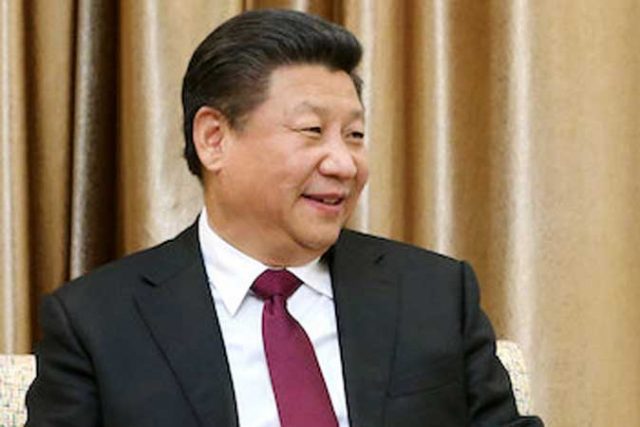
Chinese President Xi Jinping. — WIKIPEDIA.ORG

 – China‘s ruling Communist Party will hold its five-yearly congress beginning on Oct. 16, with Xi Jinping poised to secure an historic third leadership term and cement his place as the country’s most powerful leader since Mao Zedong.

The Politburo announced on Tuesday the start date for the congress, which typically lasts about a week and takes place mostly behind closed doors at the Great Hall of the People on the western side of Tiananmen Square in central Beijing.

Xi, 69, has steadily consolidated power since becoming party general secretary a decade ago, eliminating any known factional opposition to his rule. He is expected to exert largely unchallenged control over key appointments and policy directives at a Congress that many China-watchers liken to a coronation.

Despite headwinds that have buffeted his path to a third term – from a moribund economy, the COVID-19 pandemic and rare public protests to rising frictions with the West and tensions over Taiwan – Xi is poised to secure a mandate to pursue his grand vision for the “rejuvenation of the Chinese nation” for years to come.

Since assuming power, Xi, the son of a communist revolutionary, has strengthened the party and its role across society and eliminated space for dissent.

Under Xi, China has also become far more assertive on the global stage as a leader of the developing world and an alternative to the U.S.-led, post-World War Two order.

“He will take China to an even more Sino-centric approach to policy, particularly foreign policy,” said Steve Tsang, director of the University of London’s SOAS China Institute. “He will also reinforce the importance of the party leading everything in China, and the party following its leader fully,” Tsang said.

Xi‘s likely ascendancy to a third five-year term, and possibly more, was set in 2018 when he eliminated the limit of two terms for the presidency, a position that is set to be renewed at the annual parliamentary meeting in March.

On Wednesday, the website of the party’s official People’s Daily posted an infographic highlighting Xi‘s vision, including one of his signature pronouncements: “Party, government, military, people, education; east, south, west, north, central: the party leads everything.”


KEY PERSONNEL

A day after the 20th Party Congress, Xi is expected again to be conferred the roles of General Secretary of the Communist Party and Chairman of the Central Military Commission.

With little change expected in broad policy direction, key outcomes from the Congress will revolve around personnel – who joins Xi on the Politburo Standing Committee (PSC) and who replaces Premier Li Keqiang, who is set to retire in March.

Contenders to be premier, a role charged with management of the economy, include Wang Yang, 67, who heads a key a political advisory body, and Hu Chunhua, 59, a vice premier. Both were previously the Communist Party boss of the powerhouse southern province of Guangdong.

Another possibility for the premiership is Chen Min’er, 61, a Xi protege who is party chief of the vast municipality of Chongqing but has never held nationwide office.

The makeup and size of the next PSC, now at seven members, will also be closely watched.

Two current members have reached traditional retirement age, and China-watchers will look for whether the inclusion of any new member reflects a need to accommodate alternative viewpoints, although under Xi the notion of “factions” in Chinese politics appears largely to have become a relic.

“After putting his loyalists into positions of power with this party congress, Xi will have a bigger mandate to push through whatever policies he wants,” said Alfred Wu, associate professor at the Lee Kuan Yew School of Public Policy at the National University of Singapore.


BEYOND THE CONGRESS

After the congress, many in China and globally will watch for Beijing’s efforts to stave off a protracted economic downturn, which raises the chance COVID curbs being eased, although a lack of widespread immunity among China‘s 1.4 billion people and the absence of more effective mRNA vaccines remain constraints.

Beijing’s strict “dynamic zero” COVID policy has led to frequent and disruptive lockdowns that have frustrated citizens, battered its economy and made China a global outlier.

Investors will also watch for how Beijing copes with souring relations with the West.

Xi‘s stated desire to bring Taiwan under Beijing’s control will also be in focus during a third term, especially with tensions heightened following U.S. House Speaker Nancy Pelosi’s recent Taipei visit. Taiwan’s democratically-elected government strongly rejects China‘s sovereignty claims.

Since assuming power, Xi has quashed dissent in the once-restive regions of Tibet and Xinjiang and brought Hong Kong to heel with a sweeping national security law.

Few China-watchers expect Beijing to make a military move on Taiwan anytime soon, and there is little sign of preparing society for such a high-risk step and the blowback it would provoke, such as heavy Western sanctions.

But for Xi, successfully resolving the “Taiwan question” would secure his place in Chinese history alongside Mao’s. – Reuters

New Russia gas halt tightens energy screws on Europe

 – Russia halted gas supplies via a major pipeline to Europe on Wednesday, intensifying an economic battle between Moscow and Brussels and raising the prospects of recession and energy rationing in some of the region’s richest countries.

The outage for maintenance on Nord Stream 1 means that no gas will flow to Germany between 0100 GMT on Aug. 31 and 0100 GMT on Sept. 3, according to Russian state energy giant Gazprom GAZP.MMRead full story

Data from the Nord Stream 1 operator’s website showed flows at zero for 0400-0500 Central European Time (0200-0300 GMT) on Wednesday. Read full story

European governments fear Moscow could extend the outage in retaliation for Western sanctions imposed on it after its invasion of Ukraine and have accused Russian President Vladimir Putin of using energy supplies as a “weapon of war”. Moscow denies doing this.

Further restrictions to European gas supplies would heighten an energy crunch that has already sent wholesale gas prices soaring over 400% since last August, creating a painful cost-of-living crisis for consumers and businesses and forcing governments to spend billions to ease the burden. Read full story

Unlike last month’s 10-day maintenance for Nord Stream 1, the upcoming work was announced less than two weeks in advance and is being carried out by Gazprom not Nord Stream AG, focusing on the last operating turbine at the station.

Moscow, which slashed supply via Nord Stream 1 to 40% of capacity in June and to 20% in July, blames maintenance issues and sanctions it says prevent the return and installation of equipment.

Gazprom said the latest shutdown is needed to perform maintenance on the pipeline’s only remaining compressor.

Yet Russia has also cut off supply to Bulgaria, Denmark, Finland, the Netherlands and Poland completely, and reduced flows via other pipelines since launching what Moscow calls its “special military operation” in Ukraine. Read full story

“Given events over recent months, we think the market may disregard Gazprom’s comments and start to consider whether the pipeline may not return to service, or at the very least may (be) delayed for any given reason,” said Biraj Borkhataria, Associate Director of European Research at Royal Bank of Canada.


‘ELEMENT OF SURPRISE’

German Economy Minister Robert Habeck, on a mission to replace Russian gas imports by mid-2024, earlier this month said Nord Stream was “fully operational” and there were no technical issues as claimed by Moscow.

Klaus Mueller, president of Germany’s network regulator, said while a resumption of flows would help Germany’s security of supply, no one was able to say what the consequences would be if flows remained at zero. Read full story

Europe‘s largest economy is making better progress than expected in filling its gas storage facilities, but it’s not enough to get the country through winter, he said.

The reduced flows via Nord Stream have complicated efforts across Europe to fill up vital gas storage facilities, a key strategic goal to make it through the winter months, when governments fear Russia may halt flows altogether.

“It is something of a miracle that gas filling levels in Germany have continued to rise nonetheless,” Commerzbank analysts wrote, adding Germany had so far been successful at buying sufficient volumes at higher prices elsewhere.

In the meantime, however, some Europeans are voluntarily cutting their energy consumption, including limiting their use of electrical appliances and showering at work to save money while companies are bracing for possible rationing. Read full story

At 83.26%, Germany is already within reach of an 85% target for its national gas storage tanks by Oct. 1, but it has warned reaching 95% by Nov. 1 would be a stretch unless companies and households drastically cut consumption.

For the European Union as a whole, the current storage level is 79.94%, just short of an 80% target by Oct. 1, when the continent’s heating season starts.

Analysts at Goldman Sachs said their base case assumption was that this outage would not be extended.

“If it did, there would be no more element of surprise and reduced revenues, while low (Nord Stream 1) flows and the occasional drop to zero have the potential to keep market volatility and political pressure on Europe higher,” they said. – Reuters

WHO places Asia director on leave after accusations of bullying

 – A senior World Health Organization director has been placed on leave, a spokesperson confirmed on Tuesday, following staff accusations of bullying and other complaints.

“The Regional Director for the Western Pacific Region, Dr Takeshi Kasai, is on leave,” a WHO official said in emailed comments, without giving details.

Two WHO sources confirmed to Reuters that the decision to place Kasai, a physician from Japan who has worked at the body for more than 15 years, on administrative leave was related to an ongoing investigation into various staff complaints.

Kasai was not immediately available for comment. An e-mail sent to the WHO Western Pacific office in Manila was forwarded to the headquarters in Geneva.

The Associated Press reported in January that the complaints included allegations of racist language and of sharing confidential vaccine data with Japan.

Kasai, who became the WHO regional director in February 2019, has previously acknowledged being “hard on staff” but rejected the other charges. Read full story

He is temporarily being replaced by the U.N. health agency’s number 2, Zsuzsanna Jakab, the WHO official added. – Reuters

Biden declares emergency over Mississippi water crisis

US PRESIDENT JOE BIDEN/FACEBOOK

US President Joe Biden’s administration approved an emergency declaration over a water crisis in the State of Mississippi and ordered Federal assistance late on Tuesday to supplement the state‘s response.

“Emergency protective measures, including direct federal assistance, will be provided at 75 percent Federal funding for a period of 90 days,” the White House said in a statement late Tuesday.

The Biden administration also authorized the Department of Homeland Security, Federal Emergency Management Agency (FEMA), to coordinate all disaster relief efforts in the state, the White House said.

Mississippi activated its National Guard on Tuesday to help distribute water to tens of thousands of Jackson residents after a long-troubled treatment plant broke down, leaving most of the state capital without safe running water, possibly for days.

Governor Tate Reeves declared a state of emergency for Jackson and surrounding communities, warning the area’s 180,000 people to avoid drinking tap water. He also called up the state National Guard to assist in efforts to bring relief to the city, which was battered by record rainfall and flooding over the weekend.

Tankers distributed non-potable water and bottled drinking water was distributed at several sites, the city said.

The state trucked in 10 tractor-trailers of water on Tuesday and was expecting another 108 trucks in the coming days, state emergency management director Stephen McCraney told reporters.

The breakdown occurred Monday when floodwaters seeped into the understaffed and poorly maintained O.B. Curtis treatment plant. An emergency team had the plant working at 40% capacity on Tuesday, senior state health officer Jim Craig said, and a temporary pump was expected to be installed on Wednesday and increase capacity further.

But the system was still short of sufficient water pressure to guarantee service citywide. Officials said they could not estimate how many homes were cut off.

The shutdown created havoc for businesses, and Jackson public schools, with nearly 21,000 students, were forced to move classes online as they had done during the coronavirus pandemic. Read full story

Supermarket shelves were stripped of bottled water, and police in a cruiser alerted people when supplies ran out at one distribution site in a retail parking lot. Volunteers apologized to people when they had no more water to give, urging them to return on Wednesday starting at 5 a.m.

“It’s a hurtful feeling when you don’t have any water, especially when you’ve got newborn babies,” Monica Lashay Bass, a mother of three, said from her car after queuing up for her allotment of bottled water.

People in Jackson have long complained about their water supply.

A pair of winter storms in February 2021 caused most residents in Jackson to briefly lose running water, and a year ago the U.S. Environmental Protection Agency year ago issued an emergency order saying the water supply could contain E. Coli, according to Mississippi Today.

In 2016, customers were told of high lead levels in the city’s water supply caused by recurring faulty water treatment techniques.

At a news conference, Jackson Mayor Chokwe Antar Lumumba on Tuesday welcomed the state aid but his comments further exposed a rift between the Republican state officials and the Democratic administration of a city that is more than 80% African-American.

The governor has alleged the water treatment plant suffered from years of city mismanagement, while the mayor accused the state of being absent from efforts to maintain and update the plant.

“We’ve been going it alone for the better part of two years,” Lumumba said. “And now we are excited to finally welcome the state to the table and all the valuable resources that they bring.”

Each side had been offered differing accounts of what happened, though they came to agree on significant facts by Tuesday afternoon.

The governor, who previously blamed pump failures, on Tuesday affirmed what the mayor had said: that floodwaters entered the treatment plant, altering the chemistry of the water, rendering the existing treatment inadequate, and forcing a shutdown.

Even before the crisis, the city had been under a boil water notice for the past month due to “elevated turbidity levels,” which makes the water appear cloudy.

The White House said on Tuesday that President Joe Biden had been briefed on the situation, and administration officials were in contact with state and local officials, including Lumumba.

Federal agencies were assisting state officials to identify needs and to deliver equipment needed for emergency repairs, White House Press Secretary Karine Jean-Pierre said on Twitter. – Reuters

Women in Indian village take fight for access to water into their own hands

STOCK PHOTO | Image by congerdesign from Pixabay

 – For Suraj Prajapati, a mother of two who lives in the arid northern Indian state of Rajasthan, fighting for access to clean drinking water at her doorstep required extraordinary measures.

Tired of having to spend hours fetching water and desperate for a piped water connection to their rural homes, Prajapati and a band of more than 10 other women in her neighborhood began a crusade in 2018. At one point they even locked up one of the village leaders in his home until he agreed to speak to authorities about their demands.

Fortunately for the women, their demands coincided with Prime Minister Narendra Modi’s thinking. In August 2019 he announced a plan to connect all rural households with piped water by 2024, a major objective of his second term in office.

Under the Jal Jeevan Mission, as it is known, and in partnership with UNICEF, the women finally had taps in their homes in 2020, and are among the many households being covered as the government races to meet its deadline.

About 200,000 Indians die every year due to inadequate access to safe water, the National Institute for Transforming India (NITI) Aayog, a government think tank, said in a report in 2018.

“The men usually get ready and leave for their jobs and the major water-related problems are faced by women,” Prajapati, wearing a colorful saree that covers her head, told Reuters in her village of Manda Bhopawas, 40 km (25 miles) from the state capital of Jaipur.

Before the taps were fitted in their homes, the women often compromised on their own health, skipping baths on alternate days and walking in the searing heat to fetch water for their households.

“So, all the women in the village came together and told the village council about the challenges we were facing and only then were our problems resolved,” Prajapati, who is 36, said.

More than 52% of India’s 191 million households had access to tap water connections as of Aug. 30, according to federal government data, up from a mere 16% in August 2019, when Modi announced his plan to provide piped water to rural homes.

Three of the country’s 28 states have already connected all households with tap water, and another 15 have achieved more than half of their target. Rajasthan, however, is a laggard, with only a quarter of its 10 million rural households connected, according to federal government data.

The dichotomy is visible in the neighboring village of Karansar, one of many villages that has yet to get piped water and where women and young girls still spend hours carrying pots to and fro.

“If you count the time when she (a woman) has to wait at the water source, the multiple trips that she has to take, she can spend up to six hours a day just to collect water for her house,” Marije Broekhuijsen, a sanitation and hygiene specialist at UNICEF, told Reuters about the situation in Rajasthan. – Reuters

Gorbachev’s tragedy — a flawed reformer on an impossible mission

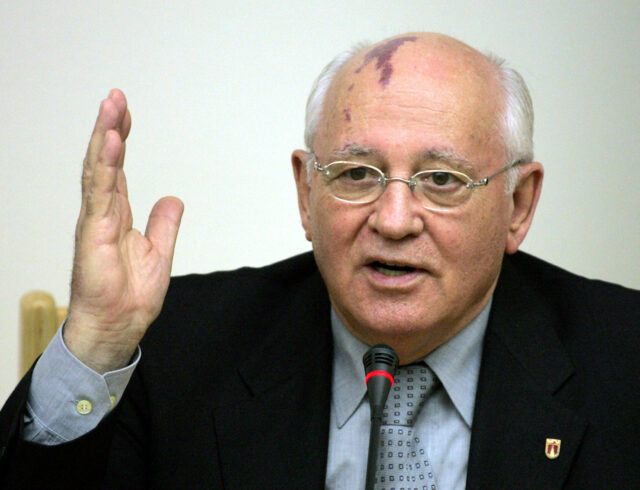
Former Soviet Union President Mikhail Gorbachev speaks at a meeting with former U.S. President George Bush (not pictured) in Moscow State Institute of International Relations, in Moscow Russia May 23, 2005. REUTERS/Sergei Karpukhin/File Photo

LONDON — For all the adulation he inspired in the West, Mikhail Gorbachev was a tragic figure who failed in the historic mission he had defined for his own country.

The award of the 1990 Nobel Peace Prize marked the pinnacle of world acclaim for the role that Gorbachev, then Soviet president, had played in ending the Cold War without bloodshed.

But at home he was a drained and defeated man when forced to step down the following year, reduced to leader of a non-existent country as the Union of Soviet Socialist Republics collapsed into 15 separate states.

Gorbachev, who died on Tuesday, had set out to revitalize the moribund Communist system and shape a new union based on a more equal partnership between the 15 republics, of which the two most powerful were Russia and Ukraine. Yet in the space of six years, both Communism and the Union came crashing down.

With hindsight, some of his mistakes are clear to see.

He attempted political and economic reforms simultaneously and on too ambitious a scale, unleashing forces he could not control. It was a lesson not lost on China’s leaders, who embraced the market economy but served notice with the 1989 killings of protesters on Tiananmen Square that they would act ruthlessly to defend the Communist Party’s grip on power.

Gorbachev never stood for election to earn himself a popular mandate — unlike his great rival Boris Yeltsin, who was voted into power as president of Russia and was instrumental in the dissolution of the USSR and the ousting of Gorbachev.

And he failed to anticipate the strength of nationalist feeling — initially in the Baltic republics of Latvia, Lithuania and Estonia, and spreading to others like Georgia and Ukraine – that would create unstoppable momentum to escape Moscow’s grip.

“He didn’t believe that the Soviet Union was actually an empire in itself of nations that did not want to be shackled,” said Jonathan Eyal of the Royal United Services Institute, a think-tank based in London.

“Like all Soviet leaders, and dare I say like Russian leaders today, he saw the Soviet Union as synonymous with Russia and he simply could not understand why nations wanted to be independent.”

‘SEED OF HIS DOWNFALL’

Some historians believe Gorbachev was right to conclude from the start that the system he inherited was falling further and further behind the West and nothing short of bold reform could save it.

Others take a more critical view.

“I think the seed of his downfall was that essentially he didn’t really understand the Soviet Union, Soviet society and how it worked,” said Alexander Titov, lecturer in history at Queen’s University Belfast.

“He thought it could be reformed, he thought removing some of the essential elements of the Soviet system such as the fear, the repression, the command economy and so forth would still preserve the system. But they turned out to be the actual essential elements of the Soviet system — having removed them, the system unraveled as well.”

In the three decades since his fall from power, Russia has judged Gorbachev harshly. When he ran for Russian president against Yeltsin in 1996, he trailed home in a humiliating seventh place with 0.5% of the vote.

Russians have long been accustomed to viewing him as a weak leader who was duped by the West.

Many still blame him for the collapse of the Soviet Union — which President Vladimir Putin famously called the greatest geopolitical catastrophe of the 20th century — and the years of economic upheaval and political turmoil that followed, including wars from the Caucasus to Chechnya and Central Asia.

Putin’s lurch into confrontation with the West and his invasion of Ukraine have destroyed the Gorbachev legacy of detente with the West and nuclear arms agreements with the United States. With Putin pointedly boasting of the size and destructive power of Russia’s arsenal, politicians in both Moscow and Washington have evoked the risk of World War Three.

The man now in power in the Kremlin has also smashed the idea embodied by Gorbachev that Russia could retreat from empire and still remain a major power, said Mr. Eyal.

“The imperial aspiration is now reasserted as the official policy in Moscow and the general approach — that what you need to do if you face a crisis is to crush it with tanks — is now back in fashion,” he said.

“It’s one of the ultimate tragedies of (Gorbachev) that none of the points that he ultimately came to accept and espouse have been preserved by the leaders of Russia today.” — Reuters

Last Soviet leader Gorbachev, who ended Cold War and won Nobel prize, dies aged 91

Former Soviet Union President Mikhail Gorbachev speaks at a meeting with former U.S. President George Bush (not pictured) in Moscow State Institute of International Relations, in Moscow Russia May 23, 2005. REUTERS/Sergei Karpukhin/File Photo

Mikhail Gorbachev, who ended the Cold War without bloodshed but failed to prevent the collapse of the Soviet Union, died on Tuesday at the age of 91, hospital officials in Moscow said. 

Gorbachev, the last Soviet president, forged arms reduction deals with the United States and partnerships with Western powers to remove the Iron Curtain that had divided Europe since World War Two and bring about the reunification of Germany. 

But his internal reforms helped weaken the Soviet Union to the point where it fell apart, a moment that President Vladimir Putin has called the “greatest geopolitical catastrophe” of the twentieth century. 

“Mikhail Gorbachev passed away tonight after a serious and protracted disease,” said Russia’s Central Clinical Hospital. 

Mr. Putin expressed “his deepest condolences,” Kremlin spokesman Dmitry Peskov told Interfax. “Tomorrow he will send a telegram of condolences to his family and friends,” he said. 

Mr. Putin said in 2018 he would reverse the Soviet Union’s disintegration if he could, news agencies reported. 

World leaders were quick to pay tribute. European Commission chief Ursula von der Leyen said Gorbachev, who was awarded the Nobel Peace Prize in 1990, had opened the way for a free Europe. 

US President Joseph R. Biden, Jr., said he had believed in “glasnost and perestroika — openness and restructuring — not as mere slogans, but as the path forward for the people of the Soviet Union after so many years of isolation and deprivation.” 

British Prime Minister Boris Johnson, citing Putin’s invasion of Ukraine, said Gorbachev’s “tireless commitment to opening up Soviet society remains an example to us all.” 

WESTERN PARTNERSHIPS 

After decades of Cold War tension and confrontation, Gorbachev brought the Soviet Union closer to the West than at any point since World War Two. 

“He gave freedom to hundreds of millions of people in Russia and around it, and also half of Europe,” said former Russian liberal opposition leader Grigory Yavlinsky. “Few leaders in history have had such a decisive influence on their time.” 

But Gorbachev saw his legacy wrecked late in life, as the invasion of Ukraine brought Western sanctions crashing down on Moscow, and politicians in both Russia and the West began to speak of a new Cold War. 

“Gorbachev died in a symbolic way when his life’s work, freedom, was effectively destroyed by Putin,” said Andrei Kolesnikov, senior fellow at the Carnegie Endowment for International Peace. 

He will be buried in Moscow’s Novodevichy Cemetery next to his wife Raisa, who died in 1999, said Tass, citing the foundation that the ex-Soviet leader set up once he left office. 

“We are all orphans now. But not everyone realizes it,” said Alexei Venediktov, head of a liberal media radio outlet that closed down after coming under pressure over its coverage of the Ukraine war. 

When pro-democracy protests rocked Soviet bloc nations in communist Eastern Europe in 1989, Gorbachev refrained from using force – unlike previous Kremlin leaders who had sent tanks to crush uprisings in Hungary in 1956 and Czechoslovakia in 1968. 

But the protests fuelled aspirations for autonomy in the 15 republics of the Soviet Union, which disintegrated over the next two years in chaotic fashion. 

Gorbachev — who was briefly deposed in an August 1991 coup by party hardliners — struggled vainly to prevent that collapse. 

TURBULENT REFORMS 

“The era of Gorbachev is the era of perestroika, the era of hope, the era of our entry into a missile-free world … but there was one miscalculation: we did not know our country well,” said Vladimir Shevchenko, who headed Gorbachev’s protocol office when he was Soviet leader. 

“Our union fell apart, that was a tragedy and his tragedy,” RIA news agency cited him as saying. 

On becoming general secretary of the Soviet Communist Party in 1985, aged just 54, he had set out to revitalize the system by introducing limited political and economic freedoms, but his reforms spun out of control. 

“He was a good man — he was a decent man. I think his tragedy is in a sense that he was too decent for the country he was leading,” said Gorbachev biographer William Taubman, a professor emeritus at Amherst College in Massachusetts. 

Gorbachev’s policy of “glasnost” allowed previously unthinkable criticism of the party and the state, but also emboldened nationalists who began to press for independence in the Baltic republics of Latvia, Lithuania, Estonia, and elsewhere. 

Many Russians never forgave Gorbachev for the turbulence that his reforms unleashed, considering the subsequent plunge in their living standards too high a price to pay for democracy. 

Vladimir Rogov, a Russian-appointed official in a part of Ukraine now occupied by pro-Moscow forces, said Gorbachev had “deliberately led the (Soviet) Union to its demise” and called him a traitor. 

“He gave us all freedom — but we don’t know what to do with it,” liberal economist Ruslan Grinberg told the armed forces news outlet Zvezda after visiting Gorbachev in hospital in June. — Reuters

Contact Center Philippines: Rethinking Your Back-Office Strategy

Photo from PITON Global

Traditionally, an organization’s front office acts as the face of the company, the intersection where the business meets the public. But the back office is the lifeblood of every organization. “A company can’t operate if the back-office functions don’t run smoothly. Well-coordinated communication between the front and back-office keeps a company humming,” says Ralf Ellspermann, CEO of PITON-Global, a leading mid-sized contact center in the Philippines.

Back-office employees perform administrative tasks related to a company’s business operations, including accounting, data collection and entry, order processing, and market research. “An efficient back-office boosts productivity, keeps costs low, and helps maintain strong customer satisfaction,” explains Ellspermann.

While the back-office staff rarely engages with customers, their impact on the overall customer experience cannot be understated. When the back-office team does its job effectively, the front-end staff can immediately respond to customers on the status of queries, claims, product delivery, and refunds. It’s a win-win-win for the two departments, customers, and the business as a whole. “In short, efficient back-office operations make the entire company look good,” emphasizes Ellspermann.

But if the back-office fails to deliver, the quality of customer service diminishes, leading to frustrated customers and increased costs and effort for the company. The longer customers remain frustrated, the more likely they will abandon a brand. Worse, angry customers tend to take to social media to spread negative comments, which can severely damage a company’s reputation.

According to Ellspermann, “There are many reasons why back-office operations drop the ball. Clumsy operational silos, inconsistent processes and reporting, poor communication, outdated technology, and a lack of automation can all hinder efficient back-office functions. Additionally, responsibilities that fall under the back-office umbrella, like out-of-stock inventory, or refunds taking too long to process, can negatively affect the customer experience.”

While the back-office is vital in a company’s overall operations and customer experience, running and maintaining an efficient back-office can be a time-consuming, costly headache. According to statistics, companies waste an estimated $480 billion due to inefficient back-office processes.

That’s why many companies now outsource their back-office requirements to the Philippines. The country has long been a leader in the business process outsourcing (BPO) industry and is now the world’s second largest outsourcing destination. In fact, the industry in the Philippines accounts for 10-15% of the global BPO market.

“Outsourcing to a contact center in the Philippines has many advantages for companies looking to cut costs and ensure a consistent customer experience. A young, educated, and tech-savvy workforce, low labor costs, a close cultural affinity with the US, and a government that invests in the country’s BPO industry are all attractive advantages,” says Ellspermann.

But the country’s twenty-year history as an outsourcing leader gives it the edge. BPOs in the Philippines have proven expertise in helping companies become more efficient, productive, and agile, all of which contribute to an enhanced customer experience. By outsourcing operations to trusted business process and call center outsourcing providers, companies can better resolve customer queries and complaints, reduce errors, improve turnaround times, and track and manage inventory and delivery times.

Most notably, the country’s thriving outsourcing industry provides reliable 24/7 omnichannel support, employing agents who have a high level of English language proficiency and familiarity with US business conventions. Additionally, outsourcing back-office requirements to the Philippines can save companies between 60-70% in labor costs.

A contact center in the Philippines can alleviate the logistics and costs of managing an in-house back-office operation. By handing those tasks off to a reliable offshore provider, companies can focus on improving the customer-facing functions of the business. It is the most effective and cost-efficient way to give their client base the top-notch customer experience they want and deserve. “It is therefore no surprise that an ever-increasing number of US-based companies are choosing to outsource their back-office requirements to a BPO or contact center in the Philippines,” concludes Ellspermann.


Spotlight is BusinessWorld’s sponsored section that allows advertisers to amplify their brand and connect with BusinessWorld’s audience by enabling them to publish their stories directly on the BusinessWorld Web site. For more information, send an email to online@bworldonline.com.

Join us on Viber to get more updates from BusinessWorld: https://bit.ly/3hv6bLA.

House panel approves GUIDE bill

BUILDINGS at the Makati central business district are seen in this file photo. — PHILIPPINE STAR/ MIGUEL DE GUZMAN

THE HOUSE Committee on Banks and Financial Intermediaries on Monday approved a measure that would expand the government’s lending programs to help small businesses recover from the coronavirus disease 2019 (COVID-19) pandemic.

The proposed Government Financial Institutions Unified Initiatives to Distressed Enterprises for Economic Recovery (GUIDE) Act is one of the priority bills mentioned by President Ferdinand R. Marcos, Jr. at his State of the Nation Address (SONA) last month.

During a hearing on Monday, the House Committee on Banks approved the measure, which would consolidate House Bill No. (HB) 1, 685, 3460, and 3700. The measure will be referred to the House Committee on Appropriations for funding, and the Ways and Means panel for the tax provisions.

The GUIDE measure was approved quickly by the House Committee on Banks, since the rules allow the expedited approval of any priority measure that was passed on third reading by the immediately preceding Congress.

HB No. 1, co-authored by House Speaker Ferdinand Martin G. Romualdez, is the refiled version of the GUIDE bill approved by the House on third reading during the 18th Congress. The Senate failed to pass the counterpart measure.

The bill will mandate the Land Bank of the Philippines (LANDBANK) and the Development Bank of the Philippines (DBP) to expand their credit and rediscounting facilities to affected micro, small, and medium enterprises (MSMEs), and other strategically important companies (SICs). 

Under the measure, LANDBANK and DBP would be allocated P7.5 billion and P2.5 billion, respectively, appropriated from the National Treasury, to boost their credit programs.

“Our micro, small and medium enterprises remain struggling to survive the deleterious effects of the pandemic. In view of the foregoing, it is our humble but firm belief that we need to create more enabling environment for financial access for our MSMEs,” Tingog Party-list Rep. Jude A. Acidre, who co-authored HB No. 1, said.

ACT-CIS Party-list Rep. Jeffrey Soriano, who is one of the authors of HB No. 3460, said there is an immediate need to help MSMEs, which comprise 99.5% of business establishments in the Philippines.

“This proposed legislative measure seeks to strengthen the capacity of the government financial institutions through programs and initiatives to be implemented by the Philippine Guarantee Corp., LANDBANK, and DBP. In the provision of much needed assistance in the recovery of our MSMEs, the measure will also grant tax exemptions, registration and transfer fees discounts, and loan and credit accommodation to the aforementioned financial institutions,” Mr. Soriano said.

The GUIDE bill will also raise DBP’s capital stock to P100 billion, from P35 billion.

“We have done well, but the capital base of P35 billion is very much constraining specially as we see the challenges that we have to face… in the restructuring and rescuing the MSMEs,” DBP President and Chief Executive Officer Emmanuel G. Herbosa said during the hearing.

“We hope that our P35-billion authorized capital will finally now be increased to P100 billion. We’re very excited about this and DBP is ready to step to its critical role on MSME recovery,” he added.

The measure will also authorize LANDBANK and DBP to invest in or enter into a joint-venture agreement with a special holding company to rehabilitate SICs.

SICs should be investee companies that have high economic returns or job generation potential in industries such as construction, education, food industry, healthcare, infrastructure, low-cost and socialized housing, manufacturing, power and energy, product distributor/retailer, services, tourism and hospitality, transportation and logistics, and water and sanitation.

The special holding company will be allowed to invest in equities, execute convertible loans or purchase convertible bonds or other securities in SICs. — K.B.Ta-asan

NG to borrow P200B locally in September

By Diego Gabriel C. Robles

THE NATIONAL Government (NG) plans to borrow P200 billion from the domestic market in September, the Bureau of the Treasury (BTr) said on Tuesday.

The September borrowing plan is 7% lower than the P215-billion program for August.

The government raised just P162.021 billion from domestic borrowings this month, along with an additional P35 billion when the Treasury opened its tap facility in three separate Treasury bond (T-bond) auctions.

The BTr will hold auctions for Treasury bills (T-bills) every week, which is projected to raise P60 billion.

According to the Treasury, P5 billion worth of 91-day, 182-day, and 364-day T-bills will be offered on Sept. 5, 12, 19, and 26.

Meanwhile, the auctions for T-bonds are estimated to generate P140 billion, including a 16-year tenor that is expected to raise P35 billion.

For the long-term tenors, the Treasury is looking to raise P35 billion in three-and-a-half-year T-bonds on Sept. 6; P35 billion in 10-year debt papers on Sept. 13; P35 billion in seven-year instruments on Sept. 20; and P35 billion in 16-year bonds on Sept. 27.

National Treasurer Rosalia V. de Leon told reporters in a Viber message that the 16-year debt paper is anticipated to have strong demand, much like the 14-year tenor it issued in July.

A trader said that the borrowing plan is no longer surprising, noting that an upward pressure on yields is likely as the Treasury kept its borrowing schedule despite the issuance of retail Treasury bonds (RTBs).

“BTr’s borrowing preference tells us [that] rates are expected to be higher moving forward,” the trader said.

In its rate-setting auction on Aug. 23, the government raised an initial P162.72 billion for its offer of five-and-a-half-year RTBs as tenders reached P225.32 billion, or more than seven times the P30-billion plan.

The retail bonds fetched a coupon rate of 5.75%, higher than the 4.875% set for the five-year RTBs offered in March.

The offer period for the peso-denominated debt maturing in 2028 runs until Sept. 2, while settlement is on Sept. 7.

“The market is very liquid, and in the last month, auctions were thrice oversubscribed. Even the current RTB offering is well received as heard from the players and investors. For the 16-year bond, we think that it will be a crowd favorite,” said UnionBank of the Philippines, Inc. Chief Economist Ruben Carlo O. Asuncion.

“The BTr’s observation of better revenues, as the reopening of the economy continues, does complement the need to mop up liquidity in the market moving forward,” he added in a Viber message.

In August, the government raised just P57.021 billion in T-bills, with a partial awarding and a full rejection in the last two auctions, respectively, amid the offering of RTBs and following the US Federal Reserve’s hawkish statements.

At the Jackson Hole conference last week, Fed Chair Jerome H. Powell said they will raise interest rates as high as needed and keep them there “for some time” to cool red-hot inflation.

At the same time, only P105 billion was raised via T-bonds, against the initial P140-billion program, as the scheduled final two auctions were canceled due to the RTB offering.

This is despite the opening of the tap facility three times in August, awarding an additional P10 billion, P10 billion, and P15 billion within the month.

“This year, we will continue this pairing mix by obtaining 75%, or around P1.65 trillion from domestic markets, to insulate the country from foreign exchange volatilities resulting from ongoing global uncertainties,” Finance Secretary Benjamin E. Diokno said at the launch of the new RTBs on Aug. 23.

Previously, Mr. Diokno said that the government will try to increase it to 80-20, still favoring domestic lenders.

The gross domestic borrowing program is at P1.91 trillion this year, composed of T-bills that are expected to bring in P52 billion and fixed-rate T-bonds that are seen to raise P1.86 trillion.

Outstanding debt is expected to rise to P13.43 trillion by the end of 2022 from P12.79 trillion recorded in end-June, with additional borrowing seen at P2.73 trillion and principal repayments at P1.27 trillion this year.

The government estimates the debt-to-gross domestic product (GDP) ratio to drop from 62.1% in end-June to 61.8% at the end of the year.

The government borrows from local and external sources to help fund a budget deficit capped at 7.6% of gross domestic product this year.

In July, the National Government’s budget deficit narrowed by 28.41% to P86.8 billion from a year earlier.

Storms, floods to cost PHL $124 billion by 2050

A farmer stands in the middle of a flooded rice field in Alicia, Isabela province, Nov. 23, 2020. — PHILIPPINE STAR/ MICHAEL VARCAS

By Luisa Maria Jacinta C. Jocson, Reporter

STRONG STORMS, heavy flooding and prolonged droughts may result in around $124 billion in losses to the Philippine economy between 2022 and 2050, according to research firm GHD.

This translates to an average annual gross domestic product (GDP) loss of 0.7% for the Philippines, GHD said in a statement following the release of its report “Aquanomics: The economics of water risk and future resilience.”

The report covered seven countries, including the United States, China and the Philippines, which GHD said will see a combined $5.6 trillion in losses due to storms, floods and drought through 2050.

The United States and China will face cumulative losses of around $3.71 trillion, and $1.1 trillion, respectively by 2050.

The Philippines’ total GDP loss of $124 billion is the fifth-highest among the seven countries, with United Arab Emirates having the smallest GDP loss at $27 billion.

The Philippines is one of the countries most affected by water-related disasters, with an average of 20 typhoons that bring heavy flooding every year.

“Our data show that floods and tropical storms are predicted to amount to over 90% of direct losses (around $89 billion) between 2022 and 2050,” GHD said.

Broken down, storms have the biggest direct impact on the Philippine economy at $47 billion, followed by floods at $42 billion, and droughts at $3 billion.

GHD said the agriculture sector will likely bear the brunt of the water-related disasters, with estimated annual output losses of over 5% by 2030, and 8% by 2050. The average annual output loss for agriculture is expected to be 0.9% or equivalent $23 billion between 2022 and 2050.

In 2020, the agriculture sector generated a gross value added (GVA) of about P1.78 trillion, equivalent to a 10.2% share of the country’s GDP.

The banking and insurance sector is projected to post an average annual output loss of 0.6%, equivalent to $14 billion, between 2022 and 2050. This is followed by manufacturing (0.3% or $39 billion), fast-moving consumer goods and retail (0.2% or $19 billion), and energy and utilities (0.2% or $3 billion).

“The country’s agricultural and retail sectors could be hit hardest, and that these rising threats need to be tackled now with greater focus on water recycling, desalination, and smarter irrigation,” GHD said.

GHD also noted the country faces high levels of water pollution, lack of wastewater treatment and inadequate water supply. Many Filipinos also live on coastal plains which make them vulnerable to storms and floods.

“The Philippine water supply and sanitation master plan calls for a total investment of around P1.1 trillion to achieve universal access to water and sanitation for all Filipinos by 2030,” Rod Naylor, GHD global market leader for water, said in a statement.

CLIMATE EMERGENCY
Meanwhile, the Philippine government is being urged to declare a “climate emergency” as rising global temperatures are leading to extreme weather events such as floods, storms, droughts and heatwaves.

“This means that all the institutions of government, national and local, and all civil society and community and people’s organizations must come up with a collective response,” Antonio Gabriel M. La Viña, a lawyer and environmental expert, said in a text message.

Institute for Climate and Sustainable Cities associate for policy advocacy Denise M. Fontanilla said that the government should plan for at least the next 18 years.

“Medium-term six-year plans make us blind to the constraints that climate chaos has already imposed. The V20 Group of Finance Ministers, which includes the Philippines, released a report last June stating that the most vulnerable economies in the world have lost 20% of their wealth over the last 20 years due to loss and damages brought by climate change,” she said in an e-mail.

“If there’s anything the pandemic has taught us, it’s that as long as we measure progress only with GDP and productivity, and each month we fail to fully integrate resilience into the country’s macroeconomic fundamentals, our vulnerabilities will worsen, threatening nothing less than the long-term viability of our economy,” she added.

The Climate Reality Project Philippines manager Nazrin Camille D. Castro said the government needs to act fast and immediately deploy climate change adaptation measures.

“Science is unequivocally telling us that the climate crisis is speeding up and moving faster than we are. The recent report by GHD is yet another testament that we need faster and bolder responses to the climate crisis to at least have a chance to fight for the survival and security of the Filipino people,” she said in a Viber message.

Ms. Fontanilla said that prioritizing resilience will spur both economic development and decarbonization in the country.

“Transitioning faster to renewable energy will create more jobs and make power services more affordable and reliable. Inclusive mobility would not only reduce emissions but move more people instead of cars. Moreover, prioritizing resilience in long-term plans will protect communities from loss and damage to be brought by climate change in the near future, helping people survive and thrive amidst multiple crises,” she said.

Ms. Castro urged the Climate Change Commission (CCC) to fast-track the update of the National Climate Change Action Plan (NCCAP). She said the climate action plan should prioritize interventions in waterless communities that are more vulnerable to drought and other climate-vulnerable sectors such as indigenous peoples.

“Moreover, it must recognize and put into consideration that the climate crisis is also affecting another important aspect of the economy — public health. Our people are our greatest asset and their mental and physical well-being, which is often affected by the impacts of the climate crisis, must be prioritized over the interests of certain groups,” she added.

At the local level, Ms. Castro said that the CCC and the Department of Interior and Local Government should put in place a mechanism to help local government units ensure the quality of their respective local climate change action plans.

“Local governments should also be capacitated by the National Government in conducting climate and disaster risk assessments and incorporating the results of these assessments into their comprehensive development plans,” she said.

Experts raise questions over proposed EDSA busway privatization

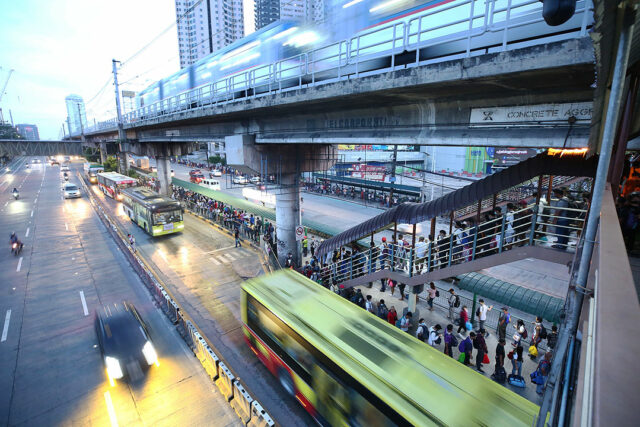
Commuters line up at the Main Avenue station of the EDSA bus carousel in Quezon City, July 18, 2022. — PHILIPPINE STAR/MIGUEL DE GUZMAN

By Arjay L. Balinbin, Senior Reporter

THE GOVERNMENT should ensure commuters will not face exorbitant fares if the bus system along Epifanio delos Santos Avenue (EDSA) and urban rail systems will be privatized, analysts said.

“As private companies are profit-driven, privatization should be balanced, which means that the government should continue to protect the riding public from exorbitant fares and underinsurance,” Antonio A. Ligon, a law and business professor at De La Salle University, told BusinessWorld in a recent phone interview.

“However, government interference must be done in a way that won’t obstruct further development and the goal of private companies to recoup their investments while improving transport services,” he added.

The Management Association of the Philippines (MAP) has urged the Department of Transportation (DoTr) to consider the privatization of the EDSA busway and bus service and urban commuter rail systems, consisting of the Metro Rail Transit Line 3 (MRT-3), Light Rail Transit Line 2 (LRT-2) and the Philippine National Railway (PNR) commuter lines under a “hybrid mode.”

A hybrid mode means that the government will provide the infrastructure, while a private concessionaire will operate the service and maintain the facilities under an operations and maintenance concession.

However, transport expert Rene S. Santiago said any privatization effort “must wait” for the revision of the implementing rules and regulations (IRR) of the Build-Operate-Transfer (BOT) Law. 

“Midnight amendments to the IRR have turned PPP (public-private partnerships) into a game of masochism for private investors,” he said in a phone message.

Since it took effect in April, business groups have criticized the new rules for the BOT Law, saying private proponents would shoulder more risks while the government is relieved of responsibility for delayed deliverables.

The National Economic and Development Authority (NEDA) has been directed to review the controversial provisions of the IRR. Finance Secretary Benjamin E. Diokno has said the new rules are expected to be released before end-September.

“The government should look with critical scrutiny the hybrid proposals from the private sector, as this might grossly underestimate the actual value of public funding in infrastructure projects while overestimating the value of private investment in operating and maintaining public utilities and services,” Terry L. Ridon, a public investment analyst and convenor of think tank InfraWatch PH, said in a separate phone message. 

“If the private sector would like to take over transport services currently under government control, any PPP arrangement should reflect the value of the public sector’s investment in infrastructure projects,” he added.

‘NO MONOPOLY’
For Mr. Ridon, the private sector has no monopoly in the efficient operations of public utilities and services.

“Both can run transport systems well if the enabling conditions for efficiency are present,” he said.

Mr. Ligon noted that privatization “does not automatically guarantee efficiency, although privately run transportation systems have more advantages.

According to Mr. Santiago, past experiences in the last three decades showed that “private sector management results in better outcomes as long as government restrains itself from behaving as a backseat driver.”

“I have long advocated for PPP in railway sector, under balanced allocation of risks,” he added.

He noted that the privatization of the MRT-3 was included in the top 10 priorities “way back in 2010.”

“The PPP structure was faulty, and it failed to take off. The privatization of LRT-1 happened in 2015,” Mr. Santiago added.

To recall, Light Rail Manila Corp. (LRMC), the private operator of LRT-1, said in May that it had filed a request for arbitration with the International Chamber of Commerce over its dispute with the DoTr and its attached agency, the Light Rail Transit Authority (LRTA).

LRMC hopes to recover around P2.67 billion in compensation claims and costs arising from delays in the implementation of fare adjustments for 2016, 2018, and 2020, according to its parent company Metro Pacific Investments Corp.

On the proposal to privatize the operations of EDSA busway, Mr. Santiago called it “very strange.”

“All buses running on EDSA are privately owned, to begin with. And what missing elements on EDSA Busway are to be provided by the private sector, in the minds of MAP? The building blocks for a true BRT (bus rapid transit), like 20 stations on median? Digital payments? Correct separators, not concrete barriers? Articulated buses with doors on left sides, or both sides? At what fares? MAP should offer more details other than motherhood statements,” Mr. Santiago said.

For Mr. Ridon, the DoTr should undertake a study on which transport services should be privatized or remain under government control, with the main objective of keeping operational and maintenance costs low and ensuring reasonable rates to the commuting public.

“The government should only consider privatizing its current services if these objectives cannot be met,” he said.

According to MAP, it has offered to work with the DoTr and other private sector stakeholders in preparing the terms of reference for the bidding and award of the concessions “to ensure a level playing field for all.”

Sought for comment, a representative from the DoTr said last week that the department was “still reviewing” the letter from MAP.