Home Blog Page 5543

Ovialand gets P600-M loan facility

MASS HOUSING developer Ovialand, Inc. has secured a P600-million loan facility from Security Bank Corp. for its expansion plans.

Ovialand said in a press release on Tuesday that SB Capital Investment Corp. solely arranged the issuance of the loan facility that was fully taken up by its parent.

“We are pleased to partner with SB Capital and Security Bank as we attempt to achieve new milestones in our history,” Ovialand President and Chief Executive Officer Marie Leonore Fatima Olivares-Vital said in a statement.

“Ovialand is enjoying a stellar performance in 2022 despite current economic headwinds, and this financing package from Security Bank will enable the company to be more aggressive in realizing its growth potential,” she added.

Ovialand said they intend to use the funds in pursuing its expansion plans which include developing new horizontal projects and in increasing the size of its landbank.

“We are greatly appreciative of the trust provided to us by Ovialand in arranging this facility that will be crucial to their growth,” SB Capital President Virgilio O. Chua said.

“We believe that this transaction will ripple into bigger and better capital raising exercises and we are excited to partner with Ovialand in such efforts,” he added.

Meanwhile, Ovialand said in a separate press release that it was awarded as one of “Asia’s Leading SMEs” in the Enterprise Category by The Asia Corporate Excellence & Sustainability Awards last month.

The company offers premium affordable housing in South Luzon and has recently launched its third project in Laguna called Santevi.

The Santevi project is expected to expand the company’s portfolio in Laguna to more than 2,100 units.

Ovialand said it is eyeing P2.3 billion from the sale of 707 house-and-lot units and it will meet its year-end projection of P1.2 billion in revenues.

“As we head towards the end of 2022, we reflect on the success we have achieved while looking forward to what we can do in the years to come,” Ms. Olivares-Vital said. — Justine Irish D. Tabile

Pfizer applies for FDA authorization for Omicron-retooled vaccine booster in kids under 5

FREEPIK

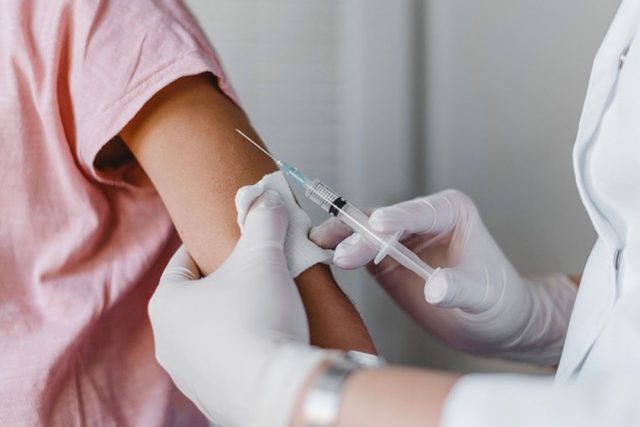
PFIZER, INC. and its German partner BioNTech SE said on Monday they have submitted an application to the US Food and Drug Administration (FDA) for emergency use authorization of their Omicron-adapted coronavirus disease 2019 (COVID-19) vaccine booster for children aged 6 months through 4 years.  

If authorized, children would receive the primary series consisting of two doses of the original Pfizer-BioNTech COVID vaccine and one shot of the Omicron-adapted bivalent vaccine, the company said.  

The bivalent COVID-19 vaccine, which targets the original strain and the BA.4/BA.5 Omicron subvariants, is currently authorized as a booster dose for ages 5 years and older in the United States and the European Union.  

Last month, a real-world study of more than 360,000 people in the US found the updated bivalent boosters, including those of rival Moderna, Inc., offered increased protection against new coronavirus subvariants in people who have received up to four doses of the older vaccine. — Reuters

PETA Theater returns to live theater with new original musical

A SCENE from Rody Vera’s musical Walang Aray

THE PHILIPPINE Educational Theater Association (PETA) returns to live theater with a new original musical, Rody Vera’s Walang Aray.

The musical was chosen to launch the company’s comeback and cap the company’s Emerald year after waiting in the wings since its first laboratory performances in 2018 and 2019.

After the coronavirus pandemic disrupted life for the last three years, the audience deserves a time to laugh and enjoy themselves.

“It’s necessary, after three years of what we went through — not only the pandemic, but also the elections — to do something irreverent and funny. I think that is what people need right now. They need a space to laugh, to sort of allow themselves to have fun and enjoy something,” PETA artistic director, Maribel Legarda said at the media launch on Nov. 28.

“But of course, in PETA, it’s not just having fun. PETA believes that good comedy makes you think and reflect, and Walang Aray is exactly that,” Ms. Legarda added.

Presented by PETA with Indie.Go Media, in partnership with Star Magic, Walang Aray is an adaptation of a screenplay of the same name, based on Severino Reyes’ classic zarzuela, Walang Sugat.

“We must evolve. We cannot do things over and over the same way, we must change, challenge, and chase forward. That is why Walang Sugat evolved to Walang Aray, from the stage, adapted to screenplay, and back to the stage — and we tried to make the comeback different,” Ms. Legarda said.

Jun Reyes, the grandson of Severino Reyes said, that if his grandfather is alive today, “He would be amazed.”

“The retelling of this story with the creative mind of Rody [Vera] is made more relevant for our generation now,” Mr. Reyes said. “It [is] history retold in a fresh way…I think he would be very happy of the refreshed idea for his classic Walang Sugat.”

Mr. Reyes first commissioned playwright Rody Vera in 2008 to do a hip film version of the story. It was envisioned as a jukebox musical which would feature OPM songs. However, the film project was shelved for almost a decade.

“I decided to have it read by PETA Artistic Director Maribel Legarda, hoping it could be adapted into a stage play instead. She was interested but wanted original songs written in place of the OPM covers. Initially I was a bit reluctant because some of the scenes in the screenplay were written with the chosen OPM song in mind,” said Mr. Vera in his playwright’s notes.

Walang Aray follows lovers Julia and Tenyong who struggle to hide their relationship from Julia’s mother Juana who wants her daughter to wed the affluent Miguel. However, Julia and Tenyong’s relationship struggles when she joins the revolution.

Walang Aray merges the classic with contemporary language, pop tunes, and tongue-in-cheek humor.

Walang Aray also pokes fun at the usual villains in our history — but also it is just as irreverent at those we have traditionally held high in our regard: the demure Filipina, now a feisty, daring, passionate woman who knows exactly what she wants and will do anything to achieve it,” Mr. Vera wrote.

With the various issues continuously plaguing the nation, Mr. Vera noted that Filipinos overcome them “with a stubborn resilience and defiance in ways only we Pinoys know best: our scathing and penetrating humor.

“Whether we laugh at ourselves or we laugh at our oppressors, we have used it to understand and frame our lives as Pinoys, still keeping our dignity intact despite our furtive mischievous smile,” he wrote.

Walang Aray stars Star Magic’s KD Estrada and Alexa Ilacad (KDLex), alternating with theater artists Gio Gahol and Marynor Madamesila as Tenyong and Julia.

The cast includes PETA artists Jarred Jaicten, Kiki Baento, Carlon Matobato, Gie Onida, Norbs Portales, Neomi Gonzales, John Moran, Tom Bienvenida, Donn Boco, Gerard Dy, Yeyin Dela Cruz, Ada Tayao, and Ayla Garcia.

Young PETA artists make up the creative team including Ian Segarra (director), Vince Lim (composer, musical director, sound designer, additional lyrics), Happy Constantino (sound designer), Gio Gahol (choreographer), Julio Garcia (production designer) and Ayla Garcia (voice coach). They are joined by guest artists David Esguerra (lighting designer), and JayLo Cunanan (costume designer).

Walang Aray will run at the PETA Theater Center from Feb. 17 to May 14, 2023. Tickets will be available via TicketWorld.com.ph starting Dec. 10. For bulk tickets and show buying inquiries, contact Mitch Go at 0917-539-1112. — Michelle Anne P. Soliman


Yamaha Philippines rolls out solar power system

MOTORCYLE BRAND Yamaha Motor Philippines, Inc. energized on Monday its 170-kilowatt peak (kWp) solar rooftop photovoltaic system on its administration building in Malvar, Batangas. 

Arnel Recolizado, Yamaha Motor Philippines general manager for production engineering, said during the launch event at Lima Technology Center that the solar rooftop project is part of the environmental plan 2050 of the global Yamaha Group.

“This is a very important milestone for us to start our renewable energy initiative,” Mr. Recolizado said.

The solar project was done under a partnership between Yamaha Motor Philippines and Excell Energy and PowerGen Corp., which is a unit of licensed retail electricity supplier Mabuhay Energy Corp.

According to Yamaha, the solar rooftop system placed on its administration building can generate up to 216 megawatt hours (MWh) of electricity per year and will allow the company to reduce its electricity bills and carbon footprint.

“The solar rooftop system’s levelized cost of electricity (LCOE) is P2.27 per kilowatt hour (kWh) which is way below the current grid rate of about P11 to 14 per kWh,” Yamaha said.   

“In terms of environmental contributions, the utilization of the system will avoid the burning of 70 metric tons of coal per year and eliminate approximately 140 metric tons of carbon dioxide, which is the equivalent of planting about 1,951 trees per year,” the company added.

Yamaha Motor Philippines President Hiroshi Koike said that the capacity of the solar project will be expanded by 1 MW next year.

“Our goal is not just to save on costs but more importantly, to curb carbon emissions. As a global company, we are very conscious about our role and impact to the society and the environment,” he said.

“While still relatively small, it somehow allows us to already realize our vision of contributing to Yamaha Group Environmental Plan 2050. This is just the beginning.  By next year, the capacity will be expanded by 1 MW,” he added.

Sherwin Hing, Excell Energy chairman and chief executive officer, said that the project has been completed without any accidents and interruptions.

“Confidently, we are proud to say that the project has been completed without any accidents and interruptions whilst closely adhering to Yamaha’s installation standards. It has also passed the critical parameters for grid connection. We thank Yamaha for the trust and look forward to strengthening our partnership,” he said.

In 2021, Yamaha Motor Philippines finished a P2.6-billion expansion plan aimed at solidifying its market stronghold and contribute to the country’s economic growth. — Revin Mikhael D. Ochave

Rising flu cases drive up US hospitalizations, CDC says

UNSPLASH

WASHINGTON — The United States is experiencing the highest levels of hospitalizations from influenza that it has seen in a decade for this time of year, the head of the US Centers for Disease Control and Prevention (CDC) said on Monday, adding that 14 children have died so far this flu season.  

CDC Director Rochelle Walensky added that US hospital systems also continue to be stressed with a high number of patients with other respiratory illnesses such as respiratory syncytial virus (RSV) and coronavirus disease 2019 (COVID-19).  

There have been at least 8.7 million illnesses, 78,000 hospitalizations, and 4,500 deaths from flu so far this season, according to CDC estimates. It urged people to get vaccinated.  

“Especially for RSV and flu, these levels are higher than we generally see this time of year,” Dr. Walensky told reporters in a telephone news briefing. She said flu season started earlier and “hospitalizations for flu continue to be the highest we have seen at this time of year in a decade.”  

Respiratory viruses are spreading as people gather indoors due to the colder weather. People also likely have weakened defenses after not being exposed to flu and RSV while working or schooling from home during the COVID-19 pandemic.  

Vaccination rates for people at higher risk from the flu — those 65 and older, children and pregnant women — are also lower than at this time last year, Dr. Walensky added.  

About 12% fewer pregnant women have been vaccinated so far this season compared to last season, and about 5% fewer children, Dr. Walensky said.  

Between Oct. 1 and Nov. 26, the rate of hospitalization for flu in the United States was 16.6 per 100,000 people. In the past 10 years, the cumulative rate during the same week of the year typically ranges from 0.1 to 2 per 100,000.  

COVID-19 cases have risen following the Thanksgiving holiday and COVID-related hospitalizations have also increased about 15% to 20% over the last week, Dr. Walensky said.  

Dr. Walensky, joined by Dr. Sandra Fryhofer, an internist who chairs the American Medical Association board, urged people to get flu shots now — despite possibly being wary or tired of vaccinations — saying it was not too late.  

“This year’s flu season’s off to a rough start,” Dr. Fryhofer said. “It started early, and with COVID and RSV also circulating, it’s a perfect storm for a terrible holiday season.” — Reuters

Gov’t fully awards bond offer on strong demand, dovish BSP bets

BW FILE PHOTO

THE GOVERNMENT fully awarded the reissued 25-year Treasury bonds (T-bonds) it offered on Tuesday at a lower average rate amid strong demand and even as inflation reached a fresh peak in November.

The Bureau of the Treasury (BTr) raised P35 billion as planned from its offer of reissued 25-year papers on Tuesday as total bids reached P79.44 billion.

The bonds, which have a remaining life of 11 years and 11 months, were awarded at an average rate 7.189%, down by 97.9 basis points (bps) from the 8.168% quoted for the papers when they were last offered on Nov. 15, with accepted yields ranging from 6.9% to 7.25%.

The average rate was also 206.1 bps below the issue’s 9.25% coupon and 21.25 bps lower than the 7.4015% quoted for the same bond series at the secondary market before the auction, based on PHP Bloomberg Valuation Service Reference Rates data from the BTr. However, it was 21.31 bps higher than the 6.9759% yield for the 10-year bond, the tenor closest to the remaining life of the issue, at the secondary market.

National Treasurer Rosalia V. de Leon said in a Viber message to reporters after the auction that the full award was made amid “strong demand and a significant decline in rates, even as November inflation settled at 8%.”

She said rates dropped on expectations that inflation had peaked and amid dovish signals from the Bangko Sentral ng Pilipinas (BSP).

Asked if the BTr will consider including longer tenors in its borrowing plan for next month after the successful auction, Ms. De Leon said they may do so “if the market pricing is good.”

“Despite the higher-than-expected inflation print, the average yield for today’s auction settled within expectations given that some dealers and investors are still armed with liquidity from maturing government securities,” a trader said in a text message on Tuesday.

“Yields on peso bonds have been steady with downward bias given the view that rate hikes will no longer be aggressive relative to rate hikes done in recent months,” the trader added.

UnionBank of the Philippines, Inc. Chief Economist Ruben Carlo O. Asuncion likewise said the accepted rates were within expectations.

“Nevertheless, a huge chunk of the tenders was rejected, and it seems the market is still pricing in the Bangko Sentral ng Pilipinas’ monetary policy move. With inflation now rising to 8%, it is hard not to expect the BSP tweaking rates by another round of 50 bps by the December meeting,” he said in a Viber message.

Headline inflation stood at 8% in November, its quickest pace in 14 years, driven by rising food costs due to typhoon damage. This was faster than both the 7.7% in October and the 3.7% in the same month last year.

It was also the fastest headline print since the 9.1% in November 2008 and was higher than the 7.8% median estimate in a BusinessWorld poll last week.

For the first 11 months, inflation averaged 5.6% versus the 4% seen in the same period a year ago. This is still lower than the BSP’s 5.8% full-year forecast but well above its 2-4% target.

BSP Governor Felipe M. Medalla last week said the central bank is likely to hike interest rates anew this month, but the Monetary Board has yet to decide whether to tighten by 25 or 50 bps on Dec. 15 following dovish hints from the US Federal Reserve chief.

Fed Chair Jerome H. Powell last week said it was time to slow the pace of upcoming rate increases. The US central bank now widely expected to raise rates by just 50 bps in its last policy meeting for the year to be held on Dec. 13-14 following four straight 75-bp hikes.

The BSP has raised borrowing costs by 300 bps since May, while the Fed has hiked rates by 375 bps since March.

The BTr wants to raise P135 billion from the domestic market this month, or P30 billion through Treasury bills and P105 billion from T-bonds.

The government borrows from local and external sources to help plug a budget deficit capped at 7.6% of gross domestic product this year. — Luisa Maria Jacinta C. Jocson

Kirstie Alley, Cheers and Look Who’s Talking star, 71

KIRSTIE ALLEY in Cheers.

LOS ANGELES — Kirstie Alley, the two-time Emmy-winning actress who rose to fame in her role on the hit TV series Cheers, died on Monday after a short battle with cancer. She was 71.

Ms. Alley’s death was confirmed to Reuters by her representative and through a statement from her children posted on her official Twitter account saying that the actress had died at the Moffitt Cancer Center in Florida.

“To all our friends, far and wide around the world … we are sad to inform you that our incredible, fierce and loving mother has passed away after a battle with cancer, only recently discovered,” True and Lillie Parker said in a statement.

“She was surrounded by her closest family and fought with great strength, leaving us with a certainty of her never-ending joy of living and whatever adventures lie ahead. As iconic as she was on screen, she was an even more amazing mother and grandmother.”

Alley’s breakout role came as Rebecca Howe in the NBC sitcom Cheers, which she starred in from 1987 until 1993, and for which she received an Emmy and a Golden Globe award in 1991. She won her second Emmy in 1994 for the television film David’s Mother.

Ms. Alley also starred alongside John Travolta in the 1989 film comedy Look Who’s Talking and its two sequels.

“Kirstie was one of the most special relationships I’ve ever had,” Mr. Travolta said on Instagram alongside a photo of the actress in a white dress. “I love you Kirstie. I know we will see each other again.”

Ms. Alley starred as the title character in the sitcom Veronica’s Closet from 1997 to 2000, earning Golden Globe and Emmy nominations.

She later competed on Dancing with the Stars and The Masked Singer.Reuters

Globe cell sites in Mindoro, Marinduque fired up

GLOBE TELECOM, Inc. announced on Tuesday that it has fired up 26 new cell sites in Oriental Mindoro and Marinduque through partnerships with local cooperatives.

The company partnered with the Oriental Mindoro Electric Cooperative, Inc. and the Marinduque Electric Cooperative, Inc. to power up 17 cell sites and nine towers, respectively, Globe said in an e-mailed statement.

“These benefitted around 102,000 customers in both provinces through faster and more reliable internet connection.”

According to the Ayala-led telco, the partnership involves a joint pole deal that allows it to tap the electric cooperatives’ infrastructure for connectivity equipment. 

“The cooperatives also assist Globe with its permanent power applications and securing necessary permits,” the company said.

Globe has spent P50.5 billion in the first half of this year, mainly on network expansion and upgrades.

The goal is to “provide better and faster connectivity to … customers,” the company said. “This figure closed at P74.4 billion by end-September.”

“Within the same period, it installed 572 new cell towers and upgraded 6,800 mobile sites to 4G (fourth generation),” it added.

The company intends to build at least 1,700 new cell sites by yearend.

Globe saw its total comprehensive income increase 37% to P24.9 billion at end-September. — Arjay L. Balinbin

Few Chinese keen to travel abroad soon, even if COVID curbs ease — report

STOCK PHOTO

SHANGHAI — More than half of Chinese say they will put off travel abroad, for periods from several months to more than a year, even if borders reopened tomorrow, a study showed on Tuesday, a sign that consumer recovery from coronavirus disease 2019 (COVID-19) measures will take time.  

Mainland China retains some of the world’s most stringent measures on PCR testing and quarantine for international travelers, despite some domestic easing of curbs after last month’s unprecedented COVID protests.  

Fear of infection with the disease was the top concern of those saying they would postpone travel in a survey of 4,000 consumers in China by consultancy Oliver Wyman, with worries about changes to domestic re-entry guidelines in second place.  

“People have become cautious,” said Imke Wouters, a retail and consumer goods partner at the firm. “So even when they can travel, we don’t think they will come back right away.”  

As many as 51% of those surveyed plan to delay international travel. And when they do, short-haul destinations will be the first to benefit, the consultancy said in its study, “China Consumption Recovery.”  

The Asian financial hub of Hong Kong topped wishlists for travel, with 34% of respondents saying it would be their first stop after the reopening.  

The survey, in late October, followed the 20th Congress of the ruling Communist Party in Beijing, which brought President Xi Jinping a precedent-breaking third term as leader, at an event many had hoped would herald an opening-up after COVID.  

China was formerly the world’s largest outbound tourism market, but its overseas visitors, who spent $127.5 billion on such trips in 2019, have virtually disappeared after it all but shut international borders in early 2020 and curbed non-essential travel by citizens.  

China’s uncompromising “zero-COVID” effort hit the economy hard, and it is expected to reshape policies soon, though analysts have warned that any reopening will be bumpy and complex.  

As many as 83% of the executives in China who responded to the survey said “a long road to consumer confidence recovery” was set to affect their mainland business over the next year.  

While the report found consumer sentiment subdued by lockdowns and economic uncertainty, Wouters said Chinese consumers still showed a willingness to boost spending next year if conditions improve.  

Nearly half, or 44%, of respondents cited an increase in personal savings as a reason they were likely to spend more next year.  

China’s household deposits increased to 13 trillion yuan ($1.8 trillion) for the period from January to September this year, up from 8.5 trillion for the corresponding 2021 period.  

Most spending in the next 12 months will focus on personal well-being, in areas linked to health, fitness or wellness.  

The outlier, according to Wouters, was Gen Z, or the group born in the period spanning the mid- to late 1990s and the early 2010s, which would focus spending on “living in the moment.”  

“We don’t expect to see the same boom in luxury spending that we saw in 2021,” she said. “But whatever growth we do see will be driven by Gen Z.” — Reuters 

HSBC Philippines set to absorb retail banking arm

HSBC PHILIPPINES is set to absorb its retail banking unit HSBC Savings Bank as the lender aims to streamline its operations in the country.

“HSBC (The Hongkong and Shanghai Banking Corp. Ltd.) will combine the retail bank operations of HSBC Savings Bank and HSBC Philippines under the latter entity,” the global lender’s local unit said in a statement on Tuesday.

“Investment and insurance needs will be centralized through the new wealth management business, HSBC Wealth, incorporated as HSBC Investment and Insurance Brokerage, Philippines, Inc. (HIIB), which was established in September this year. Its Commercial Banking and Global Banking and Market business continues to be served under HSBC Philippines,” it added.

The move aims to streamline the bank’s operations to support the growth of its retail customer base. The merger is set to begin within the first half of 2023.

“These changes will ensure we continue to build a market leading franchise in the Philippines and a bank that’s fit for the future. Most importantly, being an international bank, we are here to continuously connect our retail and corporate customers to opportunities in more than 60 countries across the globe,” HSBC Philippines President and Chief Executive Officer Sandeep Uppal said.

“We are simplifying our retail banking business in the Philippines to improve customer experience and broaden our service offerings,” HSBC Philippines Head of Wealth and Personal Banking Peter Faulhaber.

The bank said with the merger, its customers will be able to avail of its products easily.

It said its services will not be disrupted with the change as it aims for “a seamless transition of customer accounts from the savings bank to HSBC Philippines.”

“Our savings bank customers will be kept informed of the migration process through various channels such as electronic direct mails, SMS and letters. They may also get in touch with us through our branch network, our contact center or through their assigned Relationship Managers,” Mr. Faulhaber said.

“Customers of HSBC Savings Bank Greenhills and Rockwell branches will be serviced by any HSBC Philippines branch. Alabang Branch will remain and be rebranded as an HSBC Philippines branch. The restructuring and addition of the HSBC Savings Bank branches will fit in with HSBC’s plan to enhance its retail banking business in the Philippines, where the Group has been expanding and upgrading its branches across the Philippines over the past two years,” HSBC Philippines added. — A.M.C. Sy

Greece, Britain discussing Parthenon Sculptures return but deal not close, Athens says

SERIES: The Parthenon Sculptures — PHOTO FROM BRITISHMUSEUM.ORG

ATHENS — The Greek government on Monday said that a deal with Britain over the repatriation of the Parthenon Sculptures to Athens was not imminent but the two sides were in talks on the long-running dispute.

The British government also said it had no plans to change laws which prevent the removal of such items from the British Museum’s collection. The museum, custodian of the sculptures known in Britain as the Elgin Marbles, also reiterated it would not dismantle its collection.

Greece has repeatedly called for the permanent return from the British Museum of the 2,500-year-old sculptures, which British diplomat Lord Elgin removed from the Parthenon temple in the early 19th century when he was ambassador to the Ottoman Empire, Greece’s then-ruler.

Greece’s Ta Nea newspaper on Saturday reported that negotiations were at an advanced stage and cited a Greek source as saying that an agreement was 90% complete but that “a critical 10% remains unresolved.”

“Since the beginning of its term the government has been and is in talks with the British side,” government spokesman Giannis Oikonomou said on Monday when asked about the media reports.

“These discussions are at a preliminary stage. We are far from announcements or a final deal,” he said.

Last week, Greek Prime Minister Kyriakos Mitsotakis, who faces elections in 2023, said that there was “progress” and a sense of “momentum” in talks with Britain to reunite the sculptures in Greece.

The British Museum has always ruled out returning the marbles, which include about half of the 160-meter (525-ft) frieze that adorned the Parthenon, and insists they were legally acquired.

The museum said in a statement on Monday it would not dismantle its collection “as it tells a unique story of our common humanity.” However, it said it wanted to forge a new “Parthenon Partnership” with Greece.

“We are seeking new positive, long-term partnerships with countries and communities around the world, and that of course includes Greece,” it said.

Asked about British Prime Minister Rishi Sunak’s position on their return, a spokesman said Britain had no plans to change laws which prevent removing objects from the collection apart from in certain circumstances.

“Our position on this hasn’t changed. Decisions relating to the care and management of the collections are a matter for the museum and its trustees,” the spokesman said.

Citing a British official, Greece’s ANT1 TV said on Sunday that the only way to return the sculptures to Greece without violating British law was “if the British Museum opened a kind of annex in Greece.”

In March, the United Nations’ cultural agency UNESCO urged Greece and Britain to reach a settlement on the issue.

Greece stepped up its campaign for the return of the marbles after opening a new museum in 2009 at the foot of the Acropolis hill that it hopes will one day house them.

In 2019, Greece said it could loan treasures to the British Museum in return for being able to temporarily exhibit the Parthenon marbles and that such a proposal was not altering its long-standing demand for their permanent return. This year, the so-called “Fagan fragment,” a 35-by-31-cm (12-by-14-inch) piece showing the foot of the seated ancient Greek goddess Artemis, which was part of the 5th century BC temple’s eastern frieze, was permanently returned to Athens from a museum in Italy. — Reuters

Celebrating PHL biotechnology

UNSPLASH

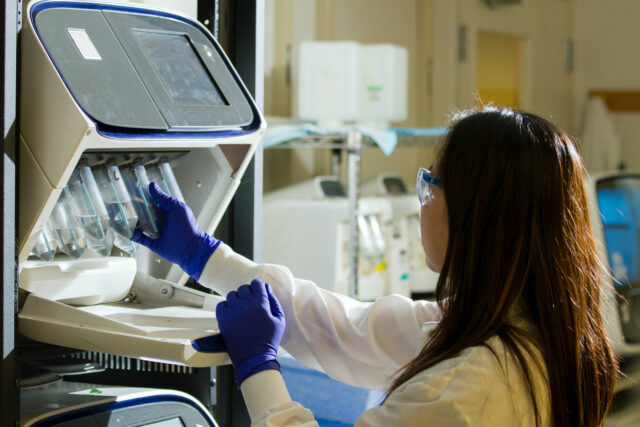
At its simplest, biotechnology is technology based on biology. It harnesses cellular and biomolecular processes to develop technologies and products that help improve people’s lives and the health of our planet, said the Biotechnology Innovation Organization (BIO).   

National Biotechnology Week, held every last week of November in the country, promotes the safe and responsible use of modern biotechnology and its products as a means to achieve and sustain food security, equitable access to health services, a sustainable and safe environment, and industry development.  

With the theme “Responding to the Challenges: Business Opportunities in Biotechnology,” the 18th edition celebrated the contributions of the country’s biotechnology sector. 

Biotherapeutic medicines, also called biotech drugs or biologics, are derived from proteins and other substances produced by living organisms, such as mammalian cells, viruses and bacteria. With a unique and diverse range of specific targets, biotherapeutic medicines open new avenues for delivering cutting-edge treatments for numerous diseases and wide patient populations.   

In the last 30 years, biotherapeutics have become an important part of modern medicine. Insulin, used by diabetics to regulate blood sugar, was the first modern medicine produced using biotechnological methods. Since then, many biotherapeutic medicines delivered by the research-based biopharmaceutical industry have been developed and licensed to treat serious illnesses including cancer, heart disease, multiple sclerosis, anemia, and rheumatoid arthritis.  

The International Federation of Pharmaceutical Manufacturers and Associations (IFPMA) said that biotherapeutic medicines benefit more than 350 million patients worldwide, treating widespread diseases such as cancer and diabetes, as well as rare illnesses. Being similar in structure to molecules naturally produced in the human body, biotherapeutic medicines have great therapeutic impact in many disease areas and can additionally serve to diagnose other diseases. They have moreover proven to be effective in the treatment of conditions that had not been positively addressed by chemically synthesized small molecule medicines.   

Over the past 30 years, medical advances in biotherapeutic medicines have focused on treating many chronic diseases — including cancer, diabetes, hepatitis C, and chronic renal failure — as well as less common ones such as hemophilia, Fabry’s disease, growth deficiency, multiple sclerosis and Crohn’s disease.  

Until the 1980s, insulin extracted from animals was used to treat diabetes. In 1982, researchers produced human insulin of superior quality by recombinant DNA technology using a culture of E. coli bacteria. This became the first approved biotherapeutic product. Human insulin benefits today the vast majority of diabetic patients who require insulin treatment.  

Major strides in fighting cancer successfully go hand in hand with improved diagnostics, treatments and prevention methods. Biotherapeutic medicines play a role in the discovery and development of biomarkers. Today, biomarkers help in predicting the risk of cancer, diagnosing it, and indicating a potential effective course of treatment.  

If left untreated, autoimmune diseases such as Crohn’s disease and rheumatoid arthritis can lead to early mortality. Biotherapeutic medicines have proved successful and have had a highly positive impact in the treatment of these diseases.  

As with all medicines, the research and development process for biotherapeutics involves a high degree of scientific and economic risk, so there is a need for strong intellectual property rights, to stimulate the incentive to innovate. When developing biotherapeutics, years of research focus on finding the right organism and manufacturing conditions to produce the required protein or antibody. A small change in the manufacturing process can affect the final product. That’s why precision and conformance to scientific requirements are necessary to ensure their quality, safety, and efficacy. In this context, scientists must create the right environment for cells to isolate and purify the biotherapeutic protein so it’s exactly the right product every time.  

Examples of available biotherapeutic medicines include Anti-CD20 for cancer and rheumatoid arthritis; Anti-HER2 for cancer; Anti-TNFs for rheumatoid arthritis, psoriasis, Crohn’s disease, and ulcerative colitis; Anti-VEGF for cancer and macular degeneration; Bone Morphogenic Protein-7 for bone repair; Consensus Interferon for hepatitis C; Erythropoietin for chronic anemia; and Follicle-Stimulating Hormone (FSH) for infertility among many others. And biotechnology has recently been used for coronavirus disease 2019 (COVID-19) treatments.   

With biotechnology applied to health, patients are leading healthier lives — often without realizing the source of biotherapeutic medicines.  


Teodoro B. Padilla is the executive director of the Pharmaceutical and Healthcare Association of the Philippines (PHAP), which represents the biopharmaceutical medicines and vaccines industry in the country. Its members are at the forefront of research and development efforts for COVID-19 and other diseases that affect Filipinos.