Home Blog Page 5537

Indonesia extends loan relief for some pandemic-hit sectors

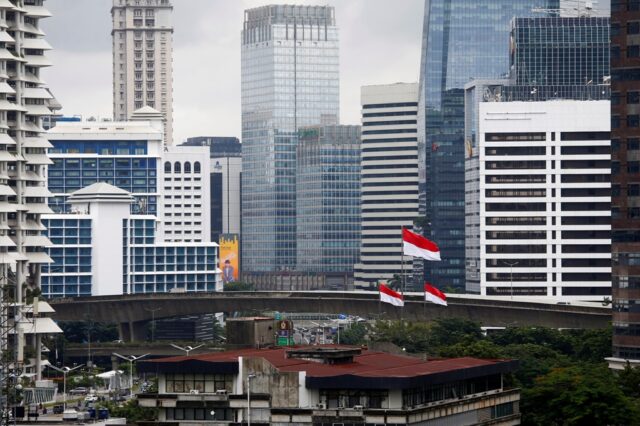
INDONESIAN national flags fly at a business district in Jakarta, Indonesia, Feb. 5, 2021. — REUTERS

JAKARTA — Indonesia has extended loan forbearance for businesses such as accommodation as well as the textile and footwear industries that are yet to recover from the impact of the COVID-19 pandemic, the country’s financial regulator said on Monday.

The Financial Services Authority (OJK) has since March 2020 provided incentives to banks to restructure loans for debtors suffering during the pandemic.

“Most sectors and industries have recovered with a strong growth. However, based on our in-depth analysis, several exceptions were found due to the prolonged impact of the COVID-19 pandemic,” OJK said in a statement.

The new extension will last until March 2024 and will apply to businesses such as accommodation, food and beverage, and labor-intensive industries like textile and footwear, OJK said.

All micro, small and medium enterprises will also be eligible to the incentives, the regulator said.

The rules, which means lenders do not have to set aside provisions for souring loans, have helped prevent a spike in Indonesia’s non-performing loan (NPL) ratio. — Reuters

UK to fine tech companies that fail to remove self-harm material

Figures are seen in front of displayed social media logos in this illustration taken on May 25, 2021. — REUTERS

LONDON — Britain’s government intends to make it illegal to encourage others to harm themselves online and will fine social media companies that fail to remove such material, as part of a revamp of legislation governing online behavior.

Promoting suicide is already illegal, but Britain’s digital, culture, media and sport ministry said in a statement that it now wanted to require social media firms to block a wider range of content.

“Social media firms can no longer remain silent bystanders … and they’ll face fines for allowing this abusive and destructive behavior to continue on their platforms under our laws,” Digital Secretary Michelle Donelan said.

The Conservative government said the proposals aimed to block images and videos similar to those viewed by Molly Russell, a 14-year-old whose death in 2017 sparked ongoing public concern.

In September, the coroner investigating her death ruled that social media platforms had fed content to her which “romanticized acts of self-harm by young people”.

Under the proposals, social media companies will have to remove and limit users’ exposure to material that deliberately encourages people to harm themselves.

Last week the government said the new legislation would also ban the distribution of sexually explicit images that have been manipulated to look like they feature someone who has not consented to appear in them.

Full details of the latest proposals — including the criminal penalties faced by people who promote self-harm, and the scale of fines faced by companies — will come next month when legislative amendments are put before parliament.

The wider legislation incorporating such penalties, known as the Online Safety Bill, has had a slow passage through parliament since its first draft in May 2021.

Earlier versions sought to ban “legal but harmful” material online, drawing criticism from tech companies and free-speech campaigners who said the definition was too vague and could be used to arbitrarily criminalize otherwise legal behavior.

However, the bill has been strongly supported by children’s and mental health charities, and by people seeking to limit racist and sexist abuse online. — Reuters

Climate summit lacked ambition — gov’t officials

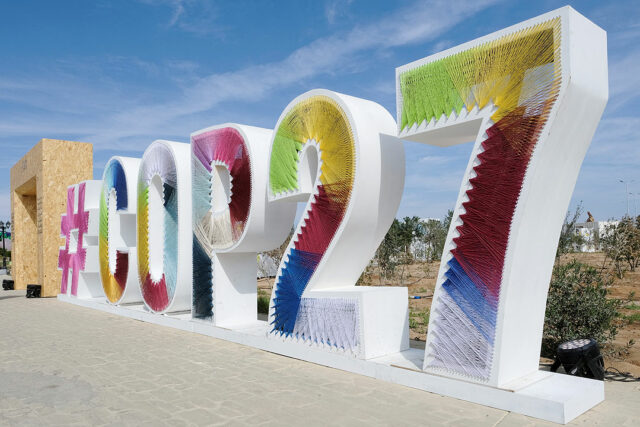
COP27 sign is seen at the Green Zone at the UN climate summit in Red Sea resort of Sharm el-Sheikh, Egypt, Nov. 17, 2022. — REUTERS

FOSSIL FUEL producers benefited from sympathetic treatment in Egypt at the COP27 climate talks, government officials said, bringing their influence to bear in rushed final negotiations and frustrating those who hoped for a more ambitious outcome.

Officials said the host Egypt, a natural gas exporter and frequent recipient of funds from Gulf oil producers, was partly responsible, although the war in Ukraine and the subsequent European energy crisis also had an impact.

Egyptian officials have said their priority was to provide a conducive atmosphere for negotiations and act as a neutral mediator. The presidency denied that fossil fuel producers had been given sympathetic treatment.

“The end decision at COP27 was a compilation of inputs reached by consensus of all the UNFCCC parties who were all consulted,” it said in a statement, referring to nearly 200 countries taking part in the summit under the U.N. Framework Convention on Climate Change.

Demands from environmental groups and scientists that governments and companies should leave oil and gas in the ground have had less traction this year, since European countries have scrambled to replace Russian gas.

The COP27 meeting yielded mixed results, with a hard-fought agreement on a fund for countries most harmed by climate change being welcomed by vulnerable nations, but a cover text that some officials said lacked ambition due to the influence of fossil fuel producers. The cover text summarizes key outcomes of the summit.

“The cover decision and the mitigation work program does not fully reflect the urgency of the climate crisis and did indeed cater too much to the more fossil and backward-looking forces,” said Espen Barth Eide, Norway’s minister of climate and environment.

Some of the countries that had pushed hardest for the new fund for loss and damage simultaneously tried to weaken language around phasing down fossil fuels, he added.

LOW-EMISSION ENERGY
The COP27 agreements are in line with what came out of the Glasgow meeting last year, to accelerate “efforts towards the phasedown of unabated coal power and phase-out of inefficient fossil fuel subsidies,” rather than being strengthened to phasing down fossil fuels as some countries had pushed for. 

It also included a new reference to “low emission and renewable energy”. The Egyptian presidency said the language reflected part of the “just transition” adopted by all parties, which includes the use of hydrogen and nuclear energy to reduce emissions.

Egypt’s COP27 President Sameh Shoukry acknowledged there had been “disappointment in certain quarters” but told reporters after the deal that “a single party cannot achieve all their ambition, and this does not take away from the value of what was reached”.

For some, the Egyptian presidency had delivered a satisfactory deal by forging the agreement to set up a loss and damage fund. The idea had been resisted for years by some of the largest emitters, such as the United States and Europe, who were worried about the extent of liabilities.

Loss and damage were “the one thing we wanted a lot for ages, and that being solved at a COP being hosted by a developing country, that in itself is a great win because it shows their diplomatic strength,” said Selamawit Wubet, an adviser to a group of countries highly vulnerable to climate change.

But climate activists and some delegates said little progress had been made on most other issues, contending that the tone had been set by fossil fuel producers who played a more public and prominent role in Sharm el-Sheikh than at previous summits.

‘DIFFICULT TRANSITION’
“It has now become quite clear that the transition away from fossil fuels is going to be a difficult one,” said Pakistan’s UN Ambassador Munir Akram, citing the impact of the war in Ukraine.

In the final 24 hours, the COP presidency held a meeting where calls from negotiators from countries and groups including Switzerland, the United States, Latin America and small island states, for Egypt to include language initially proposed by India to phase down all fossil fuels were unheeded, officials said. At least 80 countries supported such language, they said.

Some negotiators expressed concern that Egypt had advanced its proposal without thorough consultation, as major emitters and producers took a stand against more ambitious goals on limiting fossil fuel use.

The Egyptian presidency told Reuters the process was “praised by all parties for being focused and streamlined”.

“The issue of phasing down all fossil fuels was not agreed upon by many countries,” it said.

ALL NIGHT TALKS
Ahead of the final plenary meeting where a deal was struck just after 5:30 a.m. local time, a Reuters reporter saw some delegates caught off guard by the presidency’s last-minute announcement of the session. Guards had to wake up some delegates sleeping on couches and chairs outside the plenary hall after 3 a.m., instructing them to go inside.

“It was very rushed towards the end,” said Shauna Aminath, Maldives environment minister. “The normal procedure is that there would be more consultation and open dialogue on these things,” she said.

The European Union, which had threatened to walk out, fell reluctantly in line to preserve the deal on loss and damage.

Egypt will hold the COP presidency until it hands over to the United Arab Emirates, an ally and a major hydrocarbons producer, in just under a year.

“Holding COPs in petro-states may seem counterproductive but actually we can’t ignore these countries. They need to be engaged in the process and putting pressure on them as a COP host may provide bigger gains,” said Mohamed Adow, founder of think tank Power Shift Africa. — Reuters

Pag-IBIG Fund home loan payments reach P57.6 billion, up 30%; PLR climbs to 89.96%

Driven by the strong collection of home loan payments in the last 10 months, Pag-IBIG Fund’s performing loans ratio (PLR) climbed to 89.96% in October, exceeding the agency’s yearend target by 196 basis points, top executives announced on Nov. 28.

From January to October, home loan payments amounted to P57.58 billion, a double-digit increase of 30%, or P13.31 billion higher than the P44.27 billion collected in the same period last year. The amount is a record high in terms of home loan payments collected by the agency for any January to October period.

“We are happy to report that the amount of home loan payments we have collected so far this year is the highest in our history. This is good news as it reflects the continued recovery of our borrowers from the financial difficulties caused by the pandemic. Our strong collections is key in maintaining our financial sustainability, as the amount we collect are ploughed back to our housing portfolio so that more members can avail of affordable home loans from Pag-IBIG Fund. This is one of our ways of heeding President Ferdinand Marcos, Jr.’s call in solving the country’s housing backlog within the next six years,” said Secretary Jose Rizalino L. Acuzar, who heads both the Department of Human Settlements and Urban Development and the 11-member Pag-IBIG Fund Board of Trustees.

Pag-IBIG Fund Chief Executive Officer Marilene C. Acosta added that because of its record-high collections, the agency has exceeded its yearend target on its performing loans ratio (PLR) earlier than projected.

As of October, Pag-IBIG Fund’s PLR stood at 89.96% surpassing its yearend target of 88%, while gaining 1,028 basis points from September 2021 figures when the agency’s PLR dipped to 79.68% following the effects of the pandemic.

“We thank our members for their efforts in fulfilling their payment obligations on their Pag-IBIG Housing Loans. It shows their growing appreciation that their on-time payments allow us to continue financing the loans of other members who wish to secure housing loans of their own. And, as we all continue to recover from the pandemic, we shall keep working hard to maintain our collections strong and our PLR high. These would allow us to not only address the loan needs of our members, but to also keep our interest rates low despite the upward market trend. These are all part of our Lingkod Pag-IBIG commitment to provide accessible and affordable home loans for each Filipino worker,” Acosta added.


Spotlight is BusinessWorld’s sponsored section that allows advertisers to amplify their brand and connect with BusinessWorld’s audience by enabling them to publish their stories directly on the BusinessWorld Web site. For more information, send an email to online@bworldonline.com.

Join us on Viber to get more updates from BusinessWorld: https://bit.ly/3hv6bLA.

China COVID cases hit fresh record high after weekend of protests

REUTERS

BEIJING — China posted another record high coronavirus disease 2019 (COVID-19) infections on Monday, after an extraordinary weekend of protests across the country over restrictive coronavirus curbs, in scenes unprecedented since President Xi Jinping assumed power a decade ago. 

In Shanghai, demonstrators and police clashed on Sunday, with police taking away a busload of protesters, with the BBC saying that police assaulted and detained one of its journalists covering the events before releasing him after several hours. 

Stocks and oil slid sharply on Monday as the rare protests raised worries about the management of China’s zero-COVID policy and its impact on the world’s second-largest economy, while Chinese censors scrambled to remove related images and posts. 

During the weekend, protesters in cities including Wuhan and Lanzhou overturned COVID testing facilities, while students gathered on campuses across China in actions that were sparked by anger over an apartment fire late last week in the far western city of Urumqi that killed 10 people. 

The deadly fire fueled speculation that COVID curbs in the city, parts of which had been under lockdown for 100 days, had hindered rescue and escape, which city officials denied. Crowds in Urumqi took to the street on Friday evening, chanting “End the lockdown!” according to unverified videos on social media. 

In Beijing, large crowds were gathered past midnight on Sunday along the capital’s 3rd Ring Road during peaceful but often impassioned scenes. 

In the early hours of Monday, one group chanted “we don’t want COVID tests, we want freedom” while brandishing blank white pieces of paper, which have become a symbol of protest in China in recent days. 

Cars that passed by regularly joined in the fanfare by honking their horns and giving thumbs up to protesters which in turn generated massive cheers from those gathered. 

The protesters were trailed by dozens of uniformed police officers, with plain-clothes security personnel in among the crowd and police cars moving along nearby. 

An official who said he was the head of Beijing’s police department came personally to speak to several of the protesters, holding a loudspeaker to plead with them to go home. 

“You young people. You need to go home now. You’re affecting traffic here by standing on the road,” he said. 

Shanghai’s clashes on Sunday followed a vigil the day before held by some of the city’s residents for the victims of the Urumqi apartment fire, which turned into a protest against COVID curbs, with the crowd chanting calls for lockdowns to be lifted. 

“Down with the Chinese Communist Party, down with Xi Jinping,” one large group chanted in the early hours of Sunday, according to witnesses and videos posted on social media, in a rare public protest against the country’s leadership. 

China has stuck with Mr. Xi’s zero-COVID policy even as much of the world has lifted most restrictions. 

China earlier this month sought to make the curbs more targeted and less onerous, prompting speculation that it will soon begin moving towards full reopening, but a resurgence in cases has thwarted investor hopes for significant easing anytime soon. 

Many analysts say China is unlikely to begin significant reopening before March or April at the earliest, and experts warn that China needs to ramp up its vaccination efforts as well. 

China on Monday reported a fifth straight daily record of new local cases of 40,052, up from 39,506 a day earlier. Mega-cities Guangzhou and Chongqing, with thousands of cases, are struggling to contain outbreaks while hundreds of infections were recorded in several cities across the country on Sunday. — Reuters

Philippines sees economy slowing, but ‘comparatively strong’ in 2023 

The Makati skyline is seen in the background in this file photo. — PHILIPPINE STAR/ MICHAEL VARCAS

MANILA — Philippine economic growth may ease next year after a likely expansion of more than 7% this year as global risks linger, but it will remain resilient, a top official said on Sunday.

“We may slow down, given still elevated external headwinds & internal challenges, but the economy will remain comparatively strong in 2023,” Economic Planning Secretary Arsenio Balisacan said in a tweet.

The government is aiming for yearly gross domestic product growth of 6.5% to 8.0% between 2023 and 2028.

The economy would likely grow above the government’s 6.5%-7.5% growth target for 2022, Mr. Balisacan said on Nov. 10, following a faster-than-expected 7.6% annual expansion in the third quarter, underpinned by pent-up domestic demand.

That followed GDP growth rates of 7.5% in the second and 8.2% in the first quarter, boosted by the full reopening of the economy as the government continuously lifted COVID-19 restrictions, and despite soaring inflation.

The world’s largest investment banks expect global economic growth to slow further in 2023 following a year roiled by the Ukraine conflict and soaring inflation, which triggered one of the fastest monetary policy tightening cycles in recent times. — Reuters

China poses increasing threat in military space race, top US general says

Rendering of China’s Tiangong Space Station. — WIKIMEDIA COMMONS

SYDNEY — Rapid advancements in China’s military capabilities pose increasing risks to American supremacy in outer space, the head of the United States military’s space wing said on Monday. 

Nina Armagno, director of staff of the US Space Force, said Beijing had made significant progress in developing military space technology, including in areas such as satellite communications and reusable spacecraft, which allow countries to rapidly scale up their space programs. 

“I think it’s entirely possible they could catch up and surpass us, absolutely,” Ms. Armagno said at an event in Sydney run by the Australian Strategic Policy Institute, a research organization partly funded by the US and Australian governments. “The progress they’ve made has been stunning, stunningly fast.” 

Historically lagging in a space race dominated by the United States and Russia, Beijing has made significant advances in recent years that have alarmed Washington and other Western nations. 

Ye Peijian, the head of the Chinese Lunar Exploration Program, has likened the moon and Mars to contested islands in the South China Sea that Beijing is attempting to claim. 

China is also developing experimental technology aimed at mining asteroids and minor planets for natural resources. 

“[China] is the only country with both the intent to reshape the international order and increasingly, the economic, diplomatic, military and technological power to achieve that objective,” Ms. Armagno said. 

Along with Russia, China has also conducted “reckless” missile tests that have created dangerous amounts of space debris in recent years, Armagno said. 

“These debris fields threatened all of our systems in space, and these systems are vital to all nations’ security, economic and scientific interests,” she said. 

Founded in 2019 in part as an attempt to counter the rising capabilities of China, the Space Force is the fourth branch of the US military, with Armagno serving as its first permanent leader. It is set to launch three astronauts to its new space station on Tuesday. — Reuters

Australia lowers terror threat level for first time since 2014

REUTERS

SYDNEY — Australia lowered its terrorism threat level on Monday to “possible” from “probable” for the first time in eight years, citing a reduced risk of attacks from extremists. 

The level was raised in 2014, spurred by concerns over the number of Australians believed to be fighting overseas with Islamist militant groups and the likelihood of terror attacks by those radicalized in Iraq or Syria. 

But spy agency the Australian Security Intelligence Organisation (ASIO) said the factors prompting the threat level no longer existed or only persisted to a lesser degree. 

“While Australia remains a potential terrorist target, there are fewer extremists with the intention to conduct an attack onshore,” Mike Burgess, its director general of security, told reporters. 

The change did not mean all terror threats had been extinguished, Mr. Burgess said, however. 

“It remains plausible that someone will die at the hands of a terrorist in Australia within the next 12 months — although, of course, (we) will work around the clock to prevent that,” he added. 

Last month, the Labor government decided to repatriate four Australian women and their 13 children from a Syrian refugee camp, resuming a controversial program criticized by the Liberal-National opposition. 

Mr. Burgess said Monday’s decision took into account the move to repatriate the group, related to dead or jailed fighters from the militant Islamic State group. 

The offshore networks, capabilities and allure of radical Islamic groups have been degraded with their support in Australia fading though it has not yet disappeared, Mr. Burgess said. 

“While ASIO considered all these factors when deciding to lower the terrorism threat level, I can almost guarantee it will need to go up again at some point in the future.” — Reuters

Tens of thousands march in Mexico City to support president

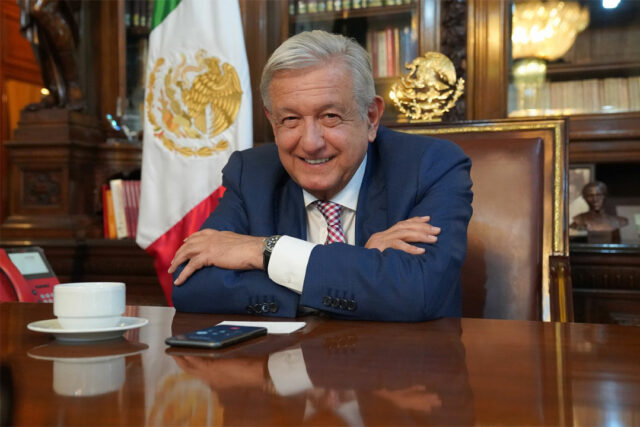
Mexican President Andres Manuel Lopez Obrador. — Andres Manuel Lopez Obrador/Facebook

MEXICO CITY — Tens of thousands marched with Mexican President Andres Manuel Lopez Obrador on Sunday in a massive demonstration through the center of the country’s capital to show their support for the head of state before a 2024 general election.

“Mexico is no longer run by oligarchy, now there is a democratic system whose priority is the poor,” the president told people crowding the vast Zocalo square at the city’s center. 

Mr. Lopez Obrador, whose administration has made double-digit minimum wages hikes for the past four years, proposed that the 2023 increase could land around 20%, and forecast the country’s economic growth would beat expectations. 

Supporters, many of whom traveled to the capital by bus, shook hands and took selfies with the 69-year-old head of state as he crossed the square, many waving flags for the ruling National Regeneration Movement (MORENA) party. 

“The president is from a humble background. He’s done a lot of social programs,” said Teresa Magana, who pooled money with a group of 40 to travel 12 hours from Tabasco, the president’s home state. “We want him to continue.” 

The speech followed a five-hour march through the capital’s Reforma Avenue and performances by mariachi musicians in the main square. The president’s approval ratings are around 60%. 

ELECTORAL REFORM 

Mexican presidents are limited to a single six-year term. Foreign Minister Marcelo Ebrard and Mexico City Mayor Claudia Sheinbaum, who were at the march, are likely party candidates to run for the next election, scheduled for the summer of 2024. 

The march comes a fortnight after critics of the president’s plan to reform the country’s electoral system came to the streets in tens of thousands, the largest demonstration against his policies so far. 

Earlier this month, Congress started discussing the plan. Lopez Obrador, known by his initials as AMLO, says his proposal would improve democracy, limit economic influence in politics and cut advertising time, but his opponents fear the change could presage a power grab. 

The plan would reduce the budget of the country’s INE electoral commission and change the way councilors are elected. 

Some people protested on Sunday with coffin-shaped signs marked INE. 

“AMLO criticizes the salaries of INE councilors,” wrote columnist Sergio Negrete on Twitter. “With the cost of his ego-boosting march, he could pay the salaries of 11 INE councilors for 43 years and three months.” — Reuters


Canada to boost defense, cybersecurity in Indo-Pacific policy, focus on ‘disruptive’ China

PRAVEEN KUMAR NANDAGIRI-UNSPLASH

OTTAWA — Canada launched its long-awaited Indo-Pacific strategy on Sunday, outlining C$2.3 billion ($1.7 billion) in spending to boost military and cybersecurity in the region and vowed to deal with a “disruptive” China while working with it on climate change and trade issues.

The plan detailed in a 26-page document said Canada will tighten foreign investment rules to protect intellectual property and prevent Chinese state-owned enterprises from snapping up critical mineral supplies. 

Canada is seeking to deepen ties with a fast-growing Indo-Pacific region of 40 countries accounting for almost C$50 trillion in economic activity. But the focus is on China, which is mentioned more than 50 times, at a moment when bilateral ties are frosty. 

Four cabinet ministers at a news conference in Vancouver took turns detailing the new plan, saying the strategy was crucial for Canada’s national security and climate as well as its economic goals. 

“We will engage in diplomacy because we think diplomacy is a strength, at the same time we’ll be firm and that’s why we have now a very transparent plan to engage with China,” Foreign Minister Melanie Joly said. 

Prime Minister Justin Trudeau’s Liberal government wants to diversify trade and economic ties that are overwhelmingly reliant on the United States. Official data for September show bilateral trade with China accounted for under 7% of the total, compared to 68% for the United States. 

Canada’s outreach to Asian allies also comes as Washington has shown signs of becoming increasingly leery of free trade in recent years. 

The document underscored Canada’s dilemma in forging ties with China, which offers significant opportunities for Canadian exporters, even as Beijing looks to shape the international order into a more “permissive environment for interests and values that increasingly depart from ours,” it added. 

CHALLENGE CHINA 

Yet, the document said cooperation with the world’s second-biggest economy was necessary to address some of the “world’s existential pressures,” including climate change, global health and nuclear proliferation. 

“China is an increasingly disruptive global power,” said the strategy. “Our approach … is shaped by a realistic and clear-eyed assessment of today’s China. In areas of profound disagreement, we will challenge China.” 

Tensions with China soared in late 2018 after Canadian police detained a Huawei Technologies executive and Beijing subsequently arrested two Canadians on spying charges. All three were released last year, but relations remain sour. 

Canada earlier this month ordered three Chinese companies to divest their investments in Canadian critical minerals, citing national security. 

The document, in a section mentioning China, said Ottawa would review and update legislation enabling it to act “decisively when investments from state-owned enterprises and other foreign entities threaten our national security, including our critical minerals supply chains.” 

“Because the region is both large and diverse, one size definitely does not fit all,” Canadian Chamber of Commerce President Perrin Beatty said in a statement, adding that Canada’s priorities will need to be very nuanced both between and within countries. 

The document said Canada would boost its naval presence in the region and “increase our military engagement and intelligence capacity as a means of mitigating coercive behavior and threats to regional security.” 

That would include annual deployment of three frigates to the region, from two currently, as well as participation of Canadian aviators and soldiers in regional military exercises, Defense Minister Anita Anand said at a separate news conference. 

Canada belongs to the Group of Seven major industrialized nations, which wants significant measures in response to North Korean missile launches. 

The document said Ottawa was engaging in the region with partners such as the United States and the European Union. 

Canada needed to keep talking to nations it had fundamental disagreements with, it said, but did not name them. — Reuters


Recognizing an icon in Philippine construction

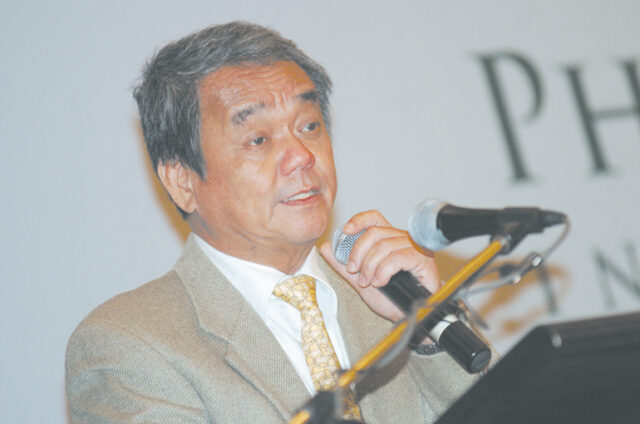
DMCI Holdings, Inc. Chairman and President Isidro A. Consunji, 2022 MAP Management Man of the Year — BW File Photo

DMCI Holdings head is 2022’s ‘MAP Management Man of the Year’

As a group aimed at connecting the country’s top leaders and managers, the Management Association of the Philippines (MAP) is one of the Philippines’ most exclusive and prestigious organizations. To become part of its ranks is an honor unto itself, more so to be recognized by its members as an exemplary part of the Philippine business community.

Isidro A. Consunji, chairman and president of DMCI Holdings, Inc., is one such man. He was named “MAP Management Man of the Year 2022” by MAP for his achievements in transforming a private construction firm into one of the country’s biggest and most resilient conglomerates.

MAP recognized Mr. Consunji’s “personal contributions to shaping national values and inspiring others through his track record of integrity, managerial competence and professional leadership.”

As the man behind DMCI, Mr. Consunji had a hand in creating some of the most iconic structures in the country, such as the Cultural Center of the Philippines, the Church of the Holy Sacrifice, and the Philippine International Convention Center.

MAP confers the “MAP Management Man of the Year” award to individuals in business or government, MAP member or not, who have attained clear and inarguable distinction in management in addition to making valuable contributions to the country’s development and shaping its national values.

During its five-decade history, the award was given only 46 times due to the association’s “thorough, stringent selection process.” According to MAP, the award’s criteria include “integrity, leadership, and management qualities; contribution to nation-building and values formation; and effective stewardship within the confines of the highest standard of business and management practice.”

Mr. Consunji was recognized for his leadership role in his group’s substantial contributions to national development, job creation and income generation through huge investments in construction, real estate, mining, energy and water distribution; as well as his unparalleled commitment to developing, training and sustaining a Filipino management team and staff in his organization.

Since 2010, DMCI Holdings, Inc. has been a member of the benchmark Philippine Stock Exchange Composite Index (PSEi), which includes thirty of the biggest and most actively traded stocks in the country.

The company has also been recognized for its commitment to good corporate governance and gender equality.

MAP also recognized Mr. Consunji’s generous contribution to education, especially in the field of engineering and science; for his significant contribution in the form of innovative solutions to the housing problem of the Philippines; and for his expertise in turning problematic assets and distressed companies under seemingly insurmountable situations into very productive investments.

In DMCI’s 2021 Sustainability Report, the company reported how it has advanced the quality of healthcare and the accessibility of medical services through the construction of the Philippine General Hospital’s (PGH) Felicidad Sy Multi-Specialty Building, the Presidential Security Group (PSG) Hospital Project, and the University of the Philippines-College of Medicine’s (UPCM) Henry Sy Sr. Medical Sciences Building.

The UPCM building, in particular, was established to support the university’s goal of promoting collaborative research on the country’s health challenges and providing a venue for future doctors to obtain dual and higher education research-based degrees. The building is powered by renewable energy and has a renewable water system, facilities for online learning, two auditoriums with over 200 seating, state-of-the-art medical simulation laboratories, and 41 classrooms, among others.

“We believe in the power of education in uplifting lives and advancing the economy. Through our subsidiaries, we continued educational programs and initiatives to promote learning. These include scholarship grants, webinars, and Brigada Eskwela initiatives to extend support to our partner schools and the Filipino youth,” DMCI said in the report.

Mr. Isidro A. Consunji took DMCI’s reins from his father, David “DM” Consunji, a civil engineer who started the construction company before it grew into the conglomerate it is today.

DMCI started small, from constructing chicken houses for the Bureau of Animal Industry, until it has gradually built up a reputation for its punctuality and quality work. Since then, the company moved on to major projects such as the Tacloban Coca-Cola Plant and Bacnotan Cement Plant.

With more than five decades of solid track record in the construction business, DMCI enjoyed the continued patronage of institutional clients such as the Ayala Group, SM Group, Kuok Group, Robinson’s Group, San Miguel Corp.; banking institutions such as the Citibank, N.A., Bank of the Philippine Islands, Equitable and Urban Bank; educational institutions such as the University of the Philippines and De La Salle University; and multinationals such as the John Laing, Obayashi, Mitsubishi Heavy, Oriken, and Nippon Steel. Also, industrial companies and some government agencies have sought the expertise and services of DMCI and still maintain partnerships with the company to this day.

Mr. Consunji has held the position of the company’s director for 25 years. A graduate of B.S. Civil Engineering at the University of the Philippines like his father, Mr. Consunji then obtained his Master’s degree in Business Economics from the Center for Research and Communication and Masters in Business Management from the Asian Institute of Management, and attended the Advanced Management Program at Instituto de Estudios Superiores de la Empresa (IESE) in Barcelona, Spain.

For the past five years, he has been the president of DMCI-HI, Dacon Corp., and Asia Industries, Inc. He is also the chairman of the board of directors of DMCI Mining Corp., D.M. Consunji, Inc., DMCI Homes, and Beta Electric Corp. He is the vice-chairman of Maynilad Water Services, Inc., and director of Semirara Mining and Power Corp., DMCI/MPIC Water Company, Inc., Crown Equities, Inc., Atlas Consolidated Mining and Development Corp., Carmen Copper Corp., Sem-Calaca Power Corp., Berong Nickel Corp., Toledo Mining Corp., and ENK PLC (London).

He was also the former president of the Philippine Constructors Association and Philippine Chamber of Coal Mines, Inc. At present, he is the chairman of the board of the Philippine Overseas Construction Board and a board member of Construction Industry Authority of the Philippines. — Bjorn Biel M. Beltran


A pioneer in construction and engineering

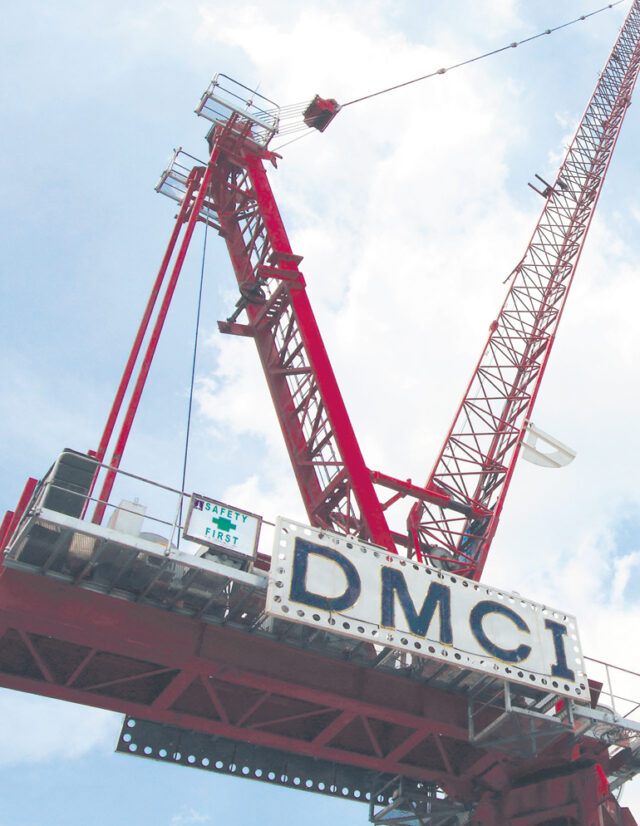
Photo from DMCI Holdings, Inc. Annual Report 2021

The past years saw steady progress in the Philippine infrastructure. This has been possible with hardworking players in various industries, one of which is the diversified engineering conglomerate DMCI Holdings, Inc., currently headed by this year’s “MAP Management Man of the Year,” Filipino-Chinese businessman Isidro A. Consunji.

With a solid foundation in construction, DMCI Holdings expanded to real estate, energy, mining, and water industries. The company now works through five major subsidiaries: D.M. Consunji, Inc., or simply DMCI (construction services); DMCI Project Developers, Inc., more known as DMCI Homes (real estate development); Semirara and Mining Power Corp. (coal mining); DMCI Power Corp. (power generation); DMCI Mining Corp. (nickel mining); and an affiliation with Maynilad Water Services Inc. (water services).

DMCI Holding’s construction services are known for their building of landmarks and other big and complex infrastructure in the Philippines. It has accomplished over a thousand projects locally and internationally. Among the projects that DMCI embarked on include the Cultural Center of the Philippines, the Church of the Holy Sacrifice, and the Philippine International Convention Center.

The conglomerate’s real estate services, meanwhile, offer mid-income residential developments created to foster high-quality lifestyles. DMCI Homes has become a pioneer in building resort-like condominiums with large-sized pools, landscapes, and premium amenities.

The coal mining services explore, supply, and develop local coal resources and provide reliable power to its consumers in Semirara Island, while Acoje Mining and Berong Nickel Corp. are the industrial nickel suppliers.

DMCI Holding’s power generation front provides power and electrical services to small and remote islands that are not included in the main power infrastructure, using technology to provide reliable and sustainable electricity in the area. The water services, meanwhile, focus on providing water needs in the West Zone of Metro Manila, Olongapo City, and Subic Bay Freeport.

Other related companies of the holdings company include: DMCI Masbate Power Corp., DMC Construction Equipment Resources, Inc., DMCI Power Corp., Zambales Diversified Metals Corp., Wire Rope Corp. of the Philippines, and ENK Limited.

On March 8, 1995, DMCI Holdings, Inc. was founded and established by Engr. David M. Consunji, also known as the “Grandfather of the Philippine Construction Industry,” who also founded DMCI, the construction company. On April 27, 1995, the company was registered with the Securities and Exchange Commission.

Driven by entrepreneurial passion in construction and building, DMCI grew and became one of the Philippines’ biggest and most resilient engineering conglomerates. The following success of the private construction firm led to the expansion of the business organization engaging with subsidiaries that offer construction, residential development, mining power, and water services.

The company became one of the highest dividend-paying stocks with 26% in the Philippines, succeeded with a high score in the ASEAN Corporate Governance Scorecard (ACGS) in 2015, and became recognized as one of the Top ASEAN Asset Class Publicly Listed Companies at the 2019 ACGS Awards. Additionally, it was included in Bloomberg Gender-Equality Index (GEI) because of its commitment to gender equality in the workforce.

As BusinessWorld reported last March, DMCI Holdings’ profit achieved its highest peak at P17.4 billion, rising up to 164% in 2021. The growth of coal, power, and real estate operations contributed to the third-quarter core net income from P4.01 billion to P7.37 billion.

“Nearly all of our subsidiaries grew triple digits in 2021 because of higher productivity and what we believe is the start of a commodities super cycle,” Isidro A. Consunji was quoted as saying.

According to the DMCI Holdings’ annual report in 2021, there was an increased net income surge from P5.9 billion to P18.4 billion, despite the decrease in real estate projects in 2020. The net income has also increased from P2 billion to P5 billion during the fourth quarter of 2021.

Semirara Mining and Power Corp. made a big contribution with P9.2 billion last year, rising to P2 billion due to the increase in coal sales of 16%, average coal of 71%, and average electricity of 49%. With the 40% increase in average nickel selling prices and two million exports, DMCI Mining expected a 150% increase in contribution to P1.2 billion. Meanwhile, the positive outcomes of the real estate project in 2021 led to the company’s net profit surge from 127% to 4.4 billion. Whereas, DMCI Power recorded up to eight percent to P580 million due to higher power sales and lower fuel costs brought by the company’s 15-megawatt Masbate thermal plant operations.

D.M. Consunji, Inc., meanwhile, boosted its contributions by more than three times, with a growth of 247%, rising up to P378 million. This was attributed to an increased rate of construction accomplishments and marginal pandemic-related expenses.

DMCI Homes, Inc. reported an increased net income of 127% to P4.4 billion, reaching a higher revenue from its successful construction projects despite the COVID-19 pandemic outcomes. More recently, this year, DMCI Homes is working on upscale projects like Fortis Residence in Makati City and Satori Residences in Santolan, Pasig City.

In recognition of its most recent achievements, DMCI Holdings is listed as one of the outstanding Philippine firms in Asiamoney 2022 Asia’s Outstanding Companies Poll. The recognition was based on the corporation’s financial performance, management team excellence, investor relations, and corporate social responsibility initiatives.

“We are honored to receive these recognitions because they reflect the hard work of our people and the strong support of our capital market stakeholders,” Mr. Consunji was quoted as saying in a statement responding to the recognition.

In its 27 years of service, DMCI Holdings has developed into a diverse engineering conglomerate that invests in different sectors that are significant to the growth of the country. — Angela Kiara S. Brillantes