WASHINGTON — When it comes to climate change, Bill Gates considers himself a realist — even if that means admitting the world has no chance limiting warming to 1.5 degrees Celsius.
Given “the overall scale of our industrial economy … we’re going to have to do mind-blowing work to stay below 2 degrees,” he said.
But on meeting the Paris Agreement’s 1.50C goal? No one wants to be “the first to say it,” but the math shows it’s no longer within reach, Mr. Gates said in a video interview with Reuters.
The software-developer-turned-philanthropist was nevertheless upbeat about climate innovation — ticking off numerous areas advancing low-carbon technologies with funding from the Breakthrough Energy Group, which Mr. Gates founded in 2015.
Mr. Gates has invested more than $2 billion toward climate technologies, including direct air capture, solar energy and nuclear fission. The 14-year-old fission company under the Breakthrough umbrella, TerraPower, aims to have a demo reactor running by 2030.
These things take time, said Mr. Gates, co-founder of Microsoft Corp MSFT.O.
Mr. Gates spoke with Reuters ahead of the release of his annual letter — reflecting on 2022 and describing what he’s most excited about in the year ahead.
He transferred $20 billion of his funds to the Gates Foundation’s endowment, which plans to increase philanthropic spending on public health and education from $6 billion to $9 billion in coming years.
He also praised Warren Buffett for his contribution, which Mr. Gates said totaled $45 billion since 2006, counting Berkshire Hathaway BRKa.N stock appreciation.
Breakthrough Energy, however, operates separately from the Gates Foundation charity. In his letter to shareholders, Mr. Gates explains that the climate problem is too enormous for philanthropy alone to tackle.
“There’s not enough money, and so you have to have some innovation,” he told Reuters. “The idea that it can be done by brute force, there’s just no chance.”
Companies need investment and technical support to prove their low-carbon ideas beyond the pilot phase — and then to scale up manufacturing, he says. But any Breakthrough Energy profits are funneled back into the group or to the foundation.
Some of the companies under Breakthrough that are developing Direct Air Capture (DAC) — technology designed to pull CO2 straight from the atmosphere — have their sights set on some $3.5 billion in newly announced US contracts to build DAC plants and fund research grants.
“We have a number of Direct Air Capture (DAC) companies that will bid on being a part of those projects,” he said, noting that the recent Inflation Reduction Act legislation has boosted prospects for climate innovation. He did not elaborate on the DAC companies’ plans.
In manufacturing, the steel and cement industries have made “fantastic” progress, he said, a change from his worries about that sector just two years ago.
Manufacturing is responsible for about a third of global climate-warming emissions.
Now, “there’s no area of climate mitigation that I feel like ‘Oh, that’s really completely uncovered,’” he said.
Instead, with the world set to push past 1.5C of warming, he said the challenge is shifting toward helping people adapt to a harsher, hotter future.
“In addition to mitigation, which will still be the biggest part (of Breakthrough Energy’s investment), we’ll also fund adaptation-related work.” That could include technology to help control forest fires, using coral reef type structures to create barriers to flooding, or development of crop strains that can withstand drought. — Reuters
PRESIDENT Vladimir Putin on Monday ordered the Federal Security Services to step up surveillance of Russian society and the country’s borders to prevent risks from abroad and traitors at home.
Speaking ahead of Tuesday’s Security Services Day — widely celebrated in Russia — Putin said the “emergence of new threats” increases the need for greater intelligence activity.
“Work must be intensified through the border services and the Federal Security Service (FSB),” Mr. Putin said.
“Any attempts to violate it (the border) must be thwarted quickly and effectively using whatever forces and means we have at our disposal, including mobile action units and special forces.”
Mr. Putin instructed the FSB to maximize their “use of the operational, technical and personnel potential” to tighten control of the society.
The FSB, the main successor to the Soviet-era KGB, has already been operating in Russia as an expansive surveillance and censorship apparatus and Moscow’s invasion in Ukraine has involved a large swathe of the security services.
“Maximum composure, concentration of forces is now required from counterintelligence agencies, including military intelligence,” Mr. Putin said, according to transcript of his speech provided by the Kremlin and translated by Reuters.
“It is necessary to severely suppress the actions of foreign special services, quickly identify traitors, spies and saboteurs.”
The FSB, headed by Putin ally Alexander Bortnikov, will also increase oversight of mass gatherings, strategic facilities and energy infrastructure.
Since the start of the war, demonstrations and dissent have been swiftly quelled in Russia, with more than 1,300 detained in September at protests denouncing Mr. Putin’s military mobilization of 300,000.
In a rare admission of the invasion of Ukraine not going smoothly, Mr. Putin said that the situation in Ukraine’s regions that Moscow moved to annex in September is “extremely difficult” and ordered the FSB to ensure the “safety” of people living there.
“It is your duty to do everything necessary to ensure their security to the maximum, respect for their rights and freedoms,” Mr. Putin said, promising them more “modern equipment and weapons.”
There is no end in sight to Russia’s invasion in Ukraine, now in its 10th month. The conflict, Europe’s largest since World War II, has killed tens of thousands of people, driven millions from their homes, and reduced cities to ruins.
Moscow calls its invasion a “special operation” to denazify and demilitarize its neighbor. Kyiv and its allies in the West call it an unprovoked war of aggression to grab land. — Reuters
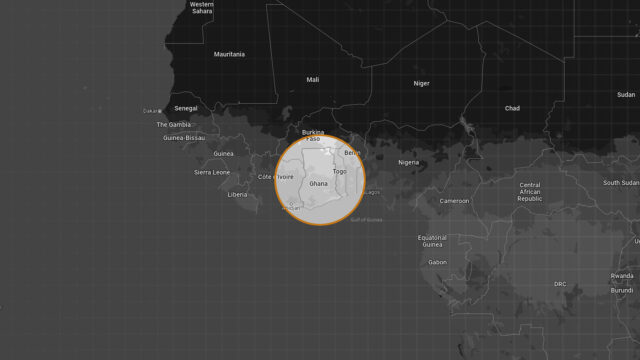
ACCRA – Ghana on Monday suspended payments on most of its external debt, effectively defaulting as the country struggles to plug its cavernous balance of payments deficit.
Its finance ministry said it will not service debts including its Eurobonds, commercial loans and most bilateral loans, calling the decision an “interim emergency measure”, while some bondholders criticised a lack of clarity in the decision.
The government “stands ready to engage in discussions with all of its external creditors to make Ghana‘s debt sustainable”, the finance ministry said.
The suspension of debt payments reflects the parlous state of the economy, which had led the government last week to reach a $3-billion staff-level agreement with the International Monetary Fund (IMF).
The country has been struggling to refinance its debt since the start of the year after downgrades by multiple credit ratings agencies on concerns it would not be able to issue new Eurobonds.
That has sent Ghana‘s debt further into the distressed territory. Its public debt stood at 467.4 billion Ghanaian cedis GHS= ($55 billion as per Refinitiv Eikon data) in September, of which 42% was domestic.
It had a balance of payments deficit of more than $3.4 billion in September, down from a surplus of $1.6 billion at the same time last year.
While 70% to 100% of the government revenue currently goes toward servicing the debt, the country’s inflation has shot up to as much as 50% in November.
Ghana has been experiencing what some say is its worst economic crisis in a generation. Last month, more than 1,000 protesters marched through the capital Accra, calling for the resignation of the president and denouncing deals with the IMF as fuel and food costs spiralled.
Its gross international reserves stood at around $6.6 billion at the end of September, equating to less than three months of imports cover. That is down from around $9.7 billion at the end of last year.
The government said the suspension will not include the payments towards multilateral debt, new debts taken after Dec. 19 or debts related to certain short-term trade facilities.
‘NOT COMING OUT OF THE BLUE’
Holders of Ghana‘s international bonds confirmed in an emailed statement late on Monday the formal launch of a creditor committee aimed at facilitating the “orderly and comprehensive resolution” of the country’s debt challenges.
Any good faith negotiations, the creditor committee said, would need to avoid unilateral actions and require the timely exchange of detailed economic and financial information between international bondholders, the government and the IMF.
The steering committee was made up of Abrdn, Amundi, BlackRock, Greylock and Ninety One, the group said in its statement.
Kathryn Exum, who co-leads Gramercy’s Sovereign Research department, was hopeful about debt restructuring, noting that it should prove easier for creditors than other recent emerging market restructurings.
“It is more straight forward than the likes of Sri Lanka and Zambia, in the respect that there is not a lot of China debt,” Exum said on Friday in comments anticipating the external restructuring.
One bondholder who requested anonymity said the lack of detail in the announcement could be cause for concern for investors.
Ghana‘s external bonds, which are trading at a deeply distressed level of 29-41 cents in the dollar, dropped with the 2034 bond losing more than 3 cents, Tradeweb data showed.
Nonetheless, some investors said the suspension of external debt payment was expected.
“It is in line with Ghana getting into talks about restructuring with various debt holders, so not coming out of the blue,” Rob Drijkoningen, co-head of emerging market debt at Neuberger Berman, which holds some Ghanaian Eurobonds.
Ghana did pay a Dec. 16 coupon due on a 2049 Eurobond, according to a person familiar with the matter.
It was not immediately clear if the debt service suspension would include a $1 billion 2030 bond that has a $400 million World Bank guarantee.
“We will not be commenting on the specifics of any particular bond or debt owed at this time, but… we are fully engaging all stakeholders,” a finance ministry spokesperson told Reuters. – Reuters
WASHINGTON/CIUDAD JUAREZ – The US Supreme Court on Monday said COVID-era restrictions at the US-Mexico border that have prevented hundreds of thousands of migrants from seeking asylum should be kept in place for now, siding with Republicans who brought a legal challenge.
The restrictions, known as Title 42, were implemented under Republican former President Donald Trump in March 2020 at the beginning of the COVID-19 pandemic and gave border officials the ability to rapidly expel migrants to Mexico without a chance to seek U.S. asylum.
US President Joe Biden, a Democrat, had campaigned on overturning Trump’s hardline immigration measures before taking office in 2021 but kept Title 42 in place for more than a year. The US Centers for Disease Control and Prevention (CDC) said this year that Title 42 was no longer needed for public health reasons, and the Biden administration has said it wants it to end but will abide with any court rulings.
A federal judge last month ruled Title 42 was unlawful in response to a lawsuit originally brought by asylum-seeking migrants represented by the American Civil Liberties Union. The judge set the restrictions to be lifted on Wednesday, Dec. 21.
But a group of 19 states with Republican attorneys general sought to overturn that decision by intervening in the case and on Monday took their request to the conservative-leaning Supreme Court.
Hours later, Chief Justice John Roberts in a brief order issued a stay that will leave Title 42 in place until further notice from the court. The parties in the legal dispute have until Tuesday at 5 p.m. ET (2200 GMT) to respond, the court said.
After Robert’s action, US Department of Homeland Security (DHS) said Title 42 “will remain in effect at this time and individuals who attempt to enter the United States unlawfully will continue to be expelled to Mexico.”
The Biden administration had been preparing for Title 42 to end on Wednesday and press secretary Karine Jean-Pierre said on Monday that the White House was seeking more than $3 billion from Congress to pay for additional personnel, technology, migrant holding facilities and transportation at the US-Mexico border.
The push for additional resources came as US authorities had been preparing for the possibility of 9,000 to 14,000 people per day trying to cross into the United States if Title 42 was lifted, Reuters and other outlets have reported, around double the current rate.
The Biden administration has been weighing plans to prepare for Title 42’s end, with government officials privately discussing several Trump-style plans to deter people from crossing, including barring single adults seeking asylum at the US-Mexico border.
DHS last week updated a six-pillar plan that calls for the expanded use of a fast-track deportation process if Title 42 is terminated. The revised DHS plan also suggests there could be expansion of legal pathways for migrants to enter the country from abroad, similar to a program launched for Venezuelans in October.
BORDER CITIES OVERWHELMED
Since Mr. Biden took office in January 2021, about half of the record 4 million migrants encountered at the US-Mexico border have been expelled under Title 42 while the other half have been allowed into the United States to pursue their immigration cases.
Mexico accepts the return of only certain nationalities, including some Central Americans and, more recently, Venezuelans.
For months, El Paso, Texas, has been receiving large groups of asylum-seeking migrants, including many Nicaraguans who cannot be expelled to Mexico. On Saturday, the city’s mayor declared a state of emergency to move migrants from city streets as temperatures had dropped below freezing.
US Representative Henry Cuellar, a Democrat whose South Texas district borders Mexico, has said US border officials told him that an estimated 50,000 people are waiting in Mexico for the chance to cross.
“If Title 42 remains in place, we must continue waiting,” said Venezuelan migrant Lina Jaouhari, who said she had attempted to enter the United States from Ciudad Juarez on Dec. 1 but had been sent back to Mexico under Title 42. “It won’t do any good to try to cross again if we know they will send us back.”
In El Paso, shelters have struggled to provide for arriving migrants even as many ultimately are headed to join relatives in other parts of the United States.
Rescue Mission of El Paso, a shelter near the border, last week housed 280 people, far beyond its 190-person capacity, with people sleeping on cots and air mattresses in the chapel, library and conference rooms, said Nicole Reulet, the shelter’s marketing director, in an interview with Reuters.
“We have people where we tell them, ‘We have no room,'” she said. “They beg for a place on the floor.” – Reuters
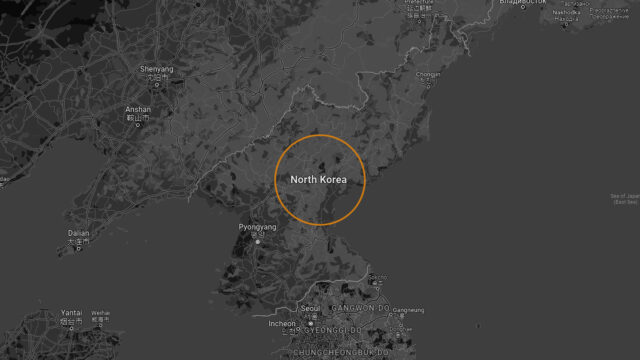
Edited screenshot of North Korea as shown on Google Maps.
SEOUL – North Korea on Tuesday denounced Japan’s new security strategy as fundamentally changing the regional security environment and warned it will show how “wrong” and “dangerous” Japan’s choice is with unspecified actions, official news agency KCNA reported.
A North Korean foreign ministry spokesperson made the remarks in a statement carried by KCNA, days after Japan unveiled its biggest military build-up since World War Two as regional tension and Russia’s Ukraine invasion stoke war fears.
“Japan is bringing a serious security crisis on the Korean Peninsula and in the East Asia region by adopting a new security strategy that effectively acknowledges its pre-emptive strike capabilities against other countries,” the official said in the statement.
The security environment in the region has “fundamentally changed” due to Japan’s new policy, the official said, denouncing the move as a violation of the U.N. Charter and a “serious challenge” to international peace.
“We make it clear once again that we have the right to take bold and decisive military measures to protect our fundamental rights … in response to the complicated regional security environment,” the official said.
“Japan will soon learn with a shudder it has made a clearly wrong and very dangerous choice.”
Tokyo’s sweeping, five-year plan, once unthinkable in pacifist Japan, will make the country the world’s third-biggest military spender after the United States and China, based on current budgets. – Reuters
LOS ANGELES — Former movie producer Harvey Weinstein was found guilty of rape and two other sexual assault counts by a Los Angeles jury on Monday, marking the second conviction of the onetime Hollywood kingmaker who became the face of #MeToo sexual abuse allegations five years ago.
The jury found Mr. Weinstein guilty of rape, forcible oral copulation and sexual penetration by a foreign object involving one woman, but acquitted him of charges relating to a second alleged victim, the Los Angeles Superior Court announced.
The jury could not reach a verdict on two allegations, including rape, by Jennifer Siebel Newsom, the wife of California’s Democratic Governor Gavin Newsom, who previously disclosed she was Jane Doe 4 in the trial. The jury did not reach a verdict on charges relating to one other woman. Mr. Weinstein, 70, is already serving a 23-year prison sentence after being convicted of sexual misconduct in New York.
The former model and actress that Mr. Weinstein was convicted of raping at a Los Angeles hotel in 2013, and known in court as Jane Doe 1, issued a statement shortly after the verdict.
“Harvey Weinstein forever destroyed a part of me that night in 2013 and I will never get that back. The criminal trial was brutal and Weinstein’s lawyers put me through hell on the witness stand, but I knew I had to see this through to the end, and I did. I hope Weinstein never sees the outside of a prison cell during his lifetime.”
Mr. Weinstein faces up to 18 years in prison on the counts for which he was convicted, but aggravating factors could increase that to 24 years. Lawyers return to court on Tuesday to deliver arguments about aggravating factors.
Elizabeth Fegan, Siebel Newsom’s attorney, said in a statement: “While we are heartened that the jury found Weinstein guilty on some of the counts, we are disappointed that the jury could not reach a unanimous verdict on Jane Doe 4,” Ms. Fegan said.
“She will continue to fight for all women and all survivors of abuse against a system that permits the victim to be shamed and re-traumatized in the name of justice.”
In Los Angeles, Mr. Weinstein faced seven counts of rape and sexual assault from four women during encounters between 2004 and 2013.
The jury acquitted Mr. Weinstein of a felony charge of sexual battery by restraint involving an alleged attack on one woman, Jane Doe 3, in 2010. Jurors were unable to reach verdicts on charges of sexual battery by restraint involving an alleged attack in February 2013 against Jane Doe 2 and counts of forcible oral copulation and forcible rape involving an alleged attack against Siebel Newsom in 2005.
Los Angeles County District Attorney George Gascón said in a statement: “I am of course disappointed that the jury was split on some of the counts, but hope its partial verdicts bring at least some measure of justice to the victims.”
During five weeks of testimony in Los Angeles Superior Court, accusers including documentary filmmaker Siebel Newsom said Mr. Weinstein lured them to what they believed were business meetings.
JUDGE DECLARES MISTRIAL ON SOME COUNTS Superior Court Judge Lisa Lench declared a mistrial on the counts where the jury could not reach a verdict, including the allegations made by Siebel Newsom.
The women had alleged during often graphic testimony that the powerful producer of Pulp Fiction and Shakespeare in Love masturbated in front of them and groped or raped them.
Siebel Newsom and three other women offered testimony that provided the basis for the two counts of rape and five counts of sexual assault that Mr. Weinstein faced.
Four additional women offered similar stories to buttress the prosecution’s arguments that Mr. Weinstein routinely abused his position as a Hollywood power player to prey on women.
They said he promised help with securing an audition or a book deal, then arranged meetings where staff disappeared and left them alone with him.
Mr. Weinstein said all of his sexual encounters were consensual and pleaded not guilty.
Defense attorneys argued that the women willingly had sex with Mr. Weinstein because they believed he would help their careers, part of what they said was a widespread “casting couch” culture in the film industry. In two of the cases, they said the sexual contact was fabricated.
They also highlighted that some of the accusers, including Siebel Newsom, kept in contact with Mr. Weinstein, which they argued did not make sense if he had attacked them.
Siebel Newsom attended a pre-Oscars party hosted by Mr. Weinstein with her husband, and sent Mr. Weinstein dozens of friendly e-mails over the years. Mr. Weinstein was convicted of sexual misconduct in New York in February 2020. He was extradited from New York to a Los Angeles prison in July 2021. In New York, Mr. Weinstein is appealing his conviction and prison sentence.
Allegations against Mr. Weinstein helped fuel the #MeToo movement of women speaking out against sexual harassment and abuse by powerful men in media, politics and other spheres. — Reuters
MONTREAL – A United Nations summit approved on Monday a landmark global deal to protect nature and direct billions of dollars toward conservation but objections from key African nations, home to large tracts of tropical rainforest, held up its final passage.
The Kunming-Montreal Global Biodiversity Framework, reflecting the joint leadership of China and Canada, is the culmination of four years of work toward creating an agreement to guide global conservation efforts through 2030.
The countries attending the U.N.-backed COP15 biodiversity conference had been negotiating a text proposed on Sunday and talks addressing the finer points of the deal dragged on until Monday morning.
Delegates were able to build consensus around the deal‘s most ambitious target of protecting 30% of the world’s land and seas by the decade’s end, a goal known as 30-by-30.
“We have huge achievements in this text now,” EU Environment Commissioner Virginijus Sinkevicius told reporters after the deal passed. “It was huge effort to find the landing zone and get everyone on board.”
Another negotiator said he thought it was a balanced agreement but that “a good deal always leaves everyone somewhat unhappy.”
Canada Environment and Climate Change Minister Steven Guilbeault called the agreement “a major win for our planet and for all of humanity, charting a new course away from the relentless destruction of habitats and species.”
WHAT’S IN THE DEAL
The deal also directs countries to allocate $200 billion per year for biodiversity initiatives from both public and private sectors.
Developed countries will provide $25 billion in annual funding starting in 2025 and $30 billion per year by 2030.
The agreement, which contains 23 targets in total, replaces the 2010 Aichi Biodiversity Targets that were intended to guide conservation through 2020. None of those goals were achieved, and no single country met all 20 of the Aichi targets.
“Governments have chosen the right side of history in Montreal,” said World Wildlife Fund International Director General Marco Lambertini.
Unlike Aichi, this deal contains more quantifiable targets — such as reducing harmful subsidies given to industry by at least $500 billion per year — that should make it easier to track and report progress.
But the agreement “can be undermined by slow implementation and failure to mobilize the promised resources,” said Mr. Lambertini. “It also lacks a mandatory ratcheting mechanism that will hold governments accountable to increase action if targets are not met.”
More than 1 million species could vanish by the century’s end, from plants to insects, in what scientists have called a sixth mass-extinction event. As much as 40% of the world’s land has been degraded, and wildlife population sizes have shrunk dramatically since 1970.
Investment firms focused on a target in the deal recommending that companies analyze and report how their operations affect and are affected by biodiversity issues.
The parties agreed to large companies and financial institutions being subject to requirements to make disclosures regarding their operations, supply chains and portfolios – but the word “mandatory” was dropped from previous drafts.
“We think this is something that is going to push the financial sector to step up,” said Ingrid Kukuljan, head of impact and sustainable investing at fund manager Federated Hermes.
“This time around we actually need implementation …. we are facing an unprecedented rate of decline,” she said.
DRC OBJECTS TO DEAL
Division over how to fund conservation efforts in developing countries led to fiery negotiations at the end.
With China holding the COP15 presidency, Minister of Ecology and Environment Huang Runqiu appeared to disregard objections from the delegation of the Democratic Republic of Congo on Monday, declaring the deal passed minutes after they said they were not able to support it.
A Congolese representative argued that developed nations should create a separate fund to help support conservation efforts in developing countries.
DRC is the second-largest tropical forested country in the world and home to the greatest extent of African tropical rainforest, giving it a crucial role in the future of the planet’s biodiversity.
Huang declared shortly after 3:30 a.m. (0830 GMT) that the deal was agreed, drawing outrage from other African delegates.
A representative from Cameroon said through a translator that the agreement was passed by force of hand. Another from Uganda invoked a “coup d’etat”.
However, at a second meeting Monday evening, the DRC appeared to walk back its outright objection, downgrading them to “reservations” on financing and resource mobilization.
“We’d like to have this clearly placed on record,” said DRC Environment Minister Eve Bazaiba. “I would like to reiterate our readiness to participate in any process of negotiations until COP16. We do hope our voice will be heard”.
The DRC statement followed a 30-minute huddle of roughly a dozen members of delegations from Brazil, Indonesia and the DRC – the world’s three most rainforest–rich nations – witnessed by Reuters.
Brazil ultimately helped to broker a solution, with the support of Indonesia, “whereby no questions would be left regarding the legality of the approval of the (deal),” a negotiator said. “There are no longer grounds to question the legality and legitimacy of the agreement.”
Minister Huang highlighted the DRC’s important influence in global biodiversity governance and thanked the country for its support. – Reuters
Leading digital solutions platform Globe dominated the ASEAN Corporate Governance Scorecard (ACGS) anew, bagging three awards at a virtual awarding ceremony held last Dec. 1.
Globe received outstanding recognition as among the Top 3 Philippine Publicly-Listed Companies and part of the ASEAN Top 20 and the ASEAN Asset Class – Philippines for being at the forefront of corporate governance standards and practices. Globe bagged the same awards in the previous awarding ceremony.
“We are honored to be recognized through the prestigious ACGS Awards and rally the Philippines to be among the top corporate governance performers in the region,” said Globe Group President and CEO Ernest Cu, stressing that corporate governance plays a significant role in the company’s purpose.
Globe was also recognized for Best Corporate Governance under the Telecom – Asia category for two consecutive years from the Ethical Boardroom Corporate Governance Awards, proving its commitment to Environment, Social, and Governance (ESG) strategies that help shape society’s sustainable future.
“At Globe, corporate governance is everybody’s business as we carry out our vision, mission, and core values in the delivery of our products and services. It is our duty that our customers and stakeholders feel this difference in how we perform and do business,” he added.
The ACGS is a joint effort of the ASEAN Capital Markets Forum (ACMF) and the Asian Development Bank (ADB) aimed at promoting integration within the region and the ASEAN as an investment asset class.
Assessment of the top ASEAN publicly-listed companies based on market capitalization was conducted using a Scorecard supported by rigorous methodology and benchmarked against international principles and best practices. The domestic ranking bodies (DRBs) of each participating ASEAN country lead the evaluation process of their respective domestic listed companies. The shortlisted companies undergo a peer review process where the DRBs are assigned to review the shortlist from another participating ASEAN country. The DRB for the Philippines is the Institute of Corporate Directors, which is also an organizer of the Awards ceremony.
Introduced in 2011, the ACGS recognizes corporate governance achievements of publicly-listed companies in the region, with the first inaugural awarding ceremony held in 2015. Globe has been consistently on the list since then.
Globe recognizes the importance of good governance in realizing its vision, carrying out its mission, and living out its values to create and sustain increased value for all stakeholders.
“The equilibrium between our business and our commitment to corporate governance principles propels us to achieve our goals in collaboration with one another. This is a journey that is worth pursuing as the principles and practices sustain a healthy business culture that gives value to our stakeholders,” said Marisalve Ciocson-Co, Globe Chief Compliance Officer, SVP for Law and Compliance, and Assistant Corporate Secretary.
Globe is committed to upholding the 10 UNGC principles and the UN Sustainable Development Goals (UNSDGs). The company has also made it to the FTSE4Good Index Series for the seventh consecutive year and received an “A” rating from MSCI ESG.
It was also recognized for Best Corporate Governance under the Telecom – Asia category for two consecutive awarding periods from the Ethical Boardroom Corporate Governance Awards, proving its dedication to Environmental, Social, and Governance (ESG) that help shape society’s sustainable future.
Spotlight is BusinessWorld’s sponsored section that allows advertisers to amplify their brand and connect with BusinessWorld’s audience by enabling them to publish their stories directly on the BusinessWorld Web site. For more information, send an email to online@bworldonline.com.
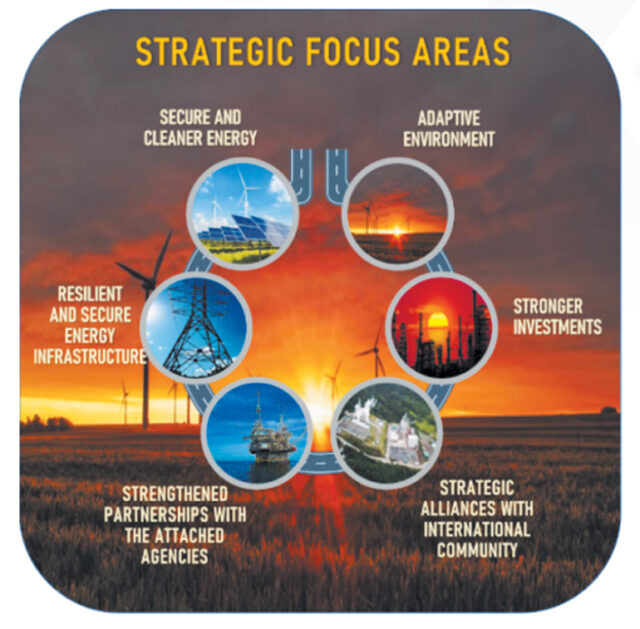
The milestone of Department of Energy’s (DoE) 50th effective year in service to the Filipino people comes with daunting challenges.
For one, as the country moves forward in its ambitious plans for growth, aiming to become recognized as a high-income economy by 2045 at the latest, energy will only become more important. The country needs to build more buildings, create more jobs, and move more people away from poverty — all of which necessitate a flawless, efficient power grid.
Yet, the looming threat of climate change grows ever more urgent, and global pressure to reduce greenhouse gas emissions — which the energy sector contributes the lion’s share of — puts the country in a dilemma. The Philippines’ energy sector must be prepared to adapt and overcome future challenges, or else be left behind as the rest of the world moves into a cleaner, more sustainable energy future.
This puts the DoE at a central role in the development of the country in the years to come. More than ever, the agency needs to fully commit to its vision of becoming “a globally-competitive agency that powers up Filipino communities through clean, efficient, robust and sustainable energy systems that will create wealth, propel industries and transform the lives of men and women and the generations to come.”
In commitment to this goal, and in celebration of the agency’s 50th anniversary, it has announced a month-long observance of the National Energy Consciousness Month (NECM) for 2022 to focus on energy sustainability.
With the theme “DoE @ 50: Spearheading a Sustainable Energy Future,” the NECM’s annual observance seeks to call for a sustainable energy future aligned with the United Nation’s (UN) Sustainable Development Goal (SDG) 7 which targets universal access to energy, increasing renewable energy’s share in the energy mix, and doubling the rate of energy efficiency improvement.
The UN’s SDGs from the 2030 Agenda for Sustainable Development, adopted by all United Nations Member States in 2015, provides a shared blueprint for peace and prosperity for people and the planet, now and into the future.
At its core, the 17 SDGs are an urgent call for action by all countries, including the Philippines, to recognize that ending poverty and other societal issues must go hand-in-hand with strategies that improve health and education, reduce inequality, and spur economic growth — all while tackling climate change and working to preserve our oceans and forests.
Particular to NECM, Goal 7 is about ensuring access to clean and affordable energy. Accessible energy is key to the development of agriculture, business, communications, education, healthcare and transportation; and the lack of which poses difficult obstacles to economic and human development.
According to the UN, the latest data suggest that the world continues to advance towards sustainable energy targets. Nevertheless, the current pace of progress is insufficient to achieve Goal 7 by 2030. Huge disparities in access to modern sustainable energy persist.
Renewables push
For its part, the administration of President Ferdinand R. Marcos, Jr. aims to light the way in accelerating and expanding the development of the country’s domestic energy sources. Foremost, the country is accelerating the development of renewable energy to increase its share in the power mix from the current 22% to 35% by 2030 and 50% by 2040. Currently, the share of renewable energy (RE) in power generation is 22%.
One of the most recent landmark moves by the agency in pursuant of this target is allowing the RE sector to full foreign ownership. Energy Secretary Raphael P.M. Lotilla last month signed a circular amending the implementing rules and regulations (IRR) of the Renewable Energy Act of 2008 to allow 100% foreign capital in RE projects. Previously, Section 19 of the IRR limited foreign ownership of RE projects to 40%.
“With the impressive amount of interest, the DoE has been receiving both from the local and foreign investors in RE development, particularly in the offshore wind potential, the State can now directly undertake the exploration, development, production and utilization of RE resources or it can enter into RE service or operating contracts with Filipino and/or foreign citizen or Filipino and/or foreign-owned corporations or associations,” Mr. Lotilla had said in a statement.
In the case of hydropower, he noted that the “appropriation of waters direct from the source shall continue to be subject to foreign ownership in the Water Code.”
“The country has a vast potential in RE development,” Mr. Lotilla said, adding that the government expects higher investments in the sector that will create much-needed jobs.
The Marcos administration also opened the topic of reintroducing nuclear energy into the country’s power grid in the name of energy security, signing Executive Order No. 164 adopting a national position for a Nuclear Energy Program (NEP).
The DoE noted that the development of the program will establish a clear national policy which would withstand administration changes, and one that will ensure strict adherence to all relevant standards, particularly those from the International Atomic Energy Agency. The agency will also hold strong public consultations and spearhead information campaigns to promote scientific findings on the benefits of nuclear energy use.
Emerging technology
Furthermore, the government plans to make full use of emerging technology to achieve its sustainable energy goals. Alternative fuel sources such as green hydrogen, ammonia, and biowaste are currently being explored to help in the energy transition.
“Sustainable energy planning involves the preparation of short-, medium- and long-term energy policies and plans encompassing the exploration, development and production of indigenous energy resources from conventional and renewable sources, promotion of alternative fuels and technologies, promotion of energy efficiency and conservation and implementation of sector reforms in the downstream oil and power industries,” the DoE said in a statement.
“As energy demand is anticipated to grow significantly over the years, it is incumbent for the energy sector to pursue all means to develop the country’s indigenous (local) energy resources. The DoE recognizes the fact that the country will remain dependent on conventional fuels for many years to come to address its growing energy requirements. As such, the conduct of energy contracting rounds is seen as an effective strategy to bring in critical investments for the exploration, development and production of conventional energy such as oil, gas and coal.”
This year’s NECM is only the first of the DoE’s series of energy-related campaigns across the country through energy literacy and awareness among Filipinos. These programs aim to highlight the collective role of the government and the Filipino people in achieving a sustainable energy future.
In 2007, Presidential Proclamation No. 1427 was issued declaring December of every year as NECM, to coincide with the DOE’s anniversary. The NECM provides venue to create public awareness through information campaign to bring the people toward judicious conservation and efficient utilization of energy.
“Maximizing the use of our indigenous energy resources is imperative for energy security and sustainability. Our country has tremendous potential for renewable energy — such as solar, wind and ocean sources. Steadily, we are enhancing our renewable energy policies that would drive us our path toward energy sustainability,” Mr. Lotilla said. — Bjorn Biel M. Beltran
Plans and developments in the energy sector are valuable in powering the country with renewable energy (RE) and reducing greenhouse gas emissions (GHG) to help create a sustainable future. This means an imperative role to take on by the country’s Department of Energy (DoE).
In its Nationally Determined Contribution — the efforts for reducing GHG emission and adapting to climate change impacts — submitted to the United Nations Framework Convention on Climate Change (UNFCCC), the Philippines targets to reduce its emissions by 75% by 2030 (72.29% of which is conditional commitment, while the remaining 2.71% is unconditional).
Renewables can help reduce emissions and empower a clean energy future. And in leading the country towards such a future, the DoE has laid out the blueprint and targets in the Philippine Energy Plan (PEP) 2020-2040.
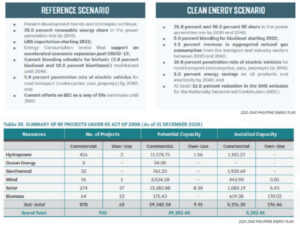
Under the Clean Energy Scenario (CES), the updated blueprint aims to increase the share of RE in the power generation mix to 35% by 2030, then 50% by 2040.
According to the PEP, renewable capacity expanded over 40% to 7,617 megawatts (MW) in 2020 from the 5,284-MW capacity in 2008, when the RE Act was passed.
Enabling policies and market support mechanisms that have been established have expedited the rapid RE deployment, as stated on the PEP.
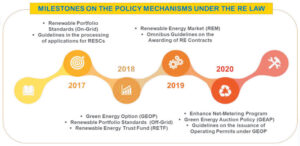
Among the issuances made was the Renewable Energy Market Rules, which indicated the conclusion of policy mechanisms provided under the RE law. Also launched was the Philippine Renewable Energy Market System (PREMS).
The Green Energy Auction Program (GEAP) was also issued, which provides additional market options through the auction of 2,000-MW renewable capacities from qualified RE suppliers. It seeks to foster a competitive setting in the country for RE supply.
Meanwhile, enabling the Green Energy Option Program (GEOP) gave end-users the option to select RE resources as their energy source.
Consumers are also empowered to be prosumers through the Net-Metering Program (NMP), which enables end-users to install up to 100 kilowatt (KW) of RE systems to lower their electricity bills and sell the surplus to the grid.
Another issuance to further encourage a more significant renewable resource utilization is the Open and Competitive Selection Process.
The DoE said they acknowledge renewables’ role in the government’s low-emission development strategy to contend with the challenges of climate change, energy security, and clean energy access. Hence, it “constantly works on setting aspirational targets, pushing stakeholders to respond to the call for cleaner, sustainable energy, and ensuring equitable access to affordable energy.”
Aligned with the PEP, the updated National Renewable Energy Program (NREP) 2020-2040 is also formulated, which works on providing a “cost-sensitive” and “demand-responsive” national program on RE.
In support of the NREP target, the RE road map brings in vital directions and deliverables for driving the renewables’ expansion in the energy system.
Included in the RE road map is accelerating RE positioning. Some of the medium-term activities are to establish Enhanced NMP in off-grid areas; execute GEAP; roll out GEOP; and study on Off-Shore Wind Development.
The road map also seeks to develop a conducive environment for businesses and reliable and efficient infrastructure, as well as promote and enhance research, design, and development agenda.
Renewable developments
2020-2040 Philippine Energy Plan
Progress in some plans set under the PEP has been made in expanding renewables in the country.
Last June, the DoE unveiled the results of the first auction round of GEAP, which saw a 98.3465% success rate. An RE capacity of 1966.93 MW has been committed to supply energy from 2023 to 2025 at a competitive price that is lower than or equal to the Green Energy Auction Reserve prices established by the Energy Regulatory Commission (ERC).
In the first round of GEAP, the DoE awarded 19 contracts. Of these contracts, 11 are in Luzon, which includes five solar contracts, four wind, and two hydropower. Two contracts, one wind and one solar, were awarded in Visayas; while four hydropower contracts and one each for solar and biomass were awarded in Mindanao.
RE developers who did not win in the first round or were not able to submit offers are encouraged by the DoE to take part in the succeeding auction rounds, since the GEA will be conducted on a yearly basis.
The department is now preparing to conduct the second GEA by June next year.
Moreover, in the shift to an increased RE share in the mix, natural gas is seen as a transition and flexible fuel that could support renewable-based generation. Having no indigenous replacement for natural gas supply from Malampaya, which concession would expire in 2024 and projected to be depleted by 2027, the DoE is focused on importing liquefied natural gas (LNG) through the development and operation of LNG receiving facilities.
So far, the DoE has approved the application of seven LNG import terminal projects. The department said in a statement that the Linseed Field Power Corp. is “on track” to complete its first integrated LNG import terminal in Batangas City, which is scheduled for commissioning in March 2023 and then the commercial operation in April. FGEN LNG Corp.’s LNG terminal is also scheduled for commissioning in March next year, while its commercial operation is set in June.
In addition, last November, the DoE announced that it is crafting an Executive Order (EO) to “strengthen and rationalize” the regulatory framework for the immediate development of offshore wind (OSW), given the interest in OSW potential among foreign and local investors.
This proposed EO would set out the regulatory framework for creating a “robust” OSW industry as well as comprises a long-term vision, infrastructure development, investments, and sound policies, according to DoE Secretary Raphael P.M. Lotilla.
As of November, 42 OSW wind service contracts have been awarded.
Last month, Alterenergy Holdings Corp. and Shell Overseas Investment have sealed their partnership for the development of the Calavite Passage OSW Project. Meanwhile, PetroGreen Energy Corp., along with Copenhagen Energy, has formed three special purpose vehicles for its OSW projects.
“I am optimistic that with the recent amendment of the Implementing Rules and Regulations (IRR) of the Renewable Energy Act of 2008, more foreign investors will come in to partner with our local companies,” Mr. Lotilla said.
The DoE is also looking into emerging technologies and marine renewable energy technologies.
Considering that diversifying the mix is an important step toward energy security, Michael O. Sinocruz, director for DoE’s Energy Policy and Planning, said at the BusinessWorld Economic Forum last month that the government is looking at harnessing alternative fuels such as green hydrogen and ammonia.
Meanwhile, Marissa P. Cerezo, director of the Renewable Energy Management Bureau, said earlier this month that the country’s clean energy strategy would count in harnessing ocean energy.
Renewable-generating facilities made up 28.9% of the total installed capacity in 2021, lower than its 32% share in 2016, according to the DoE’s Energy Accomplishment Report 2016-2022. This translated to 7,965 MW, with hydropower accounting for the highest share with 13.7% or 3,781 MW. Geothermal followed with 7% (1,928 MW), while solar significantly rose to 1,325 MW. Biomass and wind have a combined share of 3.4% with 489 MW and 443 MW, respectively.
“The RE-based capacity grew by 13.9% from 6,994 MW in 2016 to 7,965 MW in 2021, indicating the power sector’s gradual transition towards the utilization of cleaner energy fuels,” the DoE also noted. — Chelsey Keith P. Ignacio
The use of traditional fuels for transport has been observed to have caused problems for the environment, such as increased emissions of greenhouse gases to the environment. In addressing such alarming problems, electric vehicles (EVs) are being included as part of the solution.
As previously reported by the Philippine News Agency, total EV registration in the country for the past decade reached 12,965 comprising of e-trikes, e-motorcycles, e-jeepneys, and e-cars, among others. As the government ramps up its efforts for the development of the EV industry in the country, more vehicles of such type may be seen in the records and in our roads.
On the Department of Energy’s (DoE) end, part of their course of action is utilizing plug-in hybrid electric vehicles (PHEVs) as an alternative transportation system, which uses alternative fuels and energy technology. PHEVs are defined as “hybrid electric vehicles with a rechargeable energy storage system that can be charged from an external electric energy source.”
Alongside PHEVs, the DoE also launched Electric Vehicle Charging Stations (EVCS), which serve as charging stations that supply electrical energy for electric vehicles. ECVS include Battery Swapping Stations (BSS), which enables users to exchange their batteries for a fully charged battery; commercial use charging stations (CUCS), which are EVCS facilities available for the general public; and own-use charging stations (OUCS) for private use.
Recently, the DoE launched two new units of PHEVs and EVCS. According to the department, the PHEVs are expected to run a 135-kilowatt electric motor powered by an 8.3-kilowatt hour lithium iron phosphate battery and a 1.5-liter engine.
The department has also welcomed the approval of the Republic Act No. 11697, also known as the Electric Vehicle Industry Development Act (EVIDA), which has lapsed into law last April 15.
As stated in the act, EVIDA aims to “provide an enabling environment for the development of [EVs] including options for micromobility as an attractive and feasible mode of transportation to reduce dependence on fossil fuels.” Moreover, EVIDA authorizes the establishment of the Comprehensive Roadmap for the Electric Vehicle Industry (CREVI). The act also requires the government and companies to meet a 5% EV quota on their vehicle fleets.
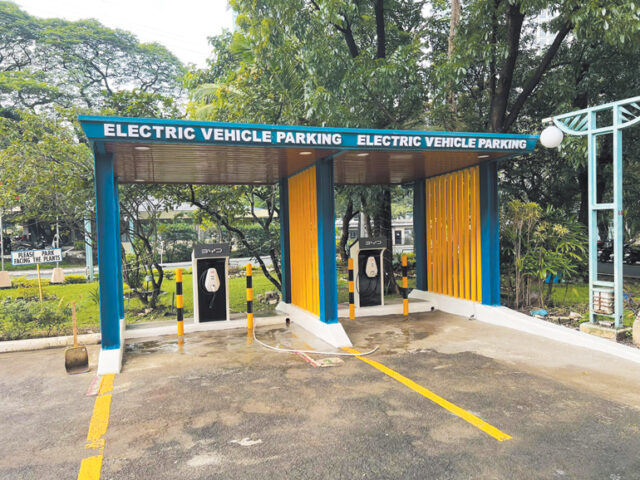
Photo from facebook.com/DOEgovph
In a statement last April, the department said that EVIDA clearly identified the need to reduce the country’s reliance on imported fuel through the development of an enabling environment for EVs, as well as the need for intervention measures to spur the industry’s growth and potential, which includes, among others, incentives, demand generation and industry development, and roles and functions of government offices.
“We recognize that this law will allow us to transition to a clean energy scenario, and the support from all our stakeholders is needed so we may achieve a more efficient transportation system,” Former Energy Secretary Alfonso G. Cusi said in the same statement.
Following this passage, the Marcos administration recently has approved an executive order (EO) that will slash tariffs on some EVs, particularly bringing down the most favored nation tariff rates to zero percent on completely built-up units of some EVs for five years.
“The objective of this tariff reduction is to ensure that there are enough e-vehicles around and incentives after one year of implementation to assess its impacts on the development of the domestic EV industry,” Socioeconomic Planning Secretary Arsenio M. Balisacan was quoted as saying in a BusinessWorld report earlier in November.
“The EO aims to expand market sources and encourage consumers to consider acquiring EVs, improve energy security by reducing dependence on imported fuel and promote the growth of the domestic EV industry ecosystem,” he added.
The DoE has also been progressing in the implementation of the Energy Virtual One Stop Shop (EVOSS) system, albeit still seeking to include other agencies.
The EVOSS system is an online monitoring system catering to energy applications and storing energy-related information. The EVOSS system offers different services, including monitoring local energy projects, examining data requirements, establishing databases, and institutionalizing EVOSS operations.
“On the part of the Energy Regulatory Commission, they have also committed to speed up their implementation of EVOSS and to expand even beyond what is required by the law. In other words, other processes that the movements that EVOSS does not cover would also be subject to timelines and I think this is good to have this in mind, primarily since many structural reforms concern the energy sector,” current Energy Secretary Raphael P.M. Lotilla said in a message last September.
The secretary added that the DoE is expected to submit proposed Legislative and Executive Issuances in the coming months, such as the issuance of Implementing Rules and Regulations by the Energy Utilization Managements Bureau, to address the structural reforms in the energy sector.
Mr. Lotilla also emphasizes incorporating the collaboration between public and private sectors in the sector.
“We must remember that the private sector is our partner. And among the earliest forms of PPP (public private partnerships) was the service contract in the upstream sector. And with the risks our service contractors take, our risks are also very high, therefore, we see them as partners in this,” he said. — A.K.S. Brillantes
THE PHILIPPINE ECONOMY likely saw strong growth in the fourth quarter, putting it on track to surpass the government’s full-year target, Socioeconomic Planning Secretary Arsenio M. Balisacan said on Monday.
“I think given the indications that we are seeing in the fourth quarter, it’s likely that we are going to exceed (the full-year target of 6.5-7.5%). We expect to see a robust growth in the fourth quarter,” he said at a briefing in Pasig City.
In the third quarter, gross domestic product (GDP) expanded by a better-than-expected 7.6%, bringing the nine-month average to 7.7%.
Mr. Balisacan earlier said GDP needs only to grow by 3.3-6.9% in the fourth quarter to achieve the full-year target.
Consumption, as well as more investments in construction, utilities, and mining, and increased productivity in agriculture, likely drove strong growth this year, he added.
The National Economic and Development Authority (NEDA) chief said GDP expansion would have been faster if not for rising inflation this year.
Headline inflation rose to a 14-year high of 8% in November, from 7.7% in October. For the 11-month period, inflation averaged 5.6%.
“But obviously in response to that inflation, our monetary authorities had to raise interest rates and the impact of that will be felt next year and will be felt even the year after,” Mr. Balisacan said.
The Bangko Sentral ng Pilipinas has raised its benchmark interest rate last week by 50 basis points (bps) to 5.5%. This brought the policy rate to the highest since November 2008 when it was at 6%.
Since May, the central bank has increased borrowing costs by a total of 350 bps.
For next year, Mr. Balisacan said the likely recession in major economies, persistent inflation, and the impact of BSP’s monetary tightening, may slow the Philippine economy’s growth.
The Development Budget Coordination Committee (DBCC) earlier this month revised its growth target for 2023 to 6-7%, a narrower range compared with 6.5-8%, previously.
“Despite the headwinds we face, the economic team of the Marcos administration remains confident of our prospects in the near term. A robust domestic economy, propelled by sustained consumption and investment, will be key to attaining the 6-7% growth target for 2023,” Mr. Balisacan said.
Meanwhile, NEDA said the Philippine Development Plan (PDP) 2023-2028 will address short-term issues and medium-term constraints to growth.
The NEDA Board, chaired by President Ferdinand R. Marcos, Jr., approved the PDP on Dec. 16.
Under the PDP, the government seeks to lower the unemployment rate to between 5.3% and 6.4% and bring inflation down to 2.5%-4.5%.
Mr. Balisacan said poverty incidence is also expected to drop to 16.2% in 2023 from 18.1% in 2021.
“The timely adoption of the PDP as the country’s development roadmap shall ensure the alignment of government resources, programs, projects, and activities along with the identified strategies that will enable us to achieve our desired socioeconomic objectives,” Mr. Balisacan said.
“The plan will address short-term issues such as protecting people’s purchasing power, mitigating the socioeconomic scarring in human capital, and ensuring that vulnerable population segments are provided targeted assistance,” he added.
Full of details of the PDP will be published by yearend.
MAHARLIKA Meanwhile, Mr. Balisacan urged the Senate to act on the proposed bill creating the Maharlika Investment Fund (MIF) “the earlier the better,” saying that it could support the newly approved socioeconomic development plan of the country.
“The Maharlika Investment Fund is just another source of funds that will support our priorities, particularly investment priorities, and we see the Maharlika as another vehicle for sources of funds and investments,” he said.
He added that the MIF would be another source of financing for the government’s major infrastructure projects, such as the official development assistance, public private partnerships and national budget.
“The more vehicles you have, the better,” he said. “That will ensure that we can ramp up, not only the infrastructure, but even the other development priorities of the government.”
Last week, the House of Representatives approved on third and final reading the bill creating the MIF just over two weeks after it was filed by Speaker Ferdinand Martin G. Romualdez. — Keisha B. Ta-asan








 In addition, last November, the DoE announced that it is crafting an Executive Order (EO) to “strengthen and rationalize” the regulatory framework for the immediate development of offshore wind (OSW), given the interest in OSW potential among foreign and local investors.