Home Blog Page 5410

USAID, partner aim to help boost PHL cybersecurity 

RAWPIXEL.COM-FREEPIK

By Arjay L. Balinbin, Senior Reporter

THE United States Agency for International Development (USAID) and global cybersecurity company Palo Alto Networks recently signed a partnership deal to help the Philippines strengthen its cybersecurity posture.

The alliance is expected to boost e-commerce and other digital services in the country by increasing customer confidence, Palo Alto Networks officials said during a briefing in Mandaluyong City on Tuesday.

USAID and Palo Alto Networks hope to achieve the goal by increasing customer confidence through awareness and promotion of safe computing practices, as well as the adoption of international standards.

“Governments are modernizing their networks to take advantage of digital innovations and improve the way they communicate with citizens,” said Oscar Visaya, Palo Alto Networks country manager for the Philippines.

“As they modernize their IT infrastructure, their cybersecurity must keep pace with these developments,” he added.

The company said that it will work with USAID to develop programs and activities and provide technical assistance and expert advisory to help realize the vision.

They envision an efficient, robust, and secure digital ecosystem to support the country’s digital transformation.

They hope to speed up the adoption and implementation of a “zero trust framework,” an approach to cybersecurity that helps “secure an organization by eliminating implicit trust and continuously validating every stage of digital interaction,” Palo Alto Networks said.

Government data showed 37% of online users in the country reported cyberattacks in 2020.

At least 73% of consumer data from micro-, small-, and medium-sized enterprises were lost to attackers, greater than the 56% figure in the Asia-Pacific region.

According to cybersecurity firm Sophos, the Philippines placed third in worldwide ransomware payments in 2021, with local organizations paying an average of $1.6 million, doubling the country’s average of $820,000 in 2020.

“The MoU (memorandum of understanding) that was signed, a lot of it focuses on capacity development side and individual levels, so we’ve heard about some of the training programs with Palo Alto, cybersafety programs, and professional development … and there are good practice frameworks and standards that we are also working with our partners,” said John Garrity, chief of party of USAID’s Better Access and Connectivity project.

“There are ways to come together to address these challenges through a multistakeholder approach from capacity building for organizations and individuals,” he added.

Mary Rose E. Magsaysay, deputy executive director at the Cybercrime Investigation and Coordinating Center, noted that the costs of cybersecurity capacity development are generally “unreachable.”

At the same time, she confirmed that foreign crime syndicates are responsible for the recent text scams.

She added that text scams have cost victims in the Philippines “millions of dollars.”

The government and the country’s telecommunications companies need more smishing and phishing alerts, she noted.

Meanwhile, the Department of Information and Communications Technology (DICT) announced on Tuesday that the Philippines was recently re-elected to the International Telecommunications Union (ITU) Council in Bucharest, Romania.

It said 193 member states of the ITU selected 48 states to lead the council.

“The Philippines is among the 13 states selected from Region E (Asia and Australia), along with Australia, Bahrain, China, India, Indonesia, Japan, Korea, Kuwait, Malaysia, Saudi Arabia, Thailand, and the United Arab Emirates,” the DICT said in a statement.

“The country commits to work towards the fulfillment of the ITU’s mandate to make the digital future inclusive and more accessible for everyone, especially in developing countries,” it added.

The department also said that it is expected to lead the country’s involvement in discussions and decision-making that will “significantly affect” the member states’ digital agenda.

“The department also enjoins the support and collaboration of government agencies to achieve its goals as a council member,” it noted.

Swedish geneticist wins Nobel medicine prize for decoding ancient DNA

Svante Paabo. — Frank Vinken/Max Planck Institute for Evolutionary Anthropology

STOCKHOLM/LONDON — Swedish geneticist Svante Paabo won the 2022 Nobel Prize in Physiology or Medicine on Monday for discoveries that underpin our understanding of how modern-day people evolved from extinct ancestors at the dawn of human history.  

Mr. Paabo’s work demonstrated practical implications during the coronavirus disease 2019 (COVID-19) pandemic when he found that people infected with the virus who carry a gene variant inherited from Neanderthals are more at risk of severe illness than those who do not.  

Mr. Paabo, director at the Max Planck Institute for Evolutionary Anthropology in Leipzig, Germany, won the prize for “discoveries concerning the genomes of extinct hominins and human evolution,” the Award committee said.  

“The thing that’s amazing to me is that you now have some ability to go back in time and actually follow genetic history and genetic changes over time,” Mr. Paabo told a news conference at the Max Planck Institute. “It’s a possibility to begin to actually look on evolution in real time, if you like.”  

Mr. Paabo, 67, said he thought the call from Sweden was a prank or something to do with his summer house there.  

“So I was just gulping down the last cup of tea to go and pick up my daughter at her nanny where she has had an overnight stay,” Mr. Paabo said in a recording posted on the Nobel website.  

“And then I got this call from Sweden and I of course thought it had something to do with our little summer house … I thought the lawn mower had broken down or something.”  

Asked if he thought he would get the award, he said: “No, I have received a couple of prizes before but I somehow did not think that this really would qualify for a Nobel Prize.”  

Mr. Paabo, son of a Nobel Prize-winning biochemist, has been credited with transforming the study of human origins after developing ways to allow for the examination of DNA sequences from archaeological and paleontological remains.  

Not only did he help uncover the existence of a previously unknown human species called the Denisovans, from a 40,000-year-old fragment of a finger bone discovered in Siberia, his crowning achievement is considered to be the methods developed to allow for the sequencing of an entire Neanderthal genome.  

‘GENETIC DIFFERENCES’ 
This research, which showed that certain genes of Neanderthal origin are preserved in the genomes of people today, was once considered impossible, given that Neanderthal DNA on bones has shriveled up over thousands of years into short fragments that have to be assembled like a gigantic puzzle, and are also heavily contaminated with microbial DNA.  

“This ancient flow of genes to present-day humans has physiological relevance today, for example affecting how our immune system reacts to infections,” the Nobel Committee said.  

The prize, among the most prestigious in the scientific world, is awarded by the Nobel Assembly of Sweden’s Karolinska Institute and is worth 10 million Swedish crowns ($900,357).  

It is the first of this year’s batch of prizes.  

Born in Stockholm, Mr. Paabo studied medicine and biochemistry at Uppsala University before creating a scientific discipline called “paleogenomics,” which helped show genetic differences that distinguish living humans from extinct hominins.  

“His discoveries provide the basis for exploring what makes us uniquely human,” the Committee said.  

The COVID-19 pandemic has placed medical research center stage, with many expecting that the development of the vaccines that have allowed the world to regain some sense of normality may eventually be rewarded.  

Still, it typically takes many years for any given research to be honored, with the committees charged with picking the winners looking to determine its full value with some certainty amongst what is always a packed field of contenders.  

PANDEMIC
When asked why the prize did not go to advances in combating COVID, Thomas Perlmann, secretary for the Nobel Committee for Physiology or Medicine, said the committee would only talk about prize winners, not those who had not won, or had not yet won.  

However, Mr. Paabo’s ancient forensics work did offer insight on why some people are at higher risk of severe COVID.  

In 2020, a report from Mr. Paabo and colleagues found that a gene variant inherited by modern humans from Neanderthals when they interbred some 60,000 years ago made those that carry the variant more likely to require artificial ventilation if infected by the COVID-causing virus.  

“We can make an average gauge of the number of the extra deaths we have had in the pandemic due to the contribution from the Neanderthals. It is quite substantial, it’s more than one million extra individuals who have died due to this Neanderthal variant that they carry,” Mr. Paabo said in a 2022 lecture.  

Mr. Paabo’s most cited paper in the Web of Science was published in 1989, with 4,077 citations, said David Pendlebury, from UK-based scientific data analytics provider Clarivate.  

“Only some 2,000 papers out of 55 million published since 1970 have been cited this many times,” he said.  

“It is, however, not an award for a discovery relevant to clinical medicine, which many anticipated this year after a Nobel Prize focusing on physiology last year.”  

Past winners in the field include a string of famous researchers, notably Alexander Fleming, who shared the 1945 prize for the discovery of penicillin, and Robert Koch, who won already in 1905 for his investigations of tuberculosis. — Reuters 

Cultural ministers pledge more action to return priceless artifacts

EVEN as Mexico demands the return of Montezuma’s Headdress from the Welt Museum in Vienna, experts say it is too fragile to move. — KHM-MUSEUMSVERBAND/ WELTMUSEUMWIEN.AT

MEXICO CITY — Cultural ministers and representatives from 150 countries committed to expanding efforts to return historical artifacts to their countries of origin, according to a declaration released last Friday, following a UNESCO conference in Mexico City.

Major museums, auction houses, and private collectors have faced growing pressure in recent years to repatriate priceless works of art and other antiquities from Latin American and African nations, among others, which argue the goods were often taken unethically or illegally.

The declaration from the United Nations’ cultural arm called for open, inclusive international dialogue on illegally acquired artifacts and concrete measures to battle the illicit trade in antiquities.

The declaration deems culture a “global public good” that should be included in the UN development goals.

Restitution of cultural artifacts is often politically sensitive and raises questions over the transport and care of often delicate antiquities.

The death of Queen Elizabeth II has renewed calls in India for the return of one of the world’s largest uncut diamonds from Britain’s crown jewels, while Chile has for years demanded the return of a Moai statue from the British Museum.

Mexico’s government has previously called for the return of a 500-year-old Aztec crest known as Montezuma’s headdress from a Vienna museum, but experts have deemed its centuries-old iridescent quetzal feathers, dotted with golden pendants, too fragile for transport.

During the conference, ministers also discussed how to protect heritage from wars and climate change.

Ernesto Ottone, a senior UNESCO official, expressed hope that old attitudes are shifting in an interview on the sidelines of the conference.

“In the last three years there has been a change, a turning point, on how restitution can be made,” he said, pointing to recent bilateral deals that have led to the return of artifacts. “Today, doors are opening for us.” — Reuters

Gov’t makes partial award of reissued T-bonds

BW FILE PHOTO

THE GOVERNMENT partially awarded the reissued seven-year Treasury bonds (T-bonds) it offered on Tuesday as investors asked for higher rates as they expect headline inflation to have reached a new peak last month.

The Bureau of the Treasury (BTr) raised just P22.85 billion from its offer of seven-year papers on Tuesday, less than the programmed P35 billion even as total bids reached P39.144 billion.

The bonds, which have a remaining life of two years and six months, were awarded at an average rate of 5.746%, 134.4 basis points (bps) lower than the 7.09% quoted for the bond when it was last offered on Dec. 11, 2018 and 0.4 bp below the 5.75% coupon for the issue.

However, this was 44.8 bps above the 5.298% quoted for the same bond series at the secondary market and 19.5 bps higher than the 5.551% yield seen for the three-year tenor at the secondary market prior to the auction, based on PHP Bloomberg Valuation Service Reference Rates data provided by the BTr.

National Treasurer Rosalia V. de Leon said in a Viber message to reporters after the auction that the BTr made a partial award as investors asked for higher rates.

“The market continues to provide cushion as high inflation remains persistent. That being the case, the BSP (Bangko Sentral ng Pilipinas) is expected to deliver another rate increase,” Ms. De Leon said.

Likewise, a trader said that the market remained defensive ahead of the release of September inflation data on Wednesday.

Rizal Commercial Banking Corp. Chief Economist Michael L. Ricafort likewise attributed the partial award to higher bid yields “ahead of the latest inflation data that is expected to pick up.”

Investors also priced in hawkish signals from the Federal Reserve, as well as the BSP amid the weakening peso, Mr. Ricafort said in a Viber message.

Headline inflation likely reached a fresh peak last month amid higher electricity rates and food prices, as well as the continued weakening of the peso versus the dollar, analysts said.

A BusinessWorld poll of 13 analysts yielded a median estimate of 6.7% for the September consumer price index, near the lower end of the central bank’s 6.6-7.4% estimate for the month.

If realized, this would be faster than the 6.3% print in August as well as the BSP’s 5.6% forecast and 2-4% target for the year.

BSP Governor Felipe M. Medalla last month said the central bank may need to continue hiking rates, with the peso’s continued decline against the dollar due to a hawkish US Federal Reserve posing an upside risk to inflation. The Monetary Board has hiked rates by 225 bps since May to rein in prices.

The peso closed at another all-time low of P59 per dollar on Monday, dropping 37.5 centavos from its P58.625 finish on Friday, Bankers Association of the Philippines data showed.

Year to date, the peso has weakened by P8 or 15.6% from its Dec. 31, 2021 close of P51.

Meanwhile, the US central bank has raised borrowing costs by 300 bps since March, with Fed chief Jerome H. Powell earlier saying they are strongly committed to bringing down inflation and may need to keep rates high for longer to achieve this goal.

The BTr wants to raise P200 billion from the domestic market this month, or P60 billion through Treasury bills and P140 billion from T-bonds.

The government borrows from local and external sources to help plug a budget deficit capped at 7.6% of gross domestic product this year. — Diego Gabriel C. Robles

JFC adds more Tim Ho Wan stores in China, eyes 100

BW FILE PHOTO

JOLLIBEE Foods Corp. (JFC) said on Tuesday that it recently debuted two Tim Ho Wan restaurants in Beijing, bringing to 11 its current store count in mainland China ahead of its target of 100 new openings.

“As the second largest city in the country in terms of urban population, Beijing is instrumental in our aim to further expand our business in China,” JFC President and Chief Executive Officer Ernesto Tanmantiong said in a press release.

The two Michelin-starred stores, which opened in August, are the 10th and 11th branches of Tim Ho Wan on China’s mainland, another step forward for the company’s overseas expansion and sustained growth in the region.

“The long queues and waiting lists that have welcomed our openings in Beijing give us greater confidence to continue with our global expansion strategy for the Jollibee Group and Tim Ho Wan,” Mr. Tanmantiong said.

JFC believes that the two new stores are in prime locations: CapitaMall Taiyanggong Mall branch in Chaoyang District, which can seat 108 people, and APM Mall branch along Wangfujing Street, which can seat 100 people.

It said Chaoyang District is the “main urban area of the Chinese capital” while Wangfujing Street is “a well-known shopping street that is also known as one of the city’s symbols of commerce.”

JFC said that both branches were packed on opening day, with more customers lining up for up to an hour to try Tim Ho Wan’s signature dishes, which include baked barbeque pork buns, rice rolls, and pan-fried radish cake.

“Jollibee Group is committed to open 100 Tim Ho Wan restaurants in China within the next few years,” the company said.

In September 2020, JFC opened its first Tim Ho Wan restaurant in Shanghai’s Jing’an District after it entered into a joint venture agreement with the Tim Ho Wan Group to open and operate Tim Ho Wan restaurants in China.

“We remain focused [on] expanding Jollibee Group’s presence in China because of the continued trust and support that the locals have shown our brands. Residents and even tourists of Beijing can expect to see more of our stores in the coming years,” JFC China and Yonghe King President Louie Liu said.

JFC plans to increase its store network in China, which now numbers 475 across the brands Tim Ho Wan, Yonghe King, and Hong Zhuang Yuan by the end of August.

Last week, JFC’s subsidiary — Jollibee Worldwide Pte. Ltd. — committed more funds to the private equity fund that owns the Tim Ho Wan brand and company-owned stores ahead of a planned expansion in China.

It committed additional capital to Titan Dining LP, which increased its fund size to (Singapore) $350 million from S$250 million.

On the stock market on Thursday, JFC shares added P5.80 or 2.48% to P240 apiece. — Justine Irish D. Tabile

RCBC launches physical-digital banking service for remote areas

RIZAL COMMERCIAL Banking Corp. (RCBC) has launched its physical-digital banking service, MoneyBela Barangayan Banking, as part of its financial inclusion drive to cater to unbanked Filipinos in far-flung communities.

Launched on Monday evening, the country’s first mobile human-assisted remote banking service will be rolled out in 42,000 barangays nationwide, introducing Filipinos in rural areas to banking services bundled with agent-assisted financial education.

Sustainable e-tricycles will roam around unreached communities to offer services such as basic deposit account creation, bills payment, e-load, cash in or cash out, microinsurance, and telemedicine purchase through DiskarTech.

“A keyword in the name of our program — manibela, or the car’s steering wheel — serves as the main inspiration of RCBC’s innovations. Just like a manibela, we are optimistic to steer Filipinos’ lives toward a direction that is empowering, inclusive, and equal for all,” RCBC President and Chief Executive Officer Eugene S. Acevedo said.

“The latest financial inclusion innovation supports RCBC’s thrust in promoting ESG or the environment, social, and governance within the framework of the United Nations Sustainable Development Goals,” Mr. Acevedo said. 

RCBC Executive Vice-President and Chief Innovation and Inclusion Officer Angelito “Lito” M. Villanueva said during MoneyBela’s launch that the bank is excited to partner with government agencies in advancing a digitally and financially inclusive future.

“The whole idea is for us to be able to penetrate even far-flung communities in the Philippines and we know for a fact that we still have quite a number of Filipinos that remain unbanked or underserved,” Mr. Villanueva told BusinessWorld on the sidelines.

“MoneyBela is a tool for us to be able to accelerate the realization of the twin goals of the central bank. It’s more of leveling the playing field, it’s more of providing equal access to everyone, it’s making sure no one is left behind,” he added.

The Bangko Sentral ng Pilipinas (BSP) wants to digitize at least 50% of the volume and value of total retail payments by 2023.

As of 2021, digital payments made up 30.3% of the total volume of retail transactions in the country from 20.1% a year earlier. Meanwhile, the value of payments done online represented 44.1% of total transactions last year, higher than the 26.8% share in 2020.

The BSP also wants 70% of Filipino adults to have formal financial accounts by 2023. The country’s banked population was at about 56% of all adults in 2021, up from just 29% in 2019, results of the central bank’s 2021 Financial Inclusion Survey showed.

“Of course, one of the challenges in digital infrastructure is connectivity,” Mr. Villanueva said, adding that the bank is working with the Department of Information and Communications Technology and the BSP to help address this.

He added that the active participation of local government units will be the key to MoneyBela’s success, noting they are partnering with the Department of the Interior and Local Government and the Liga ng Barangay.

Among the bank’s financial inclusion partners also include the Social Welfare and Development, Education, and Trade and Industry departments, the League of Provinces, Cities, and Municipalities, including the Cooperative Development Authority, and the National Youth Commission.

Among those who expressed their support for the project are BSP Governor Felipe M. Medalla and Finance Secretary Benjamin E. Diokno, who both commended RCBC for helping bring more Filipinos into the financial system at the launch.

RCBC’s consolidated net income rose by 84% year on year to P6.14 billion in the January to June period. This translated to a return on equity of 9.5%, while return on assets was at 1.1%.

The bank’s shares closed at P21.85 apiece on Tuesday, up by 85 centavos or by 4.05%. — Keisha B. Ta-asan

Chinese artist records era of COVID, one test at a time

ARTIST Siyuan Zhuji poses in a picture as part of his artwork titled ‘Shengji’ on the coronavirus disease (COVID-19) in China, in this handout image provided to Reuters Sept. 29. — SIYUAN ZHUJI/HANDOUT VIA REUTERS

SHANGHAI — For most of China’s 1.4 billion people, regular COVID-19 tests have become a way of life. Siyuan Zhuji is trying to turn them into a work of art.

Since March, the 33-year-old multi-disciplinary artist from Jiangsu province has been filming his own nucleic acid tests with a small camera in his mouth.

His video clips show teeth and tongue and an approaching cotton bud. In some shots, a PPE-clad health worker can be seen through his teeth, administering the test.

“This is how our life is now, this period of time involves doing regular nucleic testing,” Mr. Zhuji told Reuters in an interview in his studio. “It’s a way of life that’s unique to our time.”

Mr. Zhuji said the idea for the videos came to him when he began considering the vulnerability of the mouth, as an entry point for the virus and also for the repeated testing to find it.

He has recorded about 40 tests and says he will continue taking video with his thumb-sized camera as long as regular testing is required.

He aims eventually to display the videos simultaneously on a big screen in a grid, a snapshot of pandemic life in China. He calls his work Hesuan Jiance, which translates as “COVID test.”

“This work can represent this era. This is what I want to express. It is to record everyone’s current life,” Mr. Zhuji said.

The novel coronavirus emerged in the Chinese city of Wuhan in late 2019 and for nearly two years China was relatively virus free. But the Omicron variant brought persistent outbreaks across the country, which authorities have been battling with a barrage of testing.

In many places, a negative COVID test is required to use public transport, and enter schools, places of work, shops, banks, parks and anywhere else people gather.

China’s pursuit of “zero COVID” means Mr. Zhuji might be filming tests for some time yet.

“I will continue shooting these videos until the end of the pandemic,” he said. “If I die before the end, then I will keep shooting until I die.” — Reuters

Poor health-seeking behavior among males contributes to deadliness of prostate cancer

PIXABAY

Poor health-seeking behavior and a low awareness of prostate cancer prevention may explain why the disease is the top killer of male Filipinos above the age of 65, said a urologist.

According to Dr. Aristotle Bernard M. Roque, president of the Philippine Urological Association (PUA), six in 10 cases of those diagnosed with prostate cancer are men aged 65 or older.

Patients are asymptomatic early on in the disease, but may present with symptoms such as bone pain and hip pain in the late stages.

“Since there are no symptoms, we rely more on risk factors,” said Dr. Roque in a Sept. 29 Zoom call with BusinessWorld.

Risk factors include age (men 65 years old and above are susceptible), a family history of the cancer, a high-fat diet, and prostatism (an enlarged prostate, which affects the way the bladder empties).

To catch the disease early, men are advised to undergo a digital rectal exam (DRE).

Patients expect some form of digital equipment when they hear the term “DRE,” Dr. Roque said, and opt out when they find out that “digit” is the medical term for finger.

“When we do surgical missions, a lot of people would go and ask for DREs. When they learn what a digit is, about 40% of the audience would get scared and go away,” he said. “You could save lives with a DRE.”

Other screening tools include prostate magnetic resonance imaging (MRI), which shows a three-dimensional image of the gland and pinpoints which nodules have a high incidence of cancer; and a prostate-specific antigen test, which requires a blood sample.

Prostate cancer is cancer of the prostate, the walnut-sized part of the male reproductive system — right below the bladder — that produces fluid that makes up a part of semen. An enlarged prostate may or may not be cancer.

BLUE RIBBONS
Dr. Erwin G. Benedicto, Southeast Asia portfolio medical director of Johnson and Johnson (J&J), noted that Filipino men have poor health-seeking behavior compared to women.

“A man would endure pain unless it’s very severe — unlike women,” he said, adding that this is why the blue ribbon campaign, which raises awareness for prostate cancer, hasn’t gained the same traction as the pink ribbon campaign for breast cancer.

“Prostate cancer is already prevalent. We know how serious it is,” Dr. Benedicto said. “We want it to be equally recognized … so awareness would be high on prevention and treatment among patients.”

To boost awareness, the blue ribbon campaign also targets women, who can persuade their male partners or relatives to see a doctor.

“Let’s not forget our dads who protect us. Let’s also protect our dads,” Dr. Roque said.

Prostate cancer is the fifth leading cancer site and third leading cause of cancer deaths among Filipino males, per 2020 data from the Global Cancer Observatory.

The DoH said the average age at the time of diagnosis is 66 years old. — Patricia B. Mirasol


Treated prostate cancer with active surveillance

Benign cases of an enlarged prostate can be treated early on with medical management and active surveillance, said Dr. Aristotle Bernard M. Roque, president of the Philippine Urological Association (PUA).

The latter refers to regular monitoring through prostate-specific antigen tests and biopsies. If the problem persists, surgeries such as a transurethral resection of the prostate (TURP) or a laser prostatectomy can be performed to remove excess prostate tissue that blocks urine flow.

The male hormone testosterone feeds on prostate cancer cells, said Dr. Roque.

He added that today’s novel treatments attack the tumor that produces the testosterone instead of removing the primary source of the hormone (the testicles) — as was done in the past.

Advanced prostate cancer that is localized, meanwhile, can be taken out with radical prostatectomy, or the surgical removal of the prostate.

Even then, active surveillance is still needed post-surgery because cancer cells are recalcitrant.

“There are a lot of people who survive prostate cancer who are treated only with active surveillance and anti-testosterone treatments,” Dr. Roque added. — Patricia B. Mirasol

PHL SMEs see e-commerce ‘vital’ to growth over next 3 years, says FedEx research

EXPRESS transportation company FedEx Express, a subsidiary of FedEx Corp., said the Philippines is among the “most optimistic” in Asia-Pacific, Middle East, and Africa (AMEA) regarding e-commerce, with both small and medium businesses and consumers anticipating future growth.

The company said 91% of small and medium enterprises (SMEs) in the Philippines expect e-commerce to “continue to boom” and become more vital to their business growth over the next three years.

“SMEs in India, Malaysia, Philippines, and Vietnam were among the most optimistic about their future e-commerce growth in the next three years,” FedEx Express said in an e-mailed statement, citing a study it commissioned.

The company noted that e-commerce currently represents less than 6% of total retail sales in each of these markets. This means that maintaining customer service quality is crucial as more people join the on-demand economy and shipping volumes rise.

The commissioned research showed a 10% gap between how SMEs rate their e-commerce customer experience and how consumers view it.

The company said the biggest gaps were in having an efficient returns service (13%) and access to customer support (11%).

“Deliveries taking too long is the number one pain consumer point (53%) followed by handling returns (42%),” the company noted, adding that consumers typically expect delivery within three days to one week.

“There is a desire for delivery to be at least more reliable if not faster.”

SMEs in the Philippines, the company also said, will need to step up their game significantly to meet consumer expectations. — Arjay L. Balinbin

BPI’s market position to get a boost from merger

THE PLANNED MERGER between Bank of the Philippine Islands (BPI) and Robinsons Bank Corp. (RBC) will strengthen the former’s market position as one of the largest lenders in the country, Fitch Ratings said.

“We believe the merger should cement BPI’s market position as one of the largest privately owned banks in the Philippines, with its market share slated to increase by about 0.9 percentage points,” Fitch Directors Tamma Febrian and Willie Tanoto said in a commentary dated Oct. 3.

“Beyond acquiring RBC’s existing customer base and more than 150 branches, BPI should also benefit from the strengthened ties with the Gokongwei Group, RBC’s major shareholder and one of the largest conglomerates in the Philippines, through improved access to new clients from the group’s vast business operations across the country,” Fitch added.

It said the merger is unlikely to affect BPI’s support-driven credit ratings.

“The immediate financial implications from the merger are manageable for BPI, considering the acquired entity’s reasonable financial profile and relatively modest scale,” it said.

“Nevertheless, the enlarged franchise will reinforce BPI’s systemic importance, which is a key driver of its support-driven Issuer Default Ratings (IDRs). The IDRs are currently on Negative Outlook, in line with the Outlook on the Philippine sovereign, and any changes to the sovereign rating or Outlook is likely to lead to corresponding action on the bank’s IDRs, provided that our assessment of the state’s propensity to support BPI remains unchanged.”

Under the deal announced last week, which is still subject to shareholder and regulatory approval, the Ayala-led BPI will be the surviving entity.

The companies hope to complete the merger before end-2023. Upon the effectivity of the merger, RBC’s shareholders will hold approximately 6% of the resulting outstanding capital stock of BPI. However, the ratio of exchange of shares has yet to be announced. 

Data from the central bank showed BPI is the third-largest private bank in the country in terms of assets with P2.45 trillion as of end-June, while RBC had total assets of P172.35 billion.

With the merger, the surviving entity will become the second-largest bank in the country in terms of assets with P2.62 trillion.

The merger will also result in BPI taking over RBC’s 20% stake in digital lender GoTyme Bank, a joint venture between RBC, the Gokongwei Group and Singapore-based GoTyme.

“We believe that the additional platform would help the bank broaden its retail offerings and tap new, albeit potentially higher-risk, underserved customers in the Philippines. The incremental credit risks from expanding into underbanked sectors will hinge on BPI’s strategy and risk posture, which we expect to remain relatively disciplined,” Fitch said.

“Moreover, we believe higher interest rates and softening business and consumer sentiments are likely to temper BPI’s loan growth momentum in the near term,” it said.

The credit rater said the merger is also unlikely to affect BPI’s credit profile, even as RBC’s asset quality is weaker than that of the larger bank’s. However, acquired non-performing loans (NPLs) will increase BPI’s NPL ratio by about 0.2 percentage point (ppt) as RBC’s balance sheet is just 7% of BPI.

Fitch said any incremental credit charges can be absorbed by BPI’s healthy loan-loss buffers.

“RBC’s capitalization is also healthy, reflected in its common equity Tier 1 ratio of 14.2% at end-June 2022 compared with BPI’s 15.9%, which should limit the decline in the merged entity’s capital ratio to less than 0.2 ppt. RBC is also unlikely to act as a major drag on BPI’s risk-adjusted profitability metrics as the bank is reasonably profitable in line with the industry average, even though it is less so than BPI,” Fitch added.

Meanwhile, China Bank Securities Corp. Research Director Rastine Mackie D. Mercado said in an e-mail that BPI will benefit from acquiring RBC’s loan book and customer base, as well as from potential synergies with the Gokongwei Group.

Asked on why the Gokongwei Group is exiting the banking sector, Mr. Mercado said: “There may have been an opportunity for the business and its shareholders to better realize the value in RBank through a merger with BPI.”

“Moreover, this may also be in line with strategic streamlining within the broader Gokongwei group, allowing them to better focus on their core businesses,” he added.

Meanwhile, Mercantile Securities Corp. Head Trader Jeff Radley C. See said in a Viber message that this was likely a strategic move by the Gokongwei Group amid the current operating environment for financial firms.

“With the current business sentiment, it is better to do a merger in order to survive. Robinsons Bank is still a small bank. Most probably, there won’t be any competition concerns,” Mr. See said.

BPI’s net income rose by 82.9% to P12.5 billion in the second quarter from the P6.8 billion recorded in the same period last year.

This brought the lender’s net earnings for the first half of the year to P20.4 billion, up by 73% from the P11.75 billion seen in the same period in 2021.

BPI’s shares closed at P91.90 apiece on Tuesday, down by 10 centavos or 0.11%. — Keisha B. Ta-asan

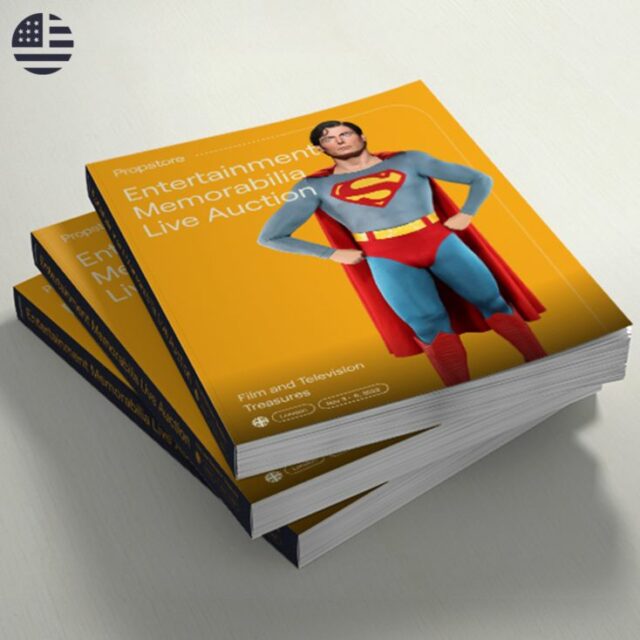
Superman and superstar memorabilia up for auction

PROPSTOREAUCTION.COM

LONDON — Star Wars villain Darth Vader’s gloves will be among the famous and familiar items from films, television and the world of music up for grabs in British memorabilia company Propstore’s annual live auction next month.

Returning to an in-person event following a pandemic pause, this year’s auction boasts an extended catalogue of over 1,500 lots with an estimated total worth of £11 million ($12.3 million).

“This year is larger than ever before. We’ve added about 500 lots plus another day. It’s a big step up for us, which makes it that much more of an exciting event,” Propstore Chief Executive Stephen Lane told Reuters.

Highlights include the complete Superman costume worn by actor Christopher Reeve in the 1978-1987 Superman franchise, Vader’s black gloves from the first Star Wars movie in 1977, and a Bible that concealed a rock hammer in 1994’s Shawshank Redemption.

There is also a first-edition hardback copy of Harry Potter and the Philosopher’s Stone from 2001 and the Little Nellie pilot helmet worn by Sean Connery in the 1967 James Bond film You Only Live Twice.

Music memorabilia is being introduced as a new category this year, getting its own dedicated day.

Mr. Lane singled out Noel Gallagher’s Gibson Les Paul Silver Sparkle Florentine guitar from the Be Here Now album and tour, estimated at £300,000 to £500,000, as a key lot.

Music lovers can also bid for David Bowie’s Major Tom spacesuit from the “Ashes to Ashes” music video, Elvis Presley’s signed gun license application, George Harrison’s Dallas ‘E’ banjolele and Dave Grohl’s handwritten set list from Nirvana’s Nevermind tour.

Mr. Lane, who has been collecting props and costumes for over 30 years, said the current economic climate was boosting sales.

Propstore’s June auction in Los Angeles was a record-breaker with 2,000 lots selling for over $10 million, he said.

“It’s very interesting, we’ve seen this similarly in 2007 and 2008 when we had the big financial crash, that actually where there’s volatility in the markets, people look for fixed assets and items like these to invest their money into,” he said.

“They take it out of the currency markets and actually put it in something that’s more tangible. So, we’re seeing great success with our movie props and costume auctions.”

Propstore’s entertainment memorabilia live auction will be held at the BAFTA headquarters in central London, with bidding also available online or via telephone, Nov. 3-6. — Reuters

Middle-aged adults at risk for stroke, heart attacks

PIXABAY

THE Philippine Heart Association (PHA) said that Filipinos who suffer from stroke and heart conditions are of working age, contrary to the belief that these cardiovascular diseases only hit the elderly.

The PHA linked the incidence of these diseases to the high intake of trans fatty acids (TFA), which increase LDL (low-density lipoprotein, or “bad”) cholesterol, and a sedentary lifestyle.

The mean age of Filipinos who have heart attacks or myocardial infarctions is between 50 to 55 years old, based on an unpublished study conducted from 2011 to 2014 in 14 hospitals.

Local data is difficult to come by, said Dr. Luigi S. Segundo, PHA director, at a Sept. 29 event organized by Trans Fat Free Philippines, which advocates for the elimination of trans fat in the Filipino diet.

Dr. Segundo added that patients in their 30s are not uncommon.

“A lot of heart attack patients will have procedures. A lot will have some form of permanent disability — and all will require medications for life,” he said. “Mahirap ’yun. Magastos ’yun. … Mas maganda ang prevention [That’s hard. That’s expensive. … Prevention is better].”

He shared that in countries such as Denmark and the US (specifically in New York), the elimination of trans fat in the food value chain led to reductions in hospitalization and death.

In Denmark, it took 20 years to reduce deaths by 50%; in New York, meanwhile, it took three years to reduce hospitalizations from heart attacks by 7%.

“We have to start now,” he said in the vernacular.

Wide-scale elimination of TFA from diets requires multisectoral work, said Dr. John Juliard L. Go, national professional officer of the World Health Organization Philippines.   

“Industrially produced TFA causes heart disease and deaths, and has no known health benefit,” he said at the same event. “TFA can be replaced with healthier fats and oils without changing the taste and cost of food.”

The Anti-Trans Fat Bill (or House Bill No. 1485), which seeks to prohibit trans-fat in processed and pre-packaged foods, made it to the first reading in the House of Representatives on Aug. 1.

Counterpart measures have also been filed in the Senate by Senators Maria Lourdes Binay-Angeles, Ana Theresia “Risa” Hontiveros-Baraquel, Ramon B. Revilla, Jr., and Joel J. Villanueva. All are pending in their respective Committees on Health.

“There will be training to help the food industry to comply with this bill, … and information drives to educate Filipinos about harmful effects of TFA,” said Laguna Rep. Maria Rene Ann Lourdes G. Matibag and sponsor of House Bill No. 1485.

While the Department of Health last year issued an administrative order to eliminate industrially produced TFA in the food supply by 2023, Ma. Lourdes A. Vega, executive director of the Nutrition Foundation of the Philippines, Inc., said that entrenching it into law would be better. — Patricia B. Mirasol