Home Blog Page 5400

Building a strong financial portfolio for life milestones 

Photo from Unsplash

What milestones are you looking forward to in life? Providing the best education for your children? Being able to live comfortably and explore more in life upon retirement? We have different timelines for different milestones, but one thing’s for sure: financial preparation is key to accomplishing these goals and overcoming the obstacles you might encounter along the way.

Here are some ideas on how you can get started on building your financial portfolio:

Photo from Pixabay

Set your financial goals, but be ready to face hard truths. Consider your short-term and long-term goals. Be as specific as you can be in creating that picture of the future you want to have. In addition, evaluate your financial capacities and risk profile. This is not an easy process as it forces you to face hard truths about your financial journey so far. However, it is crucial to know the facts so you can decide on your next steps. This includes knowing the financial products you need in your portfolio, such as investments, insurance policies, emergency fund, and retirement plan. 

Photo from Pixabay

Find a bright partner who can commit to you, but be ready to commit as well. Do you find the thought of creating and managing a financial portfolio on your own overwhelming? Worry not, because there are experts who can help you build it. A Sun Life advisor, for instance, can guide you in your financial journey – from helping you determine your needs to recommending solutions that suit you best. Given that a financial portfolio involves several components and considerations, an advisor can help simplify the intricacy so you can make sound financial decisions. The good news is, with Sun Life having over 21,000 advisors nationwide, you’re sure to find one who will be a perfect fit. It is important to have that rapport because it’s not just the advisor who has to commit to you – you have to be ready to reciprocate. This means being open to discussing your finances, reviewing your portfolio together, and really building that client-advisor partnership.

Photo from Freepik

Be open to trying different financial products, but make sure to get one from a credible company. A savings account may be your go-to financial instrument, and while this is also important, it may not cover the other financial needs you might have. Why not try getting an insurance policy and investing in mutual funds? 

Sun Life offers various solutions that you could include in your financial portfolio and would help secure your funds for reaching life milestones. Sun MaxiLink Bright, for instance, is an investment-linked life insurance plan that offers a combined benefit  of insurance protection and investment. It lets you build your funds for at least five years and offers you an option to add more to what you have initially saved, which could support you to be financially prepared for goals or milestones such as having a comfortable retirement or for your child’s schooling.

There’s also a protection and savings plan called Sun Acceler8, a protection and savings plan that matures after 20 years. It provides you increasing life insurance benefit to be well-protected from life’s uncertainties. It also offers regular guaranteed cash benefits that can help fund your child’s education and school-related expenses or your dream retirement.

There are so many products that can help you build a strong financial portfolio. Just always remember to engage with a credible company that has a good track record to make sure that you won’t be taken advantage of. 

Photo from Pixabay

Stay on track in your journey, but be ready to reroute as needed. When it comes to building your financial portfolio for the long term, there will be a lot of distractions along the way. Stay on track by focusing on your goal. This will remind you that all the sacrifices you make now will be worth it in the future. Not to say that you shouldn’t enjoy your money in the present, just don’t go overboard. At the same time, be ready to revisit your financial plan every now and then. Your goals and timelines may have already changed, and are no longer aligned with your portfolio. There might be a need to add more products already. After all, life is never short of surprises, so it’s always best to be prepared. 

Want to learn how Sun Life can be your bright partner in building your financial portfolio? Visit www.sunlife.co/BrightPartner today!


Spotlight is BusinessWorld’s sponsored section that allows advertisers to amplify their brand and connect with BusinessWorld’s audience by enabling them to publish their stories directly on the BusinessWorld Web site. For more information, send an email to online@bworldonline.com.

Join us on Viber to get more updates from BusinessWorld: https://bit.ly/3hv6bLA.
Southeast Asia central banks digging into toolkit to fight risks

BW FILE PHOTO

Policymakers across Southeast Asia are reaching for both conventional and unconventional instruments available in their toolbox to stem plunging currencies and cool price gains.

While the region’s problems are middling compared to some neighbors in the south, countries face their biggest challenges in decades. The Philippine peso retraced an all-time low this week while the Malaysian ringgit drifted to the weakest in almost 25 years as a stronger dollar ups the risk of imported inflation.

Even Singapore, the only developed economy in the pack, isn’t immune to risks emanating from a dour global outlook.

From monetary tightening to depleting foreign exchange reserves and using open-mouth operations to direct market expectations, central bankers in the region are leaving no tool untouched to restore stability. Some are even letting bond yields rise to arrest capital outflows.

The region’s authorities leaning onto a mix of tools “has served them well so far,” said Priyanka Kishore, an economist at Oxford Economics. “However, it’s becoming increasingly difficult for the central banks to maintain this balance.”

Here’s a closer look at the tools Southeast Asian policymakers have deployed so far:

POLICY TIGHTENING

Singapore, which uses the exchange rate as its main monetary tool, on Friday delivered its fifth tightening since October 2021 — a dateline that also makes it the region’s first to start normalizing policy settings. As regards to rate adjustments, Malaysia was the first to raise its benchmark this year, although the Philippines has raised borrowing costs the most, having moved by 225 basis points so far.

Philippine central bank Governor Felipe M. Medalla on Friday flagged the need for as much as 75 basis-points of increase next month, after a four-decade high US core inflation print dashed hopes of the Federal Reserve slowing its pace of rate hikes next month.

Even State Bank of Vietnam, the last to get off the block in Southeast Asia, hiked by 1 percentage point, following calls from Prime Minister Pham Minh Chinh for measures to support the currency. More increases may be in the cards in the region, with Thailand and Malaysia also set to review rates in November.

RESERVES DROP

Ample foreign exchange reserves built during the pandemic year are acting as buffers, with central banks dipping into their piles to stabilize their currencies. Malaysia, Indonesia and the Philippines’ have depleted their reserves to levels last seen in 2020, while that of Thailand’s slipped to a five-year low, latest data show.

While the decline is due in part to asset revaluation, a strong dollar also puts pressure on authorities to draw from reserves to arrest the drop in their currencies. Philippines’ Mr. Medalla has said the authority is “very active” in the currency market.

Declining reserves may reduce room for more active currency intervention and stabilization, said Chua Hak Bin, an economist at Maybank Investment Banking Group. Still, “intervention can only help stabilize and reduce the volatility of the currency, but will not likely arrest the depreciation trend.”

MORAL SUASION

Communication has emerged as a key tool for central banks to get their monetary policy signals across to markets that have grown increasingly volatile. Thailand is using social media to shed light on its rate decisions, while Indonesia regularly flags when it’s intervening to prop up the rupiah.

The Philippines has also matched its currency interventions with an appeal for investors to refrain from taking “undue advantage” of market conditions, as well as warnings it may tighten documentary requirements for trades. Lenders have responded in kind by saying they would work with the central bank to quash speculation.

RESERVE RATIO

Indonesia has nearly tripled lenders’ reserve requirement ratio, taking it to a record-high 9% in September from just 3.5% at the start of 2022. That’s expected to mop up 375 trillion rupiah ($24.4 billion) in liquidity this year, after embarking on one of the largest quantitative easing programs among emerging markets during the pandemic.

The Philippines also delayed its plan to lower its RRR before year-end in line with a broader goal to reduce it to single digits by mid-2023, saying a cut might confuse the market at a time when it’s seeking to absorb liquidity.

BOND YIELDS

“Operation Twist” is Indonesia’s latest tool to support the rupiah, selling short-tenor government bonds and letting yields rise to lure foreign funds. This has had limited success, though, as risk-averse investors flock to safe havens even though Indonesia’s five-year bond yields are at their highest since 2020.

Some central banks are keeping an eye on economic growth even as they tighten monetary policy. On the flipside of its Operation Twist, Indonesia is buying up long-term debt papers to bring down interest rates for the government. The same push is seen in Vietnam, where policy makers are using open-market operations to keep borrowing costs low while they raise the policy rate. — Bloomberg

Healthcare spending up by 18.5% on pandemic-related expenses

PHILSTAR FILE PHOTO

Healthcare spending grew by 18.5% in 2021 to P1.09 trillion, with most of the spending from the government as it addressed the coronavirus disease 2019 (COVID-19) pandemic, an analyst said.

Preliminary data from the Philippine Statistics Authority (PSA) showed that the 2021 rise in total current health expenditure (CHE) was higher than the revised 12.8% in 2020.

Meanwhile, gross health capital formation (HK) expenditure decreased by 19.6% to P71.15 billion in 2021, from the revised P88.54 billion in 2020.

Total health expenditure (THE), the sum of both CHE and HK, reached P1.16 trillion in 2021, up from P1.01 trillion a year ago — the highest in 19 years or since the 26% recorded in 2002, backcasted data from the statistics authority showed.

Government schemes and compulsory contributory healthcare financing schemes contributed half or 50.3% of total CHE or P546.64 billion, up from 45.9% last year or P421.43 billion.

Household out-of-pocket payment (OOP) followed with 41.5% share, lower compared with the 45% share in 2020.

In absolute figures, household OOP amounted to P451 billion in 2021, up by P38.03 billion from P412.97 billion in 2020.

Voluntary healthcare payment, meanwhile, came in third, contributing 8.2% to the total CHE, down from the revised 9% in 2020.

This is equal to P89.35 billion of the total expenditure, up by P6.60 billion from P82.75 billion in 2020.

Each Filipino spent P9,839.23 for health-related expenses in 2021 — a 17% increase from P8,511.52 per capita expenditure in 2020.

This is the highest recorded in three years or since the 21% growth recorded in 2018.

UnionBank of the Philippines, Inc., Chief Economist Ruben Carlo O. Asuncion said in a Viber message that the surge in healthcare spending was due to Filipinos realizing that “health is wealth” because of the pandemic.

“The pandemic’s impact on healthcare systems and healthcare in general is clear. [The] government went out to protect the health of their people. Whether the efforts were enough or wanting, the numbers obviously show what the government has done in previous years,” Mr. Asuncion added, as government spending related to health increased more, surpassing household OOP during the pandemic in 2020 and 2021.

Among health providers, hospitals received the majority of CHE with 41.7% of total share, down from 43.8% in 2020. This is equivalent to P453.23 billion in 2021, up P51.61 billion from P401.62 billion in 2020.

This is followed by retailers and other providers of medical goods with 26.2% (P284.70 billion in 2021 from P260.74 billion in 2020), and providers of health care system administration and financing with 14.8% (P160.44 billion from P88.85 billion).

In 2020, lockdowns and healthcare protocols were put in place to address the rising number of COVID-19 cases in the country, which strained the healthcare sector.

THE share to GDP rose 6% year on year in 2021, up from 5.6% in 2020, and 4.6% from 2019.

Mr. Asuncion said that this was due to the pandemic as well.

“We know that diseases other than COVID have been sadly sidelined — like dengue and others. One concern also for me was the vaccinations of children that were lacking as noted recently by the WHO (World Health Organization) … I suspect that preventive measures against future pandemics were also the reason,” he said.

According to the 2021 people’s enacted budget, P1.67 trillion was used in the social services sector which included programs for health, education, social welfare, and housing, and others. This is equivalent to 37% of the total budget in 2021.

However, prices of commodities have recently surged as a result of external tensions and supply constraints that could affect the priorities of the government this year.

Inflation rose to 6.9% year on year in September, matching the pace of September and October 2018, and was the highest since the 7.2% print of February 2009.

Inflationary pressures also weakened the peso which logged its lowest record last Oct. 13 closing at P59 versus the greenback.

Healthcare spending this year, according to Mr. Asuncion, will be influenced by the priorities of the public given the pressure in costs of goods and services.

“I think it is clear in the minds of people what to prioritize, while we are still technically in a pandemic. Nevertheless, people are also easy to forget and tend to be lax eventually. But, important to note … that rising inflation may also impact healthcare personal and public spending as well in a negative way. Priorities can easily change especially in a very uncertain environment,” he said.

To address inflation, the government has raised rates by 225 basis points since May.

While the economic situation is pressing, Mr. Asuncion said that education and health should not be overlooked.

“For me, both education and health are humungous priorities. People need [to be] educated well and healthy to contribute to economic growth. If people are secure and see their value and place in the economy, robust economic growth and equitable development are eventual consequences,” he said. — Bernadette Therese M. Gadon

N. Korea fires missile, flies warplanes near border as South imposes sanctions

SEOUL — North Korea fired a short-range ballistic missile into the sea off its east coast on Friday, South Korea’s military said, the latest in a series of launches by the nuclear-armed country amid heightened tensions.

South Korea also scrambled fighter jets when a group of about 10 North Korean military aircraft flew close to their heavily fortified border, and North Korea fired some 170 rounds of artillery into “sea buffer zones” off its east and west coasts, the South’s Joint Chiefs of Staff (JCS) said.

South Korea’s National Security Council (NSC) condemned the North for escalating tensions, calling its moves a violation of a 2018 bilateral military pact that bans “hostile acts” in the border area.

Seoul imposed its first unilateral sanctions against Pyongyang in nearly five years, blacklisting 15 North Korean individuals and 16 institutions involved in missile development.

The JCS issued a warning to North Korea, urging it to stop provocations and escalating tension.

South Korean President Yoon Suk-yeol told reporters that Pyongyang has been “indiscriminately carrying out provocations,” vowing to devise “watertight countermeasures.”

North Korea’s military issued a statement via state media KCNA on early Friday that it took “strong military countermeasures,” over South Korea’s artillery fire on Thursday.

South Korea’s NSC said the firing was a “regular, legitimate” exercise.

The incidents came after KCNA said leader Kim Jong Un oversaw the launch of two long-range strategic cruise missiles on Wednesday to confirm the reliability of nuclear-capable weapons deployed to military units.

The unprecedented frequency of North Korea’s missile launches has raised concerns it may be preparing to resume testing of nuclear bombs for the first time since 2017. Some analysts do not expect any tests before neighbouring China concludes a key ruling Communist Party congress, which begins on Oct. 16.

The US Indo-Pacific Command said it was aware of the latest missile launch and “it does not pose an immediate threat to U.S. personnel or territory, or to our allies.”

Japan’s Chief Cabinet Secretary Hirokazu Matsuno said the North’s repeated missiles tests were “absolutely unacceptable,” and his country would “drastically strengthen” its defense.

FLARING TENSION

South Korea’s JCS said the missile launched at 1:49 a.m. on Friday (1449 Thursday GMT) from the Sunan area near North Korea’s capital, Pyongyang, and flew about 700 kilometers (km) to an altitude of 50 km at a speed of Mach 6.

Japan’s coast guard also reported the launch, which was at least the 41st ballistic missile test by the North this year.

The JCS said the aircraft incident occurred for about two hours from 10:30 p.m. on Thursday (1130 GMT), during which about 10 North Korean warplanes flew as close as 12 km north of the sea border and 25 km north of the Military Demarcation Line.

It said the South Korean air force “conducted an emergency sortie with its superior air force, including the F-35A” and a proportional response maneuver.

South Korea’s military will hold its annual Hoguk defense drills starting next week, including field training simulated to counter the North’s nuclear and missile threats, it added.

In its latest sanctions, Seoul’s finance and foreign ministries singled out four officials at the North’s military think tank, and 11 at a trading company.

The 16 entities blacklisted include rocket industry and naval transport agencies, as well as trading, construction and electronic firms.

They aided the North’s weapons programs and helped evade international sanctions by conducting research or supplying finance and materials through overseas workers, smuggling and ship operations, the ministries said.

The General Staff of the North’s Korean People’s Army (KPA) accused the South of taking “provocative action” with the artillery fire, which lasted about 10 hours.

“The KPA sends a stern warning to the South Korean military inciting military tension in the frontline area with reckless action,” its spokesman said, according to KCNA.

The flaring tension revived fears in South Korea of a potential provocation by the North.

Although there were no signs of panic among South Koreans, a Gallup poll released on Friday showed more than 70% of respondents said North Korea’s missile tests threatened peace, the highest since the North’s sixth nuclear test in 2017.

North Korea has called its most recent series of missile tests, including an intermediate-range ballistic missile that flew over Japan last week, a show of force against South Korean and US military drills involving an aircraft carrier.

Washington imposed new sanctions last week targeting a fuel procurement network supporting Pyongyang’s weapons programs. — Reuters

China’s zero-COVID policies save lives — but not livelihoods

REUTERS
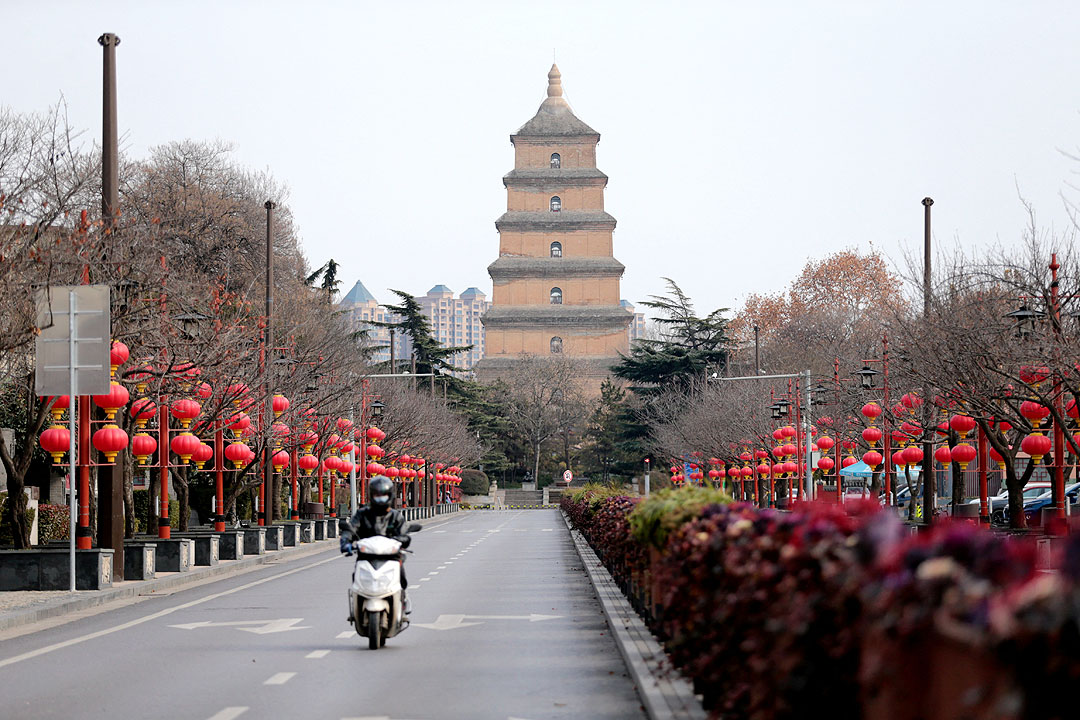
A RIDER travels on an empty road after lockdown measures to curb the spread of the coronavirus disease (COVID-19) in Xian, Shaanxi province, China, Dec. 26, 2021 . — CNSPHOTO VIA REUTERS

BEIJING — China’s ultra-strict coronavirus disease 2019 (COVID-19) curbs are taking a toll on businesses and jobseekers as Beijing stresses again and again the need to maintain its zero-tolerance approach to the virus, to save lives, if not livelihoods.

Since 2020, China has reported 5,226 COVID fatalities among its population of 1.4 billion. In contrast, over 1 million people have died of the disease in the United States.

Keeping a lid on China’s COVID death toll has come at a cost to its economy.

Beijinger Cai Xu, 36, has shut four of his five bars in Beijing and Chengdu in three years. Business was disrupted at first by temporary closures to comply with COVID policies. Now, hardly a customer walks through the door.

“Since the epidemic I’ve become anxious, flustered and lost, and then the bars started to close down one by one,” said Mr. Cai, who in 2016 gave up his job as an architect at a state-owned enterprise to open his first establishment.

To offset the drop in walk-in customers, Mr. Cai has started livestreaming music performances at his bar to people quarantined at home, in what has been a surprise hit. For now, that will do, while Mr. Cai finds other ways to keep his remaining bar in Beijing afloat.

In January–March, China’s economy barely grew as authorities battled with the highly transmissible Omicron variant. In April, the urban jobless rate hit 6.1%, its highest since February 2020. In July, unemployment among those aged between 16 and 24 reached a record 19.9%.

Since July, Zheng Mili, 30, has sent hundreds of job applications and done dozens of interviews in Beijing. But the more promising positions are offering just half of what she used to earn.

“One company called me up for an interview, and before I went, told me they had received thousands of applications in one day,” she told Reuters.

“In just one day, a job that offers you 10,000 yuan ($1,390) per month has got thousands of people applying,” Ms. Zheng said in disbelief.

“The job market is so very tough now.” — Reuters

BSP makes case for 75-basis-point rate hike

BW FILE PHOTO

The Philippines will consider another round of outsized interest-rate hike to keep the peso from weakening and feeding into domestic price pressures, central bank Governor Felipe M. Medalla said.

“It’s a question of whether it is 50 or 75 basis points,” Mr. Medalla said in an interview in Washington with Bloomberg Television on Thursday, when asked on the outlook for the next rate meeting. While a 75-basis-point move will ease pressure on the peso and cool inflation, it could impact the economic recovery, he said.

Policymakers in the Philippines, home to Southeast Asia’s worst performing currency this year and among the region’s fastest inflation, are under pressure to halt the peso’s slide and rein in price gains, which risk eroding President Ferdinand R. Marcos, Jr.’s popularity.

The peso dropped more than 13% this year, one of the steepest declines among major Asian currencies. Bangko Sentral ng Pilipinas (BSP) raised the key rate by 225 basis points so far this year, the most in Southeast Asia.

“The argument for not responding point-by-point is that our inflation rate is lower, but the argument for doing something bolder is that the question of the currency also has to be addressed,” Mr. Medalla told Bloomberg Television’s Kathleen Hays and Haidi Lun.

While the central bank may have already done enough as the forecast for inflation is already consistent with the target, “what the Fed does has a very significant effect on what we will do,” he said.

The BSP has been intervening in the currency market to curb excessive volatility and stem the peso’s drop and on Sunday said it may tighten reporting requirements on foreign-exchange transactions. Policymakers are next scheduled to review the key rate on Nov. 17.

“What’s on the table is a combination of using reserves, raising rates, and of course, if possible some form of international cooperation,” Mr. Medalla said. The nation’s foreign-exchange reserves fell to a two-year low of $95 billion in September. — Bloomberg

Japan ready to take ‘appropriate’ action vs yen volatility — finmin

WASHINGTON — Japanese Finance Minister Shunichi Suzuki reiterated the government’s readiness to take “appropriate action” against excessive currency volatility in the wake of the yen’s fall to 32-year lows driven by red hot US inflation data.

“We cannot tolerate excessive volatility driven by speculative moves. We’re watching market developments with a strong sense of urgency,” Mr. Suzuki said in a news conference on Thursday after attending the G20 finance leaders’ meeting in Washington.

“We’d like to take appropriate action against excessive volatility,” he said, when asked whether Japan could intervene in the currency market again to prop up the yen.

The dollar briefly hit a 32-year peak of 147.665 yen after the release of stronger-than-expected US inflation data, before falling below 147 yen. It stood around 147.275 yen in early Asia trade on Friday.

A Ministry of Finance (MoF) official declined to confirm whether the dollar’s drop below 147 could have been due to intervention, telling reporters decisions on whether or not to disclose any Japanese action in the market is taken on a case-by-case basis.

Mr. Suzuki said he did not hold a bilateral meeting with US Treasury Secretary Janet Yellen during his stay in Washington this week, but that Japan was closely communicating with the United States including on market moves.

Japan intervened in the currency market last month to arrest sharp yen falls, driven largely by the policy divergence between aggressive US interest rate hikes and the Bank of Japan’s (BoJ) resolve to keep monetary policy ultra-loose.

Speaking at the same news conference, BoJ Governor Haruhiko Kuroda said it was “inappropriate” to raise interest rates now in light of Japan’s still-weak economy and modest inflation.

“Japan’s economy is emerging from the COVID-19 pandemic’s wounds but the pace of recovery is slow compared with countries like the United States,” Mr. Kuroda said. — Reuters

US extends COVID-19 public health emergency declaration

A woman takes a coronavirus disease test at a pop-up testing site as the Omicron coronavirus variant continues to spread in Manhattan, New York City, U.S., Dec. 27, 2021. — REUTERS
REUTERS

WASHINGTON — The United States on Thursday extended the coronavirus disease 2019 (COVID-19) pandemic’s status as a public health emergency for another 90 days, thereby preserving measures like high payments to hospitals and expanded Medicaid.

The extension was announced by US Health Secretary Xavier Becerra on Thursday. Last month, President Joseph R. Biden, Jr., said in an interview that “the pandemic is over,” which prompted criticism from health experts.

The toll of the COVID-19 pandemic has diminished significantly since early in Mr. Biden’s term when more than 3,000 Americans per day were dying, as enhanced care, medications and vaccinations have become more widely available.

But hundreds of people a day continue to die from the coronavirus in the United States, according to the US Centers for Disease Control and Prevention.

Mr. Biden has asked Congress for $22.4 billion more in funding to prepare for a potential case surge.

Former President Donald J. Trump had declared a national emergency in 2020 to free up $50 billion in federal aid. — Reuters

Lower pork tariffs to be extended

PORK meat products are sold at the Murphy Market in Cubao, Quezon City, Feb. 11, 2021. — PHILIPPINE STAR/ MICHAEL VARCAS

THE MARCOS administration is planning to extend lower tariff rates on key commodities such as pork, corn, rice, and coal to next year, Finance Secretary Benjamin E. Diokno said, as the government seeks to curb rising food inflation.

“[The] economic managers have repeatedly raised the needed measures to address food inflation. In the last Cabinet meeting, a comprehensive set of measures including the extension of EO (executive order) 171 has been put forward by the Department of Finance (DoF), with inputs from across the Cabinet,” Mr. Diokno told reporters in a Viber message on Wednesday.

“Hopefully, the guidance from President [Ferdinand R. Marcos, Jr.] during that meeting will translate to EOs, circulars, and administrative orders soon,” he added.

Mr. Diokno said there is a plan to issue a joint memorandum on EO 171 “for the economic managers to highlight the latest food supply demand assessment and options to anticipate price shocks moving forward.”

In May, President Rodrigo R. Duterte issued EO 171 which extended lower tariffs on pork and rice until end-2022, as well as slashed duties on corn and coal.

Under the EO, tariff rates on pork for in-quota and out-quota shipments were kept at a reduced rate of 15% (from 30%) and 25% (from 40%). Rice tariffs were also kept at a lower rate of 35% for in-quota and 50% for out-quota.

The EO also cut corn tariff rates to 5% for in-quota imports (from 35%) and 15% (from 50%) for out-quota, and temporarily removed the 7% duty on coal imports.

The Foundation for Economic Freedom (FEF) earlier said the Marcos administration should extend EO 171 in order to ensure prices remain stable and to tame inflation. FEF noted that the country continues to face headwinds such as supply chain disruptions, the Russia-Ukraine conflict, and the African Swine Fever outbreak, and recent typhoons.

“It is arguable that conditions have aggravated since the passage of EO 171, with inflation now hovering just short of 7% versus the 4% level back in May 2022,” the FEF said.

“In the backdrop of all of these is a weakening economy and higher interest rate environment, which will cause sluggish economic recovery into at least 2023.”

Headline inflation hit a four-year high of 6.9% in September from 6.3% the previous month and 4.2% last year, driven mostly by the increase in food prices.

Inflation for food rose to 7.7% in the same month from 6.5% in August and 5.2% year on year.

“Although agriculture’s contribution to the gross domestic product (GDP) is only around 10%, the food manufacturing industry depends highly on agriculture for its raw materials,” the FEF added. “Taken together, both agricultural and the food manufacturing industries contribute around a third of our total GDP. In addition, around 50% of our manufacturing sector is agriculture- and food-based.”

PORK IMPORTS
Meanwhile, Philippine pork imports will likely drop in 2023 if the lower tariffs are not extended, according to the United States Department of Agriculture (USDA).

“Despite persistent issues with African Swine Fever, Philippine pork imports are also forecast to decline due to the end of policies favoring imports in 2022,” the report stated.

“The temporary increase in pork quota volumes ended in May 2022 and reduced tariffs were extended through the end of 2022,” it added.

The USDA projected that the Philippines will import 450,000 MT of pork in 2023, lower than its 2022 forecast of 550,000 MT.

From January to September this year, pork imports reached 545,213 MT, according to the latest data from the Bureau of Animal Industry.

In 2021, the country’s total meat imports rose by 30.3% to 1.17 million MT. Of the total, pork imports accounted for 554,698 MT in 2021.

The USDA forecasts local pork production to hit 1 million MT in 2023, slightly higher than its 950,000 MT projection for this year.

The Philippine Statistics Authority reported that hog production in the first quarter was approximately at 418,400 MT. In the second quarter, output was at around 416,720 MT.

The USDA also said that next year’s domestic consumption of pork will remain at 1.45 million MT, the same amount it slated for 2022. — Luisa Maria Jacinta C. Jocson and Diego Gabriel C. Robles

Central bank faces tough balancing act — economists

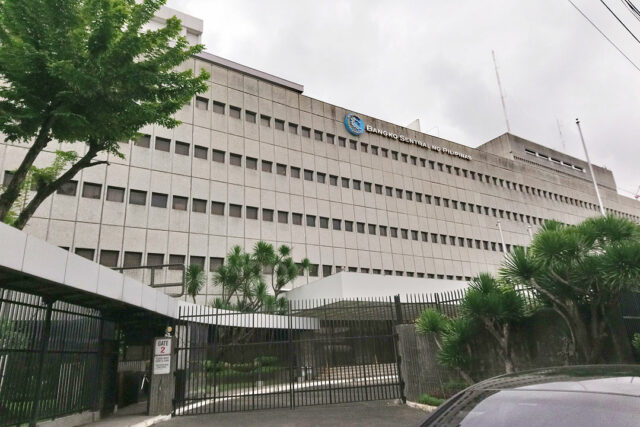
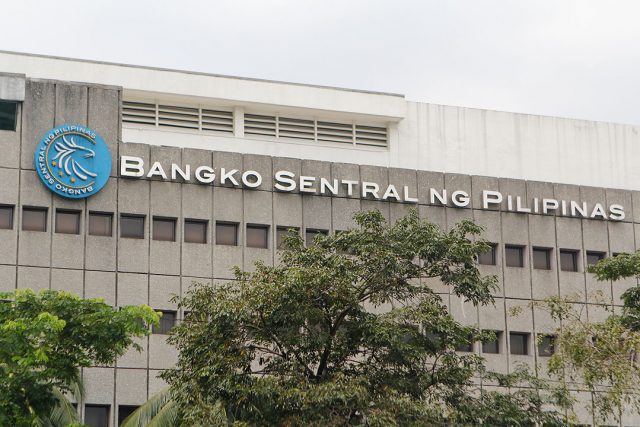
THE BANGKO Sentral ng Pilipinas (BSP) still has room to raise borrowing costs, but it will be tough to balance growth while ensuring price stability, economists said.

“BSP is fully aware of the need to preserve price stability but it also recognizes that it must never put the horse before the cart. Wielding its double-edged sword of a policy rate will be effective in snuffing out demand side inflation, possibly halving headline inflation, but also at the cost of decimating its own growth story,” ING Bank N.V. Manila Senior Economist Nicholas Antonio T. Mapa said in an e-mail note.

Since May, the Monetary Board has raised interest rates by 225 basis points (bps), as inflation continued to quicken beyond the BSP’s 2-4% target band.

Inflation rose to 6.9% in September, bringing the nine-month average to 5.1%. The BSP expects inflation to average 5.6% this year, before easing to 4.1% in 2023 and 3% in 2024.

BSP Governor Felipe M. Medalla on Wednesday said the central bank’s monetary policy settings “remain accommodative,” pledging to do all that is needed to bring down inflation.

“Real policy rate is still quite low. Achieving a target consistent path of inflation is of paramount concern to us,” Mr. Medalla had said.

Rizal Commercial Banking Corp. Chief Economist Michael L. Ricafort agreed that the policy rate is still considered accommodative and the BSP can further increase borrowing costs to maintain a comfortable rate differential with the US Federal Reserve. 

“It is a delicate balance to sustain the country’s economic recovery from the pandemic when it comes to local policy rate hikes, while also ensuring stable inflation since higher prices reduce economic growth,” Mr. Ricafort said.

“So, it is also important to stabilize both the peso exchange rate (that also contributes to import prices) and overall inflation,” he added. 

The Philippine peso closed at P59 against the dollar on Thursday, weakening by 3.5 centavos from its P58.965 finish on Wednesday. It was the third time the peso closed at its record-low this month.

Year to date, the peso has weakened by 15.68% or P8 from its P51 close on Dec. 31, 2021.

‘STEEP PRICE TO PAY’
Mr. Mapa said the BSP could do a “full-on assault on inflation” but this may come at the cost of thousands of jobs in extreme cases.

“A steep price to pay but at times a cost the BSP may need to bear. Thus, the delicate balancing act to ensure price stability while not unduly harming the employment dynamic, and if so by not that much,” Mr. Mapa said.

“Given the choice between a little more inflation and keeping our jobs may ultimately be more enticing than a situation of a little less inflation but losing our source of livelihood. If BSP is called to deliver price stability on its own, lower prices may be delivered but at steep cost,” he added.

The Philippine economy expanded by 7.4% in the second quarter, bringing the first-half average to 7.8%. Economic managers are targeting 6.5-7.5% gross domestic product (GDP) growth this year.

Asian Institute of Management economist John Paolo R. Rivera said the BSP cannot afford to be as aggressive as the US Fed due to “certain macroeconomic variables” that need to be balanced.

“While there is still room to raise policy rates, BSP should watch out for the lagged effects of recent policy rate hikes,” Mr. Rivera said.

The Monetary Board’s next policy-setting meeting is on Nov. 17.

Reuters reported that minutes of the Fed’s latest policy meeting released on Wednesday showed many officials “emphasized the cost of taking too little action to bring down inflation likely outweighed the cost of taking too much action.”

Several policy makers did stress, however, that it would be important to “calibrate” the pace of further rate hikes to reduce the risk of “significant adverse effects” on the economy.

Fed Governor Michelle Bowman took a hawkish stance in a speech on Wednesday, saying that if high inflation does not start to wane, she will continue to support aggressive rate rises.

Markets lay 90% odds for another 75-bp rate hike in November, versus 10% probability of a half-point bump. — Keisha B. Ta-asan with Reuters

Gov’t budget utilization hits 98% as of end-Sept.

BW FILE PHOTO

GOVERNMENT AGENCIES raised their cash utilization rate to 98% at the end of September, as the economy continued to reopen, the Department of Budget and Management (DBM) reported on Thursday.

The DBM said the National Government, local governments and state-owned firms used 98% of the P3.11 trillion in Notice of Cash Allocation (NCA) issued to them in the first nine months of the year, leaving P52.15 billion unused.

This was an improvement from the year earlier usage rate of 95%, while utilization as of end-August was also at 95%.

NCAs are a quarterly disbursement authority from the DBM issued to agencies, allowing the latter to withdraw funds from the Bureau of the Treasury to support their spending needs.

“Government agencies have been very active in disbursement most likely in the financing of programs and projects since the economy is more open now,” Asian Institute of Management economist John Paolo R. Rivera said in a Viber message, citing expenditures on relief operations after recent typhoons and the continuation of programs from the previous administration such as the “Build, Build, Build” infrastructure program.

Rizal Commercial Banking Corp. Chief Economist Michael L. Ricafort likewise attributed the improved cash utilization rate to the continued reopening of the economy. He noted there are less disruptions this year, compared with the lockdowns and mobility restrictions in 2021.

“Government spending was expedited, especially before the election ban and some elected officials also rushed the completion of some government projects before the elections,” Mr. Ricafort said in a Viber message.

A ban on public works was implemented from March 25 to May 8, in an effort to prevent politicians from using state resources for their election campaign. The national election was held on May 9.

According to the DBM, line departments used 98% or P2.1 trillion of their NCAs in the nine months, leaving P51.63 billion unused.

The departments of Foreign Affairs, Health, Interior and Local Government, National Defense, Transportation, as well as the Judiciary, the Civil Service Commission, the Commission on Audit, the Office of the Ombudsman, and the Commission on Human Rights recorded the highest budget usage rates at 100%.

Meanwhile, the Department of Information and Communications Technology posted the lowest rate of 67%.

Budgetary support to government-owned companies as well as allotments to local government units were 100% used in the nine-month period, out of P965.26-billion NCAs issued.

The DBM had released 99.7% of this year’s P5.01-trillion spending plan as of September, leaving P12.76 billion for the remainder of the year.

In the same period last year, the DBM had released P4.35 trillion or 96.5% of that year’s P4.51-trillion budget. — Diego Gabriel C. Robles

Three leading men with three talents in three concerts

IN theater, a “triple threat” is a performer who is skilled in three important skills: singing, dancing, and acting. Three tenors who are considered triple threats are the featured performers in Cultural Center of the Philippines’ appropriately named concert series Triple Threats.

The performances will be held at the Cultural Center’s Tanghalang Ignacio Gimenez (Black Box Theater) from October to December.

The Triple Threats series is composed of solo concerts with music, featuring songs personally selected by the artists from their vast repertoire of favorites. Dubbed as a series of “concept concerts,” the narrative of the performance is dictated by the song choices.  It is a rare opportunity for the audience to see a different facet of the featured artist. In previous years, the series, which kicked off in 2013, saw performances by theater stalwarts such as Menchu Lauchengo-Yulo, Audie Gemora, Nonie Buencamino, Sheila Francisco, Michael Williams, and Bituin Escalante.

“It began with the premise of someone who can sing act and dance,” said Ariel Yonzon, Associate Artistic Director of the Cultural Center’s Production and Exhibition Department, at a press conference on Oct. 11. “Not only do they come in a package of three talents, or gifts, they also come in threes.”

MARKKI STROEM
This year’s lineup features theater artists Markki Stroem, Arman Ferrer, and Poppert Bernadas.

Kicking off this year’s series on Oct. 14 is Markki Stroem with a show titled Leading.

Mr. Stroem was a finalist on ABS-CBN’s show Pilipinas Got Talent Season 1 and has nine theater credits under his belt, including playing the one of the leads, Christian, in the recent restaging of Mula Sa Buwan, and Joe Pitt in Angels in America. He has also performed the roles of Tommy Ross in Carrie: The Musical, Shane Gray in Camp Rock, Henry in Next To Normal.

Aside from theater, he is also a familiar face on television as he is in the cast of the variety show, ASAP’s Boys R Boys (BRB) and where his group won Most Promising Male Group in the Guillermo Mendoza Box Office Awards.  For his work in the 2012 Cinema One Originals film Slumber Party, Stroem was nominated as Best Actor (Cinema 1 Originals Awards), Best Breakthrough Performance by an Actor (Golden Screen Awards), Best Breakthrough Actor (Gawad Tangi), and New Movie Actor of the Year (PMPC Star Awards for Movies). He has also produced and directed music videos for artists Rachelle Ann Go, Christian Bautista, and Noel Cabangon.

His first album, Thousands of Pieces topped the Astroplus top-selling album charts in 2012.

Like so many things, the concert was belayed by the COVID-19 pandemic — “2020 was supposed to be when we were supposed to do the show. Because of what happened, we had more time to prepare for this concert,” Mr. Stroem said.

“I already had so many things brewing in my mind. So when I found out during the last week of rehearsals of Mula sa Buwan that I was going to be doing the show. I already knew what I needed to do for this show,” he said.

Act 1 of tonight’s concert consist of his band arrangements and song compositions; Act 2 will feature one song from each musical production he has starred in; and Act 3 will feature special guests.

ARMAN FERRER
The second concert in the Triple Threats series, titled All of Me, features operatic tenor Arman Ferrer.

Directed by Floy Quintos and Noel Ferrer, the show on Nov. 18 includes classical music, songs from musicals, songs of inspiration, and songs about our country.

Arman Ferrar was 21 years old, an operatic tenor, and had no acting experience when he went to his first audition for the zarzuela, Walang Sugat at Ateneo, bagging the lead role of Tenyong in 2010.

He has since appeared in The Best of Opera at Resorts World Manila, 9Works’ A Christmas Carol, Tanghalang Pilipino’s Mabining Mandirigma, and two original musicals by director Joel Lamangan — Maynila: Sa Mga Kuko ng Liwanag and Binondo: A Tsinoy Musical, where he received great reviews.  In 2021, he got the title role in Lapu Lapu, Ang Datu ng Mactan, directed by Dexter Santos and the first production staged at the newly renovated Metropolitan Theater.

More than acknowledging his vocal abilities, Mr. Ferrer is now focused on the impact he exhibits through his performance.

Ang hinahanap ko na ngayon is after the show or after the singing, and music, is hindiyung boses ko ang mapapansin kundi ano yung binigay ko as an artist… (What I look for now after the show or after the singing, and the music, is not the attention given to my voice but what I am able to give as an artist),” he said.

“It’s more than the music, lyrics,” he added. “Dapat makuha nila yung gusto mong sabihin (The audience has to understand the message you are trying to get across).”

POPPERT BERNADAS
Closing the series on Dec. 21 is Poppert Bernadas, with his show titled Musika, ang Teatro at Ako.

Mr. Bernadas was an original member of the vocal group the Ryan Cayabyab Singers or RCS since 2007.

In 2014, he was cast as Kenny in longest-running Filipino musical, PETA’s Rak of Aegis. He has been a part of other productions such as Magsimula Ka!, LORENZO the Musical, Ang Huling Lagda ni Apolinario Mabini, and Godspell. Last year, he became part of a management called Ateam, headed by singer-songwriter Ogie Alcasid.

Mr. Bernadas’ show will be an ode to his mentors: National Artist for Music Ryan Cayabyab, Mr. Alcasid, and Robert and Isay Seña, his co-performers in Rak of Aegis.

“Expect [the show] to have 85 to 95% OPM material,” he said, referring to Original Pilipino Music.

The three concerts begin at 7:30 p.m. at the Tanghalang Ignacio Gimenez at the Cultural Center of the Philippines complex. Visit the CCP’s official website (https://culturalcenter.gov.ph) and Facebook page (http://(www.facebook.com/culturalcenterofthephilippines)(www.facebook.com/culturalcenterofthephilippines) for more information about the series. — Michelle Anne P. Soliman