Home Blog Page 5381

Karen Khachanov topples Nick Kyrgios to reach US Open semis

NEW YORK — Karen Khachanov upset Nick Kyrgios 7-5 4-6 7-5 6-7(3) 6-4 at the US Open on Tuesday to reach the semi-finals of a Grand Slam tournament for the first time.

Russian Mr. Khachanov, seeded 27th, fired an unreturnable serve on match point to seal the win over the Australian, who had knocked out world number one Daniil Medvedev in the previous round.

Mr. Khachanov was better in the intense match’s biggest moments, saving seven of the nine break points he faced, often with his thundering serve.

“Crazy match like I was expecting it would be,” he said in an on-court interview after his second straight five-set win.

“I am ready to run, to fight, to play five sets. We played again for almost four hours and that’s the only way to beat Nick I think.”

Kyrgios, known as much for his explosive temper as his blistering serve, came out with surprisingly little energy and dropped the first set when Khachanov hit a perfect lob.

Kyrgios, who has the most wins of any player on Tour since June, received medical attention on his left knee prior to the start of the second set, raising the prospect he might retire from the match when he said he “could not walk”.

But he persevered and broke early in the second set, which he claimed with a crosscourt backhand winner as he began to grow more animated, yelling at the players box for encouragement and bringing the crowd to its feet with some spectacular shotmaking.

Khachanov grabbed the third set and the players exchanged breaks early in the fourth to set up a tiebreaker dominated by Kyrgios.

Momentum swung firmly in Khachanov’s direction when he broke to open the decider on a backhand error by Kyrgios and continued to hold serve until the finish.

Wimbledon finalist Kyrgios, who smashed rackets in frustration after the match ended, said he was “devastated” after the loss.

“I feel like I let so many people down,” he told reporters.

“These four tournaments are the only ones that matter and I feel I have to start all over again.”

Khachanov will next face Norway’s Casper Ruud for a place in the final. — Reuters

Caroline Garcia stays hot to end Coco Gauff’s US Open dream

NEW YORK — Caroline Garcia crushed Coco Gauff’s dreams of taking up the mantle from retiring American great Serena Williams and winning her first US Open with a comprehensive 6-3 6-4 win on Tuesday.

The Frenchwoman wasted no time in putting pressure on 18-year-old Ms. Gauff, stepping into the court to attack her second serve and clobbering forehands to race out to a 4-0 lead as rain-soaked fans were still finding their seats at Arthur Ashe Stadium.

Ms. Garcia, seeded 17th, took the first set with an exquisite volley and kept her foot on the gas in the second, breaking Ms. Gauff in first game to keep the New York crowd hushed.

Ms. Gauff, the 12th seed, had her best chance of climbing back into the match when she had a breakpoint opportunity to get back on serve while trailing 3-2.

But Ms. Garcia fired two unreturnable first serves and held after an exhausting rally when Ms. Gauff’s passing shot sailed long, leaving the teenager looking dejected.

Ms. Garcia sealed the win when Ms. Gauff’s backhand landed in the net on match point, stretching out her arms and racing around the court to celebrate reaching her first Grand Slam semi-final.

“The atmosphere was very strong obviously to play an American here, it’s like crazy energy,” Ms. Garcia said on court.

“My head is just buzzing.”

Since coming back from a foot injury in May, Ms. Garcia has won three events on three different surfaces — on clay in Warsaw, where she beat world number one Iga Swiatek, grass in Bad Homburg, and the hard courts at the Cincinnati Open.

Ms. Garcia has yet to drop a set at the year’s final Grand Slam and Tuesday’s win was her sixth straight over a top-20 player and first against Ms. Gauff in three career meetings. — Reuters

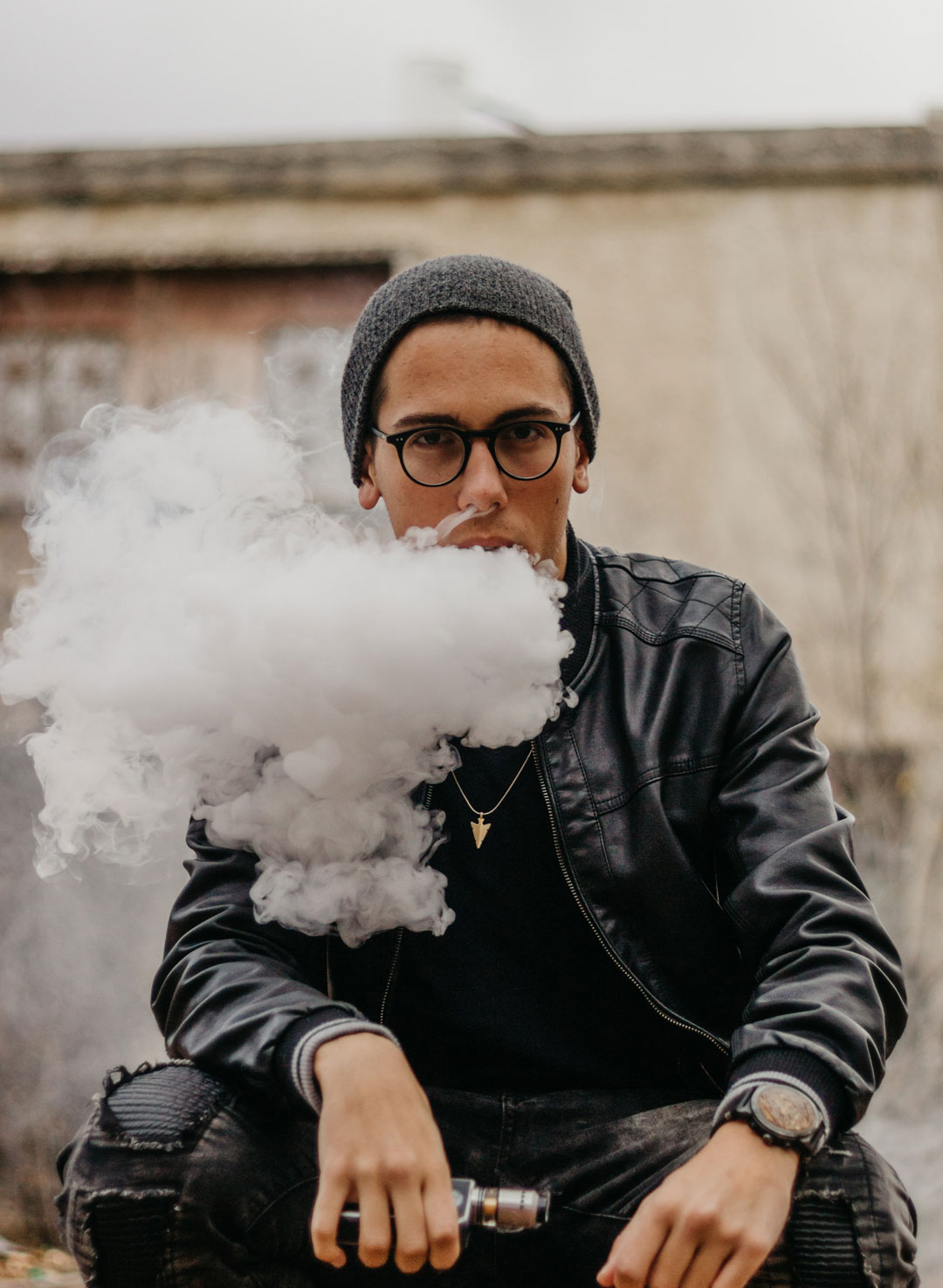
FDA should be final authority on vaping

ITAY KABALO-UNSPLASH

In late June, I wrote about how a global public health issue — vaping by young people — had made its way to a US court. It was a case of legal review, before a Washington DC appeals court, after the US Food and Drug Administration (FDA) banned global vaping producer Juul Labs from selling its e-cigarettes in the United States.

But while that case is pending, the New York Times reported on Tuesday that Juul “tentatively agreed to pay $438.5 million to settle a multi-state investigation into the company’s role in the teen vaping crisis.” The settlement “would prohibit the company from marketing to youth, funding education in schools, and misrepresenting the level of nicotine in its products.”

Locally, the Philippine Star published an Agence France Presse (AFP) report that Juul Labs would pay hundreds of millions over six to 10 years “to settle a probe by 34 US states that found the vaping company marketed to underage smokers.” Juul would pay “individual US states and pledge to not employ cartoons in ads or otherwise market to younger consumers.”

The AFP report, quoting an Oregon Department of Justice (DoJ) press release, also said Juul was found to have “willfully engaged in an advertising campaign that appealed to youth, even though its e-cigarettes are both illegal for them to purchase and unhealthy for children.” It also said Juul “relentlessly marketed to underage users with launch parties, advertisements using young and trendy-looking models, social media posts, and free samples.”

The Oregon DoJ also noted that Juul “used age verification techniques ‘that it knew were ineffective,’” prompting Oregon Attorney General Ellen Rosenblum to comment that “the conduct that led to this settlement was reprehensible and demonstrates pure corporate greed at its most damaging.” She added, “Just when we were starting to make serious progress reducing tobacco use among our young people, Juul came along and hooked another generation.”

Over at Washington DC, Juul went to court after the FDA banned its products but allowed e-cigarettes made by British American Tobacco and NJOY. Juul wants the Washington DC appeals court to keep its temporary restraining order on the ban, which it claimed was premature since the US FDA has yet to fully evaluate all of the company’s regulatory submissions for the approval of its e-cigarettes to be sold in the US.

A previous news report noted that the crux of the matter is the “potential risks of using” Juul Labs products, and “whether potentially harmful chemicals could leak from Juul pods” or e-cigarettes while in use. The legal issue is whether the FDA actually gave Juul a fair chance to prove the safety of its products by thoroughly reviewing its regulatory submissions.

And now, just over two months after the FDA ban, Juul agrees to pay $430 million to settle an investigation that was started two years ago by state officials in Connecticut, Oregon, and Texas, who were later joined by other states. While the Washington case and the settlement are separate and distinct, they are related with respect to raising doubts about the merits of vaping.

In the AFP report, Juul refers to the multi-million-dollar settlement as “a significant part of our ongoing commitment to resolve issues from the past,” as it insists its products meet US public health standards. To date, Juul continues to sell in the US Juul smoking device and cartridges in Menthol and Virginia Tobacco flavors.

Juul adds that it remains “focused on the future as we work to fulfill our mission to transition adult smokers away from cigarettes — the number one cause of preventable death — while combating underage use.”

The AFP report also quoted a September 2021 government study that noted more than two million American middle and high schoolers reported they were vapers in 2021, with eight in 10 using flavored e-cigarettes. Juul had been criticized previously for marketing fruit and candy flavored e-cigarettes, which it had stopped selling in 2019.

What matters now is how local regulators, and legislators, will appreciate the Juul settlement as well as the pending appeal of the US ban on Juul’s vaping products. As I wrote in late June, assuming that the US appeals court reverses itself and permanently allows the Juul ban, what will be the consequence and implication of this on vaping product sales in the Philippines?

In a case that ran for 11 years, the Supreme Court already upheld the authority of the Philippines’ Food and Drug Administration (FDA) to regulate cigarettes and tobacco products, noting that it has the “technical authority over matters of public health.” All future regulations regarding e-cigarettes and vaping products should recognize this.

But Senate Bill No. 2239 and House Bill No. 9007, ratified in December 2021, both transferred the regulation of vaping products from the FDA to the Department of Trade and Industry (DTI). In addition, the bills also lowered the access restriction on vaping products from 21 to 18 years old; allowed the sale of youth-appealing flavors other than plain tobacco and menthol; and, allowed online sales of e-cigarettes — all matters pertaining to the sale of vaping products to the youth — the very subject of the Juul settlement with 34 US states.

And while personally, I prefer a ban on the sale of cigarettes, tobacco products, e-cigarettes, and vaping products, the law — in all its wisdom — sees fit to allow the sale and use of such products, subject to certain regulations. Individual rights and liberties need protection as well, and this I also recognize.

But I don’t see any reason for vaping to be given more leeway than cigarettes. And in this line, I believe that legislators should consider that cigarettes and e-cigarettes, tobacco products, and vaping products, regardless of nicotine content, should all be regulated, restricted, marketed, and taxed in the same way. And final say on their use and sale should also be by the same agency — the FDA.


Marvin Tort is a former managing editor of BusinessWorld, and a former chairman of the Philippine Press Council

matort@yahoo.com

Skill counts but character is priceless

FDG-UNSPLASH

The latest news to rock the international sports community is the ban on Singaporean swimming sensation and, at this point, the city-state’s lone Olympic gold medalist, Joseph Schooling from international competitions while under compulsory service with the Singapore Armed Forces. The ban was imposed on Schooling following his confession to cannabis (marijuana) use in May 2022 at the Southeast Asian Games in Hanoi. Vietnam.

In addition to being an Olympic champion, an honor for which thousands of athletes aspire through fair and, in some instances, foul means, SwimSwam Magazine (SSM) reports that the 27-year-old bemedaled swimmer is a three-time Olympian, 12-time US National Collegiate Athletic Association (NCAA) champion for the University of Texas at Austin. Schooling had initially received a deferment from his national service requirement, but is currently a member of the Singapore Armed Forces (SAF).

The Channel News Asia reported earlier that Schooling admitted to taking cannabis while he was overseas on a “short term disruption” from his service to train for and compete at the Southeast Asian Games. According to SSM, fellow national swimmer Amanda Lim was investigated as well.

As is widely known, Singapore has extremely strict laws regarding cannabis possession and consumption. SSM says that only recently has medicinal use — only for extraordinary circumstances — been legalized. Possession or use can result in up to 10 years in prison with hefty fines of up to Singapore $20,000 (about P800,000). In the case of drug trafficking, one may even face the death penalty. Incidentally, other reports show that there seem to be growing objections among Singapore’s youth on the implementation of its death penalty law.

Schooling’s initial test for controlled substances was reportedly negative but his confession placed him under investigation. Schooling confessed to using banned substances but did not test positive. Under SAF rules, he loses the so-called “disruption privileges,” meaning he will no longer be allowed to go one leave from mandatory military service in order to train and compete for Singapore.

Schooling has publicly apologized for what he called “a moment of weakness.” He was quoted to have said, “I demonstrated bad judgment and I am sorry. I made a mistake and I’m responsible for what I’ve done. I will make amends and right what is wrong. I won’t let you down again…”

Public opinion on Schooling’s confession and his apology has been mixed. Some have called for more understanding for the young man, who is known to be dealing with the death a few months ago of his father who unsuccessfully fought off cancer for many years. Others have said that he should be treated like everyone else and he should not be above the law. One social media commentator pointed out: “all Team SG athletes are expected to uphold the highest standard of conduct as representatives of Singapore on the sporting world stage.” A Facebook commentator added, “It is totally unacceptable as a top sportsman who is supposed to be a national role model.” An article by Ang Hwee Min quotes still another Facebook user, AT Pasteur, as writing: “Besides, we have no idea the stress he has been going through, and the loss of his father as well. A person who admits and apologizes is a far better person than one [who] covers things up.”

Schooling’s cannabis use and the penalty of a ban from competition is certainly not the first such controversy. Recent suspensions triggered by marijuana use have also created controversy. SSM says that the World Anti-Doping Agency (WADA) does not completely ban marijuana use, it only bans cannabis use in competitions.

American track sprinter, Sha’ Carri Richardson faced a one-month suspension after a positive test following the 2021 US track and field trials. The positive test invalidated her trial results, thus disqualifying her from competing at the Tokyo Olympics. Tom Schad of USA Today says that: “Richardson, 21, had blossomed into one of the brightest stars on Team USA before news broke out of her positive test, which resulted in a minimum 30-day suspension under WADA’s anti-doping code.”

In an appearance on NBC’s Today show, Richardson said she ingested marijuana after learning that her biological mother had died. Richardson added, “I want to take responsibility for my actions. I know what I did. I know what I’m supposed to do. I know what I’m not allowed to do, and still made that decision.”

In swimming, Italian sprinter Andrea Vergani and US national team member Tate Jackson have served suspensions for marijuana use; Michael Phelps also served a three-month ban for a photograph of him using a bong (a filtration device often used for smoking tobacco, cannabis, or other herbal substances) came to light, according to the SSM.

The suspension of Schooling is the result of a protocol put in place by the SAF while those of Vergani and Jackson were imposed by their respective national federations and doping agencies.

So where does WADA stand in all this? It appears that the anti-doping agency’s position on marijuana use is starting to soften. SSM claims that the WADA has allowed bans to be reduced to as little as one month.

Schad also states that three months after Richardson tested positive for marijuana use, the WADA announced that it will instruct an advisory panel to review whether cannabis should remain on its list of prohibited substances beyond 2022.

In the meantime, according to a paper entitled “Answers to Common Questions Regarding Marijuana and Cannabis,” the WADA has marijuana in its Prohibited List based on the following criteria: a.) it poses a health risk to athletes; b.) it has the potential to enhance performance; and, c.) it violates the spirit of sport.

In 2011, WADA published a paper in Sports Medicine discussing the reasons marijuana and cannabinoids (group of related compounds and active constituents of cannabis which affect the central nervous system) meet the criteria. The following examples from the paper address the three criteria:

1. Athletes who smoke cannabis or spice in competition potentially endanger themselves and others because of increased risk taking, slower reaction times, and poor executive function or decision making;

2. Cannabis can be performance enhancing for some athletes and sports disciplines;

3. Use of illicit drugs that are harmful to health and that may have performance enhancing properties is not consistent with the athlete as a role model for young people around the world.

There are lessons to be learned from this controversy involving Olympic- and world-rated athletes in their 20s. The first one is that in all these instances, the governments, politicians, and national Olympic committees of Singapore, Italy, and the United States did not intervene in any manner to pressure the track and field and swimming federations to act in one way or the other “in order to protect a possible gold medal.”

Second, the Olympians displayed the essence of Olympism by displaying admirable moral character by admitting their wrongdoing and accepting the consequences of their act. As one observer commented in the case of Schooling, “…there was no cover up.” Yes, there was no cover up by the athlete, his/her sycophants, sponsors, and PR practitioners, and so-called influencers. The skill was there but moral character remained supreme.

Third and final point, the Federations, the national anti-doping agency, and the governments concerned displayed courage and were not spineless by holding their ground and letting the law take its course.

The comment of former national women’s soccer team member and Philippine Olympic Committee president from 1995 to 1998, Cristy Ramos, may be instructive: “Cowards and apologists take the path of least resistance and what is convenient.”


Philip Ella Juico’s areas of interest include the protection and promotion of democracy, free markets, sustainable development, social responsibility and sports as a tool for social development. He obtained his doctorate in business at De La Salle University. Dr. Juico served as secretary of Agrarian Reform during the Corazon C. Aquino administration.


Overcoming challenges of workplace trends

LYCS ARCHITECTURE-UNSPLASH

Organizations appear unprepared to face the challenges of the emergent changes in work practices — largely brought about by the disruption of normal work routines that employees had been used to prior to COVID-19.

It is not uncommon these days to hear employees finding it challenging to maintain boundaries between work and nonwork. While the work from home (WFH) set up was initially appealing to most — and a safe harbor to some — more and more are complaining about the lack of separation between one’s work and home — further aggravated by the lack of commutes which somehow provide some form of transition between the two activities’ realms.

Offices are also starting to face unchartered territory in dealing with how the quarantines have affected work productivity, creativity, and innovation of their staff. Nowadays, managers are puzzled on the impact of the WFH experience on employee motivation and authenticity at work, especially as we are now slowly going back to co-located workplace settings.

Some executives I spoke to also begin to question their confidence in managing people who have experienced the “out of sight and reach” scenario during the WFH arrangement at the height of the pandemic. While it can be argued that video conferencing and online time-ins were considered alternative sight lines, they have, nevertheless, resulted in increased perceptions of stress and invasion of privacy, which in turn lead to lower creativity among employees.

There is a growing fear among managers that the relative success of multifaceted and multidimensional virtual teams in project management may impact work continuity and success in the “go-back-to-the-office” hybrid directives.

Despite the absence of the communication richness in face-to-face interaction and the ease with which one resolves conflicts when done personally in offices, it has been proven that such extraordinary work occurrences can still be managed well by project teams. Based on actual WFH experiences, people have been able to build the structural scaffolding to manage work flows that align multi-party and multi-locational team members towards the achievement of business objectives. Given this, the post WFH scenario does not bode well for managers who wish to reimpose pre-pandemic work systems.

On top of this, post-WFH leaders are facing working conditions that appear to have deteriorated for many employees. Several managers I sat down with disclosed that their employees have reported job burnout — appearing like a chronic stress syndrome that include feelings of exhaustion, depression, and a distant attitude towards work.

This could probably explain the Great Resignation, also known as the Big Quit and the Great Reshuffle. A human resource solutions company Sprout Solutions, in its 2022 State of HR Report, found that 62% of HR professionals noted an upward trend in employee resignations.

Interestingly, some managers have also reported that workplace loneliness is an emerging issue confronting organizations. Restricted social interactions, the absence of informal physical chats among co-workers, and handshakes — considered essentials for mental and physical health — are apparently taking a toll on employees as well. Often, some employees complain that they feel lonely because their social needs are not being adequately met by their companies. All these, in turn, affect employees’ affective commitment, affiliative behaviors, and performance.

Consequently, post-WFH leaders are in a quandary — even at a loss — on how to manage other emergent workplace arrangements. For example, executives recognize the existence of “quiet quitters” and they are carefully treading the lines to strike a balance between employees’ welfare and organizational interests. They are even more careful about using the term especially since there is an ongoing debate as to how to manage this phenomenon.

In its basic definition “quiet quitting” (the word “quitting” throws me off a bit given its negative connotation) simply refers to an employee behavior where the employees perform the duties assigned to them and do not go above and beyond what their job description requires them to do. This appears to be in direct opposition to the hustle culture — the behavior or practice of making every moment count towards working and making money. It shifts the focus back to setting boundaries at work and ensuring a better work-life balance for employees. Arguably, there are some very strong feelings about the “quiet quitters.” A strongly worded commentary in Financial Times called them “slackers” as opposed to the “above and beyonders.”

While workplace management continues to challenge Filipino executives given the various repercussions of the pandemic in organizations, they remain hopeful that they can manage well, moving forward. Thanks to their distinctly Filipino values and behavior in managing organizations during stressful times — pakikisalamuha at pakikiramdam (socializing and feeling). And Filipino managers are very good at it. When we are closer to the ground, we can readily feel disengagement, even instances of employee isolation. When we care enough about our employees, we can easily detect withdrawal from conversations, activities, and tasks. When managers effectively perform pakikisalamuha, they can easily raise their level of pagdamdam that will enable them to feel the sentiments of employees.


Ron F. Jabal, Apr, is the chairman and CEO of PAGEONE Group (www.pageonegroup.ph) and founder of Advocacy Partners Asia (www.advocacy.ph).

ron.jabal@pageone.ph

rfjabal@gmail.com

Doing nothing can be a virtue

NICK FEWINGS-UNSPLASH

IS POLITICAL INTERVENTION in corporate transactions between two private companies to be treated as business or political news? In which section of current events should such news be found? Maybe the front page or the lead for the day, especially when the principals involved are big business groups? Never mind if the politician questioning the deal (for a congressional inquiry…or investigation) is a little-known legislator, well known only for targeting a particular company. Is he following orders from a bigger organization?

Doing nothing, or refraining from interfering, on the part of government or its agencies can be a virtue in an economy trying to recover from the pandemic disruption. A “negative list” narrows down the types of transactions that require some kind of political oversight. All the rest follow only existing corporate rules.

A list of acceptable behavior can be too long and likely to overlook certain situations not yet encountered before. It’s better to just list what is illegal — no swerving in traffic. The negative list is shorter and easier to understand and enforce. Customs forms specify only goods prohibited in a country like illegal drugs and firearms or minimum amounts of foreign currency needing to be declared. Anything not found on this negative list is therefore allowed.

Diets become simplified with a negative list of what types of food to avoid. Such a list of prohibitions is easier to follow. Avoiding sugar and carbs (multi-grain bread and brown rice can be eaten at the maintenance stage) and certain fruits with high sugar content (like mangoes) provide a simple guide for the Atkins Diet. (Okay, maybe this diet is no longer fashionable.)

Defining categories in the negative form is quite prevalent. History and current affairs books are referred to as “non-fiction,” meaning they have not just been made up by the writer’s imagination but are based on real persons and events.

Individuals can define themselves by what they don’t like. Allergies include types of foods or ingredients to be avoided to avoid rashes or even difficulty of breathing. Pet peeves, or personal irritants, proclaim types of people one doesn’t have lunch with, like gossipmongers or braggarts who post their foreign travel photos (behind us is the Eiffel Tower) and houses abroad on social media.

When we’re asked how we are, we can reply with a negative, “no problems (for now).” As for the state of our health, we declare we have nothing wrong with us. We even add we are not taking any maintenance medicines.

CEOs are identified by what irritates them — do not ask for a raise when his basketball team just unexpectedly lost to a cellar dweller. Acceptance by the boss entails avoiding behavior that annoys him. Somebody who does not turn off the boss is regarded as satisfactory. The greatest comfort can be “he doesn’t have anything bad to say about you.” (He doesn’t even know you.)

Architects deal with customers who only express their dislikes. Shown a design, the negative thinker can pick the nits and say that there are just too many doors or the shelves are too small. But when asked what design she has in mind, she draws a blank. In the construction stage for such a client, there are many change orders with walls torn down and windows relocated, even before the cement has dried.

Some politicians seem to spontaneously launch unprovoked attacks and legislative investigations on critics and hate objects (like certain business groups) in the guise of promoting the public good. (Cyber-libel seems to be the new weapon of choice.) Such assailants waiting to pounce at anything that moves may even portray themselves as champions of the oppressed in their fight against the establishment, or some parts of it.

Being used to the role of critic and pointing out what’s wrong with other people can be a disadvantage in promoting economic recovery and job creation.

Political crusaders should come up with a short negative list of things they will pay attention to like tax evasion, despoiling of the environment, and political dynasties. Anything outside this list should only elicit indifference — go ahead and merge to become a more competitive global company. You’re not on our list of don’ts.

So, for those in charge of interfering, legislating, or monitoring, doing nothing can be a virtue… specially to those they choose to ignore.


Tony Samson is chairman and CEO of TOUCH xda

ar.samson@yahoo.com

Liz Truss’ Cabinet is Britain’s first without a white man in top posts

Liz Truss arrives at the Conservative Party headquarters, after being announced as Britain’s next Prime Minister, in London, Britain, Sept. 5. — REUTERS

LONDON — The new British Prime Minister Liz Truss has selected a Cabinet where for the first time a white man will not hold one of the country’s four most important ministerial positions.

Ms. Truss appointed Kwasi Kwarteng — whose parents came from Ghana in the 1960s — as Britain’s first Black finance minister while James Cleverly is the first Black foreign minister.

Mr. Cleverly, whose mother hails from Sierra Leone and whose father is white, has in the past spoken about being bullied as a mixed-race child and has said the party needs to do more to attract Black voters.

Ms. Suella Braverman, whose parents came to Britain from Kenya and Mauritius six decades ago, succeeds Priti Patel as the second ethnic minority home secretary, or interior minister, where she will be responsible for police and immigration.

The growing diversity is in part thanks to a push by the Conservative Party in recent years to put forward a more varied set of candidates for parliament.

British governments have until a few decades ago been made up of mostly white men. It took until 2002 for Britain to appoint its first ethnic minority cabinet minister when Paul Boateng was appointed chief secretary to the Treasury.

Rishi Sunak, whose parents came from India, was Mr. Kwarteng’s predecessor in the finance job and the runner-up to Ms. Truss in the leadership context.

“Politics has set the pace. We now treat it as normal, this diversity,” said Sunder Katwala, director of non-partisan think-tank British Future, which focuses on migration and identity. “The pace of change is extraordinary.”

However, the upper ranks of business, the judiciary, the civil service and army are all still predominately white.

And despite the party’s diversity campaign, only a quarter of Conservative members of parliament are women and 6% from minority backgrounds.

TRACK RECORD
Nevertheless, the Conservatives have the best track record of political firsts among the main political parties, including appointing the first Jewish prime minister in Benjamin Disraeli in 1868.

This is despite the fact ethnic minority voters are much more likely to back the opposition Labor party and the ruling party has faced accusations of racism, misogyny and Islamophobia.

Former Prime Minister Boris Johnson apologized in 2019 for describing Muslim women wearing burqas as looking like letter boxes.

The Conservatives have elected all three of Britain’s female prime ministers, Margaret Thatcher, Theresa May and now Truss. The first lawmaker of Asian descent, Mancherjee Bhownaggree in 1895, also came from the Conservatives.

Mr. Johnson assembled the youngest and most ethnically diverse Cabinet in history when he was elected prime minister in 2019. His three finance ministers included two men of South Asian origin and one of Kurdish background.

The changes followed a years-long effort by former leader and Prime Minister David Cameron.

When he took over in 2005, the party had just two ethnic minority members of parliament out of 196, and he set out to ensure that his party more closely resembled the modern Britain it hoped to lead.

The next year, Mr. Cameron introduced a priority list of female and minority candidates to be selected, many for safe seats in the House of Commons. Ms. Truss was a beneficiary of this push.

“A key part of ensuring the strength and resilience of any group, including a political party, is the avoidance of everyone thinking and acting in the same way — the avoidance of group-think,” said James Arbuthnot, a member of the party board’s committee on candidates when Mr. Cameron introduced the changes.

But Mr. Kwarteng has played down the significance of his ethnicity. He has said that, although he experienced racist insults growing up in the eighties, he does not see himself as a symbol of anyone other than his constituents in Spelthorne, which borders London’s south-west suburbs.

“I actually think that it’s not that much of a big deal,” he said after being appointed as the first Black Conservative front-bench minister. “I think once you’ve made the point, I don’t think it’s something that comes up that much.” — Reuters

Japan probes possible involvement of pro-Russian group in cyberattack

A broken ethernet cable is seen in front of binary code and words “cyber security” in this illustration taken on March 8, 2022. — REUTERS

TOKYO — Japan is investigating the possible involvement of a pro-Russian group following the failure of multiple government websites, Chief Cabinet Secretary Hirokazu Matsuno said on Wednesday.

More than 20 websites across four government ministries could not be accessed on Tuesday evening but were restored on the same day, Mr. Matsuno said.

The government has not identified any information leaks and was looking into whether the failure was caused by a denial-of-service (DDoS) attack, he added.

In a DDoS attack hackers attempt to flood a network with unusually high volumes of data traffic in order to paralyze it.

Japan’s digital agency said in a tweet that online application service on its e-Gov administrative portal was also experiencing signing-in problems.

The pro-Russian group “Killnet” said on social media it was responsible for the attack, public broadcaster NHK reported.

“We are aware that the (Killnet) hacker group suggested it was behind an attack, but at the moment we are still investigating the cause of the failure, including its involvement,” Mr. Matsuno said at a daily news briefing.

“We understand that the (Killnet) hacker group has threatened several countries of cyberattacks, and that some say they are linked to the Russian government. Given our position as the government, we will not respond to that,” he added.

The attack temporarily blocked access to websites, including the Digital Agency’s e-Gov administrative portal, NHK said. — Reuters

More Chinese cities advise residents to stay put for holiday

A VIEW of the city skyline in Shanghai, China, Feb. 24, 2022. — REUTERS

BEIJING — More Chinese cities advised residents on Wednesday to avoid unnecessary trips for the upcoming holiday long weekend, adding to COVID policies that are keeping tens of millions of people under lockdown and exacting a growing economic toll.

Nanjing and Wuxi, major cities in eastern China’s Jiangsu province, recommended residents not leave town during the Saturday-Monday mid-autumn festival, echoing similar advisories made by other cities this month.

China reported a slight uptick in new cases for Sept. 6 to 1,695 — low by global standards — but its “dynamic zero” COVID policy to stamp out every infection chain means numerous cities have imposed various curbs on movement.

While successful in keeping case numbers down, the approach is weighing on the economy and fueling widespread frustration nearly three years into the pandemic.

Chinese authorities have not announced any plan to exit the policy that has all but shut China’s borders to international travel.

The latest advisories aimed at curbing COVID’s spread come just over a month before Beijing hosts a once-in-five-years congress of the ruling Communist Party, where President Xi Jinping is expected to secure a precedent-breaking third leadership term.

The southwestern city of Chengdu, where most of the 21.2 million residents remained on Wednesday in a lockdown that began last Thursday, has yet to announce a plan to end the strict curbs.

In Beijing, the suburban Yizhuang economic and technological development zone said Communist Party officials must not leave the city unnecessarily during mid-autumn festival or the week-long holiday in early October, while residents of the area were also advised to stay put.

“The whole zone … must strictly and assiduously implement various tasks for COVID prevention and control, in order to create a safe and stable social environment for the party congress,” it said in a statement.

Beijing reported 14 locally transmitted infections for Tuesday, the capital’s highest daily count since mid-June. All but two of the infections had been quarantined for medical observation before diagnosis, the city said on Wednesday.

In the latest gloomy barometer for the world’s second-largest economy, data released on Wednesday showed exports and imports lost momentum in August, significantly lagging forecasts, as inflation crippled overseas demand and fresh COVID curbs and heatwaves in China disrupted output. — Reuters

Document seized from Trump home described foreign govt’s nuclear capabilities -Washington Post

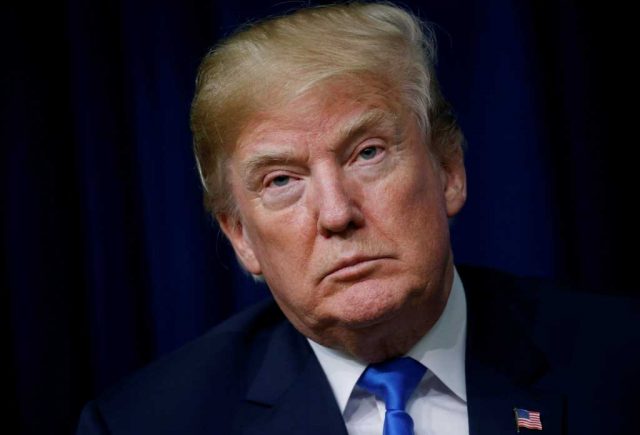
U.S. President Donald Trump — REUTERS/LEAH MILLIS/FILE PHOTO

A document describing a foreign government’s military defenses, including its nuclear capabilities, was found in the FBI’s search last month of former President Donald Trump‘s Florida home, the Washington Post reported on Tuesday.

The Post report, which cited people familiar with the matter, did not identify the foreign government discussed in the document, nor did it indicate whether the foreign government was friendly or hostile to the United States.

An FBI spokesperson declined to comment on the report. Mr. Trump’s representatives did not immediately respond to requests for comment.

The FBI recovered more than 11,000 government documents and photographs during its Aug. 8 search at Mr. Trump‘s Mar-a-Lago estate, according to court records. Read full story

According to the Post report, some of the seized documents detail top-secret US operations that require special clearances, not just top-secret clearance.

Some of the documents are so restricted that even some of the Biden administration’s senior-most national security officials were not authorized to review them, the Post said.

The US Justice Department is investigating Trump for removing government records from the White House after he departed in January 2021 and storing them at Mar-a-Lago.

On Monday, a federal judge agreed to Trump‘s request to appoint a special master to review records seized in the FBI search, a move that is likely to delay the Justice Department’s criminal investigation. Read full storyReuters

Apple to appeal Brazil sales ban of iPhone without charger

STOCK PHOTO | Image by matcuz from Pixabay

Apple Inc said on Tuesday it will appeal a Brazilian order banning it from selling iPhones without a battery charger, pushing back on claims that the company provides an incomplete product to consumers.

The Justice Ministry fined Apple 12.275 million reals ($2.38 million) and ordered the company to cancel sales of the iPhone 12 and newer models, in addition to suspending the sale of any iPhone model that does not come with a charger.

In the order, published on Tuesday in the country’s official gazette, the ministry argued that the iPhone was lacking a essential component in a “deliberate discriminatory practice against consumers.”

The authorities rejected Apple‘s argument that the practice had the purpose of reducing carbon emissions, saying there is no evidence that selling the smartphone without a charger offers environmental protections.

Apple said it would continue to work with Brazilian consumer protection agency Senacon in order to “resolve their concerns,” while saying it would appeal the decision.

“We have already won several court rulings in Brazil on this matter and we are confident that our customers are aware of the various options for charging and connecting their devices,” Apple said.

The order comes a day before Apple is expected to announce its new iPhone model. – Reuters

Biden, Truss commit to stand up against Russia, economic woes

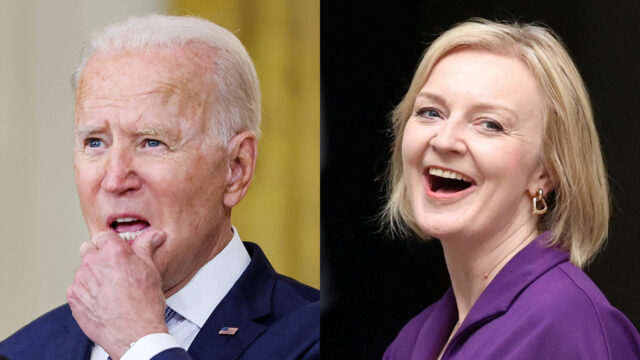
US President Joseph R. Biden, Jr. (left) and UK Prime Minister Mary Elizabeth Truss (right) | Original images from Reuters

President Joe Biden spoke by phone on Tuesday to congratulate new British Prime Minister Liz Truss and both leaders promised to strengthen their relationship as they stand together against Russia.

“I look forward to deepening the special relationship between our countries and working in close cooperation on global challenges, including continued support for Ukraine as it defends itself against Russian aggression,” Mr. Biden said in a tweet.

The two leaders could meet as soon as the UN General Assembly later in September. Ms. Truss won a leadership race for the governing Conservative Party on Monday and took over from Boris Johnson as prime minister on Tuesday, as Britain faces its most daunting set of challenges in decades. Read full story

The prime minister’s office said in a statement that Mr. Biden and Ms. Truss discussed deepening cooperation on NATO and the US-Australia-Britain security agreement established last year as a counter to China. Ms. Truss looks forward to “working closely with President Biden as leaders of free democracies to tackle shared challenges, particularly the extreme economic problems unleashed by Putin’s war,” the statement said.

A White House statement said the two leaders discussed continuing close cooperation on Ukraine, addressing challenges posed by China, preventing Iran from obtaining a nuclear weapon, and “securing sustainable and affordable energy resources.”

The so-called special relationship between the United States and Britain has maintained solid continuity in recent years, despite frictions between then-President Donald Trump and then-Prime Minister Theresa May.

Washington and London have been aligned on helping Ukraine in its war against Russia and in countering China’s influence in the Pacific. But a trade deal that some British officials hoped could offset trade and economic upheaval after Brexit has yet to materialize under Mr. Biden. Read full story

A US official said the White House expects a lot of continuity from Mr. Johnson to Ms. Truss and that Mr. Biden and Ms. Truss are likely to be aligned on countering Russia’s invasion in Ukraine and China’s rising influence in the Indo-Pacific.

Mr. Biden got on well with Mr. Johnson, but he could have tensions with Ms. Truss over Northern Ireland.

As a member of parliament, she introduced legislation to undo the Northern Ireland Protocol, which was part of Britain’s withdrawal agreement from the European Union. It prioritized protecting the 1998 Good Friday Agreement, or Belfast Agreement, for peace in the British-run region.

Mr. Biden has been insistent that Britain do nothing that could endanger a quarter century of peace in Northern Ireland.

The White House statement said Mr. Biden and Ms. Truss “discussed their shared commitment to protecting the gains of the Belfast/Good Friday Agreement and the importance of reaching a negotiated agreement with the European Union on the Northern Ireland Protocol.”

The British statement said both leaders “agreed on the importance of protecting the Belfast (Good Friday) Agreement.” – Reuters