Home Blog Page 5360

DoF’s Diokno concedes ‘new workforce models’ needed for BPO industry

PHILSTAR FILE PHOTO

THE GOVERNMENT will support new modes of deploying workers as the business process outsourcing (BPO) industry transitions to a new regulator which will be more permissive of work-from-home (WFH) arrangements, Finance Secretary Benjamin E. Diokno said.

“The Philippine government stands ready to support the continued growth of IT-BPM companies by building an enabling business environment in order to boost the country’s competitiveness in the field of business processes and services,” Mr. Diokno was quoted as saying by the Department of Finance (DoF) in a conference last week.

The BPO industry, also known as the information technology and business process management (IT-BPM) industry, is seeking to maintain its ability to offer WFH arrangements to its employees, embroiling it in a dispute with the government.

The law requires BPOs registered with the Philippine Economic Zone Authority to perform most of their work within economic zones in order to continue enjoying their tax breaks. As a solution, the government has proposed a transfer of registration to the Board of Investments, which does not enforce the economic zone requirement.

The Fiscal Incentives Review Board has said the transfer of registration will “resolve the sector’s long-standing issue on tax incentive claims while performing business activities beyond their zone limits.”

“Given the global contact center and business processing services markets’ exponential growth in the past 15 years, the DoF strongly recognizes the need to integrate new, adaptive, and sustainable workforce models to boost the Philippines’ competitiveness in the field of business processes and services,” Mr. Diokno said.

The industry is expected to generate up to 1.1 million direct jobs by 2028.

“In the Asia-Pacific region, the Philippines remains one of the most preferred locations for delivering business processing and contact center services,” according to the DoF.

“Moreover, with various firms employing new techniques and work models, the IT-BPM sector has effectively set the stage for digitalization to flourish in the Philippines,” it added.

Mr. Diokno also noted that the COVID-19 pandemic was a catalyst for the industry to evolve even faster, resulting in a “dynamic, reliable, and significantly more agile IT-BPM industry that is aligned with the DoF’s push for a sustainable and digitally-powered economy.” — Luisa Maria Jacinta C. Jocson

Senate sets third week of November as target for passing budget measure

THE SENATE is confident of passing its version of the proposed P5.268-trillion budget for 2023 by the third week of November, with the conclusion of budget hearings as scheduled.

“I am grateful to all our hard-working Senators for ably steering their respective sub-committees, and for keeping us on track with our budget timeline,” Senate President Juan Miguel F. Zubiri told reporters in a Viber message on Monday.

“With everyone (bringing) the same work ethic and urgency to the plenary, we expect to spend about two weeks in marathon deliberations, and we hope to be able to approve the budget as early as the third week of November,” he added.

The chamber hopes to wrap up plenary debate by mid-November for passage on final reading by the following week. The rest of the year is expected to be taken up by the bicameral conference committee before the harmonized legislation is sent for the President’s signature by mid-December.

“I am very glad to report that the Senate is fully on track with the budget schedule that we have laid out,” Mr. Zubiri said.

“Over the course of the hearings, our sub-committees carefully combed over our agencies’ programs and spending vis-à-vis the proposed P5.268-trillion budget, to ensure that the 4.9% increase from this year’s budget is warranted and is crucial to the country’s continued recovery from the pandemic,” he added.

He said when sessions resume in November, the committee report will be sponsored promptly to immediately kick off further deliberations at plenary level.

Plenary sessions adjourned on Oct. 1 and are scheduled to resume on Nov. 7. — Alyssa Nicole O. Tan

Swiss see ties with PHL focused on innovation, cite red tape concerns

PARTICIPANTS at the Swiss Innovation Exhibit at the Grand Hyatt Manila on Oct. 24. From left to right:  Alain Gaschen, Swiss Ambassador; Joel Chong, Novartis Philippine Country President; Horia Adrian, Holcim CEO and President; Dr. Diana Edralin, Roche Philippines General Manager; Christophe Lejeune, Sika Philippines General Manager. — PHOTO BY ALYSSA NICOLE O. TAN

By Alyssa Nicole O. Tan, Reporter

THE Swiss chamber of commerce said it expects areas of cooperation with the Philippines to center on innovation, but called on the government to simplify its trade processes and benchmark against regional power and labor costs to allow investors to scale up.

“For the Swiss Chamber of Commerce of the Philippines (SwissChamPH), we are aligning the priority areas of both Switzerland and the Philippines,” SwissChamPH Chairperson Christine Fajardo told BusinessWorld on the sidelines of the Swiss Embassy’s Innovation Exhibit.

“SwissChamPH aims to position the Philippines as a stable business location for investment growth,” she added. “We look forward to collaborating in areas where there are synergistic solutions.”

Switzerland’s priority industries, based on economic impact, are the mechanical, electrical, and metal or MEM industry; infrastructure; food; cleantech; financial technology; and medical technology, she said.

Trade Secretary Alfredo E. Pascual, speaking at the event, said the Philippine priorities are to embrace the fourth industrial revolution by harnessing new technology such as artificial intelligence and smart manufacturing.

“The strategy will involve accelerating the small business growth by enabling them to scale from small to medium and from medium to large,” Mr. Pascual said.

“We will integrate our production systems for instance, by leading manufacturing, agriculture and services,” he said. “We will deepen our global value chain participation, pursue aggressive trade and investment policy, and diversify our exports trade and investment partners.”

Other areas of focus include developing human capital and building capacity, supporting regional industrial transformation, and making the economy more attractive to investment.

Some of these priorities, Ms. Fajardo said, are aligned with Swiss areas of focus. “This is clearly aligned, in terms of what we can prioritize and it’s a wide spectrum, so there’s a lot of opportunity areas,” she said.

She said SwissChamPH has sought to develop innovation initiatives in three areas — health and life sciences, manufacturing, and retail.

One of the immediate goals of this initiative is “a white paper on priority areas and let’s say the challenges and opportunities, and then recommend priority projects for the companies in terms of collaboration,” Ms. Fajardo said.

The chamber, she added, has done the most advanced work in the health and life sciences cluster, noting that it is prepared to expand its membership to more Swiss and Filipino businesses in various industries.

The targets for membership expansion are those businesses seeking to initiate and maintain links with Switzerland, gain a foothold in both the Philippine and Swiss markets, and participate in the broader markets of the Association of Southeast Asian Nations and Europe.

Swiss Ambassador to the Philippines Alain Gaschen told the media during the event that: “We have a whole page of potentials, so pharmaceutical is one… We also see a lot of potential in the cleantech industry and infrastructure.”

He also mentioned railways as a possible area of collaboration.

“We looked into processed food, natural ingredients and textiles, and these have huge potential,” he said.

The requirements of the Swiss market in the event of collaboration are that “You have to deliver on time, package it properly, label it properly, and you have to have the quantities and the quality that is required for the European market, but we have a guide for those industries step by step that we can share, and then we open for business,” he added. “So basically, there’s a lot that can be done.”

He said the Philippines presents obstacles in scaling up such businesses.

“Electricity (is) a challenge to infrastructure,” Mr. Gaschen said, adding that red tape and market access are also deterrents to investment.

The general manager of biotech company Roche, Diana Edralin, said, “One of the things that we can really (focus on) in terms of something concrete in healthcare, is predictability in the review and approval of innovative medicines and devices.”

“I know that the Philippine FDA (Food and Drug Administration) has now made bold steps in approving the reliance pathway,” she added, referring to an international best practice in which a national regulator takes into account approvals granted by other national regulators in evaluating products such as pharmaceuticals for its own market.

Ms. Edralin said she recognizes the FDA’s eagerness to fully implement the reliance pathway to speed up the approval process.

She noted that prior to the pandemic, it took about two to three years for the Philippines to approve a lifesaving innovation, device, or diagnostic procedure.

“During the pandemic, we were able to see that we can actually find agile and flexible ways on how to go about ensuring that we simplify the processes to allow for innovation to happen,” she said.

“The second opportunity in healthcare is again how we are fully funding and implementing Universal Health Care, and the National Integrated Cancer Control Act, even the Rare Conditions Act, properly,” she said.

“So, these are really wonderful laws, but if you want further innovation to happen, I think there’s an opportunity for us to make sure that the provisions within those laws, again, allow for innovation and exchange through public-private partnerships,” she added.

Construction and Industrial company Sika Philippines, Inc. General Manager Christophe Lejeune said that the cost of power and labor in the Philippines is uncompetitive.

“I think it’s important for the DTI (Department of Trade and Industry) and for other government agencies to look around what’s happening in Asia Pacific, so that they can benchmark and look at ways to contribute to making the country more efficient,” he said.

“The Philippines is a very attractive market. As the ambassador was mentioning, you’re talking about 110 million people with the housing backlog at 5 million, so it’s of interest to the housing sector and construction sector,” he added. “Some things could be improved so that we can work faster and better.”

Holcim Philippines, Inc. Chief Executive Officer Horia Adrian said, “the word that is important here is efficiency.”

“There are higher costs for labor, for electricity, but at the end of the day, there are solutions to bring these costs down, and these solutions are built with innovation,” he said.

“I think it is important to accelerate this reduction of bureaucracy in terms of permitting,” he added. “If you have a faster way to build innovation, to build efficiency, then this has to be facilitated. And that’s for me the important message here, to create a level playing field with other countries abroad and to make sure that we as a country are accelerating the growth because there will be a need for growth in the Philippines.”


Sardine canneries in deal to secure supply during closed fishing season

PHILSTAR FILE PHOTO

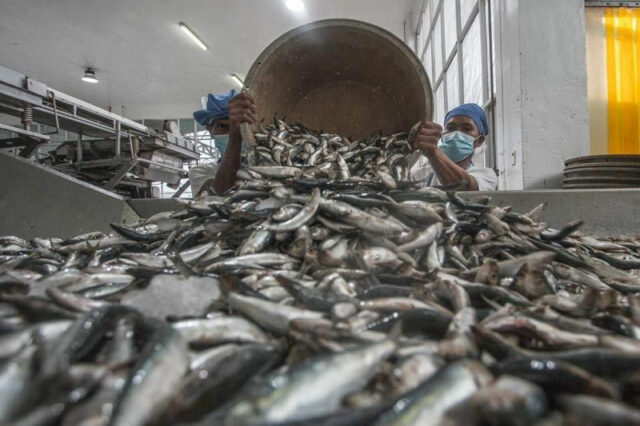
THE sardine canning industry has signed an agreement with the Bureau of Fisheries and Aquatic Resources (BFAR) to ensure continued access to supply during the closed fishing season in the waters around Zamboanga Peninsula starting in December, the BFAR said.

The Canned Sardines Association of the Philippines (CSAP) entered into a memorandum of agreement (MoA) with BFAR allowing the sourcing of sardines from municipal fisherfolk during the closed season, BFAR Officer-in-Charge Demosthenes R. Escoto said. The closed season runs until March 1.

“The MoA will enable the sardine industry to have sufficient raw materials for canneries even during the Zamboanga closed fishing season for sardines and to include the participation of the municipal fisherfolk in the value chain,” Mr. Escoto said.

“It will ensure that the supply of tamban (herring) to the canneries will be on a continuous basis and essentially ensuring supply of canned sardines to the market,” he added.

Mr. Escoto said that the MoA will also be implemented in Sorsogon, which also supplies tamban to canneries in Manila, adding that the BFAR is open to expanding the arrangement to other areas.

“We have two areas where we are going to start implementation, in Sorsogon and Zamboanga. We intend the sardines coming from Sorsogon to be shipped to Manila to supply the canneries there, while those from Zamboanga will be supplying canneries in the area,” Mr. Escoto said.

According to Mr. Escoto, the MoA will also train municipal fisherfolk in proper fish handling, food safety hazards, and processing technology.

“With the approaching implementation of the annual closed fishing season for sardines in Zamboanga, the main producer of this commodity for our country, it is important that we unite and consolidate our efforts to address the various challenges confronting the industry,” Mr. Escoto said.

CSAP President Benjamin A. Sy said that the MoA allows canneries to continue their operations despite the fishing bans, which are imposed to permit fish stocks to regenerate.

“(We) are ensuring the employment of hundreds, if not thousands, of factory workers and adjacent industries when the canneries can continue to operate during the three-month fishing ban. Productivity during the three-month fishing ban means more employment, job security, and food on the table for many families,” Mr. Sy said.

The MoA was signed following a recent proposal of CSAP to the Department of Trade and Industry for a P3 price increase for canned sardine products due to high diesel prices, the depreciating peso, and the rise in the cost of tin used in cans.

According to CSAP Executive Director Francisco Buencamino, the price hike petition is still active.

“The price hike application was filed sometime in July of this year. The P3 increase is a very small portion of the finished canned price,” Mr. Buencamino said.

“The commercial fishing vessels catching fish for the canneries have seen evidence of dwindling supply. This additional supply from the municipal fishers is welcome.” — Revin Mikhael D. Ochave

Medical products to be brought into line with global quality standards

PHILIPPINE STAR/ MICHAEL VARCAS

THE Department of Trade and Industry (DTI) said it is seeking to upgrade quality standards in personal protective equipment (PPE), medical devices, and sanitation products.

The DTI said the Global Quality and Standards Program (GQSP) project, which was launched on Oct. 14, will seek to certify that such products comply with global standards.

The project was launched by the DTI, the United Nations Industrial Development Organization (UNIDO) and Switzerland’s State Secretariat for Economic Affairs.

“Through the Statement of Commitment signed together with Swiss Ambassador to the Philippines Alain Gaschen and UNIDO Country Representative Teddy Monroy, (the) GQSP Project will ensure production of adequate, accessible, fit-for-purpose and safe PPE, medical devices, and sanitation products for the general population and healthcare workers,” the DTI said in a statement on Monday.

Trade Undersecretary Rafaelita M. Aldaba said the GQSP will help the Philippines build “a robust PPE and medical devices ecosystem” as “an investment in our country’s resilience against future disruptions and shocks to our healthcare system.”

“At the same time, this will lead to the creation of more and better jobs, especially in the manufacturing sector, which will support the country’s economic recovery efforts as we enter the post-pandemic future,” she added.

The GQSP project seeks to improve compliance with international market requirements and help countries expand their global trade.

“Our vision is to develop strong industrial capabilities in the biotechnology sector, pharmaceuticals, PPEs, medical devices, including digital health products and services,” Ms. Aldaba said.

Separately, Trade Secretary Alfredo E. Pascual said during the opening of the 2022 Swiss Innovation Exhibit in Taguig City on Monday that the Philippines is pursuing Swiss investments in the medical sector.

“Swiss pharmaceutical and medical companies might be interested to know that we aim to make the Philippines self-sufficient in medical devices, as well as digital health products and services such as personal health wellness technology products, therapeutic systems addressing chronic diseases, telemedicine solutions, and AI-assisted diagnoses,” Mr. Pascual said.

The DTI estimates trade between Philippines and Switzerland at €730 million in 2021, up over 10%. — Revin Mikhael D. Ochave 

What’s #TRENDING? Understanding and documenting industry analysis

In our last article on the fundamentals of entity characterization in transfer pricing documentation (TPD), we highlighted the concept that our knowledge of the nature of a particular business determines the entity characterization and in turn, the entity characterization influences the direction and tone of the TPD as well as setting the direction in having a meaningful comparison of the price or level of income of the entity in a controlled transaction against the price or level of return from similar independent transactions.

Now, let’s talk about Industry Analysis (IA) and how it affects the preparation of TPD as discussed in Revenue Regulations (RR) No. 2-2013 or the Transfer Pricing Guidelines and Revenue Audit Memorandum Order (RAMO) No. 1-2019.

WHAT IS INDUSTRY ANALYSIS?
The Transfer Pricing Guidelines provide that the details of the TPD should include the nature of the taxpayer’s business, and the industry and market conditions where it operates.

IA provides an understanding of the relevant economic circumstances or market conditions in which the taxpayer’s business operates in determining market comparability in order to make meaningful comparisons of prices or margins.

Analysis of the taxpayer’s industry shall be done with consideration to several factors, including main characteristics of the taxpayer’s business and performance of the industry. By understanding the taxpayer’s industry, the expected level of price or return by the taxpayer can be known.

The profitability of an industry is influenced, among others, by any or a combination of the following forces:

1. Macroeconomics (e.g., interest rates, inflation, rate of economic growth, etc.);

2. Demographic (i.e., the qualities, such as age, sex, and income, of a specific group of people);

3. Governmental factors (e.g., political climate, tax incentives available, war and conflicts, etc.);

4. Geographical location; and

5. Technological advancements.

In economics, similar firms operating in the same industry would generally tend to yield similar returns over time. In layman’s terms, if Company A sells the same product as Company B, both companies should generally yield a similar level of profitability, ceteris paribus. Anchored in this concept is the transfer pricing procedure where the related party transaction will be benchmarked or compared against independent comparable companies belonging to the same industry.

For instance, Company A is rendering shared services to its related parties. Company A will be benchmarked against other companies in the business process outsourcing (BPO) industry. Companies under this industry are usually characterized as routine support service providers and normally apply a pricing model of costs plus mark-up. As a routine support service provider, there is an expectation that the level of profitability of Company A will generate and maintain a consistent level of profitability when compared with that of the other companies in the BPO industry.

The BPO industry in the Philippines, in general, can be considered a profitable sector and companies belonging to this industry are doing well financially. Now, if Company A reports a net loss or low returns, this may be an indication that it is not being compensated fairly. In this case, Company A needs to establish that the losses or low level of profitability are commercial in nature within the context of its characterization and industry performance and not because of the special relationship with the related party.

How does IA affect the comparability of prices and level of return?

Prices may vary across different markets even for transactions involving the same property or services. In order to make meaningful comparisons of prices or margins between entities/transactions, the markets and economic conditions in which the entities operate or where the transactions are undertaken should be comparable.

The economic circumstances that may be relevant in determining market comparability include the availability of substitute goods or services, geographic location, market size, the extent of competition in the markets, consumer purchasing power, the level of the market at which the enterprises operate (i.e., wholesale or retail), etc.

For example, lease rates in urban areas are usually higher than in rural areas due to the high demand for housing in the developed areas because of the convenience of living in the city, where land is scarce. Also, prices of commodities are more expensive in cities because of the additional costs incurred (e.g., transportation cost, storage, etc.) in bringing these goods to the city in good condition.

Another example is the pricing offered by manufacturers to wholesalers and retailers. The prices offered to the former are usually lower than that offered to the latter. This is because of the discount granted to wholesalers who procure a larger volume of products than retailers.

In addition, government policies and regulations may have an impact on prices and margins. For example, early this year, the government imposed a ceiling on the price of selected medicines and drugs under the Maximum Drug Retail Price (MDRP) system. MDRP is the highest amount a retailer may charge to a consumer for medicine placed under price regulation. Other examples are the price cap imposed by the government on COVID-19 Rapid Antigen Test and on pork and chicken. Hence, the effects of these government regulations should form part of the discussion in TPD as part of the examination for comparability of the market and economic conditions.

SOURCES OF IA
One can refer to external sources of information, such as industry research reports, publicly available annual financial statements of the main players in the industry, data from the Securities and Exchange Commission, and other information available through the internet or in databases can be used to gain understanding of industry trends.

TAKEAWAY
There is a saying that “birds of the same feather flock together.” Seeing birds flying together is very common sight. They move, flock, and feed together. You will not see an owl flying with a flock of pigeons.

In relation to transfer pricing, knowing the behavior of the industry group where your business belongs and maintaining a comparable level of profitability with other companies belonging to the same “flock” will help your company gauge if the transfer prices with related parties follow the transfer pricing guidelines.

Stay tuned for next month’s article as we continue to take you through the other components of transfer pricing documentation.

Let’s Talk Tax is a weekly newspaper column of P&A Grant Thornton that aims to keep the public informed of various developments in taxation. This article is not intended to be a substitute for competent professional advice.


Christian Derick D. Villafranca is a manager from the Tax Advisory & Compliance division of P&A Grant Thornton, the Philippine member firm of Grant Thornton International Ltd.

pagrantthornton@ph.gt.com

Lawmaker offers ‘happy ending’ for chopper deal

RUSSIAN Air Force Mil Mi-17 — VITALY V. KUZMIN

THE PHILIPPINES should negotiate the delivery of one Russian military helicopter in exchange for its P1.9-billion downpayment for the canceled order for 16 units, according to a congressman.

“Instead of clawing back the P1.9 billion downpayment for the canceled order, which might be difficult if not impossible, we would urge the Department of National Defense to try to get at least one helicopter plus spare parts delivered in return for the money,” Party-list Rep. Marcelino C. Libanan said in a statement on Monday.

Russia asked the Philippines last week to honor the P12.7-billion contract, which former President Rodrigo R. Duterte had canceled for fear of potential US sanctions after Russia invaded Ukraine in February.

“Based on the canceled order, each helicopter costs around P800 million, and the balance of P1.1 billion may be recovered in the form of supplies of spare parts,” said Mr. Libanan, who is a House of Representatives minority leader. 

“This way, the Philippine government’s money does not go to waste, and Russia does not have to worry about reimbursing us the funds,” he said. “This is a practical and sensible solution that could offer both parties a happy ending.” 

Robin Michael U. Garcia, who teaches political economy at the University of Asia and the Pacific, said the government should consider the possibility of US sanctions if it tries to interact with Russia. 

“We definitely still need to think about possible US sanctions,” Mr. Garcia said in a Viber message. “We might also be morally complicit to the invasion of Ukraine if we continue to engage Russia.”

The Philippines would get military helicopters from the United States instead, President Ferdinand R. Marcos, Jr. said on Oct. 20. The termination of the contract would proceed, he said.

Marat Pavlov, Russia’s ambassador in Manila, told reporters last week they had yet to get officially notified about the termination of the contract.

“We are ready to fulfill all our obligations as a reliable partner of the Philippine side in the field of technical and military cooperation and we consider that it will also be done by the Philippines,” he said, based on an e-mailed transcript.

The Philippine Defense department had started formalizing the termination of the contract with Sovtechnoexport LLC, it said in August.

The government was also preparing to start a diplomatic dialogue with the Russian side regarding matters arising from the project’s cancelation.

But Mr. Pavlov said the chopper maker continues to assemble the helicopters since the Philippines had paid a downpayment. Filipino pilots had also been trained.

They envoy said one fully assembled helicopter, a free bonus from the deal, had been delivered to the Philippines in June but was rejected.

Mr. Pavlov said the deal was struck by the Duterte government “without any pressure from the Russian side, citing the Philippines’ independent foreign policy.

He also said Mr. Duterte had said then the Russian helicopters were robust and solid and that the choppers were to be used for humanitarian and transportation purposes.

The US is willing to strike a deal for the amount the Philippines was set to spend on the 16 Russian Mi-17 choppers, Philippine Ambassador to the US Jose Manuel G. Romualdez said in August.

The Chinooks would replace existing hardware used for the movement of troops and in disaster preparedness in the Philippines, he added.

The Philippines is in talks with Russia to recover its downpayment for the helicopters, the delivery of which was supposed to start in November next year, or 24 months after the contract was signed.

US Ambassador to the Philippines Mary Kay L. Carlson has said the US had given the Philippines a $100-million military grant for its defense modernization plan, which could offset the cancelation of the Russian contract.

The Philippines is at the tail-end of a five-year P300-billion modernization of its outdated military hardware that includes warships from World War II and helicopters used by the US in the Vietnam War. 

Aside from military deals, the Marcos government also wants increased economic exchanges with the US including in manufacturing, digital infrastructure, clean energy and modular nuclear power, Mr. Romualdez said.

He also said the Philippines would ally itself with the US in case tensions with China regarding Taiwan lead to a war.

The envoy, a second cousin of the president, said the Mutual Defense Treaty with the US does not automatically tie Manila to all US conflicts. It is based more on the country’s area of responsibility that includes the South China Sea and surrounding waters, he said.

The treaty requires both sides to help each other in case of any external aggression. — Norman P. Aquino and Matthew Carl L. Montecillo

No casualty after Korean Air jet overshoots runway

Korean Airlines (KAL) flight 631 runway excursion at Mactan-Cebu International Airport on late Sunday evening

KOREA AIR on Monday said no one died or got hurt after one of its jets overshot the runaway at the Cebu International Airport on Sunday evening.

“We will make all efforts to ensure the situation is resolved as early as possible in cooperation with the Auler Local Aviation Authority and government authorities,” the airline said in a statement posted on its Facebook page.

Flight KE631 made an “abnormal landing” due to bad weather at the Cebu airport, it said.

In a separate statement, the Mactan-Cebu International Airport Authority said all 162 passengers and 11 crew members had been safely evacuated for medical evaluation. The airport would remain closed until midnight of Oct. 25 while the aircraft was being removed.

The Seoul-based airline has not had a fatal plane crash since 1997, according to Aviation Safety Network, a website that records aviation accidents.

Meanwhile, the Department of Migrant Workers (DMW) said it would help overseas Filipino workers whose flights might have been canceled because of the accident.

Migrant Workers Secretary Susan V. Ople in a statement said she had ordered a team from the Overseas Workers Welfare Administration help OFWs stranded at the Cebu Airport.

Two Filipino seafarers were on board the Korean Air plane when it overshot the runway late Sunday, Ms. Ople said, citing an OWWA report. Both were reported safe and uninjured.

“The DMW will continue to monitor the situation at the Mactan-Cebu International Airport and extend assistance to all OFWs who have been affected by the decision of airport authorities to suspend all flights for a still undetermined period,” she added. — John Victor D. Ordoñez

Clarify guidelines on face-to-face classes, gov’t told

PHILSTAR FILE PHOTO

ADVOCATES ON Monday renewed their call for the government to issue clear ventilation guidelines for schools and public transportation before full face-to-face classes start next month amid a coronavirus pandemic.

In a statement, Aral Pilipinas also urged the Department of Education (DepEd) to disclose infection data in the country’s schools.

The  group made the call after the Philippines posted its first cases of the highly contagious XBB Omicron subvariant and XBC variant of the coronavirus.

A DepEd order on health protocols for schools implementing physical classes lacks clear guidelines on ventilation, which is needed to protect students from the virus, said Abbey Pangilinan, convenor of Aral Pilipinas.

“There’s still a need for clearer policies specific to ventilation so teachers or principals could become more equipped to implement them in their respective schools,” she told a virtual news briefing.

Schools should “ensure adequate ventilation in enclosed and shared spaces,” according to the DepEd order. Schools can also open windows and doors and use ventilation fans near windows to increase air flow and push air outside.

Aral Pilipinas has been lobbying for the use of an evidence-based assessment tool that can help schools determine if a classroom is poorly or well-ventilated based on its carbon dioxide level.

The tool called “Safe Schools Calculator” was developed by wind engineer Joshua C. Agar, who is also part of the coalition.

Users must indicate the classroom dimensions, available ventilation such as electric fans and windows, number of occupants and the class duration, Aral Pilipinas said in a previous statement.  The tool had been presented to DepEd, which has yet to give its feedback.

The Philippines posted 11,995 coronavirus infections in the past week, with a daily average of 1,714 cases, according to health authorities.

The daily average from Oct. 17 to 23 was 22% lower than a week earlier, the Department of Health (DoH) said in a bulletin.  Of the new cases, four were severe and critical, it added.

DoH said 272 new deaths had been verified in the past week, 26 of which occurred from Oct. 10 to 23.

The agency said 581 intensive care unit (ICU) beds had been used as of Oct. 23, while 5,666 of 21,474 non-ICU beds were occupied. There were 650 severe and critical admissions, it added.

The Philippines has fully vaccinated 73.48 million people, DoH said. It added that 20.47 million people have received booster shots. — Kyle Aristophere T. Atienza

Cascolan defends appointment as health exec amid flak

PHILIPPINE STAR/ MICHAEL VARCAS

NEWLY designated Health Undersecretary Camilo Pancratius P. Cascolan, a retired national police chief, has defended his appointment amid criticisms, saying health management is not limited to medical knowledge.”  

A health workersgroup and opposition lawmakers denounced President Ferdinand R. Marcos, Jr.s choice of Mr. Cascolan, citing his lack of qualification. 

Mr. Cascolan told One News Philippines in a text message that while he is not from the health sector, he has expertise in emergency response and has worked closely with local governments.   

I conceptualized COVID Task Force and gave it to (former police chief) Guillermo T. Eleazar,he said. I conceptualized admin Support for COVID Task Force (which I headed). I started COVID protocols in the initial stage when everybody was in a quandary.”  

He said balancing science and management and strategy is very important

My experience on the ground and working with (local government units) is also a factor that can bring the department closer to the people.”  

On the other hand, Alliance of Health Workers National President Robert T. Mendoza said in an interview with One News Philippines that Mr. Cascolans qualifications are not suitable to the position.  

For me, his qualifications are not what we need, what we need is an expert on administration management with expertise on health and not in law enforcement,Mr. Mendoza said in Filipino. 

He said there are many qualified doctors within and outside the Department of Health (DoH) who are knowledgeable in both health and management issues.   

What will (Mr. Cascolan) suggest during executive committee meetings on topics revolving around diseases?he said. We know his track record, especially in anti-drug campaigns where many of our fellow citizens died.”  

Mr. Mendoza also said the coronavirus response by the COVID task force was a failure because of itsmilitaristicor anti-drug campaign-relatedapproach instead of being science-based had it been led bymedical experts, virologists, and scientists 

ACT Teachers Party-list Rep. France L. Castro said Mr. Cascolan’s appointment is like a slap on the face of dedicated and qualified healthcare practitioners who were bypassed for the position.”  

Senator Ana Theresia RisaHontiveros-Baraquel said a health undersecretary is expected to have qualifications and expertise, and be active in the public health sector.  

The DoH should and must always be a public health-led agency, especially as we continue to deal with COVID-19 and other burdens of disease,she said.   

The senator added, We hope that the DoH will find suitable roles for Mr. Cascolan to further add value in addressing threats to public health security and safety in our communities.”  

Iloilo Rep. Janette L. Garin, a former DoH secretary, said the “delivery of health services is not just about doctors and scientists working together.”

“Non-medical managers are likewise needed to put order and implement programs,” she said. 

Mr. Marcos, who took office on June 30, has yet to appoint a DoH secretary. Undersecretary Maria Rosario Singh-Vergeire is currently designated as an officer-in-charge. Kyanna Angela Bulan 

Suspended jail chief among persons of interest in broadcaster’s murder — police head 

JOURNALISTS and activists light candles for killed Filipino radio journalist Percival Mabasa during an indignation rally, in Quezon City, Philippines, October 4, 2022. — REUTERS 

A SUSPENDED jail chief is among the persons of interest authorities are looking into for possible involvement in the murder of a local broadcaster, the head of the national police said on Monday. 

In an online press briefing, Philippine National Police chief Rodolfo S. Azurin said their crime investigation group is probing over 100 individuals who had been the subjects of the late journalist’s commentaries, which includes suspended Bureau of Corrections (BuCor) director general Gerald Q. Bantag. 

“There is a mix of people including politicians, military and police who may be connected to the killing of Percival Mabasa,” Mr. Azurin said in Filipino. 

“With the suspension of Bucor director Bantag, there will definitely be more leeway for our investigators to probe other members of the BuCor along with other inmates.” 

Mr. Bantag did not immediately reply to a Facebook Messenger chat seeking comment.  

President Ferdinand R. Marcos, Jr. suspended Mr. Bantag after the death of an inmate who was supposedly one of the middlemen who contracted the killers.   

Justice Secretary Jesus Crispin C. Remulla told an online news briefing on Oct. 21 that there was a second middleman whom police had detained. 

The police chief said he had doubts on the circumstances surrounding the suspected inmates sudden death.  

“In the course of the ongoing investigation, suddenly it happens to someone who everyone is looking for, right?” Mr. Azurin said.  

In an autopsy report sent to reporters on Oct. 22, the National Bureau of Investigation said the man did not show “apparent signs of external injury”.  

The Department of Justice was set to start its preliminary investigation on the murder on Monday.  

Last week, the alleged gunman in the murder of the 63-year-old radio journalist surrendered to authorities and said he had been hired by someone inside the national penitentiary. He said he and three cohorts got paid P550,000.  

Mr. Mabasa’s YouTube channel, which had more than 200,000 subscribers, showed he had been critical of former President Rodrigo R. Duterte and some policies of sitting officials.  

“We can’t say that this case has been solved since we have yet to know where the order to kill came from and if there really is a mastermind,” said Mr. Azurin. John Victor D. Ordoñez

Sarangani plans to build P300-M agri-fishery complex for small, medium-scale fisherfolk

A DIGITAL rendition of Sarangani’s planned agri-fishery complex, which will also serve as a public green space. — SARANGANI PIO

THE SARANGANI provincial government is planning to build a P300-million agri-fishery complex, which will mainly cater to some 50,000 small and medium-scale fisherfolk.

Sarangani Gov. Rogelio D. Pacquiao, in his first 100 days report delivered last week, said the project could be financed by state-owned Land Bank (LANDBANK) of the Philippines. 

Our collective dream of having our own fish port facility seeks to promote the agri-fisheries industry of the six coastal municipalities of our province and to create more livelihood opportunities and employment,Mr. Pacquiao said. 

There are 20,899 registered fisherfolk and another more than 30,000 who are considered as marginalized” in the province, according to the local government.  

Provincial Agriculturist Jonathan C. Duhaylungsod, in a statement from the provincial information office, said the project will be a major marketing support facility for strategic fisheries and aquaculture commodities that will cater small and medium-scale fisherfolks engaged in municipal or commercial fishing industry that are operating locally. 

It may also accommodate large-scale commercial fishing vessels when necessary, he added.

Large-scale or commercial fishing operators mainly use the port in General Santos City.

Mr. Duhaylungsod said the complex is envisioned to help increase the income of fisherfolk by reducing post-harvest losses and expanding their consumer markets. 

The towns of Alabel and Malapatan are being considered for the 80,000 square-meter Sarangani fish port. 

Mr. Duhaylungsod said the site will be finalized after an ocular inspection by the Philippine Fisheries Development Authority.

The complex will have a wharf, ice making facilities, freezers, cold storage, administrative building, powerhouse, waste water treatment facilities with solid waste recovery facility, and a fish market. MSJ