Home Blog Page 5350

34% of Filipinos say their quality of life improved from a year ago 

PHILIPPINE STAR/RUSSELL PALMA

MORE THAN 30% of adult Filipinos said their quality of life had improved from a year ago, according to the Social Weather Stations (SWS) 4th quarter 2022 survey. 

Citing its Dec. 10-14 survey released on Wednesday, SWS said 34% of adult Filipinos believed their life was better than twelve months before while 26% said it got worse. 

The remaining 39% said their quality of life was the same.  

The net gainer score was up from the fair levelsof net zero in October and -2 in June and April last year, SWS said.   

“However, it is still 10 points below the pre-pandemic level of very high +18 in December 2019.  

SWS said the eight-point increase in the national score between October and December was due to increases in all areas, especially in the countrys south.  

The net gainer score was very highin the capital region compared to the highscore in October as it increased by nine points from +9 to +18, SWS said.   

It was also very high in the rest of Luzon as its score rose by two points from +8 to +10, 

It rose from mediocre to fair in the Visayas, up by 9 points from -13 to -4,SWS added. It rose sharply from mediocre to very high in Mindanao, up by 21 points from -11 to +10. 

According to the December 2022 survey, 11.8% of Filipino families, or an estimated 3 million, experienced involuntary hunger at least once in the past three months.  

The net gainer score was very high among those who are not hungry and rose to fair from mediocre among the overall hungry families, the pollster said. However, it fell from mediocre to low among the severely hungry.  

More than half or 51% of Filipino families rated themselves as poor in the survey, SWS said.   

Thirty-one percent considered themselves as borderline poor, while 19% rated themselves as not poor, it added. 

The Net Gainers score has been historically lower among the Poor than among the Borderline Poor and Not Poor,it noted. This means the Poor have more Losers and fewer Gainers than the Borderline Poor and Not Poor.Kyle Aristophere T. Atienza 

Peso weakens vs the dollar as UK, euro zone data spark recession fears

BW FILE PHOTO

THE PESO weakened against the dollar on Wednesday amid weaker manufacturing data in Europe that roused fears of a global recession.

The local currency closed at P54.63 versus the greenback on Wednesday, dropping by 19.5 centavos from Tuesday’s P54.435 finish, data from the Bankers Association of the Philippines showed.

The peso opened Wednesday’s trading session at P54.75 per dollar. Its weakest showing was at P54.79, while its intraday best was at P54.53 against the greenback.

Dollars traded went down to $1.02 billion from $1.05 billion on Tuesday.

“The peso weakened as the downbeat manufacturing PMI (purchasing managers’ index) reports from the United Kingdom and Europe have renewed market concerns of a recession this year,” a trader said in an e-mail.

The S&P Global/CIPS flash composite PMI dropped to 47.8 in January from 49 in December, at the bottom end of economist forecasts, as businesses blamed higher Bank of England interest rates, strikes and weak consumer demand for the slowdown, Reuters reported.

Meanwhile, separate data showed euro zone business activity made a surprise return to modest growth in January. The dollar edged lower against the euro on Tuesday on the data and as US business activity shrank for a seventh straight month.

The dollar, which briefly gained on the euro after the US data, slipped to trade lower on the day, not far from the nine-month lows hit in the previous session.

The euro was 0.09% higher at $ 1.0881, just shy of the nine-month high of $ 1.0927 touched on Monday.

The peso also weakened on weak local agriculture data, Rizal Commercial Banking Corp. Chief Economist Michael L. Ricafort said in a Viber message.

Farm output shrank 1% in the fourth quarter of 2022 due to damage in the sector caused by typhoons and higher inflation, the Philippine Statistics Authority (PSA) reported on Wednesday.

Mr. Ricafort added that third-quarter Philippine gross domestic product (GDP) growth being maintained by the PSA at 7.6% also contributed to the peso’s decline.

For Thursday, the trader said the peso could recover against the dollar on expectations of robust Philippine GDP growth for the fourth quarter and full-year 2022.

The trader sees the peso trading between P54.50 and P54.75 against the dollar, while Mr. Ricafort expects it to move from P54.55 to P54.75. — AMCS with Reuters

PHL shares rise on oil’s drop ahead of key data

BW FILE PHOTO

STOCKS closed higher on Wednesday as global crude oil prices eased and ahead of the release of Philippine gross domestic product (GDP) data.

The Philippine Stock Exchange index (PSEi) went up by 39.86 points or 0.56% to close at 7,081.36 on Wednesday, while the broader all shares index added 16.28 points or 0.44% to end at 3,702.76.

“The local stock market gauge gained for the second day in three days to close near the intraday high at 7,081.36, among the highest in more than nine months, ahead of the latest GDP data [on Thursday],” Rizal Commercial Banking Corp. (RCBC) Chief Economist Michael L. Ricafort said in a Viber message on Wednesday.

Sentiment was also affected by the decrease in global crude oil prices on Tuesday, he said.

“Philippine shares closed higher stronger on the back of a strong Microsoft earnings boosted sentiment in the technology sector amid fears of a recession. Investors are bracing for more high-profile corporate earnings,” Regina Capital Development Corp. Head of Sales Luis A. Limlingan said in a Viber message.

“Back home, investors made bets ahead of the release of the local GDP report [on Thursday],” Mr. Limlingan added.

Philippine GDP likely grew by 6.8% in the fourth quarter of 2022, according to the median forecast of 23 economists polled by BusinessWorld last week, slower than the 7.6% seen in the third quarter and the 7.8% print in the same period in 2021.

For the full year, the economy may have expanded by 7.5%, according to the median estimate of the economists, matching the high end of the government’s 6.5%-7.5% target for 2022.

Meanwhile, crude oil prices slipped on Tuesday, with Brent futures for March delivery falling by $2.06 or 2.3% to $86.13 a barrel and US crude declining by $1.49 or 1.8% to $80.13 per barrel.

On Wednesday, US crude oil prices were stable at $80.3 a barrel after falling in the previous session as preliminary data indicated a bigger than expected rise in US oil inventories, Reuters reported.

Back home, the majority of sectoral indices closed higher on Wednesday, except mining and oil, which declined by 55.46 points or 0.47% to close at 11,596.39.

Meanwhile, services went up by 19.57 points or 1.1% to 1,794.12; holding firms climbed by 46.89 points or 0.68% to 6,884.53; property added 15.96 points or 0.51% to close at 3,120.26; financials rose by 2.20 points or 0.12% to 1,811.21; and industrials inched up by 8.20 points or 0.08% to 9,945.54.

Value turnover went up to P5.75 billion on Wednesday with 1.86 billion shares changing hands from P5.4 billion with 1.96 billion issues traded on Tuesday.

Advancers beat decliners, 100 versus 89, while 48 names closed unchanged.

Net foreign buying was at P237.29 million on Wednesday versus the P361.58 million in net selling seen the previous trading day.

RCBC’s Mr. Ricafort placed the PSEi’s immediate major support at 6,650-6,750 levels and resistance at 7,100. — Justine Irish D. Tabile with Reuters

DTI presses Senate to approve RCEP trade deal within quarter

REUTERS

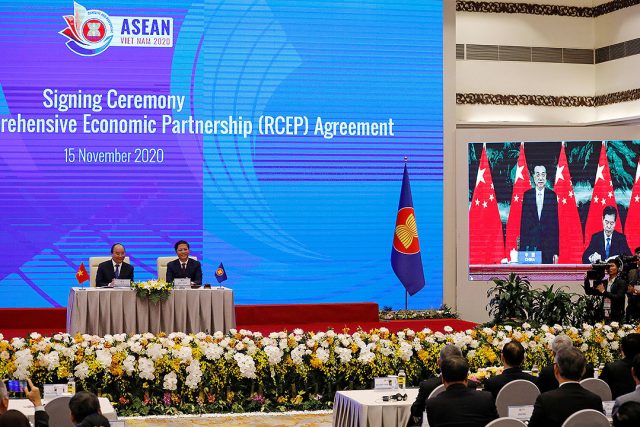
THE Department of Trade and Industry (DTI) asked the Senate to ratify the Regional Comprehensive Economic Partnership (RCEP) trade agreement before the end of the first quarter, saying that the Philippines is already missing out on the deal’s benefits.

Trade Assistant Secretary Allan B. Gepty told BusinessWorld on the sidelines of an event organized by the British Chamber of Commerce of the Philippines (BCCP) late Tuesday that the Senate has “the whole of February to conduct hearings. And then there’s March. Basically, two months. I hope it (RCEP) gets finished because we are already delayed.”

“On the assumption that the hearings go smoothly and given the fact that this is one of the priorities of the government, we hope that in the first quarter of this year we can finish the whole process,” he added.

Mr. Gepty said that the Philippines is missing out on the benefits of the RCEP, whose other members have been operating within the trade framework since the start of 2022.

“(We are missing) on the trade facilitation aspect because in RCEP, we have agreed on certain simplified rules and procedure in conducting trade. So this means less paperwork, more convenience. If there is more convenience, it reduces the administrative costs of businesses. That’s additional savings,” Mr. Gepty said.

“The other RCEP parties are now enjoying the benefits of the agreement. In fact, they have already noted an increase in trade, like for example Thailand, Cambodia, even China. There is already an increase in trade. We hope that we can already be part of this very important agreement,” he added.

The RCEP is currently with the Senate Committee on Foreign Relations, which is chaired by Senator Maria Imelda Josefa R. Marcos.

Ms. Marcos has formed a technical working group to generate the committee report on RCEP ratification. The committee is expected to report it out to plenary once Senate sessions resume.

The RCEP, touted as the world’s largest free trade agreement (FTA), started coming into force in the various jurisdictions on Jan. 1, 2022. The participating countries include the 10 members of the Association of Southeast Asian Nations, Australia, China, Japan, South Korea, New Zealand. 

The Philippines has yet to seal its participation after the Senate was unable to give its concurrence by the end of 2022 after Senators raised the issue of inadequate safeguards for the agriculture industry. Former President Rodrigo R. Duterte signed the RCEP agreement in September 2021.  

BCCP Executive Director Chris Nelson said separately that the RCEP will help attract more investors, calling Mr. Gepty’s first-quarter timeline for approval realistic.

“I fully support RCEP. It’s one of the things we need to be doing. One of the things we keep saying to people in the UK is to do business in the Philippines. If you want to reinforce that, you should sign the RCEP, which is the largest trading bloc in the world,” Mr. Nelson said.

“I think it (first quarter timeline) is realistic. We just need to push hard and get over the line. It is an important thing to be done,” he added. — Revin Mikhael D. Ochave 

Marcos tells advisors he will certify E-Governance bill as urgent, backs RCEP

PHILIPPINE STAR/ MICHAEL VARCAS

PRESIDENT Ferdinand R. Marcos, Jr. signaled his intent to certify as urgent a measure that will digitalize the bureaucracy to his business-sector advisors.

The Palace also announced that Mr. Marcos is pushing the Senate to act on the ratification of the Regional Comprehensive Economic Partnership (RCEP) trade agreement.

Mr. Marcos made his intent to certify as urgent the E-Governance bill in a Jan. 12 meeting with the Private Sector Advisory Council (PSAC).

The certification is “a vital step” in building “a digital nation,” according to a statement issued by Henry Aguda, PSAC Digital Infrastructure Sector lead and Union Bank of the Philippines (UnionBank) chief technology and operations officer.

“It also provides the impetus to the PSAC Digital Infrastructure Sector’s work plan,” he added. “(We) look forward to seeing the positive impact it will have on every Filipino.”

The bill remains pending at committee level in the House of Representatives.

It seeks to create “a digitally empowered and integrated government that provides responsive and transparent online citizen-centered services for a globally competitive Filipino nation,” the PSAC said.

The bill also encourages public-private cooperation in digitalizing the operations of government agencies.

An urgent certification from the President means the bill can be passed on third reading immediately after second reading.

The PSAC has put forward its proposals to improve the bill, centering on the creation of an enabling environment to foster innovation and promote and support emerging technologies and startups.

It has also recommended the “integration of inter-agency efforts and integration in citizen frontline delivery of services.”

It also wants the inclusion of the education sector in policy formulation, ensuring the collaboration between education agencies and the Department of Information and Communications Technology (DICT) “in the development of curricula for the ICT Academy established under the Act.”

The PSAC is also proposing to make government digital payment systems a two-way system by introducing digital disbursement services, and to allow the use of private payment and disbursement systems.

The private sector’s proposals also include the designation of a Chief Information Office in every government agency and the creation of a national Chief Information Security Officer.

The government should also “promote data sovereignty alongside the expansion of National Government Data Centers, ensuring data of Filipinos are for Filipinos” and “institutionalize public-private partnerships on e-government to leverage expertise and speed up implementation.”

“All seven recommendations were accepted by the Technical Working Group (TWG) formed by the House Committee on Information and Communications Technology, and incorporated in the forthcoming substitute bill,” the PSAC said in the statement.

RCEP
Among the bills that the President has certified as urgent include proposals seeking to professionalize the Armed Forces of the Philippines, establish the Maharlika Investment Fund, restore the Mandatory Reserve Officers’ Training Corps, and create the National Service Training Program.

Also on Wednesday, the Presidential Communications Office (PCO) said Mr. Marcos has backed the ratification of RCEP in the Senate.

The Senate failed to ratify RCEP last year, with senators citing the lack of safeguards for the domestic agriculture sector. The free trade agreement involves the 10 members of the Association of Southeast Asian Nations (ASEAN) and dialogue partners China, Japan, South Korea, Australia, and New Zealand.

During the campaign, Mr. Marcos had called for a review of RCEP to ensure the agriculture sector is adequately protected.

“If approved and entered into by the Philippines, we would be part of the biggest free trade agreement in the world, given that intended members of the partnership comprise around 30-40% of the world’s gross domestic product,” Emy Ruth D. Gianan, who teaches economics at the Polytechnic University of the Philippines, said via chat.

“On surface it seems harmless, but what the Senate should really examine are provisions and rules on labor and workers’ rights, environmental protection, and intellectual property,” she added. “These were earlier issues raised when RCEP was initially proposed. These also were main comparative points relative to its ‘rival’ FTA deal,” she added, referring to the US-backed Trans-Pacific Partnership.

Ms. Gianan said the Senate has the important role of ensuring that as the Philippines integrates itself into global supply chains, “our welfare and rights are not sidelined in exchange for private profit.”

Leonardo A. Lanzona, an economist at the Ateneo De Manila, said the ratification of RCEP “should have been done at the very start of the administration when our foreign exchange depreciated.”

RCEP, as in all trade reforms, will require structural and institutional reforms “in order to ensure that export diversification that follows will benefit all sectors,” he said via chat. “The goal is to maximize the use of our domestic resources, particularly labor, and to exploit our comparative advantage.”

“This can cause negative consequences on the existing goods that we are already exporting and importing,” he added. “Nevertheless, the country should push for the continued transformation that leads to export diversification, regardless of its impact on the established industries.”

Also being pushed by the Palace are bills strengthening the regulatory functions of the Maritime Industry Authority, amendments to a 1995 law that requires the salt industry to iodize its products, and revising the anti-agricultural smuggling law signed in 2016.

As of Jan. 18, 10 out of the 20 priority legislative measures that Mr. Marcos spelled out during his first address to Congress in July have been passed by the House of Representatives and transmitted to the Senate, the PCO said, citing the Presidential Legislative Liaison Office.

These measures include the proposed Passive Income and Financial Intermediary Taxation Act, the proposed Government Financial Institutions Unified Initiatives to Distressed Enterprises for Economic Recovery Act, the proposed Real Property Valuation and Assessment Reform Act, the proposed Internet Transaction Act or the E-Commerce Law, and the proposed Condonation of Unpaid Amortization and Interests of Loans of Agrarian Reform Beneficiaries.

Bills creating the Medical Reserve Corps, the Philippine Centers for Disease Prevention and Control, the Virology Institute of the Philippines, and an amendment to the Build-Operate-Transfer Law were also named as priority legislation.

“The remaining 10 State of the Nation Address priority bills are at the level of the committees in both houses of Congress,” the PCO said.

These include the bills seeking to create the Department of Water Resources, rightsize the bureaucracy, create a National Land Use Act, modernize the budget system, provide an enabling law for the natural gas industry, amend the 21-year-old energy law, reform the pension system for military and uniformed personnel, and revise the defense law.

“There are bills certified as urgent by the President and other Legislative Executive Development Advisory Council-priority bills that have been passed by the House but are still pending in the Senate,” the PCO said.

The LEDAC-priority measures include bills creating a new passport law, establishing the Leyte Ecological Zone and Eastern Visayas Development Authority, promoting a waste treatment technology, extending free legal assistance to military and uniformed personnel, revising the national apprenticeship program, and creating a magna carta for village health workers. — Kyle Aristophere T. Atienza


Cash transfer programs deemed effective in protecting calamity-hit households

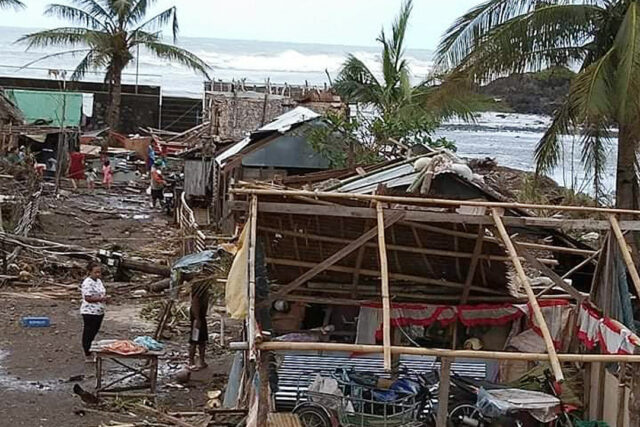
HOMES built with light materials at a coastal community in Catanduanes were destroyed during Typhoon Goni, known locally as super typhoon Rolly, which made its first landfall on the island province on Nov. 2, 2020. — LGU PANDAN-MAYOR’S OFFICE 

CASH TRANSFER programs were able to “effectively” protect typhoon-affected households from falling into extreme poverty, according to a study by the World Bank.

“In the aftermath of Typhoon Yolanda (international name: Haiyan) in the Philippines, the country’s 4Ps program proved to be an effective protection against extreme poverty. It was also shown that it raised in particular non-food consumption,” the World Bank said.

The Pantawid Pamilyang Pilipino Program, also known as 4Ps, is a conditional cash transfer program first launched in 2007 and later institutionalized in 2019.

“Cash-transfer programs have been shown to be an effective way to reduce poverty and protect vulnerable households against idiosyncratic income shocks. For this reason, they are also often proposed as effective and efficient protection mechanisms in the case of large-scale adverse events such as natural disasters, pandemics, or economic crises,” the World Bank said.

It conducted its study on victims of Typhoon Yolanda, which struck the country in 2013.

“The results indicate at best a very tenuous effect on households with at least one school-aged child having positive educational expenditures,” the multilateral lender said.

Based on the study, the risk of falling into extreme poverty was reduced by the cash transfer program.

“The estimated effects on non-food consumption are decidedly more significant, in statistical as well as economic terms,” it added.

The World Bank said that even a moderate cash transfer can “significantly protect vulnerable populations when faced with a large aggregate shock.”

“The upshot is that such programs are indeed an effective policy response in times of crisis. However, many questions remain to be answered. Moreover, it would be important to understand how cash-transfer programs can be temporarily expanded to increase their impact,” it added.

The study recommended looking into horizontal expansion, which means to expand the number of households covered by the program.

“The crucial question in this context is whether an additional dollar spent on either horizontal or vertical expansion, which is increasing the amount of the benefit paid out, has the largest effect on poverty reduction. Understanding how this trade-off depends on the nature of the shock is also of first-order importance,” it added. — Luisa Maria Jacinta C. Jocson

PHL urged to upgrade cybersecurity infrastructure, policies

REUTERS

A SOUTH KOREA cybersecurity solutions company said the Philippines urgently needs to fast-track upgrades to its cybersecurity infrastructure and policies as it emerges from the pandemic.

“There’s no doubt that digitalization in the Philippines is heading in the right direction,” NETAND Chief Executive Officer Hochul Shin said in a statement on Wednesday.

“Now that the world is slowly ushering in a post-pandemic era, the global market is paying attention to access management solutions since major IT infrastructure systems require thorough control and management of user access and authority. It is, therefore, imperative for the Philippines to fast-track its cybersecurity infrastructure and policies,” the NETAND CEO added.

The Department of Information and Communications Technology is currently exploring digital partnerships. The department recently approached Franz-Michael Skjold Mellbin, the Danish ambassador, to sound out Copenhagen on cybersecurity, e-governance, digital health, and digital transition for the maritime industry.

NETAND, a privileged access management (PAM) solutions provider, noted that the Philippines’ rapid digitalization can serve as an entry point for cyber threats, making digital trust a big concern. 

“Efficient solutions and infrastructure are essential in combating cyber threats and ensuring business survival,” it said.

The Philippines’ digital competitiveness improved last year, with knowledge and technology taking 62nd and 54th spots, respectively, according to the World’s Digital Competitiveness Ranking. The Philippines ranked 61st out of 194 on the ITU Global Security Index.

At the same time, NETAND warned that security risks may surge with demand for third-party payment providers expected to rise in the coming years. 

“Ensuring that the information security management system is properly screening and protecting the payment methods plays a critical role in maintaining operational security,” the company said.

It said that PAM solution helps protect and secure the digital transformation of any business.

PAM solutions help protect organizations against insider threats, cyber-attacks, and compliance risks by monitoring, detecting, and preventing unauthorized privileged access to critical resources, the company added. — Arjay L. Balinbin

PEZA announces push for locators serving domestic market

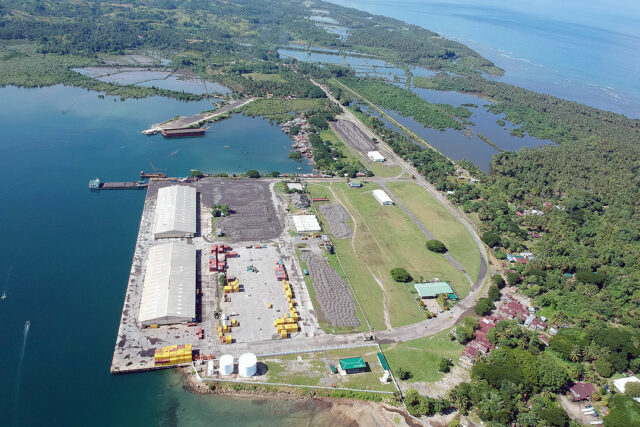
POLLOC FREEPORT AND ECOZONE — BARMM FACEBOOK PAGE

THE Philippine Economic Zone Authority (PEZA) said it is targeting locators hoping to sell to the domestic market.

“Ultimately, domestic production contributes to gross domestic product (GDP). It cannot be just exporters doing all the production. This is also a sign of strength when we see domestic output increasing. If we aggregate all these domestic producers, they are far bigger than the export producers, except that they are not aware of their incentives,” PEZA Officer-in-Charge Tereso O. Panga said during a forum organized by Anvil Business Club on Jan. 23.

“Maybe it’s about time that the government, with the Corporate Recovery and Tax Incentives for Enterprises (CREATE) Act as the platform, stimulate domestic production and services by giving incentives to Filipino-owned enterprises,” he added.

Mr. Panga also encouraged the young Filipino-Chinese entrepreneurs of the Anvil Business Club to consider investing in ecozones.

“With the growth mindset of the Marcos administration, and where the Philippines is in a sweet spot to benefit from the prevailing crises, we remain committed in performing our mandate to help keep the economy afloat and contribute to overall growth and development through our ecozone program,” Mr. Panga said.

“With the support of our partner institutions and private sector partners like Anvil, we will continue to enhance our ease of doing business so we can attract more investments and create more jobs and livelihood for the Filipinos. In doing so, we are not only able to thrive in the new reality but more importantly contribute to the President’s bid to transition the country to upper-middle income economy,” he added.

Meanwhile, the Anvil Business Club endorsed Mr. Panga as the permanent PEZA Director General.

“Many IT and business process outsourcing firms, foreign investor business groups and professional groups, even PEZA employees, have publicly called for the President and the National Government to permanently appoint (Mr. Panga) as the Director General of PEZA,” Anvil Chairman Wilson Lee Flores said.

“He is a very good career official, one of the most progressive and probusiness institutions. He is behind many of the progressive policies… (for attracting) foreign direct investment,” Mr. Flores said. — Revin Mikhael D. Ochave 

Meat tariff hearing highlights diverging agri, meat industry interests

PHILSTAR FILE PHOTO

THE agriculture and meat industries set forth their arguments on tariffs for imported meat and edible offal, ending up in opposing camps on the level of protection needed by domestic growers.

Nicanor M. Briones, Agricultural Sector Alliance of the Philippines party-list representative, said during a virtual public hearing of the Tariff Commission (TC) on Wednesday that low tariffs disadvantage domestic producers vis-a-vis meat importers.

“Meat importers can sell their products at a cheaper price because of the lower landed cost… There is no reason to further lower the tariff,” Mr. Briones said.

“The hog raisers are discouraged by lower tariffs,” he added.

The TC called the hearing after Senator Cynthia A. Villar asked the National Economic and Development Authority to study the current tariff structure for meat and edible offal.

These products include fresh, chilled, or frozen meat and edible offal of bovines, swine, sheep, goats, and horses, asses, mules, or hinnies.

Edible offal is derived from the entrails and internal organs of livestock, including hearts, livers, kidneys, and tongues.

The Meat Importers and Trade Association (MITA) argued for tariffs to be kept low to ensure that consumers have access to affordable protein.

“Our position is… protectionism actually prevents the poorer masses from receiving cheaper protein. Offal is an important cheap protein that the masses can afford… like (pork) liver. These are the things that the poor are buying. We should maintain the low duties for offal,” MITA Representative Paolo Pacis said.

David Kawpeng, another MITA representative, said that there are also sufficient safeguards to address smuggling, a concern that was raised during the hearing.

“If smuggling does occur, it is a matter of enforcement. We should look at the enforcement side,” Mr. Kawpeng.

“Everyone uses offal, aside from meat processors. A person who cannot afford pork would look for something cheaper. Pork is the protein of choice in the Philippines,” he added.

The tariff for bovine meat is 10% while its edible offal ranges from 5% to 7%.

The tariff for swine meat is 15% for shipments within the minimum access volume (MAV). Those in excess of the quota are charged 25%. The tariffs for edible offal from swine are set at 5%, 7%, and 10%.

The low tariff setting for swine meat was extended to the end of the year by Executive Order No. 10 recently issued by Malacañang.

The tariff for sheep meat is 5%, while that for goat was 30% within the MAV quota and 35% for shipments exceeding the quota. The tariff for horses, assess, mules, or hinnies is 5%.

The tariff for edible offal of sheep, goats, and horses, assess, mules, or hinnies is 3%. — Revin Mikhael D. Ochave

Swiss roadshow generates $24.7M in investment commitments

NATURLOOP.COM

THE Philippines obtained an initial $24.7 million in investment commitments during a recent Swiss roadshow, the Board of Investments (BoI) said.

In a statement on Wednesday, the BoI said the prospective Swiss investments are expected to generate 475 jobs.

The BoI and the Philippine Trade Investment Center (PTIC) organized the investment mission on the sidelines of the Philippines — European Free Trade Association and the 5th Philippines — Switzerland Joint Economic Committee meetings in Switzerland between Jan. 9 and 13.

Members of the Philippine delegation included representatives from the BoI, the Philippine Economic Zone Authority, and PTIC.

SATEGO AG committed to invest $9.7 million in a state-of-the-art production facility at the TECO Industrial Park in Pampanga, which is expected to be operational by 2024.

SATECO AG makes silicone keypads and sensors for auto manufacturers.

“Multinational companies (are ramping up) their interest in setting up for business in the country along with existing firms expanding their investment portfolios,” Trade Undersecretary Ceferino S. Rodolfo said.

Swiss startup NaturLoop is also seeking to launch a $15-million Cocoboard factory by 2026. The company is currently firming up its sourcing arrangements for coconut husk in Quezon Province.

The delegation also visited the facility of OVD Kinegram, based in Zug, Switzerland. The company designs and produces the Kinegram optical security system protecting government documents and banknotes.

The delegation also met with miner Glencore, which has a 78% stake in the Philippine Associated and Refining Corp., which operates a copper smelter in Leyte.

“The combination of vast resources of critical green metals such as nickel, cobalt, and copper, the presence of suitable locations such as the Leyte Ecological Industrial (zone), along with the government’s strong commitment and efforts on sustainability and rich human capital makes the Philippines a vital and reliable chain partner that enables investors to profitably serve customers regionally and globally,” Mr. Rodolfo said.

According to the BoI, Switzerland was the country’s 26th largest trading partner, 17th largest export market, and 29th largest source of imports in 2021.

Philippine exports to Switzerland rose 17.3% to $528.2 million in 2021.

 “From 2017 to the third quarter of 2022, Swiss investment approvals by Philippine investment promotion agencies hit P1.4 billion. Notable BoI-approved Swiss investments include projects of Nestlé, Avaloq, and CPW,” the BoI said. — Revin Mikhael D. Ochave

Think tank urges more focus on domestic industry, agri; skeptical about FDI impact

DEPARTMENT OF AGRICULTURE HANDOUT

THE PHILIPPINES must focus on developing its own agriculture and industry and de-emphasize the pursuit of foreign direct investment (FDI), a progressive-leaning think tank said.

“Gone are the days when experts (and) foreign investment will save you,” IBON Foundation Executive Director Jose Enrique A. Africa said in the think tank’s Birdtalk forum.

Mr. Africa said that foreign investment has become less of a factor in recent years due to increased protectionism.

“More countries are closing than opening over the last decade because they are protecting their economies (from a possible recession).”

Philippine foreign investment is currently three to five times bigger compared with South Korea, China, and Taiwan during their economic takeoff in the 1970s and 1980s.

“They did not obsess over foreign investment. They developed their agriculture and industries with protectionist measures, with regulation, (and) with state intervention.”

Rosario Guzman, IBON’s research head, said the government can strengthen domestic production by directly purchasing from farmers and fisherfolk, creating price supports, providing free crop and climate insurance, and giving farmers subsidized cold storage.

Ms. Guzman also said that the Philippine poverty is fourth-worst in Southeast Asia. Median wealth is P140,000.

“Prices are higher than they should be in the Philippines because of privatization,” Ms. Guzman added.

Utilities, transportation, power, water, telecoms, education, health, and housing in the Philippines are mostly handled by the private sector.

“Privatization has normalized high out-of-pocket and household expenses for otherwise government-provided social services supposedly for free or at an affordable price,” Ms. Guzman said.

“Government would rather collect from the poor and the middle class based on their consumption, taxes, than confront the billionaires,” Ms. Guzman mentioned.

Excise and value-added tax are equivalent to 3% of gross domestic product, while corporate income tax is 2.8%, Ms. Guzman said building the case for a wealth tax.

Mr. Africa noted how the Philippine Development Plans of past administrations have taken neoliberal approaches, leading to the decline in agriculture and manufacturing.

The Philippines has the fourth smallest manufacturing sector in the region. In the 1960s, its manufacturing sector was the largest in the Association of Southeast Asian Nations (ASEAN).

“The most formal economic activity is manufacturing and industrial activities,” he said, noting that a small manufacturing sector and industrial activity would translate to a larger informal economy.

Informal workers living off irregular salaries, with no benefits and contracts, account for 70% of the jobs in the Philippines, a situation exacerbated by the pandemic.

“Foreign investment is not development,” he said. “We’re giving (foreign investors) all the incentives, they’re making money from us, but they’re not contributing to national development.” — Beatriz Marie D. Cruz

Taxing a sovereign wealth fund

In December, the House of Representatives passed on third and final reading House Bill No. 6608, or the proposed Maharlika Investment Fund Act. If signed into law, the measure would establish the Philippines’ first sovereign wealth fund (SWF). The proposal seems to attempt to mirror economic gains in other jurisdictions that have already established their own SWFs, including our Southeast Asian neighbors such as Singapore, Malaysia, and Indonesia.

Section 6 of the House Bill states that one of the proposed fund’s objectives is to “obtain the optimal absolute return and achievable financial gains on its investments.” Thus, as with any investment, taxation can be considered one of the major financial aspects that should be thoroughly studied towards this goal of optimizing the returns on investments. In this article, I will be highlighting a few key tax considerations for this proposed SWF.

PHILIPPINE TAX EXEMPTIONS
Section 31 of the House Bill exempts the following transactions and assets of the proposed SWF from local and national taxes, direct and indirect, that may be imposed under the Local Government Code of 1991, and the National Internal Revenue Code of 1997, as amended, pursuant to the regulations to be issued by the Department of Finance, upon recommendation of the Bureau of Internal Revenue:

a. all funds, assets and properties;

b. all revenue, income or investment earnings, as well as accruals thereto; and

c. purchase of supplies, equipment, papers, or documents.

The provision further states that imports of supplies and equipment are exempt from customs duties, in accordance with the provisions of the Customs Modernization and Tariff Act.

The provision finally states that the exemptions granted must be utilized actually, directly, exclusively, and solely for the transactions of the proposed SWF, and not for the purposes of its executives, employees, third parties, and other distinct taxable entities.

At first glance, the tax exemption clause appears broad and sweeping. However, the exemption does not seem absolute. For example, the exemption only covers purchases of “supplies, equipment, papers, or documents” which are in the nature of goods or property. Consequently, it seems that purchase of services as well as lease of goods or properties are not covered by the exemption.

In qualifying the exemption, which does not extend to executives, employees, third parties, and other distinct taxable entities, this qualification appears to be consistent with the apparent aim to ringfence the exemption of the proposed SWF solely to its income and gains and not those of other parties. Consequently, compensation and benefits of its executives and employees remain taxable, subject to withholding tax on compensation or fringe benefits tax, as applicable. Moreover, similar to any domestic corporation, it appears that the SWF will be constituted a withholding agent for its income payments to local and foreign suppliers, under the expanded and final withholding tax systems pursuant to existing withholding tax regulations.

One particular aspect that should be clarified is whether the exemption on “all funds, assets and properties” extends to taxes that may be passed on to the SWF by other entities, such as capital gains tax or stock transaction tax on Philippine equity transactions, and gross receipts tax on domestic financial instruments. While such taxes are the statutory tax liabilities of the other transacting party (e.g., sellers/traders of Philippine shares, financial institutions), in practice, the same may be stipulated as to be shouldered by the investor, which in this case would be the SWF. Given the nature of the SWF, such tax costs may be significant. Perhaps this can be addressed during deliberations of the proposed law in Congress or upon the promulgation of relevant tax regulations once the measure is signed into law.

CROSS-BORDER TAXATION
During the World Economic Forum, the Philippine delegation, headed by the President himself, attempted to spark global interest in the proposed SWF. As an investment vehicle, the government has expressed its intention to use the proposed fund to invest in a wide range of outlets, including foreign ones. Naturally, foreign tax implications should also be duly considered to ensure that such tax costs do not significantly erode the returns on the proposed SWF’s foreign-sourced or outbound investments.

Tax rules vary in each jurisdiction. Nonetheless, the various tax approaches to SWF income can be summarized as follows:

• Exemption by way of domestic law in the foreign jurisdiction;

• Exemption through administrative practice;

• Exemption under an applicable double tax treaty; or

• Taxation under general tax rules, in the same way as any other non-resident company.

To conclude, taxation should be carefully taken into consideration to ascertain that the SWF’s objective of optimal returns and, correspondingly, its ultimate ambitions of promoting economic growth, accelerating job creation, and improving the welfare of Filipinos can be achieved. While this author is also mindful of the other crucial aspects of the proposed SWF (e.g., sources of initial capitalization, necessary safeguards, corporate governance, current macroeconomic factors) which have been broadly debated by various sectors and concerned citizens, this author nevertheless personally views this proposal with cautious optimism as this could aid in the country’s long-term progress if done correctly.

The views or opinions expressed in this article are solely those of the author and do not necessarily represent those of Isla Lipana & Co. The content is for general information purposes only, and should not be used as a substitute for specific advice.


Marion D. Castañeda is a senior manager at the Tax Services department of Isla Lipana & Co., the Philippine member firm of the PwC network.

marion.castaneda@pwc.com

ADVERTISEMENT
ADVERTISEMENT