Home Blog Page 5287

Cut calories and (maybe) add years to your Life

JJ JORDAN-PEXELS

RESEARCHERS seem to have discovered a fountain of youth, but it’s a tough sell: eating far fewer calories.

This is apparently not about losing weight but has more to do with the benefits of not over-fueling your cells. Scientists have found that cutting way back on food can double the lifespans of mice and add years for monkeys. And now there’s new evidence, from a big clinical study called Calerie, of a possible effect in humans based on a two-year trial that changed molecular markers of aging in calorie-deprived subjects.

Talking about reducing food intake can be a difficult subject. People enjoy eating and need to do it to survive. Not eating enough can be a problem, from malnourishment to eating disorders. And for those trying to lose weight, cutting down on food is notoriously hard. Surely, there has to be a better fountain of youth out there?

Indeed, the scientists behind the study hope the results might lead to understanding the secret sauce behind the life-extending property of calorie restriction, so people could get the benefit in more palatable ways. They say we might soon find ways to extend our lives with relatively minor dietary tweaks, including the currently trendy practices of intermittent fasting or restricting eating to certain hours — no need to give up enjoying our favorite recipes or restaurants.

They also noted that because dieting is so hard, the subjects in their study only achieved a small reduction in calories over the two-year trial — about 300 calories a day less than they’d previously consumed. And yet they still got a measurable benefit.

That may mean that we don’t have to suffer (too much) to benefit from these findings, said Sai Krupa Das, who studies aging and nutrition at Tufts University and is one of the authors of the study.

One of the first pieces of observational evidence favoring calorie restrictions came from the island of Okinawa, where, until recently, people enjoyed the longest lifespans in the world and their traditional diet was unusually low in calories.

Another data point came from Roy Walford, a University of California, Los Angeles doctor and medical researcher who founded the modern calorie restriction movement. In 1991, he joined a crew of six bionauts, sealing themselves into a dome in the Arizona desert where they were supposed to grow all their own food. When production quickly fell short, he turned the fiasco into a calorie restriction experiment, and reported lots of markers of improved health among his hungry crewmates.

Now the Calerie study has published its findings in Nature Aging. Volunteers were randomly assigned to one of two groups. One group was supposed to eat only 75% of their normal intake for a period of two years. The others, in the control group, ate normally.

The calorie-cutting group worked with nutritionists to figure out what their normal intake was and how to reduce it while still getting enough protein, vitamins and minerals. By the end of the trial, they had cut about 300 calories from their daily intake — about half of the goal. (Eating less, as I mentioned, is really hard.)

The study has a couple of limitations. The sample size was small — just 220 people across the two groups. And the calorie cutters got to work with a nutritionist and might have benefitted from eating better food than the control subjects, rather than just eating less.

Nonetheless, the changes they made showed some major health benefits, said William Kraus, a cardiologist at Duke University who collaborated on the study. Compared to the control subjects, the slightly calorie-deprived group showed markers of better cardiovascular and metabolic health.

The subjects started with a body mass index between 22 and 28, which is considered normal to overweight. They tended to lose weight early and then plateau.

But even after they stopped getting thinner, they kept getting healthier according to blood measurements, a finding published in a previous paper. The new study analyzed the same subjects for what the researchers call aging clocks. Studying these molecular timekeepers requires tracking changes in something called epigenetic markers — small chemical pieces that stick to and block certain pieces of DNA from being activated. Our epigenetic markers can slowly move around and get scrambled over time, something scientists have learned to use to estimate age.

What this study focused on was rate of aging, said epidemiologist and study co-author Daniel Belsky of the Columbia School of Public Health. They saw signs that the calorie cutters’ cells were aging a tiny bit more slowly. It was a small difference overall, but might add up to something meaningful if the subjects kept at it. Das, of Tufts, said she’s working on a follow-up study to see whether the subjects sustained the new eating patterns and how that affected them.

Kraus, the cardiologist, laid out some reasons why eating less might slow aging. The energy-producing part of your cells, called the mitochondria, get overworked when you eat a lot. “It’s like running your car engine hot,” he said. Toxic byproducts get produced — reactive oxidative species, also known as free radicals.

So cutting calories can reduce the load on those mitochondria, he said. Exercise can have a similar effect and helps the mitochondria burn the metabolic trash. “It reduces the trash load in the cell and makes it more efficient,” he said.

There’s still a lot scientists are trying to learn about the benefits of calorie restriction, and whether intermittent fasting would really have the same benefits.

But before you put down those chocolates, the story of Walford — the biodome researcher — carries an important caveat. Yes, he reportedly ate sparely his whole life and remained rail thin at 5’7” and 130 pounds. But Walford, who funded his medical school education by devising a scheme to win at roulette, appeared to lose his long gamble with the grim reaper; he developed the debilitating neurological disease ALS and died at age 79.

Cutting calories might help people live longer and healthier on average. But there’s no guarantee it will add years to your life.

BLOOMBERG OPINION

NK touts ‘fatal nuclear counterattack’ capabilities

SEOUL — North Korea (NK) said on Sunday it had fired a Hwasong-15 intercontinental ballistic missile (ICBM) the day before in a “sudden launching drill” that confirmed its readiness for “mobile and mighty counterattack” against hostile forces.

North Korea launched a long-range ballistic missile into the sea off Japan’s west coast on Saturday afternoon after warning of a strong response to upcoming military drills by South Korea and the United States.

“The surprise ICBM launching drill … is an actual proof of the DPRK strategic nuclear force’s consistent efforts to turn its capacity of fatal nuclear counterattack on the hostile forces into the irresistible one,” the state news agency KCNA said, using the abbreviation for the North’s official name, the Democratic People’s Republic of Korea.

Leader Kim Jong Un’s sister, Kim Yo Jong, bristled at the United States for trying to turn the U.N. Security Council into what she called a “tool for its heinous hostile policy” toward Pyongyang.

“I warn that we will watch every movement of the enemy and take corresponding and very powerful and overwhelming counteraction against its every move hostile to us,” she said in a statement.

Saturday’s missile launch, the North’s first since Jan. 1, came after Pyongyang threatened on Friday an “unprecedentedly persistent, strong” response as South Korea and the United States gear up for annual military exercises as part of efforts to fend off the North’s growing nuclear and missile threats.

The state news agency said the missile had flown for 1 hour, 6 minutes and 55 seconds, as high as 5,768 km (3,584 miles), before accurately hitting a pre-set area 989 km (614 miles) away in open waters. Hwasong-15 was first tested in 2017.

Japanese said on Saturday the missile had plunged into waters inside its exclusive economic zone.

‘WITHOUT WARNING’
Nuclear-armed North Korea fired an unprecedented number of missiles last year, including ICBMs capable of striking anywhere in the United States, while resuming preparations for its first nuclear test since 2017.

South Korean Foreign Minister Park Jin said Saturday’s launch “clearly” signals the North’s intent to conduct additional provocations.

“If North Korea conducts the seventh nuclear test, which could happen at any time, it will be a game changer in a sense that North Korea could develop and deploy tactical nuclear missiles,” Park told the Munich Security Conference on Saturday.

The launch, guided by the Missile General Bureau, was conducted on an “emergency firepower combat standby order” given at dawn, followed by a written order from Kim Jong Un at 8 a.m. (2300 GMT on Friday), KCNA said. South Korea’s military said it detected the missile at 5:22 p.m. (0822 GMT)

“The important bit here is that the exercise was ordered day-of, without warning to the crew involved,” said Ankit Panda, a missile expert at the Washington–based Carnegie Endowment for International Peace. “The amount of time between the order and the launch is likely going to be decreased with additional testing.”

The military unit got an “excellent mark” over the drill and the North’s ruling party “highly appreciated the actual war capacity of the ICBM units which are ready for mobile and mighty counterattack,” KCNA said.

Analysts say North Korea is likely to conduct more weapons tests, including a possible new solid-fuel missile which could help the North deploy its missiles faster in the event of a war.

North Korea’s ballistic missile and nuclear weapons program are banned under U.N. Security Council resolutions, but Pyongyang says its weapons development is necessary to counter “hostile policies” by Washington and its allies. — Reuters

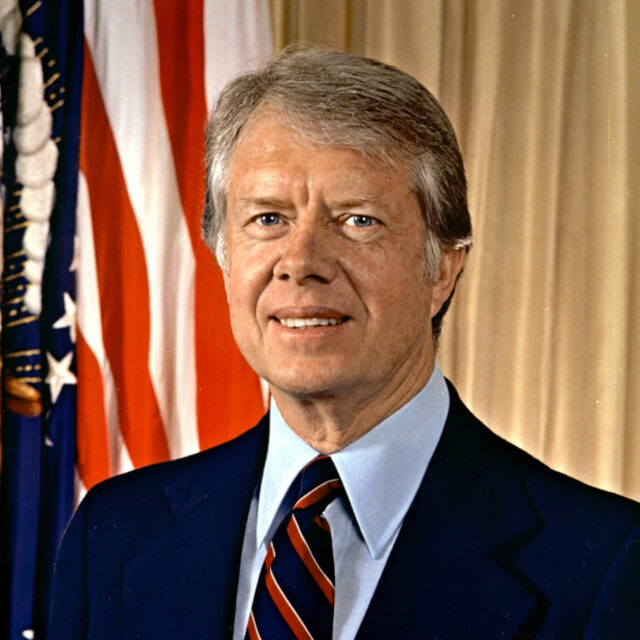
Former US President Carter to receive hospice care

Official portrait of former US President Jimmy Carter / US Government via Wikipedia

FORMER US President Jimmy Carter has decided to receive hospice care and “spend his remaining time at home with his family” instead of additional medical intervention, the Carter Center said on Saturday.

Mr. Carter, 98, who has lived longer after leaving the White House than any former president in US history, was a Democrat who served from January 1977 to January 1981.

“He has the full support of his family and his medical team. The Carter family asks for privacy during this time and is grateful for the concern shown by his many admirers,” the center said in a statement.

In recent years, the Georgia native suffered from several health issues including melanoma that spread to his liver and brain, although he had responded well to treatment he received.

The former peanut farmer’s rocky four years at the helm of the country were marred by economic woes at home and the Iran hostage crisis that ended just after he left office. But Carter also played a central role in brokering the Camp David accords that led to the landmark Egypt-Israeli peace treaty.

He was swept from office in an electoral landslide in 1980 as voters embraced Republican challenger Ronald Reagan, the former actor and California governor.

However, Mr. Carter rehabilitated his legacy as he worked energetically for decades on humanitarian causes.

He was awarded the Nobel Peace Prize in 2002 in recognition of his “untiring effort to find peaceful solutions to international conflicts, to advance democracy and human rights, and to promote economic and social development.”

He could also often be seen, hammer in hand, helping to build affordable houses as a volunteer for Habitat for Humanity.

Mr. Carter and his wife Rosalynn, whom he married in 1946, have four children. — Reuters

Blinken warns China’s Wang Yi against aiding Russia in Ukraine

REUTERS

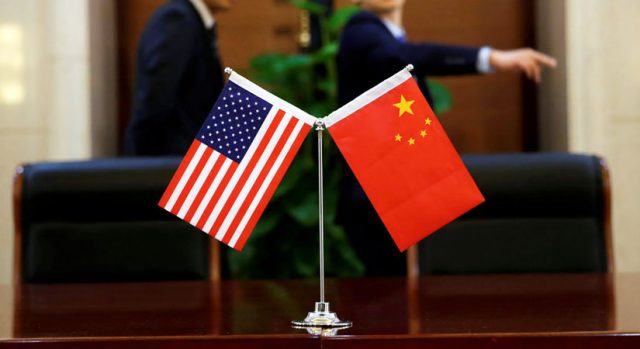
MUNICH — US Secretary of State Antony Blinken on Saturday warned top Chinese diplomat Wang Yi of consequences should China provide material support to Russia’s invasion of Ukraine, saying in an interview after the two met that Washington was concerned Beijing was considering supplying weapons to Moscow.

The top diplomats of the two superpowers met at an undisclosed location on the sidelines of a global security conference in Munich, just hours after Mr. Wang scolded Washington as “hysterical” in a running dispute over the US downing of a suspected Chinese spy balloon.

Relations between the two countries have been fraught since Washington said China flew a spy balloon over the continental US before American fighter jets shot it down on President Joseph R. Biden’s orders. The dispute also came at a time when the West is closely watching Beijing’s response to the Ukraine war.

In an interview to be aired on Sunday morning on NBC News’ Meet the Press with Chuck Todd, Mr. Blinken said the United States was very concerned that China is considering providing lethal support to Russia and that he made clear to Mr. Wang that “would have serious consequences in our relationship.”

“There are various kinds of lethal assistance that they are at least contemplating providing, to include weapons,” Mr. Blinken said, adding that Washington would soon release more details.

Mr. Wang told Mr. Blinken the United States must “face up to and resolve the damage” to bilateral relations “caused by the indiscriminate use of force,” according to a brief statement on Sunday by China’s Ministry of Foreign Affairs.

Mr. Wang was referring to the recent shootdown of what the United States called a spy balloon but Beijing said was a weather-monitoring craft.

Speaking to reporters in a briefing call, a senior State Department official said China was trying to “have it both ways” by claiming it wants to contribute to peace and stability but at the same time taking “concerning” steps to support Russia’s invasion of Ukraine.

Mr. Blinken “was quite blunt in warning about the implications and consequences of China providing material support to Russia or assisting Russia with systematic sanctions evasion,” the senior official said, speaking on the condition of anonymity.

Russia and China signed a “no limits” partnership last February shortly before Russian forces invaded Ukraine, and their economic links have boomed as Moscow’s connections with the West have shrivelled.

The West has been wary of China’s response to the Ukraine war, with some warning that a Russian victory would color China’s actions toward Taiwan. China has refrained from condemning the war or calling it an “invasion.”

Earlier, speaking at a panel at the conference, Mr. Wang reiterated a call for dialogue and suggested European countries “think calmly” about how to end the war.

He also said there were “some forces that seemingly don’t want negotiations to succeed, or for the war to end soon,” without specifying to whom he was referring.

NO APOLOGY
Mr. Blinken and Mr. Wang’s meeting came hours after the top Chinese diplomat took a swipe at the United States, accusing it of violating international norms with “hysterical” behavior by shooting down the balloon.

The balloon’s flight this month over US territory triggered an uproar in Washington and prompted Mr. Blinken to postpone a planned visit to Beijing. That Feb. 5-6 trip would have been the first by a US secretary of state to China in five years and was seen by both sides as an opportunity to stabilize increasingly fraught ties.

“To have dispatched an advanced fighter jet to shoot down a balloon with a missile, such behavior is unbelievable, almost hysterical,” Mr. Wang said.

“There are so many balloons all over the world, and various countries have them. So, is the United States going to shoot all of them down?” he said.

China reacted angrily when the US military downed the 200-foot (60-meter) balloon on Feb. 4, saying it was for monitoring weather conditions and had blown off course. Washington said it was clearly a surveillance balloon with a massive undercarriage holding electronics.

Questions had swirled as to whether Mr. Blinken and Mr. Wang would use the conference in Munich as a chance to reengage in-person, and the State Department only confirmed the hour-long meeting after it had ended.

In the interview with NBC, Mr. Blinken said Mr. Wang did not apologize for the balloon’s flight.

“I told him quite simply that that was unacceptable and can never happen again,” Mr. Blinken said, referring to the balloon’s violation of US air space.

“There was no apology,” he said, adding that he had not discussed with Mr. Wang rescheduling his trip to China.

Washington had been hoping to put a “floor” under relations that hit a dangerous low in August with China’s reaction to a Taiwan visit by then-US House of Representatives Speaker Nancy Pelosi.

But Craig Singleton, a China expert at the Foundation for Defense of Democracies in Washington, said while Mr. Wang’s comments at the conference were likely aimed at deflecting embarrassment over the balloon incident, the lack of a strong response from Washington “increases China’s appetite for risk in future disputes.”

“Blinken and Wang’s meeting will not change the downward trajectory in the US-China relationship. It’s clear there is almost no trust between the two sides,” Mr. Singleton said. — Reuters

Pepsico recalls some Starbucks vanilla frappuccino drinks in the US

A Starbucks logo is seen at a Starbucks coffee shop in Seoul, South Korea, March 7, 2016. — REUTERS

PEPSICO, INC. recalled more than 25,000 cases of Starbucks chilled coffee drink after glass was found in some of the bottles, the US Food and Drug Administration said in a notice.

The voluntary recall, which was initiated on Jan. 28, covers more than 300,000 bottles of the Starbucks frappuccino vanilla chilled coffee drink, the FDA said.

The FDA classified this as a Class 2 recall, which means the “product may cause temporary or medically reversible adverse health consequences or where the probability of serious adverse health consequences is remote,” according the agency’s website.

Distributed nationwide by PepsiCo, the bottles with expiration dates Mar. 8th, May 29th, Jun. 4th and 10th, have been affected, according to the notice.

Pepsico did not immediately respond to a Reuters request for comment on a Saturday. — Reuters

Binance’s US partner confirms firm run by CEO Zhao

LONDON — The US partner of global cryptocurrency exchange Binance has confirmed that a trading firm managed by Binance Chief Executive Officer (CEO) Changpeng Zhao operated as a market maker on its platform.

Reuters reported on Thursday, citing banking records and company messages, that Binance had secret access to a bank account belonging to its purportedly independent US partner and transferred large sums of money from the account to the trading firm, Merit Peak Ltd.

“While there was a market making firm named Merit Peak that operated on the Binance.US platform, it stopped all activity on the platform in 2021,” Binance.US said in a tweet on Thursday after the Reuters story was published. It did not elaborate on when in 2021 the activity ceased, or comment on Zhao’s role at the trading firm.

The global Binance exchange is not licensed to operate in the United States but the transfers to Merit Peak revealed by Reuters suggest that Binance controlled the finances of Binance.US, despite saying publicly that the American entity is “fully independent” and operates as its “US partner.”

Binance transferred over $400 million from the account at California-based Silvergate Bank to Merit Peak between January and March of 2021, Reuters reported on Thursday.

Before that story’s publication, Binance.US had told Reuters that “Merit Peak is neither trading nor providing any kind of services on the Binance.US platform,” without giving further details.

Binance.US’s executives were concerned by the outflows from the Silvergate account to Merit Peak because the transfers were taking place without their knowledge, according to the company messages reviewed by Reuters.

A spokesperson for the global Binance exchange, which did not respond to Reuters’ questions for the story on Thursday, told crypto news outlet CoinDesk that the transfers were “a Binance.US issue.”

Mr. Zhao, the Binance CEO, said on Friday that the global exchange has pulled back on potential investments in the United States, a move that comes amid growing scrutiny by US regulators of crypto companies so far this year.

In particular, the activities of crypto platforms’ market makers – firms that typically buy and sell assets at exchanges to deepen trading volumes — have drawn regulatory and political focus since the collapse of major exchange FTX in November.

Regulators are concerned that some market makers have received undisclosed special treatment from crypto exchanges that may disadvantage customers.

The US Securities and Exchange Commission accused FTX founder Sam Bankman-Fried in December of granting “special privileges” to his trading firm Alameda Research, allowing him to siphon off billions of dollars in FTX customer money. Mr. Bankman-Fried has pleaded not guilty.

“Something fishy is going on here that clearly doesn’t pass the smell test,” US Senator Roger Marshall told Reuters. “Congress needs answers, and Binance.US and Silvergate are obligated to give them to us.”

TREMENDOUS BURDEN’
Mr. Zhao has not directly addressed the report, but on Friday he tweeted, “Remember 4.,” tagging a previous post in which he listed his “Do’s and Don’ts” for 2023. The fourth item on the list was “Ignore FUD, fake news, attacks,” using an acronym for “fear, uncertainty and doubt” often used in crypto in relation to news perceived as negative.

The day before Reuters’ article, Binance’s chief strategy officer, Patrick Hillmann, told the Wall Street Journal and Bloomberg that Binance expected to pay penalties to resolve US investigations into the company. Mr. Hillmann said Binance had been built by software engineers unfamiliar with laws and rules on bribery and corruption, money laundering and economic sanctions, but earlier “gaps” in its regulatory compliance had since been closed.

“It’s a tremendous burden,” Mr. Hillmann told Bloomberg. “We just want to put it behind us.”

Mr. Hillmann did not respond to detailed questions Reuters sent him for the article that was published on Thursday.

The bankruptcy in 2022 of a string of major crypto firms has also stoked calls from politicians for greater clarity on how regulators assess ties between US banking and the cryptocurrency sector.

In December, US senators Elizabeth Warren and Tina Smith wrote to top financial regulators including US Federal Reserve Chair Jerome Powell, asking about their assessment of the risks to banks and the banking system stemming from exposure to crypto. The letter cited Silvergate Capital Corp. as among the banks that “relied heavily on their crypto customers.”

Shares in Silvergate Capital Corp., Silvergate Bank’s parent company, closed 4.1% higher on Friday. They fell sharply on the Reuters report on Thursday, losing more than 22%. They have lost around 90% of their value since hitting an all-time high in November 2021. — Reuters

PHL households with ‘never-married’ individuals at nearly 40% in 2020 — PSA

PHILIPPINE STAR/ WALTER BOLLOZOS

The Philippine Statistics Authority (PSA) said nearly 40% of households in 2020 had members who were never married.

Household members were polled based on their marital status, the PSA said in its report released on Thursday.

Based on the 2020 Census of Population and Housing (CPH), the country’s household population in 2020 was 108.67 million, with 86.33 million individuals aged 10 and up.

Of the total 86.33 million individuals, 34.26 million or 39.7% were single or never married by marital status, while 33.87 million individuals or 39.2% were married.

Marital status, as defined by the report, refers to the personal status of an individual based on the marriage laws or customs of the country and is synonymous with civil status.

Compared with 2015, household population aged 10 years and older numbered 78.92 million. Of these, single or never-married individuals were 34.54 million or 43.8% of the total while married persons were 32.35 million or 41%.

In 2020, common-law or live-in, a marital arrangement where individuals live consensually with their partners without the benefit of a legal marriage, numbered 12.66 million or 14.7% of the total while widowed persons were 3.88 million (4.5%).

Individuals whose marital status was “divorced” was estimated at 1.64 million or 1.9% of the total. This category of marital status means that an individual is permanently separated from their spouse, legally or through mutual consent and is valid for those whose marriage has been annulled or dissolved.

Among those who were never married in 2020 included 18.54 million males (54.1%) and 15.72 million females (45.9%).

Males made up the majority of those who were married and those who had live-in marital arrangements, accounting for 16.97 million (50.1%) and 6.36 million (50.2%), respectively.

Females outnumbered males in terms of marital status, with 2.95 million (76%) being widowed and 988,943 or 60.1% being divorced.

The Bangsamoro region in Mindanao had the highest number of individuals who were never married, at 1.78 million or 50.5% of the total. Bicol came in second with two million or 42.7% of the total, followed by Zamboanga Peninsula with 1.23 million or 41% of the total.

For married individuals, the Cagayan Valley region had the largest number with 1.42 million or 47.6% of the total population, followed by the Cordillera Administrative Region and Soccsksargen with 656,315 (44.9%) and 1.50 million (44.3%), respectively.

Metro Manila had the most live-in marital arrangements, with 2.19 million or 20.1% of the total. Likewise, divorced individuals were the most numerous, at 283,403 or 2.6% of the total.

Individuals whose marital status was categorized as widowed were prevalent in the Ilocos region, with 239,204 or 5.5% of the total.

By age group among married individuals, those aged 40 to 44 logged the highest, at 13.2%, followed by ages 35 to 39 at 13.1%, and 30 to 34 at 12.1%. Collectively, these age groups accounted for 38.4% of the total.

According to the PSA, among married males, the highest proportion was reported in the age range 40 to 44 years with 6.7%, while married females had the higher proportion in the age groups between 35 to 39 years, with 6.6%. — Abigail Marie P. Yraola

An emerging opportunity in new normal learning

Fulfill your passion for education as Kumon Franchisee-Instructor

Quality education is an essential that children deserve to easily access and avail. Numerous educational programs and initiatives see this tremendous demand. Yet, Kumon, now with 27 years of service in the Philippines, sets itself apart with its capabilities in honing not only the academic skills of students but also the educational careers of instructors.

One of the leading educational franchises globally, Kumon continues to make an impact in the industry — from starting as a Math and Reading program in Japan to expanding into a well-known educational program that helps develop children’s academic abilities worldwide.

Even in the midst of the COVID-19 pandemic, which drastically impacted people’s routines and preferences, including how classes and other learning activities were performed, Kumon was able to adapt and embrace digital transformation. Kumon quickly shifted to online classes with their students using their preferred application, whether it’s Zoom, Messenger, or Google Meet. Moreover, the franchise applications shifted online as well, with the franchise orientation, test and interview, and training all taking place in online sessions via Zoom, making sure that acquiring franchisees won’t stop even during the pandemic.

This transformation is seen to shape the new normal of learning as it turns into hybrid, allowing learners to develop their academic skills whether face-to-face or online. Online, learners will have to complete Kumon worksheets as their daily tasks, and they also participate in scheduled one-on-one online sessions with a Kumon Instructor to complete the worksheets. Under a limited face-to-face setup, meanwhile, learners will complete their daily tasks, but the only difference is that they will be doing so at Kumon centers based on their schedule; and Kumon Instructors will mentor learners while following health protocols.

Becoming a franchisee-instructor

The new normal in learning is also providing an opportunity for educators and even non-educators to venture their own learning center business and equip the next generation with the learning skills they need. Kumon is opening such paths as it creates employment opportunities and develops a career path for aspiring franchisee-instructors who want to live out their passion for teaching children.

At Kumon, they have a chance to deal with children of different ages with different learning situations and abilities, which fulfills their passion for teaching as they provide individualized instruction that suits each child’s learning abilities and will help each child reach his or her full potential.

Living up to Kumon’s standards as a leading educational franchise, franchisee-instructors are expected to have enthusiasm and passion for teaching, excellent interpersonal and adaptability skills, and a willingness to commit full-time to Kumon.

Becoming a Kumon Franchisee-Instructor not only teaches but also provides the best learning experience to every learner. Thus, Kumon ensures that its instructors develop the right skills and abilities through comprehensive training sessions; regular consultations with area development managers; the opportunity to participate in local and international conferences, seminars and training; as well as marketing support to further develop their instructional and management skills.

In addition, Kumon is looking for franchisee-instructors who are preferably female, between 25 to 45 years of age, college or university graduates, have good Math and English skills (which will be examined on the date of the orientation), and holds Filipino citizenship.

Begin fulfilling your passion for educating with Kumon. Apply for a franchise at https://ph.kumonglobal.com/openkumoncenter/.


Spotlight is BusinessWorld’s sponsored section that allows advertisers to amplify their brand and connect with BusinessWorld’s audience by enabling them to publish their stories directly on the BusinessWorld Web site. For more information, send an email to online@bworldonline.com.

Join us on Viber at https://bit.ly/3hv6bLA to get more updates and subscribe to BusinessWorld’s titles and get exclusive content through www.bworld-x.com.

BSP sees 25 or 50 bps rate hike in March

REUTERS

The Philippine central bank on Friday flagged a 25 or 50 basis points rate hike at its next meeting, with inflation as the primary concern, its governor said in television interviews.

“The choice is really between 25 or 50 (basis points) in the next meeting, unless we see an actual negative month-on-month inflation,” Bangko Sentral ng Pilipinas (BSP) Governor Felipe M. Medalla told Bloomberg TV.

The central bank is open to more hikes beyond 50 basis points if there is a need for it and depending on data, he said.

Inflation, running at a 14-year high of 8.7% in January, is the BSP’s primary concern, with interest rate hikes meant to increase the chances of a lower than 4% year-on-year inflation by the end of 2023, Medalla told CNBC Asia TV.

The central bank raised its benchmark interest rate by 50 basis points on Thursday, at its first rate-setting meeting this year, and said it was difficult to rule out needing a third or fourth increase.

Monetary authorities, which have raised rates eight times for a total of 400 basis points since last year, will next meet on March 23. — Reuters

Microsoft-backed OpenAI to let users customize ChatGPT

SAN FRANCISCO – OpenAI, the startup behind ChatGPT, on Thursday said it is developing an upgrade to its viral chatbot that users can customize, as it works to address concerns about bias in artificial intelligence.

The San Francisco-based startup, which Microsoft Corp. has funded and used to power its latest technology, said it has worked to mitigate political and other biases but also wanted to accommodate more diverse views.

“This will mean allowing system outputs that other people (ourselves included) may strongly disagree with,” it said in a blog post, offering customization as a way forward. Still, there will “always be some bounds on system behavior.”

ChatGPT, released in November last year, has sparked frenzied interest in the technology behind it called generative AI, which is used to produce answers mimicking human speech that have dazzled people.

The news from the startup comes the same week that some media outlets have pointed out that answers from Microsoft’s new Bing search engine, powered by OpenAI, are potentially dangerous and that the technology may not be ready for prime time.

How technology companies set guardrails for this nascent technology is a key focus area for companies in the generative AI space with which they’re still wrestling. Microsoft said Wednesday that user feedback was helping it improve Bing before a wider rollout, learning for instance that its AI chatbot can be “provoked” to give responses it did not intend.

OpenAI said in the blog post that ChatGPT’s answers are first trained on large text datasets available on the Internet. As a second step, humans review a smaller dataset, and are given guidelines for what to do in different situations.

For example, in the case that a user requests content that is adult, violent, or contains hate speech, the human reviewer should direct ChatGPT to answer with something like “I can’t answer that.”

If asked about a controversial topic, the reviewers should allow ChatGPT to answer the question, but offer to describe viewpoints of people and movements, instead of trying to “take the correct viewpoint on these complex topics,” the company explained in an excerpt of its guidelines for the software. — Reuters

Moderna flu vaccine delivers mixed results in trial, shares fall

Moderna Inc. on Thursday said its closely watched experimental messenger RNA-based influenza vaccine generated a strong immune response against A strains of the flu but failed to show it was at least as effective as an approved vaccine versus less prevalent influenza B.

The resultsdashed investor hopes that the company might plug its COVID franchise decline, sending Moderna’s shares down more than 6% in after-hours trading.

Moderna, whose only marketed product is its COVID-19 shot, has high hopes for its flu vaccine and aims to grab large portions of the respiratory syncytial virus (RSV) and seasonal flu markets with new mRNA vaccines.

The company said its vaccine, called mRNA-1010, generated a stronger immune response for the A/H3N2 and A/H1N1 strains than the marketed vaccine it was tested against in a trial of 6,102 adults aged 18 and over across Argentina, Australia, Colombia, Panama and the Philippines during flu season there.

It failed to meet its goal of non-inferiority compared to the conventional vaccine for the B/Victoria and B/Yamagata-lineage strains, the drugmaker said.

Cowen analyst Tyler Van Buren said investors had hoped Moderna would replace its COVID revenue with RSV and flu vaccine income, especially after it delivered positive RSV vaccine efficacy results in January.

“But to fill that big COVID decline, you need RSV and flu. The efficacy results could tell a different story when they come out, but there was no doubt that the most recent vaccine data was a mixed bag,” he said.

He said physicians and patients might be put off by Moderna’s flu vaccine’s results for Influenza B and the high rate of side effects.

The US company said it has already updated mRNA-1010 in a way it believes will improve immune responses against Influenza B and will test those changes.

“We have always said our goal is to produce a flu vaccine, and then to iterate it, and to fine tune it over time to really make it exceptional,” Chief Medical Officer Paul Burton said in an interview.

Dr. David Boulware, an infectious disease specialist at the University of Minnesota Medical School, said he was not overly concerned about the immune response versus Influenza B.

Boulware said the immune response against the A strains demonstrated that the vaccine probably worked and Moderna’s tweaks to the vaccine are likely to improve the response against the B strains.

“I consider it pretty positive,” he said.

Seventy percent of those who received Moderna’s shot reported mostly mild adverse reactions compared to 48% for the conventional flu vaccine. Pain and swelling at the injection site as well as headaches and fatigue were among the most commonly reported side effects.

The company also has an ongoing late-stage efficacy study on the mRNA-1010 flu vaccine, which could have data within weeks.

If that trial reads out soon, Burton said he hopes to have the data prepared and sent to regulators in the first half of this year, which could allow them to review it as soon as late 2023 or early 2024.

The flu, an infection of the nose, throat and lungs, kills 290,000 to 650,000 people worldwide annually. — Reuters

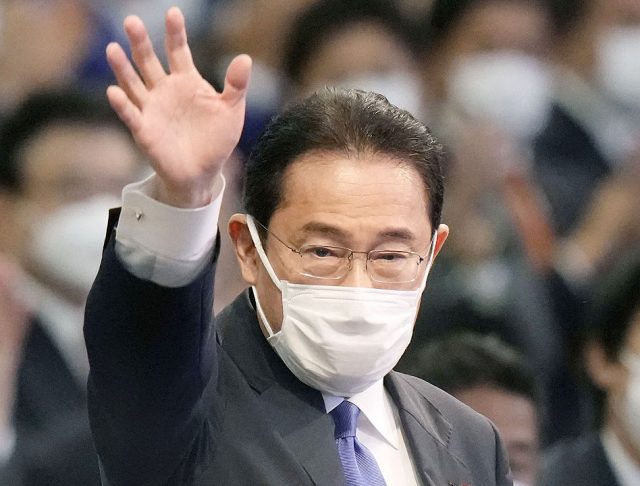
With Japan’s new central bank boss, Kishida bids farewell to Abenomics

Japanese Prime Minister Fumio Kishida — KYODO/VIA REUTERS

TOKYO, Feb 17 (Reuters) – For Prime Minister Fumio Kishida, Japan’s next central bank chief had to symbolize a departure from the unconventional policies of his predecessor Shinzo Abe – but without angering pro-growth lawmakers of Abe’s powerful political faction.

The tricky task of steering the Bank of Japan (BOJ) out of years of ultra-low interest rates without upending markets required the skill to read markets and clearly communicate policy intentions, both domestically and internationally.

Kazuo Ueda, a 71-year-old university professor who has kept a low profile despite strong credentials as a monetary policy expert, ticked some important boxes.

He was branded neither an explicit dove nor hawk. While he was not even on the list of dark horse candidates floated by the media, Ueda was well known in global central bank circles.

Having an academic helm the BOJ is unprecedented in Japan, where the job traditionally rotates between a central banker and an official from the Ministry of Finance (MOF).

But the idea found traction in Mr. Kishida’s administration, particularly as attempts to convince incumbent deputy governor Masayoshi Amamiya, considered the top contender for the job, failed.

The account of how Mr. Kishida chose the new BOJ leadership is based on interviews and conversations with 15 sources, including former and incumbent central bank and government officials, ruling camp lawmakers, aides of Mr. Kishida, private-sector bankers and analysts closely watching Japanese politics and policy.

Most of them spoke on condition of anonymity as they were not authorized to speak publicly, or declined to comment on record due to the sensitivity of the matter.

The search for a new chief began mid-last year, when Mr. Kishida and his aides drafted a list including a range of candidates from the BOJ, MOF, private sector and academia.

Other academics in the list included Columbia University professor Takatoshi Ito, a close associate of Kuroda, and University of Tokyo academic Tsutomu Watanabe, known for his research on Japan’s deflation.

The BOJ lobbied hard for a career central banker to take the job after Kuroda, a former MOF executive, presided for a rare second, five-year term that ends in April.

The bank’s preferred choices were incumbent deputy governor Amamiya, as well as former deputies Hiroshi Nakaso and Hirohide Yamaguchi, given their deep knowledge on monetary policy.

Many finance ministry officials favored Amamiya, who for decades has cultivated good ties with the government.

But Amamiya had made clear to associates from the outset he had no intention of taking the job, on the view he would not be able to dismantle the stimulus he helped Kuroda create, sources say.

“If he becomes governor, he would have had to spend five years contradicting what he said in the past decade,” said a former MOF executive who knows Amamiya well. “That’s quite hard.”

A commercial bank executive who met him late last year recalled how Amamiya, when asked, flatly denied the chance of becoming governor. “It struck me how he very strongly ruled out the possibility,” the executive said.

Amamiya, in fact, talked about how the BOJ needed to be like the US Federal Reserve, where academics with monetary policy expertise take the helm and guide policy with support from staff, say people who had interactions with him.

Mr. Kishida’s administration also wanted someone who would signal a departure from Kuroda’s monetary experiment that was a key part of his predecessor’s “Abenomics” stimulus policies, and became deeply unpopular with the public for failing to broadly distribute wealth.

But choosing a more hawkish policymaker like Nakaso or Yamaguchi would have drawn discontent from reflationist-minded lawmakers from Mr. Abe’s powerful faction within the ruling Liberal Democratic Party (LDP).

That was too risky for Mr. Kishida, whose own faction is a minority and relies on support from more powerful groups within the LDP.

The choice of Kuroda’s successor has been closely watched by investors and the wider public as an indication of how soon the BOJ will shift away from extremely low interest rates, a transition that could have huge ramifications for global financial markets.

“The prime minister probably wants a fresh face. But he also needs to avoid giving the impression that there will be a big change to ultra-loose policy,” ruling party heavyweight Akira Amari told Reuters days before news of Ueda’s choice broke.

When asked in parliament on Wednesday by an opposition lawmaker, Mr. Kishida said he could not comment on how he reached the decision, and when he finalised it. He also declined to comment on whether the administration sounded out Amamiya for the job.

Mr. Kishida, however, said he had “exchanged views” with many people since last year in selecting the new BOJ leadership.

The BOJ declined to comment for this story, including on questions about Amamiya’s consideration of the role. Japan’s top government spokesperson Hirokazu Matsuno declined to comment, when asked on Thursday whether the government sounded out Amamiya for the top BOJ job.

Matsuno said he hoped the BOJ works closely with the government and guides monetary policy flexibly, when asked whether Ueda’s appointment could lead to a retreat from Abenomics.

POLITICAL BALANCING ACT

Thanks in part to Amamiya’s recommendation, Ueda remained on a short list and eventually became the top choice in a process that was disclosed to only a handful of people.

On Feb. 8, Mr. Kishida met party heavyweights Toshimitsu Motegi and Taro Aso for dinner at a high-end Japanese restaurant near the premier’s official Tokyo residence.

While Mr. Kishida did not reveal the name of his preferred choice, the BOJ succession was among topics discussed, said two sources with knowledge of the matter.

“The government needed someone who understood monetary policy both in terms of practice and theory, and can interact with an inner circle of top central bankers,” one of the people said. “That turned out to be Mr. Ueda.”

The fact Ueda, who holds a PhD from the Massachusetts Institute of Technology and studied under prominent central banker Stanley Fischer, kept a low political profile and avoided being branded as someone in favor or against Abenomics, served him well.

While he warned of the rising cost of the BOJ’s yield control policy, Ueda has called for the need to keep monetary policy loose to ensure Japan stably achieves the bank’s 2% inflation target.

The view meshed with that of Kishida’s administration, which wants the BOJ to address the side-effects of yield curve control but not rush into tightening monetary policy.

“Amamiya was labelled as close to Abenomics. By contrast, Ueda has a fresh image and gives the BOJ a freer hand in shifting away from Abenomics,” said a ruling party heavyweight belonging to Abe’s faction.

Political commentator Atsuo Ito sees Kishida’s decision as symbolic of the way his administration gives due consideration to what lawmakers of Abe’s pro-growth faction think.

“For Kishida, this choice was about getting the political balance right,” he said.

NEW POWER DYNAMICS

Mr. Kishida’s choice was welcomed by many BOJ policymakers, as Ueda was no stranger to the institution and a quiet cheer-leader of its pre-Kuroda conventional policies.

During his seven-year stint as a BOJ board member, Ueda worked closely with Amamiya inventing new tools to combat a banking crisis and debilitating deflation.

Even after retiring as board member, Ueda kept close ties with the BOJ by serving as an adviser at its think tank and attending various international central bank forums.

“He’s something of a legend in Japanese central banking,” said a BOJ official of Ueda. “He stood out as someone special among the many members who served at its board.”

Knowing they would have little influence on Mr. Kishida’s final pick, BOJ officials had a backup plan in case the new governor was someone from outside the institution.

That was to re-appoint BOJ executive director Shinichi Uchida for a rare, second four-year term in April last year to ensure he would slide into the deputy governor post.

That would provide the new leadership with the kind of knowledge of the BOJ’s inner bureaucracy for which Amamiya was known.

Together with Ryozo Himino, the other nominated deputy and a former banking regulator, the three should have the right combination of theoretical, industry and technocratic expertise to unwind Kuroda-era policy, say sources familiar with the BOJ’s thinking.

However, none of the three are seen as having the political savviness of Amamiya, who could read the political mood and work behind the scenes to sound out the administration’s policy views.

That could work as a disadvantage if the economy takes a turn for the worse and the BOJ again comes under political heat.

Already, Japan faces headwinds from slowing global growth, casting doubt on whether wages will rise enough to keep inflation sustainably around the BOJ’s 2% target and justify phasing out stimulus.

“If the BOJ actually moves toward normalizing monetary policy, there will surely be some political tension because the reflationist-minded lawmakers will push back,” said Atsuo Ito.

“A policy reversal will probably take quite a long time.” — Reuters