Home Blog Page 5211

Taking a five-step approach to decarbonization in a downturn

COMPANIES face geopolitical upheavals, supply chain disruption, inflation, and the threat of recession. Despite this perfect storm, their commitment to decarbonization hasn’t fundamentally wavered. The number of companies embracing science-based targets is continuing to grow at a rapid pace.

However, as they make pledges to reduce their carbon footprint, executives need to acknowledge the ways the environment for decarbonization and climate has quickly changed.

Setting ambitions has proven to be the easy part, but meeting those goals is difficult, with 33% of companies missing the absolute scope 1 and 2 targets that expired in 2021. Companies now find themselves needing to look beyond setting ambitions to tackling the real challenges of decarbonizing and finding ways to monetize it with customers.

Global policy has become more prominent and more complex. Some governments are acting more boldly to make the carbon transition a source of competitive advantage rather than risk losing the green business to another country. However, many governments also have had to make difficult near-term energy policy decisions, in some cases choosing between a looming climate disaster, keeping their people fed, and keeping energy costs from breaking the backs of the population.

As the effects of climate change quickly become more evident, so does the need to not only mitigate by reducing emissions, but also adapt by adjusting to a changing climate. Leading companies have stepped up their physical risks analytics and adapted their strategy, operations, and supply chain.

And as developing economies and underserved communities struggle with rising energy and food prices, companies face the reality that the carbon transition needs to be addressed in a way that is fair to all — a just transition. This means ensuring that energy is as low carbon and affordable as possible.

These changes come at a time when companies are devising and implementing downturn strategies and require difficult new choices. They need to address cost in an inflationary environment, reset supply chains for resilience, and scrutinize strategic investment in the face of uncertainty.

Each of these can be tackled with carbon and climate in mind. In cost reduction, for example, the best companies will deal with cost and carbon simultaneously to emerge from the downturn with a more competitive cost and carbon base. There can be an overlap between cutting cost and cutting carbon: less material, less energy, and less waste all equal less cost — and less carbon.

As companies reimagine their supply chains for greater resilience, winners will consider climate physical risks. And while some companies might view decarbonization efforts as discretionary budget items in a downturn, the best will maintain those investments, even optimizing them in the face of increased cost scrutiny.

It will take a combination of vision and pragmatism for companies to reach their decarbonization goals and create value in the process. Here are the five areas that companies must get right to succeed.

1. Strategic adaptation. Companies don’t need more climate scenarios but, rather, clarity on the relevant ones. Most important, they need to identify the signposts that will indicate what’s coming next. This is especially vital given the recently accelerated pace of policy changes and advances in technology. Historically, scenarios and signposts were focused on climate transition risks, such as changes in economics and market demand. Now, that is extending to climate physical scenarios — changes to weather patterns and business resilience. Especially in the current downturn, and with climate change intensifying, winners will adopt a living strategy, taking steps to deliver results today, such as improving energy efficiency and optimizing supply chains, while investing in next-generation solutions like hydrogen.

2. Investor and lender resonance. As companies face sharpened expectations on the part of shareholders and lenders, it will be critical for them to double down on proof points to clearly explain how a more profitable business in the medium-to-long term is also a more sustainable one. That means showing how they’ve started to reduce carbon in a cost-effective manner while also making the business resilient to transition and physical risks. They’ll also be required to show that they have the options to get to net zero and how they will be flexible based on evolving regulation and technology.

3. “Customer-back” decarbonization. Companies that are most successful in their climate transitions start decarbonization with the customer in mind and work backward across offerings, operations, and the supply chain. More than ever, it will be critical to clearly understand the sustainability priorities of customers who are navigating a downturn and are very focused on costs. Not all customers are moving at the same pace, so targeting the right ones based on their carbon ambition, progress, and internal carbon price used is the best way to achieve the right green premium.

4. Partnerships for results. Carbon transition is a problem far too big to be solved by any company on its own, and companies need to engage the wider ecosystem of customers, suppliers, and peers up and down the value chain. For example, when building the hydrogen economy, many players will need to come together, everyone from renewable energy generators to electrolyzers producers to offtakers. Policymakers should be part of these partnerships, as corporations can offer solutions that regulators may not have considered.

5. Empowered green organization from top to bottom. Top management may be fully convinced of the need for aggressive decarbonization, and new recruits often have chosen an employer based on its green credentials. Yet the task of delivering on decarbonization has solidly moved into middle management, and some companies underinvest in convincing and empowering middle management to get the job done. It’s now critical to integrate decarbonization delivery into a company’s current performance management system by aligning incentives to decarbonization, by putting a price on carbon in the decisions that matter — and by providing clarity and guidance to middle management on how to resolve trade-offs.

As CEOs plot their strategy across these five areas for navigating their carbon and energy transition in a downturn, it will be easy to get diverted by unrealistic future predictions or by the naive illusion that moving to a greener business is an easy task. Climate change becomes more evident. Geopolitical risks surface. Macroeconomic challenges emerge. But companies that take an approach of visionary pragmatism will be on solid footing to navigate the changes — and outpace their less-nimble and less-prepared competitors.


Torsten Lichtenau is a Bain & Company partner based in London and Yukiko Tsukamoto is a partner based in Manila.

Ukraine economy stabilizes after shock of war

UKRAINIAN hryvnia banknotes are seen in a photo illustration shot in Kiev, Aug. 6, 2014. — REUTERS

KYIV — When Russia invaded Ukraine a year ago, the shelves of the Novus supermarket chain in Kyiv quickly emptied as its supply chains — domestic and overseas — collapsed. Fresh produce became scarce and panic buying spread.

Oleksiy Panasenko, deputy director general for operations at the popular outlet, recalls how the business reeled before Novus, like many other large retail chains, managed to adapt.

“On the second day (of the war), there was already fighting on the outskirts of Kyiv,” he told Reuters. “In February and March, our shops became more than a place to buy food: they were a place to meet, to communicate; so-called islands of stability.”

And when Ukrainian troops forced Russia’s army to retreat from the capital in the spring, the retail sector and the broader economy rebounded.

Data from Ukraine’s European Business Association — which groups over 1,000 foreign and Ukrainian businesses — showed that by the end of May 47% of their members had fully restored operations and another 50% were working with some limitations.

But then missile attacks began in October, dealing Ukraine a hammer blow. Russia struck at power grids and sub-stations across the country, leading to outages during the freezing winter and hitting heavy industry hard.

The economy shrank by a third last year, the largest fall since Ukraine’s independence from the Soviet Union in 1991. Before Russia’s invasion, annual economic output had topped $200 billion.

As the war enters its second year with no sign of slowing, the challenges are formidable. Reuters canvassed seven economists whose forecasts for 2023 ranged from a sizeable — though far less dramatic — decline of 5% in gross domestic product (GDP) to a small expansion.

Access to reliable power will be a major obstacle. While many businesses are finding ways to cope with war, those that cannot run on generators alone will struggle this year, according to the economists, two government officials and executives from two private companies.

ArcelorMittal Kryvyi Rih, Ukraine’s largest steel mill, said its production was currently at about 25% of pre-war levels amid electricity blackouts.

“We see small and medium-sized businesses adapt fairly quickly to power shortages by purchasing generators, batteries, and other equipment, while infrastructure damage remains moderate,” said Olena Bilan, chief economist at Dragon Capital investment house, whose forecast was the most negative among the economists surveyed.

“If this situation persists, the fall in GDP in 2023 will not be as significant as we expect. But our forecast also envisages an end of the war’s hot phase at the end of third quarter of 2023,” said Bilan. She did not explain why Dragon expects the war will cool.

Ukraine’s central bank predicts GDP will grow by 0.3% this year, while the economy ministry forecasts 3.2% growth.

HUGE TOLL
By last summer, Ukrainian officials had already started sounding more confident about the country’s economy, after a UN-brokered grain export deal.

The agreement saved Ukraine’s agriculture, which accounted for about 12% of GDP and some 40% of overall exports before the war.

As of mid-February, Ukraine’s grain exports for the 2022-2023 season — which runs July to June — had fallen 29.3% year-on-year to 29.7 million tons.

A massive increase in military spending, including army wages, has also provided a boost to the economy, said Vitaly Vavrishchuk, head of research at ICU investment house. Ukraine spent 1.5 trillion hryvnias ($40.6 billion) on its defense sector in 2022 – equivalent to around one-third of its economic output — according to the National Security Council.

That was around five times higher than its planned pre-war defense budget.

Tens of billions of dollars in foreign assistance have poured in, both to help plug the budget deficit and arm Ukrainian forces.

But despite the positives, Ukraine is well behind where it was before the war began. And the economic toll is staggering.

The invasion destroyed schools, hospitals, ports, roads and bridges. The Kyiv School of Economics estimated the damage to infrastructure due to the war at $138 billion as of December.

Poverty rates have soared, and the budget deficit is forecast to hit $38 billion in 2023 following a collapse in tax revenues. The government is depending on Western aid to cover it — most of it from the United States and the European Union.

“Ukraine’s government took measures that helped to reduce the monthly deficit in 2023 to $3-3.5 billion, which is still a huge figure,” Finance Minister Serhiy Marchenko said, noting there was also a need for infrastructure investment to fuel a recovery.

President Volodymyr Zelensky’s government has called on donors to start planning for the massive task of reconstruction this year, though it recognizes large scale building will be difficult until some peace returns.

Between 40% and 60% of the energy sector has been damaged, according to Mr. Marchenko, who said at a recent roundtable in February that he could often hear attack drones buzzing above his house or the building of his ministry.

Business events are often held in underground shelters for security. Blackouts are regular. Novus’ Mr. Panasenko said the company lost about 30% of the stores’ opening hours in Kyiv in December and some 20% in January.

The steel sector, a key pillar of the economy, is among the hardest hit. Ukraine was the world’s 14th largest producer of steel before the war.

Two leading steel producers, Azovstal and MMK Illicha in Mariupol, were destroyed and are officially bankrupt.

Those that remain are struggling with power outages.

“Blackouts for companies like us are a big issue,” Mauro Longobardo, general director of ArcelorMittal Kryvyi Rih. The company recently started to import electricity, but the costs were high. He did not provide further details.

Ukraine’s electricity system is connected to the European grid, where prices are higher, and it has imported energy from neighboring Slovakia.

Energy deficits are not the only challenge for Arcelor.

Its warehouse in Kryviy Rih, some 400 km (250 miles)southeast of Kyiv, was hit by three Russian missiles in early December and one worker was killed, Longobardo said.

Arcelor’s mining facility in a recently liberated area was strewn with landmines and most of the related infrastructure damaged.

Logistics are another headache for the company, which used to export up to 80% of its output. Russia blocked Ukraine’s Black Sea ports and Longobardo had to work on new export routes through Poland.

Despite the challenges, Arcelor, Ukraine’s biggest foreign investor, is committed to stay.

The largest employer in Kryviy Rih, the birthplace of Mr. Zelensky, it has kept its 26,000 employees on the payroll despite a production fall. Longobardo said Arcelor would invest $130 million this year. Such plans are rare now.

The outlook for some other sectors is more positive.

Economy ministry data showed Ukraine imported 669,400 generators last year, including over 300,000 in December alone. Mr. Panasenko said 52 out of Novus’s 82 stores were already equipped with generators.

ICU’s Vavrishchuk saw the economy continuing to adapt, and sectors with high state financing would benefit the most.

But obvious security risks were deterring private investments, crucial for a robust recovery.

Ukraine has a mixed record on attracting foreign private investment. In 2021, it ranked as the second-lowest country in Europe on Transparency International’s Corruption Perceptions Index, behind only Russia.

Vavrishchuk said the country would need to enforce the rule of law, ensure transparency and fair competition.

“Participation in the post-war reconstruction could be attractive for investors,” he said. “But still we will have to address all those issues (transparency and corruption) that we have not had time to before the war began.” — Reuters

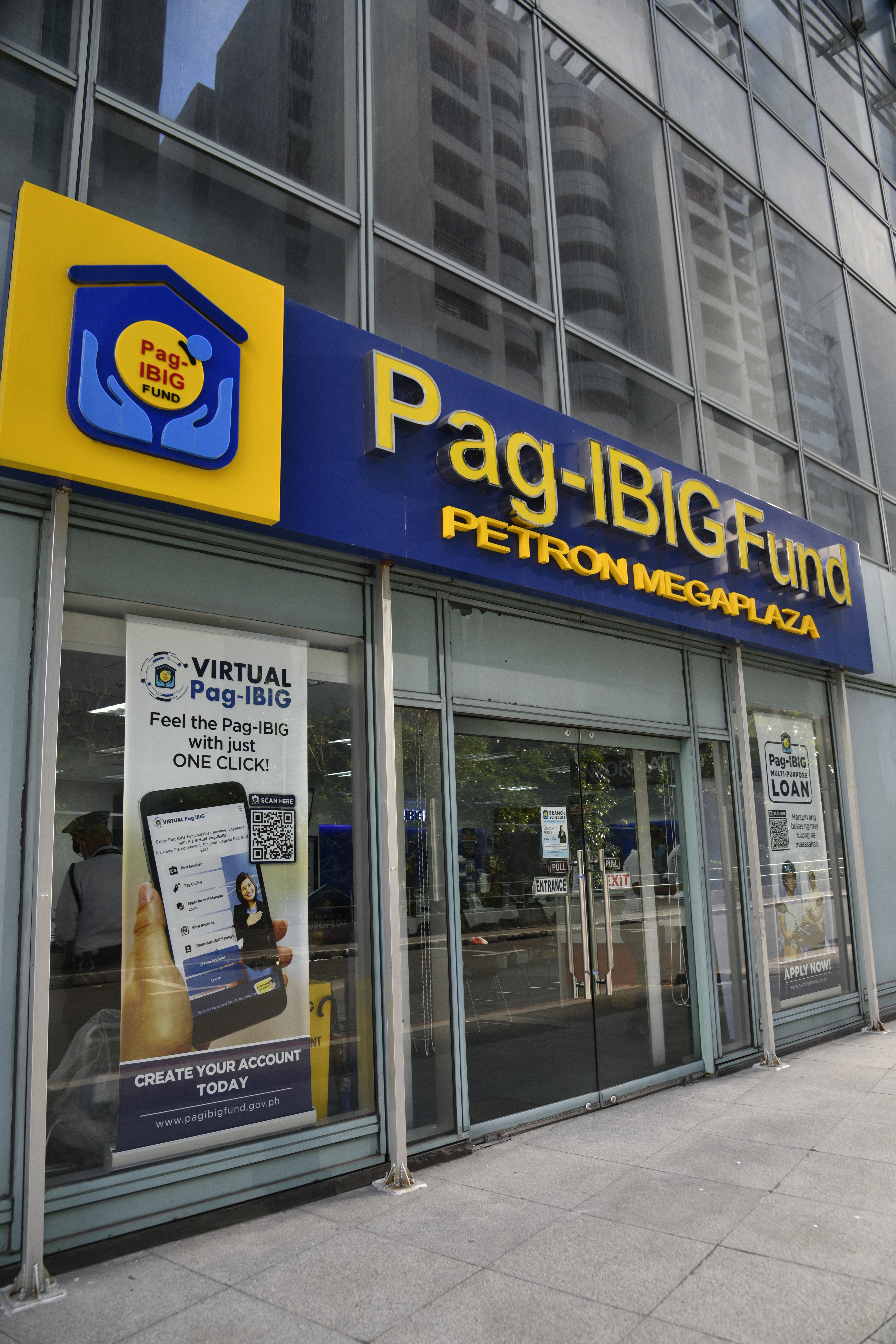
Pag-IBIG members save record-high P39.84-B under MP2, up 54% in 2022

Pag-IBIG Fund members continue to show preference in the MP2 Savings program in 2022 as total savings reached nearly P40 billion, setting yet a new record-high for the amount saved voluntarily by members under the program in a year, its top officials said on Feb. 27.

For 2022, members’ savings under the Modified Pag-IBIG 2 (MP2) Savings Program reached P39.84 billion, achieving an impressive 54% increase from the P25.95 billion collected in 2021.

“Pag-IBIG Fund has again set another record, this time in the amount saved by members under the MP2 Savings Program. This shows the unwavering trust of our members in our capability to excellently and prudently manage their hard-earned peso.  With our strong collections, we can continue to finance the loans of our members and keep our interest rates low. These are in line with our efforts of supporting the call of President Ferdinand Marcos, Jr. to provide a better life for all Filipinos,” said Secretary Jose Rizalino L. Acuzar, who heads the Department of Human Settlements and Urban Development (DHSUD) and the 11-member Pag-IBIG Fund Board of Trustees.

The MP2 Savings Program is a special voluntary savings facility of Pag-IBIG Fund that comes with a maturity period of five years. With a low entry point of P500 as minimum savings, it is designed for active Pag-IBIG Fund members who wish to save more and earn higher dividends, in addition to the mandatory Pag-IBIG Regular Savings they save every month. It provides members the option to claim the earnings of their MP2 Savings annually or compounded at the time of its maturity. The program is also open to pensioners and retirees who were once Pag-IBIG members and had at least two years worth of savings prior to retirement. Initially made available to members in 2010, the MP2 Savings has seen phenomenal growth over the past few years, as more members find it as a safe and low-risk savings facility which provides competitive returns.

Pag-IBIG Fund Chief Executive Officer Marilene C. Acosta, meanwhile, noted the increase in the total number of MP2 savers in 2022. From 750,267 in 2021, MP2 savers increased to 977,643 or 30.3% by the end of 2022.  Acosta further emphasized that the MP2 has become an instrument that has allowed more workers to save, with 86% of the agency’s total MP2 Savers having an average savings of P19,357.

“We are very happy that the MP2 Savings continues to encourage more and more Filipino workers to save. Through the program, we have made more Filipino workers appreciate the value of saving by providing them with a secure savings channel for their future goals. Our members can rest assured that we shall do our best to grow their savings and provide them the highest possible returns. That is Lingkod Pag-IBIG at work,” Acosta said.


Spotlight is BusinessWorld’s sponsored section that allows advertisers to amplify their brand and connect with BusinessWorld’s audience by enabling them to publish their stories directly on the BusinessWorld Web site. For more information, send an email to online@bworldonline.com.

Join us on Viber at https://bit.ly/3hv6bLA to get more updates and subscribe to BusinessWorld’s titles and get exclusive content through www.bworld-x.com.

US warns China against providing lethal aid for Russia’s war in Ukraine

STOCK PHOTO | Image from Pixabay

KYIV — The United States warned China of serious consequences were it to provide arms to support Russia’s invasion of Ukraine, as Kyiv’s top general visited the frontline town of Bakhmut where Ukrainian defenders were holding out against constant attacks.

Washington and its NATO allies are scrambling to dissuade China from providing military aid for Moscow’s war, making public comments on their belief that Beijing is considering providing lethal equipment possibly including drones.

Western fears of China helping to arm Russia come as Moscow’s forces struggle to make gains around key objectives in eastern Ukraine, and as Kyiv prepares a counter-offensive with advanced Western weapons including battle tanks.

“Beijing will have to make its own decisions about how it proceeds, whether it provides military assistance — but if it goes down that road it will come at real costs to China,” White House national security adviser Jake Sullivan told CNN’s State of the Union program.

While China had not moved forward in providing that aid, neither had it taken the option off the table, Mr. Sullivan said in a separate interview on ABC’s This Week program.

Beijing has refused to condemn Moscow’s attack on Ukraine, most recently at a meeting of the Group of Twenty (G20) in India on Saturday. It published a ceasefire proposal on Friday, the first anniversary of Russia’s invasion of Ukraine, but the offer was met with skepticism among Ukraine’s Western allies.

“When I hear reports — and I don’t know whether they are true — according to which China may be planning to supply kamikaze drones to Russia while at the same time presenting a peace plan, then I suggest we judge China by its actions and not its words,” German Defense Minister Boris Pistorius told German public broadcaster Deutschlandfunk on Sunday.

CIA Director William Burns also weighed in regarding China in an interview aired on Sunday, saying the US intelligence agency was “confident that the Chinese leadership is considering the provision of lethal equipment”.

“We also don’t see that a final decision has been made yet, and we don’t see evidence of actual shipments of lethal equipment,” Mr. Burns told CBS’s Face the Nation program.

Republican Representative Michael McCaul, chairman of the US House of Representatives Foreign Affairs Committee, cited reports that drones were among the weapons China was considering sending to Russia.

Mr. McCaul said Chinese leader Xi Jinping was preparing to visit Moscow next week for a meeting with Russian President Vladimir Putin.

Mr. Putin cast the Ukraine war, which he calls a “special military operation,” as a confrontation with the West which threatens the survival of Russia and the Russian people. “They have one goal: to disband the former Soviet Union and its fundamental part — the Russian Federation,” Mr. Putin told Rossiya 1 state television in an interview recorded on Wednesday but released on Sunday.

NATO and the West dismiss this narrative, saying their objective in providing weapons and other aid to Kyiv is to help Ukraine defend itself against an unprovoked attack.

Even so, Mr. Putin’s framing of the war as a threat to Russia’s existence allows the Kremlin chief greater freedom in the types of weapons, he could one day use, including possibly nuclear weapons.

Dmitry Medvedev, Russia’s former president and an ally of Mr. Putin, said in remarks published on Monday that the supply of Western arms to Kyiv risked a global nuclear catastrophe. — Reuters

EU pushes legally binding global pact under UN to end plastic pollution

THE MAIN ENTRANCE of the European Union Commission headquarters in Brussels, July 1, 2013. — REUTERS

WHEN UN negotiations over a global agreement on plastic waste convene for a second session this spring, the European Union (EU) will bring evidence that it practices what it preaches.

In November, the European Commission proposed sweeping packaging regulations that would require companies selling products in EU countries to make their packaging easier to reuse, recycle or in some cases compost.

Takeaway food, hot and cold drinks, wine and other alcohol would have to be provided at least partly in reusable packaging by 2030, and the rules would limit unnecessary empty space in packaging. The EU’s overall goal: to reduce packaging waste by 5% by 2030, compared to 2018 levels, and by 15% by 2040.

Many of these policies can also be found in proposals submitted by the EU ahead of the May UN session on plastic waste: minimums on recycled content and reusable packaging, limits on the use of labels claiming biodegradability, and “eco-design” criteria that includes avoiding empty space and promoting durable and refillable packaging. Those objectives also largely reflect the views of the UN negotiations’ “High Ambition Coalition,” a group of countries including EU member states and the UK, Ghana, Senegal, Australia and Canada. The small island states most negatively impacted by marine plastic waste are also calling for better design and reuse.

“The European Union are playing a leading role in advocating for a high-ambition, legally binding global agreement under the UN process to end plastic pollution,” said Steve Fletcher, director of the Global Plastics Policy Centre at the UK’s University of Portsmouth. “The current proposals are aligned with that high ambition that they want to see developed through the treaty process.”

It’s only the beginning. The EU has over the past four years, in legislation and negotiations, begun to make its case for a world less reliant on single-use and virgin plastics. Its vision centers on a global set of rules around the most harmful chemicals used in plastic, a ramping-up of recycled content and reusability, and — most controversially — stricter controls on plastics production. The bloc has also begun tackling possibly its greatest global plastic sin: the wholesale export of waste to developing countries.

The plastic industry is fiendishly complicated and global by nature. Plastic is typically extracted in the form of fossil fuels in one country, then made into nurdles or pellets and shipped somewhere else, where it’s turned into a consumer product, shipped again, and finally sold. After it’s used, most plastic is sent to a landfill or incinerator, and what gets recycled often still ends up polluting rivers and oceans. No matter how it’s disposed of, each kilo of plastic that comes on to the market has already caused almost 3 kg of greenhouse gas emissions through its production; if incinerated, that adds another 2.7 kg, according to the EU’s estimates.

As a result, reforming the plastics industry is also fiendishly complicated. The companies that make and sell plastic work across the globe, and there are no universal standards for their claims around bioplastic, biodegradability, compostability, reusability and recyclability. Guidance and labels for consumers are confusing or nonexistent.

Into this maelstrom comes the EU. Although its vision for a UN plastics agreement will have to be reconciled with that of more than 100 other countries, the bloc is a powerful influence. Its decisions have a wider impact than its borders, both on the companies that supply EU consumers and on the governments of the nations around it. Its proposed plastics rules are also more systemic, comprehensive and wide-ranging than previous efforts, and more likely to be effective than piecemeal bans on individual products. There’s a realistic chance that the EU’s standard becomes the de facto global standard, which would make the bloc something of a global plastics sheriff.

“Of course, we are always happy when our regulation is followed by others,” Virginijus Sinkevičius, European Commissioner for the environment, told Bloomberg Green in an interview. “I think in UNEA everyone recognized that plastic is becoming a growing issue and we should not be naive about recycling our way out of it.” That said, “a sheriff is someone who watches for the others. We are not going to be doing that,” Mr. Sinkevičius said. “But we are always happy when our legislation is being taken as the leading one.”

EU policy is already having an impact. In 2019, the bloc launched a Single Use Plastics Directive that banned polystyrene plates and cups, as well as single-use plastic plates, cutlery, straws, balloon sticks and cotton buds. It also required PET bottles to contain a minimum of 25% recycled plastic, and mandated plastic-bottle caps stay attached to reduce littering.

England, Scotland and Wales have since announced or implemented almost identical bans, while aspiring EU members such as Montenegro, Serbia and Albania have to add the directive to their domestic legislation, in order to be able to join. Coca Cola’s “tethered” bottle caps, a result of the regulations, were also adopted in Britain last year, despite its departure from the EU.

The EU isn’t the only governing body making moves on plastic, and the new world it seeks to encourage isn’t entirely novel. In some South American countries, for example, Coca-Cola sells over 60% of its products in refillable packaging. Many other nations were ahead on restricting single-use plastic bags: Bangladesh was the first to introduce a total ban in 2002, while the EU’s directive only encourages reductions. And several US states have deposit-return schemes, known locally as “bottle bills,” which encourage consumers to return containers for a small refund. In the EU, they are currently standard only in Germany.

But the EU’s legislation is unique in the sense that it tackles packaging as a whole, rather than focusing only on plastic. It also reflects a wider effort by the bloc to influence global environmental policy through “green diplomacy.”

“There is this willingness from the EU to be the green deal leader and the environmental leader globally,” said Justine Maillot, coordinator of the campaign group Break Free From Plastic Europe. “If some big companies are starting to change the way they produce their packaging for the EU market, they may also do the same for other markets.”

Public opinion is also providing a tailwind, Mr. Sinkevičius said, and solutions seen to be working in one place can provide fodder for citizens of other countries looking to apply pressure to their governments. Already, some EU members are racing ahead: In France, a ban on plastic packaging for produce and in fast food restaurants took effect this year.

“It’s very well supported by the citizens,” Mr. Sinkevičius said, adding that the single-use plastic directive “passed the EU legislation so quickly because citizens were all along the process ensuring that it moves quickly.”

Putting in place domestic legislation is a way to add weight and leadership to international negotiations, Fletcher at the Global Plastics Policy Centre said: “I see the [EU’s] motivation as being a bit more positive, around leading by example and really demonstrating that if you have the political commitment you can implement quite strong reforms to the plastics economy.”

PLASTIC ECONOMICS
To some degree, the EU’s hand is also being forced: The plastic waste that the bloc’s countries do produce has a shrinking pool of possible destinations. For years, China was the chief recipient of the world’s plastic waste, and imported roughly half of it until the country banned such imports in 2017. Thailand and Turkey have also restricted imports of plastic waste, and a separate law banning plastic waste exports to developing countries was approved by the European Parliament last month.

That urgency is part of why Mr. Sinkevičius is trying to sell the plastics crackdown as a positive for European business, which can claim first-mover advantage in areas like reusability. “The moment you ship your waste away, you kill any innovation,” he said. “We’re talking not only about reuse — we’re also talking about longer-lasting plastics that can be used for a long time. I think that would be something that would be very much appreciated across the world.”

Jean-Pierre Schweitzer, policy officer at the nonprofit European Environmental Bureau, says higher fossil-fuel costs will also make efforts to create resource-efficient packaging “increasingly interesting from an economic perspective.”

Of course, when the next UN negotiations kick off in May, the EU’s tougher packaging rules will still be an open question. The proposal has yet to clear the European Parliament and Council, and already faces opposition from the plastics, glass and paper industries. There are also implementation concerns to work through, as compliant EU businesses would depend on the enforcement of import standards. And while the new rules are binding for EU member states — creating a harmonious system without the need for separate domestic laws — that also means identical policies will have to be implemented in countries with wildly different waste infrastructures.

Finally, there’s the sheer scale of the waste in question, which continues to grow. In 2020 alone, the EU produced almost 80 million metric tons of packaging waste. Reducing that by 5% would only take the bloc’s waste levels back a few years — and do nothing to erase past damage. “If we went in a time machine back to 2018, it’s not like we’re living in a world free of packaging waste,” Mr. Schweitzer said. “In the same way that in the wild west, the sheriff normally also was guilty of committing his fair share of crimes, I think this is definitely the case for the EU as well.” — Bloomberg

New Zealand launches global fundraiser for post-cyclone rebuilding

STOCK PHOTO | Image by Kerin Gedge from Unsplash

SYDNEY — New Zealand will launch an international fundraising appeal for the massive reconstruction work needed after Cyclone Gabrielle tore across the country’s north earlier this month, forcing thousands of people into shelters and killing eleven.

The appeal will fund longer term recovery projects and target wealthy expatriates, businesses and anyone with affection for New Zealand, said Prime Minister Chris Hipkins on Monday. Facebook owner Meta has offered to promote the appeal, he added.

“One of the things we know from past events is that there are people abroad with very strong connections to New Zealand who want to be able to make a contribution,” Mr. Hipkins said at a news conference announcing the initiative.

The appeal will be modeled after the 2011 Christchurch earthquake fundraiser, which collected over NZ$94 million ($57.94 million).

Cyclone Gabrielle hit New Zealand’s North Island on Feb. 12 and battered roads and bridges, left tens of thousands without power across an area that makes up a third of the country. Police are still searching for 4 missing people.

A national state of emergency, only the third declared in the country’s history, will continue in cyclone-hit regions.

Mr. Hipkins said the government was considering “all the options” to pay for reconstruction, forecast to be a similar price tag to the NZ$13.5 billion spent after the Christchurch earthquake.

The government is under pressure to avoid spending that could worsen inflation after New Zealand’s central bank raised interest rates to the highest level in 14 years and flagged more hikes to come. — Reuters

Vietnam parliament to appoint new president this week — sources

REUTERS

HANOI — Vietnam’s National Assembly will hold an extraordinary meeting this week, a session that officials and diplomats expect to confirm the appointment of a new president amid a leadership reshuffle prompted by a sweeping crackdown on graft.

Multiple officials and diplomats said the new president, a largely ceremonial role, would be Vo Van Thuong, who, at 52, is currently the youngest member of the party’s Politburo, the country’s highest decision-making body.

His appointment comes amid an anti-corruption campaign, dubbed the “blazing furnace,” under which hundreds of officials have been investigated and many top political figures have been dismissed, including two deputy prime ministers.

Mr. Thuong is seen as being close to Vietnam’s most powerful figure, General Secretary Nguyen Phu Trong, who is the main architect of the anti-graft campaign.

The president in Vietnam is among the top four political figures in the country, together with the party’s general secretary, the prime minister and the head of the national assembly.

Parliament will hold an out-of-session meeting this week, according to information posted on the portals of the local governments of the southern provinces of Khanh Hoa and Binh Phuoc. The latter said the extraordinary session would start on Wednesday.

Parliament and the Ministry of Foreign Affairs, which is in charge of communications on behalf of the government, did not immediately respond to requests for comment.

The next regular session of parliament is scheduled in May.

One Vietnamese official said the assembly’s meeting would follow the party’s decision, expected in the first half of this week, to name a new president.

Last month, the country’s president Nguyen Xuan Phuc suddenly resigned after the ruling Communist Party blamed him for “violations and wrongdoing” by officials under his control.

The current acting president is Vo Thi Anh Xuan, who was the deputy president when Phuc resigned. — Reuters

Exceptional living: Top features to check out when choosing a premium home in the city

Achieving multiple milestones and successes deserve an upgrade. After all, we work hard to elevate whatever it is that we have at this moment. And in terms of enjoying an extraordinary city life, the first step to take is to ensure that your home can support your future plans.

With plenty of options available, it’s crucial to look for the right home features that can bridge you to the best life that you envision. Here are the key factors to look for when choosing a home that can support your quest to exceptional city living:

Sought-After Location

Artist’s perspective of Le Pont Residences penthouse

The address of your soon-to-be home should be able to give you easy access to essential destinations – an important consideration since this will help you prepare for your next success in life. From enduring hours-long traffic, now it’s about efficient use of time so you can be empowered to do more and achieve more in life.

This is one of the features of Le Pont Residences, the newest premium residential project by RLC Residences. This property is located within Bridgetowne Destination Estate, a 31-hectare master-planned development with direct access to two major and progressive cities – Pasig and Quezon City.

Found inside the estate are various PEZA certified office buildings, soon-to-be-opened premium lifestyle mall, and a five-star hotel – all near Le Pont Residences. Significantly, Bridgetowne is home to The Bridge, an iconic infrastructure that connects Quezon City and Pasig, designed by the late Francisco Manosa, National Artist for Architecture.

If your corporate headquarters is in one of the major business districts, you can enjoy the comfortable distance Le Pont Residences offers as it is conveniently near Ortigas and Bonifacio Global City. Social institutions such as major universities and hospitals are also just a few kilometers away.

Curated Living Spaces

Artist’s perspective of Le Pont Residences three-bedroom unit

Aside from convenience, premium city living also means having a home where you can always be at your best. From safety and security to comfortable living experience, your city home must be a relaxing space in preparation to your next endeavors in life.

Expect to come home to an efficiently-designed, spacious unit at Le Pont Residences.  The property takes pride in its bi-level penthouse units, which have an unique curved staircase that elegantly connects both levels and glass windows with amazing views of the city.

Moreover, Le Pont Residences has specially curated one-, two-, and three-bedroom units with loggia – a covered outdoor space that serves as an extension of the living area – a perfect place to relax and savor grand experiences everyday.

Hyper-Sized Amenities

Artist’s perspective of the infinity pool of Le Pont Residences

Given your busy schedule, having a home with easy access to various wellness and recreation facilities is another important factor to consider. Over the years, we understood how important having convenient access to amenities are. So knowing that these are just within reach is another factor that lets you live a more relaxed life and be at your best self almost anytime of the day.

Home to first-class and larger-than-standard facilities spread across three levels, Le Pont Residences promises a life where you can indulge in wellness and recreation at your own convenience. Enjoy and take advantage of the Podium Amenity Floor where you can have exclusive movie screenings at the Private Theater during weekends, conveniently preside and do business meetings at the work lounges and meeting rooms, or let your kids play safely at the Indoor and Outdoor Kids Play Area.

At the Clubhouse, unwind at the Infinity Pool with the scenic views of the estate as your background. You can also do your workout sessions at the fully-equipped fitness center and indoor cycling room found just a few floors down your unit.

Want to be surrounded by beautiful landscapes? An outdoor lounge is at the Mid-Level Amenity Floor, as well as the yoga room. Love hosting private functions? The Altitude 51, Le Pont Residences’ topmost level, is where you’ll find the Private Function Room, the Grilling Station, and the Sky Lounge.

Want to live your best life yet? Bridge yourself to this life with Le Pont Residences. Connect with our Property Specialists today to know more about this premium city home. Make sure to visit rlcresidences.com and follow RLC Residences on Facebook and Instagram to stay updated about this new development and other properties.


Spotlight is BusinessWorld’s sponsored section that allows advertisers to amplify their brand and connect with BusinessWorld’s audience by enabling them to publish their stories directly on the BusinessWorld Web site. For more information, send an email to online@bworldonline.com.

Join us on Viber at https://bit.ly/3hv6bLA to get more updates and subscribe to BusinessWorld’s titles and get exclusive content through www.bworld-x.com.

SpaceX set to launch next International Space Station crew for NASA

Starlink mission. SpaceX/Flickr

 – Elon Musk’s rocket company SpaceX was set to launch early on Monday the International Space Station‘s next long-duration team into orbit, with an astronaut from the United Arab Emirates and a Russian cosmonaut joining two NASA crewmates for the flight.

The SpaceX launch vehicle, consisting of a Falcon 9 rocket topped with an autonomously operated Crew Dragon capsule called Endeavour, was set for liftoff at 1:45 a.m. EST (0645 GMT) from NASA‘s Kennedy Space Center in Cape Canaveral, Florida.

The four-member crew should reach the International Space Station (ISS) about 25 hours later, on Tuesday morning, to begin a six-month mission in microgravity aboard the orbiting laboratory some 250 miles (420 km) above Earth.

Designated Crew 6, the mission marks the sixth long-term ISS team that NASA has flown aboard SpaceX since the private rocket venture founded by Mr. Musk – billionaire CEO of electric car maker Tesla and social media platform Twitter – began sending American astronauts to orbit in May 2020.

NASA said the mission’s launch readiness review was completed on Saturday, and that the flight was given a “go” to proceed to liftoff as planned.

“All systems and weather are looking good for launch,” Mr. Musk wrote on Twitter on Sunday.

The latest ISS crew is led by mission commander Stephen Bowen, 59, a onetime US Navy submarine officer who has logged more than 40 days in orbit as a veteran of three space shuttle flights and seven spacewalks.

Fellow NASA astronaut Warren “Woody” Hoburg, 37, an engineer and commercial aviator designated as the Crew 6 pilot, will be making his first spaceflight.

The Crew 6 mission also is notable for its inclusion of UAE astronaut Sultan Alneyadi, 41, only the second person from his country to fly to space and the first to launch from US soil as part of a long-duration space station team. UAE’s first-ever astronaut launched to orbit in 2019 aboard a Russian spacecraft.

Rounding out the four-man Crew 6 is Russian cosmonaut Andrey Fedyaev, 41, who like Alneyadi is an engineer and spaceflight rookie designated as a mission specialist for the team.

Fedyaev is the latest cosmonaut to fly aboard an American spacecraft under a ride-sharing deal signed in July by NASA and the Russian space agency Roscosmos, despite heightened tensions between Washington and Moscow over Russia’s invasion of Ukraine.

The Crew 6 team will be welcomed aboard the space station by seven current ISS occupants – three US NASA crew members, including commander Nicole Aunapu Mann, the first Native American woman to fly to space, along with three Russians and a Japanese astronaut.

The ISS, about the length of a football field and the largest artificial object in space, has been continuously operated by a US-Russian-led consortium that includes Canada, Japan and 11 European countries.

The outpost was conceived in part as a venture to improve relations between Washington and Moscow following the Soviet Union’s collapse and the end of Cold War rivalries that gave rise to the original US-Soviet space race in the 1950s and 1960s.

NASA-Roscosmos cooperation has been tested as never before since Russia invaded Ukraine a year ago, leading the United States to impose sweeping sanctions against Moscow while steadily increasing military aid to the Ukrainian government.

The Crew 6 mission also follows two recent mishaps in which Russian spacecraft docked to the orbiting laboratory sprang coolant leaks apparently caused micrometeoroids, tiny grains of space rock, streaking through space and striking the craft at high velocity.

One of the affected Russian vehicles was a Soyuz crew capsule that had carried two cosmonauts and an astronaut to the space station in September for a six-month mission now set to end in March. An empty replacement Soyuz to bring them home blasted off on Friday and arrived at the space station on Saturday. – Reuters

Australia plans to reform cyber security rules, set up agency

REUTERS

 – Australia plans to overhaul its cyber security rules and set up an agency to oversee government investment in the field and help coordinate responses to hacker attacks, Home Affairs Minister Clare O’Neil told public radio on Monday.

The comments come amid a rise in cyber attacks since late last year with breaches reported by at least eight companies, including health insurer Medibank Private Ltd. and telco Optus, owned by Singapore Telecommunications Ltd.

Current cyber security rules are not adequate to deal with attacks and cannot protect consumer data, Ms. O’Neil told ABC Radio, blaming the previous government for implementing them.

“That law was bloody useless, like not worth being printed on the paper when it came to actually using it in a cyber incident,” Ms. O’Neil said in an interview. “They’re not fit for purpose at the moment, and I do think they need reform.”

She said Prime Minister Anthony Albanese will meet industry leaders and cyber security experts on Monday, and that he has decided to appoint a cyber security coordinator tasked with ensuring government agencies work together during cyber incidents.

“Different parts of government and the private sector (are) doing important things, but kind of all rowing in different directions,” Ms. O’Neil said.

The office of the cyber security coordinator will exist within the department of home affairs, she said.

The government has published a discussion paper on a new cyber security strategy, which it aims to implement next year, and is seeking feedback on how businesses can improve their cyber security in partnership with the government. – Reuters

Most UK businesses optimistic about medium-term economic growth -survey

PIXABAY

 – More than 60% of British businesses are optimistic about the country’s economic growth in the medium term and their own revenues in the next few years, a survey showed on Monday, challenging some of the gloomy forecasts for the UK economy.

About 61% of over 1,500 business leaders expect economic growth to be “somewhat or significantly better” in 2025, according to the Boston Consulting Group Centre for Growth‘s inaugural business survey.

Some 63% also think their revenues will grow over the next three years.

The Bank of England said this month that Britain’s weak productivity growth means the economy can probably only grow by about 0.7% a year in 2024 and 2025 without generating inflationary heat. It also forecast a recession starting in early 2023 and lasting into early 2024.

“It is easy to get downbeat about the UK‘s prospects both in the short and medium term but those running our businesses tend to be more optimistic,” Raoul Ruparel, director for the BCG Centre for Growth, said. “UK businesses are undoubtedly feeling squeezed, but they’re still standing.”

Data for the survey was collected between Jan. 11 and Feb. 2, when the BoE announced its latest interest rate hike and economic forecasts.

The survey, covering businesses ranging from sole traders to companies with more than 50 million pounds ($60 million) of annual revenues, also showed executives thought inflation would be persistent this year and 56% said they would continue to increase prices over the next six months.

More than three-quarters of respondents expected their headcount to stay the same or grow over the next 12 months, while 20% thought they would cut staff.

The BoE expects a rise in unemployment to contribute to a fall in inflation which is running at more than 10%. – Reuters

China’s new coal plant approvals surge in 2022, highest since 2015 -research

STOCK PHOTO | Image by PublicDomainPictures from Pixabay

 – China approved the construction of another 106 gigawatts of coal-fired power capacity last year, four times higher than a year earlier and the highest since 2015, driven by energy security considerations, research showed on Monday.

Over the year, 50 GW of coal power capacity went into construction across the country, up by more than half compared to the previous year, the Centre for Research on Energy and Clean Air (CREA) and Global Energy Monitor (GEM) said.

“The speed at which projects progressed through permitting to construction in 2022 was extraordinary, with many projects sprouting up, gaining permits, obtaining financing and breaking ground apparently in a matter of months,” said GEM analyst Flora Champenois.

The amount of new capacity connected to the grid had slowed in recent years after a decline in new approvals over the 2017-2020 period, but it is set to rebound over the next few years, driven by concerns about power shortages.

Many of the newly approved projects are identified as “supporting” baseload capacity designed to ensure the stability of the power grid and minimize blackout risks, the CREA-GEM report said.

However, many are being built in regions which already have a clear capacity surplus, and power supply problems would be better addressed by improving grid reliability and efficiency, the authors said.

China suffered a wave of blackouts in September 2021 as a result of coal supply shortages, cutting off thousands of homes and factories. A long drought last year also saw a dramatic drop in hydropower generation and the rationing of electricity.

Beijing has been trying to rejuvenate its economy after growth and employment were hit badly by stringent “zero-COVID” measures last year, raising concerns that its low-carbon efforts will be sidelined.

However, renewable power capacity additions have remained at record levels, with solar installations at 87 GW in 2022 and expected to rise further in 2023.

The country aims to bring its climate-warming carbon dioxide emissions to a peak by 2030, but it remains unclear what level they will reach. – Reuters