Home Blog Page 5211

Shanghai hit by COVID protests as anger spreads across China
REUTERS

SHANGHAI/BEIJING — Protests against China’s heavy coronavirus disease 2019 (COVID-19) curbs spread to more cities, including the financial hub Shanghai on Sunday, nearly three years into the pandemic, with a fresh wave of anger sparked by a deadly fire in the country’s far west.

The fire on Thursday that killed 10 people in a high-rise building in Urumqi, capital of the Xinjiang region, has sparked widespread public anger. Many internet users surmised that residents could not escape in time because the building was partially locked down, which city officials denied.

The fire has fueled a wave of civil disobedience unprecedented in mainland China since Xi Jinping assumed power a decade ago.

In Shanghai, China’s most populous city, residents gathered on Saturday night at Wulumuqi Road — which is named after Urumqi — for a candlelight vigil that turned into a protest in the early hours of Sunday.

As a large group of police looked on, the crowd held up blank sheets of paper — a protest symbol against censorship. Later on, they shouted, “lift lockdown for Urumqi, lift lockdown for Xinjiang, lift lockdown for all of China!” according to a video circulated on social media.

At another point a large group began shouting, “Down with the Chinese Communist Party, down with Xi Jinping,” according to witnesses and videos, in a rare public protest against the country’s leadership.

The police tried at times to break up the crowd.

Beijing is adhering to a zero-COVID policy even while much of the world tries to coexist with the coronavirus. While low by global standards, China’s cases have hit record highs for days, with nearly 40,000 new infections reported on Sunday for the previous day.

China defends Xi’s signature zero-COVID policy as life-saving and necessary to prevent overwhelming the healthcare system. Officials have vowed to continue with it despite the growing public pushback and its mounting toll on the world’s second-biggest economy.

POWERFUL XI
Widespread public protest is extremely rare in China, where room for dissent has been all-but eliminated under Mr. Xi, forcing citizens mostly to vent on social media, where they play cat-and-mouse with censors.

Frustration is boiling just over a month after Mr. Xi secured a third term at the helm of China’s Communist Party.

“This will put serious pressure on the party to respond. There is a good chance that one response will be repression, and they will arrest and prosecute some protesters,” said Dan Mattingly, assistant professor of political science at Yale University.

Still, he said, the unrest is far from approaching that seen in 1989, when protests across the country culminated in the bloody crackdown in Tiananmen Square.

“Popular sentiment matters,” he said. “But as long as there is no split in the elite and as long the PLA (People’s Liberation Army) and security services remain on his side he does not face any meaningful risk to his hold on power.”

NATIONWIDE ANGER
The next few weeks could be China’s worst since the early weeks of the pandemic for the economy and the healthcare system, Mark Williams of Capital Economics said in note last week, as containing the outbreak will require additional lockdowns.

In the northwestern city of Lanzhou, residents on Saturday upturned COVID staff tents and smashed testing booths, posts widely shared on social media showed. Protesters said they were put under lockdown even though no one had tested positive.

Candlelight vigils for the Urumqi victims took place in universities in cities including Nanjing and Beijing.

Internet users showed solidarity by posting blank white squares on their WeChat timelines or on Weibo. By Sunday morning, the hashtag “white paper exercise” was blocked on Weibo.

‘WE DON’T WANT HEALTH CODES’
Videos from Shanghai showed crowds facing police and chanting “Serve the people,” “We want freedom,” and “We don’t want health codes,” a reference to the mobile phone apps that must be scanned for entry into public places across China.

The Shanghai government did not immediately respond to a request for comment on Sunday.

The city’s 25 million people were put under lockdown for two months earlier this year, an ordeal that provoked anger and protests.

Chinese authorities have since then sought to be more targeted in their COVID curbs, an effort that has been challenged by the surge in infections as the country faces its first winter with the highly transmissible Omicron variant.

On Friday night, crowds took to the streets of Urumqi, chanting “End the lockdown!” and pumping their fists in the air after the fire, according to videos on social media.

Many of Urumqi’s four million residents have been under some of the country’s longest lockdowns, barred from leaving their homes for as long as 100 days.

In Beijing, 2,700 km (1,700 miles) away, some residents under lockdown staged small protests or confronted local officials on Saturday over movement restrictions, with some successfully pressuring them into lifting the curbs ahead of a schedule.

A video shared with Reuters showed Beijing residents marching in an unidentifiable part of the capital on Saturday, shouting “End the lockdown!”

The Beijing government did not immediately respond to a request for comment. — Reuters
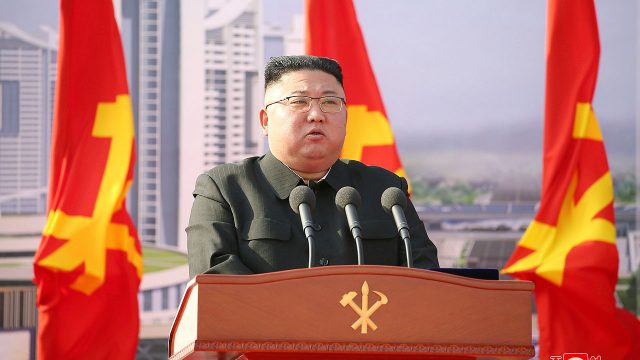
NK aims to have world’s strongest nuclear force

KCNA VIA REUTERS

SEOUL — North Korean (NK) leader Kim Jong Un said his country intends to have the world’s most powerful nuclear force as he promoted dozens of military officers involved in the recent launch of a new ballistic missile, state media reported on Sunday.

The announcement comes after Mr. Kim inspected a Nov. 18 test of the Hwasong-17, North Korea’s largest intercontinental ballistic missile (ICBM) and pledged to counter what he called US nuclear threats.

North Korea’s “ultimate goal is to possess the world’s most powerful strategic force, the absolute force unprecedented in the century,” Mr. Kim said in the order promoting the officers, adding that building up the country’s nuclear capabilities would reliably protect the dignity and sovereignty of the state and the people.

He described the Hwasong-17 as the “world’s strongest strategic weapon” and said it demonstrated North Korea’s resolve and ability to eventually build the world’s strongest army.

North Korean scientists have made a “wonderful leap forward in the development of the technology of mounting nuclear warheads on ballistic missiles,” and were expected to expand and strengthen the country’s nuclear deterrent capabilities at an extraordinarily rapid pace, Mr. Kim was also quoted as saying.

Mr. Kim was pictured in photos posing with scientists, engineers and military officials involved in the test.

According to state media, those workers pledged to defend the “absolute authority” of the party and Mr. Kim, and vowed that “our missiles will fly vigorously only in the direction indicated” by Mr. Kim.

Capable of reaching the U.S. mainland, the launch of the Hwasong-17 prompted the United States to call for a United Nations Security Council presidential statement to hold North Korea accountable for its missile tests, which are banned by Security Council resolutions.

State media also showed Kim Jong Un’s daughter accompanying him as he reviewed the officers. Her unexpected first appearance at the Hwasong-17 test has raised the prospect that leadership of the totalitarian state could pass to a fourth generation of Kims.

North Korea’s powerful Standing Committee of the Supreme People’s Assembly awarded the Hwasong-17 missile the title of “DPRK Hero and Gold Star Medal and Order of National Flag 1st Class,” state news agency KCNA reported in another statement, using the initials of the country’s official name, Democratic People’s Republic of Korea.

“(The missile) clearly proved before the world that the DPRK is a full-fledged nuclear power capable of standing against the nuclear supremacy of the U.S. imperialists and fully demonstrated its might as the most powerful ICBM state,” KCNA said. — Reuters

Twitter CEO Musk says user signups at all-time high

THE TWITTER LOGO is displayed on a screen on the floor of the New York Stock Exchange in New York City, US, Sept. 28, 2016. — REUTERS

TWITTER, Inc Chief Executive Officer (CEO) Elon Musk has said that new user signups to the social media platform are at an “all-time high,” as he struggles with a mass exodus of advertisers and users fleeing to other platforms over concerns about verification and hate speech.

Signups were averaging over two million per day in the last seven days as of Nov. 16, up 66% compared with the same week in 2021, Mr. Musk said in a tweet late on Saturday.

He also said that user active minutes were at a record high, averaging nearly 8 billion active minutes per day in the last seven days as of Nov. 15, an increase of 30% in comparison to the same week last year.

Hate speech impersonations decreased as of Nov. 13 compared with October of last year.

Reported impersonations on the platform spiked earlier this month, before and in wake of the Twitter Blue launch, according to Mr. Musk.

Mr. Musk, who also runs rocket company SpaceX, brain-chip startup Neuralink and tunneling firm the Boring Company, has said that buying Twitter would speed up his ambition to create an “everything app” called X.

Mr. Musk’s “Twitter 2.0 The Everything App” will have features like encrypted direct messages (DMs), longform tweets and payments, according to the tweet.

Advertisers on Twitter, including big companies such as General Motors, Mondelez International, Volkswagen AG, have paused advertising on the platform, as they grapple with the new boss.

Mr. Musk has said that Twitter was experiencing a “massive drop in revenue” from the advertiser retreat, blaming a coalition of civil rights groups that has been pressing the platform’s top advertisers to take action if he did not protect content moderation.

Activists are urging Twitter’s advertisers to issue statements about pulling their ads off the social media platform after Musk lifted the ban on tweets by former US president Donald Trump.

Hundreds of Twitter employees are believed to have quit the beleaguered company, following an ultimatum by Mr. Musk that staffers sign up for “long hours at high intensity,” or leave.

The company earlier in November laid off half its workforce, with teams responsible for communications, content curation, human rights and machine learning ethics being gutted, as well as some product and engineering teams. — Reuters

Malaysia PM Anwar eyes targeted subsidies for low-income groups

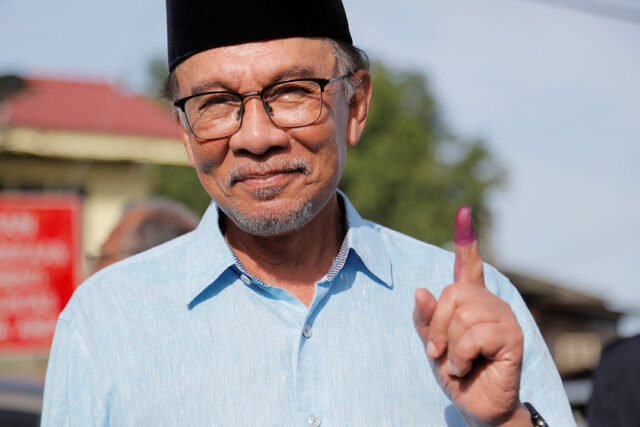
Malaysia’s Prime Minister Anwar Ibrahim — REUTERS

KUALA LUMPUR — Malaysia is reviewing its government subsidies program, aiming to direct money toward low-income groups, Prime Minister (PM) Anwar Ibrahim said on Sunday, prioritizing the rising cost of living as he takes office at a time of slowing growth.

Government agencies have two weeks to review the implications of narrowing the subsidies, he told a news conference.

Malaysia offers subsidies to all citizens, with fuel and cooking oil accounting for the biggest expense. It also subsidizes electricity, sugar and flour.

“Subsidies must be targeted, otherwise those subsidies are enjoyed not just by the low-income group but also the wealthy,” said Anwar, who emerged as leader of the Southeast Asian nation after a closely fought election last week.

Other incentives will be considered for industries that no longer benefit from subsidies, he said.

Anwar is carrying through the stance of the previous administration, which last month proposed a smaller budget, cutting subsidies due to rising commodities costs and the resulting impact on government coffers. Malaysia is estimated to spend a record 77.7 billion ringgit ($17.4 billion) this year on subsidies.

Anwar said he will discuss cabinet appointments with his coalition partners in the next few days.

The 75-year-old was sworn on Thursday, capping a three-decade political journey from protege of veteran leader Mahathir Mohamad to protest leader, prisoner convicted of sodomy and opposition figurehead.

Investors have cheered his appointment, hoping Anwar would bring stability after political uncertainty that saw three prime ministers in as many years.

The focus is on the new government’s policy direction and cabinet appointments. Anwar said on Friday he would have a smaller cabinet than those of previous administrations. — Reuters

Bangladesh on track to be a trillion-dollar economy by 2040 — BCG

BANGLADESH is on course to become a $1-trillion economy by 2040, driven by consumer optimism, innovation in emerging economic sectors and a young engaged workforce, according to Boston Consulting Group (BCG).

With average annual growth of 6.4% between 2016 and 2021, the South Asian nation has outpaced peers such as India, Indonesia, Vietnam, the Philippines and Thailand, BCG wrote in a report released on Friday.

Bangladesh’s domestic consumer market is set to become the ninth-largest in the world. And a rapidly expanding middle and affluent class is projected to rise substantially between 2020 and 2025, the report said, with a robust gig economy propping up a workforce where the median age is just 28.

“The country could have easily been overshadowed by its neighbor to the northeast — China — or its continental cousin to the west — India — but in this region of economic powerhouses, Bangladesh stands tall,” BCG wrote.

Bangladesh progressed from a low-income to lower-middle-income country in 2015. Though that’s five years later than India, Bangladesh’s GDP per capita is already higher than its neighbor. The nation aims to become an upper-middle-income country by 2031.

Some challenges remain. Recent issues with liquidity, as well as foreign exchange and inflationary pressures, may slow growth in the short term, according to BCG. But Bangladesh has taken measures to position its $416-billion economy for a lucrative few decades, so long as it maintains an average growth rate of about 5%.

In a BCG survey analysis, 57% of respondents “continue to believe the next generation would have better lives than themselves, especially as the country transitions to a skill-based economy.”

“Though the economy faces some near-term volatility, we are confident that this highly resilient economy will continue to demonstrate robust growth in the long term,” the report said. — Bloomberg

Qatar reviewing London investments after transport ads ban — FT

LONDON — Qatar has launched a review of its investments in London after the city’s transport authority this week banned the Gulf state’s tourism advertisements on the capital’s buses, taxis and Underground train system, Saturday’s Financial Times reported.

The paper said the move by Transport for London (TfL) was triggered by concerns over the soccer World Cup host’s stance on LGBT+ rights and its treatment of migrant workers.

The FT quoted a person involved in the Qatari review as saying TfL, which is chaired by London Mayor Sadiq Khan, contacted Q22, the body overseeing the World Cup and Qatar’s tourism authority, this week to inform them of the ban.

The TfL ban “has been interpreted as a message from the mayor’s office that Qatari business is not welcome in London,” the person was quoted as saying.

Qatar is one of the biggest investors in London through its sovereign wealth fund.

The Qatar Investment Authority (QIA) owns Harrods, the department store, the Shard skyscraper and is co-owner of Canary Wharf. The Gulf state also owns the Savoy and Grosvenor House hotels, a 20% stake in Heathrow Airport and a 14% stake in Sainsbury’s, Britain’s second-biggest supermarket group.

A spokesperson for TfL said that ahead of the World Cup it provided its advertising partners and brands with “further guidance on the advertising which we are likely to consider acceptable to run during the tournament while also ensuring that football fans are not denied the opportunity to support their teams.”

“Each advertising campaign continues to be reviewed on a case-by-case basis.”

TfL said advertising which promotes travel to Qatar, tourism in Qatar, or portrays Qatar as a desirable destination would not be considered acceptable.

Qatar’s government communications office did not immediately respond to an e-mail from Reuters seeking comment.

Under the spotlight as it hosts the World Cup, Qatar has defended itself against criticism, saying it is a welcoming country that does not discriminate against people and has denied accusations of abuse of workers. Homosexuality is illegal in Qatar. — Reuters

RCEP ratification seen making progress after show of support from Marcos, Cabinet

REUTERS

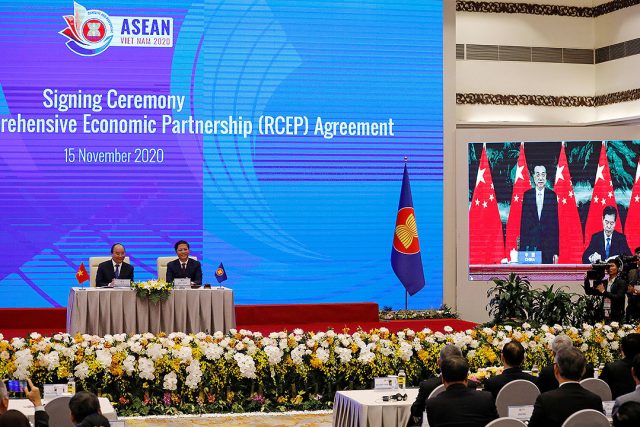
THE DEPARTMENT of Trade and Industry said the ratification process for the Regional Comprehensive Economic Partnership (RCEP) is moving forward after it received the backing of President Ferdinand R. Marcos, Jr. and the Cabinet.

Trade Secretary Alfredo E. Pascual told reporters in a recent media briefing that Mr. Marcos has completed his review of the RCEP, adding that the Cabinet has requested the concurrence of the Senate.

“When I asked President Marcos about the RCEP, he said that he has reviewed it and that it is okay with him. We had a Cabinet decision in October in one of our meetings. The Cabinet, as a whole, made a decision to request the concurrence of the Senate,” Mr. Pascual said.

“We have prepared communication from the Executive, so that the President can submit to the Senate. It is just a matter of sequencing the Senate’s activities. They just finished approving the 2023 budget and then they will tackle RCEP. We are seeking the Senate’s concurrence as required by our laws,” he added.

Mr. Pascual said many potential investors are weighing the Philippines’ participation in the free trade agreement (FTA) before investing.

“I’d like to point out that every time I meet a prospective investor, the initial question is will the Philippines ratify the RCEP because if they set up a factory here, they want to be able to export to all the RCEP-member countries competitively. That can be best helped by reduced tariff or no tariff at all. That is important,” Mr. Pascual said.

Mr. Marcos had called for a review of RCEP to ensure agriculture is adequately protected.

RCEP, billed as the world’s largest FTA, started coming into force in the various jurisdictions on Jan. 1. The trade bloc includes the 10 members of the Association of Southeast Asian Nations (ASEAN), Australia, China, Japan, South Korea, and New Zealand.

The Philippine Senate failed to ratify the FTA before the previous Congress ended over agriculture protections.

Former President Rodrigo R. Duterte signed on to RCEP in September 2021.

Separately, Trade Undersecretary Ceferino S. Rodolfo said that the signing of the FTA between the Philippines and South Korea is expected by the first quarter of 2023.

Mr. Rodolfo said that the FTA signing was delayed due to the recent Asia-Pacific Economic Cooperation (APEC) meeting.

“The agreement is ready to be signed. Actually, as early as a month ago, the FTA is ready to be signed. We were foreseeing before that the APEC meetings would be a good opportunity to sign this. But both sides agreed that for it given the prominence that it deserves, being an FTA between Philippines and Korea, it would be best to be sign it either in Manila or in Seoul,” Mr. Rodolfo said.

“There might be a meeting, maybe a presidential meeting from either side, in the first quarter of next year,” he added.

The negotiations for the FTA with South Korea began in June 2019 and concluded in October 2021.

Some of the Philippine products covered by the FTA are banana and pineapple, while South Korean products covered by the deal include vehicles and auto parts. — Revin Mikhael D. Ochave

ABB sees greening of PHL power grid driving sales of equipment used by utilities

PHOTO FROM ABB FACEBOOK PAGE

ENGINEERING company ABB Ltd. said Philippine investments in decarbonizing its power grid are driving sales of equipment used by utilities, including battery energy storage systems (BESS) that optimize the operations of some renewable sources of energy.

“Our focus is more on the utilities; we are an active vendor of all those medium-voltage requirements,” Allan B. Bonagua, product marketing director at ABB said at a briefing Friday.

ABB, a Swedish-Swiss conglomerate, specializes in industrial, automation, and electrical equipment in the Philippines

Roman Gvritishvili, product marketing manager for medium-voltage instrument transformers and sensors, said the company hopes to help the Philippines decrease its carbon emissions by introducing solutions for measuring and monitoring current and voltage in medium-voltage power systems.   

Mr. Bonagua said ABB is planning a regional launch of its medium-voltage sensors in the Philippines next year.

“When it comes to power generation, we’ve been working with several companies. We are a big supplier of battery energy storage systems,” Mr. Bonagua said.

In 2021, ABB supplied SMC Global Power Holdings Corp. with an 80-megawatt (MW) energy storage project.

Barbette Atienza-Soliven, communications manager for ABB Philippines, said the company’s goals include helping make electricity distribution more sustainable. — Ashley Erika O. Jose

10 LGUs sign on to program to build 1 million new homes a year

PHILSTAR FILE PHOTO

LOCAL government units (LGU) from Cebu, Bohol and Oriental and Occidental Mindoro signed up to the Pambansang Pabahay para sa Pilipino program, which targets the construction of 1 million homes a year, the Department of Human Settlements and Urban Development (DHSUD) said.

The 10 new participants are Mandaue City, Bohol province, Tagbilaran City, the Municipality of Panglao and six towns in Oriental and Occidental Mindoro. 

The number of LGUs that have signed the Memorandum of Understanding with the DHSUD is currently at 28.

The Philippine housing backlog has been estimated at 6.5 million units.

Housing Secretary Jose Rizalino L. Acuzar, said the LGU role in the program includes “conceptualization… identification of beneficiaries and…sustaining the program,” he said in a statement Sunday.

LGUs will also help the DHSUD identify idle government land that can be tapped for the housing program.

Mr. Acuzar said that DHSUD is working to expand access to mortgages and structure the housing loans to make the dwellings more affordable.

DHSUD has asked Congress to support its P36 billion-a-year plan for interest subsidies in order to make mortgages more affordable. — Justine Irish DP Tabile

DMCI Mining bats for carbon credit scheme

REUTERS

DMCI Mining Corp. said it proposed that the government adopt a carbon credits framework to help offset the continued use of fossil fuels.

DMCI Mining President Tulsi Das C. Reyes said the company met with the Environment department to make the proposal.

“We don’t have a framework for carbon credit in the Philippines. We were burning a lot of fossil fuels. There’s no commercial value to that, there’s no story to that. We’re not doing this type of protection of trees. I think it is about time the Philippines becomes a leader in that,” Mr. Reyes said in a briefing last week.

Mr. Reyes said that the national greening program of the Department of Environment and Natural Resources (DENR) could be the foundation for the carbon credit framework, by providing an avenue tor emitters to offset their continued use of fossil energy.

The national greening program seeks to restore denuded forests, making it a possible candidate for companies seeking offsets.

“We would like to help the DENR with Marubeni., our partner. Marubeni (a Japanese trading company) has a global framework and they’ve done it in other countries before. If you use the national greening program, that is already a good foundation,” Mr. Reyes said.

“All the transnational players need the carbon credits. If you don’t have that, that is just one less opportunity to win this out. I think within the next six years, you’ll see improvements in that space and we need it now,” he added.

DMCI Mining is a unit of DMCI Holdings, Inc. — Revin Mikhael D. Ochave

A question of trust: Revocable or irrevocable?

The pandemic introduced a tectonic shift of perspective about wealth planning, changing from “it’s never too late to plan” to “it’s never too early to plan.” As people become more cognizant of their own mortality, they have also become more pragmatic because, as Dr. Susan David, award-winning Harvard Medical School psychologist and named one of the world’s most influential management thinkers, aptly said, “Life’s beauty is inseparable from its fragility.” Given this change in mindset, one favored tool for wealth planning is a Trust — a malleable tool even with the backdrop of the particularly challenging and sometimes complex compulsory heirship rules in the Philippines.

A Trust is primarily a fiduciary relationship between a person called a Trustor or Settlor and a Trustee. The Trustor sets up a Trust, i.e., putting assets in a Trust or under the name of a Trustee. The Trustee is a person or entity appointed by the Trustor to take care of the assets placed in the Trust on behalf of or for the benefit of the Beneficiaries named in the Trust. As the Trustor is trusting the Trustee to take care of assets in favor of designated beneficiaries, the Trustee has a fiduciary obligation to the Trustor. Fiduciary obligation here means that the Trustee’s responsibility is not just within the level of a “good father of the family;” the Trustee should handle the Trustor’s and beneficiaries’ interests with the highest meticulous care. They hold a duty to preserve good faith and the trust reposed upon them.

A TRUST AS A WEALTH OR ESTATE PLANNING TOOL
Employing a Trust is similar to writing a Last Will and Testament but without the burden of a costly, cumbersome and possibly protracted probate proceeding. Under Philippine rules, a Last Will and Testament has to be probated or have its legal validity recognized before a court. Because a probate proceeding is a judicial process in our jurisdiction, it will require lawyer’s fees and may result in considerable delays in the distribution of the benefit to the heirs.

It is in the Trust Deed or Trust Agreement that the Trustor should put all their instructions as regards who should be benefited, when they should be benefited, what they will get (if hard assets), how much (if cash), and what conditions the beneficiaries must fulfill to be entitled to the income and/or principal of the Trust. In all of these, the Trustor must bear in mind the concept of “legitime” or the minimum entitlement under the law of compulsory heirs, which cannot be burdened with any condition.

Once the Trustor passes away, the Trustee simply implements the distribution to the heirs/beneficiaries in accordance with the instructions of the Trustor. In most Trust arrangements, the Trustor is free to appoint a Protector or Overseer (usually a close and trusted family friend) who is tasked to see to it that the Trustee will perform all of its fiduciary obligations to the letter.

REVOCABLE OR IRREVOCABLE?
When deciding whether the Trust should be revocable or irrevocable, the following points should be considered:

Generally, the substantial terms and conditions of an Irrevocable Trust (e.g., addition or subtraction of named beneficiaries) can no longer be changed. In a Revocable Trust, the Trustor can change the terms and conditions of the Trust for whatever reason. There is more flexibility for the Trustor in a Revocable Trust in terms of control over the assets in the Trust and in adding or removing beneficiaries.

Transfers of assets to an Irrevocable Trust is essentially a donation, attracting a donor’s tax of 6%. This means that assets transferred to an Irrevocable Trust are no longer part of the estate of the Trustor and will no longer be subject to the 6% estate tax upon the passing of the Trustor. Therefore, the decision to set up an Irrevocable Trust is also a choice between paying a 6% donor’s tax at today’s value or paying the 6% estate tax based on the prevailing value later. This is particularly crucial for real property assets to be passed on to the next generation since the appreciation in value of real estate, especially those in prime locations, is unbelievably exponential.

On the other hand, assets transferred to a Revocable Trust are still considered assets of the Trustor, such that upon the Trustor’s demise, the assets in a Revocable Trust will still be subject to 6% estate tax as donor’s tax was not paid during the transfer of assets to the Revocable Trust.

Assets transferred to an Irrevocable Trust are also protected from creditors of both Trustor and beneficiaries, subject to certain rare exceptions. This also means that assets in an Irrevocable Trust are protected from future in-laws. This is the complete opposite in the case of assets transferred to a Revocable Trust, as future in-laws can potentially acquire assets from the Trustor’s family line due to Philippine compulsory heirship rules or other contingencies like annulment. This is also the reason why an Irrevocable Trust is very useful in wealth planning if the Trustor intends for specific assets not to cross family lines. For example, an Irrevocable Trust can shield shares of stock in a family-owned corporation if it is the family’s policy not to allow in-laws from owning shares in the family corporation to prevent potential complexity to the family dynamics.

In an Irrevocable Trust, as long as the title to the assets is in the name of the appointed Trustee, estate tax will not apply even if any of the beneficiaries passes away since none of the latter own any assets in the Trust. This means that several generations of estate tax can be saved for as long as the corpus of the assets remain in the Irrevocable Trust. This benefit is not present in a Revocable Trust arrangement as assets from a Revocable Trust are distributed to beneficiaries upon the death of the Trustor.

An Irrevocable Trust can also be used for wealth replenishment or “reforestation” if used in combination with life insurance. The fund of an Irrevocable Trust can be used to insure the life of the beneficiaries, and name the Trustee of the Irrevocable Trust as custodian of the proceeds of the life insurance policy for the benefit of or on behalf of the next generation. As long as the designation of the intended beneficiaries is irrevocable, the beneficiaries of the policy will get the proceeds tax-free. This cycle can be repeated in every generation to replenish the fund in the Trust.

This arrangement is also useful when the intended beneficiaries of the life insurance policy are minors, suffering from any physical or mental disabilities and require life-long care, or when the parents believe that the beneficiaries would not be able to handle their own finances. Appointing a Trustee to manage, grow and control the periodic distribution of the funds would be ideal. However, when the named beneficiary of a life insurance policy is the Revocable Trust, the proceeds of the life insurance policy will be subject to estate tax, since a Revocable Trust has no personality distinct and separate from the Trustor.

In a blog article, “Are trusts on your radar for succession planning?” Michael Parets, EY EMEIA Private Tax Desk Leader, offered other insights about Trust as wealth planning tool, such as choice of jurisdiction and the presence of laws recognizing Trusts; the domicile and citizenship of intended beneficiaries; the competence and reputation of the Trustee; and of course, the expertise of the tax advisor.

FUTURE-PROOFING WITH TRUST
A Trust is not just a planning tool for the wealthy, but a viable wealth management tool for everyone who wishes to future-proof their assets for their heirs. In addition, we should remember that while there is certainly a cost in planning, there is a potentially higher cost in doing nothing – not just in tax, but more importantly, in maintaining peace and harmony within the family.

This article is for general information only and is not a substitute for professional advice where the facts and circumstances warrant. The views and opinion expressed above are those of the author and do not necessarily represent the views of SGV & Co.


Jules E. Riego is the Business Tax Services (BTS) Leader of SGV & Co. and the EY Asean BTS Leader.

Daily Philippine infections may hit 3,000 — OCTA

By Kyle Aristophere T. Atienza, Reporter

DAILY coronavirus infections in the Philippines could hit as many as 3,000 when Filipinos celebrate the Christmas holidays next month, according to a research group.

The country might record 2,000 to 3,000 daily coronavirus cases in December, OCTA Research Group fellow Fredegusto P. David said in a Facebook Messenger chat. “On Saturday, our daily cases already hit 1,874,” he said, citing a recent increase in infections.

OCTA also expects a significant increase in severe and critical cases. “It will lead to an increase in numbers but I don’t expect hospitals to become full or even exceed 30% of hospital care utilization rate,” he added.

Globally, the weekly coronavirus cases decreased by 5% during the week of Nov. 14 to 20 from a week earlier, with more than 2.4 million new cases reported, the World Health Organization (WHO) said in a weekly report released on Nov. 22. Weekly deaths fell by 13% to 7,800 it said.

Earlier this month, Mr. David told BusinessWorld that daily infections in the Philippines could fall to fewer than 500.

The Philippines posted 8,004 coronavirus infections for Nov. 14 to Nov. 20, with a daily average of 1,143 cases.

Mr. David had said daily cases in the country might rise if there were threats from new subvariants of the coronavirus.

Last week, health authorities said they had detected the first 14 cases of BQ1, a new Omicron subvariant.

In a statement on Saturday, the Department of Health (DoH) said new coronavirus disease 2019 (COVID-19) variants and subvariants were expected.

“They will naturally emerge with continued transmission. Limiting the spread of COVID-19 and ensuring updated protection through vaccination is the definite way to prevent this emergence,” it said.

DoH said Filipinos should learn to live with the virus in the “new normal,” noting that “variants will continue to emerge.” “We have to start demystifying variants. Viruses naturally mutate with continued transmission — this is a natural occurrence.”

The agency said the country’s healthcare use rate remained low and the country is safe from the BQ1 subvariant threat.  The WHO  first declared Omicron as a variant of concern on Nov. 26, 2021.

Within four weeks, Omicron waves were felt across the world, replacing the highly contagious Delta as the dominant variant, the WHO said in a statement on Nov. 25.

It said that by March 2022, almost 90% of the global population had antibodies against the COVID-19 virus, whether through vaccination or infection. Still, Omicron caused a less severe disease than Delta on average.

While vaccines reduced the impact of Omicron vaccine effectiveness against infection, disease, hospitalization and death waned over time, it said.

“However, protection against hospitalization and death have remained high, preventing millions of people from dying.”

Health officer-in-charge Maria Rosario S. Vergeire said the Philippines should boost its local and international surveillance and data-sharing systems to ensure that the emergence of variants is “always captured, studied and used to update COVID-19 vaccines.”

All coronavirus vaccines remained effective in preventing severe and critical COVID-19, as well as death regardless of the variant, she said.

The country seeks to increase its vaccination rate and booster uptake amid the possible entry of more deadly variants and subvariants. 

The government is set to hold a three-day vaccination campaign on Dec. 5 to 7. To broaden the campaign, it has been coordinating with other organizations such as the Chinese community, malls, fast-food restaurants and private doctors.

The Philippines has fully vaccinated 73.71 million people, according to DoH data. About 21 million people have received booster shots.

The United States will donate $5 million (P284 million) to boost the Philippines’ vaccination drive, the White House said last week.

The US government said it would also invest $8 million to strengthen its global health security partnership with the Philippines to “help prevent avoidable outbreaks, detect health threats early and respond rapidly and effectively when outbreaks occur.”