Home Blog Page 5209

Yulo snatches bronze at World Cup Series in Germany

PHLIPPINE STAR/JUN MENDOZA

CALOY Yulo’s bronze medal in the recently concluded FIG’s Artistic Gymnastics World Cup Series kickoff leg in Cottbus, Germany isn’t that bad for someone who has little time to prepare.

But expect the 23-year-old force of nature to bounce back strong in the ensuing editions including in Doha, Qatar unfurling today up to Saturday.

“We will improve in Doha as Caloy (Yulo) has very little training in his two-week stay in the Philippines,” Gymnastics Association of the Philippines President Cynthia Carrion Norton yesterday told The STAR.

The world champion gymnast, who topped the parallel bars qualifying round with a 14.933, had a 15.166 in the finals, which was good enough to snare the bronze.

Ukrainian Illia Kovtun took the gold with a 15.366 while Italian Matteo Levantesi the silver with a 15.266.

The podium finish averted a shutout for the 2019 Stuttgart floor exercise gold winner and 2021 Kitakyushu vault gold medalist that also came as a soothing balm after fizzling out in floor exercise, rings and vault in Stuttgart.

Another Filipino, Juancho Miguel Besana, fourth in the qualifier with a 14.433, finished eighth in the vault finals with a 13.483 in an event topped by reigning world champion Artur Davtyan of Israel, who blew away the field with a 15.133.

But by just making it that far, the 19-year-old Mr. Besana, the vault bronze medalist and part of the Mr. Yulo-led squad that took the silver men’s team bronze in last year’s Hanoi Southeast Asian Games, had already made a good account of himself as no Filipino before came close to stepping on that stage outside Mr. Yulo himself. — Joey Villar

Bangsamoro Sports Commission lays out 12-point agenda to PSC

PSC OFFICIALS with Chairman Richard Bachmann (3rd from left) and, from left, Commissioner Olivia ‘Bong’ Coo and Commissioner Walter Torres, welcome the 23-man Bangsamoro Sports Commission delegation on Monday, headed by Chairman Arsalan Dimaoden (from left to right), along with Commissioner of Tawi-Tawi Abdulkhabir Musa, Commissioner of Maguindanao Nu-man Caludtiag, and Commissioner of Basilan Yushoup Sario, in the PSC Conference Room at the Rizal Memorial Sports Complex in Manila.

A DELEGATION of the Bangsamoro Sports Commission (BSC) met with the Philippine Sports Commission (PSC) board on Monday, Feb. 27 seeking to work hand-in-hand with the national sports agency in terms of strengthening its grassroots program in the Bangsamoro Autonomous Region in Muslim Mindanao (BARMM).

The BSC, headed by Chairperson Arsalan Dimaoden, presented a 12-point agenda with the PSC which include close cooperation on sports facilities development, health and wellness in BARMM, grassroots and youth sports, sports education, human resource development, continuation of Sports for All program through the conduct of PSC’s Laro’t Saya sa Parke (LSP), elite sports identification and support, traditional sports and games preservation and promotion, ensuring gender and equality in sports, sports linkages and collaboration, sports tourism and sports competitions.

“It is our earnest understanding that we can utilize sport as a realization for the development of Mindanao and the country,” said Mr. Dimaoden, who was accompanied by his commissioners and consultant during the hour-long meeting  in the PSC Conference Room at the Rizal Memorial Sports Complex in Manila.

PSC Chairman Richard Bachmann expressed his support for the proposal, and batted for unity between the two sports agencies saying, “I would like to consider us as one group as we are focused on the Filipino athletes. Let us find the athletes sa bawat parte ng Pilipinas. This is what I want to push in my term together with our Board of Commissioners.”

“Let us work together to build facilities not only for popular sports but also for other sports throughout the country. We also need to align the grassroots programs for the stakeholders such as the NSAs, BSC and other individuals who have ideas regarding grassroots sports development in the country,” added the PSC chief.

PSC Commissioners Walter Torres and Olivia “Bong” Coo also expressed support and possible collaborations with the BSC.

“The PSC can send a team to conduct a feasibility study for the sports facilities development in the region and ask that accessibility for para-athletes be observed for the building of the facilities,” said Mr. Torres.

“I offer our programs Laro ng Lahi and Women in Sports programs to be conducted in BARMM. There is a need to increase the inclusion of more girls in grassroots programs,” Ms. Coo said, for her part.

Aside from Mr. Dimaoden, the BSC was represented by Commissioner of Maguindanao Nu-man C. Calutiag, Tawi-Tawi Commissioner Abdulkhabir Musa, Basilan Commissioner Yushoup Sario, Executive Director Salihwardi Alba, Consultants Prof. Henry Daut of the Mindanao State University (MSU) and Ateneo de Davao University Athletics Director and Mindanao Peace Games Founder and Convener Noli Ayo.

Clinical Manchester Utd win League Cup in heartbreak for Newcastle

LONDON — Manchester United crushed Newcastle United’s hopes of a claiming a first domestic trophy for nearly 70 years with a clinical 2-0 victory in the League Cup final at Wembley on Sunday.

A header by Casemiro followed by an own goal by Sven Botman late in the first half silenced the hordes of Newcastle fans who flocked to the capital full of optimism as Manchester United went on to lift the trophy for a sixth time with relative ease.

Much of the build-up was about Newcastle’s first appearance in a major final since 1999 and an uptick in their fortunes instigated by Eddie Howe since a 2021 Saudi Arabia-led takeover.

But Erik ten Hag’s resurgent United side showed them how far they still need to go as they claimed the club’s first trophy since winning the Europa League under Jose Mourinho in 2017 — their longest wait for silverware since 1983.

There was little between the sides in a scrappy first half but the English season’s first silverware was effectively decided in the space of six minutes towards halftime.

Newcastle were stunned when Brazilian Casemiro met a superb Luke Shaw free kick in the 33rd minute to head past Loris Karius, the goal allowed to stand after a VAR check for offside.

Six minutes later Newcastle were left totally deflated when the in-form Marcus Rashford was played in down the left and his shot deflected over a helpless Karius for what initially appeared to be his 17th goal since the World Cup. However, it was credited to the unfortunate Botman.

United, who beat Barcelona in midweek to reach the last-16 of the Europa League and are still in contention in the Premier League title race, were not at their best but managed the game expertly once they got their noses in front. — Reuters

Britain’s Norrie beats Alcaraz in Rio Open final

BRITAIN’S Cameron Norrie fought back from a set down to beat world number two Carlos Alcaraz 5-7 6-4 7-5 in the Rio Open final on Sunday, turning the tables on the 19-year-old Spaniard after losing to him in the Buenos Aires decider a week ago.

Mr. Norrie, who collected his first ATP title of 2023 and fifth overall, looked to be heading for a second straight defeat to the clay court tournament’s defending champion when he was broken in the second set.

But with US Open champion Mr. Alcaraz needing his right leg wrapped midway through the set Mr. Norrie seized the momentum and won four straight games. After twice trading breaks in the third set, Mr. Alcaraz saved two break points in an epic ninth game but Mr. Norrie converted a break point opportunity at the fourth attempt in the penultimate game before claiming the win at the ATP 500 event. — Reuters

Philippines needs guarantee roadmap for security pacts

PHILIPPINE STAR/WALTER BOLLOZOS

The Enhanced Defense Cooperation Agreement (EDCA) was signed on April 28, 2014. It supplements the Visiting Forces Agreement (VFA) under the Mutual Defense Treaty (MDT), intended to bolster the alliance of the Philippines and the United States of America. The Supreme Court upheld its constitutionality twice in 2016, the second one with finality.

It’s the most significant defense agreement between the US and the Philippines in decades. Because the US is constitutionally barred from establishing permanent military bases here, the EDCA allows the US to rotate its troops in the Philippines and allows build-operate facilities on Philippine bases for both their military forces. The Philippines has personnel access to American ships and planes.

In January 2019, the first major project under the EDCA was completed at the Cesar Basa Air Base in Pampanga. There are on-going EDCA projects at four other locations — Fort Magsaysay in Nueva Ecija, the Lumbia Air Base in Cagayan de Oro, the Antonio Bautista Air Base in Puerto Princesa, and the Mactan Benito Ebuen Air Base in Cebu. Last week, four additional locations in Northern Luzon and Palawan were designated under the EDCA, but the exact locations remain confidential pending further consultations.

Extensive access to key locations facing the West Philippine Sea, Luzon Strait, and, possibly, the Pacific Ocean, underscores America’s goal to develop integrated deterrence. The Philippines occupies strategic real estate vital to our national interests and that of many nations. It’s vital to China, which is aiming to be the center of the universe. It’s vital to the economic interests of countries who rely on safe passage through our sea lines of communication. It’s vital to countries in the Indo-Pacific region dissuading China from pursuing its hegemonic plans.

President Ferdinand Marcos, Jr.’s decision to fully implement and expand the scope of the EDCA is a sharp departure from former President Rodrigo Duterte’s swing to the left before belatedly returning to the center. Although Mr. Duterte’s independent foreign policy of being a “friend to all” has been upheld by Mr. Marcos, his all-out support for the PHL-US defense alliance serves as leverage against an increasingly warlike China. As such, Balikatan exercises have dramatically increased in the number of joint activities and participating troops.

In 2016, France and the Philippines signed a defense pact to help modernize our military amid tensions with China. The agreement covers bilateral cooperation that relates to defense equipment, logistics, and defense industry development. It provides for “high-level visits to increase cooperation; defense policy consultations; capacity-building training and exercises; exchanges of information; and the development of naval cooperation.” Both countries are also eyeing a strong partnership on nuclear energy.

France has built five ships for the Philippine Coast Guard — one 83-meter Offshore Patrol Vessel and four 24-meter Fast Patrol Boats — and intends to build a P1.5-billion shipyard. It also includes a five-year program for preventive maintenance, spare parts, technical assistance and training. Previously, France submitted three LOIs confirming financial support for the Department of Transportation’s upcoming projects; financial aid to support a training boat contract for the Philippine Merchant Marine Academy; and a possible maritime expert proposal.

Last November, the Philippines and France signed a memorandum of agreement to strengthen the country’s maritime safety and security, particularly in ship building and ship repair. France will deploy a maritime expert to provide the necessary technical assistance, training, and consultancy service on best practice to ensure SOLAPS, create a National Transport Plan and help implement the 10-year Maritime Industry Development Plan to modernize the local fleet.

Last week, Mr. Marcos and Japan Prime Minister Fumio Kishida agreed to sharply boost defense ties allowing Japanese troops greater access to Philippine territory on account of rising volatility in the East and South China Seas. It allows Japan to deploy its forces for humanitarian missions and disaster response in the Philippines; conduct more joint exercises; reciprocal port calls and aircraft visits; transfer of Japanese defense equipment and technology; and strengthen trilateral cooperation with the US.

Mr. Kishida and Mr. Marcos also agreed to strengthen cyber and economic security; reinforce the capabilities of the Philippine Coast Guard (PCG), and improve port facilities at Subic Bay. In recent years, Japanese official development assistance (ODA) funded the construction and delivery of two 97-meter and 10 44-meter patrol vessels for the PCG. There are reports that Japan may provide five more patrol vessels under similar arrangements.

Last December, Japan adopted key security and defense policies that sharply depart from its post-World War II policy of self-defense; as well as development assistance for maritime safety and security upgrades. Consequently, Japan announced a 600 billion yen ($4.6 billion) economic assistance package for the Philippines through March 2024 to improve our infrastructure, information and communication technologies, energy security and industrial development.

The Philippines and Australia also inked a memorandum of understanding on Cooperative Defense Activities in 1995. Australia is one of the Philippines’ only two VFA partners. Both countries enjoy a significant degree of security cooperation, including the presence of Australian mobile training teams for capacity-building on counter-terrorism, urban warfare, maritime security, and other fronts. Yet, despite the broad range of ongoing bilateral activities, the significant potential for enhanced cooperation remains a largely unexplored opportunity.

We must step up. Modernization is slow, erratic, and inadequate. To this day, we don’t have clear rules of engagement to deal with China’s gray zone tactics. We don’t have a roadmap to obtain guarantees from our allies in exchange for the EDCA arrangements that place us in the crosshairs of China, such as:

1. Bankrolling the total annual repairs and maintenance expenses of the Armed Forces of the Philippines, PCG and Philippine National Police.

2. Swift access to energy, food, smart munitions, ammo stockpiles, manned and unmanned war-fighting systems and assets (air-sea-land-space-cyber) at preferential terms.

3. Continuous joint hybrid warfare training and sea-air patrols.

4. Hardening our vital human security and military infrastructure.

Our defense pacts with these countries are crucial for regional stability, human and ecological security. Yet, there’s no integrated and systematic action that is so essential in deterring China. Everyone must focus and close ranks to protect our common national interests. If we’ve been paying attention, war is just around the corner. The clock is ticking. We better move it.

This article reflects the personal opinion of the author and does not reflect the official stand of the Management Association of the Philippines or MAP.


Rafael “Raffy” M. Alunan III is a former governor of MAP. He is the vice-chair of Pepsi-Cola Products Philippines, Inc. He is a member of the Philippine Council for Foreign Relations, and sits on the boards of other companies as an independent director.

map@map.org.ph

rmalunan@gmail.com

Universal healthcare is many years away

PhilHealth members still pay out of pocket in spite of universal healthcare, according to a group of researchers from the Philippine Institute for Development Studies (PIDS). They said, “Despite modest improvements in health outcomes, inequities continue to exist due to unresolved challenges in access to healthcare. This includes the physical constraints due to lack of health facilities along with the financial risks of catastrophic expenses especially for vulnerable population.” The elderly, women, rural, and poor Filipinos are more likely to spend more with the national health insurance coverage limited to 40% of total hospital costs, the researchers added.

PhilHealth members will be paying out of pocket for 60% of their hospital bill in the next so many years because universal healthcare is not yet in place in the country. In this age of advanced medical science, of miracle drugs, invasive surgeries, and organ transplants there would be financial risks for catastrophic expenses. Your wealth or your health is an issue confronting many. Universal healthcare (UHC) was not conceived for them.

UHC was meant for people whose lives can be saved or whose good health can be maintained if they receive timely medical attention without ruining them financially. Complications of the leading diseases in the Philippines like bronchitis, influenza, chicken pox, diarrhea, and respiratory tract infection can be prevented if the patient receives preventive, curative, rehabilitative, and palliative health services.

To achieve the goal of UHC, the country must have a strong, efficient, well-run health system that meets priority health needs, access to essential medicines and technologies to diagnose and treat medical problems, and a large corps of trained, motivated health workers to provide the services patients need.

The World Health Organization (WHO) had advised our legislators to implement universal healthcare fully in 2030 when the country’s health delivery system would be capable of servicing UHC. But some of them rushed the enactment of a law instituting universal healthcare, RA 11223, so that they could present UHC in the elections of 2019 as their gift to the Filipino people. Among the authors of the law were Senators JV Ejercito, Sonny Angara, Nancy Binay, and Cynthia Villar, who were all running for re-election. Ironically, only JV Ejercito, the principal author of the law, failed to be re-elected.

Republic Act No. 11223 mandated that all Filipinos get the healthcare they need, when they need it, without getting impoverished. The law enrolled all Filipino citizens in the National Health Insurance Program to be administered by the Philippine Health Insurance Corp. or PhilHealth. That is 112 million Filipinos spread all over the archipelago — from Batanes in the north to Jolo in the South, from Samar in the East to Palawan in the West.

As the WHO feared, the country’s health system is far from being capable of servicing UHC. The United Kingdom owns the hospitals and employs the healthcare workers that service all its citizens. While the Philippine government also owns hospitals and employs healthcare workers, their number falls way short of those required to provide the health services needed by the 112 million Filipinos insured with PhilHealth.

According to the Department of Health (DoH), as of 2022 there are 721 public hospitals, 66 of which are managed by the DoH while the remaining hospitals are managed by LGUs and other National Government agencies. Government hospitals do not provide adequate medical care. Like Hospital ng Manila, they provide accommodations and professional health services to the sick, but not the drugs and medicine.

Both public and private hospitals are classified by their service capability. Level 1 hospitals are staffed by specialists in family medicine, pediatrics, obstetrics-gynecology, and surgery. Level 2 hospitals have all Level 1 specialists plus departmental clinical services, respiratory unit, general ICU, high-risk pregnancy unit, and dental clinic. Level 3 hospitals, commonly referred to as general hospitals, have all of Levels 1 and 2 physicians plus teaching/training with at least two accredited residency programs for physicians in any medical/surgical specialty and/or subspecialty, physical medicine and rehabilitation unit, ambulatory surgical clinic, and dialysis clinic.

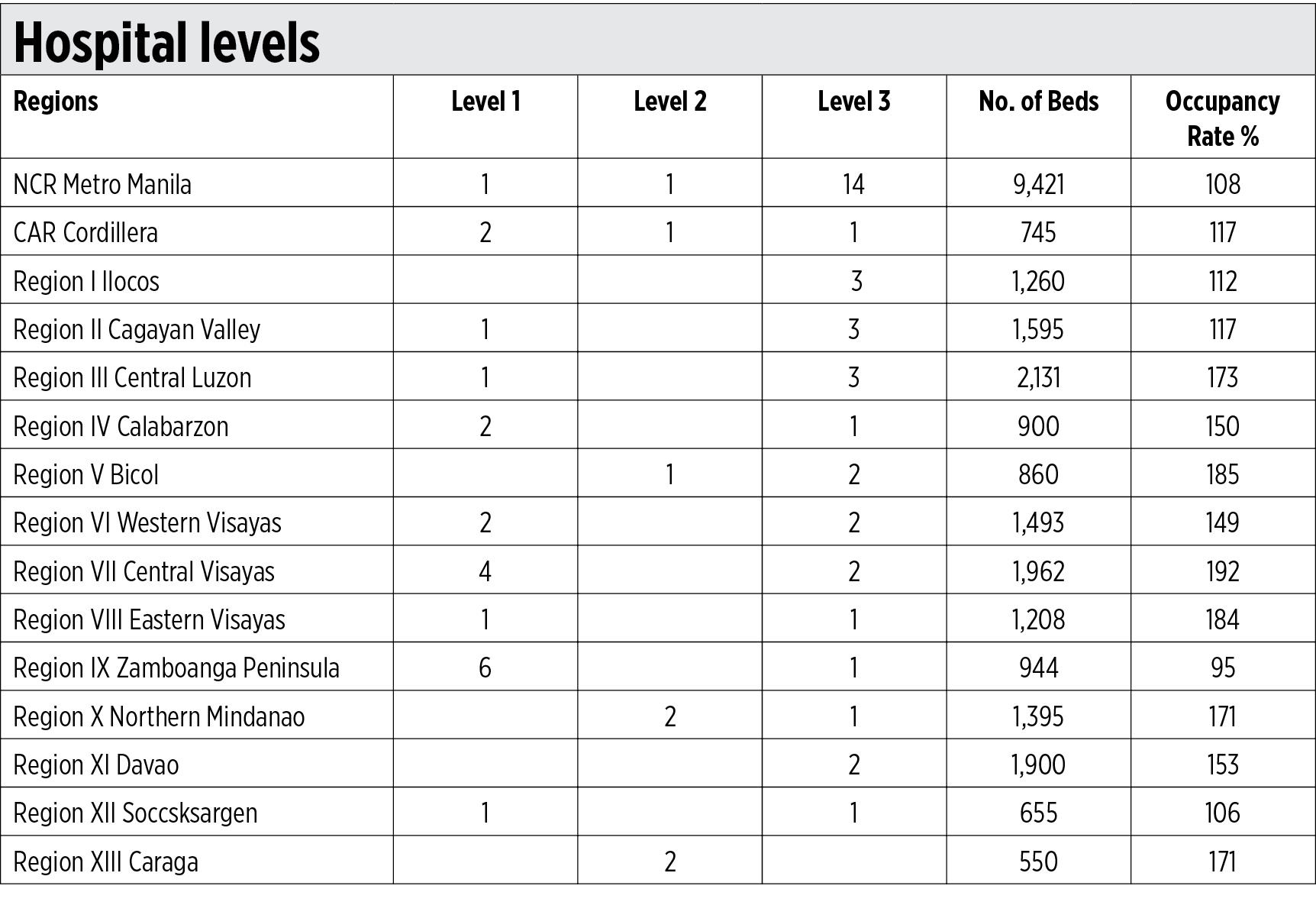
The number of hospital beds is a good indicator of health service availability. Per WHO recommendation, there should be 20 hospital beds per 10,000 population. Almost all regions in the country have insufficient beds relative to the population. The insufficiency of public hospital beds is unspeakable. The table below shows the pathetic situation with regard to DoH managed hospitals.

A 108% occupancy rate means there are more inpatients in the hospital than there are beds available. Some inpatients are made to lie on benches in waiting areas, others just have to be treated on visitor chairs. There are instances when two patients share a bed. Such instances occur during the dengue season, when many of those infected are children.

So, many patients are turned away. Poor folks denied admission just go home to their shack or hut, treat themselves with herbal remedies or consult the neighborhood arbolaryo (folk doctor). The Philippine General Hospital had refused hundreds of COVID-19 patients at the height of the pandemic such that when President Duterte’s spokesperson Harry Roque got admitted into the hospital immediately after he got afflicted with the disease, the hospital’s administrator found himself confronted with a colossal political issue.

With the public hospitals overcrowded, income earners seek medical attention in private hospitals. Most of them were established for profit. Their payment system is independent of the strict guidelines observed in government-owned hospitals. As the physician-stockholder of private hospitals enjoys full discretion in using the hospital’s facilities, his practice is influenced by the incentives available to him.

He may recommend diagnostic tests, longer hospital confinements, and surgeries much more than necessary. For every procedure, for every service, the physician charges a fee. Depending on the doctor’s assessment of the patient’s capacity to pay, he may even order high-tech diagnostic tests the equipment for which he owns and which is right in his office. He prescribes the newest and therefore more expensive medicine for which act he is rewarded by the manufacturer with a fully-paid-for vacation abroad disguised as attendance of a medical convention.

A number of medical directors of non-profit and philanthropic medical institutions in the US have said much of the waste and excess utilization that take place in laboratory, radiology, and pharmacy may be unnecessary and even potentially dangerous. The extra but unnecessary services and wonder drugs account for the findings of the PIDS researchers — that PhilHealth members pay out of pocket for 60% of their hospital bill.

Government-owned specialty hospitals are going to get a bigger budget this year — as much as P7 billion, P1 billion more than last year. These are the Philippine Heart Center, the Lung Center of the Philippines, the National Kidney and Transplant Institute, the Philippine Children’s Medical Center, and the Philippine Institute of Traditional Alternative Health Care. All five medical facilities are located in Metro Manila.

In many parts of the country, farm workers, market vendors, food stall operators, tricycle/jeepney drivers, and retail store attendants who fall ill do not get the proper medical attention due mainly to the inaccessibility of a healthcare facility. It is time the government provided the folks in the countryside healthcare.

Now that JV Ejercito, the principal author of the Universal Health Care Act, has been elected again to the Senate, he and Sonny Angara, Nancy Binay, and Cynthia Villar, who owe their re-election to the Senate in 2019 mainly to their being signatories to that Act, should push for the enactment of a law that will mandate the establishment of more healthcare facilities in the countryside to make universal healthcare in the Philippines a reality. The facilities need not be all Level 3 hospitals. A large number can be modest Level 1 units. At least one Level 1 facility like the ones shown here should be put up in every congressional district.


Oscar P. Lagman, Jr. is a retired corporate executive, business consultant, and management professor.

Crisis narratives as hindrance to growth and freedom

Feb. 24 last week marked the first anniversary of Russia’s invasion of Ukraine. The Ukraine crisis has morphed from a border war between the two countries to a potential nuclear conflict in Europe. Here are five major crisis narratives which have had a big impact on economic growth and individual freedom.

1. The virus/pandemic crisis. It led to widespread government-imposed business and mobility restrictions or lockdowns and human isolation, while expanding government spending and borrowing.

House Bill 6522 and Senate Bill 1869 will create a new bureaucracy — the Philippine Center for Disease Prevention and Control (CDC). I have two objections against this bill.

One, it contradicts the National Government Rightsizing Program (NGRP) of the Marcos Jr. administration which aims to reduce redundancy or duplication of functions, and reduce government spending. See this column’s piece last week, “Bureaucratic rightsizing a big part of fiscal reform push” (Feb. 20). Instead of reducing the existing bureaucracies, the bill is creating a new agency with new plantilla positions and more personnel with national and regional offices.

Two, the same people and professionals who distrust natural immunity from natural infection from COVID-19 and pushed to trust only vaccine immunity and mandatory vaccination, who demonized cheap, off-patent, generic medicines like ivermectin and other supplements as prophylaxis and treatment to COVID, will likely be sitting in the key positions of the new bureaucracy CDC.

The Concerned Doctors and Citizens of the Philippines (CDC PH), Covid Call for Humanity (CCH), Constitutionally Compliant Businesses (CCB PH), Hilway Panay, and other NGOs held a simultaneous protest movement against the proposed CDC bill in key cities of the country on Feb. 25. Stay brave, guys. Protect civil liberties and human rights, and individual rights to one’s body and health. Resist political science that masquerades as medical science to impose political and medical tyranny.

2. The economic/poverty crisis. Government-imposed lockdowns then overspending and borrowing for aid/ayuda and subsidies will lead to more taxes in the future to pay for the huge borrowing.

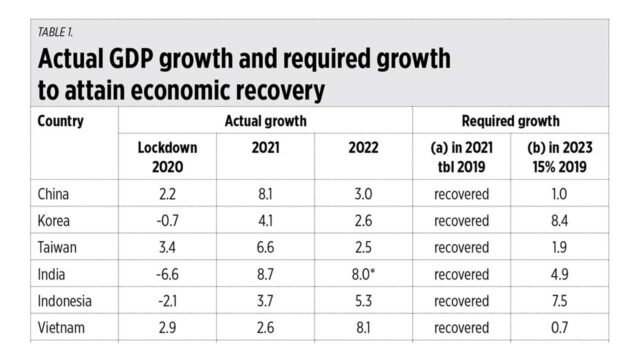
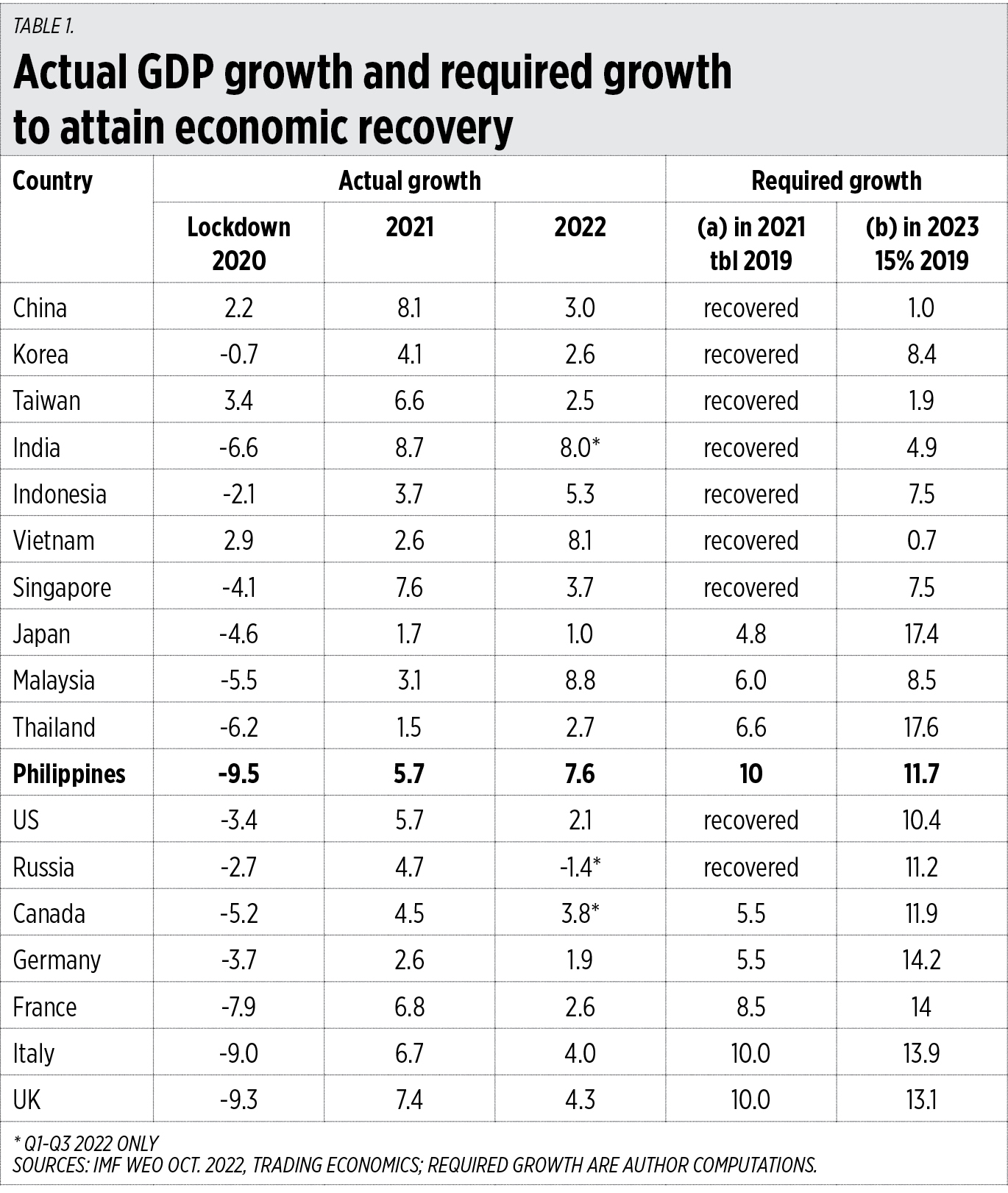
Below I make two computations: a.) required growth in 2021 to reach the level of 2019’s gross domestic product (GDP), and, b.) required growth in 2023 to expand by 15% over 2019’s GDP level. The results show that for many East Asian economies, their GDP growth in 2021 has enabled them to recover a similar GDP size of 2019.

For the Philippines, a.) GDP growth in 2021 should have been 10% and not just 5.7% to be at the same GDP size or level of 2019, and, b.) growth in 2023 should be at least 11.7% if targeting to have at least a 15% expansion in 2023 over 2019 level (See Table 1).

By 2021, many of our neighbors in East Asia had already recovered to their 2019 levels — the Philippines did not. Meaning that the effects of the government’s lockdowns and business shutdowns was severe and deep. This administration and succeeding ones should never impose another lockdown and political-medical tyranny.

Related narratives are: the inequality crisis, population/congestion crisis, education crisis, housing crisis.

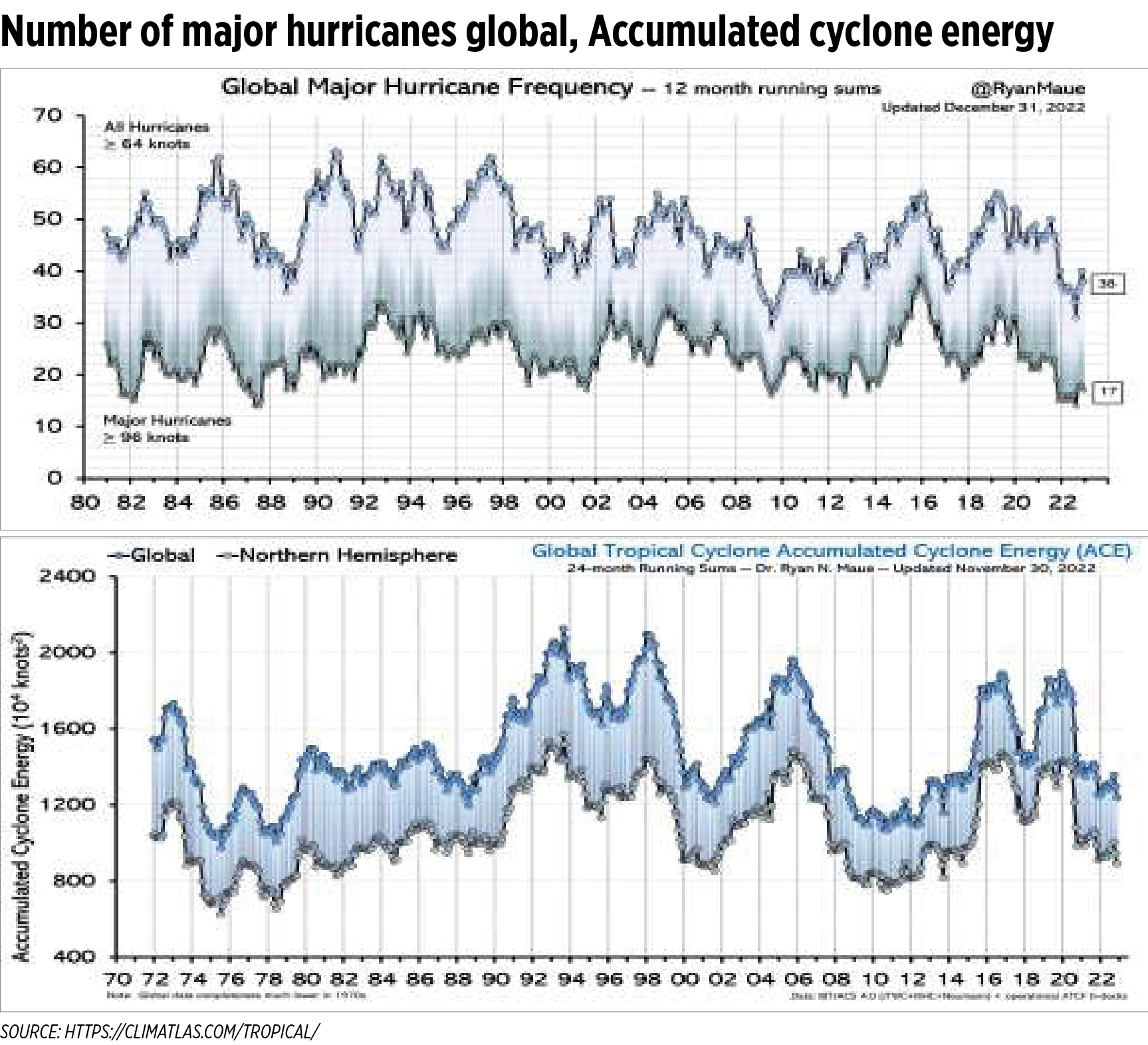
3. The climate/environment crisis. This is based on the persistent narrative that there is no natural or nature-made climate change, only man-made climate change; that there is no natural warming-cooling cycle, only “unprecedented, unequivocal” warming; that “extreme weather” is getting more frequent, more deadly, and that there is no natural cycle of strong and weak cycle energy. Thus, heavy intervention by governments and multilaterals to fight less rain and more rain, less snow and more snow, less cold and more cold, less cats and more cats.

No, the number of strong storms and hurricanes is not increasing. No, the accumulated cyclone energy (ACE) is not getting stronger (see Chart). In fact, the years 2021 and 2022 saw weak ACE, a less windy planet, which is why wind power plants were not producing enough electricity and led to wind power-heavy countries firing up their coal and gas plants to avoid blackouts.

The Philippines and other countries should cut their huge spending on climate bureaucracies, climate meetings and travel, cut taxes on fossil fuels, or impose uniform taxes like VAT for both fossil fuel and renewable plants, and uniform excise tax for both gasoline-powered cars and e-cars.

Now there is another lobby by some groups that the irrational zero excise tax for e-cars should be extended to e-motorcycles. This is equally irrational, for three reasons. One, there is little difference between gasoline vehicles that use 100% fossil fuel and e-vehicles that use 80% fossil fuel because about 80% of the Philippines’ electricity generation comes from coal, natural gas, and oil plants. Two, both gasoline and electric vehicles occupy road space and contribute to the depreciation of public infrastructure. And, three, government is in search of more revenues and lobby groups and sellers do not want to contribute to tax mobilization. The Finance department should stonewall such a lobby.

Related narratives are: the garbage/plastic crisis, carbon crisis, energy crisis.

4. NCDs crisis. Non-communicable diseases (NCDs) like cancer, heart disease, and stroke are now the main causes of deaths in the world — good. Perhaps the best ratio would be something like 98% of people dying of NCDs, and only 1% from infectious/communicable diseases, and another 1% from accidents or violence (war, murder, homicide).

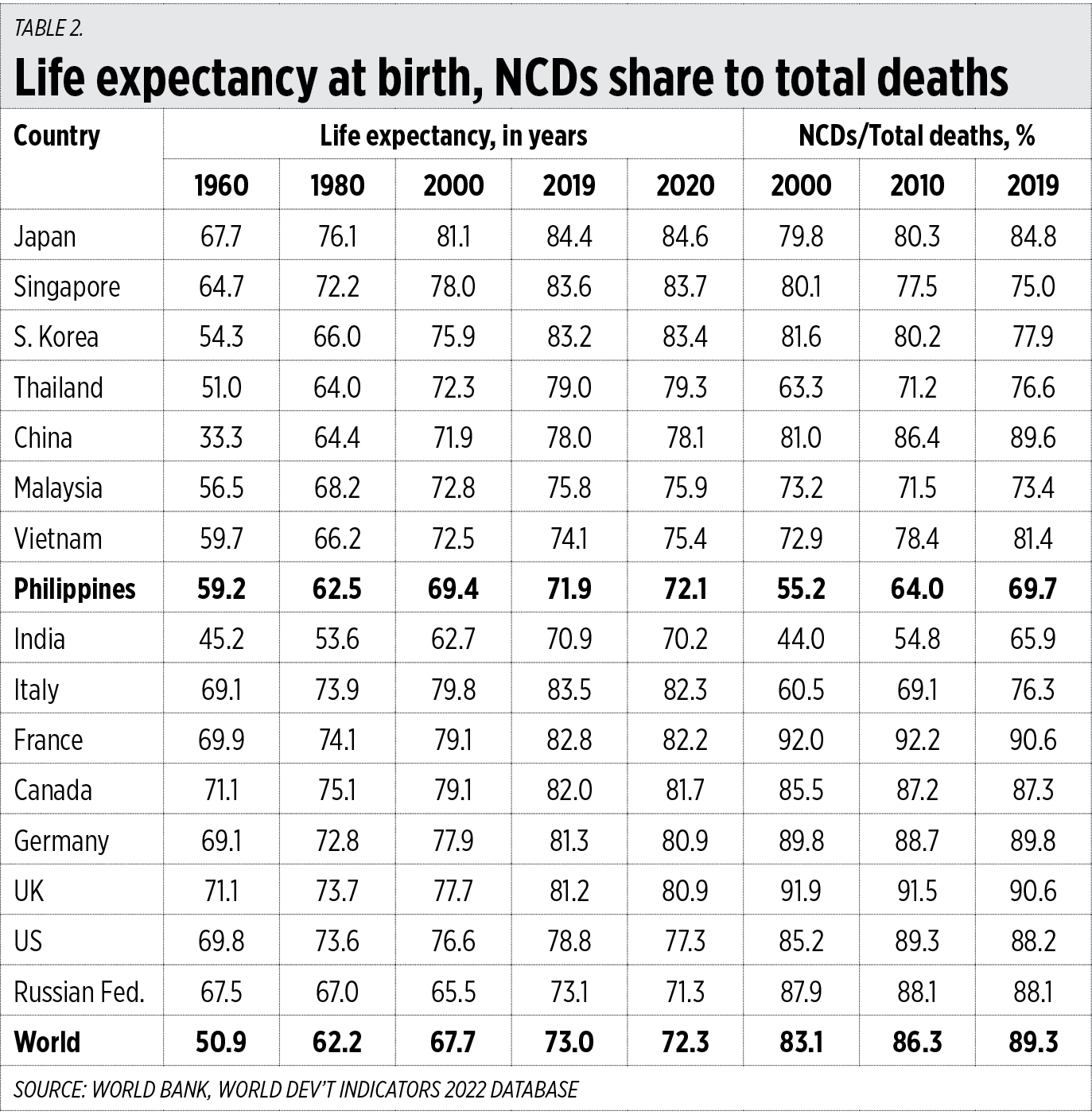
In the Philippines, the share of NCDs to total deaths rose from 55% in 2000 to 70% in 2019. And life expectancy has increased from only 59 years in 1960 to 69 years in 2000, and 72 years in 2020. There is a correlation between a high share of NCDs/total deaths to longer lifespan (See Table 2).

People own their bodies. Not the government or doctors, NGOs or media. The decision to smoke, vape, drink alcohol, soda and other sugary drinks, climb steep rocks and mountains, do fast downhill bicycle racing, go skydiving, take two or six vaccine boosters, etc. should be left to the individuals, their families and friends.

Related narratives are the tobacco and alcohol crisis, the sugar addiction crisis.

5. The food/hunger crisis. Related to the climate crisis narrative, it argues that “extreme weather” plus other political, business, and technological factors adversely affect global food production. So, government must step in via more agricultural subsidies and freebies, more irrigation, machine and fertilizer subsidies, and so on.

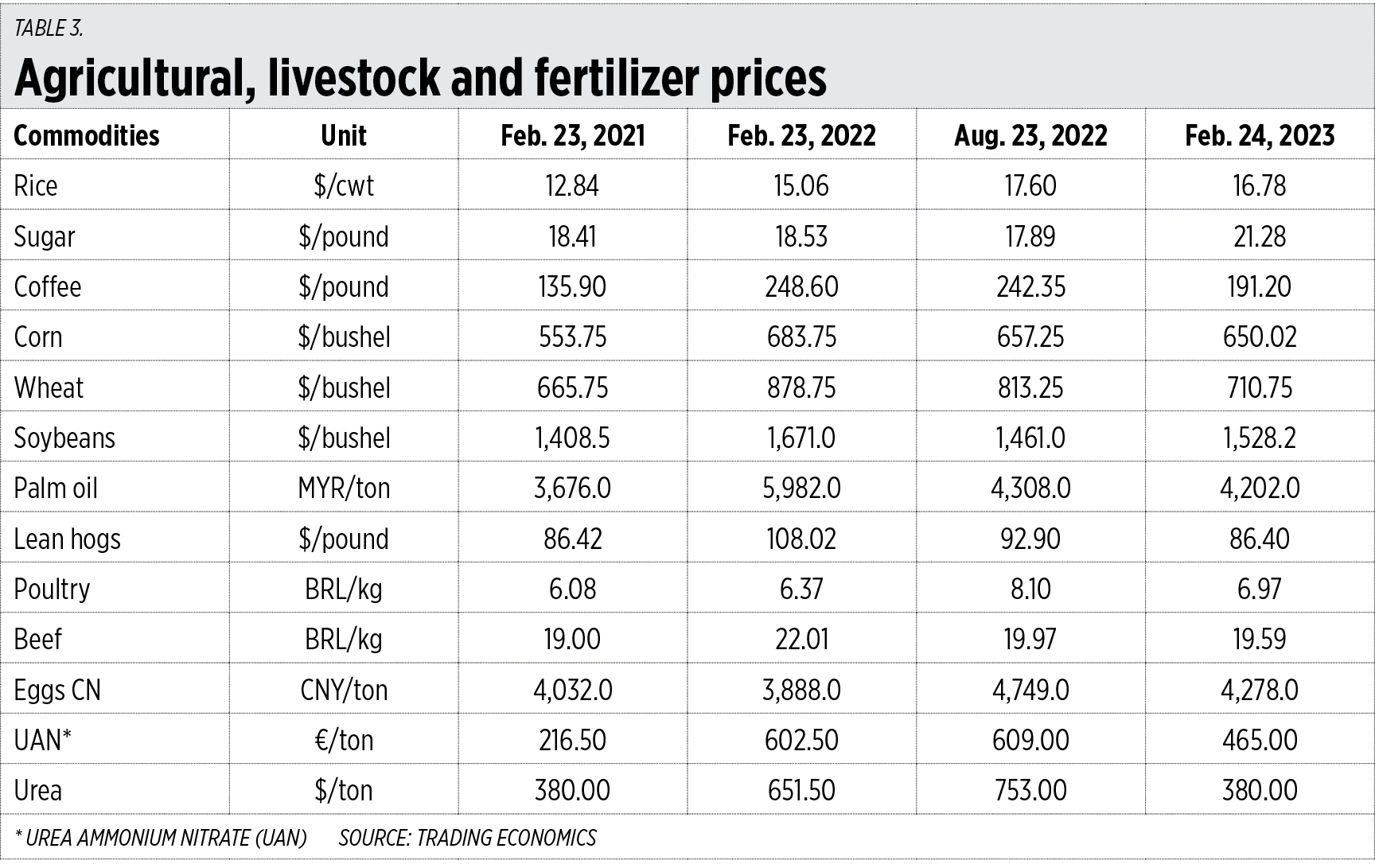
Going back to Feb. 23, 2022 — or day before the Russia invasion of Ukraine — and even a year before that, commodities like rice, corn, coffee, wheat, soybeans, palm oil, lean hogs, poultry, beef, fertilizers had prices this month that were similar or even lower than last year’s prices (See Table 3).

Prices are indicators of a product’s abundance or scarcity relative to demand. When prices flatline or decline, this means the supply is stable or rising relative to demand and hence, there is no food crisis. Government should resist temptation and lobbies to further raise agricultural and food subsidies. Farming should be a business venture, not a government or tax charity.

Related narratives are: the population crisis, the fertilizer crisis.

We should grow our businesses and economy fast, widely, and in a sustained manner.

We should streamline and cut spending and subsidies, and reduce borrowings and high interest payments.

We should apply uniform tax rates for each sector and avoid cronyism and favoritism.

We should avoid another round of political-medical tyranny.

We should be wary of new “crisis” narratives because the hidden goal is to have more command and control over our lives, our work, our body and family.


Bienvenido S. Oplas, Jr. is the president of Bienvenido S. Oplas, Jr. Research Consultancy Services, and Minimal Government Thinkers.

minimalgovernment@gmail.com

Taking a five-step approach to decarbonization in a downturn

COMPANIES face geopolitical upheavals, supply chain disruption, inflation, and the threat of recession. Despite this perfect storm, their commitment to decarbonization hasn’t fundamentally wavered. The number of companies embracing science-based targets is continuing to grow at a rapid pace.

However, as they make pledges to reduce their carbon footprint, executives need to acknowledge the ways the environment for decarbonization and climate has quickly changed.

Setting ambitions has proven to be the easy part, but meeting those goals is difficult, with 33% of companies missing the absolute scope 1 and 2 targets that expired in 2021. Companies now find themselves needing to look beyond setting ambitions to tackling the real challenges of decarbonizing and finding ways to monetize it with customers.

Global policy has become more prominent and more complex. Some governments are acting more boldly to make the carbon transition a source of competitive advantage rather than risk losing the green business to another country. However, many governments also have had to make difficult near-term energy policy decisions, in some cases choosing between a looming climate disaster, keeping their people fed, and keeping energy costs from breaking the backs of the population.

As the effects of climate change quickly become more evident, so does the need to not only mitigate by reducing emissions, but also adapt by adjusting to a changing climate. Leading companies have stepped up their physical risks analytics and adapted their strategy, operations, and supply chain.

And as developing economies and underserved communities struggle with rising energy and food prices, companies face the reality that the carbon transition needs to be addressed in a way that is fair to all — a just transition. This means ensuring that energy is as low carbon and affordable as possible.

These changes come at a time when companies are devising and implementing downturn strategies and require difficult new choices. They need to address cost in an inflationary environment, reset supply chains for resilience, and scrutinize strategic investment in the face of uncertainty.

Each of these can be tackled with carbon and climate in mind. In cost reduction, for example, the best companies will deal with cost and carbon simultaneously to emerge from the downturn with a more competitive cost and carbon base. There can be an overlap between cutting cost and cutting carbon: less material, less energy, and less waste all equal less cost — and less carbon.

As companies reimagine their supply chains for greater resilience, winners will consider climate physical risks. And while some companies might view decarbonization efforts as discretionary budget items in a downturn, the best will maintain those investments, even optimizing them in the face of increased cost scrutiny.

It will take a combination of vision and pragmatism for companies to reach their decarbonization goals and create value in the process. Here are the five areas that companies must get right to succeed.

1. Strategic adaptation. Companies don’t need more climate scenarios but, rather, clarity on the relevant ones. Most important, they need to identify the signposts that will indicate what’s coming next. This is especially vital given the recently accelerated pace of policy changes and advances in technology. Historically, scenarios and signposts were focused on climate transition risks, such as changes in economics and market demand. Now, that is extending to climate physical scenarios — changes to weather patterns and business resilience. Especially in the current downturn, and with climate change intensifying, winners will adopt a living strategy, taking steps to deliver results today, such as improving energy efficiency and optimizing supply chains, while investing in next-generation solutions like hydrogen.

2. Investor and lender resonance. As companies face sharpened expectations on the part of shareholders and lenders, it will be critical for them to double down on proof points to clearly explain how a more profitable business in the medium-to-long term is also a more sustainable one. That means showing how they’ve started to reduce carbon in a cost-effective manner while also making the business resilient to transition and physical risks. They’ll also be required to show that they have the options to get to net zero and how they will be flexible based on evolving regulation and technology.

3. “Customer-back” decarbonization. Companies that are most successful in their climate transitions start decarbonization with the customer in mind and work backward across offerings, operations, and the supply chain. More than ever, it will be critical to clearly understand the sustainability priorities of customers who are navigating a downturn and are very focused on costs. Not all customers are moving at the same pace, so targeting the right ones based on their carbon ambition, progress, and internal carbon price used is the best way to achieve the right green premium.

4. Partnerships for results. Carbon transition is a problem far too big to be solved by any company on its own, and companies need to engage the wider ecosystem of customers, suppliers, and peers up and down the value chain. For example, when building the hydrogen economy, many players will need to come together, everyone from renewable energy generators to electrolyzers producers to offtakers. Policymakers should be part of these partnerships, as corporations can offer solutions that regulators may not have considered.

5. Empowered green organization from top to bottom. Top management may be fully convinced of the need for aggressive decarbonization, and new recruits often have chosen an employer based on its green credentials. Yet the task of delivering on decarbonization has solidly moved into middle management, and some companies underinvest in convincing and empowering middle management to get the job done. It’s now critical to integrate decarbonization delivery into a company’s current performance management system by aligning incentives to decarbonization, by putting a price on carbon in the decisions that matter — and by providing clarity and guidance to middle management on how to resolve trade-offs.

As CEOs plot their strategy across these five areas for navigating their carbon and energy transition in a downturn, it will be easy to get diverted by unrealistic future predictions or by the naive illusion that moving to a greener business is an easy task. Climate change becomes more evident. Geopolitical risks surface. Macroeconomic challenges emerge. But companies that take an approach of visionary pragmatism will be on solid footing to navigate the changes — and outpace their less-nimble and less-prepared competitors.


Torsten Lichtenau is a Bain & Company partner based in London and Yukiko Tsukamoto is a partner based in Manila.

Ukraine economy stabilizes after shock of war

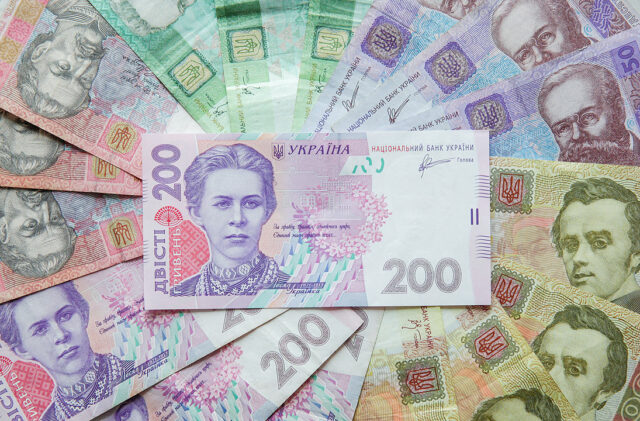
UKRAINIAN hryvnia banknotes are seen in a photo illustration shot in Kiev, Aug. 6, 2014. — REUTERS

KYIV — When Russia invaded Ukraine a year ago, the shelves of the Novus supermarket chain in Kyiv quickly emptied as its supply chains — domestic and overseas — collapsed. Fresh produce became scarce and panic buying spread.

Oleksiy Panasenko, deputy director general for operations at the popular outlet, recalls how the business reeled before Novus, like many other large retail chains, managed to adapt.

“On the second day (of the war), there was already fighting on the outskirts of Kyiv,” he told Reuters. “In February and March, our shops became more than a place to buy food: they were a place to meet, to communicate; so-called islands of stability.”

And when Ukrainian troops forced Russia’s army to retreat from the capital in the spring, the retail sector and the broader economy rebounded.

Data from Ukraine’s European Business Association — which groups over 1,000 foreign and Ukrainian businesses — showed that by the end of May 47% of their members had fully restored operations and another 50% were working with some limitations.

But then missile attacks began in October, dealing Ukraine a hammer blow. Russia struck at power grids and sub-stations across the country, leading to outages during the freezing winter and hitting heavy industry hard.

The economy shrank by a third last year, the largest fall since Ukraine’s independence from the Soviet Union in 1991. Before Russia’s invasion, annual economic output had topped $200 billion.

As the war enters its second year with no sign of slowing, the challenges are formidable. Reuters canvassed seven economists whose forecasts for 2023 ranged from a sizeable — though far less dramatic — decline of 5% in gross domestic product (GDP) to a small expansion.

Access to reliable power will be a major obstacle. While many businesses are finding ways to cope with war, those that cannot run on generators alone will struggle this year, according to the economists, two government officials and executives from two private companies.

ArcelorMittal Kryvyi Rih, Ukraine’s largest steel mill, said its production was currently at about 25% of pre-war levels amid electricity blackouts.

“We see small and medium-sized businesses adapt fairly quickly to power shortages by purchasing generators, batteries, and other equipment, while infrastructure damage remains moderate,” said Olena Bilan, chief economist at Dragon Capital investment house, whose forecast was the most negative among the economists surveyed.

“If this situation persists, the fall in GDP in 2023 will not be as significant as we expect. But our forecast also envisages an end of the war’s hot phase at the end of third quarter of 2023,” said Bilan. She did not explain why Dragon expects the war will cool.

Ukraine’s central bank predicts GDP will grow by 0.3% this year, while the economy ministry forecasts 3.2% growth.

HUGE TOLL
By last summer, Ukrainian officials had already started sounding more confident about the country’s economy, after a UN-brokered grain export deal.

The agreement saved Ukraine’s agriculture, which accounted for about 12% of GDP and some 40% of overall exports before the war.

As of mid-February, Ukraine’s grain exports for the 2022-2023 season — which runs July to June — had fallen 29.3% year-on-year to 29.7 million tons.

A massive increase in military spending, including army wages, has also provided a boost to the economy, said Vitaly Vavrishchuk, head of research at ICU investment house. Ukraine spent 1.5 trillion hryvnias ($40.6 billion) on its defense sector in 2022 – equivalent to around one-third of its economic output — according to the National Security Council.

That was around five times higher than its planned pre-war defense budget.

Tens of billions of dollars in foreign assistance have poured in, both to help plug the budget deficit and arm Ukrainian forces.

But despite the positives, Ukraine is well behind where it was before the war began. And the economic toll is staggering.

The invasion destroyed schools, hospitals, ports, roads and bridges. The Kyiv School of Economics estimated the damage to infrastructure due to the war at $138 billion as of December.

Poverty rates have soared, and the budget deficit is forecast to hit $38 billion in 2023 following a collapse in tax revenues. The government is depending on Western aid to cover it — most of it from the United States and the European Union.

“Ukraine’s government took measures that helped to reduce the monthly deficit in 2023 to $3-3.5 billion, which is still a huge figure,” Finance Minister Serhiy Marchenko said, noting there was also a need for infrastructure investment to fuel a recovery.

President Volodymyr Zelensky’s government has called on donors to start planning for the massive task of reconstruction this year, though it recognizes large scale building will be difficult until some peace returns.

Between 40% and 60% of the energy sector has been damaged, according to Mr. Marchenko, who said at a recent roundtable in February that he could often hear attack drones buzzing above his house or the building of his ministry.

Business events are often held in underground shelters for security. Blackouts are regular. Novus’ Mr. Panasenko said the company lost about 30% of the stores’ opening hours in Kyiv in December and some 20% in January.

The steel sector, a key pillar of the economy, is among the hardest hit. Ukraine was the world’s 14th largest producer of steel before the war.

Two leading steel producers, Azovstal and MMK Illicha in Mariupol, were destroyed and are officially bankrupt.

Those that remain are struggling with power outages.

“Blackouts for companies like us are a big issue,” Mauro Longobardo, general director of ArcelorMittal Kryvyi Rih. The company recently started to import electricity, but the costs were high. He did not provide further details.

Ukraine’s electricity system is connected to the European grid, where prices are higher, and it has imported energy from neighboring Slovakia.

Energy deficits are not the only challenge for Arcelor.

Its warehouse in Kryviy Rih, some 400 km (250 miles)southeast of Kyiv, was hit by three Russian missiles in early December and one worker was killed, Longobardo said.

Arcelor’s mining facility in a recently liberated area was strewn with landmines and most of the related infrastructure damaged.

Logistics are another headache for the company, which used to export up to 80% of its output. Russia blocked Ukraine’s Black Sea ports and Longobardo had to work on new export routes through Poland.

Despite the challenges, Arcelor, Ukraine’s biggest foreign investor, is committed to stay.

The largest employer in Kryviy Rih, the birthplace of Mr. Zelensky, it has kept its 26,000 employees on the payroll despite a production fall. Longobardo said Arcelor would invest $130 million this year. Such plans are rare now.

The outlook for some other sectors is more positive.

Economy ministry data showed Ukraine imported 669,400 generators last year, including over 300,000 in December alone. Mr. Panasenko said 52 out of Novus’s 82 stores were already equipped with generators.

ICU’s Vavrishchuk saw the economy continuing to adapt, and sectors with high state financing would benefit the most.

But obvious security risks were deterring private investments, crucial for a robust recovery.

Ukraine has a mixed record on attracting foreign private investment. In 2021, it ranked as the second-lowest country in Europe on Transparency International’s Corruption Perceptions Index, behind only Russia.

Vavrishchuk said the country would need to enforce the rule of law, ensure transparency and fair competition.

“Participation in the post-war reconstruction could be attractive for investors,” he said. “But still we will have to address all those issues (transparency and corruption) that we have not had time to before the war began.” — Reuters


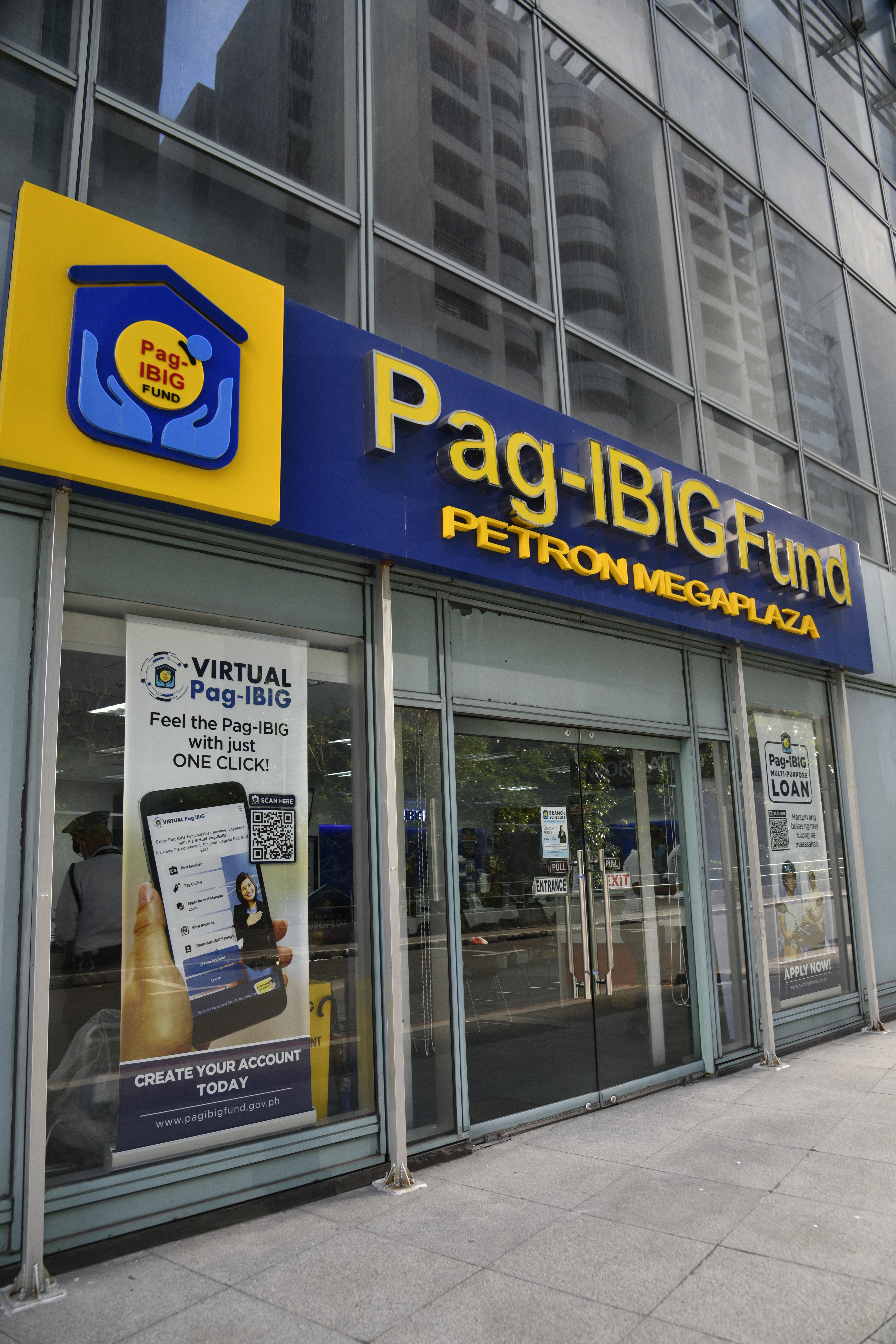
Pag-IBIG members save record-high P39.84-B under MP2, up 54% in 2022

Pag-IBIG Fund members continue to show preference in the MP2 Savings program in 2022 as total savings reached nearly P40 billion, setting yet a new record-high for the amount saved voluntarily by members under the program in a year, its top officials said on Feb. 27.

For 2022, members’ savings under the Modified Pag-IBIG 2 (MP2) Savings Program reached P39.84 billion, achieving an impressive 54% increase from the P25.95 billion collected in 2021.

“Pag-IBIG Fund has again set another record, this time in the amount saved by members under the MP2 Savings Program. This shows the unwavering trust of our members in our capability to excellently and prudently manage their hard-earned peso.  With our strong collections, we can continue to finance the loans of our members and keep our interest rates low. These are in line with our efforts of supporting the call of President Ferdinand Marcos, Jr. to provide a better life for all Filipinos,” said Secretary Jose Rizalino L. Acuzar, who heads the Department of Human Settlements and Urban Development (DHSUD) and the 11-member Pag-IBIG Fund Board of Trustees.

The MP2 Savings Program is a special voluntary savings facility of Pag-IBIG Fund that comes with a maturity period of five years. With a low entry point of P500 as minimum savings, it is designed for active Pag-IBIG Fund members who wish to save more and earn higher dividends, in addition to the mandatory Pag-IBIG Regular Savings they save every month. It provides members the option to claim the earnings of their MP2 Savings annually or compounded at the time of its maturity. The program is also open to pensioners and retirees who were once Pag-IBIG members and had at least two years worth of savings prior to retirement. Initially made available to members in 2010, the MP2 Savings has seen phenomenal growth over the past few years, as more members find it as a safe and low-risk savings facility which provides competitive returns.

Pag-IBIG Fund Chief Executive Officer Marilene C. Acosta, meanwhile, noted the increase in the total number of MP2 savers in 2022. From 750,267 in 2021, MP2 savers increased to 977,643 or 30.3% by the end of 2022.  Acosta further emphasized that the MP2 has become an instrument that has allowed more workers to save, with 86% of the agency’s total MP2 Savers having an average savings of P19,357.

“We are very happy that the MP2 Savings continues to encourage more and more Filipino workers to save. Through the program, we have made more Filipino workers appreciate the value of saving by providing them with a secure savings channel for their future goals. Our members can rest assured that we shall do our best to grow their savings and provide them the highest possible returns. That is Lingkod Pag-IBIG at work,” Acosta said.


Spotlight is BusinessWorld’s sponsored section that allows advertisers to amplify their brand and connect with BusinessWorld’s audience by enabling them to publish their stories directly on the BusinessWorld Web site. For more information, send an email to online@bworldonline.com.

Join us on Viber at https://bit.ly/3hv6bLA to get more updates and subscribe to BusinessWorld’s titles and get exclusive content through www.bworld-x.com.

US warns China against providing lethal aid for Russia’s war in Ukraine

STOCK PHOTO | Image from Pixabay

KYIV — The United States warned China of serious consequences were it to provide arms to support Russia’s invasion of Ukraine, as Kyiv’s top general visited the frontline town of Bakhmut where Ukrainian defenders were holding out against constant attacks.

Washington and its NATO allies are scrambling to dissuade China from providing military aid for Moscow’s war, making public comments on their belief that Beijing is considering providing lethal equipment possibly including drones.

Western fears of China helping to arm Russia come as Moscow’s forces struggle to make gains around key objectives in eastern Ukraine, and as Kyiv prepares a counter-offensive with advanced Western weapons including battle tanks.

“Beijing will have to make its own decisions about how it proceeds, whether it provides military assistance — but if it goes down that road it will come at real costs to China,” White House national security adviser Jake Sullivan told CNN’s State of the Union program.

While China had not moved forward in providing that aid, neither had it taken the option off the table, Mr. Sullivan said in a separate interview on ABC’s This Week program.

Beijing has refused to condemn Moscow’s attack on Ukraine, most recently at a meeting of the Group of Twenty (G20) in India on Saturday. It published a ceasefire proposal on Friday, the first anniversary of Russia’s invasion of Ukraine, but the offer was met with skepticism among Ukraine’s Western allies.

“When I hear reports — and I don’t know whether they are true — according to which China may be planning to supply kamikaze drones to Russia while at the same time presenting a peace plan, then I suggest we judge China by its actions and not its words,” German Defense Minister Boris Pistorius told German public broadcaster Deutschlandfunk on Sunday.

CIA Director William Burns also weighed in regarding China in an interview aired on Sunday, saying the US intelligence agency was “confident that the Chinese leadership is considering the provision of lethal equipment”.

“We also don’t see that a final decision has been made yet, and we don’t see evidence of actual shipments of lethal equipment,” Mr. Burns told CBS’s Face the Nation program.

Republican Representative Michael McCaul, chairman of the US House of Representatives Foreign Affairs Committee, cited reports that drones were among the weapons China was considering sending to Russia.

Mr. McCaul said Chinese leader Xi Jinping was preparing to visit Moscow next week for a meeting with Russian President Vladimir Putin.

Mr. Putin cast the Ukraine war, which he calls a “special military operation,” as a confrontation with the West which threatens the survival of Russia and the Russian people. “They have one goal: to disband the former Soviet Union and its fundamental part — the Russian Federation,” Mr. Putin told Rossiya 1 state television in an interview recorded on Wednesday but released on Sunday.

NATO and the West dismiss this narrative, saying their objective in providing weapons and other aid to Kyiv is to help Ukraine defend itself against an unprovoked attack.

Even so, Mr. Putin’s framing of the war as a threat to Russia’s existence allows the Kremlin chief greater freedom in the types of weapons, he could one day use, including possibly nuclear weapons.

Dmitry Medvedev, Russia’s former president and an ally of Mr. Putin, said in remarks published on Monday that the supply of Western arms to Kyiv risked a global nuclear catastrophe. — Reuters

EU pushes legally binding global pact under UN to end plastic pollution

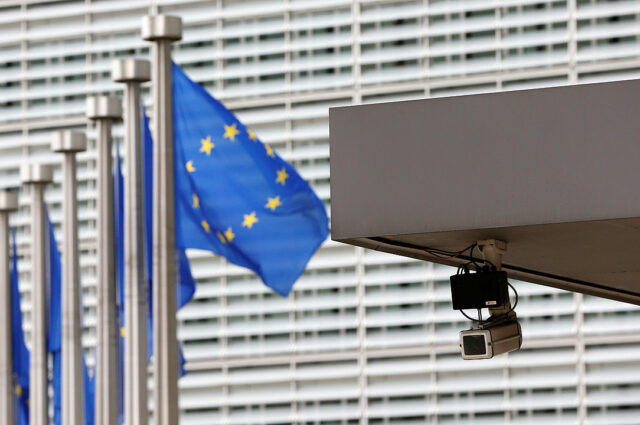
THE MAIN ENTRANCE of the European Union Commission headquarters in Brussels, July 1, 2013. — REUTERS

WHEN UN negotiations over a global agreement on plastic waste convene for a second session this spring, the European Union (EU) will bring evidence that it practices what it preaches.

In November, the European Commission proposed sweeping packaging regulations that would require companies selling products in EU countries to make their packaging easier to reuse, recycle or in some cases compost.

Takeaway food, hot and cold drinks, wine and other alcohol would have to be provided at least partly in reusable packaging by 2030, and the rules would limit unnecessary empty space in packaging. The EU’s overall goal: to reduce packaging waste by 5% by 2030, compared to 2018 levels, and by 15% by 2040.

Many of these policies can also be found in proposals submitted by the EU ahead of the May UN session on plastic waste: minimums on recycled content and reusable packaging, limits on the use of labels claiming biodegradability, and “eco-design” criteria that includes avoiding empty space and promoting durable and refillable packaging. Those objectives also largely reflect the views of the UN negotiations’ “High Ambition Coalition,” a group of countries including EU member states and the UK, Ghana, Senegal, Australia and Canada. The small island states most negatively impacted by marine plastic waste are also calling for better design and reuse.

“The European Union are playing a leading role in advocating for a high-ambition, legally binding global agreement under the UN process to end plastic pollution,” said Steve Fletcher, director of the Global Plastics Policy Centre at the UK’s University of Portsmouth. “The current proposals are aligned with that high ambition that they want to see developed through the treaty process.”

It’s only the beginning. The EU has over the past four years, in legislation and negotiations, begun to make its case for a world less reliant on single-use and virgin plastics. Its vision centers on a global set of rules around the most harmful chemicals used in plastic, a ramping-up of recycled content and reusability, and — most controversially — stricter controls on plastics production. The bloc has also begun tackling possibly its greatest global plastic sin: the wholesale export of waste to developing countries.

The plastic industry is fiendishly complicated and global by nature. Plastic is typically extracted in the form of fossil fuels in one country, then made into nurdles or pellets and shipped somewhere else, where it’s turned into a consumer product, shipped again, and finally sold. After it’s used, most plastic is sent to a landfill or incinerator, and what gets recycled often still ends up polluting rivers and oceans. No matter how it’s disposed of, each kilo of plastic that comes on to the market has already caused almost 3 kg of greenhouse gas emissions through its production; if incinerated, that adds another 2.7 kg, according to the EU’s estimates.

As a result, reforming the plastics industry is also fiendishly complicated. The companies that make and sell plastic work across the globe, and there are no universal standards for their claims around bioplastic, biodegradability, compostability, reusability and recyclability. Guidance and labels for consumers are confusing or nonexistent.

Into this maelstrom comes the EU. Although its vision for a UN plastics agreement will have to be reconciled with that of more than 100 other countries, the bloc is a powerful influence. Its decisions have a wider impact than its borders, both on the companies that supply EU consumers and on the governments of the nations around it. Its proposed plastics rules are also more systemic, comprehensive and wide-ranging than previous efforts, and more likely to be effective than piecemeal bans on individual products. There’s a realistic chance that the EU’s standard becomes the de facto global standard, which would make the bloc something of a global plastics sheriff.

“Of course, we are always happy when our regulation is followed by others,” Virginijus Sinkevičius, European Commissioner for the environment, told Bloomberg Green in an interview. “I think in UNEA everyone recognized that plastic is becoming a growing issue and we should not be naive about recycling our way out of it.” That said, “a sheriff is someone who watches for the others. We are not going to be doing that,” Mr. Sinkevičius said. “But we are always happy when our legislation is being taken as the leading one.”

EU policy is already having an impact. In 2019, the bloc launched a Single Use Plastics Directive that banned polystyrene plates and cups, as well as single-use plastic plates, cutlery, straws, balloon sticks and cotton buds. It also required PET bottles to contain a minimum of 25% recycled plastic, and mandated plastic-bottle caps stay attached to reduce littering.

England, Scotland and Wales have since announced or implemented almost identical bans, while aspiring EU members such as Montenegro, Serbia and Albania have to add the directive to their domestic legislation, in order to be able to join. Coca Cola’s “tethered” bottle caps, a result of the regulations, were also adopted in Britain last year, despite its departure from the EU.

The EU isn’t the only governing body making moves on plastic, and the new world it seeks to encourage isn’t entirely novel. In some South American countries, for example, Coca-Cola sells over 60% of its products in refillable packaging. Many other nations were ahead on restricting single-use plastic bags: Bangladesh was the first to introduce a total ban in 2002, while the EU’s directive only encourages reductions. And several US states have deposit-return schemes, known locally as “bottle bills,” which encourage consumers to return containers for a small refund. In the EU, they are currently standard only in Germany.

But the EU’s legislation is unique in the sense that it tackles packaging as a whole, rather than focusing only on plastic. It also reflects a wider effort by the bloc to influence global environmental policy through “green diplomacy.”

“There is this willingness from the EU to be the green deal leader and the environmental leader globally,” said Justine Maillot, coordinator of the campaign group Break Free From Plastic Europe. “If some big companies are starting to change the way they produce their packaging for the EU market, they may also do the same for other markets.”

Public opinion is also providing a tailwind, Mr. Sinkevičius said, and solutions seen to be working in one place can provide fodder for citizens of other countries looking to apply pressure to their governments. Already, some EU members are racing ahead: In France, a ban on plastic packaging for produce and in fast food restaurants took effect this year.

“It’s very well supported by the citizens,” Mr. Sinkevičius said, adding that the single-use plastic directive “passed the EU legislation so quickly because citizens were all along the process ensuring that it moves quickly.”

Putting in place domestic legislation is a way to add weight and leadership to international negotiations, Fletcher at the Global Plastics Policy Centre said: “I see the [EU’s] motivation as being a bit more positive, around leading by example and really demonstrating that if you have the political commitment you can implement quite strong reforms to the plastics economy.”

PLASTIC ECONOMICS
To some degree, the EU’s hand is also being forced: The plastic waste that the bloc’s countries do produce has a shrinking pool of possible destinations. For years, China was the chief recipient of the world’s plastic waste, and imported roughly half of it until the country banned such imports in 2017. Thailand and Turkey have also restricted imports of plastic waste, and a separate law banning plastic waste exports to developing countries was approved by the European Parliament last month.

That urgency is part of why Mr. Sinkevičius is trying to sell the plastics crackdown as a positive for European business, which can claim first-mover advantage in areas like reusability. “The moment you ship your waste away, you kill any innovation,” he said. “We’re talking not only about reuse — we’re also talking about longer-lasting plastics that can be used for a long time. I think that would be something that would be very much appreciated across the world.”

Jean-Pierre Schweitzer, policy officer at the nonprofit European Environmental Bureau, says higher fossil-fuel costs will also make efforts to create resource-efficient packaging “increasingly interesting from an economic perspective.”

Of course, when the next UN negotiations kick off in May, the EU’s tougher packaging rules will still be an open question. The proposal has yet to clear the European Parliament and Council, and already faces opposition from the plastics, glass and paper industries. There are also implementation concerns to work through, as compliant EU businesses would depend on the enforcement of import standards. And while the new rules are binding for EU member states — creating a harmonious system without the need for separate domestic laws — that also means identical policies will have to be implemented in countries with wildly different waste infrastructures.

Finally, there’s the sheer scale of the waste in question, which continues to grow. In 2020 alone, the EU produced almost 80 million metric tons of packaging waste. Reducing that by 5% would only take the bloc’s waste levels back a few years — and do nothing to erase past damage. “If we went in a time machine back to 2018, it’s not like we’re living in a world free of packaging waste,” Mr. Schweitzer said. “In the same way that in the wild west, the sheriff normally also was guilty of committing his fair share of crimes, I think this is definitely the case for the EU as well.” — Bloomberg

ADVERTISEMENT
ADVERTISEMENT