Home Blog Page 5206

Subsidies extended to GOCCs up 8.5% in 2022

BW FILE PHOTO

SUBSIDIES extended to government-owned and -controlled corporations (GOCCs) reached P200.41 billion in 2022, with the Philippine Health Insurance Corp. (PhilHealth) being the top recipient.

Data from the Bureau of the Treasury (BTr) showed that budgetary support to GOCCs last year increased by 8.5% from P184.767 billion in 2021.

In December alone, subsidies surged by 419.9% to P32.07 billion from P6.169 billion in November and by 50.2% from P21.356 billion in the same month in 2021.

The government extends subsidies to GOCCs to help cover expenses that are not supported by their revenues.

In 2022, PhilHealth received P80.048 billion in subsidies, or nearly 40% of all subsidies last year. However, PhilHealth subsidies were 1.15% lower than the P80.979 billion it received in 2021.

The National Irrigation Administration (NIA) took in P40.662 billion in government subsidies, up by 6.1% from P38.311 billion in 2021.

Subsidies for the National Housing Authority (NHA) declined by 33.4% to P17.125 billion last year from P25.713 billion in 2021.

Also receiving significant subsidies were the Power Sector Assets and Liabilities Management Corp. (P8 billion), the National Food Authority (P7 billion), the National Power Corp. (P6.587 billion), and the Philippine Fisheries Development Authority (P5.603 billion).

The government also extended subsidies to the Bases Conversion and Development Authority (P4.581), the Philippine Crop Insurance Corp. (P4.366 billion), the National Electrification Administration (P3.613 billion), the Civil Aviation Authority of the Philippines (P2.439 billion), the Philippine Coconut Authority (P2.073 billion), and Small Business Corp. (P2 billion).

In December alone, PhilHealth received nearly half or 45% of the subsidies with P14.606 billion. This was followed by the NHA with P3.092 billion and the National Electrification Administration with P2.736 billion.

Other firms that received more than P1 billion in December were the NIA (P2.261 billion), Philippine Crop Insurance (P1.932 billion), Social Housing Finance Corp. (P1.783 billion), the Philippine Fisheries Development Authority (P1.665 billion), and the Philippine Coconut Authority (P1.075 billion).

The National Food Authority was the only major nonfinancial GOCC that did not receive subsidies in December.

Other GOCCs that received no subsidies in December were the Bases Conversion and Development Authority, the Cagayan Economic Zone Authority, Duty Free Phils. Corp., the National Tobacco Administration, the Power Sector Assets and Liabilities Management Corp., and the Sugar Regulatory Administration. — Luisa Maria Jacinta C. Jocson

Food imports may help tame prices in short term — analysts

Authorities seized smuggled onions and garlic in a cold storage facility in Malabon, Feb. 18, 2023. — PHILIPPINE STAR/MIGUEL DE GUZMAN

By Luisa Maria Jacinta C. Jocson, Reporter

IMPORTS of key agricultural commodities may help tame prices in the short term, but the government should address supply-side constraints to ensure inflation eases from recent 14-year highs, analysts said.

This as the Philippine government recently approved imports of onions and sugar to address supply shortages that have pushed prices higher.

“Imports can decrease inflation in the short run, but it can never be a solution in the long run. Once import prices rise, due to global stagflation and higher oil prices, these imports will only contribute to greater inflation,” Leonardo A. Lanzona, who teaches economics at the Ateneo de Manila University, said in an e-mail. 

Soaring food prices have fueled inflation in recent months. Inflation accelerated to a 14-year high of 8.7% in January, from 8.1% in December amid higher prices of vegetables, eggs and fish. Analysts in a BusinessWorld poll last week expect inflation to further quicken to 8.9% in February.

“Anything, really, that the Philippines can do now to better facilitate food imports should go a long way in addressing the country’s inflation problem. The potential certainly is there for food imports to provide a relatively quick fix, too,” Pantheon Chief Emerging Asia Economist Miguel Chanco said in an e-mail.

Makoto Tsuchiya, assistant economist at Oxford Economics, said that non-monetary measures such as importation will be able to rein in supply-push inflation.

“Given the lack of supply of food is pushing up prices, it makes sense that importation should bring down inflation by boosting supply. At the same time, it is important to make sure such a policy is implemented appropriately, as the inability to get them where they are most needed will render the policy less effective,” he said in an e-mail.

Finance Secretary Benjamin E. Diokno earlier said there is a need to implement direct, non-monetary measures to address supply issues and rising inflation. He said the Bureau of Customs (BoC) needs to ensure imports “reach the intended markets as soon as possible.”

Analysts said it is important that imports will arrive on time.

“Otherwise, it will defeat the purpose of importing food or agricultural products to supplement existing domestic supply,” University of Asia and the Pacific Senior Economist Cid L. Terosa said in an e-mail.

The BoC said in a Viber message that it “recognizes its role in the fight against inflation.” It said it has instructed Customs staff at ports to ensure shipments coming into the country are released “efficiently and expeditiously to prevent any additional burden or cost against our stakeholders.”

“Moreover, the Commissioner put the BoC’s Intelligence and Enforcement Groups on task to monitor shipments closely so that any implemented trade facilitation measures are not abused to bring in illicit goods,” it added.

In an e-mail, Moody’s Analytics Senior Economist Katrina Ell said government efforts to increase imports of some items such as onions and refined sugar will help ease supply constraints.

“But it is critical that these imports are appropriately distributed to ease supply shortages. Without appropriate distribution, supply constraints will linger for longer,” she said.

Ms. Ell also noted that replenishing stockpiles is also appropriate to “smooth further supply constraints into the second half of 2023.”

For Mr. Lanzona, relying on imports places a “heavy toll on producers which can permanently disrupt the local supply chains and cause inflation in the long run.”

“The failure is this government’s insistence that they are doing well in terms of policy when obviously they have a clear inflation plan other than to adjust aggregate demand,” he added.

Mr. Terosa recommended other non-monetary measures like securing the distribution network as imports arrive for local distribution.

“Transportation and storage facilities have to be prepared for the influx of imports and their timely distribution. An efficient logistics system is therefore another non-monetary measure needed to bring down inflation,” he added.

Fitch Ratings Asia and the Pacific director Krisjanis Krustin in an e-mail recommended binding import restrictions and addressing inefficiencies in the domestic food supply chain.

“Over the long term, building the agriculture system that is more resilient to climate-related events should help stabilize prices, but such a policy usually takes a long time to bear fruit,” Oxford Economics’ Mr. Tsuchiya said.

SEC issues warning against two entities soliciting investments

TOWFIQU BARBHUIYA-UNSPLASH

THE Securities and Exchange Commission (SEC) advised the public not to put their funds in two investment-taking entities that have not secured the authority to solicit investments.

In separate advisories, the SEC identified the entities as BitPocket and Agri Marine Ventures.

BitPocket, also known as BitPocket Community Wallet, has been offering investment packages starting from $20 up to $10,000. It has been promising passive income for investors, with a daily rate of return of 1% to 300% in 30 to 300 days.

Investors may also earn 1% to 10% as incentives for referrals.

Meanwhile, Agri Marine Ventures has been enticing would-be investors online, the SEC said, adding that the entity has been using its Department of Trade and Industry registration “to put a color of legitimacy as its purported business activity.”

The entity is said to be engaged in farming, poultry, piggeries, fisheries, and wet markets. It has been offering four investment plans called Farming, Direct Referral Bonus, Unilevel, and Rising Cycle.

Investors, depending on their chosen plan, are supposed to earn either through an initial investment of P500 to P10,000 and above or through direct referrals that earn 10% to 15% of their investments.

The SEC, upon its investigation, found out that the investment-taking entities are not registered as a corporation nor as a partnership. They are also operating without a license to take investments from the public. — Adrian H. Halili

PAL inks deal with Emirates to boost connectivity

FACEBOOK.COM/PHILIPPINEAIRLINES

FLAG carrier Philippine Airlines (PAL) signed an interline agreement with Emirates to boost connectivity for both airlines through sharing of networks.

“We are happy to embark on this new interline partnership with Emirates that expands the choices available to Philippine Airlines passengers, who now gain easier access to more destinations across Europe, the Middle East, India, and Africa via our flights to Dubai,” PAL Vice-President for Sales Salvador “Bud” Britanico said in a media release.

“We are eager to expand our reach to various international markets and exciting destinations and help stimulate business and tourist travel for global citizens, as well as provide better service to our fellow Filipinos living and working in overseas nations,” he added.

In the release, PAL said the partnership, which is now in effect, will provide access to passengers of the United Arab Emirates flag carrier to 19 Philippine domestic destinations operated by the local airline.

Among these destinations are Cotabato, Davao, Iloilo, Kalibo, and two Asian regional points via Manila.

For PAL passengers, the interline agreement will allow them to access 21 cities operated by Emirates including Cairo, Frankfurt, Casablanca, and London via Dubai.

“The Philippines is one of our strongest consumer markets and we’re pleased to sign a new interline agreement with the country’s flag carrier. The partnership with Philippine Airlines will help open new links for trade and tourism that will drive more inbound traffic into the Philippines, and expand Emirates’ footprint in East Asia,” Emirates Chief Commercial Officer Adnan Kazim said.

In the coming months, Mr. Kazim said the two airlines are looking to further expand the cooperation by including additional points via Cebu. — Justine Irish D. Tabile

ICTSI adds new 15-meter-deep berth at Manila port

ICTSI.COM

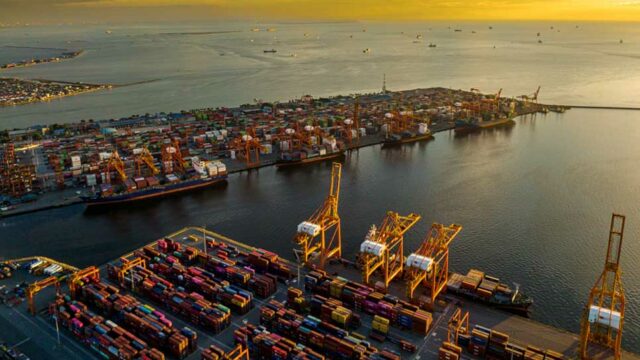
INTERNATIONAL Container Terminal Services, Inc. (ICTSI) will be opening a new berth at the Manila International Container Terminal (MICT) to increase its capacity and enable the handling of ultra-large container vessels.

“We are optimistic of the prospect of welcoming ultra large container vessels at the Port of Manila and are preparing to accommodate the added volume that these more efficient ships will bring,” ICTSI Executive Vice-President Christian R. Gonzales said in a statement.

“With these developments, our goal is to outpace demand and ensure the efficient flow of trade from the port to the local supply chain,” he added.

In a press release, the company said that the berth, which will have a design depth of 15 meters, will be able to handle 18,000 twenty-foot equivalent units (TEUs). Berth 8 will operate with a minimum of four quay cranes with half expected to be delivered in 2025.

At present, MICT is capable of handling non-Panamax ships through its berths 6 and 7 operated by five quay cranes, which is expected to be six this year.

The additional berth will increase the total capacity of MICT to 200,000 TEUs in time for the expected increase in cargo volume as the country approaches full reopening.

Berth 8 will also add 400 meters of quay and 12 hectares of yard phase that the company will construct in phases.

ICTSI operates the MICT under a 50-year concession agreement. The company engages in the business of port development, management, and operations. It has terminals and projects located in Asia Pacific, the Americas, Europe, Middle East, and Africa. — Justine Irish D. Tabile

Lazada Philippines CEO: Customer purchases rise amid economic challenges

THE frequency of Filipino customers purchasing items on e-commerce platform Lazada has increased amid economic challenges such as surging inflation, according to one of its officials.

“People spend a little less because they have more choices, they can go out again. But they come back so often because they already get used to it,” Lazada Philippines Chief Executive Officer Carlos Otermin Barrera said during a media roundtable in Taguig City last week.

Mr. Barrera said that despite a lower transaction size, visits have become more often to the e-commerce platform, which is celebrating its 11th anniversary.

“On average, it (transaction size) has gone down around 20% from pandemic-peak levels but the frequency has more than doubled,” he said.

The average transaction size is a “little smaller” as people are spending on other things and are given the opportunity to visit physical stores again, he said.

“What we have seen is that the market has evolved a lot. The average tickets are slightly lower but people come back more often. That has to do with value-seeking. People come back more often and they know that they can buy it cheaper and they can find good deals,” he added.

Due to the nature of its operations and as more people try to save, e-commerce is “fairly protected” from economic challenges, Mr. Barrera said. The country’s inflation rate hit 8.7% in January compared with 3% a year ago and 8.1% in December.

“People are now trying to save a bit more on their day-to-day purchases. We’re fully aligned with that. That’s the role of online [businesses] — to help people get better value,” he said. “There’s definitely value-seeking [behavior] happening in the market but it is not as pronounced online because people are still coming very frequently.”

“At Lazada, we have a lower cost of doing business. Online businesses are very nimble, very dynamic, and have lower costs,” he said, adding that many sellers have been able to limit price increases.

Meanwhile, Mr. Barrera said that Lazada Philippines is planning to build hundreds of delivery hubs across the country as part of efforts to improve delivery and customer experience.

He declined to disclose specific figures on the e-commerce platform’s planned investment except to say “hundreds.”

“We want to be everywhere. We want to be next to our customers wherever they are. We want to get to the next level in the entire country. We’re very strong in Metro Manila, in Luzon, and some of the other metro areas in the provinces. But the next frontier is faster deliveries across Luzon and other areas,” Mr. Barrera said.

“We are known for our deliveries. Now, we’re going to go and to claim it, so we are investing a lot in building our network, growing our faster deliveries, building more hubs, and getting closer to the customers. We are ready to make that investment because we want everybody to realize that shopping online is much cheaper, faster, and more convenient,” he added. — Revin Mikhael D. Ochave

SEC readies numbering system for all securities

THE Securities and Exchange Commission (SEC) is finalizing a national numbering system that will assign identifiers for corporate and government securities in time for a launch in the first quarter of 2023.

The move is a follow-through of the partnership between the securities regulator and the Association of National Numbering Agencies, an international association that seeks to standardize the financial industry.

In a previous statement, the SEC said the partnership would make the Philippine capital market more accessible and transparent.

Under the partnership, the commission would act as the national numbering agency and be responsible for allocating an entity’s International Securities Identification Number (ISIN), Classification of Financial Instruments  (CFI), and Financial Instrument Short Name (FISN) codes to all instruments of the market, which includes non-listed companies.

“An ISIN is a 12-digit alphanumeric code that uniquely identifies a financial instrument,” the SEC said, while the FISN “is a human-readable identifier that provides essential descriptive information about an instrument.”

It described the CFI as a “6-letter code which provides information on the classification and structure of a financial instrument.”

Through the SEC’s Markets and Securities Regulation Department (MSRD), issuers of securities may be able to request their ISIN, FISN, and CFI codes.

“New securities with Registration Statements filed with the MSRD shall be allocated with securities identifiers once the Registrations Statement is declared effective by the Commission,” the SEC said.

The proposed application for ISIN, CFI, and FISN would cost P1,500. — Adrian H. Halili

Asticom seeking to help more businesses, expand manpower

LOCAL shared services provider Asticom group of companies is planning to serve more micro, small, and medium-sized enterprises (MSMEs) including those overseas while expanding its manpower this year.

“Asticom aims to contribute to the economic recovery of the country. With that, we endeavor to improve businesses through digital transformation and value-driven solutions,” said Mharicar Castillo-Reyes, Asticom president and chief executive officer, in a recent statement.

She added that the group plans to expand its reach “to more MSMEs not just in the Philippines but also overseas.”

Asticom has more than 5,000 employees in 2022 and is planning to expand its manpower base in the next three to five years. It currently has more than 200 clients from industries such as telecommunications, financial services, logistics, real estate, and property management.

A unit under Globe Telecom, Inc.’s group of companies, Asticom is engaged in providing technological solutions to businesses. It also provides staffing solutions, general services, and information and technology (IT) services.

Some of its subsidiaries include IT and business service outsourcing via Asti Business Services, Inc., digital business solutions via HCX Technology Partners, and engineering and infrastructure services through Fiber Infrastructure and Network Services, Inc.

“With the addition of Acquiro Solutions and Tech, Inc., Asticom can now offer a wider range of solutions to help businesses of all sizes adapt to the modern workplace,” the company said.

Meanwhile, Ms. Castillo-Reyes said that Asticom is eyeing to generate new entrepreneurial ventures to expand the number of job opportunities for Filipinos and support the country’s economic recovery.

“As part of our mission and purpose to improve people’s lives, we strive to create more growth opportunities for both people and businesses. To achieve that, we continue our efforts in bridging passionate people to purposeful careers,” Ms. Castillo-Reyes said. — Revin Mikhael D. Ochave

Paris Fashion Week

DIOR — DIOR.COM

Dior spins 1950s styles into modern looks; YSL shows broad-shouldered glamor; Valli focuses on tweeds; Westwood honors late founder

PARIS — Dior designer Maria Grazia Chiuri dove into archives from the 1950s for the French fashion house’s fall women’s catwalk show, adding a modern spin to the era’s feminine mainstays. (See the show here: Autumn-Winter 2023-2024 Ready-to-Wear Show – DÉFILÉS PRÊT-À-PORTER – Women’s Fashion | DIOR)

Models strode around a hulking, fantastical set parading familiar silhouettes — neat, short-sleeved button-up shirts paired with full skirts, bustier dresses, trim cardigans and cropped jackets — in somber colors and stylized floral prints.

Ms. Chiuri softened structured jackets and drew on fabrics woven with metal thread to give a new, creased texture to classically-cut dresses — pushing styles into a sporty direction, for daywear.

Accessories including pearls, gloves and thick, black headbands, the tassels tied into bows.

Ms. Chiuri sought to add a Parisian flair to the styles of the period, which are often associated with American Hollywood productions.

“It was very different, the situation in Europe than in the USA,” she told Reuters, noting that the women who served as inspiration for the collection — Christian Dior’s sister Catherine Dior and French singers Edith Piaf and Juliette Greco — were rebuilding their lives following the Second World War.

Moody organ music kicked off the show.

Models wound around the space — a tent in the Tuileries Gardens — under a massive, hanging set, its bulbous tentacles embellished with hand-sewn crochet work, fringes, sequins, and feathers.

Portuguese artist Joana Vasconcelos described her work as an abstract flower, forming a “magical garden like another world, another dimension.”

“It’s quite unique for the contemporary art world to have this connection to the fashion world,” she said, noting the show added intimacy to her monumental art.

SAINT LAURENT
Saint Laurent designer Anthony Vaccarello drew his Paris Fashion Week audience into a dark, chandelier-lined runway last Tuesday night, sending out a sensual lineup of night-club-ready eveningwear derived from office classics — blazers, pinstripes and pencil skirts. (See the show here: SAINT LAURENT Official Store | YSL.com)

The show opened with a series of sharp-shouldered suit jackets — extra wide, double-breasted — worn over skimpy silk tops and slender, knee-skimming skirts.

Models marched down a carpeted catwalk on spiky, pointy-toed sling-backs, some with scarves trailing behind, as the styles moved between airy, feminine pussy bow blouses and more assertive masculine styles, like hulking bomber jackets and long, tailored coats in red plaid.

Aviator glasses and slicked-back hair styles completed the glamorous looks.

The set, which included low-hanging bronze chandeliers, evoked the ballroom of the Intercontinental Hotel, the label’s favored venue for haute couture collections in the late 1970s through the start of the 2000 — but transported into a “radically contemporary black-box setting,” according to the label’s show notes.

The temporary venue was set in the label’s traditional spot facing the Eiffel Tower, which glittered as the last guests streamed out after the show.

The Kering-owned label grew strongly last year, passing 3 billion euros ($3.2 billion) in sales, and the group plans to expand its retail network this year.

GIAMBATTISTA VALLI
Giambattista Valli switched things up for his fall runway show at Paris Fashion Week, taking a step back from his signature, airy floral styles to focus on tweeds, which he also offered for men. (Watch the show here: Fall-Winter 2023-2024 – Giambattista Valli | Haute Couture)

Models marched down the sparse setting, a hallway in the Musee d’Art Moderne de Paris, wearing jumpsuits, long coats and dresses in tweed fabrics, mostly black or ivory and woven with gold thread.

The show opened with a black, sleeveless jumpsuit cinched at the waist with a gold belt, and worn over a white T-shirt.

Further shaking the fabric from its traditional twin-set role, Mr. Valli worked the material into long overcoats, loose jackets, mini-dresses and a bright, red jumpsuit.

There were also white jeans, the hems chopped off, paired with a glittering floral sequined top in one instance, and a long, collarless tweed coat in another — both worn by male models.

Fancy party dresses were included in the lineup, offered in bright colors — hot pink, red and purple — with neat piles of bows decorating the waist.

Popular with the red carpet set, and known for voluminous, tulle dresses, Mr. Valli broadened his fan base with a collaboration with H&M in 2019.

The label has financial backing from the Pinault family holding Groupe Artemis.

VIVIENNE WESTWOOD
Fashion label Vivienne Westwood paid tribute to its late founder on Saturday, taking to the catwalk in Paris with a collection drawn up by her husband and design partner Andreas Kronthaler. (See the show here: Vivienne Westwood® Official Store | Clothing & Accessories )

Models sauntered through the gilded halls of the Hotel de la Marine overlooking the Place de la Concorde in a chic, punk-infused lineup for the Paris Fashion Week show.

Playing with volumes, tailored coats had bold shoulders and wide sleeves, while the lines on tracksuit trousers curved inwards at the bottom, rather than running straight down the leg.

One look mixed a patchwork of floral patterns, with an ample hooded cape thrown over a slim, fitted skirt and carried on towering platform heels, as rock band AC/DC’s growling rendition of “T.N.T.” thumped in the background.

Closing the show was the traditional bridal attire, with Kronthaler accompanying Ms. Westwood’s granddaughter Cora Corre, who wore an ivory lace body suit with matching platform boots.

London Fashion Week, held last month, was dedicated to Ms. Westwood, one of British fashion’s biggest names, who rose to fame dressing punk band the Sex Pistols. She died in December aged 81. — Reuters


Meralco chairman says plan to go nuclear may take 10 years for PHL

MANILA Electric Co. (Meralco) estimates a timeline of 10 years before nuclear power can be added to the country’s energy mix, its chairman said, as he urged the preparation for its inclusion to immediately start.

“I think the best we can do for the moment is take a vigilant watch on what is happening. We’re about five or 10 years away from making a decision. Is the country ready for it? I don’t think we’re ready,” Meralco Chairman Manuel V. Pangilinan said during a virtual press briefing last week.

The power distributor earlier said that it was looking at small modular reactors (SMRs) as part of its adoption of emerging technologies.

“But we should prepare for it now by educating our people. I think Meralco is prepared to sponsor Filipinos in that particular area,” Mr. Pangilinan said.

In 2022, Meralco said that it was in the process of applying for a grant from the United States to do a feasibility study on introducing nuclear energy in the Philippines.

“But it is very difficult to budget nuclear. For instance, if you’re looking at SMRs, the very first of its kind will be delivered only in 2028,” said Ray C. Espinosa, Meralco president and chief executive officer.

Meralco is “keenly looking” at how the pilot project of NuScale Power, LLC will proceed, he added.

Meralco’s controlling stakeholder, Beacon Electric Asset Holdings, Inc., is partly owned by PLDT Inc. Hastings Holdings, Inc., a unit of PLDT Beneficial Trust Fund subsidiary MediaQuest Holdings, Inc., has an interest in BusinessWorld through the Philippine Star Group, which it controls. — Ashley Erika O. Jose

Montblanc opens a new boutique in Solaire

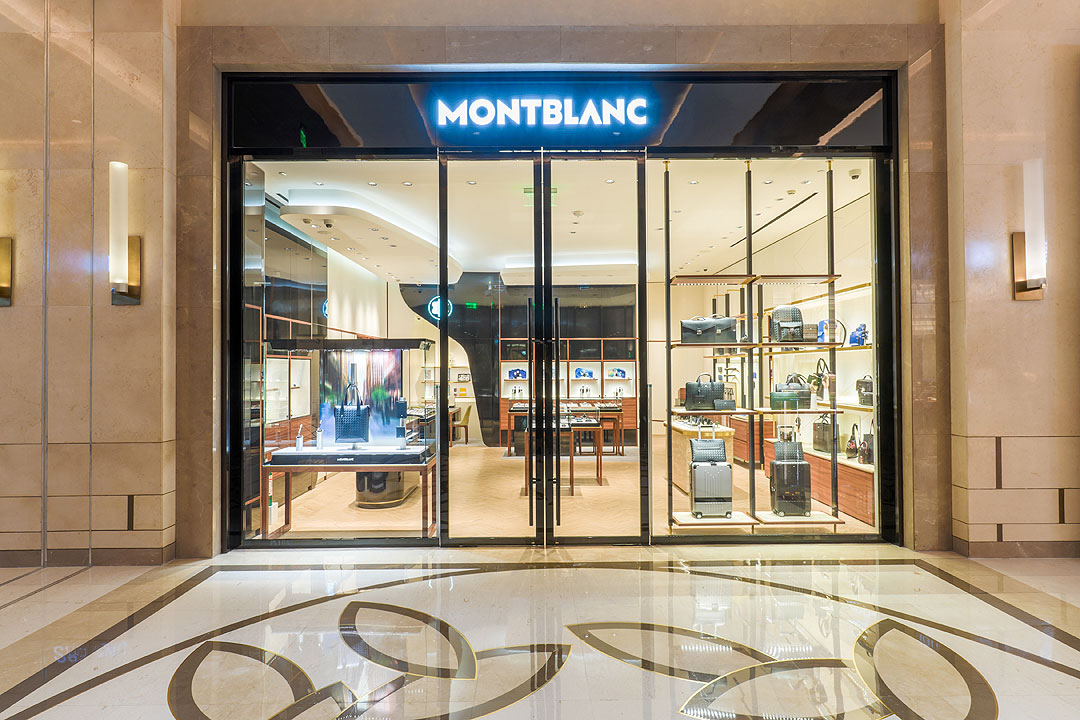
MONTBLANC has opened a new boutique in Solaire, showing off how it moves.

This is due to the launch of a new campaign centered on mobility called “On The Move,” featuring a new collection, the Extreme 3.0. This line features bags and small leather accessories with a carbon-fiber motif pattern evocative of kinetic art, but influenced by the Bauhaus movement. “It’s not only about moving from one physical point to another, but it’s also about how we move on a daily basis and how agile we are to achieve our goals with purpose and passion,” said Cedric Audoubert, Montblanc’s Wholesale Director for Southeast Asia during the shop’s March 2 opening. “We believe that what moves you, makes you.”

The new boutique measures about 89 sqm., and it boasts of details made of walnut, travertino, and leather. According to Mr. Audoubert, the new store is the first in the region to use the NEO 3.0 store concept. “That’s very important, and it really means that it is important for Montblanc to develop the Philippine market,” he said. The store’s design, by Noé Duchaufour-Lawrance, draws inspiration from the handwriting evocative of Montblanc’s signature fountain pen.

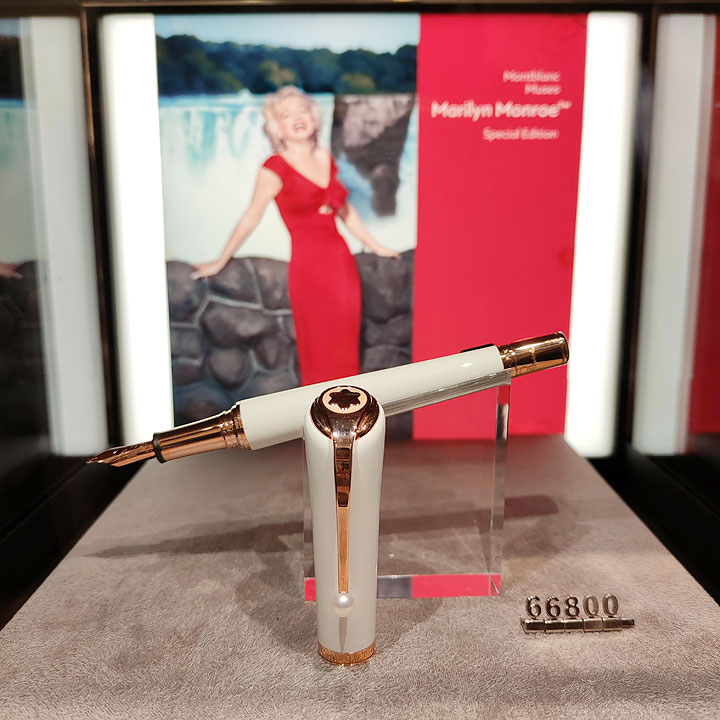
A third of the store is thus dedicated to pens, including a Meisterstück counter showing off its signature pens. A display is dedicated to its Great Characters pens, with pens inspired by John F. Kennedy, Marilyn Monroe (one with the color of her white dress from The Seven-Year Itch), and Elizabeth Taylor (a pen the color of her eyes). The most expensive pen on display is the Jimi Hendrix (P238,400).

As for timepieces, Montblanc’s Star Legacy Nicolas Rieussec Chronograph is the new store’s star, at P1.4 million. This timepiece boasts of the caliber MB R200, with automatic winding and a column wheel mechanism that can be admired through the sapphire crystal case back. The caliber has two barrels which store enough energy for 72 hours of power reserve. The Montblanc Star Legacy Nicolas Rieussec Chronograph comes in a 44.8 mm stainless steel case with an anthracite dial and a matching anthracite Sfumato alligator leather strap.

“For Montblanc, opening a new boutique it’s always a big moment and a milestone. We think that it’s a pure brand expression through this new concept and it’s also a way to express our DNA,” said Mr. Audoubert.

The newest Montblanc boutique is on the Ground Floor of The Shoppes, Solaire Resort Entertainment City, with opening hours from 11 a.m. to midnight daily. Montblanc is also available at Rustan’s Makati, Rustan’s Shangri-La, Rustan’s Cebu, Greenbelt 5, City of Dreams, and Resorts World. — Joseph L. Garcia

A battery is for EV — and beyond

As more electric vehicles, like this unveiled a physical concept model of the Nissan Max-Out EV convertible, appear on the horizon, Nissan and its partners are looking at extending the useful life of batteries after their original intent aboard an EV. — PHOTO FROM NISSAN

Recycling solutions made more clever

AN EFFICIENT BATTERY has always been one of the most crucial parts of a successful electric vehicle (EV). It is a strong determinant of the EV’s driving range, influences driving robustness, and can even be tapped for auxiliary purposes such as feeding energy into a grid.

And while in this era of alarming climate change, as EVs have slowly but surely crept into the mainstream of mobility solutions, their batteries have often been pointed out by critics as a likely source of new hazardous waste to be emptied onto the earth.

And I think Nissan Motor Corp.’s engineers stayed ahead of their game by already keeping issues of sustainability top of mind, even as early as back when they were still drafting the technical plans for the first-generation Nissan Leaf. If you will remember, the Nissan Leaf was first launched in Japan and the United States back in 2010 — and it has since been acknowledged as the car model that democratized EVs in the global consumer market.

Now, over a decade later, Nissan’s think tank continues to research and explore various possibilities of how their EV batteries could continue to be useful, even way beyond the lifetime of the original car that it powered. Yes, this means they’re looking at continuing the productive lifetime of their EV batteries, rather than simply disposing of them and harvesting their scrap value.

As a matter of fact, even several months before the very first Nissan Leaf was launched in Japan in 2010, Nissan already forged a partnership with Sumitomo Corp. in order to create the 4R Energy Corp. The goal of the said company is to relentlessly develop new technologies and infrastructure that would enable Nissan to refabricate, recycle, resell, and reuse its EV batteries. Its CEO Eiji Makino shared, “We knew that when it came to an EV, the recycling solution had to be more clever than the norm and have distinct benefits for EV owners. Simply recycling an old car for scrap metal wouldn’t be good enough.”

If you think about it, the typical lifespan of the first EVs were estimated at about 13 years. For the first-gen Nissan Leaf, that time has come now — this 2023. Therefore, it is expected that some of these EV batteries are coming to the end of their useful life in a car. And 4R Energy Corp. says that it is now ready to process them.

4R Energy Corp. explains that they first have to grade the used battery to see whether the components are still almost good as new (which would earn it a grade of A) or whether the components are more worn, which would earn it a grade of B or C, and so on. Basically, A-grade components can still be reused in the making of new, high-performance battery units for new EVs. B-grade components qualify for applications in industrial machinery, such as forklifts. C-grade components can still find use as part of stationary units that store and supply backup power — say, for example, as a backup energy source for lights and refrigerators in a convenience store in the event of a blackout. According to 4R Energy Corp., all these “recovered and reused” batteries are estimated to give another 10 to 15 years of productive life. Therefore, the useful life span of the batteries are further extended, compared to the original thought of scrapping them after their original end-of-life aboard an EV.

From a more utilitarian perspective, it also gives EV owners a greater return on investment when they know that they can still sell their old EV batteries at a certain value. It adds to the overall, long-term savings computation that would justify the initial, higher acquisition price of a good EV (instead of a traditional, internal combustion vehicle).

In case you were wondering, 4R Energy Corp. gets its name from these four Rs: recycle, refabricate, reuse, and resell. These four concepts aiming for sustainability will be especially important for the next generation of EVs that Nissan will be producing. We are already familiar with the all-electric Nissan Ariya — which is now a production model — but that the brand first showcased during the 2019 Tokyo Motor Show. I remember seeing it up close as a futuristic concept car back then, which to many people’s pleasant surprise, transformed into an actual production car earlier than they expected.

This impressive topic and more were all brilliantly discussed during the 2023 Nissan Futures event held last month at the Nissan Global Headquarters in Japan.