Home Blog Page 518

Mariners quiet Blue Jays’ bats, take ALCS Game 1

BRYCE MILLER of Seattle Mariners pitches against the Toronto Blue Jays. — REUTERS/IMAGN IMAGES/JOHN E. SOKOLOWSKI

TORONTO — Bryce Miller pitched six strong innings, Cal Raleigh homered and the Seattle Mariners defeated the Toronto Blue Jays 3-1 on Sunday night in Game 1 of the American League Championship Series (ALCS).

The Mariners took away the Blue Jays’ home-field advantage in the best-of-seven series.

George Springer hit a solo homer for the Blue Jays, one of the team’s two hits for the game.

Seattle had runners on the corners with one out in the first against Kevin Gausman (1-1) after singles by Raleigh and Julio Rodriguez. The rally was blunted when Raleigh was out at home on Jorge Polanco’s grounder to third.

Springer led off the home first with a homer to right against Miller (1-0) on a first-pitch fastball. His second homer this postseason was the first to lead off a playoff game in team history.

Gausman retired 16 in a row before Raleigh hit his second home run of this postseason with two outs in the sixth — a blast to right center on a 2-2 splitter. Rodriguez followed with a walk and Brendon Little replaced Gausman. After a wild pitch, Polanco stroked an RBI single to left.

Gausman allowed two runs, three hits and one walk with five strikeouts in 5 2/3 innings.

Miller retired 13 straight before walking Addison Barger with two out in the home sixth.

Miller allowed one run, two hits and three walks with three strikeouts in six innings before Gabe Speier took over to toss a perfect seventh.

Randy Arozarena walked to lead off the eighth against Seranthony Dominguez and stole second and third. Rodriguez walked with one out and Polanco grounded an RBI single to right.

Seattle’s Matt Brash pitched a perfect eighth and Andres Munoz a clean ninth to earn the save.

Toronto’s Myles Straw replaced Nathan Lukes in right field in the fourth inning. Lukes fouled a ball off his right knee in the first and suffered a contusion. — Reuters

Rico Hoey shares fourth place finish in Baycurrent Classic in Japan

RICO HOEY — PGATOUR.COM

RICO HOEY posted his season’s best performance in the PGA Tour so far, placing fourth in the Baycurrent Classic won by American Xander Schauffele on Sunday at the Yokohama Country Club in Japan.

Mr. Hoey, the lone Filipino bet in the circuit, assembled a 14-under 270 over four days, capping his strong outing with a bogey-free eight-under 63 that lifted him 10 spots up in the final leaderboard.

The tie at No. 4 was worth $301,600 (about P17.5 million) and marked the highest standing for the Fil-Am ace in 2025, surpassing his joint seventh at the Oneflight Myrtle Beach Classic last May.

Mr. Hoey, who set up his blistering finish with earlier rounds of 68, 68 and 71, finished five strokes behind Mr. Schauffele (265 after a closing 64).

Two-time major champ Mr. Schauffele knocked down three birdies over his last five holes to edge compatriot Max Greyserman (266 after a final-round 65) by one.

Michael Thorbjornsen, also from the US, placed solo third with a 268 total off a 64. — Olmin Leyba

Rico Dowdle stars against ex-mates as Panthers top Cowboys

BRYCE YOUNG threw for three touchdowns, Rico Dowdle rushed for 183 yards and caught a touchdown pass against his former team and the Carolina Panthers beat the Dallas Cowboys 30-27 with a field goal on the final play Sunday afternoon in Charlotte.

Ryan Fitzgerald’s 33-yard kick for his third field goal of the game gave the Panthers (3-3) their second consecutive victory. They held the ball for 15 plays on the game’s last possession.

Young threw two touchdown passes to Tetairoa McMillan and another to Dowdle. He completed 17 of 25 passes for 199 yards and an interception. Dowdle, in his first season with Carolina after four years with the Cowboys, carried the ball 30 times and made four receptions for a team-high 56 receiving yards.

Dowdle finished with 239 scrimmage yards. He is the first player in Panthers history to top 200 in consecutive games.

Fitzgerald kicked first-half field goals of 31 and 55 yards.

Dak Prescott threw for three touchdowns and 261 yards on 25-for-34 passing for the Cowboys (2-3-1), who had only 31 rushing yards.

The Cowboys tied the score at 27 on Brandon Aubrey’s 28-yard field goal with 9:20 remaining. Following punts by both teams, the Panthers gained possession at their own 17-yard line with 6:07 remaining. They converted on a fourth-and-4 play from the Dallas 40 on the final play before the two-minute warning on the way to setting up the winning field goal.

The Panthers went ahead when they drove 80 yards in the third quarter, with Young’s 36-yard pass to Dowdle finishing the four-play series.

Dallas was back ahead 24-20 by the end of the third quarter on Prescott’s 34-yard pass to George Pickens. Carolina regained the lead when Young’s 2-yard pass to McMillan completed a 10-play drive.

Dallas led 17-13 at halftime, largely because of Donovan Wilson’s interception and an ensuing penalty, setting up the Cowboys at the Carolina 12-yard line. Prescott passed 3 yards to Hunter Luepke on fourth down for the points.

Young threw 19 yards to McMillan for Carolina’s first touchdown. That was countered by the Cowboys using 13 plays on a march that ended with Prescott’s 19-yard TD pass to Jake Ferguson.

KC CHIEFS IMPROVE TO .500
Patrick Mahomes passed for 257 yards and three touchdowns and ran for another score as host Kansas City snapped Detroit’s four-game winning streak with a 30-17 win on Sunday night.

Hollywood Brown caught four passes for 45 yards and two touchdowns. Tight end Travis Kelce had six receptions for 78 yards for the Chiefs (3-3).

Jared Goff passed for 203 yards and two touchdowns for the Lions (4-2).

Detroit wide receiver Jameson Williams caught six passes for 66 yards and a touchdown, while tight end Sam LaPorta contributed five receptions for 55 yards and a touchdown. Jahmyr Gibbs gained 65 yards on 17 carries.

Kansas City held a 13-10 halftime advantage.

The Lions got a little too fancy after a long opening drive. On fourth-and-goal from the 1, running back David Montgomery threw an apparent touchdown pass to Goff. The officials called an illegal motion penalty to wipe it out. Detroit settled for Jake Bates’ 28-yard field goal. — Reuters

Hamas begins releasing Israeli hostages as Trump lands in Israel

PEOPLE walk near a US flag hanging on a building, ahead of an official visit by US President Donald Trump, amid a ceasefire between Israel and Hamas in Gaza, in Jerusalem Oct. 12. — REUTERS/RONEN ZVULUN

JERUSALEM/CAIRO — Hamas handed over the first seven of 20 surviving Israeli hostages on Monday, a key step in ending two years of ruinous war in Gaza under a ceasefire deal engineered by US President Donald J. Trump, who landed in Israel to address its parliament.

As thousands of people cheered, hugged and wept in Tel Aviv’s Hostages Square, Israel’s military said it had received seven living hostages after their transfer out of the Gaza Strip by the Red Cross.

“I am so excited. I am full of happiness. It’s hard to imagine how I feel this moment. I didn’t sleep all night,” said Viki Cohen, mother of hostage Nimrod Cohen, as she traveled to Reim, an Israeli military camp where the hostages will be transferred.

The military said the Red Cross was en route to receive more of the remaining 13 confirmed living hostages, who were all expected to be released on Monday. Bodies of some of the 28 dead hostages, and another two whose fate is unknown, will also be released on Monday, along with nearly 2,000 Palestinian detainees and convicted prisoners held in Israel.

LEADERS MEET TO DISCUSS LASTING PEACE
In Gaza, about a dozen masked and black-clad gunmen, apparently members of Hamas’ armed wing, arrived at Nasser Hospital where a stage and chairs had been laid out to welcome returning Palestinian prisoners.

“I hope that these images can be the end to this war. We lost friends and relatives, we lost our houses and our city,” said Emad Abu Joudat, 57, a Palestinian father of six from Gaza City as he watched the handover preparations on his phone.

The releases are one of the most important parts of the first phase of the ceasefire agreement concluded last week in the Egyptian resort of Sharm el-Sheikh, where Mr. Trump and more than 20 other world leaders will be convening later on Monday.

The US mediated the agreement along with Egypt, Qatar and Turkey, with the next phase calling for an international body — a “Board of Peace” — led by Mr. Trump.

Progress towards a lasting peace now hinges on global commitments that may be taken up at Monday’s summit, but much could yet go wrong.

Further steps in Mr. Trump’s 20-point plan have yet to be agreed by the two sides. Those include how the demolished Gaza Strip will be governed once fighting ends, and the ultimate fate of Hamas, which has rejected Israel’s demands that it disarm.

The group’s appearance on Monday with fighters gathered at Nasser Hospital underscored the likely difficulty of assuaging Israeli concerns about the Islamist militant group’s continued hold over Gaza, which it has ruled since 2007.

Further sticking points may include Israel’s own continued withdrawal from the Gaza Strip beyond the lines to which it pulled back in recent days, and moves towards the creation of a Palestinian state, something rejected by many Israelis.

Mr. Trump landed in Israel shortly after the announced release of the first group of hostages to a hero’s welcome.

Israeli Prime Minister Benjamin Netanyahu stood waiting at the airport as Air Force One taxied in, then accompanied Mr. Trump by limousine as a band played.

Mr. Trump will become only the fourth US president to address the Knesset (parliament), following Jimmy Carter in 1979, Bill Clinton in 1994 and George W. Bush in 2008. He will be awarded Israel’s highest civilian honor later this year, Israeli President Isaac Herzog said.

TWO YEARS OF CONFLICT
Two years of war have reduced Gaza to a sea of rubble, with nearly all its 2.2 million people homeless, and caused a humanitarian disaster on a huge scale. It has also reshaped the Middle East through spillover Israeli conflicts with Iran, Lebanon’s Hezbollah and Yemen’s Houthis.

Near Israel’s Reim camp, where the hostages will be brought to be taken to hospitals, people lined the road waving Israeli flags on which a yellow ribbon — the symbol of remembrance for the hostages — was interwoven with the blue Star of David.

At Israeli prisons, some 1,966 Palestinian detainees boarded buses, and most were expected to be released at Gaza’s Nasser Hospital on Monday, an official involved in the operation said.

In a statement on Monday, the armed wing of Hamas affirmed its commitment to the terms and timeline of the deal, contingent on Israel’s adherence. It said Israel agreed to a ceasefire and swap deal after it failed to free the hostages through its military offensive.

United Nations (UN) aid chief Tom Fletcher said on X that Israel had approved the delivery of more emergency supplies and the main UN aid agency working in Gaza, United Nations Relief Works Agency, urged Israel to let it work unhindered in the territory.

The conflict was sparked by a Hamas attack on Oct. 7, 2023, that killed around 1,200 people in Israel with 251 taken hostage, according to Israeli tallies. Israeli airstrikes and ground assaults have since devastated Gaza, killing more than 67,000 Palestinians, the enclave’s health officials say.

Israeli critics of Mr. Netanyahu, including hostages’ families, accused him of deliberately prolonging the war to placate his far-right government coalition partners, whose backing is crucial to his political survival.

The International Criminal Court last year issued arrest warrants for Netanyahu for alleged war crimes and crimes against humanity, which Israel denies. — Reuters

How the United States is eating Trump’s tariffs

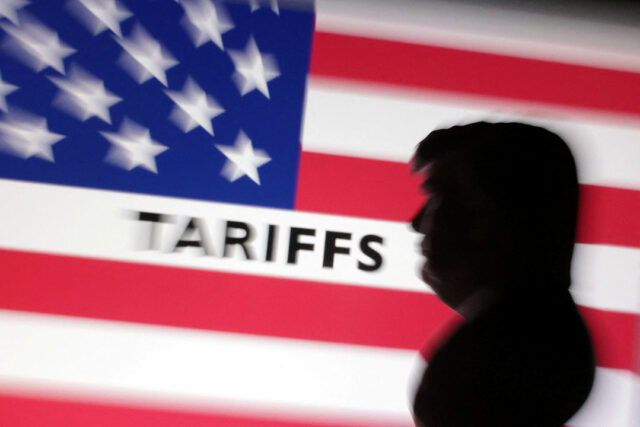
A 3D-printed miniature model of US President Donald J. Trump and the US flag pattern with the word “tariffs” are seen in this illustration. — REUTERS/DADO RUVIC/ILLUSTRATION

FRANKFURT/WASHINGTON — US companies and consumers are bearing the brunt of the country’s new import tariffs, early indications show, contradicting assertions by President Donald J. Trump and complicating the Federal Reserve’s fight against inflation.

Mr. Trump famously predicted that foreign countries would pay the price of his protectionist policies, wagering that exporters would absorb that cost just to keep a foothold in the world’s largest consumer market.

But academic studies, surveys and comments from businesses show that through the first months of Mr. Trump’s new trade regime it is US companies that are footing the bill and passing on some of it to the consumer — with more price hikes likely.

“Most of the cost seems to be borne by US firms,” Harvard University professor Alberto Cavallo said in an interview to discuss his findings. “We have seen a gradual pass-through to consumer prices and there’s a clear upward pressure.”

A White House spokesperson said, “Americans may face a transition period from tariffs” but the cost would “ultimately be borne by foreign exporters.” Companies were diversifying supply chains and bringing production to the United States, the spokesperson added.

WHO IS EATING THE TARIFFS?
Mr. Cavallo and researchers Paola Llamas and Franco Vasquez have been tracking the price of 359,148 goods, from carpets to coffee, at major online and brick-and-mortar retailers in the United States.

They found that imported goods have become 4% more expensive since Mr. Trump started imposing tariffs in early March, while the price of domestic products rose by 2%.

The biggest increases for imports were seen in goods that the United States cannot produce domestically, such as coffee, or that come from highly penalized countries, like Turkey.

These price hikes, while material, have been generally far smaller than the tariff rate on the products in question — implying that sellers were absorbing some of the cost as well.

Yet US import prices, which don’t include tariffs, showed foreign exporters have been raising their prices in dollars and passing on to their US buyers part of the greenback’s depreciation against their currencies.

“This suggests foreign producers are not absorbing much if any of the US tariffs, consistent with prior economic research,” researchers at Yale University’s Budget Lab think tank said in a blog post.

National indices of export prices paint the same picture. The cost of goods exported by China, Germany, Mexico, Turkey and India have all risen, with Japan the only exception.

FULL IMPACT OF TARIFFS YET TO BE FELT
Adapting to Mr. Trump’s tariffs — a still-incomplete set of levies that pushed import taxes from an average of around 2% to an estimated 17% — is still underway. It is seen taking months longer as exporters, importers and consumers jostle over who pays duties worth round $30 billion per month.

“We shouldn’t expect this to be a one-time jump, but rather firms are trying to find ways to soften the blow,” and stretch price increases out over time, Mr. Cavallo added.

European carmakers have looked — so far — to absorb more of the price impact, but consumer firms including Tide detergent-maker Procter & Gamble, Ray Ban-maker EssilorLuxottica and Swiss watchmaker Swatch have hiked prices.

Around 72% of companies in Europe, the Middle East and Africa tracked by Reuters flagged price hikes since Mr. Trump’s trade salvoes started, a Reuters tracker show. Only 18 companies have warned about profit margins.

Separate Reuters analyses of e-commerce websites Shein and Amazon were already showing robust price increases for Chinese products sold in the United States, ranging from clothing to electronics.

China’s so-called “anti-involution” policy, under which producers are encouraged to scale back competition and even cut capacity in key sectors, could add fuel to the fire by curbing the supply of goods such as solar-power equipment.

That has all set the scene for higher inflation in the United States. The Fed cut its benchmark rate last month on concerns the job market was weakening, but policymakers are split over whether or not tariff-driven inflation will likely fade.

The Fed’s newest governor, Stephen Miran, on leave from the Trump administration, argues the tariffs are not inflationary and has brushed off concerns about what he called “relatively small changes in some goods prices.”

A Boston Fed “back of the envelope” calculation projected tariffs would push up core inflation by 75 basis points (bps).

Fed Chair Jerome Powell said tariffs accounted for perhaps 30-40 bps of the latest core inflation reading of 2.9%, but the effect should be “relatively short-lived.”

The Peterson Institute for International Economics estimated that inflation over the next year would be 1-percentage-point higher than if tariffs hadn’t been raised but would then fall back.

GLOBAL TRADE SEEN SUFFERING AS TARIFFS BITE
The rest of the world, however, has no reason to celebrate.

As US consumers struggle to keep up with rising prices, demand for exports is likely to slow. An S&P Global survey of purchasing managers at companies all over the world showed new export orders contracting at an increasing pace since June.

European Union (EU) exports to the United States fell by 4.4% from the prior year in July, the latest month for which data was available, and in the bloc’s former powerhouse Germany they were down 20.1% in August.

The World Trade Organization, too, slashed its forecast for global merchandise trade volume growth next year to just 0.5%, citing a delayed impact from US tariffs. US shipment data tracked by German think tank the Kiel Institute also showed a clear downtrend.

While that all may partly reflect strong front-loading of orders earlier in the year in anticipation of tariffs, it is also prompting caution about the trade outlook.

Dutch bank ING expected a 17% reduction in EU goods exports to the US over the next two years, costing the bloc 30 bps of GDP growth.

“The expected impact of US tariffs hasn’t materialized yet,” Ruben Dewitte, an economist at ING, said. “We anticipate these effects will become more visible in the coming months.” — Reuters


Australia overhauls plan to hike taxes on retirement savings of the wealthy

STOCK PHOTO | Image by Caleb from Unsplash

SYDNEY — The Australian government said on Monday it would revise its proposal to hike taxes on the retirement savings of its wealthiest workers, including backing down on plans to tax unrealized gains, seeking to win support for the contentious legislation.

The original plan, announced in 2023, proposed doubling taxes from 15% to 30% on pension balances above A$3 million ($1.96 million), amid concerns tax concessions in the country’s A$4.1-trillion pension system were deepening inequality.

The plan would impact around 0.5% of the population, or about 80,000 people, at present. But it was opposed by investors and industry groups who raised concerns that more people would be affected over time because the A$3-million balance level was not indexed to inflation. It failed to gather enough support to pass parliament before May’s general election.

Treasurer Jim Chalmers said on Monday the center-left Labor government would make six changes to the legislation and delay its start date by one year to July 1, 2026.

The changes include establishing a 40% tax rate for earnings on balances above A$10 million. Earnings on balances between A$3 million and A$10 million will be taxed at 30%.

The government will also scrap the most contentious aspects of the proposal by no longer applying the tax hike to unrealized gains on pension balances and introducing indexing for balances above A$3 million.

A low-income offset payment will also be increased from A$500 to A$810, and the threshold will be raised to an income of A$45,000 from 2027, ensuring more savings for 1.3 million Australians who relied on the payments, of whom 60% were women.

Mr. Chalmers said the changes would make the legislation more “targeted” and ensure the pension system is “stronger, fairer and more sustainable.”

He said the changes would cost A$4.2 billion over the next four years in lost earnings, mainly due to the start date being delayed a year.

Deputy Opposition Leader Ted O’Brien said it was too early to say if the center-right Coalition would back the plan as they needed more details.

“Today, though, is ultimately a victory for hard-working Australians and their savings and for that I think we should all be very pleased,” Mr. O’Brien told reporters.

AustralianSuper, the country’s largest super fund managing A$365 billion for 3.5 million members, said it welcomed the revised proposal. ($1 = 1.5321 Australian dollars).Reuters

China’s exports, imports top forecasts amid backdrop of fresh trade tensions

ICTSI

BEIJING — China’s export growth picked up pace in September, buoyed by manufacturers finding buyers in markets beyond the US as a tariff deal with President Donald J. Trump remained elusive while investors grappled with the latest salvoes in their trade war.

Outbound shipments from the world’s second-largest economy rose an annual 8.3% last month, customs data showed on Monday, beating a 6% increase in a Reuters poll and registering the fastest growth since March. They compared with the 4.4% increase in August.

Imports grew 7.4%, their fastest pace since April 2024, against a 1.3% gain a month prior, and a forecast rise of 1.5%.

“Chinese firms are actively tapping into new markets with the relative cost advantage of their goods, that’s for sure,” said Xu Tianchen, senior economist at the Economist Intelligence Unit in Beijing.

“The United States now only accounts for less than 10% of China’s direct exports,” he added. “100% tariffs would no doubt add to the pressure China’s export sector is under, but I don’t think the impact will be as large as before.”

Mr. Trump on Friday unveiled additional levies of 100% on China’s US-bound exports, reviving the trade war between the two economic heavyweights, after Beijing put several new rare earth elements under export controls and imposed additional scrutiny on semiconductor users.

Analysts said China was likely trying to increase its leverage ahead of expected talks between Mr. Trump and Chinese President Xi Jinping later this month.

No other country comes close to matching US consumption power, which once absorbed over $400 billion of Chinese goods each year. But policymakers are banking on factory owners boosting sales to Asia, Africa and Latin America to offset the trade curbs and keep the $19 trillion export-oriented economy on track to hit an official annual growth target of around 5%.

The two superpowers appear to be struggling to chart a path beyond their current tariff truce, a 90-day pause from Aug. 11 that ends around Nov. 9.

US and Chinese officials met after last month’s Madrid summit, widely viewed as a breakthrough for a deal struck on TikTok, to discuss technical issues that predated that meeting.

In the meantime, Chinese exporters have made strides in other markets. Exports to regional rival India hit an all-time high in August, according to the most recent customs data, and shipments to Africa and Southeast Asia are on track for annual records.

China’s trade surplus fell to $90.45 billion in September, from $102.33 billion a month prior, and missed a forecast of $98.96 billion.

Pointing to the persistent depressed domestic demand, South Korean exports to China — a leading indicator of the world’s second-largest economy’s imports — rose just 0.5% last month, recent data out of Seoul showed.

A slice of optimism came at the end of September, though, when China’s state planner said it will deploy 500 million yuan ($70.15 million) of policy-based financial tools to accelerate investment projects, as part of Beijing’s efforts to support the slowing economy.

The announcement came too late to influence September data, with manufacturing activity for the month, as well as the most recent retail sales and factory output figures for August lagging as China observers watched to see whether Beijing would announce fresh stimulus or a breakthrough with the Trump administration. — Reuters

Taiwan says ‘T-Dome’ to better integrate air defense system for higher kill rate

TAIWAN’s new president Lai Ching-te waves on stage during the inauguration ceremony outside the Presidential office building in Taipei, Taiwan on May 20, 2024. — REUTERS

TAIPEI — Taiwan’s “T-Dome” air defense system will establish a more efficient and integrated “sensor-to-shooter” mechanism for a higher kill rate, with a year-end special budget to propose specific spending on the system, the defense minister said on Monday.

Taiwan President Lai Ching-te unveiled the multi-layered air defense system he called “T-Dome” on Friday, part of government plans to modernize the military to better deter China, which views the island as its own territory and has ramped up military and political pressure.

Speaking to reporters at parliament in Taipei, Defense Minister Wellington Koo said Mr. Lai’s proposal referred to the “sensor-to-shooter” concept, to integrate systems for a faster, more effective response to enemy targets.

“If you do achieve integration, the probability of successful interception naturally increases and you can conduct firepower coordination with greater efficiency and better resource allocation,” he said.

“Sensor-to-shooter” is something the US military has been focusing on, including with the Combined Joint All-Domain Command and Control concept to connect sensors and shooters into one single system.

Taiwan’s existing surface-to-air defense systems are centered around the US-built Patriot and Taiwan-made Sky Bow missiles, as well as Stinger missiles for low-level intercepts. Taiwan is developing the Chiang-Kong missile for high-altitude interception too.

“If we don’t integrate anti-missile, anti-air and anti-drone capabilities, we won’t be able to achieve efficient interception. We will prioritize procurement that emphasizes mobility and high survivability,” Mr. Koo said.

A special budget to come by the end of the year will focus on new equipment for the “T-Dome,” he added.

“T-Dome” also fits into Taiwan’s asymmetric approach to warfare, Mr. Koo said, to make its forces, which are much smaller than China’s, agile and able to pack a greater and more targeted punch.

Mr. Lai, who rejects Beijing’s sovereignty claims, has pledged to increase defense spending to 5% of w by 2030.

China has never renounced the use of force to bring Taiwan under its control. While Beijing is developing new weapons like stealth fighters and aircraft carriers, its armed forces are also grappling with an ongoing crackdown on corruption. — Reuters

Pluxee launches holiday perks for corporate partners 

PLUXEE PHILIPPINES 

Gifting and rewards provider Pluxee, formerly known as Sodexo, is offering corporate clients freebies for a certain purchase amount and free deliveries ahead of the Christmas rush. 

“It’s been an honor to continue on the legacy that Pluxee Philippines has built over decades of trusted partnerships, enabling us to touch the lives of millions of Filipinos,” Niral Damani, Pluxee’s new country managing director, said in a statement.  

Pluxee said that existing corporate clients can get P1,000 worth of free Pluxee gifts for every P200,000 order, and P5,000 worth of free Pluxee gifts for every P1 million order. 

It also said that both new and existing customers can avail of free nationwide delivery for orders above P100,000 worth of Pluxee Gift Cards, as well as discounts of up to 8% on bulk orders of seasonal gift codes for Purefoods ham, Robinsons Supermarket or Easymart Christmas baskets, and Selecta Ice Cream. 

Meanwhile, its e-commerce counterpart, shop.pluxee.ph, also kicked off digital vouchers for Christmas hams and Selecta Ice Cream, available from October 1 to December 31. 

Pluxee said individual customers who buy at least P12,000 worth of gift codes will receive a free Purefoods Jamon de Bola code, while business accounts can get the same reward for a minimum of P20,000 purchase. 

Exclusive perks also await Pluxee Gift and SM Gift users, such as free upgrades at Figaro Coffee, freebies at Angel’s Pizza and Tien Ma’s, and discounts at Miniso and Crocs. Edg Adrian A. Eva 

France’s Macron says he will continue to serve, ignores calls for resignation

FRENCH PRESIDENT EMMANUEL MACRON — REUTERS

PARIS – French President Emmanuel Macron said on Monday he would continue to serve to ensure stability in the country, ignoring repeated calls by the opposition for him to resign amid France’s worst political crisis in decades.

“Never forget that the mandate given by the French people is to serve, to serve and serve, and to provide answers to the questions of everyday French people, and to do everything possible for the independence of France,” Macron told reporters in Egypt, just days after re-appointing Prime Minister Sebastien Lecornu as head of his government.

“That is the only thing that matters. The rest is the government’s business… I will continue to ensure stability,” added Macron, whose second and final term ends in 2027. — Reuters

China tells the Philippines to stop ‘provocations’ after South China Sea vessel clash

STOCK PHOTO | Image by SW1994 from Pixabay

BEIJING — China on Monday urged the Philippines to not challenge its efforts to “safeguard its territorial sovereignty and maritime rights and interests” after vessels from the two countries clashed near disputed islands in the South China Sea.

China urges the Philippines to immediately stop “violations and provocations”, Lin Jian, a spokesperson of the foreign ministry, told a regular press briefing.

China and the Philippines traded accusations on Sunday over a maritime confrontation near Sandy Cay, a coral reef within the Spratly Islands. — Reuters

Lamudi and Dot Property Group to host CONNECT Manila 2025: A premier gathering for real estate leaders

The Philippine property sector is preparing for one of the most anticipated events of the year as Lamudi and Dot Property Group bring CONNECT Manila 2025 to the spotlight on Oct. 14, 2025, at The Peninsula Manila, Rigodon Ballroom, from 1:00 p.m. to 5:00 p.m.

CONNECT Manila 2025 is envisioned as more than just a networking event. It is a space where developers, banks, CEOs, industry leaders, and real estate professionals can come together to share knowledge, strengthen relationships, and explore new opportunities that will help shape the future of the industry.

The half-day program is set to combine valuable learning with meaningful connections. Attendees will gain fresh perspectives on where Manila’s real estate market is headed, discover projects and financing opportunities through leading developers and banks, and pick up strategies to help agents increase sales and earnings. Beyond the discussions, the event offers rare networking opportunities with decision-makers and peers across the sector.

The speaker lineup includes respected industry figures such as Carl Dy, president of Spectrum Investments; Yvonne de la Peña-Sabordo, revenues consultant; Joe Curran, chief executive officer of Savills Philippines; Katrina T. Jocson, sales director for Brokers Network at RLC Residences; Joey Roi Bondoc, director and head of Research at Colliers; and Mart Polman, chief executive officer of Lamudi. Their insights will provide practical strategies to help participants navigate the evolving real estate landscape with confidence.

CONNECT events have already made an impact across Southeast Asia, particularly in Thailand, where they have built bridges between developers, agents, and property professionals. The Manila edition is expected to deliver the same world-class experience while putting the spotlight on the Philippine market. With collaboration and innovation at its core, CONNECT Manila 2025 promises to spark conversations, open doors for partnerships, and highlight growth opportunities for the industry.

Lamudi and Dot Property Group provide trusted digital platforms and services that support property seekers, developers, and real estate professionals. Through market insights, innovative tools, and industry events, they continue to strengthen connections and contribute to the growth of the real estate sector in Southeast Asia.

CONNECT Manila 2025 is set to be a milestone for Philippine real estate. Industry leaders, professionals, and stakeholders are encouraged to save the date and be part of an afternoon dedicated to insights, strategies, and lasting connections.


Spotlight is BusinessWorld’s sponsored section that allows advertisers to amplify their brand and connect with BusinessWorld’s audience by publishing their stories on the BusinessWorld Web site. For more information, send an email to online@bworldonline.com.

Join us on Viber at https://bit.ly/3hv6bLA to get more updates and subscribe to BusinessWorld’s titles and get exclusive content through www.bworld-x.com.