Home Blog Page 5163

Bullish markets lift DMCI income by 69% to P31B

DMCI Holdings, Inc. has reported a 69% increase in its 2022 consolidated net income to P31.1 billion from P18.4 billion a year earlier due to higher contributions from its subsidiaries.

“2022 was a very good year for us. Bullish commodity and electricity markets brought a significant boost to our businesses,” DMCI Holdings Chairman and President Isidro A. Consunji said in a disclosure to the stock market on Tuesday.

The listed holding firm’s consolidated core net income, which excludes nonrecurring items, rose by 80% to P31.2 billion from P17.4 billion in the previous year.

The excluded one-off items are the P1-billion gain in 2021 from the remeasurement of deferred tax liabilities due to the Corporate Recovery and Tax Incentives for Enterprise Act, and the P93-million loss in 2022 mostly from the asset write-down of gas turbines under Southwest Luzon Power Generation Corp.

DMCI Holdings’ consolidated revenues went up by 32% to P142.6 billion last year from P108.3 billion in the previous year, driven by higher prices for coal and electricity.

Semirara Mining and Power Corp. more than doubled its contribution to P22.7 billion from P9.2 billion due to high domestic coal shipments, higher spot electricity sales, and elevated market prices.

DMCI Homes, which is the firm’s real estate arm DMCI Project Developers, Inc., contributed P4.5 billion because of better selling prices and higher income from forfeitures. Last year’s share was a 2% gain from P4.4 billion previously.

Maynilad Water Services, Inc.’s contributions declined by 6% to P1.4 billion from P1.5 billion as a result “of higher costs for light and power, repairs and maintenance, and chemicals.”

Additionally, DMCI Mining Corp. contributed 7% to P1.3 billion from P1.2 billion.

DMCI Power Corp. likewise contributed P724 million, 28% higher than the previous year’s P580 million, due to higher electricity sales and average selling price.

D.M. Consunji, Inc.’s contribution increased by 55% to P587 million from P378 million in the previous year after the completion of buildings and infrastructure projects.

For the quarter alone, consolidated net income fell by 30% to P3.5 billion last year from P4.9 billion in 2021. Core income also fell by 30% to P3.6 billion from P5.1 billion.

The decline was mainly due to the effects of higher stripping costs and fuel expenses, coupled with income tax expenses, fewer real estate accounts that became revenue, and the depreciation of the peso.

“We expect these markets to soften this year, so our strategy is centered around increasing volumes and optimizing cost management to maintain healthy margins,” said Mr. Consunji, who is also the chief executive officer.

Shares in DMCI Holdings fell by 2.1% or 24 centavos to close at P11.20 apiece at the stock market on Tuesday. — Adrian H. Halili

AEV earnings slip 9% amid power unit’s lower share

ABOITIZ Equity Ventures, Inc. (AEV) ended 2022 with a 9.2% decline in net income to P24.8 billion from P27.3 billion in the previous year after the lower contribution from its power business.

In a disclosure to the Philippine Stock Exchange on Tuesday, the listed holding firm said it recognized P3.5 billion largely from non-recurring foreign exchange gains, or more than six times higher than the P527 million posted in 2021.

Without the one-time gains, core income last year was lower by 21% at P21.3 billion.

“We will continue to focus our energy and resources on strategic innovation and, more importantly, on people and talent,” said Sabin M. Aboitiz, AEV president and chief executive officer, after closing another “transformative year.”

He added that the “techglomerate” continues to take shape, “not just in our financial reports, but also in the major culture shifts taking place within our organization.”

Last year, the company realized a lower income share from Aboitiz Power Corp. after the unit entered into a partnership with JERA Asia Private Ltd. which reduced AEV’s ownership in the company to 52% from 77%.

“If AEV retained the same ownership of AboitizPower, AEV’s normalized core net income for 2022 would have been higher by 5% compared to 2021,” the company said.

AEV’s power business accounted for 62% of total income contributions, while its financial services accounted for 27%. Real estate, food, and infrastructure business units contributed 11%, 0%, and -1%, respectively.

AboitizPower’s income contribution to AEV for 2022 reached P14.3 billion, lower by 10.6% than the P16 billion in 2021.

On a stand-alone basis, the energy company’s net income for 2022 reached P27.5 billion, 32.2% higher than the P20.8 billion recorded in the previous year.

AEV saw a flattish contribution from its banking and financial unit, Union Bank of the Philippines (UnionBank), which also had a flattish year on year stand-alone net income.

In 2022, UnionBank contributed P6.3 billion to AEV, while on a stand-alone basis, the bank and its subsidiaries recorded a net income of P12.7 billion.

The company’s real estate businesses, Aboitiz Land, Inc. and Lima Land, Inc., booked a consolidated net income of P2.6 billion in 2022, which AEV said was flat compared with their 2021 results.

Meanwhile, the group recorded a net loss of P14 million from its food business in 2022, turning around after a net income of P2 billion in 2021. AEV’s food subsidiaries are Pilmico Foods Corp., Pilmico Animal Nutrition Corp., and Pilmico International Pte. Ltd.

Its infrastructure business, Republic Cement & Building Materials, Inc., recorded a net loss of P323 million in 2022 from a net profit of P1.6 billion in the previous year.

“This was due to lower market demand for cement caused by the pre-election construction ban and post-election transition, global commodity price increase of steel, other construction materials, and higher input costs of fuel and electricity,” the company said.

For the fourth quarter, AEV’s consolidated net income declined 55.1% to P3.5 billion from the P7.8 billion reported in 2021, after booking foreign exchange losses during the period.

The company said it recognized a nonrecurring loss of P2 billion due to foreign exchange losses versus a non-recurring gain of P444 million in the same period in 2021.

AEV shares moved up by 0.19% or 10 centavos to finish Tuesday at P53.90 apiece. — Justine Irish D. Tabile

SC affirms denial of Tanduay Distillers’ P1-B tax refund claim

PHOTO BY MIKE GONZALEZ

THE Supreme Court (SC) has upheld the Court of Tax Appeals (CTA) decision that denied Tanduay Distillers, Inc.’s appeal to set aside its allegedly wrongly paid excise tax worth P1.01 billion for the period covering March to July 2013.

In a 12-page decision released on March 2, the SC First Division affirmed the CTA’s decision saying the firm lacked documentary evidence to prove its entitlement to the claim.

“A grant for refund specific to excise tax requires that its raw materials were paid during the period in question and that the taxpayer shows the amount of the claim is of finished goods produced from tax-paid materials,” the tribunal said.

It said the presented documents failed to prove that the excise taxes were paid for and remitted to the Bureau of Internal Revenue (BIR).

Tanduay Distillers is a domestic firm engaged in manufacturing, importing, exporting and selling liquor products.

The firm’s refund claim was prompted by the passage of Republic Act No. 10351 or the Sin Tax Reform Act, which took effect in January 2013.

The law restructured the excise tax on alcohol and tobacco products and removed the classification system, which was based on raw material and price, the specific tax was paid.

Shortly after the law’s passage, the BIR issued revised regulations that disallowed tax credits of excise taxes paid under the old law on the raw materials inventory against the excise taxes due on compounded liquor.

The CTA had ruled that Tanduay Distillers failed to prove that it paid the excise tax passed on by its local suppliers and its remittance to the BIR. It added that the firm did not show that its products were produced from tax-paid raw materials, which the refund is based on.

Tanduay Distillers argued that it presented sufficient evidence to support its refund claim, saying there were no significant irregularities in its raw materials inventory to merit a denial of its appeal.

“The Court finds no cogent reason to depart from the findings of the CTA Division as regards the firm’s failure to comply with the evidentiary requirements for a refund,” the High Court said.

“Needless to state, the taxpayer claimant has the burden of proof to establish strict compliance with the conditions for the grant of tax refund or credit.” — John Victor D. Ordoñez

ZsaZsa Zaturnnah returns onstage to address a new generation

A NEW generation will meet ZsaZsa Zaturnnah as she returns onstage to take on the evil doers threatening her town in the Ateneo Blue Repertory (blueREP) production of ZsaZsa Zaturnnah the Musical… ‘Yun Lang!.

The show will run from March 17 to April 2 at the Ateneo de Manila University’s Doreen Fernandez Black Box Theater in the Areté building.

Based on a graphic novel by Carlo Vergara, ZsaZsa Zaturnnah the Musical… ‘Yun Lang! follows the misadventures of Ada, a gay beauty salon proprietor who transforms into the superheroine ZsaZsa Zaturnnah and saves her town from monsters.

The character of ZsaZsa Zaturnnah first appeared in 2002 in Vergara’s graphic novel titled Ang Kagila-gilalas na Pakikipagsapalaran ni ZsaZsa Zaturnnah (The Spectacular Adventures of ZsaZsa Zaturnnah). The was soon transported to the live stage, and between 2006 to 2011, the musical was performed multiple times by the Cultural Center of the Philippines’ resident company, Tanghalang Pilipino. In 2006, a movie adaptation of the material, ZsaZsa Zaturnnah Ze Moveeh ,was an official entry to the Metro Manila Film Festival that year.

This year, the play written by Chris Martinez, with lyrics, music, and musical direction by Vincent DeJesus, returns to the stage as the only production of Ateneo blueREP’s 31st performance season.

The show presents themes of inclusivity, equality, and celebrating differences. Director Missy Maramara noted the story’s dramatic question — How do queer folk find love in a heteronormative society? — which, she said, was “a very brave of them to ask in the 2000s.”

“There’s been so much development since then… And you will find that as much as we progress, we still have a push back. Is it really about queer love versus heteronormativity?” she said in a press conference at the Ateneo De Manila University on Feb. 28. “The answer is constantly to transform. That’s what we hope our audiences feel as they watch the journey with us, that they do transform.”

Playing the titular role as ZsaZsa Zaturnnah is Kim Molina, who was offered the role in September last year by Ms. Maramara thorough a video call.

“I haven’t seen the movie. And during that time, I hadn’t even read the comics yet. So, I got to read everything. I got to see the clips. So, mayroon akong, ‘Paano ko siya gagawing ako, na hindi lang ako nangopya? (So, I asked myself, ‘How do I make it my own without imitating?’)” Ms. Molina said of her preparation for the role.

“I am just very grateful to the Ateneo, for Missy with helping me out through the process for ZsaZsa to have a new voice, and a new persona in a way,” she added.

Phi Palmos, Adrian Lindayag, and Shaun Ocrisma will alternate in the role of Ada. Joshua Cabiladas, Almond Bolante and Robert Bradley Hao will alternate as Didi, Ada’s sidekick. Juan Carlos Galiano, Jude Matthew Servilla, and Elian Dominguez alternate as Dodong, the object of Ada’s crush. And Kakki Teodoro, and Anyah de Guzman alternate as ZsaZsa’s nemesis, Queen Femina Suarestellar Baroux.

Also in the cast are Carlin Maximo, Jelena Evangelista, Dani Tan, and Heart Romeo as Queen Femina’s Amazonistas, Kyla Rivera as Aling Britney, and other members of the Ateneo Blue Repertory in the ensemble.

Kaki Teodoro who plays Queen Femina, is exploring a different form of femininity.

“In the 2000s, there was a concept of hyper femininity [such as the] supermodel,” Ms. Teodoro said.  “What does it mean to be hyper feminine now? Ano ’yung pagiging (What did it mean to be) hyper feminine then?” she added, citing the recent popularity of the art of drag in mainstream media in the Philippines.

“There is a similarity between ZsaZsa and Femina. But it’s ZsaZsa’s choice that makes all the difference because of her identity as a baklang parlorista (a gay beautician). She could easily hate everyone else in the town, but she doesn’t. And it’s that choice of love and transformation, which makes all the difference. And I think that’s something that we could bring into this generation,” said Anya de Guzman who alternates with Ms. Teodoro.

“ZsaZsa Zaturnnah is not only a superhero, she [is] an icon. She is a movement even, and she further expands the spaces that we have for love and inclusivity here in the Philippines and here in BlueREP at least,” BlueREP company manager Frankie Ramos said.

“Inclusivity is a message that we wish to impart to our audiences, and it is a conversation that we wish to have for the rest of the Filipino community,” she said.

For ticket inquiries, contact Dani Villa (0917-139-4640), or send an e-mail to bluerep.house@gmail.com. For more information, visit www.facebook.com/ateneobluerepertory. — Michelle Anne P. Soliman

A Brown unit acquires land, palm oil milling plant in Surigao del Sur

LISTED holding firm A Brown Co., Inc. on Tuesday said that its subsidiary bought parcels of land spanning 70,000 square meters and a palm oil milling plant in Barobo town in Surigao del Sur province.

In a stock market disclosure, A Brown said Surigao Greens Agri Corp. forged an asset purchase agreement for the acquisition. It said the milling plant in Brgy. Tambis has a factory building and machinery with a rated capacity of 10 metric tons per hour.

“The acquisition will also provide operational and supply chain synergies with existing palm oil milling and refinery facilities in Impasug-ong, Bukidnon that are currently operated by A Brown Energy and Resources Development Inc. (ABERDI), another A Brown subsidiary,” the statement read.

The purchase is also said to “allow access to an existing and operational and cost-efficient crude palm oil milling plant that is able to source palm oil fresh fruit bunches” from nearby provinces’ plantation farms.

The company said the access to plantations as well as reduced logistics and transport costs enable operational and cost-cutting synergies, which increases business growth opportunities.

It recently invested in Surigao Greens Agri to engage in the business of processing, milling, and refining palm oil for manufacture and distribution.

A Brown is a holding firm with business interests in real estate developments to economic and socialized housing segments.

Its subsidiaries are engaged in power generation, manufacturing, and trading of palm oil and other palm products.

On the stock market on Tuesday, A Brown shares fell by two centavos or 2.53% to close at 77 centavos apiece. — Sheldeen Joy Talavera

More companies and stakeholders seen seeking sustainable options

LISTED firm Holcim Philippines, Inc. and web-based enterprise platform Anaplan said they saw increased demand and interest from organizations and stakeholders in monitoring, tracking, and reporting their sustainability performance.

“More organizations are asking us about how they can optimize their operations and reduce their environmental impact,” Anaplan Senior Vice-President and Managing Director for Asia Pacific Mark Micallef told BusinessWorld.

Mr. Micallef said that although more Filipino organizations are starting to move towards creating comprehensive environmental, social, and corporate government (ESG) programs, they are still unsure about where to start.

“In reality, establishing an ESG program needs a structured approach — from conducting a materiality assessment to understand the current baseline, to setting goals and tactical actions along with reporting to track the progress,” he said.

Anaplan’s platform helps organizations in assessing their strategic ESG roadmap by exposing likely outcomes and impacts on the companies’ goals at the point of decision.

“This helps organizations to weigh scenario trade-offs and mitigate risks as well as assess lower cost pathways for ESG initiatives,” Mr. Micallef said.

Holcim initially deployed Anaplan solutions in 2018 to replace the company’s old legacy systems used to plan sales, and commercial and logistics forecasts that were found to be inefficient.

“The rapid growth of the Philippine sustainable development sector and an ongoing evolution of decarbonization regulations and policies, are complexities that legacy business systems have been unable to process and navigate efficiently,” Mr. Micallef said.

He added that the old systems are especially inefficient in accounting for new carbon metrics that Holcim’s customers were beginning to demand.

Holcim makes use of Anaplan’s Connected Planning platform, which interprets market-based solutions, adjusts projected business outcomes to macro shifts, and drives wider time and cost savings at scale.

Anaplan’s solutions also monitor and track Holcim’s decarbonization key performance indicators such as carbon dioxide emissions, fuel mix and emissions forecast.  

“Collaborating with Anaplan gave us the opportunity to simulate real-time, develop forecasts or scenarios analysis, and enhance and hasten the decision-making process,” Holcim Head of Financial Planning, Performance and Analysis Alexander V. Taar said. “All of these translated into increased efficiencies in the production, distribution, and selling processes.”

Mr. Taar said that Anaplan’s solutions helped in communicating to its stakeholders the company’s positive momentum on its digitalization and sustainable development roadmap.

“The growing awareness and appreciation of the value and urgency of businesses embracing sustainability is a development we highly welcome,” Holcim President and Chief Executive Officer Horia-Ciprian Adrian said.

For its part, Holcim has been directly engaging its key stakeholders and has ramped up mass communications to the public to promote sustainable products.

Holcim has embarked on a decarbonization mandate, which according to Mr. Adrian is focused on four areas: greening operations, building better with less, making buildings sustainable, and building new structures from old.

“We are already accelerating this sustainability from greening operations to expanding our eco-friendly offerings,” he said. — Justine Irish D. Tabile

Five discoveries that changed our understanding of how the ancient Egyptians created mummies

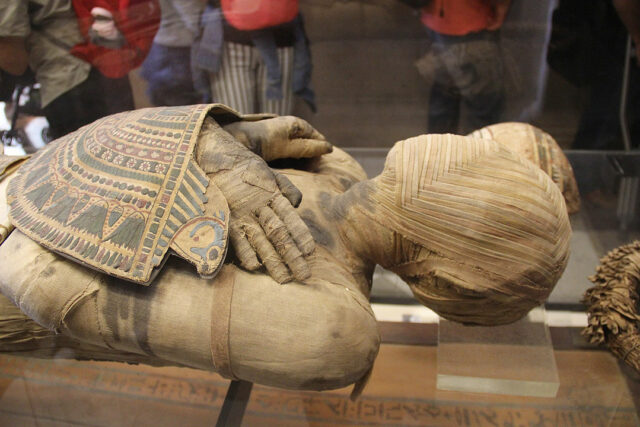
A MUMMY in Ancient Egypt Gallery, Louvre Museum, Paris, France. — COMMONS.WIKIMEDIA.ORG/ WORLDHISTORYPICS.COM

CENTURIES after the first golden coffins were taken to Europe, ancient Egyptian mummies still vividly capture people’s imaginations. Perhaps we’re awed by the grandeur of their rituals and tradition. But new discoveries keep challenging scientists’ perception of these ancient rites.

As a biomedical Egyptologist, I study mummies to learn about life in ancient populations. Over the last 10 years, I have seen a big change in our understanding of how, why and when mummies were created. This has mostly been driven by new scientific discoveries. Here are five of the most important ones that have changed what we know about this ancient process.

1. MUMMIFICATION IS OLDER THAN ARCHAEOLOGISTS IMAGINED

For decades, the oldest known mummies came from the Old Kingdom era (c.2500-2100BC) around the time Egyptians started using coffins more. These mummies are rare, but they show signs of being specially prepared by embalmers. Mummies from before the Old Kingdom period were thought to have been created naturally by burying bodies in graves cut into the hot, dry sand. Scientists thought embalming was developed to keep bodies preserved inside coffins.

But chemical tests published in 2014 and 2018 showed that resins and perfumes were already being used to help preserve the skin of the dead over 6,000 years ago, before coffins were common and long before the Old Kingdom era.

2. THE ‘RECIPE’ VARIED ACROSS EGYPT

Recent scientific studies of mummies and pots used in mummification revealed how methods differed from place to place and weren’t standardized, as previously thought.

Each region had its own embalming workshops where mummies were produced in a complicated and closely guarded ritual. This secrecy means very few records survived.

Embalmers living in politically important areas such as Thebes (modern-day Luxor) had access to the latest mummification materials, as part of an extensive trade network. In more remote areas such as oases, embalmers had to make do. Natron salt, used to dry the body, was heavy and difficult to transport. Resins and perfumes could be expensive as they were traded over long distances in exchange for other luxury goods.

Instead, the embalmers in these remote areas developed creative techniques. For instance, they used sticks to make mummy bundles more rigid or to attach body parts that fell off during mummification. They also created composite mummies, made up of the parts of several people.

We don’t fully understand how experimentation in mummification emerged in different areas or time periods. There was probably an element of trial and error though.

3. ANCIENT ACCOUNTS WERE NOT ALWAYS RELIABLE

The information we have about mummification comes mostly from two ancient Greek writers, Herodotus and Diodorus Siculus. They describe the steps of mummification such as using a hook to remove the brain through the nose. They also tell us the heart was left in the body because it was thought to be important for the afterlife.

Scientific studies using CT scanning have now shown the rules of mummification were less rigid than Herodotus and Diodorus Siculus thought. Only around a quarter of known mummies have their heart left in the body. And many mummies still have their brain. If the embalmers did take the brain out, they sometimes used different methods to avoid damaging the face. Holes have been found in the bottom of the skull and through different routes into the nose.

4. EGYPTIANS UPCYCLED COFFINS

In ancient Egypt, wood for coffins was scarce and expensive. Not everyone could afford a new coffin or linen wrappings. A good coffin – but not a luxurious one – in the New Kingdom would cost about five goats or 250 loaves of bread.

Upcycling and recycling are not modern concepts. To save money, embalmers would often take coffins from tombs already in use. These could be repainted to include the name of the new owner or the parts were sometimes used to fashion a new coffin. Tombs were often raided by robbers looking for valuables, and afterwards they were often left open. This made it easy for others to search the tomb for coffins and wrappings to reuse.

Household linens were also often used as mummy wrappings once they outlived their usefulness. Modern research techniques such as radiocarbon dating are showing this practice was widespread. Coffin materials, linen wrappings and other materials are sometimes dated several hundred years older than the person they were buried with.

5. THE TOURIST TRADE SCRAMBLED HISTORY

We now know mummies in museums outside of Egypt are not always in the coffins they were discovered in. Many mummies are given a historical date based on their coffin style and decoration. The shape, decoration and religious texts on them changed over time.

But in the 19th and early 20th centuries, mummies were sold to tourists, scientists or collectors. Sellers put well-wrapped mummies into coffins from different tombs to encourage people to buy them. The mismatch only comes to light when a mummy is studied scientifically.

It is now illegal to take mummies or any other ancient artefact from Egypt. There are still a lot of mummies left in private houses though, bought more than a century ago and sometimes forgotten about.

Instead of one unwavering tradition, Egyptian mummification was variable. The funerary rituals available to someone demonstrated how important they and their family were. Being mummified using the most up-to-date techniques and materials not only helped secured a person’s position in the afterlife, it was an important sign of status.

It is impossible to know what the next archaeological or scientific find will show us. But one thing is clear: even ancient embalmers had to improvise sometimes.


Jenefer Metcalfe is a Lecturer in Biomedical Egyptology, University of Manchester.

Arts&Culture (03/08/23)


GSIS opens 2023 national art tilt

STATE pension fund Government Service Insurance System (GSIS) is inviting artists nationwide to join the 2023 GSIS National Art Competition. “We want to showcase the creativity and passion of our Filipino artists and provide opportunities for them to be recognized in the local and international scene,” GSIS President and General Manager Wick Veloso said in a statement. The contest, now on its 18th year, is one of the biggest and longest-running art competitions in the country. Filipino artists who are at least 18 years of age (as of May 3, 2023) may join the competition. They may submit one entry in each of the following categories: representational; nonrepresentational (or abstract), and sculpture. This year, the contest has an open theme to give artists freedom to conceptualize their artworks. Entries must be original, created in 2023 and have not been exhibited, revised, or awarded a prize in previous competitions. Entries must be submitted from May 2 to 6, from 8:30 a.m. until 4 p.m. only. Artists with surnames starting with A to F must submit their entries on May 2; G-L on May 3; M to Q on May 4; and R to Z on May 5. Group submission via courier is on May 6. The prizes for the first, second, and third place winners in all categories are P300,000, P200,000, and P100,000, respectively. There will be five honorable mentions in each category who will receive P25,000 each. The names of the finalists will be uploaded to the GSIS website on May 19, while the winners will be announced on June 16. The winning artworks will become part of the GSIS art collection and displayed in the GSIS Museo ng Sining in Pasay City. For the official entry forms, competition guidelines, and other details, interested parties should visit the GSIS website or the GSIS Museo ng Sining Facebook page; e-mail artcompetition@gsis.gov.ph<mailto:artcompetition@gsis.gov.ph> or gsisartcompetition@gmail.com<mailto:gsisartcompetition@gmail.com>; or call 8859-0395, 8479-3588, or 0915-135-1752.


Happy Navarro at ARTablado

HAPPY Navarro worked for 16 years in agencies as a creative designer-director and feeling emotions that are opposite his name. “I felt burned out,” he said. But when he decided to become a full-time artist in 2018, he found happiness in pursuing his passion. Abstracts, urbanscapes, or whatever the mood dictates — these are what he creates on canvases and walls. A muralist, he has done several projects for Robinsons Land Corp. properties such as Robinsons Galleria, Robinsons Magnolia, Robinsons La Union, Robinsons Dumaguete, Robinsons Valencia and Dusit Thani Mactan Cebu. Now, Navarro happily makes the transition from working on murals for mall walls to creating art for gallery halls as he embarks on his first solo show at the exhibition space of the same company who has championed his work as a muralist. Happy Navarro showcases his fine-art work in “Dawn is Breaking from March 1 to 15 at Robinsons Land ARTablado in Robinsons Galleria. On view are canvases of varying, minimalistic hues all chronicling what he saw during contemplative bike rides.


An exhibition for Women’s Month

WOMEN are honored and celebrated this March at Intramuros, Manila through an art exhibit by Kristine Lim titled “The Redemption of Eve (Ang Hustisya Ni Eba)”. “No words will change anyone’s mind about who they perceive Eve to be. No words can change the view towards a woman or women to one’s story. This is not a retaliation. This is not a cry for justice. This is a celebration of the good, the bad, and all the different versions of all women who have lived and remain! We are who we are, and we are redeemed by embracing our roles and identity. We are integral in the fulfillment of the greatest victory; a battle on the cross that has already been won,” the artist said in a statement. The artworks, which are featured in the March issue of Liwayway magazine, are on display at the History Fortress LEGO Education Center, Fort Santiago, Intramuros, Manila. The exhibit runs until March 31.


Mindanao Book Fair this month

THE MINDANAO Book Fair will be held on March 17-19 at the Activity Center, Abreeza Mall, Davao City. The fair aims to promote the love for reading to the Mindanao public, offering a wide assortment of books from bestsellers, religious books, textbooks and educational materials under one roof. Some of the companies joining the fair are 8 Letters Bookstore and Publishing, ABC Educational Development Center Children’s Books, Aklat Alamid, Bookquick Marketing, Brilliant Creations Publishing, Inc., C & E Adaptive Learning Solutions, Cerebro Solutions, Inc., Cengage Learning Asia Pte Ltd, Einfobase Book Trading LLC, Everything’s Fine, Far Eastern University, Kawangis Publishing Co., Milflores Publishing, Inc., Mind Mover Publishing House, Inc., Mindshapers Co., Inc., Mind Tools, Inc., National Book Development Board, OMF Literature, Inc., Pawikan Press, Phoenix Educational Systems, Inc., Rex Education, The Ramakrishna Vedanta Society of the Philippines, Inc., Vibal Group, Inc., Wiseman’s Books Trading, Inc. and more. The fair will host a number of events including book launches, book talks, and book signings, discussions like Exploring Flexible Learning Ecosystem Solutions for the Next Generation of Learners, and PinoySciFi in the Philippines, and various other events by the National Book Development Board. For more information e-mail bsantiago@primetradeasia.com or call 0917-741-3636.


‘Sounds of Blackness’ at The M

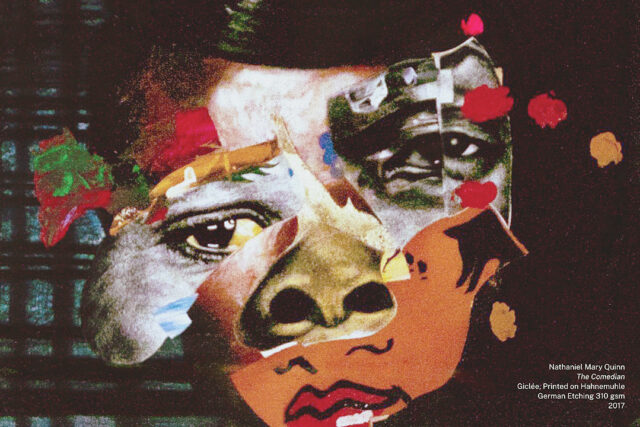
“SOUNDS OF BLACKNESS“ is a group exhibition featuring an ensemble of visual artists from the African Diaspora, whose artworks investigate the history, time, memory, cultural identities, personal narratives, and varying facets of Black identity and Blackness. Named after the Grammy Award-winning musical ensemble it was inspired by, the exhibition features artworks that stimulate viewers’ senses, similar to how music’s vibratory capacity impacts its listeners. The exhibition is curated by Larry Ossei-Mensah and anchored by a selection of works from the collection of Filipino collector Timothy Tan. The exhibit will run from March 14 to June 27. The museum will also be holding the third M Conversations, presenting the curators of “Phantasmapolis x Manila: Select Works from the 2021 Asian Art Biennial” with Nobuo Takamori and Tessa Maria Guazon. The conversation will explore the 2021 Asian Art Biennial’s presentation in Taiwan, on why exhibition iterations matter, and the modalities of support for curators and artists in Taiwan and the Philippines. It will be held on March 11, 2:30 to 4 p.m.  It will be open to the public, with limited seating. “Phantasmapolis x Manila: Select Works from the 2021 Asian Art Biennial” is currently on view at the 3F South Gallery of the M. The Metropolitan Museum of Manila is located at the Mariano K. Tan Center, 30th St., Bonifacio Global City, Taguig City.


West Gallery holds four new exhibits

WEST Gallery is currently holding four exhibits, all of which run until March 18. There is “Eventuality,” an exhibit of works by Jonathan Ching and Aze Ong; “I Smell a Dead Artfeaturing works by Juni Salvador; “Do Did Does Done” featuring works by Don Djerassi Dalmacio; and, “It’s Not You; It Me” by Jazel Kristin. The gallery is located at 48 West Ave., Quezon Cit.


‘Flower Power’ at Ortigas Malls

THE ORTIGAS Malls kicked off its Women’s Month celebration with “Gahum sa Buwak: Flower Power,” an art event featuring works by women artists and fashion designers from Davao, at the G/F East Wing of Estancia Mall in Pasig City. The month-long event will run until March 31. Organized by the Dabawenyo Artists Federation, Inc. art group Floral Artists of Davao, “Gahum sa Buwak” features the works of Rita Bustamante, Mean Tan Guinoo, Annie Tan Sy, Maru Aiharu, Aimee Suarez, Josie Tionko, Ritzel Polinar, Nina Custodio, Marica Llamas Cang, Shaira Secuya, Jing Rabat, and Amanda Fe Echevarria. It also includes photography by Ellah Plariza and digital art by Anthonette Plariza. Meanwhile, throughout the month of March, Estancia Mall will host a series of Gahum sa Buwak art talks. Amanda Fe Echevarria will host “An Introduction to Art Therapy” on March 4, 2 p.m., Rita Bustamante will give a lecture on “the process of a creative experience” on March 12, 3 p.m., and Pilar Braga will discuss “Art and Culture in Davao” on March 26, 3 p.m. There will also be a fashion show calledThreads of Culture” featuring ensembles by Margarita Montemayor Nograles of local brand Kaayo and jewelry designer Kathryn Fanlo on March 19. To cap off the Women’s Month celebration, visitors can join a painting workshop on March 31, 2 p.m., called Musing the Soul, Painting and Poetry in Words and Color, where participants will create art in different mediums.


Silverlens opens Mit Jai Inn exhibit

SILVERLENS has opened an exhibit, “Ocular Vocabulary,” featuring works by Thai artist Mit Jai Inn.Ocular Vocabulary” is a visual language-game that echoes Wittgenstein’s concept of “Sprachspiel,” in which meaning is ever malleable and relative. The exhibition features several of his ongoing series such as Actants, Marking Stones, Book, Capsule, and Grid. Marking Stones, a participatory work, invites viewers to take a painted object made from recycled material in exchange for a promise. This pledge will be captured on film and included in an exhibition video at the end of the show. Also on view at the gallery is Wawi Navarroza’sAs Wild As We Come,” a series of self-portraits that mark a resurfacing out of a period of dramatic changes, childbirth and motherhood, while also relocating from Manila to Istanbul, all traversed during the pandemic and a global standstill. This new body of work was first exhibited at Kristin Hjellegjerde Gallery in London last year, and more recently at Art Fair Philippines’ Special Exhibitions section.As Wild As We Come” is Navarroza’s homecoming exhibition. The gallery is located at 2263 Don Chino Roces Ave. Ext., Makati City.


Shangri-La Plaza hosts book launch and exhibit for Women’s Day

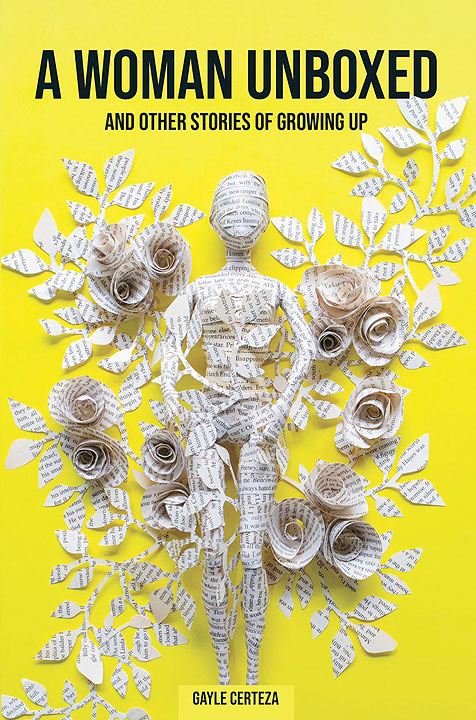
MARKING International Women’s Day today (March 8), Shangri-La Plaza spotlights Filipina creatives banding together and showcasing their experiences, stories, and creations with A Woman Unboxed at the East Atrium at 5 p.m. Writer and publisher Gayle Certeza is launching her book, A Woman Unboxed and Other Stories of Growing Up, which chronicles the joys and challenges of growing up in a small town in Mindanao. Meanwhile mixed media artist Mimi Tecson presents her “A Woman Unboxed” pieces which explore the complexities of motherhood, dreams, and aspirations through the mediums of assemblage and collage. The event also features female writers Carissa Singson, Dina Pecaña, Edlyn Ng Cha, Gina Verdolaga, Kat Gomez-Limchoc, Maureen Sandejas, Rose Marie Yenko, Sonia Roco, and Tweet Sering who are leading talks about inspiration, creativity, and storytelling. For updates and inquiries, follow Shangri-La Plaza on Facebook at www.facebook.com/shangrilaplazaofficial and on Instagram @shangrilaplazaofficial.


LRWC changes name to DigiPlus

LISTED gaming company Leisure & Resorts World Corp. (LRWC) has changed its business name to DigiPlus Interactive Corp., the company announced in a disclosure on Tuesday.

The company said that it aims to provide better services and products from all its subsidiaries and related companies.

“As the company welcomed this change, we strategically thought and created a stronger identity that will help us to become the best version of what we are as a company fun, innovative, digitized, technologically advanced, and most of all, collaborative,” DigiPlus President Andy Tsui said.

“We’re very thrilled to share with all of you what we have prepared this year,” Mr. Tsui added.

In an earlier disclosure, the company’s board of directors approved the amendment to its articles of incorporation, changing the name of the company and its address to Taguig City, for which the Securities and Exchange Commission (SEC) issued a filing certificate on Feb. 28.

Additionally, the board of directors approved an increase in authorized capital stock to P7 billion, from the previous P5 billion, divided into 7 billion shares.

“The company has been sharing its expertise for over 20 years in the retail gaming market and has continuously provided world-class multi-gaming platforms with a strong distribution network of entertainment sites all over the country,” the company said.

In a separate disclosure on Tuesday, the SEC approved the change in DigiPlus stock symbol to PLUS from LR.

Shares in the company fell by 2.75% or eight centavos to close at P2.83 apiece on Tuesday. — Adrian H. Halili

Gov’t makes full award of reissued 10-year bonds

BW FILE PHOTO

THE GOVERNMENT made a full award of the reissued 10-year Treasury bonds (T-bonds) it auctioned off on Tuesday as its average rate was lower than secondary market levels after better-than-expected inflation data.

The Bureau of the Treasury (BTr) raised P25 billion as planned from the reissued 10-year bonds it offered on Tuesday as total bids reached P71.156 billion, more than twice the amount on the auction block.

The bonds, which have a remaining life of nine years and six months, were awarded at an average rate of 6.378%, with accepted yields ranging from 6.223% to 6.41%.

The average rate of the issue was 12 basis points (bps) higher than the 6.258% quoted for the series when it was last offered on Feb. 21.

Still, this was 37.20 bps below the 6.75% coupon quoted for the series.

It was also 8.47 bps lower than the 6.4627% quoted for the 10-year bonds and 7.10 bps below the 6.449% seen for the same bond series at the secondary market prior to the auction, based on PHP Bloomberg Valuation Service Reference Rates data provided by the Treasury.

“The Auction Committee fully awarded the reissued 10-year Treasury bonds at today’s auction. With a remaining term of nine years and six months, the T-bonds (FXTN 10-69) fetched an average rate of 6.378%, lower than the original coupon rate of 6.75% set upon first issue last September 2022 and the secondary market benchmark rate,” the BTr said in a statement on Tuesday.

“The auction attracted P71.2 billion in total tenders, 2.8 times the P25-billion offer. With its decision, the committee raised the full program of P25 billion, bringing the total outstanding volume for the series to P140 billion,” it added.

A trader said in a Viber message that the Treasury made a full award of its T-bond offer as demand was strong, with a five-year bond issue maturing on Wednesday.

“Better-than-expected CPI (consumer price index) capped the yields, although the average rate was still higher compared to last auction,” the trader said.

“Market sentiment was also supported by the latest easing of the headline inflation,” Rizal Commercial Banking Corp. Chief Economist Michael L. Ricafort said in a Viber message.

Headline inflation eased for the first time in six months in February, as the rise in transport costs slowed from the month prior, the government reported on Tuesday.

Preliminary data from the Philippine Statistics Authority showed the consumer price index stood at 8.6% in February, slowing from the 14-year high of 8.7% in January. However, this was faster than the 3% print recorded in February 2022.

Last month’s inflation print was below the 8.9% median in a BusinessWorld poll conducted last week and was closer to the lower end of the 8.5-9.3% estimate of the Bangko Sentral ng Pilipinas.

However, core inflation picked up to 7.8% in February from 7.4% the previous month and 1.9% in the same month last year. This was the highest in more than 22 years or since the 8.2% recorded in December 2000.

The BTr wants to raise P200 billion from the domestic market this month, or P75 billion via Treasury bills and P125 billion via T-bonds.

The government borrows from local and external sources to finance its budget deficit, which is capped at 6.1% of gross domestic product this year. — A.M.C. Sy

Sotheby’s, Russian billionaire Rybolovlev agree to mediate art fraud case

SALVATOR MUNDI, a painting attributed to Leonardo Da Vinci, is one of several involved in a case of alleged art fraud between Russian billionaire Dmitry Rybolovlev and Sotheby’s auction house. — WIKIPEDIA.ORG

NEW YORK — Sotheby’s and Russian billionaire Dmitry Rybolovlev have agreed to mediation to try to resolve the oligarch’s art fraud lawsuit against the auction house.

Mr. Rybolovlev accused Sotheby’s of helping his former art dealer, Switzerland’s Yves Bouvier, acquire 15 pieces of world-class art for which Mr. Rybolovlev paid more than $1 billion.

Mr. Bouvier charged hidden markups that caused Mr. Rybolovlev to overpay by hundreds of millions of dollars, the lawsuit alleged.

A letter that Mr. Rybolovlev’s lawyer filed on Monday in Manhattan federal court said “the parties jointly report that we have conferred about the prospect of settlement and have agreed to proceed by mediation with a magistrate judge.” The letter was filed five days after US District Judge Jesse Furman said Mr. Rybolovlev could pursue fraud-related claims over four works including Salvator Mundi, a depiction of Christ attributed to Leonardo da Vinci.

Mr. Furman dismissed claims over 11 of those works and encouraged both sides to settle and avoid an “expensive, risky, and potentially embarrassing” trial.

Sotheby’s has said it had no knowledge of fraud. Mr. Rybolovlev sued through his companies Accent Delight International and Xitrans Finance.

In Monday’s letter, both sides said Mr. Furman had recommended a magistrate judge whose niece works at Sotheby’s law firm.

They asked that another judge be assigned “out of an abundance of caution.”

According to court papers, Mr. Bouvier bought Salvator Mundi for $83 million in 2013 and quickly sold it to Mr. Rybolovlev for $127.5 million. Mr. Rybolovlev went on to sell Salvator Mundi at Christie’s in 2017 for $450.3 million, a record price for a painting. — Reuters

Philippine patients unable to find opioid oxycodone

FLICKER/CINDY SHEBLEY

By Patricia B. Mirasol, Reporter

FILIPINO patients who deal with severe pain have found it difficult to buy oxycodone, a strong semi-synthetic opioid used medically to treat moderate to severe pain, because it has been out of stock in many local drugstores.

Oxycodone brand Oxycontin Neo in 10 mg, 20 mg and 40 mg doses have been out of stock since December. Oxynorm 5 mg hard capsules are also nowhere to be found.

Oxynorm 10 mg is available in select Mercury Drug store branches.

“The speculative arrival of new inventories has not yet been confirmed,” the drugstore said in a customer service e-mail dated March 6.

“Mercury Drug routinely communicates with Mundi Pharma Philippines about the availability of Oxycodone products in the country,” it said, referring to the distributor. “Rest assured that delivery to Mercury Drug branches will be prioritized once the stocks are available in our distribution center.”

BusinessWorld tried to contact Mundi Pharma Philippines eight times on their listed trunk line, but their phone just kept ringing.

Oxycodone is used to relieve pain severe enough to require opioid treatment and when other pain medicines did not work well enough or could not be tolerated, according to the Mayo Clinic website.

It belongs to the group of medicines called narcotic analgesics or pain medicines. Oxycodone acts on the central nervous system to relieve pain.

Minimizing medicine supply disruptions “centers on an environment conducive to innovation characterized by stable, predictable, sustainable and collaborative policies on access to medicines,” Teodoro B. Padilla, executive director of the Pharmaceutical and Healthcare Association of the Philippines (PHAP), said in an e-mail.

Only 13% of medicines introduced in 2012 to 2021 globally are available in the Philippines, he said.

Mr. Padilla said drug reviews by stringent regulatory authorities in other countries have made regulatory approvals by the local Food and Drug Administration faster.

“The government can expand more sustainable approaches such as pooled procurement, price negotiations, multi-year contracts, and partnerships,” the head of PHAP, which represents 40 member companies in the biopharmaceutical medicine and vaccine industry, said.

It could also leverage on the pharmaceutical industry’s nationwide supply chain to ensure that the right medicine reaches the right patient at the right place at the right time, he added.

“It is imperative that we strengthen our pharmaceutical planning, forecasting and inventory management through the use of technology to determine the volume of medicines needed by the Filipino people.”