Home Blog Page 5145

Manila Water expands its distribution network

MANILA Water Co. announced on Thursday that it has expanded its Metro Manila east zone network to 5,362.73 kilometers of water pipelines.

“The robust expansion of our water connections is part of Manila Water’s commitment to ensure accessible and reliable clean, potable water to cater to the increased demand of more customers,” Nestor Jeric T. Sevilla, Jr., Manila Water’s corporate strategic affairs group head, said in a media release.

The company said that when it inherited the water network in 1997, it had 2,497 kilometers of pipelines. It said the expanded pipelines as of September 2022 will help supply clean and potable water within its franchise area while ensuring 24/7 water supply to its customers.

The company said that it has so far installed about 1.14 million service connections, including 26,643 new household connections as of the third quarter of this year and 631 new service connections for commercial and industrial sites.

Last week, Manila Water said that it is ramping up its water sampling to ensure water potability within its coverage area.

The water concessionaire serves Manila’s east zone network, which comprises Marikina, Pasig, Makati, Taguig, Pateros, Mandaluyong, San Juan, portions of Quezon City and Manila, and several towns of nearby Rizal province. — Ashley Erika O. Jose

Preserving a 100-year legacy of banking

THE country’s first privately owned commercial bank, China Banking Corp. (China Bank), marked its 100th anniversary in August 2020. While preparing to celebrate its centennial amid the pandemic, the bank embarked on a genuine restoration of its original headquarters located in Manila’s Binondo district — the world’s first Chinatown.

Now known as the China Bank Binondo Center, the building was completed in 1924 and served as the head office for six decades. German architect Arthur Gabler-Gumbert designed the seven-story structure in the Neoclassical fashion using a variation of the Beaux-Arts architectural style.

As the centerpiece of China Bank’s centennial celebration, the Binondo Heritage Restoration Project (BHRP) aimed to preserve the bank’s legacy in the history of the Chinese Filipino community for future generations, without disrupting the branch banking operations while the structure was undergoing a massive renovation. This building now stands as an architectural reminder of Binondo’s heydays as the “Wall Street of the Philippines” as well as the center of trade and commerce in the country.

Recently, the Federation of Filipino Chinese Chambers of Commerce and Industry, Inc. (FFCCCII) organized a tour of the China Bank Museum occupying the fourth floor of the restored building, where memorabilia and photographs honor the bank’s founder Dee C. Chuan and his successors. On hand to welcome the FFCCCII delegation were China Bank Chair Hans Sy and President William Whang.

During the tour, Mr. Sy revealed that it was his first time to step into the museum curated by art critic Marian Pastor Roces. He said: “The gravity of the pandemic necessitated a modification of plans, but it does not diminish the significance of the occasion. The restoration and heritage project is China Bank’s contribution to the revitalization of Binondo.”

This was affirmed by Mr. Whang, who shared that the project’s objective is to preserve not only China Bank’s culture and legacy, but more importantly, the bygone character of Binondo for generations to come. He disclosed that among the bank’s first clients were the late taipans Henry Sy and John Gokongwei.

Both the National Historical Commission and the National Museum of the Philippines (NMP) recognize the significant role of the China Bank Binondo Center in the nation’s history. In fact, it has been designated by the NMP as an “Important Cultural Property.” According to BHRP Chair Alex Escucha, great care was taken to ensure that the building met the highest standards of resilience and structural sustainability, in addition to bringing it up to modern building and safety codes. The result is touted as the most faithful restoration of any building in the Philippines today.

PACQUIAO NFT LAUNCH
Filipino boxing legend Emmanuel “Manny” Pacquiao has been appointed brand ambassador and honorary chair of Systems Technologies Apps Robotic Trading, Inc. (START).  The Japan-based company is primarily involved in the creation and marketing of non-fungible tokens (NFTs) along with its Singapore-based partner NFT One. They have created a lot of buzz in the Japanese NFT trading community due to their fast-selling “Neo Stackey” collection of NFTs.

Fresh from his triumphant exhibition match against South Korean martial artist DK Yoo last weekend, Mr. Pacquiao flew back to Manila from Seoul for the contract-signing ceremony with START Founder and CEO Kousei at the EDSA Shangri-La Hotel in Mandaluyong City. The partnership is envisioned to leverage on the former senator’s image as one of the most bankable sportsmen in the world — with his diehard followers numbering in the millions. In Japan alone, he has gained a cult following and is accorded with rock-star status who is revered wherever he goes.

START also plans to build schools and encourage a new generation of engineers to help create breakthroughs in the NFT industry as part of its core advocacies. After all, its mission is to become the dominant player in the global NFT market.

The opinion expressed herein does not necessarily reflect the views of these institutions and BusinessWorld.


J. Albert Gamboa is the chief finance officer of Asian Center for Legal Excellence and chair of the FINEX Media Affairs Committee.  #FinexPhils www.finex.org.ph

Overseas Filipinos’ cash remittances (Oct. 2022)

MONEY SENT HOME by overseas Filipino workers (OFWs) rose by 3.5% in October, with migrants taking advantage of the strong dollar ahead of the holiday season. Read the full story.

Overseas Filipinos’ cash remittances (Oct. 2022)

How PSEi member stocks performed — December 15, 2022

Here’s a quick glance at how PSEi stocks fared on Thursday, December 15, 2022.


Prices of Noche Buena items surge in 2022

The general increase of the Noche Buena items, as measured by the basket’s price index, surged by 25.7% annually this year.This was a turnaround from the 15.2% contraction in 2021. This brought the average price hike of the basket to 2.8% from 2012 until present. Since 2011, the Noche Buena Price Index has climbed by 25.5%. BusinessWorld has been monitoring the annual prices changes of the Noche Buena items through a price index that gauges how faster (or slower) the price of this representative basket of goodshas risen (or fallen) over the years. The prices of goods are based on the Department of Trade and Industry’s (DTI) list of suggested retail prices. Earliest available data date back to 2011, which also serves as the base year for calculating the Noche Buena index.

Prices of Noche Buena items surge in 2022

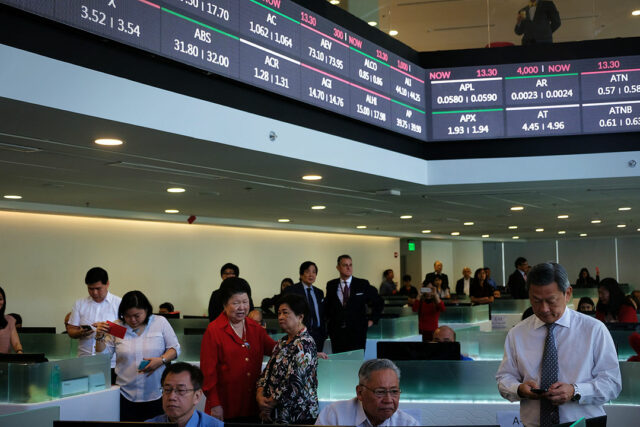
Stocks fall as Fed chief hints at more rate hikes

BW FILE PHOTO

SHARES closed lower on Thursday after the US Federal Reserve chief said more rate hikes are needed to rein in elevated inflation.

The bellwether Philippine Stock Exchange index (PSEi) lost 48.27 points or 0.73% to close at 6,566.80 on Thursday, while the broader all shares index declined by 18.68 points or 0.54% to 3,430.89.

“Share prices pulled back as the US Fed chairman remained firm on his hawkish stance on monetary policy,” AB Capital Securities, Inc. Vice-President Jovis L. Vistan said in a Viber message.

“The local bourse dropped … following the expectation that the Fed may keep high interest rates longer while waiting for the decision of the Bangko Sentral ng Pilipinas (BSP),” Philstocks Financial, Inc. Research Analyst Claire T. Alviar said in a Viber message.

Ms. Alviar said the Fed chief’s hawkish tone caused negative sentiment.

“Chart-wise, the market was still struggling to stay above the 6,600 level,” she added.

The US central bank will deliver more interest rate hikes next year to get inflation under control, Fed Chair Jerome H. Powell said on Wednesday.

The statement came after the Fed its benchmark overnight interest rate by 50 basis points (bps) to the 4.25%-4.5% range and projected it could rise to 5%-5.25% next year.

The Fed has now hiked borrowing costs by 425 bps since March.

Meanwhile, on Thursday, the BSP likewise raised benchmark interest rates by 50 bps, bringing its policy rate to 5.5%. Rates on the overnight deposit and lending facilities were likewise raised to 5% and 6%, respectively.

The BSP has raised rates by 350 bps since May.

All the sectoral indices closed lower on Thursday. Services declined by 23.86 points or 1.39% to 1,687.17; property lost 35.68 points or 1.23% to end at 2,844.97; financials decreased by 16.41 points or 0.98% to 1,655.30; mining and oil went down by 70.91 points or 0.67% to 10,398.57; industrials dropped by 38.29 or 0.41% to 9,260.96; and holding firms inched down by 1.14 points or 0.01% to close at 6,401.77.

“All sectors were in the red, led by the 1.39% drop in the services sector. Among index members, Wilcon Depot, Inc. had the biggest gain of 2.5%, while PLDT, Inc. was at the bottom, declining 4.29%,” Ms. Alviar said.

Value turnover dropped to P7.27 billion on Thursday with 2.06 billion shares changing hands from P115.96 billion with 5.5 billion issues traded on Wednesday.

Decliners outnumbered advancers, 101 to 71, while 45 names closed unchanged.

Foreigners turned net buyers on Thursday with P7.6 million from the P688.71 million in net selling seen the previous day.

AB Capital’s Mr. Vistan placed the PSEi’s support at 6,440 and resistance at 6,660, while Philstocks Financial’s Ms. Alviar put support at 6,400 and immediate resistance at 6,600. — Justine Irish D. Tabile

Peso extends climb vs dollar as Bangko Sentral hikes benchmark interest rates

BW FILE PHOTO

THE PESO strengthened against the dollar on Thursday after the Bangko Sentral ng Pilipinas (BSP) raised borrowing costs anew at its policy meeting in its fight against inflation.

The local currency ended at P55.685 against the greenback, up by six centavos from Wednesday’s P55.745 close, data from the Bankers Association of the Philippines’ website showed.

The peso opened Thursday’s session at P55.73 per dollar. Its weakest showing for the day was at P55.84, while its intraday best was at P55.61 versus the greenback.

Dollars traded jumped to $1.055 billion on Thursday from $731.72 million on Wednesday.

Rizal Commercial Banking Corp. Chief Economist Michael L. Ricafort said in a Viber message that the peso strengthened after the BSP hiked benchmark interest rates by 50 basis points (bps), as expected by the market.

“This will help maintain comfortable interest differentials from the Fed (US Federal Reserve) that could help support the peso and, in turn, also help stabilize overall inflation,” Mr. Ricafort said.

Meanwhile, the trader noted in a Viber message that the peso initially weakened due to corporate demand for dollars but pared its losses following the policy decisions of the Fed and the BSP.

The BSP raised benchmark interest rates by 50 bps at its meeting on Thursday, bringing its policy rate to 5.5%. Rates on the central bank’s overnight deposit and lending facilities were likewise raised to 5% and 6%, respectively.

The Philippine central bank has raised rates by 350 bps since May.

Meanwhile, the Fed hiked its benchmark overnight interest rate by 50 bps to the 4.25%-4.5% range and projected it could go up to 5%-5.25% next year.

The Fed has now raised borrowing costs by 425 bps since March.

For Friday, Mr. Ricafort expects the peso to range from P55.55 to P55.75 per dollar, while the trader gave a forecast of P55.50 to P55.75. — AMCS

Feasibility studies for EDSA busway, north rail, Pasig ferry to start in Jan.

PHILIPPINE STAR/EDD GUMBAN

THE Transportation department said it hopes to start feasibility studies for the EDSA busway, North Long Haul Inter-Regional Railway (National Capital Region-Ilocos Norte and Cagayan), and the Manila Bay-Pasig River-Laguna Lake Ferry projects in January.

“The feasibility studies will be bid out to international consulting firms,” the Department of Transportation (DoTr) told BusinessWorld on Thursday when asked for an update.

The Public-Private Partnership (PPP) Center, which manages the Project Development and Monitoring Facility or PDMF, which supports feasibility studies for PPP projects, recently approved funding for the studies.

“Estimated budget for the three studies is around P300 million,” the DoTr said.

The consultants are to prepare the pre-feasibility and feasibility studies and propose a PPP project structure, assist in securing all required government approvals, prepare bid documents, assist in the PPP bidding process, and provide post-PPP contract signing assistance and advisory services, the PPP Center said in a separate statement.

The EDSA busway project is expected to enhance the current EDSA Carousel.

“New stations will be developed and existing facilities will be enhanced to be universally accessible, gender responsive, and climate resilient. Capacity, comfort, and reliability of transport services will likewise be upgraded and aligned with international standards,” the DoTr said.

Meanwhile, the North Long Haul Inter-Regional Railway will be built to connect the National Capital Region to the Ilocos and Cagayan Valley regions. It will be part of the Luzon Railway Network along with the Subic-Clark Railway and the South Long Haul.

“It is envisioned to cater to long-distance passengers and cargoes, which shall then improve access to major economic centers and strengthening supply chains for agricultural products. The project includes the construction of new stations and cargo terminals,” the DoTr said.

The Manila Bay-Pasig River-Laguna Lake Ferry will be designed to be “a high-capacity and high-quality mass transit ferry system.”

The project will benefit commuters, students, and tourists in the capital region, Region III, and Region IV-A, the DoTr said.

“New ferry stations will also be built and existing facilities will be improved with intermodal transfers with other transit systems and active mobility networks,” it added.

The department also noted that the Marcos Administration sees “great potential” in PPPs to strengthen regional logistics networks and make commuting “more comfortable, reliable, and affordable.”

The government has revised the Build-Operate-Transfer Law Implementing Rules and Regulations to attract more private investors and streamline processes. — Arjay L. Balinbin

Marcos pitches young PHL workforce to potential EU investors

PHILSTAR

PRESIDENT Ferdinand R. Marcos, Jr. touted the young, trainable Philippine workforce to European executives, the Palace said.

In a statement on Wednesday, the Office of the Press Secretary said Mr. Marcos also assured the executives of an improving business climate at a roundtable discussion in Brussels.

“Apart from being young, the Philippine workforce is distinguished by high trainability… proficiency in English language, technological skill, cost-efficiency, cultural adaptability and a low turn-over or attrition rate,” he said.

The President noted that partnering with the Philippines would give investors favorable access to the Southeast Asian market, which has a population of about 600 million.

The Philippine labor force is nearly 50 million strong, and its education system produces 800,000 graduates in various fields each year, the Palace said.

Job quality in October improved as the underemployment rate — defined as the proportion of employed people looking for more work — eased to 14.2% from 15.4% in September, according to the Philippines Statistics Authority.

The jobless rate fell to 4.5% in October, the lowest since October 2019, before the pandemic hit.

The President also updated the executives on his administration’s plan to establish green lanes in government agencies to fast-track applications for strategic investment projects.

Last month, he said the measure will reduce delays in government approvals and ensure the smooth entry of foreign direct investment.

The Philippines ranked 95th out of 190 countries in the World Bank Doing Business Report in 2020.

At the roundtable, Mr. Marcos said the Philippines remains committed to participating in the European Union’s (EU) Generalized Scheme of Preferences Plus (GSP+), which allows the duty-free entry of over 6,000 products from the country to EU member states.

GSP+ requires the Philippines to uphold its commitments to 27 international conventions on labor, human rights, good governance, and climate action.

The European Parliament in 2019 approved a resolution asking the previous Philippine administration to address human rights and labor violations, which threatened the country’s GSP+ beneficiary status.

In October, Trade Secretary Alfredo E. Pascual said the Philippines will seek to renew its participation in the trade scheme.

“I would like to assure you that the Philippine government will continue to provide support for businesses and investments to continuously grow and prosper,” Mr. Marcos said. — John Victor D. Ordoñez

Estonian expertise to be tapped in e-government, cybersecurity push

REUTERS

THE PHILIPPINES and Estonia have agreed to collaborate in digitization and e-governance projects, the Office of the President said in a statement.

During a bilateral meeting on the sidelines of the Association of Southeast Asian Nations-European Union Commemorative Summit in Brussels, President Ferdinand R. Marcos, Jr. noted that Estonia “seemed to have managed the technologies so well” to resist cyber-attack or disruption.

“We are currently in the midst of our digitalization of government…. both the national and the local levels,” he said. “Since we are digitalizing… the issues of cybersecurity has come up, and we know the reputation of Estonia in terms of being able to resist the attacks that had been made to its digital systems.”

Estonia’s e-government set-up, known as e-Estonia, is considered one of the world’s most advanced, having transferred most citizen interactions with government to the online sphere.

Mr. Marcos said one possible drag on the Philippine digitalization effort is the potential for cyber-attack, which he hopes Estonia can assist with.

Estonia Prime Minister Kaja Kallas invited Mr. Marcos to visit Talinn to learn more about Estonia’s e-government set-up.

“Everything is connected… we have invested a lot in cybersecurity, of course,” she said. “99% of our e-governance services, or actually all the public services, are digital.”

“You don’t have like one big database, but you have very many small ones that are connected to each other, so if one of these is cyberattacked, it goes down, but all the others stay,” she added.

Information and Communications Technology Secretary Ivan John E. Uy, who was present at the meeting, said that the successful incorporation of technology will make government more efficient. — Alyssa Nicole O. Tan

PHL hospitals see foreign investment as key to upgrading management practices

PHILSTAR FILE PHOTO

By Alyssa Nicole O. Tan, Reporter

INCREASED foreign investment will allow the medical industry to incorporate more advanced technology and management practices, according to a hospital industry official.

“I think for healthcare in the Philippines, the only problem probably is financing,” Private Hospitals Association of the Philippines, Inc. President Jose Rene D. de Grano told BusinessWorld on the sidelines of the Taiwan Healthcare Expo held in Taipei.

If the Philippines is able to strengthen ties with Taiwan, it could lead to more Taiwan investment in Philippine hospitals, he added.

“While they invest, we will promote their products,” Mr. De Grano said. “At the same time, they will be improving the technology of the healthcare system in our country.”

The president of Taiwan’s Institute for Biotechnology and Medicine Industry, Chi-Huey Wong, said Philippine hospitals could be on the radar for potential Taiwan investors.

“I’m sure the business people here will have great interest to invest in the Philippines in terms of hospital management and also the healthcare system,” he told BusinessWorld at the forum.

“From that point of view, the managers of hospitals here should continue to discuss the regulatory system there (in the Philippines),” he added. “So, when you collaborate, you will know better about the system from each other, and then come up with a common acceptable business model.”

Mr. De Grano said a delegation needs to be invited to visit the Philippines to survey the medical industry.

“We would like (for them) to come over to see how things are back in the Philippines. Right now, the investors are really serious (about the business side), and the technology that they are trying to promote, so that’s what we need — to improve our own technology,” he said. 

“Maybe the Taiwan investors will (tap) the Philippines (to help promote their) technologies,” he added.

Similarly, Philippine Medical Association President Jose P. Santiago, Jr. told BusinessWorld that he thinks “funding is really always the concern of our country.”

If we are given adequate funding, the importation of innovative medical equipment will no longer be an issue, he added, “maybe we can improve the healthcare system.”

Imports raise costs and hinder advances, Mr. Santiago said. He hopes the government offers more tax exemptions for developers of medical equipment.

He said one desirable outcome of collaboration with Taiwan is to upgrade artificial intelligence and medical technology.

Mr. Santiago noted confidence in the potential of the Philippines to develop and improve the technology of its neighbors.

“Definitely ingenuity, creativity, innovativeness (are) very characteristic of Filipinos. They’re really good, very strategic, maybe they’ll even be able to improve the craft, so that’s why we want this collaboration… so we can share our expertise and knowledge (while also) improving our healthcare system,” he said.


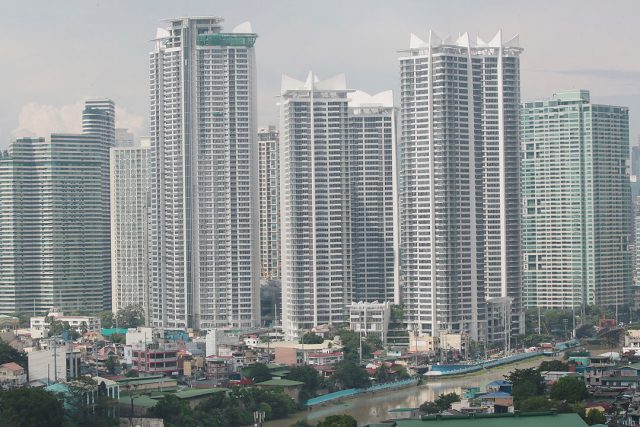
High rates seen dulling residential market as investors favor office, industrial property

A VIEW of buildings in Makati City. — PHILIPPINE STAR/MICHAEL VARCAS

HIGH RATES are taking the shine off the residential market, with property investors expected to lean more towards office, industrial, and logistics projects, Colliers Philippines said.

Paul Chua, director for capital markets and investment services of Colliers Philippines, said that although the residential sector has seen a recovery in the high-rise condominium segment in Metro Manila, rate pressures, which affect the affordability of mortgages, are expected to continue affecting the market next year.

“We saw the uptick in horizontal developments outside of the major business districts, where prices remain competitive in all market segments… we see this continuing in 2023,” Mr. Chua said.

In its 2023 Global Investor Outlook, Asia-Pacific investors surveyed by Colliers cited interest rates, increased construction costs and higher asset operating costs as the top risks for next year.

According to Colliers, investors see these challenges to have the most negative impact on their ability to execute their investment strategies next year.

At the global level, 88% of the investors cited interest rates as the top risk, followed by inflation and supply chain disruptions at 77% and 68%, respectively.

The report also indicated that Asia-Pacific investors have expressed a preference for office, industrial and logistics, and build-to-rent projects next year.

The Philippine office market take-up rate was up 72% growth in the first nine months, said Colliers.

“This year, (the segment) posted the first positive net take-up of offices which was driven mostly by the information technology-business process outsourcing sector,” Mr. Chua said.

Colliers said that it expects the demand for horizontal residential housing and industrial property in the Philippines to remain solid in 2023.

The 2023 Colliers Global Investor Outlook report, which surveyed over 750 investors worldwide, was conducted in October and November.

It also contains input from 30 Colliers Capital Markets global and regional experts. It is the third edition of Colliers’ annual outlook for global property investors. — Justine Irish D. Tabile