Home Blog Page 507

Breeder sow distribution program to require 230,000 animals by 2028

REUTERS

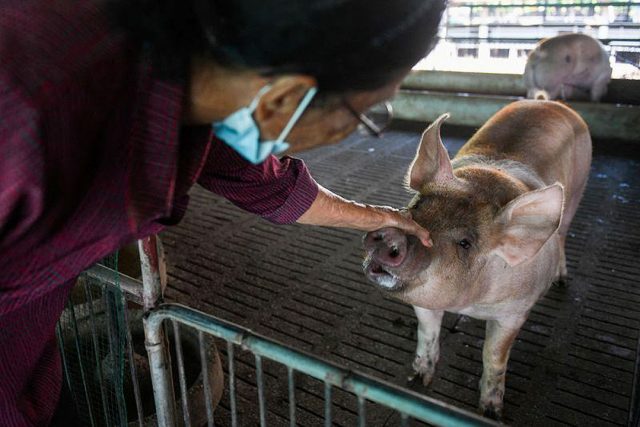
THE Department of Agriculture (DA) said it will distribute more than 230,000 breeder sows until 2028 to rebuild the hog herd after the African Swine Fever (ASF) outbreak.

The program will begin in 2026 with the distribution of 32,000 breeder sows, followed by the planned distribution of 100,000 breeders each year in 2027 and 2028, Agriculture Secretary Francisco P. Laurel, Jr. told reporters at a briefing last week.

Mr. Laurel said the DA is in the pre-procurement stage for the initial batch of 32,000 sows. He said the DA is targeting distribution by the second quarter of 2026.

“Our plan is to distribute the 32,000 to medium to large farms because they have the financial capability and the resources to support this big number,” he said.

Under the repopulation program, large farms that receive breeder sows will return 30% of the piglets produced for redistribution to smallholder farms.

“The plan is, if it is given to a big farm, if it has 10 piglets, the government will take three. Then those three will be given to smaller farms,” Mr. Laurel said.

The DA estimates that since the first ASF outbreak in 2019, the swine herd has fallen from 13 million to around 8 million head. Mr. Laurel said the multi-year breeder sow distribution program is intended to help restore, and potentially exceed, pre-ASF herd levels.

“We need to bring back the five million hogs lost to ASF. We will bring back six million hogs in the next couple of years,” he said.

Mr. Laurel added that breeder sows to be distributed under the program will be vaccinated against ASF.

Funding for the repopulation drive will come from the Animal Competitiveness Enhancement Fund, which allocates P20 billion annually from tariff collections on livestock, poultry, and dairy imports. Of the total annual allocation, 26% is earmarked for repopulation and herd build-up, with about 70% of that portion intended for the hog industry.

Meanwhile, the DA said it has so far administered around 260,000 of the 500,000 ASF vaccines it procured, with the remaining 240,000 doses expected to be used by April next year.

However, the DA said it does not plan to further subsidize ASF vaccines for commercial hog raisers, although the government may still consider vaccine support for smallholder farmers if needed.

“For commercial use, producers will be expected to purchase the vaccines themselves. Government support may be considered in the future for smallholder farmers, but there are no plans for that at the moment,” Mr. Laurel said. — Vonn Andrei E. Villamiel

Study leave, workload relief proposed as priority policies to assist teachers

BW FILE PHOTO

THE GOVERNMENT needs to prioritize targeted financial aid and workload relief to support educators pursuing graduate education, the Philippine Institute for Development Studies (PIDS) said.

In a discussion paper released Dec. 23, the state think tank said the government support needs to be focused on teachers with lower salaries or fewer assets.

“Workload relief mechanisms for teachers who are managing heavy teaching or caregiving responsibilities could also ensure support systems that do not inadvertently disadvantage teachers with fewer economic resources,” PIDS said.

Carework hours, financial constraints, and heavy workloads were singled out as the main barriers hindering teachers from pursuing further education.

“The findings suggest that enrolling in graduate school often becomes a household-level decision, not merely an individual one, because of the shared implications for time, finances, and responsibilities,” it said.

In addition, the authors suggested study leave, which could help reduce workload strain and support learning without harming family responsibilities.

They also called for improving awareness and accessibility of scholarships, noting that while these exist, teachers may lack information about how to apply.

This will encourage more teachers, especially those with financial constraints, to pursue graduate studies, the think tank said.

In addition, some educators surveyed noted that they cannot climb the promotion ladder without obtaining a master’s degree, regardless of how skilled they are or how many training sessions they attend.

“Policymakers can reconsider promotion structures that rely heavily on graduate degrees. Although not the focus of this study, the literature on teacher learning highlights that formal education is only one pathway for professional development,” PIDS said.

The paper “Does Carework Impair Teachers’ Capacity to Pursue Advanced Studies in Education? Exploring Results from a Mixed-Methods Approach” was written by Jesusa L. Paquibot, Edmar E. Lingatong, Erwin Doroteo Justien C. Daga, Johanna Marie Astrid A. Sister, Douglas Kurt Gregor C. Diola, and Michael R.M. Abrigo. — Aubrey Rose A. Inosante

RE projects subject to review by new committee

A wind turbine is seen in this file photo. — REUTERS

THE Department of Energy (DoE) said it formalized a new competitive selection framework for the awarding of renewable energy service contracts (RESCs).

The DoE, in a Dec. 22 circular, said it adopted an open and competitive process for awarding RESCs and formed a review committee to ensure bidding transparency.

According to the DoE, the Renewable Energy Act of 2008 encourages the accelerated development of renewable energy sources.

The circular orders the creation of a review and evaluation committee, chaired by the undersecretary of the DoE’s Renewable Energy Management Bureau (REMB).

This committee will be tasked to assess, evaluate, and review the applications of renewable energy participants to participate in open competitive selection process which include the applicant’s legal, technical and financial qualifications, the DoE said, adding that the REMB will also identify and nominate areas for development.

Earlier this month, the DoE said it is reviewing renewable energy projects awarded under the open and competitive selection process to accelerate development and improve implementation efficiency.

The open and competitive selection process allows the DoE to award RE contracts in pre-determined areas through competitive bidding. These are locations identified as having high potential for renewable energy development, including hydro, geothermal and wind resources.

In a draft terms of reference for the fifth-round open and competitive selection, the DoE identified 11 pre-determined areas for potential RE projects.

Seven sites are earmarked for hydropower, with a combined capacity of 37.4 megawatts (MW). Two geothermal projects, with a potential capacity of 68 MW, were also proposed, with two wind projects in the pipeline, though their capacity is still being assessed.

To date, the DoE has awarded more than 1,500 RESCs, representing about 130 gigawatts of potential capacity. — Ashley Erika O. Jose

Don’t miss this: Transfer pricing compliance guide

Saying goodbye to the year that has passed and welcoming a new one often means taking a moment to look back and decide which habits, tasks, and priorities we should leave behind and which ones we must carry forward. For taxpayers, the close of a year and the start of another also signal the beginning of numerous statutory responsibilities, such as the submission of various information returns, the start of external audit season, the filing and payment of income tax returns, the renewal of business permits, and many more compliance activities.

With so many requirements occurring simultaneously, it is easy for some obligations to slip through the cracks. Transfer pricing (TP) compliance is frequently overlooked. To ensure a smooth start to the year, here are the essential TP compliance requirements that taxpayers must not leave behind.

RELATED PARTY TRANSACTIONS FORM (RPT FORM)
The RPT Form is an information return that discloses all domestic and foreign related‑party transactions during the taxable year. Under BIR RR 34‑2020, taxpayers must file the RPT Form if:

• The taxpayer is required to file an annual income tax return;

• The taxpayer has transactions with domestic and foreign related parties in the covered taxable year; and,

• The taxpayer is either (1) a large taxpayer, (2) enjoying tax incentives, (3) reporting net operating losses for the current and two immediately preceding taxable years, or (4) a related party that has transactions with a taxpayer classified in the aforementioned three sub-criteria.

As there are different transactions occurring in each taxable year, annual verification is necessary to determine whether a taxpayer qualifies to file an RPT form for the taxable year.

The RPT Form must be submitted as an attachment to the annual income tax return within 15 days from the deadline of filing or date of electronic filing of the return, whichever comes later. For the calendar year 2025, it should be submitted on or before April 30, 2026. A compromise penalty amounting to P1,000 will be imposed for late or non-submission of such an RPT Form.

On the other hand, taxpayers who do not meet any of the above criteria are required to disclose in the Notes to Financial Statements that they are not covered by the requirements and procedures for related party transactions.

TRANSFER PRICING DOCUMENTATION (TPD)
TPD is also required if the taxpayer is required to file the RPT Form, as discussed above, and meets any of the following thresholds:

• Annual gross sales/revenue for the taxable period exceeding P150 million, with total related party transactions exceeding P90 million but excluding key management personnel compensation, dividends, and branch profit remittances; or,

• Sale of goods to related parties exceeds P60 million, or sale of services, interest payments or utilization of intangible goods exceeds P15 million; or,

• TPD was required within the immediately preceding taxable period.

The Bureau of Internal Revenue (BIR) requires that TPD be prepared either prior to or at the time of undertaking related party transactions, or not later than the filing due date of the tax return for the taxable year in which the transactions took place. Hence, if you have related party transactions that meet the following threshold as discussed, whether foreign or domestic, for the taxable year 2025 and are required to submit an RPT Form, a TPD should be prepared not later than April 15, 2026.

While only taxpayers that exceed the prescribed thresholds are required to prepare TPD, many still choose to prepare one proactively to ensure readiness and avoid compliance gaps. This foresight becomes particularly valuable during a BIR audit, where TPD must be submitted within 30 calendar days from the BIR’s request, with a non‑extendible additional period of 30 days granted only on meritorious grounds.

LOCAL TPD AND BENCHMARKING ANALYSIS
Multinational groups often prepare a global or regional TPD, which Philippine subsidiaries and related parties rely on for support. While allowed, the BIR prefers a local TPD that reflects the Philippine market and economic conditions.

If preparing a fully local benchmarking analysis is not practical, the taxpayer must be able to justify why the foreign or regional comparables are more reliable than local ones and demonstrate appropriate adjustments to align the results with Philippine conditions (e.g., differences in market size, economic environment, and risk levels).

When these explanations and adjustments are properly documented, the BIR may still accept the benchmarking results, even if the comparable companies are not local, as long as the analysis shows that the related party transactions meet the arm’s length standard.

UPDATING THE TPD
One common misconception is that a TPD is a static, one‑time document. In reality, the Organisation for Economic Cooperation and Development (OECD) recommends that the TPD be reviewed and updated annually to ensure that the organization’s functional analysis, economic characterization, and TP methodology remain accurate and aligned with current business operations.

The OECD further advises that the search for comparable companies need not be performed every year. Instead, a full benchmarking analysis should be refreshed every three years, provided that the organization’s operating conditions remain substantially unchanged. However, the financial data of the comparables must be updated annually to ensure that the arm’s length analysis reflects the most recent available financial performance.

A good practice is to assess annually whether there have been significant changes in any of the following: (a) the business model or value creation structure; (b) the economic or market conditions; (c) the factors and assumptions considered in the previous TPD; (d) the nature, volume, or scope of related‑party transactions; and (e) the taxpayer’s status against the materiality thresholds that trigger mandatory TPD preparation.

If any of these changes are present, or if the taxpayer’s transactions exceed the prescribed thresholds, an update of the TPD becomes necessary. Regular updates not only support accurate reporting but also enhance audit readiness and strengthen the taxpayer’s defense in case of BIR scrutiny.

SUPPORTING DOCUMENTS
Though not required, in addition to the TPD, the following supporting documents may also be prepared in case of BIR audit:

• TP policy: A detailed policy outlining the taxpayer’s approach to transfer pricing.

• Relevant contracts and proof of transactions: Contracts and other documents that substantiate the transactions between related parties. Contracts must clearly specify the nature of the transactions, TP method, basis of pricing and expected remuneration (mark-up, fee, or margin).

• Proof of payment of foreign taxes: Documentation or rulings issued by the foreign tax authority where the other party is a resident.

• Withholding tax returns and proof of payment: Records of taxes withheld and remitted to the BIR.

• Advance Pricing Agreement (APA): If any, agreements that provide certainty on TP methods.

• Income tax return and audited financial statements: Including disclosures on whether the entity is required to file an RPT Form and prepare TPD.

• RAMO No. 1-2019 Annexes: Including related party transaction, segmented financial ​statements, supply chain management analysis, functions, assets, and risks analysis, characteristics of business, and comparability analysis.

YEAR-END TP ADJUSTMENTS
If it is your group’s practice to implement year-end TP adjustments to achieve the target arm’s-length margin or profit, the Philippine entity must ensure that these adjustments are properly recorded and fully supported. Yearend trueups should be accompanied by clear adjustment memos, including the basis for the adjustment, the computation used, and the relevant policies or agreements authorizing such adjustments.

It is equally important to confirm that the adjustments are consistent with the entity’s TP policy, benchmarking analysis, and functional profile. Any discrepancy between the booked adjustments and the documented TP methodology may trigger questions during a BIR audit. Ensuring alignment strengthens the defensibility of the TP position and minimizes potential TP risks.

A new year may feel overwhelming with the long list of tax and regulatory obligations that come with it, but for a well‑prepared and responsible taxpayer, these compliance tasks need not be daunting. With proper planning, timely preparation, and a clear understanding of TP requirements, navigating these obligations becomes less of a burden and more of an opportunity to strengthen compliance and enhance operational transparency. As the year begins, staying organized and proactive ensures that nothing essential is left behind, setting the tone for a smooth, compliant, and confident year ahead.

Let’s Talk TP is an offshoot of Let’s Talk Tax, a weekly newspaper column of P&A Grant Thornton that aims to keep the public informed of various developments in taxation. This article is not intended to be a substitute for competent professional advice.


Trisha Amor M. Gatdula is a manager from the Tax Advisory & Compliance division of P&A Grant Thornton, the Philippine member firm of Grant Thornton International Ltd.

pagrantthornton@ph.gt.com

Anti-graft drive may strain Marcos’ ties but open doors to new ones

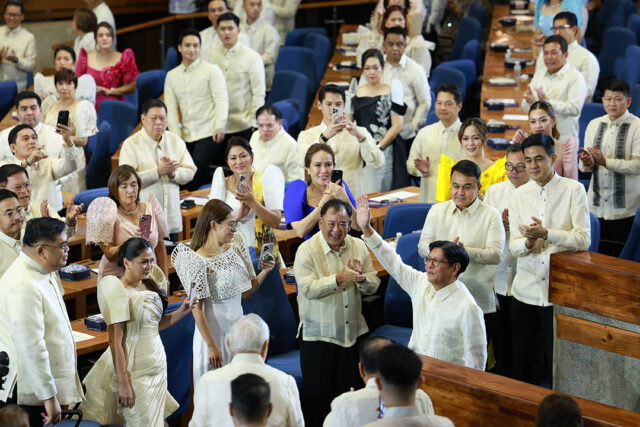
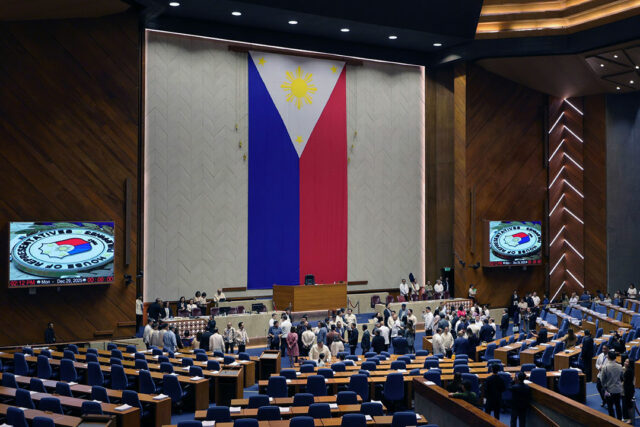
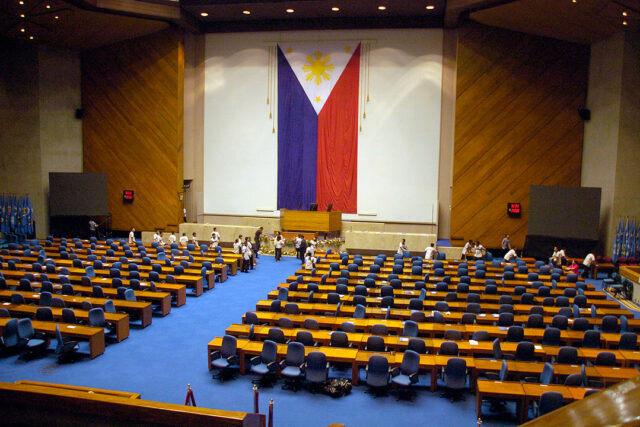
SCENES at the plenary hall of the House of Representatives during the fourth State of the Nation Address of President Ferdinand R. Marcos, Jr., July 28, 2025. — PHILIPPINE STAR/NOEL B. PABALATE

By Kenneth Christiane L. Basilio, Reporter

PRESIDENT Ferdinand R. Marcos, Jr. risks alienating his key congressional ties as he pushes for his anti-corruption drive, which could undermine legislative priorities, but could also open doors to new alliances, political analysts said.

While Mr. Marcos still has political capital, his push to hold politicians, officials and contractors accountable in the multibillion-peso flood control scandal could accelerate its decline and threaten structural reforms.

“He still has political capital, but is no longer the expansive, almost frictionless capital he enjoyed during his first two years in office,” Ranjit Singh Rye, an OCTA Research fellow and a University of the Philippines political science professor, said in a Viber message.

“That earlier strength rested on a very large coalition — one built less on a shared reform agenda and more on accommodation, access, and patronage,” he added. “But by broadening the coalition of the willing he can still push his reforms forward.”

Mr. Marcos, who is in the second half of his six-year term, launched an anti-corruption drive in August that includes an independent investigation and legislative efforts to curb conditions that allow graft to thrive, such as laws against entrenched political dynasties and measures to make government spending accountable.

The corruption scandal has rocked the Marcos administration, with several top officials accused of involvement in a kickback scheme. Among those implicated are close allies, including his cousin Leyte Rep. Ferdinand Martin G. Romualdez, who served as House speaker until his replacement in September. Several of Mr. Marcos’ Cabinet secretaries have also been tagged, including his former executive secretary and Budget secretary.

“There is a real risk of alienating political families and regional blocs,” Ederson DT. Tapia, a political science professor at the University of Makati, said in a Facebook Messenger chat. “Philippine coalitions are not ideological alliances. They are territorial and transaction arrangements built on expectations of stability.”

Public office in the Philippines has often been treated like heirlooms, being passed down from parents to children and even grandchildren that has entrenched families in the political system across generations and regions.

“There is a real risk that such efforts could alienate key allies, particularly political families and dynasties with entrenched interests in sectors that are highly prone to graft and corruption,” Arjan P. Aguirre, who teaches political science at the Ateneo de Manila University, said in a Facebook chat. “This risk is exacerbated by the combination of weak institutions and powerful private actors who operate through political dynasties to influence government processes.”

Mr. Tapia said the President should not disregard his political alliances for the sake of advancing his anti-corruption agenda, as it could undermine his ability to push for priority legislation.

“Coalition stability allows a president to govern in the present,” he said. “Pursuing accountability without regard for political realities risks paralysis.”

The Legislative-Executive Development Advisory Council is pushing a package of bills positioned as a roadmap to attract investments and modernize institutions. The list includes a proposed general tax amnesty, amendments to the Bank Deposit Secrecy Law and Anti-Money Laundering Act and fresh levies such as an excise tax on single-use plastics.

Other legislative priorities also target a fast-growing digital economy, including proposals on digital payments, tighter online gambling regulations, and the use of artificial intelligence in elections.

POTENTIAL ALLIES
Anthony Lawrence A. Borja, an associate political science professor at the De La Salle University, said while Mr. Marcos’ graft-busting agenda may strain alliances, “it might be offset by the entry of new possible allies from the liberal camp tied with the weight of the anti-corruption campaign on public opinion.”

“All these depend on how serious Marcos, Jr. is in making anti-corruption as one of his primary legacies even at the expense of his allies,” he added.

Mr. Aguirre said the Marcos administration may be limiting its anti-graft efforts to politicians who are not closely aligned with him to help retain his political capital.

Palace Press Officer Clarissa A. Castro and Executive Secretary Ralph G. Recto did not immediately reply to a Viber message.

“The administration only appeared to pursue the case more aggressively against Zaldy Co after he publicly made statements implicating President Marcos himself in the controversy,” Mr. Aguirre observed, referring to the former congressman who previously headed the House Appropriations Committee.

Still, he appears to be pressing ahead with his anti-graft measures, which could draw other political forces beyond the usual politicians, he added.

“These initiatives can be understood as efforts to appease reformist and progressive forces, whose support is crucial for the Marcos administration in maintaining political stability and legitimacy through the remainder of his term,” said Mr. Aguirre.

Mr. Marcos’ ability to shepherd a coalition through the first half of his six-year term would be crucial in defining investor confidence in the country, Mr. Tapia said.

“Investors are unsettled by unpredictability,” he said. “Coalition instability becomes a problem when it disrupts budgets, delays legislation or reverses policy signals.

Mr. Rye said Mr. Marcos should move beyond traditional political allies to help bolster his political capital. “By mobilizing civil society, the private sector, and other reform-minded constituencies, Marcos can shift from elite-based bargaining to public-backed reform politics.”

“The path forward is to broaden the coalition beyond Congress,” he said. “If Congress was once his shield, the people must now become his sword.”

House Appropriations panel denies offering incentives to push 2026 budget ratification

PHILIPPINE STAR/MIGUEL DE GUZMAN

THE HOUSE Finance Committee on Monday denied claims that incentives were offered to lawmakers to secure votes for the ratification of the P6.793-trillion General Appropriations Bill (GAB) for 2026.

“The House leadership does not influence any individual member of the House to vote in any way,” Nueva Ecija Rep. and House Appropriations Committee Chair Mikaela Angela B. Suansing said in a statement, in Filipino.

She added that the House leadership maintains a policy and strict principle that members are free to vote on legislative measures as they see fit.

“The House of Representatives is a collegial body,” Ms. Suansing said. “We respect each member to have the freedom to vote and to decide based on the needs of their constituents and their conscience.”

She also touted the implementation of several initiatives to make the budget more transparent and lawmakers more accountable for the spending plan.

The House and Senate on Sunday signed the bicameral conference committee report on the 2026 national budget, as lawmakers finalized disagreeing provisions to the budget bill.

A digital copy of the bicameral committee report has been sent to members of Congress or their examination prior to the ratification of the budget bill during plenary proceedings on Monday afternoon.

Party-list Rep. Renee Louise M. Co criticized the delayed release of the bicameral report on the 2026 spending plan, noting that some lawmakers were given a copy only on Monday morning.

“Only seven hours were given to go through every line of the more than 200 pages of the bicam report and the more than 4,000 pages that will be counterchecked in the GAB and the previous General Appropriations Act,” she said in Filipino in a separate statement.

Ms. Co also noted that lawmakers had spent more days on behind-the-scenes negotiations than on open public scrutiny of budget documents.

“Politicians are given a few days to iron out the kinks and deadlocks in the bicam, but public approval is rushed,” she added.

Ms. Co also claimed that the bicameral report has contained various forms of “pork and allocables” which have been flagged for potential misuse.

“Even more disturbing, at first glance, is the content of the bicam report, which contains various forms of pork and ‘allocables,’ huge funds for violence against ordinary people, and extravagant spending of the people’s money,” she added.

She said that the livestreaming of the bicameral panel has been a “theater and gimmick” by the administration.

“So much for open bicam. The Filipino people are still left in the dark throughout the entire process,” Ms. Co added. — Adrian H. Halili

More than half of Filipinos back immediate passage of anti-dynasty bill

BW FILE PHOTO

By Chloe Mari A. Hufana, Reporter

MOST FILIPINOS support the immediate passage of measures addressing systemic corruption in the government, including bills banning political dynasties and creating a stronger independent body to investigate corruption in infrastructure projects, according to a nationwide survey.

In a December poll, released on Monday, Pulse Asia Research, Inc. found 54% of adults said Congress should promptly enact legislation prohibiting political dynasties, reflecting public frustration amid a string of high-profile corruption scandals and political controversies.

Support was strongest in Metro Manila, where 69% backed the proposal, and in the rest of Luzon and the Visayas, both at 59%. Opinion was more divided in Mindanao, where only 34% agreed, while 38% remained undecided.

The survey, conducted through face-to-face interviews with 1,200 adults from Dec. 12 to 15, had a margin of error of ±2.8 percentage points.

The findings come against a backdrop of intensifying scrutiny of public spending and governance, including allegations of massive budget insertions, resignations of senior Cabinet officials and investigations into lawmakers and former officials linked to infrastructure projects.

President Ferdinand R. Marcos, Jr. earlier this month “ordered” Congress to prioritize measures banning political dynasties and create the Independent People’s Commission (IPC), which in effect institutionalizes and strengthens the Independent Commission for Infrastructure.

Public protests and calls from business and professional groups for stronger accountability mechanisms have added pressure on Congress to enact such measures.

Several versions of an anti-political dynasty measure in both chambers of Congress have been filed at the House of Representatives, including House Bill No. 6771, authored by Presidential son Ferdinand Alexander A. Marcos III and House Speaker Faustino G. Dy III, both of whom are members of political dynasties.

The bill seeks to curb political dynasties by barring spouses and relatives up to the fourth civil degree from simultaneously holding elective posts. It also prohibits such relatives from holding national positions at the same time, occupying the same House seat within a district, or serving concurrently in the same provincial, city or municipal, or village governments.

Hansley A. Juliano, a political science lecturer at the Ateneo de Manila University, said the narrow majority reflected in the survey suggested many Filipinos remain hesitant to fully abandon longstanding political patterns.

He added this reluctance cannot be explained by patronage politics or political ignorance alone, noting that segments of the middle class often operate on a belief in meritocracy that makes them more tolerant of political dynasties with “proven track records.”

Mr. Juliano added that even reform-minded Filipinos tend to come from higher social strata and may be unwilling to discard familiar political actors entirely.

“We have seen as much that even our top-level reformers come from the upper strata of society, and it seems even for our reform minded kababayans, it would not do to throw baby with the bathwater,” he said via Facebook Messenger.

ANTI-GRAFT BODY
The survey also revealed a similarly strong support for legislation establishing a fully empowered Independent Commission Against Infrastructure Corruption, or the IPC, with 52% of respondents agreeing Congress should immediately pass a law creating such a body.

Sizeable majorities in Metro Manila (67%), the rest of Luzon (52%), Visayas (61%), and among lower-income households (54%) shared this opinion.

About a third of Filipinos said they were undecided, while 15% opposed the proposal.

The clamor for such a measure was backed by a widening graft scandal involving high-ranking government officials and private contractors.

Mr. Marcos alleged politicians have been receiving kickbacks from public work projects that were substandard or even non-existent.

The climate-vulnerable nation suffers about 20 typhoons annually as it is situated in the Pacific Ring of Fire.

Senate President Vicente C. Sotto III has filed a bill last month seeking to create an IPC to investigate anomalies in all government infrastructure projects, aiming to hold officials accountable for irregularities in public spending.

The proposal, co-authored by Senators Erwin T. Tulfo and Ana Theresia N. Hontiveros and sponsored by Senator Francis Pancratius N. Pangilinan, was prompted by controversies such as alleged flood control abuses.

Mr. Sotto said the independent body would probe systematic corruption in infrastructure funds, stressing that resilience should not replace accountability and calling for the recovery of stolen public money and punishment of those responsible.

Nearly 60% pessimistic about 2026 — survey

PHILIPPINE STAR/RYAN BALDEMOR

MOST FILIPINOS remain pessimistic about the country’s direction as 2026 approaches, a new survey showed on Monday, underscoring persistent concerns over governance and political leadership even as economic expectations show signs of improvement.

Almost six in 10 voters, or 58%, said they are pessimistic about the state of the nation, according to a year-end survey by PAHAYAG.

While this marked an improvement from 70% in the previous quarter, it is still well above the 49% recorded a year earlier, suggesting that negative sentiment continues to outweigh optimism.

Optimism rose to 42%, up from 30% in the prior quarter, but remains below last year’s 51%.

The rebound was largely driven by more favorable views on the economy and household finances, which are tempering the impact of ongoing political and governance concerns.

Despite improving economic expectations, perceptions of the country’s overall condition deteriorated, with 24% of respondents describing the state of the nation as strong, down from 27% in the third quarter. Nearly half of respondents (49%) said it is weak, rising from 45%.

The country has had a lackluster third quarter growth, its slowest in four years, due to a massive graft scandal exposed by President Ferdinand R. Marcos, Jr. last July.

Gross domestic product grew by 4% in the third quarter from a year earlier, data from the local statistics bureau showed in November.

Meanwhile, the new survey showed just 31% of Filipinos believe the country is headed in the right direction, compared with 33% previously — the weakest readings since the survey began tracking these indicators.

“The disconnect points instead to a deepening erosion of public trust, fueled by unresolved corruption controversies, weak accountability among top officials, and uncertainty over political leadership,” the survey read.

“These governance issues continue to undermine confidence despite improving economic signals.”

The survey also suggested that pessimism is not rooted in near-term economic fears. About 37% of respondents expect the national economy to improve in the next quarter, while 55% anticipate better household financial conditions.

Economic managers had earlier expressed pessimism the country would reach its 5.5% to 6.5% growth target for 2025 but the Presidential Palace vowed to ramp up state spending in the last quarter of the year to lift the economy.

Pessimism was most pronounced in the Visayas and Mindanao, among younger voters aged 18 to 20, high-income earners, government workers, non-overseas Filipino worker households, and respondents with either no formal education or a college background.

By contrast, South Luzon and parts of the Visayas posted the highest levels of optimism for economic and household prospects in the first quarter of 2026, highlighting a widening gap between expectations for personal finances and confidence in national leadership.

The survey was conducted from Dec. 7 to 10 among 1,500 registered voters nationwide.

PAHAYAG, a corporate social responsibility initiative of PUBLiCUS Asia, Inc., has tracked public opinion indicators since 2017, with Vox Opinion Research serving as its commissioned research arm. — Chloe Mari A. Hufana

US envoy Carlson to end PHL stint

MARYKAY L. CARLSON — PHILIPPINE STAR/RYAN BALDEMOR

WASHINGTON on Monday said that US Ambassador MaryKay L. Carlson is set to complete her stint as envoy to the Philippines by January of next year.

In a statement, US Embassy Spokesperson Jameson DeBose confirmed that Ms. Carlson would end her tour of duty in Manila by January 2026, capping off almost four years of active service.

“I have enjoyed a rewarding career as a State Department diplomat for more than 40 years, the highlight of which has been serving as Ambassador to the Philippines since July 2022,” Ms. Carlson was quoted as saying.

Ms. Carlson was involved in strengthening defense ties, economic cooperation and advancing people to people exchanges with Manila during her tenure as US Ambassador to the Philippines.

Her exit followed a Reuters report, saying the Trump administration recalled about 30 ambassadors and other senior career diplomats last week.

When asked if her removal as envoy was linked to the recall, Mr. DeBose said: “Ambassador Carlson will complete her tour as Ambassador to the Philippines in January.”

In October, Mr. Trump appointed businessman Lee Lipton as the new ambassador to the Philippines, which is still pending the US Senate’s approval.

Mr. Lipton currently oversees operations aimed at advancing American interests in the western hemisphere while leading efforts to address regional challenges, including countering Chinese influence in the Americas.

The US is the Philippines’ closest ally, with bilateral ties anchored on a 1951 Mutual Defense Treaty that commits both nations to support each other in the event of an armed attack in the Pacific, including the South China Sea.

The Philippines hosts several joint military sites with the US across strategic locations, including bases near regional flashpoints like Taiwan.

The alliance has come under increasing pressure from China’s growing assertiveness, as Beijing’s military activities and shows of force have heightened tensions in a vital waterway that handles trillions of dollars in annual seaborne trade each year. — Adrian H. Halili

Ombudsman clarifies Leviste claims

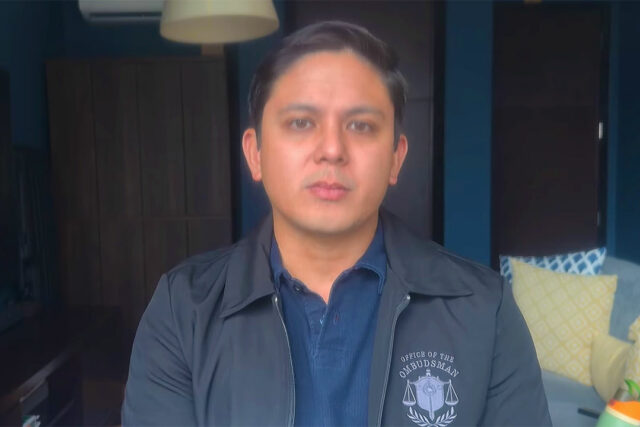
ASSISTANT OMBUDSMAN Jose Dominic F. Clavano IV addressed issues surrounding the so-called Cabral files in a video statement on Monday. — ERIKA SINAKING

THE Office of the Ombudsman on Monday clarified Batangas Rep. Leandro Antonio L. Leviste only shared a portion of the so-called Cabral files in his possession, as opposed to his claims.

In a video statement, Assistant Ombudsman Jose Dominic F. Clavano IV said Mr. Leviste only presented “limited portions” of the files when investigators approached him while former Undersecretary Maria Catalina E. Cabral was still alive.

“This differs from the Congressman’s public statements suggesting that the full Cabral files had already been shown to or reviewed by the Office of the Ombudsman,” Mr. Clavano said.

He added that the most reliable sources of documents come from those agencies and individuals who had custody, control, or authorship of the computers, storage devices, and files, not from circulating copies.

He further warned that soft copies in editable formats such as Word or Excel files “inherently lose evidentiary credibility as they are susceptible to alteration, complete context, or manipulation,” and therefore cannot by themselves be treated as conclusive evidence.

Mr. Clavano said the Office of the Ombudsman has taken full custody of the physical hardware containing Cabral files, stressing that the documents represent just one component of its ongoing crackdown on alleged irregularities in government infrastructure projects.

“This allows the investigation to proceed on the basis of an original digital piece of evidence,” Mr. Clavano said, noting that a digital forensic examination of the CPU will be conducted in coordination with the Commission on Audit, the Department of Public Works and Highways, and the Philippine National Police Anti-Cybercrime Group.

“The Office of the Ombudsman has actually been approached by multiple sources claiming to possess copies of the supposed Cabral files. These claims underscore the importance of distinguishing between original evidence on the one hand and secondary or third-party copies,” Mr. Clavano said.

The Cabral files are alleged to be a ledger of budget “insertions” and infrastructure projects, as well as a purported “kickback scheme” in government flood control and infrastructure projects. The documents originate from the office of Ms. Cabral, a long-serving Pubic Works official who recently passed away after a fall from a ravine. — Erika Mae P. Sinaking

Intensified fight vs smuggling urged

GENERAL view of a public market in Quezon City, Metro Manila, Philippines, Feb. 9, 2023. — REUTERS

A SENATOR on Monday called on the Agriculture department and the Bureau of Customs (BoC) to intensify its operations against agricultural smuggling, noting that illegal imports could undermine local farmers and distort market prices as the onion harvest approaches.

“As the onion harvest season approaches, we must ensure that our farmers are protected against unfair competition from imported and smuggled onions,” Senator Francis Pancratius N. Pangilinan, who heads the Agriculture panel, said in a statement.

He also warned of potential hoarding by onion cartels that could lead to the artificial increase in onion prices. The onion harvest season typically begins in February until May.

Mr. Pangilinan said the government must strictly monitor ports of entry and coordinate with agencies to protect farmers from the potential impacts of smuggled onions.

“The illegal entry of agricultural produce at this critical time defeats the purpose of supporting local agricultural production and jeopardizes the livelihood of our farmers,” he added.

He also called on the BoC to bolster inspection and enforcement efforts against syndicates that exploit seasonal demand to smuggle agricultural goods.

“Strengthening border controls and ensuring transparency in importation policies are essential to stabilizing prices for consumers while safeguarding the income of local farmers,” he said. — Adrian H. Halili

Over 2,000 job fairs launched in 2025

Thousands of job seekers flock to the job fair organized by the Department of Labor (DoLE) on May 1, 2025.— PHILIPPINE STAR/NOEL B. PABALATE

THE DEPARTMENT of Labor and Employment (DoLE) said it has expanded its employment facilitation activities in 2025, rolling out job fairs, youth-focused employment programs, and industry partnerships amid a recovering labor market.

According to its accomplishment report as of November, the department conducted 2,176 job fairs nationwide as part of the government’s commitment to hold monthly employment events. These job fairs were attended by 529,158 job seekers, with 74,564 applicants reported as hired on the spot.

Under the Special Program for Employment of Students (SPES), DoLE recorded 151,316 student beneficiaries who collectively received more than P686 million in wages. Meanwhile, 76,491 participants under the Government Internship Program (GIP) received over P2.66 billion in stipends. The JobStart Philippines program covered 4,873 beneficiaries, with assistance totaling more than P101 million. These programs are youth employment bridging initiatives that provide students and young graduates with paid work experience.

DoLE reported that over 616,000 workers were displaced across 19,091 establishments between January and November. Total employment rose to 48.619 million in October 2025, an increase of 463,000 from the previous year, which the department attributed in part to job matching and placement efforts carried out through Public Employment Services Offices (PESOs) with support from private sector employers.

As of the latest data, more than 2.2 million job seekers have been referred to PESOs nationwide for possible placement, said DoLE. — Erika Mae P. Sinaking

ADVERTISEMENT
ADVERTISEMENT