Home Blog Page 5060

Different layers of society involved in protest

NEIL WEBB-UNSPLASH

The anti-Iranian government protests continue, and with greater intensity and international support. It is now mid-November and the protests were triggered by the death of a 22-year-old Iranian woman while in custody of the morality police.

As expected, the reported death toll in the violent crackdowns has risen despite attempts by the Iranian government to cut internet access to restrict the work of journalists and human rights groups. A human rights group based in Norway says that the death toll has risen to at least 304 people, including 24 women and 41 children. Journalists themselves have been branded as enemies of the state.

Some 41 journalists have been arrested (and a number freed since then) since September.

The active involvement of women is no doubt due to the fact that an innocent woman, who was not considered an activist by any standard or definition, died while in the custody of police. Amini died on Sept. 16, or almost exactly two months ago, after she was arrested by Tehran’s morality police for allegedly not complying with hijab (head covering) regulations. Eyewitnesses reported to journalists that Amini appeared to have been beaten inside the police van while being taken to the detention center. She however appeared to have been conscious when police brought her to the detention center, or “brain dead” as reported by an international news agency.

Amini had traveled from the Iranian western province of Kurdistan to Tehran to visit relatives when she was arrested on Sept. 13. Kurds constitute a large minority in Iran, numbering about nine to 10 million. Discrimination against Kurds and other minorities has been a long-standing issue in Iran which has triggered violence.

The protests are said to pose one of the biggest challenges to Iran’s clerical rulers since the 1979 revolution.

Once docile Iranian women are now at the forefront of the struggle for freedom and respect for human rights. One such person is top Iranian actress Taraneh Alidoosti who posted a picture of herself on Instagram without a headscarf to express her support for nationwide anti-government demonstrations, according to a Reuters report. The report adds that Alidoosti’s post is another sign that the protest movement is gaining support from all layers of Iranian society.

Alidoosti is best known internationally for her role in The Salesman which won an Academy Award in 2017. The Salesman was adjudged the best foreign language film during the Academy Awards in 2017. Its theme on immigration apparently got the nod of Oscar judges just at the time that US President Donald Trump was vigorously pushing his anti-immigration agenda during his chaotic presidency.

The pro-reform artist held up a sign in the Instagram post which read, “Woman, Life, Freedom” in Kurdish, a popular slogan in the demonstrations, according to Reuters. It further reports that Alidoosti, who is not a Kurd, wrote a poem in her Instagram post: “Your final absence, the migration of singing birds, is not the end of the rebellion.” It is one of many Instagram posts critical of the government. As of the writing of this column, Alidoosti has not been arrested by Iran’s clerical rulers.

Actresses seem to enjoy a certain amount of “protection.” Since the start of protests in September, Reuters says that at least five female Muslim actresses have posted pictures of themselves without the compulsory hijab in solidarity with the demonstrations in which women have played a leading role.

Iranian officials, who have blamed Amini’s death on pre-existing medical problems, say the unrest has been fomented by foreign enemies including the United States, and accuse separatists of perpetrating violence, according to Reuters.

Mention of the US (and impliedly other Western and even possibly, Gulf, nations) brings to mind scenarios related to regime change in a country wracked by internal strife. We are only too familiar with regime change precipitated by a number of converging conditions. There have been many instances of regime change all over the world. Alexander Downes (PhD, University of Chicago, 2004), an Associate Professor of Political Science and International Affairs at George Washington University, says that 120 leaders have been successfully removed through foreign-imposed regime change between 1816 and 2011.

Foreign-imposed regime change is, of course, different from leadership changes that occur through domestic processes such as a peaceful or violent revolution, a coup d’état, and foreign invasion. But even then, those domestic processes are usually assisted quietly at different levels of government by foreign powers, especially in the diplomatic front. One recalls the conversation that occurred among President Ronald Reagan, Secretary of State George Schultz, Senator Paul Laxalt of Nevada and other key US defense and state department officials when a decision was made to withdraw support from Ferdinand Marcos, Sr. and the strongman was advised to “cut and cut clean” in February 1986.

The stickiest problem with regime change outside of the traditional legitimate and fair electoral processes is who shall take charge or take over the new government. A charismatic leader who manages to take over under violent circumstances will usually not only reconstruct or reorganize government but even undertake a change in ideology. A change in ideology triggers further institutional change: either the promotion of a free press or its destruction; either defense of the principle of freedom of assembly or its suppression, etc.

Cuba is an example of such a change. Fidel Castro brought his country quickly into the Russian orbit after years of rule by the Batista regime, backed by the US. Eastern European countries that undertook regime change in the late 1980s and shortly after the dissolution of the USSR in the early 1990s, shifted from communism or leftist authoritarianism to the democratic rule or market economy with which we are familiar.

The Iranian crisis has one particular quality which has not escaped the notice of those closely observing the developments in a government ruled by male clerics. The involvement of women in a society where women’s rights have been brutally suppressed is particularly noteworthy and critical. In addition to the crisis, which has assumed some kind of “gendered complexion,” other sectors have also become vocal in their support of the protest movement. The captain of the Iranian national team to the 2022 FIFA World Cup in Qatar, has openly aligned himself with the protest movement, and presumably other members of the squad are standing beside or behind him.

If there will be any temporary let up to the protests in Iran, the World Cup may be the only event of international significance to create such a pause.


Philip Ella Juico’s areas of interest include the protection and promotion of democracy, free markets, sustainable development, social responsibility and sports as a tool for social development. He obtained his doctorate in business at De La Salle University. Dr. Juico served as secretary of Agrarian Reform during the Corazon C. Aquino administration.

Talking, big and small

MIMI THIAN-UNSPLASH

NOT EVERYTHING discussed in a meeting is part of the agenda or makes it to the minutes to be approved subsequently. The first item in the agenda is usually the approval of the minutes of the previous meeting.

Talking entails both small and big matters.

Just before the formal meeting, participants engage in small talk. This is idle chatter touching on trivial topics like: political observations on missing leaders; victims of the pandemic; recent departures from this earth; aches and pains being suffered (I can recommend a good therapist); news on other people (preferably involving those not present or related to those who are); and the effects of the Ukrainian war on wheat products.

The formal meeting dispenses with such trivial pursuits and follow an agenda where charts are presented, and comments are of an inquisitorial nature — why did we sell the asset at a discount to book value?

The introduction of a contentious topic even if not part of the agenda, say the impact of the depreciation of the peso on imported raw materials, even before the start of the formal meeting, can derail the gossipy part of small talk. Even economics provides subjects for idle chatter.

Ribald jokes used to be acceptable in small talk before the entry of political correctness. Now, such forays into even sexual innuendoes are seen, if not in bad taste, then possibly bordering on sexual harassment, especially when shared in mixed company. (We want to provide a safe space.)

Small talk often precedes big talk, a prelude to the matters at hand. The former is used as a diversion, while awaiting the arrival of the Most Important Person (MIP) without whose presence the meeting might as well be cancelled. However, too abrupt a halt in the ebb and flow of prattle as soon as the MIP finally walks in with his coterie can be misconstrued as being caught mid-sentence in some back-stabbing comment about him.

Sudden quiet upon a participant’s entry can lead to a fraught situation, especially for the one who stops talking abruptly. Such a drop in the noise level calls attention to the tardiness of the MIP, who is anyway never on time. When the MIP walks in, the flow of conversation as well as the laughter must continue for a bit until the MIP takes his seat. (Sir, what are your thoughts on our team’s chances for a championship?)

After a decent interval, the MIP calls the meeting to order, as if there were other reasons and not his tardiness that delayed the proceedings. A too abrupt switch of gears from small talk to big talk only emphasizes that everybody was in fact waiting for him, hinting at unexpressed exasperation. Finally, we can start.

The start of the formal agenda and the end of aimless conversation are clearly demarcated, with a loud clearing of the throat of the MIP. In a virtual meeting, there is even an announcement that the proceedings are now being recorded. No matter how riotous a still unfinished joke is, the punch line needs to be given up. Chairs are pulled closer to the table, and all eyes move towards the white screen for the inevitable Power Point presentation. (Can you see my screen?)

To carry on with small talk after the meeting has started runs the risk of the chatterer being clueless. A louder voice runs over the babbling lightweight — Ms. Secretary, do we have a quorum?

Independent directors or foreign consultants can find the extended small talk unnerving. They may need to catch a plane for Beijing and can just make it to the airport if the jokes were pared down.

The rush to get to the main course and skip the appetizer of small talk, especially when it has gone on too long, leads to social annoyance. (I’m still chewing my corned beef sandwich.) Rushing too obviously to the item on the engagement of a consultant is sure to be seen as too assertive — why don’t you just go ahead and catch your plane?

Small talk sets a tone of familiarity and good vibes. Those too eager to start the formal meeting are seen to be too time-bound especially when they need to leave prematurely to attend another scheduled meeting. They then become the subjects of small talk which naturally resumes… right after the meeting.


Tony Samson is chairman and CEO of TOUCH xda

ar.samson@yahoo.com

US, allies probe unconfirmed reports of stray Russian missile

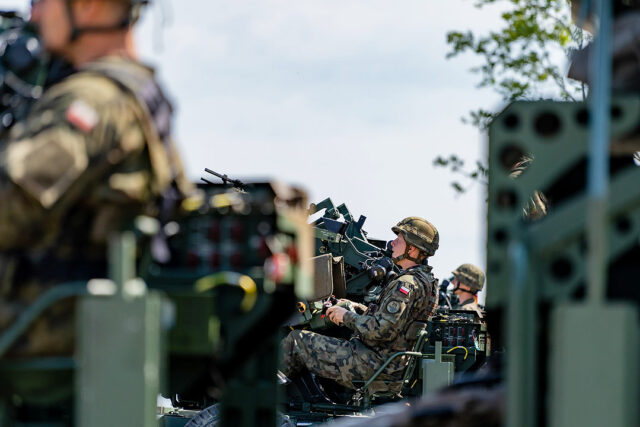
POLISH soldiers engage in a sequence of tests with their short-range air defense anti-aircraft missile and artillery system during exercise Ramstein Legacy 22, June 6-10, 2022. NATO and partner nations took part in exercise Ramstein Legacy 22, a NATO large-scale live-fire air defense exercise from June 6-10, 2022. — COURTESY OF NATO WEBSITE

WARSAW — A missile that killed two people in Poland was probably not fired from Russia, US President Joseph R. Biden said on Wednesday after holding talks with leaders of Western allies amid concerns the Ukraine conflict could spill into neighboring countries.

The explosion on Tuesday at a grain facility near the Ukrainian border came as Russia unleashed a wave of missiles targeting Ukrainian energy infrastructure, attacks that Kyiv said were the heaviest in nearly nine months of war.

The Polish foreign ministry said the rocket fell on Przewodow, a village about 6 km (4 miles) from the border with Ukraine.

According to US officials, initial findings suggested that the missile that hit Poland was fired by Ukrainian forces at an incoming Russian missile, the Associated Press said.

Earlier, Polish President Andrzej Duda had told reporters it was “most likely a Russian-made missile,” but there was no concrete evidence of who fired it, and the incident was a one-off.

A resident who declined to be identified said the two victims were men who were near the weighing area of a grain facility.

Russia’s defense ministry denied that any Russian missiles hit Polish territory, describing such reports as “a deliberate provocation aimed at escalating the situation”. Kremlin spokesperson Dmitry Peskov said he had no information on an explosion in Poland.

Any Russian strike on Poland could risk widening the conflict between Russia and Ukraine as members of the North Atlantic Treaty Organization (NATO) are committed to collective defense under its Article 5.

Mr. Biden convened a meeting of several leaders gathered in Bali, Indonesia, for a G20 summit to discuss the incident. Leaders from NATO members Germany, Canada, Netherlands, Spain, Italy, France and Britain attended, as well as non-NATO member Japan and representatives from the European Union.

Asked whether it was too early to say if the missile was fired from Russia, Mr. Biden said: “There is preliminary information that contests that. I don’t want to say that until we completely investigate it, but it is unlikely in the lines of the trajectory that it was fired from Russia but we’ll see.”

The United States and NATO countries would fully investigate before acting, Mr. Biden said.

NATO ambassadors are expected to meet later on Wednesday.

Polish officials in Warsaw said that their government was likely to request a NATO meeting under the treaty’s Article 4 for consultations among the allies, and also raise the issue at a U.N. Security Council meeting on Wednesday.

The explosion in Poland came as Russia pounded cities across Ukraine with missiles. Some hit Lviv, which is less than 80 km (50 miles) from the border with Poland.

Ukrainian President Volodymyr Zelensky said Russian missiles hit Poland in a “significant escalation” of the conflict. He did not provide evidence of Russia’s involvement.

“All of Europe and the world must be fully protected from terrorist Russia,” he said in a tweet after a phone call with Poland’s President Duda.

Polish Prime Minister Mateusz Morawiecki said Poland was increasing the readiness of some military units, and called on all Poles to remain calm.

Mr. Biden told Mr. Duda in a call that Washington has an “ironclad commitment to NATO” and will support Poland’s investigation, the White House said.

The Associated Press had earlier cited a senior US intelligence official as saying the blast was due to Russian missiles having crossed into Poland.

But in Washington, the Pentagon, White House and US State Department said they could not corroborate that report and were working with the Polish government to gather more information. The State Department said the report was “incredibly concerning.”

Other Western allies said they were monitoring the situation, and urgently assessing information.

Latvian Deputy Prime Minister Artis Pabriks said the situation was “unacceptable” and it could lead to NATO providing more anti-aircraft defenses to Poland and Ukraine.

Lithuanian President Gitanas Nauseda said on Twitter: “Every inch of #NATO territory must be defended!”

Ukrainian Defense Minister Oleksiy Reznikov said Kyiv had warned of the danger Russian missiles posed to neighboring countries and called for a no-fly zone to be imposed.

“We were asking to close the sky, because sky has no borders. Not for uncontrolled missiles. Not for the threat they carry for our EU & NATO neighbors. Gloves are off. Time to win,” he said in a Twitter post. — Reuters

Recession in major economies will hit emerging, poor nations

PHOTO COURTESY OF ICTSI

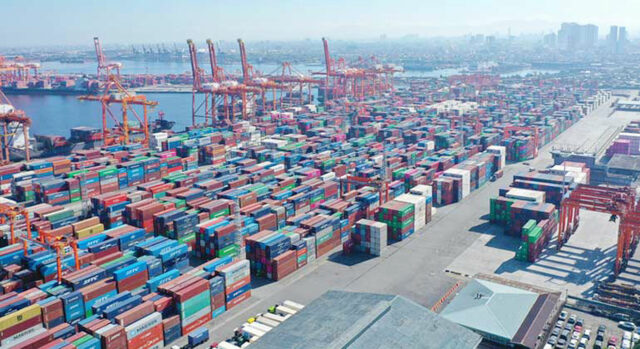
NUSA DUA, Indonesia — The head of the World Trade Organization (WTO) warned on Wednesday that several major economies face a real risk of sliding into recession as the war in Ukraine, rising food and fuel costs, and soaring inflation cloud the global outlook.

“It may not happen everywhere, but several key countries risk sliding into recession,” WTO Director-General Ngozi Okonjo-Iweala told Reuters on the sidelines of the G20 leaders’ meeting in Bali, Indonesia.

“Of course, the impact of that can be quite significant for emerging markets and poor countries, which need external demand from the developed countries to recover.”

The Geneva-based trade body last month projected global trade to rise just 1.0% in 2023, down sharply from an estimated 3.5% rise for this year.

“There are so many uncertainties and most of the risks are on the downside,” such as the fallout from the war in Ukraine and headwinds from inflation, she said.

A second day of talks by the Group of 20 (G20) leaders on Wednesday was disrupted by an emergency meeting to discuss reports of a missile landing in Polish territory, adding to uncertainty over the economic fallout from the war in Ukraine.

Ms. Okonjo-Iweala said she has called on G20 leaders to phase out food export restrictions, which have been on the rise and hurt poor countries by pushing up food prices.

Among the few bright spots that she noted, US President Joseph R.  Biden and Chinese leader Xi Jinping met on the sidelines of the G20 summit to mend strained bilateral ties that are among the uncertainties weighing on the prospects for global recovery. “One doesn’t want to read too much into it, but it’s always good when the two biggest economies in the world talk to each other,” Ms. Okonjo-Iweala said of the US-China summit.

“Certainly, with respect to trade, it’s very helpful.”

Ms, Okonjo-Iweala said she was “very hopeful” some breakthrough will be made in reforming the WTO’s dispute settlement system, which has been paralyzed since 2019 when the administration of former US President Donald Trump blocked the appointment of judges for an appeals body arbitrating on global trade disputes.

“The Americans are consulting actively with other members at an informal level,” she said, adding that the stronger US engagement will help speed up progress on reform from the beginning of next year.

In a meeting in September, trade ministers of the G7 advanced economies agreed to work towards having a functioning WTO dispute settlement system by 2024. — Reuters

Trump’s 2024 presidential bid a fresh wrinkle for markets

REUTERS

NEW YORK — Former President Donald Trump’s entry on Tuesday into the 2024 presidential race confirmed the world’s “worst kept secret” and created another variable for markets that some investors say remains a low priority for now.

Mr. Trump, who has mounted relentless attacks on the integrity of US voting since his 2020 election defeat, announced his bid at his Mar-a-Lago estate in Florida, seemingly with the aim of pre-empting potential Republican rivals.

His high-spirited televised announcement comes after a disappointing showing in last week’s midterm congressional elections that many Republicans blame on him and as the party closes in on a majority in the 435-seat House of Representatives.

“I don’t think the announcement means much as people thought it would — and with a weaker showing at the mid-terms it reduces the likelihood of nomination,” said Joshua Crabb, head of Asia-Pacific equities at investment manager Robeco.

“The impact is only down the track if he gets good traction with the nomination”.

Politics have largely taken a back seat for Wall Street this year, with macroeconomic concerns and Federal Reserve policy acting as the key drivers for markets.

Mr. Trump’s announcement, meanwhile, came as little surprise to investors, as the former president had telegraphed the possibility he might run again for some time.

“This has to be the worst kept secret on the planet,” said Bill Stone, chief investment officer of the Glenview Trust Company. “There’s a lot of other things going on that take a higher priority, though that can obviously change overnight.”

Of course, it’s difficult to predict what kind of investing landscape the country’s next president will face.

Chances are, it is unlikely to bear much resemblance to the present one, or to the backdrop that predominated Mr. Trump’s term, which ran from 2017 to 2021 and was notable for comparatively low inflation and a much less hawkish Fed.

“He’s the Holy Trinity of market lubrication — stimulus, through deficit spending, low interest rates — easy money — and a lack of regulation,” Anthony Scaramucci, a former White House communications director under Mr. Trump and founder of Skybridge Capital, said on the sidelines of a conference in Singapore.

“But the flip side is (investors) also know that he creates what markets absolutely hate: political instability.”

DIVIDED WE HURT
Unlike during Mr. Trump’s previous bid, the discord within the Republican party also worried some investors.

“If anything, his decision to run may accentuate the divisions going on amongst Republicans, with many blaming him for their poor midterm election showing,” said Shane Oliver, head of investment strategy at AMP in Sydney. “These divisions may even lessen the chance of a more market friendly Republican administration gaining the presidency in 2024 so some investors may actually see it as a negative for markets”.

The US stock market rose more than 50% between Mr. Trump’s surprise victory in the 2016 election and his November 2020 defeat, despite flashpoints for volatility such as the trade war with China and the severe but short-lived economic slowdown that accompanied the COVID-19 pandemic.

The Republican president has claimed credit for the rise, tweeting often about Wall Street’s performance.

Despite a recent rally, the S&P 500 is down around 16% for the year as of Tuesday, after the Federal Reserve delivered a series of jumbo-sized rate increases in its bid to fight inflation.

Investors are also watching stocks linked with Mr. Trump as a gauge on the former president’s prospect.

Shares of Digital World Acquisition Corp., the blank-check company looking to take Donald Trump’s social media venture public, fell 8.8% on Tuesday, while software developer Phunware Inc, which was hired by Mr. Trump’s 2020 re-election campaign to build a phone app, slid 4.7%.

Both stocks rallied earlier this month on reports Mr. Trump was considering a third bid for the White House. — Reuters

FTX creditors may number over 1 million as regulators seek answers

FTX.COM

COLLAPSED crypto exchange FTX outlined a “severe liquidity crisis” in US bankruptcy filings, which said the group could have more than 1 million creditors, as regulators opened probes and the crypto pain spread with the Wall Street Journal reporting BlockFi was planning layoffs and a possible bankruptcy filing.

FTX’s late Monday filing to a US bankruptcy court said it was in contact with dozens of global regulators and had appointed five new independent directors at each of its main companies, including its sibling trading firm Alameda Research.

The exchange, which had been among the world’s largest, filed for bankruptcy protection on Friday in one of the highest-profile crypto blowups after traders pulled $6 billion from the platform in three days and rival exchange Binance abandoned a rescue deal.

“FTX faced a severe liquidity crisis that necessitated the filing of these cases on an emergency basis last Friday,” the court filing stated.

FTX’s bankruptcy case includes more than 100,000 creditors, and this number could surpass 1 million, the filings said. The numbers were disclosed as FTX requested that multiple FTX group companies file one consolidated list of major creditors, rather than separate ones.

The documents also confirmed that FTX had responded to a cyber-attack on Nov. 11, after saying on Saturday it had seen “unauthorized transactions” on its platform.

FTX engaged Alvarez & Marsal as financial adviser, and said it has been in contact with the U.S. Attorney’s Office, the Securities and Exchange Commission (SEC), the Commodity Futures Trading Commission (CFTC), and dozens of federal, state and international regulatory agencies over the past 72 hours.

The fallout has so far been limited to crypto exchanges and traders, but is featuring in mainstream policy discussions too.

Michael Barr, the Federal Reserve’s top Wall Street cop, on Tuesday said he is concerned about risks from the nonbank sector for which the US central bank and other regulators have poor visibility.

“That includes obviously crypto activity, but more broadly risks in parts of the financial system where we don’t have good visibility, we don’t have good transparency, we don’t have good data. That can create risks that blow back to the financial system that we do regulate,” he told the Senate Banking Committee.

Crypto industry peers and partners have been quick to distance themselves from FTX and tout their sound financials, though some, including US cryptocurrency broker Genesis Trading, have disclosed they are exposed to FTX, either having held tokens on the exchange or by owning FTX’s native token, FTT.

FTT plunged around 94% last week, while bitcoin BTC=BTSP lost 22%.

Crypto lender BlockFi, which previously acknowledged it has significant exposure to FTX, plans to lay off workers while preparing to file for bankruptcy, the Wall Street Journal reported. The newspaper reported that BlockFi was recently working with Kenric Kattner, a bankruptcy partner at Haynes & Boone, citing people familiar with the situation. BlockFi and Kattner did not immediately respond to a request for comment.

Separately, bankrupt crypto lender Voyager Digital no longer plans to sell itself to FTX, Bloomberg reported, while Canadian crypto exchange Bitvo said it terminated its deal to be bought by FTX.

FTX founder and former chief executive Sam Bankman-Fried said his main goal is “to do right by customers,” in a tweet on Tuesday.

“I’m contributing what I can to doing so. I’m meeting in-person with regulators and working with the teams to do what we can for customers,” he said on Twitter.

Bloomberg reported that American and Bahamian authorities had been talking about bringing Mr. Bankman-Fried to the United States for questioning.

Mr. Bankman-Fried tried to raise cash from investors over the weekend to repay FTX clients even after the company had sought bankruptcy protection and he had resigned as CEO, the Wall Street Journal reported.

Mr. Bankman-Fried said he expanded his business too fast and failed to notice red flags at the exchange, in an interview with the New York Times published late on Monday.

REGULATORY SCRUTINY
The sudden collapse of FTX, once a seen as a mainstay of the crypto industry with a $32 billion valuation as of January, has sparked investigations by financial regulators and other supervisory bodies around the world.

The Securities Commission of the Bahamas, in a statement dated Monday, said two PwC partners had been approved by the Supreme Court as joint provisional liquidators for FTX.

Several global regulators have removed licenses from local FTX units, and are looking into the company, and investigations by the U.S. Justice Department, the SEC and CFTC are also under way, a source with knowledge of the investigations told Reuters.

Some argued regulators should have taken action earlier.

Ken Griffin, founder and CEO of hedge fund Citadel, told the Bloomberg New Economy Forum in Singapore: “FTX is one of these absolute travesties in the history of financial markets. People will lose billions of dollars collectively and that undermines trust in all financial markets.” — Reuters

Skin-to-skin ‘kangaroo’ care boosts premature babies’ chances  — WHO

CHRISTIAN BOWEN-UNSPLASH

LONDON, Nov. 15 (Reuters) — Babies born too early or too small should be kept in “skin-to-skin” contact with a caregiver rather than being put in an incubator straight after birth to improve their chances of survival, the World Health Organization (WHO) said.

The new guidelines around “kangaroo mother care” mark a significant shift from current protocols for premature babies and the U.N. health agency’s earlier advice. The guidelines are also particularly pertinent for births in areas with poor access to technology and reliable electricity, the WHO said.

“These guidelines show that improving outcomes for these tiny babies is not always about providing the most high-tech solutions,” said WHO Director General Tedros Adhanom Ghebreyesus. The guidelines apply to all infants born before 37 weeks of pregnancy or under 2.5kg (5.5 pounds) in weight, except for babies that need breathing support, mechanical ventilation or are in shock.

Kangaroo care involves wrapping premature or tiny newborns in a sling worn by a caregiver, usually the mother, instead of separating them from their parents straight after birth to provide care.

Babies born early often lack body fat and can have problems regulating their temperature or breathing. Previously, recommendations called for their condition to be stabilized in an incubator or warmer straight after birth, which the WHO says typically took around 3-7 days.

But new research has shown that starting kangaroo care and encouraging breastfeeding immediately, rather than after the babies are stable, could save up to 150,000 lives a year.

WHO said the change required a rethink of how tiny babies are cared for, including more support for families to remain with their infants. Skin-to-skin care as soon as possible is already the gold standard for healthy babies born at term.

Globally, 15 million babies a year, or 1 in 10, are born prematurely, and 20 million have a low birth weight. Prematurity is the leading cause of death for children under 5. — Reuters

DFNN records highest ever revenue and 497% EBITDA growth

DFNN President and CEO Calvin Lim

Reflecting the DFNN Group’s continuing robust financial performance, revenue for the nine months ended Sept. 30, 2022 amounted to its highest recorded revenue at 970.6 million, an increase of 615.0 million or 172.9% compared to the same period last year from the previous year’s recorded total revenue of 355.6 million. The Group posted also continued its highest ever recorded growth in EBITDA to 258.8 million versus a loss before interest, taxes, depreciation and amortization of 65.2 million for the same period last year, posting an increase of 324.0 million or an astounding growth, year on year, of 496.9%.

“The DFNN Group’s consistent revenue growth is a testament to our highly effective business strategy that focuses on a robust digital platform. Our efforts towards innovation will continue as we go head to head on another challenging year fighting inflation and other economic headwinds,” DFNN President and CEO Calvin Lim shares.

Net income stood at 140.4 million for the nine-month period ended Sept. 30, 2022, sustaining a growth of 216.2%, year on year. This a direct effect of the significant increase in the operations of all the company’s technology platforms.

Revenue from share-based income generated from interactive operations increased by 203.8%. Total revenue in this category amounted to 888.9 million compared to 292.6 million same period in 2021. The significant increase in commission income is attributable to the customized various interactive technology platforms driving the revenue growth generated by the company.

Revenue generated from the development and maintenance of software solutions also posted strong growth amounting to 68.7 million, an increase of 16.4 million or 31.4% compared to the same period last year.

Sales of software and application licenses amounted to 13.0 million, an increase of 2.3 million or 21.2% compared to the same period last year. The increase in revenue is due to the increase in foreign license revenue. Thus, all areas of the DFNN Group’s businesses exhibited a growth trend even in a challenging high inflationary environment.

Consolidated cost and expenses in the amount of 733.8 million, an increase of 293.0 million or 66.5% compared to the same period last year. This is attributable to the increase in variable costs and costs associated to the company’s continued development of its interactive technology platforms.

The company’s cash position remained liquid throughout the nine-month period. DFNN had consolidated cash and cash equivalents amounting to 82.2 million with no significant long-term debt.

In direct correlation with DFNN’s robust profit and EBITDA performance, DFNN’s Board of Directors approved the company’s equity restructuring on Sept. 5, 2022. The restructure, subject to the approval of the Securities and Exchange Commission, is intended to reflect the actual financial condition of the company thereby significantly reducing its deficit in its equity account as of Dec. 31, 2021 by offsetting its additional paid-in capital against the deficit. This exercise will not involve a change in the par value nor will it involve the infusion of any additional paid-in capital to the company and will not result in any change in the number of issued, outstanding, and listed shares of the company.

The equity restructuring is intended to hasten and pave the way for future dividend declarations by the company.


Spotlight is BusinessWorld’s sponsored section that allows advertisers to amplify their brand and connect with BusinessWorld’s audience by enabling them to publish their stories directly on the BusinessWorld Web site. For more information, send an email to online@bworldonline.com.

Join us on Viber to get more updates from BusinessWorld: https://bit.ly/3hv6bLA.

AIM offers double undergraduate degree in data science and business

THE Asian Institute of Management campus in Makati City. — JUN ACULLADOR/FLICKR/CC BY-ND 2.0

The Asian Institute of Management (AIM) announced on Tuesday that it will offer a double undergraduate degree in data science and business administration in the school year 2023–2024 to develop leaders “with the ability to solve user and consumer problems using innovative technology solutions.” 

The Bachelor of Science in Data Science and Business Administration (BSDSBA) and Bachelor of Business Administration, Major in Management Information Systems (BBAMIS) will be AIM’s first undergraduate program. 

It will leverage the strengths of AIM’s Aboitiz School of Innovation, Technology, and Entrepreneurship (ASITE) and the University of Houston’s (UH) C.T. Bauer School of Business. 

“Though AIM is known for graduate programs, we’re confident that we can deliver world-class education by joining forces with our partner school. UH Bauer has the credentials and years of experience in undergraduate programs,” said Jikyeong Kang, president and dean of AIM, at a Nov. 15 press conference. 

Students will use the computing facilities and hybrid classrooms of AIM and will be taught by data scientists and business experts from both schools.  

Each year in the four-year program is composed of two semesters and a summer term, all based in the AIM campus. Students who opt to spend their senior year at the UH campus in Houston for what Ms. Kang called a “transnational education experience” will be granted a 12-month visa and will have to pay additional fees on top of the $13,500 annual tuition (roughly P775,000+).

Christopher P. Monterola, head of AIM-ASITE, said that the program is three to four times more expensive than what universities in the Philippines offer, but its value proposition is a world-class education five to six times cheaper than in US universities. 

“We want to train our students to lead and transform a data-powered world,” he said. 

Ms. Kang told BusinessWorld that although AIM has already produced captains of industries through graduate programs, the potential of undergraduates trained in both data science and business administration can leave a big impact on nation building. 

She shared that if the program goes well, AIM will consider scaling up and introducing more courses involving partner schools in China, Europe, and South Korea. 

Interested high school seniors can submit an accomplished application form available at go.aim.edu/bsdsbaform, a two-minute video essay, a personal statement of 500–650 words, and a photocopy of any government-issued identification card.  

Admissions deadline is March 17, 2023. The school year will start on August 21, 2023. For inquiries, e-mail bsdsba@aim.edu. — Brontë H. Lacsamana

Need a break? Have a breather at Palmolive Naturals Positivity Hub

Jump-start your nature moment experience by spending a day (or three) at The Palmolive Naturals Positivity Hub on Nov. 18-20, 2022, at Market! Market! Activity Center.

Already feeling the holiday rush and blues? Stressed about the yearend workload in the office? Worried about your upcoming finals before savoring a well-deserved vacation? These are the things that make us go haaay and make us feel blah and meh. *Deep sigh* Kapit lang besties! Two months left for this crazy year, and we can finally have a restart. But why wait when you can actually have a total rest and reset now? You can actually turn your #HaaayToBuhayNaBuhay at The Palmolive Naturals Positivity Hub on Nov. 18-20, 2022, at Market! Market! Activity Center.

There are days when we’re feeling haaay in life, and that’s totally normal — but don’t worry! Palmolive Naturals is here to reassure you that you have the power to turn your #HaaaytoBuhayNaBuhay with nature moments. Take a break and turn things around by immersing yourself in nature, maybe start a mini garden, go on a walk in the park, use personal care products made with natural ingredients like Palmolive Naturals or if you’re feeling really adventurous, why not plan a weekend hiking trip or go to the beach with your friends?

Too tired or busy for a daring nature experience? Worry not, because you can still have a great nature experience even when you’re in the city. Jump-start your nature moment experience by spending a day (or three) at The Palmolive Naturals Positivity Hub on Nov. 18-20, 2022, at Market! Market! Activity Center. This event will definitely make you feel buhay na buhay! Hang out and have fun with fellow Palmolive girls and brand ambassadors at the booths displayed in the hub. Exploring this hub will give you a chance to discover and experience the natural ingredients in the Palmolive Naturals hair and skin care range, feel uplifted by the positivity messages around the hub, create beautiful picture-perfect nature moments for your socials, and have an opportunity to win amazing prizes and contribute to Palmolive’s tree-planting project in partnership with HOPE!

Refresh and Relax at the Palmolive Naturals Positivity Hub

Take time off from your haaays in life by going to the Palmolive Naturals Positivity Hub and immersing yourself at the Buhay na Buhay stations. Start off your nature moment journey by discovering the right Palmolive Naturals hair and skin care products for you at Nature Display. Next, have a breather and stop by the Refresh Studio, where you can try and experience our Palmolive Naturals products first-hand!

After trying our products, we’re sure that you’re feeling positive and buhay na buhay inside and out. Don’t let your buhay na buhay look stay within the walls of the hub. Document and flex your transformation by taking selfies for your gram at our Buhay na Buhay Reel Area. Print these photos or download them so you can post it on your socials. After posing for the cameras, write all your haaays and hopes at the Voice Your Positivity. Leave those bad vibes in life in the Negativity drop box and write positive messages to uplift you and other event goers! Feel more buhay na buhay after reading all the positive messages from other people.

Finally, don’t forget to take all the positivity with you at the Palmolive Seeds Hope Corner! Wrap up and complete the ‘buhay na buhay’ experience with a contribution to the coconut tree planting project by Palmolive, in collaboration with HOPE. By doing so, you’re giving back to mother nature and our local farmers in General Santos City, Mindanao.

Completing the journey on all five hubs feels like reaching the top of the mountain, right? So, let’s celebrate it with a Palmolive Naturals Gift Pack you can take home and use to remember your natural moment accomplishment.

On top of that, while making the most of your time at the Positivity Hubs, you’ll get to share this positive nature moment experience with Palmolive Naturals Celebrities. Make sure to take selfies with Zephanie Dimaranan and Cassy Legaspi on Day 1, Angelina Cruz and Julia Montes on Day 2, and Jayda Avanzado on Day 3.

Now that’s a reason for you to attend all three days of the event! You wouldn’t want to miss this refreshing experience. So, mark your calendars and prepare for a day with nature on Nov. 18-20, 2022, at Market! Market! Activity Center.

Follow Palmolive’s official page, @palmoliveph for more updates about the event.


Spotlight is BusinessWorld’s sponsored section that allows advertisers to amplify their brand and connect with BusinessWorld’s audience by enabling them to publish their stories directly on the BusinessWorld Web site. For more information, send an email to online@bworldonline.com.

Join us on Viber to get more updates from BusinessWorld: https://bit.ly/3hv6bLA.

IBM raises cybersecurity red flag, warns against quantum computing threats

Interior of an IBM Quantum computing system. — IBM

Governments need to invest in cybersecurity that can defend against the future threat of bad actors using quantum computers that are exponentially faster than ordinary machines, a cryptography expert said. 

“Attackers could be stealing large tranches of encrypted data that would be unreadable using contemporary tools, [and] hoarding data from these breaches with the intent to decode it once better technology becomes available,” said Vadim Lyubashevsky, cryptography researcher at IBM Quantum Safe, the multinational’s quantum cryptography division.  

“Organizations may have already experienced breaches that they will not know about for many years, creating an uncertain security and liability environment,” Mr. Lyubashevsky added in a Nov. 15 e-mail.  

Quantum computing boosts speeds over a trillion times faster than an ordinary laptop. 

Among the countries that have already invested in quantum computing are France, which announced in 2020 a five-year €1.8 billion strategy for quantum technology research, and the US, with its National Quantum Initiative Act signed into law in 2018. In Asia, China and India have also committed billion-dollar funding for quantum computing-related projects.  

Telecommunications as the first line of defense against attacks

Any agency or organization tasked with securing critical data — as well as data that must be kept for a long period of time — should be exploring quantum-safe cryptography, Mr. Lyubashevsky said, adding that the telco industry will benefit from this technology. 

“They [telcos] manage foundational information infrastructure, and serve as the first line of defense against attacks seeking to undermine global information security,” he said.  

In a November 18 email, Globe Telecom Inc. said that the pursuit of passworldless systems and policies, especially for customer-facing interfaces, is something that has been a “key focus” for both its telco and fintech businesses.

“The threat of quantum computing is certainly a concern, but also just the weakness of “passwords” in general,” said Anton M. Bonifacion, Globe’s chief information security officer. “Even without the dawn of quantum computing, traditional passwords as a means of security have been proven tobe archaic and weak.”

Mr. Bonifacio said that any progress on quantum-safe cryptography or algortihms “certainly be welcome.”

“We expect that over time, the industry will be able to adopt these new and stronger cryptographic algorithms as it has done in the past,” Mr. Bonifacio told BusinessWorld. At Globe, he said, “we’re not afraid to push the boundaries and be on the bleeding edge of technology.”

“Those companies responsible for fabricating physical components of telecommunications systems play a central role,” Mr. Lyubashevsky added. “They will need to work closely with service providers and regulatory bodies to ensure these systems are not compromised by hardware hacks, which could undermine otherwise effective, newly instituted security measures.”  

IBM announced on Nov. 9 its collaboration with Vodafone, a multinational telecommunications company, for the application of quantum-safe cryptography.   

In its Quantum Summit 2022, IBM also announced the new members of its Quantum Network, including French bank Crédit Mutuel Alliance Fédérale, to explore quantum computing use cases in financial services; and Swiss innovation campus uptownBasel, to boost skill development and promote innovation projects on quantum and high-performance computing technology. — Patricia B. Mirasol

Archipelago Labs to invest in Web3 startups

Archipelago Labs (A-Labs), a new startup accelerator, announced that it intends to invest in Web3 startups — beginning with Playdex, a building infrastructure for Web3 gaming — and release by the end of the year the first iteration of State of the Archipelago, a quarterly report on Web3 in the Philippines.

“This marks the start of our journey in equipping founders, startups, and builders with the support and tools they will need to create meaningful and impactful products, infrastructure, and services,” said Lance Uriel F. Pormarejo, A-Labs’ executive director, at the firm’s launch in Makati on Nov. 10. 

“Doing these provides value from the ideation to the growth stages of each startup and will, in return, create a better ecosystem for Web3 here in the Philippines,” he added. 

Web3 refers to an “upgraded” internet that includes decentralized applications, decentralized finance, and the increased use of artificial intelligence (AI), cryptocurrencies, assets, or tokens existing in the online metaverse. 

With the help of investors like Philippine Digital Asset Exchange (PDAX), Oak Drive Ventures Inc., and Magellan Digital Investment Group (MDIG), A-Labs aims to back startups and founders through investment funding, advisory services, and structured programs such as hackathons, incubation programs, and accelerator programs. The accelerator declined to say how much it would invest in these efforts, citing its recent launch. 

It will also provide startups with a network of mentors, experts, and capital partners who can help target specific verticals and stages of development and growth. 

“We are in the early days of Web3 and there’s still a lot of building that’s happening, but we’re seeing the most volume we’ve ever seen because of all the talent joining the space and coming up with new tools,” said Nichel O. Gaba, chief executive officer and founder of PDAX, at the launch. 

Globally, funding for Web3 businesses amounted to more than $1 billion in the first half of 2022. Companies that have entered the industry include Facebook’s Meta, Apple, Google, and Microsoft. — Brontë H. Lacsamana