Home Blog Page 4968

Shaping a new generation of trust investors


At the heart of the boom in e-commerce are the millennials and Generation Z, who are now estimated to comprise some 70% of the Philippine population. This demographic now accounts for a majority of the market, and is driving the growth of all things online. Yet their financial habits make them a challenging proposition.

The Trust industry, as with most other businesses today, is quickly evolving towards digitization by investing and rolling out digital/online capabilities and creating an easy customer experience, with greater focus given now on the growing number of investors who are millennials and Gen Z.

Yet for all the tech-savviness and preference of this demographic to do personal investments online, the Trust industry would best serve this generation well by also elevating their financial literacy in the process. Their natural grasp of technology and ability to harness its vast potential notwithstanding, it all starts with enabling them to fully understand the potential — and promise — of investing correctly. Shaping this new generation of trust investors means helping them fully understand the risks involved while elevating their knowledge of making their money work for them with products like Unit Investment Trust Funds or UITFs.

In general, there is a growing level of interest on investing in products such as UITF but there are some hesitations. Maricar Lopez, Security Bank trust officer and former Trust Officers Association of the Philippines (TOAP) board member, reveals that “a greater number of Filipinos still prefer to take care of their funds by placing in the traditional time deposit products, taking comfort that their funds have a maturity date. On the other hand, there are those who are searching for much higher return on their investments and instead are weighing the option of participation in corporate bonds and in buying government securities.”

The beauty of today’s investment environment is that there are plenty of products to be had by this new generation of investors. More significantly, they can make their money earn for them even with just a relatively small amount to start off with, particularly in UITF. Investing, for first-timers especially when done on one’s own, can however be daunting if the product, as well as the financial market, investment environment, and even local and global events, are not understood properly. There is also the question of one’s appetite for risk.

So how does it work? UITFs are sold by institutions supervised by the Bangko Sentral ng Pilipinas, such as banks. Investors can buy units of participation in the fund, whose value is called the Net Asset Value per Unit (NAVPU). The NAVPU, which indicates the current market prices of the instruments that make up the UITF, rises or falls depending on the movement of market prices. The UITFs are then invested in different investment outlets: money market funds for example will be put in short-term debt instruments; bond funds will be invested in government or corporate bonds; balanced funds will have a mix of stocks and bonds; and equity funds will be invested in shares of stock. The choice of product will depend on one’s financial goals, whether to aggressively grow their funds or just to secure their investment over time and gain a little earning along the way, as well as one’s risk appetite.

With UITFs, investing can start even with just P10,000. Hazel M. Navarro, Philippine Trust Company trust officer and current TOAP Director for UITF Development, presents more advantages in going for UITFs. “As a retail product, it requires a very small investment outlay that anybody can actually really start investing in it as early as you have a regular cash flow for yourself. It’s also a diversified product, meaning it has a lot of investment outlets already in the funds so you are not just exposed to one outlet at any given time. There’s also an expertise in the management. Yes, you can do your own investing in the stocks, but are you knowledgeable in it well enough to put all your funds in it? At least with the UITF, this is professionally managed by experts.” And because they are liquid, you also enjoy the advantage of being able to withdraw your funds when the need arises, subject to fees in some cases.

In addition, Noel S. Reyes, SBC Trust Asset Management Group chief investment officer, offers that “UITFs are very liquid and readily accessible investments that give you various return opportunities across varying risk appetite choices, time horizons, and objectives.” He emphasizes that education really is key to distinguishing UITFs from other investments and that potential investors need to compare them in detail with these other investment products to properly understand and make the best choice.

By casting its net wider, the Trust industry can include the many other Filipinos who may have the capacity to build up their funds but are sadly lacking the financial literacy to appreciate its value. This annual Trust Consciousness Week is both a challenge and an opportunity to continue advocating for greater involvement among the youth and other sectors in our society that remain unengaged in financial wellness. Shaping the next generation of trust investors will open more opportunities for a greater number of Filipinos to attain financial growth.


Employment data startup’s background check solution aims to help companies make informed hiring decisions

Photo from https://www.facebook.com/getsmileapi/

Employment verification solution Smile API announced the launch of its automated employee background check solution, Smile Checks, which is designed to help companies make more informed hiring decisions through an automated background check solution.

When done manually, background checking can be time-consuming, resource-intensive, and unreliable. Smile’s background check solution automates the process, providing real-time information, and offering a more comprehensive and accurate picture of a candidate’s employment history. By providing a more accurate picture of a candidate’s background and work history, companies can reduce the risk of bad hires and identify potential red flags or inconsistencies in a candidate’s work history.

Smile Checks include identity/background checks, criminal history checks, employment history, professional credentials, and more. It collects various data about the candidate from authoritative sources, including government systems and employment documents, with the candidate’s consent to provide companies with the most comprehensive information possible.

“Making informed hiring decisions is critical to the success of any company, and we’re excited to offer our automated employee background check solution to help our clients achieve that,” said Jerome Eger, CEO of Smile API. “Our background check solution will provide companies a more efficient and reliable way for companies to verify the employment history of job candidates, and we’re confident that our clients will see significant benefits from using our solution.”

To celebrate the launch of Smile Checks, Smile API is offering one complimentary background check for companies. They can email Smile API at info@getsmileapi.com to get the offer.

Smile API recently won as first runner-up at Impact ’23, an eight-week startup accelerator challenge powered by Sprout Solutions and Kaya Founders.

Venture capital firms bullish about Boracay as ‘bitcoin paradise’

As the US banking crisis and regulatory scrutiny continue to unfold, bitcoin shows resilience by posting its third positive month in a row. This recent streak of positive gains for bitcoin signals a strong outlook for the cryptocurrency, the lightning network, and the island of Boracay, as expressed by venture capitalists and government leaders during the first Bitcoin Island Retreat, which happened last March 27 to 29 at the Henann Regency Resort and Spa in Boracay Island.

Augie Ilag, HodlCo venture partner and former Sequoia Capital crypto investor, said that Boracay has the potential to revolutionize the remittance market using the Bitcoin Lightning Network.

“With Boracay’s unique position as a popular tourist destination with a significant need for currency conversion, it has the potential to become a bitcoin paradise and a model for other tourist destinations to follow,” Mr. Ilag said.

Boracay has become a beacon for bitcoin adoption and innovation since mid-2022 as bitcoin payments firm Pouch.ph has onboarded more than 250 locations to accept bitcoin as payment. Through the Bitcoin Lightning Network, Pouch.ph makes sending money to the Philippines faster, cheaper, and more accessible for people globally.

Mr. Ilag noted that the remittance market in the Philippines is massive, with over $30 billion being sent through traditional offline channels like Western Union, which often charge predatory rates of up to 7%, making it difficult for people to send money back home.

“Many foreigners come to Boracay and have a unique need to convert their home currency into domestic currency but do not have access to local e-money providers like GCash and PayMaya,” Mr. Ilag said. He believes that lightning payments such as Pouch.ph provide a unique solution to the problem of remittances.

“We are sitting at a unique point in time where we can take advantage of the latest technology to revolutionize the remittance market. Boracay can be at the forefront of this revolution,” Mr. Ilag noted.

Panelists Jack Lee of HCM Capital, Louis Liu of Mimesis Capital, and Mike Jarmuz of Lightning Ventures also hopped onto the stage to show their bullish stance towards bitcoin and the Lightning Network.

For Mr. Liu, the bitcoin infrastructure has significantly evolved since the 2008 crisis, with new exchanges and applications being built, and has the potential to become a hedge amid current global financial challenges.

Meanwhile, Messrs. Lee and Jarmuz advised attendees to focus on learning about bitcoin and expressed confidence in supporting early-stage founders and entrepreneurs in the Philippines’ bitcoin space.

Former Solicitor General Florin Hilbay reechoed this bullish sentiment towards bitcoin in a separate panel discussion.

“I’m very bullish about bitcoin. Every communication system is about speed; it’s about convenience, and it’s about having less friction. I’ve studied monetary systems for two and a half years, and only bitcoin is the real money out there for the 21st century. Bitcoin is not simply a technology, but it is a language that is changing the way we view value,” said Mr. Hilbay, who also briefly discussed his book that provides a universal outline for studying bitcoin.

As a dean at Siliman University, he aims to make bitcoin a global subject and hopes that the university will become a bitcoin-friendly university and that other universities around the world will follow suit.

“We need to educate as many people as we can about bitcoin because it’s the best lens for understanding what’s happening in the world today. Then, they get to decide what’s best for them,” Mr. Hilbay said.

The Bitcoin Island Retreat was organized by Pouch.ph together with crypto exchange and mobile wallet Coins.ph and edutech platform Bitskwela. Bitcoin maxis and plebs who attended the conference experienced living off of bitcoin and realized the power of instant payment through the Lightning Network.

Pouch.ph also announced during the conference that it has tied up with ZEBEDEE, a global next-generation payments processor headquartered in New Jersey, USA, for a wider borderless transaction. With this, users around the globe can send and receive funds from any other Lightning wallet or service.

For instance, a user in the US may want to buy a coffee for a friend in the Philippines. They can now easily transfer funds from Cash App to their friend on the other side of the world, who can then immediately spend those funds to pay in pesos using Pouch.ph.

Early this year, Pouch.ph partnered with US fintech firm Strike to allow Filipinos in the US to send money to the Philippines using the Lightning Network.

Entrepreneur launches crypto donation drive to impact local grassroots churches

A visionary entrepreneur is pioneering a crypto donation drive to help grassroots churches across the Philippines to begin accepting donations in the form of cryptocurrencies.

Jon Blaylock was the former head of Marketing and Strategic Planning at Diamond Motor Corp., one of the largest and most established distributors of Mitsubishi vehicles in the Philippines. Over the years, Mr. Blaylock has worn many hats, including being the front man and manager of a UK-based punk rock band, the founder and CEO of a digital marketing agency, and most recently, the founder of a crypto private equity firm.

Prior to heading up marketing and strategic planning for Diamond Motor, Mr. Blaylock was the worship pastor for a church plant at Imperial College, London, collaborating with various nongovernment organizations and youth groups to support the youth and to effect positive change in society.

With a master’s in music business management and digital transformation, and an extensive background in nonprofit fund-raising and operations, Mr. Blaylock set out to establish Ophir, a fully decentralized cryptocurrency that utilizes the world’s first endowment smart contract on the blockchain to resource and educate grassroots churches across the Philippines and other developing countries around the world.

Ophir is named after the biblical land from which Solomon sourced the purest gold in the ancient world to build the Lord’s temple.

Being actively involved in both spaces, Mr. Blaylock saw new fund-raising opportunities emerging from the cryptocurrency landscape.

“There are many crypto communities around the world that are extremely passionate about helping those in need. We live in an abundant world. I firmly believe that the problem we have is not a resource problem, but a gatekeeping problem. By accepting crypto, these churches can have access to that abundance while connecting with the next generation of donors,” he said.

The initiative will involve an international cryptocurrency fund-raising campaign to channel donations to the General Mariano Alvarez Fellowship of Christian Churches (GMAFEC), a nonprofit based in Cavite, consisting of influential leaders who belong to church networks and para-church organizations with inroads to thousands of grassroots churches.

According to Mr. Blaylock, the donations will be used by GMAFEC to support the religious organization’s activities and to facilitate the education of thousands of churches, which will also be receiving Ophir tokens as a free gift.

Ophir’s community, which consists of an international team of experts, will help equip church leaders, members, and communities to raise awareness of crypto’s potential to fuel programs designed to address social and humanitarian causes, and to teach them to leverage other exponential technologies in order to prepare their congregations and communities for the Fourth Industrial Revolution.

Donors can send Tether (USDT), USD Coin (USDC), Ether (ETH), Smooth Love Potion (SLP), Hex (HEX), or Texan (TEXAN) to GMAFEC’s designated crypto wallet. They will also receive zero-value Ophir tokens as donation premiums which the market may ascribe value to once Ophir becomes tradeable.

Global churches and top nonprofits like the United Way Worldwide, Feeding America, and UNICEF are accepting crypto donations to grow their ministries and fund humanitarian aid. Crypto donations to Turkey’s earthquake relief efforts have reached over $9 million.

“Through the power of blockchain technology, galvanized communities can transcend barriers to financial inclusion, enabling access to the abundant resources that exist in our world. Ophir is unwavering in its commitment to unlocking this abundance and channeling it towards those who are most in need. The prospect of churches and other organizations embracing blockchain technology to amplify their impact is truly awe-inspiring, as the possibilities for positive change are literally boundless,” Mr. Blaylock said.

IMF bullish on Philippine economy

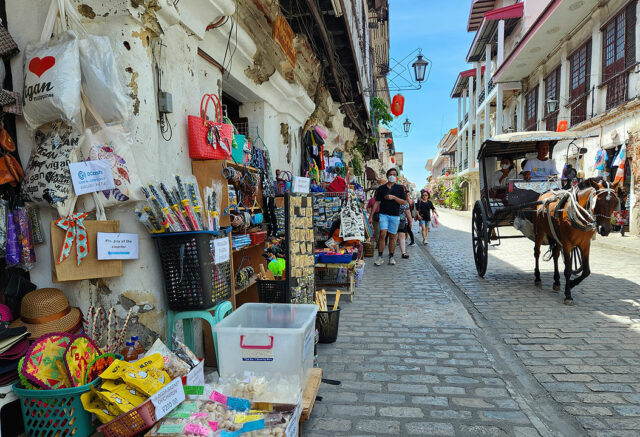
TOURISTS enjoy sightseeing and shopping along Calle Crisologo in Vigan, Ilocos Sur. Consumer spending is still expected to drive economic growth this year. — PHILIPPINE STAR/KRIZ JOHN ROSALES

By Keisha B. Ta-asan, Reporter

WASHINGTON — The Philippines will likely sustain its growth momentum this year, supported by robust consumer demand and China’s reopening, the International Monetary Fund (IMF) said.   

IMF Director of the Asia and Pacific Department Krishna Srinivasan said the country will likely benefit from China’s reopening this year.   

“The Philippines is one country that would benefit from an opening up of China, so there are upside risks to growth going forward,” Mr. Srinivasan said during the Asia-Pacific regional economic outlook press briefing here last week.

China’s reopening should lead to higher net exports and more tourism activities in the Philippines, IMF Deputy Director of the Asia and Pacific Department Sanjaya Panth said in an interview with BusinessWorld.

In its latest World Economic Outlook report, the IMF raised its 2023 gross domestic product (GDP) growth projection for the Philippines to 6%, from the 5% forecast given in January. This matched the lower end of the government’s 6-7% target for this year.   

Mr. Panth said the growth forecast for the Philippines was upgraded due to a better-than-expected fourth-quarter performance last year as well as strong consumer demand.

“It’s a combination of all three. The very strong path that [the Philippines has] been coming from already towards the end of last year, the continued strong consumer demand, and the more positive outlook following China’s reopening,” he said. 

The Philippine economy expanded by an annual 7.2% in the fourth quarter, bringing the 2022 full-year expansion to 7.6%, the quickest since 1976. 

Domestic consumption helped drive growth, rising 8.3% in 2022 as Filipinos spent more on restaurants and travel.

However, elevated inflation is still a concern as it has remained above the 2-4% target range of the Bangko Sentral ng Pilipinas (BSP) for a year, Mr. Panth said.   

“Headline inflation eased a little bit in March on a year-to-year basis. But it’s also important to keep in mind that it has been above the upper end of the Bangko Sentral’s target range for 12 months now,” he said.   

Inflation slowed to 7.6% in March from 8.6% in February, bringing the first-quarter average to 8.3%. This is still way above the central bank’s full-year forecast of 6% and the 2-4% target range.

Mr. Panth noted that inflation in the Philippines has become more broad-based due to rising prices in the services sector.

“We do expect headline inflation to rise to about 6.3% on average in 2023, from 5.8% in 2022, and that’s because of the inflation that’s already built up in the system, including the fact that it’s become more broad-based,” he said.   

Mr. Panth said the Philippine central bank has done a “very commendable job in terms of acting early and acting decisively.”

To tame inflation, the Monetary Board has raised policy rates by 425 basis points (bps) since May last year, bringing the benchmark rate to 6.25% — the highest since 2007.    

“We think that this (rate hike) should help anchor inflation expectations going forward,” Mr. Panth said.   

Due to the BSP’s policy actions, the IMF expects inflation to start easing back to the 2-4% target range either by end of this year or by early next year.   

By 2024, the IMF sees Philippine inflation averaging 3.2%, slightly higher than the central bank’s full-year projection of 2.9%.

Asked if he thinks more tightening from the BSP is on the table, Mr. Panth said the Monetary Board’s decision at its next meeting on May 18 would have to be very data dependent.

“If necessary, [the BSP may] continue to raise rates until [they] actually have inflation well under control. But, because there were actions that were taken pretty early, [the BSP] need to allow that to work its way through the economy,” he said.   

Last week, BSP Governor Felipe M. Medalla hinted that the Monetary Board may keep interest rates on hold at its next meeting if inflation further slows in April. 

Mr. Medalla also said the BSP may cut borrowing costs this year if inflation continues to ease in the next six months.

SUSTAINING GROWTH
Prudent management of the economy, both on the fiscal side and monetary policy side, is crucial to further sustain the Philippines’ growth momentum, Mr. Panth said.   

Even though the Philippines was not exposed from the recent banking turmoil in the US and Europe, he said the incidents warrant continued vigilance to ensure financial stability.   

“As soon as risks arise, (regulators should) start looking at where they may arise, be a little proactive in trying to identify risks, and then make sure that you have the necessary regulatory instruments to be able to intervene, if necessary,” Mr. Panth said.

For 2024, the IMF lowered its growth projection for the Philippines to 5.8%, from 6% previously. This is below the government’s 6.5-8% GDP growth target for 2024. 

“Because the global economy is not at a very comfortable place, we would not be surprised if growth came down slightly,” Mr. Panth said.

The IMF trimmed its global growth forecast for 2023 to 2.8% (from the 2.9% given in January) and for 2024 to 3% (from 3.1%).

Still, the IMF sees the Philippines’ long-term potential GDP growth between 6% and 6.5%. This may allow the country to achieve a higher upper middle-income class soon, Mr. Panth added.

The Philippines is currently aiming to become an upper middle-income economy by 2024 or 2025.

Gross borrowings jump in Feb.

BW FILE PHOTO

THE NATIONAL GOVERNMENT’S (NG) gross borrowings jumped to P375.245 billion in February, amid a spike in domestic borrowings, the Bureau of the Treasury (BTr) said.

Data from the BTr showed that gross borrowings in February surged by 606% from P53.121 billion in the same month a year ago.

Month on month, gross borrowings inched up by 2.3% from the P366.863 billion recorded in January.

In February, domestic debt accounted for 95.7% of total gross borrowings.

Gross domestic borrowings increased by 698% to P359.261 billion in February, from P45 billion in the same month in 2022.

During the month, the BTr raised P283.711 billion from retail Treasury bonds (RTBs), P70 billion from fixed-rate Treasury bonds, and P5.55 billion from Treasury bills.

Meanwhile, external borrowings almost doubled to P15.984 billion in February from P8.121 billion in the same month in 2022. External borrowings were made up solely of new project loans.

For the first two months of the year, gross borrowings jumped by 50.8% to P742.108 billion, from P492.251 billion in the same period a year ago.

Gross domestic debt rose by 37.9% to P538.561 billion in the January-to-February period, from P390.551 billion a year ago.

External gross borrowings doubled to P203.547 billion in the two-month period from P101.7 billion.

Rizal Commercial Banking Corp. Chief Economist Michael L. Ricafort said that the higher borrowings were mainly due to government bond offerings in February.

In February, the government raised P283.711 billion from its offering of five-and-a-half-year RTBs. 

Mr. Ricafort said inflation also affected government expenditures, leading to more borrowings.

Inflation slowed to 8.6% in February from 8.7% in January.

“Higher interest rates and borrowing costs also increased the government’s debt servicing, thereby also leading to more borrowings,” Mr. Ricafort added.

The government paid P47.831 billion for debt servicing in January, lower by 77.8% year on year.

For 2023, the government allocated P1.6 trillion for debt payments, higher by 23.3% than last year’s P1.298-trillion program.

“For the coming months, around May or in the second quarter, government borrowings could again increase in view of the upcoming dollar and/or euro-denominated retail bonds,” Mr. Ricafort said.

National Treasurer Rosalia V. de Leon earlier said that the government is looking to launch a retail dollar bond offering in May.

The offering has a target size of $1.5 billion for 5.5-year debt papers, Ms. De Leon said.

This year, the government plans to borrow P2.207 trillion. This consists of P1.654 trillion from domestic sources and P553.5 billion from external sources. — Luisa Maria Jacinta C. Jocson

‘Fur-baby’ boom: Pets span new generation of parenthood in PHL

A young man hugs his pet dog in this undated file photo. — PHILIPPINE STAR/ MICHAEL VARCAS

ALEXANDRIA AMIGO CHAN, 27, keeps a cabinet for clothes and toys, pillows and water bottles for each of her 15 dogs — a Jack Russell terrier, a beagle and 13 Belgian Malinois.

“My family and I are dog lovers,” the jewelry designer from Manila said in an e-mail. “Our dogs are part of our family. We give them the love and attention they need. We give our dogs the best organic treats and good quality toys.”

Her family also celebrates their birthdays and gives them Christmas presents. The popular saying is so apt: pets are the new kids and plants are the new pets.

Her family spends as much as P30,000 ($542) each month for their pets.

“Growing sociological literature expands the notion of family as ‘inter-species’ to include pets in the care and support relations in the family as a social unit,” Ateneo de Manila University sociologist Czarina Medina-Guce said in an e-mailed reply to questions.

“Some theories emphasize that pets contribute to individuals’ and social groups’ affective or emotional identity development, counteracting the increasing demand for rational and productive work,” she said. “In close bonds, pets are treated as children-proxies, only because children conventionally are the subject of care and nurturing affection in families.”


Veterinary clinics have experienced a sudden surge in customers as dog owners sought to provide their fur babies with proper care during the pandemic. Owners take care of dogs, cats, fish and birds not as a working animal but primarily for companion and entertainment.

Last year, Pola Del Monte, 33, entered her dogs at the PAWS’ Binibining Aspin pageant, where one of them won third place.

“For that pageant, I spent over P3,000 for YSL’s custom gown,” the Manila-based writer said, referring to her corgi-looking aspin. Her sister handcrafted a float for Meghan, the “child” of YSL with a schnauzer named Philip to ensure both were dressed for the occasion.

“We consider these once-in-a-lifetime activities, and our efforts were worth it because they got a lot of media coverage and took home prizes.”

Keeping a dog — man’s best friend — is no joke. A dog food costs P80 a kilo, the annual canine 8-in-1 shot costs P650 and an anti-rabies shot is P300.

“Because YSL is a senior dog, I have her undergo blood tests (P2,000) to be sure she doesn’t have underlying conditions,” Ms. Del Monte said.

Other costs include a CCTV/baby camera (P1,200), and acrylic panels on their home balcony (P5,000) and quarterly deep cleaning of her home (P4,000).

“Some people say it’s expensive to raise a dog. I always say it’s more expensive to raise a human,” she said.

The Philippines ranked the highest in Asia in terms of dog ownership at 67%, while 43% of Filipinos own cats, according to a Rakuten survey in 2021.

Pet food sales in the Philippines are expected to grow by 9% to $434 million this year, the United States Department of Agriculture-Foreign Agricultural Service said in its latest pet food market brief.

Businesses in the Philippines have become more pet-friendly and more shops catering to them have sprung up amid a coronavirus pandemic.

Ms. Del Monte last year opened a franchise of The Dog Spa & Hotel Metrolane Complex in Cubao, Quezon City. Full expert grooming at the shop costs P700 for medium breeds and P900 for large breeds.

“I was a patron of this brand first because they were the only ones who understood how to do a good schnauzer cut,” she said. “I believed in the brand and thought it was something our family could hop on as a business because we already had an innate understanding of how to deal with dogs.”

She said running a pet business gives them leverage to do philanthropic work. “It allows us to finance our advocacy, including supporting organizations such as the Philippine Animal Welfare Society and PAWSsion project,” Ms. Del Monte said.

“We think of the dog business as a tool that allows us to do good while doing what we love,” she said.

The pet lover says she’s always on the lookout for pet-friendly places. “I tend to support these places because they allow me to hit two birds with one stone — I can read or work while my dogs also enjoy the outdoors.”

“There is an economic side to our affective language, which is why we give gifts and spend on quality time and experiences,” Ms. Guce said. “As pets become part of one’s family or community, pet owners extend gifts and spend to care for their pets.”

That is where the pet businesses come in — to cater to pet owners who consider such spending not as economic costs or liabilities, but as purchases transferring an affective, emotional value, she added.

“Pet-friendly public spaces contribute to expanding the affective identity formation of the ‘inter-species’ family to ‘inter-species’ communities — a larger social group,” the sociologist said.

PET-FRIENDLY SPACES
“Public spaces support community identity development as places where people can share collective experiences,” she added.

Nieva Arieta Padasas, a veterinarian at E.S. Veterinary Clinic in San Juan City, says opening spaces for pets in many public and commercial places develops animal socialization.

“Either they adapt to an urban or rural type of living. It also tends to develop the socialization skills of pets in terms of mingling with other pets,” she said in a Viber message.

“It teaches them how to react to different stimuli around them and when other pets are trying to provoke them. It lessens their aggressiveness, and they tend to be more relaxed as they get used to a different environment.”

In 2019, Robinsons Malls launched their pet parenting program and started hosting Animal Day during a weekend in October, when their malls offer free pet consultation, vaccination, grooming and activities for pets and their owners.

“It would enhance the mall experience further and even one’s hotel stay if you have your pets with you when you go for a staycation,” Robinsons Land Corp. Director Roseann Villegas said in an e-mail.

“Stores catering to pets have always been part of Robinsons Malls’ tenant mix portfolio,” she added.

Every quarter, Robinsons Malls partners with the Animal Kingdom Foundation and Pawssion Project to offer free pet consultations, rabies vaccination and deworming. The mall also offers the Happy Pets Club, a program where pet owners can take part in pet-related events and activities.

Ayala Land, Inc. also saw the opportunity to open commercial spaces to pets during the pandemic.

“People became fur parents while we were indoors,” Ayala Land Estates head of Marketing and Communications Christine Roa said in an online interview. “It just became natural to answer that need so there will be a safe and secure place where pets can freely roam comfortably outside their homes.”

Pet parks called The Barkyard were opened near Ayala Malls in 2021.

While pet-friendly spaces allow pet owners to engage in outdoor activities, Ms. Del Monte and Ms. Chan cited the need to make a distinction between businesses that are “pet-friendly” and those that are “pet-tolerant.”

“It’s very misleading when establishments claim to be pet-friendly but are not,” Ms. Del Monte said. “That includes the restriction toward big dogs. The size of the dog is not always proportional to the size of their energy.”

Ms. Padasas said a common area for pets poses health risks.

“We don’t know which among them is a carrier of a disease or parasite,” she said. “Sometimes, they tend to be aggressive, while others shake when exposed to other pets.”

Robinsons’ Ms. Villegas said customers who wish to dine with their pets, may do so al fresco. House rules require owners to put them on diapers and on a leash or a stroller.

Ayala Malls have three tiers for pets — the Lax, Limited and Hybrid tier “pawlicies” to also ensure they are properly cared for and supervised.

“If you are pet-friendly, you make sure that your mall is a welcoming space. You create programs that are for their benefit,” Ayala Land’s Ms. Roa said.

“Businesses thrive as the economy thrives. If inflation continues to challenge the financial capacities of pet-owning families, then pet businesses need to consider the kinds and costs of services and goods they provide,” Ms. Guce said.

Pet businesses can thrive in the longer term by matching pet owners’ evolving care language and sensibilities,” she added.

Business establishments and pet parks are a good venue to spread the information on how to be responsible pet owners,” Ms. Padasas said. “People should be aware of a lifetime commitment to pets from the day they acquire it up to its last breath.” — Michelle Anne P. Soliman

MAP, AmCham back Charter change, only for economic provisions

PHILIPPINE STAR/MIGUEL DE GUZMAN

TWO BUSINESS groups expressed support for changes to the 1987 Constitution, but only if it would cover the economic-related provisions.

“Our stand is that we agree, provided that it is limited to the economic provisions,” Benedicta Du-Baladad, Management Association of the Philippines (MAP) president, told reporters last week.

She said the Charter change should also be done through a constituent assembly.

“The reason being, in a constituent assembly, you can actually limit the coverage of what we can do. It would also be faster…and less costly for us,” she said.

Ebb Hinchliffe, executive director of the American Chamber of Commerce of the Philippines (AmCham), said the business group is supportive of the move to amend economic provisions of the Constitution.

“The rest (of the proposed amendments), we will leave it to the Filipino people — whether they should change the term limit of the President — that is up to the Filipinos, not the foreign chambers,” Mr. Hinchliffe said in a chance interview in Taguig City last week.

Lawmakers have sought proposed amendments to the 1987 Constitution, claiming that this would help encourage more foreign investments into the Philippines.

Mr. Hinchliffe said the Philippines has already made “big progress” after it allowed 100% foreign ownership for investments in the renewable energy sector.

This after the Justice department issued a legal opinion in October last year which said that renewable energy projects were not covered by the then 40% limit on foreign equity under the 1987 Constitution.

“We support the economic changes to the constitution. That is the best thing we can do to get more foreign direct investments in the country. Overall, we’re making big progress with the foreign ownership of renewable energy,” Mr. Hinchliffe said.

The House of Representatives passed a resolution last month in support of a constitutional convention (con-con), where House members would serve as delegates to propose amendments or revisions to the Constitution.

However, six business organizations, which include the Makati Business Club and Financial Executives Institute of the Philippines, earlier said a con-con would be too costly.

“Investors look for stability when making investment decisions. The possibly lengthy and fractious process of amending the constitution may make investors take a wait-and-see attitude for an extended period of time and therefore derail the impact of the reforms,” the business groups said.

Robinhood Ferdinand C. Padilla, chair of the Senate Committee on Constitutional Amendments, is pushing to amend the charter through a constituent assembly, which means that Congress itself will pass amendments to the Constitution with a three-fourths vote of all its members. — RMDO

LRMC expects delivery of 10 train sets this year

LIGHT RAIL Manila Corp. (LRMC) expects the 10 Generation-4 (Gen-4) train sets procured for the Light Rail Transit Line 1 (LRT-1) to be delivered within the year.

“Right now, we are waiting for ten sets of four [light rail vehicles],” LRMC President and Chief Executive Officer Juan F. Alfonso told reporters last week.

“I think about December 2023 to January 2024, the new trains will already start going in,” he added.

The company said in a Viber message that 20 out of the 30 Gen-4 train sets manufactured in Spain and Mexico are already in Manila.

“They are undergoing tests and trial runs to complete the necessary minimum kilometer run before commercial operations,” it added.

Each Gen-4 train set needs to complete a total of 1,000 kilometers prior to acceptance by the grantors and the eventual handover to LRMC for commercial use.

The government-procured trains are being repaired in batches of two to three at a time to address the water leak issues through Spanish railway vehicle company Construcciones y Auxiliar de Ferrocarriles, the company said.

The passenger train sets measure 106 meters in length and are 2.59 meters wide and can accommodate over 1,300 passengers per trip. It has a maximum design speed of 70 kilometers per hour, according to LRMC.

The trains, although procured as part of the LRT-1 Cavite Extension project, will not only be used for the new line but also in existing lines, according to LRMC.

“But it doesn’t mean that the trains will only be used for the new line, or that only once LRT-1 Cavite Extension becomes operational. We can use them on the existing line as soon as ready, cleared, and possible,” it added.

The company is currently constructing the 11.7-kilometer Cavite Extension of the LRT-1 line.

The project is expected to benefit 800,000 passengers daily and to cut down travel time between Baclaran and Bacoor from one hour and 10 minutes to 25 minutes.

Meanwhile, Mr. Alfonso said that its daily profit has not reached its pre-pandemic levels yet as it currently operates between 70% to 80% of its 2019-levels.

“It is continuously increasing. But it didn’t bounce back like restaurants and schools,” he said.

LRMC, which operates a 20-station light rail line from Pasay to Quezon City, posted a core net loss of P472 million in 2022.

This is despite a 58% revenue increase to P1.8 billion, as additional costs were incurred due to the start of amortization of concession and borrowing costs.

LRMC is a joint venture of Ayala Corp., Metro Pacific Light Rail Corp., and Macquarie Infrastructure Holdings (Philippines) Pte. Ltd.

Metro Pacific Investments Corp. is one of three Philippine subsidiaries of Hong Kong’s First Pacific Co. Ltd., the others being PLDT, Inc. and Philex Mining Corp.

Hastings Holdings, Inc., a unit of PLDT Beneficial Trust Fund subsidiary MediaQuest Holdings, Inc., maintains interest in BusinessWorld through the Philippine Star Group, which it controls. — Justine Irish D. Tabile

‘Ternocon 3 Exhibit’ to travel outside Metro Manila

DESIGNS of ‘Ternocon III’ mentor Joey Samson at the Glorietta Palm Drive Activity Center

WHILE the “Ternocon 3 Exhibit” at the Ayala Center ended this weekend, the Cultural Center of the Philippines (CCP) is going to bring it to other cities this year and the next.

During a press tour of the exhibit on April 12, which brought guests around the exhibit’s different sections at Greenbelt, Glorietta, and the Ayala Museum, CCP Vice-President and Artistic Director Dennis Marasigan said that this exhibit tour will be done in cooperation with the Office of the First Lady, the CCP Regional Art Centers, and the CCP’s Cultural Exchange Department.

Other terno-making activities will also be planned with the travelling exhibit. “We want to bring this to Mindanao, primarily because they’re not a big terno country. Of course, we want to bring it also to the Visayas. Right now, we’re having negotiations with a place that can be something like this where people can go and just see it,” he told BusinessWorld.

“Ternocon” is a biennial event by clothing brand Bench and the CCP that joins fashion designer mentors with young designers for a contest and fashion show that celebrates one of the country’s national dresses, the terno.

Evolving from the traje de mestiza, it put together the separate pieces of that outfit —  a skirt (the saya), a blouse (the baro), a fichu (the panuelo), an overskirt (the tapis) —  and makes it into a single piece. The terno transforms the wide pagoda sleeves of the baro into the famed butterfly sleeves that frame the face. The evolution of the traje de mestiza into the terno began in the 1900s, during the American period of colonization, and reached its zenith in the 1950s to the 1970s, when first ladies (especially Luz Magsaysay, Eva Macapagal, and Imelda Marcos) were seen at state events wearing the dress (not to mention the various society ladies who wore it at balls).

This year, “Ternocon” was shown in January at the CCP’s Tanghalang Ignacio Gimenez Black Box Theater. Mentors included Dennis Lustico, Chito Vijandre, Ricky Toledo, Joey Samson, Hannah Adrias (who won the gold medal for “Ternocon” in 2020), and chief mentor Inno Sotto. Their creations, as well as those of the 13 finalists, were shown at the exhibit.

“Ternocon” mentor Mr. Lustico worked with a sophisticated color palette executed in beaded piña cloth, point d’esprit, lace, fishnet, taffeta, duchesse satin, and silk organza. A motif conveyed in ostrich feather work, beads, and rhinestones were inspired by a cluster of coconut trees that he had seen from one of his trips around the country.

At the Ayala Museum, Messrs. Vijandre and Toledo showed off their grand campy vision with vintage textiles, lace, and the songs of Imelda Papin. Mr. Samson drew inspiration from national hero Jose Rizal and his many muses, including his nine romantic partners and his mother Teodora, fusing Western menswear and feminine Filipiniana elements. Ms. Adrias showed clothes featuring fractured and distressed materials, in a palette of amber, moss, teal, bronze, gold, and gray.

This year’s gold medalist Yssa Inumerable showed off a vision with Gibson Girls from the turn of the 20th century, according to a release. “Her joyous take on the balintawak [the more informal version of the terno] included gently tweaked versions of all the traditional components, using piña, jusi, and inabel cloth from Abra. She also used colorful folk style embroidery called bordang Taal.” Silver medalist Gabbie Sarenas showed her skill in embroidery with three-dimensional sampaguitas, and bronze medalist Glady Rose Pantua embroidered her winning entry with birds and elements of Filipino culture. Particularly eyecatching was the balintawak made by Glyn Alley Magtibay, which used X-ray sheets to form the sleeves.

Mr. Marasigan told BusinessWorld in an interview about the importance of bringing these clothes off the stage and on the ground. “People have thought of the terno as a costume. It is our national dress. It should be considered as something that you can wear every day. Bringing it to a place like this [the mall], I think, brings it closer to the whole idea that it’s something that should be commonplace.” — Joseph L. Garcia

RLC plans 2-4 more project launches this year

CEBU CITY — RLC Residences is planning to launch two to four more projects this year, as it sees continued growth in demand for residential condominiums.

John Richard B. Sotelo, senior vice-president and business unit general manager of RLC Residences, said the company is looking to launch the new projects in Metro Manila.

“We’re planning to launch anywhere from two to four more projects depending on how the market responds,” he told reporters at the sidelines of the launch of its new premium condominium project Mantawi Residences, Friday.

Mantawi Residences is a four-tower premium condominium located along Ouano Avenue in Mandaue City.

This is the third project launched this year by RLC Residences, the residential brand of listed developer Robinsons Land Corp. (RLC). Earlier this year, it unveiled Le Pont Residences in the Bridgetowne estate and the fourth tower of Sierra Valley Gardens in Cainta, Rizal.

Despite rising interest rates, Mr. Sotelo said there appears to be sustained demand for residential projects, as evidenced by the growing pre-reservation sales as reported  by listed property companies, including RLC.

The Bangko Sentral ng Pilipinas’ policy-setting Monetary Board has raised borrowing costs by 425 bps since May last year, bringing the benchmark rate to 6.25%, the highest since 2007.

“We are not experiencing a slowdown at least in the residential business. We have a couple of clients worried about bank loans but when we tell them that they will only need a bank loan in seven years, they say ‘oo nga pala’ (Yes, that’s true). For now, we’re pretty confident that the market for residential condominiums will continue to grow,” Mr. Sotelo said. 

RLC has reported its residential business, which includes RLC Residences and Robinsons Homes, posted a 44% increase in revenues to P9.1 billion in 2022. Full-year net residential pre-sales rose 57% year on year.

Asked where RLC Residences is looking at expanding, Mr. Sotelo said it is easier to expand in an area where RLC already has a presence, whether a mall, hotel, or office building.

“Montclair (RLC’s destination estate in Porac, Pampanga). I’m very interested to launch there. It’s just a matter of timing,” he said.

Aside from high interest rates, the rising prices of construction materials is also a concern for property developers like RLC.

Mr. Sotelo noted prices spiked last year due to the Russia-Ukraine war but has “settled down.”

“It is still higher pre-pandemic. Electricity and oil prices are more expensive. Labor costs also went up,” he said.

Retail price growth of construction materials in Metro Manila slowed to 4.1% year on year in March, the Philippine Statistics Authority (PSA) reported on Friday. This is the slowest rate of growth in over a year, according to PSA data.

Based on preliminary PSA data, the construction materials retail price index was up 5% in the first quarter, from 3.7% during the same period a year ago. — Cathy Rose A. Garcia

Two out of three hit the spot

THEUNBRANDEDSKINCARE.COM

By Joseph L. Garcia, Reporter

Product Review
The Unbranded Skincare Co.
Cleansing Wash, Day Shield, and Overnight Cream

WHILE the London City airport has dropped the 100 mL limit for liquids in one’s carry-on luggage, the rest of the world is yet to follow suit. This means that we still have to pack our skincare in our check-in luggage, and we’re not quite willing to open our suitcase to a sight of broken bottles of serum.

Last year, we received bottles from homegrown skincare company The Unbranded Skincare Co. —  and ignored them. During a trip to Paris last March, we decided to finally use the three-piece skincare kit. The promise of Unbranded is to reduce longer routines and condense them into one facial wash, plus a Day Shield and an Overnight Cream. To be fair, my facial routines never go into the extreme 11 steps that lots of people adopted before the pandemic. My own routine uses a facial wash, a toner, a Niacinamide serum, a hyaluronic acid moisturizer, and sunscreen during the day; another facial wash, another toner, a retinol serum, face oil, and another moisturizer at night —  well below 11. Still, the need for more space in the suitcase might benefit from what is essentially a two-step routine.

Unbranded’s Cleansing Wash (P575) has squalene that aims to restore lipidic barriers in the skin to keep moisture better, and also contains lotus, green tea, calamansi, angelica, and guava extracts; as well as brightening niacinamide and antimicrobial tea tree oil. It’s designed to join cleanser and makeup remover in one, and it really works that way. What we did was use it as a makeup remover, applying it first on a dry face to melt off our makeup, then wiping it off with a cloth, and then rinsing it off. We felt that our skin really was softer and calmer during the trip.

The Unbranded Day Shield (P850) also has squalene for hydration, allantoin to soothe and calm skin, and hyaluronic acid, also for hydration purposes. It also has a measure of sun protection with SPF 35, thus condensing moisturizer, serum, and sunscreen in one. This cream has to set upon application —  the sunscreen component left a white cast on the face —  but otherwise, it felt rich and quite thick, and a little goes a long way.

Well —  it was our fault for using this at the beaches of Normandy, an environment that punished Allied soldiers during the Second World War (and Lord knows they didn’t bring any skincare). Punishing winds, sand, and the hot sun combining with the mild cool of the spring thaw had terrible effects on the Unbranded Day Shield. We remember leaving a makeshift morgue at one of the D-Day landing beaches with our skin feeling like it was cracking.

We tried soothing this that evening with the Overnight Cream (P975). This had Centella Asiatica that helps repair skin; as well as ameliox, bee venom, and hydrolyzed collagen (from starfish) that act as anti-aging elements. We woke up with our skin feeling light, though a bit too shiny.

We gave the Day Shield another chance, but this time, we weren’t taking any chances: on a trip to the former home of the French royals at the Palace of Versailles, we layered the day shield with another moisturizer. And you know what? It still did not work; and the same windy conditions in Versailles punished the face once again. To be fair to it, the Day Shield performed quite well (but not as well as my own five-step routine) in Paris itself, as well as in Amsterdam.

Our verdict is to kick the Day Shield out of the routine and keep the Overnight Cream and the Cleansing Wash. The Day Shield might show good results in a pinch, but never in a harsh climate, and preferably somewhere humid. The Overnight Cream can even be used at home when you’re just not in the mood to rub more things on your face and just want to hit the sack. Still, with just two bottles in your bag for a “spartan” evening routine, that would at least help save space so you can buy better day creams in another city.

One can get The Unbranded Skincare Co.’s products from their website (theunbrandedskincare.com).