Home Blog Page 496

Dozens killed, 100 injured in fire at Swiss ski resort bar

A WOMAN walks on the ice to a measuring point on the Pers Glacier near the Alpine resort of Pontresina, Switzerland, July 21, 2022. — REUTERS

CRANS-MONTANA — Around 40 people were killed and 115 injured when a fire ripped through a crowded bar during a New Year’s Eve party in the upscale Swiss ski resort of Crans-Montana, officials said on Thursday.

Police said the fire broke out at 1:30 a.m. (0030 GMT) as revelers were celebrating in a bar called Le Constellation in the resort in southwestern Switzerland, which locals said was popular with teenagers.

Swiss President Guy Parmelin described the disaster as “one of the worst tragedies our country has ever known” and said most of the dead were young people.

The cause of the blaze, which was initially reported as an explosion, remained unclear but authorities said the fire appeared to be an accident rather than an attack.

Authorities warned that naming the victims or establishing a definitive death toll would take time because many of the bodies were badly burned. Experts were using dental and DNA records to try to identify the dead.

SCENES OF PANIC
Video footage verified by Reuters showed fire spreading from the building, and witnesses described scenes of panic and confusion as people rushed to get out.

“There were people screaming, and then people lying on the ground, probably dead,” said 21-year-old Samuel Rapp, who saw the aftermath of the fire. “They had jackets over their faces.”

The head of the local canton’s police, Frederic Gisler, said around 40 people were presumed to be dead and 115 were injured, most of them seriously. He said it was too early to give details on the identity of the dead and injured but Italian authorities said 6 Italians were still missing and 13 in hospital.

Two young French women who said they were in the bar told France’s BFM TV that they saw the fire start in the basement section of the club after a bottle containing “birthday candles” was held up too close to the wooden ceiling.

“The fire spread across the ceiling super quickly,” one of the two women, who identified themselves as Emma and Albane, told BFM TV. The pair said they were able to climb a narrow staircase to the ground floor and escape the building. Minutes later, the fire had reached the ground floor too, they said.

BFM showed video of a waitress carrying a champagne bottle with a lit “fountain candle” through the bar, one of many in Crans-Montana, a fashionable ski center with an array of boutiques, luxury hotels, and restaurants. But the footage did not show the fire breaking out.

Local prosecutor Beatrice Pilloud said an investigation had been opened into the blaze at the bar, which Swiss company records showed was owned by a French couple, but she said it was too early to comment on any possible safety failures.

“There are still many circumstances to be clarified… The most likely scenario at present is that a widespread fire caused an explosion,” she told a press conference.

VICTIMS FROM SEVERAL COUNTRIES
Witnesses said many of those celebrating in the bar appeared to be from different countries. Foreign governments were calling around to establish whether their nationals were among the victims but were facing a lengthy process because the severity of the burns had rendered identification challenging, one European official said.

“We met the families this afternoon and it’s terrible because to be in front of them with all their fear and apprehension and terrible anxiety and we don’t have all the answers. And we won’t have them straight away because identifying them will take time. It’s a terrible situation on the ground. Unimaginable,” Mathias Reynard, president of the Valais cantonal government, told Reuters, his voice breaking.

Eight French people were missing, the French foreign ministry said, adding that it could not rule out that French nationals were among the dead.

French President Emmanuel Macron spoke to his Swiss counterpart to offer assistance. Three survivors of the fire have been moved to French hospitals and further transfers were under way, the ministry added.

Italy’s ambassador to Switzerland, Gian Lorenzo Cornado, told Sky TG24 that local authorities had told him the fire was started by someone letting off a firework inside the bar.

Witnesses described injured being treated in improvised triage centers set up in a nearby bar and in a branch of UBS bank and said many suffered after coming out of the heat of the bar into the freezing night air.

“And then it was just ambulances coming back and forth as much as possible,” said Dominic Dubois, who witnessed the frantic scenes as the bodies were brought out.

Video footage showed lines of ambulances queuing and helicopters landing to take victims to nearby hospitals and specialist burn units in other Swiss cities, including Lausanne and Zurich. Switzerland’s neighbors, France, Germany and Italy, also offered to treat victims in their own centers.

On Thursday morning, footage from the street outside showed the area cordoned off, with forensic tents behind white screens set up in front of the bar.

Hundreds of people paid their respects to the victims at the top of the road in front of the scene on Thursday evening. Dozens left flowers or lit candles on a makeshift altar in front of the police cordon as a large crowd stood in silence in the frosty night.

Crans-Montana is due to host next year’s Alpine World Ski Championships. Swiss officials said the fire was unprecedented in Switzerland.

“What was meant to be a moment of joy turned, on the first day of the year in Crans-Montana, into mourning that touches the entire country and far beyond,” Mr. Parmelin said on the social media platform X.— Reuters

NG borrowings surge in November

BW FILE PHOTO

By Aubrey Rose A. Inosante, Reporter

THE NATIONAL Government’s (NG) gross borrowings surged in November amid a sharp rise in domestic and foreign borrowings, the Bureau of the Treasury (BTr) said.

Latest data from the Treasury showed that total gross borrowings jumped by 74.55% to P113.53 billion from P65.05 billion in the same month a year ago.

Month on month, gross borrowings rose by 29.3% from P87.81 billion in October.

Domestic borrowings increased by 59.57% to P78 billion in November from P48.88 billion in the same month last year. This accounted for the bulk or 68.7% of the total gross borrowings in November.

Domestic borrowings were mainly composed of P70 billion in fixed-rate Treasury bonds (T-bonds) and P8 billion in Treasury bills (T-bills).

On the other hand, external borrowings, which mainly consisted of project loans, jumped by 119.81% to P35.53 billion in November from P16.17 billion in the previous year.

Rizal Commercial Banking Corp. Chief Economist Michael L. Ricafort said the higher gross borrowings in November were due to the need to plug the budget deficit.

“This could be attributed to the continued NG budget deficit that needs to be financed by NG borrowings/debt, despite lower maturing government bonds in the fourth quarter,” he said in a Viber message.

In the first 11 months of the year, NG’s gross borrowings inched up by 4.07% to P2.6 trillion from P2.49 trillion a year ago.

The 11-month tally made up around 99.85% of the revised P2.6-trillion financing program for 2025.

As of end-November, domestic borrowings made up 81.32% of the total.

Domestic debt went up by 10.42% to P2.11 trillion in the period ending November from P1.91 trillion a year ago.

This accounted for 99.98% of the P2.112-trillion domestic borrowing program for the year.

Domestic debt was composed of P1.19 trillion in fixed-rate T-bonds, P425.61 billion in retail T-bonds, P300 billion fixed-rate Treasury notes, and P192.2 billion in T-bills.

Meanwhile, gross external borrowings stood at P484.89 billion as of end-November, 16.75% down from P582.41 billion a year ago.

This accounted for 99.33% of the P488.174-billion external borrowing program this year.

Broken down, foreign debt included P201.35 billion in program loans, P191.97 billion in global bonds, and P91.57 billion in project loans.

The end‑November external debt reflected the $3.3-billion global bond issuance completed in late January and settled in February.

Mr. Ricafort said there is a seasonal increase in the budget deficit towards the end of the year, which would require more borrowings to finance the widening budget deficit.

The budget deficit shrank by 26.02% year on year to P157.6 billion in November, but still pushed the fiscal gap to P1.26 trillion in the 11-month period.

This represented 80.92% of the revised full-year target of P1.56 trillion for 2025.

White corn gives Cagayan farmers a lifeline after years of debt and flood losses

WHILE yellow corn is a feed and industrial crop, white corn is eaten directly and draws higher farmgate prices — P35 to P45 per kilo, roughly double the P18 farmers usually get for yellow corn. — VONN ANDREI E. VILLAMIEL

By Vonn Andrei E. Villamiel

CAGAYAN — For decades, Crecencia B. Garan planted yellow corn in the river plains of Alcala, Cagayan — only to watch most of her earnings circle back to the middlemen who financed her inputs.

Each planting season left the 67-year-old Filipino deeper in debt, and each flood that swept through her low-lying community wiped out whatever gains remained.

“For yellow corn, we shoulder all the expenses, and we often borrow from middlemen,” she told reporters invited by the Agriculture department to Alcala on Dec. 5 in Filipino. “What we earn just ends up being used to pay our debts.”

Today, Ms. Garan says she is finally making money from the same land. She is part of a small but rising group of farmers shifting to white corn, a variety long grown for household consumption but now fetching higher prices and attracting steadier buyers as Alcala tries to rewire its corn economy.

While yellow corn is a feed and industrial crop, white corn is eaten directly and draws higher farmgate prices — P35 to P45 per kilo, roughly double the P18 farmers usually get for yellow corn.

Grown alongside the yellow variety, white corn has become a crucial second stream of income that helps farmers absorb losses from the more volatile yellow corn market.

Input access has also changed the equation. Seeds, fertilizer and pesticides are provided by government programs pushing white corn planting, while Alcala’s municipal processing hub buys the harvest and channels it to institutional buyers.

“Because of white corn, we earn more because of higher prices,” Ms. Garan said. “Farmers also receive free fertilizer and insecticide, and we can borrow tractors and rotavators.”

Alcala’s farmers have long depended on yellow corn, grown across more than 4,200 hectares and sold to livestock growers and feed millers across Cagayan Valley.

That model began to crack after Typhoon Ulysses struck in 2020, sending floodwaters across the province and destroying about P52 million worth of crops and livestock in Alcala alone.

Municipal agriculturist Vincent C. Espejo said years of heavy herbicide use in yellow corn areas contributed to vegetation loss and soil runoff, worsening the impact of flooding.

Local officials began looking for crops that required fewer chemicals and encouraged more manual weeding — conditions that pointed them to white corn.

“We have about 4,200 hectares planted to yellow corn, and almost all of them use herbicide,” Mr. Espejo said in Filipino. “The local government decided to adopt white corn because it does not use herbicide.”

Today, about 100 hectares in Alcala are planted with white corn, producing roughly 170 metric tons per cycle.

The changes required deliberate intervention. During the first harvests, the town government had to buy white corn because there were no buyers yet.

“We bought it at P25 per kilo and sold it at P20 per kilo,” Mr. Espejo said. “The LGU (local government unit) would incur losses, and that was not sustainable.”

That experience led to the creation of the Alcala Product Center, which now buys white corn, processes part of it, and connects farmers to institutional buyers.

One of them is snack maker Nacho King, which buys at P45 per kilo and has a monthly requirement of up to 10 metric tons, according to Alcala’s agriculture office.

‘BIG BROTHER’
The center’s purchases reach about 30 metric tons per cropping cycle. Roughly 3 tons are turned into corn-based products — noodles, coffee, corn bits and corn rice — sold in groceries, trade fairs and pasalubong stores, reaching markets as far as Manila and Palawan.

The Alcala Fine Producers Cooperative, which manages the center, uses what it calls a “big-brother, small-brother” setup to support growers.

“We are the big brother, and they are the small brother,” cooperative manager Jennifer M. Pagaduan told reporters in Filipino. “We help them process and market their products. They no longer need to find buyers themselves.”

For farmers like Belly A. Duruin, president of the White Corn Growers Association, the mix of input assistance, equipment access and market guarantees has transformed their outlook.

“This is a big help to us farmers,” she said in Filipino. “Because of growing white corn, our income increased. We no longer suffer losses.”

Still, expansion remains slow. Of Alcala’s more than 4,000 hectares of corn land, only around 100 hectares have shifted to white corn. Habits, market familiarity, and yield differences continue to anchor farmers to yellow corn.

“White corn is more labor intensive,” Mr. Espejo separately told BusinessWorld. “Unlike yellow corn, which only needs to be sprayed with herbicide, white corn requires manual weeding.”

White corn yields about 2 metric tons per hectare, less than half the 5 tons typical for yellow corn. And although white corn commands higher prices, its market is smaller. Yellow corn remains easier to sell — traders and livestock growers will pick it up directly from farms.

The processing center has also reached its limits. Drying equipment is scarce, and the town still lacks a proper warehouse for bigger volumes.

Despite the constraints, Alcala sees momentum turning. As more buyers explore white corn for snacks and other food products, farmers are finding demand that did not exist just a few years ago.

“When demand for white corn increases, production will also increase. Before, buyers could only find yellow corn, but now producers are available,” Mr. Espejo said.

The local government aims to expand white corn planting to 20% of Alcala’s corn land — around 800 hectares — within five years.

The expectation is that demand for locally grown white corn will continue rising as processors and food manufacturers search for unique ingredients and as consumers explore alternatives to traditional staples.

For now, farmers like Ms. Garan say white corn has already changed their lives. After decades of borrowing from middlemen, she says she no longer ends each harvest season in debt.

“We no longer suffer losses. We earn more now.”

Easing bank secrecy law likely to boost Philippines’ efforts vs financial crimes

BW FILE PHOTO

By Katherine K. Chan, Reporter

THE PROPOSED AMENDMENTS to the country’s decades-old bank secrecy law would be a sensible preemptive measure against illicit financial activities, despite being limited to bank officers and employees.

“The Philippines is one the very few countries with this, so (it is) a welcome development to align with global best practices (and) to help improve governance standards,” Rizal Commercial Banking Corp. Chief Economist Michael L. Ricafort told BusinessWorld in a Viber message.

In December, the House of Representatives approved on third and final reading a bill introducing amendments to the Philippine bank secrecy law.

Under House Bill (HB) No. 6707, the Bangko Sentral ng Pilipinas (BSP) will be granted the authority to access bank accounts owned by bank officers and employees linked to financial crimes.

The measure consolidated eight similar House bills under the 20th Congress, including HB Nos. 7, 1674, 1786, 1918, 3026, 3196, 4388 and 5152.

If the proposal is signed into law, the BSP will be allowed to examine the bank deposits of officials, employees, or any related parties of entities under any BSP-supervised institution.

BSP-supervised institutions are banks, nonbank financial institutions with quasi-banking functions, and other entities that are engaged in financial activities like pawnshops, electronic money issuers, money service businesses, and trust corporations.

The bill, which is included in the Legislative-Executive Development Advisory Council’s priority measures for the 20th Congress, likewise seeks to permit the BSP to exercise the same authority in investigating closed banks.

Asked if limiting the scope to bank officers and employees is sufficient, Mr. Ricafort said: “Better to align banking standards with other ASEAN (Association of Southeast Asian Nations) or Asian countries and with other developed countries, based on global banking best practices.”

Meanwhile, John Paolo R. Rivera, a senior research fellow at the Philippine Institute for Development Studies, said despite the limitations, the proposal is still a “sensible first step” to combat financial crimes involving banking officials.

“It is a sensible first step because it targets areas of highest risk and accountability without undermining depositor confidence,” he told BusinessWorld in a Viber message. “Many financial crimes involve insiders who facilitate or ignore suspicious transactions, so tighter scrutiny here can meaningfully strengthen enforcement while preserving the principle of bank secrecy for the general public.”

The central bank has been pushing for amendments to the Philippines’ tight bank secrecy laws to boost its oversight of the financial sector by preventing cases of insider abuse, citing cases where bankers themselves borrow from their own banks or hide proceeds of fraudulent activities in their banks, which endanger depositors.

Mr. Rivera said introducing further amendments to require ordinary account holders suspected of ties to illegal financial activities to waive bank deposit secrecy could potentially undermine public confidence.

“Allowing BSP to look into accounts of the general public would be far more sensitive and could raise serious privacy and confidence concerns if not narrowly defined,” he said.

“Any broader access should be strictly risk-based, court-authorized, and tied to specific investigations, not blanket powers. Otherwise, it risks capital flight, weaker trust in banks, and reputational damage to the financial system,” he added.

Meanwhile, analysts said easing the bank secrecy law could boost investor confidence in the Philippines.

“Easing bank secrecy is a game-changer,” Jonathan L. Ravelas, senior adviser at Reyes Tacandong & Co., said via Viber. “It strengthens BSP’s ability to fight fraud and money laundering, keeps us off global gray lists, and signals that the Philippines is serious about transparency.”

“That builds investor confidence and makes us more attractive for foreign capital — because trust is the currency that drives investment,” he added.

Mr. Rivera noted that investors appreciate clear rules, strong governance and transparent financial channels, all of which are reflected in the rationale behind the proposed amendments to the bank secrecy law.

“Clear, risk-based access paired with due process signals lower regulatory and reputational risk, which can ultimately make (the Philippines) a more attractive and trustworthy investment destination,” he added.

In a report for its Article IV Consultation with the Philippines released last month, the International Monetary Fund (IMF) said the Philippines should continue to prioritize advancing efforts to combat money laundering and terrorist financing.

“Amendments to the Bank Deposits Secrecy laws in line with international good practices should be pursued to enhance the BSP’s supervisory powers and strengthen AML/CFT (anti-money laundering and combating the financing of terrorism) supervisory effectiveness,” the IMF said.

“Strengthening the AML/CFT frameworks is also important to support broader anti-corruption efforts and effectively combat the laundering of proceeds of corruption,” it added.

In February 2025, the Philippines exited the Financial Action Task Force’s (FATF) “gray list” or the list of jurisdictions under increased monitoring for money laundering.

The FATF is set to reassess the country in 2027, when it will verify whether the country’s anti-money laundering measures are being sustained and still in place.

PSEi rebound seen this year if governance issues resolved

A man is silhouetted in an electronic board in this photo illustration taken in Rome. — REUTERS

By Alexandria Grace C. Magno

THE PHILIPPINE Stock Exchange’s (PSE) main index will most likely consolidate or move sideways this year amid continued uncertainty, according to analysts.

China Bank Capital Corp. Managing Director Juan Paolo E. Colet said as things stand today, the PSE index (PSEi) could go up to the 6,700 level if governance issues are resolved and gross domestic product (GDP) growth remains above 5%.

“There’s a chance that the market could rise to around 6,600-6,700 if we see decisive action on governance issues as well as a sustained trend of GDP growth above 5%,” he said in a Viber message. “Conversely, there’s a risk of the index revisiting 5,600 or lower if economic growth stalls or fresh governance concerns emerge.”

Economic managers expect 6-7% GDP growth this year, slightly faster than the 5.5-6.5% goal in 2025.

A corruption scandal involving anomalous flood control projects has already shaken investor confidence and slowed economic activity last year.

An independent commission is still investigating the allegations that government officials, lawmakers and contractors received billions of pesos in kickbacks from anomalous projects.

The flood control mess has affected the stock market, which slumped in 2025. The PSEi ended lower on Monday — the final trading day of 2025 — at 6,052.92, down by 7.29% or 475.87 points from its end-2024 finish of 6,528.79.

Michael L. Ricafort, chief economist at Rizal Commercial Banking Corp., said that if anti-corruption measures and governance reforms are pursued seriously, markets could sustain gains above 6,000.

“Local market sentiment was largely supported recently by the S&P’s latest affirmation on the Philippine credit ratings and positive outlook shows that the country’s economic and credit fundamentals remain intact despite geopolitical risks, the Trump factor, and local political noises recently,” Mr. Ricafort said in a Viber message.

In November, S&P Global Ratings kept the Philippines’ long-term “BBB+” and short-term “A-2” ratings with a “positive” outlook, noting that growth prospects remain solid despite the corruption scandal.

The “BBB+” sovereign rating is a notch below the “A”-level grade targeted by the government, while a positive outlook means the Philippines’ credit rating could be raised within 24 months if improvements are sustained.

AP Securities, Inc. Equity Research Analyst Shawn Ray R. Atienza said the PSEi may get stuck between the 6,000 and 6,400 level as weak manufacturing, slow consumer spending, and tighter infrastructure disbursements could hold back growth.

“Conversely, we anticipate 2025 fourth-quarter earnings of mining stocks to cushion macroeconomic woes and serve as a natural hedge against the weakening equity market and depreciating peso,” he said.

The peso on Monday closed at P58.79 per dollar, depreciating by eight centavos from its P58.71 finish on Friday. Year to date, it weakened by 94.5 centavos or 1.61% from its P57.845 close on Dec. 27, 2024.

In a Viber message, Regina Capital Development Corp. Head of Sales Luis A. Limlingan said the market could see a “solid recovery, potentially reaching 6,300-6,500” if data show strong fourth-quarter GDP growth and inflation remains stable.

Philstocks Financial, Inc. Research Manager Japhet Louis O. Tantiangco said the local economy needs positive catalysts to restore confidence and get economic growth back on track.

“This would include inflation remaining under control, a robust labor market, signs that household consumption growth is re-accelerating, investments in the country are recovering, more progress on the investigation of the Philippines’ corruption issues that would in turn help reignite consumer and investor confidence,” he said.

F. Yap Securities Investment Analyst Marky Carunungan said that investors are weighing political and governance uncertainties, which may temper investment and economic momentum.

“For early 2026, we expect the PSEi to trade in a relatively contained 5,900-6,200 range as the market navigates mixed signals from both macroeconomic and policy fronts. The 5,900 level remains as key support, while heavy resistance around 6,120-6,200 continues to cap upside,” he said in a Viber message.

“Until there’s a clearer visibility on governance clarity, fiscal execution, and sustained foreign inflows, our stance remains wait-and-see, with a more constructive market outlook contingent on a decisive break above 6,200 level,” Mr. Carunungan added.

PSE President and Chief Executive Officer Ramon S. Monzon on Monday said that despite the PSEi’s decline last year, there are reasons to be optimistic this year.

“If our government succeeds in its drive to hold the corrupt accountable and institute real and lasting improvements in transparency and governance, our market should be one of the best-performing markets in the region next year,” he said in a statement on Monday.

IPO ACTION
The Philippine stock market may still face limited initial public offering (IPO) action in 2026, as some analysts forecast pointing to no more than four listings.

“We might have at most four IPOs in 2026. The most likely candidates are REITs and those in defensive sectors,” Mr. Colet said, noting that proposed changes to real estate investment trust (REIT) rules and lower interest rates could motivate some sponsors to move forward with REIT IPOs.

In November, the Securities and Exchange Commission (SEC) released a draft memorandum circular proposing updates to the REIT rules to broaden the definition of income-generating assets, extend sponsors’ reinvestment deadlines, and strengthen disclosure and governance requirements.

Flexible workspaces may sustain growth in 2026

STOCK PHOTO | Image by Radowan Nakif Rehan from Unsplash

By Beatriz Marie D. Cruz, Reporter

THE PHILIPPINES’ flexible workspace market is set to expand further this year as global capability centers (GCC) and multinationals increase their presence in key business districts and regional hubs, analysts said.

“We expect continued growth in the flexible workspace sector, supported by both local and global trends,” Mikko Barranda, director for commercial leasing at Leechiu Property Consultants, said in an e-mailed reply to questions. “Global economic uncertainty and cost optimization requirements will reinforce demand further to look for adaptable solutions.”

GCCs, or in-house service hubs of multinational companies, continue to see the Philippines as a key location for talent and cost efficiency.

“For many of these companies, flexible workspaces provide a low-risk entry point before committing to larger, long-term offices,” Mr. Barranda said.

He added that flexible workspaces — offering hot desks, pods, meeting rooms and lounges — have become a staple in corporate real-estate strategies. These models attract project-based teams and market entrants looking to scale operations amid uncertain global conditions and high leasing costs.

Local coworking operator GreatWork Global Workspaces plans to double its footprint by 2026 to capture rising demand.

“We have a strong pipeline of local and international companies requesting GreatWork locations in areas where they are scaling operations and hiring talent,” Ruth Coyoca, assistant vice-president for sales and business development at GreatWork Global Workspaces, said in a Viber message.

GreatWork is in talks with more than 20 landlords across Metro Manila, Clark, Cebu and select regional business districts. Its offices offer coworking areas, private suites and virtual office services with designs featuring natural light, ergonomic layouts and premium finishes.

In 2025, the company recorded about 90% occupancy in its Quezon City and Mandaluyong branches.

About 60% of its tenants are foreign companies — including business process outsourcing and Fortune 500 companies — while 40% are Filipino-led enterprises and government clients.

“This mix provides resilience across economic cycles and reinforces our positioning as a premium, enterprise-ready coworking operator,” Ms. Coyoca said.

PHL firms told to prepare for rise in AI-driven scams

STOCK PHOTO | Image by DC Studio from Freepik

PHILIPPINE ORGANIZATIONS face a higher risk of scams driven by artificial intelligence (AI) this year and should strengthen intelligence-led cybersecurity and employee awareness to limit exposure, according to Trend Micro.

“In 2026, cybercriminal tactics will increasingly be driven by AI and automation,” Trend Micro Philippines Country Manager Ian V. Felipe said in an e-mailed reply to questions.

Autonomous or agentic AI systems are expected to make fraud campaigns more targeted, persuasive, and scalable, according to the cybersecurity software firm’s 2026 Scam Predictions report. These tools let attackers automate scam creation, social engineering and fraud execution with limited human oversight, Mr. Felipe said.

Trend Micro expects phishing, impersonation scams and payment-related fraud to continue rising, often paired with malware infections or account takeover attempts.

Organizations with digital customer touchpoints such as online payment systems, customer service platforms and cloud-based applications are likely to face the highest exposure.

“While the Philippines shares many of the same risk factors as other Asia-Pacific countries, including reliance on hybrid environments and digital platforms, its growth in digital adoption has made proactive cybersecurity a strategic imperative,” Mr. Felipe said.

The company also warned that Philippine organizations would remain targets of advanced persistent threats this year, particularly those handling sensitive data or connected to national and economic infrastructure.

“Any organization with a significant digital footprint, reliance on cloud or hybrid environments or exposure to regional and global networks should consider itself a potential target and take a proactive, intelligence-driven approach to security,” he added.

Other scam types expected to persist include multi-channel fraud, relationship and investment scams, instant payment fraud and delivery- and billing-related schemes, according to Trend Micro.

Scammers are also expected to time attacks around major events such as natural disasters, layoffs and elections to increase credibility and success rates.

Trend Micro estimates that global losses from scams reached $442 billion in 2024, underscoring the scale of the threat as AI-driven techniques become more accessible and sophisticated.

The firm said organizations that combine technical defenses with employee awareness programs would be better positioned to limit risk as scam tactics continue to evolve. — Beatriz Marie D. Cruz

SEC warns investors against Adscent International

BW FILE PHOTO

THE Securities and Exchange Commission (SEC) has warned the public against Adscent International, saying it is promoting investment schemes that promise unusually high returns over short periods.

In an advisory, the corporate regulator said Adscent International, using Facebook and agents, is soliciting funds or offering loans with promised returns of 120%, 350% and 300% over seven, 20 and 15 days, depending on the completion of certain tasks. The scheme also offers a 10% bonus for referring others.

“Investors may register through their website… or join Facebook groups managed by team leaders to manage their investments and serve as advisers in future transactions,” the SEC said.

The regulator noted that Adscent International’s social media posts offer three investment plans with different profit margins linked to varying minimum and maximum investment amounts.

The SEC said such arrangements constitute an investment contract, which under the Securities Regulation Code must be registered and authorized by the commission.

The code defines an investment contract as a security where funds are invested in a common enterprise with profits expected primarily from the efforts of others.

Adscent International does not have a license to solicit investments. Its chief executive officer has also not been registered as an associated person, compliance officer, salesman or certified investment solicitor for any broker-dealer, investment house, underwriter, investment adviser or mutual fund distributor, the SEC said.

The company’s website link is unavailable, and no other contact information for Adscent International is publicly listed. — Alexandria Grace C. Magno

A show for lawyers

A SCENE from Bar Boys: After School

By Joseph L. Garcia, Senior Reporter

Movie Review
Bar Boys: After School
Directed by Kip Oebanda
Produced by 901 Studios
MTRCB Rating: PG

THE 2017 film Bar Boys is becoming quite the beloved franchise, with a 2024 stage adaptation and now with a second movie. Unfortunately for me, I didn’t ride the 2017 hype of the first movie, about friends navigating life and law school. In other words, I did not see it.

What that meant for this review of its sequel was that I had zero emotional investment in the characters (played by Rocco Nacino, Carlo Aquino, and Enzo Pineda). Kean Cipriano attends law school the way his character in the first film did not. (All the actors play the same roles they played in the first film.)

The “boys” are now shown living their lives after passing the bar 10 years ago. Mr. Aquino’s lawyer works for an NGO. Mr. Nacino’s character is a devoted family man, a handsome lawyer in a law firm (and is used only as the face of his firm, much to his dissatisfaction), and a law professor. Mr. Pineda still plays the conflicted rich boy who just can’t have it all; Mr. Cipriano drops his showbiz act from the first film and does the grunt work in law school.

Meanwhile, their beloved law professor, Justice Hernandez (played by veteran Odette Khan), is dying. The boys take turns caring for her. Now, for her, I felt instant love. The boys are good, but any scene that had Ms. Khan in it, frail as she was in wheelchairs and hospital beds, is immediately dominated by her.

However, even Ms. Khan suffered from clunky dialogue, which was probably why I couldn’t immediately love the characters. They don’t sound like real people, or the actors aren’t comfortable with their lines — we note this especially with the newbies in the cast, led by internet sensation Sassa Gurl. In all fairness to her, she levels up her acting skills in the last bits of the film, when she is no longer required to act out classroom recitations. For the rest of the cast, however, their delivery only sounds like a rough idea of how people think lawyers talk. The few times the dialogue does land right (mostly when it’s just the four of the main cast), I’m reminded only of aspiring lawyers I didn’t like (but maybe that’s just me).   

The movie is not unwatchable, despite my nitpicking. Perhaps due to Mr. Oebanda’s roots in activism, we’re given side stories related to social issues: Mr. Aquino’s character, for example, becomes a victim of violence related to his profession. Economic issues are highlighted by Mr. Nacino’s character’s students: Therese Malvar’s CJ strives to become a lawyer to save her village from a corrupt quarrying company; Will Ashley’s Arvin struggles through juggling law school and actual work. We commend Mr. Ashley’s acting skills in bringing justice to that specific arc (that his young boss is a benevolent “nepo baby” played by a handsome Emilio Daez is a bonus). The story arcs bouncing away from the problems of the main four give the film a little more oomph and longevity. We also give credit where credit is due: despite the clunky, jargon-filled dialogue, the film shows the tedium of paperwork, meetings, and red tape that more glamorous legal dramas won’t show — and still somehow make it interesting.

The movie isn’t for me: I’m not a lawyer. The subplots, I feel, can be developed into standalone movies; but as for the main plot, I imagine mid-career lawyers getting shivers up their spine while watching some scenes. This is their show, and they should treat themselves to it.

Desiderata for the Philippines: Piercing the upper limit

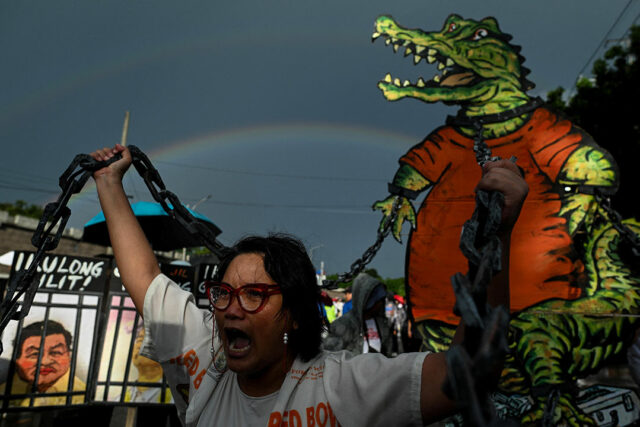
A WOMAN pulls mock chains that bind a cardboard crocodile, with a rainbow seen in the background, during an anti-corruption protest at the People Power Monument in Quezon City on Nov. 30, 2025. — REUTERS/NOEL CELIS

As the nation crossed into 2026, the annual ritual of New Year’s resolutions once again crowded our public discourse. The Philippine Government announces yet another reform agenda, our political leaders issue promises of change, and citizens renew long-held hopes. Yet experience, both personal and collective, instructs us that most resolutions do not endure. Studies show that only a small fraction of these intentions are ever fulfilled. The rest dissolve under the weight of vague goals, weak accountability, and the unwillingness to confront difficult structural constraints. They are more crucified on paper, rather than converted.

What is true of individuals is true of nations.

More than a decade ago, Gay Hendricks, in The Big Leap, described what he called the “upper limit problem”: the self-imposed barriers that prevent people and institutions from realizing their full potential. Progress, he argued, requires first acknowledging these limits and then deliberately transcending them, moving from incompetence, to competence, to excellence, and finally to what he termed the “zone of genius,” where purpose, capability, and responsibility converge.

The Philippines today is trapped below its potential not because of a lack of talent, resources, or opportunity, but because it has failed, repeatedly, to break through its governance upper limit. There is great space for getting its act together.

As we must speak plainly, public policy in the Philippines continues to underperform relative to our neighbors not by accident, but by design. We elect legislators without the competence and preparation required for lawmaking. We reward loyalty over merit in public appointments. We tolerate patronage politics and weak institutions, then wonder why execution fails. In doing so, we normalize mediocrity and excuse injustice. That’s how we designed our political and economic system.

The consequences are now evident. Following the conclusion of the Article IV consultation with the Philippines this month, the International Monetary Fund has warned that the balance of risks to the country’s growth is tilted to the downside, explicitly citing corruption allegations, particularly in flood control projects, alongside climate shocks and global trade uncertainty. The Fund has called for stronger governance, firmer adherence to the rule of law, and decisive action against corruption vulnerabilities.

The World Bank, the Asian Development Bank, and the ASEAN+3 Macroeconomic Research Office have echoed these concerns, pointing to eroding public trust as a drag on growth. Even where credit outlooks remain stable, confidence is increasingly fragile.

This is not merely an economic problem. It is a crisis of institutions, leadership, and moral direction.

It is therefore imperative to ask, not rhetorically but seriously, what do we, as a people and as a polity, truly desire for the Philippines? What are our non-negotiable desiderata?

Our answer draws from some years of civic and political engagement with 1Sambayan, particularly since the 2022 national elections. At its heart, 1Sambayan is not a traditional political organization but a reform coalition grounded in shared values. Its People’s Agenda: Nine Principles of Unity and Commitment opens with a reminder from Pope Francis: “Rivers do not drink their own water; trees do not eat their own fruits; the sun does not shine on itself; nor do flowers spread their fragrance for themselves.” Power exists for service. Leadership exists for others.

This moral clarity is precisely what our politics lacks — and precisely what our country needs.

Thus, our desiderata for the Philippines, addressed directly to policymakers and the Filipino people, are clear.

First, elections must be genuinely free, fair, and honest. The right of suffrage is sacred because it determines who governs and how power is exercised. Electoral integrity is not a procedural issue; it is the foundation of legitimate authority.

Second, the nation must unite against corruption — not selectively, not rhetorically, but decisively. Corruption is not a victimless crime; it steals from the poor, weakens institutions, and robs future generations.

Third, the rule of law must be upheld without exception, and human rights must be respected as a matter of policy and principle. Laws lose meaning when enforcement is arbitrary, and development becomes hollow when dignity is denied.

Fourth, the Philippines must safeguard its sovereignty and territorial integrity with clarity and resolve. A nation that cannot defend its rights cannot inspire confidence among its citizens or its business partners.

Fifth, public health must be treated as a core investment, not a residual expense. A healthy population is a productive population, and access to healthcare — especially for the marginalized — is both a moral and economic imperative. What happened to the PhilHealth funds should be a cautionary tale.

Sixth, the economy must be comprehensively restructured to achieve inclusive, self-sustaining, and resilient growth. Growth that benefits only a few is not progress; it is instability deferred.

Seventh, education, civic values, and cultural integrity must be strengthened. Nation-building depends not only on skills, but on character, responsibility, and a shared sense of purpose.

Eighth, social justice and peace must be actively pursued, particularly in communities long excluded from opportunity and voice. Peace without justice is temporary; justice without peace is incomplete.

Ninth, communities must be empowered to become resilient, especially in the face of climate change. Citizens must have both the capacity and the agency to influence policies that affect their security and livelihoods.

These principles are not aspirational slogans. They are policy imperatives.

As former congressman Joey Salceda has observed, fiscal space is not the same as progress. The Philippines has not failed because of weak growth or uncontrolled inflation. It has stalled because institutions have not kept pace with economic change, and politics has failed to serve the common good. Our plateau is institutional, not technical.

This is where 1Sambayan’s thrust is most urgent. Making the system work requires placing the right people in the right positions through credible elections. It requires mobilizing civil society and the business community to demand transparency and accountability. It requires recognizing that investors, like citizens, value predictability, justice, and the rule of law more than short-term gains.

Human capital — health, education, and the capacity to adapt to technological change — must be the enduring foundation of innovation-led growth. No country has prospered sustainably by neglecting the well-being and capabilities of its people. Public health and quality education are not social add-ons; they are strategic investments that determine productivity, resilience, and national competitiveness.

At the same time, long-delayed structural reforms can no longer be deferred. As the Foundation for Economic Freedom has time and again advanced, constitutional, legal, and regulatory frameworks must be updated to reflect present realities rather than outdated fears. An economic system that entrenches exclusion, limits opportunity, and privileges a narrow few cannot generate dignity, social cohesion, or peace. Reform is not ideological — it is practical, moral, and urgent.

Our ultimate desideratum is for the Philippines to finally pierce its self-imposed upper limit. That we dismantle an unjust political and economic order that restrains the many for the benefit of the few, and replace it with institutions that are fair, competent, and accountable. This demands courage and integrity from policymakers who must govern not for the next election but for the next generation. It demands vigilance and participation from citizens, who must insist that public office is a public trust.

The choice before us is stark and clear: to continue managing decline through cosmetic reforms, or to make the decisive leap toward a good system that works — for the people, by the people, and in service of the common good. Only by choosing the latter can 2026 mark not another year of abandoned resolutions, but the beginning of a sustained national transformation toward a just, sovereign, and inclusive Philippines.

God bless the Philippines!


Diwa C. Guinigundo is the former deputy governor for the Monetary and Economics Sector, the Bangko Sentral ng Pilipinas (BSP). He served the BSP for 41 years. In 2001-2003, he was alternate executive director at the International Monetary Fund in Washington, DC. He is the senior pastor of the Fullness of Christ International Ministries in Mandaluyong.

Further BSP, Fed policy easing may stabilize market sentiment

BW FILE PHOTO

FURTHER RATE CUTS from both the Bangko Sentral ng Pilipinas (BSP) and the US Federal Reserve could put some pressure on the peso in the near term, but may help stabilize markets and investor sentiment, analysts said.

“Both the Fed and the BSP signaling room for another rate cut generally point to a more supportive liquidity backdrop… One more cut from both central banks would likely put more mild pressure on the peso’s depreciation as rate differentials remain, while also increasing demand for government securities in the short term as investors can take advantage of lower policy rates and softer yield expectations,” Regina Capital Development Corp. Head of Sales Luis A. Limlingan said in a Viber message.

“In the medium term, further easing could help stabilize financial conditions and partially support risk sentiment.”

The BSP on Dec. 11 delivered a fifth straight 25-basis-point (bp) reduction in benchmark borrowing costs, bringing the policy rate to an over three-year low of 4.5%.

It has lowered benchmark rates by a total of 200 bps since its easing cycle began in August 2024. BSP Governor Eli M. Remolona, Jr. has left the door open to one final 25-bp cut this year to help boost the economy amid a dismal outlook due to a wide-ranging corruption scandal involving government infrastructure projects, which has affected public spending and investor confidence.

The Monetary Board will hold its first meeting for this year on Feb. 19.

Meanwhile, the Fed cut by 25 bps for a third consecutive time at its Dec. 9-10 meeting to bring its target rate to the 3.5%-3.75% range. It next meets on Jan. 27-28, with investors currently expecting the central bank to leave its benchmark rate unchanged, Reuters reported.

The Fed agreed to cut interest rates at its December meeting only after a deeply nuanced debate about the risks facing the US economy right now, according to minutes of the latest two-day session.

Even some of those who supported the rate cut acknowledged “the decision was finely balanced or that they could have supported keeping the target range unchanged,” given the different risks facing the US economy, according to the minutes released on Tuesday.

“Most participants” ultimately supported a cut, with “some” arguing that it was an appropriate forward-looking strategy “that would help stabilize the labor market” after a recent slowdown in job creation.

Others, however, “expressed concern that progress towards the committee’s 2% inflation objective had stalled.”

“One more rate cut from BSP and Fed would likely pull yields lower and keep demand for GS (government securities) strong as investors position for a prolonged easing cycle. For the Philippine peso, additional cuts may cause mild short-term pressure, but this should be manageable if global conditions remain stable and inflows hold,” Philippine Institute for Development Studies Senior Research Fellow John Paolo R. Rivera said in a Viber message.

However, further policy accommodation by both central banks may not be enough to boost investor sentiment, he said.

“While rate cuts help liquidity and valuations, they may not be enough to fully offset weak sentiment from slower growth expectations. Monetary easing can cushion markets, but restoring confidence will still depend on improved growth prospects, fiscal execution, and clearer policy signals.”

In 2025, global financial markets were roiled by US President Donald J. Trump’s shifting trade policies that he said are meant to reestablish the world’s largest economy’s dominance, as well as geopolitical concerns.

In the Philippines, the graft scandal linking officials of the Public Works department, lawmakers, and private contractors to corruption in allegedly anomalous flood control projects also weighed on investor sentiment, especially in the second half of the year, causing stocks to hit multi-year troughs and the peso to post fresh record lows. — A.M.C. Sy with Reuters

Federal Land focuses on bigger Laguna projects after exit from CCPC  

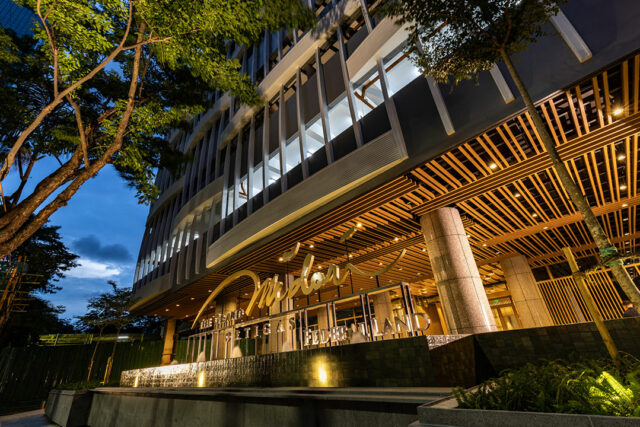
The Grand Midori Ortigas — FEDERALLAND.PH

FEDERAL LAND, INC. said it would concentrate on bigger developments in Laguna province after the divestment of Crown Central Properties Corp. (CCPC). 

“The master-planned community in Biсan developed by CCPC, our joint venture with Crown Equities, is almost fully sold out and represents a small, legacy portion of our total development portfolio,” Federal Land President Jose Mari H. Banzon said in a Viber message on Monday. 

“We decided to divest from CCPC and focus our resources on our more recent and larger developments in Laguna,” he added. 

In October, Mr. Banzon said the company had completed its 2025 project launches and was preparing several residential developments for 2026, including a 21-hectare horizontal project in Biсan, Laguna, as a continuation of its Meadowcrest community. 

He said the Biсan project is among the company’s bigger developments. 

“It includes the sequel to Hartwood, a village in Meadowcrest. Federal Land still has a significant land bank in Biсan and Sta. Rosa,” he added. 

Last month, Federal Land and unit Horizon Land Property Development Corp. sold their combined 52% stake in Crown Central Properties to Crown Equities, Inc. for P73.48 million. 

Crown Equities acquired 62.5 million common shares from Federal Land valued at P68.12 million, and 5 million shares from Horizon Land worth P5.37 million. The board approved the acquisition on Dec. 16, and the deal remains subject to closing conditions. 

After the transaction, Crown Equities now owns 100% of Crown Central Properties, which develops residential and commercial projects. 

Crown Central was originally established in 1996 as a joint venture between Crown Equities and Solid Share Holdings — now Federal Land — to develop Palma Real Residential Estates in Biсan, Laguna. 

In 2003, it entered a memorandum of agreement with Sta. Lucia Realty and Development, under which Crown Central contributed land and initial improvements while Sta. Lucia completed the subdivision. 

Federal Land is a unit of GT Capital Holdings, Inc., a diversified group with interests in automotive, banking and real estate. — Alexandria Grace C. Magno

ADVERTISEMENT
ADVERTISEMENT