Home Blog Page 4953

Taiwan scores Chinese ambassador for migrant worker remarks

PHILIPPINE STAR/WALTER BOLLOZOS

TAIWAN’S Ministry of Foreign Affairs (MOFA) on Monday took to task China’s ambassador in Manila for his remark on overseas Filipino workers (OFW) in Taiwan, calling it “brazen threats [that] are unacceptable to the civilized world.”

The ministry said Chinese Ambassador to the Philippines Huang Xilian had used the safety of OFWs in Taiwan as a pretext to threaten the Philippine government, “manipulate the Taiwan issue, create panic and attempt to disguise the fact that it is China which is undermining regional peace and stability.”

This was after Mr. Huang asked Manila to oppose Taiwan’s independence if the country “cares genuinely” about the more than 150,000 OFWs living there.

“Protecting their nationals is one of the most important tasks of all foreign missions in Taiwan,” according to the Taiwan Ministry’s statement read, referring to Filipinos and Indonesians who live there.

“The MOFA maintains close communication and engages in frequent exchanges of opinions on regional developments with foreign representative offices in Taiwan,” it said. “When appropriate, MOFA also provides necessary assistance to countries to protect their citizens.”

It added that it recognizes the importance that Indonesia and the Philippines attach to their migrant workers in Taiwan and affirms the concrete steps of the two countries in promoting peace and stability in the region.

President Ferdinand R. Marcos, Jr. on Tuesday asked the Department of Foreign Affairs to ensure the safety and welfare of OFWs in Taiwan.

 “Taiwan is willing to continue discussions with Indonesia, the Philippines and other countries on protecting their nationals in Taiwan and other issues of bilateral cooperation so as to deepen friendly ties and jointly contribute to maintaining a free, open, peaceful and prosperous Indo-Pacific,” the Taiwan Ministry said.

National Security Council spokesman Jonathan E. Malaya last week said the Philippines adheres to the One China Policy, which recognizes Taiwan as part of China and “subscribes to the Association of Southeast Asian Nations principle of noninterference in approaching regional issues.”

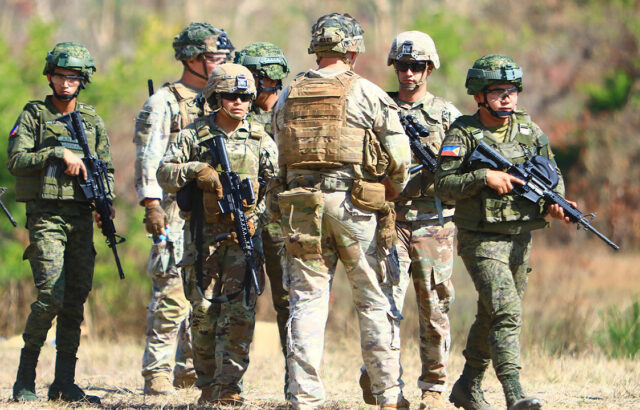
 Mr. Marcos Jr. in February gave the US access to four more military bases on top of five existing sites under the Philippines’ Enhanced Defense Cooperation Agreement (EDCA) with the US.

Three of the four new EDCA locations are in northern Philippines — Naval Base Camilo Osias in Sta Ana, Cagayan; Lal-lo Airport, also in Cagayan; and Camp Melchor dela Cruz in Gamu, Isabela.

Cagayan is about 1,000 kilometers away from self-ruled Taiwan, which China claims as part of its territory.

Mr. Huang told a forum in Manila last week Washington seeks to take advantage of the new EDCA sites to interfere with the Taiwan situation “to serve its geopolitical goals and advance its anti-China agenda at the expense of peace and development of the Philippines and the region at large.” — Beatriz Marie D. Cruz

Puerto Galera stays open for tourism despite poor water quality in some parts 

DOT PHOTO

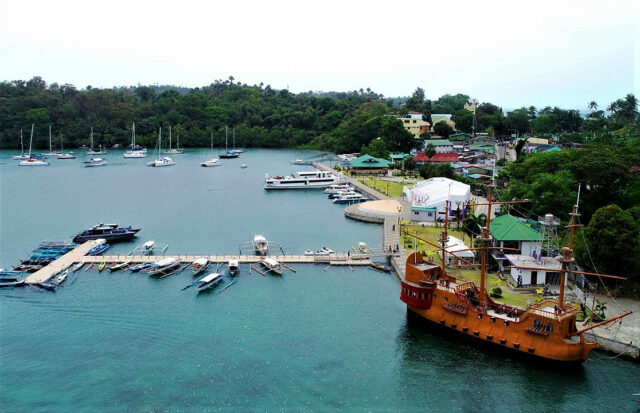
PUERTO Galera will remain open for visitors, the tourism secretary said on Monday, but environment and health officials cautioned that water quality monitoring will continue as majority of samples taken from the coastal town failed standards following a February oil spill.  

“The most important thing is to ensure the continued viability of Puerto Galera as a tourist destination,Tourism Secretary Christina Garcia-Frasco said at a livestreamed Palace briefing on Tuesday.  

She cited that Puerto Galeras international tourism receipts in 2022 reached P500 million, and the industry accounts for 85% of the local economy. 

She added that for domestic tourists, Puerto Galera, plus our other regional destinations, have reported in excess of their targets.”  

9 AREAS
The Department of Environment and Natural Resources (DENR) and Department of Health (DoH), meanwhile, issued a joint statement Tuesday saying only nine out of 35 sampling stations in Puerto Galera passed the standards on water quality testing.  

The nine areas that passed the water quality guidelines were: Small Lalaguna and Big Lalaguna Shoreline, Balete, Central Sabang Shoreline, Coco Beach, Batangas Channel, Paniquian, Balatero, and West San Isidro Bay.  

The remaining over and above the nine, means failure in our parameters. If we will average out, this means the areas are really contaminated,Environment Undersecretary Jonas R. Leones said in a separate media briefing.  

He clarified, however, that recent data are not conclusive whether the contaminants can be attributedto the oil spill as past testings also showed contamination in the water.   

Mr. Leones said national agencies, along with the Philippine Coast Guard and local government units, should undertake fingerprintingto determine if the contaminated areas were in fact caused by the oil spill.  

Despite coastal waters that seemed to be clear, he stressed that the visual appearance of the water does not necessarily mean that it is safe for recreational activities such as swimming.  

DENR Secretary Maria. Antonia Yulo-Loyzaga told a separate Palace briefing that President Ferdinand R. Marcos, Jr. ordered the department to continue monitoring the water and air quality levels in areas affected by the oil spill.  

The DoH also said that government agencies will continue monitoring the water contamination levels to warn residents if the water is unsafe for drinking.    

“The DoH and the DeNR remind the public to be cautious and seek support from local authorities for concerns and assistance,” it said. 

Ms. Frasco said the joint statement implies that Puerto Galera tourism continues to be open as there has been no direct attribution in terms of the direct source of the findings, considering the presence of human and economic activities in Puerto Galera.”  

She said 11,000 tourism workers could lose their jobs if Puerto Galera is closed to visitors.    

The industry could lose P5.4 million per day if water activities are banned in affected areas, she added.   

In a separate briefing, Oriental Mindoro Governor Humerlito A. Dolor said he has not imposed swimming and fishing bans on Puerto Galera despite the poor results of recent water quality tests. 

Ms. Frasco said the provincial office has reported that Oriental Mindoro has incurred over P900 million in losses due to the oil spill.  

The tanker MT Princess Empress, which was carrying 800,000 liters of fuel, sank off the waters of Naujan, Oriental Mindoro in late February.    

The impact of the spill on marine resources is still being analyzed, Mr. Leones said.   

At the moment, we are definitely undermanned and definitely we need support in terms of technology,said Ms. Yulo-Loyzaga. John Victor D. Ordoñez and Sheldeen Joy Talavera

Senate sought probe on LANDBANK-DBP merger 

A SENATOR has filed a resolution seeking to investigate the proposed merger of state-run lenders Land Bank of the Philippines (LANDBANK) and the Development Bank of the Philippines (DBP), citing potential risks on the welfare of employees and coconut levy beneficiaries.  

Senator Ana Theresia “RisaN. Hontiveros-Baraquel said the planned merger raises concerns on the potential risks and benefits it may bring to the economy, the stability of the financial system, and various stakeholders, including the employees of both institutions.”  

The LANDBANK and DBP also carry out separate, distinct, perhaps incompatible mandates,she said in Senate Resolution No. 570.   

While the DBP serves industry by financing infrastructure, logistics and commerce, the LBP has served as the primary institution mandated by the State to finance the agricultural development of the country.”  

She cited still unresolved issuesarising from the recent merging of LANDBANK and the United Coconut PlantersBank, with coconut farmer beneficiaries saying it will be more difficult to access support from the coco levy fund.  

Ms. Hontiveros-Baraquel added that the Land Bank of the Philippines Employees Association and the DBP EmployeesUnion said the LBP violated the terms of their Collective Negotiations Agreementsby failing to consult the unions on the merger. 

She also said that banks set up through legislation could only be merged by a law, citing remarks of former Finance Secretary Carlos G. Dominguez III. 

The Governance Commission for Government-owned and Controlled Corporations said on Monday that the President can proceed with a merger without waiting for Congress to file and pass related bills.” 

President Ferdinand R. Marcos, Jr. supports the LANDBANK-DBP merger.  

Finance Secretary Benjamin E. Diokno said last month that the merger will result in government savings of about P5.3 billion per year or at least P20 billion for the next four years.  

However, Ms. Hontiveros-Baraquel said, There is a need for the government to proceed cautiously and prudently vis-à-vis the contemplated merger, as well as clarify all legal issues involved.Beatriz Marie D. Cruz

Marcos orders peace councils to step up efforts vs political violence, illegal drugs 

PHILIPPINE STAR/KRIZ JOHN ROSALES

PRESIDENT Ferdinand R. Marcos, Jr. on Tuesday ordered the country’s national and regional peace and order councils to focus on addressing cases of political violence and illegal drugs, the presidential palace said in a statement.  

At a meeting on Tuesday with the councils, which are composed of representatives from different agencies and local government leaders, Mr. Marcos Jr. said they should stop the spread of illegal firearms to deter violence.  

The joint meeting sought to update the president on peace and order issues and provide policy recommendations, the Presidential Communications Office said. 

Mr. Marcos said recent cases of political violence after the May 2022 national and local elections showed that these threats to peace and order persist.  

He said law enforcement agencies should also do something about drug syndicates fighting over territory. 

“These quarrels stem from the territorial fights over areas where drugs are distributed, who controls the drug trade in that area,” the president said. “We really need to monitor these closely and dismantle these activities.”  

A total of 261,642 anti-illegal drug operations conducted from 2016 to 2022 resulted in the arrests of 376,582 drug personalities, the Palace said.  

At the same event, Mr. Marcos said the five-man advisory group tasked to determine the possible drug links of third-level police officers would probably finish their review in two weeks.  

“It’s a very complicated system, and it’s a very complicated situation,” he said. “We cannot move on the basis of gossip.”   

In January, Interior and Local Government Secretary Benjamin C. Abalos, Jr. called on all senior cops to resign after a probe found many high-ranking police officers were involved in the illegal drug trade. 

“The police have to be with us,” Mr. Marcos said. “We need to have a good, functioning police force.” John Victor D. Ordoñez

Council to bolster efforts with rise of new human trafficking schemes 

THE PHILIPPINES’ inter-agency council against human trafficking on Tuesday vowed to boost cooperation with social welfare and law enforcement agencies as new schemes arise using online platforms.   

“We need to enhance regular engagement with our partner agencies and partners, where all of them will contribute to a strategic plan implementation,” Wendell P. Bendoval, executive director of the Inter-agency Council Against Trafficking (IACAT), said during the launch of the task force’s National Strategic Action Plan for the next five years.  

“We need to do something about new forms of online trafficking schemes and offer victims, and survivors the range of support they need,he said.   

The council is composed of the Department of Justice (DoJ), Department of Social Welfare and Development (DSWD), and the Commission on Filipino Overseas.   

The inter-agency body is tasked to develop mechanisms to prevent human trafficking through prosecution and law enforcement, and to provide timely assistance to rescued victims, according to a copy of the strategic action plan.  

The plan serves as a guide for partner agencies on actions to deter human trafficking through their agencies’ respective mandates. 

Mr. Bendoval said government agencies consulted with countries in the Asia-Pacific region to develop the framework.  

“Coordinated action and strategic measures are crucial to address this problem that is a major challenge to the rights of the public,” Justice Undersecretary Felix L. Ty said during the event.  

President Ferdinand R. Marcos, Jr. last month ordered the anti-trafficking council to thwart the “business of human trafficking” with the private sector.  

Hecited the need to maintain the Philippines Tier 1 status, which means the country fully complies with minimum standards against trafficking.  

The US Department of States Trafficking in Persons Office conducts a yearly assessment to monitor the efforts of all countries in fighting human trafficking. It provides each country with a grade according to a three-tier scale.    

In the first two months of the year, 57 departures from the countrys international airports were tagged as possible cases of human trafficking, based on data from the Bureau of Immigration.  

Mama Fatima Singhateh, United Nations special rapporteur on the sale and sexual exploitation of children, said in December that the Philippines lacked trained officials at the village level to monitor reports of child sexual abuse. 

Data from the Interior and Local Government department showed authorities conducted 227 operations combating online sexual exploitation and convicted 67 people behind illegal websites from 2017 to July 2022. John Victor D. Ordoñez

Dawlah Islamiya, BIFF tagged in Isulan bus bombing that injured 7

SEVEN passengers were hurt when a home-made bomb exploded inside this bus while at a terminal in Isulan, Sultan Kudarat. — ISULAN MUNICIPAL POLICE STATION

SECURITY forces are now tracking those behind Mondays bus bombing in Isulan town in southern Philippines, where the explosive devices found were identical to those previously used by local extremist groups Dawlah Islamiya and Bangsamoro Islamic Freedom Fighters (BIFF).   

Cases will be filed against the culprits once identified. Our intelligence units and counterparts in the Philippine Army are now working together on that,Police Regional Office-12 Director Jimili L. Macaraeg said on Tuesday.  

Army and police ordnance experts told reporters the improvised bomb that exploded and a smaller one found in the bus were the same as those used by the two groups in recent bombings of buses and commercial establishments in central Mindanao after owners had refused to shell out protection moneyon a monthly basis.  

Intelligence reports indicate that the bombing was intended to avenge the deaths of 17 leaders of both groups in clashes with pursuing military and police officers in central Mindanao since January 2022.   

Among those killed were Abdulkareem Lumbatan Hashim and the longtime fugitive Danny Cabakungan, known by their aliases Jacket and Magnetic, respectively.  

The two were tagged in high-profile crimes, including multiple murder, cattle theft, possession of high-powered firearms and home-made bombs, extortion and drug trafficking.  

The bombing of the Husky Bus unit was also a desperate attempt to make an impression that the surrender of 236 Dawlah Islamiya and BIFF members to the Armys 6th Infantry Division and Police Region 12 in recent months has not weakened the groupscapability to perpetrate terror attacks, according to local officials of the neighboring Maguindanao provinces.   

The number of injured passengers has gone up to seven from an initial report of four, Mr. Macaraeg said. All victims were seated close to each other on the first level of the double-decker bus. John M. Unson

TESDA to rollout organic farming, construction courses in 77 Davao villages

TESDA.GOV.PH

TRAINING programs on organic farming and construction skills will be rolled out this year in 77 villages in Davao Region that have been declared as free from insurgents, the Technical Education and Skills Development Authority (TESDA) said.  

Former armed communist rebels are the main target beneficiaries of the trainings, according to TESDA Program Director Richard M. Amparo. 

With regards to Barangay Development Program, TESDA is one of the agencies involved in poverty reduction through livelihood and employment cluster,he told the Kapihan sa PIA media forum in Davao City.   

Meanwhile, Kerwin S. Gabasa, project development officer of the Department of Social Welfare and Developments (DSWD) Davao regional office, said their livelihood programs are focusing on towns in the provinces of Davao del Norte and Davao Occidental.  

He said they have already reached many villages considered as Geogprahically Isolated and Disadvantaged Areas,including those in Davao de Oro.    

The TESDA and DSWD programs are in line with Executive Order No. 70 signed in December 2018, which set out localized peace talks with communist armed units along with the delivery of social services and economic programs to address poverty in rebel-held areas.   

Funding is allocated in the annual national budget, with priority given to areas considered free from insurgents.  

In October 22, the Davao regional peace council declared the entire region as insurgency-free.Maya M. Padillo

Cabochan designated as IPOPHL deputy director general for operations

THE INTELLECTUAL Property Office of the Philippines (IPOPHL) has designated Ann Claire C. Cabochan as deputy director general for operations.    

In a statement on Tuesday, the IPOPHL said Ms. Cabochan replaced former deputy director general Nelson P. Laluces, who retired in 2022 after serving two consecutive five-year terms.   

Ms. Cabochans appointment as an IPOPHL deputy director general was announced by Malacañang last month.    

Ms. Cabochan previously served as assistant secretary of the Department of Trade and IndustryConsumer Protection Group and director of the DTI-Bureau of International Trade Relations.    

In her new post, Ms. Cabochan will assist the IPOPHL director general and manage the Bureau of Patents, Bureau of Trademarks, Bureau of Copyright and Related Rights, Bureau of Legal Affairs, Documentation, Information and Technology Transfer Bureau, Financial Management and Administrative Service, Management Information Service, and Intellectual Property Regional Operations.   

Aside from her profound expertise in International Trade, Regional Economic Integration, Good Regulatory Practices and Consumer Protection, Atty. Cabochan has advanced several discussions on consumer protection and sustainable consumption on a regional level with significant outcomes,IPOPHL Director General Rowel S. Barba said. Revin Mikhael D. Ochave

It’s summertime at SM Supermalls!

Welcome the coolest season of the year at SM Supermalls!

Summertime at SM is to recharge, relax, chill, play, bond, and get together with your friends and fam. The best is about to come when you go out to your favorite SM mall. 

Get your hands on their summer bestsellers

SM Supermalls’ market bazaars will give you everything and anything under the sun. If you need to gear up for your coming beach trips or home staycation, you can find the coolest and trendiest inflatables, floaters, and beachwear at SM. Or, if you’re a foodie, SM has barbecue nights and food bazaars waiting for you in select SM malls. Whatever you need, SM Supermalls’ got you covered!

Complete the summer vibes with fun summer trips at SM

Step into the colorful world of summer with larger-than-life installations from April to May. From slides and canopies to inflatable art sculptures, sticker murals, and 3D/4D LED walls, SM Supermalls will make your summer day at the mall even more delightful and thrilling.

Watch summer video here:

Also, weekends at SM will be something you’ll look forward to! SuperKids will have the best day at their fave mall with all the creative spaces and fun activities for off-school and after-school fam time. Plus, there’s a Roblox party they should not miss!

For the GenZs, you #dasurv all the happenings at SM with more live events and art collab this summer. There will be backdrops especially made for you so you can unleash your inner TikTok Star and your creativity. This could be your next opportunity for a collab with other stars and other content creators’ communities.

And for the singles, this could be a great time for you to enjoy interactive games and activities. Swipe right to socialize with your fellow singles and potentially meet your match at the Summer Swipe events.

But of course, your pets are welcome here as well. There’s gonna be a PAWchella PAWty– a grand summer fair with the SM SuperPets Club. You can bring them during the scheduled Pet Blessing. There will also be food, music, and more bonding time with your lovable and adorable pawfriends at the Pet Jam.

Hot deals and bundles for the fam

The scorching heat of the sun calls for fun-filled and exciting dining and shopping experience at SM! Tons of summer bundles and coolers up for grabs as well as summer deals. Bring your family or your squad to enjoy icy and cool food choices, and even the coolest summer fashion finds at SM. The best part? We’ve got it all for you.

Enjoy these summer fun activities and don’t forget to tag us on our socials! Visit www.smsupermalls.com or follow @SMSupermalls to get updated on exciting deals, promos, and activities this Summer at SM.


Spotlight is BusinessWorld’s sponsored section that allows advertisers to amplify their brand and connect with BusinessWorld’s audience by enabling them to publish their stories directly on the BusinessWorld Web site. For more information, send an email to online@bworldonline.com.

Join us on Viber at https://bit.ly/3hv6bLA to get more updates and subscribe to BusinessWorld’s titles and get exclusive content through www.bworld-x.com.

G7 stresses unity amid tensions with China, Russia

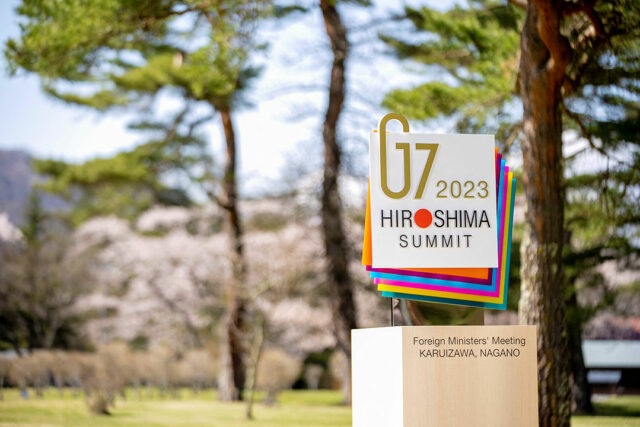
THE LOGO for the G7 is visible at the G7 Foreign Ministers’ Meeting at The Prince Karuizawa hotel in Karuizawa, Japan April 17, 2023. — ANDREW HARNIK/POOL VIA REUTERS

KARUIZAWA, Japan — The Group of Seven (G7) industrial powers drew together on Tuesday to criticize China’s coercion of Taiwan and Russia’s threat to station nuclear weapons in Belarus, promising to intensify sanctions on Moscow for its war on neighboring Ukraine.

“The strength of the solidarity between the G7 foreign ministers is at a level not seen before,” Japan’s Foreign Minister Yoshimasa Hayashi said at a news conference after hosting a meeting of the group in the Japanese resort town of Karuizawa.

The show of unity comes after French President Emmanuel Macron this month said the European Union should reduce its dependency on the United States and cautioned against being drawn into a Taiwan crisis.

Beijing views Taiwan as Chinese territory and has not renounced the use of force to take the democratically governed island.

The G7 communique highlights how the dual issues of Russian military intervention and fears of similar action by China against Taiwan have been a focus of the three-day meeting.

The group, which comprises the United States, Japan, Germany, Britain, France, Italy and Canada, described Russia’s threat to put nuclear weapons in Belarus as “unacceptable”. It said “any use of chemical, biological or nuclear weapons in Ukraine “would be met with severe consequences.”

Russian President Vladimir Putin last month said Russia would station shorter-range, so-called tactical nuclear weapons because the NATO military alliance was expanding towards Russia’s borders.

It was the first time since the Cold War ended three decades ago that Russia has suggested stationing nuclear forces in another country, raising the stakes in its intensifying standoff with the West over Ukraine.

In a bid to limit Moscow’s ability to wage its war, the G7 ministers in their communique also warned other nations, which the US and other Western nation worry could include China, not to supply Russia’s armed forces.

“We will reinforce our coordination to prevent and respond to third parties supplying weapons to Russia,” they said.

US Secretary of State Antony Blinken last month said China had not yet supplied Russia with lethal aid, but US officials are also concerned about dual-use products, such as electronics components that can be used in missiles and other weapons.

In a news conference after the G7 meeting, Mr. Blinken criticized Russia after a days-long pause in the inspection of ships moving grains from Ukraine under a U.N.-brokered initiative. Russian media on Tuesday reported inspections had restarted.

Taking direct aim at China, the ministers also agreed that peace and security in the Taiwan Strait was critical and opposed militarization of the South China Sea. They called on Beijing to act.

“We remind China of the need to uphold the purposes and principles of the UN Charter and abstain from threats, coercion intimidation and the use of force,” the ministers said in the document, which also included a condemnation of North Korea’s missile launches and expressed concerns about Myanmar, Afghanistan and Iran. — Reuters

Taiwan to buy 400 US anti-ship missiles to face China threat

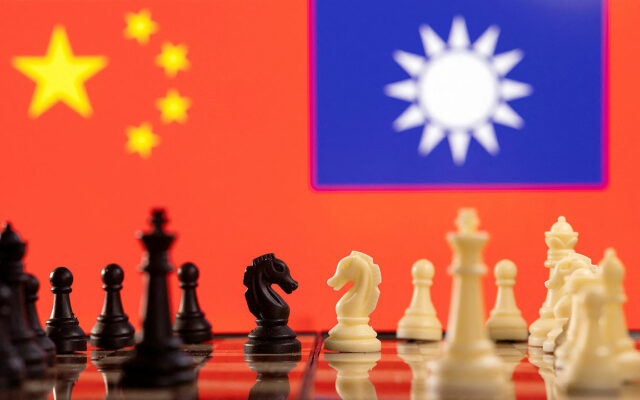
CHESS PIECES are seen in front of displayed China and Taiwan’s flags in this illustration taken Jan. 25, 2022. — REUTERS

TAIWAN will buy as many as 400 US land-launched Harpoon missiles in the face of rising threat from China, Bloomberg News reported on Monday, citing a trade group’s leader and people familiar with the issue.

The Pentagon announced a $1.17-billion contract for 400 of the anti-ship missiles on April 7 without naming the buyer, saying production was expected to be completed by March 2029. Bloomberg said Taiwan was the buyer.

The Pentagon declined to comment directly on the deal, but said: “the United States makes available to Taiwan defense articles and services necessary to enable it to maintain a sufficient self-defense capability.”

In 2020, Taiwan said it planned to buy land-based Boeing-made Harpoon anti-ship missiles as part of its military modernization efforts.

When asked about the news report, Taiwan Defense Ministry spokesperson Sun Li-fang told a regular media conference the ministry had previously disclosed information about the purchase, adding it was “confident” the deal would continue according to schedule.

A contract with Boeing that the US Naval Air Systems Command issued on Taiwan’s behalf marks the first time it will get the mobile, land-launched version, the Bloomberg report said, citing Rupert Hammond-Chambers, president of the US-Taiwan Business Council. It had previously purchased the ship-launched version.

Boeing referred questions to the Pentagon.

This month, US House Speaker Kevin McCarthy hosted Taiwanese President Tsai Ing-wen in California and stressed the need to accelerate arms deliveries to Taiwan in the face of rising threats from China.

After the meeting, Mike Gallagher, Republican chairman of the House Select Committee on the Chinese Communist Party, said he would like to look for ways to get Harpoon missiles to Taiwan ahead of those scheduled to go to Saudi Arabia. — Reuters

Rising cyberattacks in Japan show how US, Europe are also vulnerable

REUTERS

KOJIMA Industries Corp. is a small company and little-known outside Japan, where it produces cup holders, USB sockets and door pockets for car interiors. But its modest role in the automotive supply chain is a critical one. And when the company was hacked in February 2022, it brought Toyota Motor Corp.’s entire production line to a screeching stop. 

The world’s top-selling carmaker had to halt 14 factories at a cost of about $375 million, based on a rough calculation of its sales and output data. Even after the initial crisis was over, it took months for Kojima to get operations close to their old routines.

The company is just one name on Japan’s long list of recent cyber victims. Ransomware attacks alone soared 58% last year compared to a year earlier, according to the National Police Agency, and hacking incidents have exposed shortcomings ranging from slow incident response times to a lack of transparency. In a nation that exported chip components worth $42.3 billion last year — dominating the supply of some materials — supply chain issues can have global implications. 

Comparative data on cyberattacks can be hard to find. But Mihoko Matsubara, the chief cybersecurity strategist at Japanese telecommunications company NTT Corp., says the nation has had a particularly tough time.

“Along with the increasing number of ransomware attacks, Japan was hit by Emotet attacks more than any other country in the first quarter of last year,” she said, referring to a type of malware often spread through phishing emails. “Japan had a difficult year to deal with more cyberattacks on industry, government and the health care sector.”

But while Japan has its own particular problems with hackers, many of its vulnerabilities are shared by the US and other technologically strong nations. From the Colonial Pipeline attack in the US to the Australian telecoms hack that exposed 10 million users’ personal data, wealthy countries have been repeatedly caught underestimating the harsh realities of cybercrime.   

Meanwhile attacks on vital services such as Japan’s hospitals — which delayed surgeries and other treatments — have served as a reminder that money is not all that’s at stake. “The ransomware attacks were a wakeup call to the Japanese,” Ms. Matsubara said. “Because now human lives are at risk.”

The Kojima attack on February 26, 2022 was what’s known as a supply chain hack: Hackers penetrated the systems of a third-party business partner and used them to access Kojima’s file servers. By 9 p.m., they’d encrypted data on some servers and computer terminals, according to a Kojima spokesperson. 

The breach was detected at about 11 p.m. The hackers had sent a ransom demand, but Kojima’s engineers never responded to any kind of communication with the hackers, the spokesperson said.

Before dawn, Kojima shut down the systems it uses to communicate with external suppliers and the following day, Toyota announced it would suspend operations at all of its domestic plants. The breach meant subsidiaries including Daihatsu Motor Co. and Hino Motors Ltd. also had to halt production.

“Attacks in Japan are on the rise, and more firms are becoming aware of the risks,” said Shinpei Izumo, an underwriter at Sompo Japan Insurance Inc. He estimates cyber insurance sales are up 20% to 30% from the previous year.

Smaller firms have few protections, he added. “They don’t know what to do in the event of an emergency or incident, and they aren’t taking measures to prevent the damage from spreading.”

HIGH-END POWERHOUSE
Supply-chain hacks have huge potential to disrupt the economy. While much manufacturing and assembly happens in lower-cost markets, Japan is a powerhouse in producing a select group of high-end goods. Products like phones, computers and electric toothbrushes often contain Japanese parts.

The country produces about 80% of fine chemicals for electronics and dominates the global supply of photoresist, a light-sensitive material that’s used in making semiconductor chips, according to Ulrike Schaede, professor of Japanese Business at the School of Global Policy and Strategy at the University of California, San Diego. Having those industries be vulnerable to cyberattacks would have an untold impact.

“Not a day goes by where you don’t use an item that wouldn’t exist if it weren’t for the Japanese part in it,” Ms. Schaede said.

“Japanese companies are an important part of the global supply chain,” she added. “The more upstream you go, the more Japan is in there.”

Last year, manufacturers Fujimi, Denso, Nichirin and TB Kawashima all experienced cyberattacks on overseas subsidiaries that hold Japanese intellectual property. Japanese clothing manufacturers, furniture makers, credit card companies, libraries and a social media services operator were also among hackers’ targets. And in September, pro-Russian hacker group Killnet downed 20 Japanese government websites in a distributed denial of service, or DDoS, attack.

In response, the Japanese government said it would introduce new laws to engage in offensive cyber operations to “begin monitoring potential attackers and hack their systems as soon as signs of a potential risk are established.”

It’s a marked escalation in the government’s approach to cybersecurity, which previously adhered to the spirit of Japan’s constitutional commitment to pacifism following the end of World War II. The changes are being reflected in the new cyber command that’s being stood up within Japan’s defense force.

Western allies have been waiting for the country to acknowledge it has to do more, says David Suzuki, managing director for Japan at security firm Blackpanda.

“I think there’s finally been a realization in Japan that cyber security, it’s not an IT issue. It’s a security issue, right?” he said. “Because it’s not a machine that’s hacking you. It’s a bad guy, using machines.”

RECOVERY COSTS
For all of its advanced technological knowledge, Japan is also a place where traditional ways of doing business are deeply entrenched. When ransomware attacks occur, companies are often able to keep operations running using paper inventories and offline backup systems — reliable and unhackable, but also slow and cumbersome. And as companies slowly restore their systems, breaches are not always reported, according to industry officials and cyber experts.

Historically, Japanese companies avoided paying ransoms by relying on punishingly slow data-recovery firms to piece together corrupted networks, says Tatsuhiro Tanaka, a retired major general who is now a research principal at Fujitsu System Integration Laboratories Ltd. But the rising frequency of attacks means the recovery cost is increasing too.    

“There are very few companies that employ a kind of incident commander, the person who deals with the cyber attack and business continuity,” Tanaka said. “We have to change the mindset.”

There’s also resistance within some Japanese companies to disclosing attacks and upgrading systems, which stems from societal norms around assigning blame, according to Scott Jarkoff, who heads the strategic threat advisory group for cyber firm CrowdStrike and has lived in Japan for more than three decades.

That culture hinders the nation’s ability to build a local population of security experts, said Hiroshi Sasaki, an associate professor of manufacturing and innovation at the Nagoya Institute of Technology in Japan.

“They need to be both accountable and responsible when a cybersecurity incident happens. Other countries that pay attention to their critical infrastructure will learn the importance of the supply chain from Japan’s situation,” he said.

But while Japan might be an extreme example of such vulnerabilities, it is far from the only country at risk.

In the US, cybersecurity regulation has been patchy, and the government has long relied on businesses to voluntarily adhere to cybersecurity guidelines. But in releasing its national cyber strategy in March, the Biden administration endorsed tougher measures, pushing federal agencies to use existing authorities to set minimum cybersecurity requirements in critical sectors.

The government agency in charge of overseeing Japan’s network security says the country’s disclosure rules aren’t that different from those of other advanced nations.

“No country makes it mandatory for companies to publicly disclose accounts of their cybersecurity attacks,” said an official from the National Center of Incident Readiness and Strategy for Cybersecurity, who asked not to be named. “This is because they include information that could impact their business operations.”

Instead Japan asks companies that provide critical infrastructure such as telecommunications, power, gas and railways to voluntarily report any cybersecurity incidents. Over a thousand companies fall under this category and a total of 407 reports were made in 2021.

“Even though it’s not an obligation, the reports are done properly and necessary information is shared,” the NISC official said. “One unique thing about Japanese culture is that once people are committed, they comply with what’s asked of them regardless of whether it’s voluntary.”

Japan has some cyber victories to celebrate. NTT cybersecurity strategist Matsubara points out that the country fought off tens of thousands of cyberattacks targeting the Tokyo 2020 Olympics without fanfare. Japan has also been included in NATO’s annual cyber exercises for the past two years, she said, even though it’s not a NATO member.

“Even Japanese people I talk to didn’t know that,” she said. “But this year everyone is more interested in cybersecurity because they’re worried about financially motivated or geopolitical cyberattacks.”

Japan is far from the only country that is reluctant to admit its cybersecurity failings. But the relentless attacks its manufacturing industry has suffered in recent months serve as a cautionary tale for other wealthy nations with supply chains to protect. Japanese executives are “still hesitant” compared to those in other countries, according to Kouji Morii, the head of security at Segue Group Co., an information services firm.

“There’s a tendency that Japanese employers don’t think cyberattacks have anything to do with them unless they’re attacked. We have to change the thinking.” — Bloomberg