Home Blog Page 4849

SC asked to reconsider petition to void Maharlika fund bill certification as urgent 

PHILSTAR FILE PHOTO

OPPOSITION lawmakers have asked the Supreme Court (SC) to reconsider its denial of their petition seeking to void the certification of the proposed Maharlika Investment Fund as urgent as well as the approval of the bill in the House of Representatives.    

In an 11-page appeal filed on Wednesday and sent to reporters on Thursday, the House members of the Makabayan bloc reiterated that there was no public emergency or calamity that warranted the bills certification of urgency by President Ferdinand R. Marcos, Jr.  

“By the foregoing consumed and completed actions, the facts are already sufficient to judicially determine whether or not there has been a grave abuse of discretion on the part of the president and the lower house in certifying a bill urgent when there is no calamity being addressed,” they said.   

Under the Constitution, a president can only certify a bill as urgent if there is a public emergency or calamity that requires the immediate passage of a law.  

“There is already an actual case or controversy ripe for adjudication in this petition because a constitutional provision has already been violated,” the opposition lawmakers said.  

They added that the petition was not questioning the merits or deficiencies of the Maharlika Investment Fund but only the process of how it was certified as urgent.  

The bill was approved by congressmen on Dec. 15, just over two weeks after it was filed. A counterpart bill is pending in the Senate.   

The plaintiffs said the High Court dismissed their petition on Feb. 28 and sent a copy of the tribunal’s resolution on April 25.  

Mr. Marcos said in his certification letter that the immediate enactment of the bill creating the Maharlika Fund is needed in order to establish a sustainable national investment fund as a strategic mechanism for strengthening the investment activities of top performing government financial institutions (GFIs), and thus pump-prime economic growth and social development.”  

The proposed investment fund has been heavily criticized by economists, former Cabinet officials, business groups and civil society organizations over the lack of transparency and safeguards. John Victor D. Ordoñez 

DoT wants more halal-friendly food, services nationwide to attract Muslim travel market 

THE DEPARTMENT of Tourism (DoT) said the country needs to have more establishments offering halal-friendly food and services to attract the global Muslim travel market that is projected to spend about $225 billion by 2028.  

We recognize the huge potential that halal tourism had in the past few years, but we acknowledge that there are still ways to go in terms of fully developing halal tourism for the Philippines,Tourism Secretary Christina G. Frasco said in a speech at a Halal Food Festival on May 8 in Makati City.  

The DoT said increasing the countrys potential to get a bigger share of the halal tourism market would entail nationwide support and not just in Mindanao, the southern part of the Philippines that is home to a majority of the Filipino Muslim population.  

Its important for us to honor our heritage, promote our culture, and allow the Filipino people to remember our past and give this to the future a future that includes Mindanao, halal tourism, and the rich, beautiful, and diverse culture of the people, Ms. Frasco said.  

Muslim travelers peaked at 160 million globally in 2019, and recovery to this pre-pandemic level is expected by 2024 with estimated expenditures hitting $225 billion by 2028, according to the 2022 Global Muslim Travel Index.   

In the Philippines, over 223,000 visitors out of the 2.6 million total arrivals from February to December last year were from countries known to be Islamic or Muslim-populated.   

Tourism Undersecretary Myra Paz Valderrosa-Abubakar, speaking at a tour operators event in April, said more Muslim travelers would consider coming to the Philippines if they know that there are places that understand the basic concepts of halal not just in terms of food as an integral part of the Islamic faith. 

It will be hard to travel to a new location if there are little to no places that can cater to a Muslim travelers specific needs and requirements,she said. 

As of January 2023, there are 291 halal-friendly restaurants and accommodations in the country, more than half of which are in Mindanao, according to DoTs database of Muslim-friendly establishments. 

This biggest number is in Region 9 or the Zamboanga Peninsula at 139, followed by Region X or Northern Mindanao with 77.  

Ms. Abubakar said these establishments passed the Muslim-friendly guidelines set out under the Tourism departments Memorandum Circular 2020-010.  

Meanwhile, the investment board of the Bangsamoro Autonomous Region in Muslim Mindanao (BARMM) promoted potential investments in the region during the 9th Annual International Conference and Exhibition held May 1-3 in Dubai, United Arab Emirates.   

Bangsamoro Board of Investment (BBOI) Chairperon Mohamad Omar Pasigan said the event was an opportunity to showcase the regions natural and cultural attractions as well as possible business ventures in various industries.  

Our region is more than just a pretty face. It is a thriving hub of innovation, progress, and growth, with a diverse range of industries that provide endless opportunities for businesses of all sizes,Mr. Pasigan said in a statement.   

A proposed law that will give incentives to halal-related investments within BARMM was filed in March in the regions Parliament. Brontë H. Lacsamana 

Senator wants probe on DA’s biofertilizer program 

PHILIPPINE STAR/KRIZ JOHN ROSALES

A SENATOR has filed a resolution seeking to investigate the Agriculture departments order to use biofertilizers to enhance rice production. 

There is a need to investigate this matter to prevent another Fertilizer Fund Scam that happened almost 20 years ago,Senator Ana Theresia RisaN. Hontiveros-Baraquel said in Senate Resolution No. 608.  

She was referring to the P728-million fertilizer fund scam where then Agriculture undersecretary Jocelyn I. Bolante was implicated.   

The Department of Agriculture (DA) on April 27 mandated the distribution and use of biofertilizers under Memorandum Order No. 32.  

Under the directive, the DA said that two bags of the inorganic fertilizer urea cost P4,000 per hectare while biofertilizer only costs P2,000 per hectare.  

However, farmersgroup Samahang Industriya ng Agrikultura (SINAG) debunked this, noting that the actual cost of urea is now only P1,100 per bag.  

There is a need to investigate the basis for the issuance of the Memorandum Order No. 32 on whether the price of fertilizer and cost of urea per bag are indeed high to warrant the insistence of the Department of Agriculture to use biofertilizer,Ms. Hontiveros-Baraquel said.  

President Ferdinand R. Marcos, Jr. in March sought the use of biofertilizers to lessen the countrys dependence on imported petroleum-based fertilizer.  

At a time of high prices and the El Niño, it is imperative to review the policies of the Department of Agriculture (DA) on rice production,the senator said. Beatriz Marie D. Cruz

Almost P300,000 worth of illegal vape products seized in Valenzuela City

DTI PHOTO

THE DEPARTMENT of Trade and Industry (DTI) has seized almost P300,000 worth of prohibited vape products following an enforcement operation in Valenzuela City.   

In a statement on Thursday, the DTI said it confiscated 923 units of vaporized nicotine and non-nicotine products, and novel tobacco products worth P255,940 following a focused enforcement operationthat involved seven vape stores.   

According to the DTI, three non-conforming shops were issued notices of violation and were instructed to submit a written explanation within 48 hours from receipt of the notices of violation.   

The Valenzuela City government also issued closure orders against two vape stores for operating without a business permit.    

As of May 2, the DTI-Fair Trade and Enforcement Bureau (FTEB) enforcement teams have monitored 427 physical vape stores. Of the total, 139 firms were deemed compliant, while 171 firms were issued show cause orders and notices of violation, and 117 were either closed or no longer selling vape products.   

The DTI-FTEB also monitored 17,828 online vape stores, of which only 93 were found compliant with regulations provided under Republic Act No. 11900 or Vaporized Nicotine and Non-Nicotine Products Regulation Act.  

Through the combined efforts of the on-the-ground and online enforcement teams, there are already 57 formal charges filed against violators,the agency said.    

Aside from vape products, the DTI-FTEB said it has monitored 1,078 firms and has sealed 22,286 units of various uncertified consumer products worth P10.55 million from January to April. Revin Mikhael D. Ochave 

US debt standoff overshadows G7 finance leaders’ meeting

US dollar banknotes are seen in this illustration taken July 17, 2022. — REUTERS

NIIGATA, Japan — A standoff in Washington over raising the US debt ceiling overshadowed a meeting of Group of Seven (G7) finance leaders’ starting on Thursday, heightening US recession fears as central banks seek a soft landing for the global economy.

President Joseph R. Biden piled pressure on Republican lawmakers on Wednesday to move quickly to raise the limit on the government’s permitted borrowing from the current $31.4 trillion or risk throwing the world’s biggest economy into recession.

Treasury Secretary Janet Yellen was expected to face questions from her G7 counterparts, meeting in the Japanese city of Niigata, on how Washington intends to prevent turbulence in financial markets, already jittery after the recent failure of three US regional banks.

“A default would threaten the gains that we’ve worked so hard to make over the past few years in our pandemic recovery. And it would spark a global downturn that would set us back much further,” Ms. Yellen said in Niigata on Thursday.

The US debt crisis is a headache for Japan, which is this year’s G7 chair and the world’s biggest holder of US debt.

“We won’t go into such specific subjects,” Japanese Finance Minister Shunichi Suzuki told reporters on Thursday, when asked what kind of solution Japan wanted from the United States.

The G7 finance leaders, instead, will debate ways to better address financial system risks by sharing their understanding on lessons learnt from recent U.S. bank failures, Mr. Suzuki added.

“The G7 won’t be able to come up with a solution for what is a purely domestic and political US problem, though the group could reaffirm its resolve to cooperate in stabilising markets in the worse-case scenario,” said Takahide Kiuchi, an analyst at Nomura Research Institute.

“Washington is solely responsible to get this fixed. But when things go wrong, all the other countries bear the brunt.”

GLOBAL OUTLOOK DAMPENS
Global economic risks, including stubbornly high inflation and the fallout from aggressive US and European interest rate increases, will likely be among key topics of debate for the G7 finance ministers and central bankers.

Ms. Yellen said the global economy was in a “better place than many had predicted six months ago”, with inflation moderating in many G7 countries including the United States.

Even as rapid rate hikes by the Federal Reserve weigh on the U.S. economy, however, recent data has shown signs of weakness in China, the world’s second-largest economy.

China’s consumer prices rose at the slowest pace in more than two years in April, while factory gate deflation deepened, data showed on Thursday, dashing policymakers’ hopes that a rebound in the country’s demand would underpin global growth.

Other key themes to be discussed at the G7 finance gathering include ways to strengthen the global financial system, steps to prevent Russia from circumventing sanctions over its invasion of Ukraine, and diversifying supply chains away from countries like China through partnerships with low- and middle-income nations.

Past US debt ceiling fights have typically ended with a hastily arranged agreement in the final hours of negotiations, avoiding an unprecedented default.

In 2011, the scramble prompted the first downgrade of the top-notch US credit rating. Veterans of that battle warn the current situation is riskier because political divides have widened.

Back then, the G7 finance leaders said in a statement that they were “committed to addressing the tensions stemming from the current challenges on our fiscal deficits, debt and growth.” — Reuters

Myanmar has made no progress on peace; ASEAN needs unity — Indonesia

PRESIDENT Ferdinand R. Marcos, Jr. shakes hands with Indonesia’s President Joko Widodo in Labuan Bajo, Indonesia, May 10, 2023. — PPA POOL PHOTO

LABUAN BAJO, Indonesia — Myanmar’s ruling military has made no meaningful progress on implementing a peace plan agreed with ASEAN two years ago and the bloc must show unity in deciding how to address the escalating crisis, Indonesia’s president said on Thursday.

Joko Widodo, who is chair of the Association of Southeast Asian Nations (ASEAN) this year, was speaking on the second day of an ASEAN leaders’ meeting in the town Labuan Bajo, where the “five-point consensus,” or “5PC,” as the Myanmar peace plan is known, is in the spotlight.

“I must speak candidly. On implementation of the 5PC, there has not been significant progress,” he said. “Therefore, ASEAN unity is required to decide on the next steps.”

The president called on the 10-member grouping, of which Myanmar is a member, to chart a way forward to de-escalate spiraling violence in Myanmar since the army overthrew a government led by Nobel Peace Prize laureate Aung San Suu Kyi in 2021.

The coup triggered widespread protests that the military crushed. The army has since been fighting ethnic minority insurgents seeking self-determination and allied pro-democracy fighters.

As ASEAN chair, Indonesia has been talking to all sides in recent months in an attempt to get talks going.

ASEAN last month condemned the military over one of its latest and most deadly air strikes that killed at least 100 people. The junta says it is fighting “terrorists”.

ASEAN has barred Myanmar junta leaders from attending its high-level meetings over its failure to implement the plan, which its top general agreed to in April 2021 in a meeting in Jakarta.

ASEAN secretary general Kao Kim Hourn told Reuters on the sidelines of the summit that the plan, which involves an end to violence, humanitarian access and dialogue among all parties, would still serve as the foundation for engaging with the junta.

“From the ASEAN side, there is a strong desire to assist Myanmar, but it is not easy,” he said, adding: “Rome was not built overnight”.

“What we should be doing is to ensure that violence is eliminated. That is the bottom line.”

Amid reports about disagreement within ASEAN on how to handle the Myanmar crisis, Malaysia’s foreign minister, Zambry Abdul Kadir, said the bloc was serious about the issue “but it had to come as a force together”.

“Everyone wants to find a peaceful solution, and a lasting one,” he said.

ASEAN leaders have also promised to cooperate on combating human trafficking, protecting migrant workers and supporting the electronic vehicle industry. — Reuters

Chinese baby product firms aim to sell more abroad as population falls

A WOMAN and a child wear masks as they arrive from Guangzhou, China, at the Ninoy Aquino International Airport in Pasay, Philippines, Jan. 23, 2020. — REUTERS

HONG KONG — For many of China’s manufacturers of baby and children’s products, painful reverberations from last year’s historic decline in the country’s population are already upon them.

Domestic sales are shrinking, and the scramble is on to develop new streams of revenue, whether that be diversifying into products for adults or boosting offerings in overseas markets with younger populations like Southeast Asia and India.

Hong Kong-listed Health and Happiness (H&H), which gains nearly half of its revenue from baby products such as infant formula, food and diapers, is one such company.

Revenue for its Dodie diaper brand slid 12% in mainland China last year as a fresh decline in the birth rate to a record low exacerbated oversupply and caused prices to drop, says interim Chief Executive Akash Bedi.

Global expansion and diversification are H&H’s priorities this year and beyond, Mr. Bedi added. The company managed to offset the fall in diaper demand with a 12.5% jump in global revenue for the adult nutrition division housing its Swisse-branded vitamins and supplements.

“In newer markets such as Vietnam, Thailand, India, and Malaysia, the (Swisse) brand has been growing both offline and online channels to grow share,” he said via email.

China’s market for baby food and diapers is the world’s largest at $37.9 billion, accounting for around a third of global sales annually, according to research from Euromonitor.

But the knock-on effects from China’s first population drop in six decades have been swift and the market is forecast to contract this year for the first time since Euromonitor began keeping track in 2012. Including this year’s fall to $37.6 billion, it is expected to shrink 2% to $37.2 billion by 2025.

Birth rate declines are also not expected to end any time soon, with analysts noting young Chinese adults are not keen to have more than one or even any kids due to the sky-high costs of child-rearing, especially education.

Non-diversified makers of baby products are “going to face declining margins, bad revenues, and their stock prices are going to collapse because it’s going to take them one, two, maybe even three years to come up with a new strategy and execute,” said Shaun Rein, managing director of China Market Research Group (CMR).

CMR estimates the China market for children’s goods and services (including education) to currently be worth some $500 billion annually and predicts it will shrink 15%-20% over the next five years.

ADULT DIAPERS, ADULT MILK POWDER
Fujian-based Hengan International Group Company 1044.HK, a maker of sanitary napkins, diapers and tissues, saw its overall diaper sales fall 1.4% last year as products at the cheaper end of its baby diaper range lost favor. Adult diaper revenue, however, shot up 13% — highlighting how China’s rapidly ageing population is prompting shifts in consumer spending.

Noting “huge room for development,” Hengan plans to invest more in adult care products such as its ElderJoy diaper brand, aiming to expand market share both at home and in Southeast Asia, it said in an earnings statement last month.

Perhaps the most hurt by China’s demographic trends have been domestic manufacturers of infant milk formula with less diversified product lines, with many posting steep sales drops in 2022 after years of growth.

China Feihe, the country’s biggest maker of infant formula, saw revenues slide 6.4%. Sales for Yashili International Holdings Ltd. plunged 15.7% while those for Ausnutria Dairy Corp Ltd. tumbled 9.1%.

Shares for the three firms now trade between a third and a fifth of their all-time highs. None responded to requests for comment.

All are expanding into products for older people, their earnings reports said. In particular, milk powder products for adults that are fortified with vitamins and minerals — while mostly a nascent China-only market segment — have been targeted as a promising area for development.

Yashili, for example, said it will focus on making milk powder for 3-to-15-year-olds as well as adults, particularly the elderly. It has also recently launched products targeting young women, including a goji berry puree and fruit oatmeal.

Makers of children’s clothing are also having to become more creative as they pursue growth.

“The impact of declining birth rates is very, very, very real,” said Zhang Yan, founder of Shanghai-based children’s clothing line natunakids.

“We now make a lot of matching parent-child outfits. Whereas once an item of clothing would have only been made for kids, I am now asking my craftspeople to also make adult versions,” she said. — Reuters

Number of internally displaced people hits record due to war, climate change

PUNJAB EMERGENCY SERVICE DEPARTMENT/FACEBOOK

GENEVA — The number of internally displaced people (IDPs) reached a record 71.1 million worldwide last year due to conflicts such as the war in Ukraine and climate calamities like the monsoon floods in Pakistan, according to data published on Thursday.

The Geneva-based Internal Displacement Monitoring Centre (IDMC) said that figure represented a 20% increase since 2021, with an unprecedented number of people fleeing in search of safety and shelter.

IDMC said that nearly three-quarters of the world’s displaced people live in 10 countries, including Syria, Afghanistan, Democratic Republic of the Congo (DRC), Ukraine and Sudan, due to conflicts that prompted significant displacement in 2022.

The war in Ukraine triggered nearly 17 million displacements last year, according to IDMC.

“Conflict and violence triggered 28.3 million internal displacements worldwide, a figure three times higher than the annual average over the past decade,” it said.

The bulk of displaced people last year — 32.6 million — was due to disasters including floods, droughts and landslides.

“Conflict and disasters combined last year to aggravate people’s pre-existing vulnerabilities and inequalities, triggering displacement on a scale never seen before,” said Jan Egeland, secretary general of the Norwegian Refugee Council, which set up IDMC in 1998.

“The war in Ukraine also fueled a global food security crisis that hit the internally displaced hardest. This perfect storm has undermined years of progress made in reducing global hunger and malnutrition.” — Reuters

Hong Kong political cartoon axed after government pressure

REUTERS

HONG KONG — A Hong Kong newspaper scrapped on Thursday a satirical cartoon after a decades-long run following a series of complaints by authorities, the cartoonist said, in what was seen as the latest blow to media freedom in the China-ruled city.

The Ming Pao newspaper said in a notice it would from Sunday scrap the comic strip by Wong Kei-kwan, one of Hong Kong’s most prominent political cartoonists, which has been running since 1983 and is famous for its satirical take on Hong Kong and Chinese politics and society.

Ming Pao did not elaborate on the decision and did not immediately respond to a request for comment from Reuters.

Mr. Wong, who goes by the pen name Zunzi, said he had been told numerous times by Ming Pao of official complaints about his work, most recently this week.

“My sense is that the pressure is building up and it won’t stop without change,” the 67-year-old Mr. Wong, who sports a silver moustache and beard, told Reuters.

In April, Hong Kong’s security chief Chris Tang called one of the cartoons “misleading” after it depicted a man saying a recent ramp-up in Hong Kong security spending would mean more prisoners, more prisons, more prison guards, and more judges.

Mr. Wong appeared resigned to the end of his cartoon strip while noting “the situation continues to develop in a bad direction”.

“There are still many journalists who continue to speak out on different platforms, and comics are only one form,” he said.

“I will continue to speak out when I have the opportunity.”

The comic strip had been one of the few remaining spaces for unflinching criticism in the Hong Kong media following China’s imposition of a sweeping national security law in 2020 following months of pro-democracy protests in 2019.

Critics say media freedom in the former British colony is being eroded.

The city, once a base for international media covering not only China but the region, and home to a spirited domestic media, ranked 140 out of 180 regions in a global press freedom index compiled by media rights group Reporters without Borders. It ranked 73 in 2019.

Hong Kong authorities have repeatedly emphasized that media freedoms are respected and enshrined in law.

But police have raided and shut down several liberal media outlets including the Apple Daily newspaper and Stand News.

Public broadcaster RTHK has cut satirical shows and toned down its coverage after being criticized by pro-China politicians and officials. — Reuters

US annual inflation slows to below 5%

WASHINGTON — The annual increase in US consumer prices slowed to below 5% in April for the first time in two years, while a key inflation measure monitored by the Federal Reserve subsided, potentially providing cover for the central bank to pause further interest rate hikes next month.

Nevertheless, inflation remains too strong, with the report from the Labor Department on Wednesday showing monthly consumer prices rising solidly because of sticky rents as well as rebounds in the costs of gasoline and used motor vehicles. The mixed report dashed financial market hopes that the Fed would start cutting rates this year to shore up the economy.

The Consumer Price Index (CPI) rose 0.4% last month after gaining 0.1% in March. The increase was in line with economists’ expectations. Stubbornly high rents accounted for much of the increase in inflation.

There were, however, pockets of relief for consumers. Food prices were unchanged for a second straight month. Grocery store prices fell 0.2% after decreasing 0.3% in March, posting back-to-back declines for the first time since July 2019. Fruits and vegetables, meat, fish and eggs were cheaper compared to March. Milk prices dropped 2.0%, the most since February 2015.

Natural gas prices tumbled 4.9% and the cost of electricity dropped for the second straight month, blunting some of the 3.0% jump in gasoline prices, which followed a 4.6% plunge in March.

The rebound came after Saudi Arabia and other OPEC+ oil producers announced further oil output cuts. But oil prices have since been largely trending lower, pushing gasoline costs down as risks of a recession have increased, because of the Fed’s punitive rate hikes, tightening credit conditions and an impasse over raising the federal government’s borrowing cap.

In the 12 months through April, the CPI increased 4.9%. That was the smallest year-on-year rise since April 2021 and followed a 5.0% advance in March.

The annual CPI peaked at 9.1% last June, posting its biggest increase since November 1981, and is subsiding as last year’s initial surge in energy prices following Russia’s invasion of Ukraine drops out of the calculation.

The inflation data followed last Friday’s employment report, which showed an acceleration in job and wage growth in April as well as the unemployment rate falling back to a 53-year low of 3.4%. It is one of two inflation reports that Fed officials will have in hand at their June 13-14 policy meeting.

The central bank raised its benchmark overnight interest rate by another 25 basis points to the 5.00%-5.25% range last week, and signaled it may pause its fastest monetary policy tightening campaign since the 1980s, though it kept a hawkish bias. The Fed has hiked its policy rate by 500 basis points since March 2022.

Excluding the volatile food and energy components, the CPI increased 0.4% last month, matching March’s gain. In the 12 months through April, the so-called core CPI gained 5.5% after advancing by 5.6% in March.

The monthly core CPI was lifted by prices of used cars and trucks, which increased 4.4%, the first gain since last June. This boosted core goods prices 0.6%, the most since mid-2022, after rising 0.2% in March.

Owners’ equivalent rent (OER), a measure of the amount homeowners would pay to rent or would earn from renting their property, rose 0.5% for a second straight month. Though rents continued to put upward pressure on the core CPI, rental inflation is poised to ease.

The government reported last week that the rental vacancy rate increased to a two-year high in the first quarter. Also, independent measures have been showing rents on a downward trend and rent measures in the CPI tend to lag the independent gauges.

With the cost of airline fares falling 2.6% and hotel and motel rooms dropping 3.0%, the price of services rose 0.2% after increasing 0.3% in March. Services excluding shelter edged up 0.1% after being unchanged in the prior month. But the cost of recreation and personal services surged.

According to economists’ calculations, prices of core services outside housing edged up 0.1% after climbing 0.4% in March. That was the smallest gain in the so-called super core since July 2020. The super core prices are being monitored by policymakers to gauge their progress in taming inflation.

Some economists, however, cautioned against placing too much weight on the monthly super core measure using CPI data. They said policymakers were more focused on the super core gauge in the Personal Consumption Expenditures (PCE) price index data, which was considered less volatile.

The CPI and PCE price indexes are calculated using different methodologies and weights.

“When Fed officials refer to this metric they mean the PCE version not the CPI’s,” said Oscar Munoz, macro strategist at TD Securities in New York. “Our expectation is for this segment to gradually lose momentum as labor market conditions become less tight as the year evolves. A June hike is still on the table.” — Reuters

COVID-19 pandemic: small details matter

PHILIPPINE STAR/EDD GUMBAN

Surely no one wants a repeat of the over two years of the COVID-19 pandemic. True, Worldometer continues to monitor the global incidence of coronavirus cases, placing it at 688,060,271 as of yesterday, with deaths reaching 6,872,832. With the latest global population of 8 billion, COVID-19 was a scourge for nearly 9% of the population, killing .09%.

The Philippines was 37th in the global ranking with 4,106,974 total cases and 66,453 by mortality, topped by the United States with over 100 million cases, and mortalities at 1,162,662. We were lower than Switzerland, Canada, Belgium, and even Israel, and most European countries. But what is interesting is that while our total cases were lower, we chalked up more deaths than many of them. By total cases and deaths per 1 million population, we paled in comparison with the more populous India, Indonesia, and Bangladesh. We had 36,509 total cases per million of our 112.5 million population with mortalities totaling 591.

India’s population is 1.4 billion but its total cases per million stood at only 31,973 with only 378 deaths per million. Indonesia’s statistics were equally impressive against its 279.1 million population: 24,333 total cases and 579 deaths. Bangladesh was even more impressive against its 167.9 million population, showing total cases of 12,141 with only 175 deaths.

We raise this issue of the COVID-19 pandemic because the World Health Organization (WHO) declared its end as a “public health emergency of international concern.” But here in the Philippines, the Department of Health (DoH) officer in charge, the indefatigable Maria Rosario Vergeire was quoted in the broadsheets saying that the Inter-Agency Task Force for the Management of Emerging Infectious Diseases (IATF) is considering whether it would recommend to the authorities that we “take the cue” from this WHO declaration.

We hear Dr. Vergeire in her position that it might be premature to claim the virus has lost its momentum in the Philippines.

Just a few days ago, the DoH itself reported a 112% increase in daily new COVID-19 cases even as deaths and healthcare utilization rates remain low. Last Sunday, it was also reported that 1,920 new cases were detected, the highest single-day incidence since October of last year. With the positivity rate rising to some 20%, this means one in every five people who went through RT-PCR tested positive. What is concerning here is that these cases are not limited to Metro Manila. High positivity rates have also been recorded in Batangas, Bulacan, Camarines Sur, Cavite, Isabela, Laguna, and Rizal.

But one of our health experts, Dr. Edsel Salvana, was quoted on television saying that some of the restrictions now appear to be unnecessary. This means the pandemic is now more controllable following the wider rollout of the vaccines and medicines. Our strict health protocols may now be unwound. Salvana suggested that in due course, COVID would be reduced to the status of some common ailments like dengue and flu which are seasonal and the spread of which could be managed with our current resources and capacity.

We see great positive implications of this new twist to the pandemic on our economic and business activities.

Personal mobility is expected to accelerate with constructive impact on private spending and production activities in contrast to the severe lockdown in 2020 and 2021. Tourism and social services will receive new wind to hasten their recovery and growth. Social gathering and business activities can be better accommodated in hotels and other events places.

It is arguable whether the old normal could still be restored but without the threat of the virus, we have a whole range of possibilities to repair the economic scars we sustained in the last three years.

We would just have to ensure we choose our economic battles well.

There’s a long string of battles waiting to be fought, but we don’t have to take them all up. In another broadsheet, we argued that we need a fiscal policy that supports, rather than complicates, both the fight against inflation and the goal of sustained economic growth. Fiscal policy should promote fiscal sustainability by way of a more responsible and disciplined use of the budget. Economic growth in the Philippines proved resilient with the 6.4% real GDP expansion in the first quarter despite the sharp increases in monetary policy rates totaling 425 basis points.

The move to rationalize the budget-based, non-contributory pension system of the military and uniformed personnel would go a long way in promoting fiscal and debt sustainability. The commitment and hazardous mission of the military and uniformed personnel are not the issue here, but it is justice and fairness for all taxpayers especially those in the civil service.

Malacañang should also be able to decide whether the bill proposing the creation of the Maharlika Investment Fund is good for the Philippines and the leadership of President Bongbong Marcos. Still pending in the Senate, the bill, if passed into law, will sequester the funds coming from the Land Bank and the Development Bank of the Philippines as well as those from government-owned and -controlled corporations away from the national budget and invested here and abroad.

That act will directly result in lower revenues for the National Government that will then have to be funded from higher taxes that people detest at this difficult time, or higher borrowings that could further shrink the budget for hospitals, education, and other social services in favor of debt servicing. That is bad fiscal policy.

Most important, the bill will also pull away the dividends of the Bangko Sentral ng Pilipinas (BSP) from recapitalizing itself as mandated by its amended charter. Instead of fortifying the capacity of the BSP in promoting price and financial stability and helping the banks in case of financial distress, Congress will unwittingly direct it to use those dividends for profit. Never mind if we see bank runs proliferating in case the state banks fail, or the BSP flounders in its stabilization role. That is an insensitive fiscal policy.

Our national leadership should know that in this fragmented global economy, it would be more than challenging to see the financial goals of the Maharlika bill realized immediately. Our people need food, housing, education, health, and other social services today, rather than tomorrow. Our people continue to struggle against high inflation due to serious supply and logistical problems, among others. Therefore, we need a bigger budget for agriculture research and development and support services, industrial development and digitalization, higher quality of education in sciences and engineering. Otherwise, we are pursuing an ill-timed fiscal policy.

If we are able to fight the right battles, we should be able to address the remaining issue of the pandemic and minimize the risks to public health and economic growth should we have a pandemic 2.0. We should recall that the free vaccination program of the government was made possible because of the sustained funding of the mass inoculation program. The declaration of the state of calamity on March 16, 2020 allowed the government to access quick response funds to contain the pandemic. Former President Rodrigo Duterte signed Proclamation 929 which was extended twice, and President Marcos extended it only once until end-December last year. With more than 78 million of the population already fully vaccinated, the state of calamity today no longer exists.

What we have today is still a state of public health emergency. Once revoked, vaccine makers can apply for the so-called certificate of product registration (CPR) which would allow the private sector to gain access to such vaccines and usher in their commercial use. Kawawa na naman ang mahihirap! (It is the poor who are unfortunate again!)

At present, all vaccines in the government’s stock are distributed and administered for free under an emergency use authorization by the Food and Drug Administration.

Under this system, it was also reported that we have about 15 million jabs in our inventory that would expire between March to October this year. If these are not distributed and administered, we are looking at a total of 60 million useless doses by the end of 2023. Like the Pharmally scandal that cost the Philippine government billions of pesos in overpriced, soiled pandemic collaterals, how we ended up with these expired vaccines should be investigated before we make additional allocations for free vaccines or allow the vaccines for commercial use.

These might be small details, but we could not rule out their connection to our travails during the pandemic, now or in future pandemics. They should matter.


Diwa C. Guinigundo is the former deputy governor for the Monetary and Economics Sector, the Bangko Sentral ng Pilipinas (BSP). He served the BSP for 41 years. In 2001-2003, he was alternate executive director at the International Monetary Fund in Washington, DC. He is the senior pastor of the Fullness of Christ International Ministries in Mandaluyong.


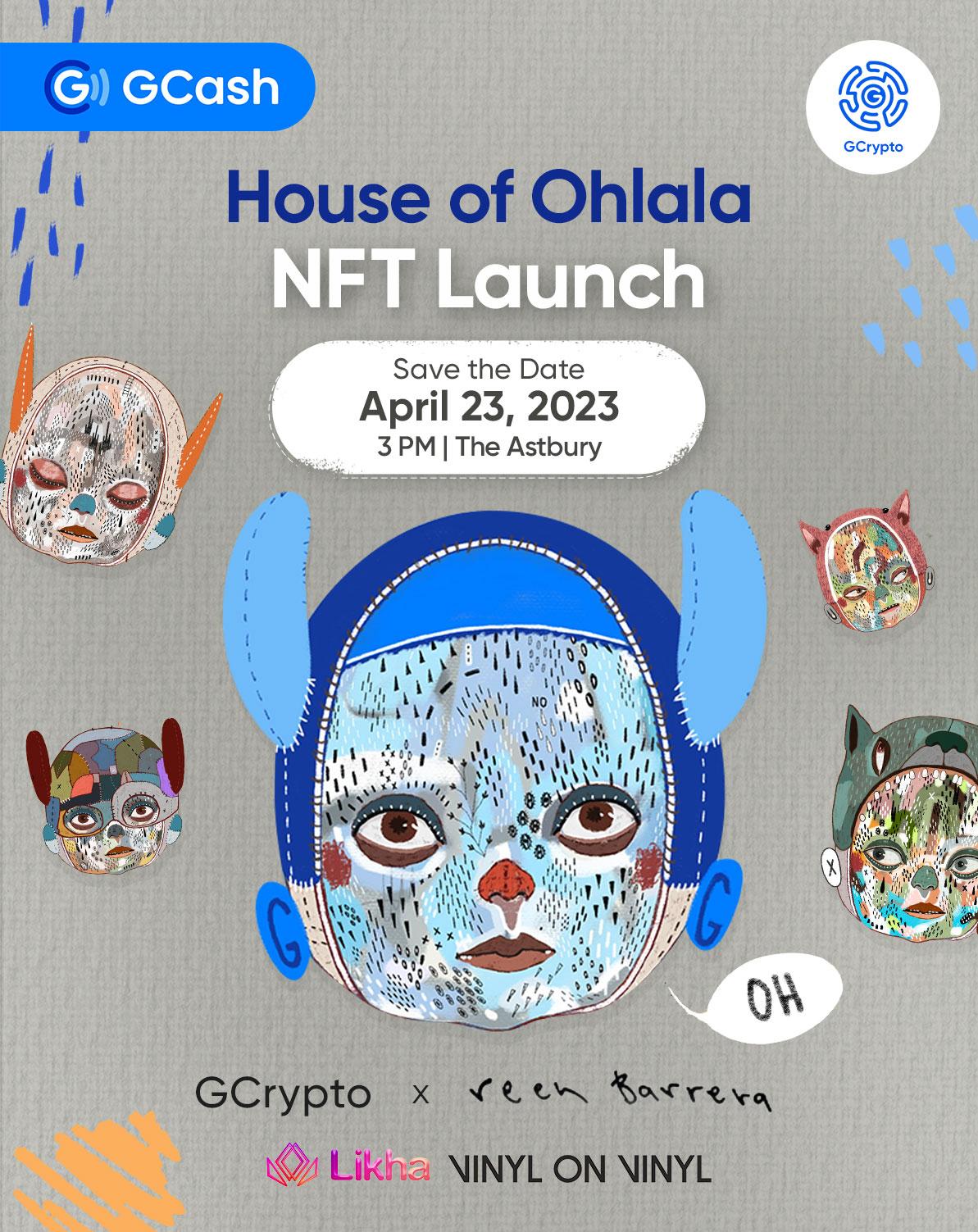
GCash’s Gcrypto NFT Hub brings Filipino talent to the global stage

I had earlier made short mention of Gcash’s new movements into NFT (non-fungible tokens) and art with their “House of Ohlala” collaboration, and since this is new for the Philippine landscape I thought I would talk more about it.

We all know NFTs are basically unique digital assets that are verified using blockchain technology. This new form of ownership has made great innovations in the art world, and I’m happy to see it happening locally as well. Some NFTs have been selling for millions of dollars at prestigious art auctions. One recent example I can think of is photographer and performance artist Jeremy Cowart who recently created a groundbreaking NFT collection that sold out for over $10,000 in just one day! Cowart’s collection included digital portraits that were brought to life through augmented reality and showcased his unique approach to combining technology and art.

But it’s not just international artists who are exploring the possibilities of NFTs. In the Philippines, we have our very own talented artists creating amazing digital artworks that are getting recognition on a global scale. Artists include Reen Barrera and Larry Alcala. Barrera’s Ohlala NFT collection has been featured on the GCash Gcrypto NFT Hub. The collection features whimsical characters and creatures that showcase Barrera’s unique style and creativity.

Meanwhile, the late Larry Alcala, the famous Filipino cartoonist and illustrator known for his humorous style, also has works to be featured as NFTs on GCash, providing fans with a new way to collect and own his art digitally. This move demonstrates the growing popularity of NFTs in the Philippines and highlights Larry Alcala’s enduring legacy.

As we all know, GCash is one of the leading mobile wallets in the Philippines. Their recent announcement regarding its partnership with the House of Ohlala, a luxury fashion brand, to launch a new NFT project is a great steppingstone to what else is possible for crypto in the country. This project aims to provide an avenue for Filipino artists to showcase their creativity and for collectors to own unique digital assets.

This move by GCash is a significant step towards the adoption of NFTs in the Philippines. Although they’ve gained popularity worldwide as a new way of owning and trading digital assets, NFTs have yet to gain widespread acceptance in the Philippines. This may be due to the lack of understanding and infrastructure for this new technology.

Gcrypto is an NFT platform launched by GCash. It allows users to buy, sell, and trade unique digital artworks created by talented Filipino artists. The platform is accessible through the GCash app and partner platforms such as Linkha, to view, purchase, and list their NFTs as a safe and secure way for users to invest in digital art.

By partnering with a well-established fashion brand like House of Ohlala, GCash is providing a platform for Filipino artists to showcase their works and gain recognition. The House of Ohlala has a strong reputation for creating luxurious and exclusive products, and this partnership could potentially attract more collectors to the NFT space.

Moreover, GCash’s entry into the NFT market could also pave the way for more businesses and individuals to explore this new technology. As a leading mobile wallet provider, GCash has a significant influence in the Philippines’ digital economy, and its endorsement of NFTs could lead to more mainstream acceptance of this technology.

However, despite the potential benefits of this partnership, there are also concerns about the sustainability of NFTs. Critics have raised concerns about the environmental impact of NFTs, which require large amounts of energy to create and maintain. Additionally, some have questioned the value of NFTs and whether they are simply a new form of speculative investment.

Despite these concerns, GCash’s NFT project with the House of Ohlala is a positive step forward for the adoption of NFTs in the Philippines. It provides an opportunity for Filipino artists to gain recognition and for collectors to own unique digital assets. Furthermore, it could potentially lead to more businesses and individuals exploring the potential of NFTs in the future. However, it is essential to approach this technology with caution and to address the concerns surrounding its sustainability and value.

Oh, and by the way, I bought my very first NFT collection, 10 NFTs of Ohlala’s paintings, and was even given three prints of Ohlala painting as a bonus. If you really want to learn about NFT’s, try putting skin in the game. Try it, you just might like it, and, of course, the NFTs might appreciate over time and make you a little bit richer than you started.


Dr. Donald Lim is the founding president of the Blockchain Association of the Philippines and the lead convenor of the Philippine Blockchain Week. He is also the Asian anchor of FintechTV.