Home Blog Page 471

Ayala Land allots P10.3B for 204-ha Davao estate

Virendo — AYALA LAND PREMIER

LISTED property developer Ayala Land, Inc. (ALI) has earmarked P10.3 billion to develop Ascenda in Davao City, which will become its largest mixed-use estate in Mindanao.

The 204-hectare (ha) Ascenda will feature a 65-ha town center and a 139-ha residential district, it said in a statement on Thursday.

“Ascenda is well-positioned to benefit from Davao’s momentum, providing Davaoeños new space to grow and an environment attuned to their modern, upgraded lifestyles,” ALI President and Chief Executive Officer Anna Ma. Margarita B. Dy said.

In 2024 alone, the Davao region’s economy grew by 6.3%, faster than last year’s national level growth rate of 5.7%.

She noted that Asceda forms part of ALI’s growing presence in the region, including Insular Village in 1976, Abreeza in 2007, and Azuela Cove in 2017.

“Now the time has come for us to go full blast here in Davao with our largest estate development ever in the VisMin (Visayas-Mindanao) region.”

Ascenda will be developed in Davao’s Toril district, about 16 kilometers from the city center.

Within the township is Virendo, ALI’s sole residential village under its flagship luxury brand, Ayala Land Premier.

The town center will also have an eco park, prime commercial lots, greenways, restaurants, cafés, shops, and a community church.

“The estate is close enough for residents and businesses to connect with the busier side of Davao life but far enough to enjoy and commune with the peace and beauty of nature, which are front and center of Ascenda’s development philosophy,” the property giant said.

ALI is also looking to benefit from the newly completed Coastal Road and Maharlika Highway system, which will reduce travel time from the Davao City proper from 45 minutes to 25 minutes, and from Matina from 25 minutes to 15 minutes.

The masterplan for Ascenda was developed in partnership with Danish design firm Henning Larsen, and is inspired by Singapore’s Bishan Park.

ALI has over 50 estates nationwide, including the Makati Central Business District, Bonifacio Global City, Cebu Business Park, Nuvali in Laguna, and Alviera in Pampanga.

On Thursday, ALI shares were down by 1.64% or 40 centavos to close at P24 apiece. — Beatriz Marie D. Cruz

Driving the future of SUVs for modern roads

Photo by Fanjianhua | Freepik

The Philippine automotive industry leaned heavily on sport utility vehicles (SUVs) and other light units to boost overall sales in the first half of 2025.

According to the Chamber of Automotive Manufacturers of the Philippines, Inc. (CAMPI) and the Truck Manufacturers Association, industry sales rose 2% to 230,912 units in the first six months of 2025, up from 226,279 units sold in 2024. The growth was largely driven by commercial vehicles like SUVs, pickups, multipurpose vehicles, and vans. Sales in this segment increased 11.3% compared to last year.

In June 2025 alone, industry sales reached 40,483 units, up 3.6% from a year earlier. SUVs and similar vehicles made up nearly 83% of sales, or 33,561 units. Passenger cars accounted for 17.1% with 6,922 units sold.

Although smaller passenger cars remain available and affordable, the figures indicate consumers are favoring larger vehicles.

“Manufacturers and dealers remain focused on enhancing customer experience, introducing updated vehicle lineups, and supporting market recovery across all segments — including passenger cars,” said CAMPI President Rommel R. Gutierrez.

Direction of electric vehicles (EVs)

More car buyers are turning to electric options, with global sales of fully electric and plug-in hybrid vehicles topping 17 million units in 2024.

Statista forecasts that revenue from electric vehicles could reach $784.2 billion this year. If the trend continues, the global market may rise to $990.4 billion by 2029.

In the Philippines, electrified vehicle sales reached 13,490 units, or nearly 6% of the automotive market, from January to June 2025. Hybrid cars made up most of that total with 10,891 units, while battery electrics recorded 2,439 units and plug-in hybrids accounted for 160 units.

By August 2025, the total number of new energy vehicles sold in the country had grown to 18,439 units. Hybrids again led with 14,585 units, followed by 3,278 battery electrics.

One of the main reasons for the shift to electrified vehicles is the drive to reduce harmful emissions. A report from Virta Global said EV use helped cut more than 220 million tons of greenhouse gases worldwide in 2023, up sharply from 80 million a year earlier. If adoption rates hold, the reduction could reach 2 gigatons of carbon dioxide equivalent by 2035.

The Philippines is also backing the technology through the Electric Vehicle Industry Development Act, which requires higher EV shares in public and private fleets. President Ferdinand R. Marcos, Jr. has also set a target of having 50% of vehicles on the road powered by electricity by 2040.

In response to growing electrification and demand for SUVs, major automakers are adapting by combining both trends. According to Forbes, even luxury car manufacturers known for their sedans, like Lamborghini and Bentley, have expanded lineup to cater the buying behavior of consumers.

Balancing power and efficiency with SUVs

Forbes reports that compact SUVs dominate sales because they offer maneuverability while leaving enough room for passengers and cargo. Compared with sedans, these vehicles provide a larger interior that holds luggage or everyday items without feeling crowded. Larger models may carry more, but they are often impractical for city driving.

Three-row SUVs also provide space for both passengers and belongings. Higher ground clearance builds their reputation as dependable vehicles on uneven or flooded streets. For drivers who prioritize confidence on the road, this feature remains essential.

In terms of safety, newer models include systems that improve control during emergencies. Anti-lock braking systems, disc brakes, and electronic stability controls are no longer limited to luxury vehicles but are available in many mainstream SUVs.

Compact SUVs, which account for more than 45% of the global market, often include driver-assistance technology, multiple air bags, and collision-avoidance systems. Buyers are willing to pay more for these features because they see them as investments in safety.

Still, performance remains a deciding factor. Buyers often consider torque and horsepower before making a purchase. Torque, which measures pulling force, helps SUVs handle uphill climbs, towing, and stop-and-go traffic. Horsepower, meanwhile, supports highway driving by allowing steady speeds and easier overtaking.

Some models are built to go beyond paved roads, offering four-wheel drive, reinforced suspensions, and all-terrain tires. Even if not all owners use them off-road, the capability provides reassurance that the vehicle can adapt when needed.

Buyers are also paying closer attention to handling, fuel economy, braking, and responsiveness in traffic. Such qualities are prioritized over raw power because they directly affect daily driving.

Trailblazing in hybrid compacts

Honda, for instance, has advanced in the compact SUV segment with the sixth-generation CR-V, the first hybrid version of the model available in the Philippines.

The headline addition is the CR-V 2.0 RS e:HEV E-CVT, the first hybrid CR-V offered locally. The full-hybrid system pairs a 2.0-liter Atkinson cycle gasoline engine with two electric motors. The gasoline engine delivers 148ps and 183Nm of torque, while the motors add 184ps and 335Nm of torque.

The hybrid system allows the vehicle to switch between three modes: EV Drive, which runs solely on electric power; Hybrid Drive, which combines the gasoline engine and electric motors; and Engine Drive, which uses the engine at higher speeds.

Honda reports that the e:HEV model achieves 29.4 kilometers per liter in city driving, based on United Nations Regulation 101 standards. A regenerative braking system recharges the battery, and customers receive an eight-year or 200,000-kilometer warranty on the hybrid battery.

For those who prefer traditional powertrains, Honda is offering two turbocharged gasoline variants: the 1.5 V Turbo CVT and the 1.5 VX Turbo CVT AWD. Both feature a 1.5-liter direct-injection VTEC turbo engine that produces 190ps and 240Nm of torque, making this the most powerful gas-powered CR-V to date.

Fuel economy for the turbo variants is rated at 16.4 kilometers per liter in highway conditions. The three-row seating option in these versions provides flexibility for larger families, while cargo space expands to 840 liters with seats folded.

Honda has made its SENSING suite of safety features standard across all CR-V variants. The upgraded system now uses a front camera with a 90-degree field of view, compared with 50 degrees previously, and a radar system with 120 degrees of coverage.

In testing, the CR-V earned a five-star rating from the ASEAN New Car Assessment Program, with an overall score of 87.16 out of 100.

Another first for the local CR-V is Honda CONNECT, a telematics platform that links the vehicle with a smartphone app. The system allows owners to monitor car status, schedule service reminders, and control select functions remotely, such as engine start, air-conditioning, and door locks.

Honda CONNECT also includes safety features such as Automatic Collision Detection, Security Alarm Detection, and Speed Alert. For added security, owners can access Find My Car and Geofencing alerts, along with an Emergency Call function.

Inside, the CR-V emphasizes space and refinement. The cabin features black leather seating, tri-zone automatic climate control, and an available 12-speaker Bose audio system in the RS hybrid variant.

Currently, the Honda CR-V is available in three trims: 2.0 RS e:HEV E-CVT at P2,605,000; 1.5 VX Turbo CVT AWD at P2,290,000; and 1.5 V Turbo CVT at P2,100,000. — Mhicole A. Moral


An architectural gem restored: PICC reopens to the public

BRONTË H. LACSAMANA

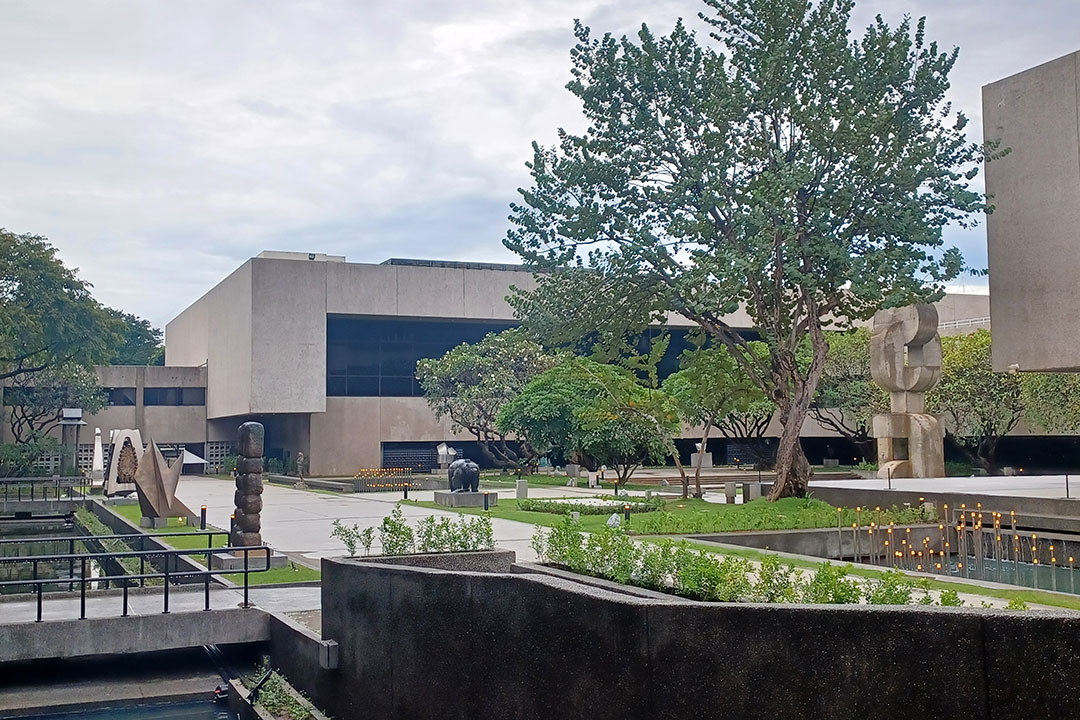
THE Philippine International Convention Center (PICC) has reopened its doors following an extensive, six-month renovation, in time for its 50th anniversary and the Philippines’ hosting of the ASEAN Summit in 2026.

The PICC, considered Asia’s first international convention center and a National Cultural Treasure, was designed by Leandro V. Locsin who was later named National Artist for Architecture.

Restoration of the convention center began in March. The refurbished convention center was unveiled to select guests on Sept. 30.

The PICC was constructed with the issuance of Presidential Decree No. 520 in 1974 and completed in less than two years and inaugurated in September 1976, just before its first major event, the 1976 IMF–World Bank Meeting that October.

PICC general manager Nicolette Ann P. Cruz said in a speech that it “celebrates a space where tradition meets modernization.”

“From curated art pieces to upgraded meeting rooms and facilities, every detail is intended to elevate the guest experience while honoring the building’s architectural integrity,” she said.

It is set to be the venue for the ASEAN Summit in 2026. Upgrades made to prepare for the event are “state-of-the-art audio-visual systems, energy-efficient lighting, high-speed Wi-Fi, and enhanced security.”

Heritage experts, architects, engineers, and artisans collaborated to preserve architect Mr. Locsin’s original brutalist vision while introducing contemporary upgrades, according to Ms. Cruz.

She told BusinessWorld during the tour that the entire 12-hectare complex was improved. For example, the Delegation Lobby’s 3,068 droplights were fitted with new bulbs, while the ceiling was hand-painted with metallic powder to recapture its brilliance.

The Plenary Hall features refurbished wood panels, ceilings, doors, and seating, each chair fitted with new brass seat numbers. The Reception Hall has newly polished globule chandeliers and ornamented ceilings and refreshed fabric walls and woodwork.

Artworks in the PICC now also have better lighting due to the improvements, including National Artist Arturo Luz’s two sculptures: the steel Gride in the Plenary Hall and Reception Hall lobby and the Anito accompanied by APEC sculptures in the Courtyard.

Also among the permanent selection of artworks from the Bangko Sentral ng Pilipinas collection are the Pagdiriwang mural by National Artist Jose Joya and the Sungka benches by National Artist Napoleon Abueva, all now better lit.

The PICC can now welcome gatherings like global conferences, conventions, meetings, graduation ceremonies, and personal milestones, with the goal to “set the stage for the future of the country’s MICE (meetings, incentives, conferences, and exhibitions) industry.” — Brontë H. Lacsamana

Loan growth slows to nine-month low in August

PHILSTAR FILE PHOTO

BANK LENDING growth eased to a nine-month low in August as loans for business activities expanded at a slower pace, the Bangko Sentral ng Pilipinas (BSP) said on Thursday.

Outstanding loans from universal and commercial banks to businesses and individual consumers, net of reverse repurchase agreements, expanded by 11.2% year on year to P13.62 trillion in August, slower than the 11.8% growth in July, preliminary BSP data showed.

This was the slowest growth since the 11.1% increase in November 2024.

On a seasonally adjusted basis, loans inched up by 0.4% month on month.

Lending to residents went up by 11.6% year on year in August, easing from 12.4% in July, while outstanding loans to nonresidents, which include those disbursed by big banks’ foreign currency deposit units, declined by 5.9%, improving from the 8.1% drop recorded the previous month.

Loans for production activities increased by 9.9% year on year to P11.51 trillion in August, slowing from the 10.8% growth seen in July. These made up 84.6% of the end-August outstanding loans of big banks.

The expansion was driven by increased lending to the following industries: electricity, gas, steam, and air-conditioning supply (up by 28.1% year on year); real estate activities (11%); wholesale and retail trade, repair of motor vehicles and motorcycles (8.1%); information and communication (7.5%); and financial and insurance activities (6.9%).

Meanwhile, outstanding consumer loans to residents, which include credit card, motor vehicle, and general-purpose salary loans, grew by 23.9% to P1.79 trillion in August, slightly faster than the 23.6% growth the month prior. These comprised 11.7% of the total.

This was mainly driven by the 29.7% jump in credit card loans to P1.07 trillion and the 19% increase in motor vehicle loans to P513.06 billion.

“The BSP monitors bank loans because they are a key transmission channel of monetary policy. Looking ahead, the BSP will ensure that domestic liquidity and bank lending conditions remain consistent with its price and financial stability mandates,” the central bank said.

Michael L. Ricafort, chief economist at Rizal Commercial Banking Corp., said in a Viber message that despite the slower growth, the double-digit increase in lending is “still a good sign for the economy as a bright spot or growth driver.”

LIQUIDITY GROWTH PICKS UP
Meanwhile, liquidity growth picked up to a seven-month high in August, separate BSP data released on Thursday showed.

Domestic liquidity or M3 — a measure of the amount of money in the economy that includes currencies in circulation, bank deposits, and other financial assets easily convertible to cash — increased by 6.6% year on year to P18.6 trillion in August, faster than the 6.2% growth recorded in July.

This was the fastest pace of expansion seen since the 6.8% growth logged in January.

On a month-on-month seasonally adjusted basis, M3 increased by 0.5% in August.

Mr. Ricafort said the increase in money supply is consistent with the sustained growth in bank lending and also came amid the BSP’s monetary easing cycle.

“As a driver of money supply, claims on the domestic sector, which includes private and government entities in the country, rose by 9.8% year on year in August from 10.5% in July,” the BSP said. Claims represent a sector’s liabilities to depository corporations like banks and the central bank.

Claims on the private sector climbed by 11.1% in August from 11% in July, “driven by the continued expansion in bank lending to nonfinancial private corporations and households.”

Net claims on the central government rose by 6.1%, slower than the 7.1% expansion in the previous month, and were driven by higher borrowings.

Meanwhile, net foreign assets (NFA) in peso terms went up by 4.8% year on year in August, a turnaround from the 0.6% decline in July. NFAs reflect the difference between depository corporations’ claims on and liabilities to nonresidents.

The central bank’s NFA rose by 0.7%, while banks’ NFA surged by 45.1% amid a decline in their foreign currency-denominated bills payable. — K.K. Chan

8990 Holdings Q2 income up 13%, delisting completion set for Oct. 29

8990HOLDINGS.COM

REAL ESTATE developer 8990 Holdings, Inc. (HOUSE) posted a 13.2% increase in its second-quarter (Q2) attributable net income to P1.54 billion from P1.36 billion a year earlier, driven by higher sales.

April-to-June revenues rose by 1.3% to P5 billion from P4.93 billion, the company said in a regulatory filing on Wednesday.

Revenues from real estate operations inched up by 0.77% to P4.92 billion due to rental escalation and new tenants, while hotel revenues jumped 34.57% to P84.81 million.

For the first half, attributable net income edged higher by 0.66% to P3.08 billion from P3.06 billion last year, while revenues were flat at P10.14 billion compared with P10.13 billion a year ago.

“The increase was mainly attributable to the increased sales in NCR, Bulacan, and Davao,” the company said.

Costs and expenses declined by 14.95% to P2.8 billion from P3.3 billion last year.

VOLUNTARY DELISTING
In a separate disclosure, the company said its voluntary delisting from the Philippine Stock Exchange (PSE) is proceeding after the completion of its tender offer on Sept. 30.

The company earlier filed a petition with the PSE for the voluntary delisting of its common shares, targeting an effective date of Oct. 28.

As part of the process, its unit 8990 Housing Development Corp. conducted a tender offer at P10.42 per share from Sept. 2 to 30.

A total of 575.77 million shares, representing 10.95% of listed shares, were tendered.

Combined with excluded and non-public shares, this brought the total to 99.91% of the company’s shares, above the 95% threshold required for delisting.

The cross date for the transfer of tendered shares is set for Oct. 7, when trading suspension will begin. Settlement of shares will follow on Oct. 9.

“On cross date, the public float of 8990 will fall to 0.09%, whilst the total tendered shares, excluded shares and other non-public shares will be over the voluntary delisting threshold of at least 95%,” the company said.

The company expects to complete the voluntary delisting around Oct. 29, effectively taking 8990 Holdings private.

8990 Holdings develops residential projects through its Deca Homes, Deca Towers, and Urban Deca Towers brands.

Its portfolio includes low-cost mass housing units, subdivision lots, and medium- to high-rise projects. It also operates hotels. — Alexandria Grace C. Magno

Missing governance: When every storm is both natural and moral disaster

WORKERS from the Department of Public Works and Highways (DPWH) Bulacan 1st District Engineering Office (DEO) continue with the concrete laying on the riverbank protection structure along a river at Barangay Santa Cruz in Guiguinto, Bulacan. — PHILIPPINE STAR/MIGUEL DE GUZMAN

At the rate politicians are tearing each other down, Filipinos could almost be forgiven for greeting typhoon season with grim welcome. For every swollen river and submerged barangay, every ruined home and shattered livelihood, lays bare what billions in flood control spending have failed to hide: corruption on a scale both brazen and unconscionable. The collapse of dikes and drainage systems exposes plunder more vividly than any audit, compelling politicians to point fingers at one another in a grotesque spectacle — the pot indicting the kettle.

Recent revelations of ghost projects, inflated contracts, and endlessly patched dikes underscore the frailty of our governance. Infrastructure meant to protect lives has become another monument to betrayal.

We live with a public works budget three-fifths stolen. No wonder we have remained trapped in lower middle income for nearly four decades, with poverty stubborn and pervasive. But rather than rehearse the cost of corruption, it will be useful to examine governance itself. The literature reminds us governance is not simply eliminating theft — it is the state’s capacity to deliver public goods, uphold fairness, and sustain growth. A study of Philippine governance framed this along three dimensions: political, economic, and social governance.* This framework remains relevant today, especially in understanding why floods reveal not just failed projects but failed governance.

POLITICAL GOVERNANCE: WHEN AUTHORITY LOSES LEGITIMACY
Political governance measures rule of law, property rights, justice, and corruption control. A decade ago, the Philippines ranked a dismal 104th of 187 countries. The flood control fiasco is textbook evidence. Contracts are awarded without transparency. Projects are declared “completed” though no structure exists. Oversight bodies are ignored. Rule of law is replaced by rule of connection.

The consequences are economic as well as moral. Weak governance deters investment. Surveys of foreign chambers repeatedly cite corruption and regulatory unpredictability as reasons firms prefer Vietnam or Indonesia. Dikes that collapse are not just public works failures — they are barriers to capital, jobs, and trust.

Weak political governance correlates with low income, persistent poverty, and inequality. Every missing dike is also a missing investor, a missing factory job, a missing schoolhouse.

ECONOMIC GOVERNANCE: GROWTH WITHOUT STABILITY
On economic governance — stability, competitiveness, and freedom — the Philippines has fared slightly better. We often post respectable growth rates, sometimes among Asia’s fastest. Yet growth alone is insufficient.

Flood control anomalies expose the fragility of that growth. On paper, infrastructure fuels development. In practice, ghost contracts absorb billions without raising productivity. Funds that should build logistics hubs, renewable energy, or agricultural modernization are diverted instead to luxury estates, exotic cars, jets, yachts — and to maintain mistresses.

The result is twofold. First, wasted funds shrink fiscal space. Government borrows more, debt servicing rises, and ordinary taxpayers carry the burden. Second, competitiveness weakens. Every time factories close due to flooding or when roads disappear under water, investors reconsider. Why invest in the Philippines when Vietnam or Malaysia offers reliable infrastructure and transparent contracts?

Thus, our growth remains cyclical and fragile. Without honest and efficient governance, it cannot lift millions out of poverty in a lasting way and inspire business confidence.

SOCIAL GOVERNANCE: THE DISTRIBUTIONAL CRISIS
Social governance — education, health, equity — matters most for citizens. Here the Philippines has long lagged, performing only slightly better than the poorest nations. Our Human Development Index is modest, inequality stark, and public services chronically underfunded.

Flood anomalies drive home these failures. Who suffers when drainage canals are left half-dug or levee funds vanish? Not the contractors or political brokers, definitely, but the poor. Their shanties are washed away, their fields rot, their classrooms turn into evacuation centers.

Already weak education is further disrupted by floods. Fragile health systems must manage outbreaks of waterborne diseases. Inequality deepens as the rich fortify their gated homes while the poor huddle in crowded shelters. This is what scholars call “distributional failure” — public spending captured by a few, while risks and losses are borne by the many.

A DECADE OF STAGNATION
What alarms is the lack of progress across a decade. Despite select improvements, fundamental weaknesses remain:

• Competitiveness eroded by red tape and high costs;

• Education outcomes at the bottom of the ASEAN;

• Income distribution skewed to the richest families; and,

• Public trust persistently eroded by scandal.

Flood control anomalies are not isolated. They are symptoms of chronic disease — weak governance across political, economic, and social dimensions.

GOVERNANCE AS DEVELOPMENT
Three lessons stand out.

First, governance is development. It is not an accessory to growth, but it is its very engine. Political governance ensures fair laws; economic governance enables efficient markets; social governance turns growth into equity and resilience.

Second, governance failures are cumulative. Each ghost project weakens fiscal discipline. Each botched infrastructure damages productivity and competitiveness. Each injustice undermines trust. Their combined effect is stagnation and mediocrity.

Third, governance must be judged by outcomes, not slogans. Are communities safer from floods? Are children learning? Are businesses thriving? Are inequalities narrowing? If not, governance has failed. These flood control project anomalies are clear proof.

TOWARDS A FILIPINO CONVERGENCE
The flood control scandal reminds us of a larger truth. Our Constitution and faith traditions enshrine justice, equality, and the common good. What is missing is convergence in practice — the translation of values into policy, principles into results.

Strong governance does not require vast resources. Even modest funds, managed well, can deliver transformative change. Conversely, no amount of spending can rescue a weak governance system.

Is the Independent Commission for Infrastructure truly promising?

Only if it is created by law and led by men and women of unimpeachable integrity. Otherwise, it will be just another political instrument in disguise. Its reach must not stop at the mid-level operators; it must go all the way to the top, if needed, and hold even the highest to account. But even a powerful commission will not be enough. The deeper task is to rebuild governance itself: a professional bureaucracy, infrastructure free from political meddling, transparency as habit, education and health as real priorities, and the rule of law as the nation’s backbone.

Citizens must demand more. Surveys show Filipinos consistently rank inflation, corruption, and jobs as top concerns. But outrage must turn into accountability, and accountability into reform. Otherwise, scandals will recur, and floods — both literal and figurative — will keep drowning our hopes.

GOVERNANCE IS OUR DESTINY
Flood control anomalies are not just pesos wasted. They are a mirror of our governance deficit: political governance that tolerates corruption, economic governance that wastes resources, social governance that abandons the vulnerable.

Governance is not abstract. It is the flooded street in Marikina, the ruined crops in Pampanga, the child coughing in a Bulacan evacuation center.

Our destiny as a nation will not be decided by how much we spend, but by how well we govern. Political, economic, and social governance are not silos but pillars. If they remain weak, we remain condemned to stagnation. If they are strengthened, we may yet redeem our promise.

The flood control scandal is not only about missing projects; it is about missing governance. Until we bridge that gap, every storm will be both a natural and moral disaster.

* Lino Briguglio, Carmen Saliba, and Melchior Vella, “Governance in the Philippines in a Global Context — Evidence from Global Governance Indicators,” November 2014


Diwa C. Guinigundo is the former deputy governor for the Monetary and Economics Sector, the Bangko Sentral ng Pilipinas (BSP). He served the BSP for 41 years. In 2001-2003, he was alternate executive director at the International Monetary Fund in Washington, DC. He is the senior pastor of the Fullness of Christ International Ministries in Mandaluyong.

Sean ‘Diddy’ Combs loses bid for acquittal, as prosecutors seek 11 years prison

Sean “Diddy” Combs on the talk show Late Night with Seth Myers. — IMDB

NEW YORK — A US judge on Tuesday rejected a bid by Sean “Diddy” Combs to overturn his criminal conviction on felony prostitution-related charges, after prosecutors said the hip-hop mogul should spend more than 11 years in prison.

US District Judge Arun Subramanian in Manhattan found “overwhelming evidence of Mr. Combs’ guilt” related to his treatment of two former girlfriends: rhythm and blues singer Casandra Ventura, and a woman known in court as Jane.

Prosecutors said Mr. Combs arranged for male prostitutes to travel across state lines to engage in drug-fueled sexual performances known as Freak Offs with his girlfriends, while he watched, recorded videos and masturbated.

Ms. Ventura and Jane testified that Mr. Combs physically attacked them, and threatened to cut off financial support if they resisted the performances.

“The government proved its case many times over,” the judge wrote.

Mr. Subramanian also rejected arguments that evidence used to support the more serious racketeering conspiracy and sex trafficking charges on which Mr. Combs was acquitted tainted the prostitution case.

Lawyers for Mr. Combs did not immediately respond to requests for comment. A spokesperson for US Attorney Jay Clayton in Manhattan did not immediately respond to similar requests.

Mr. Combs, 55, was found guilty by a Manhattan jury on July 2 of two counts of transportation to engage in prostitution, following an eight-week trial. He had pleaded not guilty to all charges and is expected to appeal his conviction.

Prosecutors asked Mr. Subramanian to sentence Mr. Combs to 11-1/4 years in prison at the scheduled Oct. 3 sentencing.

Defense lawyers asked for no more than 14 months, which if granted could result in Mr. Combs’ freedom this year because he would get credit for time served at Brooklyn’s Metropolitan Detention Center since his Sept. 16, 2024 arrest.

COMBS HELD ‘ALL THE POWER,’ US SAYS
Mr. Combs founded Bad Boy Records and is credited with popularizing hip-hop in American culture.

But in seeking a 135-month sentence, prosecutors cited evidence at trial that Mr. Combs led a different life outside the public eye, physically beating his girlfriends and giving them illegal drugs.

“The defendant tries to recast decades of abuse as simply the function of mutually toxic relationships,” prosecutors wrote. “But there is nothing mutual about a relationship where one person holds all the power and the other ends up bloodied and bruised.”

In a letter to the judge, Ms. Ventura, known as Cassie, said Mr. Combs used violence, threats, and drugs to “trap” her into Freak Offs, starting when she was 19.

“Sex acts became my full-time job,” Ms. Ventura wrote. “His power over me eroded my independence and sense of self until I felt I had no choice but to submit.”

Mr. Subramanian rejected Mr. Combs’ arguments that the prostitution convictions under the Mann Act should be thrown out because Mr. Combs lacked a financial motive and did not engage in sex he paid for.

The judge said it was enough that Mr. Combs transported escorts who were financially motivated, and intended for them to engage in prostitution.

He also said requiring Mr. Combs to have taken part in the sex “would narrow prostitution almost out of existence,” shielding even owners of brothels from prosecution.

Mr. Subramanian also said a conviction did not violate Mr. Combs’ First Amendment constitutional rights as “an amateur pornographer and consumer of pornography,” and that conduct did not become legal just because he filmed the sex performances.

While agreeing with Mr. Combs that the Mann Act has evolved since its 1910 passage, Mr. Combs’ conduct “sits at the heartland of the Act’s legitimate proscriptions. Unsurprisingly then, his conviction raises no constitutional problem.” — Reuters

Honda dealerships under ACMobility to close by Dec. 31

PHOTO FROM HONDA CARS ALABANG

ACMOBILITY, the mobility solutions unit of the Ayala group, is ending its dealership network with Honda Cars Philippines, Inc. (HCPI) by Dec. 31 as it shifts focus to other ventures, including its electric vehicle (EV) business.

After more than three decades, ACMobility, through its dealership arm Iconic Dealership, Inc. (IDI), will turn over its Honda dealerships to new dealer principals starting Jan. 1, 2026, Ayala Corp. said in a statement on Thursday.

“This transition reflects our ongoing effort to optimize our portfolio and focus on new growth areas,” ACMobility Chief Executive Officer Jaime Alfonso Zobel de Ayala said.

“Among these are our initiatives in advancing sustainable mobility and electrification, where we continue to build solutions that benefit communities, businesses, and the environment,” he added.

The transition covers dealerships such as Honda Cars Makati, Pasig, Shaw, Bacoor, Cebu, Mandaue, Iloilo, Negros, and Cagayan de Oro.

“To ensure a smooth transition, the dealerships will directly contact customers with active reservations to guarantee car delivery without disruption,” the company said.

Upon the turnover, ACMobility’s portfolio will consist of its BYD and Kia distribution businesses, Isuzu dealership operations, as well as its EV charging infrastructure and Bosch Car Service units.

The move follows Ayala’s exit from distribution deals with two other vehicle brands, Volkswagen and Maxus.

Since 1990, Honda dealerships operated by ACMobility have sold more than 220,000 vehicles.

In the first half, ACMobility’s net income surged by 400% to P122 million from P24 million on higher dividends from Isuzu, equity earnings from Honda, and continued positive contribution from BYD, the company said.

Ayala Corp.’s first-half attributable net income rose by 5% to P23.36 billion from P22.29 billion a year earlier.

Shares of Ayala Corp. on Thursday climbed 0.91% or P4.40 to close at P486 apiece. — Beatriz Marie D. Cruz

BPI Wealth targets 20% AUM growth

THE WEALTH management arm of Bank of the Philippine Islands (BPI) aims to grow its assets under management (AUM) by 20% this year as it looks to increase its customer base, targeting retail consumers and the high-net-worth market.

“In terms of AUM, so as a business, we’re typically looking at about 20% growth in AUM. That’s across private banking segment, institutional segment, and the retail segment,” BPI Wealth President and Chief Executive Officer Maria Theresa D. Marcial said at a briefing on Thursday.

BPI Wealth’s AUMs stood at P1.7 trillion at end-August, representing a 21% market share, while BPI as a whole, or including other legal entities and private banking clients, has AUMs worth P1.9 trillion, she said.

“And then there are other subclasses of published market share: For union investment funds, that’s close to 30% as well. And for mutual funds, that’s over 50% market share,” she added.

BPI Wealth’s AUM growth will be driven by its parent bank’s aggressive drive for customer acquisition.

“We have big goals for the bank in terms of customer acquisition. We have been communicating that we want to reach 50 million customers, and I think that continues to be the goal,” Ms. Marcial said.

BPI has 18 million customers, 1.3 million of which are BPI Wealth customers. Meanwhile, BPI Private Wealth has about 6,000 customers.

Ms. Marcial said the private wealth segment targets to add 1,000 customers by the end of the year and another 1,000 by end-2026.

“The upside is still large because based on a study,… there is a much higher number of high-net-worth and older high-net-worth individuals in the addressable market for the Philippines. And we’ve only barely touched that surface.”

BPI Wealth is also focusing on the retail segment to grow its customer base, she said as the bank on Thursday launched its Wealth Wellness Month campaign.

“Our focus really is on the retail segment. Because with all of this that we’re doing, this Wealth Wellness Month, it’s really to target retail investors and to want to help them to grow their investments and have that mindset of saving and investing and reaching more Filipinos to think about goals-based investing approach.”

BPI’s net income increased by 7.02% year on year to P16.44 billion in the second quarter, bringing its six-month profit to P32.96 billion, up by 7.83%.

Its shares climbed by 30 centavos or 0.27% to end at P112.30 each on Thursday. — A.M.C. Sy

Broadway actors prepare to strike, union says

BROADWAY ACTORS are preparing to walk off the stage in a strike that would shut down 32 stage productions as theater attendance approaches its peak season, according to their union.

Actors’ Equity, a union that represents 900 current Broadway performers and stage managers, said it has yet to reach agreement on a new labor contract with the Broadway League, the trade association that represents theater owners, producers and operators. Negotiations continue, though the three-year contract ended on Sept. 28.

A central issue in bargaining is healthcare and the contribution the Broadway League makes to the union’s health care fund.

Al Vincent, Jr., executive director and lead negotiator for Actors’ Equity, said the union is asking Broadway’s employers to increase their contribution to the health care fund, which is projected to fall into a deficit by next May.

The rate of contributions has been unchanged for more than a decade, even as smaller regional theaters in Kansas and Idaho oftentimes pay more, Mr. Vincent said.

“Asking our employers to care for our bodies, and to pay their fair share toward our health insurance is not only reasonable and necessary, it’s an investment they should want to make toward the long-term success of their businesses,” Actors’ Equity President Brooke Shields said in a statement to Reuters, adding that she tore her meniscus on a Broadway show and continued dancing on it, “painfully,” for three months.

“That’s just math. There are no Broadway shows without healthy Broadway actors and stage managers. And there are no healthy actors and stage managers without safe workplaces and stable health insurance.”

The Broadway League issued a statement saying it continues to work toward an agreement.

“We all want to sustain the magic of Broadway for our audience,” the Broadway League said in its statement to Reuters. “We are continuing good-faith negotiations with Actors Equity to reach a fair agreement that works for Broadway shows, casts, crews and the millions of people from around the world who come to experience Broadway.”

Other sectors of the entertainment industry have been roiled by labor unrest, with Hollywood actors and writers striking in 2023, as they fought for better compensation in the streaming TV era and curbs on the use of artificial intelligence. Video game actors staged a nearly year-long walkout as they sought protections against the use of artificial intelligence.

Stage actors have already authorized the bargaining committee to call a strike. On Friday, the union began delivering “strike pledge cards” to the stage door, asking performers and stage managers to commit to a walkout.

Kaylin Seckel, an ensemble cast member of Disney’s The Lion King and understudy to Nala and Sarabi, said she ruptured her Achilles tendon during a 2022 performance and had to be carried off-stage by her scene partner. She underwent surgery to repair the injury, and lengthy physical therapy to help her return to the stage. Although workers’ compensation covered many of her medical expenses, she relied on her union’s health care to pay for acupuncture and other treatments.

“That was three years ago, and I require, to this day, other procedures and more physical therapy that I was denied under workers’ comp,” said Ms. Seckel. “So for performers and stage managers in this industry, where your jobs are dangerous, … without really good health insurance, it’s difficult for us to do our jobs.”

The last major Actors Equity strike was in 1968, when a three-day dispute closed 19 Broadway shows. The New York City mayor intervened, and helped both sides come to an agreement. — Reuters

Peso up as uncertainty weighs on dollar

BW FILE PHOTO

THE PESO continued to climb on Thursday as the dollar remained under pressure due to concerns over the US government’s shutdown.

The local unit closed at P58.08 versus the greenback, strengthening by four centavos from its P58.12 finish on Wednesday, Bankers Association of the Philippines data showed.

The peso opened Thursday’s session slightly stronger at P58.05 versus the dollar. It dropped to as low as P58.30, while its intraday best was at P58.007 against the greenback.

Dollars exchanged fell to $1.16 billion on Thursday from $1.72 billion on Wednesday.

The peso rose as the dollar was mostly weaker, with markets remaining wary about the US government’s shutdown, Rizal Commercial Banking Corp. Chief Economist Michael L. Ricafort said in a Viber message.

“The dollar-peso was steady as market players traded cautiously amid monetary developments of the US budget bill and the absence of US economic data,” a trader said in a phone interview.

For Friday, the trader expects the peso to move between P57.90 and P58.30 per dollar, while Mr. Ricafort sees it ranging from P56.95 to P58.20.

Global stocks gained on Thursday as investors digested the potential ramifications of a US government shutdown, while a weak private US labor market report bolstered bets for Federal Reserve rate cuts, Reuters reported. While US stocks have performed well, uncertainty about the credibility of US institutions more generally has manifested in a weaker dollar.

The US dollar index languished near the one-week low of 97.459 reached overnight. It last stood at 97.578, down 0.1% from Wednesday’s closing level. — AMCS with Reuters

Anscor exits The Bistro Group with P1.91-billion sale to Inoza

TGIFRIDAY'S PHILIPPINES FACEBOOK ACCOUNT

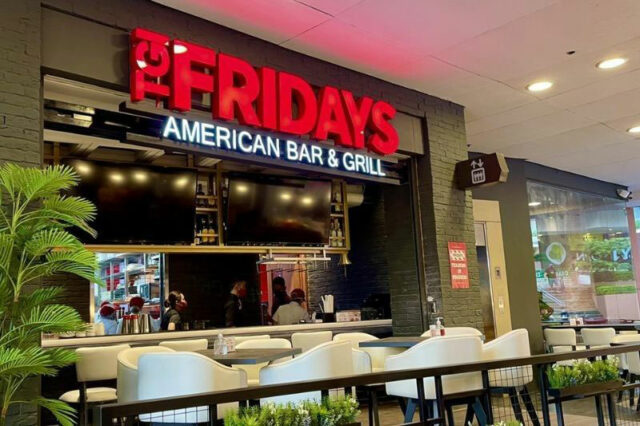
INOZA BUSINESS HOLDINGS, INC., an affiliate of Progeny Global Holdings that operates the Bounty Fresh brand, has acquired listed holding company A. Soriano Corp.’s (Anscor) minority stake in The Bistro Group (TBG), a casual dining restaurant operator, for P1.91 billion.

“Anscor extends its best wishes to the Bistro and Inoza teams. We are confident they will continue delighting Filipino consumers with their quality dining experiences for many years to come, and we look forward to seeing their continued success,” the company said in a disclosure on Thursday.

The deal follows the Philippine Competition Commission’s approval in August of Inoza’s acquisition of a majority stake in TBG.

Inoza is linked to Progeny Global Holdings, which has interests in agribusiness, food manufacturing, and limited-service restaurants such as Bounty Fresh, Chooks-to-Go, and Uling Roasters.

In November 2024, Anscor acquired its minority stake in TBG Food Holdings, Inc. — the operator of The Bistro Group — from private equity firm Navegar I (Singapore) Pte. Ltd. for P1.61 billion.

TBG is one of the country’s leading premium casual dining operators, managing more than 200 full-service restaurants across 23 brands, including Italianni’s, TGI Friday’s, and Texas Roadhouse.

“The transaction represents value realization by Anscor of its investment in TBG. Anscor realized gross annualized returns greater than 25% on its investment in TBG, through a combination of distributions and capital gains,” the company said.

Anscor’s core holdings include Phelps Dodge Philippines Energy Products Corp., a wire and cable manufacturer, and Seven Seas Resorts & Leisure, Inc., which owns and operates Amanpulo Resort.

It also holds investments in companies involved in aviation, business process outsourcing, and real estate.

On Thursday, Anscor shares fell by 0.13% or two centavos to P15.04 apiece. — Alexandria Grace C. Magno