Home Blog Page 472

Tobacco helps excise tax revenue beat target for first eight months

PHILSTAR FILE PHOTO

EXCISE TAX collections came in ahead of target in the first eight months, driven by higher volumes of tobacco and vapor products, according to the Bureau of Internal Revenue (BIR).

The BIR said in an e-mail that excise tax collections amounted to P222.65 billion during the period, beating the target by 0.75%.

The eight-month total was also 13.55% higher than the year-earlier tally.

“Excise taxes also contributed to BIR collection growth, with the additional deposits and increased volumes of tobacco and vapor products,” the BIR said.

The tally at the end of August was equivalent to 64% of the full-year excise tax target of P343.10 billion.

Excise taxes are imposed on the production, sale or consumption of tobacco, alcohol, and non-essential goods, among others.

Tobacco products accounted for P109.98 billion of the excise tax haul, exceeding the target by 14.71%. Year on year, tobacco tax collections were up 30.38%.

Taxes generated by alcohol products hit P75.88 billion during the period, missing the target by 9.37% though it exceeded the year-earlier tally by 1.81%.

Miscellaneous excise taxes, generated from automobiles, sweetened beverages, cosmetic procedures, and other non-essential goods — were 13.56% below target at P28.52 billion, and 5.15% lower than the year-earlier total.

Excise taxes on sweetened beverages (P24.55 billion) and automobiles (P3.74 billion) were also short of their targets.

Taxes generated by non-essential goods (P213.77 million) and cosmetic procedures (P15.21 million) both beat targets.

Excise tax collections generated by mining and mineral products amounted to P8.17 billion at the end of August, beating the target by 2.20%. They were up 16.20% from a year earlier.

Petroleum excise tax collections totaled P95.23 million, up 7.52% from a year earlier.

Overall, excise taxes accounted for 10.41% of the BIR’s revenue of P2.14 trillion at the end of August.

Meanwhile, the Development Budget Coordination Committee’s (DBCC) 2025 Midyear Report be equivalent to 16.8% of gross domestic product or P7.13 trillion in 2030, from 16.7% or P4.42 trillion in 2024.

The DBCC also said the BIR is expected to collect P5.51 trillion in 2030, while the Bureau of Customs to generate P1.29 trillion by that year.

“From 2025 to 2030, BIR collections are expected to rise by an average of 11.6% annually, while BoC collections are projected to grow by an average of 5.8% every year,” it said.

With the full-year impact of recently enacted tax reforms, the BIR and BoC are expected to post revenue growth rates of 11.2% and 5.7%, respectively, in 2026.

Meanwhile, the National Government (NG) is projected to spend P2.20 trillion on infrastructure by 2030, equivalent to 5.2% of GDP. The current ratio is 5.3% on expected spending of P1.51 trillion. — Aubrey Rose A. Inosante

Domestic market enterprises regain their VAT zero-rating privileges

Have you ever wondered what goes through someone else’s mind when they wish to turn back time? You might say that you want to rectify past mistakes or explore whether their current circumstances might have turned out differently. More often than not, people tend to imagine themselves going back in time to somehow alter their present. Personally, I tend to advise against these ideas, as dwelling on what-could-have-beens often leads to frustration and prevents us from appreciating the beauty and value of one’s current life.

Still, if you were given the chance to revisit the past to clarify certain matters, would you take it? Would you turn back time?

Just as in the case of Subic Bay Freeport Chamber of Commerce, Inc. vs. Department of Finance, etc. (Subic Bay Freeport Case), the entitlement of Registered Business Enterprises (RBEs), specifically Domestic Market Enterprises (DMEs), to VAT-zero rating for local purchases has been revisited by the Supreme Court to provide clarity in the application of the law.

In this case, petitioners Subic Bay Freeport Chamber of Commerce (SBFCC) and Benjamin Antonio, as taxpayers, filed a Petition for Declaratory Relief with an Application for Writ of Temporary Restraining Order and/or Preliminary Injunction against respondents the Departments of Finance (DoF) and Trade and Industry (DTI), the Bureau of Internal Revenue (BIR), Revenue District Office No. 19 (RDO 19) of the Subic Bay Freeport Zone, and the Subic Bay Metropolitan Authority (SBMA), collectively referred to herein as respondents.

The petitioners alleged that the Implementing Rules and Regulations of Republic Act (RA) No. 11534 or the Corporate Recovery and Tax Incentives for Enterprises Act (CREATE IRR), particularly Rule 18, Section 5, Revenue Regulation (RR) No. 21-2021, Revenue Memorandum Circular (RMC) No. 24-2022, and RMC No. 49-2022, are invalid and unconstitutional after the issuances unjustly excluded DMEs from availing of tax incentives. Specifically, it effectively limited the application of VAT zero-rating for local purchases only to Registered Export Enterprises (REEs), excluding DMEs, such as SBFCC, making a distinction between DMEs and REEs when in fact there is none under the CREATE Act. Mainly, the petitioners contend that so long as an enterprise is a registered business, like SBFCC, it is entitled to VAT-zero rating on local purchases.

Now, before we proceed with the Supreme Court’s (SC) decision, let us first walk down memory lane and recount the creation and nature of SBFCC.

As outlined in the case, the Subic Special Economic Zone was created pursuant to Section 12 of RA No. 7227, or the Bases Conversion Development Act of 1992, to be operated and managed as a separate customs territory. Pursuant to SBMA’s issued Certificate of Registration and Tax Exemption, it granted tax incentives and exemptions to these entities, subject to certain conditions. Due to these incentives, SBFCC registered with the SBMA as a freeport enterprise to conduct business within the Subic Bay Freeport Zone (SBFZ).

It should be noted that upon passage of the CREATE Act, SBFCC has been classified as an RBE, specifically a DME, being an enterprise registered with the IPA, such as the Philippine Economic Zone Authority (PEZA). This finds support under the CREATE Act, which defines RBEs as corporations or other entities organized and existing under Philippine law and registered with an Investment Promotion Agency (IPA). Further, an RBE may be classified as a Registered Export Enterprise (REE) or a DME. DME refers to any enterprise registered with the IPA apart from export enterprises.

Under the CREATE Act, SBFCC, being an RBE, should be entitled to VAT exemption on imports and VAT zero-rating on local purchases of goods and services directly and exclusively used in the registered project or activity of the RBEs.

However, the DTI and the DoF, on implementing the CREATE IRR, limited the entitlement to VAT zero-rating on local purchases to REEs. As provided under Rule 18, Section 5 of the CREATE IRR, which implements Section 311 of the CREATE Act, VAT zero-rating on local purchases only applies to goods and services directly attributable to and exclusively used in the registered project or activity of REEs located inside ecozones and freeports. Additionally, Revenue Regulations (RR) No. 21-2021, implementing Sections 294(E) and 295(D), Title XIII of the National Internal Revenue Code (Tax Code), as amended by the CREATE Act, RMC No. 24-2022, and RMC 49-2022, further provided that the VAT zero-rating incentives apply only to REEs, excluding DMEs.

DMEs claimed irreparable injury by virtue of the law and BIR issuances because of their exclusion from the VAT zero-rating incentive. In effect, the VAT passed on to the DMEs by local suppliers was to be absorbed as part of their costs or expenses. Further, the petitioners contended that their sales were subject to the regular 12% VAT rate. These effects conflicted with the nature of DMEs as belonging to a separate customs territory, by virtue of which they should be exempt from VAT.

The SC likewise revisited CREATE Act and RA No. 10963 or the Tax Reform for Acceleration and Inclusion (TRAIN Law) and found that under Sections 294(E) and 295(D) of the CREATE Act, all RBEs, which include REEs and DMEs, are entitled to VAT zero-rating on their local purchases of goods and services directly and exclusively used in the registered project or activity. The SC concluded that the rule is consistent with the nature of SBFZ as a separate customs territory.

Also, the SC made mention of the time-old Cross Border Doctrine and Destination Principle, which states that no VAT may be imposed to form part of the cost of goods destined for consumption outside of the territorial border of the taxing authority. Thus, the sales made by suppliers from a customs territory to a purchaser located within the freeport zone are considered exports; hence, they are subject to zero percent VAT.

As a further argument, the court held that, pursuant to TRAIN, sales by VAT-registered persons to registered enterprises within a separate customs territory are subject to a zero percent rate.

Thus, the court ruled that Rule 18, Section 5 of the CREATE IRR and RR No. 21-2022, RMC No. 24-2022, and RMC No. 49-2022, insofar as they limited the VAT zero-rating on local purchases of goods and services to REEs, are ultra vires, or exceeding their legal authority. They altered the provisions of the underlying law — the CREATE Act — by carving out DMEs from those entitled to the VAT zero-rating incentive. Hence, the relevant provisions of the law and BIR issuances were declared void and unconstitutional.

If we are to consider the case above, reevaluating the past — such as previously implemented laws — can often lead to greater clarity and justification. However, there still exists the element of risk. In fact, this case came close to being dismissed for failure to exhaust administrative remedies. Therefore, if you were given the chance to turn back time, knowing the risk involved, would you still take it?

Let’s Talk Tax is a weekly newspaper column of P&A Grant Thornton that aims to keep the public informed of various developments in taxation. This article is not intended to be a substitute for competent professional advice.


Justine Bea D. Alano is an associate from the Tax Advisory & Compliance practice area of P&A Grant Thornton, the Philippine member firm of Grant Thornton International Ltd.

pagrantthornton@ph.gt.com

Marcos says anti-graft drive needed to sustain Philippine economic growth

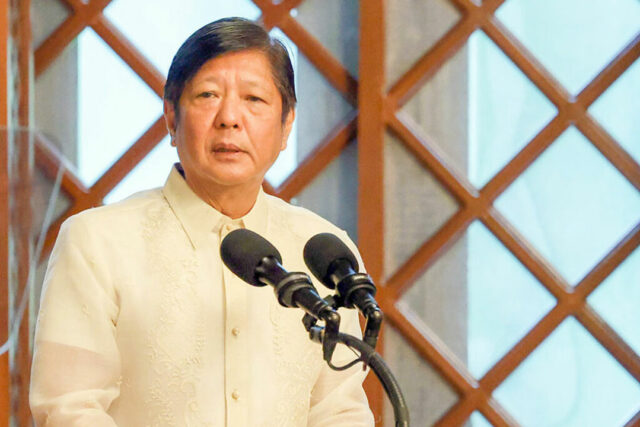
PRESIDENT FERDINAND R. MARCOS, JR. — PHILIPPINE STAR/KRIZ JOHN ROSALES

PHILIPPINE PRESIDENT Ferdinand R. Marcos, Jr. said his administration’s campaign against fraudulent public works projects is needed to sustain economic growth, as he ordered the realignment of P255.5 billion from questionable flood control programs toward social services, healthcare, education and agriculture.

Speaking in a podcast released across his social media platforms on Monday, the President said the discovery of widespread “ghost” infrastructure projects revealed how deeply corruption has penetrated the bureaucracy, warning that unchecked abuse risks derailing the country’s development goals.

“Nothing will happen to the Philippines if we carry on this way,” he said in mixed English and Filipino. “The economy will never grow properly… We will not get anywhere.”

The Philippines, which faces an average of 20 typhoons each year, is probing a multibillion-peso infrastructure scandal after a string of storms and monsoon rains triggered heavy flooding.

The investigation has exposed alleged corruption within the Department of Public Works and Highways (DPWH), prompting Mr. Marcos to suspend flood control allocations in the 2026 budget.

He argued that halting dubious projects would not slow economic momentum, adding that rechanneling funds into classrooms, hospitals, insurance and agriculture would provide stronger, more equitable growth.

Of the total, P26 billion will go to the Department of Education for new classrooms, P29 billion to the Department of Health for hospital projects and medical aid and P60 billion to the Philippine Health Insurance Corp. (PhilHealth) to expand coverage.

Another P39 billion is earmarked for the Department of Agriculture, while the Department of Social Welfare and Development will receive additional support to sustain cash assistance programs.

To avoid a repeat of past abuses, Mr. Marcos plans to reinstate inspection procedures requiring local governments to verify national projects before contractors are paid. He noted that while tools such as blockchain could enhance transparency, the core issue has been weak enforcement of existing rules.

The President said investigations led by the newly formed Independent Commission for Infrastructure (ICI) would be based on evidence rather than politics.

“We must be thorough,” he said. “If we are actually going to punish these people, we have to be very, very clear about what we are doing, and we have to be very, very clear that we go after the guilty ones.”

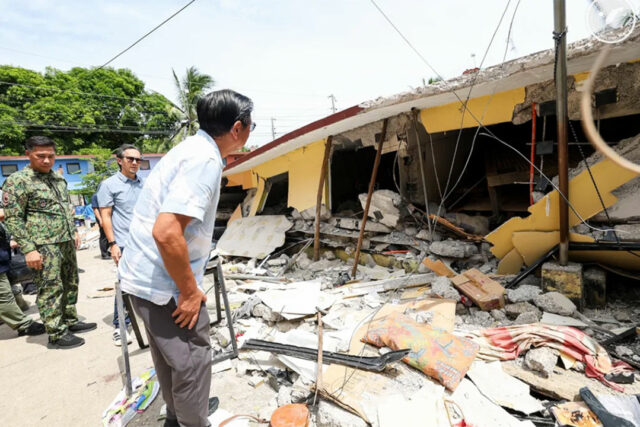
The reallocation comes as the government faces rising reconstruction costs following recent earthquakes and typhoons in Cebu, Samar and Masbate.

Also on Monday, House Deputy Minority Leader and Party-list Rep. Leila M. de Lima said the President’s decision not to include a bill crafting a fact-finding body on the multibillion-peso flood control scandal among his administration’s priority raises questions about the government’s commitment to probing the controversy.

The cancellation of congressional hearings into bogus flood control deals, along with the ICI’s decision to conduct proceedings behind closed doors underscored the need to include the proposed fact-finding bill as a legislative priority, she said in a statement.

“If the President is truly serious about holding those accountable for the biggest corruption scandal in our country’s history, he must certify this proposed bill as urgent,” she added.

The Philippines is facing a widening scandal over billions of pesos worth of flood control projects, and Congress had launched separate investigations amid allegations of kickbacks tied to public works contracts.

Mr. Marcos has formed an independent commission to investigate anomalies in flood control and other infrastructure projects, with authority to recommend criminal, civil and administrative charges.

The Legislative-Executive Development Advisory Council last week endorsed 44 priority bills for streamlined passage, covering measures on governance, social services and energy security.

Ms. De Lima said she and other co-authors of House Bill No. 4453 are hoping for the proposal’s quick approval at the House of Representatives, citing Speaker Faustino “Bojie” Dy III’s openness to the measure.

The House bill proposes a five-member commission to probe corruption in flood control projects, granting it access to state records as well as subpoena and contempt powers to compel compliance.

“I actually brought it up already with the new Speaker,” Ms. De Lima said. “And he’s very open and very receptive about it. He will push for its speedy enactment, and he would even try to convince the President to certify it as urgent.” — Chloe Mari A. Hufana and Kenneth Christiane L. Basilio

Philippine senators buck call for snap elections

PHILIPPINE STAR/PAOLO ROMERO

PHILIPPINE senators on Monday rejected a proposal by Senate Minority Leader Alan Peter S. Cayetano for a snap election, saying it would only worsen political instability as the government faces scrutiny over alleged corruption in infrastructure spending.

Senate President Vicente “Tito” C. Sotto III said the idea has no constitutional basis. “We have no constitutional or legal framework for snap elections. We will be flirting with uncertainty and chaos,” he said in a statement.

Mr. Cayetano on Sunday urged all top officials — from the President down to lawmakers — to resign and face snap elections, arguing that it would restore public trust amid revelations of alleged anomalies in flood control projects.

Mr. Sotto dismissed the suggestion, saying the Senate would instead focus on making the budget process more transparent.

“Everything will be done through the eyes… of the public,” he said. He also called on the newly created Independent Commission on Infrastructure (ICI) to open its hearings to the public and stressed that credible prosecutions were key.

“There should be prosecutions, imprisonment, and make sure that those who are guilty are proven so,” he added.

Senator Panfilo “Ping” M. Lacson also rejected Mr. Cayetano’s proposal, warning that special elections could create more opportunities for corruption.

“A snap election is not the key to restoring public trust in the government — but the certainty of punishment is,” he said in a statement. In many cases, candidates may try to buy votes using taxpayers’ money, he added.

Mr. Lacson urged swift convictions for those involved in anomalous flood control projects, saying accountability would serve as a stronger deterrent than political resets.

The Palace also downplayed the proposal. Press Officer Clarissa A. Castro described calls for a snap election as “wishful thinking.”

She said President Ferdinand R. Marcos, Jr. remains focused on disaster response after a recent earthquake and typhoon.

“Let’s all focus on the needs of the people and not just on personal interests,” she told reporters in a Viber message.

The administration has come under pressure after reports of congressional insertions in this year’s budget and billions of pesos allegedly siphoned off through irregular flood mitigation projects.

Several investigations are under way, including by the Department of Justice, the Senate, and the ICI. — Adrian H. Halili

Marcos puts education at core of development plan with bigger budget push

PRESIDENT Ferdinand R. Marcos, Jr. attended the 2025 National Teachers’ Day celebration at the SM Mall of Asia Arena in Pasay City on Oct. 6. — PHILIPPINE STAR/RYAN BALDEMOR

PRESIDENT Ferdinand R. Marcos, Jr. vowed to make education the centerpiece of his administration’s development plan, ordering tighter budget alignment and faster project rollout as the Philippines struggles with one of the world’s weakest student performance records.

Speaking at the Philippine Development Forum in Mandaluyong City on Monday, the President said the Department of Education (DepEd) would get the biggest proposed allocation in the 2026 national budget, highlighting his goal of ensuring “quality, future-proof education” for every Filipino learner.

“Every classroom built, every teacher trained, every child supported is a seed toward real, lasting progress,” he said.

The President ordered the Department of Budget and Management, Department of Economy, Planning and Development and other key agencies to focus resources on “projects that move the needle for Filipino families,” particularly in education and infrastructure.

He also ordered the Department of Public Works and Highways and DepEd to accelerate the construction and rehabilitation of thousands of classrooms by 2028 and speed up public-private partnership reviews for school facilities.

At a separate event in Pasay City, Mr. Marcos announced a P1,000 incentive for teachers in celebration of World Teachers’ Day and reaffirmed DepEd Order No. 005, which caps teaching loads at six classroom hours daily with overtime pay for extra hours.

He also touted the rollout of the Career Progression System for Public School Teachers and School Leaders Act, designed to ensure “no public school teacher will retire as Teacher I.”

“We believe that education is the best investment that any nation can make in its people,” he said.

The Philippines has consistently ranked near the bottom in global learning benchmarks. In the 2022 Programme for International Student Assessment (PISA), released in December 2023 by the Organization for Economic Cooperation and Development (OECD), the country placed 76th out of 81 economies in reading, mathematics and science.

While the standing was a slight improvement from its last-place finish in 2018, Filipino students’ scores were far below the OECD averages.

The Philippines posted 355 in math, 347 in reading, and 373 in science, compared with OECD averages of 472, 476, and 485, respectively.

The OECD said a 20-point gap reflects about one year of learning for a 15-year-old, underscoring the scale of the country’s education challenge. — Chloe Mari A. Hufana

House minority seeks budget realignment

PCOO

Minority lawmakers in the House of Representatives on Monday called for realignments to the proposed P6.793-trillion spending plan for next year, as the chamber prepares for a week-long process to amend the budget bill ahead of the congressional recess.

The House needs to rechannel funds toward biodiversity and recycling initiatives, while also pushing for hikes on education and social services, House Minority Leader and Party-list Rep. Marcelino C. Libanan said.

“We hope that the observations we have raised be given due consideration and carried out into the period of amendments and then after by the bicameral conference committee,” said Mr. Libanan, who was flanked by minority lawmakers while delivering his turno en contra speech on the House floor.

Congressmen last week opened floor debates on the record spending bill after 37 days of scrutiny at the House appropriations committee, which has rechanneled most of the P255-billion flood control funds to the Education, Health and Social Welfare departments.

“The national budget must always be more than numbers; it must be a reflection of our people’s needs, their struggles and their hopes for a better future,” Mr. Libanan said. “It is about protecting the vulnerable, uplifting workers and farmers, strengthening health and education, defending rights and investing in infrastructure.”

He said the bicameral panel that would finalize the proposed 2026 spending bill must also hold its hearings publicly to improve transparency amid concerns of budgetary insertions, issues that had hounded lawmakers since last year.

The deliberations in the bicameral conference committee must be transparent and open to the public,” he said. “Otherwise, all our efforts in this chamber would have been put to naught if the process is still done in secrecy.”

This year’s budget process underwent major reforms after Nueva Ecija Rep. Mikaela Angela B. Suansing, who heads the House appropriations panel, pushed for greater transparency after last year’s controversy over alleged insertions in the spending plan.

Amendments to the budget bill were previously managed by a closed-door “small committee” of select lawmakers, with the measure swiftly approved on second and third reading on the same day. — Kenneth Christiane L. Basilio

Insurers told to speed up quake claims

PCO

THE Insurance Commission (IC) has ordered insurers, mutual benefit associations, health maintenance organizations and pre-need companies to accelerate the processing of claims from victims of the 6.9-magnitude earthquake in Cebu and Typhoon Opong.

The move came after the Department of Finance ordered agencies under its to extend immediate relief to communities struck by the disasters. Finance Secretary Ralph G. Recto said the rollout of assistance and services needed to be faster to ease the burden on affected families.

In a circular issued on Oct. 2, the IC instructed companies under its jurisdiction to prioritize prompt payment of valid claims, extend deadlines for filing requirements and relax standard procedures that could delay processing.

The regulator also told firms to improve customer service to help policyholders navigate the claim system.

The commission stressed that assessments of damage must be properly documented and recorded. It added that insurers and related entities should coordinate with local government units and national agencies engaged in relief and rehabilitation to ensure that assistance is accessible.

“The commission will closely monitor compliance… and may require periodic reports on the status of disaster-related claims,” it said in a statement. “Further, this commission shall provide immediate action to complaints or issues that may be escalated to it for resolution.”

The directive comes as authorities in Cebu and neighboring provinces continue to assess the scale of destruction from the quake and typhoon, which left thousands displaced and caused heavy damage to homes, businesses and infrastructure. Initial government estimates point to billions of pesos in losses.

The Philippines is among the most disaster-prone countries in the world, with an average of 20 typhoons annually alongside frequent earthquakes and volcanic eruptions.

Mobilizing insurance payouts quickly is critical not only to provide financial relief but also to stabilize the broader economy by supporting household recovery and small businesses. — Aaron Michael C. Sy

AMLC: Frozen assets linked to flood scam now at P4.2B

PHILIPPINE STAR/MIGUEL DE GUZMAN

THE TOTAL VALUE of frozen assets tied to those allegedly behind the corruption in government flood control projects has reached P4.2 billion, the Anti-Money Laundering Council (AMLC) said.

“The estimated value of these is currently at P4.2 billion. This will increase further as we proceed with the financial investigation of the AMLC,” AMLC Executive Director Matthew M. David told DZBB radio in mixed English and Filipino on Monday.

The Court of Appeals has so far issued four freeze orders covering a total of 1,620 bank accounts, 54 insurance policies, 163 motor vehicles, 40 real properties, and 12 e-wallets.

Meanwhile, Mr. David said the implementing rules and regulations of the Anti-Money Laundering Act are sufficient to chase after money laundering schemes linked to anomalous flood control projects.

“Currently, we believe that our law and its implementing rules and regulations are already sufficient,” he said in Filipino.

This came after Senator Francis Pancratius “Kiko” N. Pangilinan raised concerns in a recent Senate hearing after a contractor withdrew P457 million in cash from the Land Bank of the Philippines within two days.

However, Mr. David said the AMLC will tighten its monitoring of banks and other covered persons’ compliance with filing suspicious transaction reports and covered transaction reports.

“On the part of the AMLC, we will strengthen our compliance checking and enforcement actions against erring bank employees (and) erring banks or covered persons,” he said in Filipino.

“Currently, regarding those banks that fail to fulfill their basic responsibilities of conducting due diligence and filing suspicious transaction reports, we are already taking enforcement actions against them. But, we believe that our implementing rules and regulations are already sufficient,” Mr. David added. — Katherine K. Chan

JBC submits Ombudsman shortlist

OFFICE OF THE OMBUDSMAN PHILIPPINES FACEBOOK PAGE

THE Judicial and Bar Council (JBC) on Monday transmitted to Malacañang its shortlist of seven nominees for the next Ombudsman, following a series of public interviews and deliberations.

The nominees include former Commission on Audit Chairperson Michael G. Aguinaldo, Retired Court of Appeals Associate Justice Stephen Cruz, Supreme Court Associate Justice Samuel H. Gaerlan, Deputy Executive Secretary for Legal Affairs Anna Liza G. Logan, Justice Secretary Jesus Crispin C. Remulla, Retired Supreme Court Associate Justice Mario V. Lopez, and Sandiganbayan Associate Justice Michael Frederick de Leon Musngi.

The shortlisted candidates were selected from a total of 17 applicants, interviewed between Aug. 28 and Sept. 2.

The next Ombudsman will succeed former Ombudsman Samuel R. Martires, whose seven-year term ended on July 27.

The JBC letter endorsing the shortlist was signed by members Jose Catral Mendoza, Erlinda Uy, Francis Pangilinan, Gerville Luistro, Nesauro Firme, and Jose Mejia. Mr. Remulla, who sits as an ex officio member of the JBC, did not take part in the council’s deliberations.

“I’ll still be reporting for work here [Department of Justice] for sure tomorrow, because we still have a lot to finish. Let’s see how it goes,” Mr. Remulla told reporters on Monday.

The Office of the Ombudsman is a constitutional body tasked with investigating and prosecuting corruption and misconduct involving public officials and employees. Under the 1987 Constitution, the President must appoint a new Ombudsman from the JBC’s shortlist no later than Oct. 25. — Erika Mae P. Sinaking

More protests urged vs flood scandal

GROUPS gathered at the People Power Monument in Quezon City for the Trillion Peso March on Sunday, amid calls for accountability and action against widespread corruption in the government. — PHILIPPINE STAR/RYAN BALDEMOR

PROGRESSIVE COALITIONS on Monday called for continued protests to sustain public outrage over alleged corruption in infrastructure projects, warning accountability efforts risk being derailed.

“We cannot allow politicians to use public outrage against corruption to pursue their self-serving agenda and promote a distorted and watered-down demand for accountability and justice,” Bagong Alyansang Makabayan (Bayan) said in a statement.

Bayan said the “uncertainty” surrounding the Congress-led inquiries into alleged large-scale infrastructure anomalies shows how “unprincipled compromise, transactional politics, and political accommodation” are undermining the fight against corruption.

It added that the newly formed Malacañang-sponsored Independent Commission for Infrastructure (ICI) “lacks teeth, independence, and transparency,” with its closed-door sessions fueling public distrust.

The alliance announced it is coordinating with various sectors to organize mass actions nationwide in October and November, including university walkouts, community noise barrages, and street protests.

Meanwhile, organizers of the “Trillion Peso March,” which staged a major protest in Metro Manila on Sept. 21 denouncing corruption and marking the 53rd anniversary of Martial Law, are set to hold another nationwide action on Nov. 30, Bonifacio Day, which they vowed will be “bigger, wider, and fiercer” than the Sept. 21 protest.

The Trillion Peso March Movement, officially launched on Wednesday by the Church Leaders Council for National Transformation (CLCNT) and allied groups, aims to sustain public outrage through white-ribbon campaigns, noise barrages, and candlelight vigils calling for “justice, truth, and accountability,” the organizers said. — Erika Mae P. Sinaking

CBCP: Uphold integrity of flood probe

A car was submerged in flood water near the corner of Mother Ignacia and Sgt. Esguerra street in Barangay South Triangle, Quezon City after a heavy downpour, Aug. 30. — PHILIPPINE STAR/MIGUEL DE GUZMAN

CATHOLIC BISHOPS in the country on Monday called on public officials to uphold the integrity of the current investigations into the multi-billion-peso corruption scandal involving flood control projects.

“The Independent Commission on Infrastructure (ICI) was created precisely to restore public trust. It must be empowered to investigate fully and freely, without political interference from any branch of government,” the Catholic Bishops’ Conference of the Philippines (CBCP) said in a statement.

The CBCP also called on the investigative body to mandate transparency in its proceedings, findings, and recommendations, including allowing public access to all documents and witnesses, as well as disclosure of funds tied to anomalous infrastructure projects.

They also asked for the protection of “whistleblowers and technical personnel who come forward in good faith.”

The CBCP also warned that any attempt to change the Senate leadership may only heighten public suspicions of a cover up.

“We strongly oppose any attempt to pre-empt or derail the investigation through backroom deals, leadership takeovers, or selective justice. A nation cannot heal when its moral arteries are clogged by corruption and self-interest,” it added.

In a separate new briefing, Senate President Vicente C. Sotto II said that he has no idea what started the rumors of another Senate coup.

“I don’t see it coming from anywhere. In fact, I spoke with (Senate Minority Leader Alan Peter S. Cayetano), he himself told me he was not talking with anyone,” the Senate chief told reporters.

The government has been facing public outrage over anomalous flood control projects, where about P500 billion has been poured into since 2022. Separate investigations by the two houses of Congress have revealed the involvement of lawmakers and government officials in the multi-billion-peso scheme. — Adrian H. Halili

DMW eyes 13 new offices abroad

THE Department of Migrant Workers (DMW) on Monday said that it is looking to open 13 new migrant worker offices abroad by next year, in a bid to further expand its service to overseas Filipino workers (OFW).

“We are aiming to open 13 by next year, but I will be conservative and say that we could open about seven to eight,” Migrant Workers Secretary Hans Leo J. Cacdac told a Senate budget hearing, without providing specific locations.

He added that the agency is looking to open three overseas offices by the end of 2025, namely in Cambodia, Guam, and Vietnam.

Mr. Cacdac said that the DMW is aiming to place migrant worker offices in countries where the Department of Foreign Affairs (DFA) is present.

“We must cover where the foreign service posts are, meaning, where the DFA is we need to be there too,” he added.

Asked by Senator Erwin T. Tulfo if the offices were enough to support all OFWs working abroad, the DMW chief answered in the affirmative.

“In terms of volume it is enough, we’ve really hit the places where there are a lot of OFWs, mainly Middle East and Asia,” Mr. Cacdac said.

The DMW has about 42 migrant worker offices in 31 countries where there is a large number of OFWs. — Adrian H. Halili