Home Blog Page 4569

P750M in agri rehab funds deemed insufficient

PHILIPPINE STAR/KRIZ JOHN ROSALES/PPA POOL

THE P750 million in available funding to rehabilitate farmland and fisheries after calamities has been called inadequate given the number of potential claimants, industry officials said.

“The P750 million is good only for 30,000 farmers,” Raul Q. Montemayor, national manager of Federation of Free Farmers, said in a Viber message, noting that some 1.5 million are engaged in rice farming alone.

“I think the better approach is for banks to simplify their lending systems and for government agencies like ACPC (the Agricultural Credit Policy Council) to reduce the risks in lending by subsidizing crop insurance, interest rates and loan guarantee premiums,” he said.

Cristina G. Lopez, deputy executive director of the ACPC, said the P750 million referred to represents the year’s funding for the Survival and Recovery Aid (SURE). This year’s budget is up from P500 million previously.

Asked about the potential mobilization of the funds for El Niño, she said: “Right now, our funds are in position. We have partner banks, and they have the funds we placed with them,” she said by phone.

She added that affected farmers and fisherfolk can readily apply for loans of up to P25,000 with partner banks.

These loans charge zero interest and are payable over three years.

The ACPC’s network of lending conduits consists of rural banks, cooperatives, government financial institutions, non-government organizations, and associations.

Jayson H. Cainglet, executive director of Samahang Industriya ng Agrikultura, said that the level of funding will not cover the typical crop damage inflicted by calamities.

Maliit ang P25,000 kung damaged crops (P25,000 is a small amount for crop damage). The cost (of production) per hectare for rice is between P65,000 and P75,000… but the crucial factor in loans is that they should be given out immediately, to allow farmers hit by calamities to start again,” he said.

He added that farmers should be given the full amounts requested in the event of El Niño damage.

The Philippines experienced its worst episode of El Niño between 1997 and 1998, when agricultural output contracted 6.67%, according to the Department of Agriculture.

“During that episode, palay (unmilled rice) production reportedly dropped by around 20%. I don’t have data on actual losses and loan defaults, but it must have been massive,” Mr. Montemayor said.

In 2016, the El Niño lasted 18 months, with the resulting drought affecting more than 400,000 farmers tilling 550,000 hectares of farmland, according to the World Bank.

Ms. Lopez said that the ACPC is working with the Philippine Crop Insurance Corp. (PCIC) to implement the SURE program to ensure quick payouts.

Ms. Lopez added that the program offers another calamity loan with a one-year moratorium on amortization.

President Ferdinand R. Marcos, Jr., who also serves as the Secretary of Agriculture, has said that the PCIC’s coverage is insufficient to insure the country’s 2.2 million hectares of agricultural land.

He said that a new approach needs to be developed via the Land Bank of the Philippines (LANDBANK) featuring credit and insurance products for farmers.

“The President ensured that the LANDBANK will become more active and return to its principal mandate as an agricultural bank,” the Philippine Council for Agriculture and Fisheries said in a statement on Thursday. — Sheldeen Joy Talavera

Zara owner boosts sustainability goals as fast fashion industry feels the heat

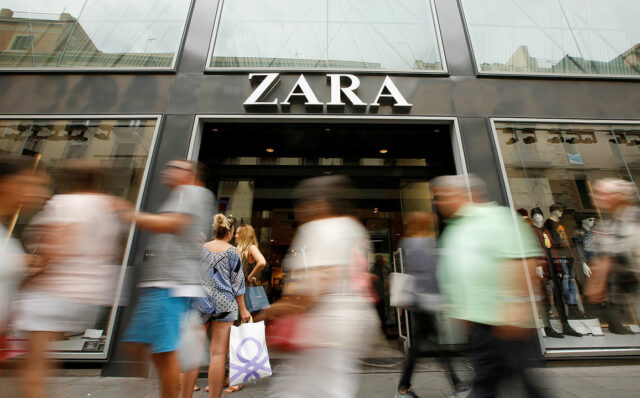
People walk past a Zara store, an Inditex brand, in central Barcelona, Spain, Sept. 20, 2016. — REUTERS/ALBERT GEA

ZARA owner Inditex said on Tuesday it will look to recycling and sustainably farmed crops to reduce its environmental impact by 2030, as fast-fashion retailers face growing pressure to cut waste.

By the end of the decade around 40% of the Spanish group’s fibers will come from conventional recycling and 25% from sustainably farmed crops, Chief Executive Oscar Garcia Maceiras said, revealing new sustainability targets at the annual shareholders’ meeting in A Coruna, northern Spain.

Another 25% will come from “next-generation” materials in which the group is investing, and the remaining 10% from other sustainable sources, the company said.

The new targets come as the European Commission is drawing up regulations to make clothing retailers pay for the waste they produce, arguing that fast-fashion companies “encourage customers to shop impulsively and incentivize purchasing larger quantities of clothes.”

Inditex previously had targets to use more sustainable cotton, linen, polyester, and fibers made from wood pulp, but did not have an overall goal for recycled fibers.

“Moving forward on sustainability is natural for us,” said Inditex Non-Executive Chair, Marta Ortega, in brief comments to investors at the AGM. She called the new targets a “great challenge”.

Inditex has achieved record sales, margins and profits since Ortega, the heir to the family business, took over as chair in April 2022. Its shares are up 38% this year.

Inditex shows no sign of slowing production. The company placed 621,244 tons of garments on the market last year, according to its 2022 annual report, 10% more than in 2021.

“Over the long term, we expect Inditex to transition toward a circular model for fashion, the pace of which will be metered by customer demand and regulation,” said Adam Gofton, portfolio manager at Mackenzie Investments in Toronto, which holds shares in Inditex.

“Inditex’s scale leaves the company well positioned to respond to regulatory pressure (scale means any incremental fixed costs can be spread over larger number of units),” he added. — Reuters

Limited-edition 911 exalts Porsche Design’s 50th year

PHOTO BY KAP MACEDA AGUILA

Only 750 examples of this Porsche will ever be made. One found its way here.

PORSCHE DESIGN is a product design studio founded by Prof. Ferdinand Alexander (also known as “FA” or “Butzi”) Porsche in 1972. His grandfather with whom he shares his name (along with his own father) is the founder of the iconic sportscar brand headquartered in Stuttgart, Germany. In his younger days, FA would spend “countless hours” in the design office and development workshops of his grandfather.

Fast forward to the 1970s, the Porsche family withdraws from the business, which takes on the name Porsche AG. Prof. Ferdinand initially retains a seat on the Supervisory Board, but is later asked to let go to comply with rules. Two years later, he establishes Porsche Design, also in Stuttgart, which moves to Austria (in Zell am Zee) another two years after.

Prof. Porsche’s company is “among the first to commission” projects such as “suitable (gifts) for employees of longstanding service,” but generally, the brand takes on anything its founder would fancy – “pursuits that interest him personally.”

FA passed on in 2012, but his vision is very much alive in the company he created, which Porsche AG itself now commemorates with a limited-edition 911: The Porsche 911 Targa 4 GTS 50 Years Porsche Design Edition.

Limited to 750 examples, the company said that this 911 “has many features and details that pay homage” to FA’s “iconic designs.” He, of course, is also for known producing the drafts the very first 911 was based on. This 911, based on the 911 Targe 4 GTS, gets a “plain black exterior,” (or, as an option, Jet Black Metallic). The choice of black is distinctly Porsche Design, as the first product of the studio was the Chronograph I in the same color. Meanwhile, according to Posche Design Managing Director and Chief Designer at Design Studio FA Porsche in Zell am See Roland Heiler, platinum hues  “elevate” the paintwork as chrome accents would. Platinum in satin finsish appears on the Targa bar, the “Porsche Design” decorative film emblazoned on the doors, and the wheels (which, by the way, measure 20 inches in the front and 21 inches in the rear).

The hub covers feature colored Porsche emblems, while brake calipers are painted in high-gloss black. On the slats of the rear lid grille is a “Porsche Design 50th Anniversary Edition.” badge on the slats of the rear lid grille; the 911 logo is in black.

Aboard this 911, a checkered pattern appears on the Sport-Tex seat center panels in black and Cool Grey, with special leather features in black. These contrast with seams in Slate Grey hue.

Speaking of the seats, these are Adaptive Sports Seats Plus that are electronically adjustable in 18 ways, and have a memory function. Porsche Design 50th Anniversary logos are embossed on the headrests, and also appear on the black, brushed aluminum door entry guards.

Standard on the vehicle is a Sport Chrono Package with the Porsche Design Subsecond clock on the dashboard – with the second hand colored red as with the aforementioned Chronograph I of 1972.

A leather-wrapped GT sports steering wheel has a Slate Grey marking on the 12 o’clock position; the seatbelts are rendered in the same hue.

Meanwhile, a silver dashboard trim has the “911” badge and the limited edition number of the vehicle, along with the FA Porsche signature. The last is also embossed on the lid of the center console storage compartment.

As with the 911 Targa 4 GTS it is based on, the 911 Targa 4 GTS 50 Years Porsche Design Edition is powered by a turbocharged three-liter, flat-six delivering a stout 480ps and 570Nm, mated with an eight-speed Porsche dual clutch transmission (PDK).

It gets the Porsche Active Suspension Management (PASM) and the 911 Turbo’s high-performance brakes. Its standard sports exhaust system gets special GTS tuning, while “special GTS tuning and omission of some of the interior insulation” results in a more “emotive” sound. — Kap Maceda Aguila

Filinvest Land launches Futura Bay project in General Santos

FILINVEST LAND, INC.

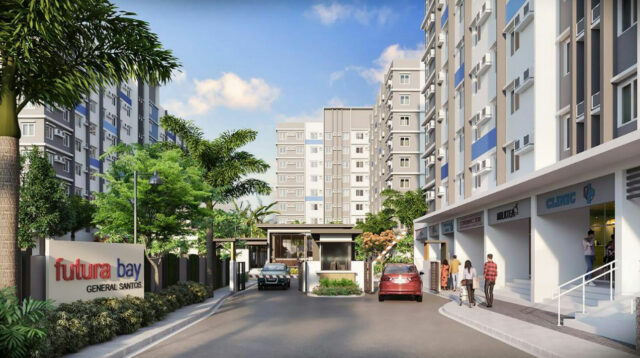
FILINVEST Land, Inc. (FLI) is developing a condominium community in General Santos City through its “smart value” brand Futura by Filinvest, the company said over the weekend.

The community — Futura Bay — offers spacious units and generous open spaces. It allows families to experience a modern and convenient lifestyle in a progressive locale in a city.

“Futura Bay offers spacious units, relaxing amenities and access to natural attractions. It is your healthy city home and future-proofed investment,” said Aven Valderrama, FLI’s first vice-president, mid-rise buildings brand and product head.

The property will have three mid-rise residential towers with nine floors each. Up to 40% of the whole development is allotted to greenery and amenities.

The company said the initial inventory of units in the property had been sold out due to the development’s robust demand and attractive location.

“Futura Bay’s convenient location ensures proximity to educational institutions, hospitals, and leisure establishments in the city,” the company said.

The project will offer units ranging from a studio at 22 square meters (sq.m.) to a one-bedroom unit at 28 sq.m., and a two-bedroom unit at 32 sq.m.

The company added all units are internet-ready and feature unobstructed layouts, “perfect for up-and-coming young professionals and growing young families.”

Amenities include a swimming pool, clubhouse, playground, pet zone, and safety features such as a perimeter fence, CCTV, and 24/7 security.

“Futura by Filinvest continues to break new ground all over the country with the goal of helping more Filipino families achieve their dream of owning a home,” the company said.

FLI said the property is part of its diverse portfolio built from more than 50 years of experience and totaling over 280 projects in 55 key areas nationwide.

The property portfolio includes best-value homes, townships, mixed-use developments, mid-rise and high-rise condominiums, office buildings, shopping centers, and leisure developments.

FLI fell 1.47% or a centavo to P0.67 each share on Friday. — Adrian H. Halili

Competitiveness of coconut exports could improve with IP protections, regulator says

CENTURYPACIFIC.COM.PH

THE Intellectual Property Office of the Philippines (IPOPHL) said coconut exporters could be made more competitive with intellectual property (IP) protections.

“IP protections (safeguard) the innovations and brand value of products and services, making them a potential exclusive source of competitiveness for our exporters of coconut products,” IPOPHL Deputy Director General Ann Claire C. Cabochan said.

She was speaking at a recent training program organized by the International Trade Center and the Department of Trade and Industry.

Such protections, in turn, could spur innovation just as the government is rolling out the Coconut Farmers and Industry Development Plan (CFIDP).

The CFIDP hopes to raise average annual yields to 150 nuts per tree while raising incomes for 2.5 million coconut farmers.

The CFIDP is authorized by Republic Act 11524, or the Coconut Farmers and Industry Fund Act of 2021. The law placed coconut levy assets into a trust fund that will bankroll the rehabilitation and modernization of the industry. — Revin Mikhael D. Ochave

T-bill, bond rates to drop

BW FILE PHOTO

RATES of Treasury bills and bonds on offer this week could track the decline seen at the secondary market amid softer US inflation, which may mean less aggressive tightening from the US Federal Reserve.

The Bureau of the Treasury (BTr) will auction off P15 billion in Treasury bills (T-bills) on Monday or P5 billion each in 91-, 182- and 364-day papers.

On Tuesday, it will offer P30 billion in reissued seven-year Treasury bonds (T-bonds) with a remaining life of six years and two months.

T-bill and T-bond rates may track the decline in secondary market yields on Friday after softer US inflation data supported dovish Fed expectations, Rizal Commercial Banking Corp. Chief Economist Michael L. Ricafort said in a Viber message.

A trader said in an e-mail on Friday the decline in secondary market yields came amid a stronger peso recently and the release of US inflation data.

The trader sees T-bonds fetching yields of 6.2% to 6.3%

At the secondary market on Friday, the 91-, 182-, and 364-day T-bills went down by 12.95 basis points (bps), 10.28 bps, and 10.45 bps week on week to end at 5.9793%, 6.0911%, and 6.1789%, respectively, based on the PHP Bloomberg Valuation (BVAL) Service Reference Rates data published on the Philippine Dealing System’s website.

Meanwhile, the seven-year T-bonds declined by 26.46 bps week on week to yield 6.2714%.

US consumer prices rose in June as headline and core inflation continue to subside, but probably not fast enough to dissuade the Federal Reserve from resuming raising interest rates this month, Reuters reported.

In the 12 months through June, the consumer price index (CPI) advanced 3%, making the smallest year-on-year increase since March 2021 and followed a 4% rise in May.

Meanwhile, the US producer price index (PPI) for final demand edged up by 0.1% in May. This was revised to show the PPI falling 0.4% instead of the previously reported 0.3%.

In the 12 months through June, the PPI gained 0.1%. This was the smallest year-on-year rise since August 2020 and followed a 0.9% rise in May.

The Fed paused its tightening cycle in June after hiking its benchmark rate by a cumulative 500 bps to a range between 5% and 5.25%.

The US central bank will next meet on July 25-26 to review policy.

On the other hand, the peso closed at a fresh three-month high of P54.40 versus the dollar on Friday, strengthening by 11 centavos from Thursday’s P54.51 finish, data from the Bankers Association of the Philippines’ website showed.

This was the peso’s strongest close since its P54.40-per-dollar finish on April 5.

Last week, the BTr raised just P14.417 billion via the T-bills it auctioned off on Monday, a tad short of the P15-billion program, even as total bids reached P27.56 billion.

Broken down, the Treasury made a full P5-billion award of the 91-day T-bills as tenders for the tenor reached P11.128 billion. The average rate of the three-month papers went down by 17.7 bps to 5.973%, with accepted rates ranging from 5.92% to 6.01%.

The government also raised the P5 billion as planned from the 182-day securities as bids reached P8.328 billion. The average rate for the six-month T-bill stood at 6.266%, steady from the previous week, with accepted rates from 6.168% to 6.323%.

Meanwhile, the BTr raised just P4.417 billion via the 364-day debt papers out of the P5 billion on the auction block, even as demand for the tenor reached P8.104 billion. The average rate of the one-year T-bill climbed by 5.3 bps to 6.339%. Accepted yields were from 6.198% to 6.375%.

On the other hand, the reissued seven-year T-bonds to be auctioned off on Tuesday were last offered on March 28, where the government raised P25 billion as planned. The papers were awarded at an average rate of 6.162%.

The BTr wants to raise P180 billion from the domestic market this month, or P60 billion via T-bills and P120 billion via T-bonds.

The government borrows from local and foreign sources to help fund its budget deficit, which is capped at 6.1% of gross domestic product this year. — A.M.C. Sy with Reuters

South African designers give new life to Western fashion waste

SOUTH African aspiring designer Khumo Morojele inspects a second hand clothing imported from the West and sold in bales in markets known as Dunusa, at his studio, in Johannesburg South Africa, July 3, 2023 — Reuters

TWO South African aspiring designers, Khumo Morojele and Klein Muis, spend hours at a second-hand street market in Johannesburg looking for fashion items.

The duo then upcycles what they find into clothing or accessories they say express uniquely African style.

Upcycling refers to reusing an object in a new way without degrading the material it is made from, as opposed to recycling, which generally involves breaking down the original material and making it into something else.

The duo’s current project, “Dunusa: Life of a Garment,” sees them sourcing second-hand clothing often sent to Africa from European countries, which are then deconstructed and reworked into avant-garde and abstract fashion.

Their collection will be exhibited at an international arts program in Berlin on July 14-16, “Forecast Forum,” where young artists can receive mentorship.

“The question that we are trying to answer with the project is really the disparity between the north and the south … how certain parts of Africa become dumping grounds for European countries,” said the 22-year-old Mr. Muis.

The two also collaborate with other African creatives. They are working with a Ghanaian shoemaker on a project to turn old soccer boots into sandals that reflect both African and European love for the sport.

“Within our culture, its always emphasized (that) we don’t waste, because we cherish and we actually connect to the things that we own … we kind of want to reflect that and transcend that in our garments,” said 20-year-old Mr. Morojele. — Reuters

CAMPI, TMA report 27% sales hike in June year on year

PHOTO BY KAP MACEDA AGUILA

THE CHAMBER of Automotive Manufacturers of the Philippines, Inc. (CAMPI) and Truck Manufacturers Association (TMA) have reported a consolidated sales total of 36,311 vehicles in June — an increase of 27% versus the same month last year when 28,601 units were sold.

In a release, CAMPI President Atty. Rommel Gutierrez said he attributed the growth to “improved consumer spending for big-ticket items amid the significant market for new motor vehicle sales, the main growth anchor of the industry.”

The first-half vehicle sales total reached 202,415 — up by 30.7% year on year (YoY) (154,874 in 2022).

Leading the charge in June is Toyota Motor Philippines (TMP) with 16,381 units sold. It cornered 45.1% of total sales for the month, with its figure dipping by 8.3% from 17,866 in May. Still, YTD figures for TMP grows by 16.8% from 80,090 in 2022 to 93,575 this year.

In second place is Mitsubishi Motors Philippines Corp. (MMPC) with 6,801 units sold in June, down 0.3% versus the 6,822 units sold in May. Versus June 2022, sales are up a hefty 50.3% from 4,525 vehicles. The company accounted for 18.7% of sales for the month. YTD, MMPC has sold 37,001 units — up by 78.5% versus the same period in 2022, when it sold 20,734 units.

Ford Motor Company Philippines sold 2,730 vehicles — minus 10.2% versus May when it sold 3,039 units but growing by 36.1% against the June 2022 number (2,006). It keeps third place overall with 13,838 units sold YTD (up 54.5% compared to the same period last year when it sold 8,956 vehicles), and cornered 6.8% of the market for the same period.

In fourth is Nissan Philippines (NPI), selling 2,388 units last June and accounting for 6.6% of total sales for the month. Versus the June 2022 figure (1,617 units), NPI’s sales total grew by 47.7%; and slid up by 3.9% (from 2,298) compared to the May figure. YTD, the company has sold 13,196 units — up by 18.9% versus the first six months of last year when it sold 11,188 vehicles.

Completing the top five is Honda Cars Philippines, Inc. (HCPI) with 1,328 units sold last month. HCPI accounted for 3.7% of sales for the month, and the figure represents a 7.7% dip from May 2023 sales (1,439 units) and an increase of 1.0% when compared to the same month last year (1,315). YTD figure is 8,668 units — plus 17.5% versus last year’s 7,374 units sold over the same period.

“Demand for motor vehicles that respond to the needs of the customers will yield strong gains for the industry,” Atty. Gutierrez predicted, and continued that the strong performance “sends a strong signal of sustained optimism for the industry as we welcome the second half of the year.”

He concluded, “Maintaining this level of growth on a monthly basis, the industry has indeed high hopes of achieving or even exceeding its sales target for this year.” — Kap Maceda Aguila

Health taxes will help solve hunger and malnutrition

JCOMP-FREEPIK

“Not one more hungry Filipino.”

This was how President Ferdinand “Bongbong” R. Marcos, Jr. summarized the aspirational end result of his economic agenda a few months into his term.

Addressing the issue of hunger not only reflects our country’s long-term collective vision, it is also an ongoing and pressing concern.

Public sentiment affirms this. The Social Weather Stations’ (SWS) most recent poll estimated that nearly a tenth of Filipino families (or 2.7 million households) experienced involuntary hunger in the first quarter. This may represent an improving trend over the previous months, but the pre-COVID level of hunger was lower.

During the World Economic Forum annual meeting in January 2023, the president offered some ideas to address hunger. The first two proposals are to boost productivity in agriculture and fisheries and to invest in facilities, logistics and systems that bring nutritious food to the people. These strategic solutions will help address the country’s food supply issues, but they require significant reforms and large investments in the agricultural sector.

The president’s third proposal — promoting a nutritious lifestyle and prompting active and health-seeking behaviors — can result in immediate tangible outcomes.  Most notably, the president broadens the framing of the solution for hunger to include nutrition and health programs. This will need significant funding.

In other words, the combination of health and fiscal policies (taxes and spending) will complement agricultural policy. In this way, we address our food supply and food security problems and the health and nutrition of the people.

To address hunger, we should spend big on social programs.

Eliminating hunger and malnutrition goes hand in hand with eradicating poverty. Reducing hunger and malnutrition contributes to reducing poverty.  But at the same time, increasing the income of the poor contributes to improving their well-being and lifting them from the poverty threshold. After all, how can Filipinos eat a nutritious diet, or much less get enough to eat in the first place if they cannot earn a decent income to spend on food?

One million households are living below subsistence level (income is lacking to meet the basic food requirements), according to the Philippine Statistics Authority’s (PSA) most recent estimates. If we consider the poverty threshold instead, there are about 3.5 million households living below poverty.

The prevalence of food insecurity increases along with poverty. Data from the 2021 National Nutrition Survey showed that the poorest quintile of Filipino households (50.1% food insecure) are over four times more likely than the richest quintile (12.2% food insecure) to be moderately to severely food insecure. Overall, about a third of Filipinos are considered moderately to severely food insecure.

Considering this, President Marcos has given the Department of Social Welfare and Development (DSWD) the go-signal to pilot test and implement the Food Stamp Program. Once fully implemented, it is meant to cover one million food-poor families.

We maintain, however, that the food stamp program’s target of beneficiaries is not expansive and inclusive enough. The pandemic has taught us that ayuda is important not only for the food-poor but also for all those who are poor and even the near-poor (i.e., for those who are just above the poverty borderline).
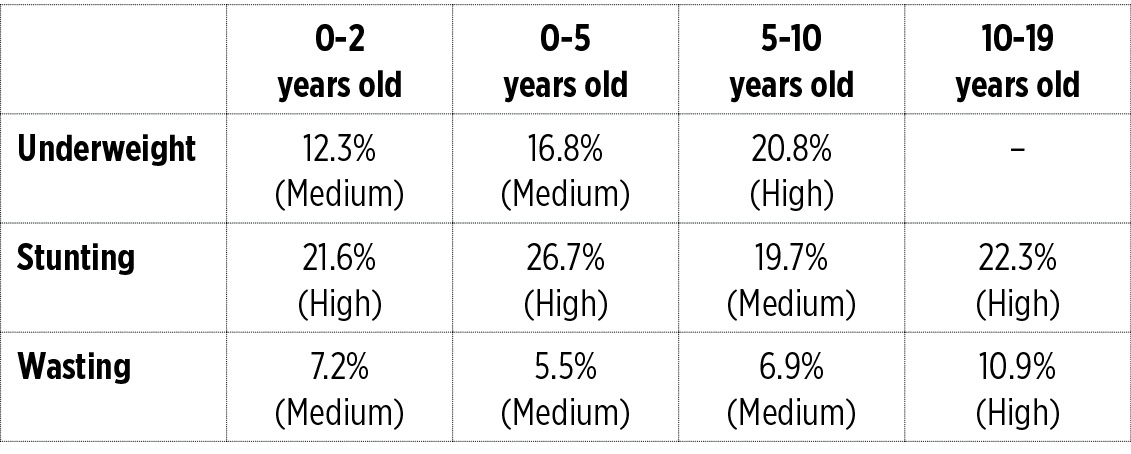
Accordingly, we must go beyond hunger and address malnutrition as well. Malnutrition includes undernutrition (wasting, stunting, underweight), inadequate vitamins or minerals, overweight and obesity, and often results in diet-related noncommunicable diseases. Stunting in children, which is defined as having a lower-than-median (by two standard deviations) height for one’s age, is the result of chronic or recurrent undernutrition.

The results of the 2021 National Nutrition Survey showed that more than a fourth of infants, young and pre-school age children in the country are stunted. Meanwhile, about a fifth of children aged five to 10 and adolescents aged 10 to 19 are stunted.

Former NEDA Director-General Ciel Habito has pointed out that stunting is this country’s “silent pandemic.” Stunting reflects the lack of proper feeding and nutrition early in life. Chronic malnutrition in early childhood causes irreversible setbacks for mental and cognitive development. On a wider scale, this causes poor educational outcomes, which leads to lower productivity and therefore lower incomes.

Thus, the food stamp program should not only include transfers to address hunger; it should also be designed and implemented to ensure that pregnant women, mothers, infants and pre-school children are specifically targeted. Meeting a minimum caloric intake is not enough; mothers and children should also receive the adequate and appropriate balance of macronutrients.

Under the DSWD’s proposal for the program, the one million food-poor households will receive P3,000 a month. The modality of this transfer will be through electronic benefit transfer cards loaded with food credits that can be used to buy select food items from DSWD-registered or accredited retailers.

An initial estimate puts the cost at more than P36 billion yearly. To repeat, covering just the food-poor households will be insufficient. At the very minimum, the program ought to cover all the food insecure households among the poor. This means that the program should cover not fewer than 1.8 million households. An additional P28.8 billion worth of “food stamps” ought to be allocated.

Where to get the new funding thus becomes a central question.  This is where taxation becomes relevant.

Health taxes are highly effective in raising revenues for the program. Further, taxing unhealthy consumption leads to better health outcomes. To illustrate, because of the importance of Universal Health Care, alcohol and tobacco taxes were raised and earmarked to fund it. Sin taxes also had the benefit of reducing the burden of several noncommunicable diseases associated with alcohol and tobacco consumption.

Likewise, if we truly believe that ending hunger and malnutrition among poor families, mothers and children is a worthwhile endeavor, we should mobilize the resources necessary to make this program a reality.

The proposal to increase taxes on sugary beverages and introduce excise taxes on unhealthy foods has been floated. The range of health taxes covering alcohol, tobacco, sugary beverages and junk food becomes necessary in light of the tight fiscal space to fund the health and nutrition policy.

The case for alcohol and tobacco taxation is solid. They are bad for individual and public health. Alcohol and tobacco taxation should therefore be high on the tax-reform agenda to finance the government’s social program.

The case for sugary beverages and salty food is more complex. Yes, they are likewise bad for individual and public health. But without accessible and affordable alternatives for nutritious food, higher taxes on sugary beverages and salty food will hurt the poor who must find cheap substitutes for their caloric or energy requirements.

To overcome this problem, the government should broaden the number of poor beneficiaries of the food stamp program to neutralize the increase in prices arising from the proposed taxation of sugary beverages and salty food.  Government policymakers, too, should design the tax policy in a way that will encourage manufacturers of sugary beverages and junk food to reformulate their products by reducing the sugar or sodium content. Concretely, the tax will not be based on weight or volume but on a certain level of sugar or sodium threshold. Thus, a product that is below the sugar or sodium threshold will not be subject to the higher tax.

So, while the proposed sweetened beverage and junk food taxes have been dismissed by some for being anti-poor, the urgency of an ambitious pro-poor food stamp program warrants more thoughtful reconsideration for such taxes. This will entail a careful design and calibration of the tax rates to satisfy the earmarking for nutrition and health, the reduction of consumption of unhealthy products and the reformulation of such unhealthy products.

We take guidance from the vision that the country has set out to achieve: “Not one more hungry or malnourished Filipino.”


AJ Montesa heads the tax policy team of Action for Economic Reforms.

ESG metrics seen to allow comparability for mobile networks

GLOBE TELECOM, Inc. expects the incorporation of environmental, social, and governance (ESG) metrics to help facilitate comparability of sustainability performance across the industry.

The metrics called ESG Metrics for Mobile is an ESG reporting framework for the mobile sector developed with EY, Yale Center for Business and the Environment, and a working group of 20 mobile operators. It was recently launched by GSMA, an organization of mobile networks.

Maria Yolanda C. Crisanto, Globe’s chief sustainability and corporate communications officer, said the company supports GSMA in its call for the adoption of the framework as it will “facilitate the monitoring and comparability of ESG performance across the industry.”

“This reporting framework, the first of its kind in the mobile sector, demonstrates our commitment to fostering sustainability and responsible business practices,” she said.

The metrics encompass 10 industry key performance indicators (KPIs), which enable mobile operators to measure and enhance their ESG performance in areas such as environment, digital inclusion, digital integrity, and supply chain.

“By utilizing common industry KPIs that address critical aspects of our operations, we aim to increase consistency and transparency while contributing to the overall betterment of the mobile industry,” Ms. Crisanto said.

GSMA Chief Regulatory Officer John Giusti said that ESG performance is becoming a key consideration among investors, customers and employees.

“With the GSMA ESG Metrics for Mobile Framework, the mobile sector is striving to be at the forefront of meaningful ESG reporting,” he said.

“We’re therefore delighted with Globe’s leadership in joining other leading operators in this field, driving positive change by embedding these new metrics at the heart of their ESG strategy,” he added. 

GSMA said the KPI covered by the metrics will help the operators to have more efficient data collection and reporting, enhanced strategic investment, and build recognition and trust with clients and customers.

Globe is the first Philippine member of GSMA to pilot test the GSMA Metrics for Mobile, it said in a press release. — Justine Irish D. Tabile

Breadbasket Brazil to stock up on food, citing inflation concerns

REUTERS

SAO PAULO — Top food producer Brazil will start stocking up on food staples, a government agency said, as the administration of President Luiz Inacio Lula da Silva makes good on last year’s campaign trail promise to curb food inflation.

In a bid to increase public storage capacity, food supply and statistics agency Conab announced a 34% rise in fees it will pay for government-accredited warehouse operators, the first increase in six years.

The policy marks a sharp reversal from the previous government’s stance, which never deemed stocking up on food as an option.

“We will go back to making public stocks, which is essential to fight food inflation,” Conab President Edegar Pretto said in a statement. “For that, we first need to expand Conab’s accredited network.”

Conab said details of the new policy, including budget allocation, food purchase mechanisms and the staples involved will be announced by the agriculture ministry at a later date.

Mr. Pretto said Conab’s own warehouses, as well as those of accredited third parties, will be involved in the effort.

The new policy comes at time when many countries worry about the impact on consumers of high food costs.

In France, the government secured a pledge from 75 food companies to cut prices on hundreds of products. In the UK, the government ditched plans to ask supermarkets to impose a voluntary price cap on basic goods after a backlash from retailers.

In general, food stockpiling is more common in nations where food production is insufficient.

Brazil is a large producer and exporter of soybeans, corn, coffee, sugar, chicken and beef but has a chronic storage deficit.

Brazil’s summer grain production in 2023 outgrew its storage capacity for the time in 20 years.

Historically, the government buys grains such as corn when prices reach a certain minimum threshold. — Reuters

Financial system’s resources rise as of May

BW FILE PHOTO

THE TOTAL resources of the country’s financial system continued to rise at end-May, preliminary data from the Bangko Sentral ng Pilipinas (BSP) showed.

Resources of banks and nonbank financial institutions increased by 7.8% to P28.528 trillion in the first five months of the year from P26.463 trillion in the same period in 2022.

According to data from the central bank, banking resources rose by 9.1% to P23.495 trillion at end-May from P21.527 trillion a year prior. Banks include universal and commercial banks, thrift banks, as well as rural and cooperative banks.

Broken down, universal and commercial banks held P22.078 trillion of total banking resources, 9.2% higher than the P20.214 trillion logged in the comparable year-ago period.

Resources of thrift banks hit P1.008 trillion, inching up by 5% from P954 billion a year ago.

Meanwhile, total resources of rural and cooperative banks climbed by 13.6% to P408 billion from just P359 billion in 2022.

On the other hand, nonbanks’ resources grew by 1.9% to P5.034 trillion from P4.936 trillion as of end-May 2022.

Nonbank financial institutions include investment houses, finance companies, security dealers, pawnshops and lending companies. 

Institutions such as nonstock savings and loan associations, credit card companies, private insurance firms, the Social Security System and the Government Service Insurance System are also considered nonbanks. — K.B. Ta-asan