Home Blog Page 455

Bill seeks reduction of remittance fees

A BILL seeking to reduce remittance fees by 50% has been filed in the Senate, a move aimed at protecting overseas Filipino Workers (OFWs) from excessive charges.

Senate Bill No. 1074, filed by Senator Jose “Jinggoy” P. Ejercito Estrada, seeks to impose a 50% cut on remittance tax, while allowing banks and financial intermediaries to claim the discounts as tax deductions.

“This is a win-win situation for our OFWs and their families, as well as for banks and remittance centers,” he said in a statement.

The proposed measure also requires banks and financial intermediaries to clearly post peso-equivalent exchange rates in remittance centers to prevent hidden charges.

“The Philippine peso equivalent of the amount as remitted shall be the same amount that shall be received by the beneficiary of the remittance,” the bill states.

It also prohibits the misappropriation of funds, unauthorized deductions, excessive fees, and any increase in remittance charges without prior consultation with concerned government agencies.

The proposed measure imposes a fine ranging from P50,000 to P750,000, up to six years of imprisonment, or other additional sanctions under existing banking laws.

Institutions governed by the Bangko Sentral ng Pilipinas that deny receipt of remittances may likewise be given fines, penalties, and sanctions.

In cases where the violation is committed by a corporation or partnership, the liability will be imposed on the president, managing director or partner, general

The bill also seeks the creation of a free mandatory financial literacy program for OFWs and their families. — Adrian H. Halili

Eala-Jovic duo eyes semis berth vs tough Maleckova-Zarazua pair

FACEBOOK.COM/ASBCLASSIC

Eala faces Croatian Petra Marcinko in singles

A quick final four ticket in her first hurrah this season is up for the taking for Alexandra “Alex” Eala.

Ms. Eala and American partner Iva Jovic shoot for a semifinal spot against the seasoned duo of Czechia’s Jesika Maleckova and Mexico’s Renata Zarazua in the 2026 ASB Classic doubles on Thursday at the ASB Tennis Centre in Auckland, New Zealand.

The quarterfinal action sizzles at 6:30 a.m. (Manila time) as the young guns eye another stunner in their first team-up ever after claiming the scalp of WTA No. 13 Elina Svitolina of Ukraine and seven-time major champion Venus Williams of the United States.

It will be a juggling act for Ms. Eala on Thursday, vying in the Round of 16 of the singles play at a still-to-be-determined game time. Ms. Eala essayed a 4-6, 6-4, 6-4 comeback win in the Round of 32 against Paris Olympics silver medalist Donna Vekic, No. 69, to arrange a duel against another Croatian Petra Marcinko, WTA No. 82, for a seat in the quarterfinals.

Ms. Eala, 20, and Ms. Jovic, 18, scored a 7-6 (9-7), 6-1 romp of the 31-year-old Ms. Svitolina and 45-year-old Ms. Williams in the opening round of the WTA250-level tourney serving as their warm-up for the Australian Open next week.

The 53rd ranked Mses. Eala and Jovic, No. 35, now face a more grizzled and more decorated tandem with a combined 47 doubles titles under their belt.

The 31-year-old Ms. Maleckova, ranked No. 72 in the WTA doubles, has won 29 titles in both the ITF and WTA circuits while the 28-year-old Ms. Zarazua, No. 84, has 18 crowns to loom as the heavy favorites. Mses. Eala and Jovic, albeit ranked higher in the singles, are only at No. 163 and No. 216 in the doubles division.

The Czech-Mexican tandem proved their mettle in Round 1 by eliminating the top-seeded tandem of Erin Routliffe and Asia Muhammad of the United States, 3-6, 6-2, 12-10.

Waiting in the semifinals is the third-seeded Chinese pair of Yifan Xu, No. 40, and Zhaoxuan Yang, No. 44, after their 6-4, 1-6, 10-5 win over Isabelle Haverlag of the Netherlands and Maia Lumsden of Great Britain. — John Bryan Ulanday

PSE index down on profit taking after 3-day climb

REUTERS

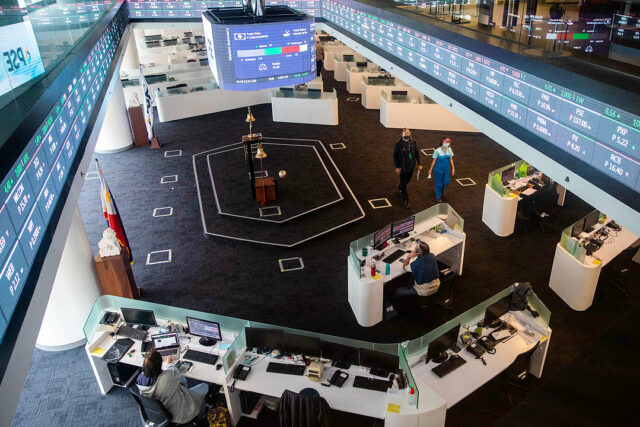
THE MAIN INDEX ended lower on Wednesday as investors pocketed their gains from the market’s three-day climb that saw the stock benchmark hit multi-month highs.

The bellwether Philippine Stock Exchange index (PSEi) went down by 0.4% or 25.82 points to end at 6,292.09. Meanwhile, the broader all shares index increased by 0.16% or 5.84 points to 3,594.19.

“Philippine equities took a breather following a three-day rally as the market took profits despite the friendly unemployment rate print,” AP Securities, Inc. said in a market note.

The Philippines’ unemployment rate rose to 4.4% in November from 3.2% a year earlier, according to the preliminary results of the labor force survey released on Wednesday. However, this was lower than 5% in October.

This translated to about 2.25 million jobless Filipinos, compared with 1.66 million in November 2024 and 2.54 million in the previous month.

“The PSEi pressed the brakes, slipping into the red, marking its first decline for the week as profit taking set in across sectors following recent gains,” Regina Capital Development Corp. Head of Sales Luis A. Limlingan said in a Viber message.

“In contrast, Wall Street accelerated higher on Tuesday, with major indices climbing to fresh record highs as investors largely looked past recent US-Venezuela tensions, which were seen to have a limited impact on oil markets,” he said.

Major stock indexes including the Dow Jones Industrial Average and European shares rose to record highs on Tuesday, while the dollar edged higher as investors focused on key market data this week that could help gauge the outlook for US Federal Reserve policy, Reuters reported.

On Wall Street, chip stocks rose on renewed artificial intelligence optimism.

The Dow Jones Industrial Average rose 484.90 points or 0.99% to 49,462.08; the S&P 500 rose 42.77 points or 0.62% to 6,944.82; and the Nasdaq Composite rose 151.35 points or 0.65% to 23,547.17.

MSCI’s gauge of stocks across the globe was last up 7.13 points or 0.69% at 1,035.15 and reached a record high during the session.

Back home, four of six sectoral indices closed in the red. Services sank by 1.29% or 32.09 points to 2,455.90; holding firms dropped by 0.34% or 17.31 points to 4,957.39; financials fell by 0.32% or 7.00 points to 2,144.35; and property went down by 0.11% or 2.59 points to 2,310.06.

Meanwhile, mining and oil advanced by 0.8% or 130.96 points to 16,389.92, and industrials climbed by 0.62% or 56.77 points to 9,117.37.

Decliners outnumbered advancers, 107 to 101, while 68 names closed unchanged.

Value turnover went down to P7.29 billion on Wednesday with 772.34 million shares traded from the P8.31 billion with 1.34 billion issues dealt on Tuesday.

Net foreign buying dropped to P201.88 million from P1.25 billion. — Alexandria Grace C. Magno with Reuters

Global coconut oil, banana prices up in 2025

PHILSTAR FILE PHOTO

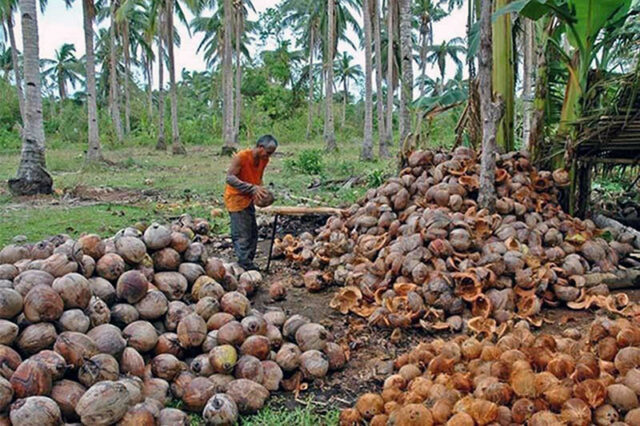
GLOBAL PRICES of coconut oil and bananas, which constitute a significant fraction of the Philippines’ agricultural exports, increased in 2025, according to the World Bank.

In a report dated Jan. 6, the World Bank said the average global price of coconut oil in 2025 rose 63.27% to $2,480 per metric ton (MT). Last year’s average price of coconut oil is also more than double the $1,075 per MT rec-orded in 2023.

Coconut oil is the Philippines’ top agricultural export commodity, accounting for 3.38% or $2.61 billion of total exports in the first 11 months of 2025.

The price of bananas in 2025 increased 2.8% in 2025 to $1,100 per MT. Last year’s average price is 0.92% higher than the $1,090 per MT reported in 2023.

Bananas are the Philippines’ second-biggest agricultural export, accounting for 1.87% or $1.45 billion of total exports in the first 11 months.

Meanwhile, prices of agricultural products commonly imported by the Philippines, such as rice and soybean meal, dipped in 2025.

The global price of Vietnam’s 5% broken rice, the grade that accounts for most Philippine imports, fell 31.84% to $380 per MT in 2025. Last year’s average price of the staple grain is also 27.44% lower than the $523.7 per MT recorded in 2023.

The global price of soybean meal, a key ingredient in animal feed, fell 17.19% to $366 per MT in 2025. Last year’s average price is also 32.35% lower than the $541 per MT recorded in 2023.

On the other hand, coffee and cocoa prices recorded significant increases last year.

Arabica coffee prices rose 50.71% to $8,470 per MT in 2025. Last year’s price is also 86.56% higher than the $4,540 per MT reported in 2023.

The price of robusta coffee increased 10.2% to $4,860 per MT in 2025. Last year’s price is also 84.79% higher than the $2,630 per MT recorded in 2023.

Cocoa prices rose 6.41% to $7,800 per MT in 2025 from $7,330 in 2024. Last year’s price is more than double that of the $3,280 per MT recorded in 2023.

The global prices of the Philippines’ main metallic mineral exports were mixed last year.

Nickel prices continued to slide, falling 9.83% to $15,162 per MT in 2025. Last year’s price is also 29.55% lower than the $21,521 per MT average in 2023.

On the other hand, the price of gold increased 44.14% to $3,442 per troy ounce in 2025. Last year’s price is 77.15% higher than $1,943 per troy ounce in 2023.

The price of copper rose 8.81% to $9,947 per MT in 2025. Last year’s price is also 17.16% higher than the $8,490 per MT average in 2023. — Vonn Andrei E. Villamiel

2025 calamity-fund releases top P21 billion

DEBRIS from damage caused by Typhoon Kalmaegi, locally called Tino, covers the ground in Talisay, Cebu. — REUTERS/ELOISA LOPEZ

THE Department of Budget and Management (DBM) said it released more than P21 billion in calamity funds in 2025 to support rehabilitation projects after multiple typhoons hit the country.

Citing status update for the National Disaster Risk Reduction and Management Fund, the DBM reported that P21.68 billion in calamity funds had been released by the end of December.

Still to be disbursed are P322 million from the People’s Survival Fund.

At the end of November, P20.04 billion had been distributed to government agencies and P500 million to government-owned and -controlled corporations.

The Department of Social Welfare and Development received P11.21 billion, followed by the Department of Public Works and Highways, with P5.76 billion, and the Department of Agriculture P1 billion.

In addition, P731.16 million was released to the Department of Science and Technology, P603.20 million to the Department of National Defense, and P150 million to the Department of the Interior and Local Government.

Aside from the quick response fund top-ups for various agencies, most of the approved projects involved allocations for the repair and rehabilitation of facilities damaged by past typhoons, including Egay, Carina, and the severe tropical storm Kristine.

The Philippines was the world’s most disaster-prone nation for a 21st straight year, according to the 2025 WorldRiskIndex. It is visited by about 20 tropical storms each year. — Aubrey Rose A. Inosante

Ports regulator forecasts stronger cargo, passenger volumes in 2026

ICTSI.COM

THE Philippine Ports Authority (PPA) said it is projecting stronger growth in cargo and passenger traffic this year, driven by investments in port efficiency.

The forecast reflects “continued investments in port modernization, operational efficiency, and service excellence,” PPA General Manager Jay Daniel R. Santiago told BusinessWorld.

For 2026, the PPA said it is expecting cargo volume to come in 4.03% stronger at 320.94 million metric tons, driven mainly by higher foreign cargo shipments.

The PPA said foreign cargo volume is expected to rise 4.28% to 202.73 million metric tons in 2025. Domestic cargo volume is seen rising 3.61% to 118.22 million metric tons.

“We remain focused on delivering measurable results that translate to safer, more reliable, and more accessible port services,” Mr. Santiago said.

Container throughput is forecast to increase 3.94% to 8.88 million twenty-foot equivalent units.

For this year, passenger traffic is expected to grow 5.78% to 87.26 million, the PPA said, after logging 82.49 million passengers in the first 11 months of 2025.

PPA logged a record of 6.28 million passengers during the Christmas and New Year travel season, the highest volume since its establishment in 1974. The surge was logged between Dec. 15, 2025 and Jan. 5, 2026.

About 12 ports are set to be privatized in 2026, the PPA added.

In 2024, the PPA said it earmarked up to P16 billion for infrastructure projects until 2028. The funds will go towards enhancing port efficiency and capacity, including 14 big-ticket projects targeted for completion within the period. — Ashley Erika O. Jose

Spot power prices rise in Dec. as supply margins thin in Visayas, Mindanao

AVERAGE power rates on the Wholesale Electricity Spot Market (WESM) rose in December due to thinning supply margins in the Visayas and Mindanao, according to the Independent Electricity Market Operator of the Philippines (IEMOP).

IEMOP reported that power prices system-wide rose 10.1% month on month to P4.38 per kilowatt-hour (kWh) in December.

Available supply increased 1.2% to 20,233 megawatts (MW). Demand dipped 0.5% to 13,440 MW.

Spot prices on Luzon declined 15.4% month on month to P2.98 per kWh.

Available supply increased 1.2% from a month earlier to 20,233 MW, outpacing demand, which declined 0.5% to 13,440 MW.

Supply margins for the Visayas and Mindanao narrow by 136 MW and 245 MW, respectively, according to Arjon B. Valencia, manager for corporate planning and communications at IEMOP.

WESM prices in the Visayas rose 36.6% month on month to P7.22 per kWh, with supply increasing 4.4% to 2,524 MW and demand growing 10.1% to 1,978 MW.

Mindanao spot prices rose 36.3% to average P7.82 per kWh.

Available supply dipped 7% to 3,287 MW, while demand rose 1.2% to 2,137 MW.

“These supply and demand conditions resulted in tighter margins and price spikes,” Mr. Valencia said.

The secondary price cap was applied to mitigate the sustained high prices in both regions, he said.

IEMOP operates the WESM, where energy companies can purchase power when their long-term contracted power supply is insufficient for customer needs.

Last year, WESM prices fell to multi-year lows, with the effective price averaging P4.32 per kWh in the first 11 months. — Sheldeen Joy Talavera

Aurora economic zone says airport funding could help attract commercial air services

PHILSTAR FILE PHOTO

THE Aurora Pacific Economic Zone and Freeport Authority (APECO) said its 2026 budget contains funds that could go towards upgrading its airport and ultimately help attract commercial air services.

“The (budget approved by the) Department of Budget and Management was only P262 million,” APECO President Gil Taway IV told reporters late Tuesday, adding that requests for additional funding during budget deliberations brought its 2026 General Appropriations Act (GAA) allocation to P381.54 million, up 49% from its 2025 GAA budget.

“It looks like we’ll get something for the airport. For the airport project, currently, we can currently welcome chartered flights under a one-time permit,” he said.

He added that the increased funding will also help complete infrastructure projects like the Corporate Campus development, the APECO Legacy Villas, and a central expressway.

“The moment we complete the corrective measures (for the airport) we will be issued a permit to operate. The Civil Aviation Authority of the Philippines (CAAP) said that if we can do the terminal building … we can transition from chartered flights to commercial operations,” he added.

The corrective measures include the delivery of fire trucks, apron markings, and fencing. The terminal is expected to cost around P31 million, according to a study in 2022 which had evaluated the requirements to accommodate a 40-60 seat turboprop aircraft.

“We also hope to save funding for an air traffic control tower,” he said.

The tower is estimated to cost P39 million, which APECO hopes to finance from savings last year.

“According to our engineering team, if we can bid out the terminal building in February, we can complete it by August to September,” he said.

Meanwhile, he said that APECO’s proposed port is not yet included in the 2026 budget, though the agency’s South Korean partner, Yooshin Engineering Corp. could end up raising funds for the project.

“They will be back here in January … They have had preliminary talks with potential funders (including) Korean banks and private equity funds,” he said.

Mr. Taway said APECO is seeking to finalize the terms for the project this year and hopes to start construction as early as the last quarter of 2027.

“The plan is (to make sure) it can accommodate the Panamax ships,” he said, referring to vessels certified to transit the Panama Canal. — Justine Irish D. Tabile

Veto yanks ‘critical lifeline’ from auto industry, parts makers say

SWS.CO.JP

By Justine Irish D. Tabile, Reporter

THE removal from the budget of fiscal support for the Comprehensive Automotive Resurgence Strategy (CARS) and the Revitalizing the Automotive Industry for Competitiveness Enhancement (RACE) programs removed a “critical lifeline” to an already-struggling industry, auto parts makers said.

In a statement on Wednesday, Philippine Parts Makers Association (PPMA) President Ferdinand A. Raquelsantos said: “The CARS and RACE programs were designed to rebuild vehicle assembly volumes, strengthen local parts manufacturing, and allow the Philippines to regain competitiveness within the ASEAN automotive landscape… For PPMA, these programs are not merely support mechanisms but critical lifelines,” he added.

Items from the budget vetoed by President Ferdinand R. Marcos, Jr. included unprogrammed appropriations worth P92.5 billion, including fiscal support for the CARS program worth P4.32 billion.

This funding was meant to pay off the government’s obligations under the CARS program, including a still-being-evaluated application from one of the participants.

The President also vetoed P250,000 in fiscal support for the RACE program.

“The Philippine auto parts industry needs CARS and RACE to survive … Without sustained and predictable government support, local manufacturers will continue to lose ground, investments will slow, and skilled jobs will disap-pear,” Mr. Raquelsantos said.

The PPMA expects the gap with regional rivals to widen as other countries accelerate investment in new technology and supply chains.

“The reality is we are already lagging behind the Association of Southeast Asian Nations,” Mr. Raquelsantos said.

“Automotive manufacturing has always been a cornerstone industry in Southeast Asia. If we allow our ecosystem to weaken further, it will be extremely difficult to recover,” he added.

In response to the veto, the PPMA called for constructive dialogue with the members of Congress to better explain how automotive industry programs work and why they matter.

“We want to engage, not confront … The auto industry is ready to sit down with our legislators to educate them on how CARS and RACE drive jobs, investments, and long-term industrial resilience. This is about building a com-petitive manufacturing base for the country,” he said.

“Time is critical. Without decisive action, the Philippines risks being permanently left behind in one of the region’s most strategic and value-generating manufacturing industries,” he added.

Foreign chambers, including the European Chamber of Commerce of the Philippines (ECCP), also expressed concerns on how the veto will potentially impact foreign investor confidence.

“We respect the objective of strengthening fiscal discipline and accountability. At the same time, ECCP stresses that honoring existing government commitments is critical to sustaining investor confidence, especially for long-term, capital-intensive manufacturing investments,” the ECCP said in an e-mailed response to a BusinessWorld query.

“Any uncertainty in the settlement of CARS obligations may raise concerns on policy predictability. We encourage the relevant agencies to clearly communicate how and when these commitments will be paid and through what funding mechanism, as the commitments under CARS were already factored into investor decisions,” it added.

Immediately after the President announced the veto, Trade Undersecretary and BoI Managing Head Ceferino S. Rodolfo said that the agency is working with other government agencies to look for a mechanism that will ensure payment of CARS arrears.

Separately, the ECCP said it welcomes investigations into and enhanced oversight over public spending.

“To meaningfully strengthen investor confidence, accountability must be applied consistently and without exception,” it said.

“Ensuring that those responsible for significant violations are held to account, not only minor actors, will be essential in demonstrating the seriousness of reform efforts,” it added.

The chamber said investors will closely look at whether the 2026 national budget provides clarity, consistency, and reliability in its implementation.

“The timely settlement of valid government obligations, transparent procurement processes, and the efficient execution of priority programs will serve as important signals of policy credibility,” it added.

A pause, not a full stop

In late 2025, amid growing concerns about corruption allegations against certain government agencies, the attention shifted to the Bureau of Internal Revenue (BIR), as several Senators expressed serious concerns regarding its use of Letters of Authority (LoAs) and Mission Orders (MOs). Complaints from business groups and taxpayers prompted the Senate Blue Ribbon Committee to open a formal investigation into the alleged misuse and “weaponization” of LoAs by BIR per-sonnel as a “money-making scheme.”

In response to mounting public outcry, Finance Secretary Frederick D. Go and newly appointed BIR Commissioner Charlito Martin R. Mendoza announced on Nov. 24 the immediate suspension of all filed audits and related activi-ties of the BIR. The halt, which covers the issuance of LoAs and MOs, as well as the examination and verification of taxpayers’ books of account and records, was formalized through Revenue Memorandum Circular (RMC) No. 107-2025.

I hope that the suspension provided taxpayers with much-needed temporary relief, allowing them to move through the 2025 holiday season without scrambling to meet deadlines or retrieving boxes of documents to respond to BIR assess-ments. I also hope it offered them peace of mind, knowing they would not have to brace for a new BIR letter initiating an audit of their books for yet another taxable period.

However, it is noteworthy that the suspension of the audit and other field operations of the BIR is not absolute and not without exceptions. Naturally, this has given rise to a host of questions following the release of RMC 107-2025.

Taxpayers have been asking which specific cases are actually covered by the suspension and how the BIR intends to handle cases where only certain tax periods or particular tax types are set to prescribe within six months from the RMC’s effectivity (i.e., from Nov. 24, 2025, or until May 24, 2026). There is also lingering uncertainty on whether waivers of the defense of prescription executed before the issuance of the RMC will still be honored, and whether the BIR will still accept new waivers even after the suspension took effect.

Questions have likewise surfaced on whether the issuance of a subpoena duces tecum (SDT) falls within the scope of the suspension. Equally pressing are the concerns of taxpayers whose cases are supposedly covered by the suspension but are already willing to settle at the early stages of the audit. Will the BIR issue any formal notice or documentation to support the closure of these cases, such as a Final Decision on Disputed Assessment, despite the temporary halt in audit operations? And finally, how long will this suspension last?

Fortunately, some of these concerns were addressed by the BIR in RMC No. 109-2025.

Under this RMC, the BIR reiterated that it can assess deficiency taxes within three years from the deadline for filing the return, or from the actual date of filing, whichever is later. Thus, for cases prescribing within six months from Nov. 24, the audit and investigation activities of the BIR will continue. To protect the government’s right to assess within the three-year period, LoAs covering different tax types, where at least one tax type is prescribing on or before May 24, may also proceed. This means that for cases involving all internal revenue taxes for the year ended Dec. 31, 2023, considering that the withholding tax on compensation returns from January to April 2023, first quarter VAT returns and expanded and final withholding tax returns will prescribe before May 24, 2026, the BIR examiners are allowed to resume their investigations.

As to the covered BIR activities, the RMC clarified that the suspension includes the issuance of SDTs, except for those falling under the exceptions provided, as well as tax mapping/tax compliance verification drive (TCVD). The suspension covers the service of assessment notices up to the Final Decision on Disputed Assessment.

However, it was emphasized that issuance of Collection Letters, Seizure Notices, and similar correspondences for enforcing collection of delinquent accounts are not suspended as these are already considered final and receivable accounts of the BIR.

However, several key questions remain unanswered. The RMC does not provide guidance on whether previously executed waivers will be honored, and whether new waivers may still be accepted during the suspension period. There are differ-ing interpretations on this among BIR offices.

Additionally, while the RMC mentions that taxpayers who have already agreed to settle the deficiency taxes prior to the suspension may proceed with the payment without requiring approval, taxpayers understandably seek assurance that a formal notice or letter will be issued, aside from the Agreement Form, to properly document the closure of the case. Unfortunately, this concern was not addressed.

For taxpayers wishing to settle and close their ongoing tax audit cases but are affected by the suspension, it would be beneficial for the BIR to permit continued coordination with the assigned examiners toward a possible set-tlement, and that any such resolution will still be properly documented.

The RMC reiterated that audits will remain suspended until the CIR officially issues an order lifting the suspension. I trust that the BIR will use this time to improve the overall audit framework to ensure a more transparent and standardized process, and not merely to address the concerns on the issuance of multiple LoAs and MOs.

RMCs 107 and 109-2025 mark an important first step by the BIR toward addressing long-standing concerns and operational challenges. This move signals its willingness to listen and adapt, laying out the groundwork for an audit system that values consistency, transparency, and respect for taxpayers’ rights across all BIR offices.

As we wait for further guidance from the BIR, the hope is that this suspension is more than a temporary pause, but a true turning point. If the BIR can leverage this period to rebuild the framework so that the audit program is clear, fair, and consistently applied, the benefits will extend beyond the assessment process. It will also strengthen trust in our government, improve voluntary tax compliance, and create a more stable environment for businesses and individuals seeking a fair and reliable system.

To achieve this, the BIR could consider engaging with stakeholders across various industries, seeking input from private tax and legal experts, and taking inspiration from best practices used by international tax authorities. These collaborative efforts will ensure that any reforms are practical, inclusive, and aligned with economic realities of business. In the long run, a clearer and more accountable tax audit framework is not only beneficial but also essential to building a healthier tax environment for the country.

The views or opinions expressed in this article are solely those of the author and do not necessarily represent those of Isla Lipana & Co. The content is for general information purposes only, and should not be used as a substitute for specific advice.


Angelika Valmonte is a manager in the Tax Services group of Isla Lipana & Co., the Philippine member firm of the PwC global network.

+63 (2) 8845-2728

valmonte.angelika@pwc.com

Mayon’s unrest may lead to lava eruption, says PHIVOLCS

MAYON Volcano spews ash and lava as seen from Legaspi City, Albay on June 11, 2023. — PHILIPPINE STAR/EDD GUMBAN

The ongoing unrest of Mayon Volcano may lead to lava flows and lava fountaining in the coming days, according to the Philippine Institute of Volcanology and Seismology (PHIVOLCS).

​The country’s most active volcano was raised to Alert Level 3 from Alert Level 2 on Tuesday after the observation of a magmatic eruption of a summit lava dome.

PHIVOLCS said that this activity brings a heightened chance of lava flows and hazardous pyroclastic density currents (PDCs), which are fast-moving, superheated avalanches of volcanic gas, ash, and debris.

​”We might expect after a while, once the discharge of new magma or lava at the crater of Mayon has somewhat stabilized, that we will already have lava flows,” Ma. Antonia “Mariton” V. Bornas, Chief of the Volcano Monitoring and Eruption Prediction Division at PHIVOLCS, said in an interview.

“It’s also possible to experience lava fountaining from Mayon Volcano.”

​Ms. Bornas noted that the potential volcanic event is likely to be similar to the 2023 eruption, which involved an effusive eruption, or slow lava flow, that lasted for several months.

While the lava flow itself is slow and does not cause immediate hazards, it may still result in PDC events, she said.

​”The lava flows are also prone to collapse, and the collapsing lava flows will produce pyroclastic density currents as well,” she said, noting that these may affect areas within the six-kilometer danger zone.

​Although an effusive eruption is the likely scenario for Mayon, Ms. Bornas said there is still a small possibility of an explosive eruption due to the volcano’s long pre-eruptive period.

Ground deformation has been observed at the volcano since June 2024, she said.

If monitoring parameters continue to escalate, PHIVOLCS is likely to raise the status to Alert Level 4.

Ms. Bornas reminded the public to strictly avoid the six-kilometer Permanent Danger Zone (PDZ) to stay safe from hazards such as PDCs, rockfalls, and ballistic projectiles. She also warned of potential lahars, or volcanic mudflows, during periods of heavy rain, advising the public to avoid river channels as lahars can be scalding hot.

​As of 12:00 a.m., Alert Level 3 remains in effect for Mayon. According to PHIVOLCS, 131 rockfall events and five PDCs were recorded over the recent monitoring period. A sulfur dioxide flux of 702 tons per day was also recorded, indicating that the volcano remains in a state of swelling and high unrest. A visible crater glow was also observed during the monitoring period.

Mayon is one of 22 active volcanoes in the Philippines and has erupted more than 50 times over the last four centuries. Its most destructive eruption occurred in February 1814, claiming the lives of about 1,200 people. The Philippines is located within the “Pacific Ring of Fire,” a belt characterized by a high concentration of active volcanoes and frequent, intense earthquakes.—Edg Adrian A. Eva

DLSU launches philosophy and AI degree program

REUTERS FILE PHOTO

De La Salle University said on Wednesday that it aims to produce critical, ethical, and normative thinking leaders in the artificial intelligence (AI) industry through its newly launched program, the Bachelor of Arts in Philosophy and Artificial Intelligence (BA-PAI). 

“The AB-PAI is our commitment to developing human-centered AI leaders who can ensure these powerful tools are used for social good and global welfare,” Benito L. Teehankee, one of the course designers, said in a statement. 

The transdisciplinary degree, which bridges humanities and technology, is a collaboration between the university’s College of Liberal Arts, the College of Computer Studies, and the Ramon V. del Rosario College of Business. 

Topics to be discussed in the program include ethics, governance, and regulatory considerations in the development and deployment of AI. 

Mr. Teehankee noted that one of the drivers of the new program is the rising demand for AI-skilled workers. “The rapid advancement of Artificial Intelligence demands professionals who can not only build new technologies but also critically assess their impact on society.” 

As the emerging technology continues to expand across different industries, online learning platform Coursera underscored that Filipino learners are striving to meet the demands that come with the new technology. 

Data from the platform’s year-end report showed that the Philippines recorded around 125,000 generative AI enrollments in 2025, mainly in courses offered by Google, IBM, and DeepLearning.AI. 

According to the 2025 Future of Jobs report by the World Economic Forum (WEF), AI, big data, networks, cybersecurity, and technological literacy are among the most in-demand skills by 2030. 

The report added that AI and other technologies are expected to displace nine million jobs within the next five years. However, it would also create about 11 million new positions by 2030. 

DepEd’s AI Center
To help more Filipino learners prepare and adapt to the ever-changing digital landscape, the Department of Education (DepEd) vowed to allocate P100 million to establish an AI center for Filipino learners and educators. 

Education Secretary Juan Edgardo “Sonny” M. Angara, in a Palace briefing on Tuesday, said that the agency has also partnered with the Massachusetts Institute of Technology (MIT) to review the new AI curriculum, which is scheduled to be completed by the first quarter or early second quarter of 2026. 

“We put up an AI center, and together with the MIT, we are finalizing the AI curriculum of the Philippines,” Mr. Angara said in Filipino. “The help from MIT is free, they offered it to us to review our curriculum.”— Almira Louise S. Martinez