Home Blog Page 435

Beijing tells Chinese firms to stop using US and Israeli cybersecurity software, sources say

STOCK PHOTO | Image from Freepik

CHINESE authorities have told domestic companies to stop using cybersecurity software made by more than a dozen firms from the US and Israel due to national security concerns, three people briefed on the matter said.

As trade and diplomatic tensions flare between China and the US and both sides vie for tech supremacy, Beijing has been keen to replace Western-made technology with domestic alternatives.

The US companies whose cybersecurity software has been banned include Broadcom-owned VMware, Palo Alto Networks and Fortinet, while the Israeli companies include Check Point Software Technologies, two of the sources said. The third source said other companies whose software was banned included Alphabet-owned Mandiant and Wiz, whose purchase Alphabet announced last year, as well as US firms CrowdStrike, SentinelOne, Recorded Future, McAfee, Claroty, and Rapid7.

Israeli firm CyberArk, whose purchase was announced by Palo Alto last year, was also on the list, as were Orca Security and Cato Networks, two Israeli firms, and Imperva, which was purchased by French defense firm Thales in 2023.

SHARES SLIDE FOLLOWING SOFTWARE BAN
Recorded Future said in an email that “Recorded Future does not do business in China, and has no intention to do business in China.” McAfee said it is a consumer-focused company whose technology “is not built for government or enterprise use.”

CrowdStrike said it did not sell into China and did not have offices, hire people or host infrastructure there, and thus could “only be negligibly affected.” SentinelOne said it had “no direct revenue exposure to China” as it did not sell to Chinese entities or resellers and had no offices there.

The other blacklisted companies did not immediately respond to Reuters’ requests for comment.

Shares of Broadcom were down more than 5% in Wednesday afternoon trading, while Palo Alto’s shares slipped about 1%. Fortinet shares fell around 2%.

Reuters was unable to establish how many Chinese companies received the notice that the sources said was issued in recent days.

Chinese authorities expressed concern the software could collect and transmit confidential information abroad, the sources said. They declined to be named due to the sensitivity of the situation.

China’s internet regulator, the Cyberspace Administration of China, and the Ministry of Industry and Information Technology had not responded to requests for comment at the time of publication.

PREPARATIONS UNDER WAY FOR TRUMP VISIT
The United States and China, which have been locked in an uneasy trade truce, are preparing for a visit by US President Donald Trump to Beijing in April.

While the West and China have clashed over China’s efforts to build up its semiconductor and artificial intelligence sectors, Chinese analysts have said Beijing has become increasingly concerned that any Western equipment could be hacked by foreign powers.

It has therefore sought to replace Western computer equipment and word processing software.

The country’s largest cybersecurity providers include 360 Security Technology and Neusoft.

Some of the US and Israeli companies facing a ban for their part have repeatedly alleged Chinese hacking operations, which China has denied.

Last month, Check Point published a report on an allegedly Chinese-linked hacking operation against an unidentified “European government office.” In September, Palo Alto published a report alleging a Chinese hacking effort targeted diplomats worldwide.

SIGNIFICANT CHINESE FOOTPRINT
Several of the firms do not conduct business with Chinese clients, but others have built a significant footprint in China.

Fortinet has three offices in mainland China and one in Hong Kong, according to its website. Check Point’s website lists support addresses in Shanghai and Hong Kong. Broadcom lists six China locations, while Palo Alto lists five local offices in China, including one in Macau.

The politics around foreign cybersecurity vendors has long been fraught. Such firms are often staffed with intelligence veterans, they typically work closely with their respective national defense establishments, and their software products have sweeping access to corporate networks and individual devices – all of which at least theoretically provides a springboard for spying or sabotage.

Suspicions about the origin and motive of Russian anti-virus firm Kaspersky, for example, eventually led to a purge of the software from US government networks in 2017. In 2024, sales of Kaspersky products were banned across the United States.— Reuters
Iran temporarily closes airspace to most flights, forcing airlines to reroute

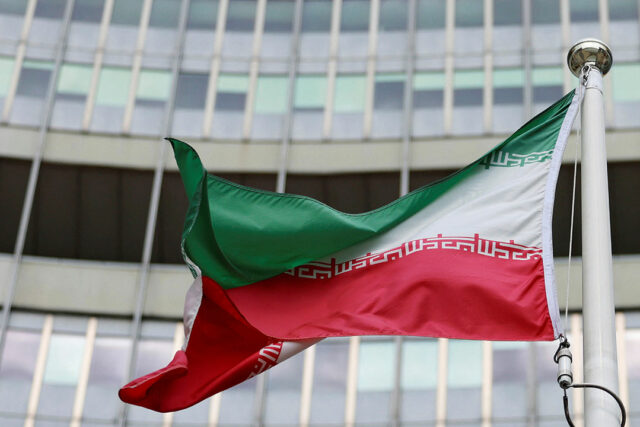
THE Iranian flag flutters outside the IAEA headquarters in Vienna, Austria, June 9, 2025. — REUTERS/LISA LEUTNER

WASHINGTON — Iran closed its airspace temporarily to most flights late on Wednesday, forcing airlines to cancel, reroute or delay some flights, amid concerns about possible military action between the United States and Iran.

Iran said in a notice posted by the US Federal Aviation Administration that it had closed its airspace to all flights except international ones to and from Iran with official permission at 5:15 p.m. ET (2215 GMT). The prohibition was set to last for more than two hours until 7:30 p.m. ET, or 0030 GMT, but the end time was an estimate, the notice said. It was still on the FAA website site 30 minutes after its estimated expiry.

Iranian airspace was almost completely empty of civilian airplanes at 7:15 p.m. ET except for two Mahan Air flights traveling between Iran and China, according to tracking data from FlightRadar24.

President Donald Trump has been weighing a response to the situation in Iran which is seeing its biggest anti-government protests in years.

The United States was withdrawing some personnel from bases in the Middle East, a US official said on Wednesday, after a senior Iranian official said Tehran had warned neighbors it would hit American bases if Washington strikes.

Missile and drone barrages in a growing number of conflict zones represent a high risk to airline traffic.

India’s largest airline, IndiGo said some of its international flights would be impacted by Iran’s sudden airspace closure. Air India said its flights were using alternative routes that could result in delays or cancellations.

A flight by Russia’s Aeroflot bound for Tehran returned to Moscow after the closure, according to Flightradar24 data.

Earlier on Wednesday, Germany issued a new directive cautioning the country’s airlines from entering Iranian airspace, shortly after Lufthansa rejigged its flight operations across the Middle East amid escalating tensions in the region.

The United States already prohibits all US commercial flights from overflying Iran and there are no direct flights between the countries.

Airline operators like flydubai and Turkish Airlines have canceled multiple flights to Iran in the past week.

“Several airlines have already reduced or suspended services, and most carriers are avoiding Iranian airspace,” said Safe Airspace, a website run by OPSGROUP, a membership-based organization that shares flight risk information. “The situation may signal further security or military activity, including the risk of missile launches or heightened air defense, increasing the risk of misidentification of civil traffic.”

A Ukraine International Airlines jet was downed by Iran’s military in 2020, killing all 176 passengers and crew.

Lufthansa said on Wednesday that it would bypass Iranian and Iraqi airspace until further notice while it would only operate day flights to Tel Aviv and Amman from Wednesday until Monday next week so that crew would not have to stay overnight. Some flights could also be canceled as a result of these actions, it added in a statement.

Italian carrier ITA Airways, in which Lufthansa Group is now a major shareholder, said that it would similarly suspend night flights to Tel Aviv until Tuesday next week.—Reuters

Peso slides to record low P59.44:$1

BW FILE PHOTO

By Aaron Michael C. Sy, Reporter

THE PHILIPPINE PESO slid to a record low of P59.44 a dollar at Wednesday’s close, failing to sustain support seen late last year due to renewed demand for the greenback amid heightened geopolitical tensions.

The local currency weakened by 9.9 centavos from Tuesday’s 59.341 finish, according to Bankers Association of the Philippines data posted on its website. The close broke the previous record low of P59.355 on Jan. 7.

The peso opened Wednesday’s trading session weaker at P59.38 versus the dollar. Its intraday best was at P59.35, while its worst showing was at P59.45 against the greenback.

Dollars traded inched down to $951 million on Wednesday from $999.2 million on Tuesday.

Demand for the greenback persisted on Wednesday amid geopolitical concerns arising from the tariffs imposed by US President Donald J. Trump against Iran and its trading partners, a trader said by telephone.

The trader also cited increasing bets of fewer rate cuts by the US Federal Reserve this year.

This as the Trump administration threatened Fed Chair Jerome H. Powell with criminal indictment over his testimony before the US Senate regarding the renovation of the Fed’s headquarters in Washington, D.C.

The peso was also dragged by the local government’s reduction of its infrastructure spending target for the year, Rizal Commercial Banking Corp. Chief Economist Michael L. Ricafort said in a Viber message.

The Department of Budget and Management cut its infrastructure spending target to 4.3% of gross domestic product (GDP) this year from 5.1% previously following weaker government spending and economic growth last year due to the flood control scandal.

The lower target translates to about P1.3 trillion in infrastructure outlays, Acting Budget Secretary Rolando U. Toledo said on Tuesday.

Mr. Ricafort noted that the peso moved within familiar ranges on Wednesday, signaling possible interventions from the central bank.

“So far, the signals have been consistent that [the Bangko Sentral ng Pilipinas (BSP) has] been on intervention in recent months and at least for more than three years already. So, these are familiar levels because the previous record high for more than three years was P59,” he told Money Talks with Cathy Yang on One News on Wednesday. 

AIA Investment Management Philippines Chief Executive Officer Angie L. Pacis said in the same program that the peso could test the P62 level due to growing interest rate differentials between the Philippines and the US.

“We’re actually of the camp that, for now, based on what we see, maybe the rate cut in February is actually iffy, simply because the BSP is already within their 2-4% [inflation] target range,” she said.

BSP Governor Eli M. Remolona, Jr. said last week that a rate cut at the Monetary Board’s Feb. 19 meeting “remains on the table” but was “unlikely.” He also noted that the BSP is nearing the end of their easing cycle.

The Monetary Board has delivered 200 basis points in reductions since August 2024, bringing the policy rate to an over three-year low of 4.5%.

For Thursday, the trader said the market players will await developments with Mr. Trump’s subpoenas against Mr. Powell.

The peso could also be weighed by US producer inflation data which are expected to remain high and could further fuel hawkish Fed expectations, the trader added. The data will be released overnight.

The trader sees the peso moving between P59.20 and P59.60 per dollar on Thursday, while Mr. Ricafort expects it to range from P59.35 to P59.55.

World Bank projects Philippine growth above 5% until 2027

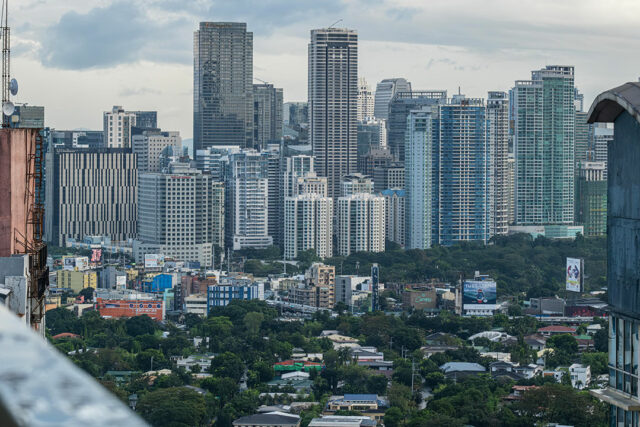
Photo shows the central business district in Makati City, Dec. 16, 2025. — PHILIPPINE STAR/ RYAN BALDEMOR

THE PHILIPPINE ECONOMY is projected to grow above 5% this year and in 2027, although governance concerns remain, the World Bank said.

The multilateral lender kept its growth forecast for the country until 2027, unchanged from its December projection.

In its bi-annual Global Economic Prospects report, the bank said the Philippine gross domestic product (GDP) is expected to expand by 5.3% in 2026 and 5.4% in 2027.

The World Bank’s forecasts were within the government’s 5-6% GDP target range for this year but below the 5.5-6.5% target for 2027.

“In the Philippines, planned structural reforms are likely to boost investment and productivity, but concerns around governance remain,” the World Bank said.

A corruption scandal over anomalous flood control projects has curbed government spending, eroded business sentiment, and affected household spending.

However, the World Bank estimated that GDP growth may have averaged 5.1% in 2025, slower than its earlier estimate of 5.3%. This is also below the government’s 5.5-6.5% target and the actual 5.7% growth in 2024.

“More recently, weather-related disruptions dampened growth in the Philippines and a contraction in public investment as well as slowing tourism revenues led to a deceleration in Thailand,” the World Bank said.

In addition, it noted that industrial production rose in the Philippines, along with Malaysia and Vietnam, largely owing to artificial intelligence (AI)-driven demand for semiconductor exports.

THIRD-FASTEST GROWTH
Meanwhile, the World Bank said the Philippines is expected to be the third fastest-growing economy in the East Asia and the Pacific region until 2027.

Vietnam is projected to grow by 6.3% this year, followed by Mongolia (5.6%).

The Philippines’ 5.3% growth projection would put it ahead of Indonesia (5%), Samoa (4.4%), China (4.4%), Cambodia (4.3%), Malaysia (4.1%), and Marshall Islands (4.1%).

For 2027, Vietnam is still poised to be the fastest-growing economy with 6.7%, followed by Mongolia (5.5%), the Philippines (5.4%), Indonesia (5.2%), Cambodia (5.1%), China (4.2%), Malaysia (4%), and Laos (3.9%).

The Philippines’ GDP growth forecast would also put it above the region’s 4.4% average growth projection for 2026 and 4.3% in 2027.

The World Bank said the economic growth in the East Asia and the Pacific (EAP) region was projected to moderate mainly due to the deceleration in China.

“Elsewhere in EAP, activity is expected to moderate this year before picking up next year. This reflects the unwinding of front-loading, along with stronger investment growth in some countries, owing to domestic policy support,” the bank said.

The World Bank also said risks to the regional outlook remain tilted to the downside, noting that further escalation in trade restrictions and policy uncertainty pose a significant risk to East Asia and the Pacific’s growth.

“Other downside risks include tighter global financial conditions, slower-than-expected growth in China, political uncertainty and social unrest in some economies, and natural disasters,” it added.

The multilateral bank also cited a lower drag from a higher trade barrier as private sector adaptability and AI‑driven expansion in investment and exports could lift growth prospects in the region as upside risks.

RESILIENT GLOBAL ECONOMY
Meanwhile, the global economy is proving more resilient than expected, with 2026 GDP growth expected to improve slightly over forecasts from last June, the World Bank said while warning that growth is too concentrated in advanced countries and overall too weak to reduce extreme poverty.

Its semi-annual Global Economic Prospects report showed that global output growth will slow slightly to 2.6% this year from 2.7% in 2025 before edging back to 2.7% in 2027.

The 2026 GDP forecast is up two-tenths of a percentage point from the last predictions released in June, while 2025 growth will exceed the prior forecast by four-tenths of a percentage point.

The World Bank said about two-thirds of the upward revision reflects better-than-expected growth in the US despite tariff-driven trade disruptions. It predicts US GDP growth will reach 2.2% in 2026, compared to 2.1% in 2025 — up two-tenths and half a percentage point from the June forecasts, respectively.

After an import surge to beat tariffs early in 2025 held back US growth for that year, bigger tax incentives will aid growth in 2026, offset by the drag of tariffs on investment and consumption, the World Bank said.

But if the current forecasts hold, the 2020s are on track to be the weakest decade for global growth since the 1960s and too low to avert stagnation and joblessness in emerging market and developing countries, the global lender said.

“With each passing year, the global economy has become less capable of generating growth and seemingly more resilient to policy uncertainty,” Indermit Gill, the World Bank’s chief economist, said in a statement. “But economic dynamism and resilience cannot diverge for long without fracturing public finance and credit markets.”

Mr. Gill added that global GDP per person in 2025 was 10% higher than on the eve of the COVID-19 pandemic — marking the fastest recovery from a major crisis in the past 60 years. But he said many developing countries are being left behind, with a quarter of them saddled with lower per-capita incomes than in 2019, particularly the poorest countries.

Growth in emerging markets and developing economies will slow to 4% in 2026 from 4.2% in 2025, up two-tenths and three-tenths of a percentage point from the June forecasts, respectively. But excluding China, the 2026 growth rate for this group will be 3.7%, unchanged from 2025, the World Bank said.

China’s growth will slow to 4.4% in 2026 from 4.9%, but the forecasts are both up four-tenths of a percentage point from June due to fiscal stimulus and increased exports to non-US markets.

Growth in the euro zone is set to slow to 0.9% in 2026 from 1.4% in 2025 due to the drag from US tariffs but recover to 1.2% in 2027 due to increases in European defense spending, the World Bank said.

Japan’s outlook is much the same for 2026, with growth slowing to 0.8% after a rise of 1.3% in 2025, a year aided by the front-loading of exports to the US to beat President Donald J. Trump’s tariffs. But slower consumption and investment in Japan will keep GDP growth unchanged at 0.8% for 2027, the World Bank said. — Aubrey Rose A. Inosante with Reuters

Tame Philippine inflation leaves room for BSP easing this year — HSBC

IN 2025, Philippine inflation settled at 1.7%, the slowest in nearly a decade or since the 1.3% clip in 2016. — PHILIPPINE STAR/MIGUEL DE GUZMAN

PHILIPPINE INFLATION may remain subdued over the next two years amid softer global commodity prices, allowing the Bangko Sentral ng Pilipinas (BSP) to ease further, Hongkong and Shanghai Banking Corp. (HSBC) Private Bank said. 

In its 2026 outlook on the Philippine economy and market, HSBC said headline inflation will likely pick up to 2.4% this year and quicken to 2.8% in 2027. Both are within the central bank’s 2%-4% target.

“Cheaper imports from China and easing global commodity prices have led to low and stable inflation,” Fan Cheuk Wan, chief investment officer for Asia at HSBC Private Bank and Premier Wealth, said.

In 2025, Philippine inflation settled at 1.7%, the slowest in nearly a decade or since the 1.3% clip in 2016. This was slightly faster than the central bank’s 1.6% full-year forecast but below its target.

With inflation seen within target and growth prospects remaining dim, HSBC expects another 25-basis-point (bp) reduction to the key policy rate within the first quarter of the year.

“Tighter fiscal policy and slower infrastructure spending will curb capital imports, narrowing the current account deficit and giving leeway for the BSP to keep monetary policy accommodative,” Ms. Fan said.

“We expect one more 25-bp rate cut by the BSP to 4.25% in Q1 2026 to support domestic demand recovery.”

If realized, the benchmark interest rate would reach its lowest since August 2022 or when it stood at 3.75%. It would likewise match the 4.25% rate in September 2022.

In 2025, the Monetary Board delivered five straight 25-bp cuts from April to December, which brought the key borrowing costs to an over three-year low of 4.5%. It has so far slashed a total of 200 bps since it began its easing cycle in August 2024.

BSP Governor Eli M. Remolona, Jr. said another rate cut remains on the table but noted that the current policy rate is already “very close” to their desired rate, hinting at the end of their easing cycle.

Still, he said that weaker-than-expected growth may prompt them to deliver a total of two rate cuts this year.

The Monetary Board will have six policy meetings this year, with the first review scheduled for Feb. 19.

NEUTRAL PESO
Meanwhile, HSBC’s Ms. Fan said the peso is projected to remain range-bound this year, with a P59.20 finish against the dollar likely by yearend.

“After the Philippine peso weakened to its record low level against the US dollar in 2025, we expect the peso to remain largely range-bound this year and will reach P59.20 at the end of 2026,” she said. “We hold a neutral view on the peso over the next six months.”

The peso fell to a new record low of P59.44 versus the greenback on Jan. 14.

“On the Philippine stock market, its significant underperformance against the regional peers in 2025 has already priced in the growth headwinds from weaker infrastructure investment and subdued domestic demand,” Ms. Fan added.

The flood control corruption scandal battered both the peso and the stock market amid weak investor and business confidence as probes implicated government officials and private contractors in receiving kickbacks from infrastructure projects.

On Nov. 14, the Philippine Stock Exchange index plunged to 5,584.35, its weakest close in nearly five and a half years or since the 5,570.22 close on May 28, 2020.

However, HSBC said discounted stock valuations could buffer the local stock market against further downside risks, adding that the market may see an 8% income growth this year.

“The deeply discounted valuations should limit further downside for the market,” Ms. Fan said. “Hence, we maintain our neutral view on Philippines stocks.” — Katherine K. Chan

Philippine banks’ loan growth steadies in Nov.

PJCOMP-FREEPIK

PHILIPPINE BANKS’ loan growth held steady in November, preliminary data from the Bangko Sentral ng Pilipinas (BSP) showed.

Outstanding loans of universal and commercial banks, net of reverse repurchase agreements, grew by 10.3% year on year to P13.988 trillion in November from P12.676 trillion in the same month in 2024.

November’s growth rate matched the pace of October. October saw the slowest growth in bank lending since the 10.1% recorded in June 2024.

On a seasonally adjusted basis, bank lending expanded by 0.9% month on month.

“Outstanding loans from universal and commercial banks (U/KBs) to businesses and individual consumers expanded in November,” the central bank said in a statement released late on Tuesday.

“Preliminary data show that loans from U/KBs grew at a steady rate of 10.3% year on year in November,” it added.

BSP data showed that big banks’ outstanding loans to residents grew by an annual 10.7% to P13.681 trillion in November, slightly easing from the 10.9% growth seen in the previous month.

On the other hand, loans to nonresidents fell by 4.5% year on year to P307.253 billion from the 11.1% drop logged in October.

Banks’ loans to residents for production activities grew by 9% to P11.789 trillion in November, slowing from 9.1% in the previous month.

This as lending for electricity, gas, steam, and air-conditioning supply sector jumped by 26.6%. Other segments that showed growth in lending include transportation and storage (12.7%); wholesale and retail trade, repair of motor vehicles and motorcycles (11.6%); real estate activities (9%); information and communication (7%); and financial and insurance activities (3.5%).

Meanwhile, big banks’ consumer loans to residents — which account for credit card, motor vehicle, and general-purpose salary loans but exclude residential real estate loans — rose by 22.9% in November to P1.892 trillion, slightly slower than the 23.1% growth in October.

Broken down, credit card loans jumped by 29.5% to P1.158 trillion, picking up from the 29.2% growth in October, while lending growth for motor vehicles eased to 16.3% at P524.037 billion from 17.6% in the previous month.

On the other hand, loans for general-purpose salaries reached P164.932 billion in November, climbing by 6.4%. This is a tad faster than 5.8% a month ago.

Rizal Commercial Banking Corp. Chief Economist Michael L. Ricafort said the consistent double-digit expansion in bank lending can help spur the local economy, especially after the sharp slowdown in the third quarter of 2025.

“Banks’ loan growth still at double-digit levels could still bode well as a leading indicator to the broader economic growth,” he said in a Viber message.

Mr. Ricafort noted that the 10.3% loan growth in November was mainly because of the fast growth in consumer loans, particularly credit card and motor vehicle loans, “amid the country’s favorable demographics.”

In the coming months, banks may see more demand for loans if the BSP lowers key borrowing costs and the reserve requirement ratio (RRR) further to match the Federal Reserve’s moves.

“Loan growth could continue to sustain at double-digit growth levels if the Fed cuts rates further in the coming months that could be matched by the BSP, alongside possible cut/s in local banks’ RRR, all of which could further reduce borrowing costs that could spur greater demand for loans or credit and help boost investments and overall economic growth,” Mr. Ricafort said.

The Monetary Board has so far slashed the benchmark policy rate by a total of 200 bps since August 2024, bringing it to its lowest in over three years at 4.5%.

BSP Governor Eli M. Remolona, Jr. left the door open for another 25-bp cut at its first meeting this year on Feb. 19, though noted that the current easing cycle is nearing its end as the current policy rate is approaching their neutral rate.

On the other hand, the Fed has so far delivered 175 bps in cuts since September 2024, bringing its key policy rate to the 3.5%-3.75% range. It is scheduled to have its first meeting this year on Jan. 27-28.

MONEY SUPPLY

Meanwhile, separate BSP data showed that domestic liquidity (M3) rose by 7.6% year on year to P19.439 trillion in November from P18.071 trillion. This was slower than the 8.3% climb in October.

M3 is considered as the broadest measure of liquidity in an economy.

The country’s money supply expanded by 1.2% month on month on a seasonally adjusted basis.

Domestic claims, which include claims from private and government entities, jumped by an annual 10.6% year on year to P21.984 trillion, picking up from the 10.5% growth in October.

This as higher borrowings boosted net claims on the central government by 11% to P5.888 trillion. This was up from 10% growth a month earlier.

Meanwhile, claims on the private sector rose by 11.1% to P14.162 trillion, faster than the 11% the previous month, amid “continued expansion in bank lending to non-financial private corporations and households.”

Claims on a sector refer to that sector’s liabilities to depository corporations such as banks and the central bank.

Central bank data also showed net foreign assets (NFA) in peso terms climbed by 4.4% in November versus the 2.1% expansion in October.

“NFAs of the BSP increased by 1.9%,” the BSP said. “Similarly, NFAs of banks grew primarily on account of lower foreign currency-denominated bills payable.”

Broken down, the central bank’s NFAs grew by 1.9% year on year, a turnaround from the 0.4% decline in October, while banks’ NFA climbed by 26.9%, slightly faster than the 26.3% the previous month.

NFAs reflect the difference between depository corporations’ claims and liabilities to nonresidents.

“The BSP monitors bank loans because they are a key transmission channel of monetary policy,” the central bank said. “Looking ahead, the BSP will ensure that domestic liquidity and bank lending conditions remain aligned with its price and financial stability objectives.” — Katherine K. Chan

Marcos expects surge in large-scale data center investments after UAE talks

PRESIDENT FERDINAND R. MARCOS, JR. meets with executives of UAE–based DAMAC Digital. — PRESIDENTIAL COMMUNICATIONS OFFICE

PRESIDENT Ferdinand R. Marcos, Jr. expects interest in large-scale data center investments to accelerate following his discussions with executives of United Arab Emirates (UAE)-based DAMAC Digital, which is looking to expand its footprint in Southeast Asia’s fast-growing digital infrastructure market.

DAMAC Digital is studying plans to build what could become the Philippines’ largest data center in Laguna, a project officials said would anchor broader investments in cloud computing and artificial intelligence (AI), according to a statement from the Presidential Communications Office on Wednesday.

Mr. Marcos told executives that the sector would be given priority support, highlighting the administration’s push to attract capital into higher-value, technology-driven industries.

“We are very excited about DAMAC Digital’s planned investment in the Philippines, including what is set to be the largest data center in the country, with up to 250 megawatts (MW) of capacity,” he said in a Facebook post.

“This positions the Philippines as an emerging data center hub in the region. We continue to welcome investments that strengthen our digital economy, create high-quality jobs, and prepare our country for the demands of the future,” he added.

The government expects demand for data centers to rise sharply as digital payments, e-commerce, and AI adoption expand across the region.

DAMAC Digital, the digital infrastructure arm of Dubai-based DAMAC Group, has committed more than $3 billion to Southeast Asia and aims for 250 MW of operational capacity in the region by 2026.

A Philippine project would add to its global portfolio spanning the US, the Middle East, Europe, and Asia.

The discussions took place during Mr. Marcos’ visit to Abu Dhabi, where the Philippines signed its first Comprehensive Economic Partnership Agreement in the region with the UAE.

Officials said the trade deal, alongside potential investments such as DAMAC’s, is expected to attract foreign capital to strategic sectors and support growth as the economy pivots toward digital industries.

DAMAC Digital, originally launched as EDGNEX Data Centres in 2021 and rebranded in June 2025, develops, constructs, and manages data centers for hyperscale wholesale, retail colocation, cloud services, and AI-driven workloads, with a focus on sustainability, innovation, and international connectivity. — Chloe Mari A. Hufana

SMGP plans $300-M perpetual bond sale for refinancing, renewables

SAN MIGUEL GLOBAL POWER

SAN MIGUEL Global Power Holdings Corp. (SMGP), the power generation arm of San Miguel Corp. (SMC), plans to return to the offshore debt market with the issuance of up to $300 million in senior perpetual capital securities to refinance existing obligations and fund renewable energy projects.

In a disclosure to the Philippine Dealing & Exchange Corp. on Tuesday, SMGP said its board of directors approved the offer and issuance of the securities, which will be listed on the Singapore Exchange Securities Trading Ltd.

The company said the proceeds will be used to purchase and redeem its outstanding senior perpetual capital securities issued on Jan. 21, 2020, which carry an initial distribution rate of 5.7%.

Part of the funds will also be used to finance the pre-development of solar and hydropower projects, as well as capital expenditures related to battery energy storage system projects.

Through its wholly owned subsidiary SMC Global Light and Power Corp., SMGP is developing solar power projects with a combined capacity of about 2,670 megawatts across various sites in Luzon and Mindanao. These projects, located in Bataan, Davao, Bulacan, and Isabela, are targeted for completion through 2029.

“For the avoidance of doubt, the net proceeds will not be applied in connection with any of the Corporation’s and its subsidiaries’ existing and planned coal-fired power assets and/or liquefied natural gas assets,” SMGP said.

Standard Chartered Bank was appointed as sole lead manager, while DB Trustees (Hong Kong) Ltd. will serve as trustee. Deutsche Bank Aktiengesellschaft, Hong Kong Branch, was named principal paying agent, calculation agent, transfer agent, and registrar. Latham & Watkins was tapped as listing agent.

SMGP currently supplies about 20% of the national grid, with a total installed capacity of 5,710 megawatts.

On Wednesday, shares of SMC rose 0.06% to close at P85 apiece. — Sheldeen Joy Talavera

Megaworld launches office leasing unit, taps ex-ALI executive as head

MEGAWORLD

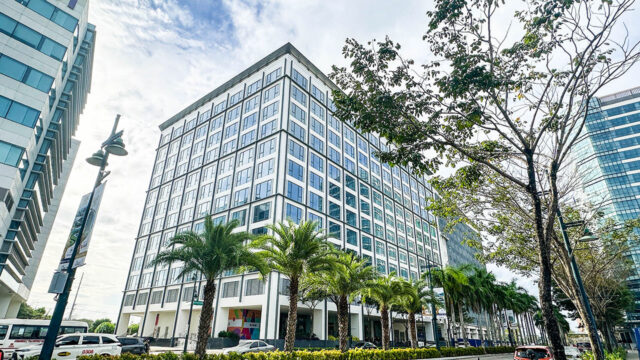
TAN-LED property developer Megaworld Corp. has launched a new leasing group as it seeks to aggressively grow its office portfolio across the country.

The new unit, Megaworld Global Offices, will operate alongside the company’s existing Megaworld Premier Offices to help reach its target of two million square meters of leasable office space, the company said in a regulatory filing on Wednesday.

The two teams will focus their office expansions in key growth areas, including the Ilocos Region, Pampanga, Cavite, Bacolod, and Cagayan de Oro.

Megaworld Global Offices will be headed by Francisco Ma. D. Roxas, a former executive of Ayala Land, Inc. (ALI), who brings 30 years of experience in real estate development and property management.

He previously served as the chief operating officer of ALI’s unit Ayala Land Offices, and was instrumental in the growth of the company’s portfolio amid the demand for hybrid-friendly and sustainability-led office spaces.

“We continue to see strong demand for office spaces in the country, even with the rapid emergence of artificial intelligence (AI) and other new technologies,” Megaworld President and Chief Executive Officer Lourdes T. Gutierrez-Alfonso said.

“These digital advancements continue to fuel growth across many industries and create opportunities for finance, IT, and healthcare professionals,” she added.

The company is also targeting more Fortune 500 multinational firms, including startups, to expand its tenant base of nearly 200 companies.

Most tenants are located in major townships that have evolved into cyberparks, such as Eastwood City in Quezon City; Uptown Bonifacio, McKinley Hill, and McKinley West in Taguig City; and Iloilo Business Park.

Megaworld currently operates about 1.6 million square meters of office space across 90 towers nationwide, hosting around 200,000 employees, primarily from the business process outsourcing and corporate sectors.

Its tenants include global companies such as Google LLC, The Coca-Cola Company, Wells Fargo & Company, IBM, Accenture plc, and JPMorgan Chase & Co. 

The company has also been incorporating sustainability features in its properties, with 32 office buildings nationwide certified or registered under the Leadership in Energy and Environmental Design (LEED) program.

In the first nine months of 2025, Megaworld’s attributable net income surged by 16% P15.93 billion, driven by high rental income and sales.

At the Philippine Stock Exchange, Megaworld’s shares closed flat at P2.21 each on Wednesday. — Beatriz Marie D. Cruz

Bistro Group sparks with local concept

PINATISANG MANOK

Applies its lessons from foreign franchises to Siklab

THE Conrad S Maison branch of Siklab — formerly a food hall concept by The Bistro Group — seems to reflect a new pivot to further develop their homegrown brands. While the franchise of the US restaurant Dave & Buster’s that they operate at the Opus mall seats 1,500, due to the play area, in terms of dining, this 260- to 290-seater is the biggest outlet of The Bistro Group to date.

BusinessWorld went to a preview dinner at Siklab on Jan. 7, tasting their Filipino favorites. We particularly liked their Sinilabang Manok (the word siklab means “spark,” so it’s like saying “sparked chicken”), which serves as a version of Bacolod’s inasal (barbecue), that has a very pronounced hit of lemongrass. Their pancit palabok (a noodle dish) can stand toe-to-toe with anybody’s, while their Pinatisang Manok (chicken cooked with fish sauce) is an almost-perfect clone of a heritage fried chicken dish from another restaurant group. Everybody at the table liked their version of bibingka (a steamed rice cake), fluffy like a cake, topped with muscovado sugar, coconut, salted egg, and cheese.

Guia Abuel, chief operating officer of The Bistro Group, said that they had previously launched local brands Siklab and Krazy Garlik in 2014, but had them shuttered in 2018 due to what they thought was their lack of experience in running local brands. After all, The Bistro Group is known for bringing US restaurant franchises here, such as TGI Friday’s (their first) and Morton’s The Steakhouse.

Times have changed, and this Siklab — its largest — is the third branch, after their first relaunch in Shangri-La Plaza mall, then a second branch in Cavite’s Evo City. By the end of the month, Ms. Abuel predicts that they’ll be able to open four more: along Kamagong St. in Makati City, Park Triangle in BGC, Vermosa in Cavite, and at Evia Lifestyle Mall in Las Piñas.

“With the experience we’ve had through the years, we felt that the company is already prepared to come out with a locally conceptualized restaurant,” she said.

“The past few years, we’ve seen successes of local Filipino restaurants. I will not name our competitors, but they were an inspiration for us. We have all cuisines already… but we don’t have a local concept.”

One might think that concentrating on mostly foreign flavors in their decades-long history might prove to be a handicap in making something Filipino, but she says that the systematic operations influenced by their Western counterparts helped them build better. “They have a great foundation of standards,” she said. “It’s an American style of service: friendly, generous.

“We kind of applied these learnings in the way we run our business now, in a homegrown set up,” she said.

On that note, how do they set themselves apart as a Filipino restaurant in the Philippines, counting that most of their experience has been with foreign brands? “There are a lot of good local restaurants, but in terms of execution… I think we can be ahead of them.

“We’re a matured operator. Of course, food is everything, but it’s not everything. It’s the quality of service, the ambiance. It’s a total package.” — Joseph L. Garcia

SPNEC seeks DoE reconsideration of Sta. Rosa solar project termination

PHILSTAR FILE PHOTO

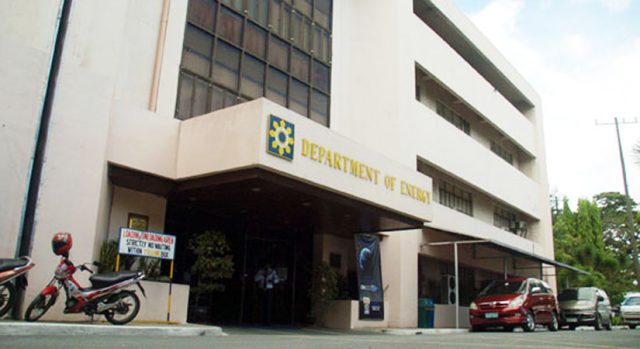
SP NEW ENERGY CORP. (SPNEC) said it is asking the Department of Energy (DoE) to reconsider the termination of its service contract for a solar power project in Sta. Rosa, Nueva Ecija, which experienced delays due to unforeseen circumstances.

“The company is in discussions with the Department of Energy regarding said force majeure claim and intends to request for the reconsideration of the termination,” SPNEC said in a statement to the local bourse on Wednesday.

The company received a notice of termination for the Sta. Rosa service contract, which it had previously flagged as subject to a force majeure claim.

SPNEC won the contract to develop the 280-megawatt (MW) project during the first green energy auction in 2022.

GEA-1 projects are targeted for completion by 2025.

The company cited challenges such as transmission constraints that affected project progress.

“Pending the outcome of said discussions and request for reconsideration, no adverse impact is expected on the overall business, operations, and financial condition of the company,” SPNEC said.

In the same disclosure, SPNEC clarified that it is a separate entity from Solar Philippines Power Project Holdings, Inc., a company currently facing penalties after the DoE terminated several renewable energy contracts.

It said that it “is not the ‘Solar Philippines’ mentioned in the news articles,” although the Leviste-led firm is a stockholder in SPNEC.

Solar Philippines has been fined P24 billion for failing to deliver nearly 12,000 MW of renewable energy over the past two years.

The DoE terminated 33 of its service contracts, accounting for around 64% of more than 18,000 MW of potential capacity.

Responding indirectly to the issue, businessman-turned-politician Rep. Leandro L. Leviste said on Facebook that he will address concerns in the proper forum.

Iginagalang ko ang mga kawani ng gobyerno at tutugon ako sa kanilang mga pahayag sa tamang forum. Paumanhin po sa mga natatamaan, pero ang pinaglalaban ko lamang ay ang katotohanan. Lubos ang aking pasasalamat sa mga nananawagan para sa transparency sa paggamit ng pondo ng bayan,” he said. (I respect workers in government, and I will address their statements in the proper forum. I apologize to those who may feel affected, but what I am standing up for is simply the truth. I am deeply grateful to those calling for transparency in the use of public funds.) — Sheldeen Joy Talavera

Tailor fitting food halls to the locations

COCO FRESH TEA

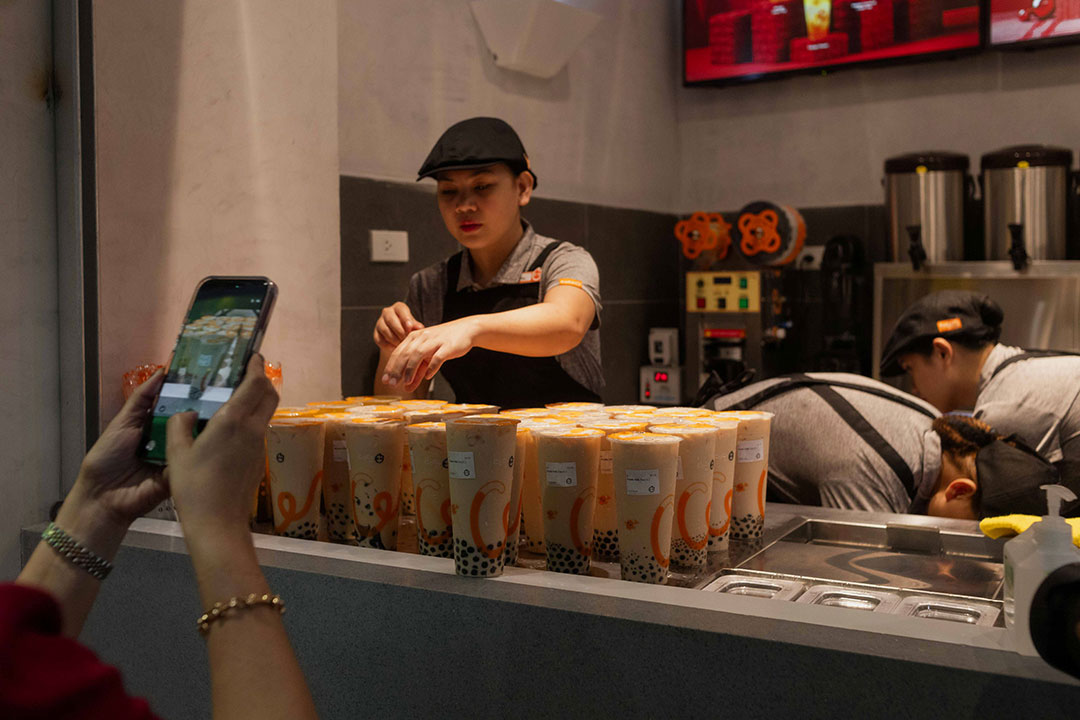
THE Sundry Food Hall opened last month in Bonifacio Global City (BGC), but more than its numerous food options, the logic behind the operations makes for a more interesting story. It not only took the food hall out of the usual mall location, but also tailor fit its options depending on location. And aside from dining in, customers have the option to order from a variety of restaurants through delivery partners at one go.

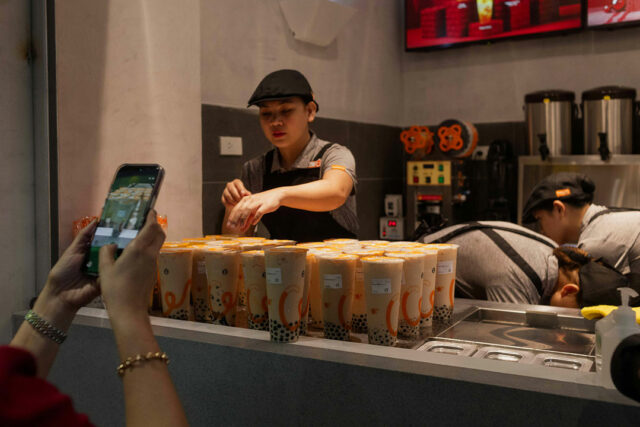
The BGC branch, in GSC Corporate Tower, Triangle Drive, BGC, is the concept’s seventh: the others are in España, Taft, Pasig, Commonwealth, Makati, and Parañaque. This branch contains CoCo Fresh Tea & Juice, 24 Chicken, Wann Mann, Bangkok Station, Potato Corner, Big Al’s Cookie Jar, Hearts & Bells, Merry Moo and Louie’s Buko.

The Sundry Food Hall concept was founded by husband-and-wife team Jai Reyes and Josephine Kamiyama as a cloud kitchen during the pandemic. Then since 2024, they pivoted most of the cloud-kitchen branches to dine-in operations.

Each Sundry Food Hall location has a different set of restaurant partners. “We rely a lot on the data, per area, [for] who we think is going to do well,” Mr. Reyes told BusinessWorld. “I guess we learned through experience also. One branch of the same brand doesn’t perform as well in the other branch. We get a lot of data from Grab and Foodpanda. In a particular area or radius, we get their help in suggesting to us what type of cuisines are being searched for.”

The concept is a boon for customers: “You get to eat in a place where you can have various options,” he said. “You can really order from different brands in just one sitting.

“We kind of took the food hall out of the mall, because the delivery numbers do better when we’re right by the roadside with a dispatch window. That’s a huge advantage for our tenants,” he said.

They provide the space and the common area staff. The tenants simply set up their kitchens and provide a kitchen crew. “Lower investment, and faster expansion. That’s what we tell our tenants. We provide the space, where all they need to do is put equipment, and bring their staff.”

At the same time, customers can order from multiple restaurants and pay just one delivery fee.

They are also moving down south, with planned expansions in Alabang and Santa Rosa. In line with the “faster expansion” selling point to their tenants, the move down south, according to him, is so that their tenants can have a footprint south of Manila.

On another note, those who still remember Jai Reyes as the Ateneo de Manila University Blue Eagles basketball player in the 2000s will be pleased to know that he now serves as commissioner for the University Athletic Association of the Philippines (UAAP), the league he once played in.

Asked about his own transition from basketball to business, he said, “All athletes someday get told that it’s time to hang it up,” he said. “I was scared, but just like sports, you just do your work. Apply it, learn from your mistakes, and then move on again.” — J. L. Garcia