Home Blog Page 4328

Addressing counterfeiting
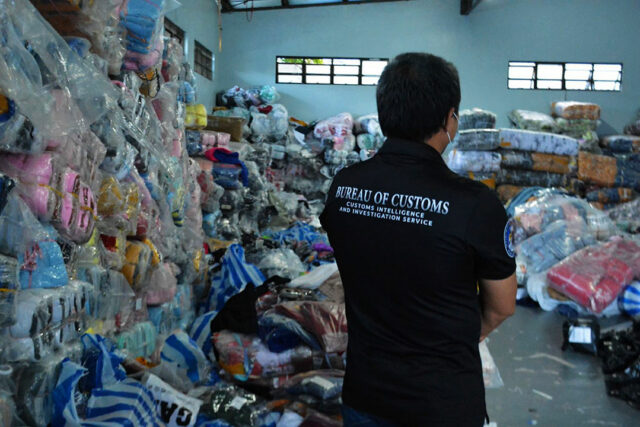
MEMBERS of the Bureau of Customs-Customs Intelligence Investigation Service inspect various counterfeit shirts, perfumes and other luxury goods at a warehouse in Las Piñas City. — PHILIPPINE STAR/MIGUEL DE GUZMAN

Last month, representatives from the Enforcement Office of the Intellectual Property Office of the Philippines (IPOPHL) met with representatives of the Korea Trade-Investment Promotion Agency, a trade and investment promotion organization funded and operated by the South Korean government. The parties discussed possible collaboration in the field of intellectual property (IP) protection and enforcement for Korean products and services in the Philippines.

This is just one of the activities the IPOPHL, as Vice-Chair of the National Committee on Intellectual Property Rights (NCIPR), an inter-agency body composed of 15 members coordinating efforts against piracy and counterfeiting, has undertaken in its efforts to uphold IP rights in the country.

With the recent publication of the United States (US) Trade Representative’s 2023 Special 301 Report, which lists countries where the US has IP protection and enforcement concerns, it is worthy to note that the Philippines has remained out of the US’ piracy watch list for 10 consecutive years already, after 20 years of being on the list. The Report even highlighted, as an illustrative best practice, the IP awareness and education campaign conducted by the IPOPHL, namely the “Raise the Economy by Acquiring Protection of the IP of your Community” or REAP IP Program, which engaged over 160 local government units on IP awareness.

Even with these developments, the seriousness and importance of addressing counterfeiting cannot be overstated. The failure to address the issue has broad effects on the economy. Weak protection for IP (like trademarks, design rights, and patents) limits product development and the entry of firms. In general, adequate and enforceable IP rights help reward risk-taking among enterprises and provide protection for firms undertaking costs. Counterfeit products, which are generally of lower quality, can damage the reputation of a legitimate enterprise, and may even force an enterprise to close or abandon its IP. This most definitely does not make any country attractive to potential foreign investors, to the detriment of its economy. It stands not only to lose direct foreign investment but also miss out on foreign know-how. Moreover, if products, including genuine ones, gain a reputation of being of poor quality, this will cause export losses which in turn implies both job losses and loss of foreign exchange.

Certainly, the battle against counterfeiting is a national one. In this fight, there are various authorities in the Philippines from which aggrieved parties can seek redress. The IPOPHL’s Enforcement Office can receive, evaluate, and act on complaints for IP violations. The Enforcement Office may visit establishments dealing in counterfeits, request them to cease and desist from engaging in infringing conduct, or recommend the filing of cases against them.

Law enforcement agencies like the Philippine National Police (PNP), National Bureau of Investigation (NBI), and the Bureau of Customs (BoC), all of which are members of the NCIPR are also ready to help IP owners. Complaints may be filed with the PNP and the NBI. The PNP has a dedicated IP Section, which has the primary duty of enforcing IP rights, in its Criminal Investigation and Detection Group’s Anti-Fraud and Commercial Crimes Division. On the other hand, the NBI, specifically its IP Rights Division, also conducts investigations, arrests, and implementation of search warrants for crimes involving infringement of IP rights. Lastly, an IP rights holder may record its rights with the BoC in order to help the latter in effectively monitoring and evaluating infringing goods at the border. On the basis of the recordation, the BoC monitors and inspects, on its own initiative, suspect imports to determine whether or not they are liable to seizure and forfeiture for violating IP rights.

The active presence of these various offices and agencies is certainly a step in the right direction. But more importantly, stakeholders must be encouraged to enforce their IP rights. It is only through cooperation between stakeholders and the government that the country will be able to have in place “an effective intellectual and industrial property system” that is “vital to the development of domestic and creative activity, facilitates transfer of technology, attracts foreign investments, and ensures market access for our products.” [IP Code, Sec. 2].

This article is for general informational and educational purposes only and is not offered as, and does not constitute, legal advice or legal opinion.


Nepomuceno M. Mendoza III is an associate of the Intellectual Property Department of the Angara Abello Concepcion Regala & Cruz Law Offices (ACCRALAW).

mmendoza@accralaw.com

+632-8830-8000

Elvis was ‘the love of my life,’ Priscilla tells Venice

CAILEE Spaeny and Jacob Elordi in Priscilla. —IMDB.COM

VENICE — Elvis Presley’s former wife Priscilla said the legendary rock star had been the love of her life, despite eventually leaving him, as a film about their turbulent relationship hit the Venice Film Festival.

Priscilla, directed by Sofia Coppola, is based on her 1985 autobiography, Elvis and Me, depicting her roller-coaster life with one of the most famous figures of the 20th century.

“It wasn’t that I didn’t love him. He was the love of my life, but it was the lifestyle that was so difficult for me,” Priscilla told reporters in Venice ahead of the world premiere of the movie, which stars Cailee Spaeny and Jacob Elordi.

Priscilla Beaulieu met Elvis Presley in 1959 when she was just 14 and he was deeply homesick, stationed with the US army in West Germany.

“Elvis poured his heart out to me in Germany, his fears and his hopes, the loss of his mother, which he never ever got over,” Priscilla said. “People think it was the sex. Not at all. I never had sex with him. He was very kind, very loving, but he respected the fact that I was only 14 years old.”

Elvis returned to the United States shortly after, but the two remained in touch and in 1963 he invited her to come and live with him in Memphis, where she finished school.

They got married in 1967, had a baby daughter, Lisa Marie, in 1968, and divorced in 1973, four years before Elvis died of heart failure, aged just 42. “We still remained very, very close,” Priscilla said.

The film offers perhaps the darkest screen portrayal yet of Elvis as he relentlessly manipulates Priscilla, verbally abusing her and at times threatening her before seeking to make amends.

“It is very difficult to sit and watch a film about you and about your life and about your love,” said Priscilla, 78, pausing a while as she struggled to overcome her emotions. “I think Sophia did an amazing job. She did her homework.”

Ms. Coppola said she had leaned heavily on Priscilla as she put the film together. “I really tried to make the film from her point of view so we could go along on the journey with her,” she told reporters.

Ms. Spaeny said she had also turned to Priscilla for help as she prepared to bring the often vulnerable character alive on the big screen.

“She was very generous with her time and she was very kind to me and supportive. And I think if I didn’t have that, I would have had a much harder time,” the US actress said.

Priscilla is one of 23 movies competing for the Golden Lion award at the Venice festival, which runs until Sept. 9. — Reuters

Bottom 30% inflation rate in the Philippines

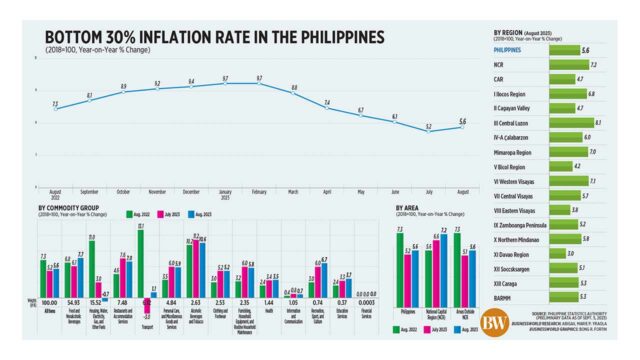
HEADLINE INFLATION accelerated for the first time in seven months in August, amid a spike in the prices of rice, vegetables and fuel, the Philippine Statistics Authority (PSA) said on Tuesday. Read the full story.

Bottom 30% inflation rate in the Philippines

iPeople secures regulatory nod for merger of APEC, National Teachers College

IPEOPLE, Inc. has secured the approval of the Securities and Exchange Commission (SEC) for the planned merger of the listed education holding firm’s two subsidiary schools. 

In a stock exchange disclosure on Tuesday, iPeople said the SEC issued on Aug. 30 the certificate of filing of the articles and plan of merger of its subsidiaries National Teachers College (NTC) and Affordable Private Education Center, Inc. (APEC) Schools. The merger will take effect five business days after the certificate’s issuance.

According to iPeople, NTC will become the surviving corporation after the merger with APEC. 

In December last year, iPeople disclosed that the stockholders of the two schools had approved the planned merger. 

NTC and APEC President Alfredo Antonio I. Ayala said the merger will be beneficial for the students of both schools since it will combine NTC’s track record with APEC’s teaching methods. 

“The planned merger will allow us to better achieve our goal of transforming lives through innovative education and at affordable prices,” Mr. Ayala said in a previous statement. 

Established in 1928, NTC was the first to offer collegiate programs devoted to teacher education. 

On the other hand, the APEC was formed in 2013 with the aim of affordable private education for high school students. 

iPeople is an education company under Ayala Corp. and House of Investments, with shareholdings of 33.5% and 51%, respectively.   

The company owns seven educational institutions. These are NTC, APEC, Malayan Education System, Inc. operating as Mapúa University, Mapúa Malayan Colleges Laguna, Mapúa Malayan Colleges Mindanao, Malayan High School of Science in Manila, and University of Nueva Caceres in Bicol.

On Tuesday, shares of iPeople at the stock exchange fell four centavos or 0.53% to finish at P7.47 apiece. — Revin Mikhael D. Ochave

RBA holds rates steady in Lowe’s last policy meet

REUTERS

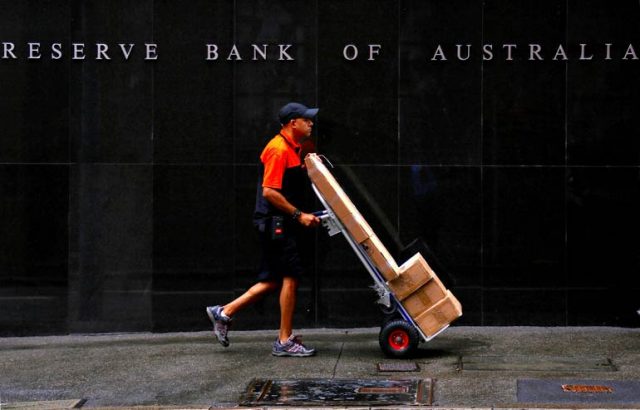
SYDNEY — Australia’s central bank on Tuesday kept interest rates steady for a third month at the last meeting chaired by Governor Philip Lowe, encouraging speculation the tightening cycle was over as policy makers indicated they have a firmer grip on prices.

Wrapping up its September policy meeting, the Reserve Bank of Australia (RBA) held rates at 4.1%, and said recent data were consistent with inflation returning to the 2-3% target range in late 2025. It reiterated that further tightening may still be required to bring inflation to heel.

Markets and economists had wagered on a steady outcome after a batch of economic data — including inflation, wages and jobs – came in below expectations and offered no compelling reason to restart the tightening cycle.

The Australian dollar extended earlier losses to be 1.2% off to $0.6384, the lowest in more than a week. Markets moved to trim bets of one last hike before the yearend to just 30% from around 36% early in the session.

A majority of economists polled by Reuters still expect one more hike by the end of the year after the third quarter inflation report, which is likely to point to lingering price pressures.

“Inflation is coming down, the labor market remains strong and the economy is operating at a high level of capacity utilization, although growth has slowed,” said Mr. Lowe, who will be handing over the reins to his deputy Michele Bullock on Sept. 18.

Mr. Lowe said the board will continue to monitor the global economy — noting uncertainty with the Chinese economy, household spending, and the outlook for inflation and the labor market to see if further tightening would be needed.

He warned that prices of many services are rising briskly and rent inflation was also elevated.

Minutes of the August meeting showed the central bank now sees a credible path where inflation would return to the target band in 2025, with interest rates at their current level, implying the hurdle to another hike is high.

‘EXTENDED PAUSE’
The incoming governor Ms. Bullock last month struck a similar tone to Mr. Lowe, saying rates may need to rise again and policy makers would be watching data and decide on rates on a monthly basis until at least the end of this year.

“Recent data has fallen the way the RBA would have hoped,” said Tony Sycamore, market analyst at IG.

“While RBA Governor Lowe may have been slow to start hiking rates, he departs with his head held high, knowing that much of the heavy lifting required to bring inflation under control is in place ahead of Michele Bullock’s tenure.”

Consumer inflation eased by more than expected to 4.9% in July, while soft wages data suggest the chance of a much feared price-wage spiral is low and the red-hot labor market might be at a turning point.

The RBA has jacked up interest rates by a whopping 400 basis points since May last year, with the cash rate sitting at 11-year highs, but the full impact of the tightening is only being felt now as inflation eases and economic growth slows.

Data on Tuesday showed the Australian economy got a boost from net exports and government spending in the second quarter, greatly lessening the risk of a contraction in gross domestic product (GDP). The second-quarter GDP data is due on Wednesday.

However, growth is set to stay subdued, with analysts expecting GDP to have expanded by a meager 0.3% in the quarter as consumers tightened their belt in the face of high cost of living and rising mortgage repayments.

“Overall, we see nothing in today’s decision or statement to push us off our view that the RBA is on an extended pause as it examines how the 400 bps of monetary tightening to date washes through the economy,” ANZ economists said in a note. — Reuters

Woody Allen hails ‘very lucky life’ as he presents 50th film

MELVIL Poupaud and Lou de Laâge in Coup de chance. —IMDB.COM

VENICE — US director Woody Allen presented his 50th film to the Venice Film Festival on Monday, telling reporters he had had a “very, very lucky life,” making no reference to the scandals that have dogged his later years.

“I have had nothing but good fortune and I hope it holds out, although obviously it is early this afternoon,” he told reporters ahead of the premiere of his first French-language film, Coup de Chance.

“I had two loving parents, I have good friends, I have a wonderful wife and marriage, two children. In a few months I will be 88 years old. I have never been in a hospital. I have never had anything terrible happen to me,” he said.

The four-time Oscar-winning director of Annie Hall and other comedies has had a turbulent personal life that has seen him increasingly shunned by many celebrities and executives in Hollywood.

He hit the headlines in the 1990s following his affair and marriage to Soon-Yi Previn, the adopted daughter of his former lover, Mia Farrow, as well as sex abuse accusations by their adopted daughter Dylan Farrow. He has always denied the accusations and was never charged.

Mr. Allen and Soon-Yi, who have a 35-year age difference, are still married and have two adopted daughters.

In a separate interview to Variety on the sidelines of the film festival, Mr. Allen said he supported the #MeToo movement, which has brought intense focus to sexual misconduct in the entertainment industry. But he added that it could also become “silly … When it’s being too extreme.” The Venice Film Festival was denounced by some critics for giving Mr. Allen a prestigious slot for his new movie, and a small group of protesters demonstrated noisily as he arrived on the red carpet ahead of the premiere of his film, chanting “abusers” and scuffling with police.

The red carpet arrivals continued unhindered and the group were soon removed from in front of the Lido cinema, witnesses said.

DEATH
Mr. Allen originally intended to cast US actors in the main roles, but said he had always been inspired by European filmmakers so was happy to switch languages, even though he doesn’t speak French.

“It was very simple. If you watch a Japanese film, you can tell if the acting is good, realistic and natural, or if it is dramatic and silly and too exaggerated. It is the same thing here,” he said.

Like many of his films, Coup de Chance draws inspiration from the themes of love, adultery, and death. However, Mr. Allen said it was not worth dwelling too long on death.

“There is nothing you can do about it. It is a bad deal and you are stuck with it,” he said.

Mr. Allen has previously suggested Coup de Chance might be his final movie. However, on Monday he said he had a good idea for a story based in his native New York and would make it if he could find a backer willing to accept his terms — not to read the script or to know whom he had cast.

“If some foolish person agrees to that, then I will make the film in New York,” he said. — Reuters

PHL startup ecosystem needs clarity in ‘nat’l vision’ to grow — think tank

DYLAN GILLIS-UNSPLASH

By Miguel Hanz L. Antivola

A COMPREHENSIVE and clearly outlined “national vision” for the startup ecosystem is needed to facilitate its growth, according to a Singapore-based think tank.

The Philippines, like many other countries, recognizes the potential of startups to drive innovation, economic growth, and job creation. To fully harness this potential, it is imperative to establish a roadmap that outlines the desired trajectory of the startup ecosystem, Peng T. Ong and Doris Magsaysay Ho, trustees of the Angsana Council, said in an interview with BusinessWorld.

“The most important thing for alignment is a clearly articulated vision — what it looks like for the Philippines five to ten years from now in terms of the sectors and industries we want to create and develop,” Mr. Ong said.

“You can systematically go through a high-level vision and ground it in the reality of what you need today for the next ten years,” he added. “I think it’s eminently possible, but someone needs to take the ball and run with it.”

The Philippines slipped two places, now ranking 59th out of 100 countries, in the 2023 edition of the Global Startup Ecosystem Index by the research center StartupBlink. With a score of 2.469, the Philippines is still the seventh-lowest scoring country among its peers in the Asia-Pacific region.

Mr. Ong noted that local investment funds are key to startups’ growth. “We could ramp that up. We could create policies that generate more funds to enable more startups.”

However, economic development initiatives need to be better aligned with processes treated like one would approach a business, according to Ms. Ho.

“Maybe we can put money in building new technology that we own,” she said on the proper allocation of government funds for a unified growth approach.

The country must come up with specific, grounded goals that maximize the abundant resources, according to Ms. Ho. “We actually do have a lot of the aspects. We just have to put it together.”

Mr. Ong cited the Philippines aiming to become the artificial intelligence (AI) hub in Asia as an example.

“Maybe every year in the next five to ten years, there is an AI-based services company that IPO’s (initial public offering) as a unicorn,” he said on a daring vision grounded in reality. “How many companies should start up today? How much fund? Do I have enough people?”

“Because we have a huge BPO (business process outsourcing) industry, a fund can be put together to bring in all kinds of startups looking for AI solutions,” Ms. Ho added.

“Just get clear with the results you want and how it is going to help the industry or replace parts of it,” Mr. Ong said.

Mr. Ong and Ms. Ho said that a structure for startups, in which the government provides the funds and the private sector takes action, can help ideas flourish, similar to the technology innovation incentives and schemes in Singapore.

“We have to copy those things that work because it’s better to have the government fund the decision made by someone who knows what they’re doing, who has skin in the game.”

While taking inspiration from other countries and how they manage their startup ecosystem, Mr. Ong and Ms. Ho mentioned the need to strengthen diaspora and academic participation.

“The diaspora is a grossly underestimated strength of the Philippines,” Mr. Ong said. “If you can inspire three or five percent of global Filipino top-notch executives to have the vision of what this country can be, get them back here, and help them, I think it’s a no brainer.”

“Give them the sense of mission to come back and bring the country forward,” Ms. Ho added. “If the Vietnamese and Indians can do it, why not the Filipinos?”

Ms. Ho said that the academe plays an important role as incubators of thought for anyone to come up with the next bright solution to the country’s problems and beyond.

“The problems in Indonesia, Thailand, and Vietnam are not that different from those in the Philippines,” Mr. Ong said.

“There’s a whole market that could be ready for companies, products from here going out towards not just Southeast Asia but the rest of the emerging markets, from Africa to South America.”

Education priorities

STUDENTS of Aurora Aquino Elementary School in Malate, Manila attends their first day in school. — PHILIPPINE STAR/EDD GUMBAN

Vietnam’s great leader Ho Chi Minh is quoted to have said that if the plan is for 10 years, we should plant trees. But if the plan is for 100 years, we should invest in our people. To this day, “Uncle Ho” inspires the Vietnamese who are becoming more and more prosperous with time. Already, they have replaced our country as the second biggest coffee producer in the world. In fact, we are importing coffee from them now to cover the shortfalls in our coffee processing plants.

More significantly, Vietnam has been scoring among the highest in Southeast Asia in student competence tests, while we are lagging way below. Of course, we already know that we have been importing rice from them. We must be doing something wrong; and they must be doing something right.

Our Vice-President, who also heads our Department of Education, has asked Congress for P150 billion in confidential intelligence funds. These are monies which do not need to be accounted for. Vice-President Sarah Z. Duterte says that education is closely linked to national security. Meanwhile, the Commission on Audit has disclosed that the Office of the Vice-President spent an average of P7 million a day during the Christmas season last year. The funds came from a contingent fund that is still to be accounted for.

Meanwhile, we have a classroom shortage of almost 170,000 rooms, and a teacher shortage of 80,000. And we are concerned with the ideology of our youth? Vietnam has a successful communist government; why are we worried about so called “leftists”?

This is a country with almost half of the population living below the poverty line, including about 40% experiencing involuntary hunger. There is still much injustice and corruption in our flawed democracy. We should be proud if the best and the brightest of our youth are advocating more equitable and pro-poor policies. The status quo is full of injustice. An Englishwoman once said that if you are 20 years old or less and you are not left-leaning, then you have no heart.

As a constitutional democracy, our national security apparatus should protect the will of the people. And if that will is left-leaning, so be it. Communism, after all, is no longer illegal in our country. In advanced democracies such as Great Britain, the leftists are represented in Parliament; and they have to be legally contended with by whoever is in power. In our own Congress, we should be glad there are so-called left-leaning members. They are the least likely to be guilty of graft and are generally independent of the powerful presidencies. Moreover, the pressure they exert against unjust legislation and social injustices has helped protect the powerless.

Our Constitution provides for education to have the biggest share in our National Government’s budget. Rightly so. But we need to seriously review the effective use of this money that is intended to enhance the potential of our people. Why are we doing so badly in comparison with our neighbors?

For instance, there is too much emphasis on the acquisition of knowledge, rather than skills. Reading and mathematics, in which we do so poorly, call for the sharpening of skills, rather than quantity of knowledge. In this day and age of internet access to information and data, what we should instead sharpen is skills in independent research, or know-how on finding knowledge. Independent research helps enhance critical thinking, which our graduates don’t seem to have enough of.

Of course, we should include orientations on social and civic responsibility. This is something that can be better developed during class discussions or simulations, rather than just lectures. This will perhaps help improve the critical thinking of our voters and lead to more responsible political leaders.

I have been a teacher in schools and at the workplace. I find that students and new hires need to be challenged to think. They have been so used to feeding back what the teachers have lectured on or what their boss tells them to do. It takes about a year or more to radically convert their mindsets; but it is possible. I have facilitated the conversion of corporate culture into a more participative and empowered one which turned a struggling, small ad agency into what is now part of the biggest ad agency in the country. My high school students in a provincial town became champions in many provincial academic competitions because I challenged them to think and take initiatives.

But it will take a radical change in teaching methods to convert teachers into making use of student-centered learning methodologies.

For a start, teacher education institutions such as normal schools should radically transform the way our teachers educate our youth. Instead of depositing information in the minds of the students as in “banking,” they must learn to facilitate and enhance the learning experience of their students.

We will have to reduce the number of subjects required in schools, and enrich the impact of facilitated skills-based learning as human development objectives. There should be less emphasis on “objective” tests for the sake of computing grades, and more attention to class participation in discussions.

Perhaps the conversion has to start with the Secretary of Education who seems more concerned about “national security.” Otherwise, it is frightening to consider what kind of president she can be, given her close proximity to the highest leadership post in the land. The Education Secretary’s big policy decision for instance, has been to ban visual aids on the walls of classrooms! Alas.


Teresa S. Abesamis is a former professor at the Asian Institute of Management and Fellow of the Development Academy of the Philippines.

tsabesamis0114@yahoo.com

How much did each commodity group contribute to August inflation?

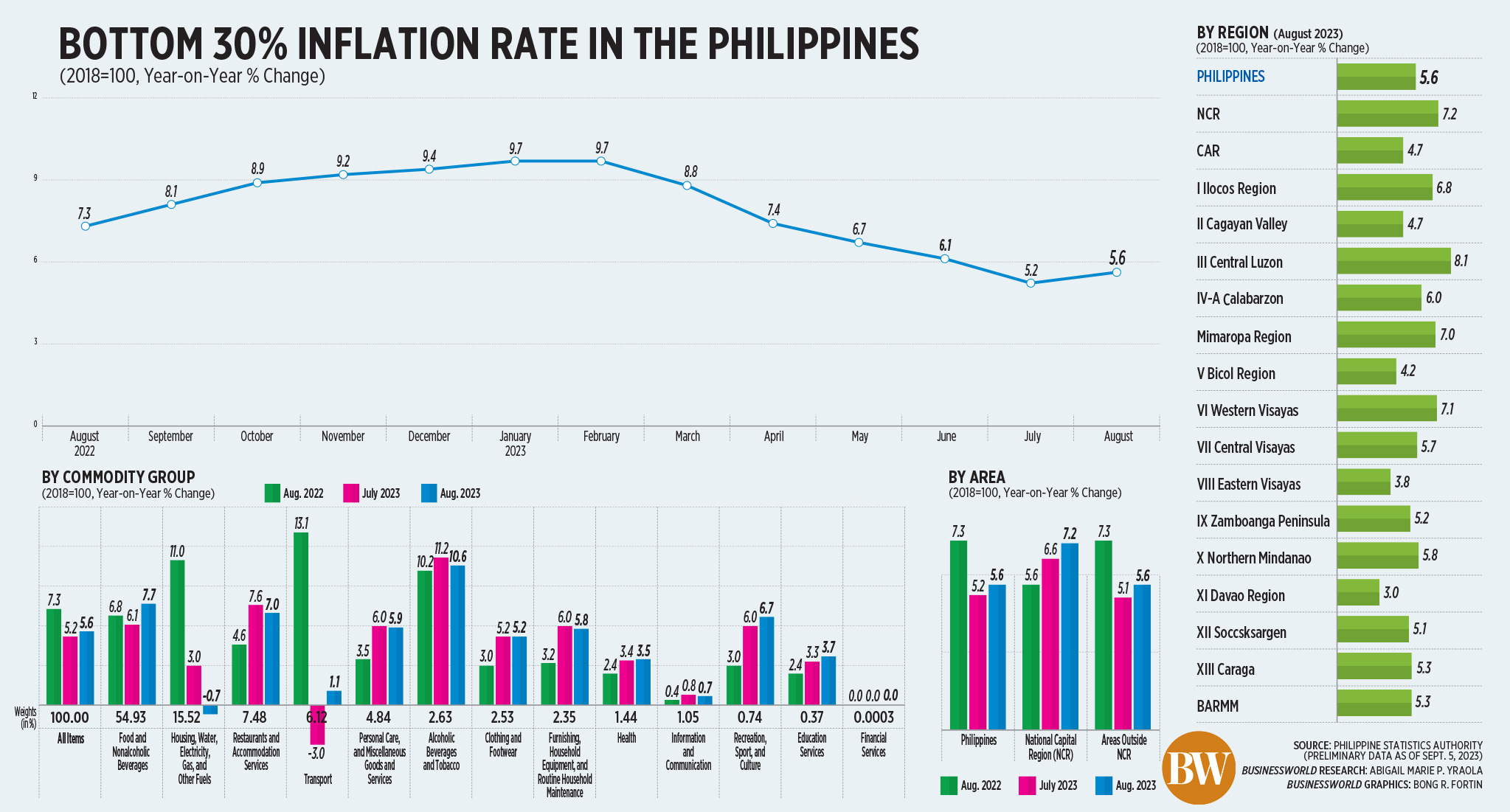
HEADLINE INFLATION accelerated for the first time in seven months in August, amid a spike in the prices of rice, vegetables and fuel, the Philippine Statistics Authority (PSA) said on Tuesday. Read the full story.

How much did each commodity group contribute to August inflation?

Filinvest Land tops off Cainta condo building

FILINVEST LAND, Inc. has topped off Building B of its mid-rise community under its brand for smart-value and family-oriented development projects.

“We are pleased to have reached this significant milestone in the construction of Futura East Building B,” said Aven D. Valderrama, Filinvest Land’s first vice-president-brand product and regional project head, in a statement on Tuesday.

Futura East is under the full-range property developer’s Futura by Filinvest brand.

“With its strategic location, extensive amenities, and commitment to green spaces, Futura East is poised to be the standard of condo living in Cainta, Rizal,” the official said.

Filinvest Land said the topping-off event signifies “remarkable progress” in the green community and brings more buyers and investors in Cainta, Rizal closer to experiencing Futura East’s advantages.

The project is located along Felix Ave., the main thoroughfare in Cainta. Its location offers residents “the benefits of the metro and the wonders of Rizal.”

“Its accessibility is enhanced by its proximity to Marcos Highway, which conveniently connects the prominent cities of Quezon, Pasig, and Antipolo. The prime location also ensures that Future East residents can easily access urban centers or indulge in the scenic beauty and nearby cultural attractions of Rizal,” the company said.

Futura East is part of Filinvest Land’s mixed-used township East Town, a 7.9-hectare development that mixes “urban convenience and refreshing surroundings.”

The company said 60% of East Town is dedicated to open spaces, while the inclusion of a commercial strip provides shopping and dining options.

Futura East Building B is targeted for completion by the first quarter of 2025.

On Tuesday, shares in Filinvest Land were unchanged at P0.65 each.

How PSEi member stocks performed — September 5, 2023

Here’s a quick glance at how PSEi stocks fared on Tuesday, September 5, 2023.


Japan’s Hamaguchi revives himself with dark nature film

EVILDoes Not Exist (2023) —IMDB.COM

VENICE — Director Ryusuke Hamaguchi felt he needed a break after promoting two back-to-back hits, so he vanished into the Japanese countryside to make a new movie, Evil Does Not Exist, which premiered at Venice on Monday.

Mr. Hamaguchi won an Oscar for best international film with Drive My Car in 2022 and took the Grand Jury Prize at the 2021 Berlin Film Festival with his romantic drama Wheel of Fortune and Fantasy, significantly boosting his international profile.

“I felt the need to rest and to recover from the promotional period, which really took its toll on me. I think that’s why I made this film,” Mr. Hamaguchi told Reuters ahead of the screening of Evil Does Not Exist.

“Making this movie was like a process of recovery for me and I feel very fortunate it also resulted in getting invited to a festival like this,” he said.

Few people even realized he was making the feature and its inclusion in the Venice line-up — the only Asian movie in the main competition — came as a total surprise to many.

The film shows what happens to a small, rural community when a Tokyo talent agency decides to build an upmarket glamping site in the nearby woods, threatening to contaminate the village water supply and disturb the balance of nature.

“What I found interesting was that this really happened and the plan and proposal were so sloppy that there was no way it would have ever worked,” Mr. Hamaguchi said.

The developers try to involve the local handyman, a single father raising an inquisitive young girl, in their ill-conceived project and a slow sense of doom gradually envelops the film, calling into question its very title.

“Where the title came from is really me watching and observing nature,” said Mr. Hamaguchi.

“There seems to be no evil there. But that’s not really the message of the film and I don’t think anyone watching the film will think that evil does not exist,” he said.

Mr. Hamaguchi brought much of his cast to Venice, including the young protagonist, who waved enthusiastically to photographers as she walked the famous red carpet.

The director said he had been due to come to Venice three years ago after Wife of a Spy, for which he wrote the screenplay, got selected. However, the COVID pandemic prevented him from attending.

“I can’t say this makes up for it, exactly, but I am very happy to get to come to this beautiful city this time around.” — Reuters