Home Blog Page 432

Macron convenes emergency meeting to discuss Greenland, Iran

FRENCH PRESIDENT EMMANUEL MACRON — REUTERS

PARIS — President Emmanuel Macron convened an emergency defense cabinet in Paris on Thursday to discuss US President Donald’s Trump’s stated intent to acquire Greenland and the forceful crackdown on nationwide protests in Iran.

In an overnight message on X, Mr. Macron said a first group of French military personnel were already headed to Greenland to participate in an exercise organized by Denmark and Greenland, an overseas Danish territory.

The crisis meeting, confirmed by a French official, was scheduled to begin at 0700 GMT.

Allied nations including Germany, Norway, and Sweden have begun deploying troops to Greenland in a show of support to Copenhagen and Nuuk.

The deployment follows a high-stakes meeting between US, Danish, and Greenlandic officials, indicated that there were still fundamental, if not intractable, differences between how Washington, Copenhagen, and Nuuk see the island’s future.

“At Denmark’s request, I have decided that France will participate in the joint exercises organized by Denmark in Greenland,” Macron said in his X post. “The first French military elements are already en route. Others will follow.”

Those deploying to Greenland were mountain specialists, Olivier Poivre d’Arvor, France’s ambassador to the Poles told France Info. The first batch numbered about 15 and were helping prepare the exercise dubbed Operation Arctic Endurance, he said.

Mr. Macron is due to deliver a New Year’s address to the armed forces later on Thursday. — Reuters

Two dead in Thailand after another crane collapses, crushing cars

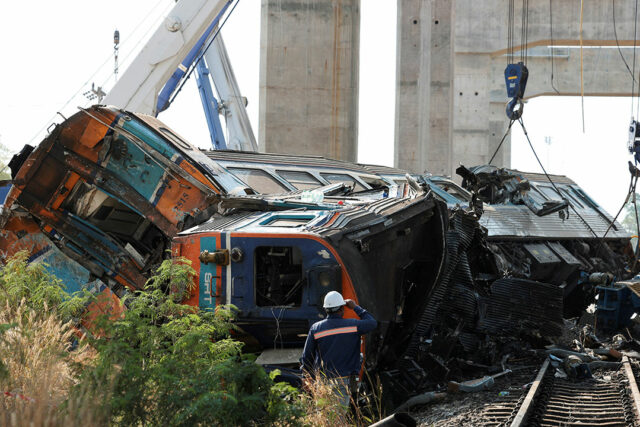
Wreckage at the site where a train was derailed when a construction crane collapsed and fell onto its carriages, causing several casualties, in Sikhio district, Nakhon Ratchasima province, Thailand, January 14, 2026. — REUTERS/CHALINEE THIRASUPA TPX IMAGES OF THE DAY

BANGKOK — A crane collapsed onto a road near Thailand’s capital on Thursday, crushing two vehicles and killing two people a day after a similar accident in the northeast caused the derailing of a train and the deaths of 32 passengers.

Thailand’s transport minister said construction firm Italian-Thai Development, whose crane fell onto the train in northeastern Nakhon Ratchasima province a day earlier, was also involved in the crane accident near Bangkok.

Thursday’s incident took place in Samut Sakhon province, where the crane, which was being used in building an elevated highway, fell onto the road beneath and crushed two cars, according to local police, who said two people were also injured.

SERIES OF FATAL CONSTRUCTION ACCIDENTS
It was the latest in a series of fatal accidents caused by construction projects in Thailand, several involving Italian-Thai, including the collapse of a partially-built Bangkok tower last year that killed at least 89 people during a 7.7-magnitude earthquake and led to charges of negligence against 23 people, its president among those.

Italian-Thai declined to immediately comment on the latest incident and did not immediately respond to an email seeking comment.

Images from the scene showed a mangled green crane and huge pieces of concrete that had crushed the vehicles below. Video from news outlet Thai Rath showed cars reversing to avoid the wreckage amid a cloud of dust from the collapsed concrete.

Thai Prime Minister Anutin Charnvirakul, who was once president of his family’s construction firm Sino-Thai Engineering & Construction, said two incidents showed it was time for more action to ensure safety.

“We have to fix the law,” said Mr. Anutin, who had visited the site of the train disaster in the northeast on Wednesday.

“Instead of telling agencies to do this or that, we have to have a meeting and we will have to do something.”

Thailand, Southeast Asia’s second-biggest economy, has been undergoing significant infrastructure development, from elevated highways and high-speed rail lines to major expansion of its elevated rail network in Bangkok.

‘OVER AND OVER AGAIN’
Transport Minister Phiphat Ratchakitprakarn said it was crucial to determine whether these were caused by accidents or other factors.

“The incident happened over and over again. It was caused by the same contractor,” he said during a talk show interview with Channel 3 television, referring to Italian-Thai.

“I am confused about what is happening to the company.”

Authorities said an investigation into Wednesday’s accident in the northeast was ongoing.

As well as the 32 fatalities, 66 of the 195 passengers on the train were also injured after a crane involved in building structures for an elevated high-speed rail project collapsed onto an existing train line below.

The cross-country high-speed rail project will connect to China through Laos. The government said last year that more than a third of construction had been completed in the segment connecting Bangkok to Nakhon Ratchasima, with the whole line to Nong Khai at the border with Laos ready by 2030.

Italian-Thai, a firm founded in 1958 by Italian and Thai partners, in a statement said it accepted responsibility for compensating families of those impacted by the train derailment. — Reuters

Russia expels British diplomat it accuses of spying

A RUSSIAN FLAG flies with the Spasskaya Tower of the Kremlin in the background in Moscow, Russia, Feb. 27, 2019. — REUTERS

MOSCOW — Russia on Thursday expelled a British diplomat who it said was an undeclared officer in Britain’s intelligence services, and warned London that Moscow would not tolerate such espionage activities on its territory.

The FSB, the main successor to the Soviet-era KGB, named the British diplomat, a second secretary at the Moscow embassy, and said he was working undercover for Britain’s spy service. Russian media carried pictures of the diplomat.

Russia said he has been given two weeks to leave Russia. Britain’s Foreign Office did not immediately respond to a request for comment.

Russia’s foreign ministry summoned Britain’s charge d’affaires in Russia, Danae Dholakia, to issue a formal protest about the situation.

“It was again stressed that Moscow would not tolerate the activities of undeclared British intelligence officers in Russia,” the foreign ministry said in a statement.

“A warning was also issued that if London escalates the situation, the Russian side will give a decisive ‘mirror’ response,” it said.

Protesters at the foreign ministry chanted anti-British slogans in front of the British diplomatic car carrying the charge d’affaires.

Amid the war in Ukraine, Russia and the West have repeatedly accused each other of unfurling espionage campaigns of an intensity not seen since the depths of the Cold War.

Russia says that the Central Intelligence Agency (CIA), Britain’s Secret Intelligence Service, known as MI6, and France’s DGSE have all stepped up attempts to steal secrets, recruit Russians and sow discord inside Russia.

Western European spy chiefs say that the FSB, Russia’s SVR foreign intelligence service and the GRU military intelligence service have mounted major cyber attacks and sabotage campaigns across the Western world, something Moscow denies. — Reuters

Trump’s greenlight for Nvidia AI chips to China draws fire from lawmakers, former officials 

STOCK PHOTO | Image by FREEPIK and NVIDIA

WASHINGTON — US lawmakers and former officials on Wednesday questioned President Donald Trump’s decision to allow Nvidia to sell its second most powerful AI chips in China, arguing the move erodes America’s AI edge and threatens to electrify Beijing’s military.

The Trump administration on Tuesday gave a formal green light to China-bound sales of Nvidia’s H200 chips, putting in place a rule that will likely kickstart shipments of the H200 despite deep concerns among China hawks in Washington.

Matt Pottinger, who served as a senior White House Asia advisor during Mr. Trump’s first term, told a congressional hearing that the administration is on the “wrong track” on AI and that its decision to allow the chip sales will damage its goal of winning the AI race.

Selling H200s to China “will supercharge Beijing’s military modernization, enhancing capabilities in everything from nuclear weapons to cyber warfare, autonomous drones, biological warfare and intelligence and influence operations,” he said. “Congress needs to put guardrails in place so that this mistake can’t be repeated,” he added.

Some Republican lawmakers echoed his concerns, without explicitly condemning the policy change.

“You cannot sell military-grade AI technology to China,” Michael McCaul said, without referencing H200s specifically. “They steal so much intellectual property from this country but we don’t have to sell it to them.”

National security fears around Beijing’s access to American AI chips had prompted the Biden administration to bar sales of the prized semiconductors to China.

The Trump administration, led by White House AI czar David Sacks, has said shipping advanced AI chips to China discourages Chinese competitors – such as heavily sanctioned Huawei – from redoubling efforts to catch up with the most advanced chip designs from Nvidia and AMD.

Mr. Pottinger described that notion as a “fantasy.”

The regulations released on Tuesday specify that before being exported to China, chips must be reviewed by a third-party testing lab to confirm their technical AI capabilities. China also cannot receive more than 50% of the total amount of chips sold to American customers.

Nvidia will need to certify there are enough H200s in the US before shipping any to China. Chinese customers must demonstrate “sufficient security procedures” and cannot use the chips for military purposes.

At least one Republican lawmaker, Congressman Brian Mast, who chairs the House Foreign Affairs Committee holding the hearing, praised some guardrails contained in the regulations, describing “know your customer” provisions in the measure as “significant.”

In contrast, Jon Finer, who served as deputy US national security advisor under former Democratic President Joe Biden, said the rules would create a sizeable new workload for the Commerce Department, which oversees export control policy, and would rely on Chinese buyers to make truthful statements about their own customers.

Democratic lawmakers were more explicit in their criticism of Mr. Trump’s policy shift.

“It’s truly like Trump is handing our opponents our coordinates in the middle of a battle,” Democratic Congressman Gabe Amo said. “Why are we giving up our advantage?” he asked the panelists.

The White House and the US Commerce Department, which oversees export controls, did not immediately respond to requests for comment. The Chinese embassy in Washington and Nvidia did not immediately respond to requests for comment. — Reuters

Japan, Philippines sign new security pacts as regional tensions rise

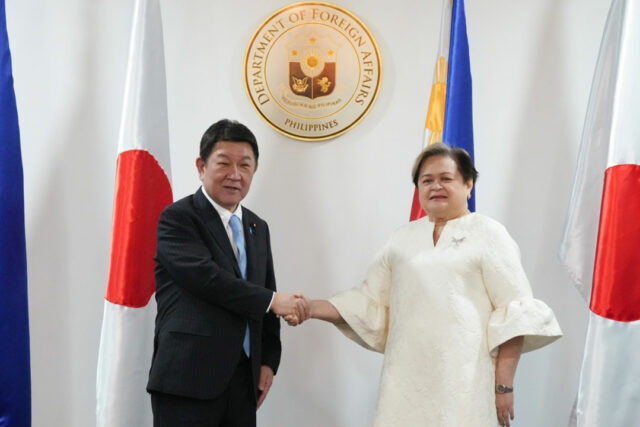
Motegi Toshimitsu, Minister for Foreign Affairs of Japan, who is visiting Manila, met with Maria Theresa Lazaro, Secretary of Foreign Affairs of the Republic of the Philippines on Thursday. — COURTESY OF EMBASSY OF JAPAN IN THE PHILIPPINES

MANILA — The Philippines and Japan signed two defense pacts on Thursday, including a deal allowing their forces to exchange supplies and services, with both countries seeking to strengthen security cooperation in response to rising regional tensions.

The Acquisition and Cross-Servicing Agreement, designed to enable the swift provision of supplies and services between their militaries, comes months after a landmark Reciprocal Access Agreement between two of Washington’s closest Asian allies took effect.

Japanese Foreign Minister Toshimitsu Motegi signed the deals in Manila during a nine‑day Middle East and Asia tour, with stops in Israel, the Palestinian territories, Qatar and India, reflecting Tokyo’s growing strategic footprint.

Mr. Motegi and his Philippine counterpart Foreign Affairs Secretary Ma. Theresa P. Lazaro, also announced a $6 million Official Security Assistance from Tokyo to fund the building of facilities to house rigid‑hulled inflatable boats donated by Japan to boost Manila’s naval capabilities.

Japan has voiced concerns about rising maritime tensions in East Asia, opposing any unilateral attempt to change the status quo and backing Philippine maritime security as part of a broader trilateral framework with the United States.

“The Secretary and I also confirmed the importance of the Japan, Philippines, US trilateral cooperation in the face of an increasingly severe strategic environment,” Mr.  Motegi said in a joint press conference with Ms. Lazaro.

Japan has supported the 2016 ruling by the Permanent Court of Arbitration in The Hague rejecting China’s expansive South China Sea claims, a decision Beijing has rejected.

Ms. Lazaro said both nations recognize the value of promoting the rule of law, including the freedom of navigation and overflight, adding that Japan remained a vital strategic partner.

Mr. Motegi’s visit comes as the Philippines takes over the chair of the Association of Southeast Asian Nations, and as tensions rise in the Taiwan Strait.

Japan has warned that peace and stability around Taiwan are vital to global security, and remarks by Prime Minister Sanae Takaichi in November that a Chinese attack on Taiwan could trigger Japanese military action drew a furious response from Beijing, including a travel boycott and an export ban on dual-use items.

China claims sovereignty over Taiwan, which sits just over 100 kilometers (60 miles) from Japanese territory, and has not ruled out using force to take control of the island. Taiwan rejects Beijing’s claim and says only Taiwan’s people can decide their future.

Japan has embarked on a historic military build-up to counter Beijing’s growing might and assertiveness in the region. — Reuters

Four space station crewmates, one ailing, begin emergency return flight

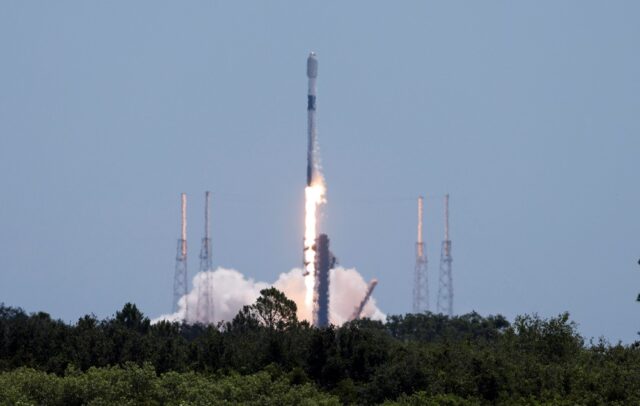
SpaceX Falcon 9 rocket lifts off carrying Starlink V2 Mini satellites into low Earth orbit, in Cape Canaveral. — Reuters

A SPACEX CAPSULE departed the International Space Station on Wednesday carrying a four-member crew on an emergency return flight to Earth necessitated by an undisclosed serious medical condition afflicting one of the astronauts aboard.

The Crew Dragon capsule carrying two US NASA astronauts, a Japanese crewmate, and a Russian cosmonaut undocked from the space station and began its descent from orbit at about 5:20 p.m. EST (2220 GMT). It was headed for a splashdown in the Pacific Ocean off the California coast early on Thursday.

If all goes as planned, the capsule dubbed Endeavor will parachute into the sea following a return flight of about 10-1/2 hours, capped by a fiery re-entry through Earth’s atmosphere, concluding a 167-day mission.

Live video from a NASA webcast of the departure showed the capsule separating from the ISS and drifting away from the orbiting laboratory as the two vehicles soared some 418 kilometers  (260 miles) over the Earth south of Australia.

The astronauts were seen strapped into the crew cabin, seated side by side and wearing their helmeted white and black space suits as the undocking proceeded.

MYSTERY MEDICAL ISSUE
The plan to bring all four members of Crew-11 home a few weeks ahead of schedule was announced January 8, with NASA Administrator Jared Isaacman saying one of the astronauts faced a “serious medical condition” that required immediate medical attention on the ground.

This marks the first time NASA has cut short the mission of an ISS crew because of a health emergency.

NASA officials have not identified which of the four crew members was experiencing a medical issue or described its nature, citing privacy concerns.

The crew consists of U.S. astronauts Zena Cardman, 38, and Mike Fincke, 58, Japanese astronaut Kimiya Yui, 55, and Russian cosmonaut Oleg Platonov, 39. They arrived at the space station following a launch to orbit from Florida in August.

Mr. Fincke, a retired Air Force colonel who was the station’s designated commander, and Ms. Cardman, a rookie astronaut and geobiologist assigned as flight engineer, had been scheduled to conduct a six-hour-plus spacewalk last week to install hardware outside the station. The spacewalk was canceled on January 7 over what NASA then characterized as a “medical concern” with an astronaut.

NASA Chief Health and Medical Officer James Polk later said the medical emergency did not involve “an injury that occurred in the pursuit of operations.”

In an Instagram post a few days ago, Mr. Fincke, wrapping up the fifth space mission of his NASA career, wrote that the four members of Crew-11 “are all OK,” adding, “Everyone on board is stable, and well cared for.”

“This was a deliberate decision to allow the right medical evaluations to happen on the ground, where the full range of diagnostic capability exists. It’s the right call, even if it’s a bit bittersweet,” Mr. Fincke wrote.

Crew-12, the 12th regular crew rotation mission flown by SpaceX to the ISS, is expected to launch in mid-February with four more astronauts. In the meantime, the space station remains occupied by NASA astronaut Christopher Williams and two cosmonauts who flew to the ISS aboard a Russian Soyuz spacecraft in November. — Reuters

Tropical Depression Ada maintains strength; Storm Signal No. 1 up in a dozen areas

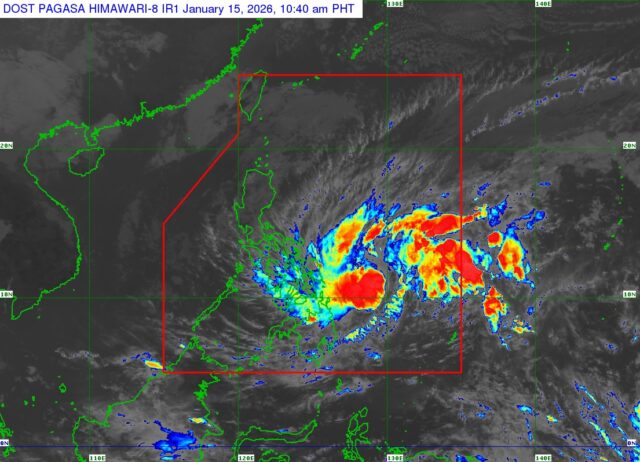
DOST-PAGASA FB PAGE

Tropical Depression Ada has maintained its strength as it moves near Eastern Visayas, according to the Philippine Atmospheric, Geophysical and Astronomical Services Administration (PAGASA) on Thursday. Storm Signal No. 1 has been raised over a dozen areas.

Ada continues to pack maximum sustained winds of 55 kilometers per hour (kph) and gusts of up to 70 kph, PAGASA said in its 11:00 a.m. advisory.

It was last located 420 kilometers east of Surigao City, Surigao del Norte, moving west-northwestward at 10 kph.

As the storm remains over the sea and continues to gain strength, it may intensify into a tropical storm within the next 12 to 24 hours, which may prompt the hoisting of Storm Signal No. 2 over affected areas.

As of the forecast period, PAGASA said Storm Signal No. 1 is in effect over a dozen areas, including Sorsogon, the southeastern portion of Albay, and Catanduanes.

It is likewise in effect over Northern Samar, Samar, Eastern Samar, the eastern portion of Biliran, the eastern portion of Leyte, Southern Leyte, Dinagat Islands, Surigao del Norte, and Surigao del Sur.

Under Storm Signal No. 1, minimal to minor wind threats are expected within 36 hours, which may cause slight damage to infrastructure made of light materials.

In a separate advisory, PAGASA also raised rainfall warnings over areas affected by Tropical Depression Ada.

Yellow rainfall warnings are in effect from Thursday until Friday over Northern Samar, Samar, Biliran, Leyte, Southern Leyte, Dinagat Islands, Surigao del Norte, Surigao del Sur, and Agusan del Norte.

These areas may receive 50 to 100 millimeters of rainfall within 24 hours, which could result in localized flooding and landslides in hazard-prone areas.

Meanwhile, an orange rainfall warning is in effect from Friday until Saturday noon over Catanduanes, Northern Samar, and Eastern Samar.
The warning is also raised over Camarines Sur, Albay, and Catanduanes from Saturday noon until Sunday noon, PAGASA said.

Under an orange rainfall warning, heavier rainfall ranging from 100 to 200 millimeters is expected, which may lead to widespread flooding and landslides in highly susceptible areas.

As for its track, Tropical Depression Ada is forecast to be about 265 kilometers east of Guiuan, Eastern Samar by Friday morning.

By Saturday morning, it may move to around 165 kilometers east-northeast of Catarman, Northern Samar, and by Sunday morning, about 150 kilometers east-northeast of Virac, Catanduanes.

By Monday, it is expected to be approximately 500 kilometers east of Infanta, Quezon.

PAGASA said that, as of the forecast period, the cyclone is not expected to make landfall, although there remains a possibility that it may make landfall over parts of Eastern Visayas or the Bicol Region. — Edg Adrian A. Eva

Free kidney testing aims to curb rising CKD cases

Urine Albumin-to-Creatinine Ratio (UACR) screening at Mercury Drug Shangri-La Plaza in Mandaluyong. — ALMIRA S. MARTINEZ

Local drugstore chain Mercury Drug Corp., in partnership with AstraZeneca and Diabetes Philippines, said on Wednesday that it aims to delay the “end cases” of Chronic Kidney Disease (CKD) by offering early detection through free Urine Albumin-to-Creatinine Ratio (UACR) screening.

“Our goal is to be able to find out who among these patients or Filipinos may potentially have kidney disease because kidney disease is asymptomatic,” AstraZeneca Philippines Medical Affairs Director Cyril Joseph P. Tolosa told BusinessWorld in an interview.

“By being able to have yourself tested or screened, there is an opportunity for you to address the problem of kidney disease early,” he added.

The UACR test is a non-invasive procedure that measures the amount of albumin, a type of protein, in the urine relative to creatinine, a waste product. Tracing the amount of protein that leaked into the urine could indicate a “critical early warning sign” of kidney stress that requires early intervention.

“The problem with kidney disease is if you address it late, there’s not much you can do,” Mr. Tolosa said. “This patient will just progress to dialysis which is the worst thing that could happen for this patient.”

Diabetes Philippines Treasurer Rey D.F. Rosales noted that early screening, like the UACR test, could also slow down or prevent dialysis treatment.

“If the patient has been diagnosed with chronic kidney disease, we classify them in terms of the risk of progression to end-stage renal disease,” he told BusinessWorld at the sidelines of the launch.

“We want early screening so we can identify the CKD patient’s stage and manage it properly to delay it,” he added.

The free UACR test is available across four Mercury Drug branches, specifically, Pavilion Mall and Shangri-La Plaza in Mandaluyong, TriNoma Mall in Quezon City, and in Noveleta, Cavite.

The free test targets to benefit more than 13,000 Filipinos nationwide.

“Anybody who walks into this Mercury Drug branch can avail of the screening. They don’t need to bring anything, they don’t need to show anything,” Mr. Tolosa said.

“The healthcare professional, specifically the nurse, will request them to provide their urine in the cup and once they’re able to provide the specimen, they will be tested for UACR and the nurse will advise the patient as necessary,” he added.

According to the National Kidney Transplant Institute (NKTI), 64,845 dialysis patients were recorded in 2024, a 22% increase from the previous year. Among the most common kidney disease cases are hypertensive nephrosclerosis (33.07%), diabetic nephropathy (30.04%), and chronic glomerulonephritis (12.20%).— Almira Louise S. Martinez

Global trade finance gap at $2.5 trillion as global trade tensions rise, ADB says

More foreign capital went into the country in July to yield a net inflow for a second straight month. — REUTERS/DADO RUVIC/ILLUSTRATION

SINGAPORE – Financial institutions globally failed to meet $2.5 trillion in financing that companies needed for trade last year, holding back the global economy, according to a new survey by the Asian Development Bank.

Though the figure was unchanged since the last survey in 2023, ADB head of trade and supply chain finance Steven Beck said the persistently large gap represented a lost opportunity to drive global growth and development. The gap has also widened since 2015, when it stood at $1.5 trillion.

“Without the financing to back trade, imports, and exports, we’re just not going to be able to realize the kind of growth and development that we can from trade,” he said.

Mr. Beck added that the current policy environment created by tariffs imposed by the United States will drive greater demand for capital as companies diversify their trading relationships and reconfigure supply chains.

“If we don’t have sufficient financing to back that sort of transition into this sort of new world of trade, then the transition is going to be more bumpy than it needs to be,” Mr. Beck said.

In its report released on Thursday, ADB said the trade finance gap could also reflect cyclical factors rather than a lack of access, saying that falling commodity and energy prices since 2023 might have reduced working capital requirements, especially for small and medium-sized enterprises.

Fintech platforms that emerged from a boom five years ago may also be helping to fill the gap, Beck noted, adding that deeper study was needed into their impact on financing.

The report also noted a gradual growth in alternative currencies used, including China’s yuan. Though the US dollar was still used in over 82% of traditional trade finance transactions, ADB found that nearly 57% of bank respondents perceive a growing need for the use of local currencies.

Mr. Beck said this was partially a result of supply chain reconfigurations, with some trade no longer passing through the United States, but the lack of access to the U.S. dollar was also a factor.

“So if we can increase availability of local currency financing solutions then, presumably, we’ll be able to reduce that gap, at least to some extent,” he said. — Reuters

Uganda to vote in tense election clouded by succession questions

KAMPALA — Ugandan President Yoweri Museveni is seeking to extend his rule into a fifth decade in an election on Thursday with internet restricted across the country following an often violent campaign.

Mr. Museveni is expected to fend off a challenge from the popular singer Bobi Wine, but the vote will be a test of the 81-year-old leader’s political strength and ability to avoid the kind of unrest that has rocked neighbors Tanzania and Kenya.

The longtime leader has campaigned on a slogan of “protecting the gains”, vowing to maintain peace and lift the country into middle-income status.

Mr. Wine, a 43-year-old pop star nicknamed the “Ghetto President” for his humble origins, has promised to end what he calls Mr. Museveni’s “dictatorship” and has appealed to young people angry about scarce economic opportunities. More than 70% of Uganda’s population is under the age of 30.

HUNDREDS ARRESTED, AT LEAST ONE KILLED
Security forces have repeatedly opened fire at Mr. Wine’s campaign events, killing at least one person, and have arrested hundreds of his supporters. Mr. Museveni’s government has defended the security forces’ actions as a justified response to what it called lawless conduct by opposition supporters.

The military has deployed heavily on the streets of the capital Kampala and authorities cut internet access and limited mobile access across the country on Tuesday to curb what they called “misinformation” about the vote.

The UN Human Rights Office said last week that the elections were taking place amid “widespread repression and intimidation”.

Besides Mr. Wine, six other opposition candidates are challenging Mr. Museveni – Africa’s third-longest-ruling head of state. Voters will also choose more than 500 members of parliament. Polls are due to close at 4 p.m. (1300 GMT) with results expected to be announced within 48 hours, i.e. by Saturday afternoon.

MUSEVENI IS A STRATEGIC PARTNER OF THE WEST
Mr. Museveni came to power at the head of a rebellion in 1986. He has changed the constitution twice to remove age and term limits, and his dominance of Ugandan institutions means there is little prospect of an election upset, political analysts say.

As president, he has positioned Uganda as a strategic partner of Western nations, sending troops to regional hotspots like Somalia and taking millions of refugees.

Economic growth, traditionally reliant on agriculture and tourism, is expected to surge into double digits when crude oil production from fields run by France’s TotalEnergies and China’s CNOOC begins later this year.

Mr. Museveni has faced criticism for alleged human rights abuses and unfair elections, charges his government has always denied.

The United States denounced his last election victory in 2021 – in which he defeated Mr. Wine with 58% of the vote – as neither free nor fair. Security forces killed more than 50 opposition supporters in the lead-up to that vote.

Similar criticism from President Donald Trump’s administration is unlikely this time after US diplomats were instructed in July not to comment on the integrity of foreign elections.

PRESIDENTIAL SUCCESSION IN FOCUS
Mr. Museveni is widely believed to favor his son, military chief Muhoozi Kainerugaba, as his successor, though the president has denied grooming him for the role.

Mr. Kainerugaba, a prolific social media presence who often posts threats of violence against opposition leaders, has openly declared his presidential ambitions, but his status as heir apparent is not universally accepted within the ruling party, analysts say.

“While bringing stability, another term for the 81-year-old President Museveni will heighten succession risks, effectively kicking the can down the road on leadership transition,” said Jervin Naidoo, a political analyst at Oxford Economics.— Reuters

Beijing tells Chinese firms to stop using US and Israeli cybersecurity software, sources say

STOCK PHOTO | Image from Freepik

CHINESE authorities have told domestic companies to stop using cybersecurity software made by more than a dozen firms from the US and Israel due to national security concerns, three people briefed on the matter said.

As trade and diplomatic tensions flare between China and the US and both sides vie for tech supremacy, Beijing has been keen to replace Western-made technology with domestic alternatives.

The US companies whose cybersecurity software has been banned include Broadcom-owned VMware, Palo Alto Networks and Fortinet, while the Israeli companies include Check Point Software Technologies, two of the sources said. The third source said other companies whose software was banned included Alphabet-owned Mandiant and Wiz, whose purchase Alphabet announced last year, as well as US firms CrowdStrike, SentinelOne, Recorded Future, McAfee, Claroty, and Rapid7.

Israeli firm CyberArk, whose purchase was announced by Palo Alto last year, was also on the list, as were Orca Security and Cato Networks, two Israeli firms, and Imperva, which was purchased by French defense firm Thales in 2023.

SHARES SLIDE FOLLOWING SOFTWARE BAN
Recorded Future said in an email that “Recorded Future does not do business in China, and has no intention to do business in China.” McAfee said it is a consumer-focused company whose technology “is not built for government or enterprise use.”

CrowdStrike said it did not sell into China and did not have offices, hire people or host infrastructure there, and thus could “only be negligibly affected.” SentinelOne said it had “no direct revenue exposure to China” as it did not sell to Chinese entities or resellers and had no offices there.

The other blacklisted companies did not immediately respond to Reuters’ requests for comment.

Shares of Broadcom were down more than 5% in Wednesday afternoon trading, while Palo Alto’s shares slipped about 1%. Fortinet shares fell around 2%.

Reuters was unable to establish how many Chinese companies received the notice that the sources said was issued in recent days.

Chinese authorities expressed concern the software could collect and transmit confidential information abroad, the sources said. They declined to be named due to the sensitivity of the situation.

China’s internet regulator, the Cyberspace Administration of China, and the Ministry of Industry and Information Technology had not responded to requests for comment at the time of publication.

PREPARATIONS UNDER WAY FOR TRUMP VISIT
The United States and China, which have been locked in an uneasy trade truce, are preparing for a visit by US President Donald Trump to Beijing in April.

While the West and China have clashed over China’s efforts to build up its semiconductor and artificial intelligence sectors, Chinese analysts have said Beijing has become increasingly concerned that any Western equipment could be hacked by foreign powers.

It has therefore sought to replace Western computer equipment and word processing software.

The country’s largest cybersecurity providers include 360 Security Technology and Neusoft.

Some of the US and Israeli companies facing a ban for their part have repeatedly alleged Chinese hacking operations, which China has denied.

Last month, Check Point published a report on an allegedly Chinese-linked hacking operation against an unidentified “European government office.” In September, Palo Alto published a report alleging a Chinese hacking effort targeted diplomats worldwide.

SIGNIFICANT CHINESE FOOTPRINT
Several of the firms do not conduct business with Chinese clients, but others have built a significant footprint in China.

Fortinet has three offices in mainland China and one in Hong Kong, according to its website. Check Point’s website lists support addresses in Shanghai and Hong Kong. Broadcom lists six China locations, while Palo Alto lists five local offices in China, including one in Macau.

The politics around foreign cybersecurity vendors has long been fraught. Such firms are often staffed with intelligence veterans, they typically work closely with their respective national defense establishments, and their software products have sweeping access to corporate networks and individual devices – all of which at least theoretically provides a springboard for spying or sabotage.

Suspicions about the origin and motive of Russian anti-virus firm Kaspersky, for example, eventually led to a purge of the software from US government networks in 2017. In 2024, sales of Kaspersky products were banned across the United States.— Reuters

Iran temporarily closes airspace to most flights, forcing airlines to reroute

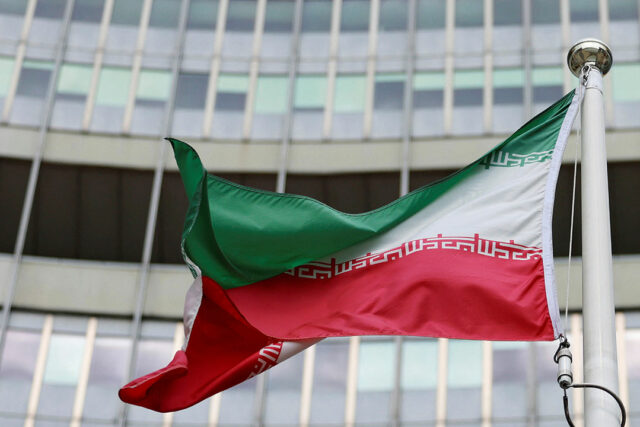
THE Iranian flag flutters outside the IAEA headquarters in Vienna, Austria, June 9, 2025. — REUTERS/LISA LEUTNER

WASHINGTON — Iran closed its airspace temporarily to most flights late on Wednesday, forcing airlines to cancel, reroute or delay some flights, amid concerns about possible military action between the United States and Iran.

Iran said in a notice posted by the US Federal Aviation Administration that it had closed its airspace to all flights except international ones to and from Iran with official permission at 5:15 p.m. ET (2215 GMT). The prohibition was set to last for more than two hours until 7:30 p.m. ET, or 0030 GMT, but the end time was an estimate, the notice said. It was still on the FAA website site 30 minutes after its estimated expiry.

Iranian airspace was almost completely empty of civilian airplanes at 7:15 p.m. ET except for two Mahan Air flights traveling between Iran and China, according to tracking data from FlightRadar24.

President Donald Trump has been weighing a response to the situation in Iran which is seeing its biggest anti-government protests in years.

The United States was withdrawing some personnel from bases in the Middle East, a US official said on Wednesday, after a senior Iranian official said Tehran had warned neighbors it would hit American bases if Washington strikes.

Missile and drone barrages in a growing number of conflict zones represent a high risk to airline traffic.

India’s largest airline, IndiGo said some of its international flights would be impacted by Iran’s sudden airspace closure. Air India said its flights were using alternative routes that could result in delays or cancellations.

A flight by Russia’s Aeroflot bound for Tehran returned to Moscow after the closure, according to Flightradar24 data.

Earlier on Wednesday, Germany issued a new directive cautioning the country’s airlines from entering Iranian airspace, shortly after Lufthansa rejigged its flight operations across the Middle East amid escalating tensions in the region.

The United States already prohibits all US commercial flights from overflying Iran and there are no direct flights between the countries.

Airline operators like flydubai and Turkish Airlines have canceled multiple flights to Iran in the past week.

“Several airlines have already reduced or suspended services, and most carriers are avoiding Iranian airspace,” said Safe Airspace, a website run by OPSGROUP, a membership-based organization that shares flight risk information. “The situation may signal further security or military activity, including the risk of missile launches or heightened air defense, increasing the risk of misidentification of civil traffic.”

A Ukraine International Airlines jet was downed by Iran’s military in 2020, killing all 176 passengers and crew.

Lufthansa said on Wednesday that it would bypass Iranian and Iraqi airspace until further notice while it would only operate day flights to Tel Aviv and Amman from Wednesday until Monday next week so that crew would not have to stay overnight. Some flights could also be canceled as a result of these actions, it added in a statement.

Italian carrier ITA Airways, in which Lufthansa Group is now a major shareholder, said that it would similarly suspend night flights to Tel Aviv until Tuesday next week.—Reuters