Home Blog Page 4314

Taiwan urges China to stop its ‘destructive’ military activities

REUTERS

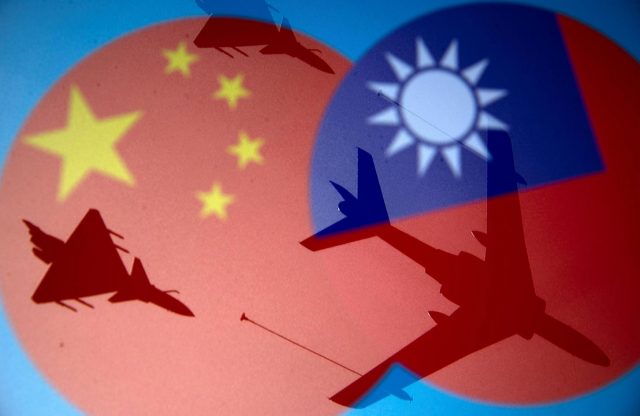
TAIPEI — Taiwan’s defense ministry on Monday urged China to stop “destructive, unilateral action” after reporting a sharp rise in Chinese military activities near the island, warning such behavior could lead to a sharp increase in tensions.

China, which views democratically governed Taiwan as its own territory, has in recent years regularly carried out military drills around the island as it seeks to assert its sovereignty claims and pressure Taipei.

The ministry said that since Sunday it had spotted 103 Chinese military aircraft over the sea, a number it called a “recent high.”

Its map of Chinese activities over the past 24 hours showed fighter jets crossing the median line of the Taiwan Strait, which had served as an unofficial barrier between the two sides until China began regularly crossing it a year ago.

Other aircraft flew south of Taiwan through the Bashi Channel, which separates the island from the Philippines.

China’s activities over the past day have caused “serious challenges” to security in the strait and regionally, the ministry said in an accompanying statement.

Peace and stability in the Taiwan Strait are the common responsibilities of all parties in the region, it added.

“The continuous military harassment by the Communist military can easily lead to a sharp increase in tensions and worsen regional security,” the ministry said. “We call on the Beijing authorities to take responsibility and immediately stop such destructive unilateral actions.”

China’s defense ministry did not immediately respond to a request for comment.

In addition to the air force incursion near Taiwan over the weekend, China last week also dispatched more than 100 naval ships for exercises in the region, including in the strategic waters in the South China Sea and off Taiwan’s northeastern coast, a regional security official told Reuters.

The official, who declined to be named because of the sensitivity of the matter, said the activity put pressure on everyone in the region and called the scale of naval exercises the “largest in years.”

Taiwan’s defense ministry noted last week that July to September is traditionally the busiest season for Chinese military drills along the coast.

Chieh Chung, a military researcher at Taiwan’s National Policy Foundation think tank, said that there may not be a direct “political motivation” for these drills, but that China was pressuring Taiwan with longer missions across the median line.

China is also honing its abilities to operate fighters further out at sea, as seen with the Y-20 aerial refueling aircraft accompanying fighter jets, Chieh added.

China is bolstering its air power facing Taiwan, with a permanent deployment of new fighters and drones at expanded air bases, Taiwan’s defense ministry said in its biennial report this month. — Reuters

Climate protesters in New York send message to UN

ACTIVISTS gather around Times Square as they mark the start of Climate Week in New York City, New York, US, Sept. 17, 2023. — REUTERS

THOUSANDS of protesters kicked off “Climate Week” and filled the streets of Midtown, Manhattan, on Sunday ahead of the U.N. General Assembly this week, calling for President Joseph R. Biden and world leaders to end fossil fuel use.

With parades, concerts, and banging drums, some of the 15,000 expected waved signs that read “End Fossil Fuel Use” and “Fossil Fuels Kill” and “Declare a Climate Emergency.”

One man was dressed as a melting snowman warning of rising sea levels. The message was for world leaders to save the planet from the use of oil and gas believed to be driving a warming globe.

Sunday’s protests were part of a week-long international effort by Climate Group, a non-profit whose purpose is to drive climate change action and stop global warming, with more than 500 protests planned in the US, Germany, England, South Korea, India and elsewhere, totaling 54 countries.

Organizers of the protests expect a global turnout of more than a million people.

“Climate Week NYC is all about getting it done,” organizers wrote online. “Through celebrating climate action, challenging ourselves to do more, and exploring ways to increase ambition, Climate Week NYC inspires, amplifies and scrutinizes the commitments, policies and actions of those with the power to make change happen.”

Many scientists believe that so-called greenhouse gases caused by burning fossil fuels are warming the world and causing severe weather such as more intense hurricanes, heat waves, floods, wildfires and droughts.

Reductions in CO2 or carbon dioxide emissions are seen as a key element in abating climate change.

The demonstrations take place two months before this year’s U.N. COP28 climate summit, where more than 80 countries plan to push for a global agreement to gradually phase out coal, oil and gas.

A recent U.N. report warned that the world was on a dangerous track toward severe global warming, and said more action was needed on all fronts, including drastic drop in coal-fueled power use by 2030, Reuters reported. — Reuters

Letter shows Pope Pius XII probably knew about the Holocaust as early as 1942

EN.WIKIPEDIA.ORG
EN.WIKIPEDIA.ORG

WARTIME Pope Pius XII knew details about the Nazi attempt to exterminate Jews in the Holocaust as early as 1942, according to a letter found in the Vatican archives that conflicts with the Holy See’s official position at the time that the information it had was vague and unverified.

The yellowed, typewritten letter, reproduced in Italy’s Corriere della Sera on Sunday, is highly significant because it was discovered by an in-house Vatican archivist and made public with the encouragement of Holy See officials.

The letter, dated Dec. 14, 1942, was written by Father Lother Koenig, a Jesuit who was in the anti-Nazi resistance in Germany, and addressed to the pope’s personal secretary at the Vatican, Father Robert Leiber, also a German.

Vatican archivist Giovanni Coco told the Corriere that the importance of the letter was “enormous, a unique case” because it showed the Vatican had information that labor camps were actually death factories.

In the letter,  Mr. Koenig tells Mr. Leiber that sources had confirmed that about 6,000 Poles and Jews a day were being killed in “SS-furnaces” at the Belzec camp near Rava-Ruska, which was then part of German-occupied Poland and is now in western Ukraine.

“The newness and importance of this document derives from a fact: now we have the certainty that the Catholic Church in Germany sent Pius XII exact and detailed news about the crimes that were being perpetrated against the Jews,” Mr. Coco told the newspaper, whose article was headlined: “Pius XII Knew.”

Asked by the Corriere interviewer if the letter showed that Pius knew, Mr. Coco said: “Yes, and not only from then.”

DOCUMENTS SORTED HAPHAZARDLY
The letter made reference to two other Nazi camps — Auschwitz and Dachau — and suggested that there were other missives between Mr. Koenig and Mr. Leiber that either have gone missing or have not yet been found.

Supporters of Pius XII say he worked behind the scenes to help Jews and did not speak out in order to prevent worsening the situation for Catholics in Nazi-occupied Europe. His detractors say he lacked the courage to speak out on information he had despite pleas from Allied powers fighting Germany.

The letter was among documents Mr. Coco said were kept in haphazard ways in the Vatican’s Secretariat of State and only recently handed over to the central archives where he works.

Suzanne Brown-Fleming, director of International Academic Programs at the US Holocaust Memorial Museum in Washington DC, told Reuters in an email that the release showed that the Vatican was taking seriously Pope Francis’ statement that “the Church is not afraid of history” when he ordered the wartime archives opened in 2019.

“There is both a desire for and support for a careful assessment of the documents from a scientific perspective — whether favorable or unfavorable in what the documents reveal,” she said.

In an email to Reuters, David Kertzer, Pulitzer Prize-winning author of The Pope at War, a 2022 book about the Pius years, said Mr. Coco was a “top notch, serious scholar,” centrally placed in the Vatican to unearth the truth. 

Ms. Brown-Fleming, Mr. Coco and Mr. Kertzer will be part of a major conference on Pius XII and the Holocaust next month at the Pontifical Gregorian sponsored by Catholic and Jewish organizations, the US State Department and Israeli and American Holocaust research groups, among others. — Reuters

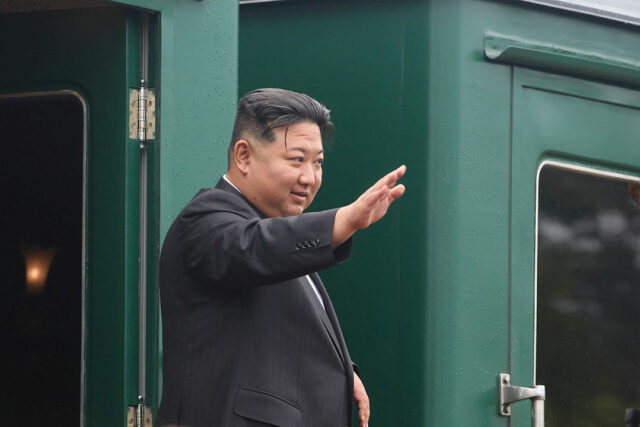
Rifle, fur hat, drones: North Korea’s Kim returns with gifts from Russia

North Korean leader Kim Jong Un waves as he boards his train at a railway station in the town of Artyom outside Vladivostok in the Primorsky region, Russia, Sept. 17, 2023. — GOVERNMENT OF RUSSIA’S PRIMORSKY KRAI/HANDOUT VIA REUTERS

SEOUL — North Korean leader Kim Jong Un headed home on Monday, most likely with gifts from his Russian hosts including a rifle, a cosmonaut’s glove, and military drones — which on their own are a violation of U.N. sanctions.

The following are some of the items he is bringing back to the “friendship” museum, where gifts received by the North’s three generations of leaders are kept.

After his summit with Russian President Putin, Mr. Kim received a Russian-made rifle “of the highest quality,” according to Kremlin spokesman Dmitry Peskov. Mr. Kim reciprocated with a rifle for Putin “made by North Korean craftsmen.”

Mr. Putin also presented a glove from a spacesuit worn in space, Russia’s TASS news agency said.

Oleg Kozhemyako, the governor of the Primorsky region, presented Mr. Kim with a set of modern, lightweight body armor designed for assault operations that protects the chest, shoulders, throat and groin, Russia media said.

Mr. Kim was also presented with five one-way attack drones and a Geranium-25 reconnaissance drone, which is widely used in the war in Ukraine, TASS said.

That violates at least two U.N. Security Council resolutions against the North — which Moscow voted to approve — imposed for its banned missile and nuclear activities.

Mr. Kim received a fur hat from Defense Minister Sergei Shoigu in Vladivostok, where he inspected Russian nuclear bombers, fighter jets equipped with hypersonic missiles and a warship.

There had been a scramble to determine the right size of the hat, Russia’s RIA news agency reported. Russia’s ambassador to Pyongyang, Alexander Matsegora, suggested a size slightly smaller than his own “very large head,” which turned out to be just right.

“It’s also important that this is a gift from the heart. And Comrade Kim Jong Un liked it,” Mr. Matsegora said.

Mr. Kim began his visit with a stop in Russia’s border town of Khasan, where he was presented with a photo of Yuri Gagarin, the cosmonaut who was the first human to orbit the Earth.

‘COMPARABLE TO THE LOUVRE’
North Korea has put much effort into showcasing the gifts that Mr. Kim, as well as his father, Kim Jong-il, and grandfather and state founder Kim Il Sung, received from foreign dignitaries, dedicating a special museum for them.

Nestled in the hills of the Myohyangsan mountain 160 km (99 miles) from Pyongyang, the International Friendship Exhibition is two imposing concrete structures built in the traditional architectural style with blue tiled roofs.

Opened in 1978, the museum comprises more than 100 showrooms with more than 115,000 items from more than 200 countries, according to the North’s state media.

The scale and importance of the collection make it comparable to the Louvre in Paris, North Korea’s sate media have said.

WHO ELSE SENT GIFTS?
The collection includes crystalware sent from former US President Jimmy Carter, tea cup set from French President Francois Mitterrand, a basketball signed by Michael Jordan given by former US Secretary of State Madeleine Albright on her visit in 2000 and a rifle given by the late Cuban leader Fidel Castro.

Propaganda plays heavily into how gifts from South Koreans are displayed, with the large-screen television set from former President Kim Dae-jung, who engaged Pyongyang with peace policies, receiving prominent showing.

The Dynasty sedan, which was Hyundai Motor’s flagship, was gifted to Kim Jong Il by the North Korean-born founder of the Hyundai Group, Chung Ju-yung, who spearheaded investment in the North after the 2000 inter-Korean summit. — Reuters

Climate change hitting fight against AIDS, TB and malaria

STOCK PHOTO | Image by WikiImages from Pixabay

LONDON — Climate change and conflict are hitting efforts to tackle three of the world’s deadliest infectious diseases, the head of the Global Fund to Fight AIDS, Tuberculosis (TB) and Malaria has warned.

International initiatives to fight the diseases have largely recovered after being badly affected by the COVID-19 pandemic, according to the Fund’s 2023 results report released on Monday.

But the increasing challenges of climate change and conflict mean the world is likely to miss the target of putting an end to AIDS, TB and malaria by 2030 without “extraordinary steps”, said Peter Sands, executive director of the Global Fund.

There are positives, he said. For example, in 2022, 6.7 million people were treated for TB in the countries where the Global Fund invests, more than ever before, and 1.4 million more people than in the previous year. The Fund also helped put 24.5 million people on antiretroviral therapy for HIV, and distributed 220 million mosquito nets.

But in a statement accompanying the report, the Fund said that getting back on track after the pandemic had been made “much more challenging by a combination of interconnected and colliding crises”, including climate change.

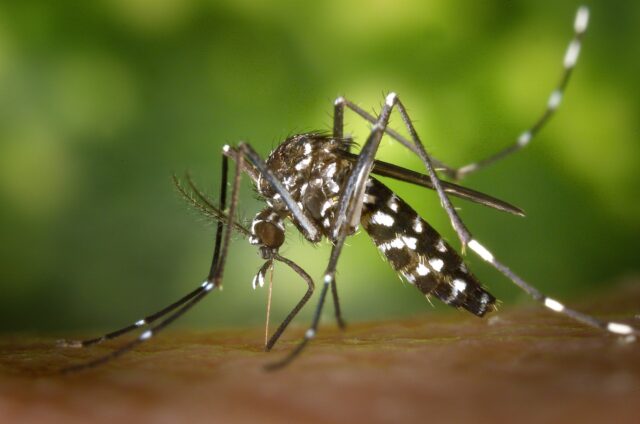
For example, malaria is spreading to highland parts of Africa that were previously too cold for the mosquito carrying the disease-causing parasite. Extreme weather events like floods are overwhelming health services, displacing communities, causing upsurges in infection and interrupting treatment in many different places, the report said. In countries including Sudan, Ukraine, Afghanistan and Myanmar, simply reaching vulnerable communities has also been immensely challenging due to insecurity, it added.

But Mr. Sands said there was still hope, in part due to innovative prevention and diagnostic tools. This week, there is a high-level meeting on TB at the UN General Assembly, and advocates hope for more of a focus on the disease. — Reuters

ECCP, AsBAA partner with DoTr for 2023 Aviation Summit

The Philippines’ tourism industry is steadily recovering with a growing number of international and domestic travelers. The surge in travel demand, coupled with the government’s commitment to tourism revival, underscores a need to establish a conducive environment for aviation stakeholders. Achieving sustainability in the aviation sector then necessitates collaborative efforts across all segments of society.

To address persistent challenges that have hindered the industry’s growth and to pave the way for a more resilient aviation sector, the European Chamber of Commerce of the Philippines (ECCP) and the Asian Business Aviation Association (AsBAA) have joined forces with the Department of Transportation (DoTr) to present the inaugural Aviation Summit.

Slated this Sept. 27-28 at the Manila Ballroom, Marriott Hotel Manila, Pasay City, the 2023 Aviation Summit will carry the theme of “Philippine Aviation: Ready for Takeoff.” The two-day event will serve as a dynamic platform for aviation stakeholders, industry experts, and government representatives to exchange insights, deliberate on industry challenges, and explore innovative solutions.

The Summit will also feature engaging discussions, presentations, and interactive sessions that seek to identify practical solutions for the nation’s aviation industry amidst the backdrop of a global pandemic.

“The ECCP is excited to collaborate with AsBAA and DoTr for this event. The Aviation Summit provides a crucial platform for industry leaders and stakeholders to engage in fruitful dialogues and collectively work towards a more robust aviation sector,” said Florian Gottein, executive director at ECCP.

Max Motschmann, vice-chairman at AsBAA, also emphasized the importance of the endeavor. “AsBAA is committed to advancing aviation excellence in the country. Partnering with ECCP and DoTr for the Aviation Summit is a testament to our dedication to establishing a road map for a safer, more resilient, and future-proof aviation industry in the Philippines.”

Confirmed speakers include Senate Committee Chairperson on Public Services Senator Grace Poe, Department of Transportation Secretary Hon. Jaime Bautista, Department of Tourism Secretary Hon. Christina Garcia Frasco, Department of Transportation Undersecretary Hon. Roberto Lim, Civil Aviation Authority of the Philippines Director General Capt. Manuel Antonio Tamayo, and International Air Transport Association (IATA) Area Manager for Southeast Asia Yuli Thompson, among others.

Participants can register for the event by emailing avsummit@eccp.com.

The Aviation Summit is one of the Chamber’s biggest flagship advocacy events organized with its Aviation Committee.


Spotlight is BusinessWorld’s sponsored section that allows advertisers to amplify their brand and connect with BusinessWorld’s audience by enabling them to publish their stories directly on the BusinessWorld website. For more information, send an email to online@bworldonline.com.

Join us on Viber at https://bit.ly/3hv6bLA to get more updates and subscribe to BusinessWorld’s titles and get exclusive content through www.bworld-x.com.

House Republicans eye short-term spending deal as shutdown looms

STOCK PHOTO | Image by David Mark from Pixabay

 – With a possible partial government shutdown looming in two weeks, House of Representatives Speaker Kevin McCarthy on Sunday said he would bring a defense spending bill to a vote “win or lose” this week, despite resistance from hardline fellow Republicans. Mr. McCarthy is struggling to bring fiscal 2024 spending legislation to the House floor, with Republicans fractured by conservative demands for spending to be cut to a 2022 level of $1.47 trillion – $120 billion below the spending on which Mr. McCarthy agreed with Biden in May.

Late on Sunday, members of the hardline House Freedom Caucus and the more moderate Main Street Caucus announced a deal on a shortterm stopgap bill to keep the government open until October 31, but with a spending cut of more than 8% on agencies apart from the Departments of Defense and Veterans Affairs.

The measure, which is unlikely to become law, also includes conservative restrictions on immigration and the US border with Mexico. It does not include funding for Ukraine, which Biden had requested.

Republicans have said that such a deal could allow the House to move forward on the defense spending bill this week.

But it was unclear whether the measure had sufficient Republican support to pass the chamber. The spending cuts were also likely to draw opposition from Democrats in the House and Senate, who reject the immigration provisions.

Republicans hold a narrow 221-212 majority in the chamber as they bicker over spending and pursue a new impeachment drive against President Joe Biden while the United States faces a possible fourth partial government shutdown in a decade.

Mr. McCarthy has begun to face calls for floor action seeking his ouster from hardline conservatives and others who have accused him of failing to keep promises he made to become speaker in January after a revolt from some of the most conservative Republicans in the House.

The Republican-controlled House and Democratic-led Senate have until Oct. 1 to avoid a partial shutdown by enacting appropriations bills that Biden, a Democrat, can sign into law, or by passing a shortterm stopgap spending measure to give lawmakers more time for debate.

Mr. McCarthy signaled a tougher stand with hardliners, telling the Fox News “Sunday Morning Futures” program that he would bring the stalled defense bill to the floor this week. The House last week postponed a vote on beginning debate on the defense appropriations bill due to opposition from the hardliners.

“We’ll bring it to the floor, win or lose, and show the American public who’s for the Department of Defense, who’s for our military,” Mr. McCarthy said.

Mr. McCarthy also said he wants to make sure there is no shutdown on Oct. 1, saying: “A shutdown would only give strength to the Democrats.”

Mr. McCarthy has held closed-door discussions over the weekend aimed at overcoming a roadblock by the conservative hardliners to spending legislation. They want assurances that legislation will include their deep spending cuts, as well as conservative policy priorities including provisions related to tighter border security that are unlikely to secure Democratic votes.

“We made some good progress,” Mr. McCarthy said.

Representative Elise Stefanik, the No. 4 House Republican, told the “Fox News Sunday” program that she was optimistic about moving forward on appropriations after closed-door discussions.

But Republican Representative Nancy Mace told ABC’s “This Week” that she expects a shutdown and did not rule out support for a vote to oust Mr. McCarthy’s ouster. Mace complained that the speaker has not made good on promises to her involving action on women’s issues and gun violence.

“Everything’s on the table at this point for me,” Ms. Mace said.

Ms. Mace played down the consequences of a shutdown, saying much of the government would remain in operation and that the hiatus would give government workers time off with back pay at a later date.

Democratic former House Speaker Nancy Pelosi said a shutdown would risk harming the most vulnerable members of society who depend on government assistance.

“We’re talking about diminishing even something as simple and fundamental as feeding the children,” Ms. Pelosi told MSNBC. “We have to try to avoid it.” – Reuters

Soaring rice prices sow hope – and trouble – for indebted Thai farmers

MDJAFF-FREEPIK

 – After finishing her latest rice harvest, Sripai Kaeo-eam hurriedly cleared her fields and planted a new crop in late August — ignoring a Thai government advisory to restrict further sowing of the grain this year to conserve water.

“This crop is our hope,” said the 58-year-old farmer in Thailand‘s central Chai Nat province, pointing to her green paddy seedlings only a few inches tall.

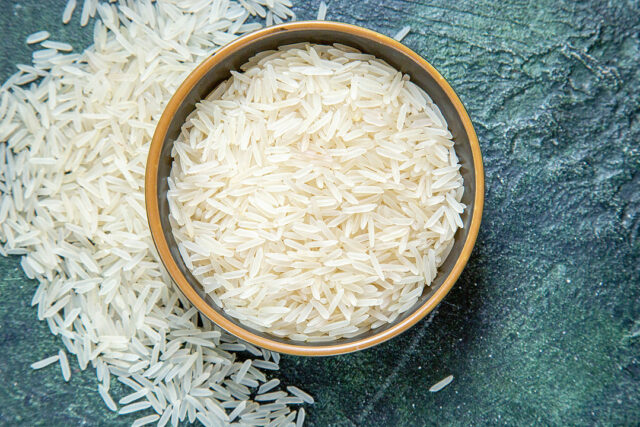
Ms. Sripai, who is trying to dig her way out of more than 200,000 Thai baht ($5,600) of debt, is motivated by the global spike in rice prices, which are close to their highest level in about 15 years after India — the world’s biggest shipper of the water-intensive grain — curbed exports.

Farmers across the agrarian heartland that makes Thailand the world’s second-largest rice exporter should be poised to benefit.

Instead, the amount of land under rice cultivation in Thailand decreased 14.5 percent in August compared to the same month last year, according to previously unreported government estimates. The figure has declined every year since 2020.

Thailand‘s centuries-old rice cultivation system is under severe stress from climate change, unsustainable farm debts and a lack of innovation, according to interviews with two experts and a review of government data.

These pressures on the sector, reported in detail for the first time by Reuters, are squeezing debt-laden Thai farmers despite tens of billions of dollars in subsidies over the past decade.

The handouts came in place of boosting agricultural research spending, which hammered productivity, the experts said. Many farming families are financially burdened after borrowing to fund their crops, according to government data, with debt now spanning generations.

A drop in cultivated land could slash Thailand‘s rice output, adding to already rampant food inflation after drought conditions in other key rice-producing countries and hitting billions of consumers for whom the grain is a staple food, said agricultural expert Somporn Isvilanonda.

Thailand exported 7.7 million tonnes of milled rice in 2022 to countries across the Middle East, Asia and Africa, according to Krungsri Research.

“The cultivated area is down because of lack of rainfall and irrigated water,” said Somporn, a senior fellow at the state-affiliated Knowledge Network Institute of Thailand (KNIT).

The water shortage is likely to worsen into 2024 as the dry El Nino weather phenomenon strengthens, according to government projections.

On the line for millions of farmers is not only their current crop, but a narrow window to escape a life crushed by debt. A good harvest could fetch prices that are up to double or triple that of most years, Ms. Sripai said.

“Now I am dreaming,” she said, “because India has stopped exporting.”

The Thai government’s rice department did not respond to questions sent by Reuters.

Rice is central to Thailand. A little under half its farmland is marked for rice cultivation, with over five million households involved, according to Krungsri.

Successive governments have spent 1.2 trillion Thai baht ($33.85 billion) on price and income interventions for rice farmers in the last decade, estimates Somporn.

“But the government didn’t do enough … to improve productivity,” he said.

Though prices are now high, “farmers cannot take the opportunity to produce rice,” Somporn said, adding that he expected output to drop around 30% over the next two growing seasons due to the water shortage.


DEBT AND DROUGHT

On a sweltering August morning, dozens of farmers and land owners protested outside a state-run agricultural bank in Chai Nat, where they had waited overnight to meet officials.

Danai Saengthabthim, 60, was among those at the hours-long meeting, where he sought to convince officials not to seize his land for failing to repay debts that have swelled over two generations.

The Bank for Agriculture and Agricultural Cooperatives said it does not have a policy of confiscating land from farmers who unintentionally default.

He is now pinning his hopes on Thailand‘s new coalition government for help. “The debt has just kept increasing over time,” he said.

Even before the new government took office, Ms. Sripai and other farmers from the region made repeated trips to the capital, Bangkok, to lobby the agriculture ministry.

“All the farmers in our group have debts,” said Ms. Sripai, who pays a rate of 6.875% on her loan. “We got the debt when we faced droughts, floods, and pests.”

Thailand has one of Asia’s highest household debt levels. In 2021, 66.7% of all agricultural households were in debt, largely from farming-related activities, according to government data.

Prime Minister Srettha Thavisin said in his first policy statement before parliament last week that the government will seek to improve farm incomes.

“There will be a consolidation of water management resources, innovations … to increase yields as well as finding new markets for agriculture product,” he said, adding that there would also be a moratorium on some farm loans.

“Extreme weather patterns brought on by the El Nino phenomenon are creating risks for farmers.”Rainfall this year has been 18% lower than normal and key reservoirs are filled to only about 54% of total capacity, according to the Office of the National Water Resources.

Climate change will likely exacerbate matters, with experts expecting a decline in average rice yield and wider fluctuations in production.


‘TRAPPED IN OUR SUCCESS’

The foundation for Thailand‘s rice sector was laid in the late 19th century during the reign of King Chulalongkorn, who promoted free trade and agricultural and land reforms, said Nipon Poapongsakorn, an agricultural expert at the Thailand Development Research Institute.

Decades of investment in research and infrastructure allowed farmers to switch to high-yielding varieties beginning in the 1960s, cementing Thailand‘s then-position as the world’s largest rice exporter, said KNIT’s Somporn.

“When you grow high yielding variety, you have to grow it in irrigated areas,” he said.

Thai governments largely steered clear of market interventions until former prime minister Yingluck Shinawatra in 2011 rolled out a scheme that paid rice farmers above-market rates for their crop, both experts said.

That move kicked off a decade of handouts that stymied productivity in Thailand‘s rice sector, leaving average yields per rai (0.4 acres) lower than those of Bangladesh and Nepal, said Nipon.

Yingluck was sentenced in absentia to prison on negligence charges for her role in the scheme that cost the state billions of dollars. She has previously denied wrongdoing and did not return a request for comment sent through a representative.

In 2018, according to data provided by Nipon, Thai farmers produced 485 kg of rice per rai, compared to 752 kg and 560 kg in Bangladesh and Nepal respectively.

“We got trapped in our success,” he said, underlining a drop in rice research investment from 300 million baht a decade ago to the 120 million baht allocated for this year. “Our rice variety is very old, our yield is very low.”

Farmers can only legally grow varieties approved by the government and could face challenges finding buyers if they were to grow variants from elsewhere, which may not be suitable for cultivation in Thailand, said Somporn.

In recent years, countries like India and Vietnam made sizeable investments in research, pulling ahead of Thailand in terms of productivity and gaining traction in the export market, the experts said.

The average Thai farmer’s income has dwindled. In the last decade, rice growers made positive net returns from their first crop in just three years, according to government data.

In the years since Ms. Sripai followed her family into the paddy fields, the challenges have multiplied, but current prices offer a rare opportunity.

“We’re hoping we can clear our debts,” Ms. Sripai said, sitting in front of a ramshackle wooden building where she lives. “We’re keeping our fingers crossed.” – Reuters


EU may become as hooked on China batteries as it was on Russian energy – paper

 – The European Union could become as dependent on China for lithium-ion batteries and fuel cells by 2030 as it was on Russia for energy before the war in Ukraine unless it takes strong measures, a paper prepared for EU leaders said.

The document, obtained by Reuters, will be the basis of discussions on Europe’s economic security during a meeting of EU leaders in Granada in Spain on Oct. 5.

Worried by China‘s growing global assertiveness and economic weight, the leaders will discuss the European Commission’s proposals to reduce the risk of Europe being too dependent on China and the need diversify towards Africa and Latin America.

The paper said that because of the intermittent nature of renewable energy sources like solar or wind, Europe will need ways to store energy to reach its goal of net-zero carbon dioxide emissions by 2050.

“This will skyrocket our demand for lithium-ion batteries, fuel cells and electrolysers, which is expected to multiply between 10 and 30 times in the coming years,” the paper, prepared by the Spanish presidency of the EU, said.

While the EU has a strong position in the intermediate and assembly phases of making electrolyzers, with a more than 50% global market share, it relies heavily on China for fuel cells and lithium-ion batteries crucial for electric vehicles.

“Without implementing strong measures, the European energy ecosystem could have a dependency on China by 2030 of a different nature, but with a similar severity, from the one it had on Russia before the invasion of Ukraine,” it said.

According to the European Commission, in 2021, the year before the Russian invasion of Ukraine, the EU took more than 40% of its total gas consumption, 27% of oil imports and 46% of coal imports from Russia.

Ending most energy purchases from Russia caused an energy price shock in the EU and a surge in consumer inflation, forcing the European Central Bank to sharply raise interest rates in a move that has curbed economic growth.

Lithium-ion batteries and fuel cells were not the only area of EU vulnerability, the Spanish presidency paper said.

“A similar scenario could unfold in the digital-tech space,” the document said. “Forecasts suggest that the demand for digital devices such as sensors, drones, data servers, storage equipment and data transmission networks will rise sharply in this decade.”

“The EU has a relatively strong position in the latter, but it shows significant weaknesses in the other areas,” it said.

By 2030, this foreign dependency could seriously hinder the productivity gains that the European industry and service sector urgently require and could impede the modernization of agriculture systems essential to addressing climate change, it said. – Reuters

UAW strike against Detroit Three automakers enters third day

STOCK PHOTO | Image by puzzleboxrecords from Pixabay

The United Auto Workers strike against the Detroit Three automakers entered its third day on Sunday with no immediate resolution on the horizon.

Union negotiators and representatives of General Motors, Ford and Stellantis were set to resume talks starting Sunday, following the start of the most ambitious US industrial labor action in decades. This is the first time the UAW has gone on strike against all three automakers simultaneously.

The coordinated strike comes at a time when Americans’ approval of labor unions is at its highest point in decades even as membership in unions remains largely unchanged.

UAW President Shawn Fain told MSNBC on Sunday that progress in the talks has been slow. The UAW resumed talks with GM on Sunday, and will do so with Stellantis and Ford on Monday.

“I don’t really want to say we’re closer,” he said. “It’s a shame that the companies didn’t take our advice and get down to business from the beginning of bargaining back in mid-July.”

Asked in a subsequent appearance on CBS Face the Nation whether workers would walk out at more plants this week, Fain said the union was “prepared to do whatever we have to do.”

About 12,700 UAW workers remain on strike as part of a coordinated labor action targeting three US assembly plants – one at each of the Detroit Three automakers after the prior four-year labor agreements expired at 11:59 p.m. ET on Thursday.

Negotiators for the UAW and Ford had “reasonably productive discussions” toward a new contract on Saturday, the union said, while Chrysler-parent Stellantis said it hiked its offer, proposing raises of 20% over a four-and-a-half-year contract term, including an immediate 10% hike. That matched proposals from GM and Ford.

The proposals are about half the 40% wage hike the UAW is demanding through 2027, including an immediate 20% boost.

US President Joe Biden, who has signaled support for the union’s efforts, has had acting Labor Secretary Julie Su and advisor Gene Sperling speaking to the UAW and the automakers during the talks.

An administration official said on Sunday that Biden believes new agreements with the automakers should ensure that auto jobs going forward are good middle class jobs.

Mark Stewart, the North American chief operating officer for Stellantis, told reporters Saturday the UAW rejected a proposal to resume operations at an assembly plant in Belvidere, Illinois, noting its offer had been contingent on reaching agreement before the contract expiration.

In late February, Stellantis indefinitely idled operations at the Belvidere plant, citing rising costs of electric vehicle production.

The UAW criticized the company position on the Illinois plant saying now “they are now taking it back. That’s how they see these workers. A bargaining chip.”

Stellantis said late Saturday it is willing to negotiate about the plant’s future. “The truth is UAW leadership ignored Belvidere in favor of a strike,” the company said.

The strikes have halted production at three plants in Michigan, Ohio and Missouri that produce the Ford Bronco, Jeep Wrangler and Chevrolet Colorado, along with other popular models. GM has been struggling to launch its new EVs and a prolonged UAW strike could hurt those efforts even if it has a chance of helping in the short term, analysts said.

Evercore ISI analyst Chris McNally said in a Sunday research note he expects plants that build more profitable pickup trucks like Ford’s F-150, GM’s Chevrolet Silverado and Stellantis’ Ram to be the next strike targets if the walkout continues.

On Friday, Ford said it was indefinitely laying off 600 workers at a Michigan plant because of the impact of the strike at the facility, which makes the Bronco, and GM told some 2,000 workers at a Kansas car plant that their factory likely would be shut down Monday or Tuesday due to a lack of parts stemming from the strike at a GM Missouri plant.

Besides higher wages, the UAW is demanding shorter work weeks, restoration of defined benefit pensions and stronger job security as automakers make the EV shift. – Reuters

[B-SIDE Podcast] Exploring the nation-building role of industrial engineers

Industrial engineering, or IE, is an often-overlooked field of engineering that deals with cutting costs, increasing savings, and making improvements to systems. In the Philippines, industrial engineers have been responsible for many such improvements, like streamlining product lines to make them more efficient and adjusting vaccination queues to accommodate more people.

In this B-Side episode, Philippine Institute of Industrial Engineers (PIIE) Founder Rodel “Audi” E.C. Adiviso and current president Jerry A. Lim talk to BusinessWorld reporter Bronte H. Lacsamana about how IE can fix modern-day systems and develop in the age of digital transformation.

IE goes hand in hand with technological advancement because it blends management expertise with engineering principles, said Mr. Adiviso.

“If you magnify it and apply it to factories, to companies, then you see the relevance of getting products on a timely manner, getting services in a more efficient way, and with a lot of savings in terms of cost implications,” he said.

For Mr. Lim, the crux of the IE principle is simple — it’s a “study of systems, where you just keep on trying to improve something” — and that includes making do with the technology we have today.

The IE mindset has already been applied to local systems.

The coronavirus pandemic actually illustrated the brilliance and importance of IE in emergency or safety situations that require putting things in order, according to Mr. Adiviso.

He said that clients like Unilab reached out to ask how to solve overcrowding in vaccination centers, which they began looking into by going to one such center in Quezon City.

“There, we noticed that a lot of people can get their injection in 12 seconds, but the bottleneck was actually in filling up forms, in queuing upfront,” he said. “If you balance the line, it should happen, that smoother flow.”

The person who thought of the rapid pass used to enter malls and establishments was also an IE. “They did spot checks at first, which caused long lines. It took an IE to come up with a rapid pass using a QR code,” Mr. Lim said.

The term they use for that thinking is “kaizen,” a Japanese word which means “continuous improvement.” That is how IEs develop a better way of doing things, he added.

IE professionals can be certified.

Mr. Adiviso pointed out that, though it is an underrated field in engineering that does not have a government-mandated board exam, IE has had a certification exam in the Philippines since 2010, established by PIIE.

It started off with only 60 takers and gradually reached 1,000 every year, right before the pandemic hit. Since then, it is inching up from a hundred in 2020 to around 300 exam takers this year.

“IEs are now valued here, and big companies are stipulating that they wish to hire certified industrial engineers or professional industrial engineers,” he said.

PIIE itself, which he started in 1998, aims to further the relevance of the IE mindset. Though the certification program has helped with this goal, emerging technologies are rapidly shifting the skillset that an IE needs.

People who are trained to analyze data and to find solutions with the data given to them are becoming very, very relevant, and IE is the field of engineering that trains the most in that skillset, said Mr. Lim.

“The bottom line is that the IEs come up with the system, the flow of information, and then the computer science people are the ones who will translate it into formulas or numbers for people to use,” he explained.

AI, machine learning will be integrated into many systems.

Traffic is an example of a bottleneck situation that can utilize operations research to build an algorithm that solves the problem, Mr. Adiviso said.

“You can find the right combination of what factors need to be enhanced or improved. Maybe we can balance the line by improving the infrastructure or putting the right number of traffic enforcers.”

He shared that a traffic algorithm exists in countries like Taiwan, where the flow at intersections are regulated by synchronized traffic lights that adjust to accommodate wherever high vehicle volume has accumulated.

In the Philippines, such technologies are not yet in place, although PIIE will hold a research conference in October for its 25th anniversary, where digital transformation, sustainability, and artificial intelligence have special focus.

Mr. Lim emphasized that the Filipino IE’s concern today is to make do with whatever we have on our hands now and optimize it.

“As to how we will quickly adapt or start to be at par with our wealthier neighbors in terms of the Internet of Things, in terms of having good internet, in terms of robotics or AI, that’s beyond me,” he said.

“Whatever it is that we have achieved or come to, it is IEs’ role in nation building to uphold the discipline of maximizing what we have.”

Nickel Asia awards research grant to 15 university teams nationwide

Listed mineral resource development company Nickel Asia Corp. (NAC) has awarded P1.5 million worth of grant to 15 teams from different universities nationwide during its first-ever Sustainability Contest held in BGC, Taguig City.

The NAC Sustainability Contest is part of the company’s Sustainability stakeholder’s engagement plan. Part of that is encouraging students to engage in research projects that utilize science-based techniques to enhance environmental practices and promote responsible utilization of natural resources.

“We made sustainability a company priority and one of our main achievements is that we were able to map an ESG roadmap, one of the objectives of the roadmap is to have events like this, to promote sustainability to as many people as possible, most especially to the youth who have a large role to play going forward,” said Martin Antonio G. Zamora, NAC CEO and President.

The 15 teams were selected by a panel of expert judges from entries received by the company between February to June. This panel included Ms. Jasmin Agbon, Senior Vice President at Emerging Power, Inc.; Ms. Agnes Alonsozana, Administrative Assistant to the President of La Salle Greenhills; Dr. Florencia Pulhin, Scientist III at the University of the Philippines Los Baños; Atty. Angelo Valencia, Independent Director of Nickel Asia Corporation; and Dr. Graciano Yumul Jr., Senior Vice President at Cordillera Exploration Co., Inc.

One of the winning entries was from Caraga State University titled “Synergistic Integration of Phytoremediation and Hydroponics System for Optimal Silt Removal in Runoff Water from Surface Mines,” which involves the cultivation of plants to remove silt and contaminants from water while also establishing a natural infiltration system.

Additionally, Saint Paul University in Surigao proposed the utilization of advanced technology for risk management. Their project employs artificial intelligence to predict potential risks and hazards in mining operations.

Students from Ateneo de Davao University focused on improving structural safety by using drones to detect cracks in concrete structures. Data sets from the drones, in turn, will be analyzed through computer algorithms.

Other recipient universities included the University of Mindanao-Matina Campus, Bataan Peninsula State University-Main Campus, St. Paul University Surigao (St. Paul University System), Visayas State University, Batangas State University-Alangilan Campus, Partido State University, STI College Surigao, Saint Louis University, Cebu Technological University-Tuburan Campus, Bicol University, and the University of the Philippines-Diliman.

Each of the 15 teams received a research grant of P100,000 in support of their proposals.

“It’s fulfilling kasi lahat ng pagod namin, mga sleepless nights namin, ‘yung hard work namin is worth it,” said Acel Carreon, one of the presenters from the Batangas State University

Winners of the Sustainability Contest will have the chance to execute and show their research next year at the NAC Sustainability Fair, wherein each team will present the results of their research. The fair would also provide a platform for the students to exchange knowledge and showcase their respective sustainable solutions to the public.

“Nickel Asia Corporation is firmly committed to promoting sustainability, responsible resource management, and ethical practices in the mining industry. We believe that our future leaders, when empowered, can help create a circular economy for all. This initiative reflects our dedication to building a better and more sustainable future for all,” said Jose Bayani Baylon, Senior Vice President for Sustainability, Risk, Corporate Affairs, and Communications.


Spotlight is BusinessWorld’s sponsored section that allows advertisers to amplify their brand and connect with BusinessWorld’s audience by enabling them to publish their stories directly on the BusinessWorld website. For more information, send an email to online@bworldonline.com.

Join us on Viber at https://bit.ly/3hv6bLA to get more updates and subscribe to BusinessWorld’s titles and get exclusive content through www.bworld-x.com.