Home Blog Page 43

Meralco draws 15 bidders for 200-MW clean energy supply

MERALCO.COM.PH

FIFTEEN POWER generation companies have signaled interest in supplying Manila Electric Co. (Meralco) with renewable energy, underscoring strong competition for the country’s biggest power distributor as it seeks long-term clean power.

Meralco said the firms submitted expressions of interest to participate in the bidding for a 200-megawatt (MW) renewable energy baseload supply, with combined capacity offers reaching 725 MW.

The procurement will be conducted through a competitive selection process aimed at securing power at the lowest cost while meeting regulatory requirements.

Lawrence S. Fernandez, chairman of Meralco’s bids and awards committee for power supply agreements, said the level of interest reflects confidence in the company’s procurement framework.

“We look forward to receiving competitive and compliant bids that will support our efforts to deliver reliable, sustainable and least-cost electricity to our customers,” he said.

The competitive selection process was launched last month after the Department of Energy (DoE) issued a certificate of conformity, allowing the bidding process to proceed. Distribution utilities must conduct a competitive selection process to ensure transparency and cost-efficiency when entering power supply agreements.

Meralco said interested firms have been invited to attend a pre-bid conference scheduled for Jan. 15, with bid submissions due on Feb. 16.

Based on the power supply procurement plan approved by the DoE, the resulting power supply agreement is proposed to take effect on Jan. 26, subject to approval by the Energy Regulatory Commission.

The four-year contract is expected to help Meralco meet its obligations under the Renewable Portfolio Standards, which require distribution utilities to obtain a portion of their electricity from eligible renewable energy sources.

Mr. Fernandez said Meralco remains committed to maintaining transparency, fairness and full regulatory compliance throughout the bidding process.

Meralco’s controlling stakeholder, Beacon Electric Asset Holdings, Inc., is partly owned by PLDT Inc. Hastings Holdings, Inc., a unit of PLDT Beneficial Trust Fund subsidiary MediaQuest Holdings, Inc., has an interest in BusinessWorld through the Philippine Star Group, which it controls. — Sheldeen Joy Talavera

The future of AI in Philippine BFSIs: Contextual, connected, compliant

REUTERS/DADO RUVIC/ILLUSTRATION

By David Irecki

THERE’S A MOMENT in every new technology journey when the “training wheels” eventually come off. That moment appears to have arrived for agentic artificial intelligence (AI). The move from experimentation to specialization is clearly picking up speed as governments and industries race to build sovereign and sector-specific AI ecosystems across healthcare, education, manufacturing, and finance.

If we look at the Philippines, banking, financial services, securities, and insurance (BFSI) companies in particular are stepping into a new phase of AI adoption aimed at improving customer experience, risk management, and efficiency. In 2024, a Bangko Sentral ng Pilipinas (BSP) survey found that 44% of institutions had implemented at least one AI system in production, while 60% had formally included AI/machine learning in their future plans.

Today, the challenge in adopting AI goes far beyond automation. Institutions have to make sure AI works seamlessly within legacy systems, is contextually relevant, interoperable, and meets regulatory requirements.

In practice, the path to AI success must align with the three C’s of staying contextual, connected, and compliant.

GETTING THE FULL PICTURE

With AI adoption, the measure of success is not how big the model is but how intelligently it understands context. In a country as linguistically diverse as the Philippines, with 184 living languages including Tagalog, Cebuano, Ilocano, and countless mixed-language communications, AI systems must be able to have a good grasp of local languages and their nuances.

Understanding diverse customer behaviors and inquiries in these languages opens the door to personalized, automated services at scale.

Financial institutions, for instance, can analyze customers’ past purchases to better understand their hobbies and lifestyles, then offer tailored promotions to encourage higher engagement. They can also examine an individual’s payment patterns to estimate the risk of default.

Moreover, contextual AI can enhance digital onboarding and electronic Know-Your-Customer processes by interpreting customer data accurately and detecting anomalies.

At its core, contextual AI creates experiences that are relevant, personalized, and trustworthy.

CONNECTING BEYOND
THE SURFACE

The BSP found that despite growing adoption of comprehensive monitoring and data management practices, legacy system integration continues to pose a significant challenge.

Nevertheless, AI cannot operate in isolation. It is only as effective as its ability to operate across systems. Bringing all data under a single, unified architecture can remove bottlenecks and make the flow of information more transparent, which is why many institutions would benefit from investing in such platforms.

In this context, modern integration platform as a service (iPaaS) is set to become the crucial connective layer that links sovereign platforms, legacy systems, and agentic environments without compromising governance or compliance.

Being connected will transform AI from siloed intelligence into a capability that spans the entire enterprise. This allows BFSIs to use AI to its fullest and stay competitive in a market increasingly dominated by AI-driven decisions.

COMPLIANT EQUALS RESPONSIBLE

The reality is that AI adoption cannot happen without confronting risks such as data quality issues, inaccuracies, hallucinations, and ethical challenges.

One concern the BSP highlighted in its maturity assessment is that governance is the weakest link in AI adoption among Philippine BFSIs, scoring just 0.9 out of 5, far below data, models, and tools at 2.1 — with the majority not even having a policy to specifically assess or tackle AI risks.

Failing to establish formal AI policies can actually put these institutions at risk of legal breaches, while inconsistent oversight may lead to unlawful use of customer data, regulatory sanctions, and reputational damage.

Although AI-specific legislation does not yet exist in the Philippines, regulations like the Data Privacy Act of 2012 and BSP’s Circular No. 808 on IT risk management establish important foundational principles that may guide institutions in managing these risks responsibly.

Institutions need to put AI guardrails and governance in place sooner rather than later. But addressing these gaps also requires keeping humans in the loop because how AI systems are designed and used ultimately determines their impact.

THE NEXT FRONTIER

Agentic AI is moving beyond being just a playground for experimentation. Organizations now need to scale AI from pilots to full enterprise adoption, and they must do so strategically as well as responsibly.

Ultimately, it is the organizations that can seamlessly connect data, systems, and AI agents across sovereign and sector boundaries that will shape the next chapter of digital progress.

Looking ahead to 2026, achieving interoperability will likely become the real test of an organization’s competitiveness. It is this quality that will separate leaders from laggards in the race for AI-driven advantage.

DAVID IRECKI is the Boomi chief technology officer for APJ.

BDO seeks to raise at least P5 billion from latest sustainability bond of-fer

BW FILE PHOTO

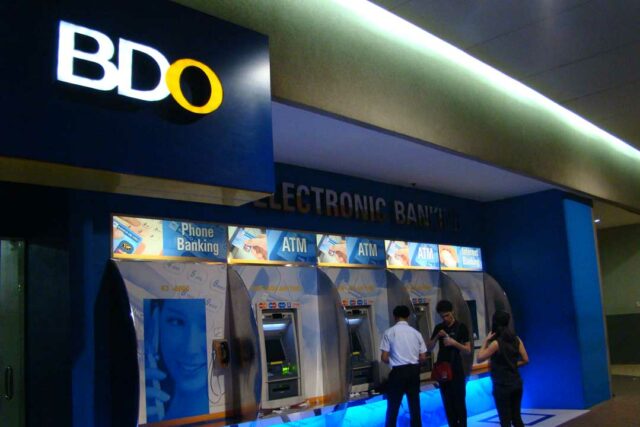
BDO UNIBANK, Inc. (BDO) wants to raise at least P5 billion through an offering of sustainability bonds.

The bank on Wednesday kicked off the public offer period for its three-year ASEAN Sustainability Bonds, it said in a disclosure to the stock exchange.

“The net proceeds will be used to support the bank’s lending activities and diversify funding sources and will be used and/or allocated by the bank to finance and/or refinance eligible assets as defined in the bank’s Sustainable Finance Framework,” it said.

The papers carry a coupon rate of 5.7125% per annum.

They are being offered at a minimum investment amount of P500,000 and in additional increments of P100,000 thereafter.

The offering is scheduled to end on Jan. 19, unless adjusted by the bank. The bonds will be issued, settled, and listed on the Philippine Dealing and Exchange Corp. on Jan. 26.

BDO said the Securities and Exchange Commission has confirmed that the issuance complies with requirements under the ASEAN Sustainability Bond Standards and the SEC ASEAN Sustainability Bond Circular.

Standard Chartered Bank is the sole arranger for the transaction and is also a selling agent along with BDO. BDO Capital and Investment Corp. is the financial advisor.

The latest offering marks BDO’s fifth peso-denominated ASEAN Sustainability Bond issue. The bank has issued a total of P286.7 billion in sustainability bonds since January 2022.

It last tapped the domestic market in July last year via its fourth ASEAN Sustainability Bond issuance, raising P115 billion via 1.5-year papers, well above the initial P5-billion plan and marking the largest peso bond issuance in the country to date.

BDO’s attributable net income rose 6.1% year on year to P22.47 billion in the third quarter of 2025 on the sustained expansion of its core businesses.

This brought its nine-month earnings to P63.09 billion, 4.07% higher than a year earlier.


Its shares dropped by 60 centavos or 0.42% to close at P143 apiece on Wednesday. — A.M.C. Sy

Influence peddling

STOCK PHOTO | Image by FREEPIK

IN SOCIAL MEDIA, there has arisen a band of self-appointed experts providing unsolicited advice. They are tagged as “influencers.” They can give opinions on any topic of their choosing. There is no vetting process in certifying the validity of their expertise or opinion. It has become a competitive field that thrives on the number of followers an influencer can attract. (Please push the subscribe button to bring up our numbers.)

Claimed areas of expertise seldom provide any kind of certification or validity, unlike medicine, accounting, engineering, or law. These accredited disciplines require academic preparation and validation tests for acceptance into an expert fraternity. There are even sub-specializations in these fields.

For less exacting pursuits like career counseling, personal finance, motivational training, or art investment, one can only rely on a mix of awards, experience, referrals, and peer respect. Even these validations are not always reliable.

In the matter of art, for example, who’s to say what is or isn’t good art? If art is treated as an investment, what are the collectors and auction houses looking for in terms of value?

An acknowledged icon of pop art sums up his take on what constitutes art. Andy Warhol defined art as “whatever you can get away with.” This loose definition applies to what is called “installation art” which is not some-thing you can hang on a wall. It may be a temporary structure or setting that is meant to last until the end of the exhibit.

The ability to dazzle with expertise one does not possess requires some cunning. So, expertise is what experts say it is…unless there are other experts who happen to offer contradictory opinions. Critics who pounce on es-tablished influencers are branded as simply envious.

The role of the influencer may have started with talk shows in the old traditional media of television. This has migrated to online shows like TED talks. And finally, the current version of very short demos or chats.

Can someone who routinely throws off brown stuff pass himself off as an expert on any field?

Maybe, resource persons appearing on posted videos are not paid for their appearances. Still, they manage to leverage their roles as talking heads with others willing to give them an actual fee for their “influence.”

Even with the rise of search engines to check on any topic for more information, influencers manage to insert themselves into the process. Don’t they also do their “research” on the net? Is their cut-and-paste presen-tation even subject to charges of plagiarism?

Borrowed insights can surface in the chatter of supposed experts. Their opinions on various topics can come from scouring the internet and extracting expert-sounding essays from ChatGPT.

Such is the proliferation of the new breed of self-anointed experts that when a “Gen Z” netizen is asked what career he wants to pursue, he is likely to reply: “I want to be an influencer.” Traditional careers like accountants and architects have been overtaken by work-from-home options such as influencing.

Communications experts and PR practitioners now routinely include social media in their arsenal of pushing narratives that promote their clients’ position.

If influencers want to move the needle in terms of opinions, can they be used for marketing goods, services, and political positions? Can influencers be motivated to push a particular point of view? Can they peddle their in-fluence? Are they more potent than traditional celebrity endorsers?

Still, with the recent proliferation (and competitiveness) in the field of influencing, the tendency for their target audience is to pay attention to influencers that they already agree with.

What behavioral economics calls the “confirmation bias” dictates that the consumers of opinions want to hear from those who already agree with their own beliefs. Thus, the “echo chamber” effect ensures that the one be-ing influenced is already a believer.

The value of influence is short-lived. The influencers can come and go at the drop of a hat. The fame that brings in the followers can also fade.

Again, we hark back to Andy Warhol, who in the late sixties said that “Everyone will be famous for 15 minutes.” This time around, fame and influence can last much less than that.


Tony Samson is chairman and CEO of TOUCH xdaar.samson@yahoo.com

2GO bets on freight, express delivery for 2026

2GO

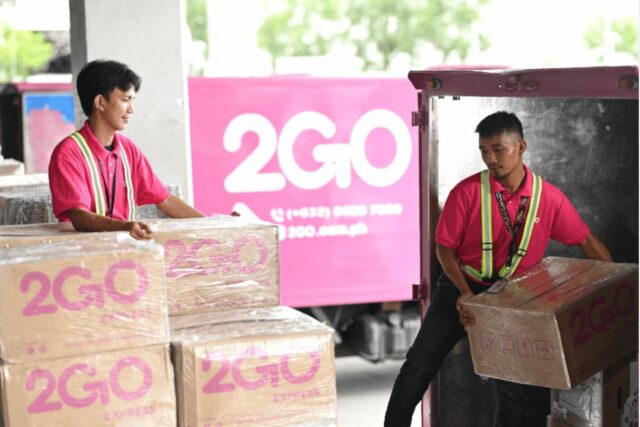
2GO GROUP, INC. is counting on freight, express delivery and e-commerce logistics to drive growth this year, as rising online activity lifts demand for faster and more reliable transport services across the Philippines.

The logistics and sea travel company said its outlook for next year is tied to expanding capabilities in express delivery, last-mile services and integrated logistics, as e-commerce continues to reshape supply chains.

“Our outlook for 2026 is anchored on building smarter and more responsive logistics solutions that support economic activity where it matters most,” 2GO President and Chief Executive Officer Frederic C. DyBuncio said in a statement on Wednesday.

2GO expects the logistics sector to benefit from sustained growth in online commerce, which it said likely expanded by double digits in 2025. The company said this trend is increasing demand for freight movement, warehousing and delivery services nationwide.

“As the Philippine economy grows, logistics becomes even more essential,” Mr. DyBuncio said. “Our role is to ensure goods, services and people move reliably and efficiently across the country.”

The Philippines’ digital economy is expected to have reached $36 billion in gross merchandise value last year, driven by the rapid adoption of e-commerce, transport and delivery services, digital finance and artificial intelligence, according to a joint report by Google, Temasek Holdings and Bain & Company.

2GO said it plans to tap this growth by strengthening its express and e-commerce logistics network, with a focus on faster deliveries and wider coverage.

The company added that its last-mile delivery services remain a key growth area, supporting manufacturers, agribusinesses and exporters that rely on efficient distribution.

“Growth today requires flexibility and integration,” Mr. DyBuncio said, adding that the company aims to simplify logistics for customers through scalable solutions suited to small businesses, large enterprises and online sellers.

2GO is an end-to-end transportation, logistics and distribution provider under SM Investments Corp., the Sy family’s holding company. — Ashley Erika O. Jose

Dining In/Out (01/08/26)

Sweet meets savory at CMV Txokolat

CHRISTIAN VALDES of CMV Txokolat unveiled three new flavors, where savory Filipino favorites meet his signature chocolate. A Kare-Kare praline uses peanut butter, liquid seasoning, tomato gel, and Mindoro sea salt. The Adobo uses bay leaf, peppercorns, chicken-infused cream, and a ganache made with rendered chicken fat and garlic confit. Finally, a Sisig praline uses onion jam, a chicken and mushroom infusion, some mayonnaise, and some lime. A box of six chocolates costs P700. For orders, visit https://cmvtxokolat.com/, @cmvtxokolatofficial on Instagram, or visit their store at Rockwell’s Power Plant Mall.

Kenny Rogers Roasters’ new healthy plates

KENNY ROGERS Roasters begins 2026 with a stronger focus on encouraging guests to eat healthy with the expansion of its Healthy Plates lineup. The original four plates — the Classic Healthy Plate, High Fiber Meal, High Protein Meal, and Low Calorie Meal — were developed to help customers meet daily nutrition needs. Beginning Jan. 1, three new plates joined the lineup, all certified by SGS Philippines (a testing, certification, and inspection company) to ensure quality and nutritional value. All the Healthy Plates are assessed using the Recommended Energy and Nutrient Intake (REI/RNI) guidelines. The three new additions are crafted for specific lifestyle needs. The Low Sugar Meal has grilled salmon, lemon butter sauce, steamed vegetables, Cobb salad with ranch dressing, and a drink. With zero grams of sugar, it supports balanced energy without spikes. The Low Carb Meal features striploin steak with pepper gravy, coleslaw, kani and mango salad, and a drink. With 24 g of carbohydrates, it fits guests managing their carb intake while still supporting daily nutritional needs. The Breakfast Healthy Plate, available in select stores only, offers roast chicken with gravy, Caesar salad, scrambled eggs, steamed vegetables, and a drink. With 61 g of protein, it delivers most of the recommended daily protein intake right at the start of the day. The expanded Healthy Plates lineup supports the brand’s “I Love Me Better” cam-paign, which encourages customers to choose meals that make them feel energized, confident, and cared for.

Korea’s Dessert 39 opens in MOA

KOREA’S DESSERT 39 has opened at the Mall of Asia (MOA), its first branch in Southeast Asia. Located at the 2F Entertainment Mall, SM Mall of Asia, Dessert 39 offers in-house as well as grab-and-go dining with savory fare, des-serts, and signature drinks. Dessert 39 offers a convenient and high-quality selection, including ready-to-heat rice bowls, pastas, and sandwiches for everyday dining. These include Spaghetti and Meatball Pasta, classic Ham & Cheese sandwich, and a Chicken Inasal Bowl. For a sweet treat, there is the crisp and airy Croquant Choux, the soft and velvety Premium Tokyo Roll Cake, and other pastries best paired with the café’s Einspänner, an iced Americano topped with smooth whipped cream and brown sugar, or the Brown Sugar Pong Latte, made with brown sugar and crispy Jolly Pong cereal which can serve as a meal-replacement drink. Dessert 39 also has its Slim line of ze-ro-calorie beverages, such as Zero Lemon Black Tea and Slim Real Chocolate made with allulose, a natural zero-calorie sugar substitute. The restaurant seats 138 guests, and includes an outdoor seating with a seaside view. Founded in 2015 in Gyeongridan-il, Itaewon and now with over 700 stores in South Korea, it is brought into the Philippines by The Bistro Group.

Soft inflation, weak economy leave room for further easing

High-rise buildings dominate the skyline of Makati City’s central business district. -- The Philippine Star/ Ryan Baldemor

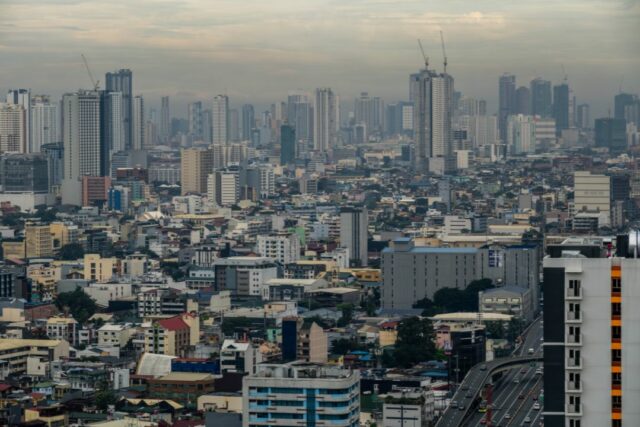
THE BANGKO SENTRAL ng Pilipinas (BSP) still has space for further easing this year as inflation remains subdued and as weak investor sentiment due to a wide-ranging graft scandal could persist, leading to a prolonged economic fallout.

Metropolitan Bank & Trust Co. (Metrobank) said in a commentary on Wednesday that the BSP could deliver up to 50 basis points (bps) more in cuts to cap its current easing cycle, which would bring the policy rate to 4%.

“With inflation having settled below the Bangko Sentral ng Pilipinas’ 2.0%-4.0% target range last year, inflation in 2026 is expected to move back within target, largely driven by base effects,” it said.

“Within-target inflation, together with still-soft economic activity and subdued consumer and investor sentiment should provide leeway for the BSP to reduce the policy rate further to its terminal rate.”

Headline inflation averaged 1.7% last year, slightly above the central bank’s 1.6% full-year forecast but below its 2%-4% target.

The Monetary Board has lowered benchmark borrowing costs by a total of 200 bps since its rate-cut cycle began in August 2024.

In 2025 alone, it delivered a cumulative 125 bps in reductions for five straight meetings to bring the policy rate to an over three-year low of 4.5%.

BSP Governor Eli M. Remolona, Jr. said on Tuesday that they could consider a sixth straight cut at the Monetary Board’s Feb. 19 review, but noted that the current policy rate is already “very close” to where they want it to be, signaling an imminent end to their easing cycle.

He said only weaker-than-expected growth would prompt two reductions this year.

In the third quarter of 2025, Philippine gross domestic product (GDP) growth slumped to an over four-year low of 4% as allegations that Public Works officials, lawmakers and private contractors received kickbacks from anoma-lous flood control projects led to slower public spending and hit investor confidence.

Metrobank said government spending and household consumption may remain “subpar” this year, but the BSP’s accommodative stance could help support domestic demand, which would support a gradual economic recovery.

“As the BSP moves policy rates to neutral in 2026 and the investment environment improves, investment activity is expected to pick up. Private consumption should also improve with anticipated increases in direct cash transfers from the government in lieu of the budget initially allocated for public construction. However, gains will likely be capped by still elevated consumer debt levels and weak sentiment stemming from ongoing govern-ment controversies,” it said.

“Overall, these should allow GDP growth to strengthen this year… As the lagged impact of BSP’s monetary easing cycle takes full effect, we expect a pickup in household consumption.”

Meanwhile, other analysts only see one more rate cut from the BSP this year.

ANZ Research Chief Economist for Southeast Asia and India Sanjay Mathur said the BSP could deliver a 25-bp cut next month and then hold fire until next year.

United Overseas Bank Ltd. (UOB) Group Research Senior Economist Julia Goh and economist Loke Siew Ting see the central bank pausing at its February meeting and then delivering a final 25-bp cut at its April 23 or June 18 re-view.

“The latest inflation outturn supports an interim pause in BSP’s easing cycle when the Monetary Board meets for the first time this year on Feb. 19,” they said in a commentary. “This is further echoed by BSP governor’s latest re-marks and prior guidance that further cuts will be limited and data-dependent.”

FASTER INFLATION
Meanwhile, Metrobank sees inflation picking up to 3.3% this year due to a low base and increased demand-side pressure.

“This could be exacerbated by higher import costs associated with higher tariffs and weaker peso moving forward,” it said. It expects the consumer price index to average at a slower 3% in 2027.

A stronger dollar, weak investor sentiment, and a wide current account deficit could affect the local currency, it added.

“Although resilient exports amid US tariffs will help narrow the current account deficit, it is expected to remain wide. Coupled with an anticipated recovery in dollar strength, driven by stronger growth in the US, these assumptions will continue to weigh on the peso and offset gains from the anticipated wider IRD (interest rate differential) between the Fed and the BSP.”

Meanwhile, UOB raised its inflation projection for 2026 to 3% from 2.5% previously as electricity rate adjustments, higher rice tariffs, and bad weather conditions could add to price pressures.

Moody’s Analytics economist Sarah Tan likewise expects faster inflation this year as the lingering impact of typhoons that hit the country late last year may continue to weigh on food prices.

“Weaker agricultural output weighed on food production, underscoring the growing strain on supply chains and rural livelihoods. As damage to farmland and logistics infrastructure continues to disrupt distribution, these pressures are likely to persist in the near term, adding to upside risks for food prices,” she said in a commentary. — Katherine K. Chan

Lenovo expands AI lineup with Nvidia tie-up, Qira platform

REUTERS

CHINA’s Lenovo, the world’s largest personal computer maker, on Tuesday said it has teamed up with US artificial intelligence (AI) chip leader Nvidia to help AI cloud providers quickly put data centers into operation, as it strives to establish itself in AI.

The technology company, which also makes servers, made the announcement at the Consumer Electronics Show in Las Vegas while also showcasing an AI platform, concept devices and the first foldable smartphone under its Motorola brand.

Under the data center program, Lenovo said it will offer its liquid-cooled hybrid AI infrastructure alongside Nvidia’s computing platforms to help AI cloud providers reduce deployment time to “weeks.”

“Lenovo AI Cloud Gigafactory with NVIDIA sets a new benchmark for scalable AI factory design, enabling the world’s most advanced AI environments to be deployed in record-setting time,” Lenovo CEO Yang Yuanqing said in a speech next to Nvidia counterpart Jensen Huang.

Mr. Yang also unveiled Qira, a personal AI system designed to work across Lenovo and Motorola PCs, phones, tablets and wearables, even in the background. The system would also be able to provide services from the likes of travel company Expedia, Lenovo said.

Lenovo also showcased concept AI glasses, joining Alibaba and Samsung Electronics in the sector, and an AI assistant wearable device it is developing under “Project Maxwell” that will offer the wearer real-time help. — Reuters

How PSEi member stocks performed — January 7, 2026

Here’s a quick glance at how PSEi stocks fared on Wednesday, January 7, 2026.


AI boom is in early bubble phase, Bridgewater founder Ray Dalio says

An artificial intelligence (AI) sign is seen in this illustration taken on June 23, 2023. — REUTERS/DADO RUVIC/ILLUSTRATION

THE artificial intelligence (AI) boom that powered Wall Street’s technology stocks is “now in the early stages of a bubble,” hedge fund manager Ray Dalio warned in a post on social media platform X on Monday.

Wall Street’s main indexes posted double-digit gains in 2025, marking a third straight year of advances, a run last seen during 2019-2021. The gains were fueled by heavy investor demand for AI-linked stocks, which pushed US equity benchmarks to record highs.

Mr. Dalio, who co-founded hedge fund Bridgewater Associates in 1975, said US stocks significantly underperformed non-US equities and gold in 2025. Gold surged more than 60% last year, while emerging markets posted a banner year and Britain’s blue-chip FTSE 100 outperformed major global markets.

“Clearly, investors would have much rather been in non-US stocks than in US stocks, just as they would have preferred to be in non-US bonds than in US bonds and US cash,” he wrote in the post.

Global stocks seesawed in the fall as mounting concern over a potential AI stock bubble dragged on sentiment and raised the risk of a selloff.

Meanwhile, geopolitical tensions in the Middle East and uncertainty over the US Federal Reserve’s interest rate path added to investor unease.

“Of course, there are big questions about Fed policy and productivity growth ahead,” Mr. Dalio said.

“It appears most likely that the newly appointed Fed chair and the FOMC (Federal Open Market Committee) will be biased to push nominal and real interest rates down, which would be supportive to prices and inflate bubbles.”

Analysts say global investors will actively seek opportunities this year in undervalued pockets of financial markets as growing concerns over an AI bubble push traders to look beyond highly valued technology stocks.

Bridgewater Associates’ main macro funds delivered a record-breaking performance in 2025, Reuters reported in late December. — Reuters

German emissions fell only modestly in 2025 due to buildings and transport

A German national flag flies atop the illuminated Reichstag building in Berlin, Germany. — REUTERS

BERLIN — Germany’s greenhouse gas emissions fell only marginally in 2025, as weak progress in cutting pollution from buildings and transport weighed on the overall climate balance, energy think tank Agora Energiewende said on Wednesday.

Germany emitted 640 million tons of carbon dioxide in 2025, down 1.5% or 9 million tons from the previous year, Agora said in its annual review.

While Germany met its national annual emissions target for 2025, the reduction was less than half the savings recorded in 2024, Agora’s calculations showed.

The decline in 2025 emissions was driven partly by lower output in energy-intensive industry amid prolonged weak demand and strained global market conditions, and partly by record solar power generation, Agora said.

“Wind and solar energy will remain the backbone of Germany’s energy transition in 2025 as well,” said Julia Blaesius, director of Agora Energiewende Germany.

“However, the power sector — so far the driving force behind emissions reductions — cannot permanently compensate for the shortcomings in switching to climate technologies in transport and buildings,” Ms. Blaesius said.

Emissions in buildings rose by 3.2% compared with 2024 and emissions in the transport sector rose by 1.4% on the year, Agora estimated. — Reuters

South Korea’s Lee says he asked Xi to play a mediating role on North Korea

SOUTH KOREA’S President Lee Jae-myung delivers a speech after taking his oath during his inauguration ceremony at the National Assembly in Seoul on June 4, 2025. — REUTERS

SEOUL — South Korean President Lee Jae Myung said on Wednesday that much progress had been made in restoring trust with Beijing, and that he had asked Chinese President Xi Jinping to play a role in mediating Seoul’s efforts to engage North Korea.

Mr. Lee, who held talks with Mr. Xi this week, said the Chinese leader had noted patience was needed when they discussed nuclear-armed North Korea. Mr. Lee was speaking to South Korean media in Shanghai with his remarks relayed live on television.

The South Korean president said he laid out the efforts — so far without success — that Seoul had been making to engage North Korea in dialogue and improve relations and asked Mr. Xi to play a role to mediate for peace on the Korean peninsula.

“President Xi acknowledged our efforts so far and said patience is needed,” Mr. Lee said.

Mr. Lee has been on a state visit to China and his meeting with Mr. Xi was their second in less than three months.

Mr. Lee has sought to open a “new phase” in ties with China, after several frosty years and with South Korea’s popular cultural exports being shut out of the Chinese market due to a dispute over a US missile defense system de-ployment in South Korea in 2017.

“President Xi said ‘talk is easy, but action is not so easy,’” Mr. Lee said, as he talked about how building trust and respect between countries takes work.

Diplomatic relations are inherently complex in balancing each other’s key national interests, Mr. Lee said he had told Mr. Xi, adding he hoped recent tension between Tokyo and Beijing could be resolved.

Mr. Lee said South Korea considered its ties with Japan as important as its relations with China. — Reuters