
How PSEi member stocks performed — October 18, 2023

Here’s a quick glance at how PSEi stocks fared on Wednesday, October 18, 2023.


Here’s a quick glance at how PSEi stocks fared on Wednesday, October 18, 2023.


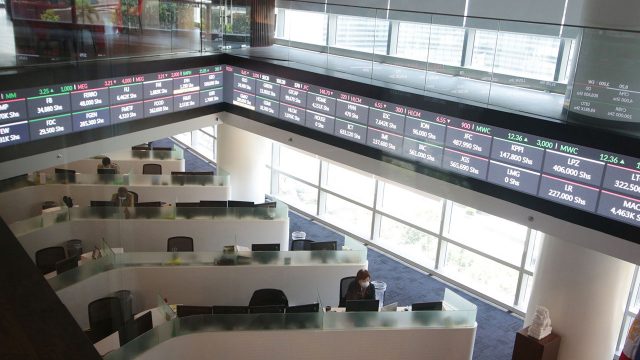
PHILIPPINE SHARES inched lower on Wednesday as investors stayed on the sidelines amid an increase in US Treasury yields and the ongoing conflict in the Middle East.
The Philippine Stock Exchange index went down by 12.63 points or 0.2% to close at 6,268.27 on Wednesday, while the broader all shares index shed 5.98 points or 0.17% to end at 3,385.40.
“Stocks moved sideways as traders continued to stay on the sidelines. Sentiments were hampered by the rise in US benchmark yields overnight. Concurrently, ongoing tensions in the Middle East continued to hound market confidence,” AB Capital Securities, Inc. Vice-President Jovis L. Vistan said in a Viber message.
“Nevertheless, downside risks appear to be constrained, considering the attractiveness of market valuations when viewed through a historical lens,” Mr. Vistan added.
Shares went down as the investors remain concerned over the was in the Middle East, Philstocks Financial, Inc. Research Analyst Claire T. Alviar said in a Viber message.
“Investors were concerned about the escalating conflict’s impact on oil prices, potentially leading to an increase in domestic oil prices if global prices continue to climb. This situation is anticipated to be unfavorably received by investors, especially in light of our elevated inflation,” Ms. Alviar said.
“Philippine shares edged lower as investors analyze the latest bond yield movement and on corporate earnings stateside. The yield on the 10-year US Treasury note hit its highest level since (October),” Regina Capital Development Corp. Head of Sales Luis A. Limlingan added in a Viber message.
Two-year US Treasury yields surged by as much as 14 basis points on Tuesday to a 16-year peak of 5.24%, Reuters reported. The two-year was last at 5.20%, while 10-year yields were back near recent highs at 4.84%.
Meanwhile, a huge explosion at a Gaza hospital killed hundreds of Palestinians, wrecking a diplomatic mission by US President Joseph Biden, who arrived in Israel on Wednesday but was snubbed by Arab leaders who called off an emergency summit.
Palestinian officials blamed an Israeli air strike for the huge blast and fireball which engulfed the Al-Ahli al-Arabi hospital.
Back home, the majority of sectoral indices dropped on Wednesday. Property fell by 20.60 points or 0.77% to 2,652.59; mining and oil decreased by 76.89 points or 0.7% to 10,853.49; holding firms declined by 31.85 points or 0.53% to 5,907.47; and services went down by 7.46 points or 0.48% to 1,541.10.
Meanwhile, industrials rose by 89.50 points or 1.01% to 8,916.02 and financials climbed by 1.94 points or 0.1% to 1,799.46.
Value turnover went down to P5.12 billion on Wednesday with 1.12 billion shares changing hands from the P5.69 billion with 1.25 billion issues seen on Tuesday.
Decliners outnumbered advancers, 92 versus 73, while 61 shares closed unchanged.
Net foreign selling stood at P32.59 million on Wednesday versus the P276.42 million in net buying recorded on Tuesday. — SJT with Reuters

THE PESO appreciated further against the dollar due to easing concerns over a global economic slowdown after a stronger-than-expected Chinese gross domestic product (GDP) report.
The local currency closed at P56.70 versus the dollar on Wednesday, strengthening by 4.6 centavos from Tuesday’s P56.746 finish, data from the Bankers Association of the Philippines’ website showed.
The local unit opened Wednesday’s session at P56.72 per dollar. Its intraday best was at P56.68, while its weakest showing was at P56.775 against the greenback.
Dollars traded went down to $877.55 million on Wednesday from the $1.109 billion on Tuesday.
“The peso appreciated as the stronger-than-expected Chinese economic growth report eased concerns of a near-term global slowdown,” a trader said in an e-mail.
Market sentiment was boosted by stronger-than-expected Chinese economic data on GDP, retail sales, and industrial production, Rizal Commercial Banking Corp. Chief Economist Michael L. Ricafort likewise said in a Viber message.
China’s GDP grew 4.9% year on year in the third quarter, data released by the National Bureau of Statistics showed.
For Thursday, the trader and Mr. Ricafort see the peso moving between P56.60 and P56.80 per dollar. — AMCS

THE INDIAN government said on Wednesday that it eased its ban on exporting non-basmati white rice, and gave the Philippines a quota of 295,000 metric tons (MT), the largest share among selected destination countries.
India also cleared exports of the commodity to Nepal, Cameroon, Cote d’ Ivoire, Guinea, Malaysia, and the Seychelles, India’s director of Foreign Trade said in a statement.
India, the world’s largest exporter of white rice, had suspended exports of non-basmati white rice earlier this year amid concerns over domestic supply, putting upward pressure on international prices. White rice is the variety most commonly traded internationally, while basmati is the preferred domestic Indian variety.
The Philippines typically imports rice from Southeast Asia because regional trade agreements grant ASEAN grain a tariff advantage. The food inflation crisis of early 2023 forced the Philippines to admit non-ASEAN rice on more favorable terms.
Raul Q. Montemayor, national manager of the Federation of Free Farmers, said that the Indian concession does not a guarantee access to Indian rice.
“(Import decisions) depend on the price (and) quality,” Mr. Montemayor said in a Viber message.
“In the past, our importers had not purchased rice from India despite significantly lower prices, most probably due to concerns about quality and reliability of supply,” he added.
Agriculture Senior Undersecretary Domingo F. Panganiban said in a statement in August that the Philippines had appealed to the Indian government to continue allowing rice shipments to the Philippines on humanitarian grounds.
Agriculture Undersecretary Leocadio S. Sebastian told reporters on Monday that Philippine rice imports could drop to 3.1 million MT amid higher global rice prices.
The US Department of Agriculture expects the Philippines to be the world’s top rice importer this year, with shipments of about 3.8 million MT.
Mr. Montemayor said Philippine demand for imported rice is between 2.5 million and 3 million MT, describing any volumes from India as “not that significant, even assuming we import (the entire quota),” he added. — Adrian H. Halili

THE GOVERNMENT delegation to the summit with Gulf leaders will pursue investment in the Philippine halal and Islamic banking industries, Department of Trade and Industry (DTI) Secretary Alfredo A. Pascual said.
President Ferdinand R. Marcos, Jr. is visiting Riyadh this week to participate in the summit between Southeast Asian and Gulf leaders.
The Philippine delegation is also sounding out possible Gulf investment in medical tourism, energy, and petrochemicals, Mr. Pascual said in a phone interview, adding that invitations to invest will be extended in roundtable meetings.
Mr. Marcos flies to Saudi Arabia today (Oct. 19) for the first-ever summit between the Association of Southeast Asian Nations (ASEAN) and the Gulf Cooperation Council (GCC) on Oct. 20, over a decade after the first ministerial meetings between the two organizations in Bahrain in 2009.
Mr. Marcos is expected to hold a bilateral meeting with the Saudi government and businesses, Foreign Affairs Assistant Secretary Daniel R. Espiritu has said.
He noted the Saudi government’s “assistance” in developing the Bangsamoro region in the southern Philippines.
Mr. Marcos’ visit to Saudi Arabia will be his ninth foreign trip this year, and the 15th since he assumed office in June 2022.
He is set to fly to the US in November for the Asia-Pacific Economic Cooperation Economic Leaders’ Meeting, and to the United Arab Emirates in December for the United Nations Climate Change Conference. — Kyle Aristophere T. Atienza

THE electric vehicle (EV) industry is likely to exceed projections in terms of vehicle adoption in the next five to 10 years, the Electric Vehicle Association of the Philippines (EVAP) said.
In an appearance on ANC’s Market Edge program, EVAP President Edmund A. Araga said new EV companies entering the market as well as expansion by current entrants will drive the expansion.
“My projection is that, in five to 10 years, the proliferation in the number of EVs on the road would be (larger) than expected,” Mr. Araga said.
“He expects the EV industry to be at par with those of neighboring countries,” he added.
In the first quarter, Mr. Araga said that the EV industry booked a 15% year-on-year increase in sales to 2,536 units.
Citing a report from the Land Transportation Office Operations Division, he said that the number of EVs registered last year was 15,300.
However, Mr. Araga said adoption remains hindered by mistrust of new technology and the difficulty of shipping units in.
He said the mistrust was reflected in the popularity of hybrid vehicles, which combine battery power with internal combustion engines.
He said motorists consider hybrids an entry point into the market, “to better understand the benefits of using EVs,” he said.
He added that it remains difficult to ship EVs into the country.
“There are a lot of lined up orders… that (dealers) have to address,” he said.
He said that EVAP has asked the Bureau of Customs to streamline the EV shipment process, saying EVs need to enter the country with the same ease as internal combustion engine vehicles. — Justine Irish D. Tabile

MEAT IMPORTS fell 9.37% year on year in the nine months to September, with shipments of beef, pork, buffalo, and turkey all declining, the Bureau of Animal Industry (BAI) reported.
The BAI said imports amounted to 923.16 million kilograms (kg) during the period. In September the total was 105.81 million kg, down from 115.11 million in August and 166.69 million a year earlier.
Imports of beef fell 21.1% to 106.68 million kg for the period. This accounted for 11.56% of meat shipments.
The top beef supplier to the Philippines was Brazil with 40.64 million kg, followed by Australia with 30.88 million and Ireland 11.51 million.
Pork shipments dropped 12.68% from a year earlier to 458.7 million kg.
The top supplier of pork for the period was Spain, with 112.35 million kg, followed by Canada with 85.93 million and Brazil 78.24 million.
The Philippines also imported about 101,759 thousand kg of turkey meat and 2.35 million kg of buffalo meat; shipments decreased by 44.57% and 6.29%, respectively.
Chicken imports rose 18.27% to 324.98 million kg for the nine months. This accounted for 35.21% of meat shipments during the period.
Brazil supplied about 186.13 million kg, followed by the US with 116.98 million and Canada 10.91 million. — Adrian H. Halili
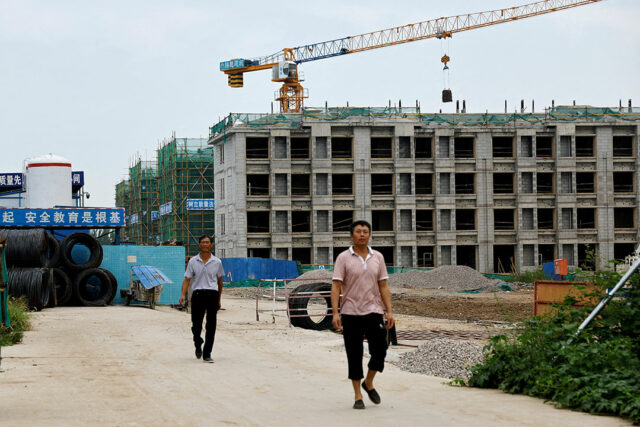
THE Department of Trade and Industry (DTI) said companies from eastern China’s Jiangsu province have expressed interest in exploring Philippine investments in renewable energy (RE) and battery technology.
In a statement, the DTI said a business delegation from Jiangsu agreed with prospective local partners to expand bilateral trade, with an eye towards “existing and projected demand and supply capacities.”
Officials from the DTI and Board of Investments (BoI) said other prospective industries that could take in Chinese investment include the automotive, green metals, and electronics segments.
The provincial delegation was headed by officials from Jiangsu’s Trade and Investment Promotion Department, Chamber of Commerce, and Liu Ping, the general manager of Nanjing Donglei Automobile Meter Co., Ltd.
Last month, the BoI secured a commitment from electronics company Shenzhen Grandsun to open two more plants in the Philippines.
This year, the company is expected to complete four audio device production facilities in the Philippines, bringing its total investments in the country to P3 billion.
By the end of this year, Grandsun is expected to employ 1,000 in the Philippines, with a target of 8,000 jobs by 2028.
On the sidelines of the China-ASEAN Expo, the BoI also received a commitment from a state-owned company which has allocated $15 billion in funding for Southeast Asian projects.
The state-owned company claims to be China’s biggest renewable energy operation with a presence in solar, wind, and hydropower energy.
The DTI’s Bureau of Trade and Industrial Policy Research estimates bilateral merchandise trade with China at $39.17 billion in 2022. China was the Philippines’ top trading partner and source of imports.
Meanwhile, approved investments from China hit $26.18 million (P1.43 billion) last year. — Justine Irish D. Tabile

THE National Privacy Commission (NPC) and the Department of Information and Communications Technology (DICT) said they signed a partnership to launch a privacy complaint hotline.
In a statement on Wednesday, the NPC said the partnership was sealed via a memorandum of agreement (MoA) signed last week.
“The MoA between NPC and DICT is a significant step towards ensuring the digital security and privacy of our fellow Filipinos,” Privacy Commissioner John Henry D. Naga said in a statement.
Information and Communications Technology Secretary Ivan John E. Uy encouraged the public to be proactive in safeguarding their digital well-being.
“Report any privacy concerns or incidents promptly, as your active role is essential to our collective effort to ensure a safer and more secure online environment,” he said.
Under the partnership, the entities will implement a complaints-handling system called Digital Security and Privacy Quick Response Project.
The system is intended to “swiftly” address privacy violations and concerns.
It will be integrated into the eGov application under the Government Digital Transformation Bureau and will be operational on Oct. 25. — Justine Irish D. Tabile
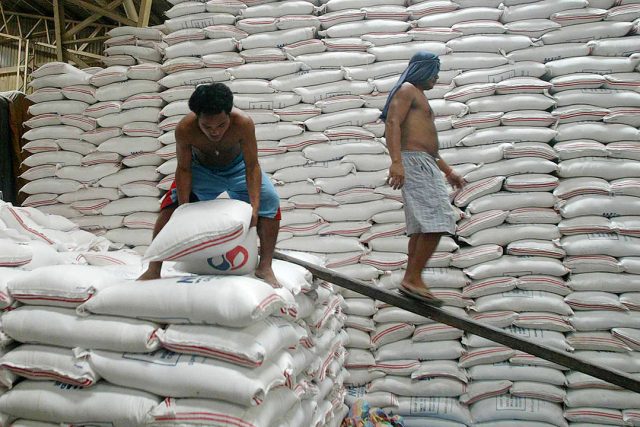
THE national rice inventory fell 0.1% year on year in early August, while corn stocks rose 14.5%, the Philippine Statistics Authority (PSA) said.
In a report, the PSA said the rice inventory was 1.80 million metric tons (MT), featuring declines in rice held by the National Food Authority (NFA) and households.
“Of this month’s total rice stocks, 57.9% were held by the commercial sector, 39.0% by households, and 3.1% by NFA depositories,” the PSA said.
Rice held by commercial warehouses increased 33.6% from a year earlier to 945.1 thousand MT.
NFA rice fell sharply by 62.2% year on year to 50.95 thousand MT, while household rice fell 19.6% to 636.41 thousand MT.
On a month-on-month basis, rice inventory fell 9.5%.
“Month-on-month decreases were noted in rice stocks in NFA depositories (16.3%), in households (16.1%), and in the commercial sector (4%),” it said.
The PSA reported that the corn inventory rose to 806.68 thousand MT in early August from 706.46 thousand MT a year earlier.
“About 92.4% of the corn inventory was held by the commercial sector, while the remaining 7.6% were with households,” it added.
Commercial corn volumes rose 20.4% year on year to 745.28 thousand MT. Corn held by households, on the other hand, dropped 28.1% to 61.4 thousand MT.
On a month-on-month comparison, the national corn inventory declined 2.1%.
“The volume of corn stocks in the commercial sector registered a month-on-month decrement of 2.6%… a monthly increase of 4.8% was noted in the household sector,” the PSA said. — Adrian H. Halili
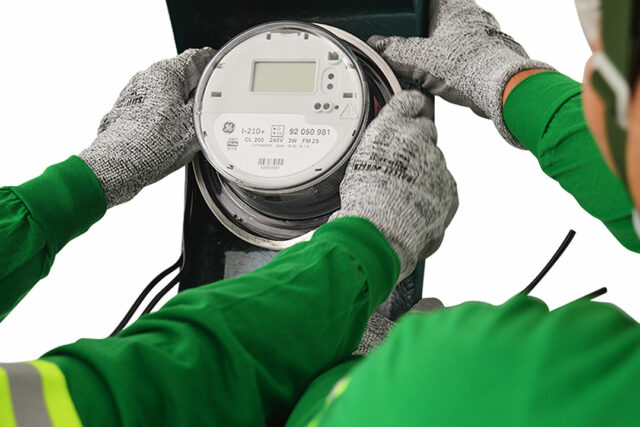
THE Department of Energy (DoE) said it is drafting procedures for administratively sanctioning violators of Republic Act No. 11245, or the Energy Efficiency and Conservation (EEC) Act of 2019.
The DoE said its powers under the draft policy include the authority to initiate proceedings motu proprio, or without the need for a complaint to be raised by from a third party, and to impose fines and other penalties that are updated annually or as the need arises.
The draft circular posted on its website cites the need to “protect and promote the public interest” and to assist the parties in obtaining “just, speedy and inexpensive disposition” of administrative cases under the ECC law and related issuances.
The law authorizes EEC programs and encourages the use of energy efficient and renewable energy technologies.
The law penalizes failure to comply with energy labeling rules; providing inaccurate energy consumption information; selling, leasing, or importing energy-consuming products that do not comply with the minimum energy-saving performance; and refusing to submit to on-site inspections, among others.
“In the exercise thereof, the DoE may commence such hearing or inquiry by an order to show cause, setting forth the grounds for such order,” according to the draft circular.
The DoE said that the show cause order should “clearly state the specific provision of law or regulation violated by the respondent and direct the respondent to submit a written explanation/answer within fifteen (15) calendar days from receipt of the order.”
The DoE said that administrative proceedings will be deemed resolved “upon issuance of an order or decision by the Director of the Legal Services or the authorized representatives of the Secretary in case of the field offices.” — Sheldeen Joy Talavera
