Home Blog Page 4136

Czechs eye defense ties with PHL

THE CZECH Republic is organizing visits to the Philippines that would involve its top government officials and businessmen to boost ties in defense and agriculture, according to its envoy to Manila.

A foreign affairs panel at the Czech parliament will visit the Philippines to tackle “important defense and security issues” in the region, Czech Republic Ambassador to the Philippines Karel Hej said as he presented his credentials to President Ferdinand R. Marcos, Jr.

The Czech government would also send its agriculture minister, who would be accompanied by select companies interested in doing business with the Philippines, he added.

Mr. Hej said a huge Philippine fair in September will be participated in by Czech defense manufacturers that are interested in working with the Philippines armed forces and coast guard. 

The Czech Republic was able to develop its defense and security industry given its geographic position in Europe and it is now a key global manufacturer of war instruments such as arms and ammunition as well as jets and airplanes, he touted.

The country also offers deals on equipment maintenance and upgrades, he added.

For his part, Mr. Marcos said the Philippines and the entire Indo-Pacific region is facing a “very thorny” problem.

“Your country has already been of assistance to us in proposing some vessels that we could use for securing our maritime waters,” he said. “And as you must know that this is becoming a very thorny problem that we are facing.”

Czech Republic Prime Minister Petr Fiala visited the Philippines in April.

Czech Republic ranked as the Philippines’ 39th trading partner, with total trade amounting to $303.21 million. It was Manila’s eighth largest export market and 47th largest import supplier last year. — Kyle Aristophere T. Atienza

Gov’t to boost housing program

BAGUIO CITY — The adjusted socialized housing price ceiling is an opportunity to boost the implementation of the Pambansang Pabahay para sa Pilipino (4PH) Program and could pump-prime the economy, according to the Department of Human Settlements and Urban Development (DHSUD).

“We believe that more participants from the private sector will now join the program, a crucial necessity as we address the pressing housing backlog of 6.5 million units,” said Housing Secretary Jose Rizalino L. Acuzar in a statement released on Wednesday.

Under the adjusted ceiling, socialized subdivision projects now cost not more than P850,000 from the current P580,000 with a minimum floor area of 28 square meters with a loft of at least 50% of the base structure or 32 sqm, subject to existing rules and regulations. 

On the other hand, socialized condominium projects are now set at P933,320 for 22sqm; P1,060,591 for 25 sqm, and P1,145,438 for 27 sqm for a four-storey building.

For projects composed of five to nine-storeys, the pricing is P1 million for 22 sqm; P1,136,364 for 25 sqm and P1,227,273 for 27sqm, and for 10 floors above projects, 22 sqm units cost P1,320,000; 25 sqm at P1,500,000 and 27 sqm at P1,620,000.

Mr. Acuzar and NEDA chief, Sec. Arsenio Balisacan, through Joint Memorandum Circular No. 2023-003, had agreed to adjust the current price ceiling which has been in effect since 2018 pursuant to Resolution Nos. 1 and 2 Series of 2018, issued by the now defunct Housing and Urban Development Coordinating Council, which are now deemed “unresponsive to the current economic situation.”

A flagship program of the Marcos administration, the 4PH aims to build over 6 million housing units by 2028. So far, it has 20 ongoing projects spread out in Luzon, Visayas and Mindanao.

Under 4PH, Mr. Acuzar is tapping private funds and investible funds from government financial institutions, instead of relying heavily on his department’s annual budget.

With the housing price cap, he said: “We expect that 4PH will now shift to higher gear with more participants coming from the private contractors and developers.”

Mr. Acuzar said that apart from its positive impact to 4PH, the price adjustment could also trigger economic activities in the housing and real estate sector. — Artemio A. Dumlao

No changes to number coding yet

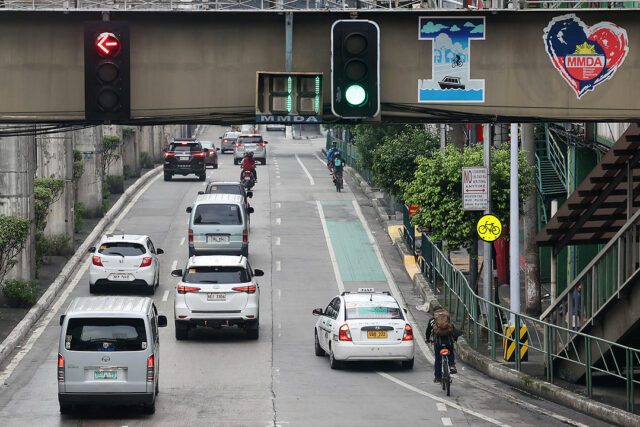
MOTORISTS drive through an intersection in Cubao, Quezon City, Aug. 2, 2022. — PHILIPPINE STAR/ MIGUEL DE GUZMAN

ENFORCING a 7 a.m.-7 p.m. number coding scheme in the capital region is a likely option for the Metropolitan Manila Development Authority (MMDA) to prevent a “carmageddon” during the holiday season, but for now, vehicles will be free to use the roads on during the 10:01 a.m.-4:59 p.m. window hours.

“We expect 15% to 20% additional vehicle volume as the holiday nears, that’s the time we will decide whether or not to implement the 7 a.m. to 7 p.m. number coding scheme,” MMDA Acting Chairman Romando S. Artes told a press conference on Wednesday.

He added that before making a decision, the MMDA will first assess the traffic situation along Metro Manila roads from Nov. 6 to 12, when vacationers return from provinces for the All Saints’ and All Souls’ Days break.

Earlier, the Metro Manila Commission (MMC) approved a resolution for the suspension of the window hours for restricted vehicles to control the expected huge volume of traffic in the weeks rolling into the holiday season. In the meantime, Mr. Artes said the current number coding hours will still be observed.

The MMDA also announced increased fines for motorists illegally driving along the exclusive bus lane along EDSA as the authority noted that private vehicles repeatedly disregard the rules.

The fine was increased to P5,000 for the first offense, a big jump from the former P1,000 for each offense for using the EDSA carousel.

The penalty for the second offense went up to P10,000 and a one-month suspension of driver’s license. Drivers will also be required to undergo a road safety seminar.

A fine of P20,000 and a one-year suspension of license will be imposed on drivers for the third offense.

Meanwhile, the MMDA said that it will suspend the operation of the Pasig River Ferry Service from Oct. 30 to Nov. 2. Operation of the ferry service will resume by Nov. 3. — Jomel R. Paguian

Village bet killed in ambush

STOCK PHOTO | Image by kjpargeter from Freepik

COTABATO CITY — A candidate for village chief in Kapatagan town, Lanao del Sur was killed in an ambush on Wednesday, five days short of Monday’s nationwide elections.

Col. Robert S. Daculan, Lanao del Sur provincial police director, said Kamar B. Bansil died on the spot from multiple bullet wounds while his wife and son, who were with him in a multicab, were badly wounded.

Mr. Daculan said his men are now hunting down the husband of Mr. Bansil’s rival for village chief as he was allegedly spotted leading gunmen in the ambush on the road in Barangay Sigayan, Kapatagan.

Last Monday, two candidates for barangay positions in this city — Nur M. Butucan and Alfar S. Ayunan, along with their companion — were gunned down by still unidentified assailants while putting up their campaign posters in a residential area.

Local executives assured on Wednesday to support the enforcement of the police and the poll body’s Data Sharing Agreement (DSA), forged to ensure the safety and integrity of the October 30 barangay and Sangguniang Kabataan elections.

The DSA, signed last Monday by top Philippine National Police officials led by its chief, Gen. Benjamin C. Acorda, Jr. and Chairman George Erwin Garcia of the Commission on Elections, provides the Comelec access to information on the PNP’s tactical activities during on Election Day and its law-enforcement activities related to the electoral exercise.

“We will support that and we are ready to help connect our local government units with the police units in our province for the PNP to have essential security updates from the ground that the LGUs can gather that the provincial police can pass on to the Comelec,” Basilan Gov. Jim Salliman said. John Felix M. Unson

Bangsamoro allocates 30% of next year’s budget for education

PHILSTAR FILE PHOTO

COTABATO CITY — Almost 30 percent of the proposed P98.46-billion budget of the Bangsamoro regional government for next year is earmarked for education programs in its six provinces where illiteracy is prevalent owing to decades of secessionist conflicts.

Chief Minister Ahod B. Ebrahim of the Bangsamoro Autonomous Region in Muslim Mindanao personally turned over on Tuesday afternoon to the speaker of the 80-member BARMM parliament, Pangalian M. Balindong, the documents pertaining to the proposed 2024 budget for the operation of the BARMM government.

The proposal has an allocation of P30.2 billion for education programs via the region’s Ministry of Basic, Higher and Technical Education.

A popular member of the regional parliament, Kadil M. Sinolinding, Jr., said in a statement released on Wednesday that the Bangsamoro chief minister deserves a “tap on the shoulder” for having allocated P30.2 billion for the regional government’s 2024 education thrust.

“Education is so important in fostering lasting peace and sustainable development in all of the municipalities and cities in BARMM,” Sinolinding, a physician-ophthalmologist, said.

BARMM’s education ministry need P745 million next year for the construction of more school buildings, libraries and other learning facilities in the region’s core territory that covers the provinces of Maguindanao del Sur, Maguindanao del Norte, Lanao del Sur, Basilan, Sulu and Tawi-Tawi and the cities of Cotabato, Lamitan and Marawi.

“This early, we in Lamitan City are thanking the BARMM regional leadership for reserving such an amount for education activities next year in the autonomous region. We are optimistic that the parliament will approve the proposal that the chief minister submitted to Speaker Balindong last Tuesday,” Myra B. Mangkabung, superintendent of schools in Lamitan City in Basilan, said.

The region’s finance minister, Ubaida C. Pacasem, said BARMM’s 2024 proposed P98.46 billion budget shall be drawn from its P70.5 billion Annual Block Grant from the national government, P5.08 billion from shares in taxes generated from within the area of autonomy, P5 billion from the Special Development Fund, P471 million from projected 2024 regional tax collections and P17.3 billion from savings intact in the regional coffer.

The 2024 regional government budget has P17.6 billion for infrastructure projects of the public works ministry. The BARMM health ministry shall have P6.6 million for its operation next year if the parliament grants legislative imprimatur to the budget proposal.

BoI sees P1-T investment approvals by end-Oct.

By Justine Irish D. Tabile, Reporter

THE Board of Investments (BoI) said it expects the investment approvals for the year to hit P1 trillion before October ends.

“I think … by the end of tomorrow’s board meeting we will be able to reach P1 trillion in total approvals,” Trade Undersecretary and BoI Managing Head Ceferino S. Rodolfo said during a panel discussion at the 12th Arangkada Philippines Forum on Wednesday.

The investment promotion agency initially set a target of P1 trillion worth of investment for 2023, which the Department of Trade and Industry (DTI) revised in the first quarter to P1.5 trillion.

“When we saw a strong influx of investment… in January (and) February, our target was increased to P1.5 trillion or double the actual amount of approvals last year,” Mr. Rodolfo said.

Last year, the BoI approved an estimated P729 billion worth of new investment, up 11% from 2021.

In his keynote speech, Trade Secretary Alfredo E. Pascual said renewable energy (RE) projects were the single biggest category of approved investment so far, which he estimated at over $17 billion.

“Most of the approved projects are in RE. There was an influx of renewable projects when we announced that we are allowing 100% foreign ownership,” Mr. Pascual told reporters on the sidelines of the event.

In November, the Department of Energy issued a memorandum circular that allowed 100% foreign capital in RE projects.

The DTI said in June that RE projects are expected to account for a third of investment registered with the BoI, which Mr. Pascual upgraded on Wednesday to more than 50%.

Meanwhile, both officials said that they are still optimistic to achieve the P1.5-trillion investment approval target for the year.

“We are still optimistic because we still have less than a quarter. But we have exceeded what was achieved last year,” Mr. Pascual said.

Mr. Rodolfo said earlier this week that the BoI is expecting the entry of investment worth $4 billion from two Chinese manufacturers seeking to supply offshore wind equipment.

The two companies have surveyed potential sites in the Philippines and are planning to arrive at location decisions within the year.

“We still have two months to reach that P1.5 trillion new target, but in terms of the old target I think we are done with that,” said Mr. Rodolfo.

“Realistically, we will probably take in an additional P300 billion in the next two months,” Mr. Rodolfo said. “But very important will be the composition of these investments. These, I think, are mostly in RE and mostly foreign investment.”

Trade dep’t pursuing tie-ups in EV, energy-efficient ships

MICHAEL FOUSERT-UNSPLASH

THE Department of Trade and Industry (DTI) said that it will be pursuing investment in electric vehicle (EV) technology and seek partnerships in building energy-efficient ships.

“Our country also plans to enter the global EV value chain. Climate change has compelled the shift to green products such as EVs,” Trade Secretary Alfredo E. Pascual said in his keynote speech at the 12th Arangkada Philippines Forum on Wednesday.

He said the Philippines will push for foreign EV technology transfer, noting the potential to leverage Philippines’ large reserves of key minerals like nickel, copper, and cobalt.

He said access to technology will unlock activities like “the assembly of pure EVs, plug-in hybrid EVs, hybrid EVs, and fuel cell EVs.”

The Philippines will also be in a position to manufacture EV parts and systems and develop the necessary support infrastructure like charging stations, Mr. Pascual said.

However, to ensure “minimal carbon footprint and more value-added economic activity” from expanded EV-related operations, the DTI will also seek investment in the processing of green metals.

“We (will) also invite investment in energy storage technology, including battery energy storage systems,” he said.

Mr. Pascual also said the DTI welcomes financing and partnership proposals for building energy-efficient ships.

The energy-efficient ship initiative is expected to lead to related ventures like the manufacture of maritime equipment, he said.

“Of course, we also have ambitious targets for renewable energy and reducing wasted heat and other forms of waste,” he added.

Mr. Pascual said the DTI will leverage free trade agreements and preferential tariffs to ensure such products will have broad market access.

“We have recently concluded the negotiations for our participation in the Indo-Pacific Economic Framework Agreement on Supply Chain Resilience,” he noted.

He said the agreement involving 14 countries will allow the mobilization of sustainable investment, showcase the Philippines as a reliable supplier of manufactured goods, and strengthen supply chains. — Justine Irish D. Tabile

Rice price surge during holidays not expected, Agri dep’t says

PHILIPPINE STAR/EDD GUMBAN

THE Department of Agriculture (DA) said it does not expect rice prices to rise significantly during year-end holidays.

Agriculture Undersecretary Mercedita A. Sombilla told reporters on the sidelines of the Federation of Free Farmers (FFF) anniversary that the DA is working on mitigating further price surges in the staple grain.

She said supply will be ample, “especially with the expected imports coming in.”

In the year to date, the Philippines imported 2.71 million metric tons (MT) of rice as of Oct. 12, according to the Bureau of Plant Industry.

She reiterated that a return to rice price controls is no longer necessary, heading off speculation of rising prices.

“That’s really just speculation. We really have to avoid (imposing) price caps again, noting that price controls have “created tensions” in the market.

A farmer’s group has called for the re-imposition of the P45 per kilogram (kg) price cap on well-milled rice in November, alleging that traders are creating “artificial” conditions to justify high prices.

The government had imposed in August a temporary price cap on regular-milled rice of P41 per kg and on well-milled rice of P45 via Executive Order No. 39.

“We have to have normal market conditions … especially that we are now harvesting,” Ms. Sombilla added.

The DA said last week that it is expecting production of palay, or unmilled rice, to hit 20 million MT this year.

According to the Philippine Statistics Authority (PSA), palay output fell to 19.76 million MT in 2022 from 19.96 million MT a year earlier.

In an address to the FFF, President Ferdinand R. Marcos, Jr. said the government will push to boost local production to minimize the need to import food.

“I wish to reaffirm one of the top priorities of this administration, which is the enhancement of our agricultural productivity, the guarantee of our food supply, the affordability of our food supply, and our lessening dependence on imports,” Mr. Marcos, who is also the Secretary of Agriculture, said.

He added that the government is attempting to mechanize the industry, reduce post-harvest losses and ensure optimal yields.

He said increasing agricultural exports will be “an essential driver in the competitiveness of our economy.”

Agricultural exports declined 24.4% to $1.61 billion in the second quarter, the PSA reported. This accounted for 27.2% of total trade.

Mr. Marcos added that to hit these targets, the administration has proposed more funding for agriculture next year.

“With a substantial budget of P85.88 billion for 2023, and a proposed budget of P92.4 billion pesos for 2024, I am optimistic that we can propel the modernization of our agri-fisheries sector,” he said. — Adrian H. Halili

Sugar farmgate, retail prices still out of sync, planters say

BOC - PUBLIC INFORMATION AND ASSISTANCE DIVISION (BOC-PIAD)

SUGAR PLANTERS said farmgate prices remain weaker-than-expected and out of line with the relative strength of retail prices.

In a statement, the Sugar Council, which includes three planter federations, said farmgate prices last week ranged from P2,501 to P2,760 per bag, below the regulator’s target price of P3,000.

The council is composed of the Confederation of Sugar Producers Associations, Inc., the National Federation of Sugarcane Planters, Inc., and the Panay Federation of Sugarcane Farmers, Inc.

Before the milling season started, the Sugar Regulatory Administration (SRA) had projected a farmgate prices for sugar of P3,000 per 50-kilo bag.

The council said a farmgate price of P2,760 per 50-kilogram bag translates to about P55.2 per kilo at retail.

“But in reality, actual retail price of sugar continues to hover between P80 to P100 per kilo. This leads the Sugar Council to wonder why the farmgate price is low,” the council said.

“This also proves that sugar farmers are not (behind the) high retail prices,” it added.

The SRA has said that it is looking into possible price manipulation due to “abnormalities” in pricing at the mill, trader, and importer level.

“We strongly support the SRA’s move to investigate why sugar prices have been lower than P3,000 per 50-kilo bag … We look forward to a comprehensive and expeditious probe, and we eagerly await its results,” the council said.

SRA Administrator Pablo Luis S. Azcona has described trading as abnormal, with prices fluctuating by P100 or more on a weekly basis. An oversupply of sugar has been blamed for easing farmgate prices.

The SRA delayed the release of 150,000 metric tons of imported sugar via Resolution No. 2023-159, to ensure fairer prices for farmers during milling season.

It added that it will hold on to the reserve sugar in order to build up a two-month buffer stock. — Adrian H. Halili

Philippines to train workers for jobs in offshore wind industry

ELECNOR

THE Department of Energy (DoE) said it entered into a partnership with the US Agency for International Development to prepare workers who will staff the offshore wind (OSW) industry.

“We are happy to note that the training design was targeted to focus on the varying needs of skills building by stakeholders such as government agencies, RE (renewable energy) developers, banks, and other financial institutions,” Energy Secretary Raphael P.M. Lotilla said at a ceremony for the program in Taguig City.

Mr. Lotilla said the workshops on OSW development will help the government “right-skill and upskill Filipino workers” to keep the industry competitive as the power industry shifts to alternative forms of energy.

“Through investing in the skills of our workforce, enhancing our energy security, and strengthening our resilience, we are positioning ourselves to excel in the global shift toward clean and sustainable energy solutions,” Mr. Lotilla said.

To date, the DoE has awarded 79 OSW service contracts this year with a potential capacity of 61.931 gigawatts. All are currently under development.

The DoE is also studying the repurposing of nine ports to service OSW projects with the technical assistance from the Asian Development Bank. — Sheldeen Joy Talavera

Holidays, stepped-up gov’t spending expected to provide boost to growth in second half — NEDA

PHILIPPINE STAR/MIGUEL DE GUZMAN

THE year-end holidays and stepped-up government spending will help drive growth towards the close of 2023, National Economic and Development Authority (NEDA) Undersecretary Rosemarie G. Edillon said.

“(For household consumption) there is holiday spending… Early on we recommended to the President to implement holiday economics,” she said, referring the practice of manufacturing long weekends by moving holiday observances to Fridays and Mondays.

Speaking at the SGV Tax Symposium on Wednesday, she said other drivers include the improving labor market and accelerated government spending. “For the second semester, we will be seeing more spending from the government,” she said.

Gross domestic product (GDP) grew 4.3% in the second quarter, the slowest reading in over two years.

Government spending during the period contracted 7.1%, reversing the 6.2% growth posted in the first quarter and the year-earlier rise of 10.9%.

Government agencies have been tasked to come up with catch-up plans for spending amid low budget utilization levels in the first half.

Ms. Edillon also cited the push to maintain infrastructure spending levels of at least 5% of GDP as a driver.

This year, the government plans to spend 5.3% of GDP on infrastructure, equivalent to P1.29 trillion. It plans to spend 5-6% on infrastructure yearly.

NEDA also noted that parts of the economy continue to recover from the pandemic, such as real estate, tourism, and mining and quarrying.

Ms. Edillon noted the risk of elevated inflation, as seen particularly in high food prices.

“We are still seeing several challenges with respect to food inflation. We have a very small agriculture sector in terms of productivity. There are also many challenges with respect to logistics and we are trying to address that,” she said.

Inflation accelerated to 6.1% in September from 5.3% in August. The indicator remained above the Bangko Sentral ng Pilipinas (BSP) full-year forecast of 5.8%.

September also marked the 18th straight month that inflation had breached the BSP’s 2-4% target band for this year.

Food inflation surged to 10% from 8.2% a month earlier, as rice inflation accelerated to 17.9%, the highest such reading since March 2009.

Inflation averaged 6.6% in the first nine months, against 5.1% a year earlier. — Luisa Maria Jacinta C. Jocson

Testing process for Vietnam-made ASF vaccine queried in Senate

FREEPIK

A SENIOR Senator queried the Bureau of Animal Industry’s (BAI) decision to allow a vaccine supplier to play a role in testing a Vietnam-sourced vaccine designed to protect hogs against African Swine Fever (ASF).

Senator Cynthia A. Villar, who chairs the chamber’s agriculture panel, questioned at a joint committee hearing the role of vaccine supplier KPP Powers Commodities, Inc. in the trials.

On June 2, the BAI reported that field trials for the ASF vaccine were successful. Assistant Director Arlyn Vytiaco told the joint panel that the trials were conducted at six farms in Luzon.

BAI Director Paul C. Limson also told the hearing that “our role is to monitor the field trial being conducted, We were not the actual ones conducting (the trial).”

Ms. Villar said that BAI should have been in charge of carrying out the trials, citing the risk of “bias” if an outside party plays a role in the vaccine tests.

Reynaldo Robles, lawyer and spokesman for KPP Powers, said the company supplied the vaccines to independent farms who conducted the trials.

“The one in charge of getting samples is the farm owner (who) gives it to BAI,” which was in charge of testing the impact of the vaccine on the hogs, he said.

Food and Drug Administration Director-General Samuel A. Zacate said the agency issued an authorization to import 300,000 doses of the ASF vaccine for field trials, at the BAI’s request.

Ms. Villar said non-government entities should play no part in vaccine trials.

Vietnam approved the commercial use of the vaccine only in July. According to media reports, Vietnam is set to ship vaccines to the Philippines this month.

Samahang Industriya ng Agrikultura Executive Director Jayson H. Cainglet said the testing of vaccines should not be rushed. 

“We should have learned from our COVID experience,” he told the panel, noting that the Philippines waited for a long time to obtain COVID-19 vaccines approved by the World Health Organization.

“It’s very simple. This should not have been rushed,” Mr. Cainglet said. — Beatriz Marie D. Cruz

ADVERTISEMENT
ADVERTISEMENT