



Home Blog Page 4114

The last of Urus

PHOTO BY KAP MACEDA AGUILA

ICE-powered Lamborghinis are going to get scarce soon. Consider this the final call for this SUV with this powertrain.

RECENTLY, Lamborghini Philippines General Sales Manager Enrique “Erick” Jarlego II pointed to a framed image of the LM0002 right next to the present-day Urus (an S variant) on display at the Rockwell Power Plant Mall in Makati City. The LM0002 is the spiritual predecessor of the Lamborghini’s strong-selling (certainly by supercar standards) Urus. “This Urus is one of the last few units that are exclusively internal-combustion-engine-powered,” he shared, not without a hint of sadness. The Italian auto brand is expected to roll out a hybrid model by next year, effectively ending the ICE age for the SUV.

Year 1986 was an unlikely period for a brand such as Lamborghini to release a, gasp, utility vehicle, but the LM0002 proved to be precursor for the crossover/SUV craze that was to follow. Today, with its luxe car price point and accoutrements, the Urus can now look at a distinguished history. Some 20,000 units have been made since the model’s introduction in 2017.

Mr. Jarlego shared that the S variant of the Urus slots just beneath the Performante, which remains the most beastly of the lot. The S is your daily drivable Urus, he maintained, which now boasts an improved infotainment system — with Apple CarPlay, to boot. It has adaptive air suspension, soft-close doors, double-glazed glass, and more horses (now at 650hp) versus the garden-variety Urus. A new front bumper nixes the traditional honeycomb design for horizontal slats. Matte-black, stainless-steel skid plates are standard, along with a black front grille. The Urus S loses kilograms through a carbon fiber hood with vents that can come in gloss black, body, color, or carbon fiber. A carbon fiber roof can be optioned as well.

The rear bumper has also been recast, with the lower portion painted in matte black. The new twin-tailpipe exhaust is finished in brushed steel, but can be had in matte or gloss black — or even bright chrome.

Powering the Urus S is the same 4.0-liter, twin-turbocharged V8, mated with an eight-speed automatic transmission for a brisk zero-to-100kph time of 3.5 ticks — on the way to a top speed of 305kph. Even the blat of the exhaust system has been tweaked, said Mr. Jarlego. Keeping the heightened performance in check are huge 10-cylinder monobloc calipers in front and floating calipers in the rear. The carbon ceramic brake discs are bigger than the ones on the Porsche GT2 RS. Aside from the standard 21-inch wheels, buyers can opt for 22-inch Nath wheels in matte titanium and diamond polish finish, or huge 23-inch Taigete rollers in bronze or diamond polish. The wheels are shod in Lamborghini-specific Pirellis.

The display unit was swathed in Arancio Borealis paint, a color shared with the Huracan. The Urus embarrassment of riches continues with six drive modes, plus an Ego mode, to “deliver the most versatile, comfortable, and sporty super SUV experience in every environment.”

With the clock ticking loudly for vehicle browsers with an ICE-powered super SUV on their wish list, the Lamborghini Urus S certainly ticks all the boxes to make that purchase more memorable and worth it. — Kap Maceda Aguila

How can sustainable agriculture make the fashion industry greener?

REUTERS

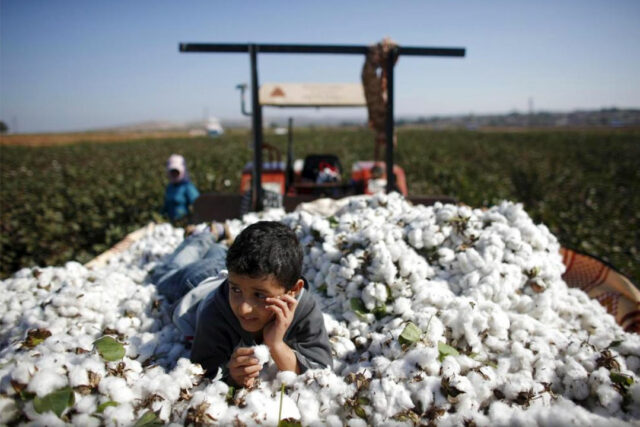
IZMIR, Turkey — In between rows of sprouting cotton crops, the dried-out stems of wheat and sugar beet carpet a stretch of farmland near Turkey’s Aegean coast, helping to lock in soil nutrients and moisture — even in the scorching heat.

In nearby fields, where cotton is being grown without the protective blanket, the plants wilt and wither under the sun.

“Healthier soil means healthier cotton,” said Basak Erdem, the farm manager of cotton fields owned and run by cotton manufacturer SOKTAS, which is based in Soke municipality, Aydin province.

Four years since SOKTAS first converted one hectare (2.47 acres) of land for regenerative farming — using nature-based methods to restore the land and improve its carbon storage capacity — the soil absorbs more than 18 tons of carbon per hectare a year.

That is equivalent to the annual greenhouse gas emissions of about 15 gasoline-powered cars, according to a calculator from the US Environmental Protection Agency.

“Every year, we see the results improve,” Erdem told the Thomson Reuters Foundation during a tour of the company’s fields.

SOKTAS was first introduced to regenerative agriculture in 2018 by the Stella McCartney label, which buys from the company, and now has 90 hectares (222 acres) of regenerative land.

Notorious for its intense use of natural resources and high waste output, the fashion industry has stepped up efforts in recent years to reduce its environmental impact and carbon footprint, with the UN’s Fashion Industry Charter for Climate Action setting an industry-wide target to decarbonize by 2050.

While efforts have focused on reducing waste, brands and designers are increasingly endorsing projects in regenerative agriculture to help reduce the emissions produced in the manufacture of classic textiles, such as cotton and wool.

A pilot regenerative cotton project in Turkey, set up by international conservation group WWF, found that up to 15 times more carbon was stored in the soil compared to carbon sequestration in general.

“The soil becomes more spongy and lively,” said Gokce Okulu, cotton manager at Textile Exchange, a nonprofit working with the fashion and textile industries to help reduce the environmental impact of materials.

Carbon-absorbing organic matter is killed in conventional farming by over-plowing the earth, she added.

Regenerative farming uses little to no tilling of the soil to help maintain its biological make-up, in addition to growing a cover crop to shield the ground, said Ms. Okulu.

Thanks to the cover crop of wheat, beans and sugar beet at SOKTAS fields, the soil’s organic matter content has doubled in four years, and each year the cotton needs less fertilizer and water, said Erdem.

According to the Confederation of British Industry, demand for cotton produced sustainably, which accounted for nearly 20% of the global cotton supply in 2020, is increasing.

The largest sustainable cotton initiatives are Better Cotton, Fairtrade, and Organic, but Jules Lennon, fashion lead at the Ellen MacArthur Foundation, said interest in regenerative cotton is growing, with leading denim producers Bossa and DNM among brands initiating partnerships.

“We’ve seen an absolute hub of activity that we’ve never seen before,” Lennon said. “But first, we really need to prioritize keeping existing products in use,” said Lennon, explaining that to transition to a circular economy, the industry needs to reduce the need for virgin materials by prioritizing recycling and reuse.

“Whatever (needs) remain, we want to come from regenerative sources,” said Lennon.

The European Commission wants all planned regulations requiring fashion companies to produce clothes in a more sustainable way to be in place by 2028.

There are currently 16 pieces of legislation in the works, which could set minimum standards of durability and recyclability for any product entering the EU and require fashion companies to collect textile waste.

“Given the significance of the EU as a market, this could mean a big push to change overall sourcing practices,” said Anita Chester, head of fashion at the Laudes Foundation, a philanthropic organization that helps fund the Thomson Reuters Foundation’s coverage of the green transition.

Little action has been taken to legislate on regenerative farming as it is still in the early stages of adoption, but some existing policies, such as the EU’s proposed Soil Health Law would help to support the transition, added Ms. Chester.

Standards and certifications are starting to emerge, such as from the Regenerative Organic Alliance or regenagri, but brands and designers must invest in farmers to help them transition to regenerative agriculture, said Ms. Chester.

“Nothing can be regenerative if it’s not just. You have to build community resilience by rewarding the farmers for their stewardship of nature and the services they provide in helping us combat climate change,” said Ms. Chester.

Zeynep Kayhan, a board member at SOKTAS, said it is hard to convince some brands to switch to regenerative cotton because it is more expensive.

In addition to the extra costs of soil tests, certification and investing in no-till machinery, regenerative farms initially lose profit on lower yields — before the soil has improved — and swapping a secondary farmable crop in the winter for a cover crop that is not harvested, said Kayhan.

“It’s more expensive to do the transition, but in time because you need less inputs, there will come a point when it will level off,” said Kayhan.

Improving soil health also helps to stave off the impacts of climate change that are hitting the cotton sector.

Research by WTW insurers shows that half of all cotton-growing regions will be at increased threat from climate risks, such as water stress and extreme weather, by 2040.

“Water retention becomes even more important going forward because you need less water if you know the soil can keep its water and nutrients,” said Kayhan.

In the spring, heavy rains damaged cotton seeds at SOKTAS, but the healthier soil in the regenerative plots helped the farmers to replant the seeds quickly, said Erdem.

“If all farmers did regenerative farming, then the climate could change,” said Erdem. — Thomson Reuters Foundation

Banks keep strict lending standards in Q3

BW FILE PHOTO

PHILIPPINE BANKS continued to impose tighter credit standards in the third quarter and expect to keep these for businesses and ease those for consumers in the coming months, a Bangko Sentral ng Pilipinas (BSP) survey showed.

The BSP’s latest Senior Bank Loan Officers’ Survey (SLOS) published late on Friday showed most respondent banks maintained their lending standards for both enterprises and households based on the modal approach.

However, based on the diffusion index, the study showed there was a net tightening of credit standards imposed for businesses, but lending standards were unchanged for households in the July-to-September period.

“The net tightening of credit standards for business loans in the third quarter of 2023 is reflected in the reduced size of credit lines, stricter collateral requirements and loan covenants, and more use of interest rate floors,” the central bank said.

The net tightening of lending standards for firms was also driven by lower risk tolerance, deterioration in the profitability of banks’ portfolios, and decline in the quality of borrowers’ profiles, the BSP said.

Meanwhile, lending standards for households were unchanged in the third quarter amid banks’ steady economic outlook, sustained profitability of portfolios, unchanged risk tolerance, and steady profile of borrowers.

The SLOS is a quarterly survey conducted by the BSP to gather qualitative information on lending conditions and demand from businesses and consumers. It aims to boost the central bank’s understanding of lending behavior, which is an important indicator of credit activity in the country.

By using the modal approach, the results of the survey are analyzed by looking at the option with the highest share of responses. The three options for the modal approach are either tightening, easing, or unchanged credit standards for loans to enterprises and for loans to households.

On the other hand, in the diffusion index (DI) approach, a positive DI for credit standards indicates that the number of banks that have tightened their credit standards exceeds those that eased (net tightening). 

A negative DI indicates that more banks have eased their lending standards compared with those that tightened (net easing). Meanwhile, an unchanged credit standard indicates that the number of banks that have tightened is equal to those that eased their credit standards.

For the last three months of the year, the DI approach showed lenders are likely to implement stricter loan standards for businesses amid expectations of a deterioration in borrowers’ profiles and decline in the profitability of banks’ portfolios along with banks’ reduced tolerance for risk.

Meanwhile, bank respondents expect to relax lending standards for households on the back of better borrowers’ profiles and improvement in profitability. 

Loan demand is also seen to grow in the fourth quarter, based on the DI approach, the survey showed.

Increased borrowings from businesses is likely amid the improved economic outlook of clients, and higher inventory and accounts receivable financing needs, the survey showed.

Meanwhile, an increase in loan demand from retail borrowers is expected to be driven by higher consumption, limited sources of funds, and more attractive financing terms offered by banks.

For the third-quarter round of the SLOS, the BSP sent questions to 62 banks, but only 48 lenders were able to respond to the survey. This is equivalent to a response rate of 77.4%. Information was gathered from Sept. 4 to Oct. 13. — Keisha B. Ta-asan

Now and Then: The Beatles to release new song with Lennon’s voice

IMDB

LONDON — Fans of the Beatles might just twist and shout in joy.

A new Beatles song will be released this week, featuring the voice of late member John Lennon and developed using artificial intelligence (AI), record company Universal Music Group said on Thursday.

Called “Now and Then,” the song — billed as the last Beatles song — also features parts recorded by surviving members Paul McCartney and Ringo Starr as well as the late George Harrison.

“There it was, John’s voice, crystal clear,” Mr. McCartney said in a statement. “It’s quite emotional. And we all play on it, it’s a genuine Beatles recording.

“In 2023 to still be working on Beatles music, and about to release a new song the public haven’t heard, I think it’s an exciting thing.”

“Now and Then” dates back to the late 1970s when Lennon recorded a home demo in New York City, where he was murdered in 1980. The Beatles broke up in 1970. Mr. Harrison died of cancer in 2001.

Years after his death, Mr. Lennon’s widow Yoko Ono handed a set of recordings including “Now and Then” to the other Beatles, who added their own parts to it. But technological limitations meant Mr. Lennon’s vocals and piano could not be separated to produce the clear mix required to finish the song.

The idea to revive the tune followed Peter Jackson’s 2021 documentary series The Beatles: Get Back, which had managed to isolate instruments and vocals using AI.

The same technology was applied to “Now and Then,” which was then completed by Mr. McCartney and Mr. Starr, Universal said. It will release worldwide at 1400 GMT on Nov. 2.

“It was the closest we’ll ever come to having him back in the room, so it was very emotional for all of us,” Starr said, referring to Lennon. “It was like John was there, you know. It’s far out.” — Reuters

Globe cited as most consistent broadband operator in 35 areas

GLOBE Telecom, Inc. said it had been recognized by global network testing firm Ookla as the most consistent broadband operator in 35 locations for the third quarter.

In a report, Globe said it posted top scores in terms of broadband consistency in 33 towns and cities as well as two provinces, which is higher compared with the previous quarter where it only earned the top spot in 31 locations.

The listed telecommunications company said consistency is defined as the percentage of a provider’s data samples that meet the minimum threshold for download and upload speeds, which indicates stable internet quality.

Globe had earned the highest consistency score in Dangcagan, Bukidnon at 90.76 points; San Luis, Pampanga at 90.55 points; and Mandaluyong City, Metro Manila at  89.21 points.

Globe said that Pampanga and Catanduanes recorded overall speed improvement in the country.

In a statement, Raymond Policarpio, vice-president of Globe At Home brand management, said the company will continue to provide its commitment to deliver uninterrupted connectivity.

“Globe, acknowledging the increasing reliance of its customers on stable connectivity, has tirelessly worked towards strengthening and expanding its fixed wired solutions,” Globe said.

As of last year, the company deployed  3.7 million fiber-to-the-home lines, with 1.4 million rolled out solely in 2022, the company said. — Ashley Erika O. Jose

Have sex, please or work until you’re 90

FREEPIK

IN HER NOVEL, Scattered All Over the Earth, Yoko Tawada imagines a world in which Japan has physically vanished and Japanese-ness survives only with a handful of natives and Japanophiles. While the archipelago isn’t likely to disappear (if it did, a lot of us would, too, in the seismological cataclysm), the demographic equivalent isn’t too farfetched — not only for Japan but other countries in East Asia. The population of the Land of the Rising Sun is sinking rapidly and, by the turn of the next century, will shrink to about 75 million people from the current 121 million. China has already lost the title of most populous nation to India and will decline from 1.46 billion now to 780 million by 2100. South Korea? It’s now a little over 50 million people; in 77 years, the projections have the country at under 20 million. (In contrast, its bellicose rival North Korea will roughly maintain its population and have 2 million more people than the South by 2100).

In a column this week, Shuli Ren says Hong Kong has come to the conclusion that to populate three artificial islands plus an enormous housing project it is spending as much as $128 billion on, it needs, well, population. Indeed, its demographics will decline precipitously from more than 8 million to 1.3 million in 2100. “For the next three years, the government will hand out HK$20,000 ($2,556) — the price for a dim sum banquet on the classy side — in cash for each baby born to a parent who is a permanent resident,” she writes. “Those who want to seek assisted reproductive services, such as in-vitro fertilization treatments, can receive a tax allowance of up to HK$100,000.” As Shuli says, it is a desperate attempt by the government to justify expensive infrastructure projects that no longer make economic sense.

Japan, in the meantime, has run out of workers. “Over half of the country’s businesses say they can’t find enough full-time staff,” says Gearoid Reidy. One in 10 people in Japan is now over 80 and octogenarians may soon be filling jobs like taxi driving if a rule change takes place. There’s very little slack in the labor market, “Nearly 87% of the working-age populace is employed, well above the 79% average of countries in the Organization for Economic Cooperation & Development,” says Gearoid. Next year could bring another crunch: That’s when new regulations will kick in limiting overtime in the trucking industry. “Estimates say it could result in a 14% drop in transportable cargo by 2025, ballooning to 34% by 2030.”

Automation can probably help Japan and Hong Kong (and China and South Korea) in terms of productivity and manufacturing efficiencies. But robots aren’t consumers — and economies focused on perpetual growth will cease to expand if there are dramatically fewer people around to buy things. Perhaps it’s time to retarget economic efforts on sustainable, more equitable prosperity rather than ever-greater largesse.

Relaxing barriers to immigration could help keep the old growth models going, but that will require cultural adjustments from reflexively xenophobic countries. If these nations come around to it, there are rescuers at hand. The population of the Philippines is projected to practically double by 2100. We Filipinos aren’t robots — and we like to travel.

IT’S NOT JUST ASIA …
Rishi Sunak’s days as UK prime minister appear to be numbered, whether or not he survives the plots his fellow Tories are fomenting against him. As Adrian Wooldridge wrote this week: “The disintegration of the Conservative Party is happening faster than the Conservatives feared and Labor dared hope.” Labor Party leader Keir Starmer has already started to issue promises about what his prospective government will do to build Britain better — including build more housing. The trouble with that, says Matthew Brooker, is: With what workers? He writes: “Construction is in the midst of a yearslong labor crisis. The industry’s workforce is smaller than it was in 2007, while the shortfall of housing has accumulated since then.” What remains of the industry’s supply of workers is also aging fast.

Matthew says: “The proportion of work done by over-50s has risen, from about a quarter of total hours worked in 2007 to 33% as of 2021, government data show. The amount performed by the youngest, from 16 to 29 years old, dropped over the same period. If you were designing a workforce to take on a future of significantly scaled-up housing construction, you wouldn’t start from here.”

While the UK’s population isn’t shrinking, it also isn’t growing particularly fast. A contributing factor to the laborer deficit is, of course, Brexit and its concomitant curtailment of workers from the EU. There’s no way Starmer can say “never mind” about the divorce.  That ship has sailed.

TELLTALE CHARTS
“The Big Four of Indian offshoring giants — Tata Consultancy Services Ltd., Infosys Ltd., Wipro Ltd. and HCL Technologies Ltd. — have hired half a million engineering graduates in the past three years. Two of the companies have indicated they won’t be going to campuses this year, according to an article in the Mint. This is a big blow. It seems, the industry is mimicking its clients by employing generative artificial intelligence tools like ChatGPT to boost productivity. If AI is going to permanently reduce the number of entry-level programming jobs in an average year, then youngsters need to pick up other skills to improve their chances. It’s better to let them know when they’re yet to hit the job market.” — Andy Mukherjee in “India’s Sell-Side Researchers Should Say What They Mean.

“The increasing presence of international investors in the UK stock market looks at first glance like a success story for London. But it’s really a tale of declining domestic ownership and a resulting leadership vacuum among shareholders. In theory, the nationality of owners shouldn’t matter. In practice, the withdrawal of the home crowd puts UK companies at the mercy of opportunistic hedge funds when they need to raise cash.” — Chris Hughes in “There’s a Reason Why UK Stocks Need UK Owners.

BLOOMBERG OPINION

TCCCI is now exclusive PHL distributor of KG Mobility

The KG Mobility Tivoli, along with four other vehicles, will be introduced before the end of the year. — PHOTO FROM KGM PHILIPPINES

KG MOBILITY (or KGM), formerly known as SsangYong up until March this year, is now under the ambit of The Covenant Car Company, Inc. (TCCCI) in the Philippines. In a release, TCCCI announced its appointment as exclusive country distributor of the South Korean auto brand. Formalized in the middle of the Q3 2023, the distributorship deal also establishes KG Mobility Philippines (KGM PH).

“The establishment of KG Mobility Philippines is yet another testament to the ongoing partnership between the Philippines and South Korea. The Covenant Car Company, Inc. is very pleased to offer our discerning Filipino car buyers these innovative, safe, and modern automobiles from KG Mobility. We are optimistic that the local motoring public will respond positively to our portfolio of product offerings, and we are likewise eager to grow KGM PH into a household name for expertly crafted, reliable, Korean-made automobiles,” said TCCCI Chairman Amb. Jose L. Cuisia, Jr.

KG Mobility is backed by nearly 70 years of expertise in SUV manufacturing and production, dating back to 1954. TCCCI said in a release that “the brand has carved out a reputation for being a premier Korean SUV manufacturer and specialist, and one of the main pillars of the Korean automotive industry.” Around the world, KG Mobility exports its lineup through about 1,500 outlets in 126 countries.

Joined KG Mobility Korea Executive Managing Director Ki Young Hwang, “Products from Korea, including automobiles, are recognized around the world for their outstanding build quality, aesthetic refinement, and for being curated with expert oversight — merits which we are sure will endear Filipinos toward KG Mobility Philippines’ appealing lineup of vehicles.”

He added, “We look with anticipation toward the growth and development of KG Mobility Philippines. With our partners from TCCCI, the Filipino motoring public can expect a captivating lineup of new-generation KG Mobility SUVs and pickup trucks, while providing reliable, customer-oriented after-sales and technical support for a worry-free ownership experience.”

By the end of the year, KG Mobility is set to offer five new products in the Philippines: the Tivoli Crossover SUV, the Tivoli Grand SUV, the Torres SUV, the Rexton midsize SUV; and the Musso Grand Pickup.

The first order of business, said KGM PH, will be to establish a national dealer network that “is designed to provide sales and after-sales support to clients across the archipelago.” Vehicles will be available for retail and service at select KGM PH dealers by the last quarter of 2023. The official brand launch has been slated for the Q1 next year; by the end of 2024, TCCCI forecasts a total of 12 nationwide dealerships.

TCCCI said that customers “will have easy access to KG Mobility Solutions after-sales support via a string of KGM PH-accredited and authorized service outlets.” KG Mobility Solutions promises one-hour service for periodic vehicle maintenance, home vehicle servicing packages, five-year/100,000-km vehicle warranty, and 24/7 emergency roadside assistance via the KGM PH customer support hotline.

KGM PH “will make itself more visible to Filipinos with the implementation of engaging pop-up concept road shows in leading business and lifestyle hubs in NCR, where bulk of the brand’s target market has been identified.” More of these will be held next year.

For more information and updates, visit the KGM PH’s social media accounts: KGMobilityPhilippines on Facebook, and @KGMobilityPhilippines on Instagram.

Music streaming was 2022’s top moneymaker for songwriters, composers

SUMEET-B-UNSPLASH

STREAMING became the largest source of income for composers and songwriters in 2022 and helped boost their collections by more than a quarter to €10.83 billion ($11.44 billion), a report showed on Thursday.

Digital royalty collections surged nearly 34% to € 4.2 billion in 2022 as more consumers turned to music and video subscription services, the International Confederation of Societies of Authors and Composers (CISAC) said in the report.

After a boom during the pandemic, streaming collections have doubled from their pre-COVID levels and account for 35% of total collections for music creators, surpassing TV and radio.

Royalties from the live and public performance sector — including concerts, exhibitions and theatres — rose by 69.9% to €2.68 billion in 2022, but remained below 2019 levels of around 7.9% after collapsing during the pandemic.

The report said live entertainment has continued its rebound in 2023 on the back of pent-up demand and could grow past pre-pandemic levels.

It warned, however, that the outlook beyond 2023 was uncertain because of concerns over consumer spending and tightening touring budgets of artists.

Earlier last week, music-streaming giant Spotify reported a rise of 26% in the number of its monthly active users to 574 million in the third quarter, beating its own guidance and analysts’ forecast of 565.7 million.

CISAC President Bjorn Ulvaeus, one of the founders of Swedish music group ABBA, said artificial intelligence could have an impact on the industry’s earnings going forward.

“It may not affect the graph lines of creators’ collections in 2023, but it will in years ahead. Right now, creators must sit at the table with the tech firms and policy makers at the highest level,” said Mr. Ulvaeus.

CISAC is a network of authors’ societies, protecting rights and representing interests of over four million creators of music, audio-visual, drama, literature and visual arts. — Reuters

Brazil food sector accounts for 74% of emissions

REUTERS

SAO PAULO — Food production in Brazil, the world’s biggest beef and soybean exporter, accounted for 74% of the country’s greenhouse gas emissions in 2021, according to a study released by environmental group Climate Observatory.

Most emissions do not come directly from food production, but deforestation to convert native vegetation into farms and pastures is the main source of carbon released from Brazil into the atmosphere, the group found.

“This report should be read by agribusiness representatives and the government as a wake-up call,” said Marcio Astrini, executive secretary of the Climate Observatory.

“It demonstrates, beyond any doubt, that agribusiness will determine whether Brazil is a climate hero or villain.”

Of the 1.8 billion tons of greenhouse gases emitted from Brazil in 2021 to make food, nearly 78% was associated with beef production, including emissions linked with deforestation for livestock farming and pollution from beef packing plants, the study found. 

Abiec, a lobby group of large beef producers in Brazil, did not have an immediate comment.

Climate Observatory’s calculations factored in deforestation and changes in land use, methane emissions from cow burps, as well as energy use and waste stemming from agricultural and industrial processes.

As the first study of its type, Climate Observatory did not provide historic figures for comparison.

Ranked alongside countries, Brazil’s beef industry alone would be the world’s seventh-largest greenhouse gas emitter, ahead of major economies such as Japan. — Reuters

BDO slips after central bank’s decision on off-cycle rate hike

BW FILE PHOTO

BDO Unibank, Inc. inched down last week after the central bank raised its key rate by 25 basis points (bps), which came amid news of the bank’s third-quarter results and its sale-and-leaseback deal with oil company Phoenix Petroleum Philippines, Inc.

A total of 11.26 million BDO shares worth P1.44 billion were traded from Oct. 23 to 27, data from the Philippine Stock Exchange (PSE) showed, making it the second most actively traded stock for the week.

The Sy-led bank’s share price finished at P128.50 apiece, 0.7% lower than its Oct. 20 close of P129.40 each.

Year to date, the stock’s price grew by 21.6%.

Analysts said that while the latest earnings results of the listed bank elicited some positive reaction from the market, significant developments such as geopolitical tensions and the off-cycle 25-basis-point rate hike of the Bangko Sentral ng Pilipinas (BSP) primarily drove the stock.

“Higher interest rates generally impact equities negatively as investors flee to yield plays,” said Rachelleen A. Rodriguez, research analyst at Maybank Investment Banking Group-Philippines, in an e-mail. 

She added that the impact of the rate hike for banks will be that funding costs reprice faster than loans.

Additionally, she said that while the third-quarter performance of BDO came out ahead of her estimates, the market did not significantly react, “which in our view is a result of the noise from several factors including tensions in the Middle East, and the territorial disputes of Philippines and China in the West Philippine Sea.”

Last week, the central bank delivered an off-cycle rate hike ahead of its Nov.16 meeting as it weighed the impact of rising inflation amid upside risks.

The Monetary Board raised its target repurchase rate to 6.5% for the first hike in seven months, bringing the cumulative rate increases since May 2022 to 450 bps.

This was also the highest in 16 years or since the 7.5% in May 2007.

BSP Governor Eli M. Remolona, Jr. said the move to resume monetary tightening was based on the central bank’s latest baseline projections that “point to an elevated inflation path over the policy horizon as upside risks continue to manifest.”

News reports said Phoenix was looking at entering into a sale-and-leaseback agreement with BDO to restructure the oil company’s debts.

Phoenix expects to raise at least P9 billion from the proposed sale and leaseback of its assets via a deal with the banking giant.

This arrangement is intended to reduce the oil company’s debt and prevent its credit deterioration without hindering business operations, Ms. Rodriguez said.

“Moreover, we expect the sale to be only a small fraction of the actual amount of the said assets, and should Phoenix be unable to repurchase the assets, BDO will have a gain as the assets’ value is far greater than their loan exposure to Phoenix,” she added.

In the third quarter, BDO recorded a 16.5% increase in its attributable net earnings to P18.7 billion from P16.06 billion the prior year.

For the January-to-September period, its attributable net reached P53.9 billion, higher by 34.8% from P40 billion previously.

Ms. Rodriguez expects the bank’s full-year net income to hit P67 billion, accounting for 80% of her full-year forecast.

“We expect still strong growth in BDO’s core lending business, which will continue to be driven by high margins, as well as strong fees to be sustained in [the fourth quarter],” she said. 

She added that investors should “buy” or consider BDO “as we continue to believe it is best positioned to capture the growth in the economy given its size, lending appetite, strong clientele, and well-balanced mix of digital and branch expansions.”

Mercantile Securities Corp. Head Trader Jeff Radley C. See said that due to the high rates set by the BSP, investors might choose BDO to invest in.

He said that last week, BDO had been trying to stay above P128.

“Next week, the stock might move sideways with a bearish bias due to the geopolitical tension that is happening globally,” he added.

He placed BDO’s support levels at P121.60 and P114.60 while its resistance levels at P132.20 and P135.80. — Abigail Marie P. Yraola

Catching breast cancer early

FREEPIK

Women can take steps to lower their risk of breast cancer, the most common cancer in women in the Philippines. A discussion of these steps is most fitting as the world celebrates Breast Cancer Awareness Month, held in October every year, to promote screening and prevention of the disease.

Among the “whats” one can do to lower one’s risk include maintaining a healthy weight; being physically active; not drinking alcohol or drinking it in moderation; and breastfeeding their children.

More than half (53%) of breast cancer cases in the country are diagnosed in their advanced stages, while only 2% to 3% of cases are diagnosed in Stage I. Promoting health literacy and implementing an organized nationwide breast cancer screening program are among the key steps needed to catch breast cancer cases early and increase the chance of successful treatment.

Adult women of all ages are encouraged to perform breast self-examination (BSE) at least once a month. The ICANSERVE Foundation in partnership with Novartis has developed a series of animated videos in Tagalog and Cebuano on how to do BSE, which are available for free on the Foundation’s YouTube channel.

Warning signs of breast cancer that women should look out for include a new lump in the breast or underarm (armpit); thickening or swelling of part of the breast; irritation or dimpling of breast skin; redness or flaky skin in the nipple area or the breast; pulling in of the nipple or pain in the nipple area; nipple discharge other than breast milk, including blood; any change in the size or the shape of the breast; and pain in any area of the breast.

The Philippine Obstetrical and Gynecological Society recommends a clinical breast examination (CBE) performed by a healthcare professional every one to three years for women 25-39 years old, and annually for women 40 years old and older.

The most important screening test for breast cancer is a mammogram (x-ray of the breast). Mammograms are the best way to find breast cancer early, when it is easier to treat and before it is big enough to feel or cause symptoms. Regular mammograms can find breast cancer early, sometimes up to three years before it can be felt. Having regular mammograms can lower the risk of dying from breast cancer, according to the US Centers for Disease Control and Prevention (CDC).

The United States Preventive Services Task Force (USPSTF) recommends that women who are 50 to 74 years old and are at average risk for breast cancer get a mammogram every two years. Women who are 40 to 49 years old should talk to their doctor or other healthcare provider about when to start and how often to get a mammogram.

Regular screening for breast cancer is particularly important for high-risk women. These include women who are older than age 50; started menstrual periods before age 12 and started menopause after age 55; have dense breasts (more connective tissue than fatty tissue), which can sometimes make it hard to see tumors on a mammogram; have personal history of breast cancer or certain non-cancerous breast diseases; have family history of breast or ovarian cancer; and had radiation therapy to the chest or breasts.

When fully implemented, the Universal Health Care (UHC) Act and National Integrated Cancer Control Act (NICCA) provide enabling platforms to promote early diagnosis by operationalizing an organized nationwide screening and broadening access to treatment. High out-of-pocket costs of care, a major access barrier, can be addressed by NICCA-mandated financial support mechanisms such as the Cancer Assistance Fund (CAF), Cancer and Supportive-Palliative Medicines Access Program (CSPMAP), and Medical Assistance to Indigent Patients (MAIP) Program.

On health literacy, the “Think Pink: Health Reporting on Breast Cancer in the Philippines” workshop series held recently aimed to raise awareness and enhance reporting about the disease. The workshop gathered more than 50 journalists from across the country in a discussion with medical experts and the breast cancer community. Their stories, being generated as an offshoot of the workshop series, put spotlight on the need for early detection as well as hope even for patients diagnosed in their advanced stages.


Teodoro B. Padilla is the executive director of Pharmaceutical and Healthcare Association of the Philippines (PHAP).  PHAP represents the biopharmaceutical medicines and vaccines industry in the country. Its members are in the forefront of research and development efforts for COVID-19 and other diseases that affect Filipinos.

ADVERTISEMENT
ADVERTISEMENT