Home Blog Page 400

Vietnam’s Communist Party begins congress to choose its leader

MATT W NEWMAN-UNSPLASH

HANOI — Hundreds of delegates from Vietnam’s ruling Communist Party will gather Monday under tight security for a congress that will select the single-party country’s top leader and set economic goals for the remainder of the decade.

The week-long event, which operates under opaque rules and convenes every five years, could cement and possibly expand power for the party’s current general secretary, To Lam, who has launched sweeping bureaucratic reforms at home and become Vietnam’s public face overseas.

About 1,600 delegates will elect a 200-person Central Committee, which then will pick up to 17 to 19 members of the Politburo from which the general secretary is chosen.

Mr. Lam is seeking to retain his role and possibly take on the state presidency, which has recently been held by a military leader, officials briefed on the matter said.

The congress is likely to confirm him as general secretary, according to multiple officials, although surprises cannot be ruled out, while the decision about the presidency is expected to be made at a later meeting where the outcome is even less clear.

After the congress, the Politburo will nominate the heads of state, government and Parliament. Parliamentary elections will take place only after leaders are chosen by the party.

RISK-TAKING LEADER
Mr. Lam, 68, has launched several major reforms during his brief tenure as party chief, the country’s most powerful job. He ascended to the position following the death of his predecessor, Nguyen Phu Trong, in July 2024.

Widely viewed as a risk-taker, Mr. Lam introduced the most significant administrative reform in decades when he cut tens of thousands of jobs in an effort to speed up decisions. The impact has yet to be fully assessed as officials adapt, but approval timelines for some investment projects have shortened.

That acceleration is tied in part to the scaling back of a sweeping anti‑corruption drive launched under Mr. Trong, an effort that Mr. Lam helped lead as public security minister. The campaign, which was meant to combat systemic bribery, at times paralyzed government decision‑making and led to the downfall of senior figures – including two presidents – clearing Mr. Lam’s path to the top.

Mr. Lam has also launched economic reforms and a burst of infrastructure projects, winning favor with foreign investors while stoking concerns about favoritism and waste.

In a country that allows no opposition, Mr. Lam has presided over a strengthening of the security forces and a tightening of controls over media and dissidents.

ECONOMIC GROWTH, SECURITY TOP NEXT FIVE-YEAR AGENDA
The congress’ delegates represent 5.6 million party members in a country of 100 million.

Under tight security – mobile phones will be jammed in the Hanoi building where the congress will take place – they will also refine the text of a resolution to be approved by the end of the congress, which is scheduled to wrap up on January 25.

A party draft released in October on the party’s website suggests the final text will prioritize security and ambitious growth, targeting at least 10% annually over the next five years, from the 6.5% to 7.0% target that was missed in the first half of the decade.

The draft mentions security dozens of times and highlights the importance of diplomacy and defense in a “more dangerous” world. The party intends to increase its defense forces, especially in border areas, the draft text says.

Environmental protection, which has been increasingly debated recently in the heavily polluted country, has also gained prominence, according to Politburo member Nguyen Xuan Thang.— Reuters

Pentagon readies 1,500 troops for potential Minnesota deployment, US officials say

THE PENTAGON is seen from the air in Washington, US, March 3. — REUTERS

WASHINGTON — The Pentagon has ordered about 1,500 active-duty soldiers in Alaska to prepare for a possible deployment to Minnesota, the site of large protests against the government’s deportation drive, two US officials told Reuters on Sunday.

The US Army placed the units on prepare-to-deploy orders in case violence in the midwestern state escalates, the officials said, though it is not clear whether any of them will be sent.

President Donald Trump on Thursday threatened to use the Insurrection Act to deploy military forces if officials in the state do not stop protesters from targeting immigration officials after a surge in Immigration and Customs Enforcement agents.

Increasingly tense confrontations between residents and federal officers have erupted in Minneapolis since Renee Good, a 37-year-old mother of three, was fatally shot behind the wheel of her car by ICE officer Jonathan Ross on January 7.

Minneapolis Mayor Jacob Frey said on Sunday that any military deployment would exacerbate tensions in Minnesota’s largest city, where the Trump administration has already sent 3,000 immigration and US Border Patrol officers to deal with largely peaceful protests.

“That would be a shocking step,” Mr. Frey said on NBC’s “Meet the Press” program. “We don’t need more federal agents to keep people safe. We are safe.”

Clashes in the city intensified after the federal ICE surge and the killing of Ms. Good. US Homeland Security Secretary Kristi Noem told CBS’ “Face the Nation” program on Sunday that Mr. Frey should set up “a peaceful protest zone” for demonstrators.

Mr. Trump has repeatedly invoked a scandal around the theft of federal funds intended for social welfare programs in Minnesota as a rationale for sending in immigration agents. The president and administration officials have singled out the state’s community of Somali immigrants.

ICE agents are targeting other immigrant communities as well.

Agents with weapons drawn entered a St. Paul house on Sunday and removed a man who was wearing only shorts and a blanket as onlookers honked horns, blew whistles and shouted at them to leave. The man was a member of the Hmong community, which came to the region from Laos starting in the 1970s after siding with the US in the Vietnam War. Roughly one-third of the US Hmong population are immigrants, according to the Pew Research Center.

Federal agents three days ago also arrested three workers from a family-run Mexican restaurant in the city of Willmar hours after eating lunch there, the Minnesota Star Tribune reported.

THREAT OF TROOPS FOLLOWS SURGE OF IMMIGRATION AGENTS
If US troops are deployed, it is unclear whether the Trump administration would invoke the Insurrection Act, which gives the president the power to deploy the military or federalize National Guard troops to quell domestic uprisings.

Even without invoking the act, a president can deploy active-duty forces for certain domestic purposes such as protecting federal property, which Mr. Trump cited as a justification for sending Marines to Los Angeles last year.

In addition to the active-duty forces, the Pentagon also could attempt to deploy newly created National Guard rapid-response forces for civil disturbances.

“The Department of War is always prepared to execute the orders of the commander-in-chief if called upon,” said Pentagon spokesperson Sean Parnell, using the Trump administration’s preferred name for the Department of Defense.

The White House did not immediately respond to a request for comment on the order, which was first reported by ABC News.

The soldiers subject to deployment specialize in cold-weather operations and are assigned to two US Army infantry battalions under the 11th Airborne Division, which is based in Alaska, the officials said.

Mr. Trump, a Republican, sent the surge of federal immigration agents to Minneapolis and neighboring St. Paul early last week, as part of a wave of interventions across the US, mostly to cities run by Democratic politicians.

He has said troop deployments in Los Angeles, Chicago, Washington, DC, Memphis, and Portland, Oregon, are necessary to fight crime and protect federal property and personnel from protesters. But this month he said he was removing the National Guard from Chicago, Los Angeles and Portland, where the deployments have faced legal setbacks and challenges.

Local leaders have accused the president of federal overreach and of exaggerating isolated episodes of violence to justify sending in troops.

Minnesota Governor Tim Walz, against whom the Justice Department has opened a criminal investigation, has mobilized the state’s National Guard to support local law enforcement and the rights of peaceful demonstrators, the state’s Department of Public Safety posted on X on Saturday.— Reuters

Billionaires’ wealth hits new peak as their clout grows, Oxfam says

More foreign capital went into the country in July to yield a net inflow for a second straight month. — REUTERS/DADO RUVIC/ILLUSTRATION

Billionaire wealth surged at three times its recent pace last year to reach its highest level on record, deepening economic and political divides that threaten democratic stability, anti-poverty group Oxfam said on Monday.

In a report timed for the opening of the World Economic Forum in Davos, the charity said the fortunes of global billionaires jumped 16% in 2025 to $18.3 trillion, extending an 81% rise since 2020.

The gains happened even as one in four people worldwide struggle to eat regularly and nearly half the global population live in poverty.

Oxfam’s study, which draws on academic research and data sources ranging from the World Inequality Database to Forbes’ rich list, argues that the wealth boom is being matched by a dramatic concentration of political clout, with billionaires 4,000 times more likely than ordinary citizens to hold political office.

The group links the latest wealth surge to policies under U.S. President Donald Trump, whose second administration has cut taxes, shielded multinational corporations from international pressure and eased scrutiny of monopolies.

Soaring valuations of artificial intelligence companies have added further windfall gains for already wealthy investors.

“The widening gap between the rich and the rest is at the same time creating a political deficit that is highly dangerous and unsustainable,” Oxfam’s executive director Amitabh Behar said.

Oxfam urged governments to adopt national inequality reduction plans, impose higher taxes on extreme wealth and strengthen firewalls between money and politics, including curbs on lobbying and campaign financing.

Wealth taxes are levied in just a few countries such as Norway at present but others, from Britain to France and Italy, have debated similar moves.

The Nairobi-based charity calculates that the $2.5 trillion added to billionaires’ fortunes last year is roughly equal to the stock of wealth held by the poorest 4.1 billion people.

The world’s billionaire population surpassed 3,000 for the first time last year, with Tesla and SpaceX chief Elon Musk becoming the first individual to exceed $500 billion in net worth.

Behar warned that governments are “making wrong choices to pander to the elite,” pointing to aid cuts and the rollback of civil liberties.

The report highlights what it calls the expanding grip of ultra‑wealthy business figures over traditional and digital media.

Billionaires now own more than half of the world’s major media firms, Oxfam said, citing holdings by Jeff Bezos, Elon Musk, Patrick Soon‑Shiong and France’s Vincent Bolloré. — Reuters

Philippine banks’ NPL ratio eases in November

BW FILE PHOTO

By Katherine K. Chan, Reporter

THE PHILIPPINE BANKING system’s gross nonperforming loan (NPL) ratio eased at end-November, preliminary data from the Bangko Sentral ng Pilipinas (BSP) showed.

Philippine banks’ gross NPL ratio dipped to 3.32% as of November 2025 from 3.33% the prior month and from the 3.54% seen in the same month in 2024.

This was the lowest bad loan ratio since end-September or when it settled at 3.31%.

Rizal Commercial Banking Corp. Chief Economist Michael L. Ricafort said recent rate cuts helped encourage loan repayments, easing banks’ NPL ratio at end-November.

The key policy rate now stands at a three-year low of 4.5% as the central bank has delivered a total of 200 basis points (bps) in cuts since August 2024.

The BSP also lowered large banks’ reserve requirement ratio (RRR) to 5%, which Mr. Ricafort said increased the banking system’s liquidity and lenders’ loanable funds.

“All of these reduced borrowing costs and improved the ability to pay by various borrowers, thereby leading to (a) slightly lower (and) better NPL ratio,” he said in a Viber message.

Loans are considered nonperforming once they are unpaid for at least 90 days after the due date. These are deemed risk assets since borrowers are unlikely to pay.

The amount of banks’ soured loans edged up by 1.46% month on month to P544.863 billion at end-November from P537.028 billion at end-October. Nonperforming loans climbed by 4.69% from the P520.477 billion in November 2024.

In the first 11 months, the total loan portfolio of the banking system reached P16.411 trillion, rising by 1.91% from the P16.104 trillion at end-October and by 11.49% from P14.719 trillion in the same period in 2024.

Past due loans inched up by 1.18% to P695.982 billion as of November from P687.836 billion in the previous month and by 9.52% from P635.478 billion at end-November 2024.

Still, banks’ past due loan ratio fell to 4.24% from 4.27% in October and 4.32% a year ago.   

Meanwhile, restructured loans dipped by 0.47% to P331.276 billion in November from P332.823 billion in October. Year on year, it grew by 12.79% from P293.702 billion as of November 2024.

This made up 2.02% of the industry’s total loan portfolio, below the 2.07% in October but slightly higher than the 2% recorded a year prior.

On the other hand, banks’ loan loss reserves stood at P517.185 billion in the 11-month period, up 1.75% from P508.273 billion a month ago. It likewise rose by 6.6% year on year from P485.158 billion.

This brought the past due loan ratio to 3.15%, easing from 3.16% as of October and 3.3% at end-November 2024.

Lenders’ NPL coverage ratio, which gauges the allowance for potential losses due to bad loans, climbed to 94.92% in the 11 months to November from 94.65% in the previous month and 93.21% as of November 2024.

“The continued double-digit growth in banks’ loans mathematically broadens the loan base that fundamentally reduces the NPL ratio, especially if NPLs are tempered through credit risk management that is better aligned with global best practices,” Mr. Ricafort said.

Based on separate BSP data, bank lending posted a steady growth in November. It expanded by 10.3% year on year, matching October’s pace, to P13.988 trillion from P12.676 trillion.

Business groups say execution of reforms key to regaining investor trust

Economic managers on Friday gathered top business leaders at an event to underscore the government’s resolve to pursue “big bold reforms.” — COURTESY OF DEPARTMENT OF FINANCE

By Aubrey Rose A. Inosante, Reporter

PHILIPPINE BUSINESS groups view the government’s pledge of “big bold reforms” as a credible step to rebuilding investor confidence but warn the real impact will depend on swift and decisive implementation.

Foreign Buyers Association of the Philippines President Robert M. Young said the reforms pledged by the economic team before the business community were “music to the industry’s ears.”

“However, this will all depend on the urgent time of execution and implementation,” he said during a phone call with BusinessWorld over the weekend.

Last Friday, the Marcos administration unveiled reforms aimed at improving the ease of doing business and encouraging more investments in the country.

These include the restoration of P4.32 billion in fiscal support for the Comprehensive Automotive Resurgence Strategy (CARS) program in this year’s budget; visa‑free entry for Chinese visitors for up to 14 days; a digitized audit system from the Bureau of Internal Revenue (BIR); and the national single‑window trade facilitation platform of the Bureau of Customs.

This came as a corruption scandal over anomalous flood control projects dampened investor sentiment and contributed to slower growth, household consumption, and public spending.

“We say that the ease of doing business in its entirety is the most vital among those mentioned. And nothing will change as long as the old system will prevail,” Mr. Young said.

He also said the reforms signal that Finance Secretary Frederick D. Go, the former president and chief executive officer of Robinsons Land Corp., understands the urgency of change.

The European Chamber of Commerce of the Philippines (ECCP) said the reforms are necessary and “directionally correct,” but the full impact will be realized through strong execution.

“If execution remains disciplined and reforms are sustained beyond political cycles, these initiatives can meaningfully improve the Philippines’ investment climate and competitiveness,” ECCP President Paulo Duarte said in a statement sent to BusinessWorld.

Mr. Duarte also said the discussions last Friday signaled a clear focus on fiscal discipline, accountability, and predictability, which are core considerations for European investors.

He noted that the government’s commitments under the CARS program were an important signal and helped address uncertainty in the manufacturing sector.

“This assurance underscored the administration’s recognition that honoring long-term incentive commitments is essential to maintaining investor trust across capital-intensive industries,” the chamber official said.

Mr. Duarte also said the European business community hopes the European Union-Philippines Free Trade Agreement negotiations will conclude this year.

‘AUTHENTIC EFFORT’
Meanwhile, British Chamber of Commerce Philippines Executive Vice Chair Chris Nelson described the government’s reforms as an “authentic effort” to improve the business environment.

“It’s great to see that we’re doing these things, we’re working together. We cannot forget that we live in a very competitive environment,” he said during a phone call with BusinessWorld on Jan. 16.

“Other countries are also doing reforms and further liberalizing their economy, that’s not just the Philippines.”

Mr. Nelson said they had hoped to hear more about measures to address food supply concerns and the passage of the proposed Cybersecurity Act.

The group is urging the government to adjust tariffs, including raising the minimum access volume quota for pork imports, to ease supply shortages and help curb inflation.

Mr. Nelson also said the private sector wants to work with the government on reducing red tape.

“We’re very supportive of (Anti-Red Tape Authority) Secretary (Ernesto V.) Perez, and I think the feeling is let’s get that real sense of urgency… Implementing digital payments, digital contact, approvals,” Mr. Nelson said.

The Federation of Philippine Industries (FPI) said one of the reforms, offering visa‑free entry for Chinese businessmen and tourists for up to 14 days, signals that the country is not single-minded in its relations with China.

“Our engagement is not defined solely by disputes — it also encompasses tourism, trade, and investment,” the FPI said in a statement on Sunday.

The move sends a clear signal that the Philippines is intent on building economic bridges while safeguarding national interests, the group said.

“Only by sustaining industrial programs with credibility and pursuing consistent, multi-dimensional diplomacy can the Philippines position itself as a trusted destination for long-term manufacturing and growth,” FPI Chairperson Elizabeth H. Lee said.

Meanwhile, the Federation of Filipino Chinese Chambers of Commerce and Industry, Inc. (FFCCCII) said changes to the issuance of letters of authority (LOAs) will boost investor and business confidence.

“It signals a mature transition from an enforcement-centric model to one built on transparency, fairness, and rational engagement between the state and its economic contributors,” FFCCCII President Victor T. Lim said in a statement on Jan. 17.

After suspending the issuance of LOAs last year amid complaints of misuse, the BIR plans to launch a digitized, risk‑based audit system this year.

Mr. Lim said the reduction in the number of departments authorized to issue the documents, as well as the frequency with which a taxpayer can receive them in any given year, “instills powerful and necessary predictability.”

“Continuous, progressive, and intelligently crafted policies of this caliber are needed to encourage both domestic and foreign investments, providing the stable and equitable environment essential for sustained Philippine economic growth,” he added.

BSP’s ‘nonchalance’ amid peso slump still reasonable

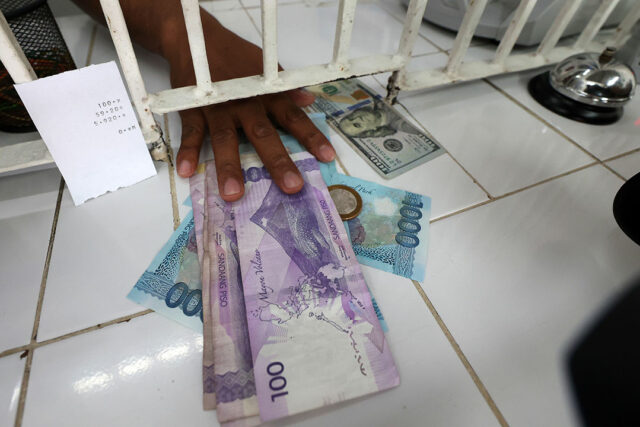
An individual exchanges US dollars for Philippine pesos at a money changer in Quezon City. — PHILIPPINE STAR/MIGUEL DE GUZMAN

By Katherine K. Chan, Reporter

THE BANGKO SENTRAL ng Pilipinas’ (BSP) minimal intervention in the foreign exchange market is deemed reasonable as the peso’s recent swings remain manageable despite successively hitting record lows in the past weeks, analysts said.   

“The BSP’s strategy of minimal intervention is largely reasonable and consistent with its general nonchalance rhetorically about the peso’s weakness,” Miguel Chanco, chief emerging Asia economist at Pantheon Macroeconomics, told BusinessWorld in an e-mail.

“While the level of the peso-dollar exchange rate is understandably attracting more attention these days, what matters ultimately for inflation is its rate of change year over year,” he added. “And, on this basis, panic would be very premature.”

According to Pantheon Macroeconomics, the peso has depreciated against the US dollar by an annual 1.4% as of January. This was slightly higher than the 0.8% decline posted in December, though Mr. Chanco noted that this remains “very manageable in the grand scheme of things.”

Since Jan. 5 or the second trading day of the year, the peso has closed at the P59-per-dollar level.

On Jan. 15, it fell by two centavos to close at P59.46 versus the greenback, breaking the previous all-time low of P59.44 against the dollar on Jan. 14.

BSP Governor Eli M. Remolona, Jr. earlier said that they feel “tremendous pressure” to defend the peso amid its recent volatility, but they choose to disregard it.

Still, he noted that the central bank continues to make minimal interventions in the foreign exchange market to prevent sharp movements that may cause inflationary pressures.

Meanwhile, John Paolo R. Rivera, a senior research fellow at the Philippine Institute for Development Studies, noted that extended peso weakness might worsen inflation on imports and erode confidence in the currency.

“BSP’s light touch forex (foreign exchange) approach is acceptable while markets are orderly, but prolonged PHP (Philippine peso) weakness risks imported inflation and weaker confidence if expectations become unanchored,” Mr. Rivera told BusinessWorld in a Viber message. 

“This depreciation could reduce the likelihood of a near-term rate cut, as the BSP may turn more cautious to avoid fueling price pressures unless inflation stays firmly within target and the PHP stabilizes,” he added.

In December, the Monetary Board delivered its fifth straight 25-basis-point (bp) cut, bringing the benchmark policy rate to an over three-year low of 4.5%. It has so far reduced key borrowing costs by 200 bps since it began its easing cycle in August 2024.

The BSP chief has said that another 25-bp reduction at their Feb. 19 meeting remains on the table but may be unlikely considering current economic data.

Jonathan L. Ravelas, a senior adviser at Reyes Tacandong & Co., said that the peso’s continued slump makes it difficult to justify any further easing soon, putting the BSP in a “tricky spot.”

“By keeping interventions minimal, the BSP preserves its reserves and signals confidence, but the risk is that a weaker peso quietly pushes imported prices higher and keeps inflation sticky,” he told BusinessWorld via Viber. “And because every bout of depreciation widens the rate gap with the Fed, the peso’s weakness makes a February rate cut much harder to justify.”

Mr. Ravelas noted that recent peso movements may be urging the central bank to pivot from easing to maintaining stability.

Still, the prevailing macro backdrop, particularly tepid economic growth, could outweigh peso concerns in shaping the BSP’s monetary policy.

This, Mr. Chanco said, would likely prompt the central bank to deliver a sixth straight 25-bp cut in February to end its easing cycle. 

“Of course, it would be an entirely different story if inflation was above the BSP’s target range and the PHP was wobbling more materially, but we’re nowhere near this scenario,” he added.

Philippines accelerates push to light up rural homes

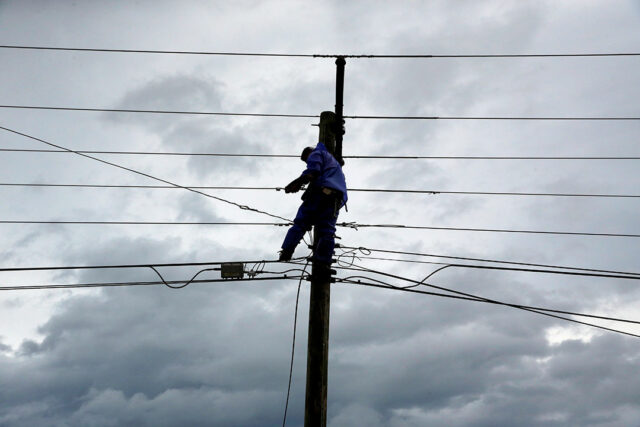
A lineman fixes an electrical post that was damaged during a typhoon in Burgos, Ilocos Norte, Oct. 20, 2016. — REUTERS/ERIK DE CASTRO

By Sheldeen Joy Talavera, Reporter

OVER A MILLION households in the Philippines remain without electricity, a gap the government aims to close within the next three years.

Energy Secretary Sharon S. Garin said the Department of Energy (DoE) and National Electrification Administration (NEA) are deploying a mix of strategies to speed up household energization, including microgrid systems, solarized homes, and streamlined grid connections.

“Just a little more and we’ll be close to 100%,” she said in a speech last year. “For every one peso the government spends on electrification, we get four pesos in return. So, it’s an investment for us and for our children.”

During his fourth State of the Nation Address in July 2025, President Ferdinand R. Marcos, Jr. directed the DoE and NEA to accelerate efforts to fully electrify the country before the end of his term in 2028.

As of June 2025, about 28.27 million households have been energized, accounting for 94.77% of the projected households from the 2020 Philippine Statistics Authority census.

Luzon posted the highest electrification rate at 98.53%, followed by the Visayas at 95.78%, while Mindanao continues to trail at 83.81%, highlighting the difficulty of reaching last-mile communities.

Under the 2024-2028 National Electrification Roadmap, the government was targeting a 96.51% electrification rate by the end of 2025.

The DoE’s Electric Power Industry Management Bureau (EPIMB) said achieving full electrification by 2028 will require an estimated P80.9 billion, with around P68.26 billion expected from government financing and P12.64 billion from private investments.

The funds will cover household connections to existing grids, distribution line extensions, stand-alone home systems, and microgrid projects.

NEA Administrator Antonio Mariano C. Almeda said the agency expected rural electrification to reach 91.7% by the end of 2025, aiming for 94% by the end of 2026 with higher subsidies from Congress.

“With the increase in the budget, it requires an increase in engineers to validate, inspect, liquidate, and issue certificates of final inspection,” he said during a briefing in December, noting that the issue is being discussed with the Commission on Audit.

EPIMB said insufficient funding and subsidies make grid extension and off-grid projects difficult, particularly in areas where electrification is not commercially viable.

“Because rural electrification is often not profitable, private companies are hesitant to invest. The regulatory and institutional frameworks—tariffs, subsidies, and incentives—may not sufficiently offset risk,” the bureau told BusinessWorld.

Much of the work of electrifying last-mile communities has fallen to electric cooperatives and private utilities operating on the ground.

The Philippine Rural Electric Cooperatives Association, Inc. (PHILRECA), which represents cooperatives nationwide, said it is aligning its programs to support the government’s 2028 electrification goal.

“We are aligning all available mechanisms, projects, and assistance to ECs (electric cooperatives) in ensuring the attainment of total electrification by 2028,” PHILRECA Executive Director and General Manager Janeene Depay-Colingan said in a statement to BusinessWorld.

She noted that ECs face obstacles, including difficult terrain, limited infrastructure, high project costs, and logistical constraints, which require innovative and coordinated approaches.

PHILRECA said it is strengthening partnerships with government agencies, optimizing funding mechanisms, deploying modular and renewable energy solutions in off-grid areas, and enhancing the technical capacities of cooperatives.

MICROGRIDS, RENEWABLES
Manila Electric Co. (Meralco), which serves about 3% of the country’s land area, has also expressed support for the national agenda.

“The government’s target of achieving full electrification nationwide by 2028 is ambitious and critical for inclusive development — and Meralco is fully committed to supporting this agenda,” Meralco Executive Vice-President and Chief Operating Officer Ronnie L. Aperocho told BusinessWorld.

Meralco is expanding its role in off-grid electrification through microgrid projects. The company targets to energize more than 1,000 homes and businesses on Cagbalete Island in Mauban, Quezon, with a solar-plus-battery microgrid system and backup diesel generation.

“With the launch of the Cagbalete Microgrid, we reaffirm Meralco’s commitment to power progress with sustainable energy solutions, ensuring that no one is left in the dark,” Mr. Aperocho said.

Renewable energy and microgrids are seen as cost-effective solutions for off-grid areas. Many households in remote communities rely on diesel generators or kerosene lamps, which often incur higher and more volatile costs.

“It offers a way to step back from traditional grid extension, reduce reliance on diesel and imported fuels, improve resilience — especially given the country’s exposure to natural disasters — and support inclusive development,” EPIMB said.

Albert R. Dalusung III, energy transition adviser at the Institute for Climate and Sustainable Cities, said that renewable energy can help lower electricity costs for local communities.

He cautioned that efforts should focus not only on expanding coverage but also on delivering reliable power that enables economic activity.

“I think what is important is not just to target full electrification because it may be ‘full electrification,’ but you’re only delivering eight hours or less of electricity,” he said.

Kenny Rogers Roasters’ Chimichurri makes a comeback with a fresh focus on nutrition

Kenny Rogers Roasters announces the return of its signature Chimichurri line, a long-time guest favorite known for its bold and vibrant profile. This year’s comeback introduces a clearer nutrition story, supported by newly verified nutrition data.

What began as a limited-time offering has since evolved into one of Kenny Rogers Roasters’ most recognizable dining icons. The relaunch brings back three well-loved favorites: Chimichurri Whole Roast, Solo B Chimichurri Plate, and Chimichurri Steak.

Flavor You Know, Nutrition You Can See

Chimichurri has always been associated with bold flavor at Kenny Rogers Roasters. This year, the focus shifts beyond taste, as the brand shares verified nutrition data that brings greater clarity to the role each Chimichurri dish plays in a well-rounded meal.

Chimichurri Whole Roast — Designed for sharing, the Chimichurri Whole Roast centers on Kenny Rogers Roasters’ signature roasted chicken and offers a naturally protein-rich meal. One serving delivers up to 69% of the recommended daily protein intake, along with key nutrients such as Vitamin A, Vitamin C, iron, and potassium, supporting fullness, strength, and everyday wellness. Even the Chimichurri sauce contributes nutritional value, providing Vitamins A and C from real herbs and citrus.

Solo B Chimichurri Plate — For individual diners, the Solo B Chimichurri Plate offers a balance of comfort and nourishment in a complete meal. It delivers 84% of the daily recommended fiber and 61% of the daily recommended protein, alongside essential nutrients including Vitamin A, Vitamin C, iron, and potassium. This nutrient combination supports digestion and everyday vitality, making it a satisfying option for solo dining.

Chimichurri Steak — The Chimichurri Steak provides a hearty, protein-forward option paired with the freshness of Chimichurri sauce. One serving delivers 106% of the daily recommended protein and 216% of the daily recommended iron, nutrients that support strength and energy throughout the day. It also contains Vitamin A, Vitamin C, and calcium, rounding out its overall nutritional profile.

“Chimichurri has become a true KRR signature. What makes this year’s return special is that we are not just bringing back a flavor people love — we are strengthening the story behind it,” said Frederick Siy, President and CEO of Kenny Rogers Roasters Philippines.“With clearer nutrition information, our guests can feel even better about choosing Chimichurri. It reflects our commitment to serving food that is both delicious and healthy.”

With its return, the Chimichurri line continues to reflect Kenny Rogers Roasters’ promise of meals that feel satisfying without feeling complicated — bringing together real ingredients, vibrant flavors, and transparent nutrition.

The Chimichurri line will be available in participating Kenny Rogers Roasters stores nationwide starting Jan. 19.


Spotlight is BusinessWorld’s sponsored section that allows advertisers to amplify their brand and connect with BusinessWorld’s audience by publishing their stories on the BusinessWorld Web site. For more information, send an email to online@bworldonline.com.

Join us on Viber at https://bit.ly/3hv6bLA to get more updates and subscribe to BusinessWorld’s titles and get exclusive content through www.bworld-x.com.

CREC sets P119 billion for solar rollout this year

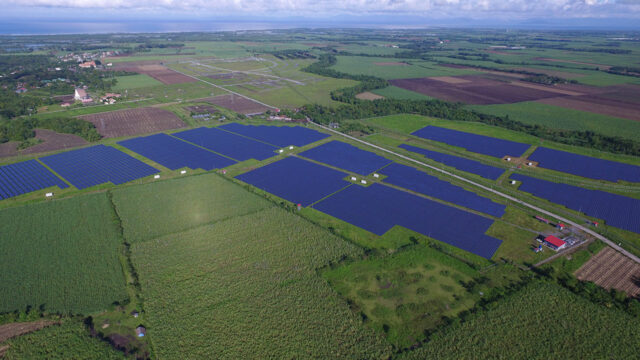
CREC.COM.PH

RENEWABLE ENERGY developer Citicore Renewable Energy Corp. (CREC) is earmarking a capital expenditure (capex) budget of around $2 billion (P118.86 billion) this year to finance the rollout of more than a gigawatt (GW) of solar power projects.

Speaking to reporters last week, CREC President and Chief Executive Officer Oliver Y. Tan said the company is gearing up for the development of its solar projects awarded under the government’s latest green energy auction.

CREC secured 1.2 GW of renewable energy capacity in the auction, making it one of the largest winners.

The projects are located in Isabela, Batangas, Quezon, and Negros Occidental.

This year’s capex, which doubled from last year, will be funded through internal cash and bank loans.

CREC, directly and through its subsidiaries and joint ventures, manages a diversified portfolio covering renewable energy generation, power project development, and retail electricity supply.

The company currently has a combined gross installed capacity of more than 500 megawatts (MW) from its solar facilities in the Philippines.

CREC is investing in ready-to-build and under-construction projects to scale its capacity to about 5 GW by 2028.

In line with this target, the company plans to energize 850 MW of solar capacity in the first quarter and aims to reach 3 GW by yearend.

“It’s almost done. We’re just sorting the connection points,” Mr. Tan said.

Mr. Tan said the energy sector is bracing for macroeconomic and industry headwinds this year, including peso depreciation and higher input costs.

“So, the high commodity prices and inflationary pressure in the capex — these are the headwinds we’re trying to manage,” he said. — Sheldeen Joy Talavera

T-bill, bond rates may end mixed on BSP bets

BW FILE PHOTO

RATES of the Treasury bills (T-bills) and Treasury bonds (T-bonds) to be offered this week could end mixed, tracking secondary market yields, as players continue to make bets on the Bangko Sentral ng Pilipinas’ (BSP) next move amid benign inflation and a weakening economy.

The Bureau of the Treasury (BTr) will auction off P27 billion in T-bills on Monday, or P9 billion each in 91-, 182-, and 364-day papers.

On Tuesday, the government will offer P30 billion in reissued 20-year T-bonds with a remaining life of seven years and two months.

T-bill and T-bond yields could follow the mixed week-on-week movement at the secondary market on Friday as the market continues to weigh recent comments from BSP Governor Eli M. Remolona, Jr. on the Monetary Board’s policy path, Rizal Commercial Banking Corp. Chief Economist Michael L. Ricafort said in a Viber message.

Meanwhile, a trader said in an e-mail that the T-bonds could fetch rates ranging from 5.875% to 5.925%, with the offering expected to become a test of market appetite for longer tenors.

At the secondary market on Friday, yields on the 91-, 182-, and 364-day T-bills went down by 0.34 basis point (bp), 2.86 bps, and 3.18 bps week on week to end at 4.7975%, 4.8811%, and 4.9428%, respectively, based on PHP Bloomberg Valuation Service Reference Rates data as of Jan. 16 published on the Philippine Dealing System’s website.

Meanwhile, the 20-year bond rose by 8.32 bps week on week to yield 6.4875%, while the seven-year debt, which is the tenor closest to the remaining life of the papers on offer this week, inched up by 0.83 bp to fetch 5.8923%.

The Monetary Board will hold its first meeting for this year on Feb. 19.

The BSP on Dec. 11 delivered a fifth straight 25-bp reduction in benchmark interest rates, bringing the policy rate to an over three-year low of 4.5%.

It has lowered borrowing costs by a total of 200 bps since its rate cut cycle began in August 2024.

Mr. Remolona has left the door open to one more 25-bp cut this year that would likely mark the end of their current easing round to help boost domestic demand and spur economic recovery.

Lingering governance concerns due to a corruption scandal involving state infrastructure projects have dragged both public and private investments, causing Philippine gross domestic product growth to slump to a four-year low of 4% in the third quarter of 2025.

Analysts have said that the central bank could ease further to help prop up the economy as inflation remains under control.

Philippine headline inflation averaged 1.7% in 2025, easing from 3.2% in 2024. This was the slowest rate in nine years or since the 1.3% clip in 2016.

This was also below the BSP’s 2%-4% target but a tad higher than its full-year forecast of 1.6%.

The BSP said higher electricity costs, base effects, and a weakening peso could bring inflation back within its target band this year. The central bank expects the consumer price index to average 3.2% for 2026 and 3% in 2027.

Last week, the Treasury raised P37.8 billion via the T-bills it auctioned off, higher than the P27-billion plan, as the offer was more than four times oversubscribed, with total tenders reaching P113.096 billion. The BTr doubled its acceptance of noncompetitive bids for all tenors to P7.2 billion each.

Broken down, the government awarded P12.6 billion in 91-day T-bills, above the P9-billion plan, as demand for the tenor reached P35.433 billion. The three-month paper fetched an average rate of 4.731%, decreasing by 2.4 bps from yield seen at the previous auction. Yields accepted were from 4.723 to 4.743%.

The Treasury also increased the award for the 182-day debt to P12.6 billion versus the P9-billion program as tenders hit P43.628 billion. The average rate of the six-month T-bill was at 4.85%, easing by 4.5 bps the previous week. Tenders awarded carried yields from 4.843% to 4.863%.

Lastly, the BTr raised the award for the 364-day securities to P12.6 billion from the P9-billion plan as the tenor attracted bids totaling P34.035 billion. The one-year paper’s average yield was at 4.916%, down by 2.1 bps. Accepted rates were from 4.9% to 4.928%.

Meanwhile, the reissued 20-year T-bonds to be offered on Tuesday were last auctioned off on June 29, 2021, where the government raised P35 billion as planned at an average rate of 4.187%, above the 3.625% coupon rate.

The Treasury wants to raise P180 billion from the domestic market this month, or P110 billion via T-bills and P70 billion through T-bonds.

The government borrows from local and foreign sources to help fund its budget deficit, which is capped at P1.647 trillion or 5.3% of gross domestic product this year. — A.M.C. Sy

Globe plans $1-B capex for 2026

GLOBE.COM.PH

GLOBE TELECOM, INC. is likely to set a capital expenditure (capex) budget of about $1 billion (around P59.39 billion) this year as it ramps up network expansion, its president said.

“Most of it will really go to data services. More or less the same level at $1 billion in cash capex,” Globe President and Chief Executive Officer Carl Raymond R. Cruz told reporters on the sidelines of an event on Friday.

Most of the company’s capex will be allocated to network expansion, including data services and its fiber network, he said, adding that Globe is working to strengthen its fiber infrastructure.

“Fiber network is important. It accounts for the data traffic, especially with artificial intelligence (AI), data traffic will really increase by probably tenfold,” Mr. Cruz said.

For 2025, Globe set a capex guidance of below $1 billion, which was allocated to essential network upgrades. As of September 2025, the company said it had invested about P31.4 billion in capital expenditures.

On Friday, Globe partnered with Elon Musk’s Starlink to bring direct-to-cell satellite services to the Philippines, making the country the first in Southeast Asia to offer the technology.

Starlink’s direct-to-cell technology allows mobile devices to connect directly to low-earth orbit (LEO) satellites, providing text, voice, and data connectivity, particularly in remote areas with limited coverage.

The initiative forms part of the Ayala-led telecommunications company’s efforts to ramp up investments in technologies aimed at helping bridge the country’s digital and connectivity gap.

Globe targets the commercial rollout of the service by end-March, the company said.

In the third quarter of 2025, Globe’s attributable net income declined by 12.79% to P5.25 billion from P6.02 billion, while revenues fell by 1.68% to P44.36 billion from P45.12 billion.

For the nine months ended September, net income dropped by 14.04% to P17.69 billion from P20.58 billion, while gross revenues slipped to P131.59 billion from P134.74 billion.

Mr. Cruz said the company continues to see growth opportunities in data centers amid rising demand.

Globe remains on the lookout for potential data center expansion, he said, noting that its data center in Fairview is on track for full completion this year.

“Yes, in fact, we already have a tenant. We have not officially opened it but it is already operational,” he said. — Ashley Erika O. Jose

Focusing on Filipino design excellence

Marcos-era design center resurrected under Marcos Jr.

THE SIGNATURE trade shows of the Center for International Trade Expositions and Missions (CITEM) include Manila FAME, which is centered on home, fashion, and lifestyle goods, and IFEX Philippines, which focuses on food and ingredients. Both a flaw and feature of these shows are their limited weekend runs, creating excitement, scarcity, and three-day selling dates. But when the show is over, the magic is all gone. Now an old-new facility in Pasay City, finished just in time for the 2026 ASEAN Summit, might just change all that.

Originally opened in 1983 as the PhilTrade Center, the new Likhang Filipino Exhibition Halls displays some of the best that Philippine artisans can offer in a variety of sectors — home and lifestyle, fashion and accessories, traditional arts and crafts, food and beverages, and wellness.

The exhibition halls opened on Jan. 15 with much fanfare, attended by President Ferdinand R. Marcos, Jr., his wife, first lady Marie Louise “Liza” Araneta-Marcos, and his mother, former first lady Imelda R. Marcos, amid a crowd of diplomats and other dignitaries. The senior Mrs. Marcos, now in a wheelchair, spearheaded the first PhilTrade Center in 1979, also meant to exhibit the same categories of artisanal goods during her husband Ferdinand E. Marcos, Sr.’s dictatorship, which ended in 1986 with the EDSA Revolution.

Department of Trade and Industry (DTI) Assistant Secretary Al Modesto Valenciano recalled in a press conference prior to the opening that after the Marcos Sr. era, the PhilTrade Center had been used by antique shops, and most recently — prior to the younger Mr. Marcos’ Executive Order No. 75 — had been occupied by restaurants catering to Philippine offshore gambling operators (POGOs).

Executive Order No. 75, “Strengthening the Center for International Trade Expositions and Missions,” says, “For this purpose, within six months from the effectivity of this Order, the CITEM, in coordination with the Department of Budget and Management (DBM) and such other relevant agencies, shall come up with a roadmap that will detail the strategic plans and programs to further strengthen the mandates of CITEM, including among others, the establishment of an exhibition facility and/or permanent showrooms and outlets designed to host trade shows, exhibitions, conferences, and other similar events, subject to existing laws, rules and regulations.” The new facility is part of the fulfillment of this order.

“Three days might not be enough for both the buyers and the exhibitors,” said CITEM Executive Director Leah Pulido Ocampo about the trade shows they currently conduct and their limited scope.

According to her, all of the exhibitors at the refurbished area (numbering about 200, spread out over several galleries with different categories), are from CITEM shows like FAME and IFEX. “It’s an extension of the three-day events. So now, we have a 365-a-year, seven days a week, 10 hours a day exhibition center,” she said.

“The reason why the First Lady Liza Marcos was very urgent in giving us a short period of time [to set up the center]… because this is basically one of the major destinations of the ASEAN delegates for the ASEAN summit,” she said. Mr. Valenciano said that the project began in July 2025 and was finished in December (in contrast, the senior Mrs. Marcos finished the site in the 1970s in 12 days, according to a press release).

Brands represented in the facility include: Calfurn, Contemporaneo, Filipino Creazione, Finali Furniture, JB Woodcraft, and Prizmic & Brill for furniture; Albertina Import and Export, Inc., Allanae Printshop & Paper Products Corp. (APPP.Co), Creativly Studio for gifts and holiday decor; and Carl Jan Cruz, Arnel Papa, Bitagcol, and Jor-el Espina for fashion.

The CITEM trade shows sometimes feature limited supplies due to the nature of their usually artisanal make, but since a year-round supply of goods is needed for the exhibition halls, Ms. Pulido Ocampo noted that “Supply is actually relative as far as CITEM is concerned. What we’re trying to do is to teach our exhibitors to look for their specific niche. You do not entertain buyers if you know that you cannot supply.”

The goods are also available to buyers on a retail basis.

Meanwhile, the Design Center of the Philippines, along with its library and product development facilities, will be moving to the exhibition halls. “[The] Design Center will be moving our offices here; our full operations would come [in] March,” said Rhea Matute, executive director of the Design Center. “The idea is really it’s a one-stop complex for the creative industries.”

Mr. Marcos said in a speech: “This space was conceived and inaugurated in 1979 — Mommy, talaga you are always ahead of your time — under your stewardship, the First Lady Imelda Romualdez Marcos. It was founded on a simple belief: that Filipino design and craftsmanship deserved a place on the world stage. So today, we proudly carry that vision of yours, Mom, we carry it forward to the year 2026.

“There is nothing but immense pride that comes from recognizing our own, from seeing materials shaped by Filipino hands, ideas rooted in Filipino culture, and designs that feel both familiar and exceptional,” he said.

The Likhang Filipino Exhibition Halls is located at the International Trade Center Complex (formerly PhilTrade), Roxas Blvd., Pasay City. It will be open for free to the public starting on Jan. 20. Likhang Filipino’s hours are from Tuesday to Sunday, 10 a.m. to 7 p.m. For details, visit its official website https://likhangfilipino.com.ph. For questions, e-mail info@citem.com.ph. — Joseph L. Garcia

ADVERTISEMENT

ADVERTISEMENT