Home Blog Page 3798

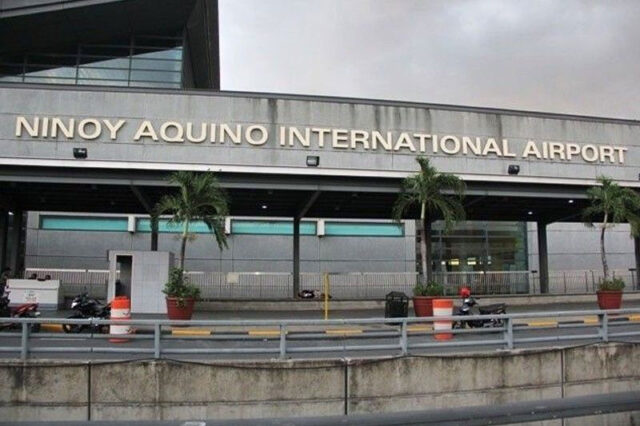
NAIA operator forecasts P14.8-B revenue, 15% passenger rise this year

PHILIPPINE STAR/AJ BOLANDO

THE Manila International Airport Authority (MIAA) said it expects revenues to rise by 18% to P14.82 billion this year, with the volume of arriving and departing passengers expected to increase by 15% to more than 48 million.

MIAA, operator of Ninoy Aquino International Airport (NAIA), is also allocating P4.37 billion for capital expenditures this year, as per its corporate operating budget for 2024, which was approved by its board of directors on Oct. 20 last year.

According to MIAA, domestic and international passenger service charge revenue is expected to reach P5.29 billion this year, a 25% increase over the estimated P4.22 billion for 2023.

The revenue from rental fees is expected to increase by 4% to P2.08 billion, concession privilege fees by 16% to P1.46 billion, and aeronautical fees by 19% to P5.32 billion. 

A 24% increase to P7.36 billion is expected in the maintenance and other operational expenses.

MIAA said repairs and maintenance alone will cost P1.16 billion, up by 85%, while power and water will cost P1.47 billion, up 9%.

Net income after tax is anticipated to reach P2.31 billion, marking an 8% increase from 2023. 

For the first nine months of 2023, MIAA’s net income from operations more than doubled, increasing from P1.33 billion to P3.63 billion compared to the same period a year earlier.

MIAA recorded a net income after tax of P3.1 billion, more than twofold the 1.95 billion last year. For the period, MIAA’s operating expenses went up by 23% to P5.66 billion from P1.06 billion. 

Flights, which include international, domestic, and general aviation, are expected to increase by 5% to P308,601 this year.

The Tourism department reported 5.45 million international visitors in 2023, surpassing the year’s target of 4.8 million.

For 2024, the department aims to attract 7.7 million international visitors.

OPERATIONS & MAINTENANCE BID

The Transportation department expects the winning bidder for the operations and maintenance of the country’s main gateway to take over by September this year.

Four groups have submitted bids for the P170.6-billion public-private partnership upgrade project: Manila International Airport Consortium, Asia Airport Consortium, GMR Airports Consortium, and SMC SAP and Co. Consortium.

The project aims to increase the current annual passenger capacity of the airport to at least 62 million from the current 35 million.Ashley Erika O. Jose

Angela Bassett, Mel Brooks accept honorary Oscars at Hollywood gala

WIKIMEDIA COMMONS

LOS ANGELES — Actress Angela Bassett was celebrated for a lifetime of memorable roles, from Tina Turner to the queen of Wakanda, as Hollywood’s film academy handed out honorary Oscars on Tuesday.

Comedian Mel Brooks also received a golden statuette at the annual Governors Awards in front of a crowd of top stars including Leonardo DiCaprio, Bradley Cooper, and Natalie Portman.

On stage accepting her trophy, Ms. Bassett paid tribute to the 10 Black women who have won Academy Awards — naming each one — and said she hoped the film industry would provide more opportunities for people of color.

“My prayer is that we leave this industry more enriched, forward-thinking and inclusive than we found it,” Ms. Bassett, 65, said. “At the end of the day, we all just want to have the opportunity to do great, meaningful work.”

Ms. Bassett was nominated for two competitive Oscars. The first was for her breakout role as Tina Turner in 1993’s What’s Love Got to Do with It, and the second for playing Queen Ramonda in 2022’s Black Panther: Wakanda Forever.

Ms. Bassett and other honorees were selected by the board of governors of the Academy of Motion Picture Arts & Sciences, the group that will hand out this year’s Oscars in March.

Writer, director and actor Mr. Brooks, now 97, began his career writing comedy routines for Sid Caesar’s TV shows in the 1950s before making films such as Blazing Saddles and Young Frankenstein.

He won an Oscar for writing the screenplay for 1967 film The Producers, which later became a hit Broadway play.

After a musical introduction by The Producers stars Nathan Lane and Matthew Broderick, Mr. Brooks joked that he appreciated his new Oscar statuette because he had sold his previous trophy.

“I won’t sell this one, I swear to God,” he said.

The academy also honored film editor Carol Littleton and Sundance Film Festival executive Michelle Satter. — Reuters

ICTSI submits bid for management of Iloilo Commercial Port Complex

ICTSI.COM

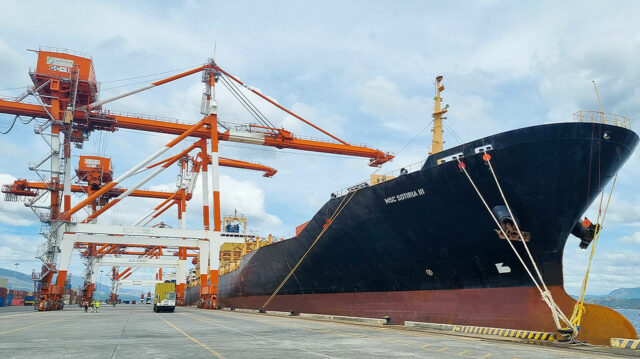
RAZON-LED International Container Terminal Services, Inc. (ICTSI) said it had submitted a bid to maintain and manage the Iloilo Commercial Port Complex (ICPC).

“Yes, we submitted,” said the company’s media relations head in a phone message to BusinessWorld on Thursday.

The 25-year concession agreement, as per the Philippine Ports Authority’s (PPA) bid invitation, sets a minimum fixed fee of P500 million for the sixth to 10th year and a minimum annual concession fee of P100 million for the sixth year.

PPA has scheduled the deadline for bid submission and bid opening on Jan. 11.

BusinessWorld has asked PPA for comments, but the number of bidders remains undisclosed.

“Bids evaluation for ICPC is still undergoing. [PPA] will issue a statement after bid evaluation is completed,” a PPA representative said in a Viber message.

The winning bidder must have at least two years of experience in providing port terminal management services, cargo handling services, and other related port services, as stated by PPA.

Additionally, the bidder must possess experience in operating a terminal similar to or larger than ICPC and should have a minimum of 10 years of relevant experience in handling foreign containerized and non-containerized cargo.

The winning bidder must also have an experience in similar rehabilitation and construction works, PPA said.

Last year, the Transportation department said the PPA had received several proposals for the Iloilo port but it noted that only one party is serious about the project.

In 2022, the listed port operator ICTSI announced plans to revive its proposal to develop and operate the ICPC. The Razon-led port operator had earlier estimated the required investment to be more than P5 billion.

Separately, ICTSI has set a 2050 net-zero goal by cutting emissions and improving energy efficiency.

“Our commitment to decarbonization targets marks an important step on our journey to becoming a more sustainable company and as part of this, we are actively implementing initiatives to maximize energy and resource efficiency, reduce carbon intensity, and lower emissions,” Christian R. Gonzalez, ICTSI executive vice-president, compliance officer, and chief sustainability officer, said in a media release.

The company has committed to reducing greenhouse gas emissions and purchasing electricity by 26% per container move by 2030, contributing to its net-zero target.

Net zero refers to reducing greenhouse gas emissions to as close as zero as possible while offsetting any remaining greenhouse gases in the atmosphere.

 “Making a positive environmental impact is fundamental to our business strategy which means we will continuously review and update our goals to ensure their relevance and accelerate our efforts towards mitigating climate change,” Mr. Gonzalez said. — Ashley Erika O. Jose

SM: Still plenty of room for growth in 2024

The groundswell of watchful optimism persists in 2024, and one of the country’s leading conglomerates maintains that there is still room for growth.

SM Investments Corporation says the Philippines has been consistently positive in terms of consumer growth.

“If you look back at the historical performance of the Philippine economy, even during the height of the Asian crisis, household consumption in the Philippines has been quite resilient, primarily driving sustained economic growth,” SM Investments President and Chief Executive Officer Frederic C. DyBuncio said.

Discretionary spending in key categories such as fashion, food and beverage as well as entertainment, among others, is buoying consumption activity.

Caption: Buoyant consumer activity is seen in sustained spending in discretionary retail categories such as fashion.

As of the first nine months of 2023, retail net income grew by 19%, driven by growth in Non-Food discretionary categories sales, both in SM Store and Specialty Stores.

“Overall, we are positive about our retail business, and we continue to be mindful of our customers’ needs as we offer choices that can match the size of their wallets,” Mr. DyBuncio said.

Substantial remittances from Overseas Filipino Workers (OFWs) are also supporting growth. Latest data from the Bangko Sentral ng Pilipinas indicated that personal remittances from OFWs increased 3.1% in October 2023 to US$3.33 billion from US$3.23 billion in the same month last year. This resulted in total personal remittances rising by 2.9% to US$30.57 billion in the first ten months of 2023.

“The continued growth of OFW remittances supports the consumption story of the Philippines,” he said.

Adding fuel to consumption growth is BPO expansion and improving unemployment numbers that are dropping to new lows.

The Philippine Statistics Authority reported that the country’s unemployment rate in November was estimated at 3.6%, lower than the unemployment rates in November 2022 and October 2023 which were both at 4.2%.

In terms of BPO expansion, many BPO firms have been moving to the provincial areas such as in Cebu, Davao, Iloilo, providing additional spending power to a young population, Mr. DyBuncio added.

Serving underpenetrated sectors

SM’s expansion is also advancing, largely in provincial areas which present opportunities for establishing modern retail formats in a significantly underpenetrated sector.

Seeing this, over 80% of SM’s new retail stores are located outside of Metro Manila. Mall expansion is also geared towards the provinces such as most of Northern Luzon, Visayas and the progressive cities in Mindanao.

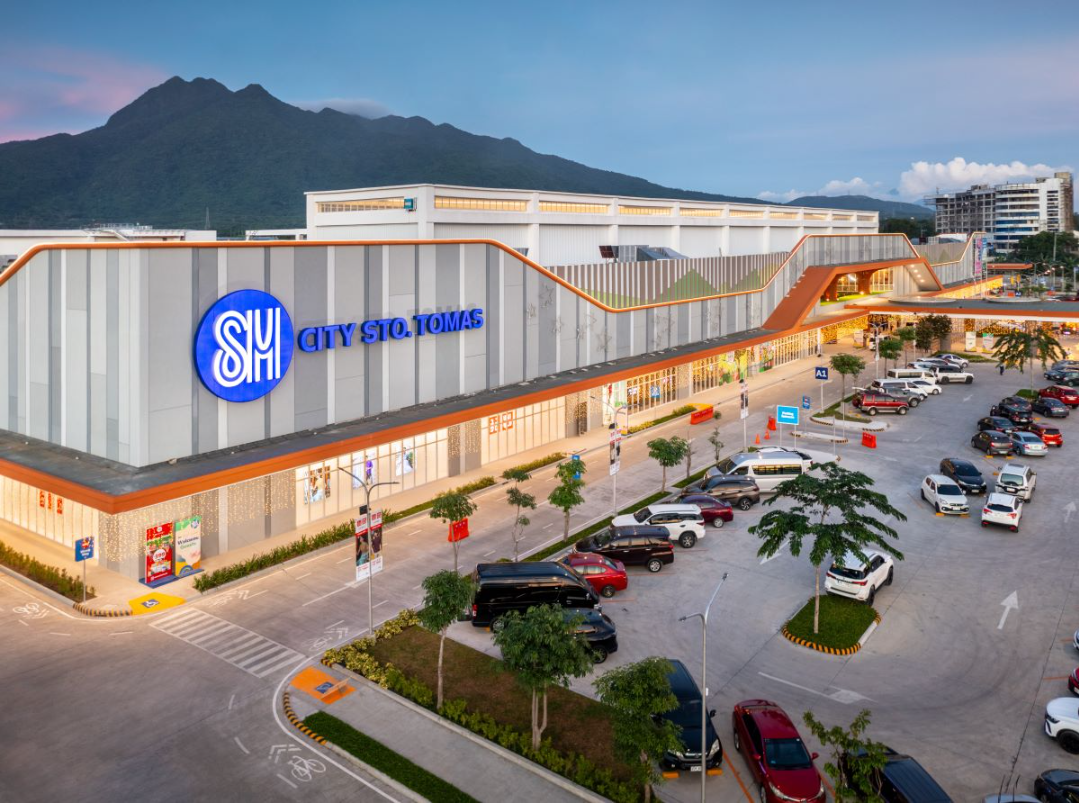
SM City Sto. Tomas is SM’s 85th mall and fourth in the province of Batangas.

In terms of housing, this sector also presents a huge opportunity given the current 6.5 million housing backlog.  SM Development Corporation (SMDC), SM’s residential arm, has a growing presence in the provinces with 18 residential developments in key provincial cities as of September 2023. These projects are strategically alongside or near SM’s malls and transportation terminals.

In banking, approximately 53% of the adult population or about 41 million are unbanked as of 2021 which offers a huge market for increased financial inclusion. BDO Unibank and its community banking arm BDO Network Bank continue to provide relevant financial solutions to address unique banking needs in the provinces.

For communities in remote areas without traditional bank branches, BDO Cash Agad allows convenient access to funds for daily expenses, emergencies, or business needs. This makes use of partner agents such as sari-sari stores, gasoline stations, water refilling stations, and mini-groceries for customers to do cash withdrawals, bills payment, and other basic banking transactions through a point-of-sale (POS) terminal which facilitates payments.

SM has also invested in high growth sectors such as in logistics through 2GO, the largest transportation and logistics provider in the country and Airspeed, an end-to-end logistics solutions and express courier company which are both well positioned to meet various economic needs.

In the race to clean energy, SM is invested in renewable energy supply through wholly owned geothermal firm Philippine Geothermal Production Company in support of the country’s growing advocacy for green energy and sustainable development. PGPC is targeting to increase its steam production by approximately another 300 Megawatts of baseload renewable energy through its new exploration projects.

With these additional investments supporting SM’s core businesses in retail, banking and property, SM is viewed by investors as a proxy to Philippine growth.

“Investors view us as a proxy because all of SM’s businesses touch the daily lives of millions of Filipinos. One thing we wish to highlight is that despite the size of our company, investors, especially foreign investors, still view us as a growth company and there is still plenty of room for growth moving forward,” Mr. DyBuncio said.


Spotlight is BusinessWorld’s sponsored section that allows advertisers to amplify their brand and connect with BusinessWorld’s audience by enabling them to publish their stories directly on the BusinessWorld website. For more information, send an email to online@bworldonline.com.

Join us on Viber at https://bit.ly/3hv6bLA to get more updates and subscribe to BusinessWorld’s titles and get exclusive content through www.bworld-x.com.

PSEi to hit 7,500 level this year — First Metro Investment

BW FILE PHOTO

THE Philippine Stock Exchange Index (PSEi) is expected to reach the 7,000 to 7,500 level this year, driven by improving investor sentiment, investment company First Metro Investment Corp. (FMIC) said on Thursday.

“Our forecast is (that the PSEi will hit) 7,000 to 7,500 level this year, and that is supported by earnings per share growth of 11%,” said FMIC Head of Research Cristina S. Ulang during a media briefing in Makati City.

Ms. Ulang added that the price-to-earnings range for the PSEi will be from 12.6x to 13.6x.

FMIC projects that the PSEi is set to recover this year, supported by “improving investor sentiment and easing equity risk premium arising from declining inflation and interest rates, and resilient double-digit corporate earnings.”

On Thursday, the bellwether Philippine Stock Exchange Index (PSEi) improved by 67.62 points or 1.03% to close at 6,613.73, while the broader all shares climbed by 26.12 points or 0.75% to end at 3,495.76.

The PSEi ended the last trading day of 2023 at 6,450.04, down by 69.07 points or 1.06%.

According to Ms. Ulang, some risks that could hamper the growth of the local bourse include geopolitical tensions, the El Niño phenomenon, inflation, slower growth in China, elections, and a sharp slowdown in global growth.

She said that cuts in policy rates could influence whether the market reaches the 7,500 level or not.

“If the rate cuts come sooner than expected, then that’s going to cheer the market and going to enliven the risk-taking. But if it gets postponed and creates a lot of uncertainty, then it may be a struggle for the market to reach 7,500 level,” Ms. Ulang said.

“If we’re going to have a resurgent inflation, then it’s going to delay the rate cutting and that’s going to disappoint the market,” she added.

Meanwhile, FMIC Executive Vice President and Investment Banking Head Daniel D. Camacho said the local bourse could see initial public offerings (IPOs) by the second half of the year.

“It’s a matter of if the market is right. It’s a matter of timing. Most likely, it would be the second half. But we’re confident that total overall market volume and the number of equity issuances will definitely exceed last year’s,” Mr. Camacho said.

The PSE is expecting six IPOs this year, with the first one being the P12.9 billion debut share sale of Saavedra-led Citicore Renewable Energy Corp. in March.

FMIC, the investment banking arm of the Metropolitan Bank & Trust Co. (Metrobank) group, offers various products and services such as debt and equity underwriting, loan syndication, project finance, financial advisory, government securities and corporate debt trading, equity brokering, asset management, and research. — Revin Mikhael D. Ochave

Call for entries: First Sining Filipina national art competition

THROUGH the decades, artists have found success thanks to the mentorship and sponsorship of supporters who believed in them. But more often than not, such opportunities were given to men.

With the theme “Women Power,” the first Sining Filipina national art competition opened for submissions with the goal of giving female artists their time in the spotlight.

“For millennia, art has been dominated by the worldview of men. It is said that women hold half the sky, so I think it’s just right that women be given a chance to show their worldview in a meaningful way,” said Joanne Zapanta-Andrada, vice-president of the Zonta Club of Makati and Environs (ZCME), at the press launch on Jan. 10.

For its first edition, Sining Filipina is only accepting oil and acrylic entries for Figurative and Non-Figurative categories. Participants are tasked to showcase their perspectives on the contemporary woman through their entries.

The competition is open to Filipinas based in the Philippines, regardless of age and status.

“We realized there really is an underserving of women artists. We wanted to do this three years ago but the pandemic happened. Now that things are more or less settled, we jumped on the opportunity,” Ms. Zapanta-Andrada said.

ZCME is part of the global organization Zonta International, which seeks to uplift the lives of women. Its co-organizers for the competition, BDO Unibank, Inc. and SM Supermalls, are involved as part of their commitments to champion the talents of Filipino women.

The judges of the competition have yet to be announced. More details and calls for entries will be publicized by BDO and SM branches nationwide.

Ms. Zapanta-Andrada explained that women have always been seen as “the muses of artists.”

“It’s always about the beauty, but we like to think that women have much more than just physical beauty, that they’re more than objects. So, we’d like to see how women see themselves,” she said.

The deadline for entries is on Jan. 31. The first-place winner will receive a cash prize of P250,000.

For the full mechanics, visit https://zontaclubme.com/sining-filipina/. — Brontë H. Lacsamana

Charter change: good to have, or must have?

There is one ad that is currently going the rounds of television networks and it is a push for charter change. The Inquirer described it as one employing “a play of words on the Filipino slang “echapwera,” which means “left out” or “ostracized” in English, and inserting the word “EDSA.” It is a derogatory reference to a democratic uprising in 1986.

EDSA is the old Highway 54 where the 1986 People Power Revolution transpired that led to the drafting and ratification of a new Philippine Constitution in 1987. The ad claims that our “asenso” stopped in 1986 because quality education was ruled out, plentiful farmers’ harvests did not happen, and land ownership by foreign investors was not allowed. They were “EDSA-pwera.”

The call: Gawing Saligang Patas ang Saligang Batas. Let there be a level playing field.

Of course, as Albay Rep. Joey Salceda pointed out, it is within the law for democracies to amend their constitutions “to suit the evolving needs of the times” and to implement appropriate realignments with fast changing economic and political conditions. No issue about this, but it is important to avoid using this initiative to insert additional agendas for revision like a possible extension of term limits.

Or to change the form of government as if this nation’s future depends on it — both parliamentary and presidential forms of government have their share of successes and failures in political and economic management. That is hardly the issue of how to move this country forward.

Well, at least two senators have been reported to have denounced some parties for their attempts to get the Philippine Constitution amended by “allegedly bribing districts, local government units, and potential signatories openly and shamelessly to agree to a people’s initiative.” They called for an investigation and prosecution of those involved in what they called “unlawful activity.” Whether this proposal is serious and will prosper remains an open question. It takes more than a committee hearing in Congress to advance the process. Enough votes are needed to reach the plenary or submit the committee report for appropriate action.

But make no mistake about it, there could be some scope for amending several restrictive constitutional provisions on the economy, but uploading that particular propaganda over the media is not exactly the best way to rally a people’s initiative to attain genuine political change. The ad’s subtext was that we need a political change other than what the EDSA People Power was all about.

We don’t think we need to revise the Constitution only to achieve that purpose.

Transforming our politics involves a change in the people’s mindset on who to vote for. For the choice of candidates, we need to implement Article II, Section 26 of the Constitution that mandates that “the state shall guarantee equal access to opportunities for public service, and prohibit political dynasties as may be defined by law.” That provision is yet to be fleshed out in a law.

While we have more than our share of constitutional and legal empowerment, we have very little resolve to enforce the Constitution and the laws of the land. In many instances, appropriate public policy is all that is required to address many national ills. For the Constitution does not guarantee good governance, transparency, and accountability in doing public service. The electorate have not exactly exercised their right to vote by selecting candidates based on competence, character, and experience in public service. They have been enamored with those who can dispense something on the eve of the election, those who can execute a song and dance medley, those who are popular in entertainment and media.

Most important, generating the momentum for charter change through people’s initiative may not exactly reflect the sentiment of the Filipino people. As indicated by the position paper of the faculty members of the UP Department of Political Science submitted to Congress, a June 2018 Pulse Asia survey showed that around 67% of the respondents were against charter change, with 37% against it “now and in the future” while 30% were opposed “now but may be open to it sometime in the future.” Only 18% were in favor of revising the Constitution and a close 24% were undecided.

What is more troubling is that from the same survey, 74% of Filipinos had little, or almost no, knowledge of the Philippine charter. Then as now, the most urgent national concerns continue to be controlling inflation, improving workers’ pay, creating more jobs, and fighting criminality as well as graft and corruption. These gut issues do not lend themselves directly to constitutional amendments. Not one among the most urgent national concerns — and they are 16 in all — in the latest December 2023 survey by Pulse Asia remotely resembled a plea for some charter amendment. These 16 national concerns are all about good governance, transparency and accountability of those in Government. They are all about character and integrity, and concern for the poor and the disadvantaged among us.

As a fellow, we support the Foundation for Economic Freedom’s (FEF) position paper on charter change because “the removal of restrictive economic provisions sends a clear and compelling message to foreign investors, signaling a warm welcome to investment and business operations in the Philippines.” Such restrictions are real constraints to developing those areas where the country enjoys great potential like mass media and renewable energy.

Three points strengthen the FEF’s position on charter change. First, it recognizes the various policy reforms like the amendments to the Public Service Act and the Retail Trade Liberalization Act as also essential to economic transformation. Second, it recognizes that while the proposed amendments to remove the restrictive economic provisions are necessary, by no means are they sufficient. Rule of law, good infrastructure, and ease of doing business, among others, are vital to attracting foreign investment. And, three, it strongly emphasizes that the constitutional amendments should be limited exclusively to economic provisions.

If we allow a free for all, free riders if one wills, whether by people’s initiative, congressional amendment through constituent assembly, or a constitutional convention, we risk a political crisis that could even prevent us from benefitting from this charter initiative and achieve additional cylinders for greater economic velocity.

Just like our major commentary on the Maharlika Investment Fund, it will be doing an injustice to civil society to argue that without charter change, we can kiss goodbye our aspiration to transform the Philippine economy, revitalize it to break through the low middle income trap, and promote progress and prosperity for all Filipinos.

We have the current Philippine Development Plan 2023-2028 that, in the words of the President, “provides us a comprehensive roadmap containing actionable policies and programs, as well as legislative priorities, that will enable us to reach our desired development outcomes.”

Such outcomes involve fundamental transformations in all business sectors to push for greater job creation, accelerate poverty reduction and achieve prosperity, inclusion, and resiliency of our society. It embraces the values of digitalization, servicification, enhanced connectivity, greater collaboration between local and National Government, and partnership with the private sector.

The Plan commits to maintain high levels of economic growth ranging from 6% to 7% in 2023 to 6.5% to 8% (later downgraded to 7.5%) from 2023-2028.

All these whole-of-society approach and ambitious growth targets were framed for civil society’s ownership without linking their likelihood of success to any constitutional change. It’s time for the people to be involved in deciding whether such constitutional change is “good to have,” or “must have.”


Diwa C. Guinigundo is the former deputy governor for the Monetary and Economics Sector, the Bangko Sentral ng Pilipinas (BSP). He served the BSP for 41 years. In 2001-2003, he was alternate executive director at the International Monetary Fund in Washington, DC. He is the senior pastor of the Fullness of Christ International Ministries in Mandaluyong.


Hollywood actors union signs first big deal for AI in voice-over work

COMMONS.WIKIMEDIA.ORG

THE SCREEN ACTORS GUILD (SAG), which represents 160,000 film and TV actors, signed a deal requiring consents and guaranteed minimum payments when members’ voices are replicated digitally in video games and other entertainment.

Duncan Crabtree-Ireland, the union’s executive director, announced the agreement Tuesday with Replica Studios, which describes itself as an ethical artificial intelligence (AI) voice company. He spoke at the Consumer Electronics Show in Las Vegas.

The use of AI became a focal point of strikes by writers and actors strikes that paralyzed production of films and TV shows for several months last year. Unions representing both groups reached assurances from studios on job protections from AI use, as well as pay increases.

Shreyas Nivas, co-founder and chief executive officer of Replica, said the agreement will be a “big benefit to talent and a big benefit to studios” by providing a framework for use of AI in the production of video games.

Nivas said production of one of his favorite games, Red Dead Redemption 2, would have materially sped up if some of the 5,000 lines of dialogue had been generated by AI based on actors’ earlier voice recordings. — Bloomberg

Megaworld says second Palawan hotel to open in 2029 

TAN-LED property developer Megaworld Corp. on Thursday said the second hotel development of its Paragua Coastown township in San Vicente town, Palawan, is set to open in 2029.

Megaworld is currently constructing the Paragua Sands Hotel and will join the company’s first hotel development in the township, called Savoy Hotel Palawan, which is set to open in 2028, it said in a regulatory filing.

Paragua Sands Hotel is a ten-story building that features 313 guest rooms and suites in various types, including twin suite (up to 32 square meters), queen suite (up to 32.5 square meters), junior suite (up to 61 square meters), executive suite (up to 60.5 square meters), and presidential suite (140 square meters).

The hotel will also provide specially abled suites (up to 34 square meters) for guests needing special room arrangements.

The property is located beside Oceanfront Premier Residences, which is the first residential condominium development within the township.

“We are very excited to introduce our 20th hotel property in our portfolio, and what better destination to host it than in San Vicente, Palawan, which is home to the longest beachline in the country and the second longest in the entire Southeast Asia,” Megaworld Hotels and Resorts Managing Director Cleofe C. Albiso said.  

Paragua Sands Hotel will feature amenities and facilities located at the central amenity area on the second and third floors. These include a swimming pool, kiddie pool, a pool deck with seating area, an outdoor deck and balconies, a kid’s club, spa with treatment rooms, fitness center with yoga area, and changing rooms with wet and dry sauna.

The hotel will also have a ballroom that could accommodate up to 220 individuals, function rooms that could cater up to 80 individuals, and meetings rooms that could have up to 66 people. It will have a business center with four workstations.

It will have four food and beverage outlets, an all-day dining restaurant with both alfresco and private dining areas, Zabana bar and lounge, pool bar and grill with outdoor dining, a specialty restaurant, a gift shop, and several retail spaces, Megaworld added.

Paragua Sands Hotel will be the 20th hotel property launched by Megaworld Hotels and Resorts. Out of the 20 hotel properties launched, some 12 are operational with around 5,000 rooms.

The operational hotel properties include Richmonde Hotel Ortigas, Eastwood Richmonde Hotel, Richmonde Hotel Iloilo, Savoy Hotel Newport, Savoy Hotel Boracay, Savoy Hotel Mactan Newtown, Belmont Hotel Manila, Belmont Hotel Boracay, Belmont Hotel Mactan, Kingsford Hotel Manila, Twin Lakes Hotel in Laurel, Batangas near Tagaytay, and Hotel Lucky Chinatown in Binondo, Manila.

Shares of Megaworld closed unchanged at P2 apiece on Thursday.— Revin Mikhael D. Ochave 

Developing countries and external debt: What is wrong?

AREK SOCHA-PIXABAY

LAST DECEMBER, the World Bank published its annual report on international debt (https://www.worldbank.org/en/programs/debt-statistics/idr/products). The report indicates that, in 2022, the developing countries spent $443 billion on debt-service repayment (principal plus interest) of their external public and publicly guaranteed debt, 5% more than in 2021. These payments are expected to rise in 2023 and 2024 due to the increase in interest rates. The report indicates that debt levels and high interest rates have set many countries on a path to crisis.

The report provides data on total external debt, defined as debt owed to nonresidents repayable in currency, goods, or services. By debtor, total external debt is divided into three categories: (i) use of IMF credit and SDR allocations; (ii) long term external debt — this refers to original or extended maturity of more than one year, and it is divided in two types: (a) public and publicly guaranteed, and (b) private nonguaranteed long-term debt, and these two are owed to official (multilateral and bilateral) and private creditors —; and (iii) short-term debt. Short-term debt includes all debt (public and private) having an original maturity of one year or less and interest in arrears on long-term debt. Data are shown in current US dollars.

For the Philippines (https://datatopics.worldbank.org/debt/ids/countryanalytical/PHL), the data indicates that, in 2022, total external debt had increased to $111 billion (about P6.1 trillion). Slightly over 80% was long-term external debt and the rest was short term (IMF credit represented a negligible percentage). Of the $91 billion in long-term debt, 69% was public debt (56% owed to public creditors and 44% to private creditors). This means that the share of private nonguaranteed debt represented 31%. In 2022, the Philippines debt-service repayment amounted to almost $9 billion, of which 63% corresponded to principal repayments (37% was interest); and the external debt to exports ratio (total external debt stocks to exports of goods, services and primary income) was 99.3%, while debt service represented 8% of total exports.

The World Bank’s data are not identical to that provided by the Philippine Treasury on national debt (https://www.treasury.gov.ph/wp-content/uploads/2023/02/NG-Debt-Press-Release-December-2022-ed.pdf). In 2022, Philippine national debt, amounted to about P13.4 trillion. This includes both peso-denominated debt (domestic debt, essentially government securities) and foreign-denominated debt (external debt). The latter accounted for about 31% of the total, that is, Philippine foreign debt amounted to about P4.2 trillion, or about $76 billion. Forty-five percent of the external debt are loans and the other 55% government securities in different currencies — mostly US dollars.

This figure is significantly lower than that provided by the World Bank. The reason is that the multilateral institution considers debt servicing (repayment of principal and interest), while the Philippine government does not — it only considers the stock of debt. The World Bank also includes as debt that of the private sector but not the Philippine government (only government debt).

With this background on the data, the question is why many developing countries face problems honoring their foreign debt payments. We will argue that the Sword of Damocles that the developing countries face is that all their international transactions are run in a currency different from their own: US dollars. It has become a headache for many of them to obtain dollars and manage them properly.

Both the public and private sectors of developing countries need foreign currency. The private sector needs to import essentials such as capital goods (for example, machinery), food, and oil. Governments also need foreign currency because part of their payments may contain an import component. These countries also probably import weapons for their defense forces (which are necessary) and luxurious consumer goods (probably not necessary) that have to be paid in dollars.

Developing countries obtain dollars through exports of goods and services, through remittances, or by securing a loan or by issuing debt (securities) in a foreign currency. It is the latter that has to be repaid — the Damocles Sword. Many developing countries run current account deficits (imports outstrip exports) quasi-permanently. This has to do with both the fact that some of their imports are dubious (for example, luxurious goods) and with the fact that their exports are mostly agricultural products and simple manufactures. It is very difficult for them to secure loans in a foreign currency (because lenders deem them risky), or for their governments to issue debt in a foreign currency (beyond a certain level, nobody wants to buy those securities). When the domestic economy cannot supply the goods and services needed, and imports must be reduced due to the lack of dollars to pay for them, the economy ends up collapsing. This has happened on many occasions, the latest victims being Argentina, Pakistan, and Sri Lanka.

Developing countries are then forced to borrow the foreign currency (dollars) from multilateral institutions such as the IMF, the World Bank, or the Asian Development Bank because, despite these institutions’ conditions, they offer funds at low interest rates. Obtaining these dollars avoids the significant currency depreciations that developing countries have to endure.

The need to avoid a permanent current account deficit imposes a macroeconomic constraint on growth on many developing countries. The reason is that they have to curtail import growth to that consistent with their export growth. This then determines the output growth rate consistent with current account equilibrium. It is known as the balance-of-payments-constrained growth rate. This growth rate is lower than the country’s potential growth.

The World Bank’s report claims that, to repay foreign debt, developing countries have to “shift scarce resources away from public health, education, the environment, and infrastructure.” What are the scarce resources the statement refers to? A significant portion of the expenditures on health (build a health center, pay doctors), education (build a school, pay teachers’ salaries), and infrastructure (materials to build a road and construction workers’ wages), “should be” in the domestic currency, pesos in the case of the Philippines. The domestic currency certainly is not a scarce resource. However, advanced complex equipment, medicines, and even steel, have to be imported and paid for in dollars. Dollars are a scarce resource for most developing countries because they have to be earned.

The issue at stake is that those developing countries that have to fund most of their expenditures to build schools, hospitals, or roads in dollars are in very bad shape. It means they do not have a domestic industry (that would use the domestic currency) that can supply the basic materials to build them. This is the real problem.

The report indicates that developing countries face the choice of servicing their public debt or investing in public health, education, and infrastructure. This choice should only occur if they finance their expenditures in dollars. This situation, the report continues, warrants quick and coordinated action by debtor governments, private and official creditors, and multilateral financial institutions — more transparency, better debt sustainability tools, and swifter restructuring arrangements.

Developing countries should not face such a choice. Surely coordination is needed. Yet, given that this is a recurring story, the solution to these countries’ problems lies in helping them change the structure of production; and not in restructuring their foreign debt with more foreign debt. We know the result: another crisis. These nations need to create a domestic industry capable of supplying all necessary goods for the nation to function. This should be the government’s priority number one, and this is what the multilateral institutions should help them do.

This is not to blame multilateral agencies: developing countries’ original sin is that they often get into trouble because of their own policy mistakes. The problem gets compounded when they borrow foreign-currency, and this snowballs because it is not repaid. The domestic industries they have to create to break this vicious cycle should be able to supply the domestic market and to export to earn dollars to pay for the necessary imports (for hospitals and to build roads). This is the essence of what development is about.

The Philippines is by no means in a precarious situation. National domestic debt (in pesos), about P9.2 trillion, is not a problem. The Philippine government will always be able to honor this debt because it is in the nation’s currency (unless for political reasons it decides to stop payments). The argument that the “government does not have money” (its own currency) to build schools, hospitals, etc. (except what must be imported) is incorrect. Foreign debt is a different story for the reasons explained above. Yet, the most recommendable strategy for the Philippines is to also upgrade the structure of its economy. This is the nation’s perennial problem.


Jesus Felipe is a distinguished professor of Economics at De La Salle University, Jose Antonio Perez Montiel is an associate professor of Economics, University of the Balearic Islands, Spain.

RCBC raises $400M from note offering

PHILSTAR FILE PHOTO

RIZAL COMMERCIAL Banking Corp. (RCBC) has raised $400 million from its offer of five-year senior unsecured sustainability notes, it said on Thursday, marking the lender’s return to the overseas debt market after over three years.

“The transaction saw strong interest from a wide range of high-quality Asian and European investors, which allowed the bank to tighten final price guidance to 165 bps (basis points) over the five-year Treasury yield,” the Yuchengco-led bank said in a disclosure to the stock exchange.

The lender priced the notes at 5.5% per annum. The notes will mature on Jan. 18, 2024.

The bank’s offering was almost six times oversubscribed with orders reaching $2.3 billion coming from more than 164 accounts, it said.

“The order book was well diversified with 78% allocated to asset managers, 13% to banks, 6% to official institutions, insurance companies, pension funds and 3% to private banks, security firms, brokers,” RCBC added.

Still, the final issue size was below the $500-million plan of the lender.

The bonds, which were issued in denominations of $200,000 and increments of $1,000 thereafter, are rated “Baa3” by Moody’s Investors Service.

RCBC will list the notes on the Singapore Exchange like its outstanding dollar-denominated bonds from two previous issuances.

The notes were issued out of the bank’s $3-billion medium-term note program, with the net proceeds to be used to finance and refinance consumer loans, as well as its own operating activities, in eligible green and social categories in line with the RCBC’s Sustainable Finance Framework.

Sustainalytics confirmed that the lender’s intended use of proceeds from the bonds are aligned with the Green Bond Principles 2018, the Social Bond Principles 2018 and the Sustainability Bond Guidelines 2018, administered by the International Capital Markets Association and the Association of Southeast Asian Nations (ASEAN) Green Bond Standards, the ASEAN Capital Markets Forum, RCBC noted.

Australia and New Zealand Banking Group Ltd., Citigroup Global Markets Ltd., and SMBC Nikko Securities (Hong Kong) Ltd. were the joint bookrunners for the offering.

So far, RCBC has raised $1.6 billion from the offshore debt market under its current medium-term note program, with its last offering held in August 2020, from which it raised $300 million through Tier 1 securities.

The bank saw its net income decline by 28.35% year on year to P2.81 billion in the third quarter as its interest expenses more than doubled and as non-interest income declined. — AMCS

Bridgerton’s Dynevor, Saltburn’s Elordi among BAFTA Rising Star nominees

ACTRESS Phoebe Dynevor in a scene from Bridgerton. —IMDB.COM

LONDON — Bridgerton star Phoebe Dynevor, The Bear Golden Globe winner Ayo Edebiri, and Saltburn actor Jacob Elordi are among the nominees for the EE Rising Star Award at this year’s British Academy of Film and Television Arts (BAFTA) Film Awards.

The list of five contenders, revealed on Wednesday, also includes actors Sophie Wilde and Mia McKenna-Bruce.

British actress Ms. Dynevor, 28, shot to fame in hit Netflix series Bridgerton and is also known for thriller Fair Play.

“I’ve been looking up to the BAFTAs since I was tiny and … I’m so in awe of the talent that I’m being recognized with,” Ms. Dynevor told Reuters.

Australian Mr. Elordi’s credits include teen drama series Euphoria and portraying Elvis Presley in Sofia Coppola’s biographical drama Priscilla. The 26-year-old’s latest release was satirical thriller Saltburn.

Fellow Australian Ms. Wilde, 26, starred in horror Talk to Me and is also known for comedy-drama series Everything Now.

American comedian and actor Ms. Edebiri won a Golden Globe on Sunday for her portrayal of a chef in culinary drama The Bear. The 28-year-old’s other credits include films Bottoms and Spider-Man: Across the Spider-Verse.

British-born Ms. McKenna-Bruce, 26, starred in coming-of-age drama How to Have Sex and is also known for Persuasion, based on the Jane Austen novel of the same name.

Previous winners of the award, which is voted for by the public, include Oscar winner Daniel Kaluuya, Spider-Man star Tom Holland, and No Time To Die actor Lashana Lynch.

The BAFTA Film Awards will take place on Feb. 18 in London. The full list of nominees will be announced next week. — Reuters