Home Blog Page 379

A year into Trump presidency, ‘pivot to China’ gathers pace

REUTERS

BEIJING/HONG KONG — When US President Donald J. Trump took office a year ago with an “America First” agenda, many saw trouble for China’s sluggish economy, but Beijing has thawed frosty relationships with other trade partners to post a record trade surplus.

While Mr. Trump’s policies have strained ties with traditional US allies, China has turned its focus to fostering ties with key partners, including Canada and India, analysts say.

As a result, the world’s second-largest economy’s trade surplus hit a record $1.2 trillion in 2025, monthly foreign exchange (forex) inflows touched $100 billion, the largest ever, and the global usage of China’s currency, the yuan, has expanded.

When British Prime Minister Keir Starmer lands in China on Wednesday evening hoping to reinvigorate recently strained business ties, analysts and experts say Beijing is expected to further expand its global political and economic influence.

Backed by its $20-trillion economy and $45 trillion worth of stock and bond markets, China is emerging as a “steady partner” for many countries, said Aleksandar Tomic, economics professor at Boston College.

“I think China has done a good job and rightly so to position itself as the reliable and stable trade partner,” said Derrick Irwin, co-head of intrinsic emerging markets equity at Allspring Global Investments.

“They basically said, look, you’ve got a massive trade partner in the US that’s become a little more uncertain. We can offer predictability and certainty. And I think that’s very fair.”

Mr. Starmer’s four-day visit to China will be the first by a British prime minister since 2018 and follows that of Canadian Prime Minister Mark Carney earlier this month, the first Canadian prime minister to visit Beijing since 2017.

During Mr. Carney’s visit, the two nations signed an economic deal to tear down trade barriers and forge a new strategic relationship. Mr. Carney described China as “a more predictable and reliable partner.”

But China is not alone in eyeing new trade pacts to de-risk from the United States. India and the European Union (EU) struck a long‑delayed trade deal on Tuesday that will slash tariffs on most goods, boosting two‑way trade to potentially double European exports to the South Asian country by 2032.

CHINA ECONOMY RESILIENT
While the world’s two largest economies have been locked in geopolitical disputes for the past few years, Mr. Trump’s return to the White House in January 2025 sharply escalated tensions on multiple fronts, including trade and technology.

Mr. Trump raised tariffs on China to over 100% in April, before partially reversing and settling for a temporary truce, while Beijing boosted its exports to non-US markets and rolled out support measures for its private enterprises and markets.

Chinese shipments to the US fell 20% in 2025, but rose 25.8% to Africa, 7.4% to Latin America, 13.4% to Southeast Asia and 8.4% to the EU last year.

“Many countries previously have not been China-friendly are now kind of pivoting to China… because the United States is becoming a lot less predictable,” Mr. Tomic said. “The more the US gets difficult to deal with, the more it opens up for China.”

Despite the trade tensions with the US, China’s economy, under deflationary pressure at home due to weak domestic consumption and a long-term property sector slump, has met the government’s target of 5% growth in 2025.

In recent months China has taken a raft of measures to boost foreign investment, including pilot programs in Beijing, Shanghai and other regions to expand market access in services such as telecoms, healthcare and education.

The country recorded the largest-ever monthly forex inflows of $100.1 billion in December, according to bank settlement data from its forex regulator. Its official forex reserves hit a 10-year high of $3.36 trillion.

Its financial market has emerged robust from trade disputes with the Shanghai index climbing 27% over the past year, outperforming US equities, the market turnover hitting a record high and the yuan expanding its global usage.

With the dollar becoming less appealing to investors due to Mr. Trump’s erratic approach to trade and international diplomacy, Beijing is also pushing ahead with its ambition to bolster the global usage of yuan, said bankers with knowledge of the matter.

Some of the big global banks are scrambling to boost yuan liquidity in offshore hubs and put in place frameworks for faster payment settlements in yuan in trade corridors of China and Southeast Asia, the Middle East, and Europe, they added.

“We have seen quite a few cycles of China trying to internationalize yuan and then pulling back,” said a banker at a global bank with China presence. “This time it’s different… Trump policies are very conducive for boosting yuan usage.”

More than half of China’s cross-border transactions are now settled in yuan, from almost none 15 years ago, while nearly half of China’s overseas bank lending is now in renminbi, according to the latest data from the PBOC and SAFE.

CHINA CAUTION
But some foreign policy analysts caution against China’s new, friendlier economic and political playbook.

Despite the new trade pacts, Patricia Kim, a foreign policy fellow at Washington-based Brookings Institution, said distrust of the US does not translate into trust in Beijing for US allies and partners.

“Many of these countries harbor deep concerns about China’s approach to trade, its use of economic coercion, and unresolved maritime and historical disputes,” Ms. Kim said.

“In the current moment, China may appear more restrained or pragmatic when compared with the Trump administration’s extreme rhetoric and actions. But Beijing’s actual behavior has not been especially reassuring.” — Reuters

South Korea court sentences former first lady to jail term for bribery

SOUTH KOREA’s former first lady Kim Keon Hee arrives at the special prosecutor’s office in Seoul, South Korea, Aug. 6. — REUTERS/KIM HONG-JI

SEOUL — A South Korean court sentenced former first lady Kim Keon Hee on Wednesday to one year and eight months in jail after finding her guilty of accepting Chanel bags and a diamond pendant from Unification Church officials in return for political favors.

The court cleared Ms. Kim, the wife of ex-President Yoon Suk Yeol who was ousted from office last year, on charges of stock price manipulation and violating the political funds act.

Prosecutors will appeal against the two not-guilty verdicts, media reports said.

The ruling, which can also be appealed by the former first lady, comes amid a series of trials following investigations into Mr. Yoon’s brief imposition of martial law in 2024 and related scandals involving the once-powerful couple.

The position of first lady does not come with any formal power allowing involvement in state affairs, but she is a symbolic figure representing the country, the lead judge of a three-justice bench said.

“A person who was in such a position might not always be a role model, but the person must not be a bad example to the public,” he said in the ruling.

The court ordered her to pay a 12.8 million won ($8,990) fine and ordered the confiscation of the diamond necklace. Ms. Kim has been held in detention since August while she was being investigated by a team led by a special prosecutor.

Prosecutors had demanded 15 years in jail and fines of 2.9 billion won over all the accusations she faced.

The court cleared Ms. Kim on charges of manipulating stock prices and violating political funding laws.

Ms. Kim had denied all the charges. Her lawyer said the team would review the ruling and decide whether to appeal the bribery conviction.

Ms. Kim, clad in a dark suit and wearing a face mask, was escorted by guards into the courtroom at the Seoul Central District Court and sat quietly while the verdict was delivered.

Supporters of Mr. Yoon and Ms. Kim, who braved freezing temperatures outside the court compound, cheered after the not-guilty verdicts on two of the charges were delivered.

The Unification Church said the gifts were delivered to her without expecting anything. Its leader Han Hak-ja, who is also on trial, has denied that she directed it to bribe Ms. Kim.

SHAMAN, POLITICAL BROKER
Ms. Kim had drawn intense public scrutiny even before her husband was elected president in 2022 over questions about her academic records and lingering suspicion that she had been long involved in manipulating stock prices.

Her alleged association with a political broker and a person known as a shaman also drew public criticism that the two may be unduly influencing the former first couple.

Mr. Yoon, who was ousted from power last April, also faces eight trials on charges including insurrection, after his failed bid to impose martial law in December 2024.

He has appealed against a five-year jail term handed to him this month for obstructing attempts to arrest him after his martial law decree.

At a separate trial this month, prosecutors have sought the death penalty for  Mr. Yoon on the charge of masterminding an insurrection. The court will rule on the case on February 19.

Mr. Yoon has argued it was within his powers as president to declare martial law and that the action was aimed at sounding the alarm over the obstruction of government by opposition parties. — Reuters

US calls Taiwan ‘vital partner’ after high-level tech and AI talks

PEOPLE AND CARS can be seen passing Taipei 101 in Taipei, Taiwan, April 17, 2025. — REUTERS/ANN WANG

TAIPEI — Senior Taiwanese and US officials discussed cooperation in artificial intelligence (AI), tech and drones at a high-level forum begun during the first Trump administration, with the US State Department praising Taipei as a “vital partner.”

The US is Taiwan’s most important international backer and arms supplier despite the lack of formal diplomatic ties. The US-Taiwan Economic Prosperity Partnership Dialogue first took place in November 2020.

In a statement on Tuesday, the State Department said the sixth round of talks took place, led by Under Secretary for Economic Affairs Jacob Helberg and Taiwan Economy Minister Kung Ming-hsin, who is visiting the US.

The two sides signed statements on the Pax Silica Declaration — a US-led initiative to secure AI and semiconductor supply chains — and US-Taiwan cooperation on economic security, the State Department said.

“Taiwan is a vital partner on these and other important economic initiatives, and its advanced manufacturing sector plays a key role in fueling the AI revolution,” it added.

The talks also featured exchanges on supply chain security, including how it relates to AI, certification on drone components and cooperation on critical minerals, the State Department said.

“Discussions focused on highlighting progress in responding to economic coercion, pursuing mutual cooperation in third countries and addressing tax-related barriers to increase investment between the United States and Taiwan,” it said.

Taiwan, a major producer of advanced semiconductors that power AI, has long pushed for an agreement to avoid double taxation, saying it would boost bilateral investment.

In a separate statement, Taiwan’s economy ministry said both sides agreed that peace and stability across the Taiwan Strait are “crucial to global economic security and prosperity.”

Taiwan and the US also discussed undersea cable security, low Earth orbit satellite cooperation and the training of high-tech talent, it added.

Taiwan has accused China of being involved in damaging undersea telecom and internet cables, which Beijing denies, and is expanding the use of low Earth orbit satellites for backup communications should China sever the cables during an attack on the island.

Taiwan and the US earlier this month reached a deal to cut tariffs on Taiwan’s exports to the US and boost Taiwanese investment in semiconductors and other sectors in the country.

China routinely objects to any interactions between Taiwanese and US officials, saying Taiwan is an internal affair and a red line that Washington should not cross.

Taiwan’s government rejects Beijing’s sovereignty claims, saying only the island’s people can decide their future. — Reuters

Australian wine exports shrank in 2025 as drinkers sober up

MAX-TUTAK-UNSPLASH

CANBERRA — The value of Australia’s wine exports fell by 8% to A$2.34 billion ($1.6 billion, $1 = 1.4294 Australian dollars) in 2025 as a global decline in drinking led to lower shipments to key markets including China and Britain, an industry body said on Wednesday.

Australia is the world’s fifth-largest wine exporter. Like other wine producing regions, it deals with oversupply and declining sales.

“Consumers are reducing overall alcohol consumption in line with wellness trends and in order to save money as the cost of living increases,” said Peter Bailey, head of market insights at Wine Australia.

“For wine exporters around the world, trade barriers and regional conflicts are also making it more difficult and costly to get product into markets,” he said.

The value of Australian exports to China, its most lucrative market, fell the most sharply, dropping 17% last year to A$755 million ($530 million).

Australian winemakers logged strong sales to China in 2024 when Beijing removed tariffs that had blocked trade, but a rapid shrinking of Chinese wine demand is now taking its toll.

“The Chinese wine market is one-third of the size it was five years ago,” Mr. Bailey said. — Reuters

AXA Philippines launches digital mental health self-check tool

The mental health checkup tool is available online and contains several sets of questions. — AXA PHILIPPINES

AXA Philippines Life and General Insurance Co. launched a digital mental health tool that can assess emotional well-being and provide recommended actions, helping address Filipinos’ lack of awareness on how to deal with mental health challenges.

A recent AXA Mind Health study shows that although 65% of Filipinos are aware of what mental health issues look like, only about a third of those surveyed said they know what to do when they themselves or others face these challenges.

Paul Ferrer Cheng, head of research and development at Mind You, AXA Philippines’ partner in mental health, said the disconnection between awareness and action poses real risks, as the lack of response to existing mental health conditions may result in long-term emotional and economic tolls.

“We need to ensure that Filipinos not only recognize mental health issues, but also know how to respond,” he said in a statement released Tuesday.

“Without that, we risk letting early warning signs escalate into long-term distress.”

AXA also found that people who are well informed about mental health and how to address it are more likely to report positive well-being and experience better outcomes than those who do not.

The platform, called the “Mind Health Self-check,” allows users to better understand their emotional well-being for improved mental health management.

Accessible through a website, the tool evaluates three critical areas of a person’s life: current state of mind, skills and beliefs, and lifestyle.

Users answer a set of detailed questions, after which a Mind Health Index Score is generated using AXA’s proprietary methodology. The score ranges from 0 to 100, with users classified into four categories.

A score of more than 68 indicates flourishing, the highest level, reflecting excellent emotional, social, and physiological well-being. Scores from 57 to 68 indicate getting by, or a stable state, while scores between 43 and 57 reflect languishing, characterized by low motivation and well-being. Scores below 43 indicate struggling, marked by difficulty and distress in many areas, often linked to emotional and psychosocial impairment.

The tool then provides self-help guides and tips on how to improve well-being, as well as an option that directs users to AXA’s mental health services.

AXA said it offers free mental health counseling, while its largest superior critical illness plan, Health Max Elite, provides coverage for select mental health conditions.

AXA Philippines is a joint venture between the France-based AXA Group and listed conglomerate GT Capital Holdings, Inc. — Edg Adrian A. Eva

Hard times in the wine world

APOLO- PHOTOGRAPHER-UNSPLASH

Aussie wine exports shrank as drinkers sober up; French cognac producers to pay to rip out vines as demand sinks

CANBERRA/PARIS — The value of Australia’s wine exports fell by 8% to A$2.34 billion ($1.6 billion) in 2025 as a global decline in drinking led to lower shipments to key markets including China and Britain, an industry body said on Wednesday.

This as tariffs hit French cognac producers who now plan to pay to tear their vines out to cut output.

Australia is the world’s fifth-largest wine exporter. Like other wine producing regions, it is dealing with oversupply and declining sales.

“Consumers are reducing overall alcohol consumption in line with wellness trends and in order to save money as the cost-of-living increases,” said Peter Bailey, head of market insights at Wine Australia.

“For wine exporters around the world, trade barriers and regional conflicts are also making it more difficult and costly to get product into markets,” he said.

The value of Australian exports to China, its most lucrative market, fell the most sharply, dropping 17% last year to A$755 million ($530 million).

Australian winemakers logged strong sales to China in 2024 when Beijing removed tariffs that had blocked trade, but a rapid shrinking of Chinese wine demand is now taking its toll.

“The Chinese wine market is one-third of the size it was five years ago,” Mr. Bailey said.

FRENCH COGNAC PRODUCERS
Meanwhile, French cognac producers plan to pay to tear their vines out by the roots to cut output in order to address a drop in demand for the high-end liquor due to tariffs.

Cognac was one of the main casualties of the recent trade tensions between the European Union (EU), the United States, and China, which have threatened to jack up tariffs on it.

An anti-dumping probe has also hit brandy sales in China.

France’s main association of cognac wine growers will pay its members €6,000 ($7,145) per hectare of vineyard destroyed, on top of €4,000 already offered by the French agriculture ministry, the UGVC’s head said on Tuesday.

“We need to re-align the volume of production with demand,” UGVC head Anthony Brun told Reuters.

The UGVC estimates the total volume of cognac sold has fallen by more than a third in the past three years, to about 140 million bottles in 2025.

Mr. Brun said it will borrow money over a 10-year period to finance the handouts. He declined to estimate how many hectares will be destroyed.

Recent trade deals between the EU and Mercosur, as well as the EU and India, may open new markets for cognac, but it will take years to build lasting demand, Mr. Brun said, adding India seems to offer significant potential for the industry. — Reuters

US conditions funding to global vaccine group on dropping mercury-based preservative from shots

STOCK PHOTO | Image by Mufid Majnun from Unsplash

LONDON — The Trump administration has told global vaccine group Gavi to phase out shots containing the preservative thimerosal as a condition of providing the group with funding, a US official and a Gavi spokesperson told Reuters.

The request, which Reuters is the first to report, is the latest sign of efforts by the administration of President Donald Trump to influence health policy globally.

Anti-vaccine groups, including one founded by US Health Secretary Robert F. Kennedy Jr., have for decades claimed that thimerosal, a mercury-based preservative used in vaccines, is linked to autism and other neurodevelopmental disorders, despite many studies showing no related safety issues.

In June last year, Mr. Kennedy cut $300 million in annual funding for Gavi, which helps the world’s poorest and lower-income countries buy vaccines to prevent diseases such as measles and diphtheria.

Mr. Kennedy, who has long promoted anti-vaccine views contrary to scientific evidence, says the group ignores safety issues with the immunizations it provides. Gavi says vaccine safety is its utmost concern.

“Until a plan for removal of thimerosal-containing vaccines is developed and the plan initiated, the United States will withhold future new funding,” an official for the US Department of Health and Human Services told Reuters.

The official would not comment on when the request was made, but claimed Gavi has so far refused to develop such a plan. A Gavi spokesperson confirmed the request to remove thimerosal from its portfolio, and said the group remained in contact with the US government on the subject.

“While we very much hope to find a pathway to welcoming the US back as a donor, any decision related to Gavi’s portfolio would require a decision by Gavi’s board and input from preceding governance committees, which will be guided by scientific consensus,” the spokesperson said.

OFTEN USED IN LOW- AND MIDDLE-INCOME COUNTRIES
Thimerosal is mainly used to ensure vaccines in multi-dose vials remain stable. That helps immunization campaigns in low- and middle-income countries because multi-dose vials are cheaper and simpler to distribute, Gavi and the World Health Organization say.

The preservative has largely been phased out in high-income countries, where vaccines usually come in a single-use format, although its use is not prohibited. Under Mr. Kennedy, the US moved last summer to stop use of influenza vaccines containing thimerosal, representing around 5% of flu shots given in the country, despite US health agencies having declared them safe.

The US official said the request of Gavi aims to bring its policies in low- and middle-income countries in line with the US, Canada, and most European nations.

The safety of thimerosal has been studied for decades, after concerns were raised in the 1990s about exposure to mercury in vaccines, according to the WHO.

No compelling scientific evidence has been found to suggest that there is a risk, particularly when compared to the dangers of keeping children unprotected against deadly diseases, the WHO says.

The US request applies both to the remaining $300 million that the Biden administration had pledged to Gavi with Congressional approval, but which is still outstanding, and to any future funding, the official said.

The US previously contributed around 13% of Gavi’s funding, and the organization has embarked on a series of cost-cutting measures to try to address the shortfall, which has been exacerbated by cuts from other high-income nations.

The Trump administration has cut billions of dollars in health funding internationally and withdrawn from the WHO.

The US government has said it is still committed to global health and is pursuing bilateral agreements with countries under Mr. Trump’s ‘America First’ agenda.

Last week, the US health department said a hepatitis B vaccine study in Guinea Bissau would help inform global policy.

The study, funded by the US Centers for Disease Control and Prevention, is now undergoing further ethical review after international criticism.

The US CDC last month withdrew its longstanding recommendation that all newborns should get the hepatitis B vaccine, drawing a swift rebuke from vaccine experts. — Reuters

India reports two Nipah virus infections as Thailand, Malaysia step up screening

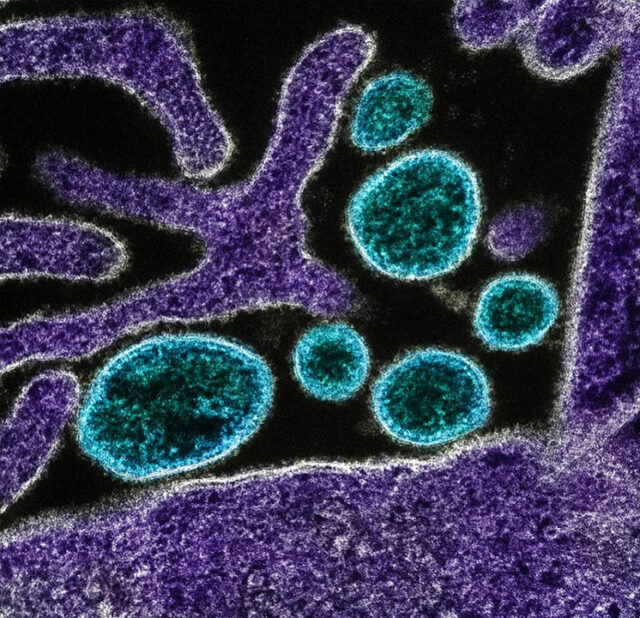
Colorized transmission electron micrograph of mature extracellular Nipah virus particles (blue) near the periphery of an infected VERO cell (purple). — NATIONAL INSTITUTE OF ALLERGY AND INFECTIOUS DISEASES (NIAID)

INDIA is monitoring Nipah virus infections, with two reported from its eastern state of West Bengal since December, the health ministry said, as some Southeast Asia nations step up scrutiny of air travelers.

Tuesday’s confirmation came a day after Thailand said it had tightened airport screening measures, with neighboring Malaysia following suit.

“Speculative and incorrect figures regarding Nipah virus cases are being circulated,” the Indian ministry warned in a statement that put the tally of infections at two.

Authorities have identified and traced 196 contacts linked to both cases, it added, with none showing symptoms and all testing negative for the virus.

Thailand has assigned designated parking bays for aircraft arriving from areas with Nipah outbreaks, its health ministry said, while passengers must make health declarations before clearing immigration.

Malaysia’s health ministry said it was beefing up preparedness via health screening at international ports of entry, especially for arrivals from countries at risk.

“The ministry remains vigilant against the risk of cross-border transmission following sporadic infections in several other countries,” it added in a statement on Wednesday.

The World Health Organization (WHO), which estimates Nipah’s fatality rate at 40% to 75%, ranks it as a priority pathogen for its potential to trigger an epidemic. There is no vaccine to prevent infection and no treatment to cure it. — Reuters

Crypto money-laundering hit $82 billion in 2025, researchers say

Representations of cryptocurrency Bitcoin are seen in this illustration picture taken in Paris, France. — REUTERS/BENOIT TESSIER/ILLUSTRATION/FILE PHOTO

MONEY LAUNDERERS received at least $82 billion in cryptocurrencies last year, up sharply from $10 billion in 2020, driven in part by fast growth among Chinese-speaking groups, blockchain researchers said on Tuesday.

The fastest-growing category has been Chinese-language money-laundering networks, which emerged during the pandemic and processed almost $40 million worth of crypto per day in 2025, US-based blockchain research company Chainalysis said in a report.

Blockchains create a record of the wallet addresses involved in cryptocurrency transactions, but identifying who is behind the wallets is difficult.

However, Chainalysis said it had identified nearly 1,800 active wallets used by Chinese-language money-laundering networks to process $16.1 billion worth of crypto in 2025, and that its numbers were likely an underestimate.

A spokesperson for Chainalysis declined to detail the company’s methodology but directed Reuters to its website, which said it connects real-world activity to blockchain records using machine learning and forensic experts.

Crypto trading is banned in China and digital tokens are not recognised as legal tender or assets there. In 2024, China sued 3,032 people involved in crypto-related money laundering, the country’s top procurator has said.

Regulators and authorities worldwide have warned for years about crypto’s role in crime, as it is generally subject to less specific regulation than mainstream finance. Still, experts say it is just one of many ways criminals move funds.

Crypto money-laundering networks’ techniques to avoid detection include using “guarantee” platforms, which provide escrow services and allow money launderers to advertise their services, Chainalysis said.

“Chinese-language guarantee platforms, money movement services and associated financial crime networks reveal a complex and resilient ecosystem that continues to adapt despite enforcement efforts,” Chainalysis said.

“As with other genres of illicit on-chain activity, actions against guarantee services can be disruptive, but the core networks persist and migrate to alternative channels when challenged.” — Reuters

Thai parties tap nationalist mood as Cambodia clashes roil rural voters

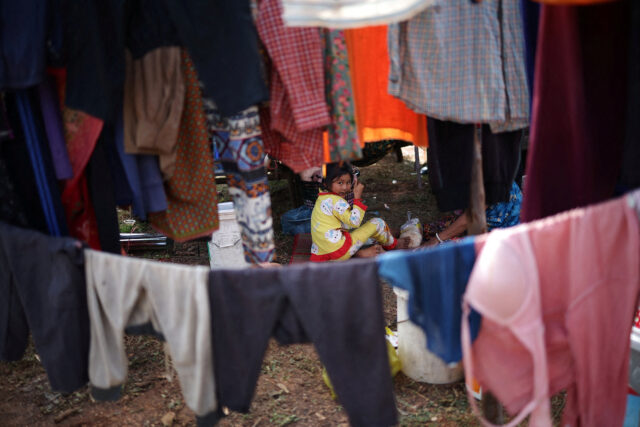
A girl eats a meal at Chong Kal refugee camp on Dec. 11, 2025 after evacuation amid deadly clashes between Thailand and Cambodia along a disputed border area in Chong Kal, Oddar Meanchey Province, Cambodia. — REUTERS

KANTHARALAK, Thailand — Thai lawmaker Phumin Leethiraprasert has switched party allegiances in his re-election campaign for a February 8 poll, aiming to show voters he can make tough decisions to help border communities scarred by clashes with neighboring Cambodia.

“I am not running for Pheu Thai this time around because of the border conflict,” said Mr. Phumin, 62, referring to the party of billionaire former premier Thaksin Shinawatra that dominated swathes of Thailand’s mainly agrarian northeast for decades.

Nationalist sentiment has surged across Southeast Asia’s second largest economy after a perception that the Pheu Thai-led administration’s handling of a border crisis led to the worst fighting with Cambodia in decades, killing 149 people.

“Bombs hit our homes, and our people died,” the former doctor, who has forged new ties with one of the political parties racing to harness the nationalist fervor in the final stretch of the campaign, told a small crowd at a rally.

Voters angered by the damage in his district of Kantharalak had urged Mr. Phumin to defect, he said last week.

So he is now running as a candidate of the Kla Tham Party, an ally of the ruling Bhumjaithai, which took power after the border row led to the removal of Thaksin’s daughter Paetongtarn Shinawatra, who was then prime minister.

‘MAKE THEM AFRAID’
Anger and anxiety linger in the area after 19 Thais were killed and hundreds of thousands evacuated from border communities, such as Kantharalak, in two bouts of fighting in July and December.

“We have to make them afraid,” said Uthai, a 58-year-old in the village of Sam Meng, referring to Cambodia. “We have been too soft.”

Thailand and Cambodia agreed to a second ceasefire in late December, ending weeks of clashes following the collapse of a July truce brokered with the help of US President Donald Trump.

Many voters are backing the Thai army’s plans for a border wall along parts of the 817-kilometer (508-mile) land frontier, Mr. Phumin said, though construction has yet to begin.

“They don’t want to see border crossings reopened or trade with Cambodia resume.”

PARTIES SEEK TO RIDE WAVE
In the midst of the intense border fighting, Prime Minister Anutin Charnvirakul dissolved parliament in December after fewer than 100 days in power, setting the stage for snap polls, designed to gain from the wave of intense nationalism unleashed.

At rallies, Mr. Anutin and his Bhumjaithai expressed strong support for the military and the construction of the border wall, a policy echoed by other conservative, pro-army groups.

That has forced key rivals, the progressive People’s Party, which is leading in the polls, and Pheu Thai, to redraw campaign planks to avoid appearing unpatriotic, said political scientist Thitinan Pongsudhirak at Bangkok’s Chulalongkorn University.

“They are being portrayed as not nationalist enough, not patriotic enough, and not anti-Cambodian enough,” he said, describing the efforts of pro-military parties to undercut the competition.

The People’s Party, long associated with calls for military reforms, has softened its anti-establishment stance, underlining plans to exert diplomatic pressure on Cambodia to ensure stable ties with Thailand.

Pheu Thai, facing widespread criticism over Mr. Thaksin’s once- close ties with former Cambodian premier Hun Sen, is redoubling efforts to show it is committed to defend Thailand’s sovereignty.

“We can live alongside them,” said Samrong Narasa, whose home in the village of Sam Meng, about 10 km (6 miles) from the border, was destroyed by Cambodian shelling in December.

“But we don’t want to be friends with them,” added the 52-year-old, who wants the new government to do more to protect people and their livelihoods. — Reuters

Amazon bungles Wednesday layoff plan with misfired internal email

REUTERS

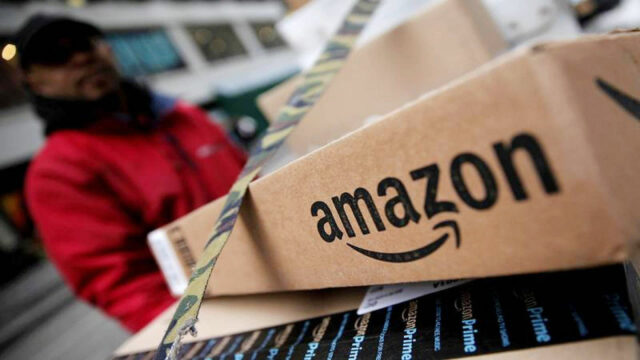
SAN FRANCISCO — Amazon  on Tuesday appeared to have prematurely alerted Amazon Web Services cloud-computing employees to layoffs planned for Wednesday morning by sending a commiseration email and team-wide meeting invitation hours early.

Reuters reported on Friday that Amazon intended to lay off thousands of corporate employees starting this week. But the company has not yet informed impacted employees, nor has it confirmed the layoff plan.

The email sent on Tuesday signed by Colleen Aubrey, senior vice president of applied AI solutions at AWS, wrongly said that impacted employees in the US, Canada, and Costa Rica had already been informed they lost their jobs.

In Slack messages viewed by Reuters, AWS employees who received the email said the Wednesday meeting was almost immediately canceled. Amazon referred in the email to the layoffs as “Project Dawn.”

“Changes like this are hard on everyone,” Ms. Aubrey wrote in the email, reviewed by Reuters. “These decisions are difficult and are made thoughtfully as we position our organization and AWS for future success.”

Amazon did not immediately respond to a request for comment.

Jobs in the company’s units covering AWS, retail, Prime Video, and human resources were slated to be affected, people familiar with the matter told Reuters, though the full scope of this week’s cuts was unclear.

Amazon laid off about 14,000 people in October as part of a broader plan to reduce corporate staff by around 30,000, people familiar with the matter said at the time.

On Tuesday, Amazon cut jobs in its Fresh grocery and Go market divisions as it plans to close existing brick-and-mortar stores and convert some of them to Whole Foods stores. It did not disclose the number of affected employees.

The size of the cuts to be announced on Wednesday remained unclear. The full 30,000 jobs flagged in October would represent a small portion of Amazon’s 1.58 million employees, but nearly 10% of the firm’s corporate workforce.

Amazon, in an October blog post, tied those job cuts to the increased use of artificial intelligence. That post from the head of human resources, Beth Galetti, indicated more job cuts were likely in the future.

The errant email Tuesday referred to a blog post by Ms. Galetti, which has not yet appeared on Amazon’s website. — Reuters

Impactful investing with LANDBANK ASENSO Bonds

Invest with purpose. Grow with impact. LANDBANK ASENSO Bonds are peso-denominated ASEAN Sustainability Bonds that let investors earn fixed returns while supporting projects that drive agriculture, sustainability, environmental protection, and inclusive socioeconomic development across the Philippines.

With a minimum investment of ₱10,000 and a coupon investment rate or as much as 5.1714% (1.5 years) and 5.5615% (3 years), ASENSO Bonds offer Filipinos a simple way to invest in the country’s sustainable future. The bonds will be available from Jan. 28 to Feb. 6 (or until an earlier closing date based on market demand) via the LANDBANK Mobile Banking app, over-the-counter at LANDBANK branches nationwide, or through authorized Selling Agents.

#PoweredByLANDBANK
#SustainableFinance
#ASENSOBonds


Spotlight is BusinessWorld’s sponsored section that allows advertisers to amplify their brand and connect with BusinessWorld’s audience by publishing their stories on the BusinessWorld Web site. For more information, send an email to online@bworldonline.com.

Join us on Viber at https://bit.ly/3hv6bLA to get more updates and subscribe to BusinessWorld’s titles and get exclusive content through www.bworld-x.com.

ADVERTISEMENT
ADVERTISEMENT