Home Blog Page 3628

BSP still prepared to adjust policy

Headline inflation eased to its slowest in three years to 2.8% in January from 3.9% in December and 8.7% a year ago. — PHILIPPINE STAR/EDD GUMBAN

THE BANGKO SENTRAL ng Pilipinas (BSP) is still prepared to adjust interest rates as necessary amid persistent upside risks to the inflation outlook, a central bank official said.

In a BusinessWorld Insights webinar on Thursday, BSP Deputy Governor Francisco G. Dakila, Jr. said risks remain despite inflation easing to a three-year low in January.

“Given the prevailing upside risks to the inflation outlook, the BSP is prepared to adjust its monetary policy settings as necessary in keeping with its primary mandate of safeguarding price stability,” he said.

Nonmonetary measures also remain crucial to sustain the disinflation process and address lingering supply-side pressures, he said.

After emerging as the most aggressive central bank in the region, the BSP kept the key rate at 6.5% — the highest in nearly 17 years — for a third straight meeting in February.

The Monetary Board hiked borrowing costs by 450 bps from May 2022 to October 2023 to tame inflation and help support the peso against the dollar.

Price pressures have receded in the past months as inflation has been within the 2-4% target since December 2023, Mr. Dakila said.

“Inflationary pressures for most key food and nonfood items have steadily eased, supported by government supply-side measures alongside negative base effects,” he said.

Inflation eased to the lowest in three years to 2.8% in January from 3.9% in December and 8.7% a year ago. It was the second straight month that inflation was within the BSP’s 2-4% target.

Mr. Dakila also noted that core inflation continued to fall in January, after staying above 2-4% for 17 consecutive months.

Core inflation, which excludes volatile prices of food and fuel, slowed to 3.8% in January from 4.4% in December, the slowest since 3.1% in June 2022.

Last week, the BSP trimmed its baseline inflation forecast for this year to 3.6% from 3.7% but kept its projection for 2025 at 3.2%.

“The forecast path is driven by the lower-than-expected inflation outturn in December and January, by the appreciation of the peso, and by lower global crude oil prices,” Mr. Dakila said.

The BSP also lowered its risk-adjusted inflation forecast for this year to 3.9% from 4.2% but raised its outlook for 2025 to 3.5% from 3.4%.

The downgrade in the BSP’s risk-adjusted inflation forecast was due to the lower baseline forecast and the decline in the estimated risks for the year, Mr. Dakila said.

“However, it should be noted that the risk-adjusted forecast is still near the upper end of the target range at 3.9% in 2024,” he added.

The central bank is closely monitoring the developments in the agriculture sector, especially as rice prices continue to rise due to export bans abroad and worries over the impact of El Niño.

Rice inflation accelerated to 22.6% from 19.6% in December, the highest since March 2009. It was also the most significant contributor to January inflation, adding 1.3 percentage points. The commodity had the biggest weight in the overall inflation basket at 8.87%.

Other risks to the inflation outlook include higher assumptions for global nonoil prices, a stronger domestic growth outlook, the impact of El Niño weather conditions and minimum wage adjustments in areas outside Metro Manila, Mr. Dakila said.

“While inflation is likely to settle within the target range in the first quarter of this year, inflation could rise temporarily above the target for the April-to-July period due to possible price pressures from lower domestic supply of rice and corn as well as positive base effects,” he added.

Meanwhile, Mr. Dakila said the gross domestic product (GDP) growth trajectory remains intact over the medium term.

“The projected GDP growth path will be supported by improved global GDP amid a projected decline in global crude oil prices, tempered in part by the lagged impact of policy interest rate adjustments,” he said.

In the fourth quarter, GDP expanded by 5.6%, slower than 6% in the third quarter and 7.1% in the fourth quarter of 2022.

This brought full-year GDP growth to 5.6% in 2023, much slower than 7.6% in 2022.

“This may be attributed to the waning of pent-up demand amid still elevated — though decelerating — inflation, the lagged effects of monetary tightening, as well as lower government spending in line with fiscal consolidation,” Mr. Dakila said.

Still, he noted that at 5.6%, the Philippines was among the fastest-growing emerging markets in the region last year, ahead of China (5.2%), Indonesia (5%), Vietnam (5%) and Malaysia (3.8%).

RATE CUT BY Q2
Meanwhile, Sun Life Investment Management and Trust Corp. (SLIMTC) expects the BSP to likely reduce policy rates by 100 basis points (bps) this year.

SLIMTC Chief Investment Officer Ritchie Ryan G. Teo said at a briefing on Thursday that the central bank is expected to begin policy easing with a 25-bp cut in the latter part of the second quarter.

“We don’t expect more than that given cost volatility,” he added. “More on the latter part (of the second quarter). It’s probably good to say they will only cut when the Fed cuts.”

Mr. Teo said the US Federal Reserve will likely cut rates by 75 bps to 100 bps to bring down the Fed funds rate to 4.5-4.75% this year.

The US central bank had raised its policy rate by 525 bps to 5.25-5.5% from March 2022 to July 2023.

The BSP now has room to begin policy easing given the recent downtrend of inflation, Mr. Teo said.

“Policy rates are higher than the inflation rates. We’ve seen inflation coming down and with that, we are already seeing that gap, that real positive rate means there’s room to cut rates,” he added.

SLIMTC sees inflation averaging 3.8% this year.

Mr. Teo also noted he is not ruling out a rate hike but the probability of that happening is “very low.”

“With lower rates, that will provide better corporate earnings and with lower rates also that will provide GDP to go back up to 6% from 5.6% last year, driven by better consumption and private investments,” he said.

SLIMTC’s forecast for GDP growth is at 6% this year, falling short of the government’s 6.5-7.5% target but better than the 5.6% expansion in 2023.

Finance Secretary Ralph G. Recto earlier said there may be a need to revise the government’s macroeconomic targets and assumptions to be “more realistic.”

Meanwhile, Mr. Teo flagged risks that could stoke inflation and dampen growth, such as the El Niño weather phenomenon.

“If the (El Niño) doesn’t improve, it may impact soft commodity prices. We’ve seen rice inflation go up by 22%, so hopefully that’s mainly because of the low base effect last year,” he said. “With the harvest season and El Niño going away, hopefully inflation will be controlled.”

The latest data from the state weather bureau showed that El Niño is expected to persist until May.

Another factor that could derail growth is delayed infrastructure spending, Mr. Teo said.

The administration’s ‘Build Better More’ infrastructure program is allocated P1.5 trillion under the budget this year, equivalent to 5.5% of gross domestic product (GDP).

The government is targeting to sustain infrastructure spending of up to 5-6% of GDP annually.

Infrastructure spending in the January-November period rose by 18.5% to P1.02 trillion.

“We expect that (underspending) is something that should be resolved sooner mainly because there’s been efforts by the government, they already called out the underspending but unfortunately it seems like the disbursements aren’t there yet. But once they are released, we expect that to improve also,” Mr. Teo added. — Keisha B. Ta-asan and Luisa Maria Jacinta C. Jocson

Moody’s Analytics hikes PHL growth forecast

People enjoy a night stroll at a park in Manila, Feb. 13, 2024. — PHILIPPINE STAR/MIGUEL DE GUZMAN

MOODY’S ANALYTICS raised its growth projection for the Philippines to 5.8% this year from 5.4% it gave in January, as strong demand for electronics could spur export growth in Asia-Pacific economies.

It expects the Philippines to be the third-fastest performing economy in the region this year after India (6%) and Vietnam (6%). It is also followed by China (5%) and Indonesia (4.9%).

However, Moody’s Analytics’ forecast is below the government’s full-year gross domestic product (GDP) growth goal of 6.5-7.5% this year.

In a report dated Feb. 21, Moody’s said the Philippines has “shown remarkable resilience thanks to electronics exports, relatively strong domestic demand, government spending and remittances.”

“The Philippines and Taiwan enjoyed rapid growth at year’s end,” it said. “In the Philippines, the post-pandemic recovery continues, helped by record overseas remittances in value terms last year that fueled strong domestic demand.”

The Philippine economy grew by 5.6% in 2023, falling short of the government’s 6-7% target and slower than 7.6% in 2022.

In the report, Moody’s said better demand for electronics would lead to rising exports globally in the second half, which will boost economic growth in the Asia-Pacific (APAC) region.

“Exports will improve alongside global growth in the second half of this year, and this will boost APAC economies,” it said. “Improved demand for electronics and high-performance chips needed for AI (artificial intelligence) will underpin rising exports.”

The research unit also sees higher demand for cars, car parts and pharmaceuticals.

“Further, as central banks finally loosen monetary policy, lower interest rates will encourage domestic spending and investment across much of Asia,” it said.

Inflation averaged 6% in 2023, marking the second straight year that it breached the Bangko Sentral ng Pilipinas’ (BSP) 2-4% target.

To tame inflation, the BSP hiked borrowing costs by 450 basis points (bps) from May 2022 to October 2023, bringing the key rate to a near 17-year high of 6.5%.

Central bank officials have said inflation might still pick up in the second quarter, prompting the Monetary Board to keep borrowing costs steady until a sustained downtrend in inflation is seen.

“With elections now completed in Thailand, the Philippines, Taiwan and Indonesia, there is a good chance that fiscal policy will remain stimulative, at least for a short while, as new administrations execute their policies,” Moody’s Analytics said.

It expects the economy to expand by 5.8% in 2025 before picking up further to 6.3% in 2026. However, both forecasts are below the government’s 6.5-8% target.

It sees inflation settling at 3.4% this year, before it slows further to 3% in both 2025 and 2026. — Keisha B. Ta-asan

‘Not the right time’ to raise wages — NEDA

Men are seen working on a building construction site in Manila. — PHILIPPINE STAR/MIGUEL DE GUZMAN

By Luisa Maria Jacinta C. Jocson, Reporter

THE PROPOSED P100 increase in the minimum wage of private workers may stoke inflation, hurt gross domestic product (GDP) growth and increase unemployment, National Economic and Development Authority (NEDA) Secretary Arsenio M. Balisacan said.

“Our position at NEDA is that it’s not the right time,” he said during the SNAP Conversations webinar on Thursday.

“We are working very hard to sustain the momentum in reducing inflation to the target of 2-4% and the last thing we want is to reverse those gains we have achieved for the last several months.”

The Senate on Monday approved on final reading a bill that seeks to implement a P100 across-the-board minimum wage hike for private sector workers.

The last legislated national wage hike was in 1989. Since then, pay rates have been decided by regional wage boards.

The House of Representatives said it is planning to tackle next week pending bills that seek a P150 minimum wage increase for private sector workers.

A separate bill has also been filed at the House seeking to increase wages by P750, while congressmen are also studying a proposal for a P350 to P400 wage hike.

Mr. Balisacan said a legislated P100 wage hike would “negatively impact” the recent inflation downtrend.

“Inflation that would be induced by the wage hike could run from 0.2 to 0.8 percentage point (ppt) depending on how the hike has been employed,” he said.

Inflation has settled within the central bank’s 2-4% target for two straight months as it eased to 2.8% in January from 3.9% in December.

The NEDA chief said the wage hike could also lead to a reduction in GDP growth ranging from 0.1 to 0.5 point.

“The lower number assumes the wage hike will only apply to minimum wage earners but if there is a cascading effect of that to other workers, then it would go as high as a 0.5-ppt reduction in GDP,” he added.

The economy grew by 5.6% last year, slower than 7.6% in 2022. It also fell short of the government’s 6-7% target.

This year, the government is targeting 6.5-7.5% GDP growth.

On unemployment, Mr. Balisacan said the wage increase could derail the progress made in bringing down the jobless rate to historical lows.

“We would want to sustain that and even improve the quality of the employment generated,” he said.

Latest data from the Philippine Statistics Authority (PSA) showed that the unemployment rate dropped to 4.3% in 2023, the lowest in almost two decades.

The wage hike could increase unemployment by 0.2 ppt to 0.7 ppt, equivalent to 100,000 to 340,000 jobless Filipinos.

Mr. Balisacan said the NEDA supports raising wages, but this must be negotiated through the regional wage boards.

“We are not saying we are against increases in wages, in fact we are, we would want improvement in wages, but we would rather have those wages negotiated at the regional level,” he said.

He added that allowing wage negotiations at the regional level would take into account the varying market and economic conditions in each area.

Bank of the Philippine Islands Lead Economist Emilio S. Neri, Jr. said any minimum wage increases should be negotiated on a regional basis.

“We encourage an increase in wages, but these have to be sector per sector,” he said at the same webinar.

Last year, workers in Metro Manila got a P40 increase in the daily minimum wage.

Wage increases were also approved in Cagayan Valley (P30), Ilocos Region (P35), Central Luzon (P40), Central Mindanao (P35), Western Visayas (P30) and the Southern Tagalog Region (P35 to P50).

Imposing a national wage hike could translate to job losses, Mr. Neri added.

“We’re seeing very good numbers in our employment futures in the Philippines. This might be reversed if we insist on a minimum wage (increase)” he said. “It may actually even stoke inflation. Because of the requirement of higher wages, producers and service providers may be compelled to pass on costs to consumers.”

The Bangko Sentral ng Pilipinas (BSP) earlier said it did not take into account the proposed P100 minimum wage hike in its risk-adjusted inflation projections.

It also said higher-than-expected wage increases could “pose a threat to the inflation outlook.”

The BSP’s baseline inflation forecast for this year is set at 3.6% and 3.2% for 2025. Should risks materialize, inflation may average 3.9% and 3.5% this year and next year, respectively.

ABS-CBN and PLDT cancel Sky Cable deal; reasons undisclosed

ABS-CBN Corp. and PLDT Inc. announced on Thursday a decision to halt the sale of Sky Cable to the Pangilinan-led telecommunications company.

“Following this development, Sky Cable is pleased to announce that its cable TV service will continue, assuring its subscribers that they can maintain their subscriptions,” the Lopez-led media company said in an e-mailed statement to reporters.

“Sky’s internet broadband service, SKY Fiber, remains unaffected,” it added. Sky Cable provides broadband, enterprise cable broadband, pay television, and cable services.

In their disclosures to the stock exchange, ABS-CBN and PLDT did not provide reasons that led to the decision.

PLDT announced in March last year that it was fully acquiring Sky Cable for P6.75 billion, mainly to expand its coverage and services.

Just last month, the Philippine Competition Commission approved the sale of Sky Cable to the Pangilinan-led company.

The transaction would involve the sale of about 1.38 billion common shares at P4.90 apiece, with the purchase price based on the agreed equity valuation of Sky Cable’s shares as of Dec. 31, 2022.

The decision not to proceed with the sale raises questions about the underlying reasons or factors, according to analysts.

The cancellation of the sale could influence how the two companies are perceived in the market, Globalinks Securities and Stocks, Inc. Head of Sales Trading Toby Allan C. Arce said in a Viber message.

“PLDT might need to explore alternative strategies to strengthen its position in the cable TV and broadband market, while ABS-CBN retains its foothold in the industry,” he added.

The decision would also affect the financial outlook of the two companies, he said, adding that for ABS-CBN, the company might have been factoring in the proceeds from the sale to bolster its finances.

“PLDT Inc. might have factored in the acquisition costs and potential synergies from integrating Sky Cable into its operations, which will now need to be reassessed,” he said.

For his part, China Bank Capital Corp. Managing Director Juan Paolo E. Colet said the two parties should have disclosed the reasons why the deal was not pushing through.

“It’s also important for them to explain how they will manage their debt load considering that the deal was supposed to pay off loans,”  he said.

At the local bourse on Thursday, ABS-CBN shares closed 13 centavos or  3.02% lower at P4.17 apiece while shares in PLDT gained P10 or 0.78% to end at P1,298 apiece.

Hastings Holdings, Inc., a unit of PLDT Beneficial Trust Fund subsidiary MediaQuest Holdings, Inc., has a majority stake in BusinessWorld through the Philippine Star Group, which it controls. — Ashley Erika O. Jose

AboitizPower raises stake in power plant operator

ABOITIZ Power Corp. (AboitizPower) has increased its equity interest in power plant operator STEAG State Power, Inc. (SPI) to 85%, the power company announced on Thursday.

The acquisition involved the purchase of an additional 15.6% equity stake from STEAG Power GmbH, the parent firm of SPI, the first coal-fired power plant in Mindanao. STEAG Power GmbH is a power producer that operates hard-coal-fired power plants at six locations in Germany, as well as large power plants in Turkey and Colombia.

“Upon completion of this transaction, AboitizPower will be legal and beneficial owner of an 85% equity interest in the company,” AboitizPower said.

The company bought 48.22 million common shares and 25.76 million redeemable preferred shares, amounting to a total share price of $11 million.

Initially, the company acquired a 34% equity interest in the SPI power plant in 2007 before acquiring an additional 35.4% in 2022.

“In effect, AboitizPower expands its attributable net sellable capacity from the facility without adding new coal capacity to the grid,” the company said.

SPI owns and operates a 210-megawatt coal-fired thermal power plant in Mindanao, according to its website.

The power plant was established under a build-operate-transfer partnership with National Power Corp. for a period of 25 years. It started commercial operations in November 2006.

SPI is majority-owned by AboitizPower, while STEAG Power GmbH and La Filipina Uy Gongco Corp. own the remaining shares in the company.

“AboitizPower is continuously managing and optimizing its generation portfolio, both in thermal and renewable energies. This is a good opportunity to help sustainably manage an existing generation facility, which is a vital component of the Mindanao grid, and provides affordable and reliable power to many Filipinos,” the company said. — Sheldeen Joy Talavera

Century Properties completes P2-B share offering

CENTURY-PROPERTIES.COM

REAL ESTATE developer Century Properties Group, Inc. (CPG) completed its P2-billion Series B preferred shares follow-on offering on Thursday.

“We are very pleased with the investors’ reception of our issuance which allowed us to price at the tighter end of the marketing spread and set the dividend rate at 7.5432%,” CPG Chief Finance Officer Ponciano S. Carreon, Jr. said in a statement.

“The timing for the CPG issuance was also good as the benchmark interest rates have started to move lower with the easing of inflationary pressures,” he added.

CPG President and CEO Marco R. Antonio said the proceeds from the fundraising will help the company “fortify its commitment to prudent financial management and facilitate sustained expansion efforts.”

The company previously said that it would use the proceeds for the partial repayment of its fixed-rate three-year bonds issued in March 2021, strategic land banking, capital expenditures, and other general corporate obligations.

CPG’s offering consisted of a base offer of 20 million Series B preferred shares, with an option to oversubscribe for up to 20 million more at P100 each.

The property developer tapped China Bank Capital Corp. as the lone issue manager, lead underwriter, and bookrunner for the transaction.

CPG aims to launch two projects under its premium in-city line within the first half, including the Hotel Residences at Acqua in Mandaluyong City and a mid-rise residential development at Azure North in San Fernando, Pampanga, with the first tower offering 375 units.

CPG also diversified into the first-home market to meet housing demand across the country. The company’s PHirst unit recently launched PHirst Park Homes Bacolod as part of its Visayas expansion.

PHirst aims to have 26 active first-home developments by yearend as it plans to open at least six new subdivisions.

CPG shares rose by 1.79% or P0.005 to P0.285 each on Thursday. — Revin Mikhael D. Ochave

Friendships and flying bisons at the heart of live-action Avatar: The Last Airbender

Adaptation of animated series to premiere on Netflix

FOUR elemental nations — Water, Earth, Fire, and Air — are thrown into conflict when the Fire Nation sets out to gain more power. Only the Avatar, a being who protects the world by using all the elements, can stop them and bring balance back to the world. The current Avatar — an airbender named Aang (played by Gordon Cormier) — is located by two Water Tribe kids that help him master all the elements.

This is the premise of the live-action series Avatar: The Last Airbender, which is an adaptation of a popular animated series of the same name created by Michael DiMartino and Bryan Konietzko in 2005. The new series premiered on Netflix on Feb. 22, bringing eight one-hour episodes of adventure to the platform.

Co-starring are Kiawentiio, who plays waterbender Katara, and Ian Ousley, playing her brother Sokka, both Aang’s friends on this daunting journey. Out to hunt them all is Dallas Liu as Zuko, the prince of the Fire Nation, with his caring uncle Iroh, played by Paul Sun-Hyung Lee.

While they played characters from opposing sides of the war, Mr. Cormier and Mr. Liu spoke about friendship with Asia Pacific press for their global promotions tour on Feb. 21 at the Marquis Events Place in Bonifacio Global City.

“I remember the first day Kiawentiio, Ian, and I really bonded was when we were on Appa (the flying bison) and the crew said they needed 15 minutes, so we stayed up there. Thirty minutes passed and we’re all sleeping, lying down in a tiny saddle,” Mr. Cormier said.

Because Mr. Liu had to embody the brooding Prince Zuko, he couldn’t outright bond with the others in the cast, though he did have his fair share of memorable moments on set as well.

One such scene was shooting the Agni Kai duel, where his wig kept falling off while he was trying to do the stunts. Another was confronting his villainous father Fire Lord Ozai, played by Lost’s hunky, bare-chested Daniel Dae Kim, for the first time and getting intimidated.

Mr. Liu said: “I think that when you’re able to share such a strong relationship, not just with the other actors but everyone on a set, it truly makes the product so much better.”

For Mr. Cormier, who is Filipino-Canadian, bringing the show to the Philippines was a must for him, especially since he himself hadn’t been back for a while due to the COVID-19 pandemic.

He was 11 when they filmed the show, and is now 15 years old, now making him relate to Aang’s journey of growth more and more.

“I feel like I’ve grown up quite a bit, but even in the original series, which only takes place over the course of three months, you can see Aang growing as a person,” said Mr. Cormier.

Mr. Liu added that “a lot of preparation” goes into playing very young yet very complex roles such as theirs. He noted that the task was made easier by the plethora of character- and world-building discussions about the original animated show that can be found online.

In Netflix’s Avatar: The Last Airbender, the fight sequences are explosive, and the visual effects and costume design are meant to evoke the same magical, Asian and native-inspired atmosphere as the original animated show.

An average day on set saw Mr. Liu getting up early to have his burn scar makeup and ponytail wig applied, helping him feel more like Zuko.

But aside from the look and feel of everything, the series is anchored by the various emotional beats the actors must master, much like the Avatar must master all four elements.

Mr. Cormier said that the happy, energetic side of Aang was quite easy for him to portray, as seen in his ability to quickly flash a bright smile, but the heavier scenes involving his responsibility to end the war proved quite difficult.

The eight episodes on Netflix only cover Book One of the original series, with no word yet on whether the show will be picked up to continue the adaptation.

“Season one is kind of just the beginning so I can’t fully say that we’ve settled the war yet,” he said.

The remake was originally expected to involve Mr. DiMartino and Mr. Konietzko, but they left due to creative differences. The world they created has also spawned a movie, comic books and video games. In 2021, the production company Avatar Studios was launched by Nickelodeon with the co-creators serving as co-chief creative officers for a slate of animated films.

Avatar: The Last Airbender is now out on Netflix. — Bronte H. Lacsamana with a report from Reuters

DigiPlus bullish on FTSE index inclusion

LISTED digital gaming company DigiPlus Interactive Corp. on Thursday said its forthcoming inclusion in the FTSE Global Equity Index Series (Micro Cap) is expected to broaden its investor base.

“We hope that our addition to the FTSE Global Equity Index Series (Micro Cap) will not only enhance our visibility but also broaden our investor base,” DigiPlus President Andy Tsui said in a statement.

“This recognition validates our growth trajectory and reinforces investor confidence in our long-term prospects,” he added.

The FTSE Global Equity Index Series (Micro Cap) offers expanded coverage of the global equity market, providing insights and benchmarks for assessing investment opportunities.

DigiPlus will be included in the FTSE Global Equity Index Series (Micro Cap) on March 15, according to the company.

DigiPlus has reported a tenfold increase in its nine-month income to P2.1 billion compared to P172.37 million in 2022, driven by strong revenues totaling P16 billion.

The company attributed its revenue growth to increased user traffic in its flagship livestreaming bingo game and digital sports betting offerings under the BingoPlus and ArenaPlus platforms, respectively.

DigiPlus shares closed unchanged on Thursday at P7.75 apiece. — Revin MIkhael D. Ochave

Metrobank’s 2023 profit up 29% on higher rates

BW FILE PHOTO

METROPOLITAN Bank & Trust Co. (Metrobank) saw its attributable net profit increase by 28.87% year on year in 2023 amid increased interest income from loans due to higher rates and better asset quality.

The bank ended 2023 with an attributable net income of P42.238 billion, rising from P32.776 billion in 2022, its quarterly report filed with the stock exchange on Thursday showed.

This translated to a return on average equity of 12.51%, higher than 10.29% in 2022. Return on average assets also improved to 1.42% last year from 1.23% previously.

“Our solid performance in 2023 was strongly driven by our asset expansion, higher margins, improving efficiency levels and better asset quality. This indicates that we are firmly on track with our long-term growth strategies supported by our highly capable and resilient team of Metrobankers and strong balance sheet. We look forward to further expanding our partnerships with all our stakeholders,” Metrobank President Fabian S. Dee said in a statement.

Net interest income grew by 22.73% to P104.97 billion last year from P85.53 billion amid increased loan demand and as its net interest margin improved to 3.9% from 3.56%.

“Gross loans rose by 7.6% year on year, with consumer portfolio increasing by 15.9% on strong discretionary spending, outpacing the 5.5% rise in commercial loans,” Metrobank said.

Broken down, interest income grew by 50.06% to P153.612 billion amid higher interest earnings on loans and receivables, investment securities, interbank loans receivable, and deposit with banks and others.

Meanwhile, interest and finance charges increased by 188.83% to P48.642 billion.

On the other hand, other operating income went up by 6.39% to P28.504 billion last year from P26.79 billion.

“Fee income increased by 9% to P16.4 billion, largely driven by the expanding consumer business. Trading and forex gains were steady at P4 billion,” Metrobank said.

Operating expenses rose by 13.98% to P69.52 billion from P61 billion.

As a result, the bank’s cost-to-income ratio eased to 52.1% last year from 54.3% in 2022.

“The robust revenue growth offset the 14% increase in operating expenses, which was driven by transaction-related taxes, technology costs and higher manpower in line with capacity expansion,” the lender said.

Metrobank set aside loan loss provisions of P8.98 billion in 2023, up from P8.11 billion in 2022.

Even as its loans grew, its nonperforming loan (NPL) ratio eased to 1.7% in 2023 from 1.9% in 2022. NPL cover was at 180.3%.

On the funding side, deposits rose by 7.28% to P2.38 trillion from P2.22 trillion, with low-cost current and savings accounts deposits amounting to P1.44 trillion or more than 60% of the total.

Its loans-to-deposits ratio stood at 65.77% last year, up slightly from 65.59% in 2022.

Metrobank’s assets grew by 9.21% to P3.1 trillion at end-2023 from P2.84 trillion a year prior.

Total equity likewise rose by 11.78% to P366.74 billion from P328.09 billion.

The bank’s capital adequacy ratio stood at 18.28% last year, up from 17.68% previously, while its common equity Tier 1 ratio was at 17.44%, also higher than 16.83% the year prior.

Its liquidity ratio stood at 48.08%, rising from 47.64% previously.

“The bank’s strong profitability and substantial capital base prompted the Board of Directors to approve a total cash dividend of P5 per share for the year. The regular dividend was raised from P1.60 to P3 per share to be paid out on a semi-annual basis at P1.50 per share. In addition, a special cash dividend of P2 per share was also declared. The first payout of P3.50 will be given to shareholders on record as of March 8,” Metrobank said.

The bank’s shares climbed by P1.35 or 2.3% to end at P60.05 apiece on Thursday. — A.M.C. Sy

Taylor Swift named IFPI 2023 global recording artist of the year

IFPI.ORG

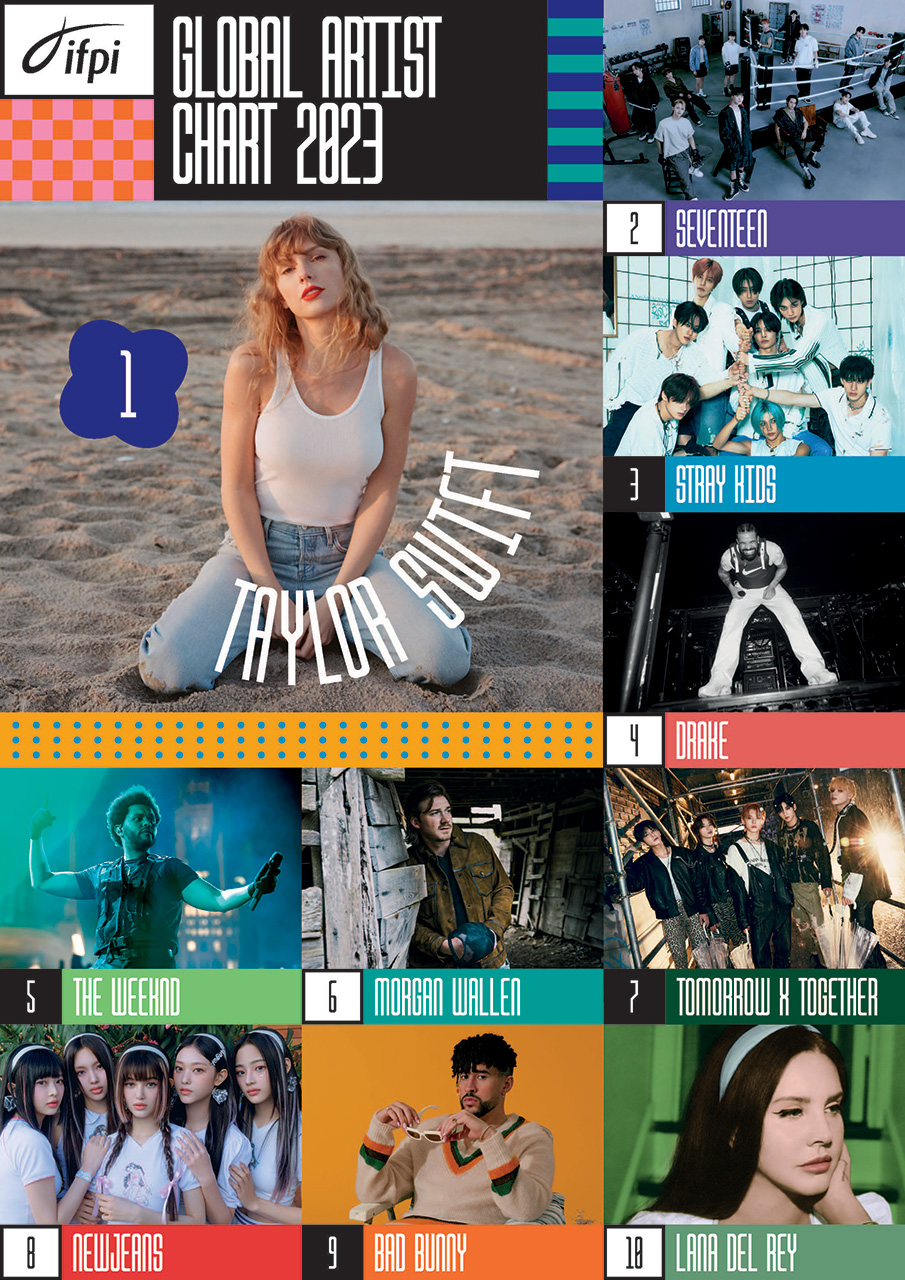
LONDON — Pop superstar Taylor Swift added another honor to her long list of accolades on Wednesday, winning the global recording artist of the year award for the fourth time from the International Federation of the Phonographic Industry (IFPI), the organization that represents the recorded music industry.

IFPI.ORG

The “Anti-Hero” singer scooped the award for the second year running, having previously won it 2014 and 2019. The latest is for 2023.

The prize is calculated by looking at an artist’s or group’s worldwide sales for streaming, download, and physical music formats during the calendar year and covers their whole body of work, according to the IFPI.

It is presented to the artist who tops the IFPI Global Artist Chart, which Ms. Swift has done more than any other artist since its introduction 11 years ago. “She continues to redefine the limits of global success. Taylor is a singular talent and her commitment to her craft and her fans is truly phenomenal,” Lewis Morrison, director of charts and certifications at IFPI, said in a statement.

K-Pop stars SEVENTEEN and Stray Kids came second and third respectively in the chart in what IFPI described as a “record year for Korean artists.”

Four K-Pop acts made the top 10 with TOMORROW X TOGETHER at No.7 and NewJeans at No.8.

Other artists to feature in the top 10 include Drake at No. 4, and The Weeknd at No.5.

Earlier this month, Ms. Swift, 34, set another record at the Grammy Awards, winning the prize for album of the year for an unprecedented fourth time. — Reuters

PLDT proposes to pay $3 million in lawsuit settlement

WIKIMEDIA COMMONS/PATRICKROQUE01

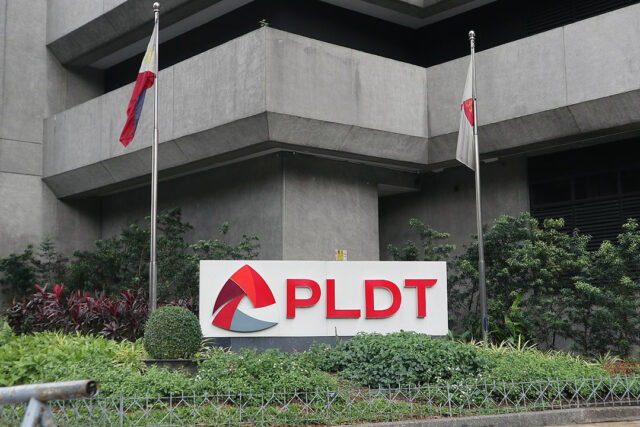
PLDT Inc. has proposed to pay $3 million in relation to the securities class-action lawsuit filed by US shareholders due to the company’s budget overrun, the telco giant announced on Thursday.

On Feb. 16, the company entered into a “stipulation of settlement” to resolve the class action filed by its shareholders in the Central District of California, PLDT said in a disclosure.

“Under the proposed settlement, which is subject to approval by the court following notice to the settlement class, the settlement class will receive payment of a settlement amount of $3,000,000,” it said.

The proposed payment of the settlement amount does not signify admission of liability, lapses or fault by any defendant, PLDT  also said.

“If approved by the Court, the settlement will resolve the US Class Action in its entirety as against all defendants,” the company added.

To recall, in 2022, the company discovered a P48-billion discrepancy, which accounts for about 12.7% of its P379-billion capital expenditure over the past four years since 2019.

Last year, PLDT confirmed that a US shareholder filed a securities class-action lawsuit against the company, alleging violations of Federal Securities Laws.

The case cited the company’s disclosures indicating a budget overrun of P48 billion during the period.

At the stock exchange on Thursday, shares in the company closed P10 or 0.78% to end at P1,298 each.

Hastings Holdings, Inc., a unit of PLDT Beneficial Trust Fund subsidiary MediaQuest Holdings, Inc., has a majority stake in BusinessWorld through the Philippine Star Group, which it controls. — Ashley Erika O. Jose

Entertainment News (02/23/24)


UP to honor 3 national artists in Tanghal Tertulia

For National Arts Month, the University of the Philippines (UP) will hold a Tanghal Tertulia to honor three of its living National Artists on their birthdays — Ramon P. Santos, Gemino H. Abad, and Virgilio S. Almario — on Feb. 26, 4-7 p.m. at the Amphitheater of the UP Executive House in UP Diliman, Quezon City. The event includes performances from other notable figures in UP’s cultural scene, including: Jose Dalisay Jr., Isabela Banzon, Michael Coroza, Vim Nadera, and Olive Nieto as readers; and Noel Cabangon, Eman Jamisolamin, Mika Lastrilla, Raul Navarro, and Hannah Osorio as musicians. There will also be presentations and performances by Dr. Verne De la Pena, the UP Concert Chorus, and Katubo, as well as the National Artists themselves. UP President Angelo Jimenez will give the opening remarks for the evening. Tanghal Tertulia will be available for online viewing at the TVUP links on YouTube – https://www.youtube.com/@TVUPph and Facebook – https://www.facebook.com/TVUP.ph/.


Tabernacle Choir and Orchestra to perform in Manila

THE world-renowned Tabernacle Choir and Orchestra at Temple Square will be coming to Manila to perform at the SM Mall of Asia Arena on Feb. 27 and 28. The two-night concert, Himig ng Pag-asa, will also feature Broadway legend Lea Salonga and YouTube sensation Ysabelle Cuevas as guest artists. The 360-member Mormon Tabernacle Choir and its 60-member orchestra, all volunteers, have previously performed at world fairs, expositions, and the inaugurations of seven US presidents. It is their first trip to Manila. Though registration for free tickets for both concerts already finished in January, the concert on Feb. 28 will be livestreamed on the choir’s YouTube channel.


YGIG’s Darlene releases solo debut track

DARLENE, previously from SBTown’s first girl group YGIG, is making a comeback as a solo artist with her debut single “Daydream.” The 19-year-old singer first made a splash on a popular singing competition show almost a decade ago. Since she left YGIG in 2022 due to health reasons, she has been waiting for her time to shine once again. Her new track is under the supervision of SBTown CEO Geong Seong Han, SBTalent Camp’s South Korean trainer Adelaide Hong, and Universal Records co-manager Kathleen Dy-Go. Darlene says, she is “honored to work with Korean producers for this bubbly song, which is a reflection of the whirlwind of emotions one goes through when love begins to blossom.” The song was recorded in South Korea, and mixes hip-hop, trap, and pop genres. “Daydream” is now out on all digital streaming platforms.


Nicole Laurel Asensio single launches with concerts

“WHAT is it all about?,” a stripped-down single from multi-awarded musician Nicole Laurel Asensio, has been released under Warner Music Philippines, with a launch party set for Feb. 29. The song was written one sunset a year ago in Paco Park, where she and producer Gabe Dandan were jamming on an acoustic guitar with the sounds of water fountains and birds in the background. It was later professionally recorded in Southbay Studios with Jacques Dufourt on drums and percussion, Bergan Nunez on bass, and Mr. Dandan on nylon guitar. After that, it was mastered by Alex Gordon from Abbey Road Studios, UK. Ms. Asensio’s two one-hour performances at the launch party will cost P400 each and take place at 78-45-33 Salcedo at 8:30 p.m. and 10:30 p.m. For reservations, call 0917-597-6661.


PREP releases single featuring Phum Viphurit

LONDON-based four-piece band PREP have released their new single, “Getaway,” via Bright Antenna Records, featuring Phum Viphurit from Thailand. The track is about the conflicting feelings of needing a break from a situation, but not wanting to leave it behind forever. “We’d been in touch with Phum and one afternoon he found us this studio where we could all go and hang out together. It was this beautiful hidden spot, a real retreat from the world, surrounded by greenery, with kids playing under the trees outside. And the song came together with him pretty much there and then,” PREP said in a statement. The track mixes both artists’ roots in contemporary R&B, electronica, and late ’70s and early ’80s yacht rock. “Getaway” is streaming on all online platforms.